
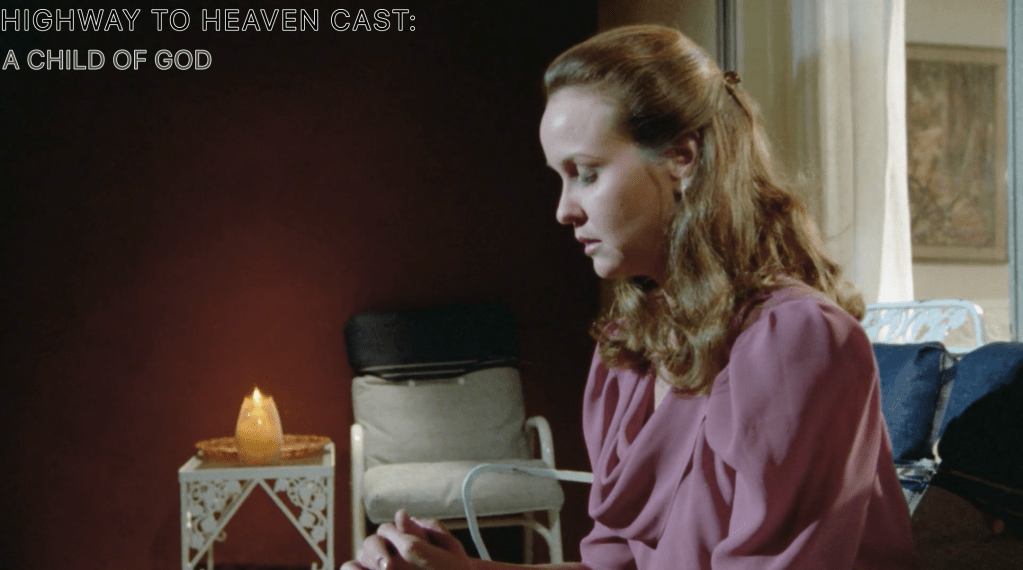
Air Date: 02/06/1985
Directed By: Michael Landon
By now, the series has tackled a wide range of issues. So, this time, they decided to revisit a familiar one, which comes from another TV series.
Trademark Features
- Assignment
This episode is probably one of the most controversial of the series from a religious standpoint, though that’s part of how groundbreaking the series was for the time. The assignment on this one combines two different features the series has already tackled in his early episodes: it’s about helping an ill woman reconnect with her stern father. So, it’s the second episode in the series that features an ill character as part of the assignment (compare with “To Touch The Moon” for the first time), and also the second time that character actually dies by the conclusion. But now, Landon adds some “problematic parents and children relationship”, which is not anything new really (so far, “A Divine Madness“, “One Fresh Batch Of Lemonade” and “Catch A Falling Star” were about the same).
Anyway, if this whole assignment sounds familiar, that’s not an illusion: this episode takes inspiration from a Bonanza one, aired on 1970 in season twelve of that series. Both episodes have the same premise: an ill daughter tries to reconnect with her father who disowned her upon discovering she had a baby without having a husband.
Actually, Landon had already made reference to this very same show of Bonanza some episode back, but on that occasion, it was just for a scene. Now instead it’s basically the same premise—and some moments and lines are going to be recycled right from that. Only, this time, there’s an angel, and his human friend too.
Now, before anybody accuse Landon of lacking ideas or whatever, some things are to be noticed here: one, that episode was also written by Landon as well, so it’s not like stealing from somebody’s else. Second, it’s not excuse, but it was a common a practice at the time, and not just for Landon—just remember that, for the very introduction of this series David Rose used an arrangement coming from a Little House episode.
Also, when discussing episodes taking inspiration from Bonanza (or Little House, or any other series), there is an important distinction to make: on some occasions, the episode is just a smear copy of its corresponding Bonanza one, while some other episodes are meant to be a new version. The difference is that, in the first case, Landon just recycles an old idea from another series and sells it as new stuff, without ever making reference to the original (for example, that’s what he’ll do in the season two finale, or what he did on Little House multiple times). Instead, in the second case, he acknowledges the existence of that other show as inspiration for the new episode. This was the case here (notice that even the titles are very similar, as well as some part in the score by David Rose), though the difference, this time, is that he added a new, religious implication to the episode. So, it’s more of an evolution of Bonanza from that same idea.
- Background
Much of the episode takes place in L.A. except for the beginning, that’s actually N.Y. (supposedly).
As of the dates, considering it’s L.A. like the latest one, it’s possible (though not certain) they are consecutive episodes. However, just like in that episode, it’s unclear how long Jonathan and Mark work on the assignment: it is likely it only takes place over the course of a week, considering that the episode begins and concludes with a Sunday mass. Also, a week long assignment is congruent with the two weeks rule in the guideline, and would compensate the latest assignment (which supposedly took them longer than that).
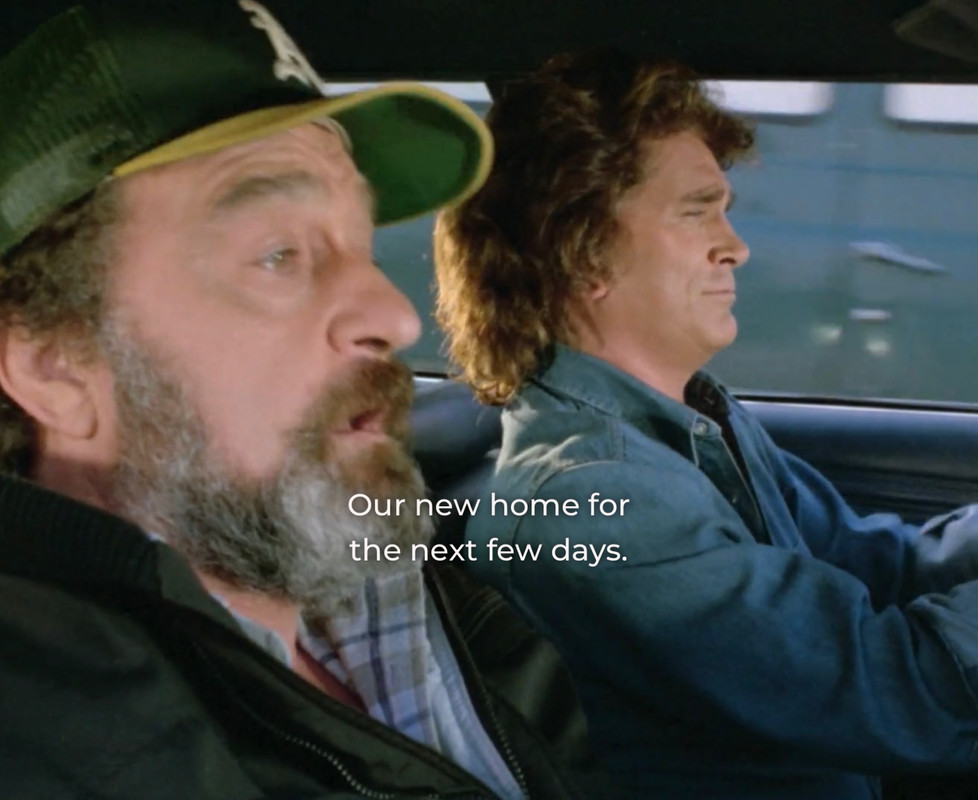
Still, there’s a little incongruity all the same: at the beginning of the episode, Jonathan tells Mark they are headed to their “New home for the next few days“, indicating the apartment they’ll be staying in for the assignment — a further confirmation it will take them a week.
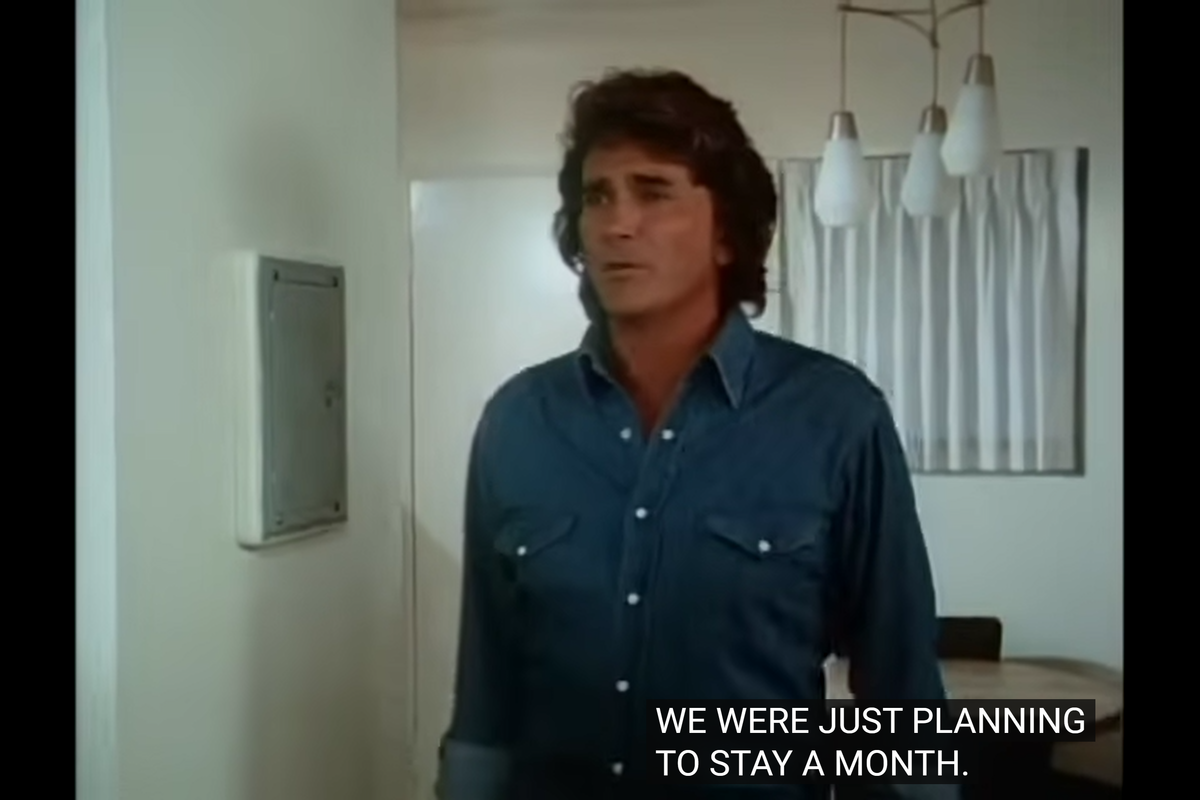
However, later on while arguing over the price with the landlady, Jonathan reveals he seemingly planned to rent the apartment for a month.
Now, this could also be justified by considering that in the future episodes of The Banker And The Bum and The Brightest Star (both set in L.A.) they never show where they are staying over, so it’s plausible they are still on this same apartment. Or maybe, time is just relative for angels, just like Jonathan’s probation (more details about it at the “Probation” entry here, under the “Assignment” part).
- Characters
This episode adds one detail to Jonathan and another to Mark’s background that are both quite problematic compared to what happens later in the series. As for Jonathan: at the beginning of the episode, Mark randomly asks how long he’s been “angeling”, and Jonathan replies it’s been over 30 years. That might be in conflict with what happened in the Pilot, where he said he was “New at this” (talking about being an angel to Mark). Of course, it can be that, to Jonathan, 30 years is nothing and he’s still “New”, but it feels more like the writers hadn’t fully fleshed out Jonathan’s backstory in the early episodes. But again, time is relative for an angel, just like “The next few days” means one month to Jonathan. At this point, assuming that each angel has a different probationary time, it’s rather unclear how long the probation will have to be for Jonathan, and unfortunately there will be no answer in the series. At the entry “Angels, Probation and Wings” in the Guidelines and Maps there are more details on this.
Also, one thing to notice: when Mark comments that it’s been a long time, Jonathan follows up by saying that 30 years is nothing “In the view of God”. Now, this line could’ve saved Jonathan an assignment in the fourth season if he’d remembered that then.
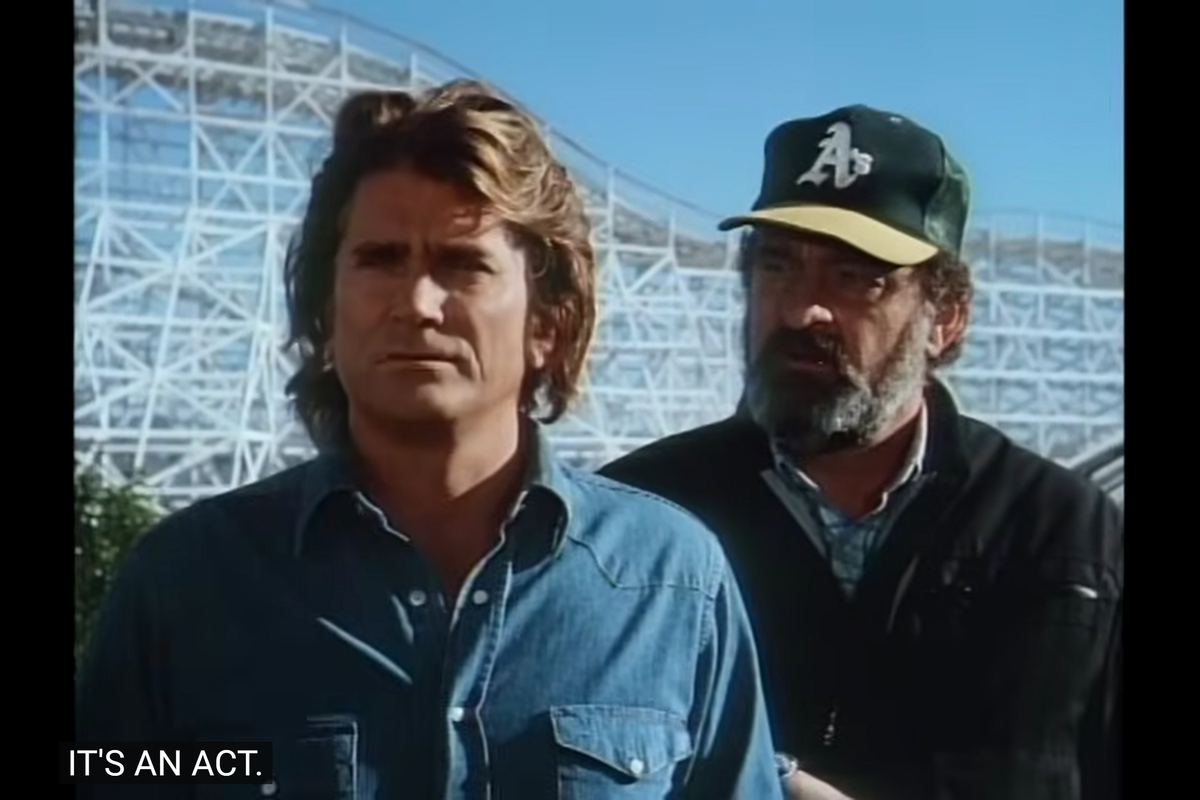
Instead, the detail about Mark occurs when they are at an amusement park and he refuses to go to some roller coaster, seemingly implying that he’s afraid — and there should be no problem with that.
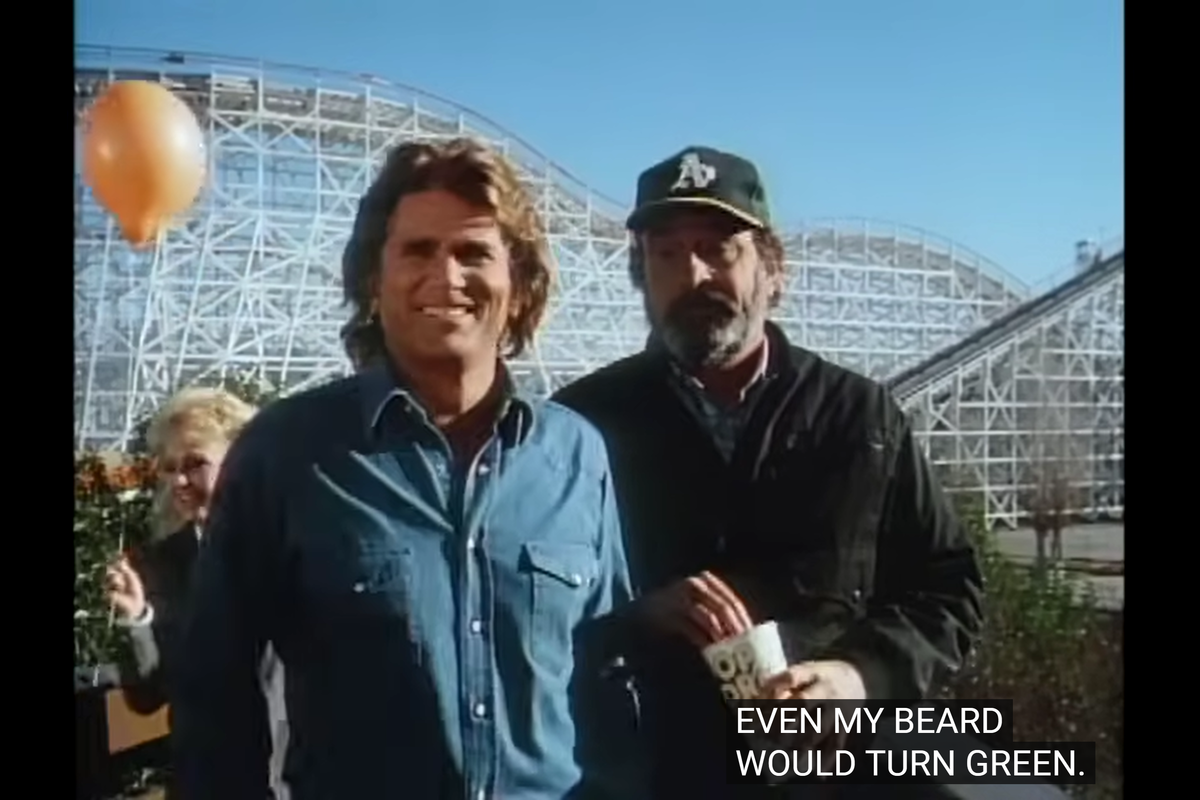
Still, in one episode in the second season, Mark and Jonathan will be again at the amusement park, and on that occasion, he will be actually eager to go to a roller coaster—even telling Jonathan he used to love them as a kid. Maybe it’s because he’s eating now, and he’s implying he doesn’t like to get on one after lunch.
Anyway, one curious thing: as part of the assignment, Jonathan and Mark will have to go to a church. This was the first episode in the series where they are actually shown attending church. If you remember, they mentioned something about taking Sunday off in the episode of “Catch A Falling Star“, but when they were denied it, nobody said anything more. At least, they will be doing that now.
- Production and Settings
The episode was written on late December, and production took place on the second week of January 1985, right after the previous one, to likely span over a week, as most episodes. And this episode was also written by Landon, even though it’s unclear when precisely. But, considering that it mostly stems from Bonanza, and they even feature the same lines, it’s likely he didn’t write at all and just used the old script instead. Of course, with some renovations and updates more suitable in the Highway context.
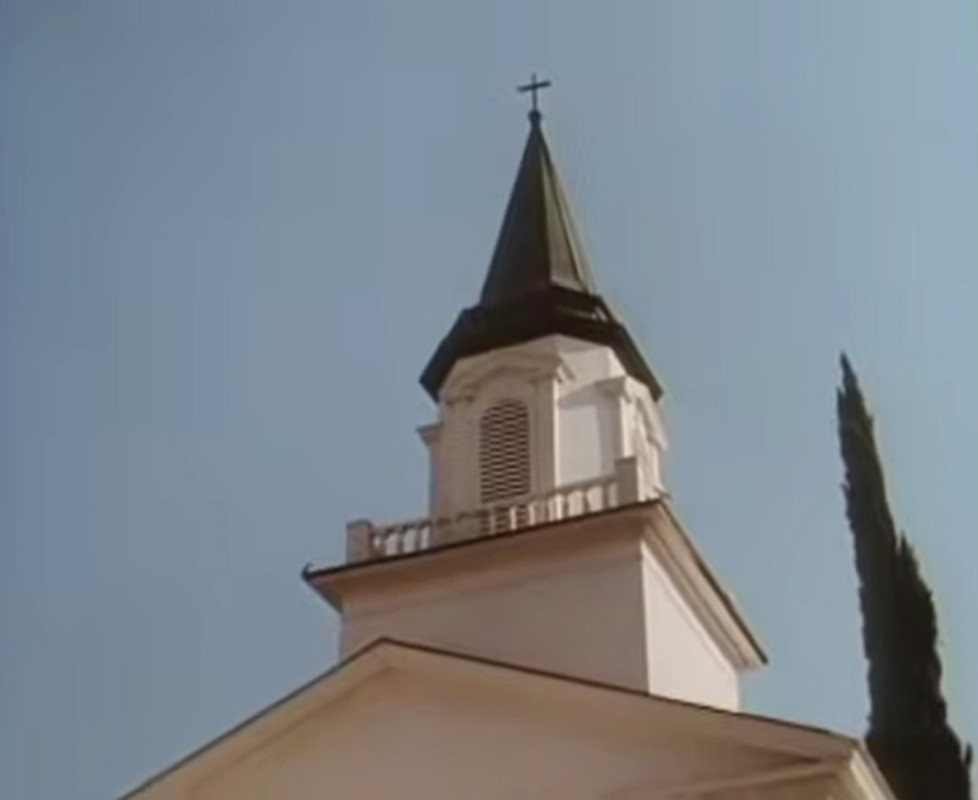
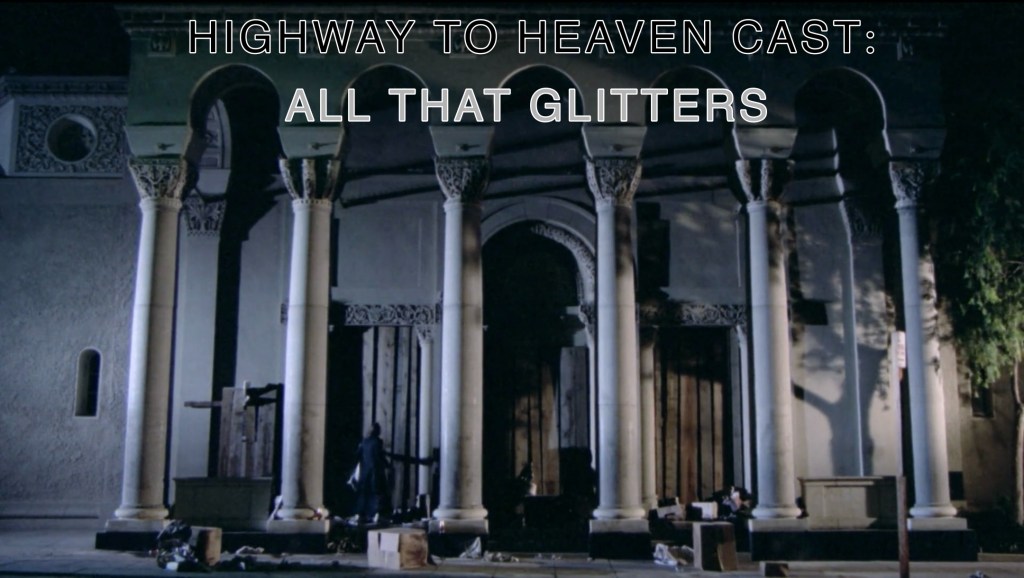
As of the setting, the assignment takes place around Los Angeles: the church where the Reverend preaches is the First Christian Church of North Hollywood, which is likely in New York. Of course not, it’s in Hollywood.
It appears at the beginning and the conclusion of the episode.
Instead the part at the amusement park takes place at Six Flags Magic Mountain, still operating now. So, yet another assignment around L.A.
- From Bonanza (references)
Now, considering that this episode is the only one in the series that comes from a Bonanza one (unlike for Little House, which had plenty of them), it is worth pointing out some of the similar aspects between them. The premise is the same for both: a woman has a child (here, a daughter, on Bonanza she had a son) and she’s disowned by her father for that. Later, she finds out she is severely ill and desperately tries to reconnect with her father, who rejects her until somebody (here, the angel Jonathan, on Bonanza it was Ben the Ranch Owner) eventually informs him of the truth of her condition and they reconcile at the conclusion.
But Landon acknowledged his inspiration and made some scenes in this episode that are basically references to the Bonanza one. Just as an example, the moment in which Marsha asks her father to take in her daughter was modeled after the same Bonanza one, which plays out exactly the same way.
Even the actors are startlingly similar.
About the rest of the characters: the role Mark played here is actually like a surrogate version of the Bonanza orphan Jamie (played by Mitch Vogel on that series), who grows close the kid that is about to be adopted by the grandparents.
Anyway, the main difference in the story, excluding the settings (Bonanza takes place more than a hundred years earlier than Highway) is that the Bonanza story was completely bereft from any religious implication: the father was not a preacher or anything, but a stern farmer who disowns his daughter just because her action was morally deplorable and it’s what anyone would have done then. Instead, here Landon turned him into a Reverend as excuse for disowning his daughter.
- The “Stuff”
The problem with the “Stuff” is that, in this episode, Jonathan is aware of parts of the assignment (he knows that Marsha’s father is just pretending to forgive her daughter), but he’s unaware of other things, like Marsha’s illness in the first place. Now, it’s unclear whether he knows about Marsha’s father because he could read into his mind, or if he was simply informed by his superior. Still, the role of the Stuff in this episode is unclear. Except when he uses to break into her parents’ home.
Anyway, the whole idea of the “Stuff” is weird and never thoroughly explained in the series, and Mark doesn’t even ask any questions about how could Jonathan know that Marsha’s father hasn’t forgiven her. So, it’s likely Jonathan was told that because otherwise he would have thought that the assignment had been successfully carried out and that he could move on to the next.
Even though it’s been often implied that Jonathan is told when an assignment is complete and he can move on. Maybe this episode actually reveals that it’s not always the case. Or maybe Jonathan could actually read into other people’s emotions.
Glossary
Blooper: at the beginning of the episode (the part set in N.Y.) there is one when Marsha and her daughter are happily walking on a park. Now, before they sit down under the tree, the daughter Amy appears to have the tree behind her.
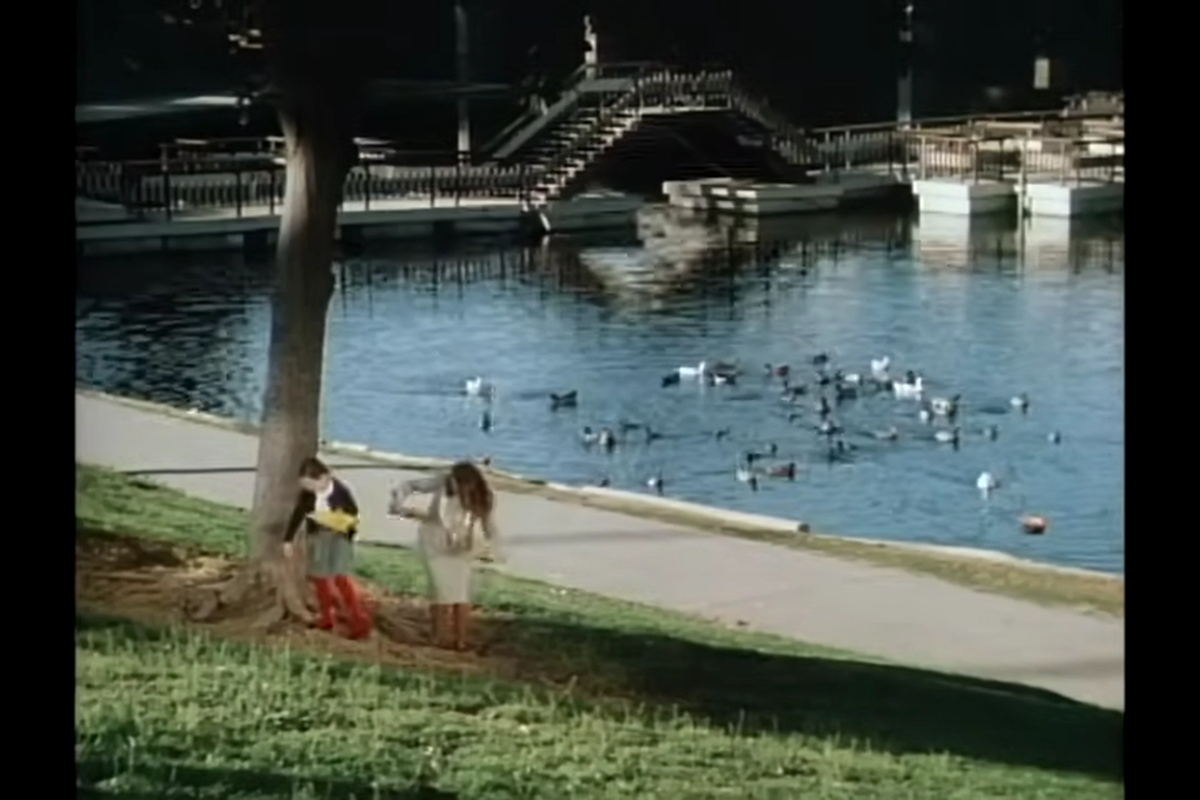
But next, the tree is not there anymore.
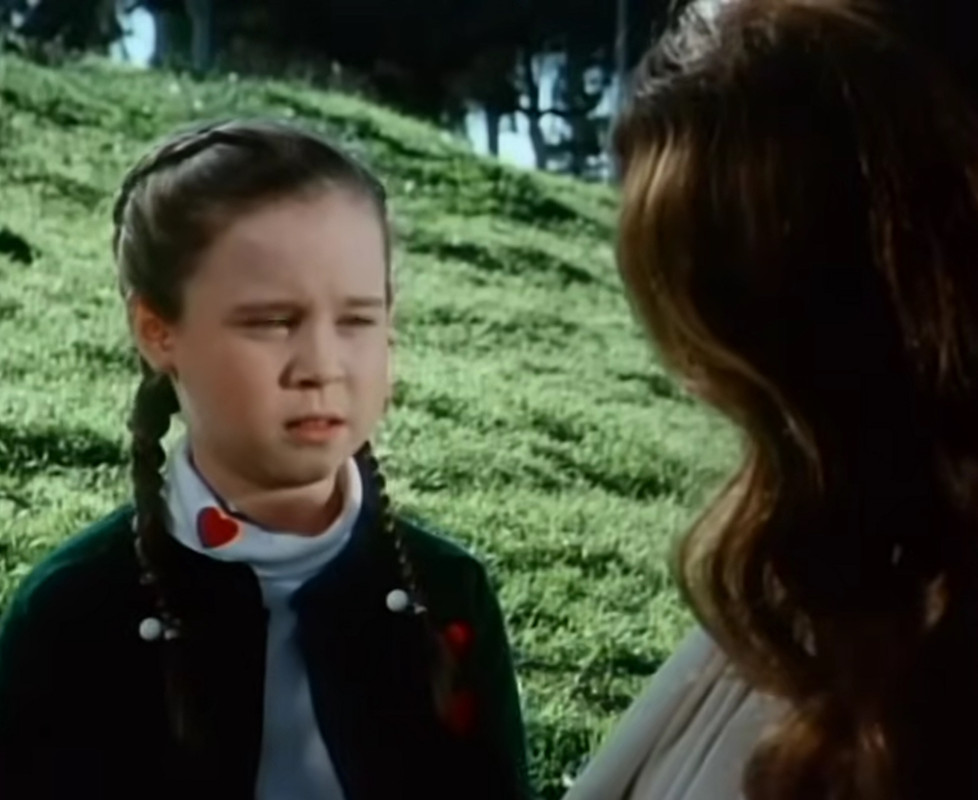
The actress must have the powers of taking trees away as fast as Jonathan can make them grow, maybe. Well, it was flowers, but whatever.
Highway Actors: this episode features two actors who would both come back in the fourth season, though they won’t be playing on the same episode. The first one is the child actress Natalie Gregory playing Amy, the daughter who can make tree disappear from her back. She retired from acting in 1988, but, just before doing that, she made another appearance on Higwhay, playing the sister of a seriously ill girl.
The second actress is Patricia Smith, playing Mrs. Stearns, her grandmother.
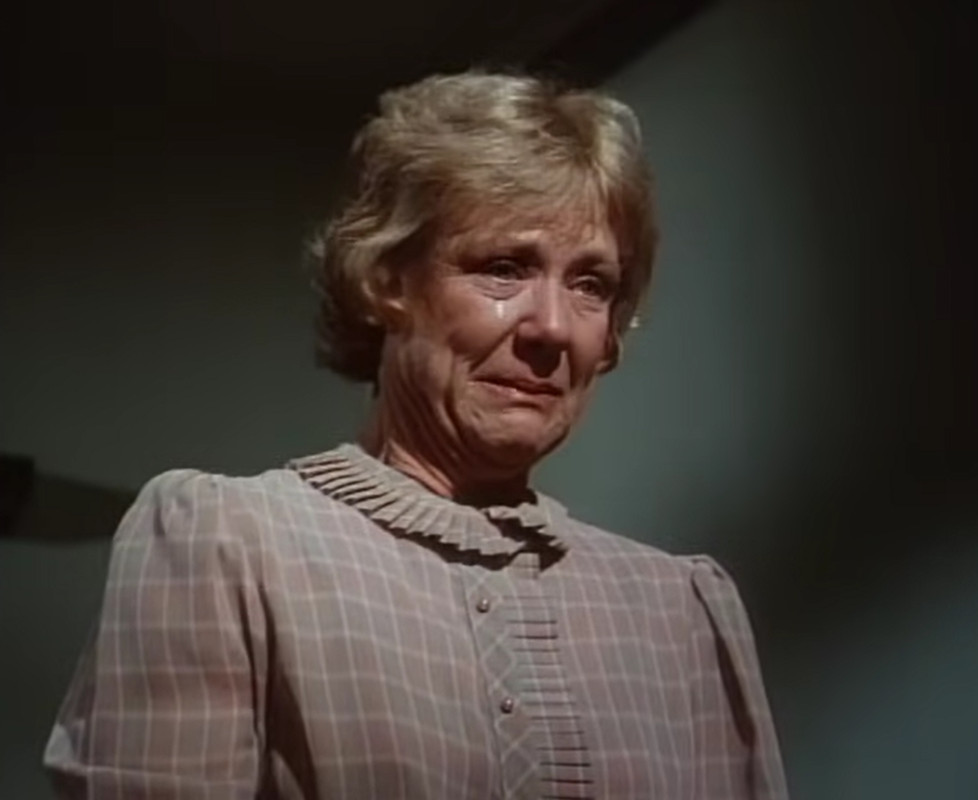
She would also appear three years later in the fourth season, and she will have a larger role on the assignment than she has now.
Friendly Jonathan: in this episode, there are a couple of instances where Jonathan reveals how friendly he is to Mark: one is at the beginning, when Jonathan and Mark get to the place they’re going to stay. There, Jonathan walks around, gives a once-over look in under 15 seconds, and decides it will work fine for them both—while Mark stays at the door. I mean, considering Mark’s the one who’ll be doing the cooking and sleeping there, you’d think he’d get more to say in the matter. But it’s not the case.
The second is when, at nightfall Jonathan wanders around the room while Mark is asleep — on the couch.
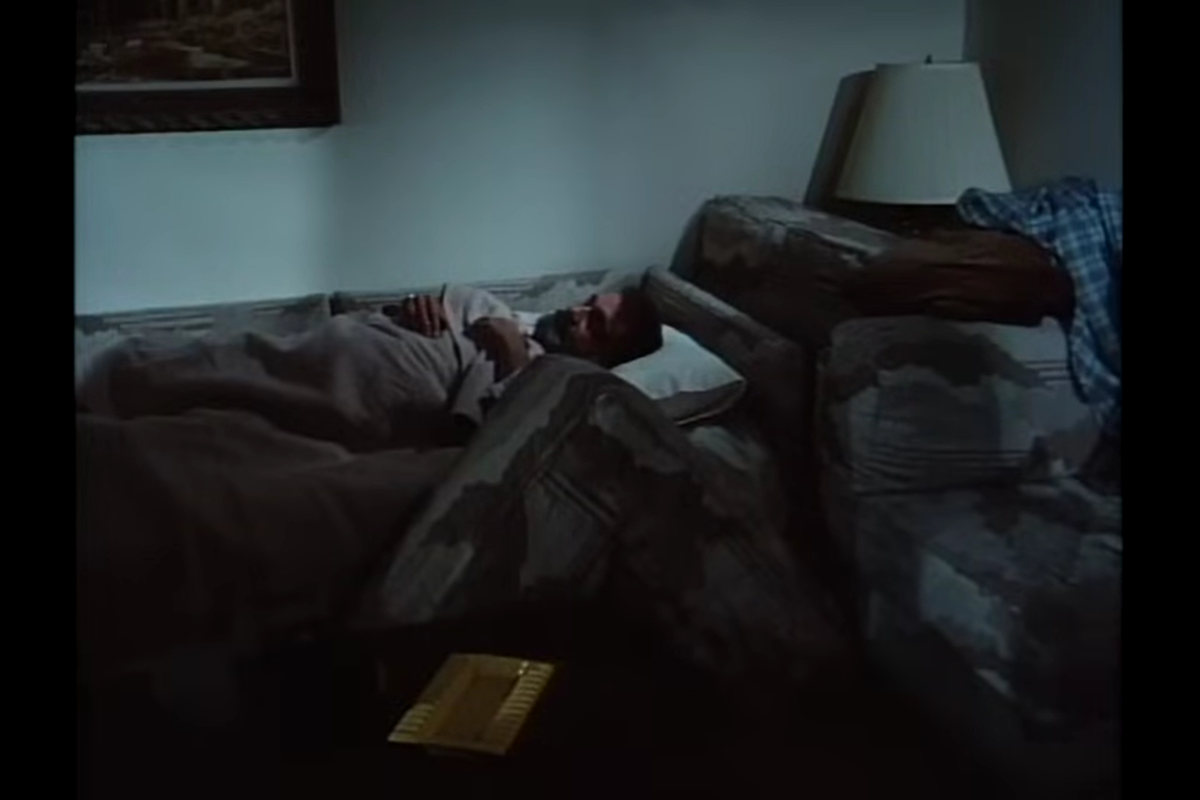
I mean, Jonathan is an Angel who doesn’t have to sleep, yet he keeps the bed for himself and leaves Mark alone in the living room. Just a further confirmation of what a great friend he is, and how lonely Mark is as he’s willing to put up with such treatment.
Recycle: so, considering that this episode comes from Bonanza, there are going to be some obvious recycles (like the first confrontation between father and daughter mentioned earlier). But, as this episode acknowledges the existence of Bonanza as its inspiration, they can’t be considered as true recycles: they’re mostly references.
However, there’s one punchline that sounds a recycle, and not just from the Bonanza episode: when Mark is at the hospital with Amy at the conclusion of this episode, she questions the existence of Heaven and wonders why people cry when someone passes away, if such place exists and is meant to bring great happiness. So, Mark tries to explain this by making a comparison to people crying at the airport when someone is leaving for a long time.


Then, Amy notices they aren’t really crying for the person leaving, but rather for themselves, who have to remain behind. And a very similar line was featured in an episode of Little House, during the second season, when a kid starts crying upon discovering his mother is going to die soon, and she scolds him, telling him that he’s crying because he’s feeling sorry for himself rather than for her, who is going to Heaven to see her late husband.
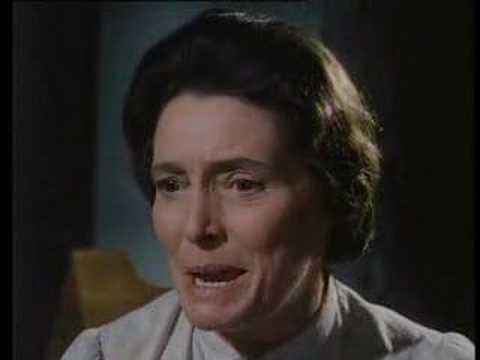
Actually, the origin of this idea (people crying for themselves) dates back to that same season twelve Bonanza episode. At the conclusion of that show, upon discovering his mother is ill, the kid asks Jamie (who is an orphan) how he reacted upon his parents’ death, and Jamie replies that he cried, but it was more for himself as he didn’t want his father to leave him — rather than for his father who was going to Heaven, supposedly a joyful place.
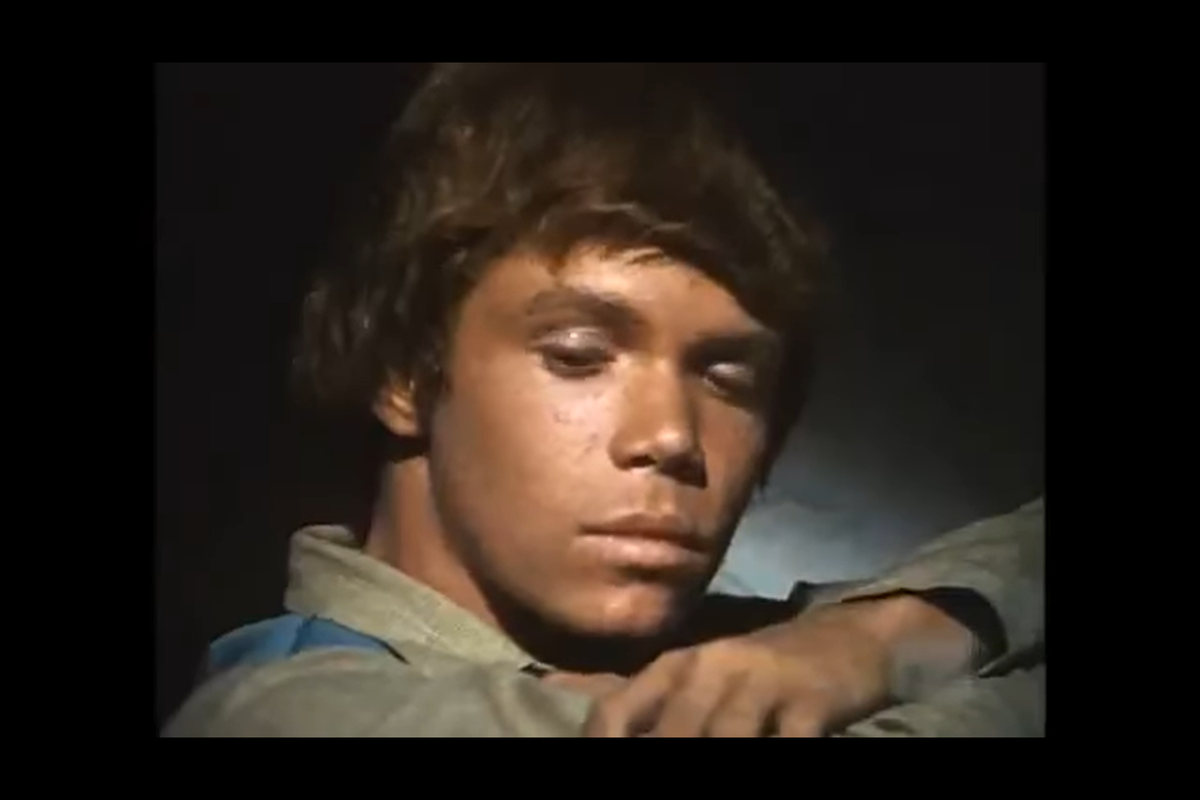
Curiously, that Little House episode was also written by Landon, and it was during the second season, the least watched one of the series — just like the Bonanza episode is part of the season twelve, which was still successful but suffered a little compared to its immediate preceding season. It’s as if Landon wrote that line for Bonanza, then he got quite annoyed that episode wasn’t much of a success, and he thought it would be a waste to leave it at that—so he tried to recycle it on Little House as well. Then he got even more annoyed that basically nobody watched that Little House episode either, so he recycled it again here, again. And finally, it got better the third time around, as this episode was much more successful than both the Bonanza and Little House one—and he wouldn’t be recycling it again in the future.
Actually, after that Little House and before this Highway, there was another offshoot attempt to recycle that line, and it was in yet another Little House: during one episode in season nine, Reverend Alden clumsily tried to reassure Jenny (who was grieving from the death of her parents), leading her to almost drown herself; something similar to what Laura did in season one when he tried to reassure her after the death of her brother (that man is seriously dangerous).
Anyway, during that season nine scene, he encourages Jenny telling her she shouldn’t be sad, because her parents were in Heaven and she was just crying for herself, not for them.

And that episode was written by Landon, again.
So, Reverend Alden’s sermons are actually recycles. Similarly to the way his congregation recycles the same hymn over the entire series. Or maybe the Reverend personally knew Jamie from the Bonanza series.
But that episode comes from season nine, the second least watched of the entire series (exactly after season two, which had the same line). That must have definitely irritated Landon, who wanted so bad to recycle this line. But again, Highway was the best one.
Anyway, considering that Little House got first (actually second, after Bonanza, yet before Highway nonetheless), this line can be seen as a recycle of that idea from there
Sunday Suits: when Jonathan and Mark go to church in this episode, they wear their Sunday suit.
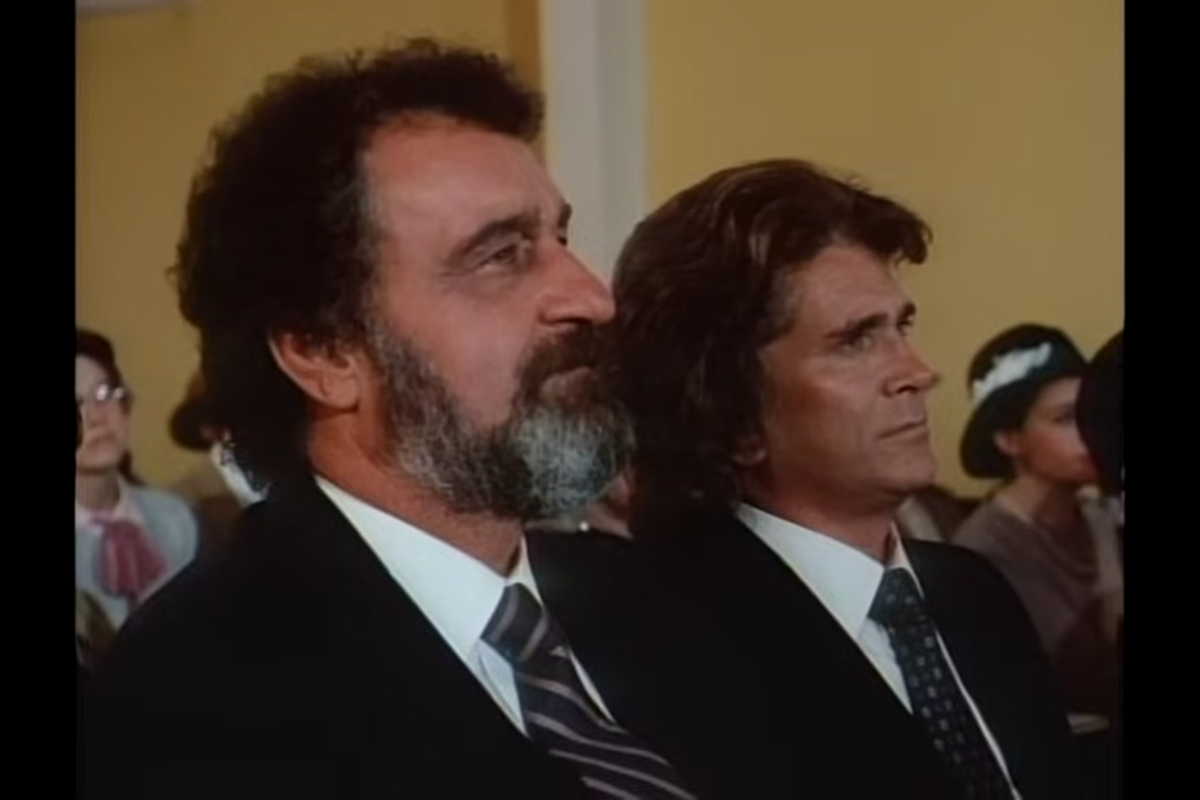
This was the third time in the series they both change their habitual clothes for something sleek and with a tie (that Mark dislikes so much): the first was to get the job as bodyguards in Catch A Falling Star, the second was at the conclusion of Plane Death for the funeral of Mark’s friend. They also did that when they went to have dinner with Scotty in One Fresh Batch Of Lemonade part 1, but they were without a tie on that one.
New “Stuff” Power: in this episode, when the power in Marsha’s apartment goes off, Jonathan uses a trick with the Stuff to fix that.
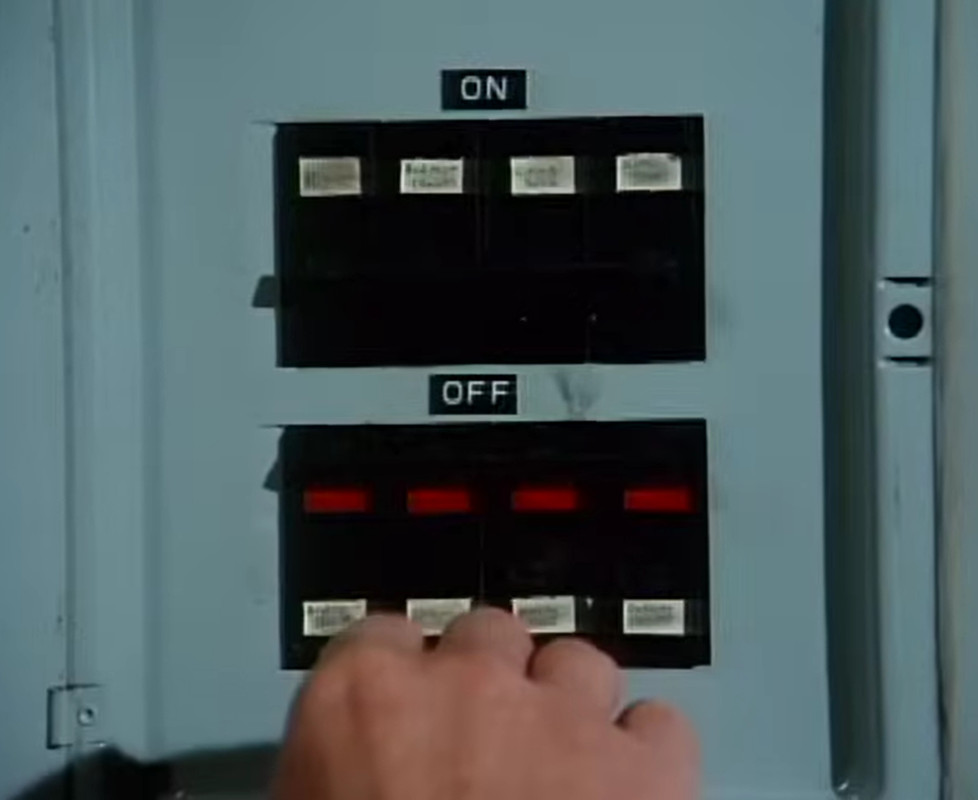
It’s something he will do again for the second season.
Punchline: of course, this episode coming from Bonanza first, and in parts Little House then, most punchlines are some kind of recycles from those two shows — just like Mark’s punchline about people crying for themselves when someone dies rather than the dead one. Still, they are presented in a new, updated version here: for instance, in the punchline comparing people’s death to a “long trip”, the dying woman of Little House scolded her son for crying for her, while here Mark actually reassures Marsha’s daughter, telling her that crying is good for us and there’s nothing to be ashamed of in that. Definitely better for a modern audience (consider that episode of Little House and this Highway one were produced 10 years apart).
Also, this crying is “good” or “bad” matter wasn’t on the Bonanza episode.
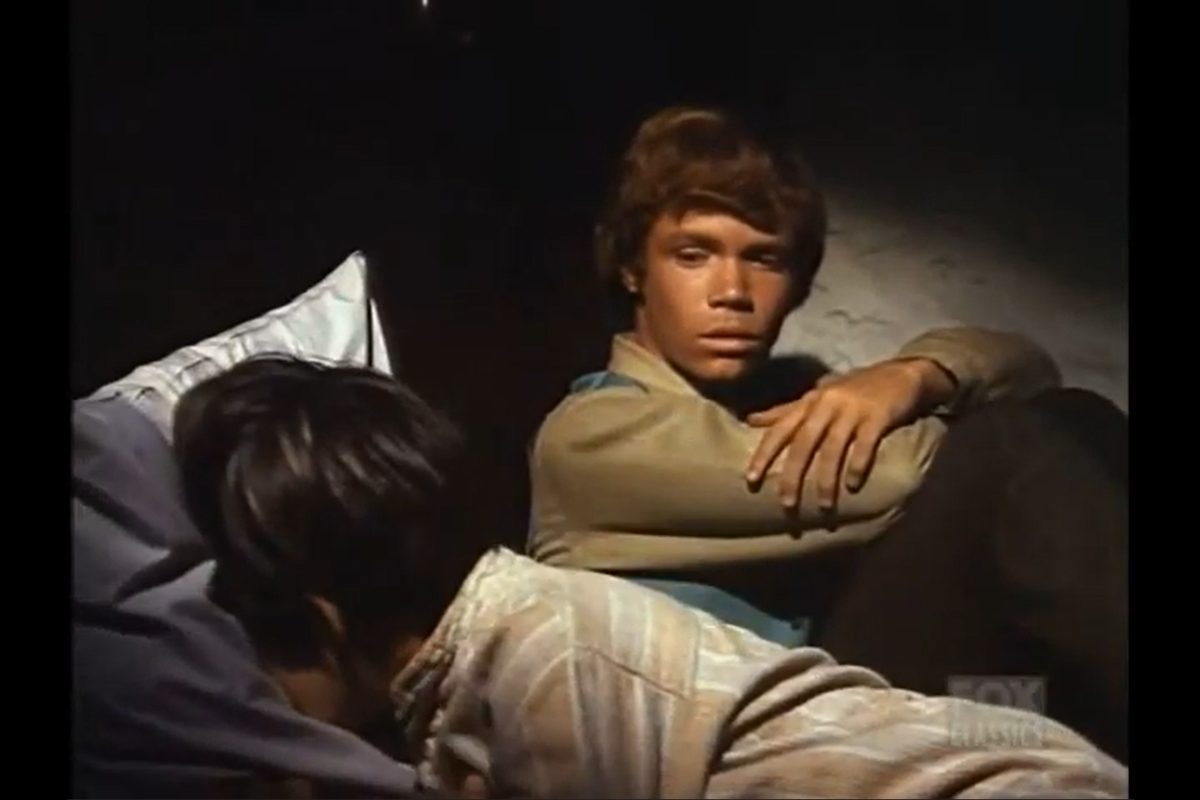
Because Jamie is not as experienced as Mark, and he can’t comfort the kid.
Anyway, about the rest of the episode, there’s one aspect to point out: some people considered this episode as being inspired by Landon’s own background, as in 1983 he divorced after 19 years of marriage from his second wife to stay with a woman 20 years younger than he was. So, it’s easy to imagine how people depicted him for it. And it’s been noticed how this episode was just a way for Landon to justify his actions (as if there were anything to be justified in the first place).
Now, exclude for a moment the point that his life’s choices are just his personal matters and only involves him and nobody else (just like the personal life of anyone). Then, the idea that the premise for the episode comes from a Bonanza one 14 years earlier (before the divorce and what followed it) may just be enough to show that it’s not the case, and that Landon isn’t trying to condone his actions somehow.
However, there are some lines that Landon took from the Bonanza one and modified to make this episode more openly adverse to people’s prejudice (the underlying idea of that Bonanza episode, but definitely reinforced here). For instance, what pretty much encompasses Landon’s idea of the whole assignment is when Marsha confesses she has a daughter without being married to a husband and her father considers that a sin. Then, Jonathan asks her if she loves her daughter to help realize she has nothing to feel sorry for.


And when Marsha tells him that her father somehow makes her feel guilty all the same, Jonathan reassures her with another punchline.
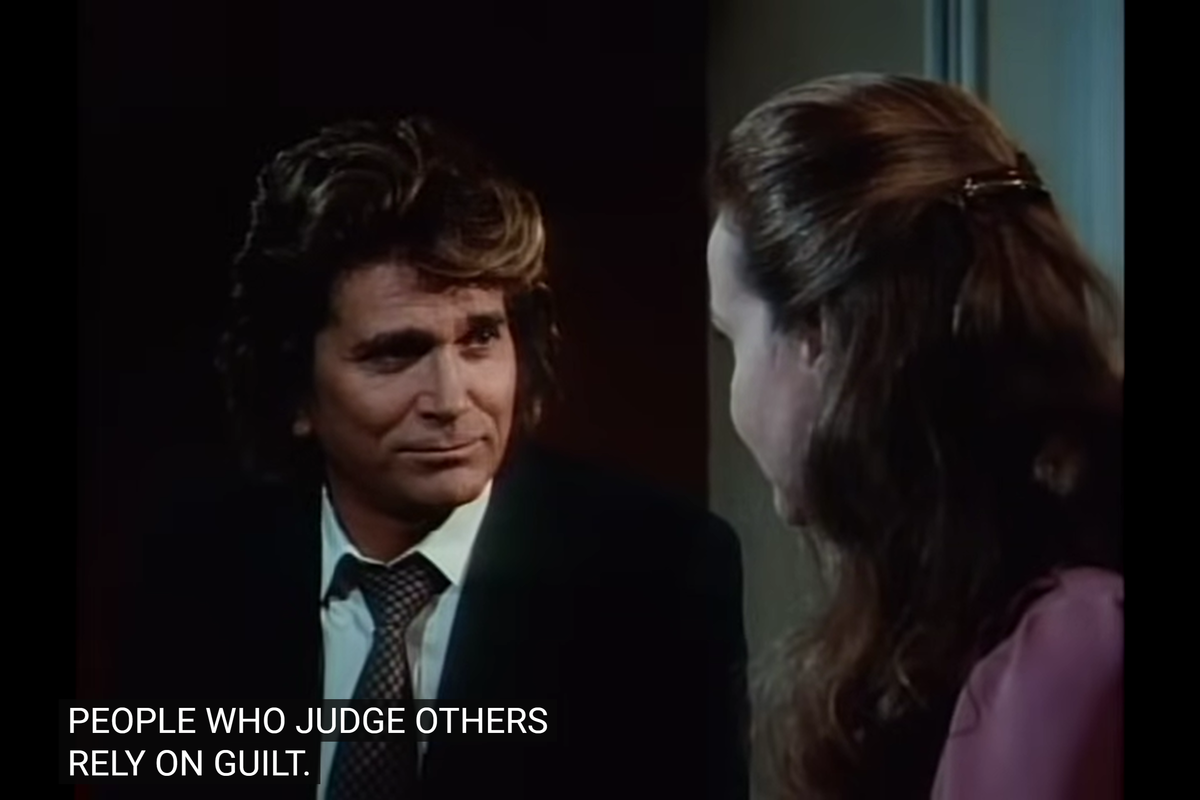
That punchline may just be addressing those vicious attacks on his personal life, and basically encloses the core idea behind this assignment.
So, this ought not be taken as a lecture, anyone can have different opinions on the matter — but rather as a cautious approach to this whole episode: it shouldn’t be seen only in one way or another (it is just all a “Landon-centered” story or it is completely detached from his life), otherwise the audience would be setting on that single idea and would form a judgement based on that partial view, downplaying and leaving in the background the rest of the assignment’s moral. And that approach is likely what creates division and clashes over this episode, which isn’t really about contrasts and easy judgements, but rather about comprehension of each other’s view, acceptance and reconciliation.
Assignment: Jonathan and Mark are assigned to help a single mother with a serious illness reconnect with her estranged parent before it’s too late.
There’s a bridge and a river.

And then a random tall building.
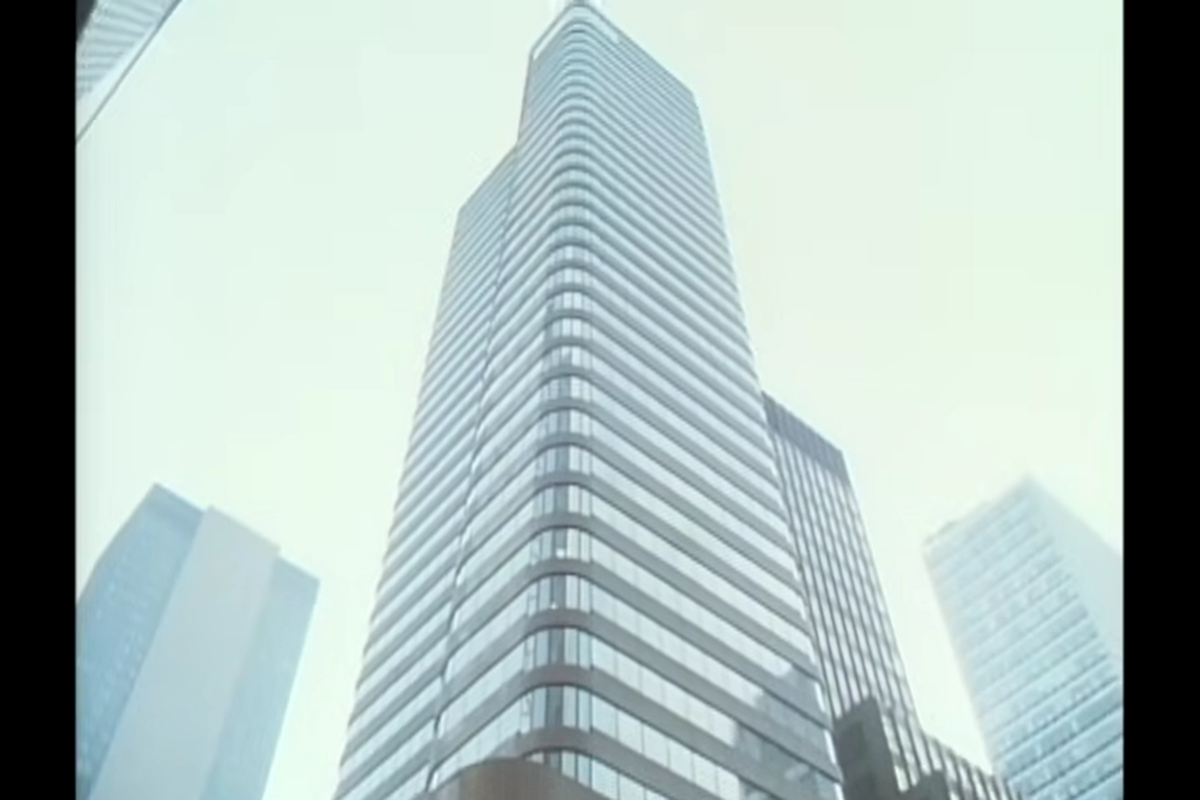
It’s unclear where this place is, but in a future episode they will be recycling it as New York, so let’s just take it as there.
Now, inside the building there’s Marsha, who mysteriously cries, then pulls herself together and fetches Amy, her daughter. Later, Marsha explains that the doctors told her to rest and go on a vacation, so they’re heading to California—where Amy will finally meet Marsha’s parents.
Meanwhile, there are Jonathan and Mark arriving at some apartment, where Jonathan begins negotiating with the landlady, Betty, to rent it for a month. But the landlady rejects them.
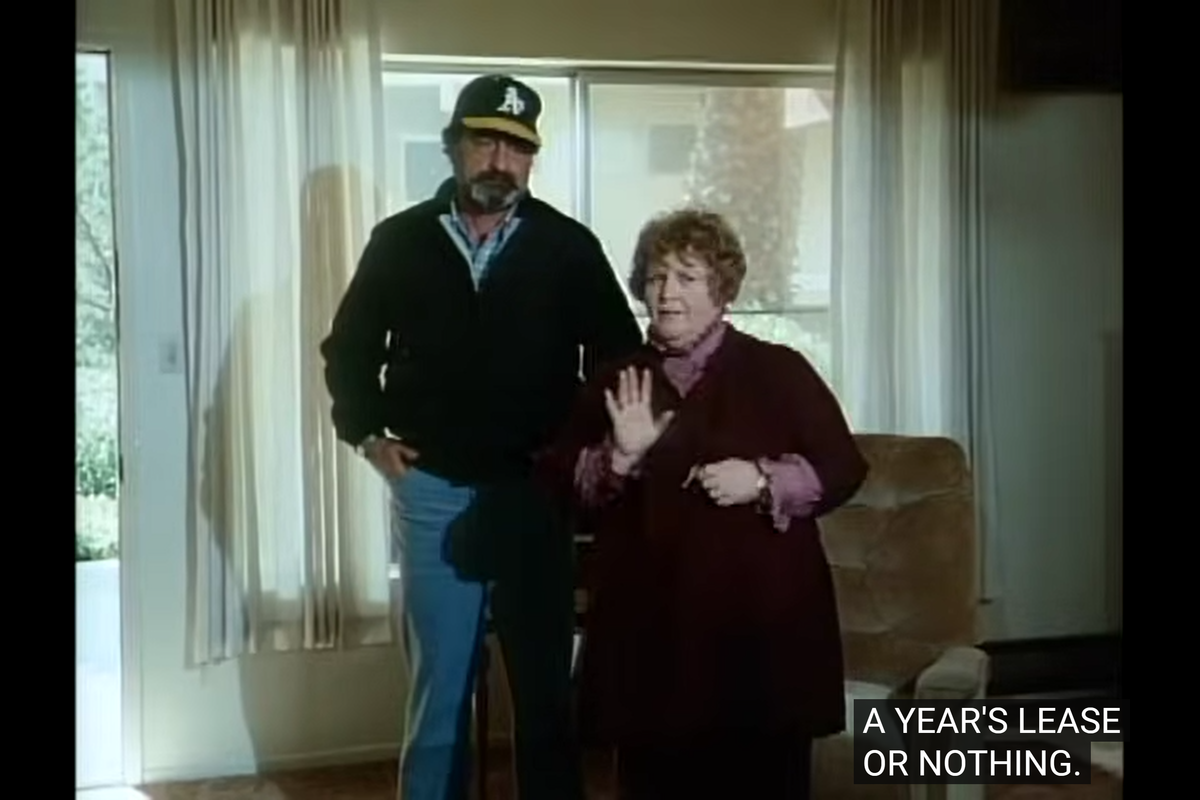
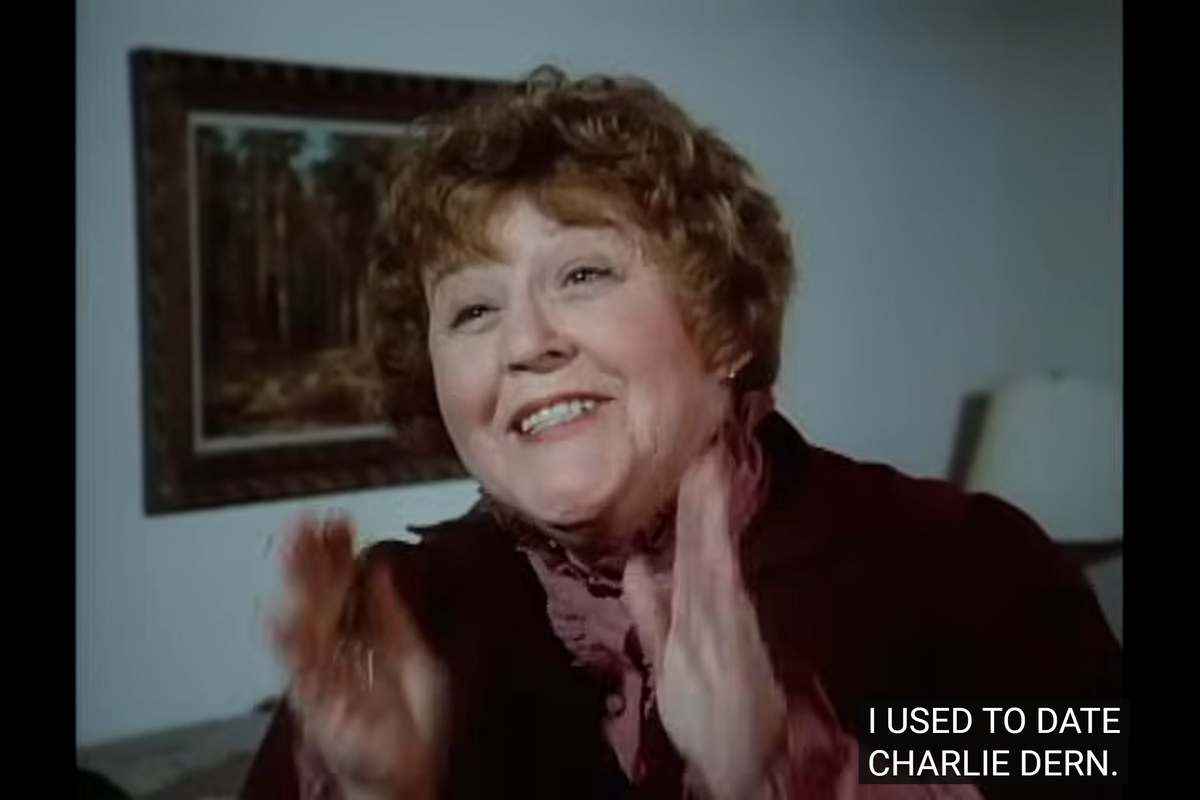
Of course, the angel has a plan: he mentions the place was recommended by a friend, Charlie Dern, this time, not the usual “Friend” he has referred to multiple times before — and adds some further details about him.
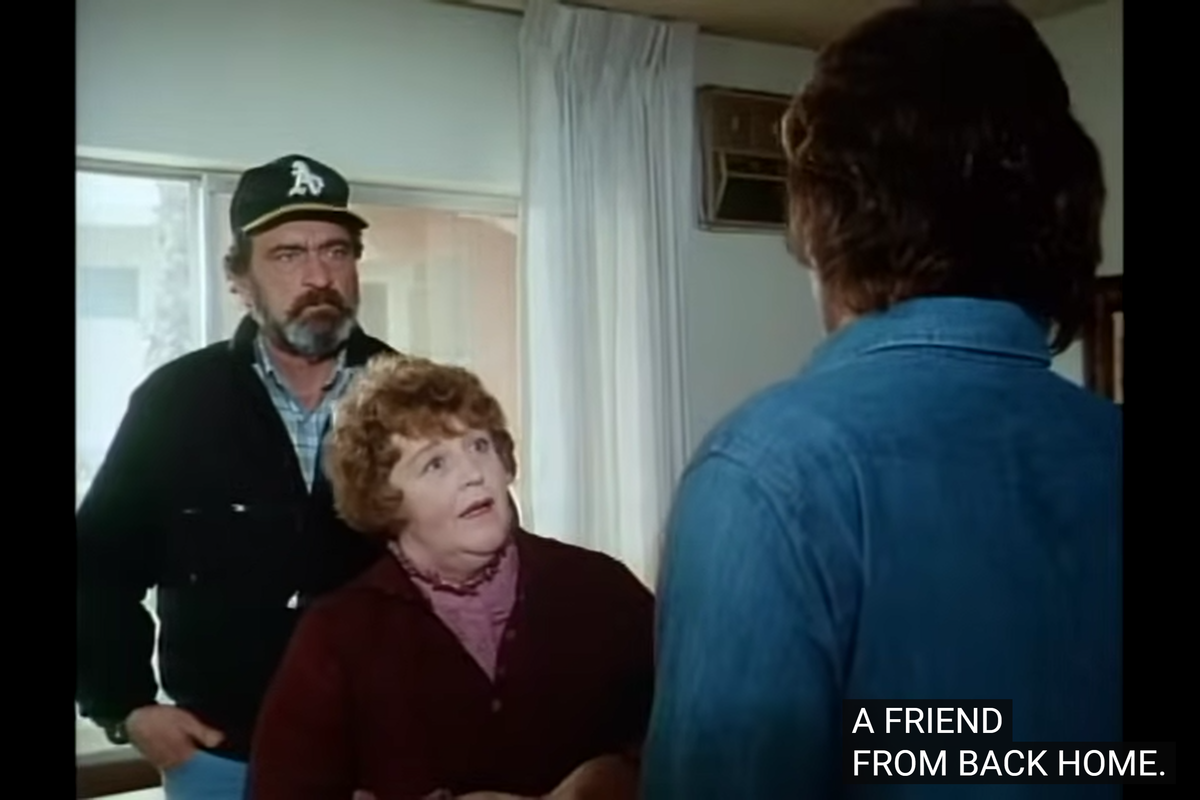
Jonathan then makes the first revelation of the episode: he tells her that they are from a city in Iowa—which happens to be the same place she comes from—and that Charlie was actually a close friend of hers she lost touch with many years earlier.
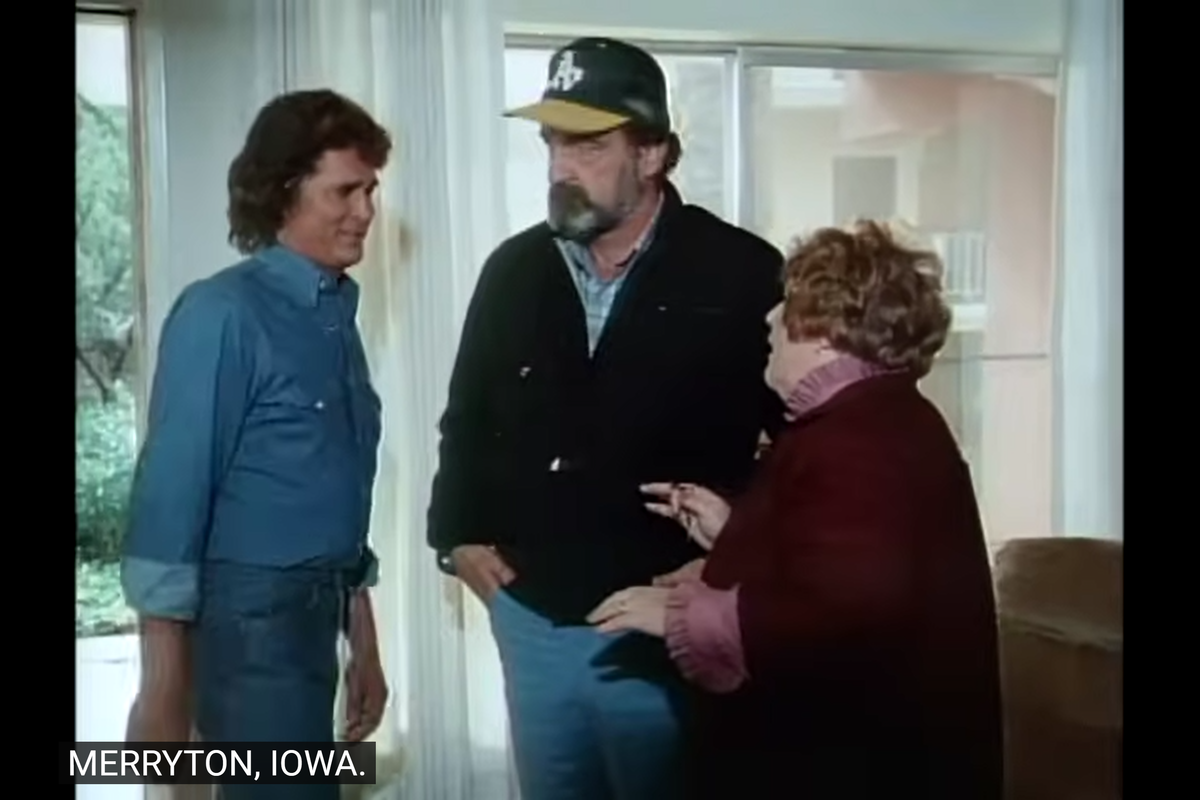
Now, there’s something to address here: somebody found this part was wrong for the series, because Jonathan told a lie (and broke one of the Ten Commandments) by doing that, saying that he knows a Charlie and comes from Iowa (and Merryton is a fictional city anyway).
However, it doesn’t really count as a lie. I mean, it’s true that he doesn’t know that “Charlie”, but he was likely informed by his superior of that, and he’s not saying anything that can be considered a “lie”; he just tells the landlady that there’s a man who is still stuck on her and still thinks about her, and that can absolutely be true.
In some ways, it’s like when Jonathan and Mark need to get a job and they make their references up. I mean, except in the very early episodes of the season (when they either completely skip that part or make some implausible scene like the one of Jonathan and Mr. Haskins at the beginning of the Pilot), they’ve been doing that quite a long time, and that too can be considered a lie. But, you know, they need to do that for a superior purpose. And maybe they’re actually the most qualified person for the job, and their angelic references are just a quick way to prove that to their current employer
Actually, the lie here is that he says they are from Iowa (unless he really came from there, and that’s implausible). But, again, it’s nothing new: this was not the first time in the series he lies to somebody, one instance was here (at the beginning to Mark).
Now, the problematic side is another one here: in light of this revelation, she basically decides to give them a special treatment and agrees to let them stay as long as they want to.
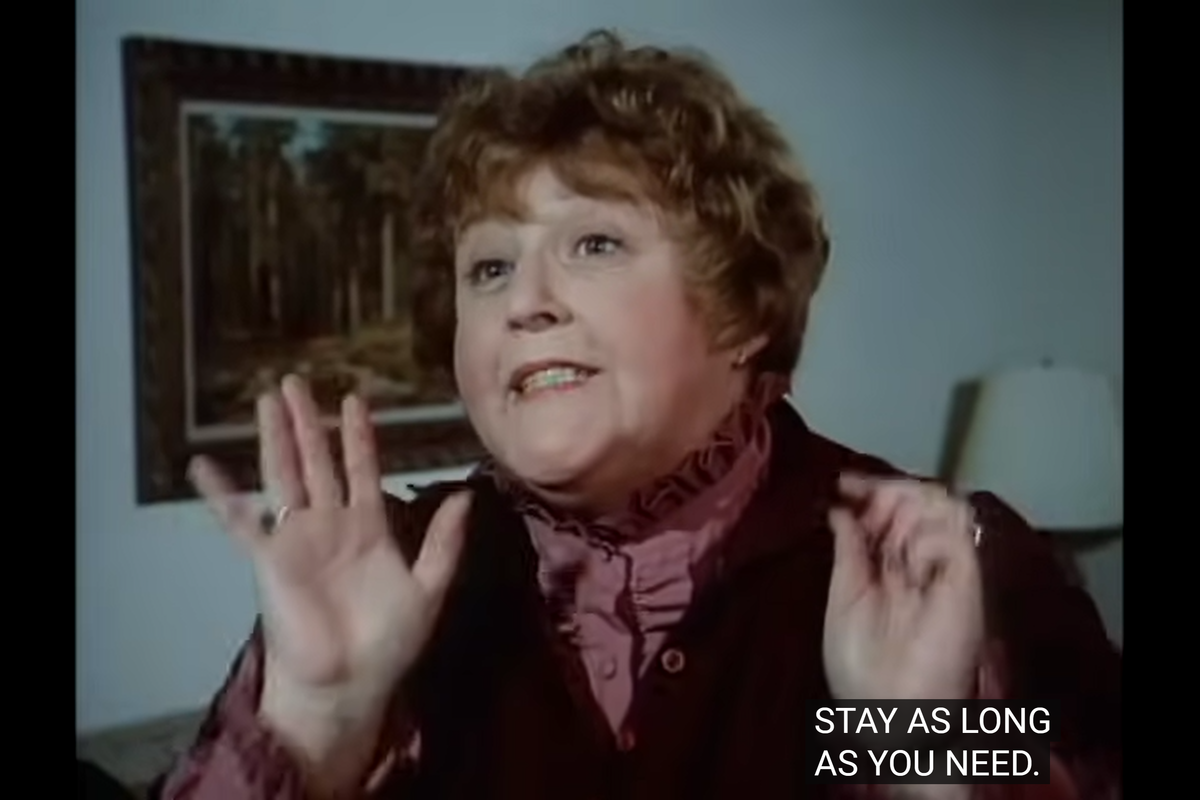
I mean, he always says his job as an angel is to “help” people—but here, instead of teaching the landlady to be nicer by coming down to his terms, he just boasts a lie to receive a preferential treatment. Maybe, down deep, he knows that some people won’t ever change, like such garrulous old lady.
Anyway, their brief revelatory moment is cut short by Marsha, who pops out of her door and informs Betty that her lights are out.
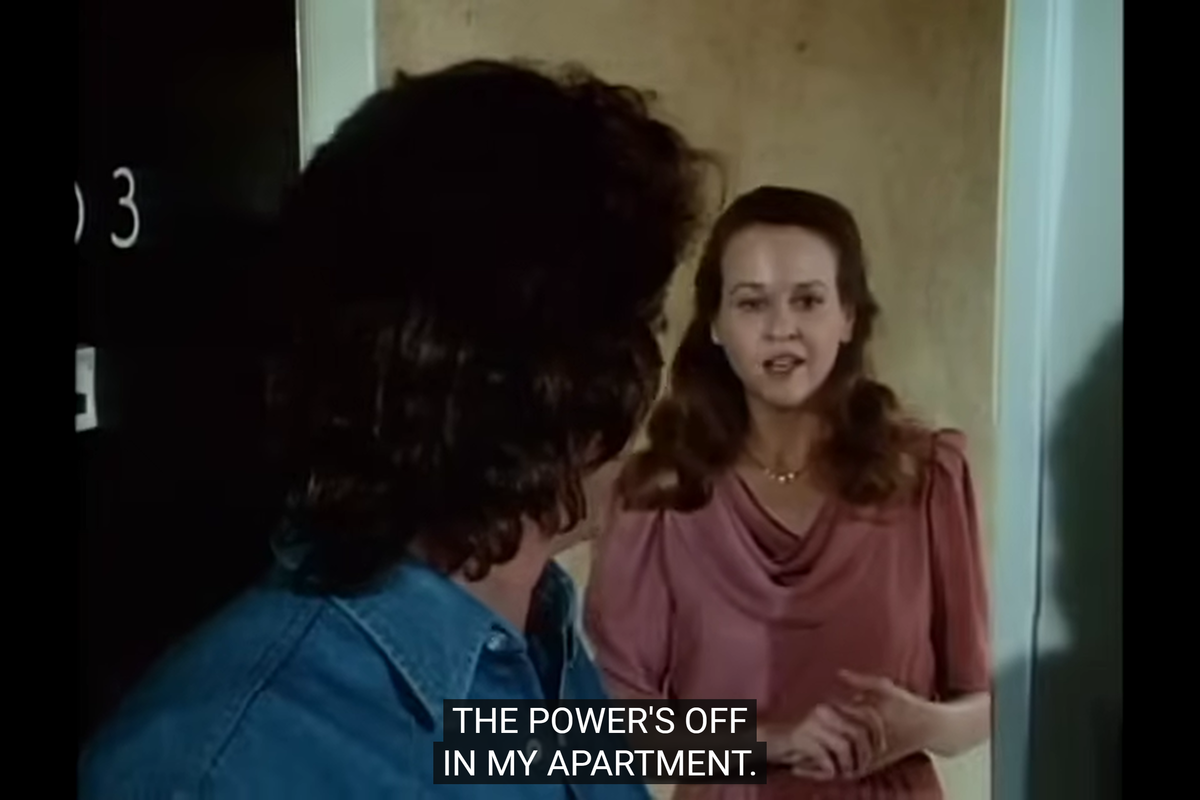
Now, her introduction reveals that she is staying next door. So, apparently, the reason Jonathan decided to rent there for a month instead of somewhere else is because he wanted to stay close to the assignment. But, there is still a problem: the next door apartment is also owned by Betty (otherwise Marsha wouldn’t be there to report “The power’s off” in the first place). That means Betty had likely charged Marsha the same rate as Jonathan and Mark before the preferential treatment: one year’s lease plus the deposit in advance. Now, considering Marsha actually plans to stay for less than a month (because, you know, she’s severely ill as she will also explain later), then why would she be willing to rent an apartment on a year-long lease instead of just going to a motel or something like it?
I mean, the only explanation is that Marsha must have known the same Charlie Dern and got the special treatment as well.
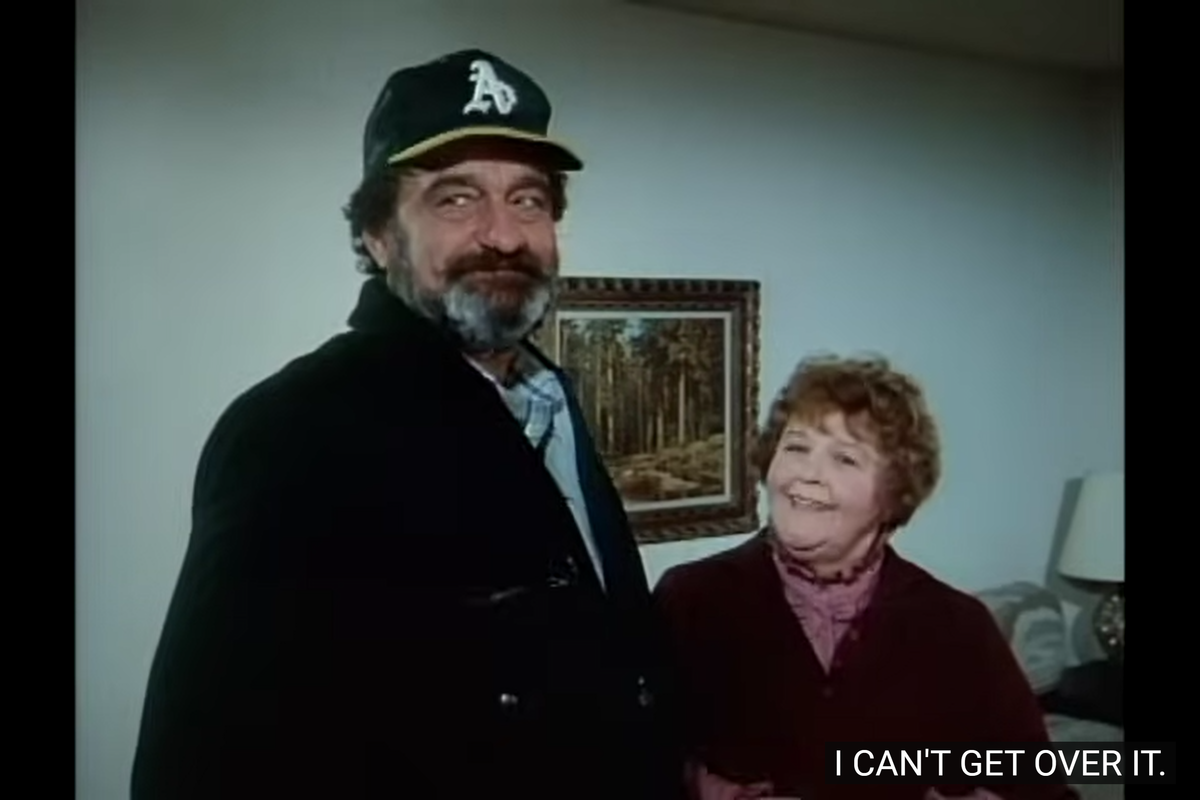
Well, you could just be nicer to those tenants who don’t know him, to start with.
Still, this whole part could have been avoided altogether. Or maybe Landon felt it was a necessary scene to jab at the high cost of living in California. This episode wouldn’t be the last in the series to touch on that.
Anyway, after fixing the lights, they all head to church together like a close, blended family and listen to the reverend’s monologue about selflessness and so on—the kind of things you’d expect from a sermon (although not one of Alden’s misguided recycles).
Everyone looks up at him as he walks through the aisle in the church. Because, you know, he’s the authority, revered by everyone, so he must appear stern, firm, and unshaken—and taller.
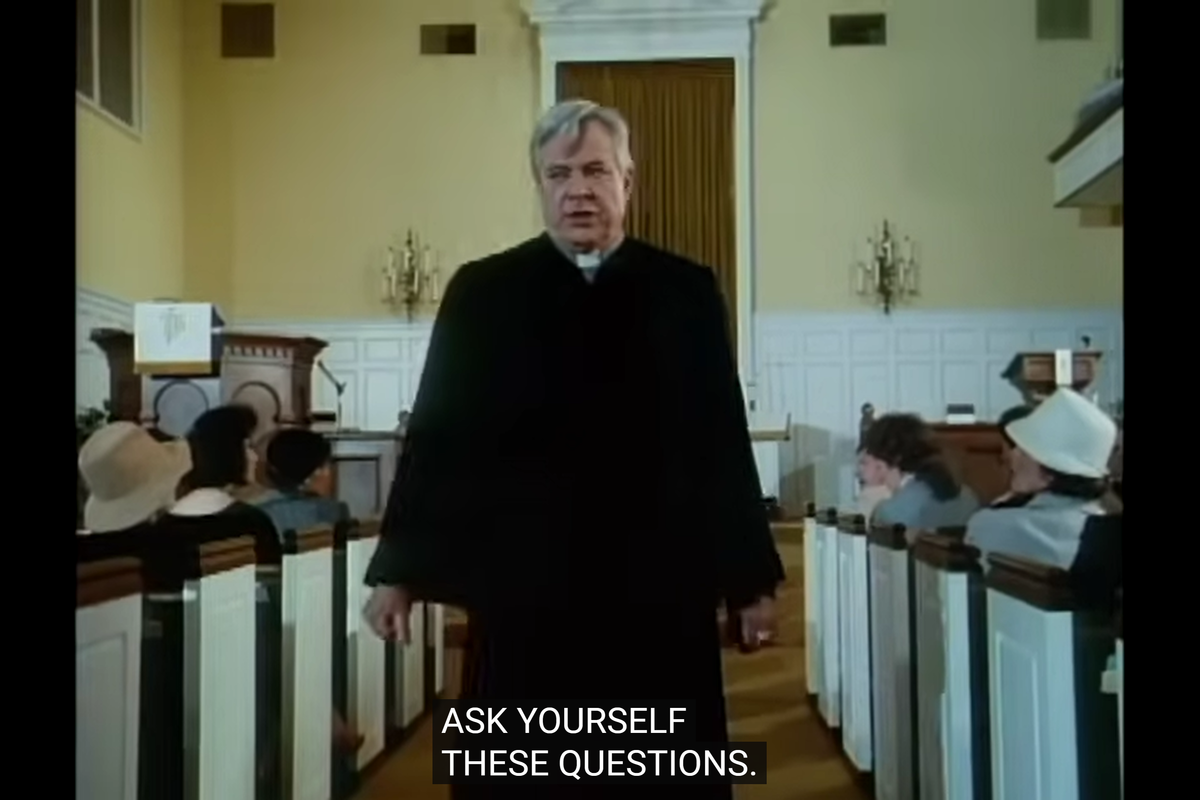
Then, he falters for a moment when he spots Marsha in the aisle, but immediately composes himself and continues his preaching.
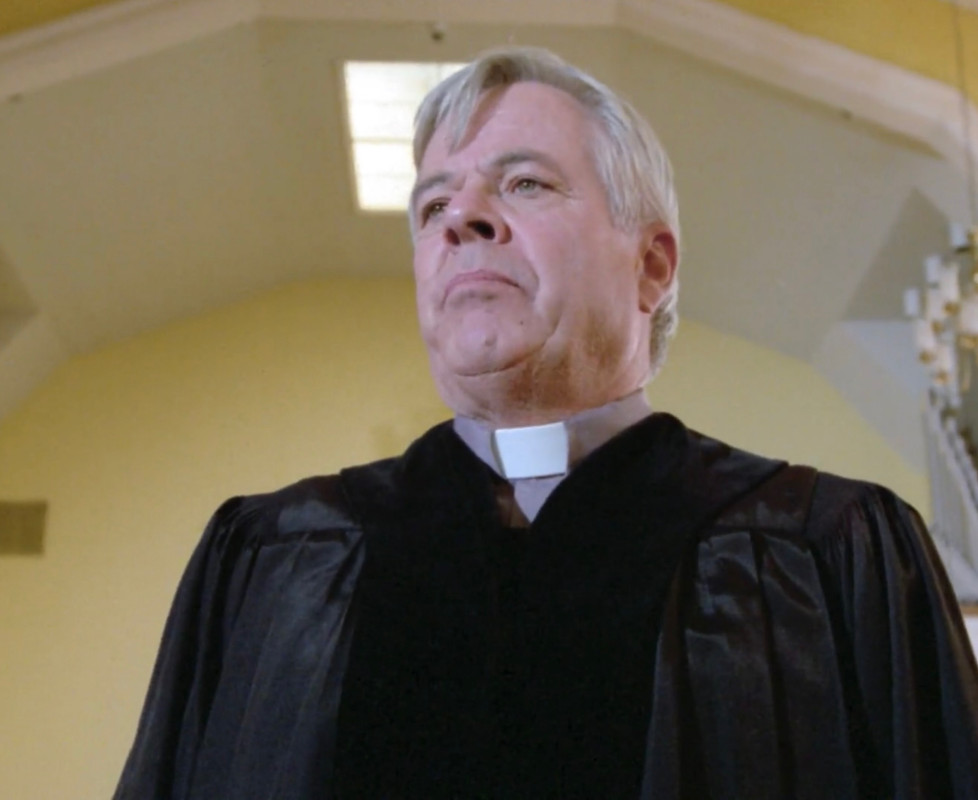
After the service, she approaches him and introduces him to Amy, but he turns them away. Apparently, Marsha is the Reverend’s daughter, whom she hadn’t seen for nine years, since Amy was born, as he had refused to acknowledge Amy as his granddaughter.
That night, Jonathan sees Marsha praying by her apartment.
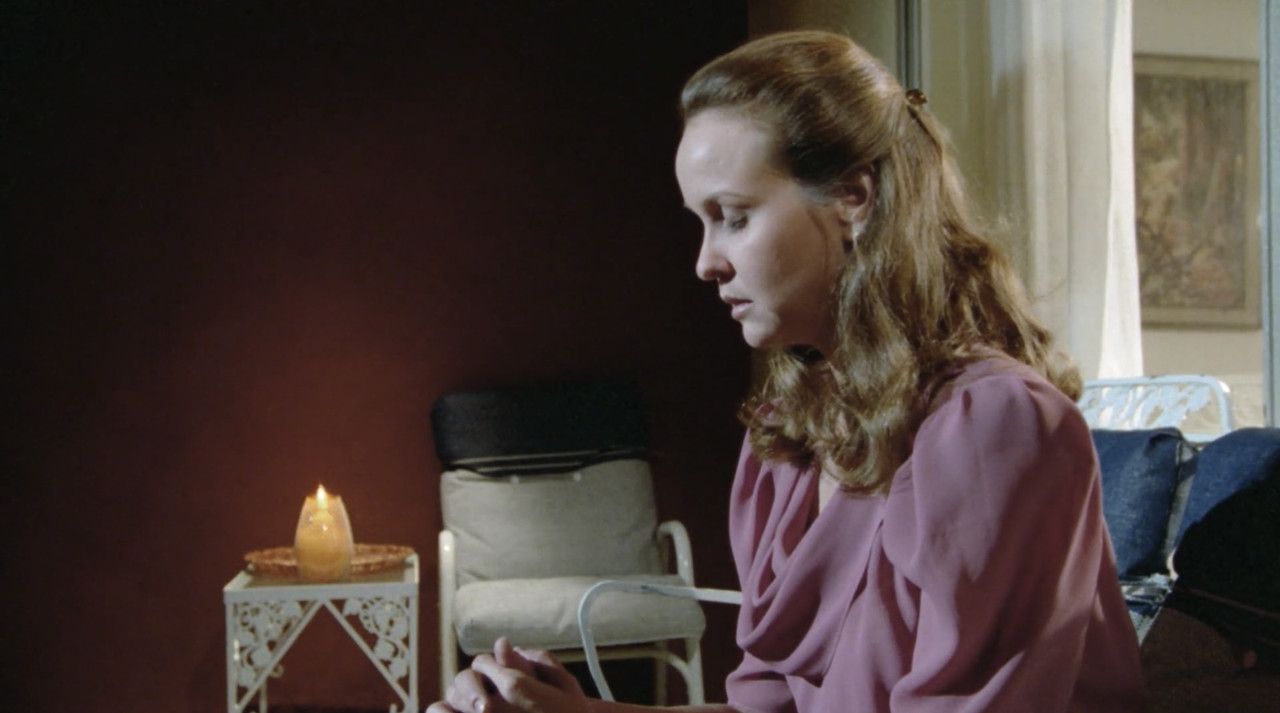
So, he thinks he might as well interrupt her.
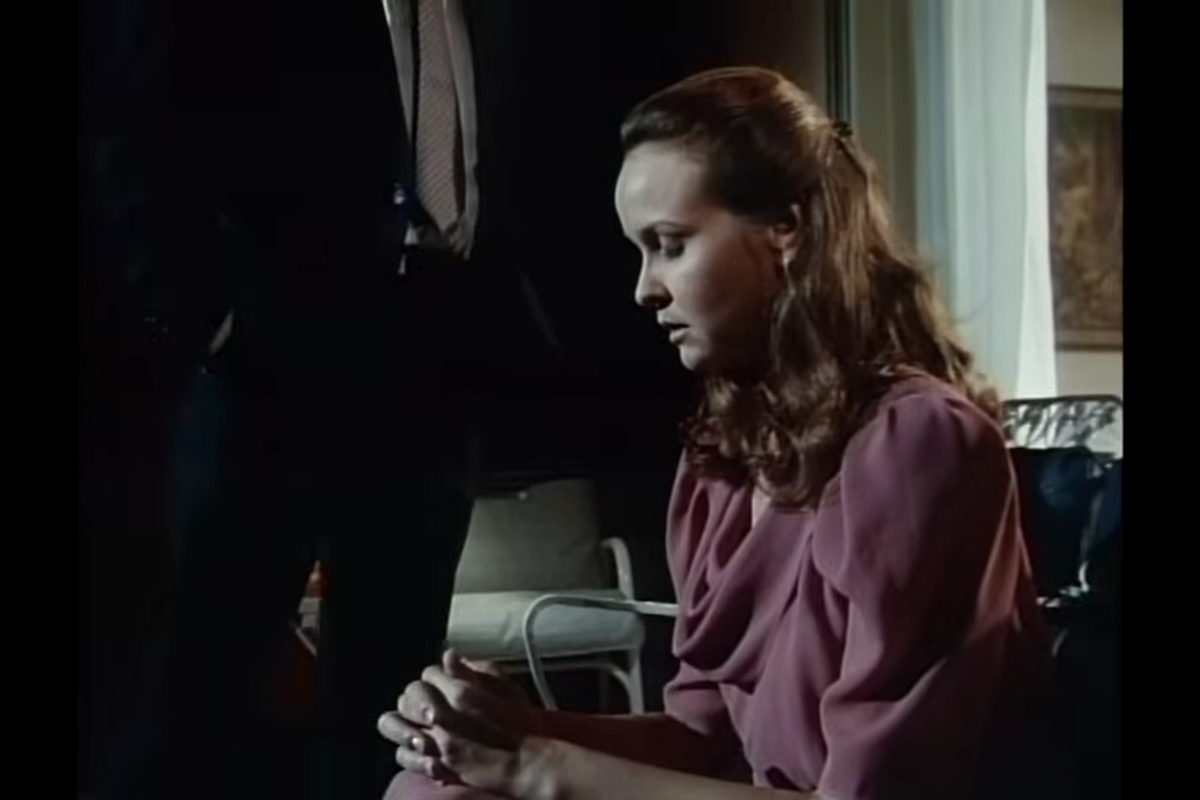
That man should stop just sneaking up on people like that.
Now that she can’t pray anymore, she thinks it is a good moment to tell Jonathan the truth: her father considers Amy’s existence illegitimate because she was born to unmarried parents (at least partially, as Marsha was the lover of a married man, but I suppose that would just make things worse), so he resolved to disown them both. Eventually, Marsha questions herself, wondering if he might be right and if she has done something wrong, but Jonathan reassures her, pointing out that a worse sin would be for parents to neglect their own children—exactly what her father is doing to her.
The next day, Marsha asks Jonathan and Mark to take care of her daughter for some time. Apparently, Jonathan and Mark look like trustworthy fellas, if parents are so willing to entrust them their children so quickly.
Then, when Marsha visits her parents, she confesses the truth (a slightly altered one): she’s received a job offer she can’t refuse, one that will require her to travel frequently, and she informs them that she came to California to entrust them Amy while she’ll leave her and never come back. Then, Marsha tells them she’ll be leaving soon and asks them if they were willing to put Amy up for some time, to help her settle down before they can adopt her.
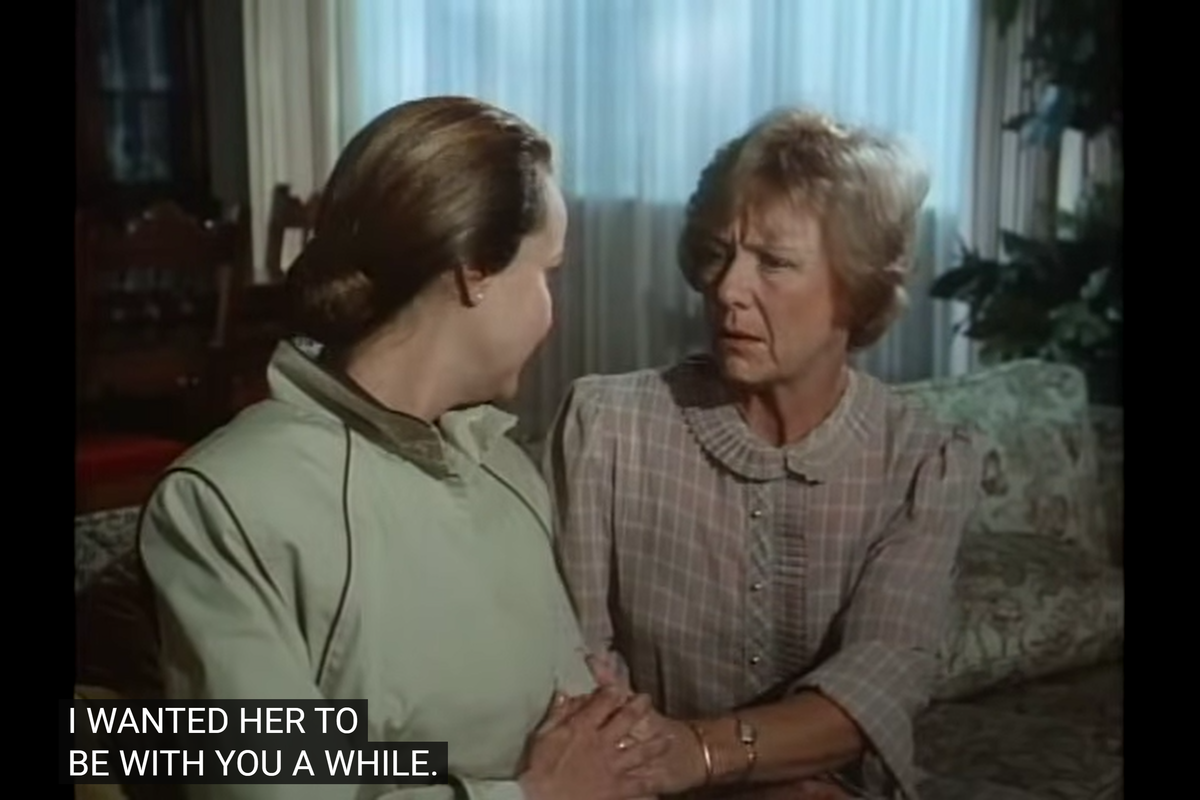
Of course, her mother is upset, while her father agrees, but only on the condition that the adoption is final, and Marsha will never come back for her. So, it seems like everything worked out, and Marsha takes Amy to the amusement park.
However, that night, Jonathan restlessly walks around the apartment, feeling something is wrong.
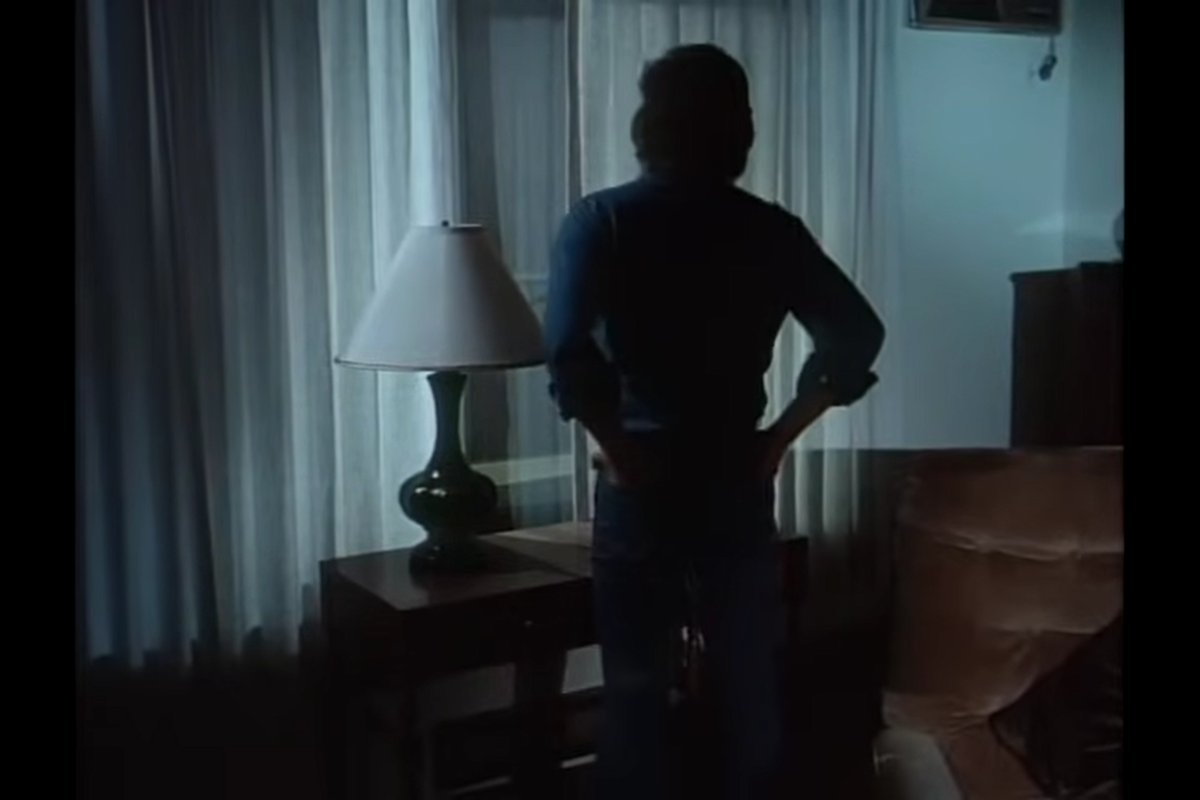
Suddenly, Amy knocks on them and hastily reports that her mother is feeling unwell. So, they rush to the hospital and alert Marsha’s mother. But as soon as she arrives, she learns the truth—the one that basically everyone in the audience has suspected all along: Marsha has a rare disease and only a few months to live. She didn’t tell anyone because she thought it would be easier to just abandon her child to her parents and then nobody would hear from her again.
But this sounds like a familiar trope: it’s exactly what Stella did in Help Wanted: Angel to Mark, and that time it didn’t work out either.
Anyway, Jonathan now goes to the Reverend’s house.
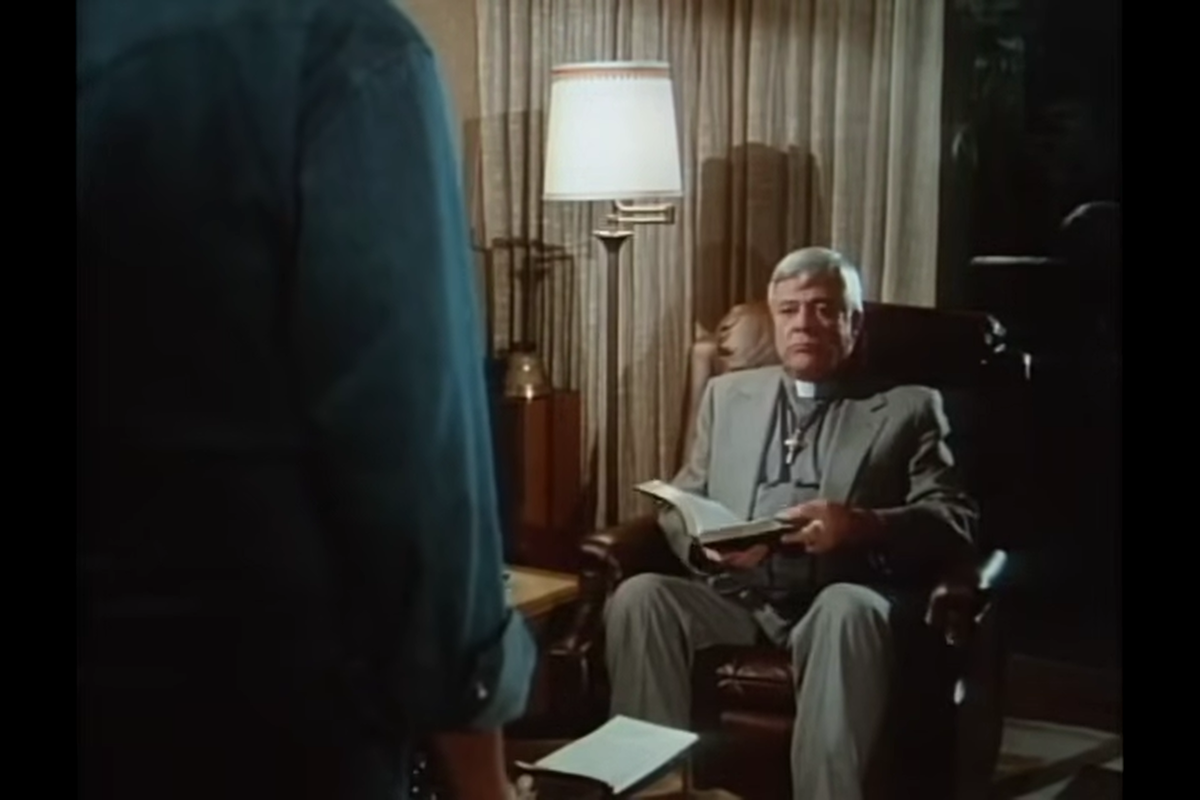
So, either he used the power of opening locked doors that he had used in the latest episode, or maybe he appeared in there the same way he did in Plane Death to move quickly from one place to another. Or maybe the door was just open because the reverend follows Jonathan’s preaching from the Pilot and trust other people.
Either way, Jonathan is now standing there and informs the sitting Reverend of the truth: that Marsha is severely ill, that she gave them her daughter to protect her from her death, and that despite the way he’s treating his daughter she still loves him all the same. So, the Reverend agrees to visit the hospital. There, he bends over his daughter’s bedside, reconnecting with her — and at eye level now.
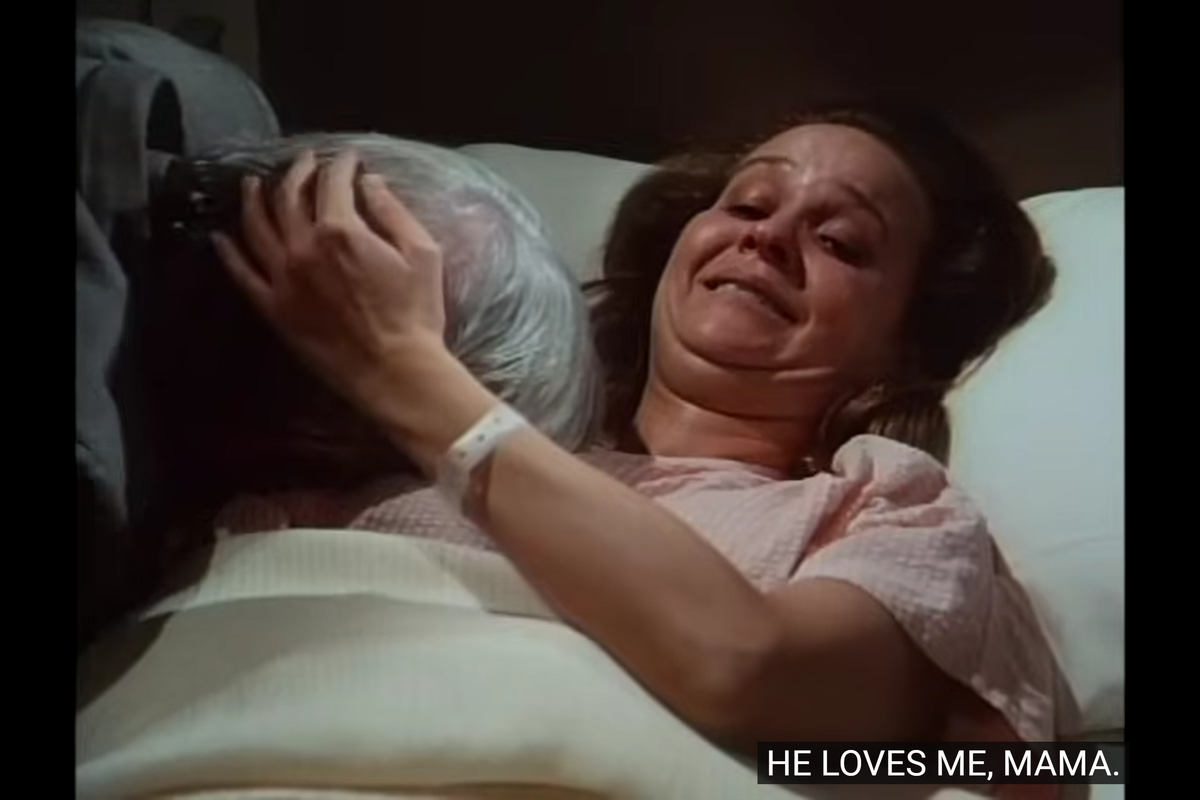
And it plays out exactly as Bonanza did then.
The following Sunday, everyone attends church. The Reverend officially introduces his daughter and granddaughter to the congregation and delivers an unexpected sermon discussing the judgy attitude of people.
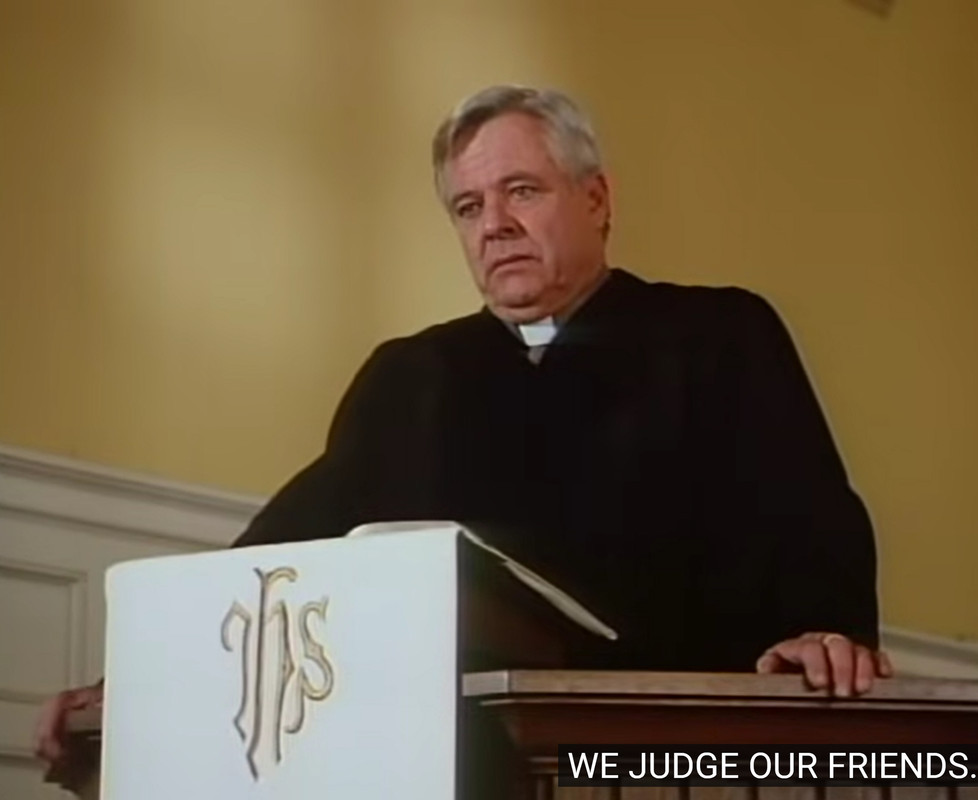
And this was one of the most contested part of the episode: he talks about never judging others, even those of different religions —there are no differences. He’s basically moving against a long-standing view that religion as means of personal redemption, a view that overlooks its core moral teachings.
Finally, there’s the Church, which feels like a stark contrast to the initial towering buildings and relentless pace of New York.
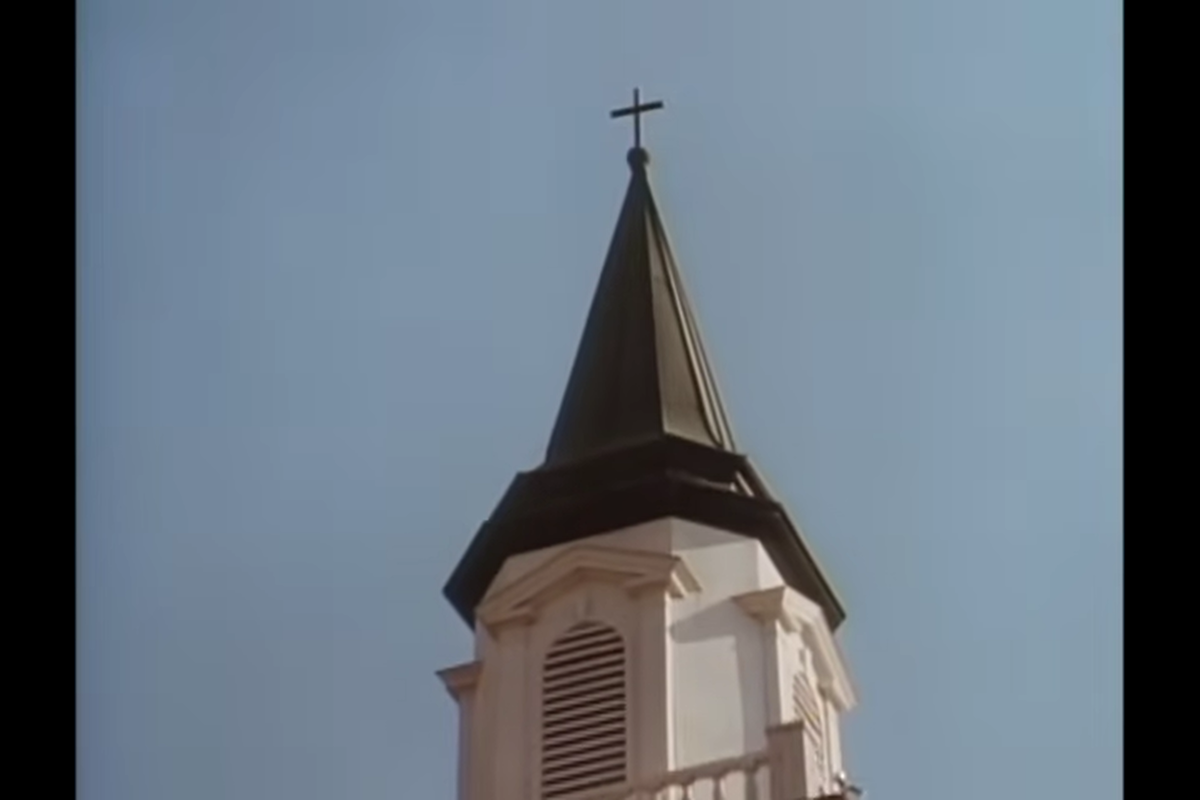
And, David Rose, just to make it further clear that he took inspiration from that Bonanza episode, randomly put that score at the conclusion of this Highway episode.
It’s a very dramatic episode, isn’t it. Now, this episode was much contested by Christians at the time for its controversial take on religion: the whole assignment revolves around a woman who has a daughter without being married, and she’s never sorry about this, nor she’s ever condemned by Jonathan about it. And the Reverend at the conclusion writes a sermon basically implying that Christianity might not hold all the answers. I mean, this was not preaching the choir, it’s quite of a bold stance for a 1980s Christian TV show.
However, none of the edgy parts of this episode undermined its success: it aired in February 1985 and scored 20 rating points, which makes it the third most-watched episode of the first season. For some reason, the most dramatic episodes tend to be among the highest-rated in the second half of this season. There’s no random laughter between characters, no cars suddenly halting, not a single “Cute, that’s cute” moment, anything. Yet, it still worked greatly.
 Highway To Heaven Cast

Leave a comment