

Airdate: 11/20/1985
Directed by: Michael Landon
This episode is a bit of a departure from the usual.
Complete show available here.
Assignment: Jonathan and Mark are assigned to help a famous stage actor experiencing mysterious visions.
It’s rather weird as assignment for different reasons. Apparently, one day Jonathan (dressed up as a priest) and Mark (dressed up as himself) go to see a NY play about a man struggling with his faith. And the actor Fred Fusco, playing the protagonist, is currently struggling with that too—and seemingly hates the role.
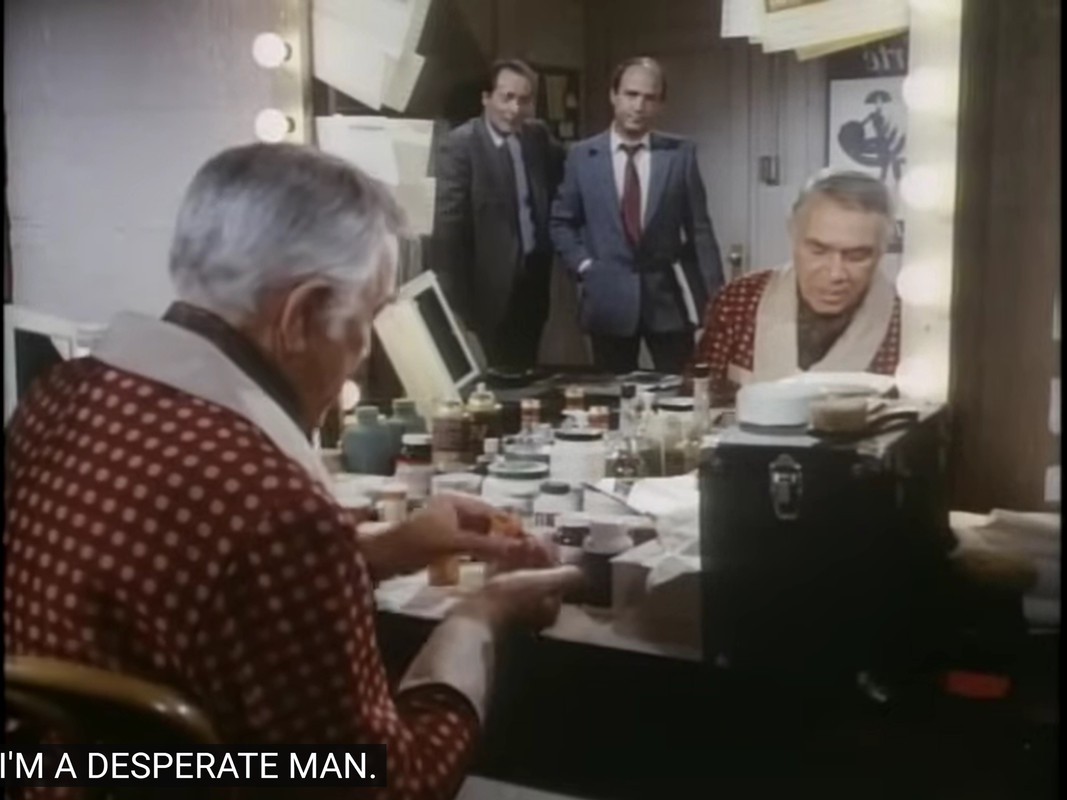
But he has to do it all the same.
Anyway, the play concludes with the death of his character.
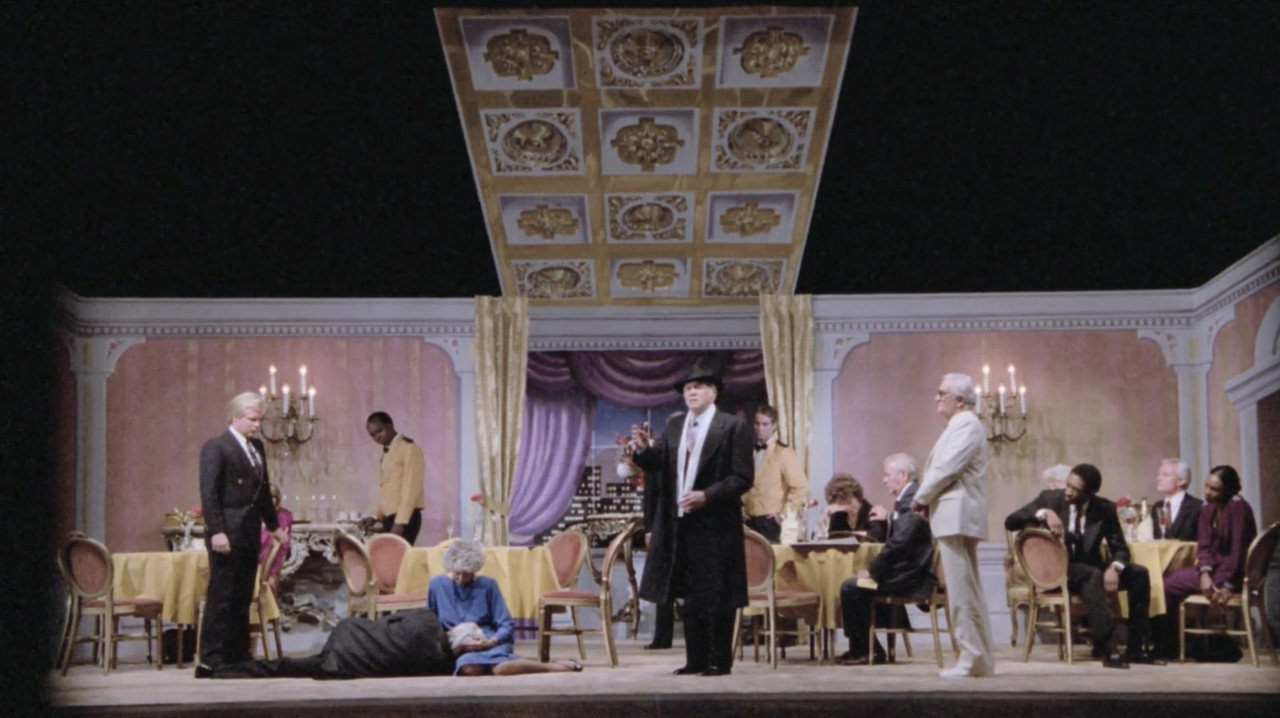
Just like any stage production by some young boisterous playwright.
Yet, the night Jonathan is in the audience, Fred has a mysterious vision: he claims he spotted someone during the third act, right next to Jonathan, but invisible to everybody.
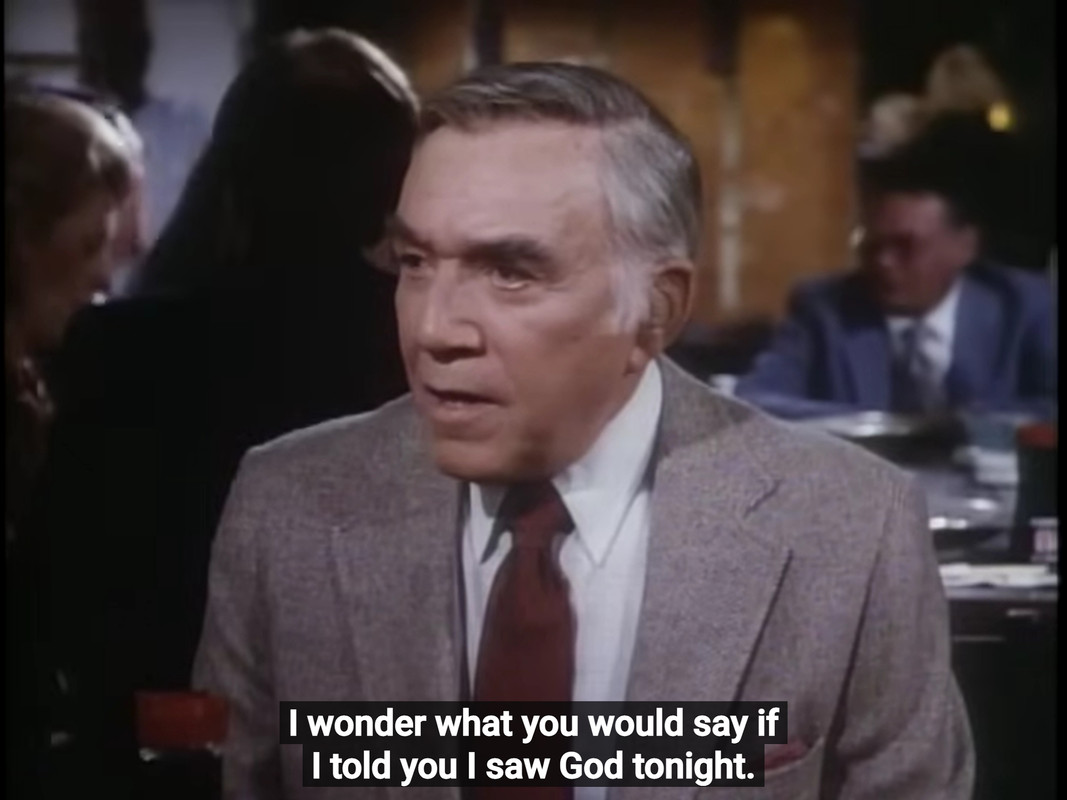
That Jonathan used the “Stuff” on you.
Of course, everyone thinks the man is nuts, even Jonathan. So, apparently, their assignment is helping the actor see it clear.
But that’s where the it becomes peculiar: when they first introduced Fusco, he still hadn’t had this “vision” or whatever it is; by that time, he was just an actor struggling with his faith. So, it seems like the assignment begins once they have already started working for him, not before, as it has always been so far (for instance, one episode ago they began working with the Toros when the tournament had already began, not before). Also, in the episode, Fusco doesn’t recant his vision just because everyone else think he’s crazy; thus, Jonathan’s assignment is not, like, convince Fusco to still have faith despite what everybody feels about it.
Now, that might be a hint suggesting the real assignment isn’t about Fusco, but it’s rather a test to Jonathan and Mark’s own faith. Because, think about it: nobody believes in Fusco’s vision, and Jonathan — who has always preached about having faith (not the religious one, but in humans) — now is the one in disbelief and wary of that man’s sincerity. However, if the assignment would have been about convincing as many people as possible of Fred’s vision, it’s reasonable to assume that Jonathan’s superior would have confirmed Jonathan the truth about Fred’s vision, or that Jonathan would have been told more in detail what the assignment is about (as an example, the same way he knew that the assignment in Catch A Falling Star was “help a father and his kids”, or in A Match Made In Heaven it was “get these two people fall in love” and so it was with almost any assignment of season 1). Yet, now, it almost seems like he doesn’t know what the assignment is about in the first place, because he doesn’t believe Fusco in the first place.
That is exemplified by the conclusion, in which Jonathan goes talking to the chair supposedly near the place where the vision took place, and tells his superior about doing something about it.
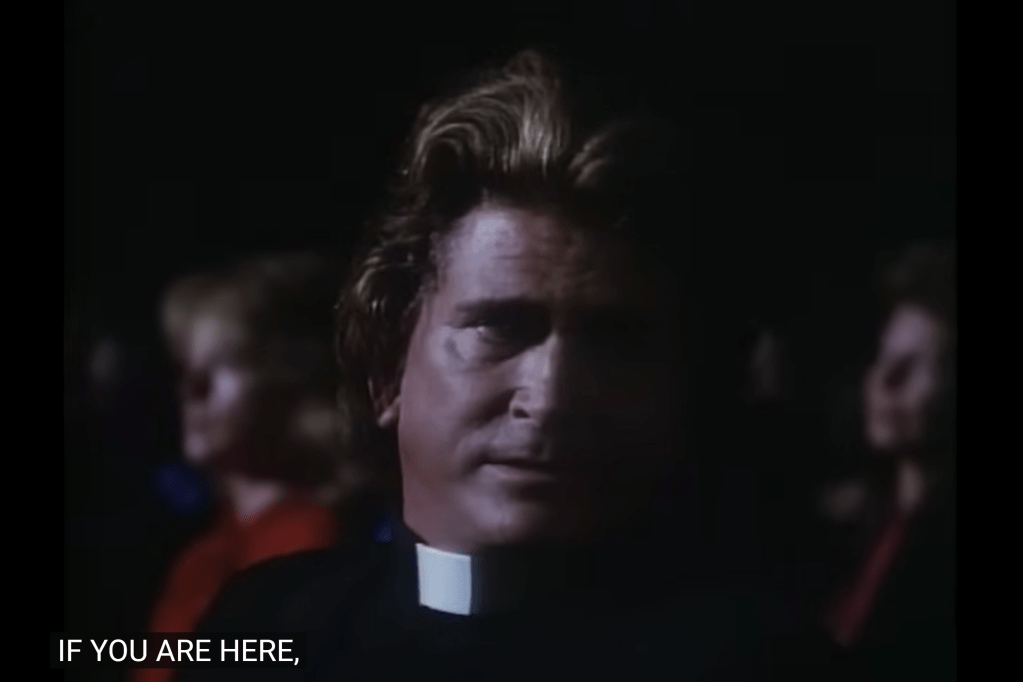
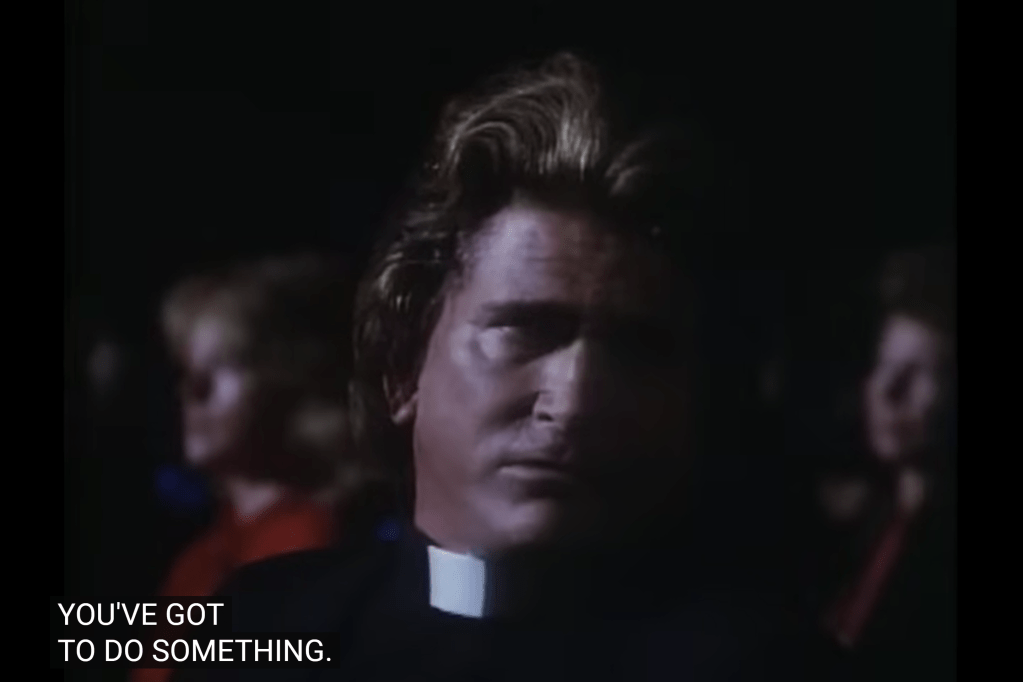
Now, that reveals Jonathan is oblivious the whole episode whether his superior were actually there (or he’d know whether his superior is on that chair or not), and he’s unsure about what the assignment is (or he wouldn’t be asking for his superior to “do something”, as though Jonathan couldn’t use his powers to do it himself, and as though Jonathan didn’t know what to do exactly). So, maybe, it is possible that the assignment is actually about Jonathan and his own faith, as if he had to choose whether to believe Fusco or not.
That way, it’s similar to the episode of One Winged Angels, when Jonathan fell in love with the subject of the assignment, and Mark proposed that all the assignments somehow deal with him — he’s not a detached entity helping people from a soapbox, but he’s part of every assignment too. And now, Jonathan is the assignment, or at least a big part of it.
- Background
As for the settings, Mark immediately points out something.
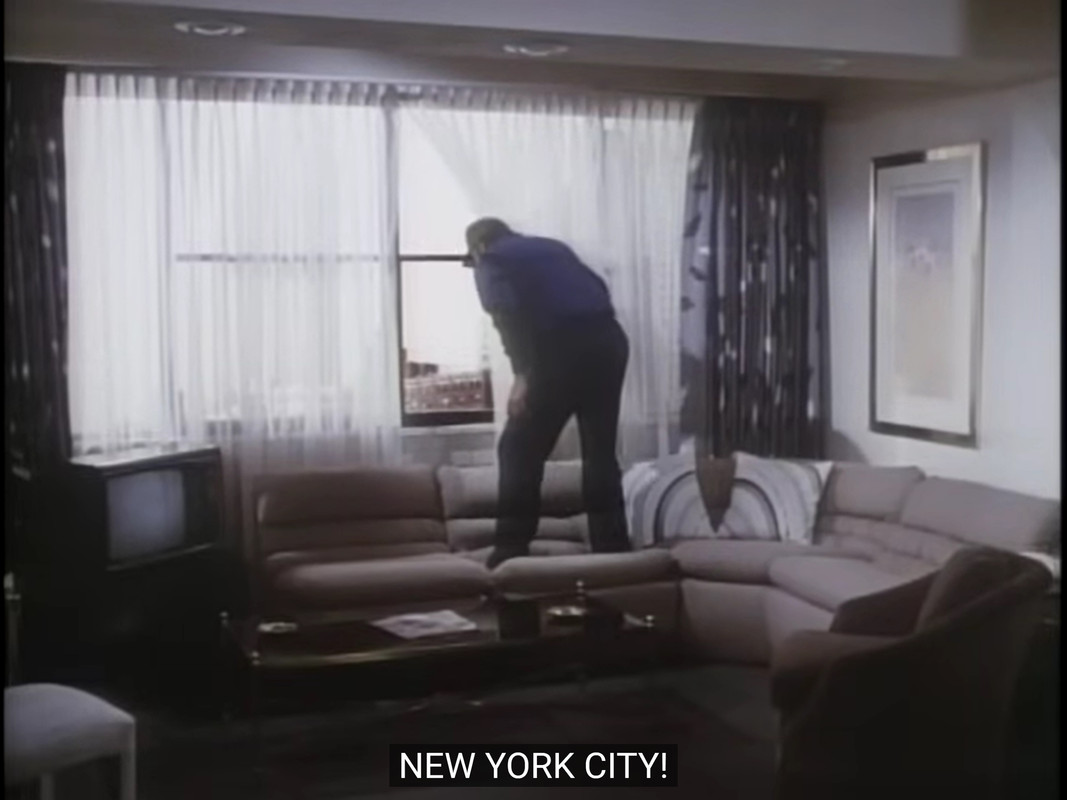
Or a sound stage in Los Angeles, more accurately.
So, apparently, Jonathan and Mark has moved to New York for this episode. And the production carefully showed all sorts of skyscrapers and busy streets just to make it clear that it’s New York, not L.A. nor a studio set.
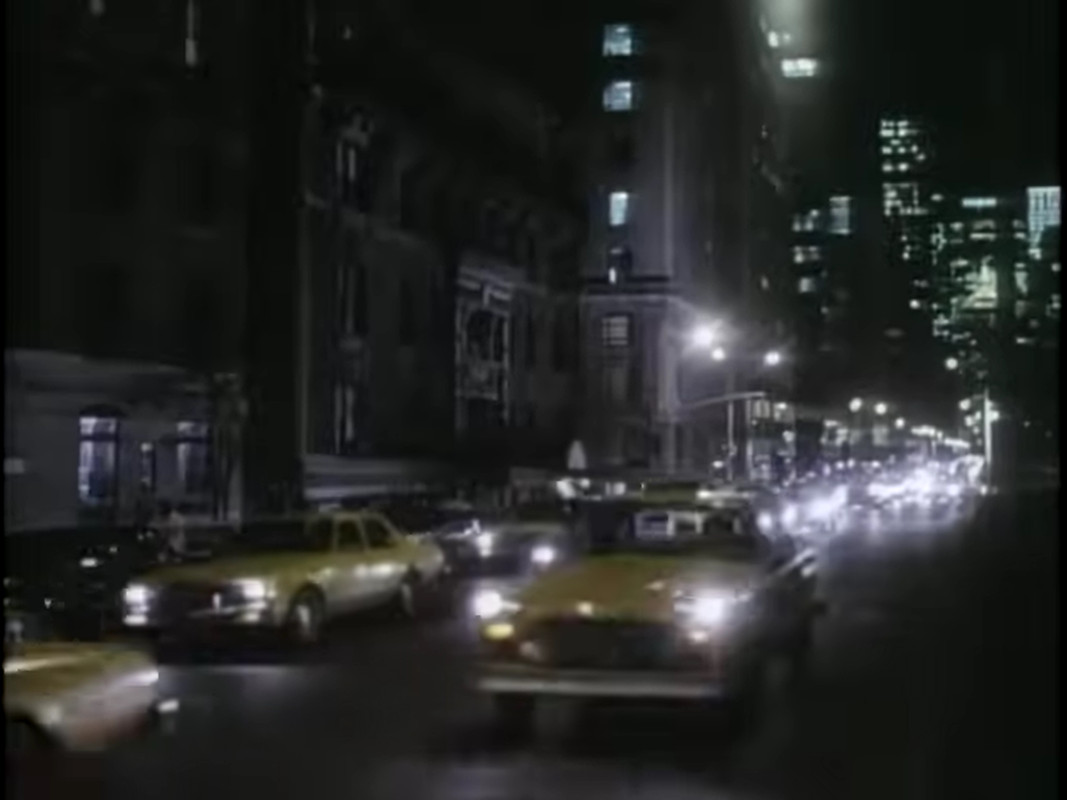
Anyway, in this episode, they made some efforts to work on a realistic setting: for instance, they’ve created fictional programs, like the show that interviews Fusco at some point.
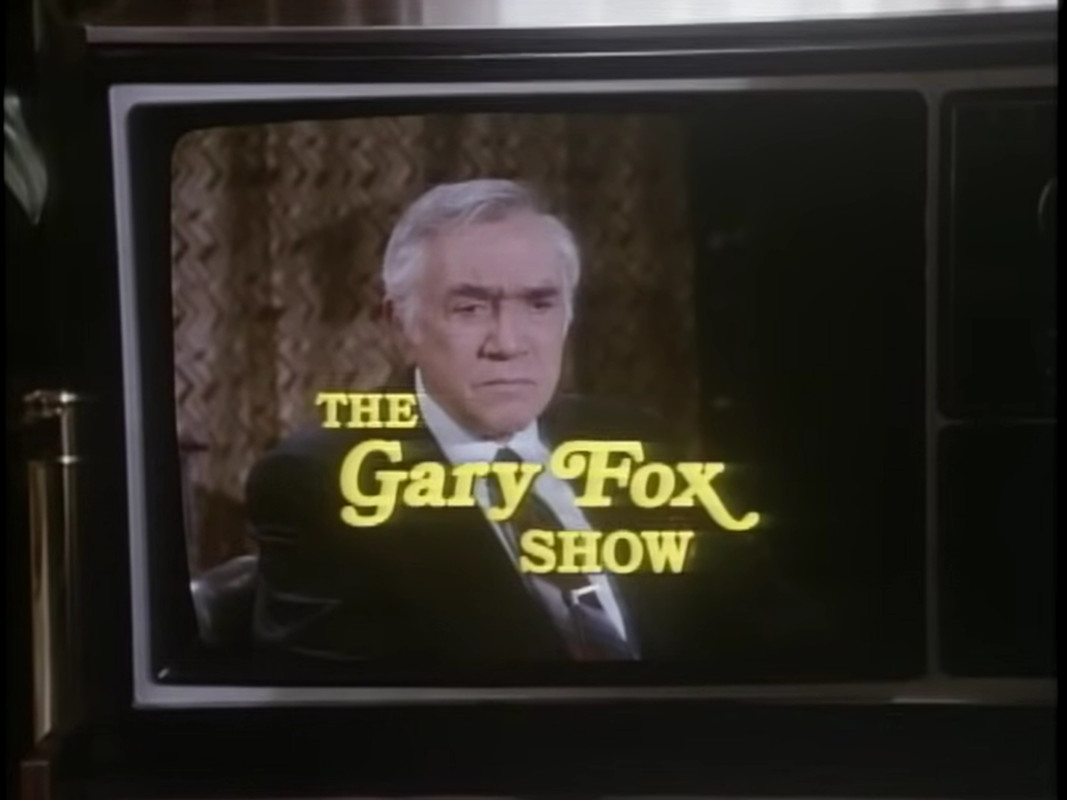
There’s no Gary Fox show, for that matter.
And, of course, there’s a fictional newspaper too, third time in the series they make one. The first time was the “Rose Beach Sentinel“, then they made “The Tucson Tribune“, and now it’s the “New York World”, because, again, they are in New York (although it’s Los Angeles).
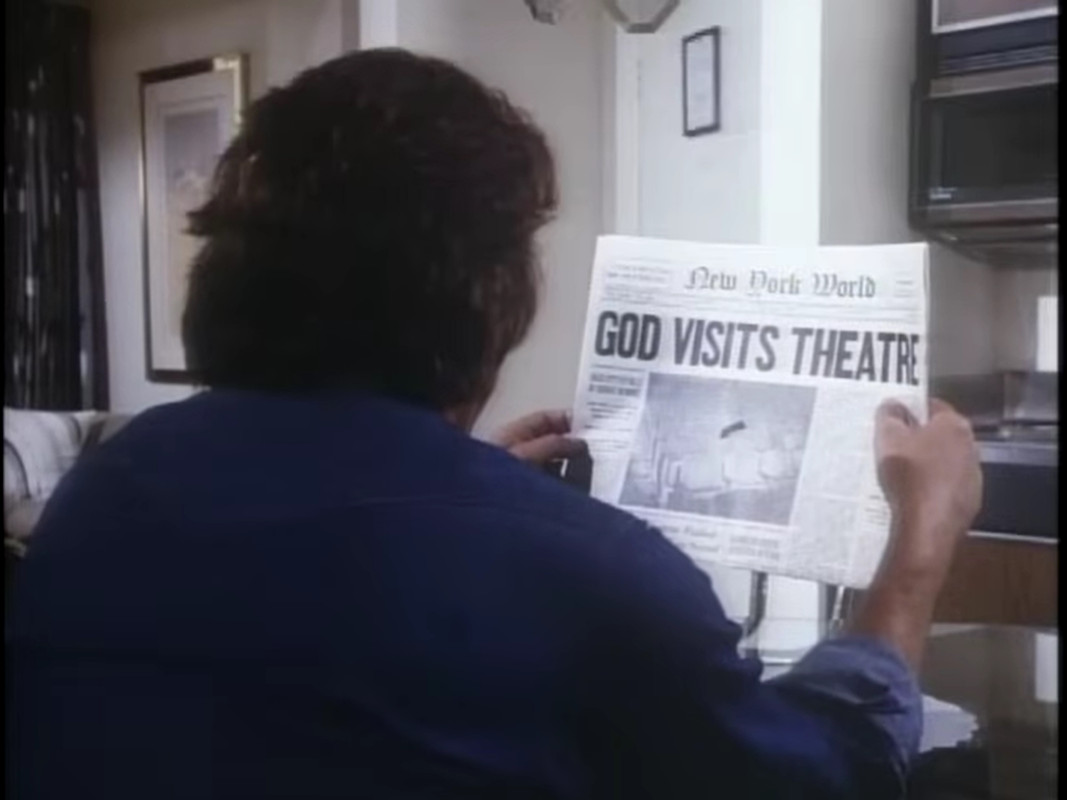
And because the “NYT” was probably too expensive.
But it has to be a very popular one, because Jonathan is not the only character reading it.
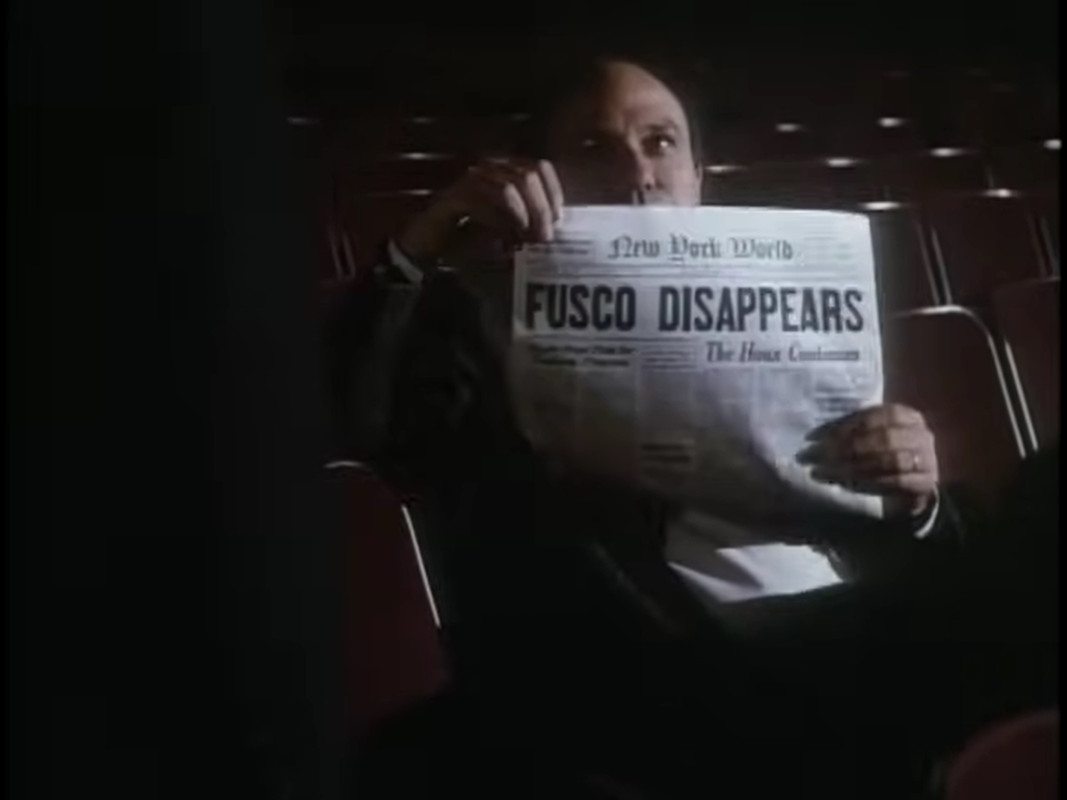
It seems like Jonathan is not the only one buying those old stuff.
Maybe it’s because we’re in the 80s, and people apparently read the newspaper more than they watch TV. At least now Highway has learnt the lesson and didn’t show the newspaper too close, otherwise it might reveal that it’s actually the same three sentences filling the articles (it’s harder to tell here).
Anyway, two assignments in a row out of California (one episode ago they were in Tucson), that’s unprecedented.
Now, it’s unclear when it takes place, nor how long it has passed after the other episodes: considering that they were shown driving in some deserts at the beginning of the “Birds” episode, it is possible they are currently moving around the country. Maybe they were tired of hanging around California a whole season, or maybe Jonathan concluded his probationary service there.
Also, the timespan is rather unclear: it is plausible the two weeks rule applies here, but it’s never specified, so it could be longer.
- Characters
There’s something peculiar about Jonathan here: while discussing with Mark about Fred telling everybody he saw God, Jonathan dismisses the vision, and reveals something.
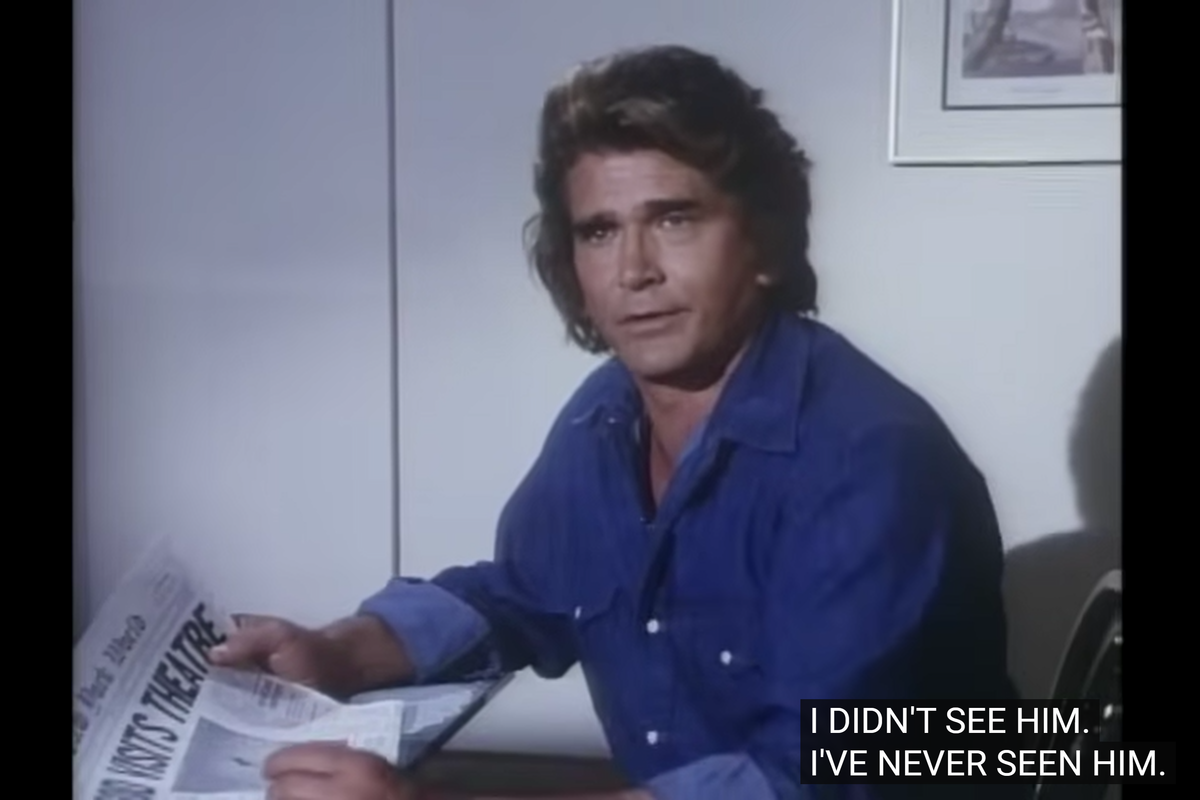
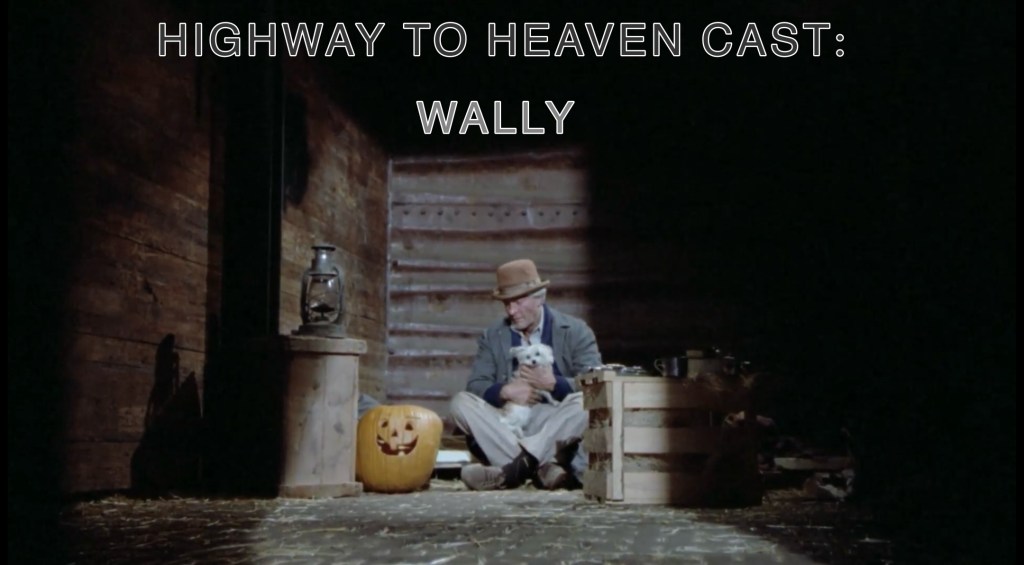
Now, that is important for multiple reasons: the first one is that Jonathan has never seen his “superior”. It’s never been stated earlier in the series whether Jonathan had actually seen his superior or not, although considering he often used the word “Friend” it seemed like it. But they never really explained that, so it’s jarring but possible nonetheless. However, that will be contradicted in one episode of the third season (episode “Wally”, while talking to that character); unless it were to be deduced that Jonathan has seen him after this episode and before that one.
The second important thing to point out is about the “Stuff”: I mean, if Jonathan doesn’t believe Fusco’s vision, then why couldn’t he use the “Stuff” to prove his sincerity. It’s important to point out that he has never read into other people mind so far, so maybe he didn’t know how to do that, yet he could have at least asked for his superior’s permission, or he could have sought to ask his superior directly for confirmation.
But there’s also a matter of coherence with Jonathan: he has always tried to convince everybody to have faith, and now he’s the first one to be skeptical about Fusco and his vision, which is a mindset of “seeing to believe”, not exactly what religion preaches, nor what he has been preaching a whole season.
And then there’s a contradiction: in the first season episode One Winged Angels, there was a scene in which Mark asks Jonathan to give him some worms while they are fishing, but Jonathan refused to because he said that he doesn’t like killing animals.


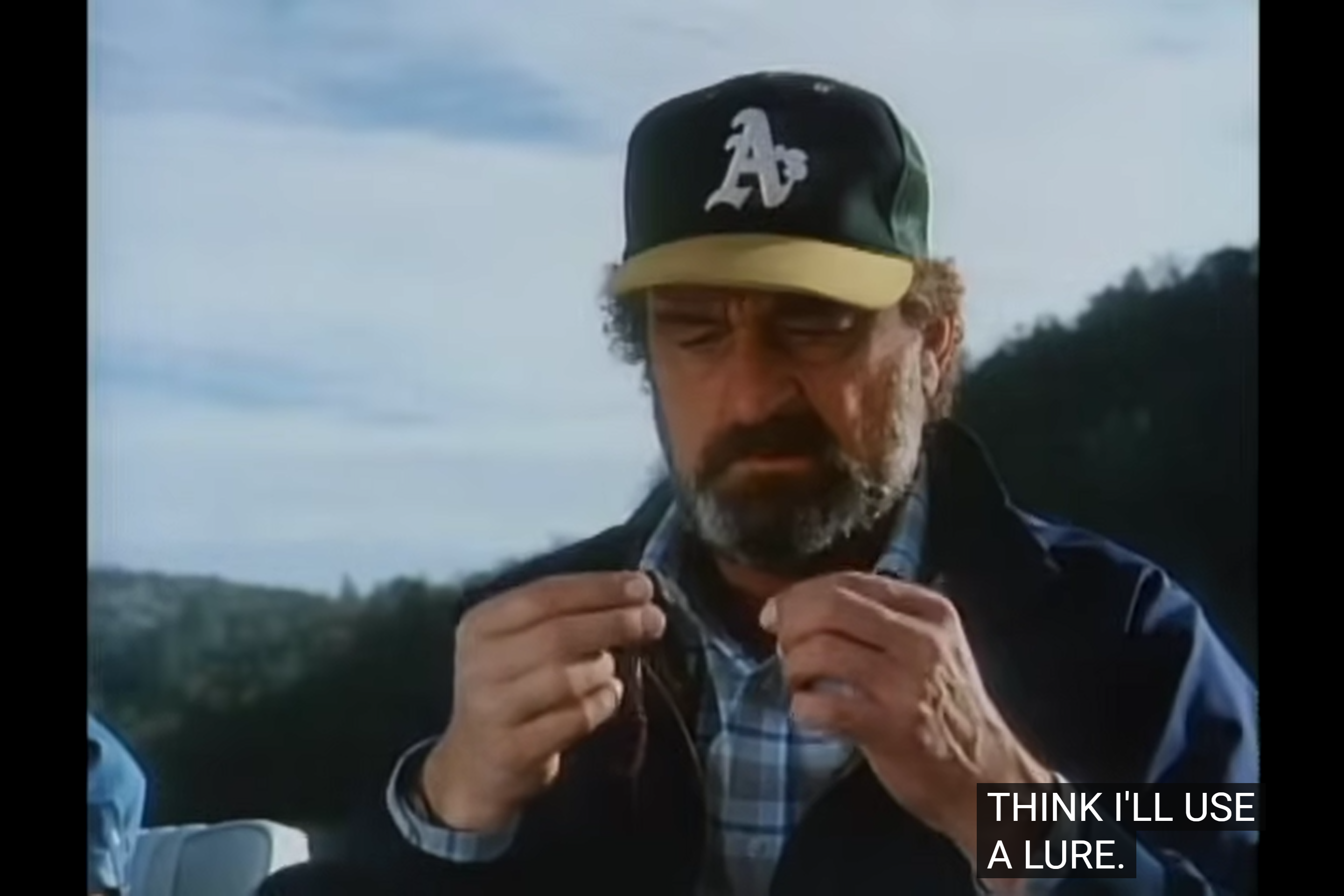
So, that seemingly implied that Jonathan doesn’t eat fish nor meat, and there was no problem with that, considering that he’s an angel, and he doesn’t eat in the first place. That ethics was questioned in the episode of A Match Made In Heaven, when he was shown going to have dinner with Mark and Scotty and Diane, who were all eating fish. But on that occasion, he wasn’t actually shown eating, but rather feeding Scotty, and his ideal still held true.
However, now, he shows his true liar face when he goes to a restaurant with Mark, who wants to have shrimp for supper.
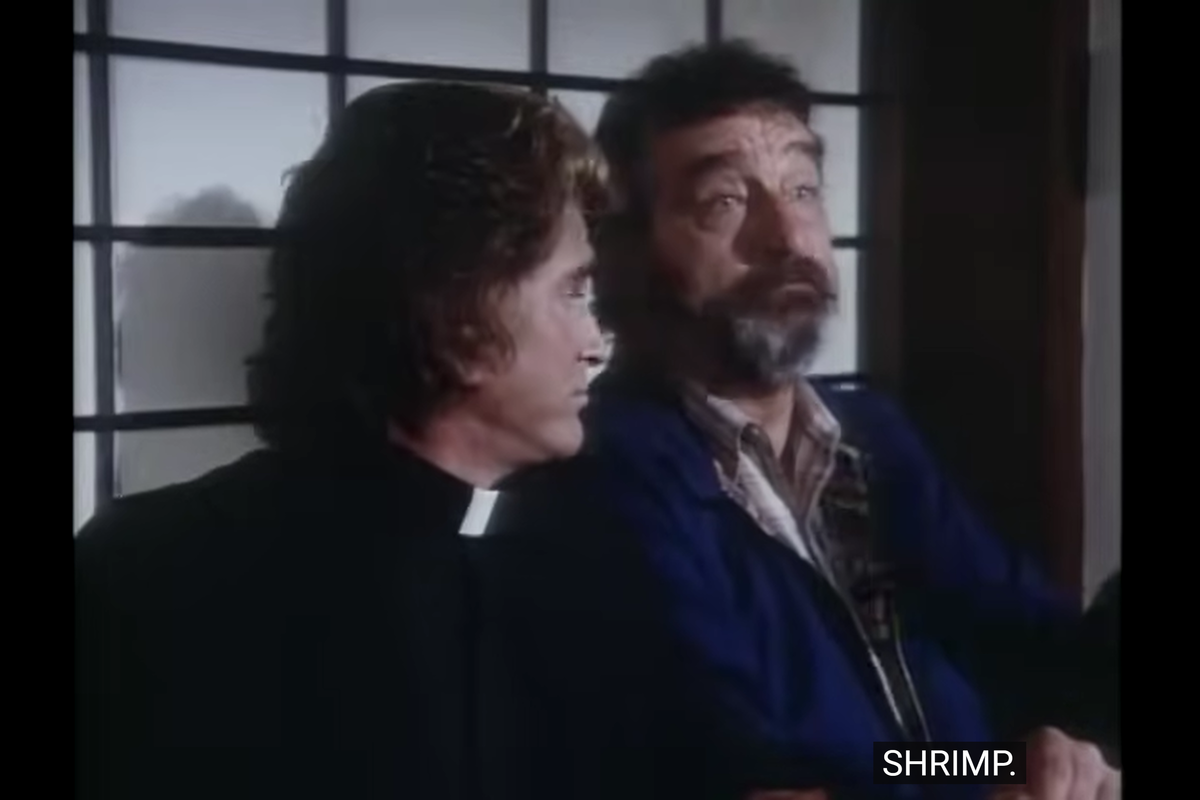
And the audience might think Jonathan will have some nice soy shrimp then.
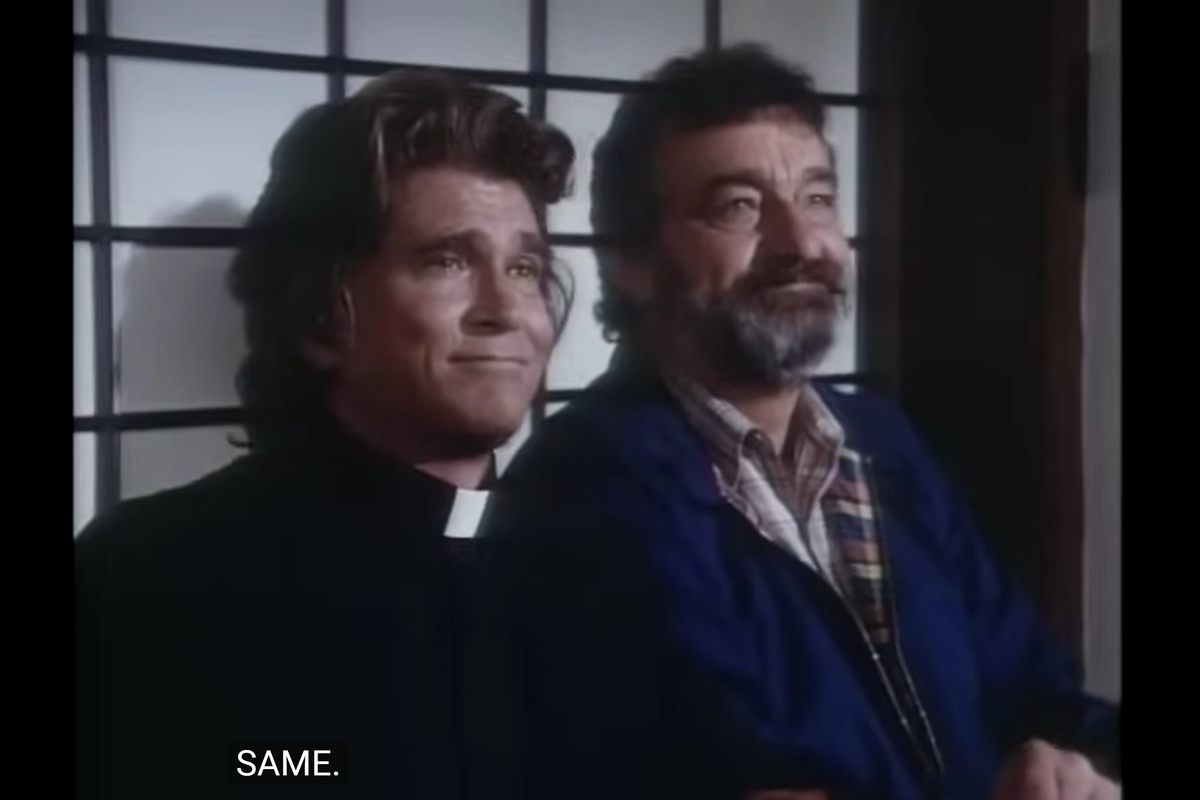
Are you kidding me?
Jonathan wants shrimps too. What about that “don’t want to be part of killing” morals. Unless he implies that shrimps are not worthy creatures.
- Highway Of Mysteries
Actually, the whole assignment is rather a mystery, considering that’s unclear what Jonathan is supposed to be doing there in the first place. But a big mystery is about the “Stuff”: when Jonathan makes the “angel revelation” to Fusco, who of course doesn’t believe him, he also adds something odd.
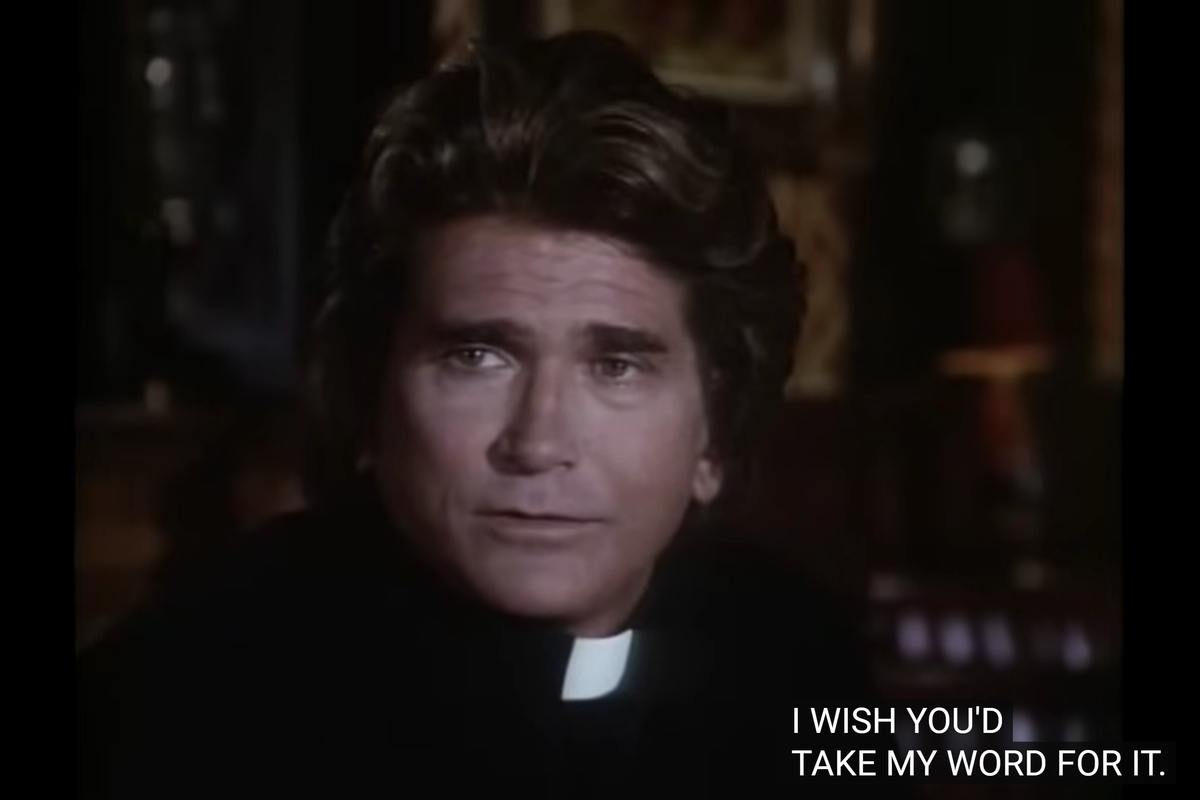
I mean, every time Jonathan made the angel revelation so far, he also used his power to show it. While now he wants Fusco to take his word, as he put it. Then, why couldn’t he use the “Stuff” now as he has always done in past instances of angel revelations, sometimes even random one (as in Cindy, where he openly said Cindy’s father that he usually doesn’t show his power “for the fun of it”, which makes it even more unclear whether Jonathan used his power out of his own will or if he asked for his superior’s permission).
Also, another Stuff related problem is that it’s unclear how Jonathan knows that production will find a replacement for the actor at the conclusion of the episode.
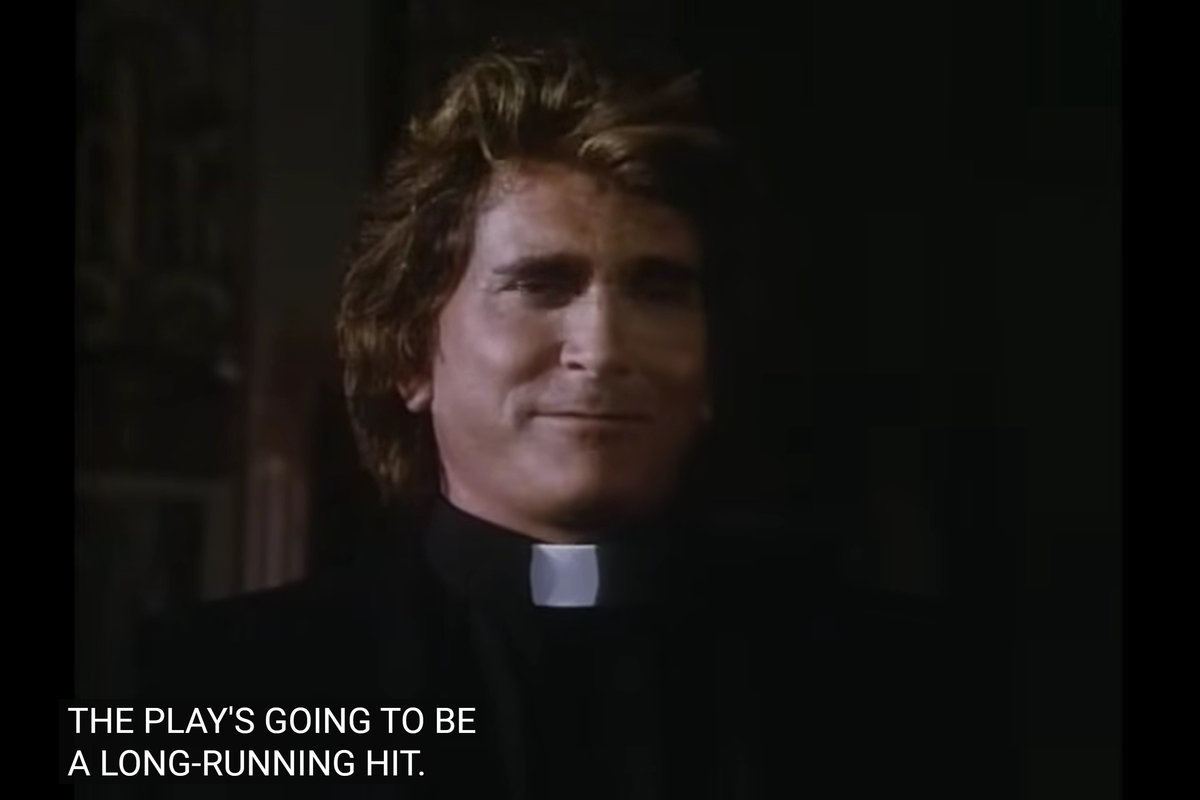
He had no way to know that.
And lastly, there’s a more general problem: in the future season, it will become apparent that Jonathan has the power to read into people’s mind; so, if that were the case, it’s unclear why he didn’t use it now to see whether Fusco’s was lying or if he were really convinced of his hallucination (whether true or fake, that would have been a different matter). But maybe Jonathan still hasn’t unlocked that power. Or he wasn’t allowed to use it.
- Production and Settings
The episode takes place in New York, but of course they didn’t move production there just for an episode: it’s actually California all the same. In particular, the theater where they stage the play is the Wiltern Theater in Wilshire, of Los Angeles, which currently stands in.

And that’s where Fusco stages the fictional play.
The mansion where Fred Fusco lives is the Arden Villa, in Pasadena, obvious.
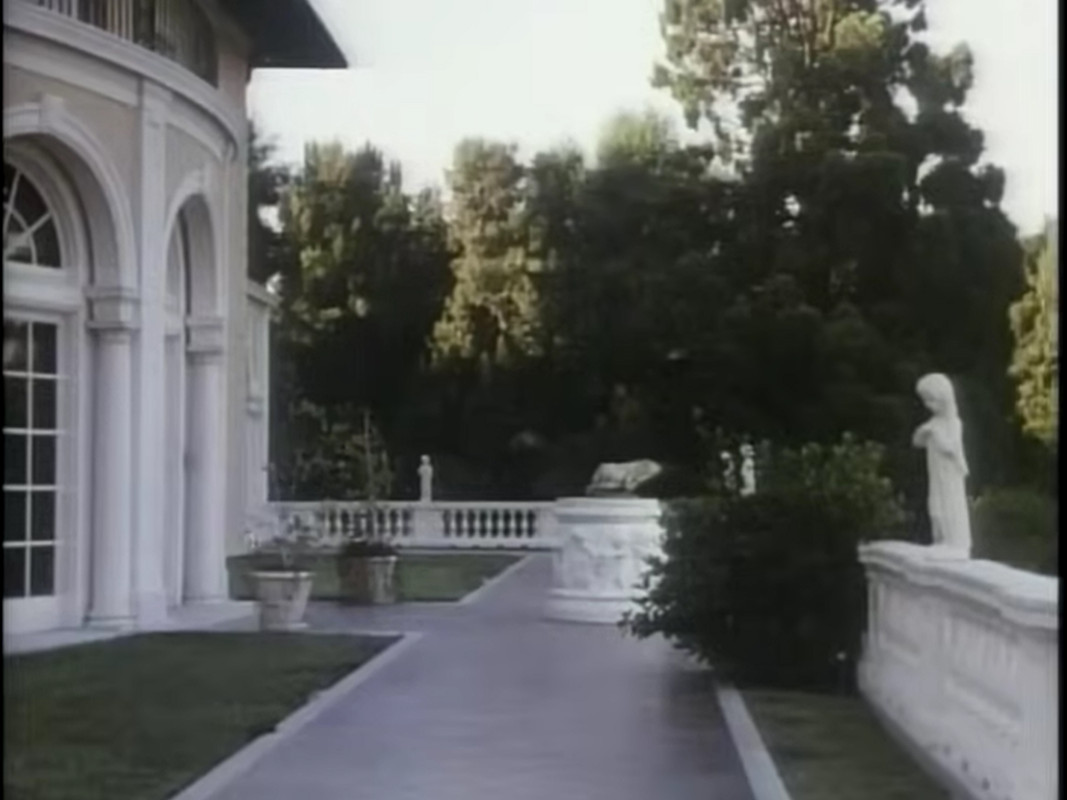
I mean, New York has never been so lush.
Instead, the apartment Jonathan and Mark are staying in is likely a sound stage.
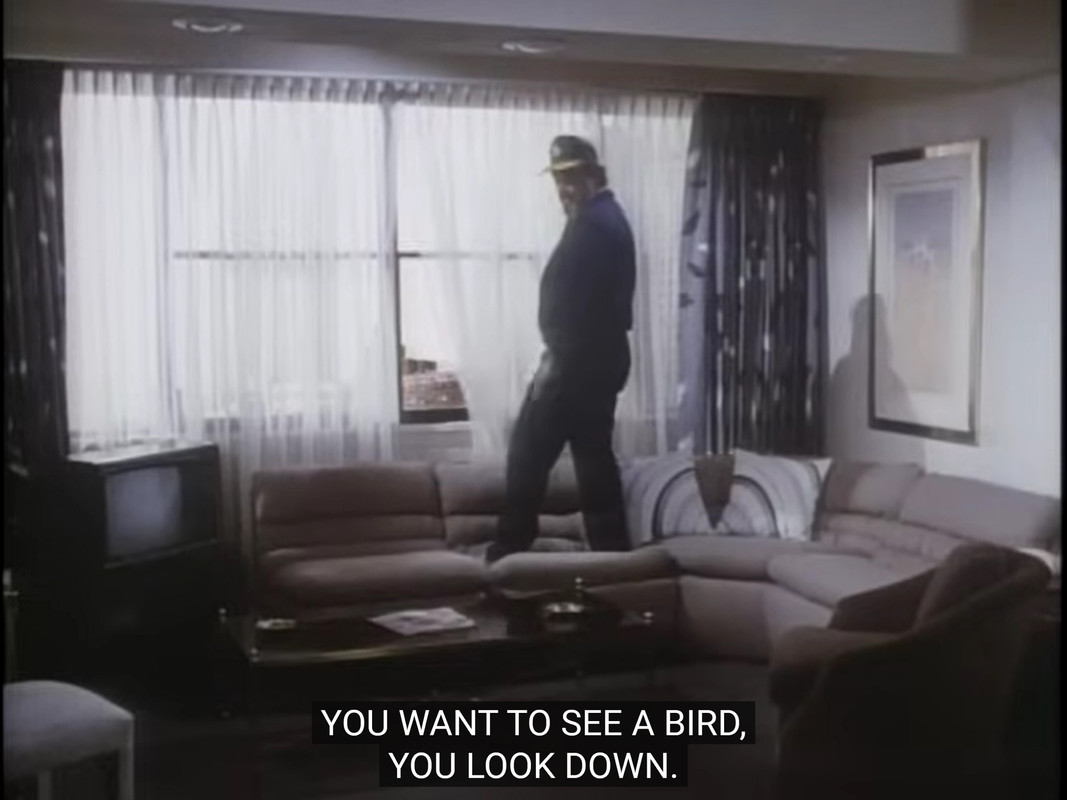
You definitely won’t see any bird out of a fake window.
But French is good at pretending that window is not fake. Maybe he’s just used to be on a stage, as he was a trained stage actor. Or maybe he just remembers those years spent on a California studio pretending to be in Georgia for that sitcom he left Little House for.
Anyway, the first draft of the episode was written on July 3, while the final script was made on August 22, and the production of the episode began on October 9 for one week. So, chronologically, it was produced right after Birds, without a day break. And it was written on early July by Lan O’Kun, his first contribution in the series, and not the last. He actually wrote eight episode over the course of the series, so it should be enough to consider him a normal writer, not a highwayman (who just made an episode and ran away). But he’s certainly an exception: the purpose of highlighting the highwaymen is that the episodes they write are usually peculiar in the context of the series for some features (as in the way they use Jonathan and Mark, for instance), and even though O’Kun doesn’t quite apply to the definition of writing just one episode in the series, basically almost all the episodes he wrote are peculiar (just like this first). So, he never learnt how the series works.
Instead, for the actors, there’s someone to point out: in the episode, the character of Fred Fusco, the protagonist of the assignment, is played by Lorne Greene, a familiar name in western. Now, he’s neither a Little House actor (he never appeared on that series) nor a Highway Actor (he’s not going to appear again in this series). However, he was an old acquaintance to Landon: they had worked together for 14 years on Bonanza, from 1959 until 1973, where Greene played Ben Cartwright and Landon was Joe, his son.
Their appearances together also included the episode of An Earthquake Called Callahan, the one that made Landon and French become friends and led to their future collaborations (more about this here). Actually, French and Greene didn’t appear together on that episode, but they had already met each other on other appearances on Bonanza (when French played guest characters), and now they finally have the chance to share much time together with their characters.
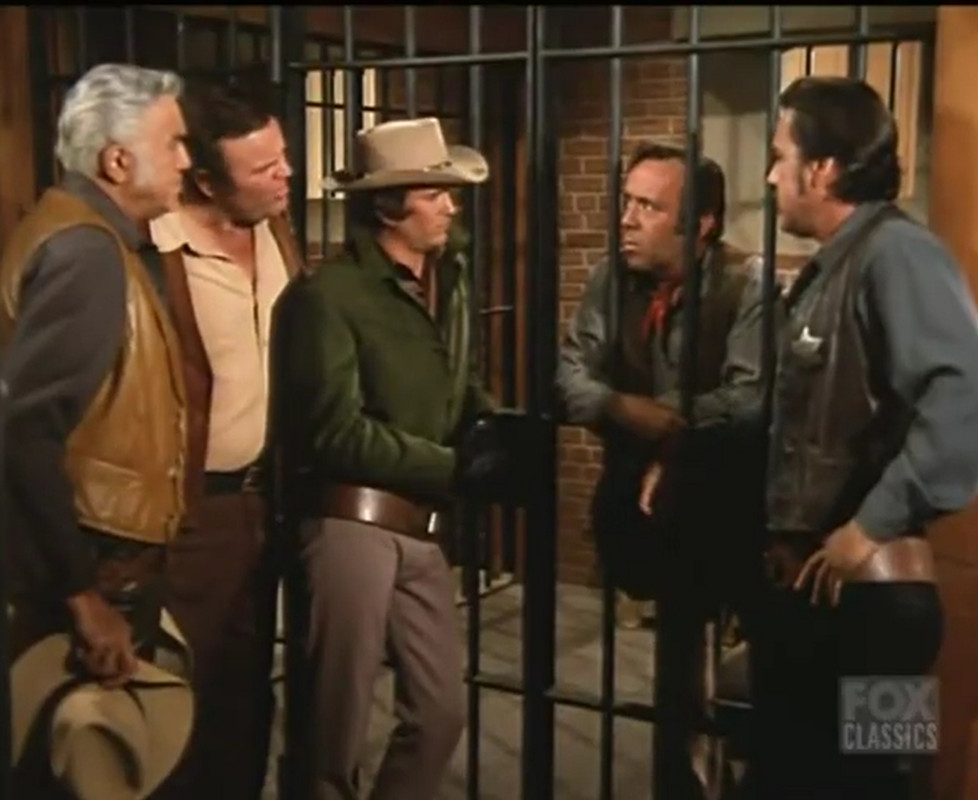
Once Bonanza concluded, Greene and Landon remained friends but never had the chance to collaborate again for twelve years. During an interview with the Philadelphia Inquirer dated November 1985, the night this episode aired, Greene revealed that, at some point during the production of Little House, he was called by Landon, who told him that he wanted him on the series but couldn’t offer him any role because they were too known as father and son from Bonanza — and people wouldn’t take them seriously if they saw them together again playing something new. However, he also reassured him that, when the time would be right, with a fitting role, he would have called him back.
That’s quite revealing of the mindset of the time: they are actors, they are supposed to play a range of different roles in their career, yet they couldn’t because they feared the audience wouldn’t let them. It brings up the problem that people too often come to judge actors for the characters they play (a misconception the industry took advantage of to build the “star” idea), and leading too often to actors being prevented from playing different roles to those contrasting the personality they built in public, even when such personality wasn’t decided by them (as it happened to French in his early career, before he met Landon and got a new roles). The problem comes when people get too attached or idolizing towards that fictional image, becoming prone to easy classifications and judgements that are hard to change later; in some cases, that might even alter the perceptions actor have of their own image. Basically, it’s the same, unsettling idea of Hollywood that Highway discussed in Catch A Falling Star (which seemed like an autobiography of Landon), about actors confined within their own image, but especially in The Brightest Star (as French said, “Hollywood creates monsters“), about the actor’s perceptions of it.
Or maybe Landon just underestimated the audience. I mean, it’s rather silly to prevent an actor from getting a role just because of that.
Anyway, when Highway was announced, Greene knew Landon would have kept his promise, and here they are now.
So, this marks their first collaboration together after 12 years from Bonanza, yet it would be their last as well: Greene died on September 1987, less than two years after the airing of this episode.
- The “Stuff”
During the episode, Jonathan makes an odd use of the power: he could have used it to prove his identity to Fusco during the angel revelation, or to read his mind and see whether Fusco is actually convinced of his vision or whether he’s a liar. Yet, he never does that. In the first season, it was said that Jonathan can’t use the powers without his superior’s will, but the actual implications of that remains unclear (more details about it here, at the entry “The Stuff”). Maybe, his inability to use the power here is an actual confirmation that the assignment revolves around him and his faith more than Fusco’s; or maybe Jonathan ran out of occasions in which he could have used the power out of his own will.
Glossary:
Angel Revelation: it’s from Jonathan to Fusco, to convince him about his skepticism.
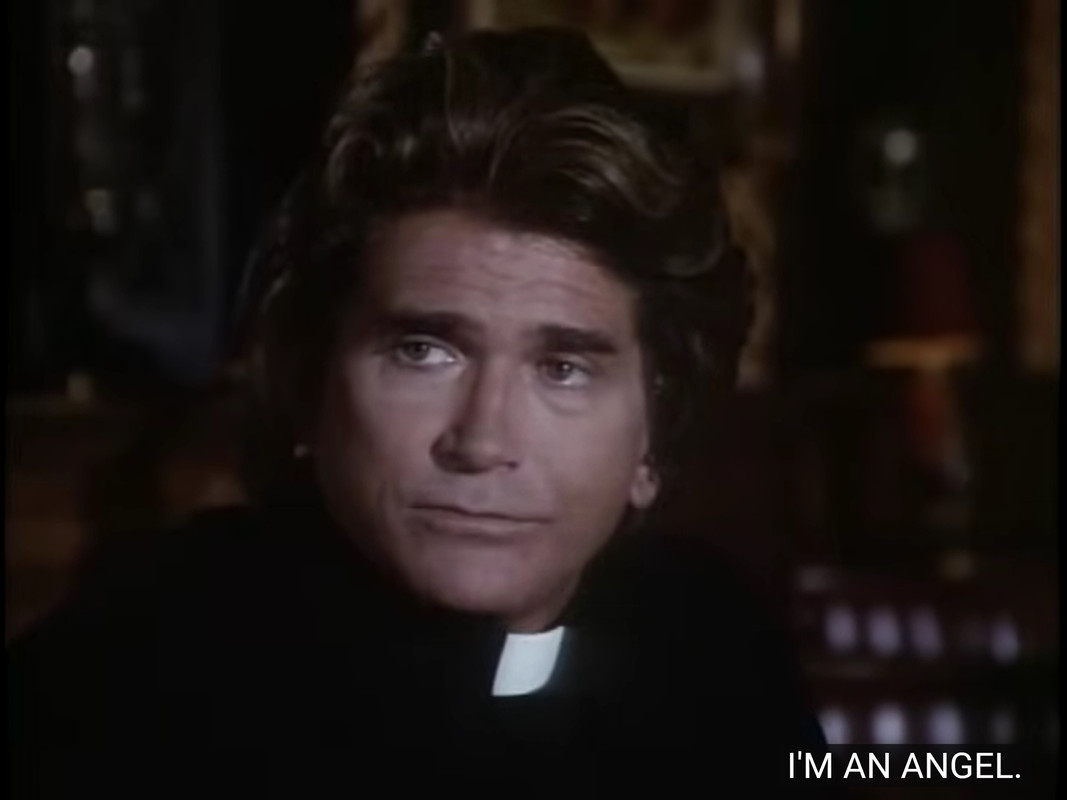
It has become usual: in the first season, he had only done it on one episode, and this was the fourth instance this season, so far. They really changed the direction of the series for this second season.
Bums: they are not part of the assignment, but they are mentioned by Fusco while talking about his nephew.
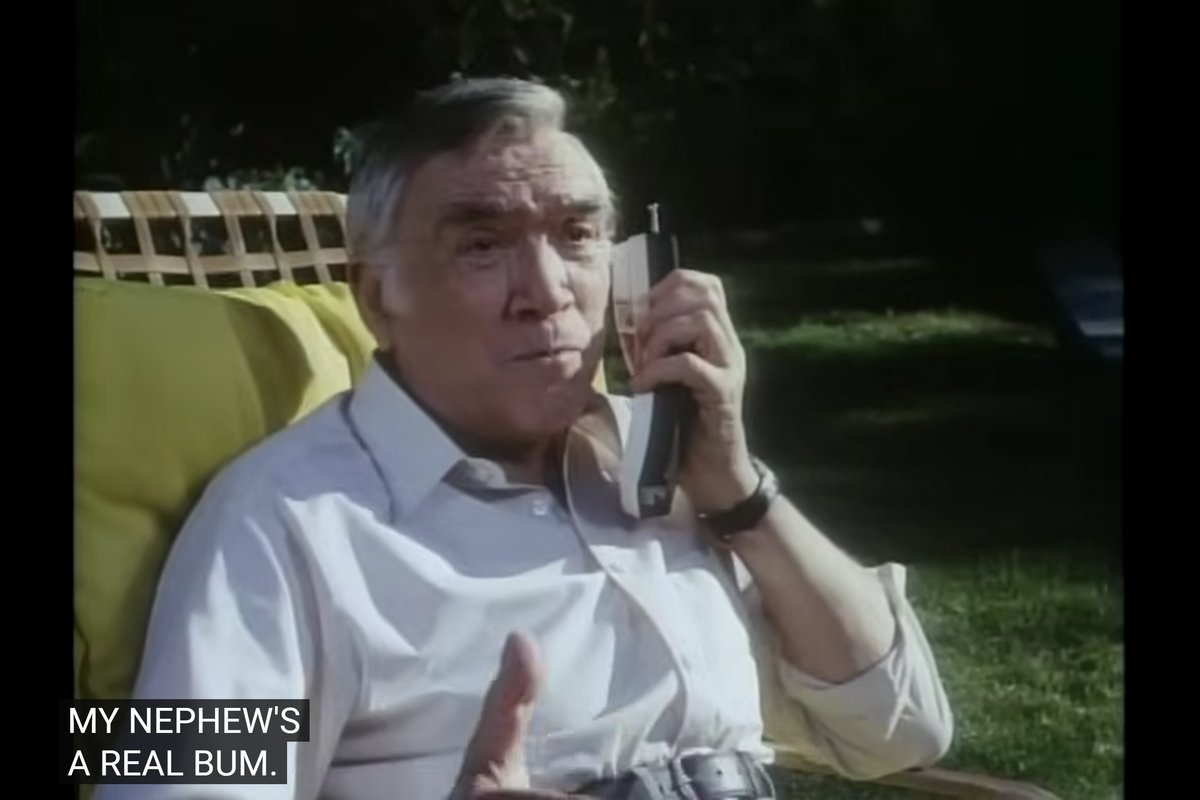
Then Jonathan and Mark should help his nephew too.
Highway Actors: there are two highway actors here. The first one is David Spielberg as the playwright Bob Milhaus, who is not entirely the subject of the assignment but has an important part in it.
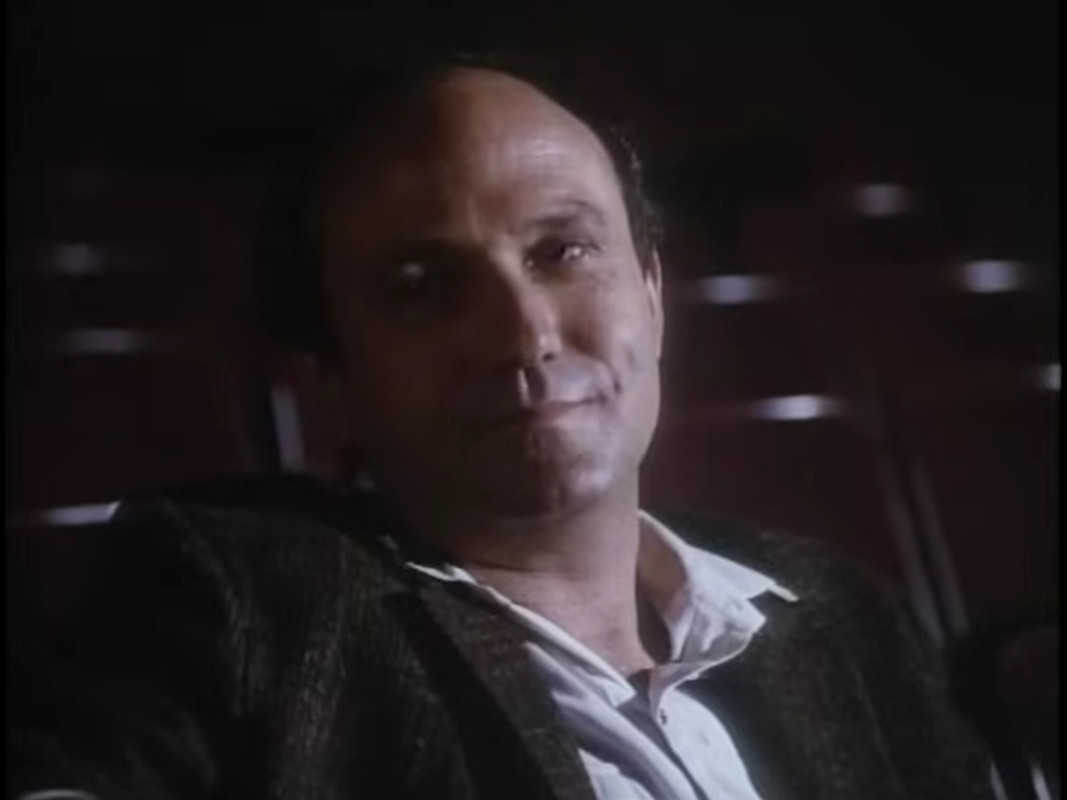
He’ll be coming back again on Highway on two future episodes (one in the fourth and one in the fifth season) each time playing a different role, and on both occasion as the protagonist of the assignment.
Actually, removing both the background extras (or those appearing in one scene, like Ruth Foster) and the actors that appear multiple times as the same characters (as in the case of Scotty and Diane), then Spielberg is the most recurring actor of the entire series, with three total appearances as three different characters, tied with Lew Ayeres (three appearances as well).
Instead, the second Highway Actor is Russ Marin, a stage actor here playing Fusco’s friend that helps him give away his inheritance to support kids with serious illness.
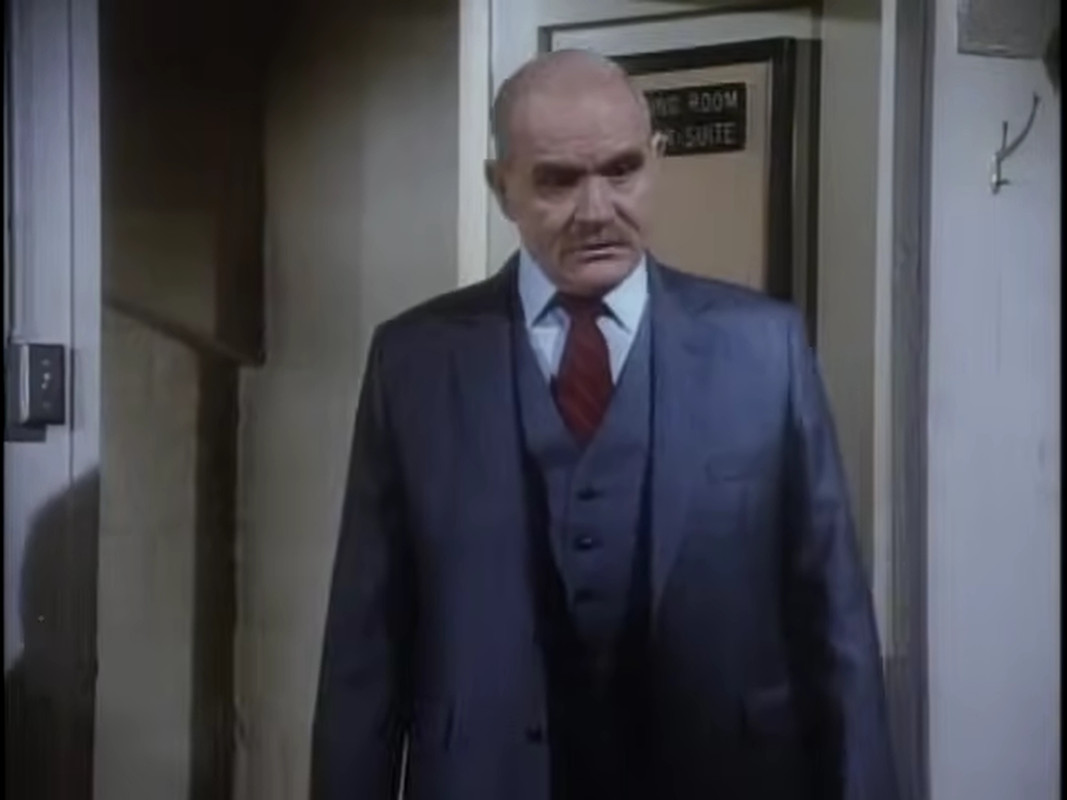
He’s going to come back in one episode the third season.
Actually, he only appears in two scenes here, and he will play a background character even in his third season appearance, but he’s a Highway Actor nonetheless. Also, Highway was his first collaboration with Landon, but his second with French: apparently, Marin played the leading character in a 1975 play directed by French (who was a prominent theater director as well as actor) for the Group Rep stage company at Magnolia, in Burbank.
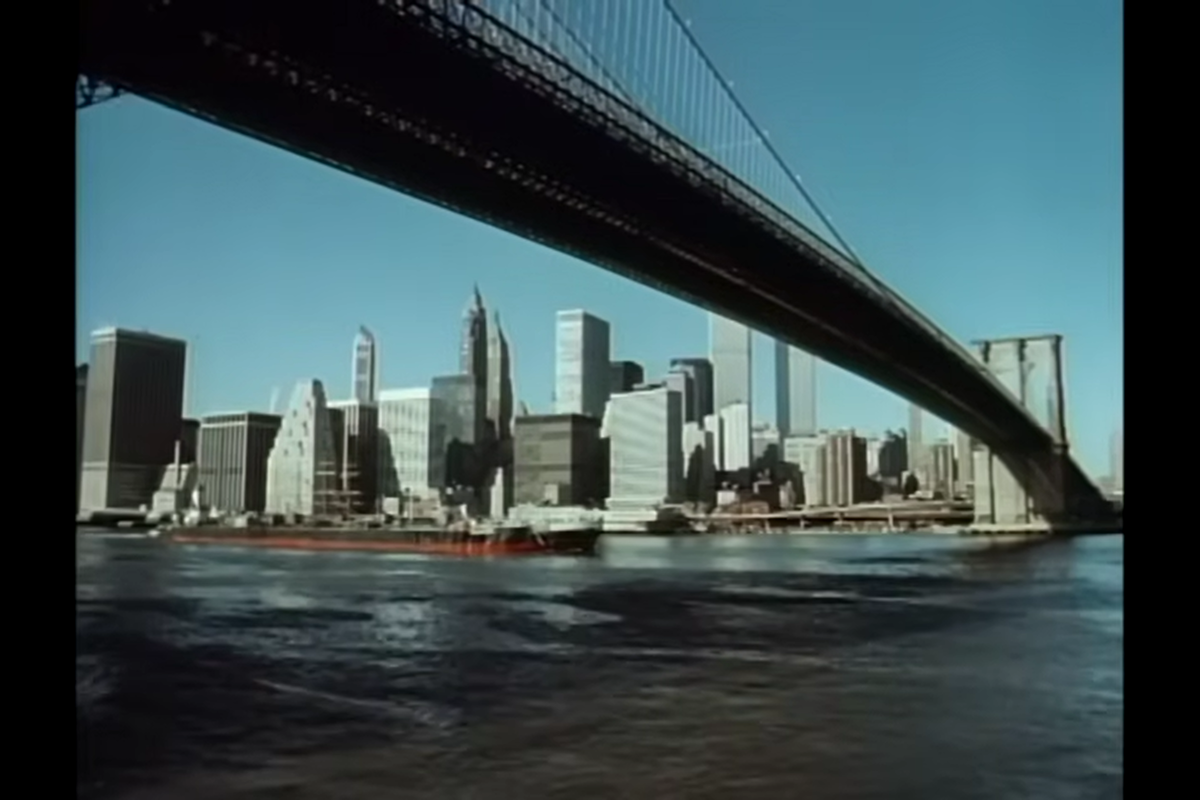
Recycle: there are two instances of recycles from two episodes in the first season. The first recycle is in the setting: it might sound odd, because the episode in set in New York, and almost any episode in season 1 was in Los Angeles or California. However, not every episode was like that: the very first two scenes of the episode are actually a recycle from the very first two scenes of A Child Of God in season 1.
So, this episode opens showing a bridge and a river.
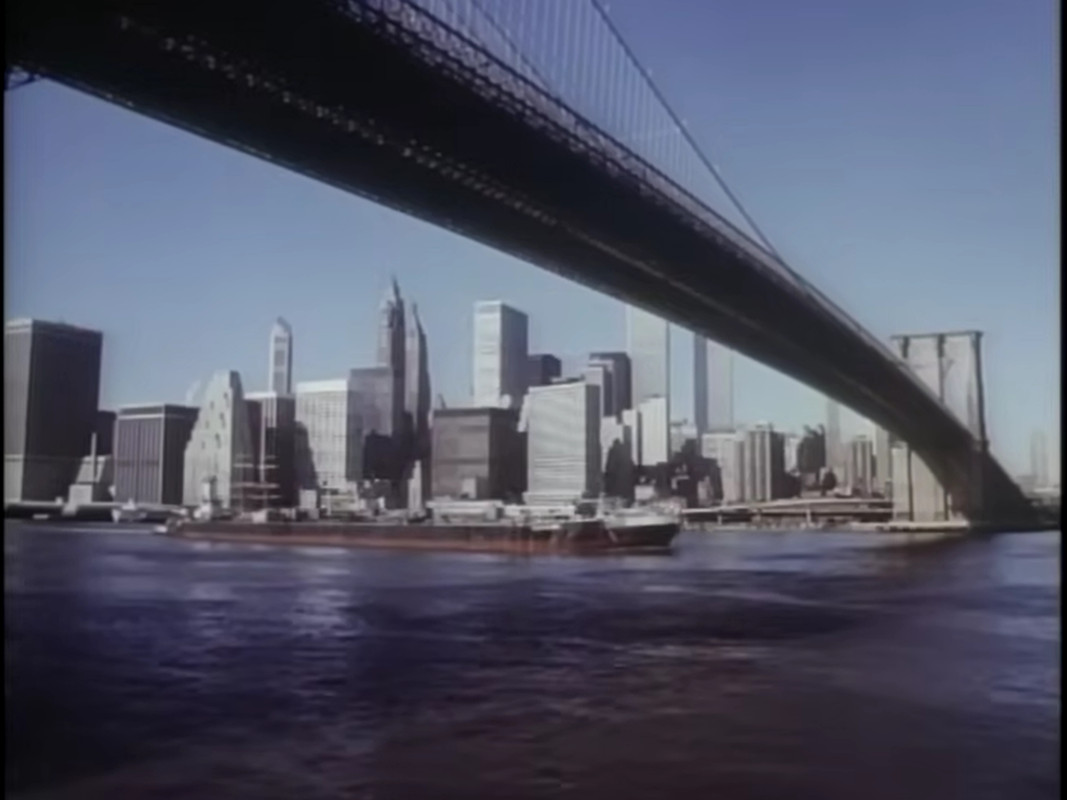
And that’s directly a recycle from the beginning of A Child Of God, which opened the same way.
And the second scene is exactly the same too: here, they show a skyscraper, which supposedly serves as Jonathan and Mark’s apartment (or at least it’s where they show Mark looking out of the fake window).
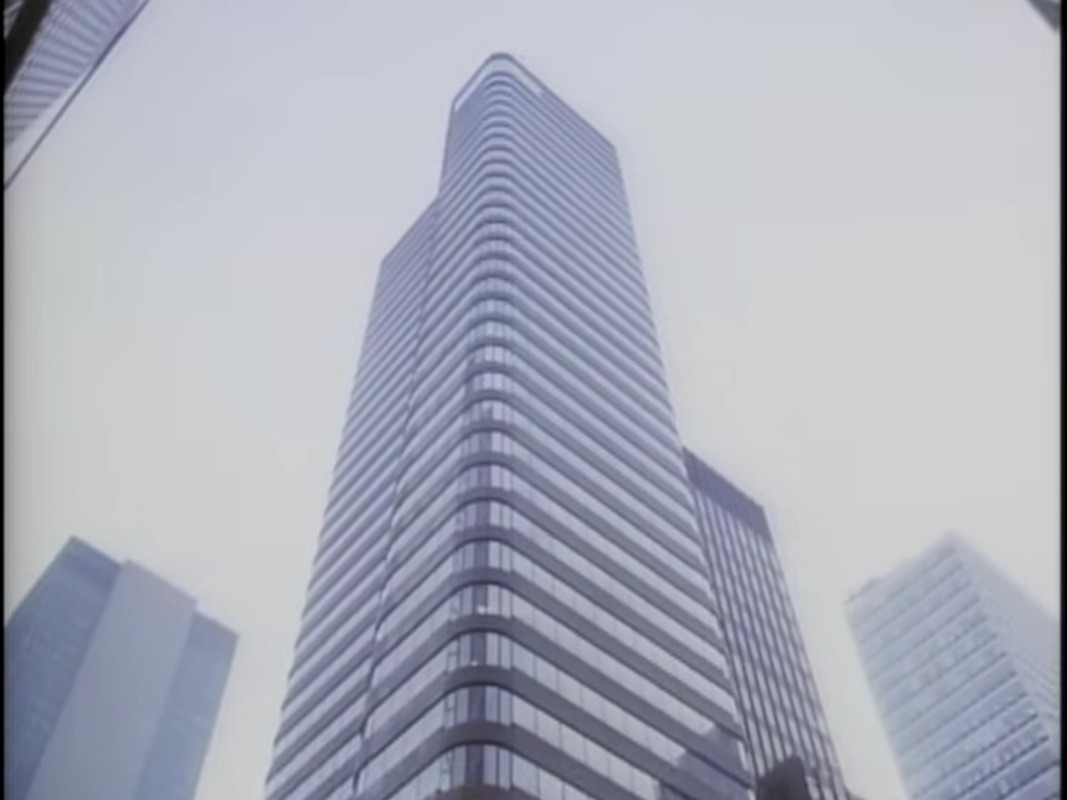
But that same skyscraper was also in A Child Of God, and it served as Marsha’s hospital (or at least it was the place where she was informed about her illness).
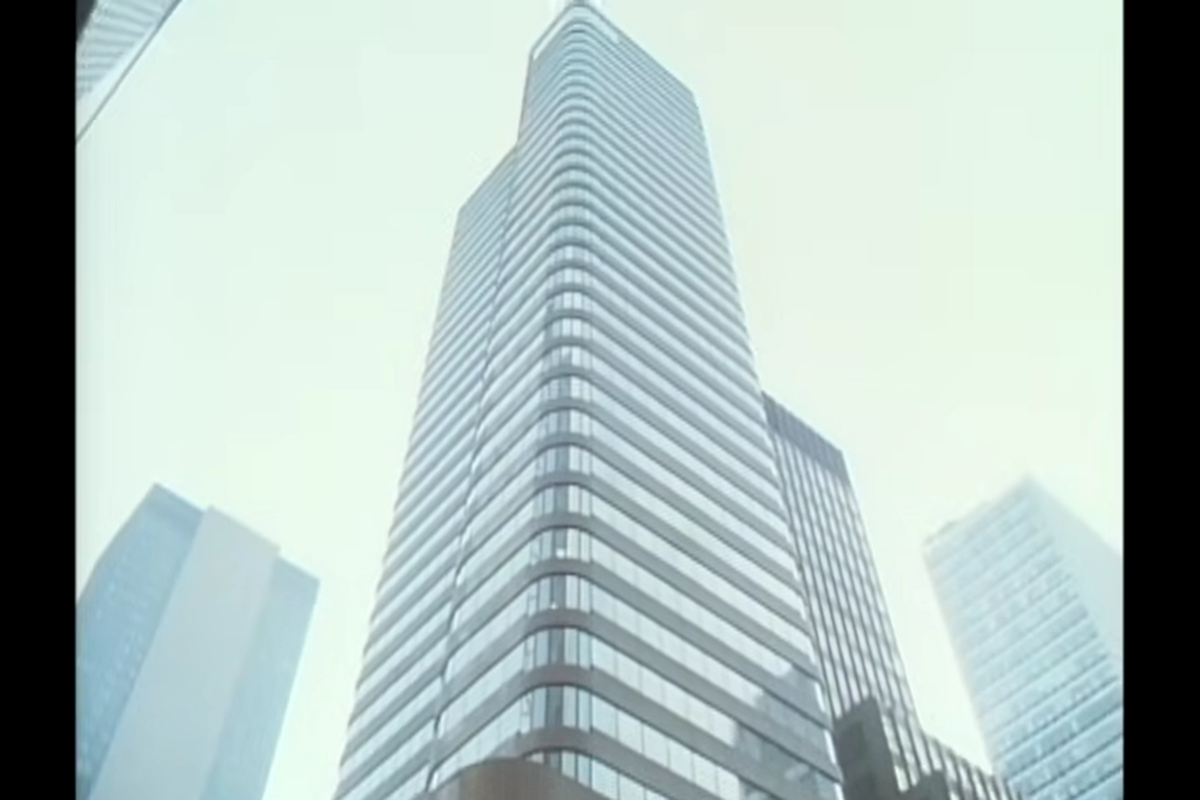
Maybe it was a jab at urban gentrification of New York, where one day a building is a hospital and the next it’s turned into apartments — like Mark’s farm in Oklahoma (that was California, but it doesn’t matter).
Also, it was known that the beginning of A Child Of God wasn’t set in California (because that’s where they move in the episode), but it wasn’t clear either where it took place. At this point, it is possible to conclude they were in New York (or at least California downtown pretending to be New York to some foreign audience).
Then, they added other recycles: when Jonathan and Mark are headed to Fusco’s mansion, they are seen driving on an oddly quiet landscape.
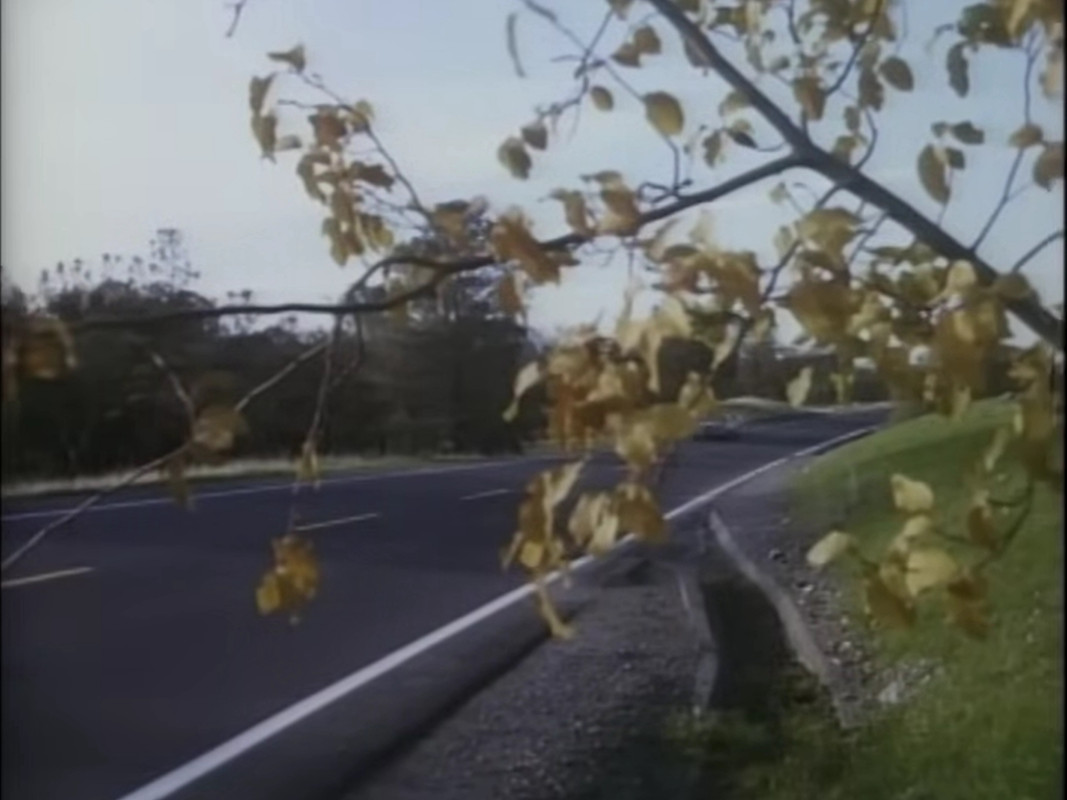
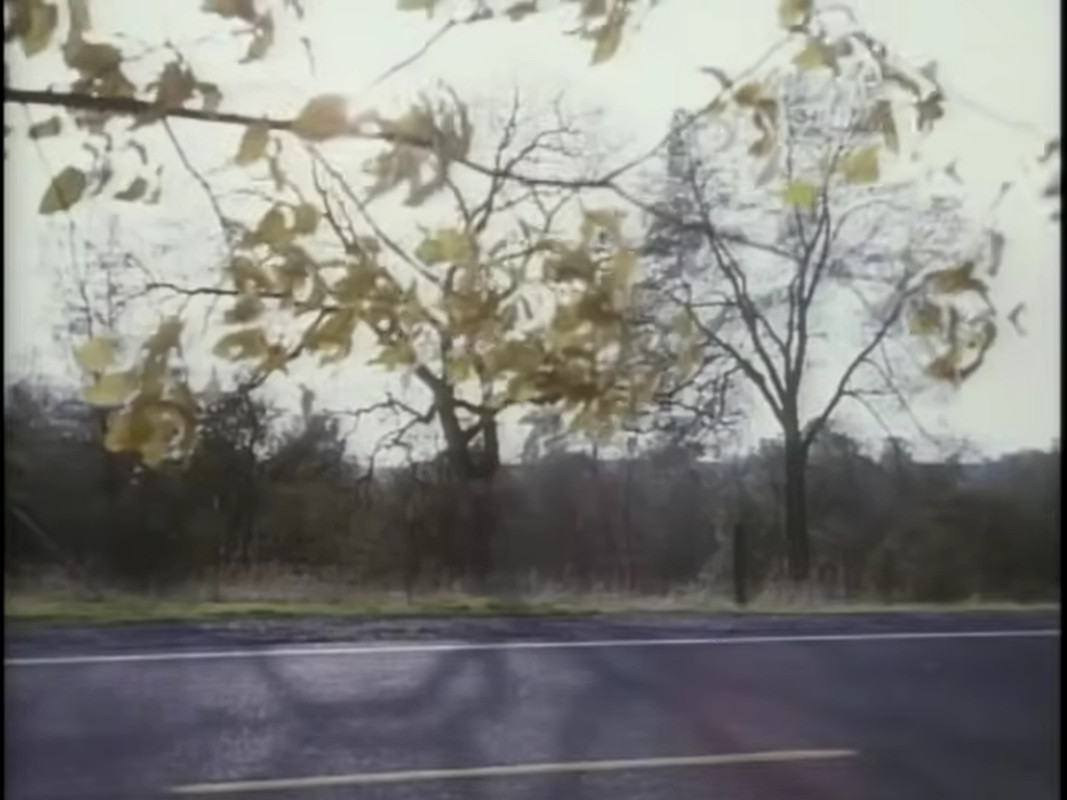
Now, the problem is not really that such landscape doesn’t exist in New York (at least, that’s not the point), but rather that it’s a recycle taken directly from the beginning of the episode One Winged Angels, when Jonathan and Mark are driving to the lake.
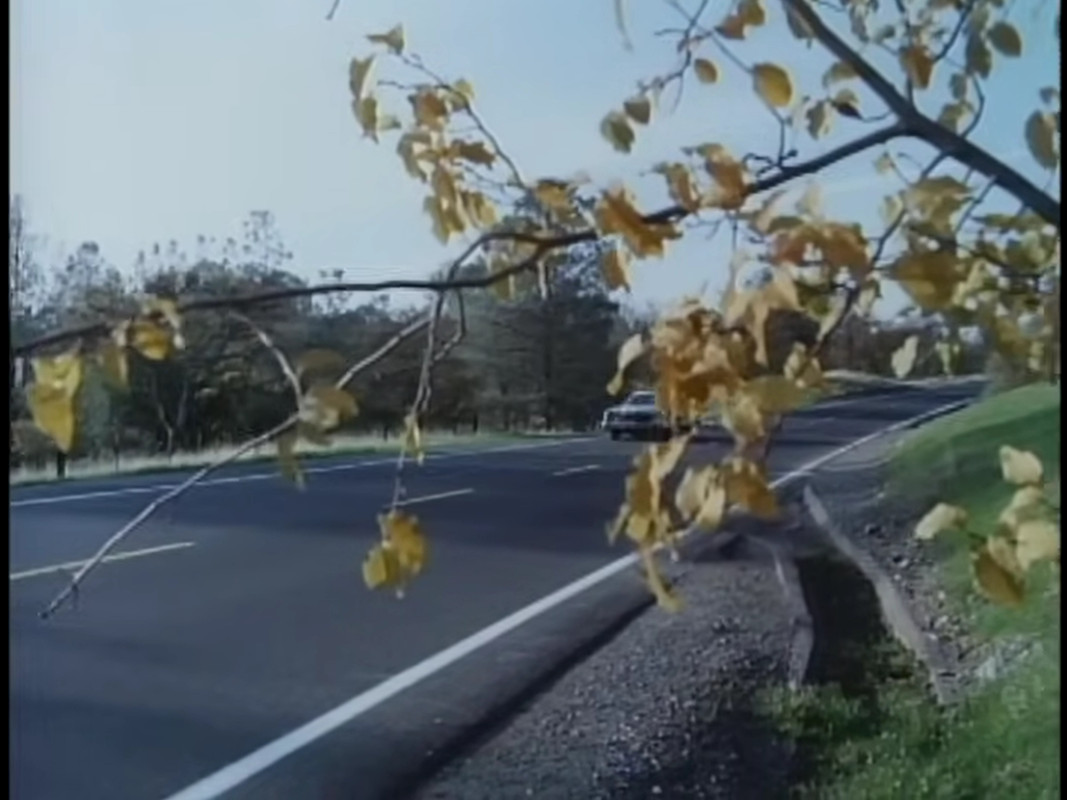
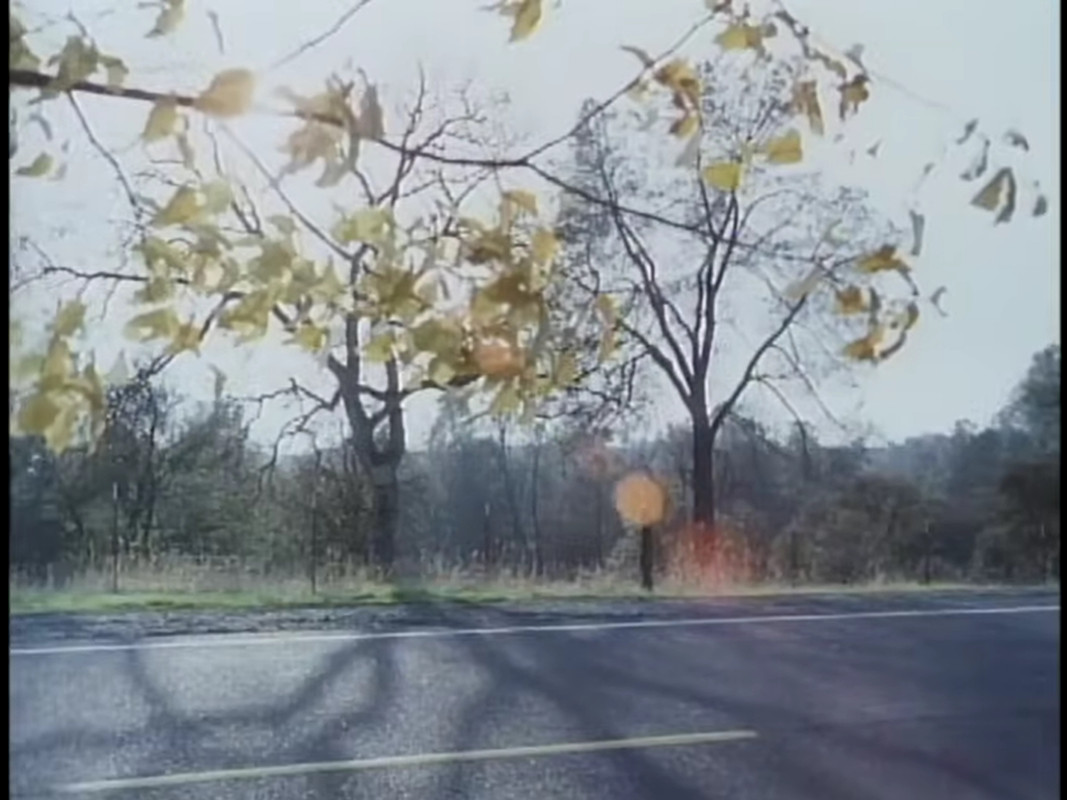
They took the same scene and just had the actors dub a different line: in One Winged Angels, Mark’s voice was saying that he was getting ready for a “whole week of fishing” (which won’t happen), while here Mark’s saying that he does believe in Fusco’s version.
At least that explains why the settings doesn’t feel like New York at all: that scene (like the rest of the episode of One Winged Angels) was produced by the Lake Tulloch, which is not exactly around the Hudson, for that matter.
Friendly Jonathan: there’s a subtle instance. It’s at the beginning, when Mark is looking out of the window to the fake New York and he exclaims he doesn’t know why they went to New York in the first place. That means that he followed Jonathan from Los Angeles all the way to New York without even knowing the assignment.
The “Stuff” powers: Jonathan uses the Stuff twice. The first time is to enter Fusco’s mansion.
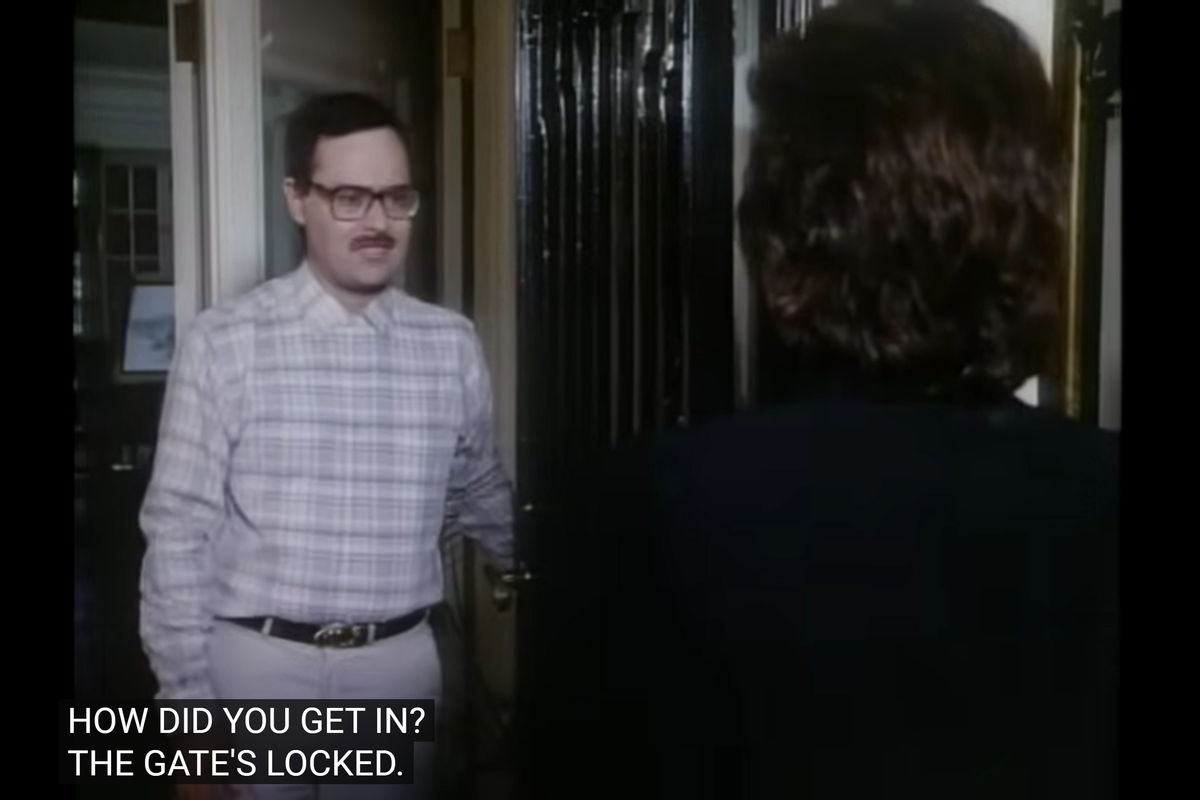
Maybe Jonathan wants to come back to a time when people didn’t use to lock their door, which is why he always gets in without permission, to show people locking their door won’t help them from an angel.
And the second time is to get the seat next to where the vision takes place, although it’s unclear whether he actually used it that time.
He didn’t use it now to see whether Fusco’s was lying or if he were really convinced of his hallucination (whether true or fake, that would have been a different matter). But maybe Jonathan still hasn’t unlocked that power yet.
The Job: here, Jonathan is a priest while Mark is Fusco’s dresser. So, that’s the third time in the series Jonathan and Mark have two different jobs for the assignment (compare to As Difficult As ABC and Cindy for the other instances so far). And Mark gets the job without references.
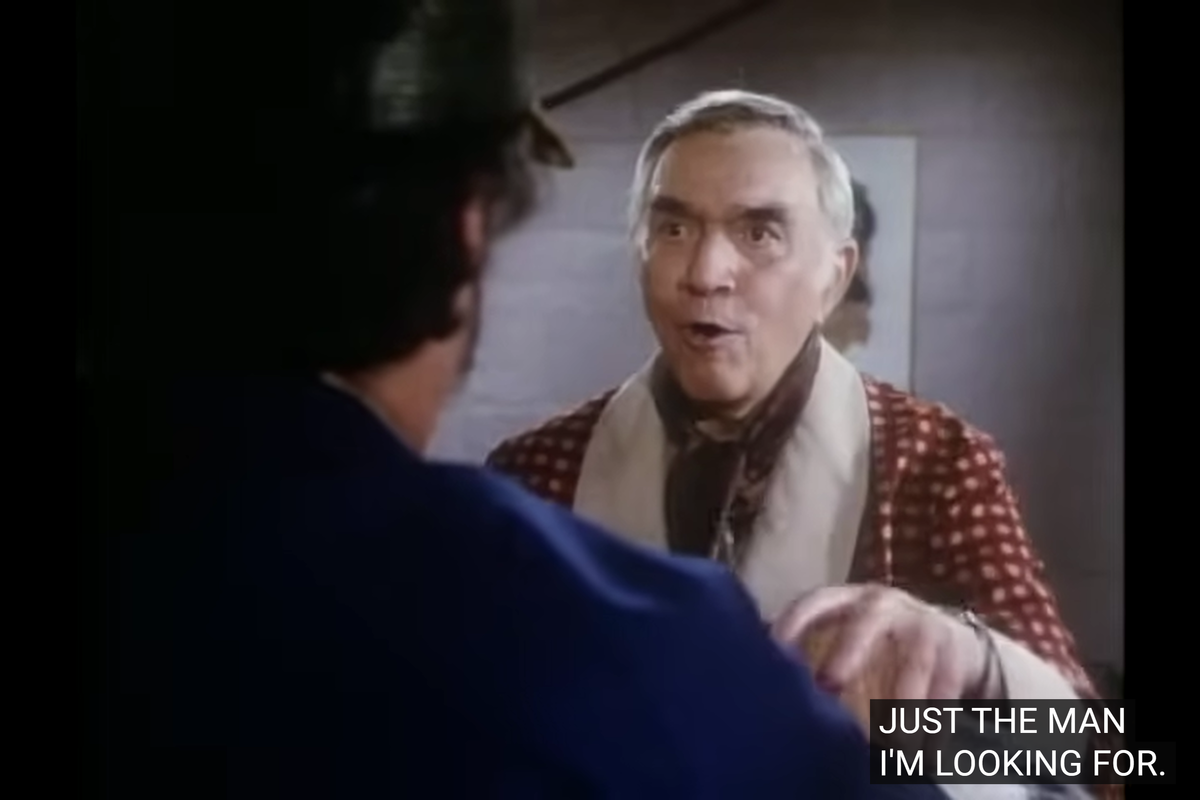
Actually, Jonathan has a job too.
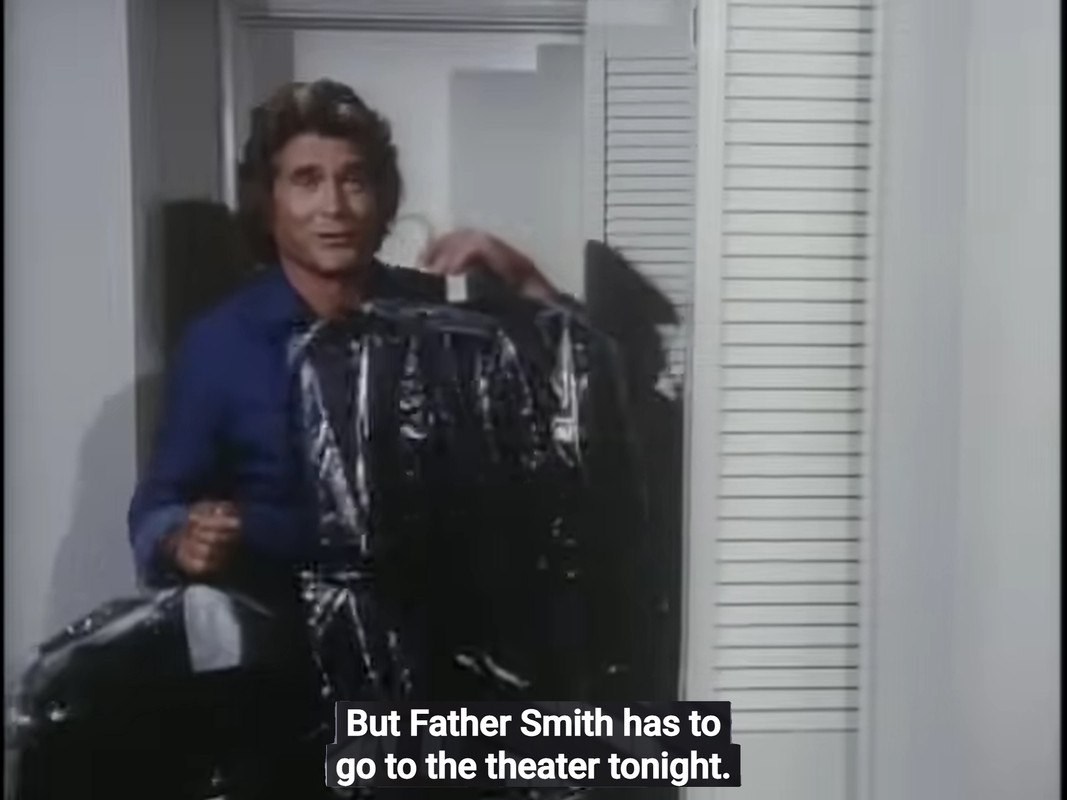
It’s the first time in the series Jonathan becomes a priest to carry out an assignment, but it’s not the first time he has ever been a priest (he disguised as one in the season one finale, although it was just at the conclusion, in order to pass unnoticed in a church, and not for the whole assignment). Anyway, it won’t be the last time in the series he becomes one.
Ratings: 35 million audience. 15th weekly TV programs, 3rd TV genre show.
The long-anticipated comeback of Landon and Greene enjoyed its success: the episode aired on November 20, one week after the Baseball one, and improved of over one point ratings, making it the third most watched episode of the series so far, after A Song For Jason 2 and Bless The Boys In Blue (they are all going to be surpassed very soon). Also, it’s important to point out that they are all episodes of this season, which has aired for just two month. Now, the series seemed to be accumulating audience faster than ever.
 Highway To Heaven Cast
Leave a comment