

Airdate: 01/29/1986
Directed By: Michael Landon
Finally, the streak of successful episodes this season all led up to this moment. Despite taking a one week break — something that usually hurts ratings — that wasn’t the case here: this episode is the most-watched of the entire series. And it’s a light comedy episode, partly a reworking of a known premise.
Complete show available here.
Assignment: Jonathan and Mark are assigned to help a famous actress and Mark to live for one day in each other’s life.
It’s a body-swapping episode. Basically, Jonathan and Mark have to work for an actress, Linda Blackwell (fictional, of course), who can’t stand men — the same way Mark can’t stand famous women, because he believes their life is easier then men’s.
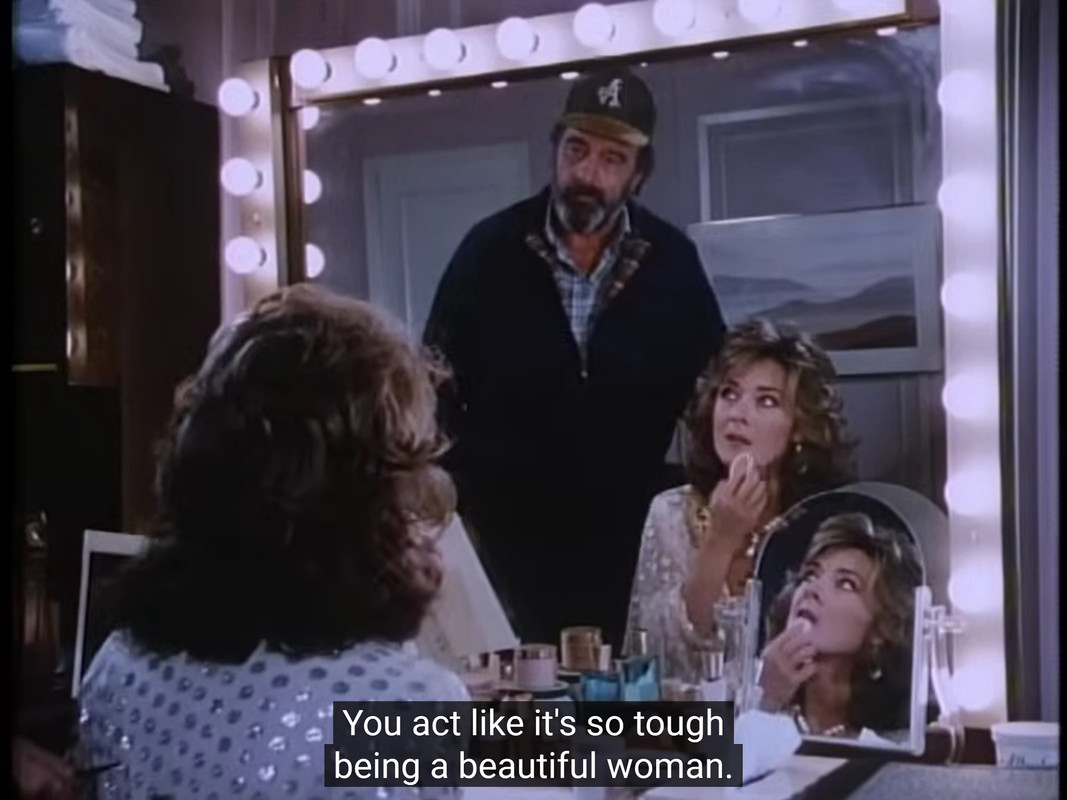
She has a different opinion.
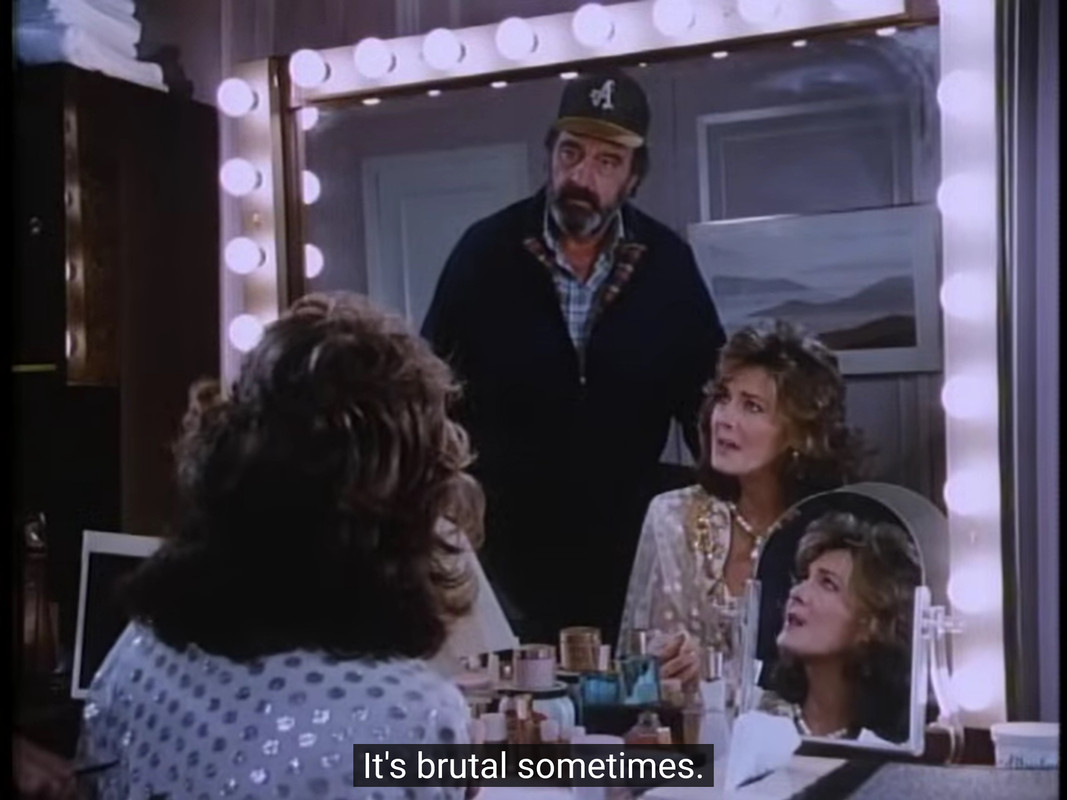
So, they screw up.
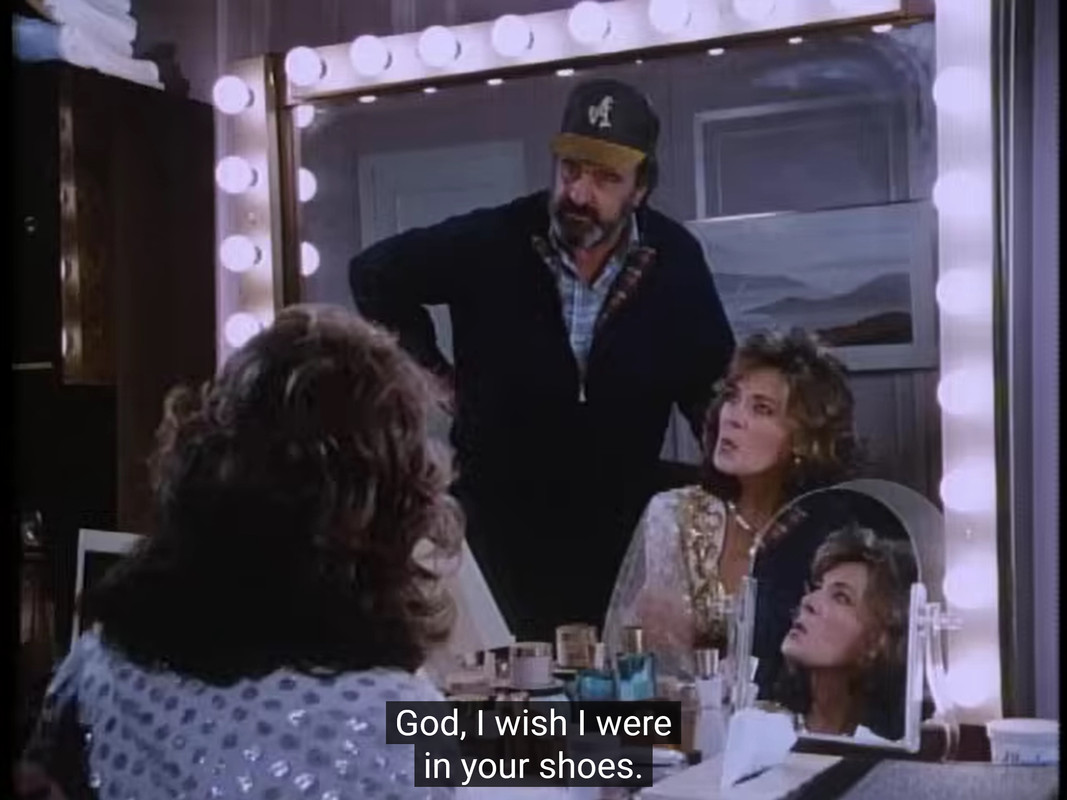
And, just like in Bless The Boys In Blue, as soon as Mark wants something, he’s pleased.
But, hold on, there’s something wrong now: he’s saying that it isn’t tough at all being a woman, and that he’d want to be like her (reading lines and taking the money), but she only says that it’s tough being a woman — not that being a man is easier. So, when he wishes to be in her shoes, she should be asking the same for him (in order to make him understand how tough life is for women), instead of wishing to be a man. And she scorns men, so there would be no point for her in being one. But maybe she’d like to be a bully, and she knows it’s easier as a man.
Either way, it comes true, and (that’s right) they trade place.
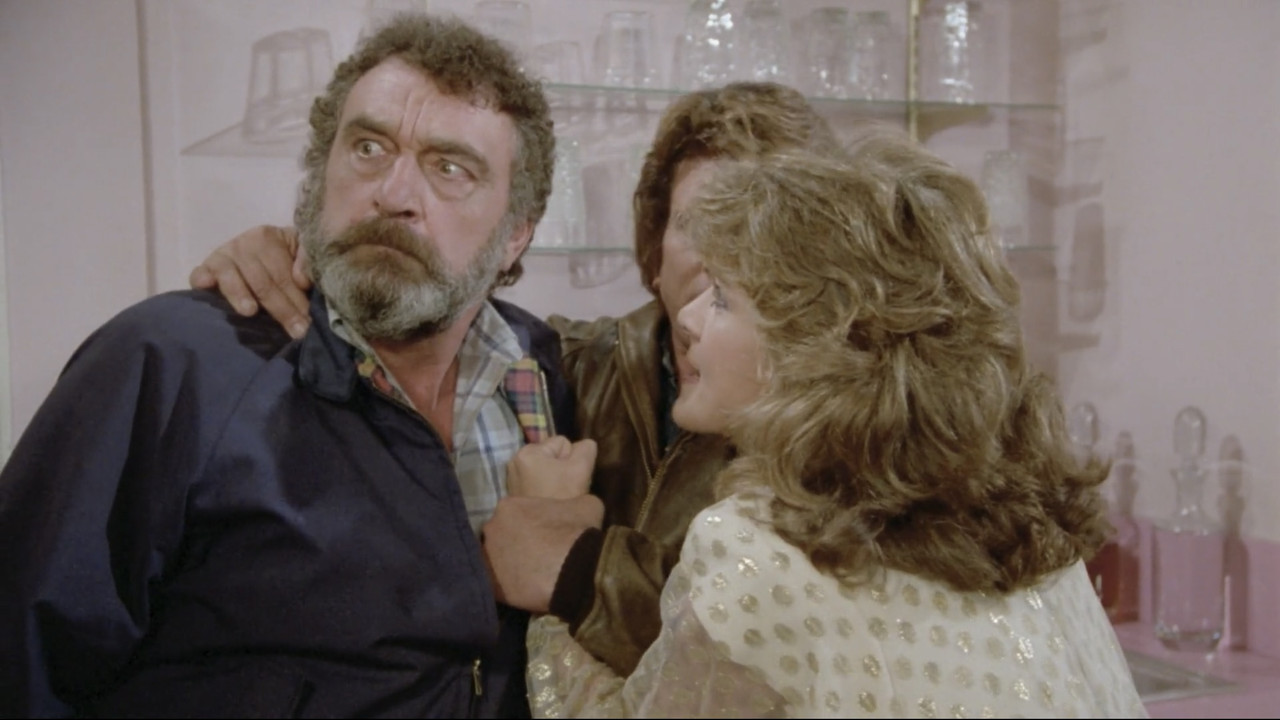
If this whole premise sounds familiar to the Highway audience, it’s because they had already made an episode about body swapping earlier — only this time, there’s Mark directly involved in the assignment. So, it’s one of the very few times in the series when the assignment revolves partly (or entirely) around one of the protagonists — again, Mark. It’s actually the third episode in the series where he’s part of the assignment: the first time was in Help Wanted: Angel (when he fell in love with a woman) and the second in Going Home, Going Home (when he traveled back in time to help his grandpa). Really, Mark is second only to Scotty in terms of times an angel has to help him.
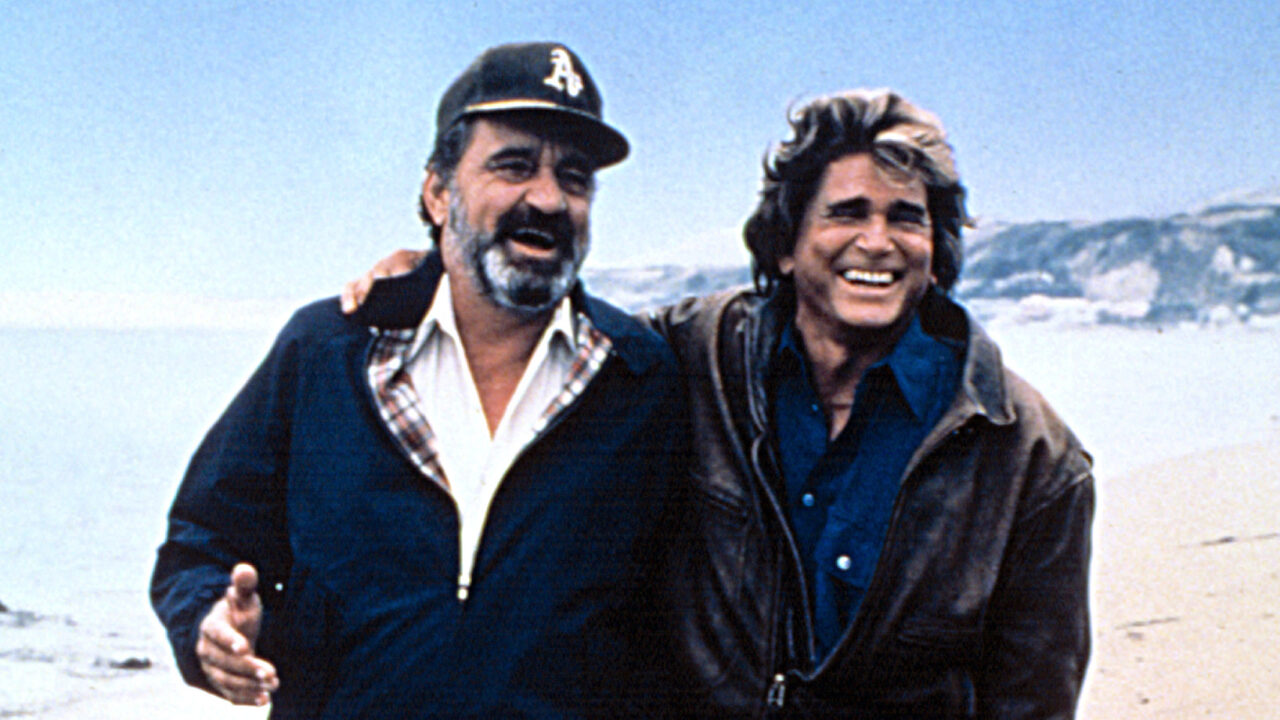
Also, partially involved in the assignment is one of Mark’s former colleague, who now works as Linda’s head of security.
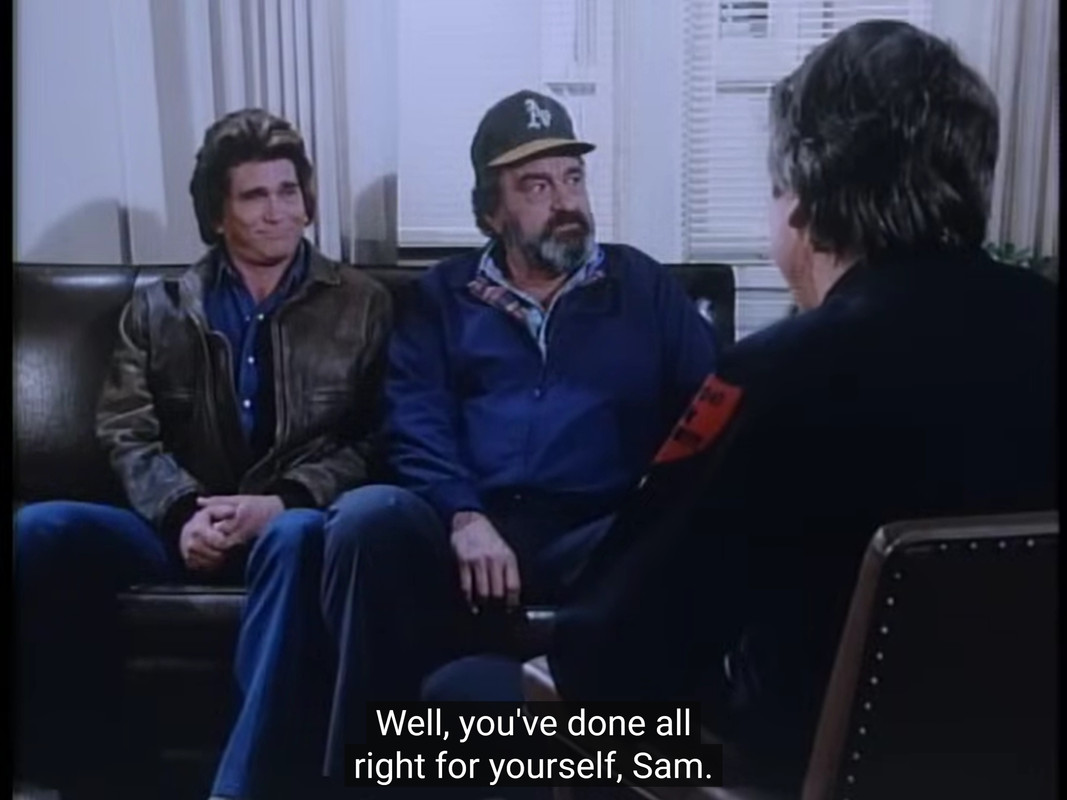
That’s the second time in the season Mark finds one of his old friends from Oakland (where he used to be a cop, as revealed in the Pilot). At least that man hasn’t saved Mark’s life (unlike that other time in The Secret, as well as many other colleagues, apparently).
- Background
It’s a Hollywood episode, so it takes place all around there. And the time span is about two days (exactly like The Banker And The Bum), as long as the actress and Mark learn how to live in each other’s life. Also, even though the date is never specified, when Linda (as Mark) is buying some make-up, there are some Christmas decorations in the background, so it is plausible to assume that it is set in December or late November at least.

But it’s because the production took place around early December too.
Also, Jonathan and Mark are going to stay over a familiar motel, which will be recycled in future seasons.

Because, if most assignments take place in Los Angeles, there’s no use in going to different motels every time.
- Characters
So, the whole assignment stems from Mark’s opinions on women.


That’s the second time in the season the assignment is caused by him (the first was Bless The Boys In Blue, when he argued with Jonathan over police and self defense, and he wished Jonathan could experience what it is like being a cop).
Actually, considering that they trade place only after meeting the woman and wishing to be like the other, it is unclear whether the assignment was always meant to be that way (live in each other’s life) or whether it was originally just about teaching Linda and Mark to respect other men and women by having them spend time together and learn from each other, but then they said those words and the assignment turned the way it did.
Instead, Jonathan largely remains in the background, yet there’s something to point out: when he is at the motel with Linda as Mark, as she’s in the bathroom, he’s shown reading a book.
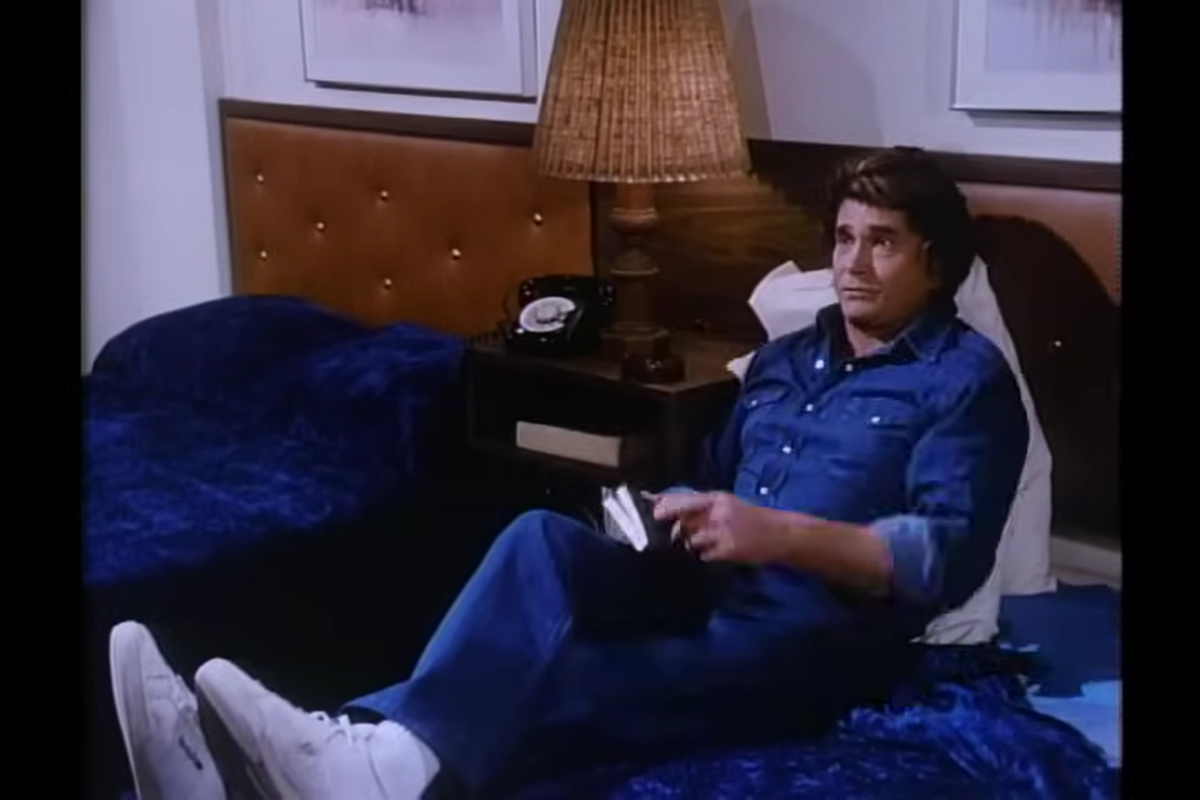
That’s the first time in the series he’s shown reading. Maybe that reveals what he does every night when Mark is asleep, considering angels don’t sleep.
- Production and Setting
The episode was produced during one week on early December 1985, before Keep Smiling (which would air one week later). Of course, as it is a Hollywood episode, they remained around there, with the only exception at the beginning, in Culver City, when Mark is arguing with Jonathan over women living better than men.
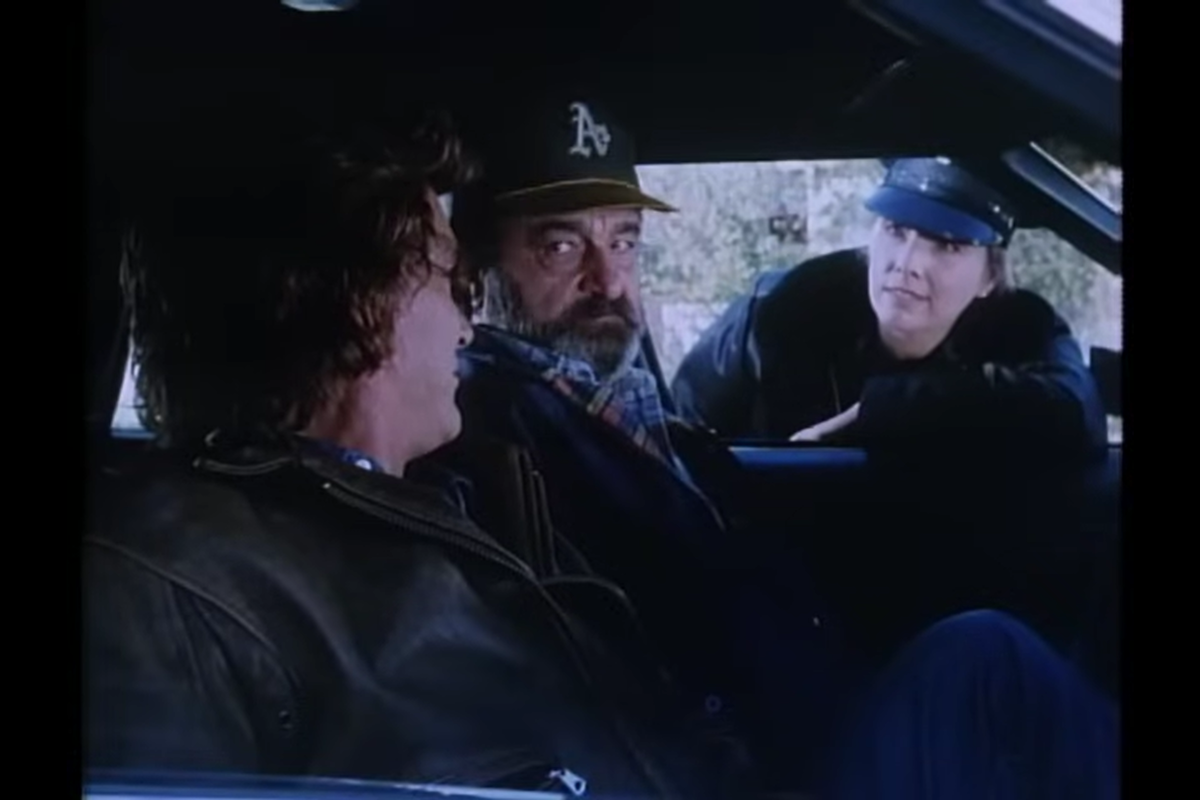
But again, it’s mostly Hollywood; actually, considering that much of the episode takes place on set, they recycled the same as Cindy, though with a different name.
Glossary
Angel Revelation: there’s one for Linda, because it would be impossible to explain the premise otherwise.
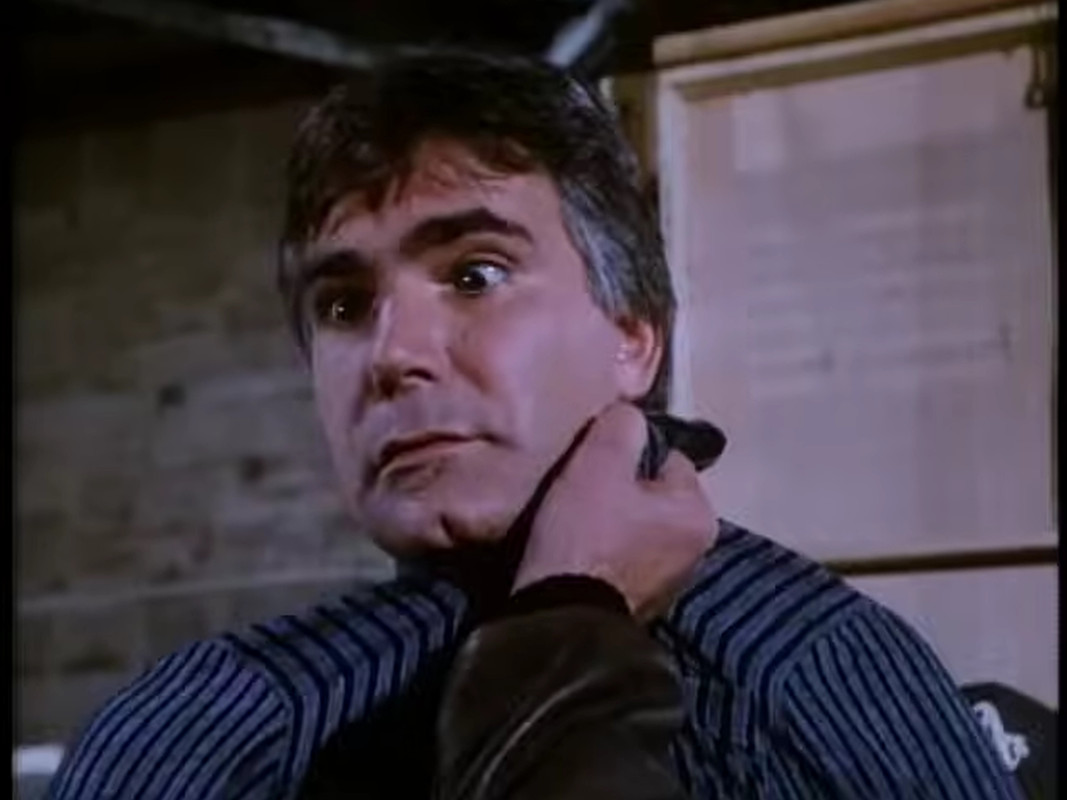
Blooper: there are two instances. One is a long blooper at the dinner scene between Linda (in Mark’s body) and his former colleague secretly. There, while Linda (as Mark) is talking, it seems that French had some troubles with his hands: when he concludes his meal, he keeps them clasped near his face.
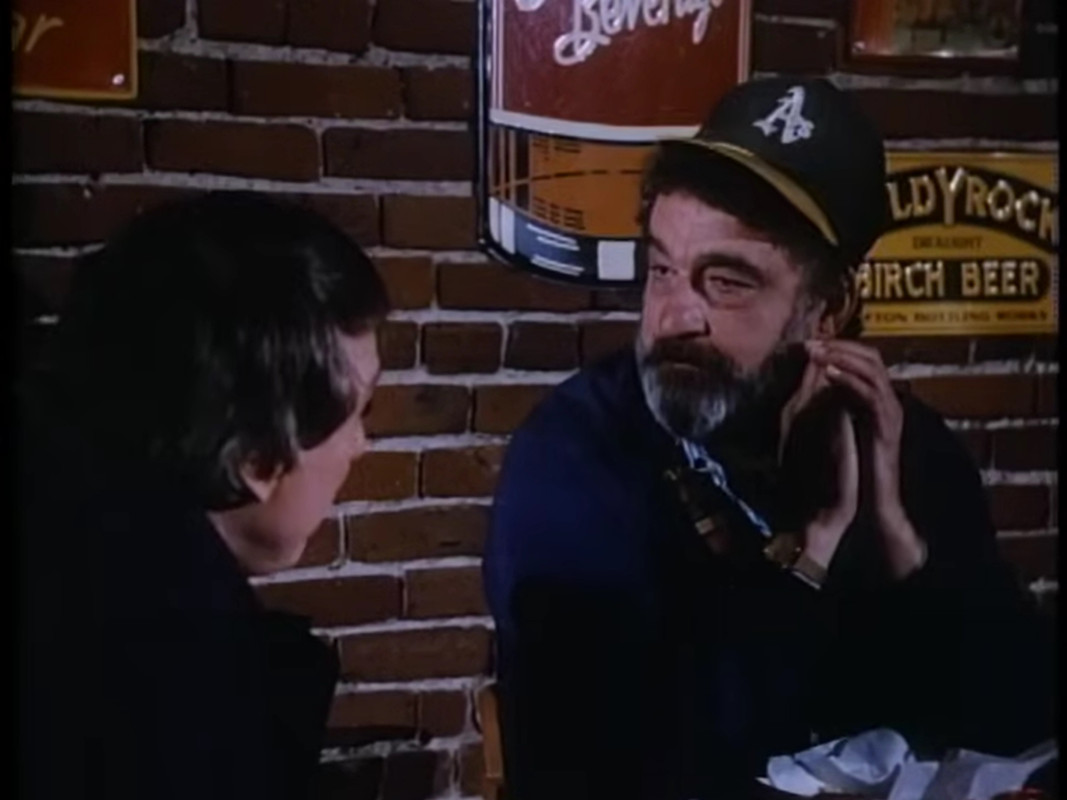
But from the back, only his right hand is on the chin.
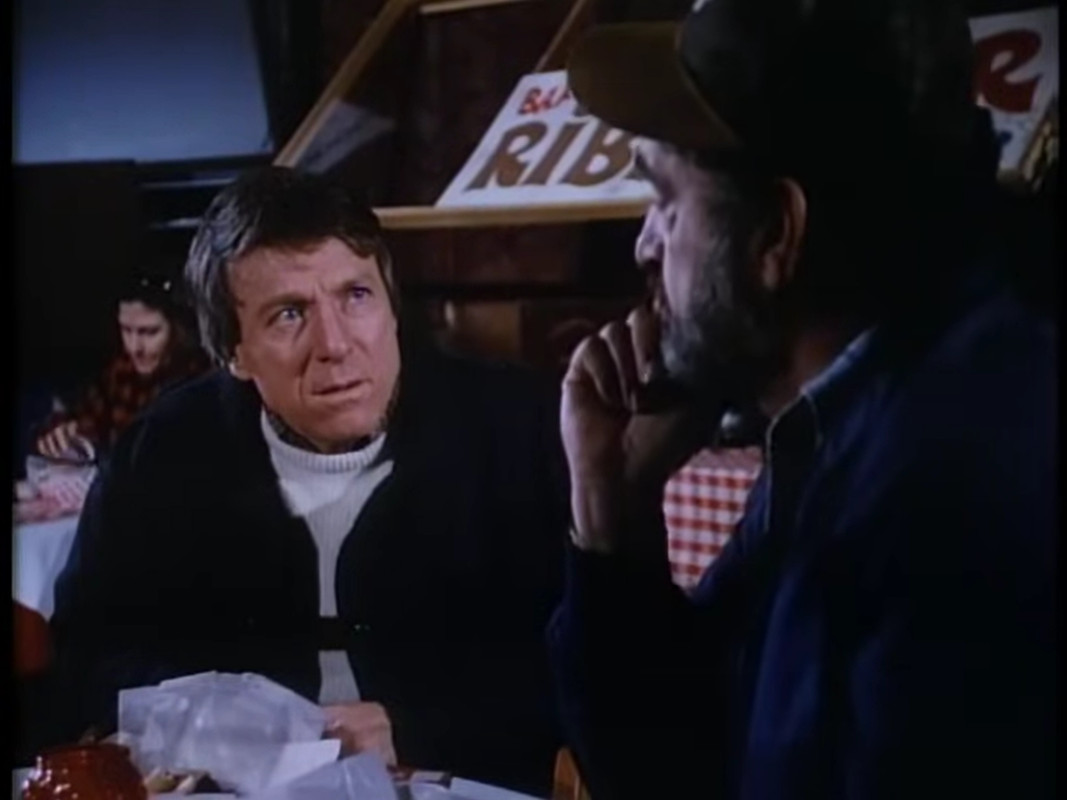
Later, he slowly lays it on the table while the colleague is talking to him.
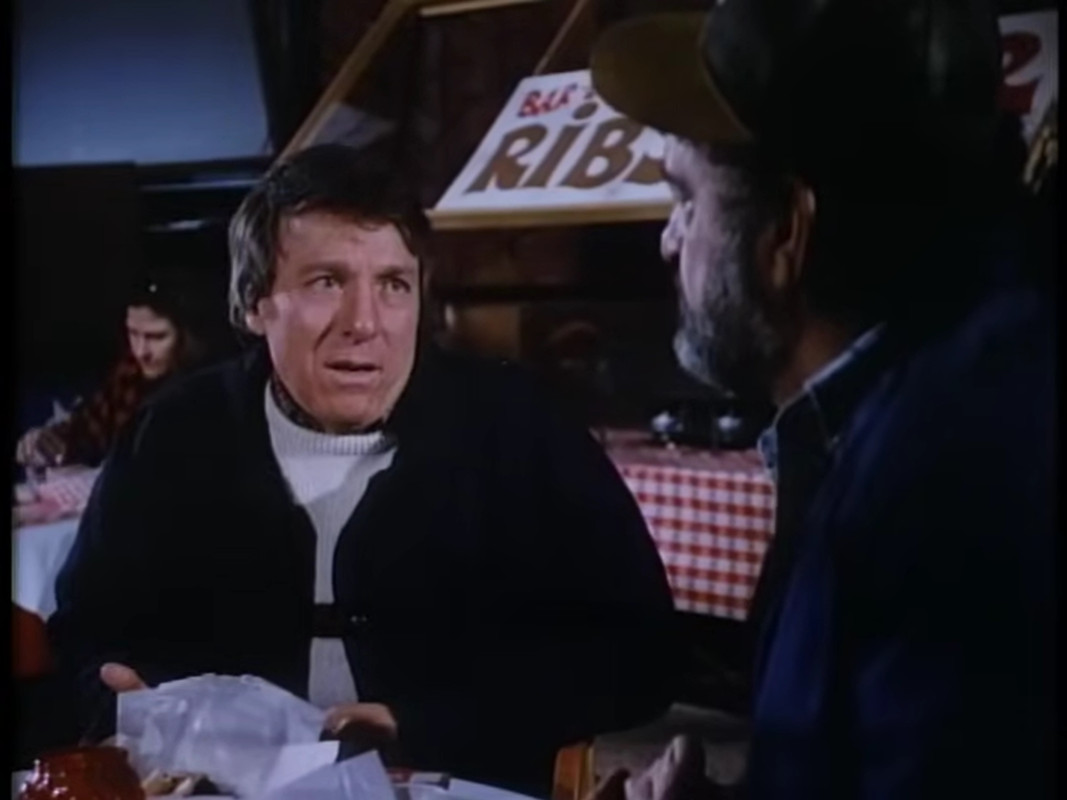
But suddenly, they are up again.
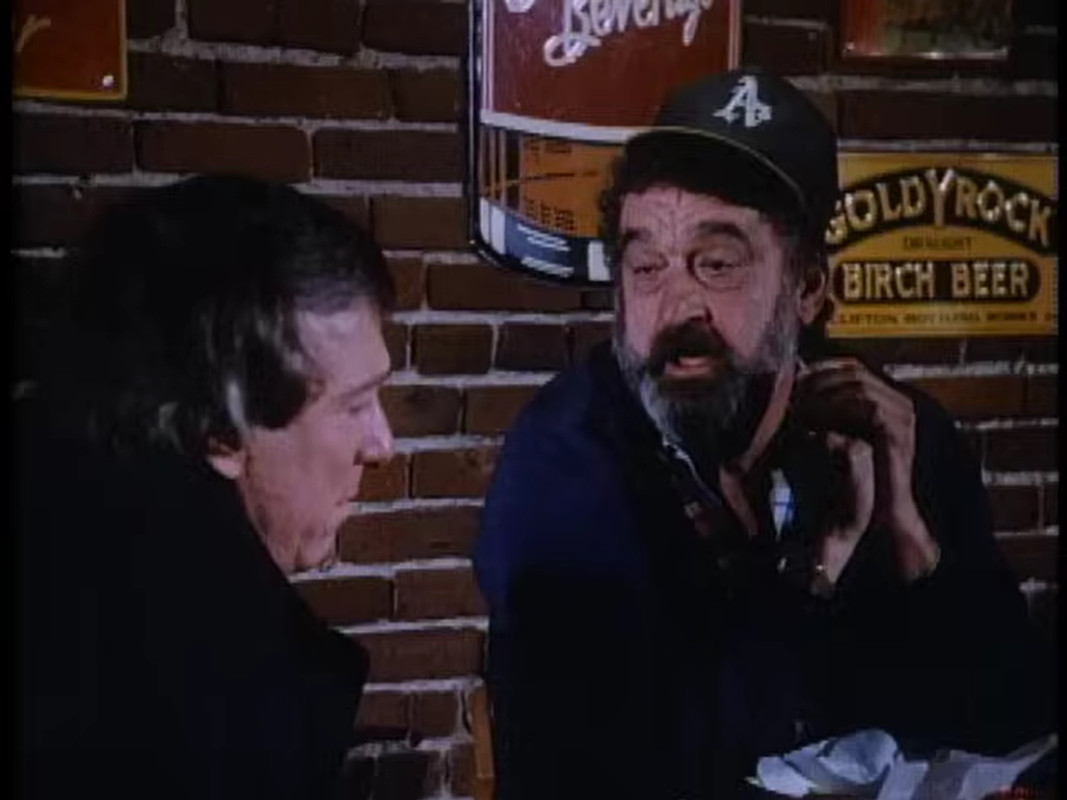
And then they’re there.
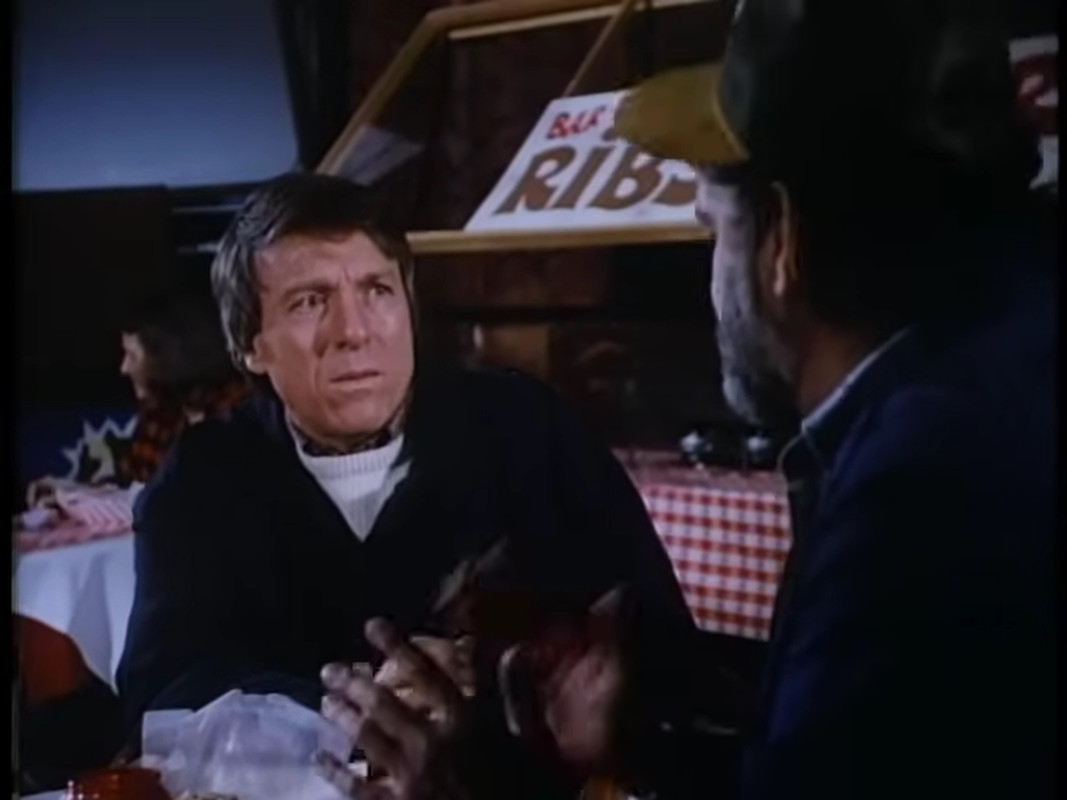
And they’re not there next.
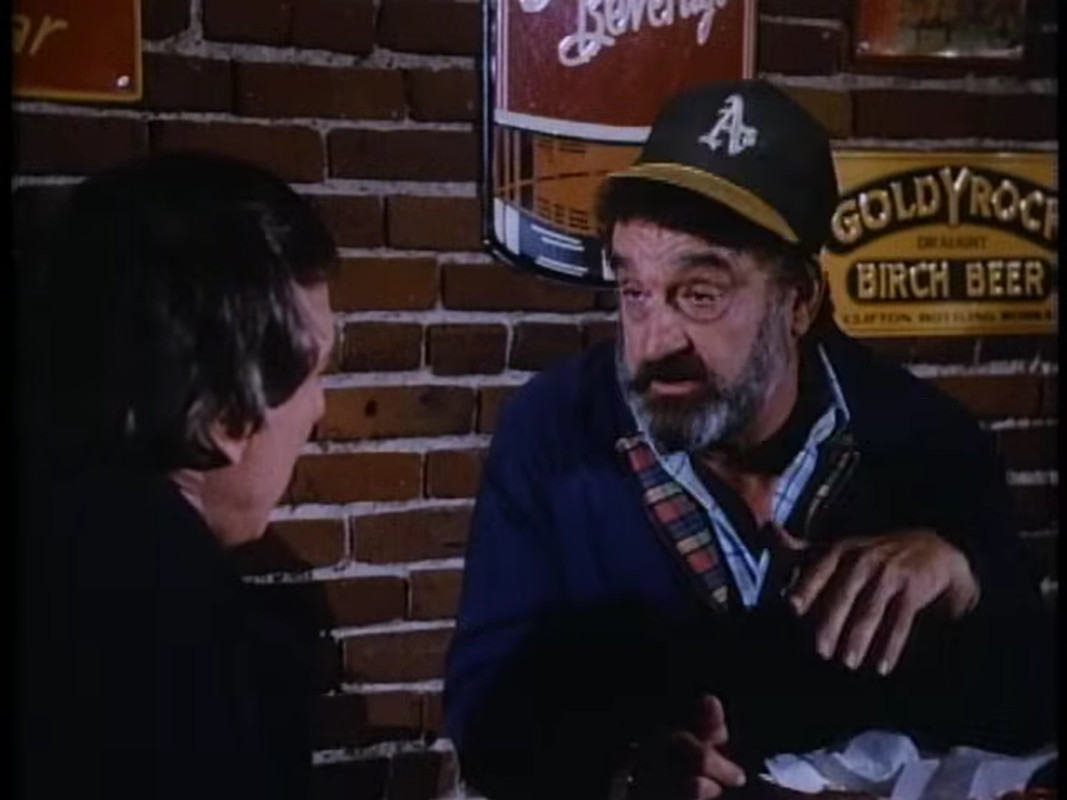
And it’s better to put a stop here, but he keeps going them up and down the whole time. No idea why nobody told French anything.
The second instance is a similar one at the conclusion: when Jonathan hands Linda (stuck as Mark, again) the night clothes, Linda asks him to look away, while French waves the clothes on his right hand.
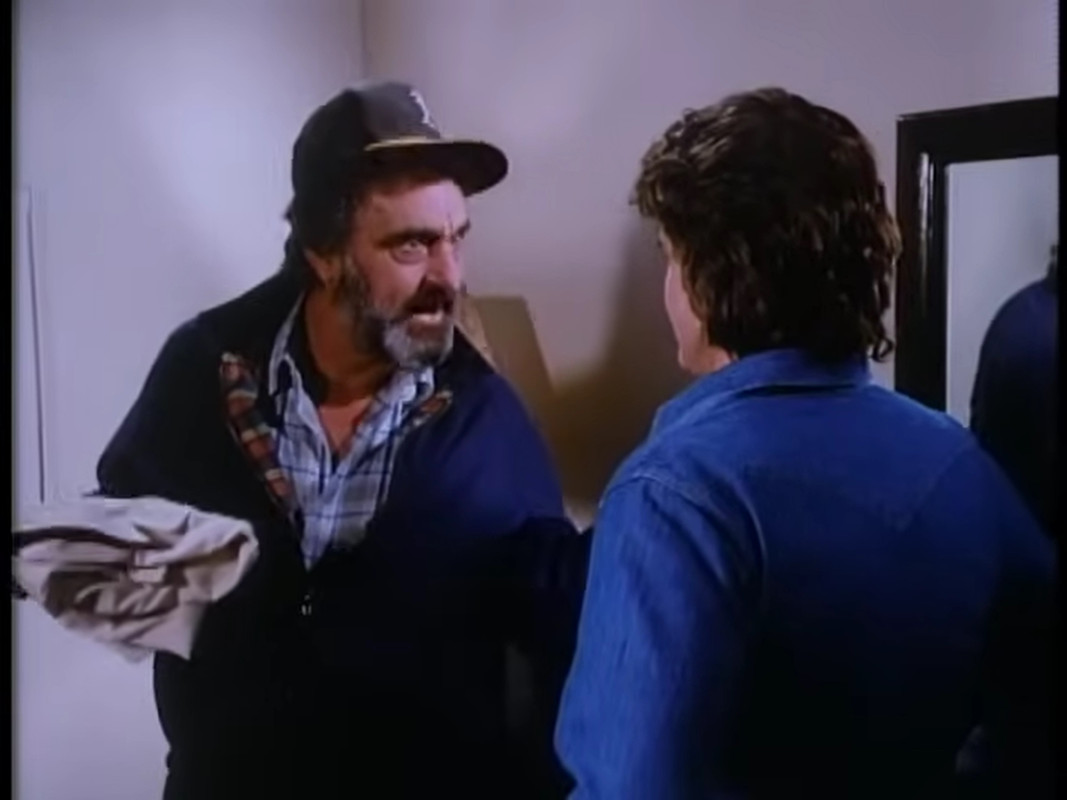
But then, when Jonathan is shown, the clothes are now moved on the left hand.
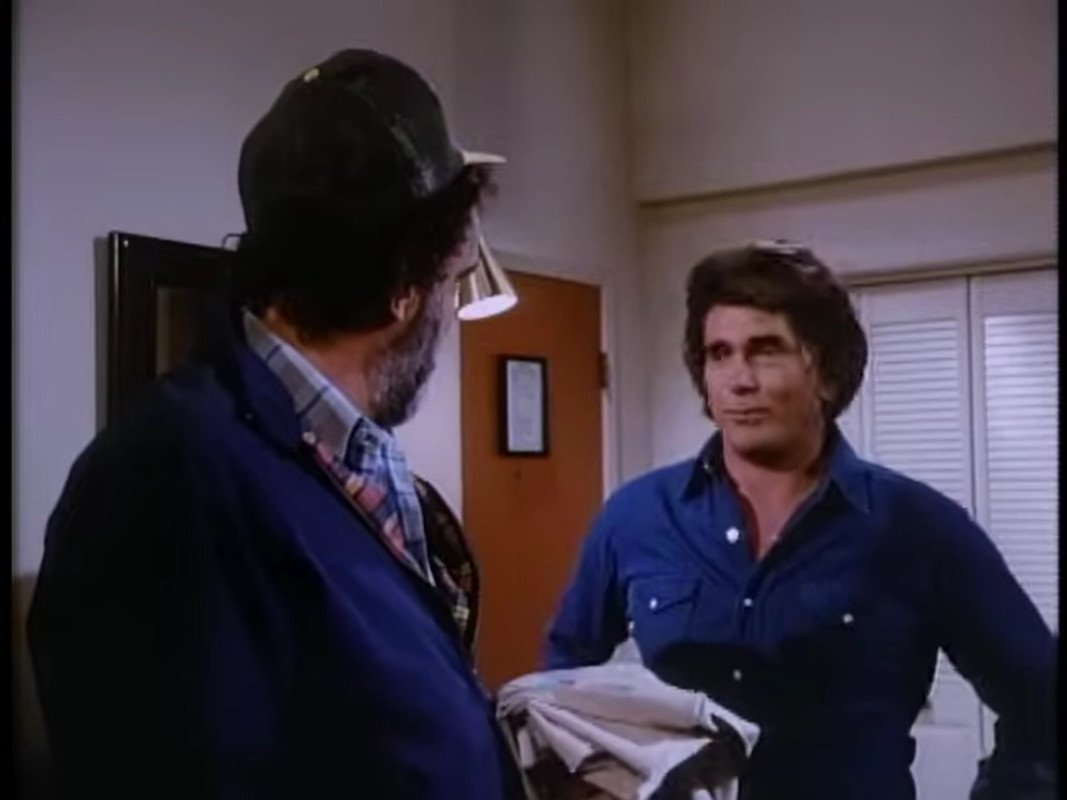
It seems like French isn’t used to toss his arms around that much. But likely it’s because he has never played a girl.
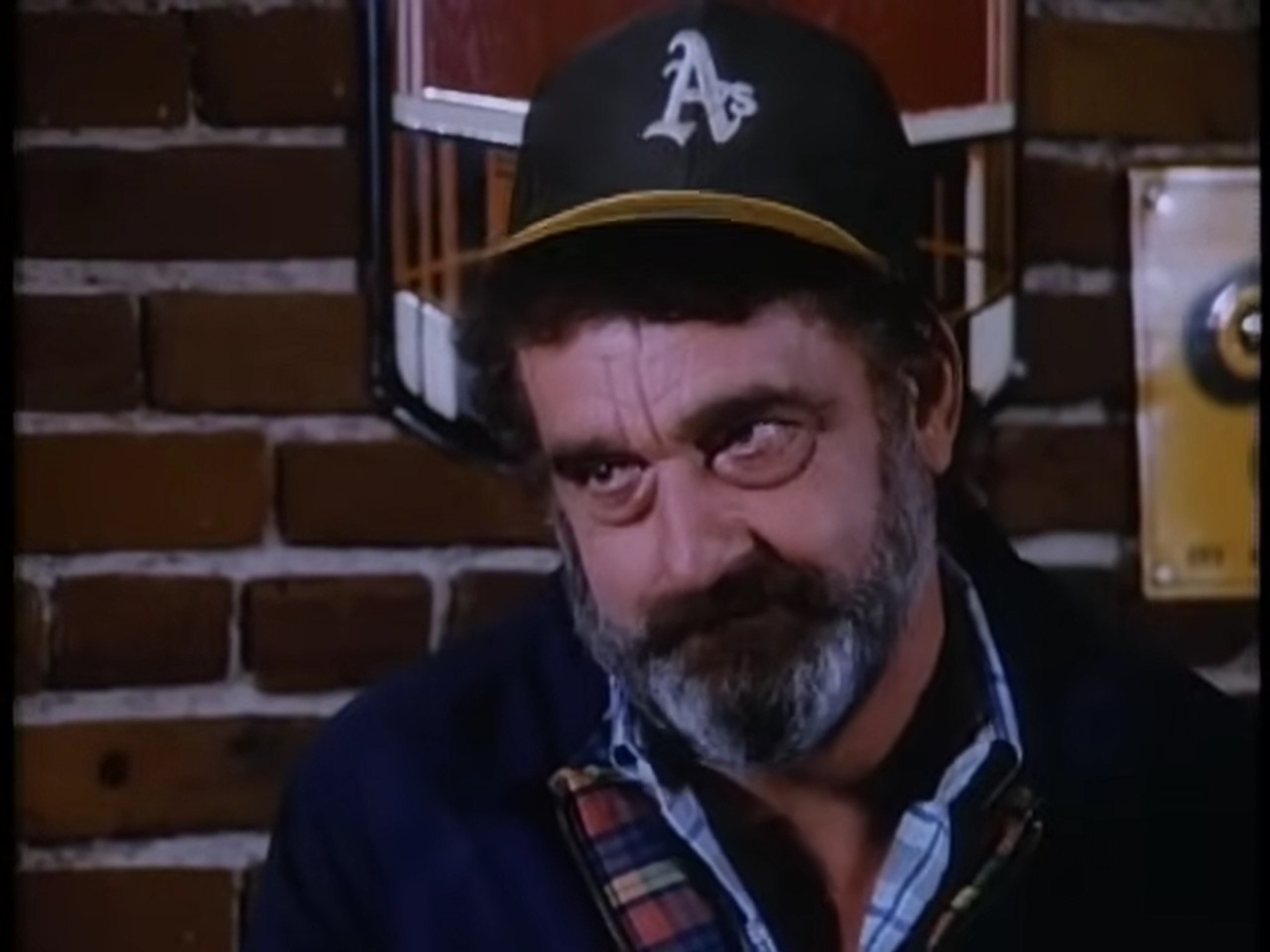
Admittedly, this episode has aged worse than the rest of the series.
Cute: there are two instances of Mark’s line. The first is by Mark as himself, when he tells a cop how he scorns women, without realizing it’s a female cop.

As if it were Jonathan’s fault they live in a country where women can be cops.
The second instance by Mark in Linda’s body, upon learning that he has become the assignment.
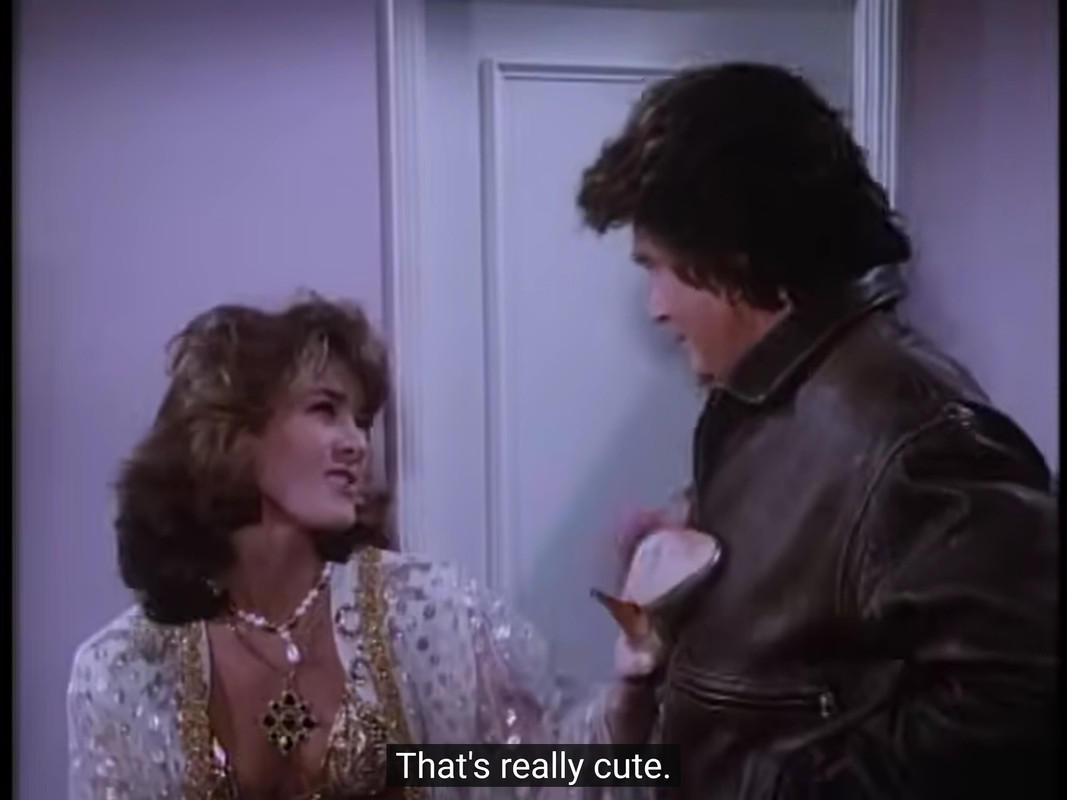
As if it were his fault, again.
Friendly Jonathan: for much of the assignment Jonathan isn’t much reassuring nor helpful in any moment. Actually, he seems to make it worse: for instance, when Linda wakes up in Mark’s body the first time, she faints seconds later, and Jonathan almost justifies that to Mark (in Linda’s body).
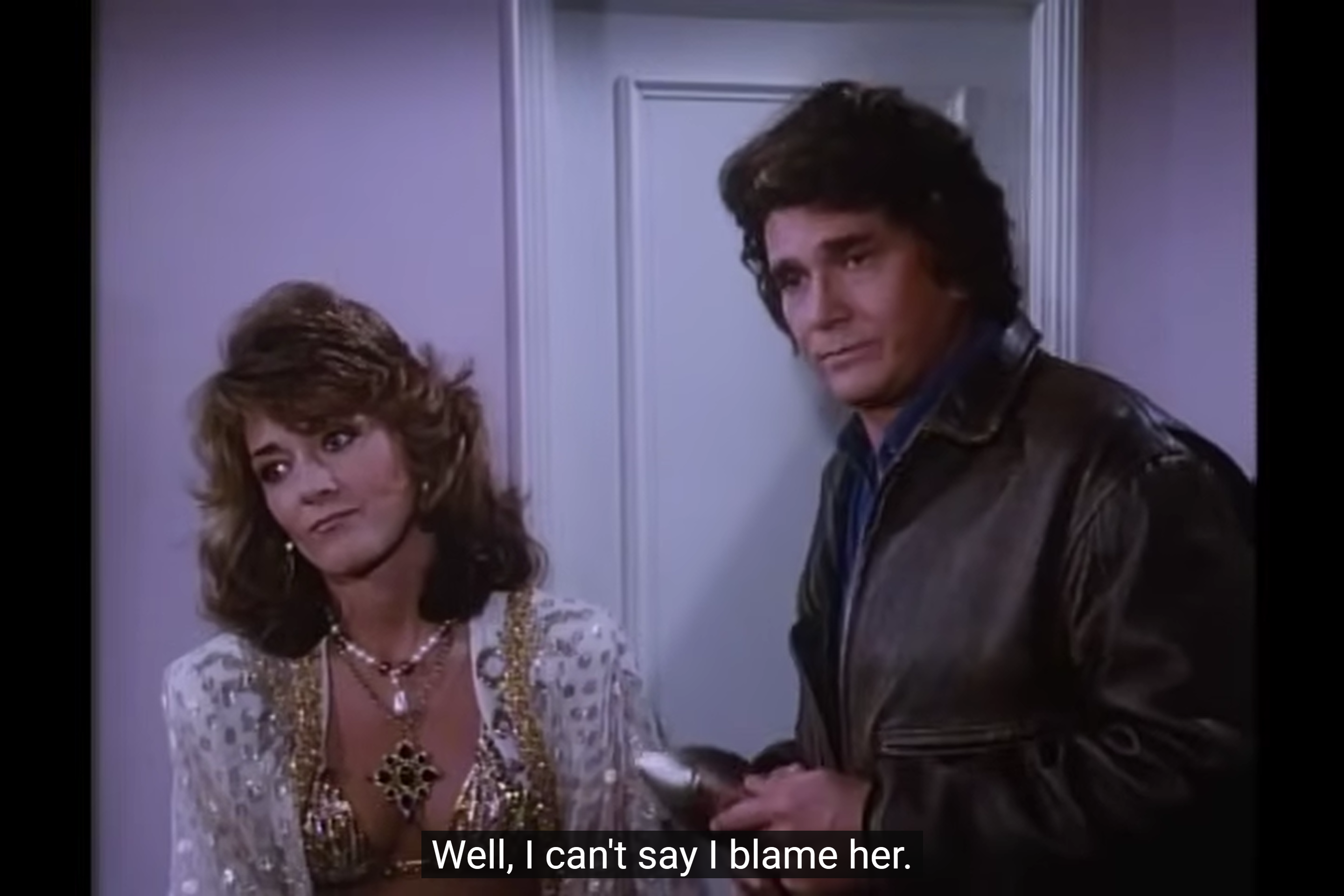
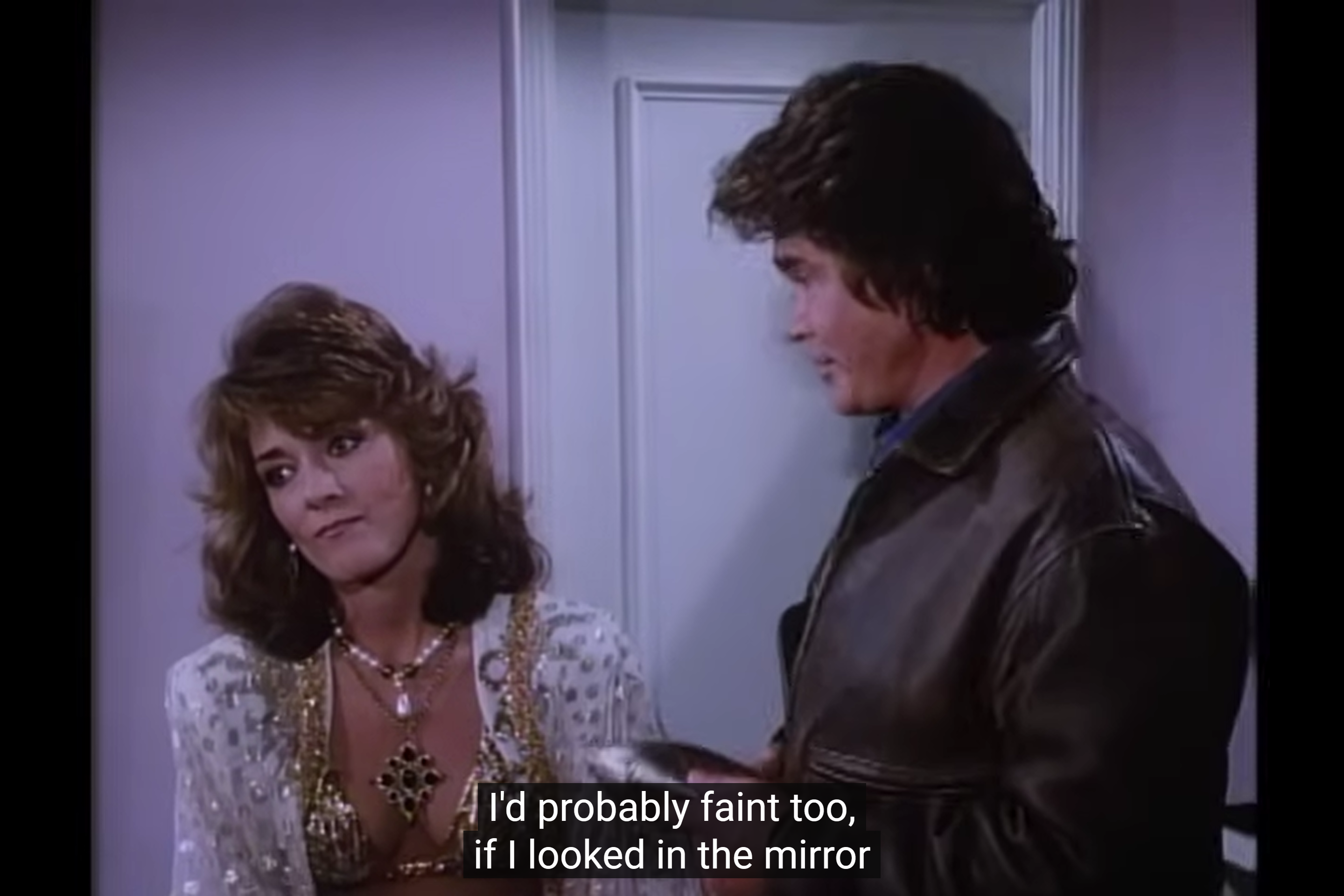
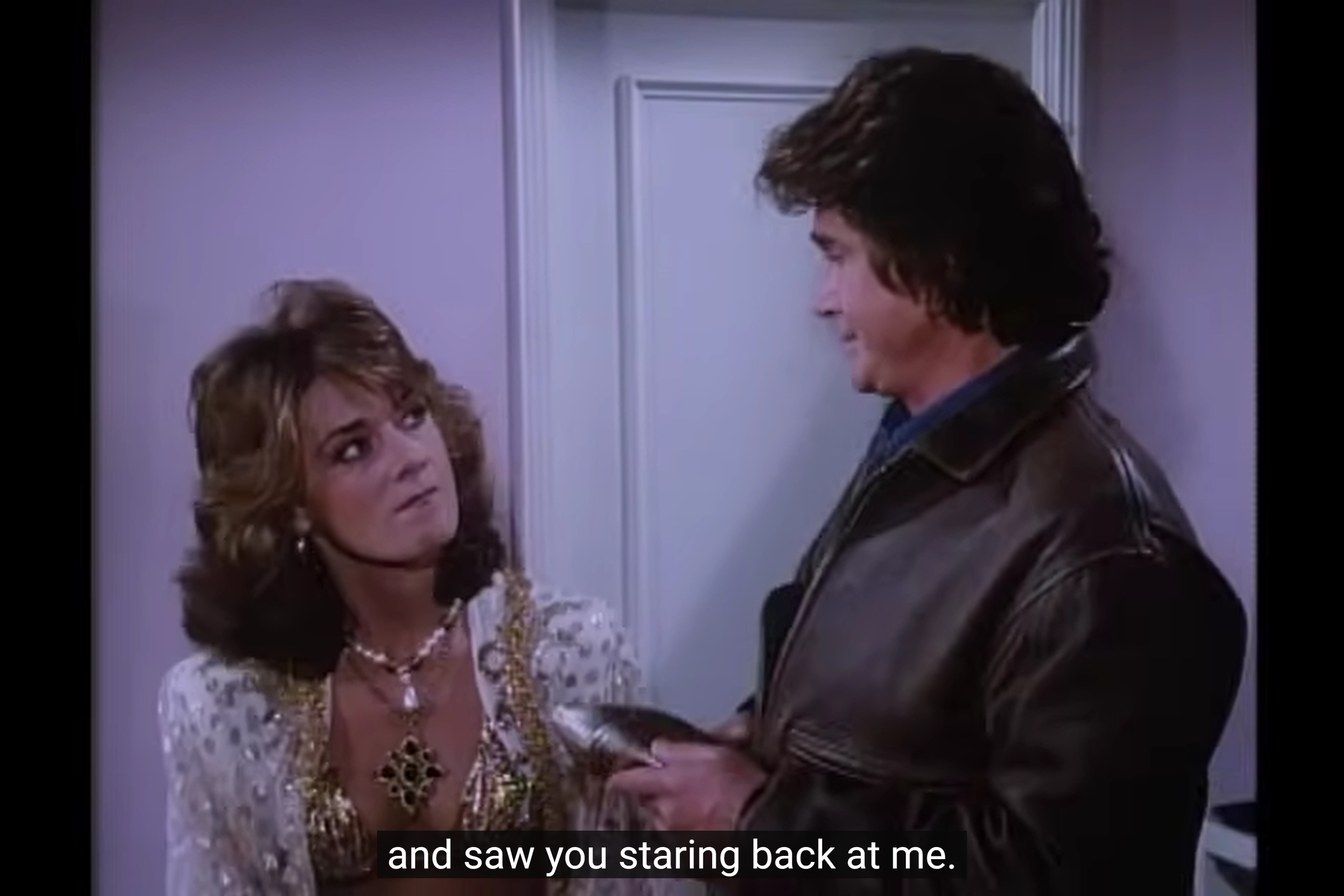
That’s not cute, Jonathan.
Punchline: this whole episode is basically a revisited (or copied) version of The Banker And The Bum with Mark involved, so of course they took many features from that episode, punchlines as well. For instance, at the beginning, when Mark is showing his contempt toward women, Jonathan tries to remind him of a familiar and old punchline.


And Mark replies with a new version of it.


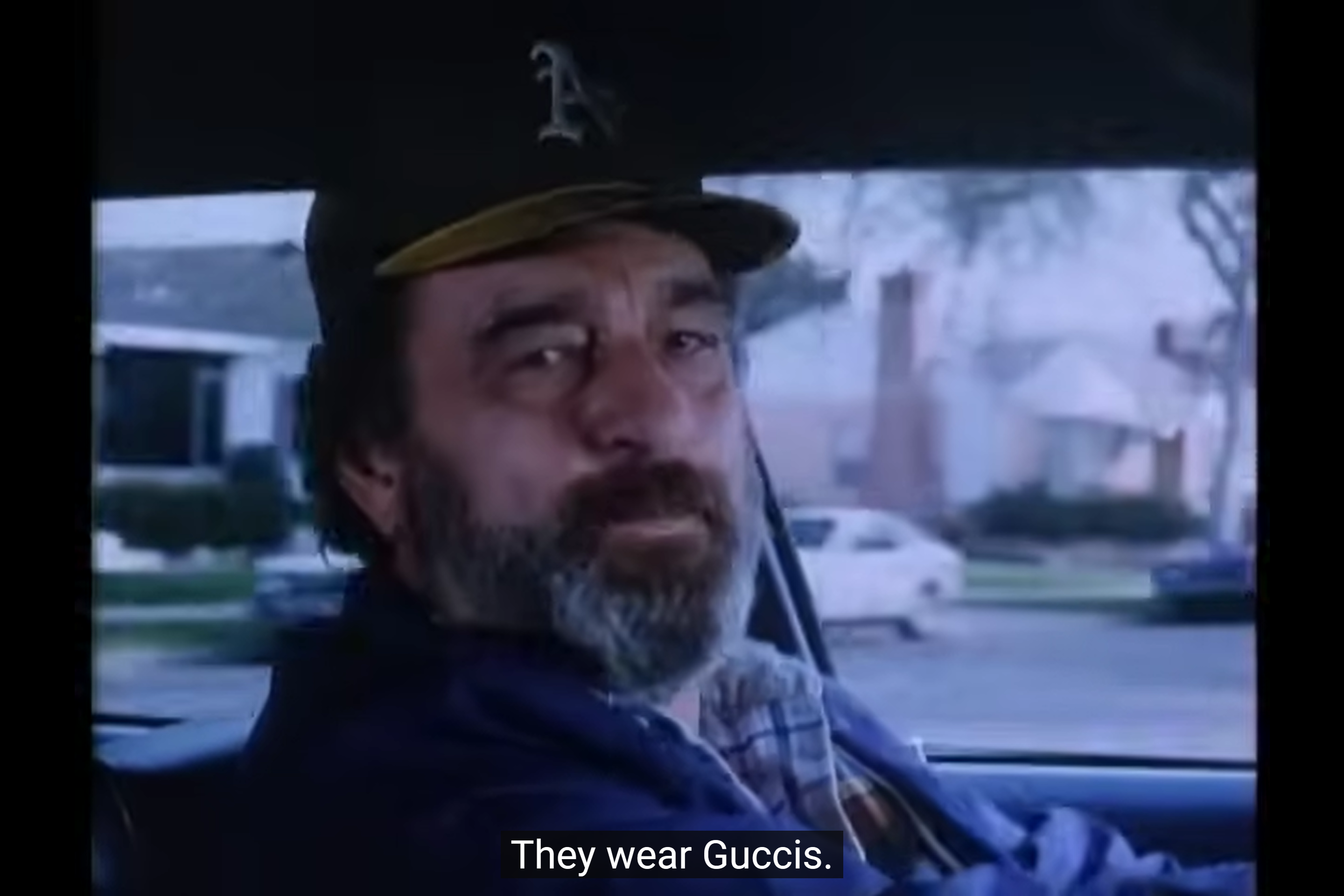
But that’s not entirely new: it is exactly the same punchline of The Banker And The Bum, when Mark told the banker (who had contempt for bums and traded place with one) that now he had to learn how to walk a mile another man’s moccasins.


And the banker used a reverse punchline.

Probably Mark liked this line so much he wanted to use it. So, it seems like he has learnt something from that assignment too.
But there’s also another punchline: at the beginning, when Mark’s colleague tells him that he’s secretly in love with Linda but is afraid to tell her because she’s popular an famous and he’s just a cop, Jonathan recycles an old punchline to remind him of something he has preached multiple times before.
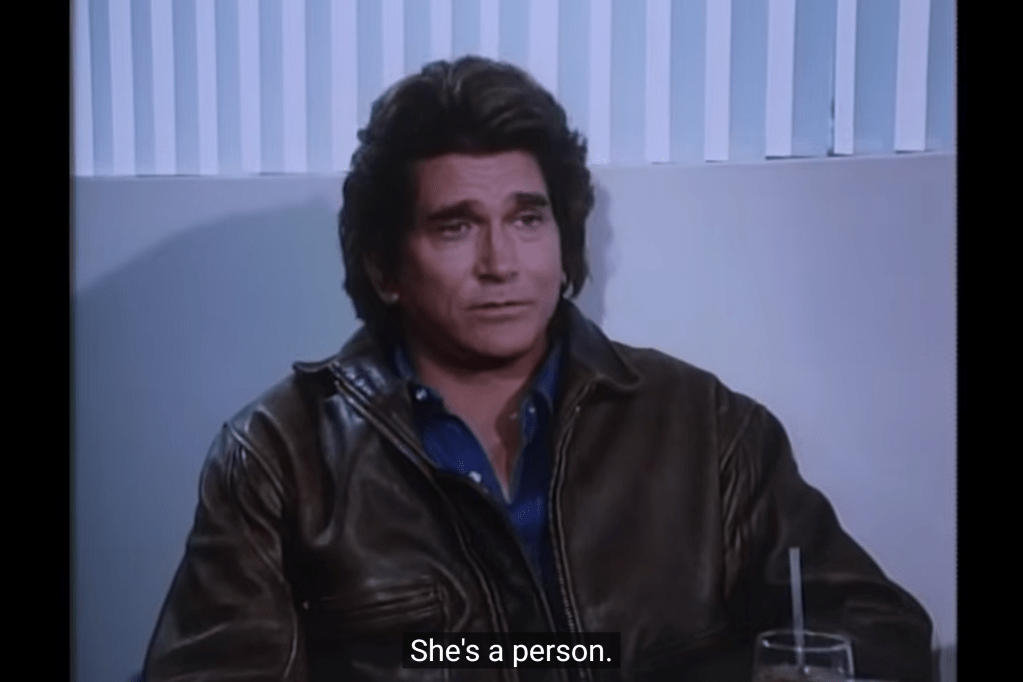

The idea of people making opinions on famous actors (but of anyone too, for that matter) based only on their public appearance has been explored in the episodes of Catch A Falling Star (which made some jab at how famous actors might feel lonely, being afraid that their “friends” are trying to take advantage of them), and, more thoroughly in The Brightest Star, where actors feel the pressure of act a certain according to the public image built around them. Both episodes (The Brightest Star in particular) cautioned the audience on judging people based solely on the public image, and showed how people can be changed by popularity if they do not properly handle it.
Also, this subject (beside being recurring in the whole series) had some personal root in Landon’s life: in 1984, right before Highway launched, many journalists dismissed the project as “too sappy” (and that is an opinion, so there’s nothing wrong with that), but somebody went further, attacking Landon personally and arguing that someone as wealthy him couldn’t possibly understand the problems of “real people” out there (as reported by The Philadelphia Inquirer and The Tampa Tribune in July 1984, when the series was presented to the press). These comments completely overlooked Landon’s actual background, and on that occasion, he had to bring up his daughter’s problems with drugs to convince people that the public life and the private one are not the same.
Similarly, French had to deal with such problems for most of his career: in his early roles, he would often play the villain simply because of his rugged appearance, until the audience began seeing him as one too. In multiple interviews, he revealed that it got to the point that people would draw back when they saw him on the street (more details about his early career here). In other interviews (at the Jim Nabors show in 1978 and the Philadelphia Inquirer in 1979) he revealed that, one day, he was stopped by a carpenter who envied him for being an actor, feeling that famous people are more important than others — an idea that French admitted made him feel uneasy (extracts of this interview here, at the “Assignment” part).
So, an episode about something they were both familiar with.
Recycle: there are two instances of recycles from other episodes (of course, excluding the recycled punchlines from The Banker And The Bum about wearing other people’s moccasins or whatever). Curiously, both the recycled features are two of Rose’s composition, and both had already been recycled in other episodes. So, one is at the grill scene of Linda (as Mark) talking with Mark’s former colleague (the scenes with all the bloopers). During the whole scene, as the characters are talking, the music that plays is nothing new for the audience.
It’s the same music from the episode Song Of the Wild West, that somebody played multiple times on that episode, and which was also recycled in the Season 1 Finale, in a scene at the grill (more details about it at the entry “Recycle” of that episode). It seems like every bar of the town listens to the same stuff.
Instead, the second recycle is at the beginning, when Jonathan and Mark drive to the “Worldwide” set, with a familiar composition as well.
It’s the same song that was used in the episode Cindy, of this season.
And both were actually mellow recycles from the beginning of Catch A Falling Star in Season 1.
Of course, they are all Hollywood episodes. It seems like every time there’s an episode set there, this will play out.
At least they didn’t recycles the setting: here, they are at “Worldwide” studio, on Cindy, the equally fictional “King Studio”, and on Catch A Falling Star, it was a real one.
Highway Of Mysteries: the episode has one at the conclusion. And the problem is that such issue wasn’t part of season one. When Mark and Mrs. Blackwell first swap bodies in Linda’s room, their bodies physically switch positions as well—she had been sitting on a chair and he was standing the left.
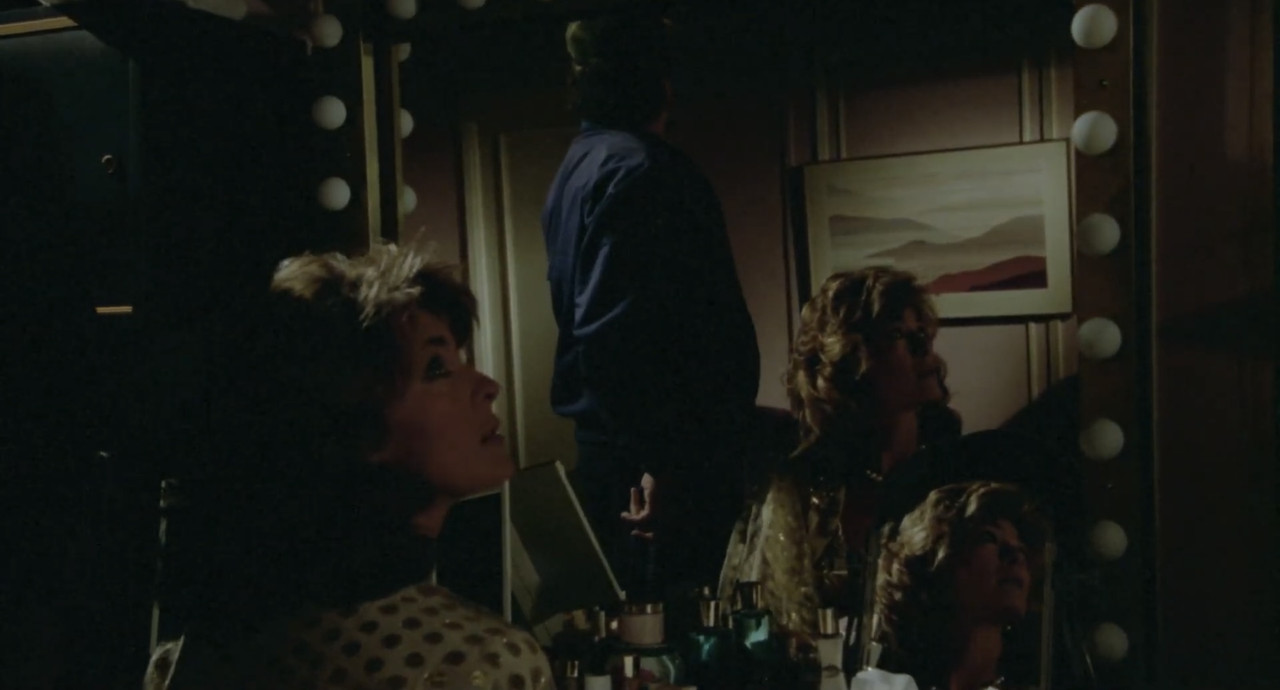
Then, the lights flicker, and suddenly Mark is still standing, but now in her body.
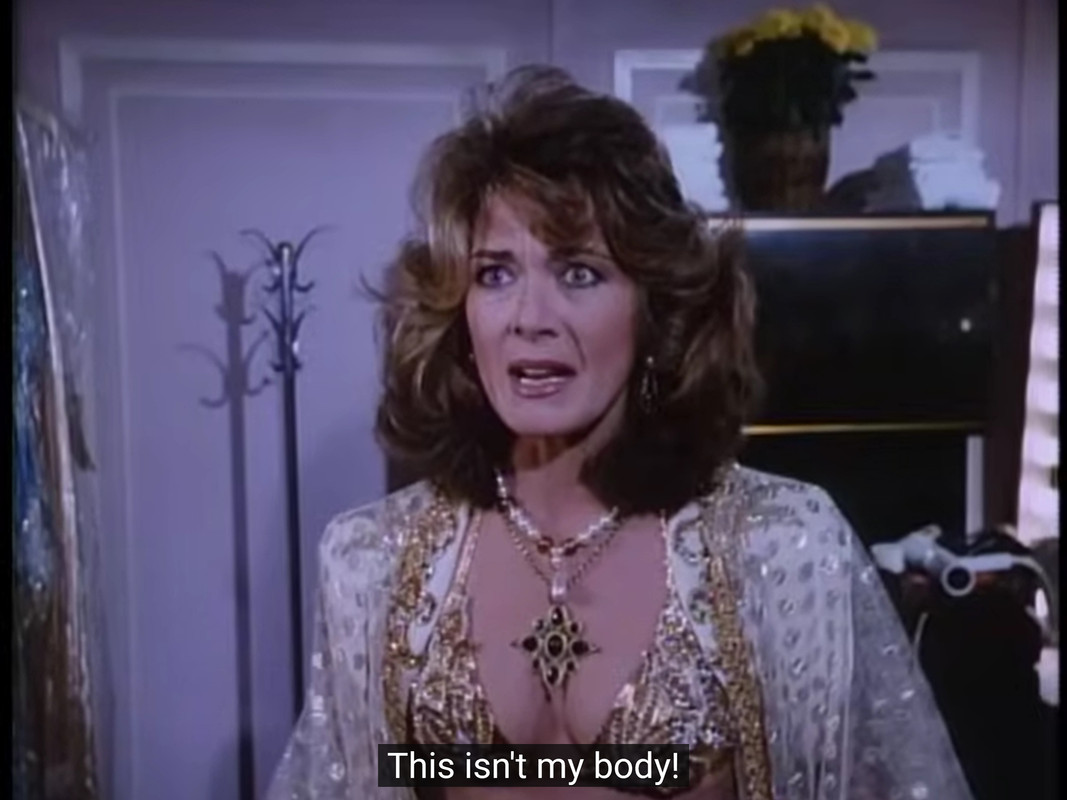
While she is seated, now in Mark’s body.
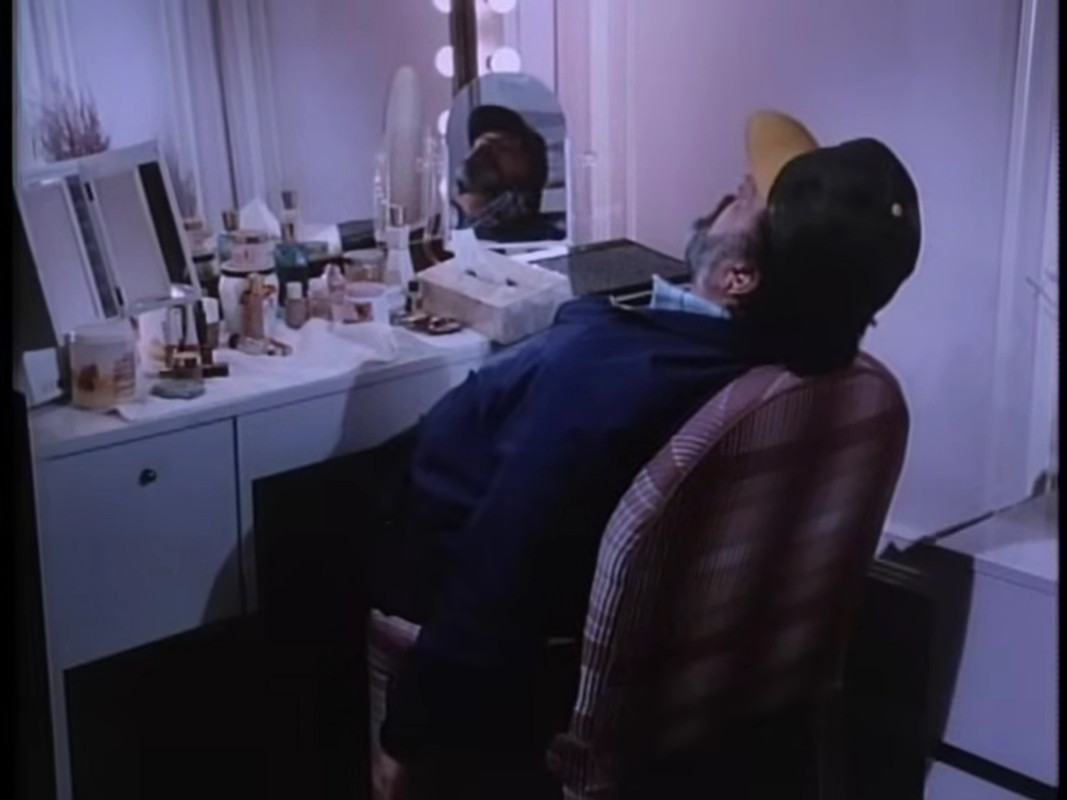
So, they actually moved one where the other was standing before they traded places.
However, when the body swap is reversed at the end of the episode, the logic doesn’t match: at that point, Mark’s body (inhabited by Linda) is at the motel, while Mrs. Blackwell’s body (inhabited by Mark) is at her house.
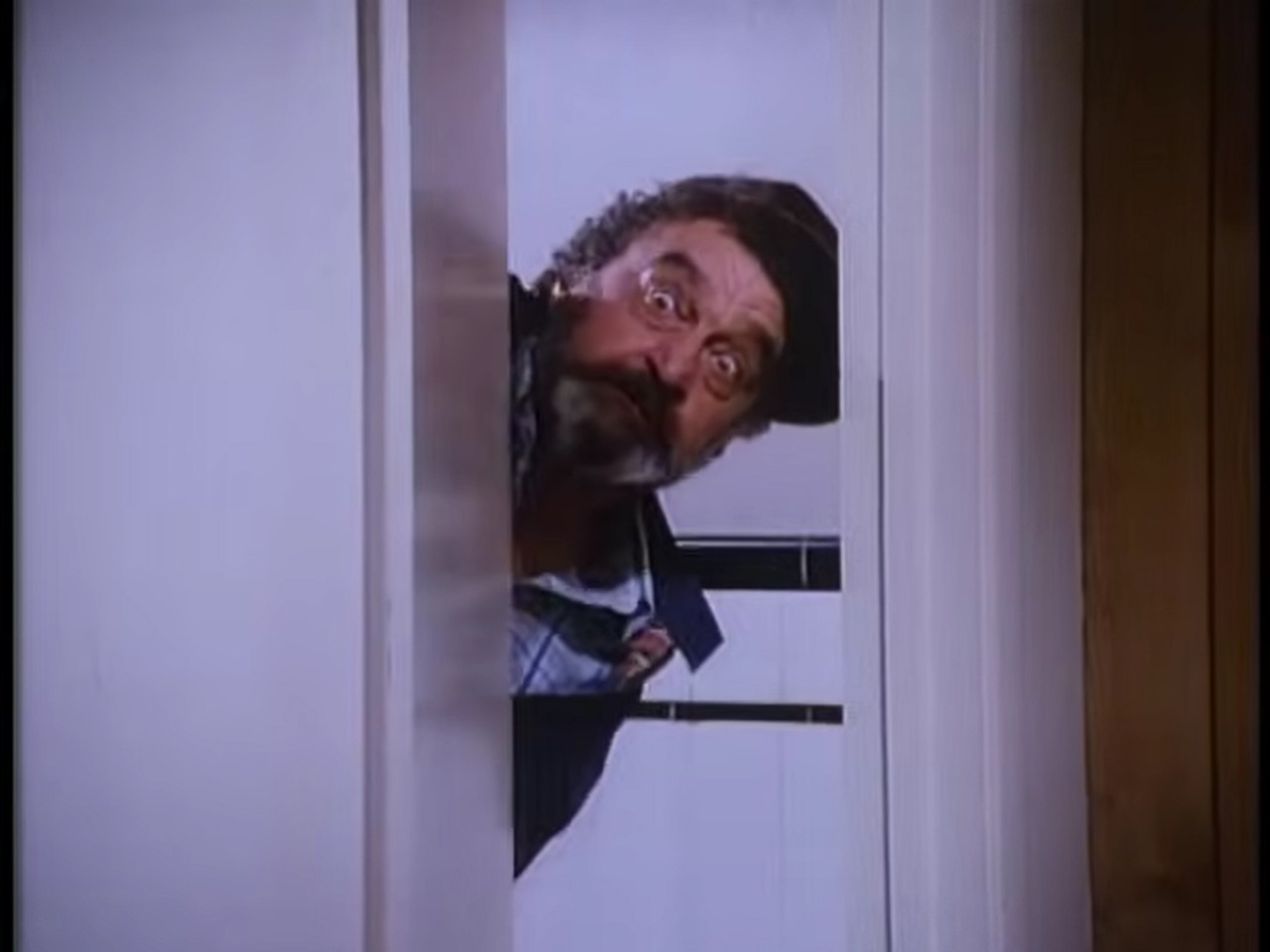
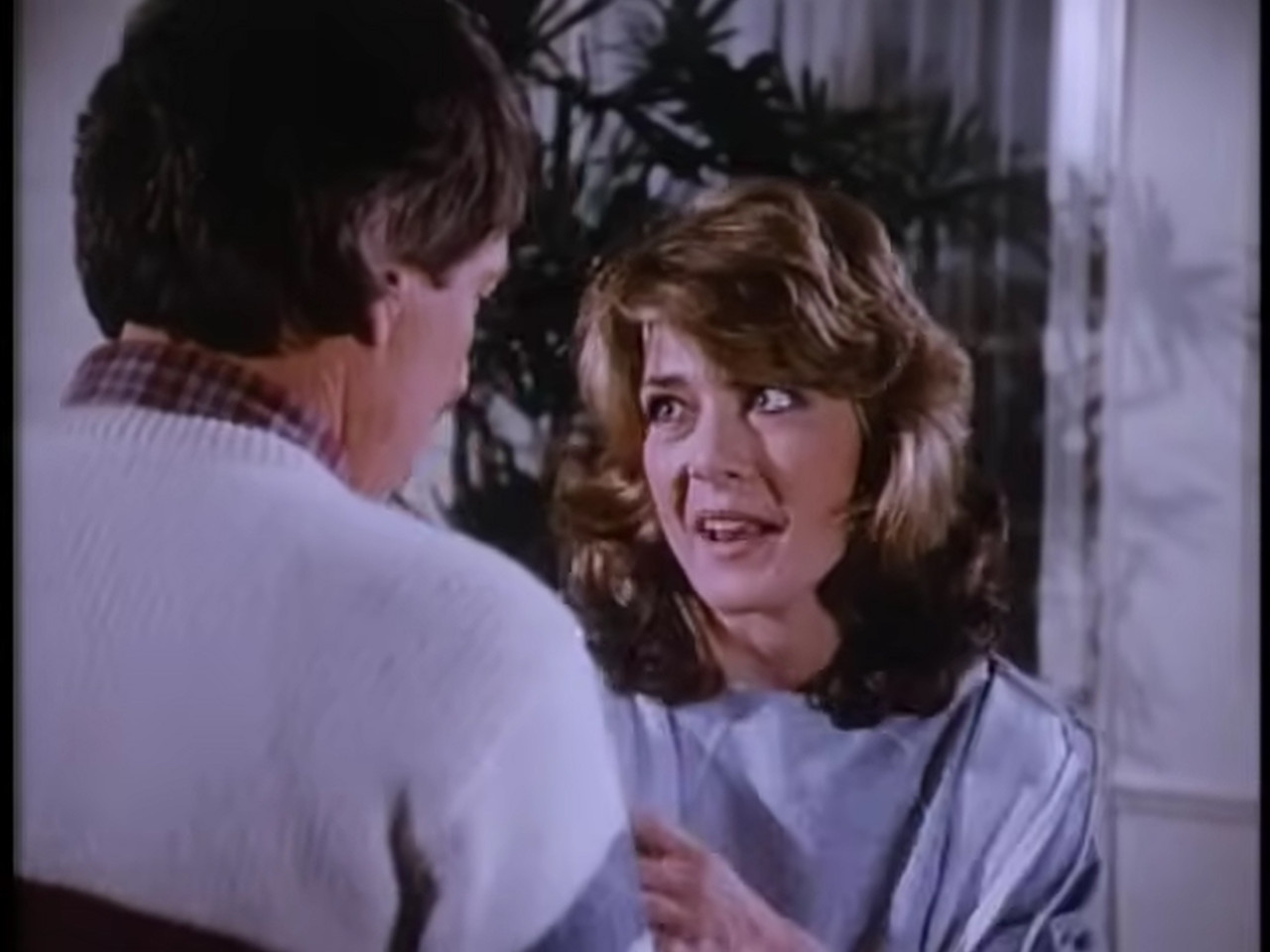
When they are restored to their original bodies, Mark now wakes up at the motel, where Linda was with his body, and Linda wakes up at her house (where Mark was with her body).
So, the first time, they only swapped bodies. The second time, it’s like they swapped the places. If they had done it like the first time, then Linda (back in her own body) should have remained at the motel, because that’s where she was located while she had his body just before the switch-back. Likewise, Mark (now in his own body) should have woken up in Linda’s apartment, where he was while he had her body. It’s never explained, but it’s almost like the first time, they actually swapped their entire bodies, while the second time, their bodies stayed in place, and it was like their “consciousness” that was restored to its original body.
And the problem is that such mystery didn’t occur in the episode of The Banker And the Bum, when the Banker took the Bum’s place: in that occasion, the banker remained where he was before trading place — a newspaper hit his face and he was now in a different body (same with the bum); then, when they switched back, they still remained where they were, and it was just their body that was restored back. Basically, on that episode, the switch occurred both times the way it happens only the first time in this episode. It’s a mystery why it didn’t occur the same here. Maybe there’s some rule about body swapping in the series that’s never clearly explained—and yet, nobody seems to ask about it.
Either way, it is amusing to hear French altering his voice according to the characters he plays — he did that on every role of his career, and it is apparent here when he’s shouting in Linda’s voice and then his pitch abruptly changes when his character is back. But even Anne-Marie Martin as Linda is terrific, really. The way she mimics his gesture seems like she made extensive research for her character, or maybe French gave her advice on how to be play his character. Arguably, it was harder for her (who had to play Mark, a character the audience is already familiar with) than it was for French, who played a new character that has never appeared before and would likely never be seen again (that’s precisely what happened, for that matter), but she was up to it.
Also, one curious thing: in the original script, this scene was supposed to conclude with Mark watching Jonathan and telling him that he’s hungry. But they cut that part and just have them laugh until it cuts black.
The Job: it is a double job, Mark is the hairdresser while Jonathan the bodyguard. And this time, it’s Jonathan’s references. Also, Mark openly admits that he’s not good at this.
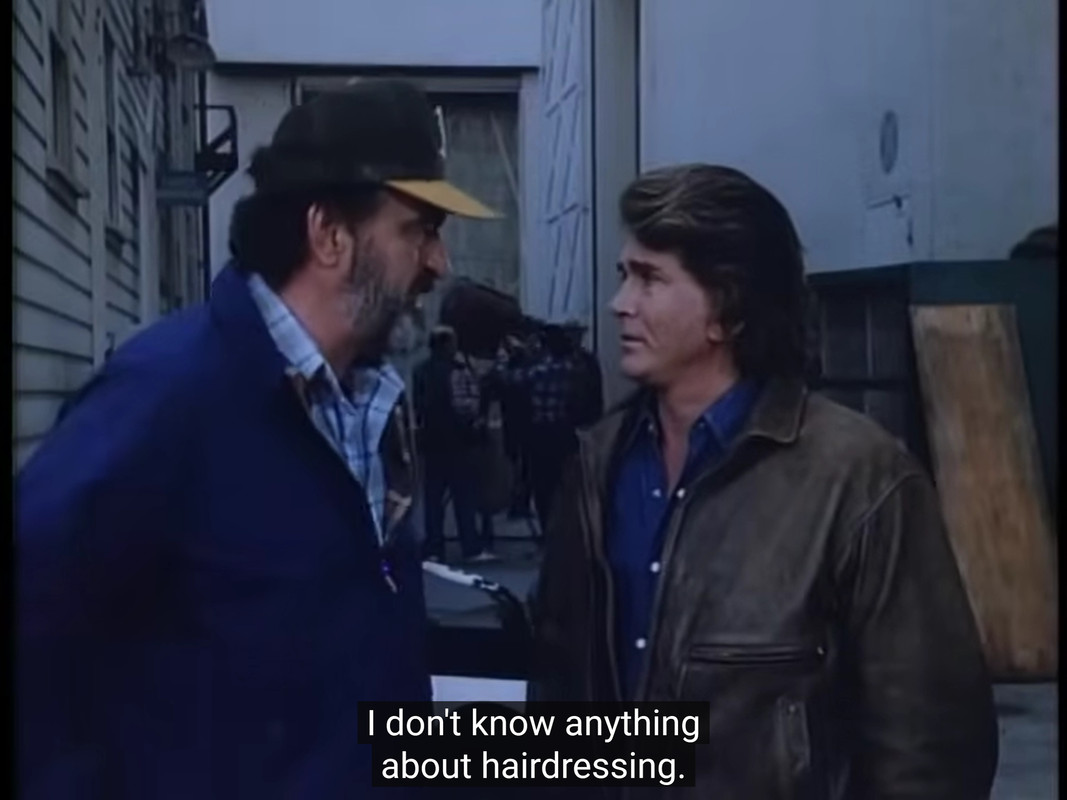
Now, it is quite risky for them both: if he can’t do the job, they will be likely fired and the assignment would be incomplete (even though maybe that’s exactly what Mark is hoping for). Unless Jonathan wanted to give him the powers on this one.
The Stuff Powers: Jonathan has the power of fixing a breaker when the light is out.

He was already shown using this power in season 1.
Then, he has the otherworldly strength.
And he uses the power of materializing objects around: when Mark is told he’s going to be hairdresser, they are both walking to get to the actress.

But when Mark stops Jonathan showing him some doubts over the assignment, Jonathan reassures him and gives him a bag.
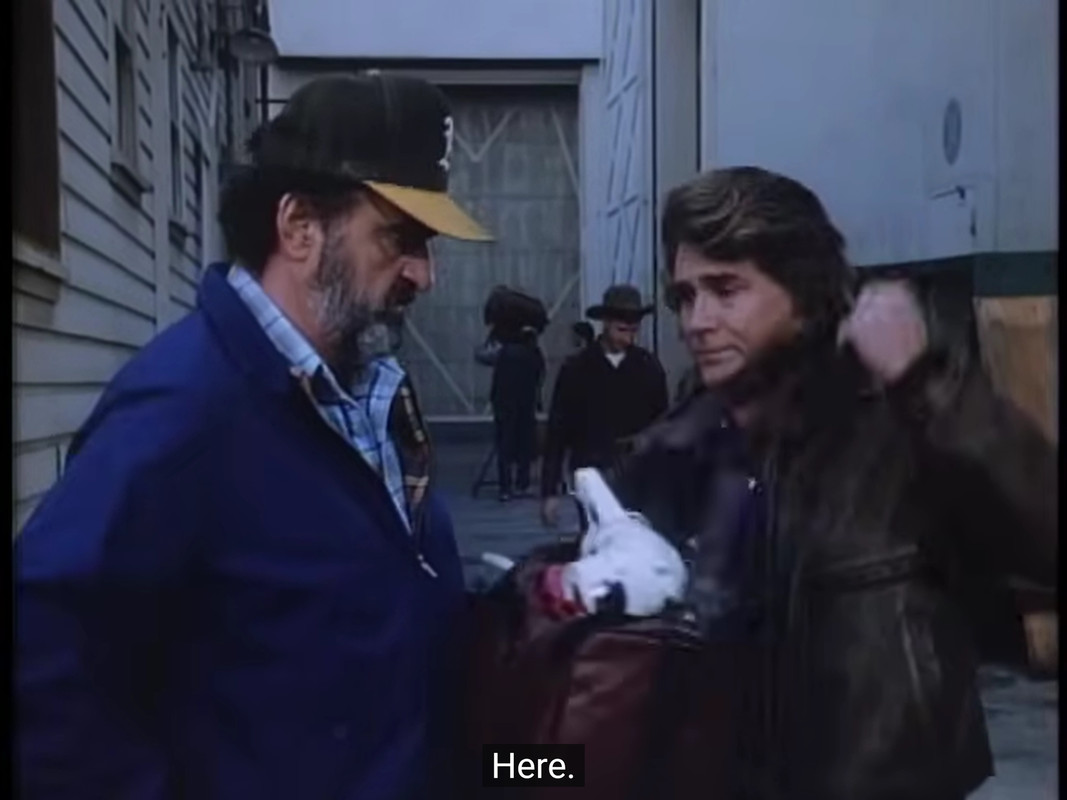
No idea where he got that from: he wasn’t carrying anything.
Ratings: 40 million audience, 5th Weekly programs, 1st TV genre show.
This episode aired on January 29, skipping one week (the last Wednesday the network aired a random Special). It’s unclear why they aired it two weeks after its predecessor (considering they didn’t do that on January 1985 during season 1), yet they did that. Usually, when a series airing regularly one show every week, skipping one (unless it is for some holidays), most of the times is harmful for the ratings of the immediate following episode when the series resumes airing regularly (that is apparent by the confronting the ratings of the episodes during the one week skip of season 1, as well as the weekly ratings of any TV series of the times that faced similar situations, for that matter).
However, unexpectedly, that wasn’t the case here: in terms of ratings, it soared to a staggering 40 million viewers (approximately), the only episode of the series to cross that threshold. Of course, it surpassed both The Monster Part 2 and Alone, becoming the most-watched episode of the entire series. And that’s an improvement of 3.9 rating points compared to the predecessor, marking the largest improvements in ratings between two consecutive episodes of the whole series (curious, as that episode had the largest loss in terms of ratings compared to Alone, its own predecessor). Moreover, this episode ranked as the most watched TV show of the week it aired, the third time in the season. The great streak of successes that began with this season (and partly, during the late season one) led here: the series was really enjoying its greatest popularity now.
Of course, that means no other episodes will ever get to replicate it. But most of the following shows enjoyed success in their own right, and partly thanks to the unprecedented popularity of this episode.

 Highway To Heaven Cast
Leave a comment