
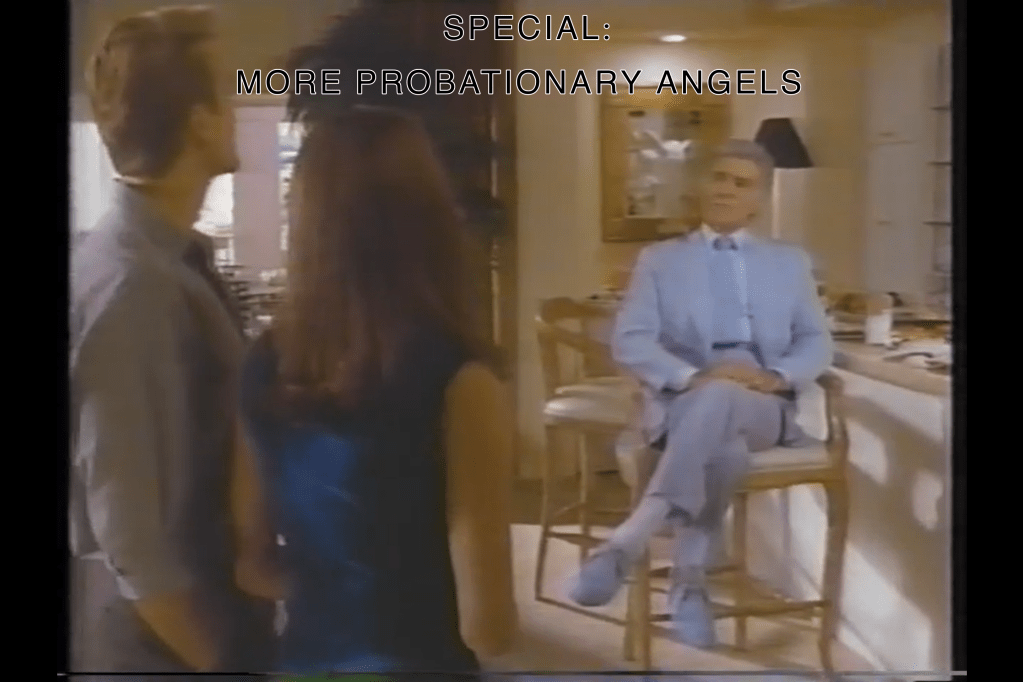
Before: “An Earthquake Called Callahan”
It’s a special episode. So, Highway in its second season was experiencing its greatest popularity, and it’s become clear by now what the series is about: a probationary angel and his human friend helping people across the States. It’s also become clear they always stay in California, but that’s irrelevant now.
Here, it is important to give some context to the series, the TV landscape by the time of its release and its precursors. So, this will be an exploration on how the series came to be in the first place, and something about other religious series at the time.
Basically, the premise of having a TV series about random guys angeling around and helping people is quite general, even without the angel part: so many different TV series at the time can be seen as revolving around somebody (the protagonist of the series) helping someone else. The very same Bonanza and Little House featured multiple episodes about “protagonists helping random other people”. And one Bonanza example is the girl in The Love Child (the episode that served as the basis of A Child Of God in Highway season one): there, it was about the family helping a random ill girl reconcile with her papa before it’s too late. And nobody had ever heard or mentioned her before. Nor anybody will talk about it in that series.
If it sounds like a Highway assignment, again, it’s because there’s an episode of Highway (and one of Little House too, for that matter) that took from it.
In the case of Bonanza, there was a random character that won’t be heard of in the series anymore.
Then, excluding Bonanza, there was that “Jonathan” in Little House that might have been a probationary angel, or even the antecedent of this new Jonathan from Highway, taking his identity (more details about it here, at the “angel and probation” entry).
But there are some other TV series around men helping men, and one is of particular importance for Highway: in 1960 (contextually, more than 20 years before Highway, and while Bonanza was in its second season), a rival network made a TV series out of a much known road, with the premise of two men driving across it and helping everyone they’d meet along the way. That sounds like Highway, but it’s a different show instead.

The series ran from 1960 to 1964, and it was pretty much like Highway, with the only difference that the two men aren’t angels. They juts act like ones.
It sounds like the lesson presented in Highway in the Pilot and One Winged Angels too, where they say it doesn’t take an angel to act like one — or that if we act like angels, somehow we all become ones.
Anyway, in the series the two friends only travel the Highway and habitually get stuck somewhere with their car, they get involved with the locals to fix it and then get back on their journey. So, they do not deliberately set out to help people like Jonathan, but they just happen to be there. And, unlike Highway, they didn’t just hang around California pretending to be anywhere, but they actually traveled across different cities in the US, the continental states. However, very few places they’ve been in are actually crossed by the route.
So, there’s Highway To Heaven, which is presented as a trip across the country but they actually just stay in California (or go as far as to Arizona), and then there’s another series with the name of a famous road, but the characters are never on that road. That’s how TV is like.
Anyway, this series was much influential and groundbreaking at the time, from the production (which constantly moved around the continental States) to the “assignments”, that ranged from community’s problems to nuclear episodes (something like Summit, for that matter).

Actually, Highway and that series have a curious relationship: in a Tampa Tribune article dated September 1984 to answer the press’ questions on the Pilot, apparently Tartikoff (head of NBC at the time) reported that, some time before Landon officially presented him the idea for Highway (tentatively titled “Jonathan Smith”), the network was preparing a new, updated version of this 1960s series about two friends driving along the route as they help random people — and even got a few scripts done, but then scrapped the idea (in 1993 they eventually made a new version, although it only lasted one month). However, what’s relevant here is that the network didn’t want to keep the original title (probably they realized even the original series was never set on that route), and they had set to change it to Highway To Heaven, before dropping the entire series completely and moving on.
Then, some years later, Landon presented his series about a probationary angel with the title “Jonathan Smith“, the name of its titular character. But Tartikoff felt that Landon’s title “Jonathan Smith” didn’t sound right, and thought to recycle Highway To Heaven, that one meant to be for the new series inspired by the 1960s one. As reported in the article, Landon very quickly thought about it and then said it was fine.
Here, two things to point out: one, apparently, the title of Highway To Heaven is actually a recycle, specifically from the new version of the 1960s TV series. It seems like Highway is doomed with recycles: the very opening of each episode features a composition recycled from Little House (compare them here), and even the very same title of the series comes from a different series.
The second thing to point out is that the original title Landon had thought (which was “Jonathan Smith”) is a Friendly Jonathan instance, as it makes it sound as if Jonathan were the only protagonist, and Mark just his sidekick, even though the two characters are supposed to be of the same relevance. Landon is such a friend.
But the 1960s series wasn’t the only one about traveling characters helping people. Two notable examples are Lassie, about the adventures of the eponymous dog getting into the life of random people (and there’s one episode with French too, although as a background character in just one scene), and The Littlest Hobo, a 1960s Canadian TV series about a mysterious dog each episode traveling to a different town and helping those who need him.

That sounds like the premise of one Highway episode in the third season, for that matter.
But particularly The Littlest Hobo is much peculiar because the dog’s identity is a mystery, and it’s even plausible to believe that the titular dog is some kind of angel. However, the series never made it clear; also, it wasn’t strictly a religious show, nor the dog has any powers like otherworldly strength or whatever Jonathan does with the Stuff (although that dog does get involved in car chase and other weird stuff).
Anyway, all these shows weren’t the closest series to Highway. More specifically about angels, there were a couple of attempts (mostly sitcoms) that were released before Highway and are worth pointing out. So, chronologically, the first one is Good Heavens, a short-lived 1976 sitcom for ABC (contextually, it was released during Little House season two).
Actually, the idea dates back even further: the first script of the pilot was written on early 1974, with the intention to make it by September of that year as a full-length season. However, they didn’t, and it was eventually ordered as a mid-season replacement two years later. That means it would have less episodes (usually 10 to 15) than most TV series of the time (20 or more), and it would air from the Spring to the Summer — when the ratings are generally lower than the rest of the year —instead of the full-length season going from September to March or April, when the ratings are higher. Otherwise, it would simply fill any vacant slot left by the full-length series during the year.
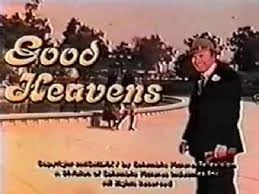
So, the sitcom is about a an angel called “Mr. Angel” (played by comedian Carl Reiner), who descends to Earth to help people who were generous enough to deserve it. Here, it’s important to point out a couple of differences compared to Highway: one, the angel is not on probation, but a real one (though without wings, apparently). But the most important difference is in the subject of each episode: in the sitcom, “Mr. Angel” only helps people who have earned it by proving themselves good, as if getting the help of an angel is some kind of reward. And that makes this Mr. Angel more like Santa Claus from Heaven or something.

By contrast, in Highway, Jonathan and Mark are assigned to help everyone: good people who are about to make bad choices, as well as bad people who need to be reformed. Of course, some people cannot be turned around, but that’s not the point.
Actually, It was implied that Jonathan and Mark are sent only to people who can change (at least, according to their superior). This was made clear in the episode Alone, in which Jonathan tells Arnie, the homeless boy, that angels can be seen by people who are “special”, implying that maybe Jonathan and Mark can’t help someone who is helpless, or irremediably bad.

Either way, it was not like Good Heavens, where it’s just good people.
Then another difference is that Good Heavens was a sitcom, so it was far less serious than Highway.
Anyway, the sitcom Good Heavens seemed to have an audience: in the year-end ratings, it ranked in the top 20 most watched TV programs of the year 1975 – 1976 (covering from September 1975 to May of the following year). It’s actually unfair to compare both full-length seasons and a mid-season one, as the replacements have far fewer episodes, and it’s easier to maintain higher ratings over 10 episodes rather than keeping the same ratings across 20 episodes or more. In the case of Good Heavens, it’s even more so: the network aired 8 episodes until June, and aired the remaining five in July, when the ratings are not tracked. Still, even by taking only the ratings of those 8 episodes, without necessarily putting them in comparison on a year end list with other longer series, they were promising enough. Yet, for some reason, the network decided to cancel the series, and never ordered a full length season for that Fall again.
One anecdote: as revealed by the 1974 script, when it was first written, the sitcom’s original title wasn’t Good Heavens, but “Everything Money Can’t Buy“; that sounds like a punchline from Highway the Pilot (the first punchline of the show).
Jonathan made some research for that.
Anyway, probably understanding that there’s an audience for a TV series about angels, in 1979 someone at ABC gave the idea another shot. Contextually, it was the year ABC decided to pull off Carter Country (the sitcom that French quit Little House for two years because he wouldn’t be allowed to appear on a rival network at the same time).

After just two seasons, it didn’t work out. So, now French was busy trying to come back to NBC on season six of Little House. And he was likely forced to make that Chips episode to be accepted back.
.png)
The year Mark turned alcoholic.
More about that episode here.
Anyway, while French was busy getting drunk and dancing in roller disco, the network he had left that year was making Out Of The Blue, their second sitcom about angels. This time, the premise is slightly different: a “probationary” angel, Random, is sent to Earth by his superior “Boss Angel” to help a single aunt and her family.
Compared to Good Heavens, they have the “probationary angel” part but removed the adventure format in which each episode focused on a different person. Instead, Random is assigned to a single family, and only the kids are aware of his identity.
Also, unlike Good Heavens, Random is not alone in his job, but there isn’t an alcoholic friend by his side; rather, he is overseen by a superior angel who watches to make sure he doesn’t mess up. That makes it resemble the hierarchy later shown in Highway, where it’s revealed that when angels complete their probationary period, they don’t immediately return to Heaven but must continue working in other capacities—such as supervising probationary angels (similar to Saint Peter in Help Wanted: Angel) or assigning cases to them (as revealed in the fourth season).
Curiously, the character of the “Boss Angel” is played by academy-award winner Eileen Heckart, who should look familiar to the Highway audience.
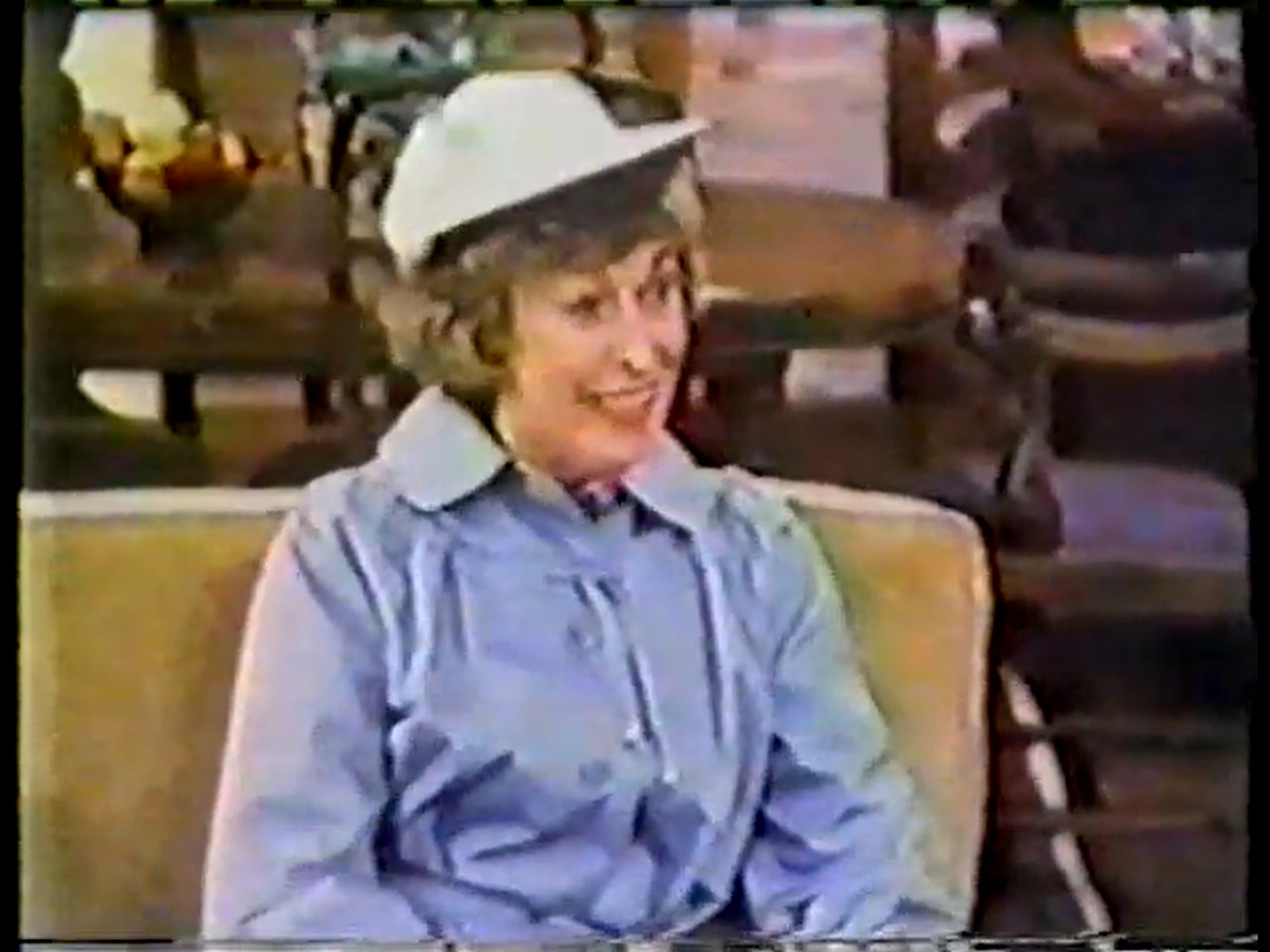
She was in the season one episode An Investment In Caring (where the Jonathan and Mark concoct a plan with an elderly lady and her neighborhood against a multicorp that wants to buy her out of her properties). And there, she played the subject of the assignment, the elderly lady who is behind the heist (or whatever).
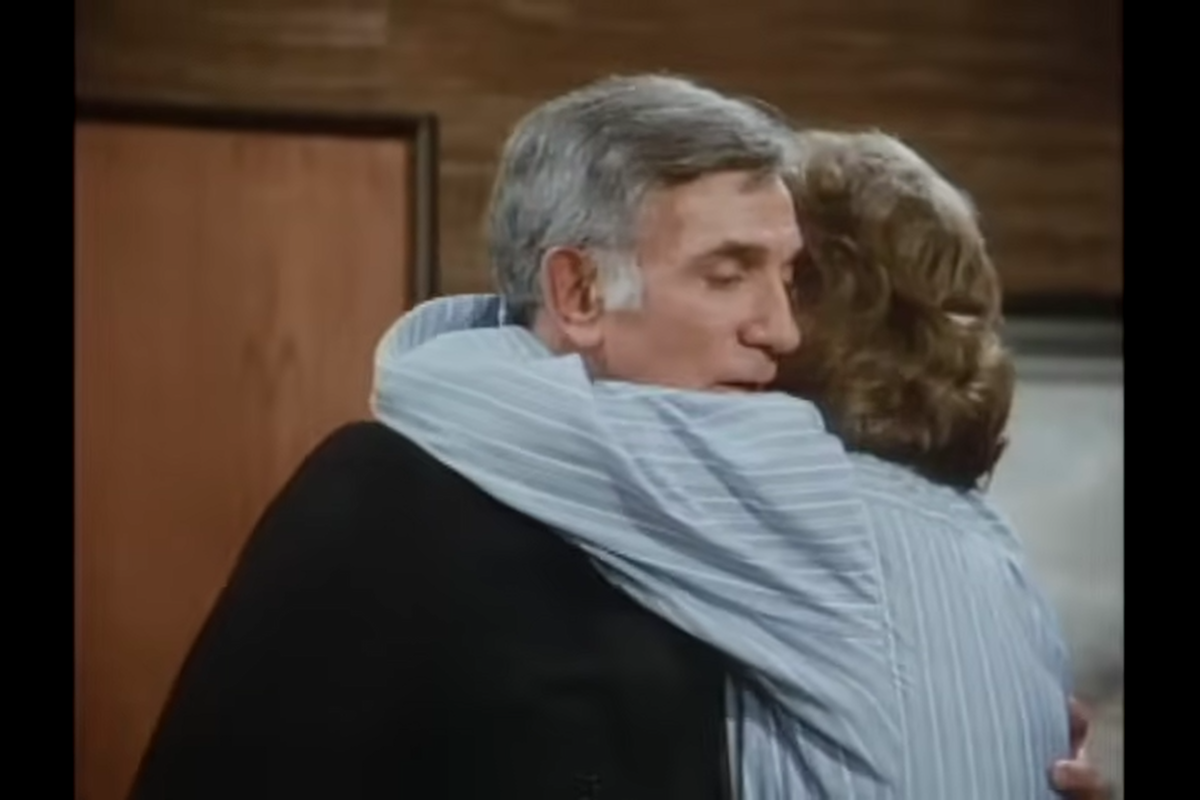
It’s weird to imagine her face when she was told she was going to be in another series with angels.
Anyway, the sitcom of Out Of The Blue started out pretty strong, its first episode even featured a character of “Mork and Mindy“, a popular sitcom of the time.

However, despite the initial anticipation, and the idea of having a series about angels (a potentially winning premise on Good Heavens), this attempt didn’t work out as they wanted: the sitcom ran from September 1979 to late October, then it was temporarily pulled due to its low ratings. It resumed in early December, but the ratings didn’t improve much and it was cancelled that same month, without even completing the first season. And the series is basically unavailable anywhere.
So, neither Good Heavens nor Out Of The Blue didn’t last long. But networks held tightly to the sitcom format (it was the most popular at the time), and another strikingly similar TV series to Highway is dated its very same year. So, in Spring 1984, the syndication network WTBS produced Down To Earth, a daytime sitcom about a woman, Ethel, who is knocked down by a trolley in the 1920s, and upon getting in Heaven, she’s told she has to “earn her wings” by doing some good. So, sixty years later, she’s sent back to Earth and is “assigned” to help a single father and his three kids.
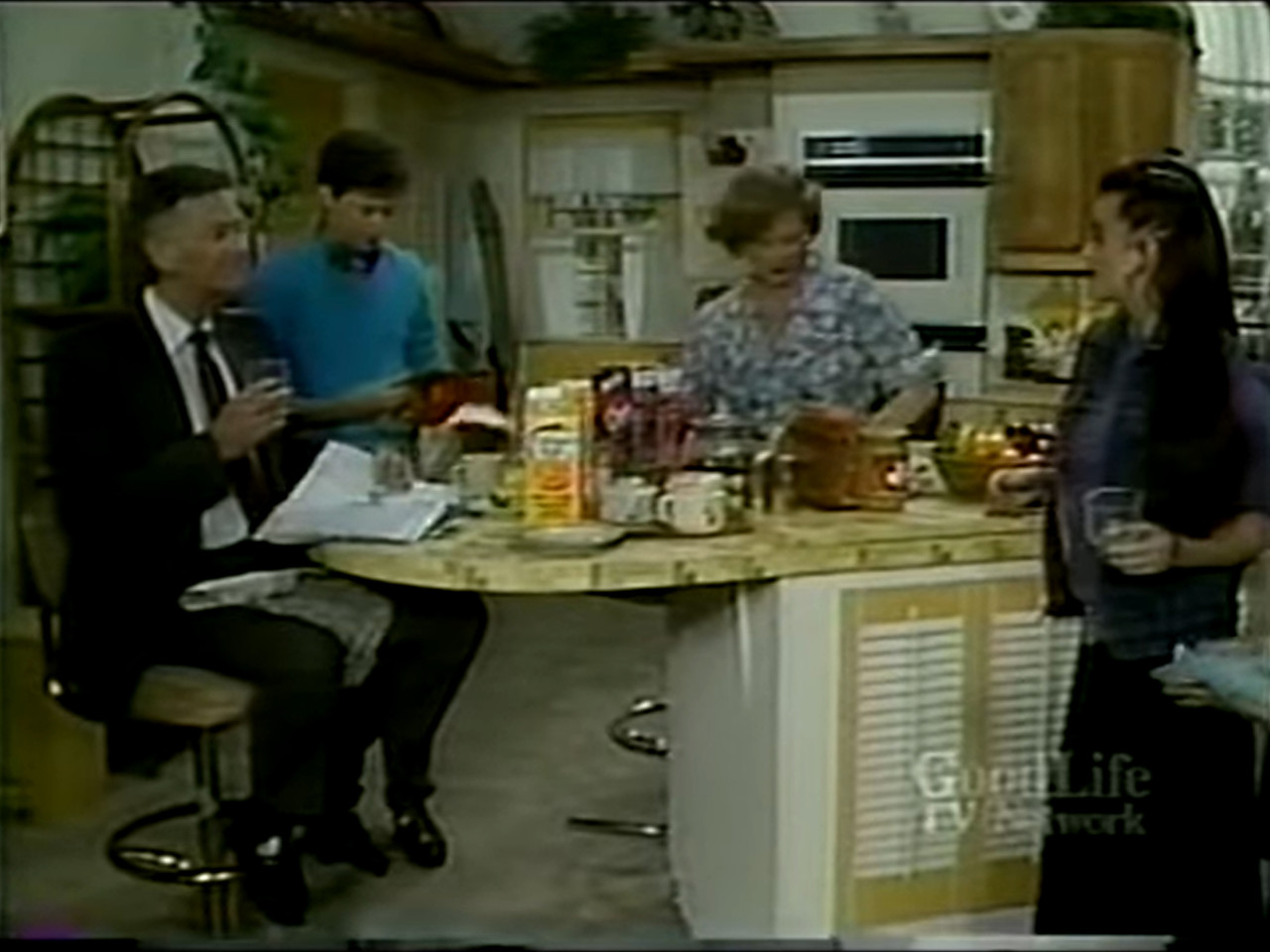
The premise of the show is basically the same “angel on probation” like Highway, but now they highlighted right from the opening that she has to earn her wings.
Actually, the similarity between series with probationary angles where the angel has to earn wings might have influenced Highway too: many people believe that, in Highway, the purpose of the assignments by Jonathan is to earn the wings to ascend to Heaven (as reported by multiple synopsis of the series when looking it up). However, Jonathan never talks about that, and mentions his wings just in the Halloween show of season two (more details about Jonathan’s wings at its entry on One Winged Angels, while more details about about his probation here). So, maybe people started thinking the series had to do with wings because they were confused by all these other probationary angels sitcoms where the angels actually has to earn wings (and Down To Earth is one example).
Anyway, there are also other similarities: for instance, in the Down To Earth sitcom the angel has some rules.
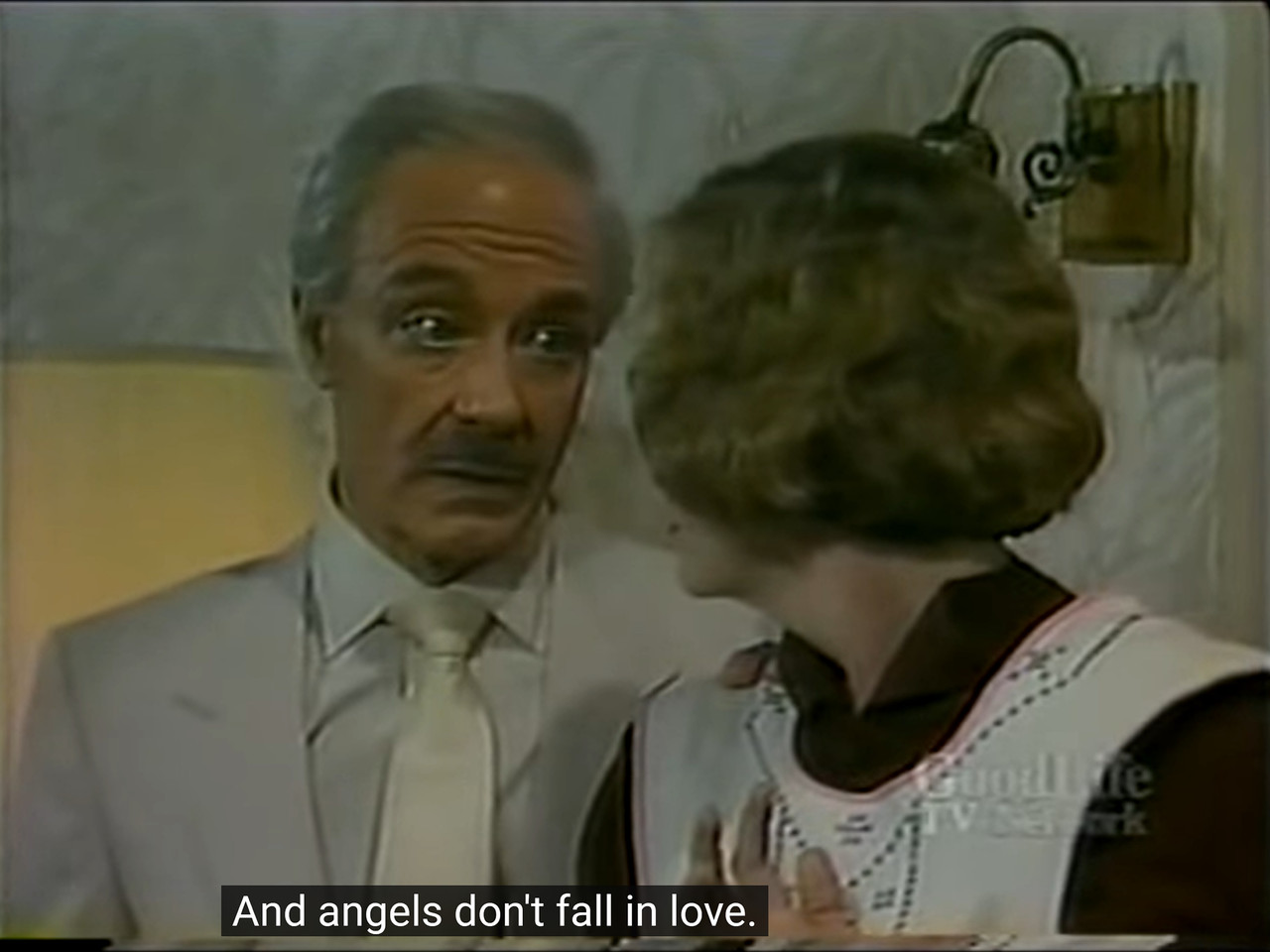
She has yet to earn her wings.
But there are some differences too. In particular, just like Out Of The Blue, the angel doesn’t meet different people each episode, but is assigned to a single family and helps them going through daily problems. Also, like the other two angel series, it’s a sitcom.
Anyway, there are several aspects to point out about this Down To Earth, and one is the airing on the channel: unlike both Out Of the Blue and Good Heavens (and Highway too), it didn’t air on primetime TV. Rather, it ran during daytime hours, starting in 1984 and continuing until 1987, accumulating some 100 episodes. So, it didn’t get the same prominent slot and placement as Good Heavens and Out Of the Blue, but it outlasted them both.
Also, there’s a something odd about timing: apparently, this Down To Earth began on March 1984, whereas Highway on September of the same year (the Pilot was shot in the spring). That is quite a coincidence: by the time Down to Earth began airing its first season, Landon was in the process of writing the first season for a TV series with pretty much the same premise. However, he probably didn’t fear the competition, as Down To Earth was a sitcom. And basically it means it’s completely unserious and aims at making people laugh with taped laughs and outlandish situations. Fortunately he had other ideals for Highway.
Also, a second odd thing to point out is about the actors: in Down To Earth, one of the three children is played by David Kaufman, who should sound familiar now.
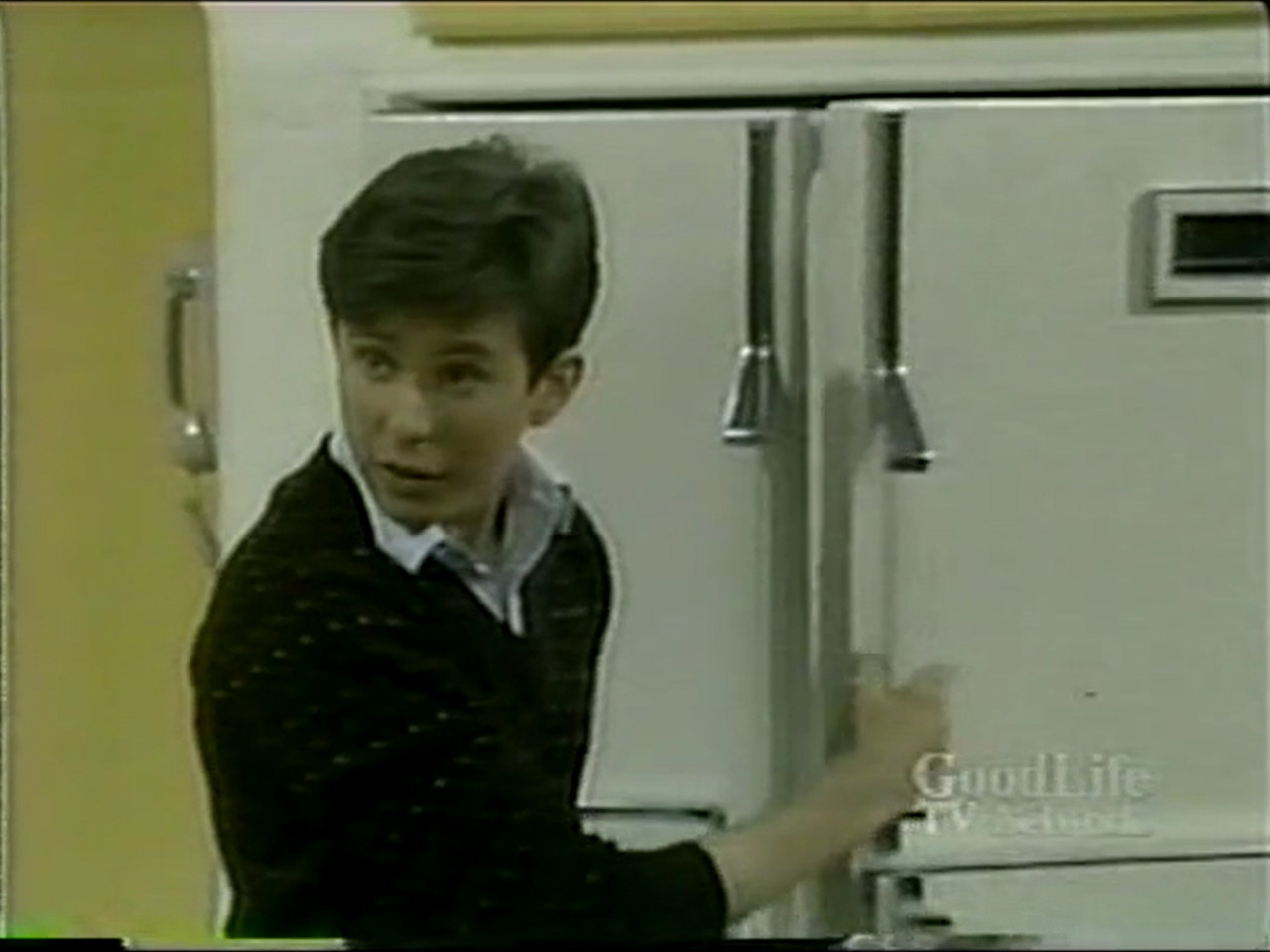
And he’s both a Little House actor and Highway one: in particular, he first met Landon and French during season eight of Little House, where he made a guest appearance in one episode as Carl, the adoptive son of Mr. Edwards, appearing in one scene with French and being directed by Landon, without playing with him.

Then, he found Landon and French again for Highway, when he appeared in the season two episode The Torch (about the Jewish activist against the antisemitic group).
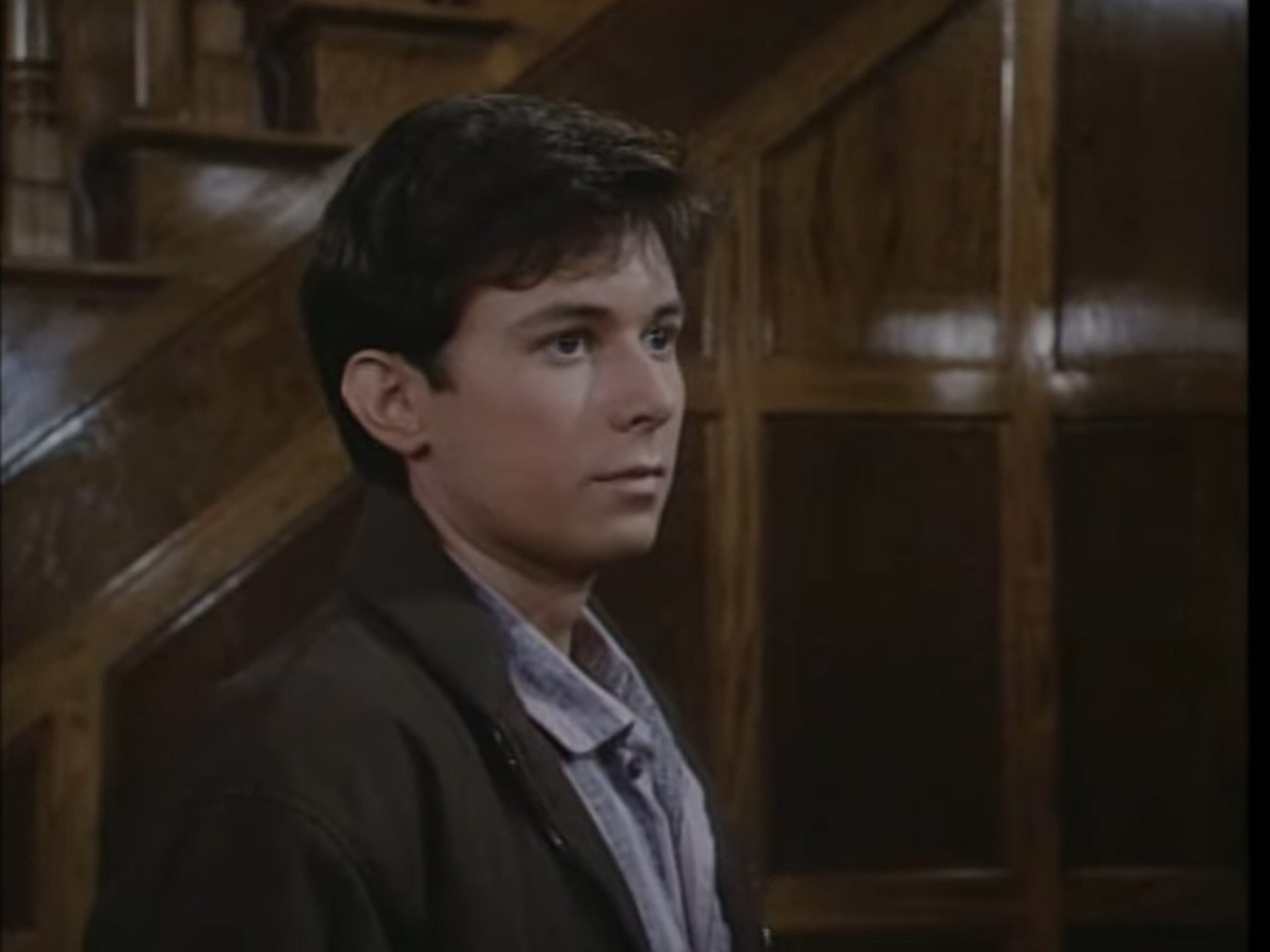
So, it’s really odd to think about it: in 1981 he met Landon and French in an episode of Little House, in 1984 he got a recurring role in a TV series about a probationary angel, while later the same year it turns out Landon and French are also preparing a TV series about a probationary angel helping other people out. And, two years later, he got involved in that series too.
The odd part is that, by the time the episode of The Torch aired on March 1986, there was Down To Earth on air.
Also, it’s not his only appearance in Highway: he also played another character in the fifth season episode Goodbye, Mr. Zelinka, making him a highway actor (the actors who appeared multiple times on Highway, mostly playing different characters).
Religious Shows after Highway
Despite these early attempts, none of the angelic sitcoms were popular enough to last long, and when the first season of Highway aired aired in 1984, the series about probationary angels would never be the same.
Following the conclusion of Highway, the TV series with “probationary angel” helping other people weren’t done: if anything, the unexpected popularity of Highway To Heaven led to countless imitations, which sometimes leaned more into the religion, and some other just wanted to be Highway, including a new version.
Certainly, what they all shared, and what the 1970s and 1980s sitcoms lacked, were the serious tone: as it’s apparent by the multiple probationary angels series before it (like Good Heavens, Out Of The Blue and Down To Earth), they were sitcoms aiming at making people laugh, mostly. Instead, Highway proved the audience was ready and willing to embrace something more mature than that. But, most importantly to the network, Highway defied many early predictions (a notable one is by Joel Segal from TV Time, describing Highway in a 1984 San Francisco Chronicle Article as a “weak entry” when trying to predict the success of new series airing that year). So, a “drama” that wasn’t a crime nor a procedural, that didn’t rely on shootouts or car chases, could be successful.
One curious attempt of TV series like Highway was Heaven Help Us: it aired in 1994, and it’s about a dead couple who is told by a superior angel that they have to earn a place on Heaven by helping people on Earth.
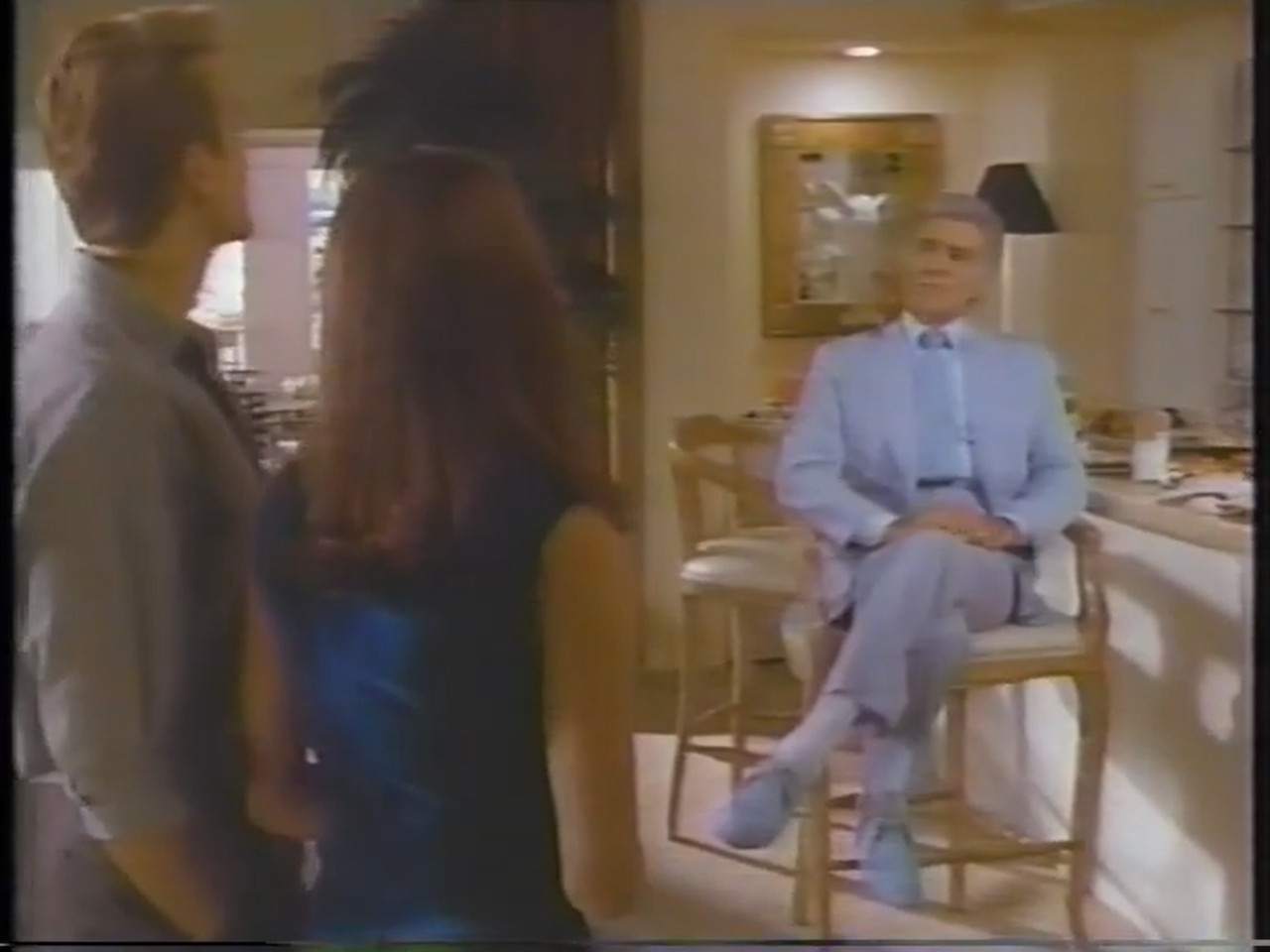
So, the premise is almost like Highway: two probationary angels, each episode on a different assignment. Actually, here the couples is a pair of probationary angels without much experience in being altruistic, so it’s more like two Mark Gordon in that way. But that doesn’t refrain them from dropping punchlines.
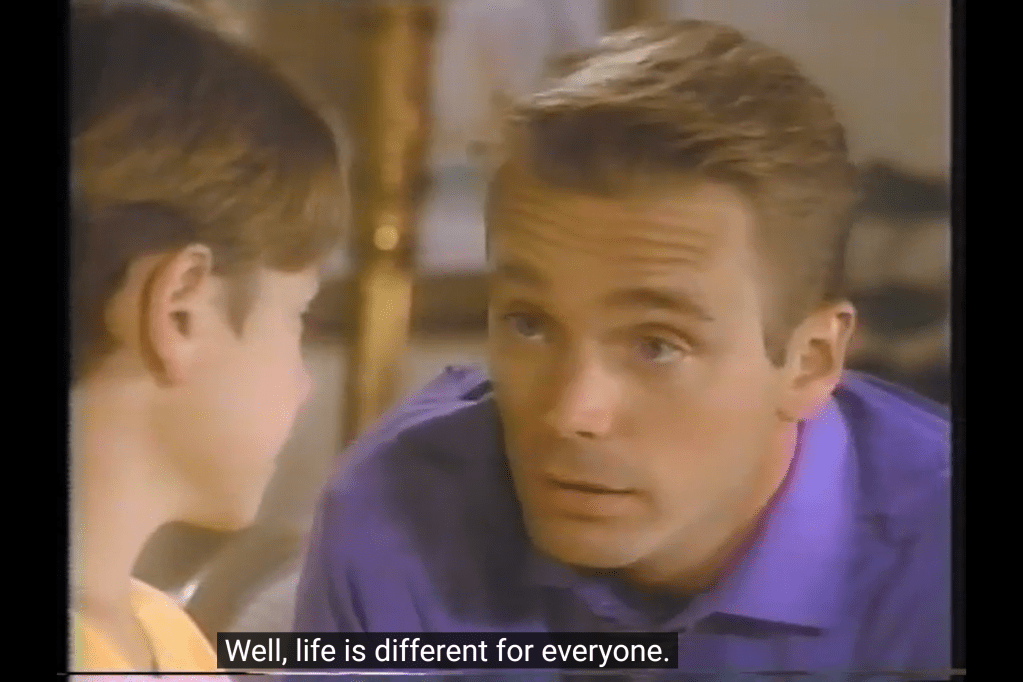


Nice try, but nothing like Highway.
Anyway, there are some differences between the two series: one is that the protagonists of Heaven Help Us are both angels on probation, and do not have any power available. Also, the couple is told they have to do some good to ascend to Heaven, so it can be implied they do not help people out of purely selfless reasons (on Highway, they never specified that).
Maybe the series was supposed to conclude with the couple realizing the importance of their job and deciding they’d rather stay on Earth helping people instead of ascending to Heaven as they were told to. But nobody could ever tell that, because the series wasn’t successful and was cancelled in 1994 after thirteen episodes, before even concluding the first season.

Yet another pair of angels doomed to work indefinitely.
Curiously, one of the very few episodes of the short-living series is “A Match Made In Heaven”, and if the title sound familiar, it’s because it’s from the Highway season one episode about Scotty and Diane falling in love. Of course, it’s not unusual that episodes from different TV series wound up having the same title, but that particular one is odd.
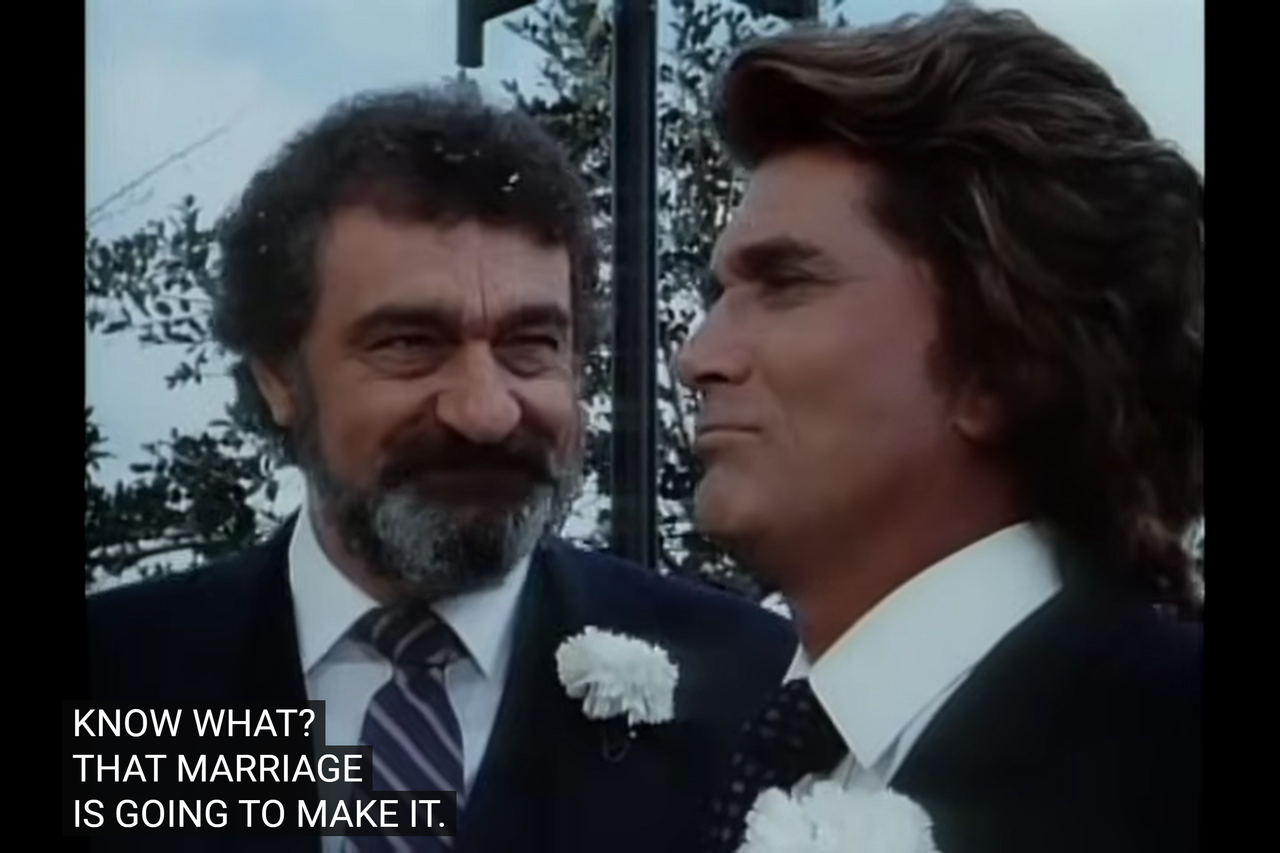
And then Scotty and Diane will go to Heaven.
Anyway, the second and most important series about angels is Touched By An Angel, which aired on CBS from 1994, less than five years after the conclusion of Highway, and lasted nine seasons. So, it had quite a long run, and some seasons even surpassed Highway in terms of ratings.
Basically, it’s about a probationary angel assisted by a superior angel as they are sent to Earth to help various people. Now, that’s basically Highway. I mean, they have exactly the same premise, the only difference is that there are two angels, and they are women. But that’s literally the only difference.
Yet, the show’s creator never acknowledged Highway as the inspiration of the series. No TV series released before Highway was strictly about that (they were all sitcoms, not drama), and they were far less successful than Highway (both Out Of The Blue and Good Heavens never got a full-length season), while Highway ranked in its first four years in the 10 most watched TV drama and the 40 most watched TV programs (with the second season at 12th), and it had concluded quite recently then. Also, in an interview dated 1996, the producer of Touched By An Angel even mentioned Little House On The Prairie to make a point on how to remain popular on a long-running TV series. And that means she was aware of Landon’s existence, and likely of Highway too, but she never talked about it.
However, there are some huge differences between their two series: in particular, Touched By An Angel is very overtly religious, specifically Christian, and it’s very preachy.
Also, and maybe that’s the reason the producer of Touched By An Angel never acknowledged Landon, in the same 1996 interview the producer revealed that she wanted her series to be true to Christianity, according to which angels are superior being created specifically for the purpose of helping living beings, not people who become angels after their death and need to work angeling around the world until they can go to Heaven.

That sounds like an indirect reference to Highway, but not as her inspiration. Actually, it could even be a reference to all the other sitcoms with probationary angels released before Highway, but none of them was as popular as Highway was. Certainly, Highway was nothing like that in its religious aspects: it occasionally makes reference to Biblical episode, but mostly for comedic purposes, and Landon admitted in a 1985 interview with the San Francisco Chronicle that he doesn’t see his series as a “religious” one in any way. So, the premise is almost the same, but the approach and their background are almost completely different, juts like the audience too.
Curiously, the series of Touched By An Angel began the same year as Heaven Help Us, just a couple of months later. It’s so weird: in 1984, there’s a sitcom (Down To Earth) about a probationary angel, and that is followed later on that same year by Highway, similar in premise but way more popular in ratings. Then, in 1994 there’s Heaven Help Us, a drama about probationary angels, followed the same month by Touched By An Angel, far more successful. It seems like they did it on purpose, releasing two series about probationary angels at the same time.
However, the biggest problems with those series imitating Highway or aspiring to its popularity was that they’d put much attention on the angel part. In Highway, the character of Jonathan is the “catalyst that brings people together“, and the series is never religious, as much as it is inclusive (in the Pilot, it’s never specified whether Jonathan’s is a Christian angel or something else).
Instead, these new TV series were either more overtly religious, or made the angels’ powers an important part of the show. That’s a difference that made Highway unique.
 Highway To Heaven Cast
Leave a comment