

Airdate: 10/15/1986
Directed By: Dan Gordon
And that’s pretty much the longest title for an episode in the series.
It’s another Vietnam assignment. It seems like every season of Highway needs to have one, but season four won’t have any. Instead, they put two of them in season thee, and here’s one.
Complete show available here.
Assignment: Jonathan and Mark are assigned to help a Vietnamese woman and her son reconcile with the boy’s American grandfather.
At its core, the assignment deals with family drama and reconciliation, but more importantly, with immigration. And not from just any country—it’s Vietnam. Because it’s the 1980s, and Vietnam is everywhere. This episode marks the third time the series deals with the Vietnam’s aftermath, and for the second time, it addresses Vietnamese family reconciliation. It won’t be the last either—though not always involving Vietnam specifically.
Jonathan and Mark are working for a refugee agency, for which they need to get in touch with Clancy, an obnoxious, annoying man who can’t get over the death of his son in the Vietnam War; so, he spends most of his retirement days arguing and playing with his neighbor, an Italian immigrant.
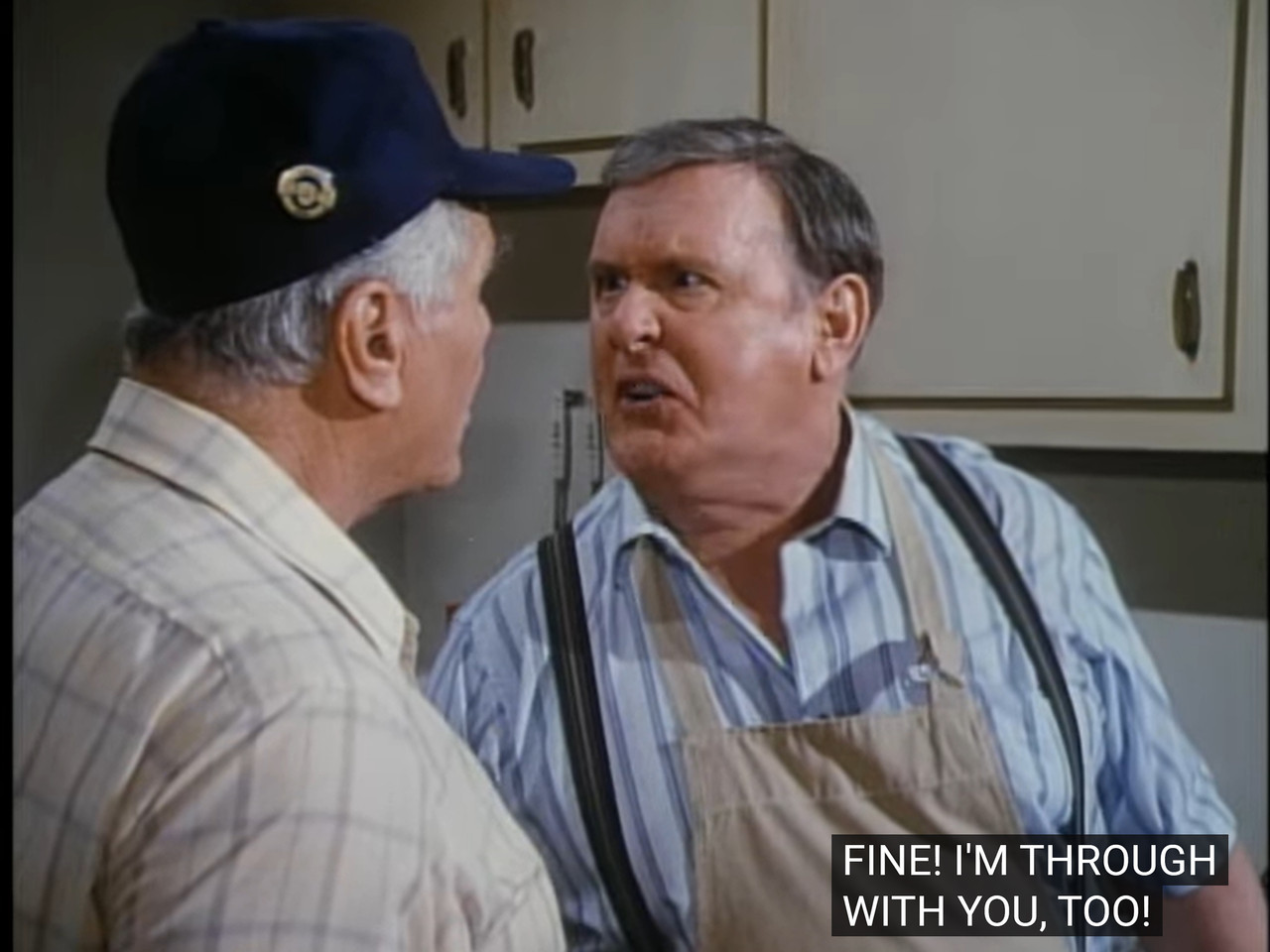
And then forgetting all about it.
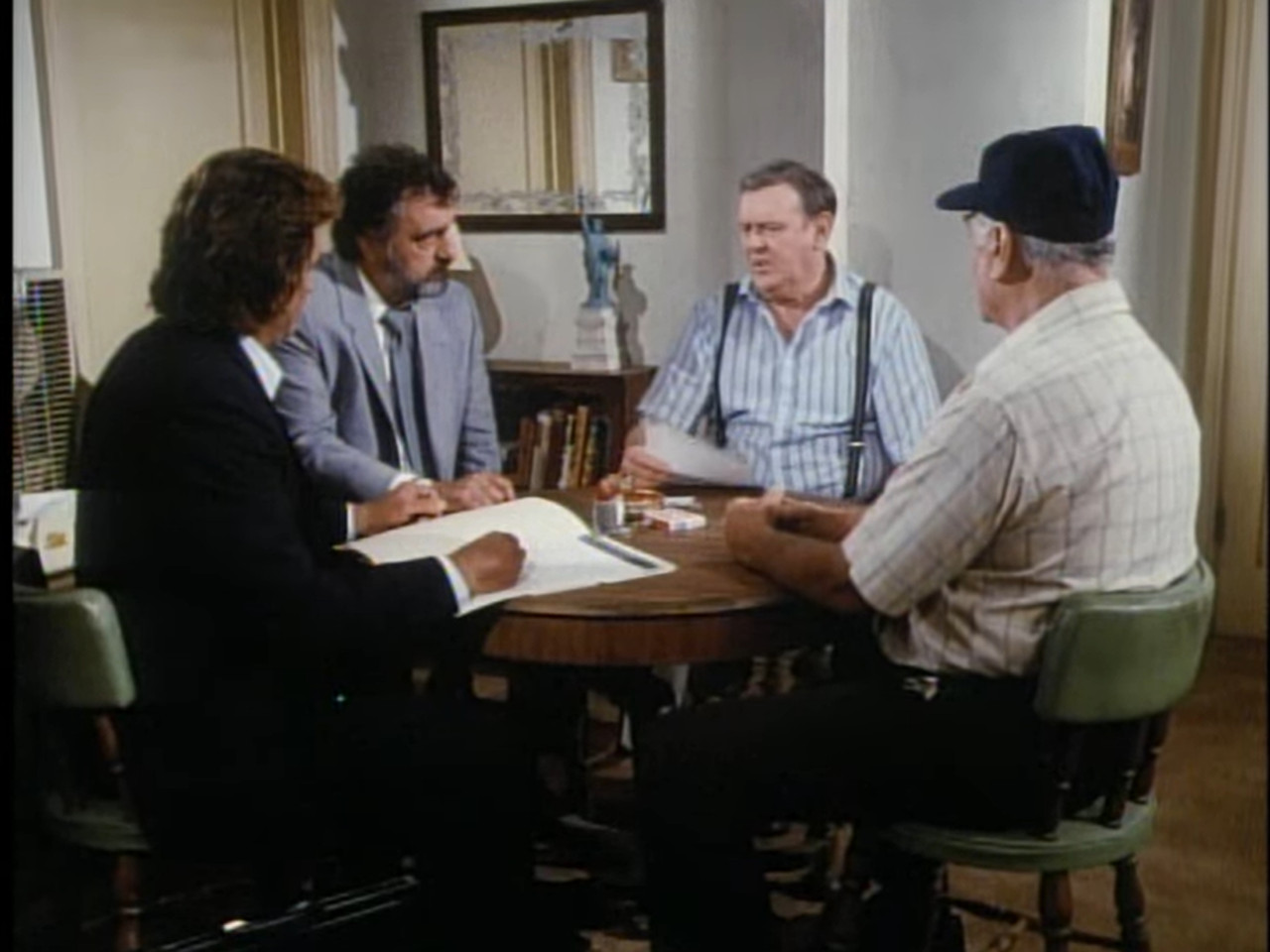
And he does that several times in the episode, arguing with somebody and comically doing something else.
Now, there have been multiple characters saying one thing and then acting as if they never said anything (right from the Pilot, with the elderly woman turning down and then accepting a date with her roommate), but he tops them all.
Anyway, unbeknownst to him, his son fell in love with a local woman in Vietnam and they had a son. Now, she asks to move to the US with the kid, Clancy’s grandson, but they need Clancy’s approval.
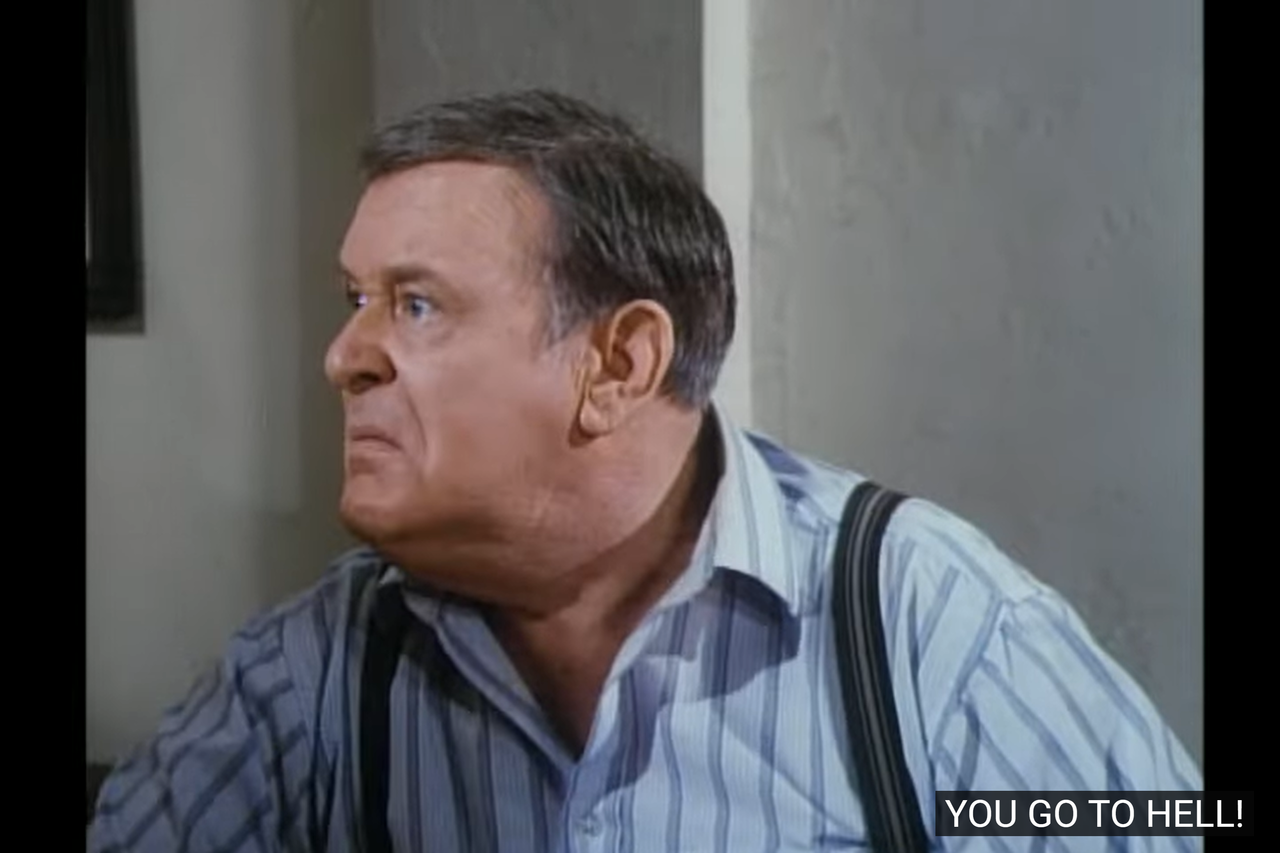
And of course, immediately after this, he’s at the airport.
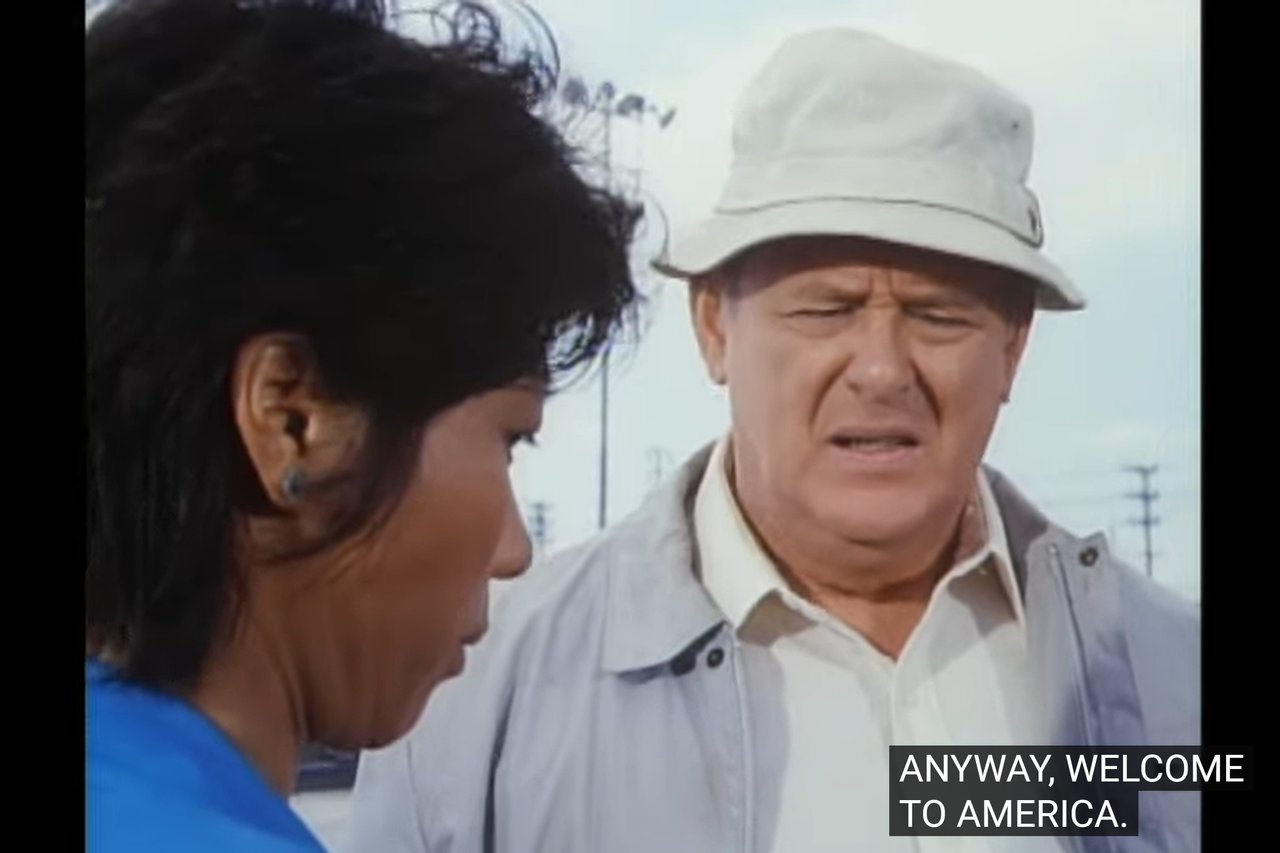
If this sounds familiar, it’s because the premise is pretty much like another Vietnam assignment: there’s an American man who find out about a Vietnamese relative asking to move in. And, just like that time, the actors are from all over the world: the Vietnamese woman is played by Haunani Minn, who is actually from Hawaii, and her son is Ernie Reyes Jr (now a stuntman and kickboxer), who is American with Filipino parents. But it’s the 1980s, so as long as they look Asian, it’s alright.
Anyway, Jonathan and Mark have a double assignment: help the woman and her son peacefully settle down in America, and help the old Clancy move on from the death of his son and accept them.
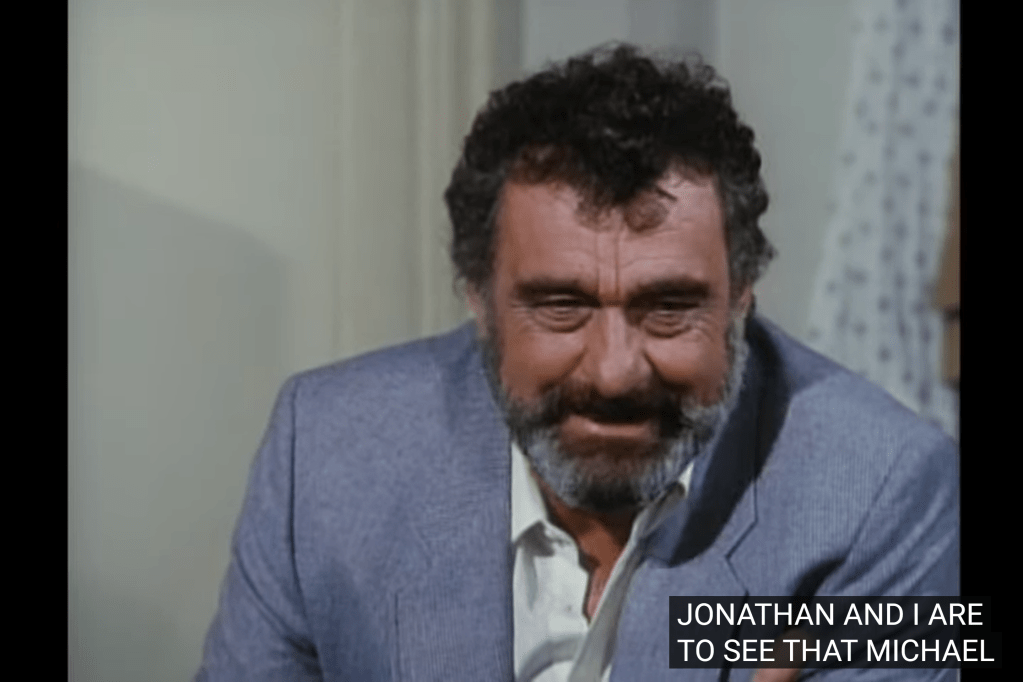
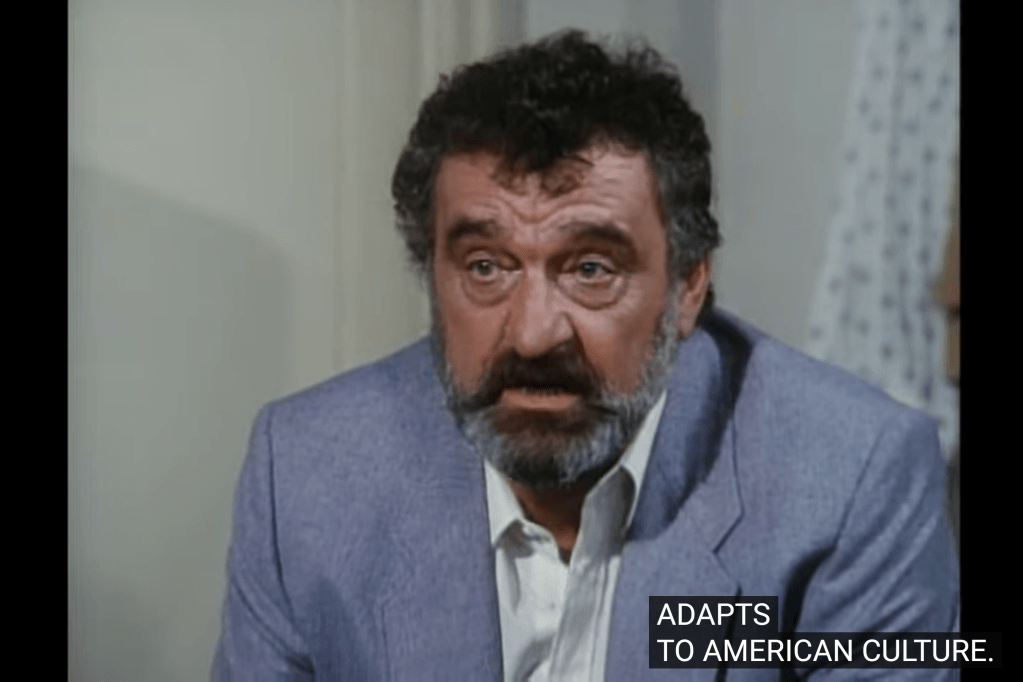
In some way, the episode combine the features of both the other two Vietnam episodes: there’s a Vietnam family moving to the US and trying to settle down (that time it was a girl played by a Japanese actress), and then there’s a man who is still dealing with the grief from the death of his son in the war.
- Background
This episode makes a revelation about the dates of its setting that potentially destabilize the one year rule, or at least marks an important exception. There are a couple of premises to point out: one, the episodes in each season of Highway are not told in a chronological order (some examples here) but it’s plausible that at least each season takes place in order (so, all the episodes of season take place before the beginning of season two, and the same applies between season two and three and on), at least that would be reasonable for production reasons. Then, it seems that from season one to four, Highway lasts one year, from summer to late Spring with the finale — at least that was the case with season one (early 1984 to 1985, more details about it here) and season two (summer 1985 to spring 1986, more details about it here).
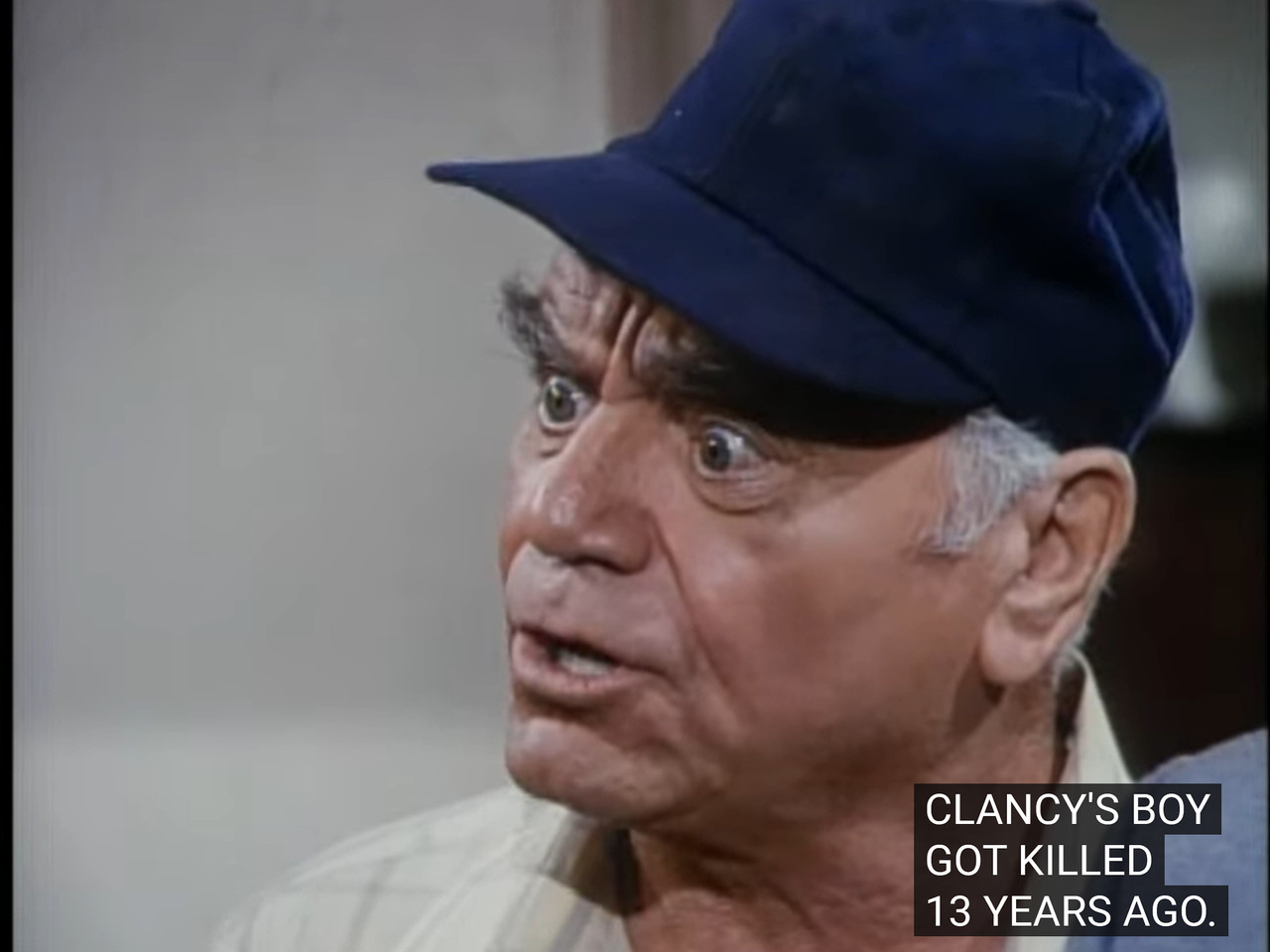
Now, considering that season three began in 1986 in the summer with A Special Love (at least, that episode takes place around that time), it’s reasonable the season spans from 1986 to 1987 like the rule would establish, and this episode takes place sometime in that year. However, that doesn’t seem the case here: when Jonathan and Mark mention speak with Clancy they want to talk to him about his son, it’s revealed by Clancy’s neighbor Guido that Clancy’s son died 13 years earlier.
Later, Jonathan mentions that the grandson was born during the fall of Saigon (which occurred in April 1975), when the kid’s father died.
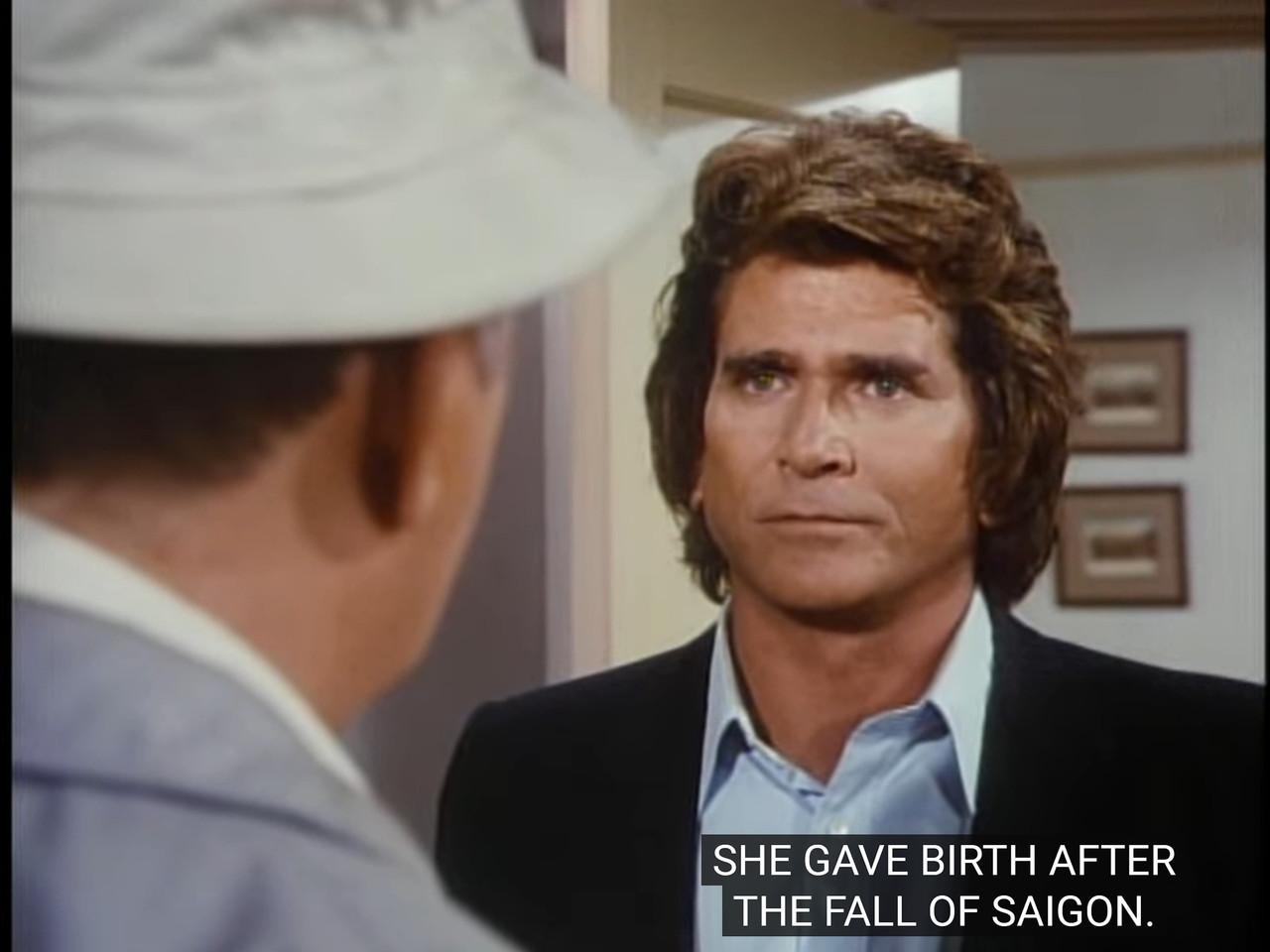
And Mark adds that the kid was born in July of that year.
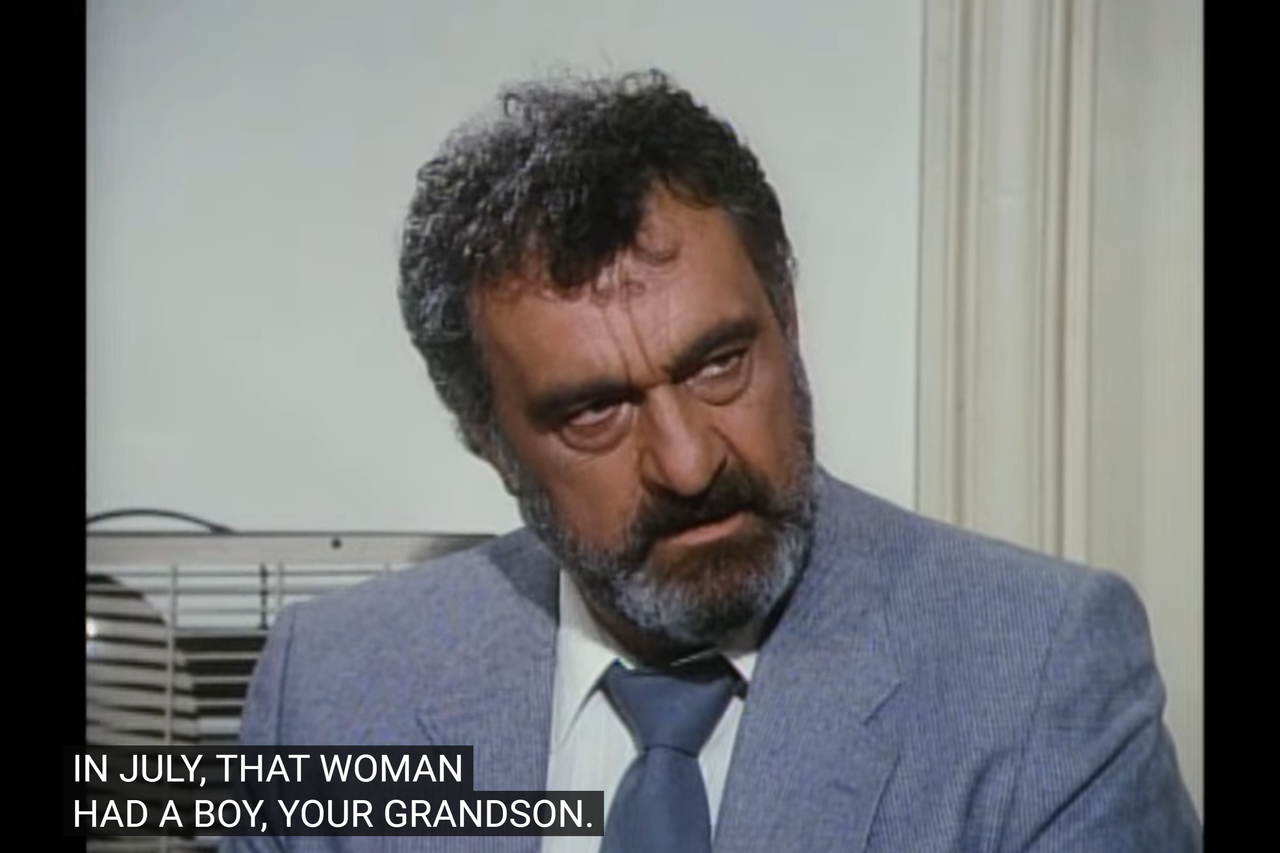
This would place the episode around in 1988 or late 1987 at least — in both cases, when season four is set.
Now, there are two possible explanations. One is that season three spans one year 1986–1987, and this episode was misplaced in season three, but was actually intended to be set during later — perhaps during season four at least.
Another possible explanation is simply that the dates are wrong: Clancy’s son may have died earlier in 1975, before the fall of Saigon. Or perhaps—something that becomes more plausible later in the season—the third season has no fixed chronological setting at all. In that case, seasons three and four may actually take place in a scrambled order, unlike the first two seasons, where every episode of season one precedes those of season two. This might also be supported by a later episode in the season (Love And Marriage), although that particular episode is a rather odd one.
The main problem with this theory is that in season four Mark undergoes a slight but noticeable change in his hair and beard, whereas here his appearance is still the same as with the first three seasons. Either way, it remains unclear when exactly this episode is set—or even how much time passes during the assignment itself.
As for the setting instead, it’s around Venice and Santa Monica, where Guido takes the mother and the kid out to play.
Very 1980s.
But that place should look familiar: it’s that merry go-round, the same where Mark proposed to Stella during Help Wanted: Angel in season one.
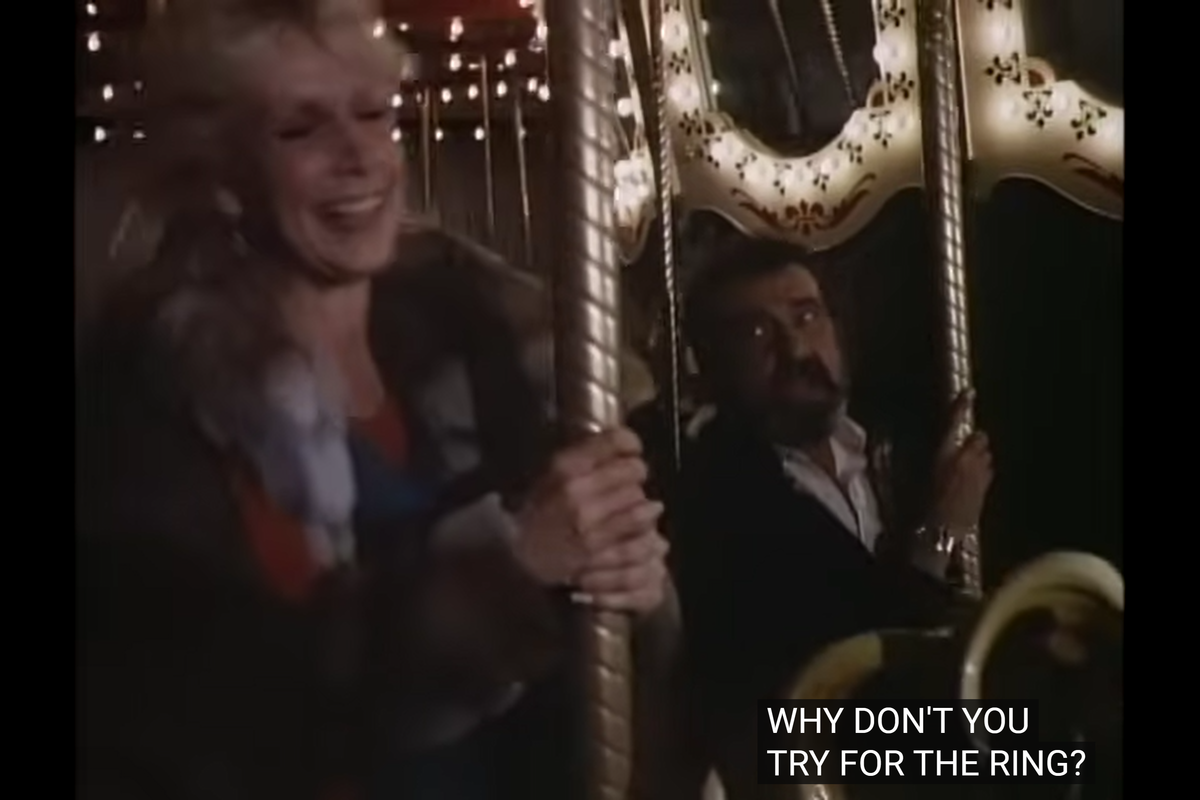
Actually, here Guido and the kid do exactly the same activity as Mark and Stella in that episode: the merry go-round, the karts, while they laugh all along.
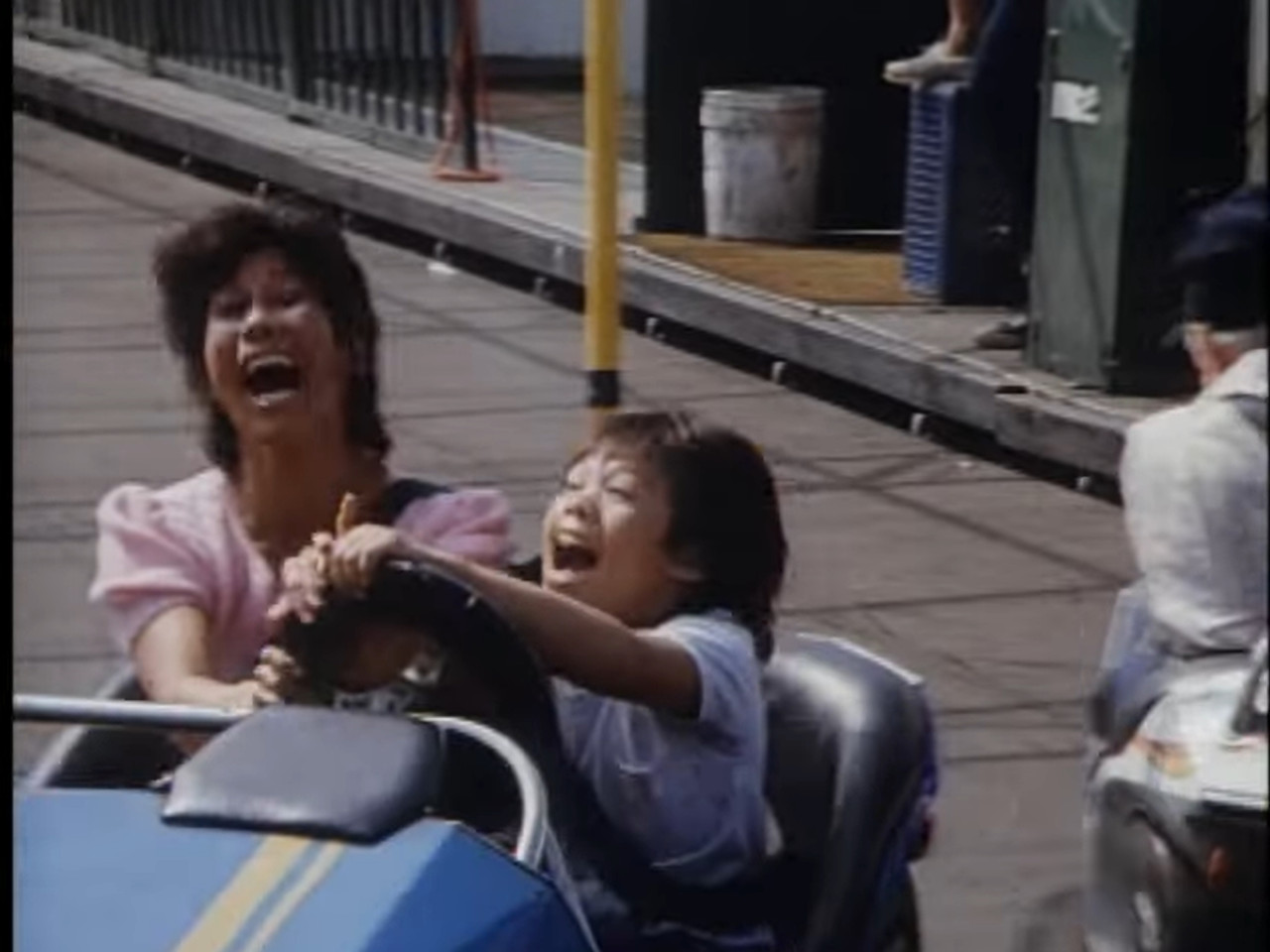
Even though it seems like she’s crying.
It’s not good.
Mark should warn them having fun like that by the beach leads to emotional consequences.
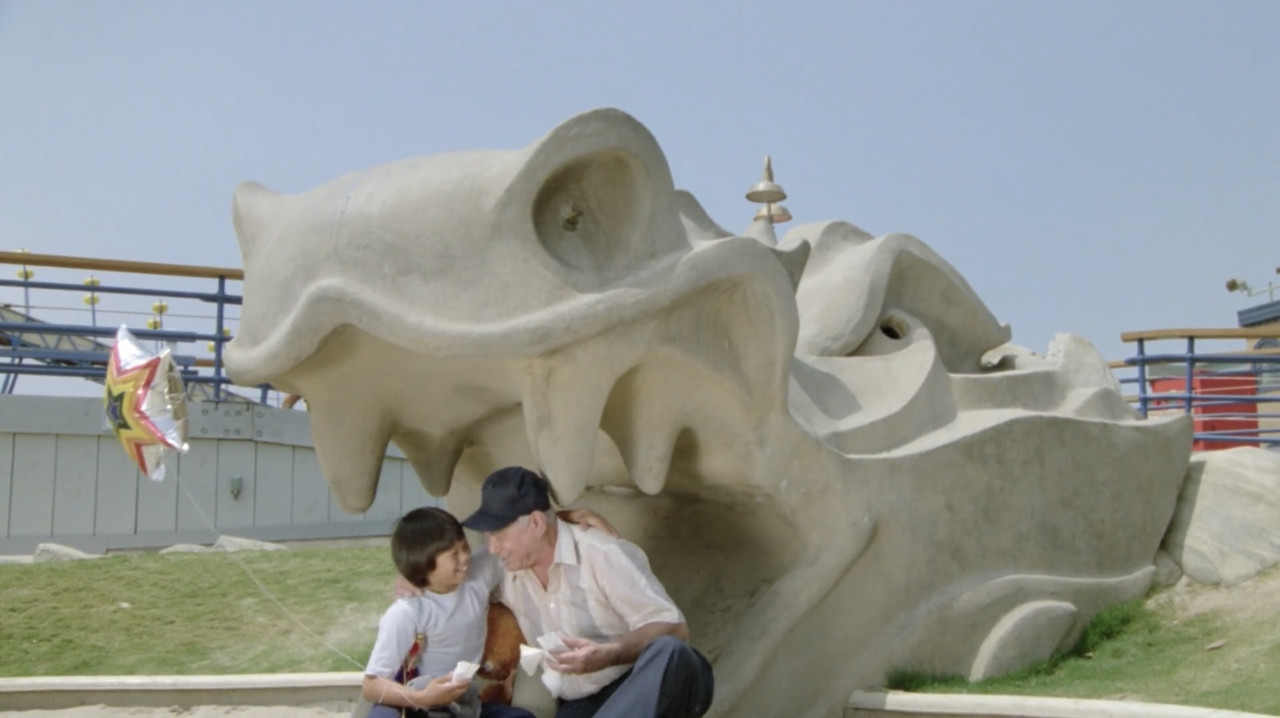
Anyway, that’s not a recycle, because they just shoot both episodes by the same beach: it would have been a recycle if they were pretending they were two different places. Although it’s unclear why Mark doesn’t say anything about how that place makes him feel, or if it brings up stuff he wouldn’t want to remember.
Also, it’s unclear how long this assignment lasts: possibly, about one week, but there’s some time in which the bullies steal the kid’s lunch, and they do not specify how long they have been doing this for.
- Characters
In the episode, Jonathan seems to have a different bag.
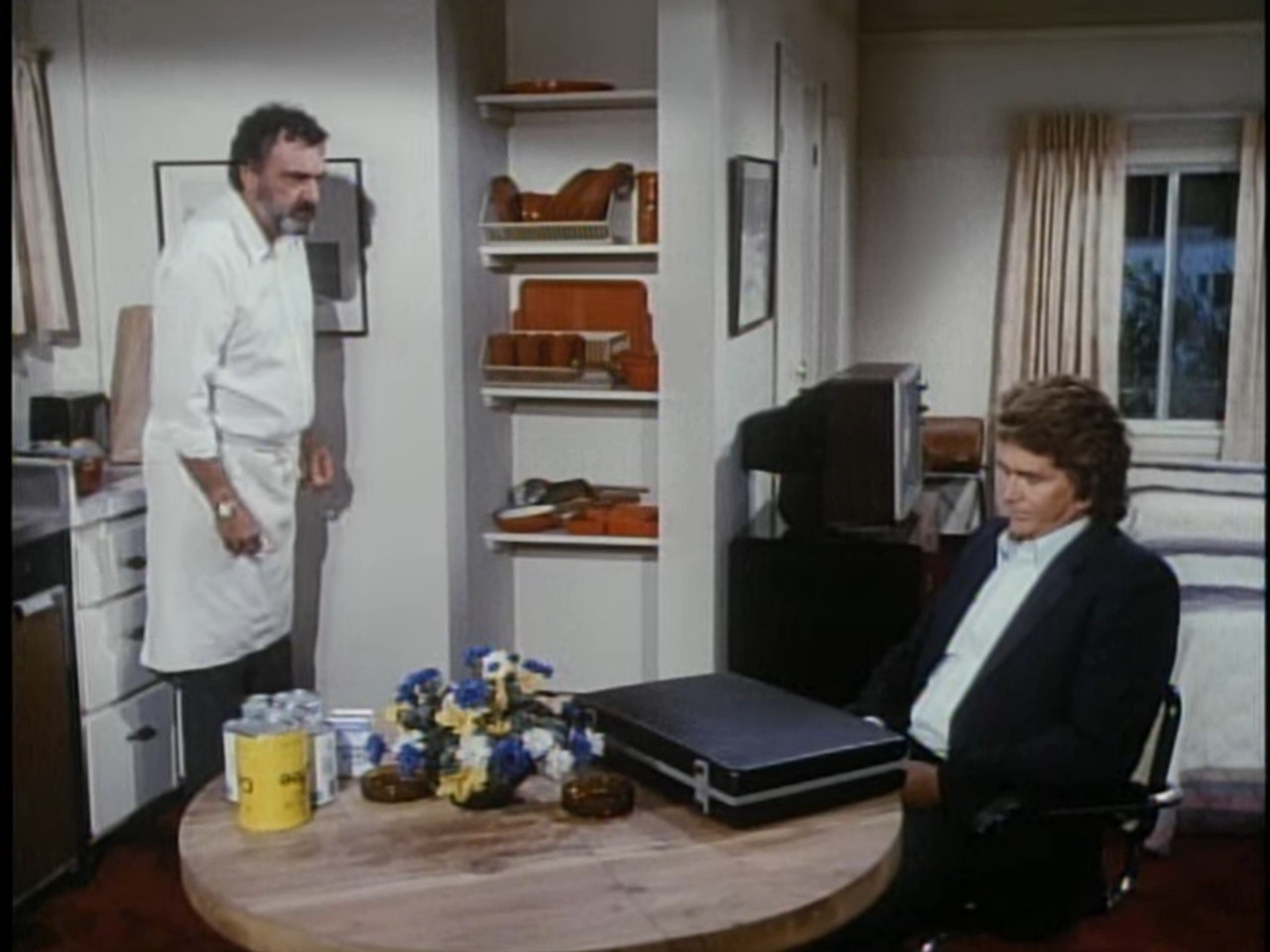
That’s not the bag!
It’s a new bag from the one Jonathan carries in the opening of each episode and during some assignments. But it probably contains the papers related to Clancy’s grandson they need for the assignment, so that might explain it.
Also, at the beginning of the episode, Mark introduces them both to Guido; but Jonathan introduces them both to Clancy later.
- Production and Setting
There’s something important about the production: the episode was directed by Dan Gordon, the show’s head writer. This marks only his second time he’s directing an episode in the series—and in his entire career—the first having occurred in Summit back in season two. It is just the fourth episode of the series not directed by either Landon or French, and there will be just one more by Gordon later on in the season. Then, Landon will officially take over and become the sole director for the rest of the series.
As for the setting, the episode takes place in Venice Beach, where the characters hang out. And the characters in the assignment live in Rose Court, which is a fictional place.
- The Stuff
Here comes the first episode of the season to deal with the Stuff, and to bend its rule: as it’s been established, Jonathan can use some powers of the Stuff only upon receiving approval by his superior (more about it here, at “The Stuff” entry) and other powers at his own will — and the otherworldly strength is one. In this episode, he uses it to give power to Clancy and his grandson so they can fight off the thugs.
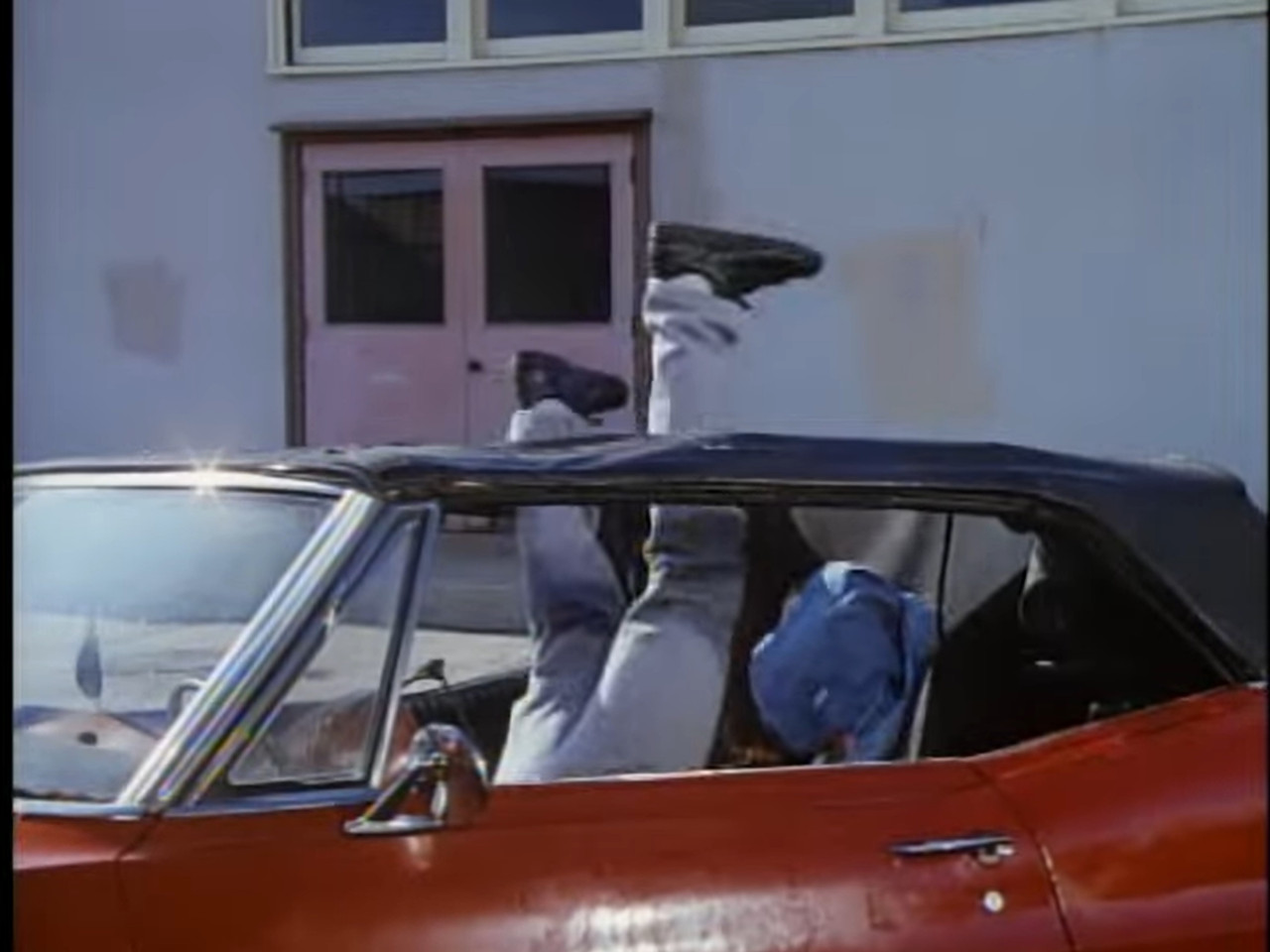
This raises a couple of important points: one, this appears to be the first time in the entire series that Jonathan actually gives the Stuff to someone else. Apparently, Jonathan can endow another person—at least temporarily—with a specific aspect of the Stuff. This is somewhat similar to what he did with Mark when he brought him along into people’s dreams, as seen in the Christmas special of season one and the Vietnam episode of season two, and again here. However, those earlier instances were different. In those cases, Jonathan acted more like a guide, instructing Mark on how to use the power. And Mark always knows exactly how to react, as if Jonathan were somehow directing or manipulating him.
In contrast, here Jonathan gives Clancy and his grandson the freedom to use the Stuff as they see fit—or at least grants them his usual otherworldly strength. This seems to be the first time in the series that Jonathan gives the Stuff to someone else and allows them to decide how to use it. Or perhaps it isn’t truly the first time.
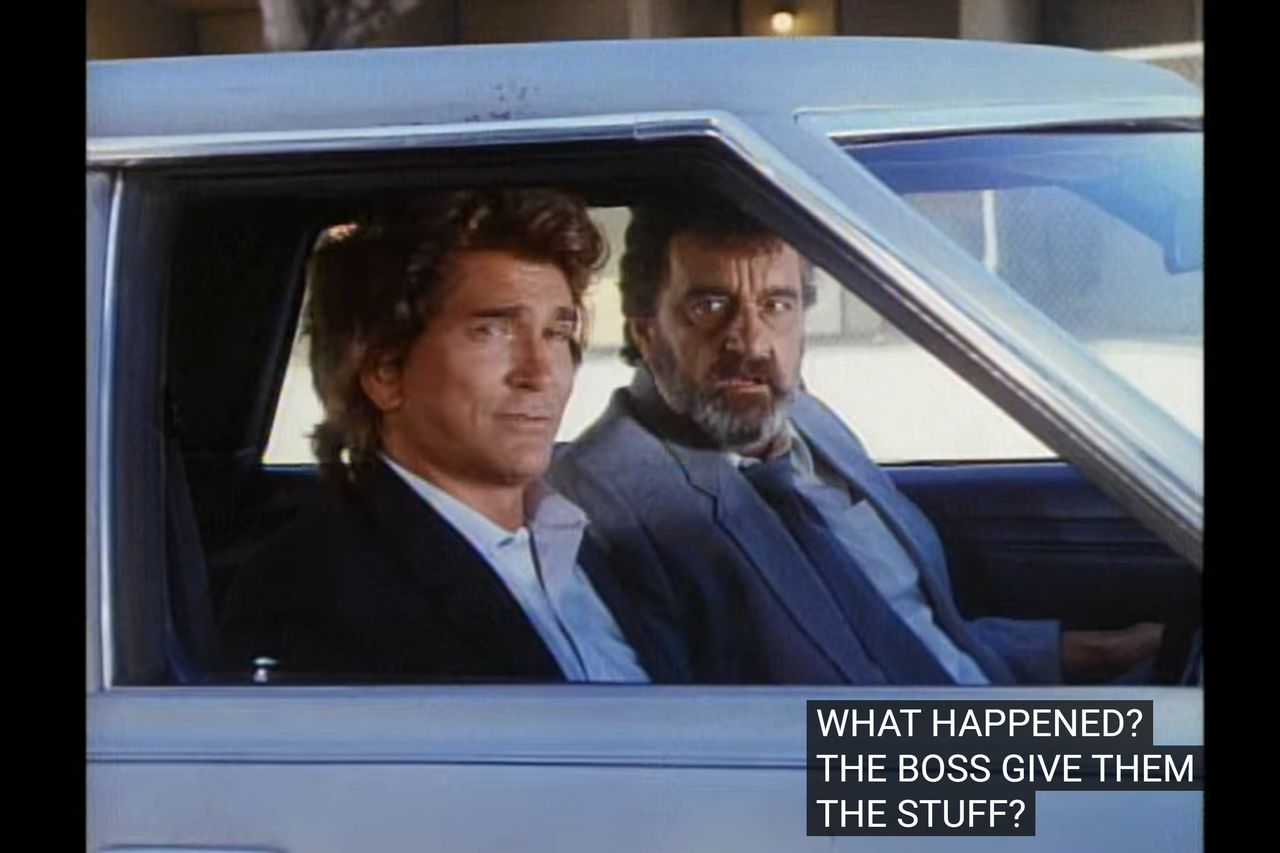
Now, if Mark asks Jonathan whether it was his superior who gave Clancy the Stuff, then Mark knew that it is possible to temporarily give the Stuff to someone else in the first place. And he possibly knew that because it must have already happened before, although it has never had. One possible explanation is that it did happen in an earlier assignment that would air later on in the season. This would suggest that the episode is set later than its original 1986 air date—perhaps in 1987 or 1988. Alternatively, the episode may indeed take place in 1986, and the act of endowing someone else with the Stuff had already occurred during an off-screen mission.
There is also a prior hint in the season one finale, when Mark is on a horse and Jonathan says he gave the horse the Stuff. From that point on, it becomes apparent that Jonathan can sometimes give his power to others, though he had never clearly done so with another person until now.
Anyway, there’s a second important thing: when Mark asks for explanations, Jonathan reveals that he did that without his superior’s permission.
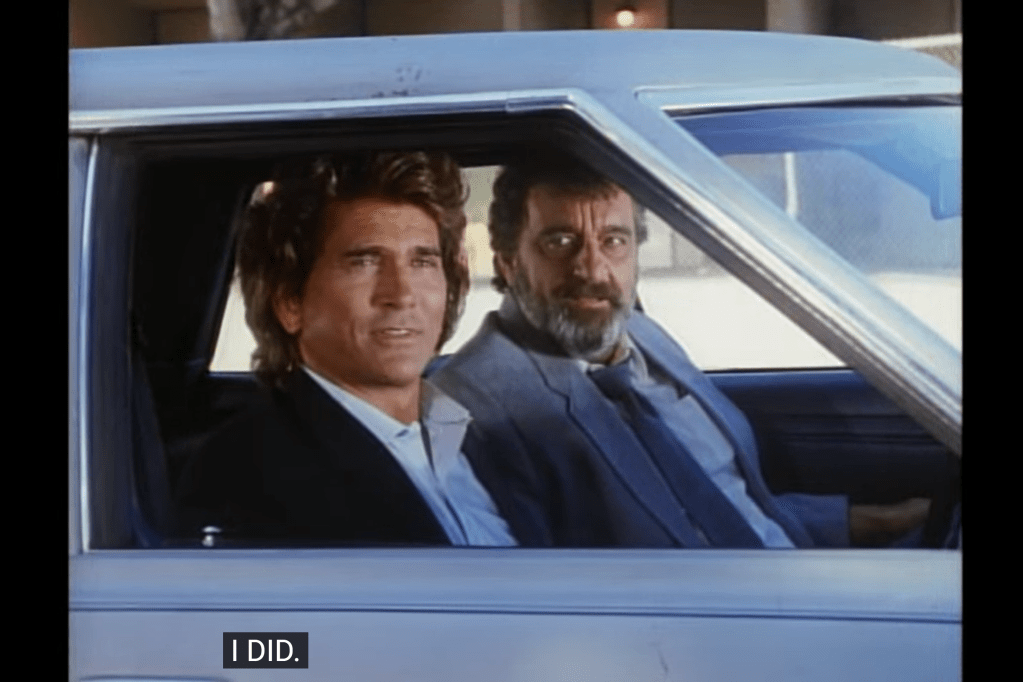
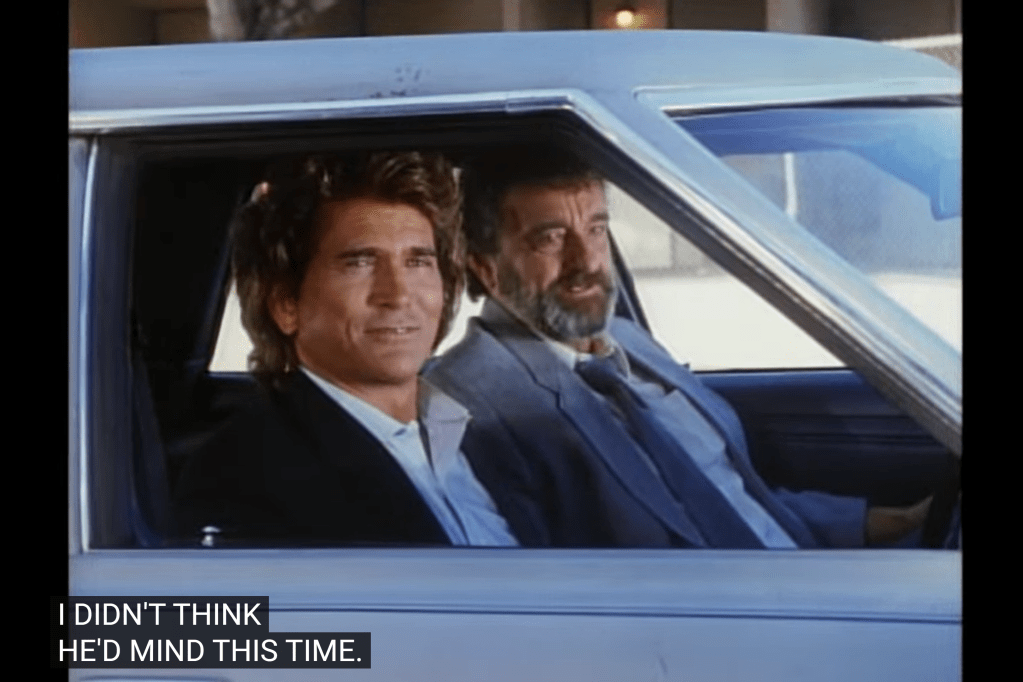
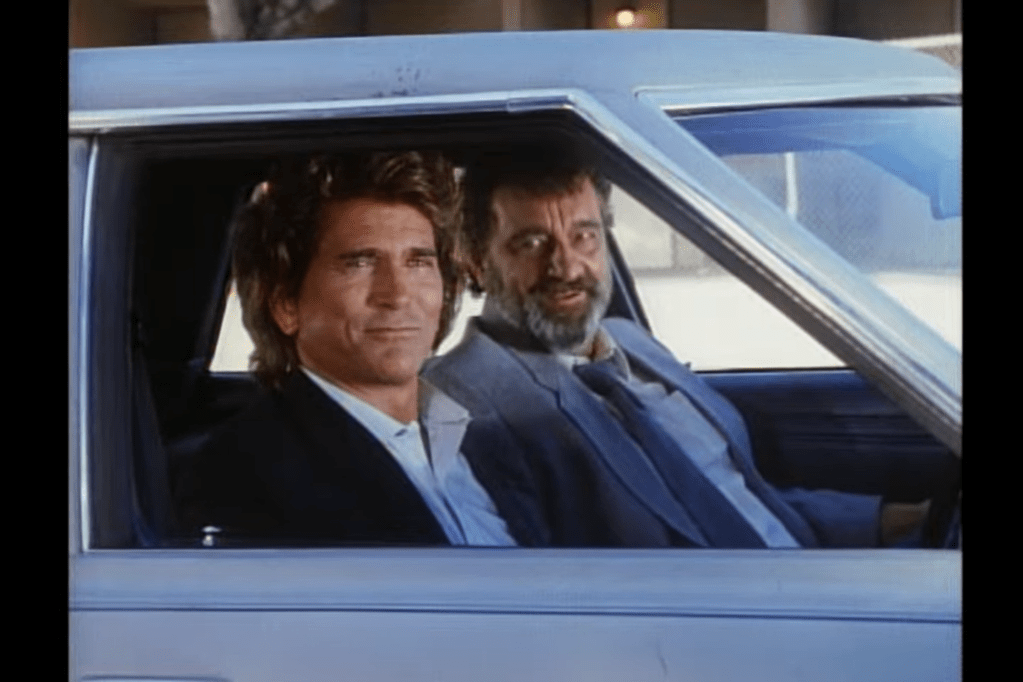
When answering Mark’s question, Jonathan replies that his superior “wouldn’t mind”: this opens up a broader question about the nature of the Stuff and Jonathan’s authority over it. During season one, it seemed that Jonathan couldn’t use the Stuff if the superior wouldn’t allow him to, nor he could use it to induce fear on earthly people (as explained in a season one assignment, when he was beaten up). This rule was reiterated in a season two episode too. But then, in another season two episode, it seemed that Jonathan could actually use the Stuff without restrictions, as he does to beat up some thugs (in The Secret), implying that either he can use the Stuff as he pleases, or that there are some powers he can use at his will, and other powers he has to ask his superior beforehand. This idea was seemingly confirmed in the episode The Last Assignment, as he meets a fellow probationary angel that constantly mishandles the stuff. It could also be justified by assuming they have to make mistake to learn, and his superior allows them to improperly use the Stuff for this reason (explaining the episode One Winged Angels in season one).
Now, this episode further confirms a differentiation underlying the Stuff: if Jonathan lent the powers to Clancy and his grandson even though his superior doesn’t know about it (but “wouldn’t mind this time”), that shows some powers (like the otherworldly strength) can actually be used without his superior’s permission. And likely, the power of temporarily giving the Stuff to someone else can also be used with no approval. But, of course, if Jonathan crosses any boundary and deliberately uses it wrongly (the way he did in The Secret), then he’d have to face the consequences.
Of course, there would be some problems with this anyway: for instance, they never specify whether, in case Jonathan doesn’t have permission, he’s stripped from his power to prevent him from mishandling it (like in that season one episode), or if he can use it, but then face the consequences.
Glossary
Car: at the beginning of the episode, the car breaks down.
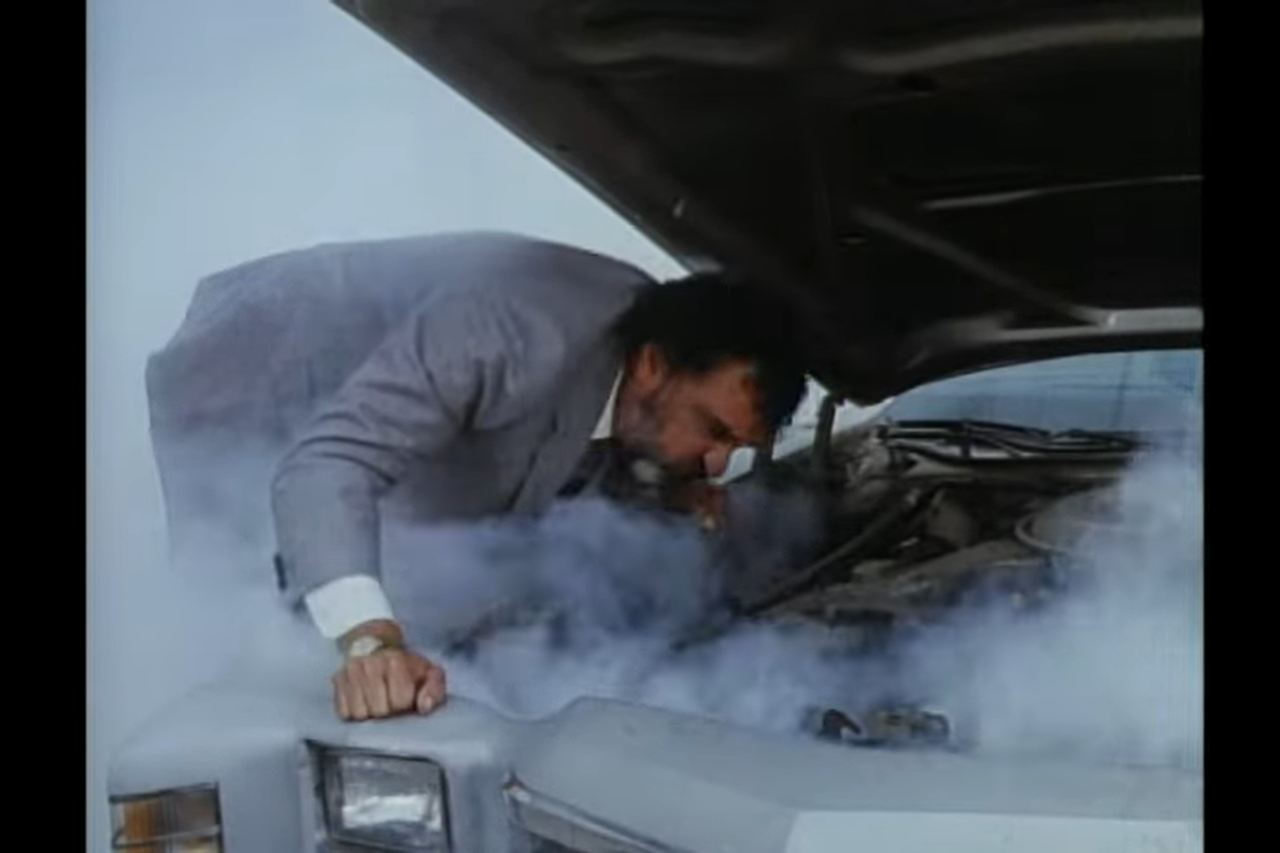
How much can a single car bear in this series
And Mark bumps his head on his way.
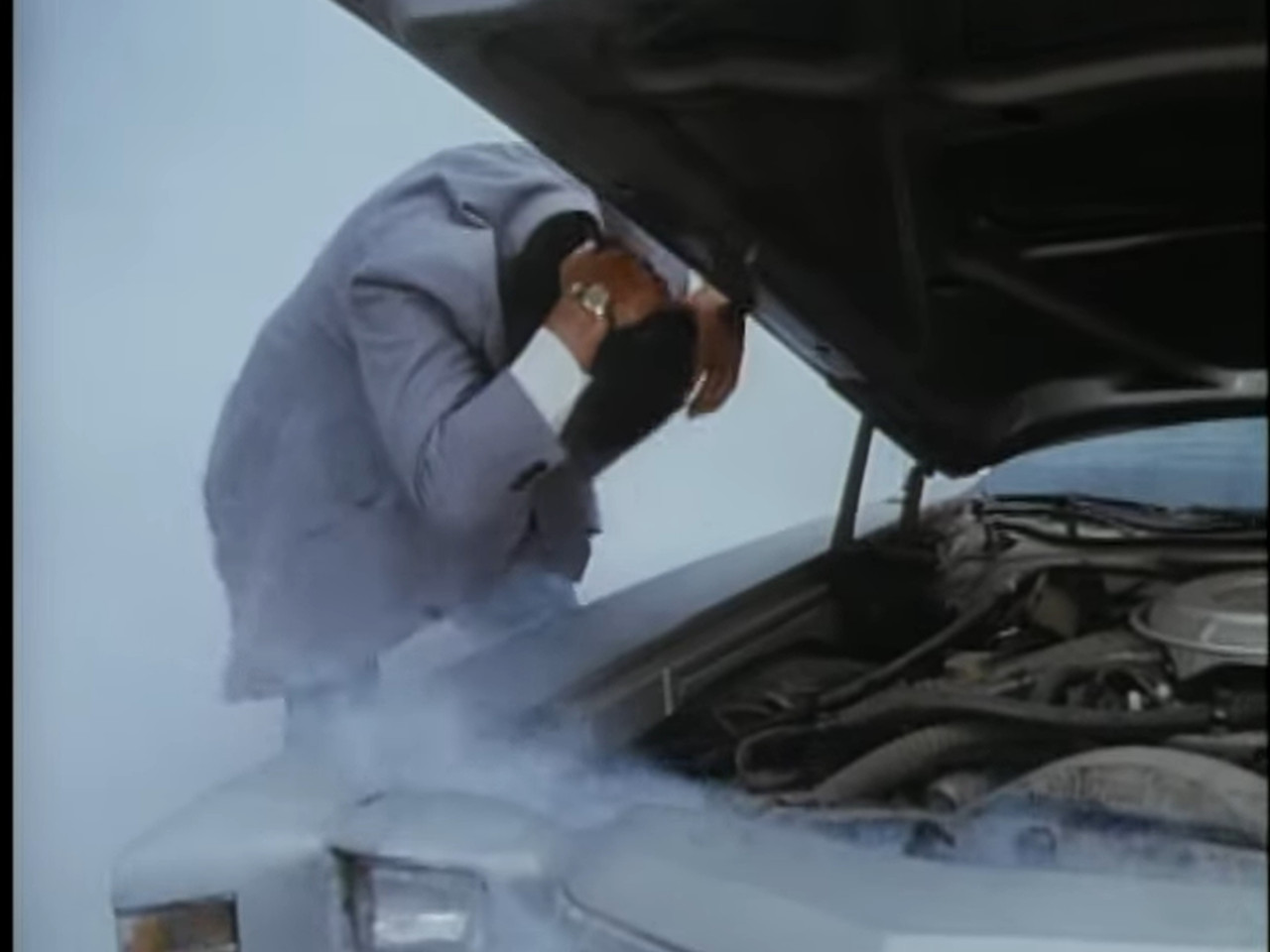
That was probably improvised.
Anyway, Mark breaking his car wouldn’t mean much, except that Jonathan doesn’t repair it now —even though he should be used to.
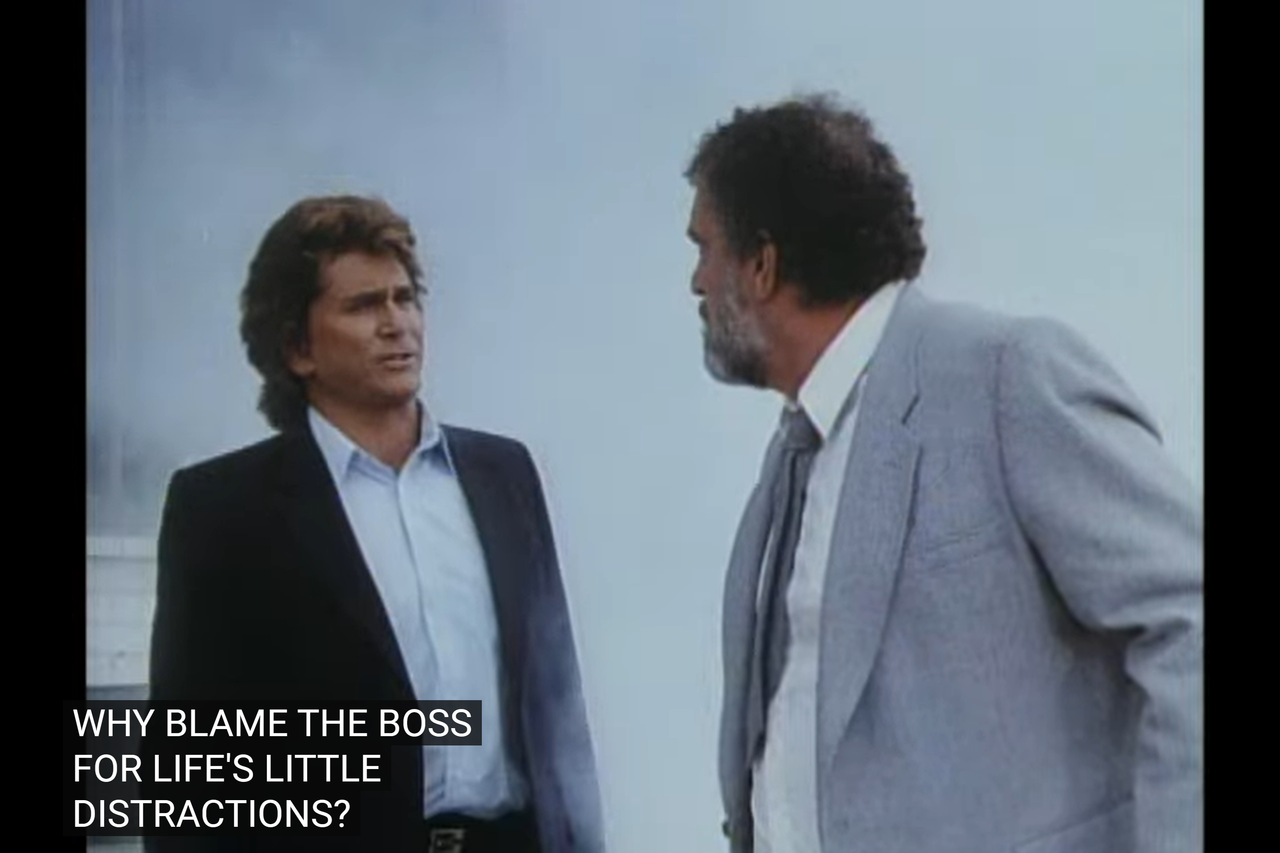
Why don’t you do something.
Cute: there are multiple instances in the episode. At the beginning, there’s a reverse cute: upon finding out that Clancy is a doozy, Mark teases Jonathan about the assignment the way Jonathan teased him about the car.
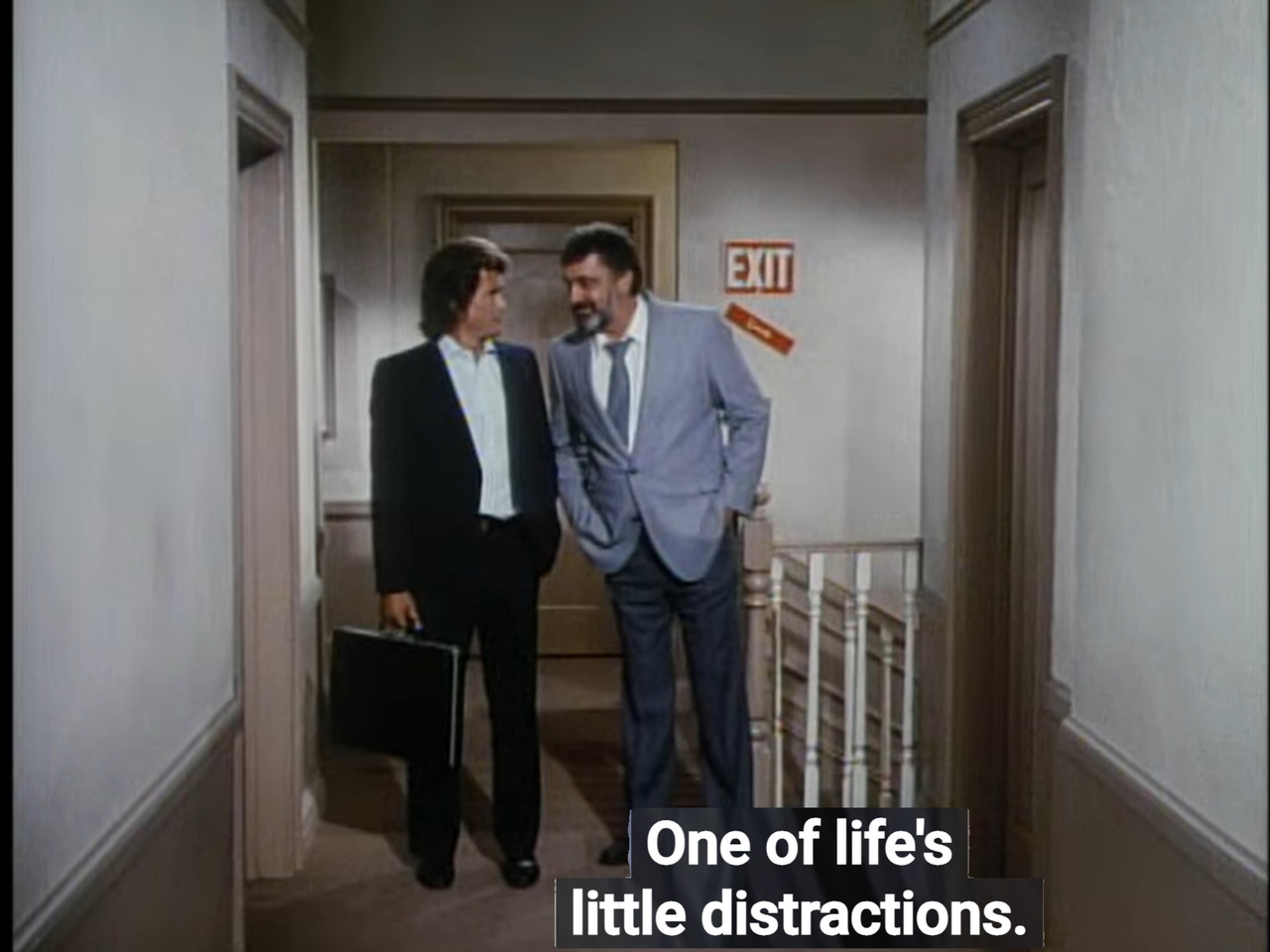
Mark really shouldn’t be so smug, because it’s his assignment too.
And Jonathan responds with a Cute.
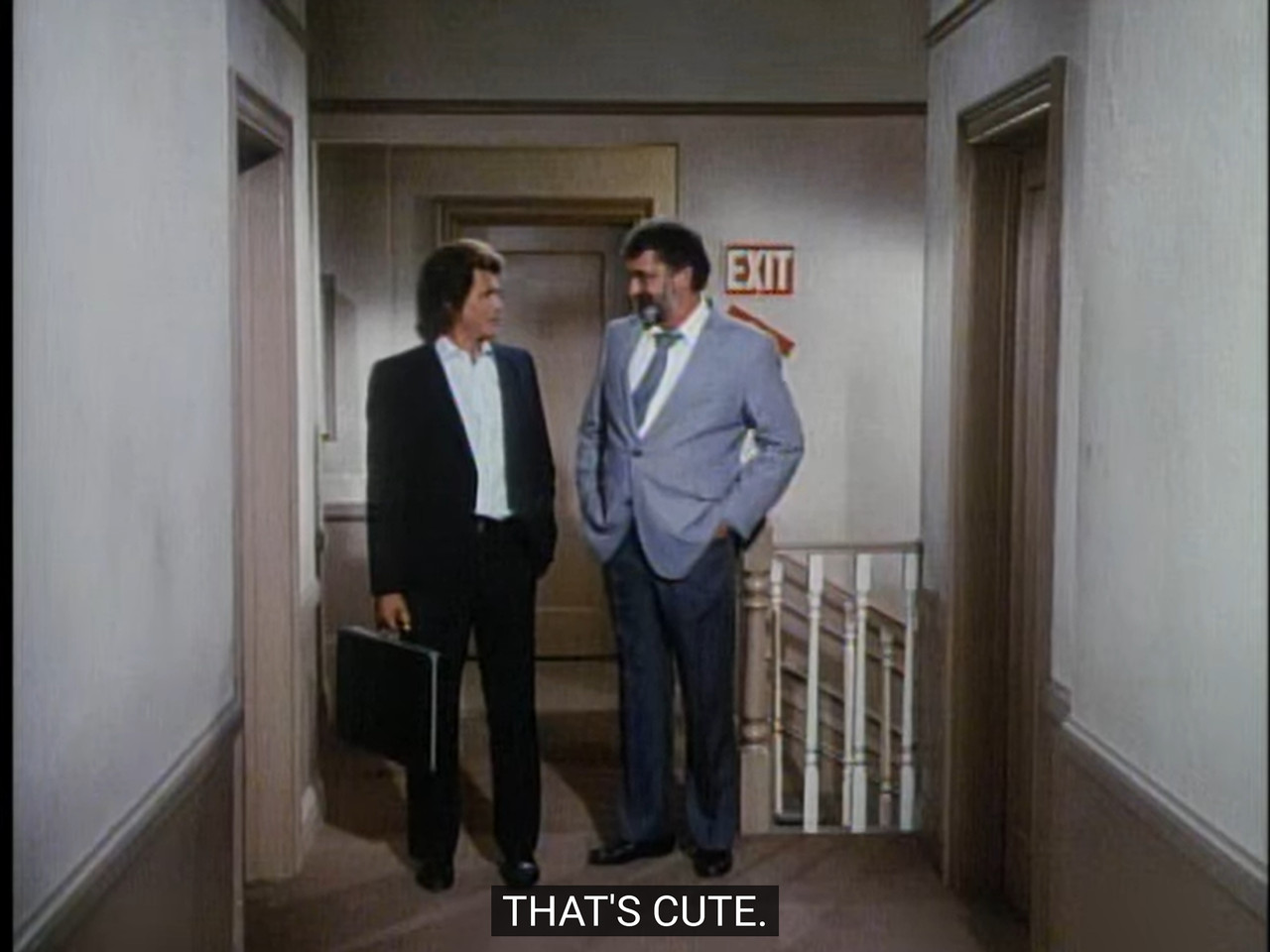
That’s a “Reverse Cute“, a rare moment when Jonathan uses the “Cute” catchphrase: it’s only the fourth time in the series (one was in One Winged Angels, then in The Right Thing and the season two finale).
And Mark does make up for it later, though: while they are arguing about the food, Jonathan scolds him for thinking about eating instead of the assignment, and Mark has to remind him of the obvious.
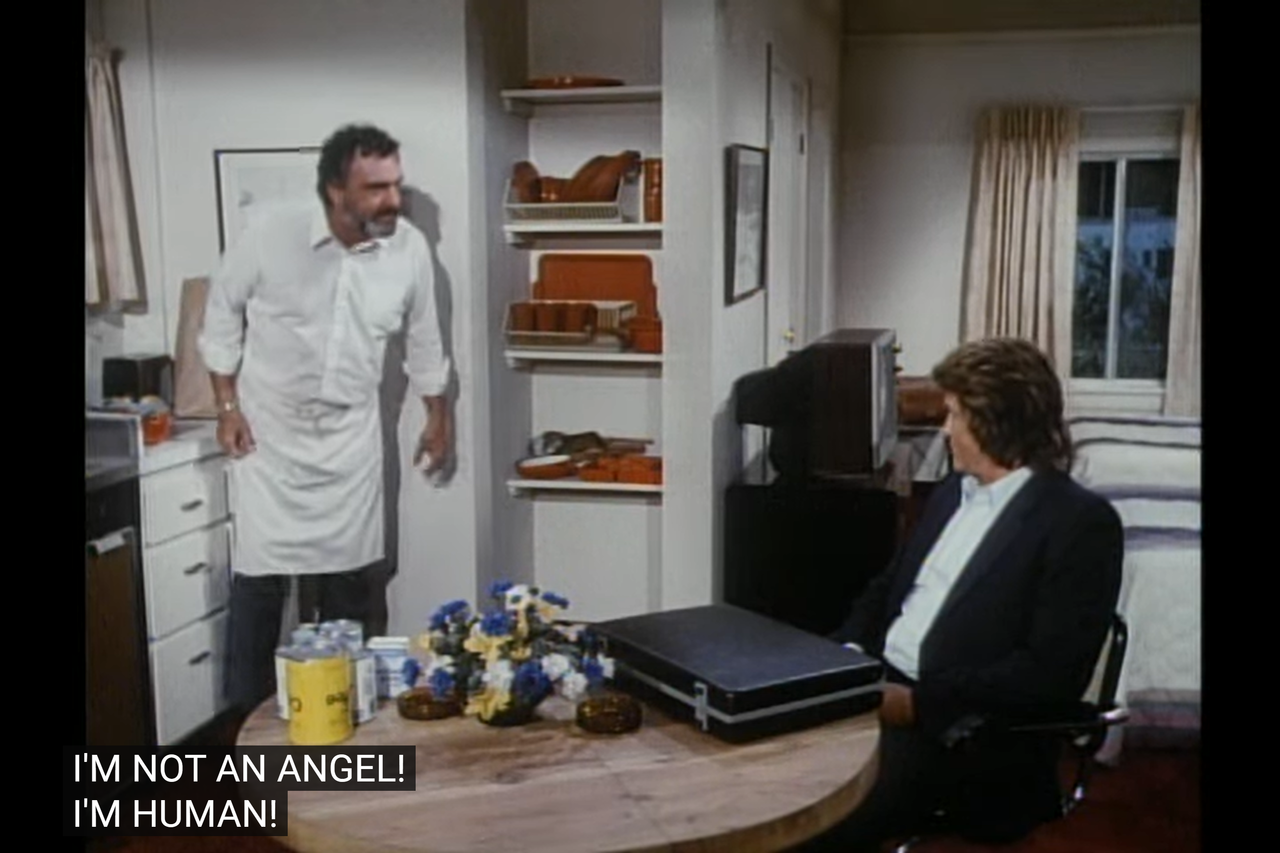
But Jonathan brushes him off.
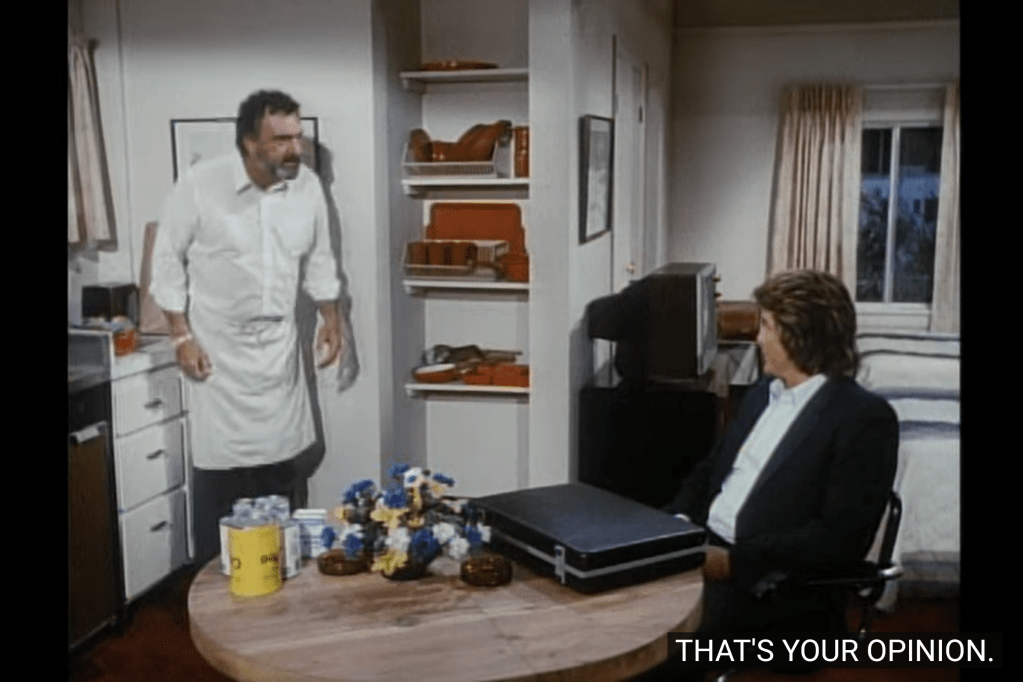
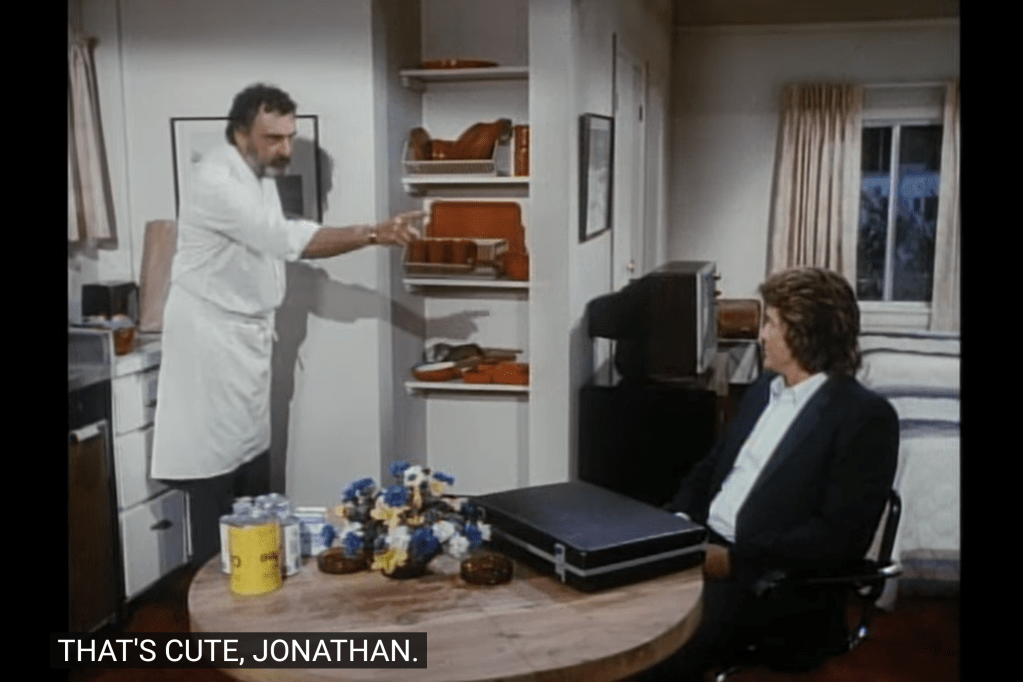
What is that supposed to mean: maybe that Mark believes he’s still a man, but he has just become an angel and he’s unaware of it. Maybe he eventually died in some perilous assignments (like the drug one of that random cold open).
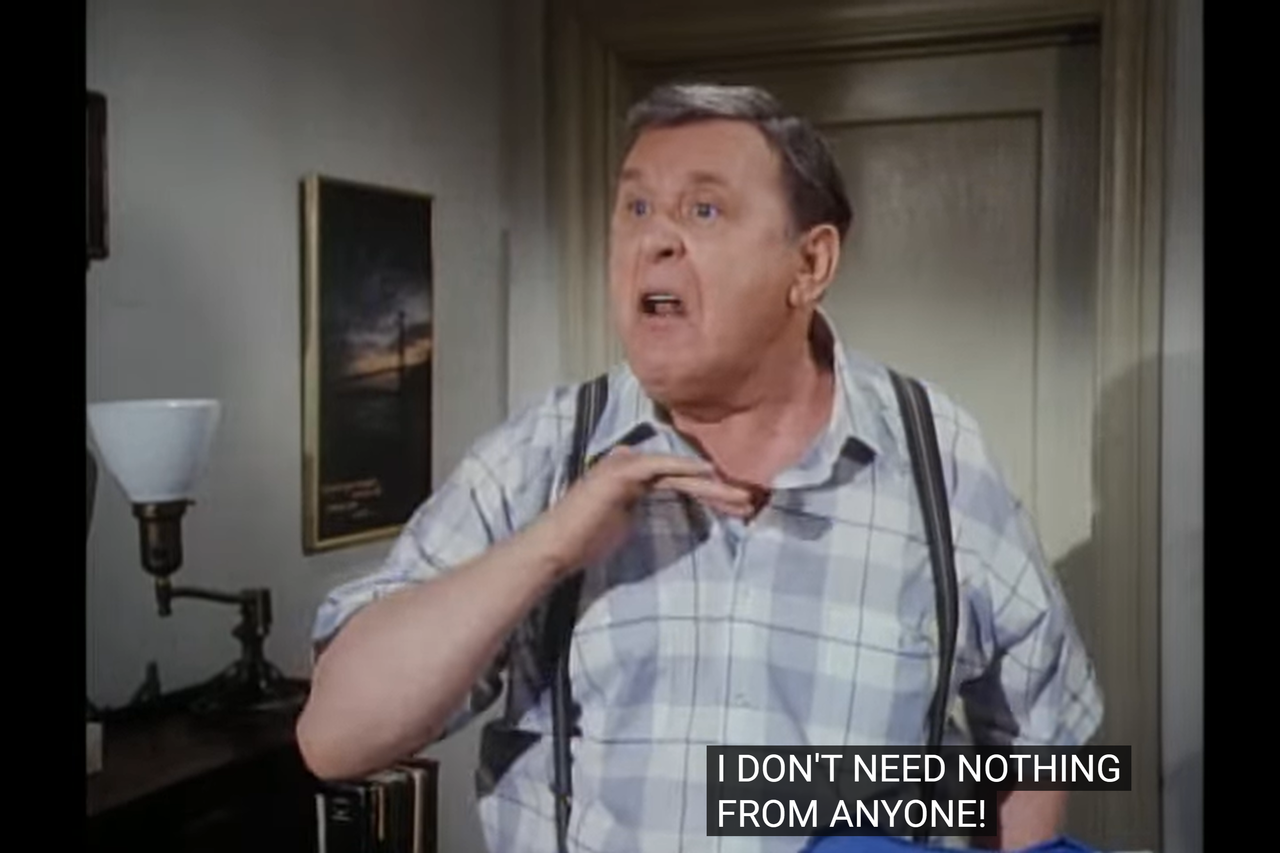
Doozy: even though Clancy’s an adult, he’s a real doozy.
Little House Actors: the character of Guido is played by Ernest Borgnine, a familiar Little House actor.
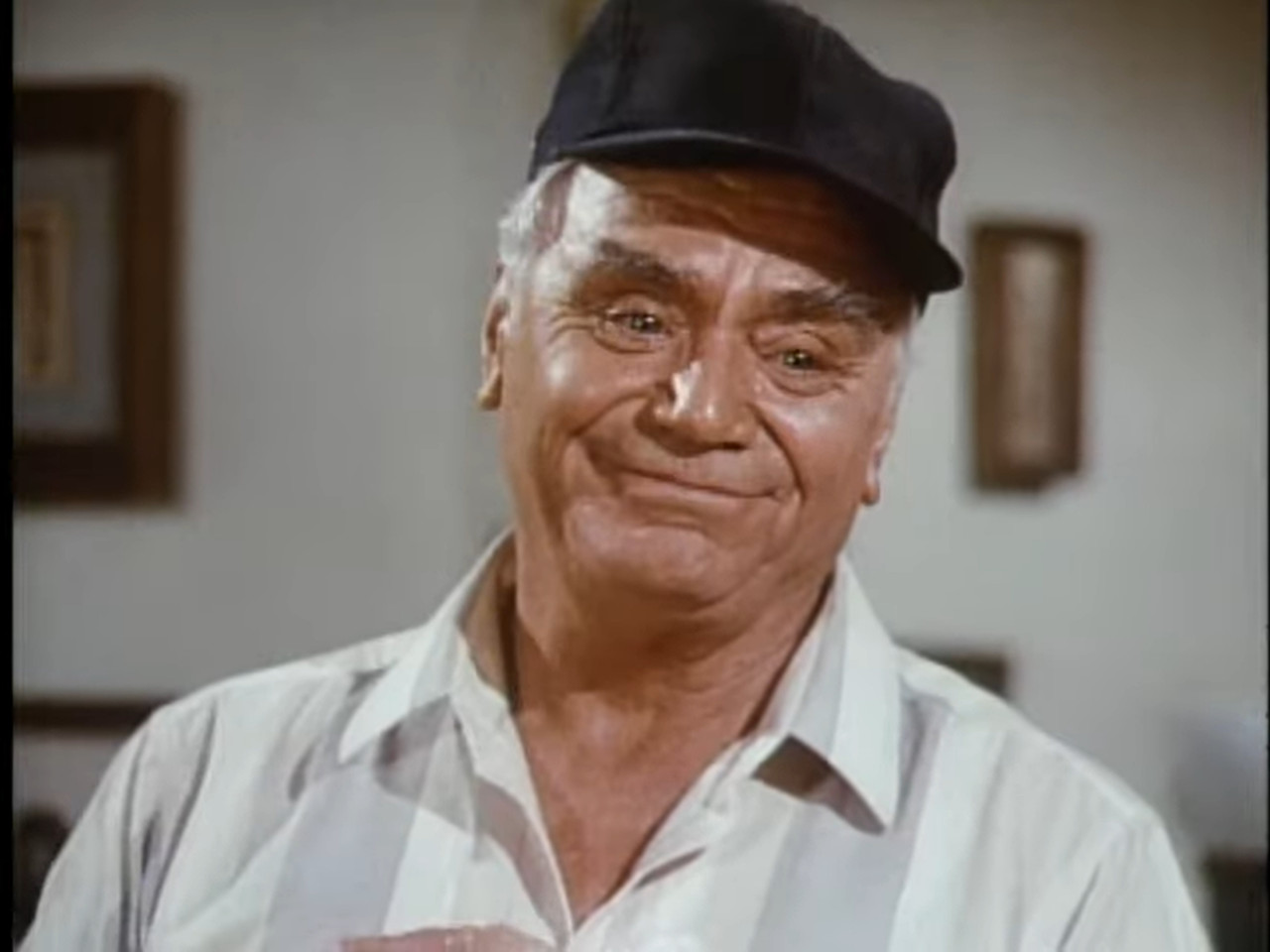
He had previously collaborated with both Landon and French on Little House, in The Lord Is My Shepherd of season one (the episode in which Laura’s brother dies and she runs away into the mountains). There, Borgnine played a particularly weird role: the mysterious “Jonathan”, a man living alone in the mountains who appears to possess strange, possibly supernatural powers, and who takes care of Laura while guiding her father and Mr. Edwards there to rescue her.
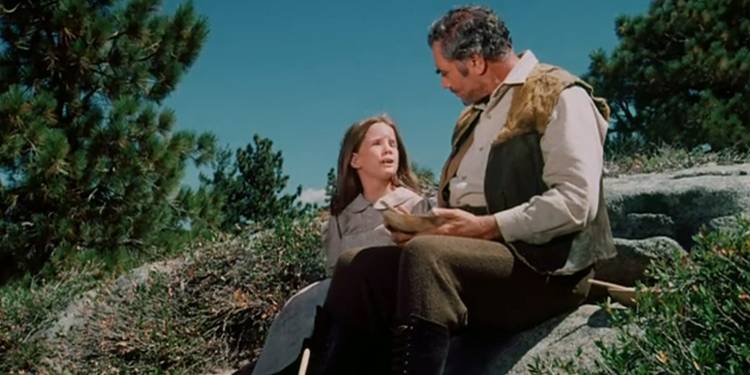
There, Borgnine played a particularly weird role: the mysterious “Jonathan”, a man living alone in the mountains, who takes care of Laura while guiding her father and Mr. Edwards there to rescue her, and who appears to possess strange, possibly angelic powers.
If that sounds familiar, it’s because his identity is deliberately mysterious. The episode never confirms whether he is an angel or merely a man (and everything that happens in the episode is just a coincidence). Either way, the choice of name seems significant: as Petros Hadiar explained in Help Wanted: Angel on season one, “Jonathan” means “God gives” in Hebrew, and Borgnine’s actions in Little House strongly suggest something angelic too.
It remains unclear whether Highway’s Jonathan was intentionally meant to be a reference to the Jonathan of Little House (at least his name), whether the shared name is merely coincidental (or based on the same idea, from the Hebrew meaning), or whether the connection is meant to be something more. Think about it: in Keep Smiling, it was revealed that Jonathan was once human under a different name (Arthur) before becoming an angel, and he was assigned the name “Jonathan” when his probation began. This opens the possibility that angelic names in the series are not random, but assigned by a higher authority— or perhaps even inherited from other angels who have concluded their probation. That way, it’s possible Borgnine’s Jonathan in Little House was himself an angel on probation who later completed it, around the same time Arthur died—thus allowing Arthur to take on the name Jonathan for this series.
Anyway, whether it’s the same character or not, what matters is that Borgnine had already worked with Landon and French on Little House, and here the collaboration continues—this time under Dan Gordon’s direction.
Friendly Jonathan: there are a couple of instances. One is when he tells Mark that being a human is just “his opinion” (whatever that is supposed to mean). But there’s another one: at the beginning, when Mark gets angry because of the car and blames his superior, Jonathan tells him that Mark is at fault here.
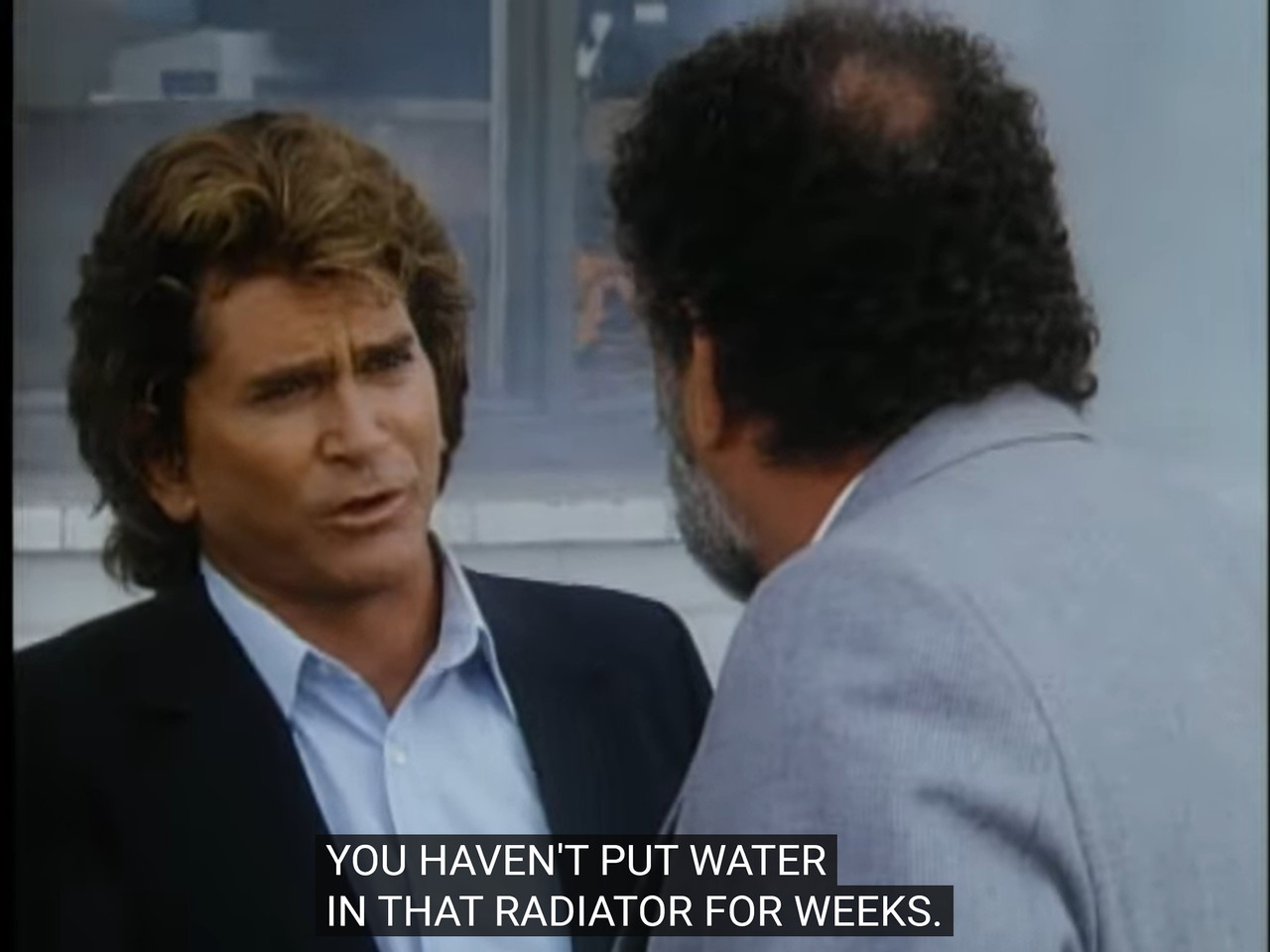
If you knew that, you could have helped him.
Jonathan knew that the car needed water, but he just waited for no reason. Except because he enjoys seeing is friend getting mad.
Sunday Suits: for the second time in the season, they have the Sunday Suits, but now they are different.
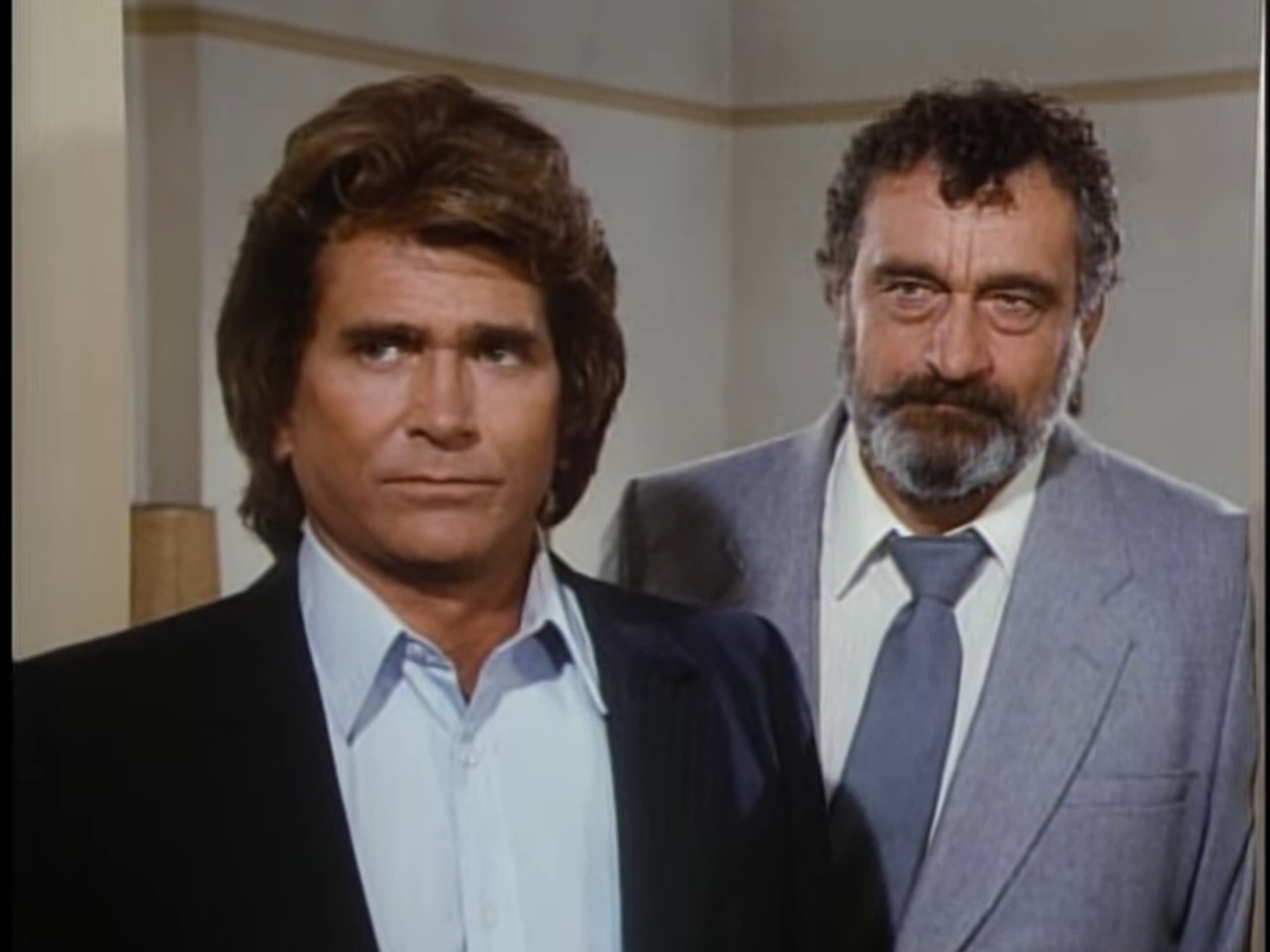
So, Jonathan is wearing his original black Sunday suit, even though in A Special Love it was a new gray one.
Instead, Mark is not in his usual black suit: now, he’s the one wearing a gray one.
Actually, that’s not a new suit: he was first shown wearing it in the season two finale Friends, as part of his assignments (they were working as teachers, so they were supposedly meant to look serious).
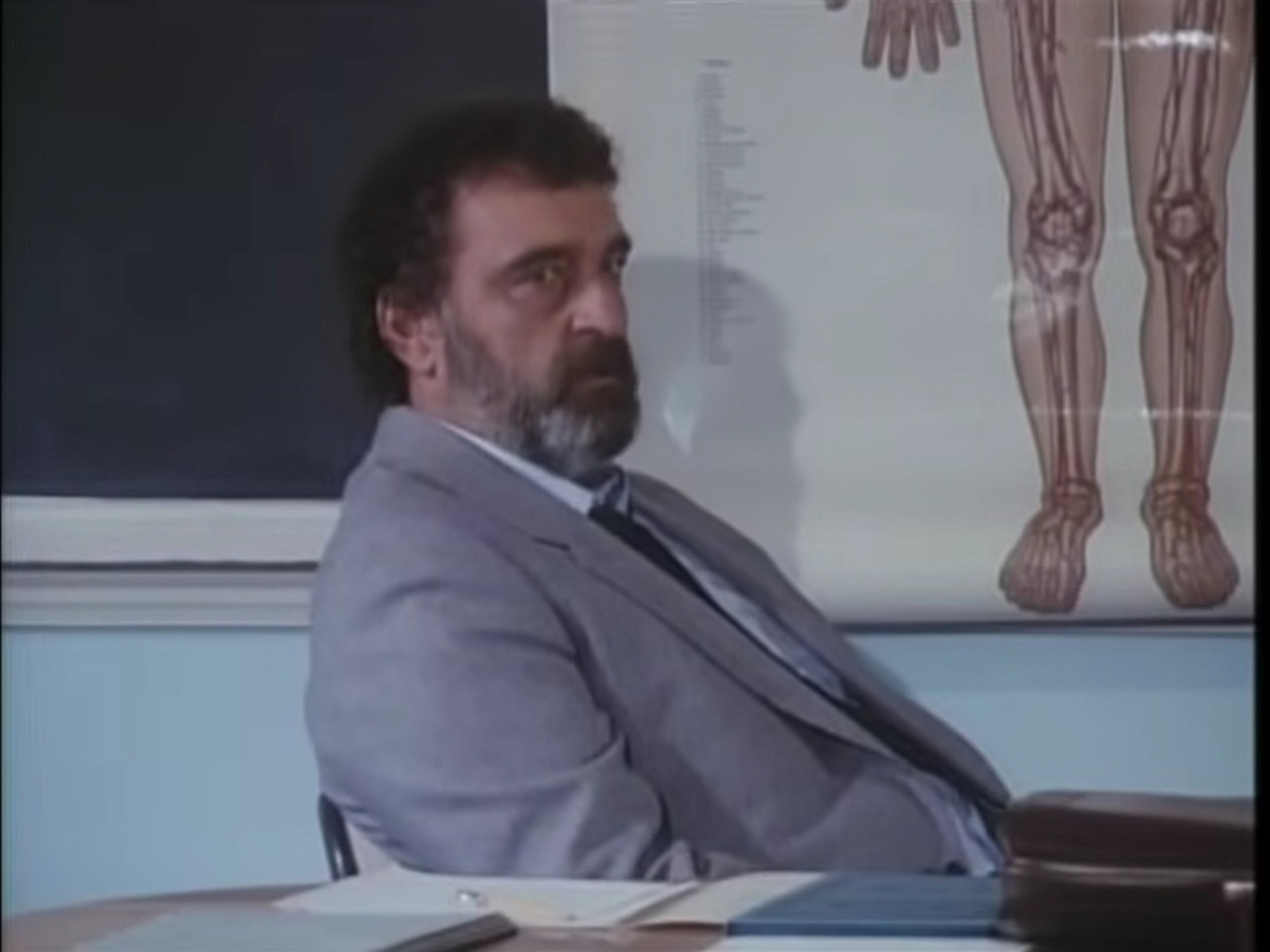
But then he came back to his black suit in A Special Love, and it seems he’ll be alternating them: he keeps this gray one in two more episodes this season. Perhaps the producers could afford something more expensive after the huge success of season two.
Also, both Jonathan and Mark wear their suits for the entirety of the assi
The “Stuff” powers: at the conclusion, when the kids get beaten up.
The job: they are members of the International Refugees Relief—a fictional organization.
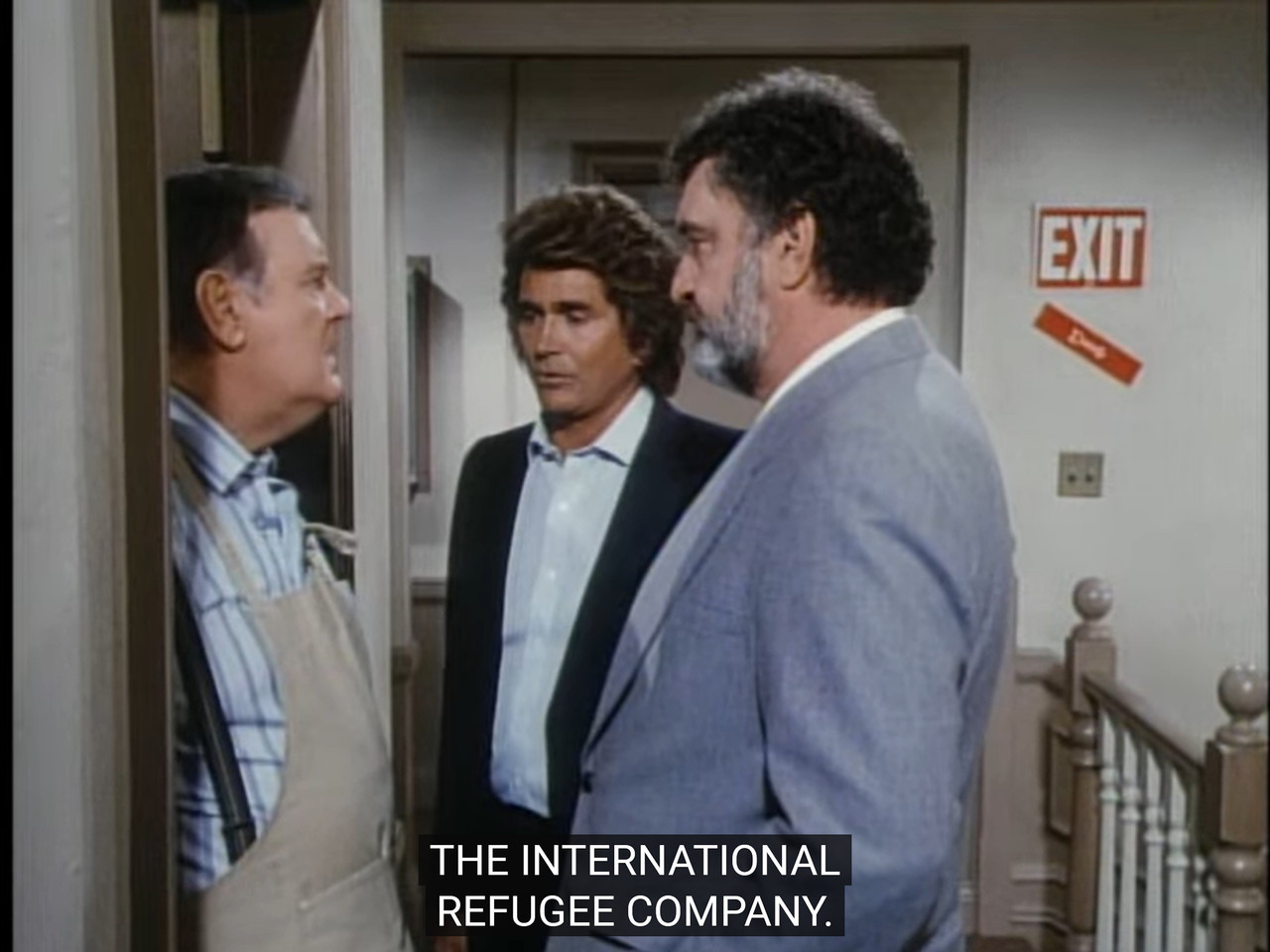
And they most likely joined it using fake references.
Ratings: 32 million audience, 16th weekly TV programs, 2nd TV genre show.
As for the ratings, the episode aired one week after its predecessor on October, directly against a baseball game. Usually, in early October, due to the MLB postseason, the network skips one or two weeks of Highway: in the first season, they skipped one week; in the second season, they skipped two weeks of games. This time, they returned to the first-season strategy and aired this episode against the sporting event.
The advantage of this approach is that skipping only one week minimizes the drop in ratings for the following episodes; skipping two weeks typically results in an even sharper decline. By airing this episode, the network ensured that only one week would be skipped afterward, preventing subsequent episodes from suffering in ratings. The downside, of course, is competing directly with a major sports event, which likely takes much of the audience away. That is exactly what happened: the episode suffered in ratings compared to its predecessor, but it was still successful — much better than the first two episodes of the season. The previous episode, however, remains the highest-rated of the season.
 Highway To Heaven Cast
Leave a comment