
Before: The Assignments and Episodes Of The Show (More)
It’s more like a look back to the road to Highway To Heaven.
It’s a different one. The series of Highway To Heaven has been going on air for almost three years now—and during these years of Jonathan and Mark’s journey, it has gone far. Here, it might be useful to take a step back and see where and how it all began, maybe discover what the series has retained and what it has altered from the original idea, and how it strayed away from the direction of the first season. Of course, not necessarily in a bad way.
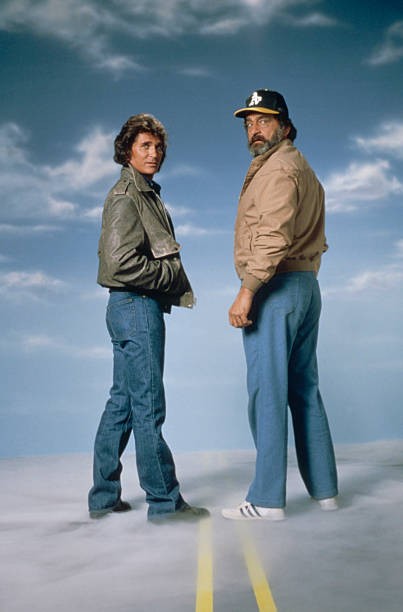
Background and premise: there are multiple versions of how Landon, the creator of the series, originally thought of it. Some people reports it goes way back to an unspecified long time ago, when his daughter was involved in a car accident that almost got her killed, and he seemingly prayed at the hospital that he’d do a series honoring life if she were to recover from that. It sounds a little outlandish, and even assuming something like that ever happened, it seems to be related to his intention to do good with his TV programs—not something he’d channel specifically into Highway.
A more plausible version (an unconfirmed one, though) is that Landon had been playing around the idea of a TV series about an angel helping people for many years before Highway, as early as 1974, by the time of Little House On The Prairie season one. In particular, it might come from a very special episode (“The Lord Is My Shepherd”) in which Laura feels guilty over the death of her brother and runs off up on the mountain (sounds like Mark in season two’s Heaven On Earth, but that’s not the point here). That episode has a mysterious character named “Jonathan” played by Ernest Borgnine (who is also on Highway in an early episode of season three), who acts like Jonathan in this series, and who says at some point in the episode that he has a “job”, leaving it unclear whether he is an angel in the first place or not. And if he is, whether he’s the same character as Landon’s Jonathan, a recycle of the same idea (from Hebrew, as explained in Help Wanted: Angel), a reference or a coincidence (more about it at the “On Angels And Probation” entry here and the “Little House Actor” entry here). Either way, even if that Little House show had some connections to Highway, or if Landon liked the idea of that episode so much that he kept it in mind for his new series, or he recycled it because he didn’t know what to do a new series about by the time Little House was cancelled, that was never confirmed in any way. It still sounds more plausible than the car incident thing, though.
Instead, according to Landon, there seems to be a different account: in an interview with the AP Television dated January 1985, he reported that the setting for Highway sprouted when he had an idea for a show, in his words, “About a writer who’d been in prison for 15 years. A magazine sends him out to look at the world from a new perspective“. It’s unclear whether this “show” was meant to be an episode for Little House or Father Murphy, or a “Movie Of The Week” (the TV movies occasionally airing back then, mostly on weekends or Mondays). Either way, Landon admitted “It was similar to Highway To Heaven“. And that can be traced back as the genesis of the series.
It also partly resembles the outline of Landon’s next series (the one he was going to make after Highway), about a convicted felony who spends 20 years in prison and, upon being released, takes his son on a journey to explore the country. That series basically sounds like a combination of both Highway (just without angels) and that unrealized show (but with more family issues too). It was never complete though: Landon was diagnosed with a serious disease immediately after making the Pilot of the series, in 1991, and he died that same year, abruptly cancelling the rest of the show before it could even enter production of its first season.
Anyway, for some reasons, Landon abandoned the idea until years later. As he explained to the press during the conference presenting the series (and reported in multiple newspapers, such as The Los Angeles Times), the specific premise for Highway to Heaven came while he was driving through Beverly Hills to get his kids from a friends’ home, and he noticed how difficult it was to get through all the traffic. That got him into thinking that, if people spent more time being nice to each other, instead of honking angrily at one another, everything would be smoother. In particular, he believed that “It would be good to make a show where people could see how better and healthier it is to go through life using their energy to be nice to somebody, instead of using it for anger that has no meaning. So I came up with the premise for this show“. That likely occurred at some point in the early 1980s.
Maybe that’s the reason he remains calm in Catch A Falling Star, when he’s stuck with Mark in the traffic and a guy stares right at the car.

If you can drive through Los Angeles without getting mad, you know how to deal with anger. And he got that right.
The series: In an interview with the Los Angeles Times dated September 24, 1984 (around the same time the Pilot aired), Landon reported that, originally, he had intended the character of Jonathan to be a simple man, rather than an angel. However, he later changed his mind, as he admitted that it would have been too hard for people to believe that a man has that much tolerance: “I would have made the guy a human, except I wasn’t sure the audience would believe that a human could be that nice“, and that “People want to remain detached. There’s so much fear now… if you use an angel people would accept him“. Addressing this “fear” was part of his intention too. And that’s probably what’s behind many punchlines in the Pilot.

But the new angelic feature was also fitting for multiple reasons: as described in the AP interview, being an angel would not just sell the character’s ideals easily to the audience, but would also allow him to move around as he wanted—as Landon grew tired of working in the same place, and felt it was the same for everybody else involved in his series: “I spent 14 years on the ranch of Bonanza and nine years on Little House… So having an angel works out fine. He doesn’t have to worry about getting a job, and he’s always free to travel“. Here, two things to point out: one, Jonathan might be “free to travel” in the series, but Landon mostly stays in California (except a few rare Arizona trip, at the Old Tucson Studio, more specifically).
Actually, that choice was justified by Landon’s own schedule: as revealed in a 1985 interview on the Los Angeles Times Herald, he wanted production to remain in South California in order to stay close to his family, “Being home for dinner and having time to spend with my kids on weekends“. And, of course, allow everybody involved in the series to do the same.
Then, a second thing to point out is about Jonathan being an angel without a job: that is not always the case. Actually, in the early episodes of the series, Jonathan takes a job without references, just proving that he’s the best person for it (see Pilot and Return Of The Masked Rider), or by skipping completely that part and showing Jonathan and Mark on the job already (One Fresh Batch Of Lemonade, for example).
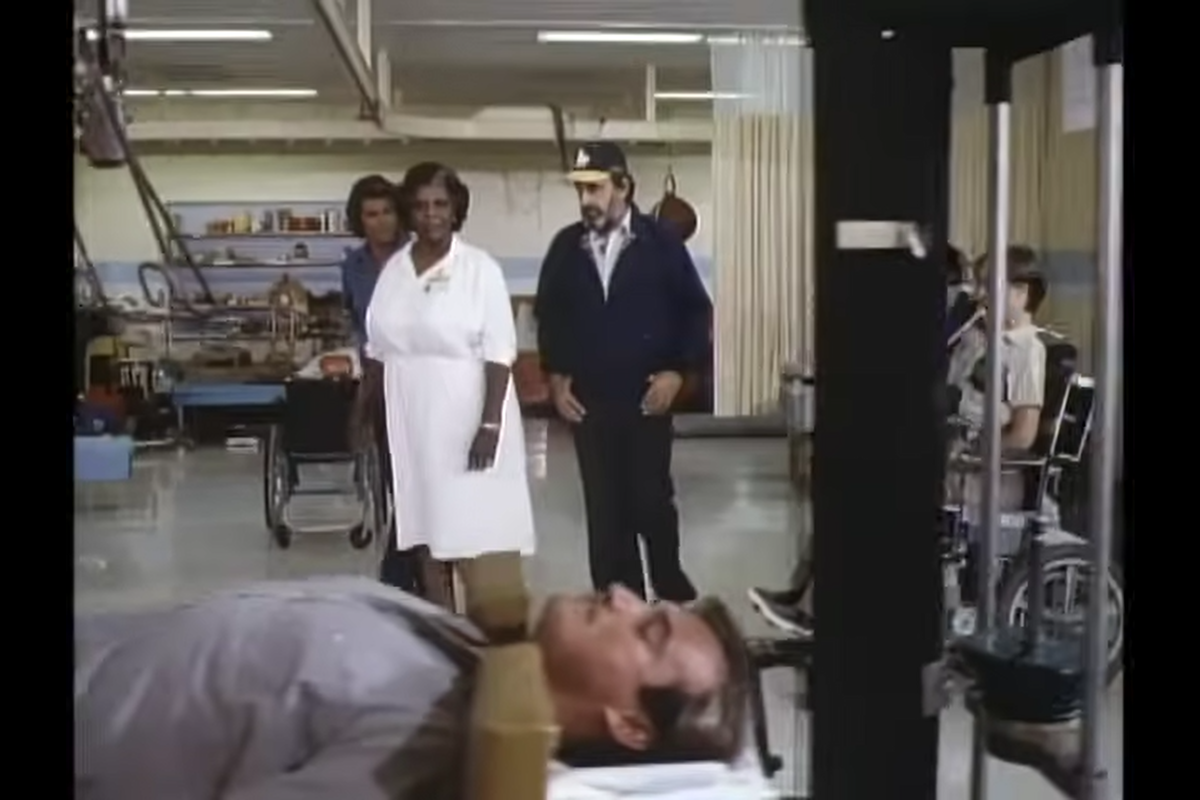
Then, something changed starting from the Catch A Falling Star episode, when Jonathan (for the first time in the series) seemingly used the Stuff to create references that got him the job.
That became a recurring trope for the rest of the series, with very few exceptions where they do not have references—or where the episode starts while they are already on the job, skipping the part of how they got it in the first place (like Alone in season two).
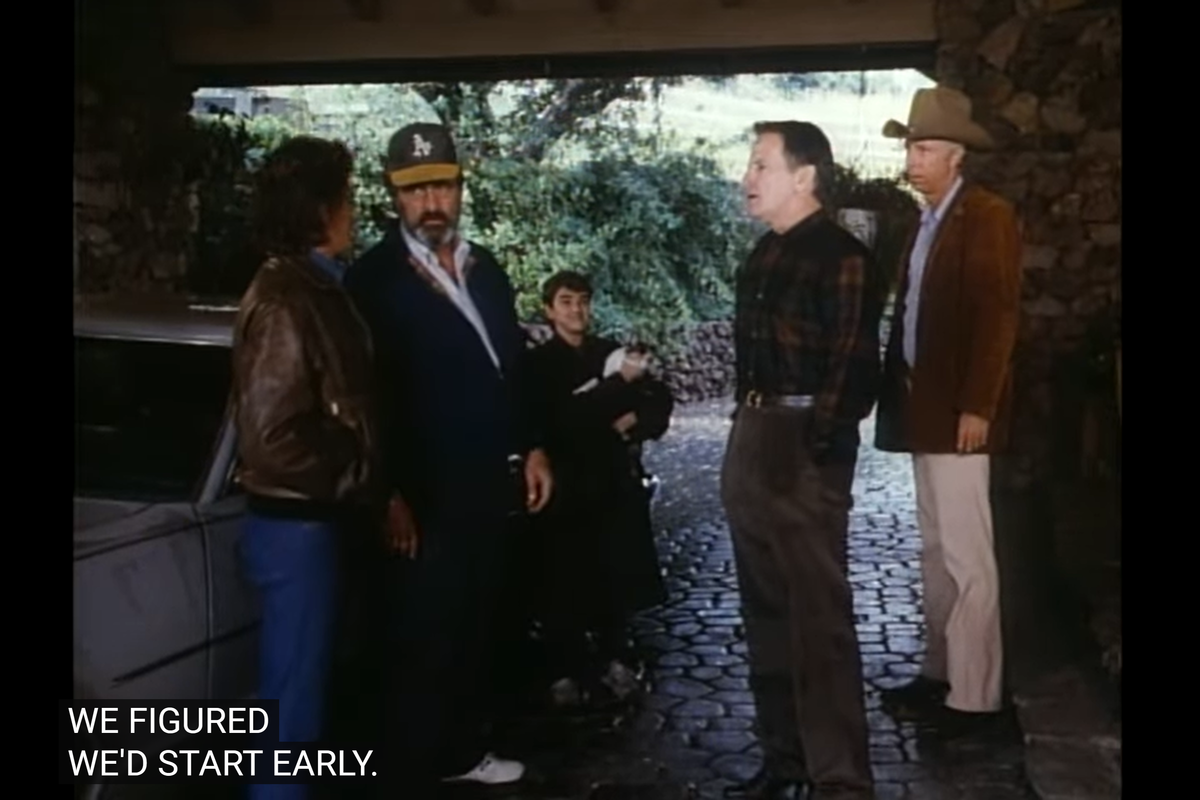
Anyway, after working out the premise, Landon brought the idea to Brandon Tartikoff, who at the time was the head executive of NBC, the network that had produced both Landon’s series of Little House and Father Murphy, as well as Bonanza (which Landon didn’t create though).
But it wasn’t easy: as revealed in the interview, nobody was optimistic about it. At the time, there wasn’t any religious TV show on major TV channels (CBS, NBC, ABC), although there had been quite few attempts to make TV shows about angel in the past, but they were completely different (more details about it here). In an interview dated 1984 on the Los Angeles Herald Examiner, during “The Initial meeting about me doing another series, they were kind of put off by the idea of an angel“, even though being an angel wasn’t the most important feature of the series. Still, thanks to Little House and its 9 years of enduring popularity, Tartikoff trusted Landon enough to give the project a chance. Actually, Landon had a deal for another series after Little House, so Tratikoff had no choice.
Now, one curious thing, about the title: apparently (as revealed in Tartikoff’s autobiography), when Landon first presented the series, the only tentative title was “Jonathan Smith”, the name of its protagonist. But shortly before this series came along, there were plans at NBC to resurrects an old 1960s series, with “Highway To Heaven” as its new title. Then, he idea was scrapped, and Tartikoff revealed in 1984 on the Sun Baltimore that he called TV writer Ken Johnson to make a TV series called “Highway To Heaven” about “three housewives who give it up and go out“; because he liked that title so much and held on to it. But Johnson couldn’t do “anything with it“, and that series was scrapped too.
And in 1983, when Landon first presented Tartikoff his idea for a series about a probationary angel helping people, the only tentative title for it was “Jonathan Smith”, the name of the protagonist. However, Tartikoff admittedly felt it was too plain: after joking around Biblical names, he proposed to assign it “Highway To Heaven”, the name that had already been proposed for two series that never materialized.
So, the title “Highway To Heaven” is actually a recycle (just like the opening of each episode) and the original title “Jonathan Smith” is a friendly Jonathan instance which completely overlooks Mark’s role.
What a friendly angel Jonathan is, really.
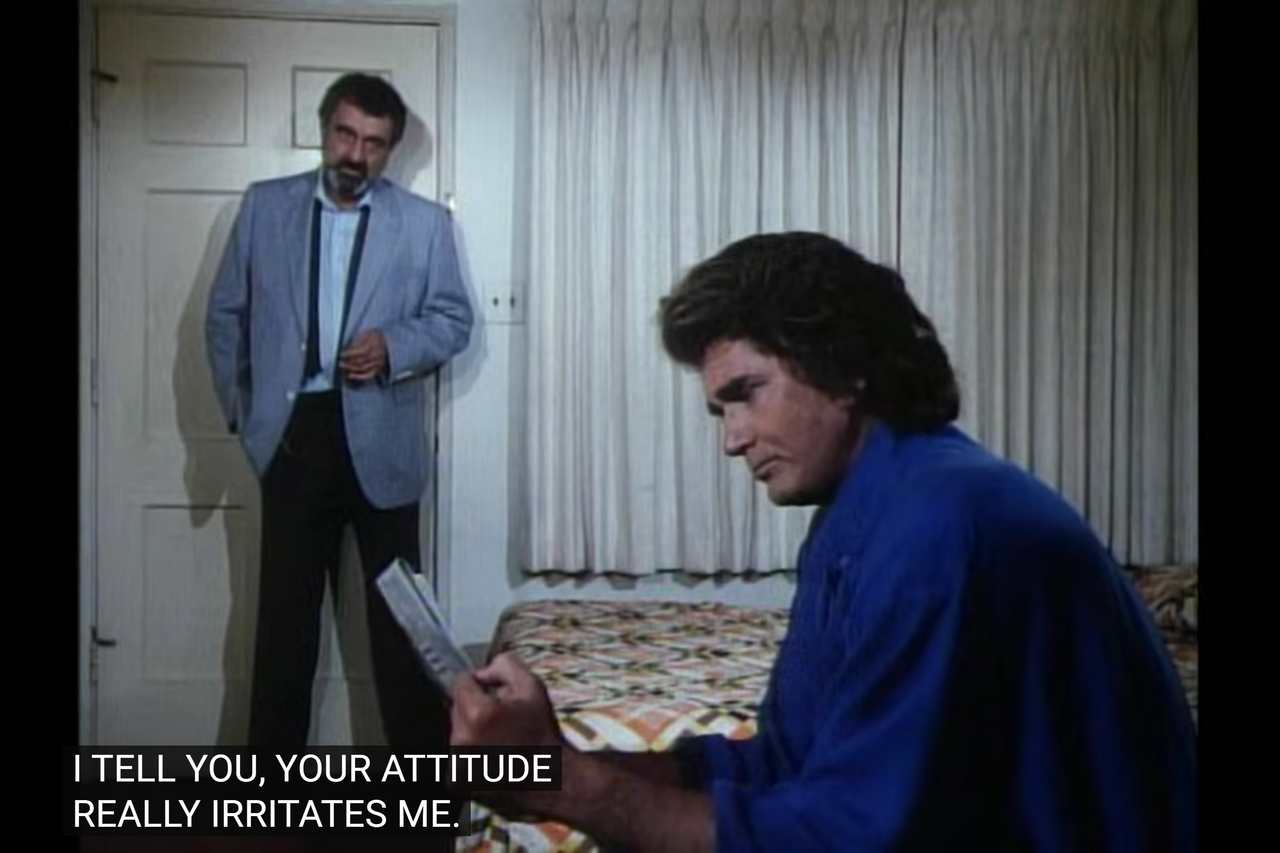
That’s probably how French would have reacted if he had known that.
Actors: when it came to the actors, Landon reportedly wanted French for the role of Mark, and nobody else. But when he brought that up to the networks, according to the Tampa Tribune and the Los Angeles Times, producers were taken aback (again). Basically, they would have wanted a younger actor to appeal to a broader demographic, and feared instead that a TV show with two actors the age Landon and French were at the time (48 an 50 respectively) would have been relatable only to an older audience. That’s an important point to consider: at the time, NBC had been gradually cultivating a younger audience; even the years it was behind ABC and CBS in the year-end ratings, it still ranked first among teens and pre-teens, and has remained such for many years.
But Landon was stern about his decision, explaining that he knew French would have taken the role as seriously as Landon would demand and there would have been nobody better than him. Also, they were close friends already, and he would have rather made a series with someone he knew well and got along with (more details about their friendship here). Eventually, he got it his own way, and French got the part.
Curiously, this was similar to what had already happened ten years earlier, in 1974, when Landon was in the process of casting actors for Little House. At that time, he had opened audition for all the actors in the Pilot (Melissa Gilbert, Karen Grassle, Melissa Anderson), but the only role that was already locked was the one of Mr. Edwards, that Landon had envisioned for French and no one else. At the time, the network expressed reservations, as French had largely appeared in guest roles, often portraying outright villains or broad comic relief, and executives would have preferred someone with more experience (a “household name“, as French put it). But Landon insisted—and he got his way (more details about it here, again).
Maybe the network has learnt their lesson now.
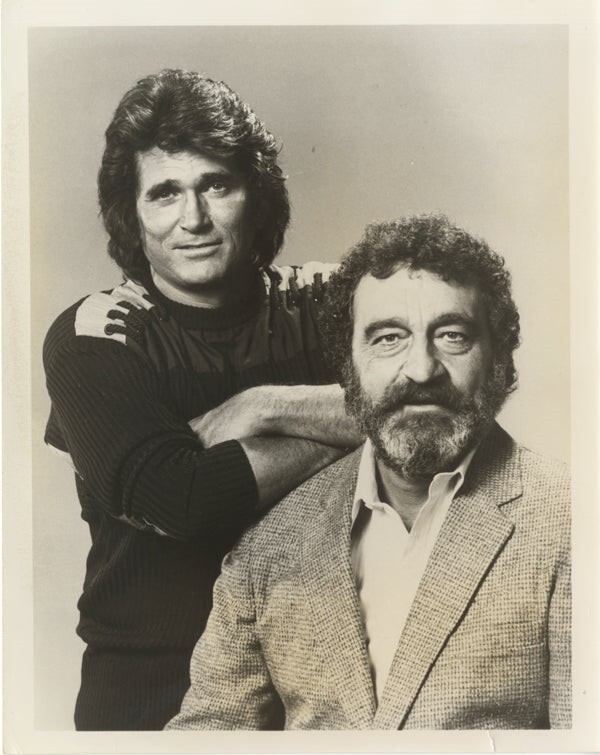
The Production: the actors were there, but it takes good material too, in order to make a series. In particular, about the assignments: in a 1988 interview in the Chicago Tribune to Landon, he made it clear that he wanted to steer away from religion; rather, he said that he intended the series to be about what’s “Mostly issue for me… The environment, clean water, drugs and alcohol abuse in the workplace” and he forgot to mention “bums” too (more details about the idea behind the assignments here).
Also, he never descended into easy preachy morals because of his familiarity to the subject: in a 1988 interview on the Los Angeles Times, he revealed that, one day, one writer walked in with the idea for an episode dealing with teen suicide, but Landon reportedly turned the script away because he openly admitted he didn’t feel confident enough handling such a sensible material, and that he’d only talk about issues he’s familiar with and is sensible enough to treat in the series.
Most of the production of the series comes from Little House and Bonanza, and Landon liked to work that way. In a 1985 interview, he revealed that he enjoyed working with the same people, that knew him and understood immediately what he wanted, and that made the experience easier for anyone. Also, it was like having a big family.
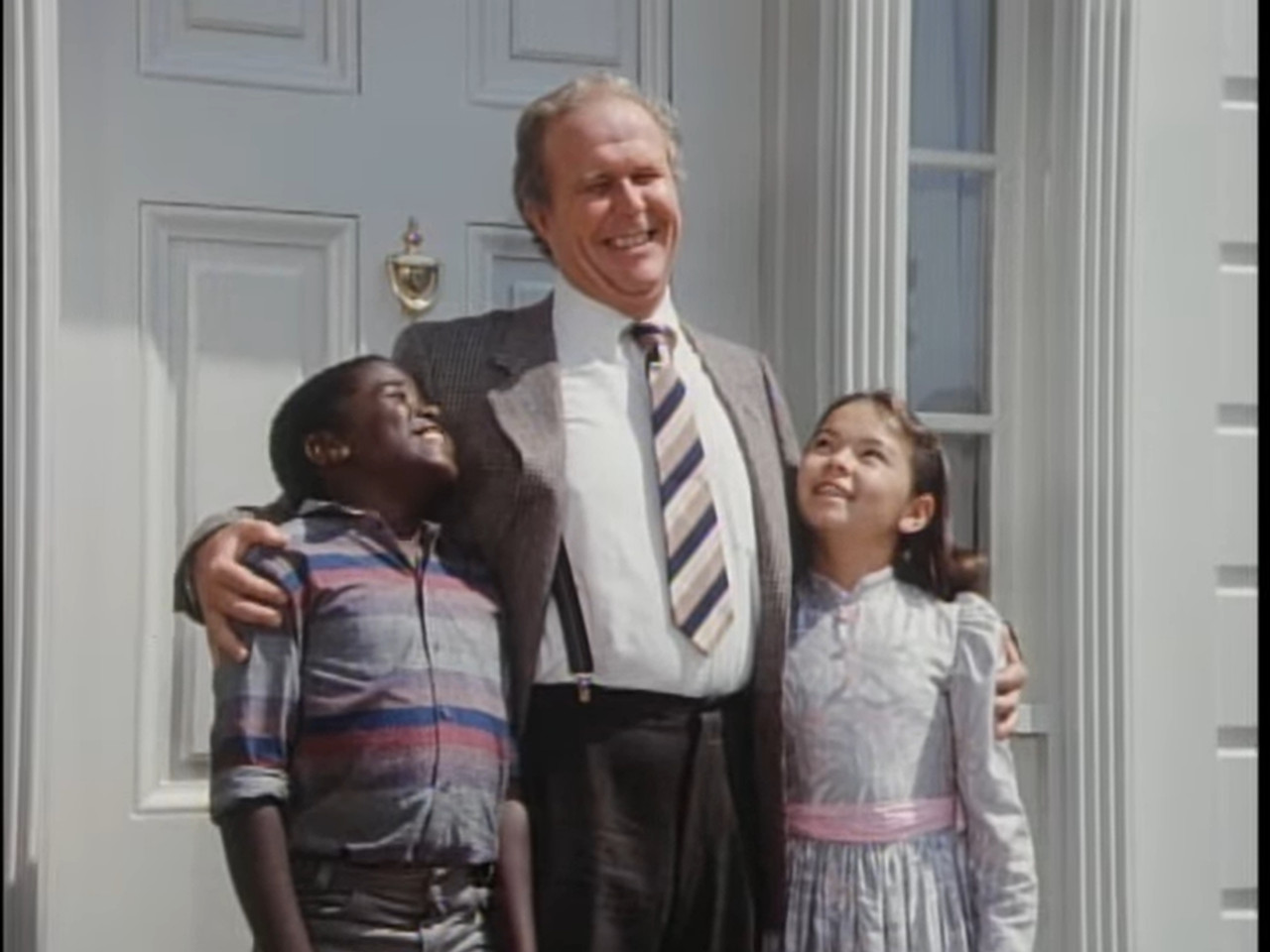
Not like that, hopefully.
More details about the production of each season at the “Production” entry in the seasons overview.
Season One and Pilot: once the Pilot was approved and the series launched, the first people watching it didn’t think it could stand a chance.
If the whole premise sound preachy, most people thought the same, although they expressed it the wrong way. The Pilot was not kindly described by the most newspapers in the US: in the the Philadelphia Inquirer, it was considered “sappy”, although it was conceded that it might turn out to be a “good bet”; the midwestern who called it “full of bromides”. Nor was the response abroad any better: in an article by the Australian Sun dated back to 1986, for the scheduled premiere of the Pilot in Australia for the first time, it was dismissed as saturated with “sugary morality” and “gushy”, or a “two hours sermon that Landon is trying to pass off as noble”. As reported by the Philadelphia Inquirer, during the press conference promoting the series, a “midwestern” reporter questioned Landon’s credibility, believing that an actor like he was doesn’t have any contact with the “real people” and shouldn’t tell anyone how the world needs to be to be better. Now, that sounds a very silly statement, easily judgemental and without any evidence about Landon’s own life. But that’s how America works, apparently.
And Landon felt personally offended, and replied that people have no idea what his personal life is like (which is true). Then, he could have stopped there (he has nothing to justify about it), but he also added that his daughter had problems with drugs, and that “My time is spent with drugs problems with kids”. So, that that justifies one of the three Landon’s obsessions with the show.
Apparently, some people went so far as to presume that Landon supported Reagan because of the traditional morality of the series: in a 1984 interview, Landon revealed that “Many people thing that this was in some way…tied to the fact that President Reagan discusses religion“, but he also cleared out that it was wrong: “It has to do just with people“; as though it wasn’t obvious, really.
Of course, these are opinions, but the problem is that many were quickly dismissive due to its premise and to Landon’s background (like that one accusing Landon of being out of touch with real problems). Yet the series had the guts to address multiple problems: children with physical or mental impairment (played by actors who had them), quadriplegic characters played by quadriplegic actors, even kids who die at the conclusion of the episode.
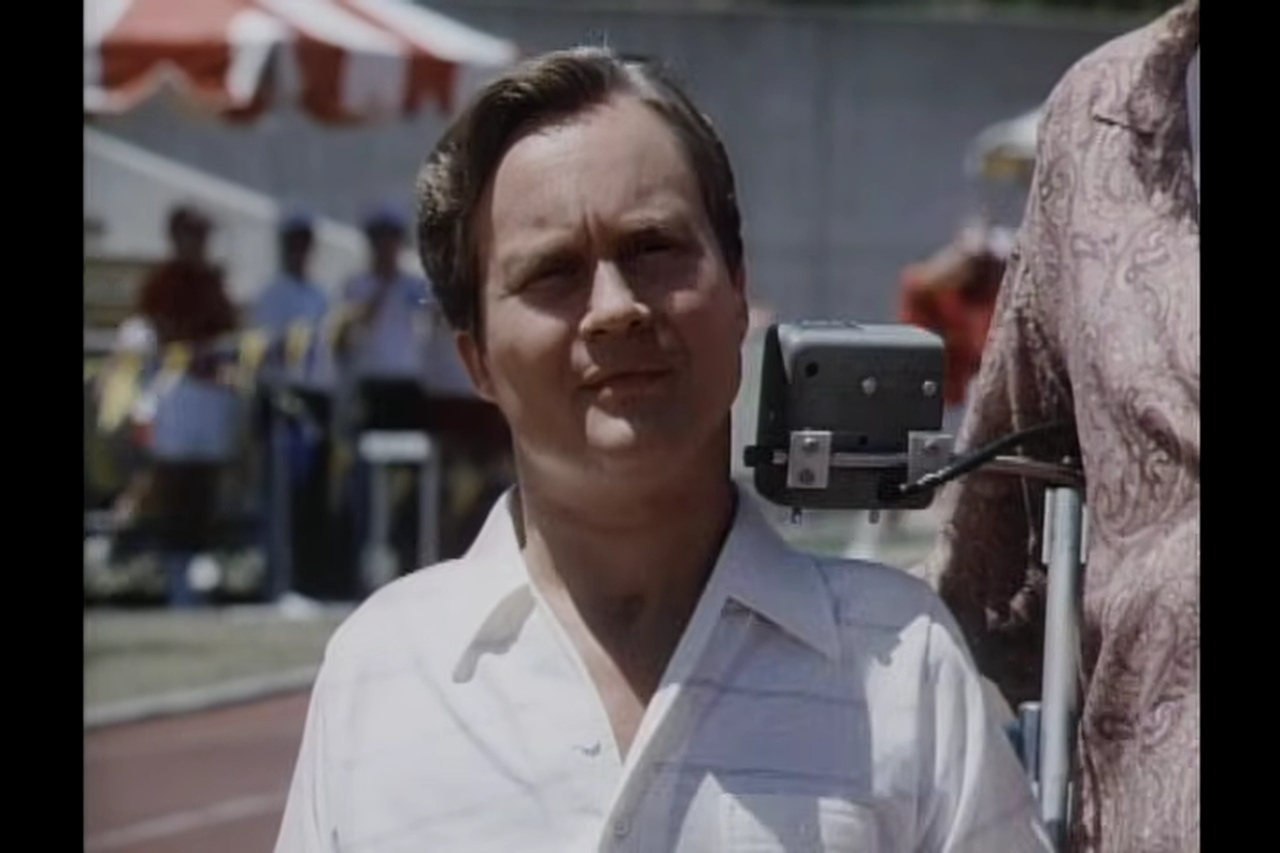
The problems is that, by judging the show only on those aspects, its perceived sentimentality and its religious undertones, people start out with a mindset that leads them to merely judge who is behind the series, completely neglecting the intentions and its feats of innovations.
The network feared that response, and Tartikoff wrote in his autobiography that he knew the series would have been scorned upon the way Little House was—but Landon went along with it nonetheless.
That’s curiously what seemingly occurred to Little House in season two, when the series almost faced cancellation: as reported in the interview, the season wasn’t scoring good ratings because it aired in the same slot on Wednesday as a new action series on ABC, and the network wanted to make Little House “strong” too. But Landon knew better: “Strong to them means only violence“. So, he warned them that he’d rather cancel the show than turned it into what they were asking him to. Eventually, they wisely didn’t drop the show, but just decided to move it forward on Monday from its third season. And the ratings drastically improved.
That goes to show to never bet against Landon, yet Highway didn’t have it any easier.
Now, back to Highway: as it’s common for a new TV series, it was previewed to a selected audience. And, as Tratikoff reported in the press conference, the Pilot was “the strongest testing dramatic Pilot we’ve ever had at NBC“, scoring even higher than the Little House Pilot, which had held the highest score for a Pilot at NBC before Highway. And that also got in the ratings, despite much skepticism (more about it at the “Ratings” entry here). As Landon explained in a 1988 interview, the “People who like the show love it” and that the show is addressed to them. So, in the summer, it doesn’t get high ratings because people are out playing and doing “family stuff”. Basically, it’s similar to what Mark thinks of Bill Cassidy in season three. Even though that sitcom played it safe.
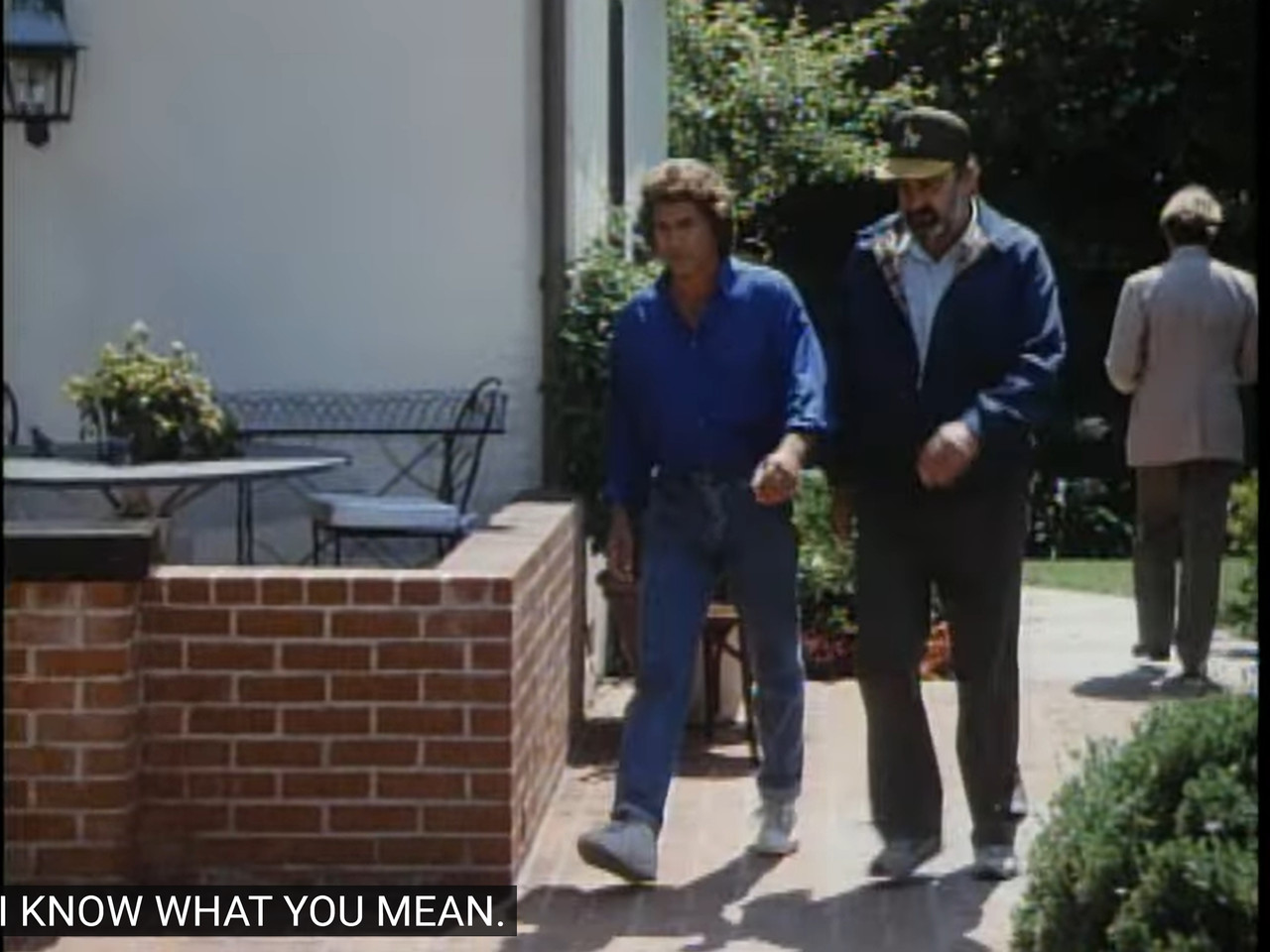
The Angels: in the original idea, the character of Jonathan wasn’t that important in the context of the show.
In his intention, the show didn’t have to deal with angels: even though he inserted the angelic part, he clearly stated that he didn’t want it to distract the audience from the actual series. In the interview, he revealed his intention was to make the show about people, showing how folks can help each other out without being angels, that a different way it’s possible, and that he’s like a “catalyst bringing people together“. Basically, it’s the idea behind the Pilot (especially the epilogue) and One Winged Angels (and Mark’s punchline showdown). In another interview for the Los Angeles Herald Examiner, he reported that what he wanted to do, from the premise, was to “make him as much as possible like a guy with a boss who has a job to do… I make a lot of mistakes“. Again, it’s the whole point behind many season one’s episodes.
More importantly, he didn’t consider it a religious series: as he told in a Los Angeles Times interview dated 1984, he is just the “catalyst” that brings people together and help them sort out their problem, but he can’t do that at their place. That’s because, again, people don’t trust each other like they used to.
And the Stuff, whatever it is, in the original premise wasn’t supposed to distract the audience: “My character’s so-called magic powers would be held to a minimum. He wouldn’t heal people“, from physical injuries, at least. So, his character is a mere vehicle for him to get to the assignment, the actual (most important) feature of the show. And he completely leaves in the background his own story as angel (who he is, what “probation” means, how he became an angel in the first place).
Then, beginning with the second season, the producers decided to shift the direction of the series. They placed greater emphasis on his storyline and on Mark’s, as seen in Keep Smiling (introducing Jonathan’s wife), The Last Assignment and Love At second Sight (about helping other angels), or Heaven On Earth (exclusively Mark, without Jonathan for most of the episode).
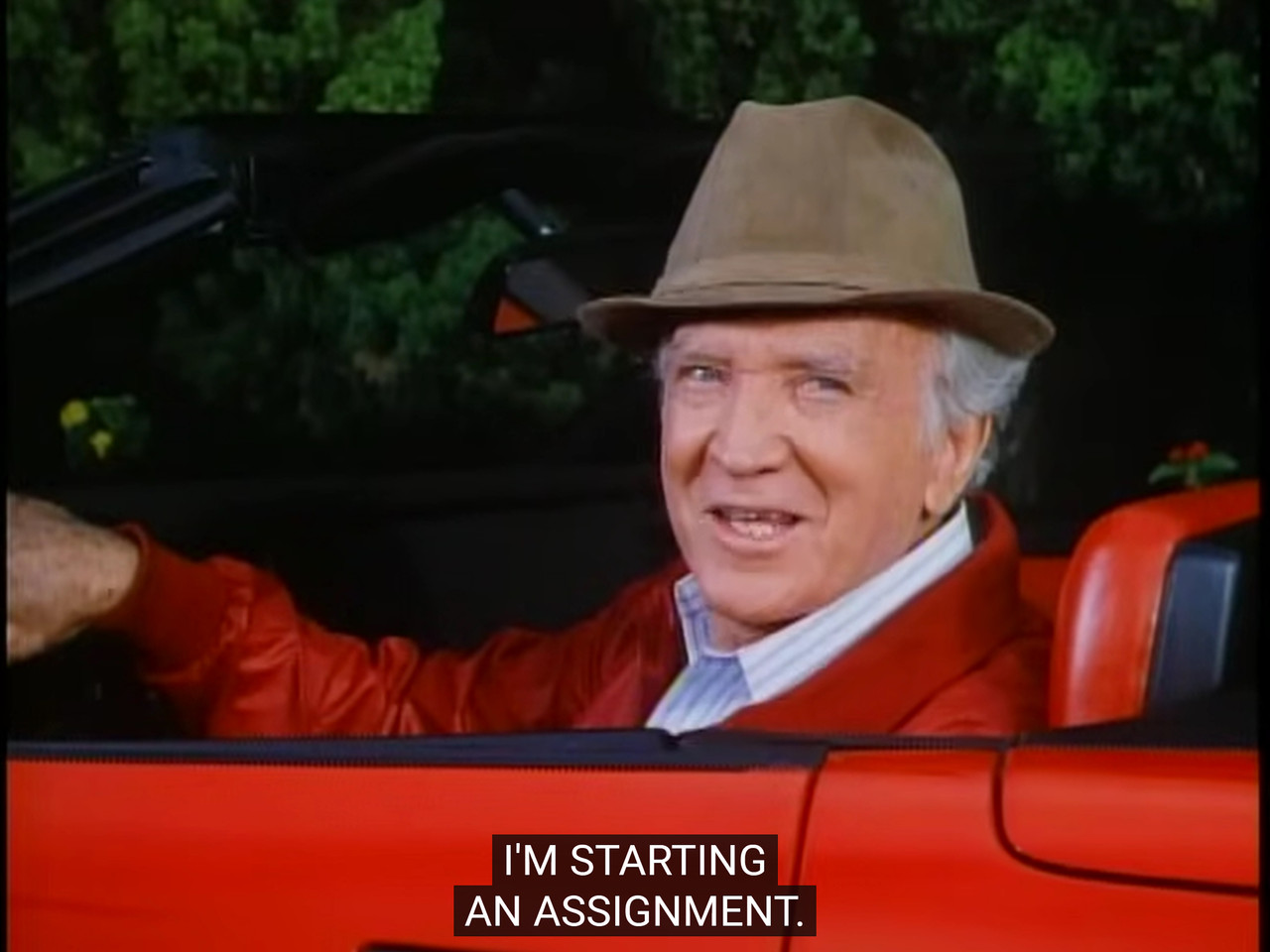
This new approach is apparent by multiple new features: one example is the “Angel Revelation”, the moment Jonathan reveals his identity as angel to the subject of the assignment. In the first season, that occurred only twice: in the Pilot (obviously) and in The Banker And The Bum, likely because that episode was not much grounded in reality (unlike the rest of the season), and it would have been hard to justify its events otherwise.
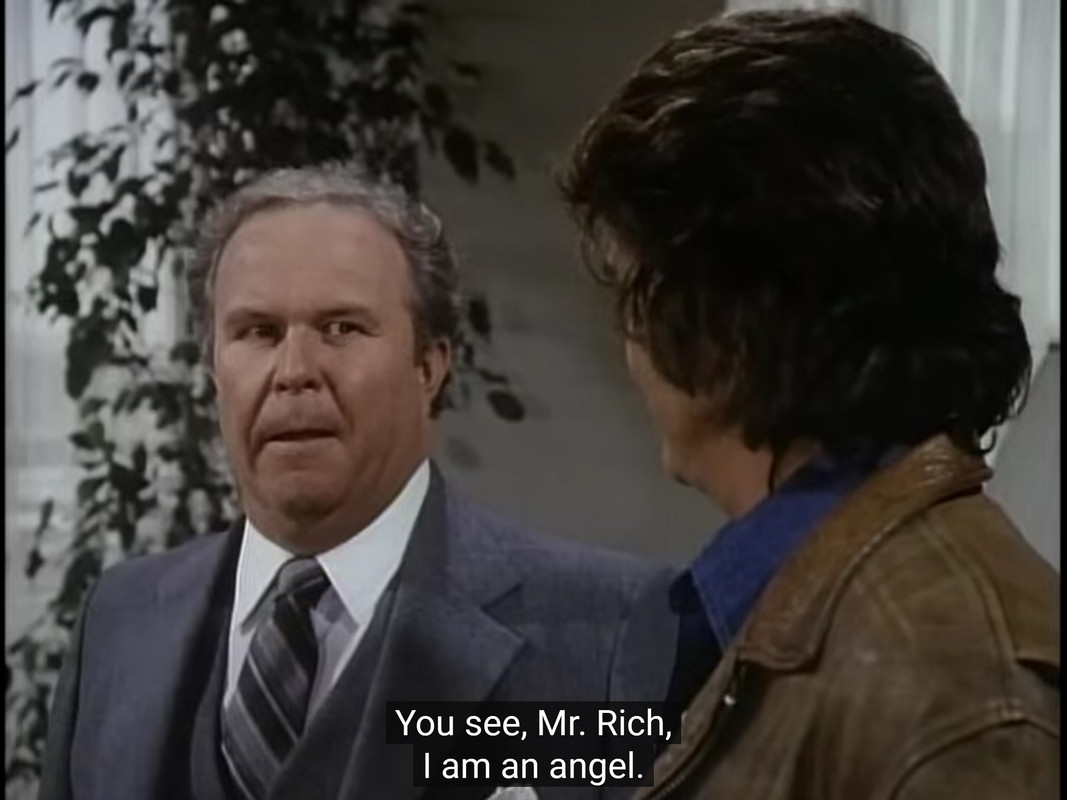
But then, starting from the second season, the “angel revelation” becomes a common practice, with eight episodes doing it—and all the time there’s an assignment that takes a more peculiar approach (like the one where Jonathan dies and comes back to life, or the one where they are in a dream).
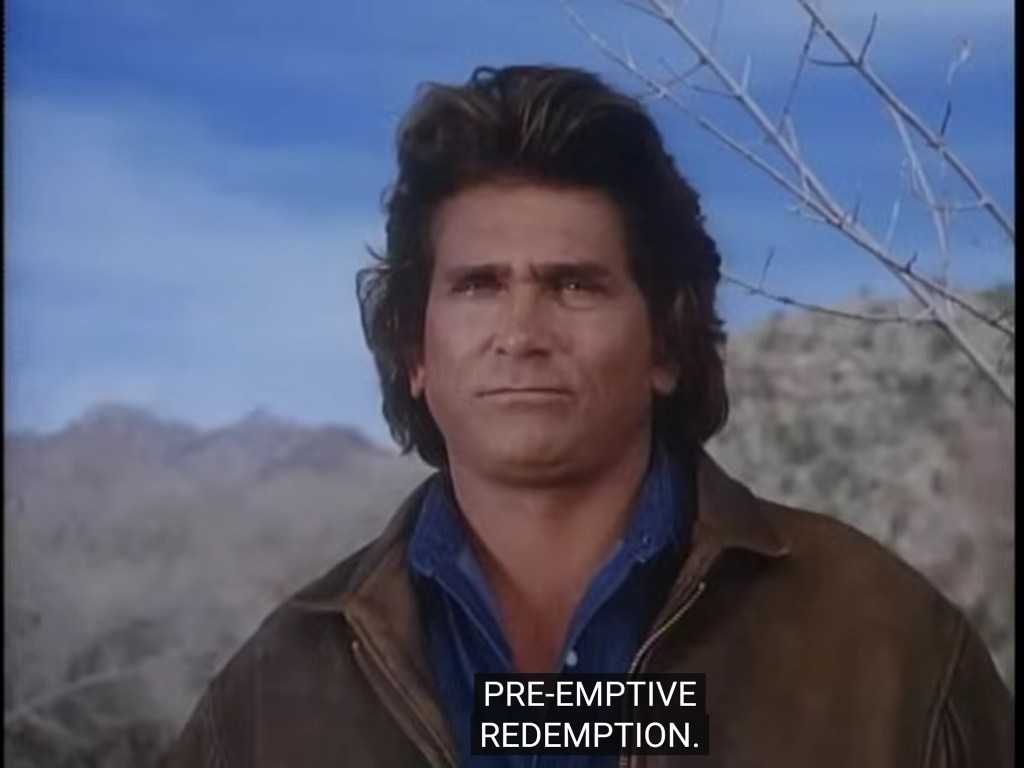
Another difference is in the assignments more in general: during the first season, each episode had a simple approach, where the setting is just to help someone who needs it. Instead, in the second season (but even in the first season finale), many assignments become sprawling, with multiple characters to help and disparate situations to face.
For example: in season two’s Alone there’s both Arnie and an adoptive family to take care of, Children’s Children began as “helping young mothers” and turned into an assignment about journalism; in season three, A Special Love begins as just a “sport” assignment and in the second part it turns into an adoption story, or Love At Second Sight begins as “old folks” assignment but then abruptly turns into helping another angel doing the job; then, Love And Marriage has different couples to help in different ways, and Basinger’s New York is basically a dream. The same goes for other episodes in the second half of the third season, usually beginning in a way and then abruptly introducing new characters or complicating the assignment. Of course, there are some exceptions, but in general, season one was straight and tried to have a “realistic” approach, while in the second and third season there are multiple episodes that are not that plain, or begins with a setting and then introduce a character that complicates it.
A third feature is that Jonathan and Mark become more central in the story: in season one, they were just two buddies getting into someone’s life and helping people; in season two and three, however, they personally know the subject of the assignment more often than not (whether a friend of Mark’s or another probationary angel who gets on their way).
Then, of course, Jonathan uses the power more often in these new episodes. Or at least in more prominent ways that gets him to solve the assignment, not just to obtain references for a job. That was also the case in season one, but not that much.
Anyway, this choice of direction that moved the series away from season one was very successful in the ratings in the second season—leading to Change Of Life, the most popular of the series—and in part in the third season as well. In particular, Change Of Life has it all: it begins as an episode about women’s treatment in the 1980s, and then it become about Mark trading place with an actress for one day. Of course, just to make a point. It makes extensive use of the Stuff, the characters personally know part of who is involved in the assignment (Mark’s old colleague), and the episode has many features of this new direction for the series.
And, in terms of ratings, it worked on that one.
But that didn’t work out as well in the third season, as the ratings of the episodes following Love And Marriage reveal.
Eventually, Landon probably realized that and, with the fourth and fifth season, he placed the emphasis back on the people. Not because the “angel” part doesn’t work, but it made the show far fetched and self centered in the assignments, instead of using it just as a trope (that intention about having a series about “people”, not religion or angel). Also, the purpose of being an angel wasn’t to be religious: actually, in some interviews Landon explained that he doesn’t consider the series “religious” in any way.
And the original purpose that Landon had in mind with the series was hopefully fulfilled then.
To conclude the Los Angeles Times interview, he expressed how TV was partially responsive for the way people have turned out to be, angry and mean to each other. So, he admitted that his primary purpose was the same as for Little House: in an interview to Melissa Gilbert (from Little House), she reported that one lesson that Landon used to teach her was that, no matter how people would have made her feel about the show, it was just a show, they are not “saving the world one episode at the time”, but the series could at least offer something to think of.
And, for Highway, it’s exactly the same: as Landon discussed in the interview, his goal was not changing the world, but if “People had something to think of, it would be great”. Hopefully, that’s the idea behind all this. Despite all the new features, that intention has largely remained the same. And maybe it will be the same until the fifth season.
 Highway To Heaven Cast
Leave a comment