
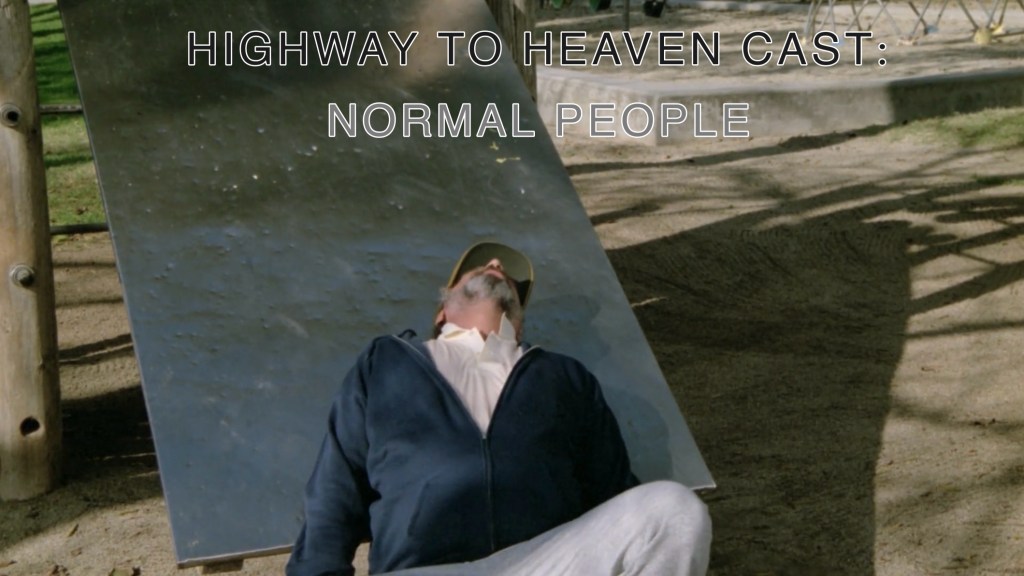
Airdate: 02/11/1987
Directed By: Michael Landon
This episode deals with a subject that had never been addressed this way in the series. And it’s not something people see everyday on TV. For this reason, it might sound like one of those “very Special Show”; many shows in this series are “very specials” though.
Complete show available here.
Assignment: Jonathan and Mark are assigned to help a group of citizens with mental disorders reintegrate into the community and get their old life back.
So far, the series has touched on mental impairments in some occasions (as in Alone or A Special Love), but they were always in the background or simply part of a larger issue (both of those episodes were mainly about adoption).
In this case, however, it’s about mental disorders, and they play the most central part.
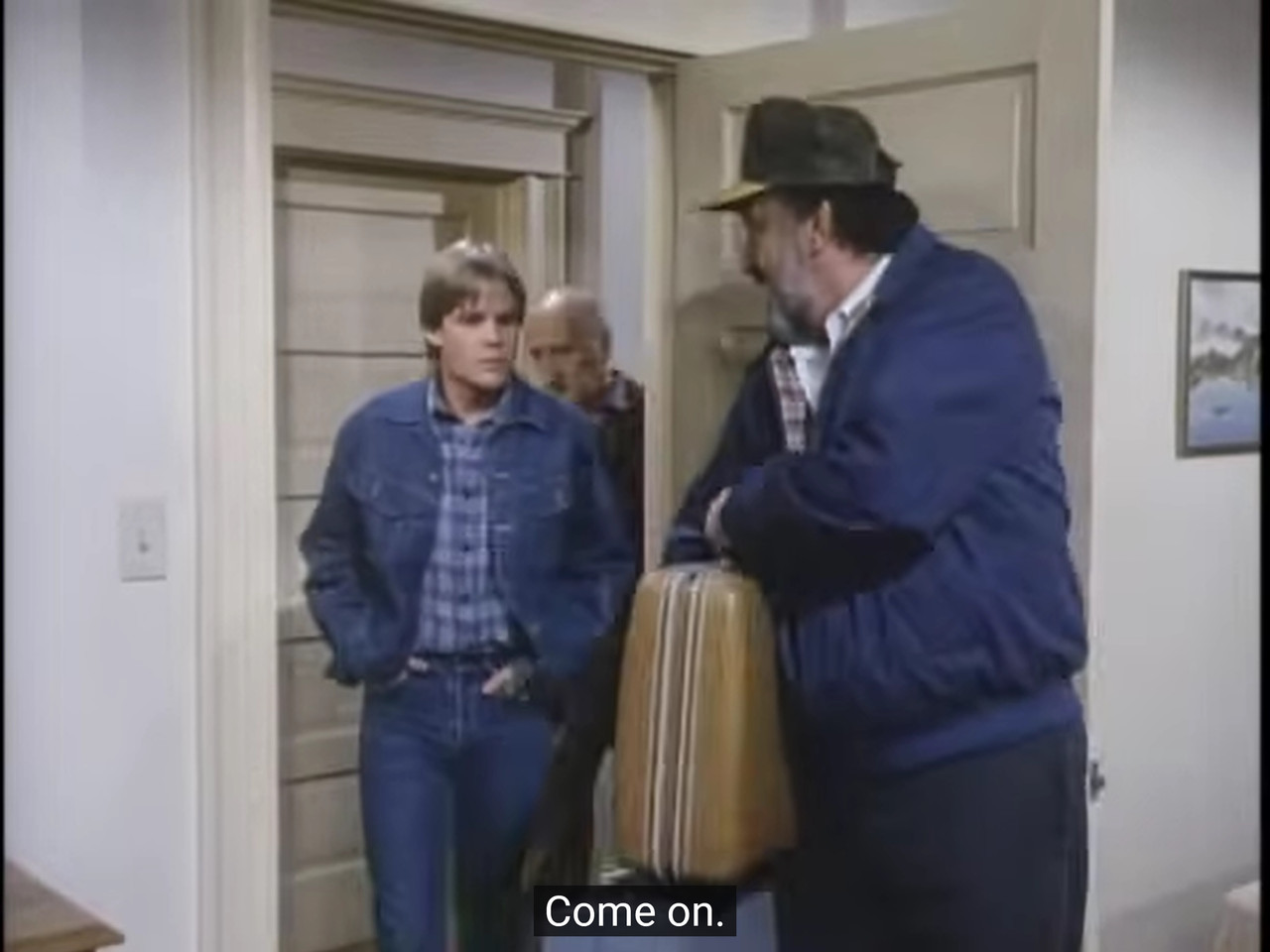
Basically, Jonathan and Mark are hired as handymen in a halfway house for people with mental disorders who have been released from the hospital and need time to adjust to living in a residential neighborhood before fully reentering the community.
There, Jonathan and Mark do not pretend to be psychiatrists or the owners of the house, but “assistant house managers”, who work there fixing things—and, of course, getting involved in the residents’ lives and telling their personal matters around.
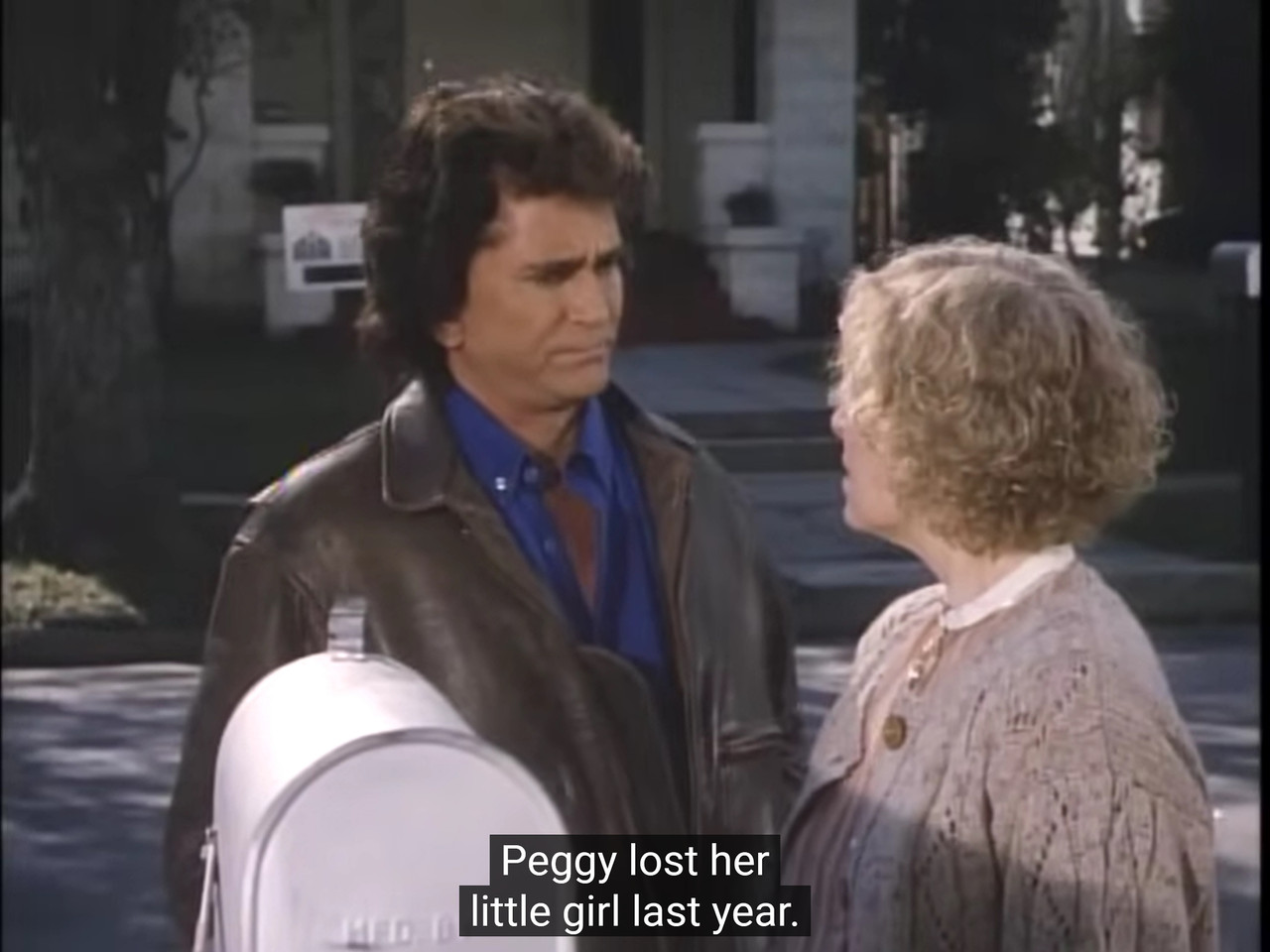
Busybody Jonathan.
The assignment is not tied to a particular person, but rather to all the residents; even though the residents themselves do not seem to need as much help as the surrounding neighborhood does in learning to accept them. And in learning the danger of playing with fire.

Anyway, the episode doesn’t have a clear subject, but it’s just about the neighborhood. It’s not the first time it happens: the season one episode An Investment In Caring was about the same thing, helping a neighborhood. But on that occasion, there was still a subject in the assignment (Paul and Helen and their love story). Here, by contrast, it’s more of an ensemble show. Curiously, it won’t be the last time in the series the assignment is set in a seemingly quiet residential urban place where everyone seems friendly but they hide a secret: in the fourth season, there’s an episode with almost exactly this old setting.
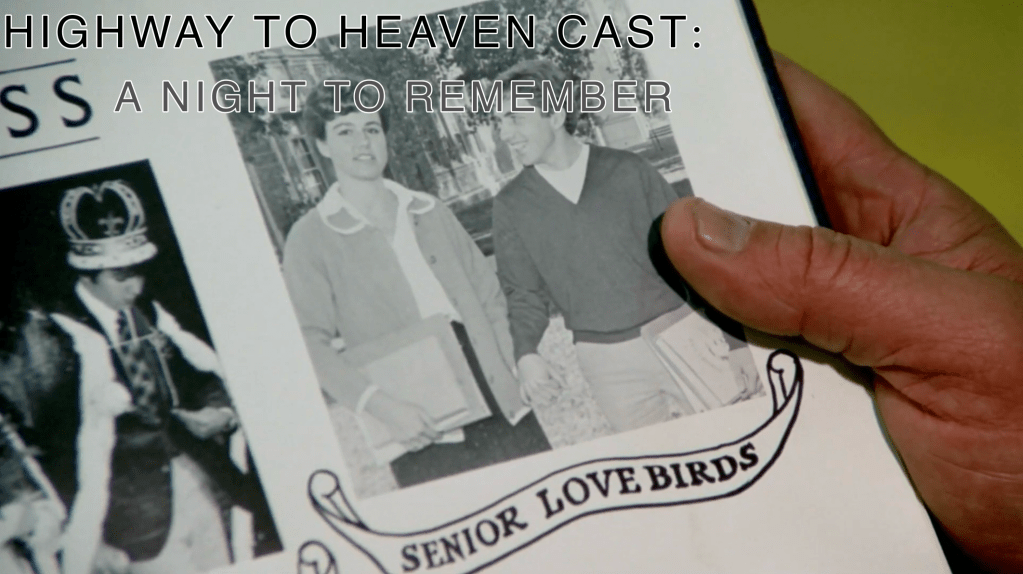
Now, having an episode untied to characters (or at least, revolving around the setting) is nothing new: in a way, this episode is similar to A Night To Remember a few episodes ago, which didn’t have one subject, nor the assignment was related to the job. Instead, it revolved around some occurrence (in that case, a dance, now the release from a mental facility) and they just go where they are needed.
However, for this assignment, Jonathan and Mark do not get involved in everyone’s life equally (just in two people), nor there’s a clear subject in the assignment. Instead, they just work around as handymen and wait for something to happen that shakes the residents’ life, whether positively or negatively. And much of the episode is just about seeing how the residents go on with their life and get settled in the neighborhood.
In this season, they liked to make sprawling episodes, and this certainly is—a quiet one, though.
- Background
As for the timeline, the episode appears to span a couple of weeks (slightly longer than most assignments), although the precise span is never specified.
Also, it’s one of the few episodes that do not conclude with Jonathan and Mark completing the assignment and then moving on (he way it happens in most cases). Instead, like in Children’s Children, the episode concludes while they are still working on the assignment (without showing the moment they drive away), making it harder to precisely point when it takes place and how it ties to the rest of the series.
Of course, their purpose is to help reintegrate those residents, and by the end of the episode, they have accomplished that. So, there appears to be no reason for them to stay any longer. But they also have a job as house repairers, and they have a long way to go yet.
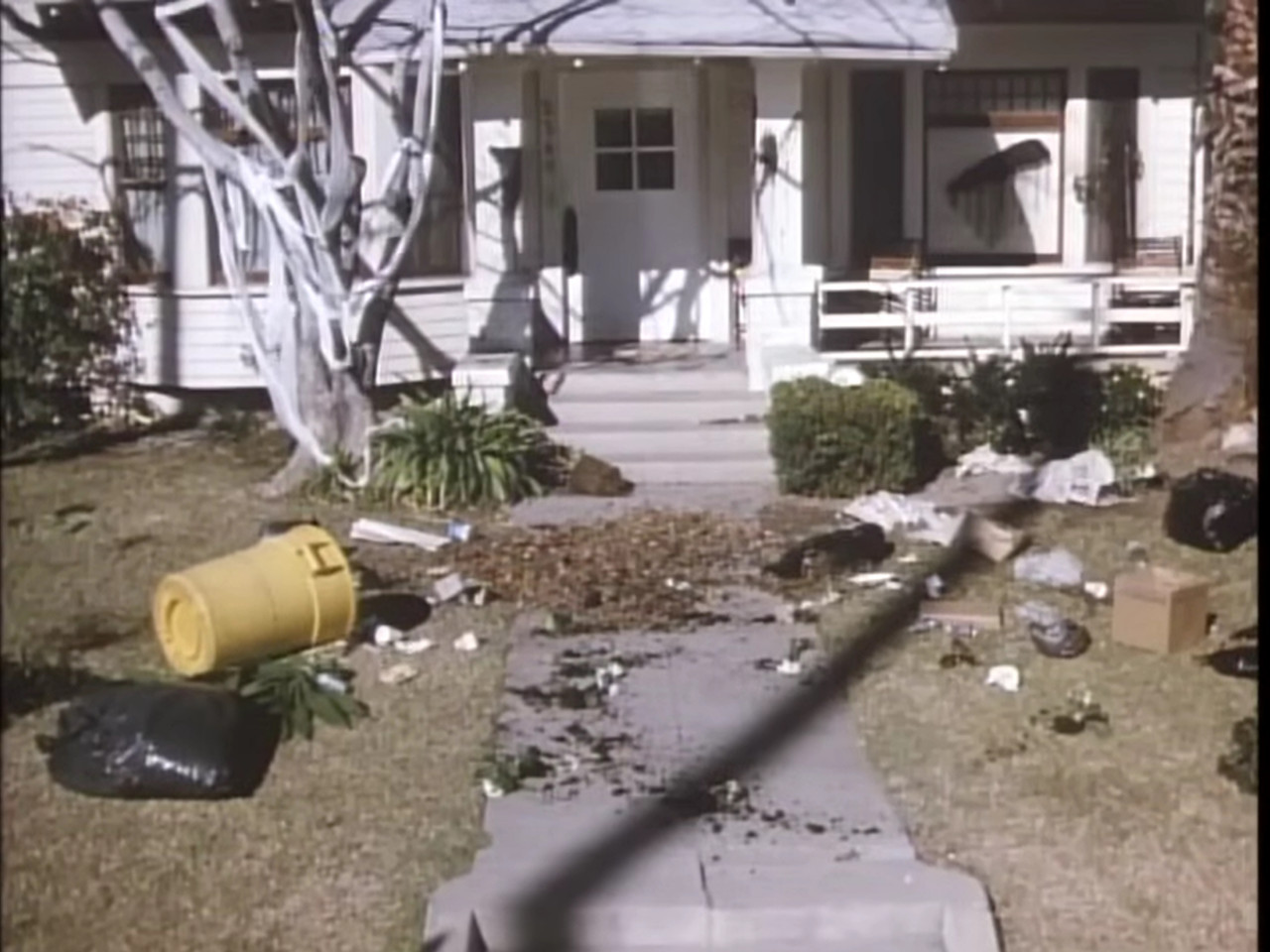
Those doozies.
Anyway, one point, Jonathan mentions some Founder’s Day party.

But it’s not presented as a national holiday, and it certainly isn’t Thanksgiving (which will have a special episode in the fourth season). It could simply be a local celebration—perhaps similar to Walnut Grove’s Founder’s Day—the fictional TV show’s one—which means the episode is set in summer (like that Founder’s day).
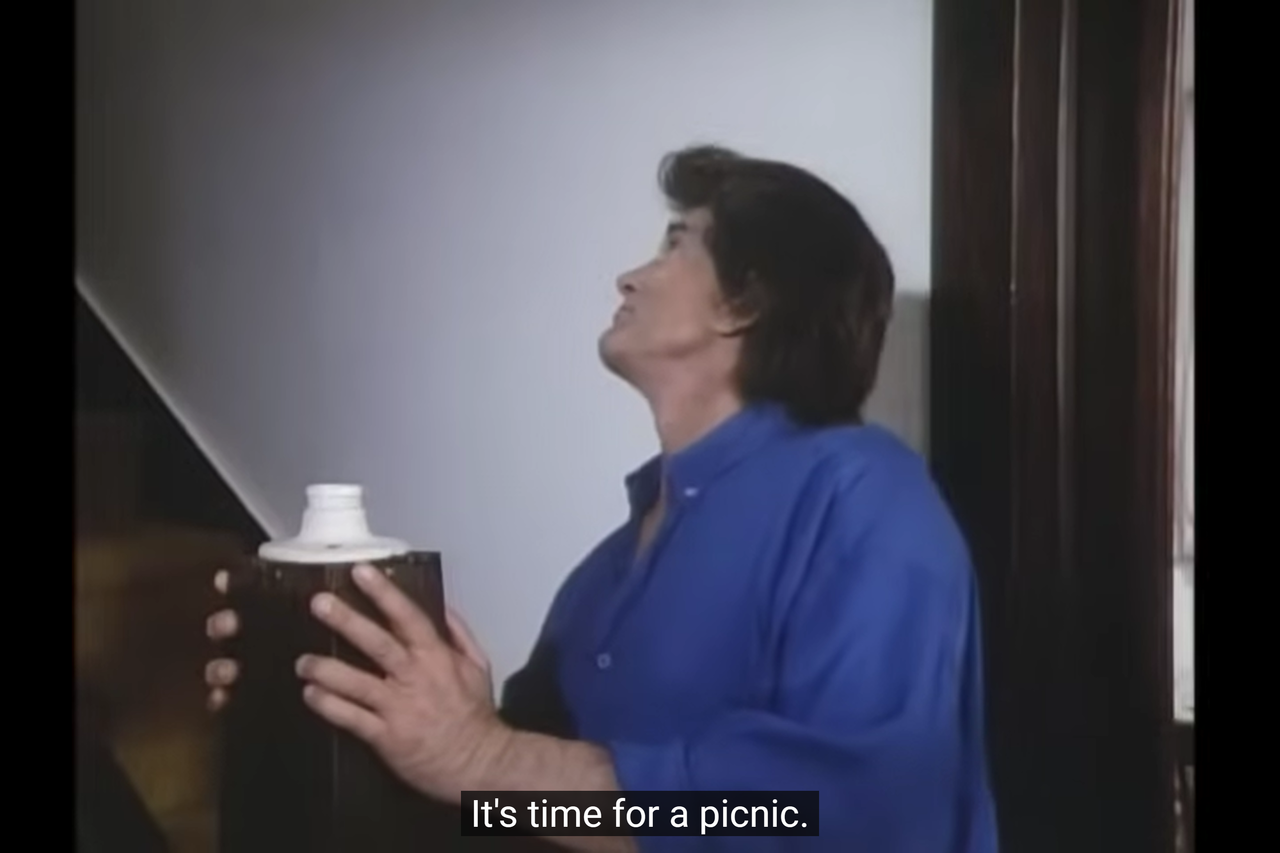
And then some little town games and a lumberjack contest.
Of course, if there were any of those games, he’ll let them win: it wouldn’t be fair otherwise, being an angel with the Stuff.
Anyway, the date for this Founder’s Day it’s unclear, but it might as well be summer. That is seemingly confirmed when at some point one character talks about her deceased daughter and mentions that the birthday would have been “Last April”, which suggests this episode takes place at some point after that month (certainly not before). Maybe it really is set in the summer, like Walnut Grove’s anniversary. Although it cannot be July, since A Special Love already takes place then.
Otherwise, it’s set in summer 1987, making it possibly the season three’s finale (even though Man To Man was already set in summer, and there’s no way to tell which one came before the other).
As for the setting, the episode takes place in “Clover City”, a fictional town.
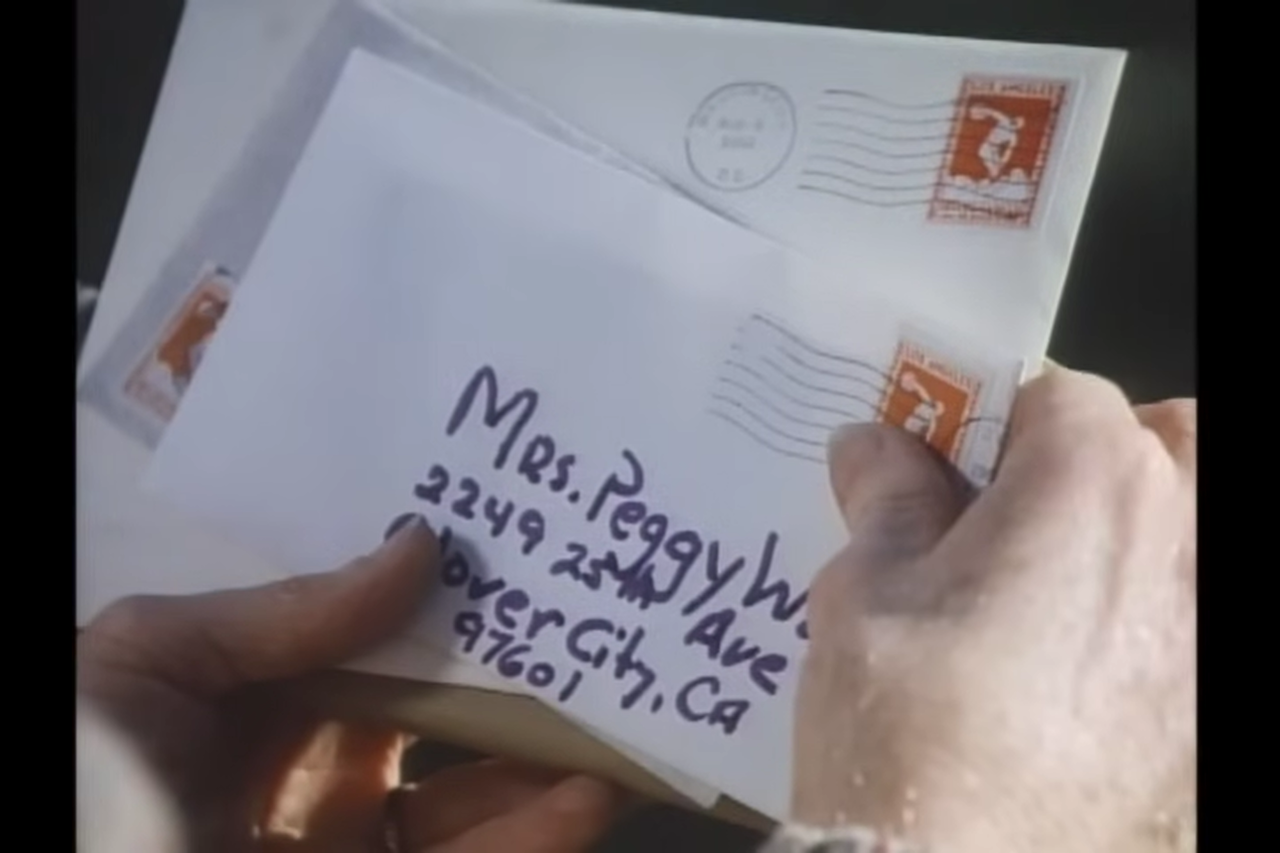
So, just take it as Los Angeles, where the episode was also produced. Actually, the address is for a County which is not in California, for that matter. But again, this ain’t California no more: it’s more like a State where Tuolumne and Mentryville are just a drive away.
- Characters
In this episode, there’s something to point out about Jonathan and his enslaving attitude. So, at the beginning, he tells the residents that he needs some help repairing the house.
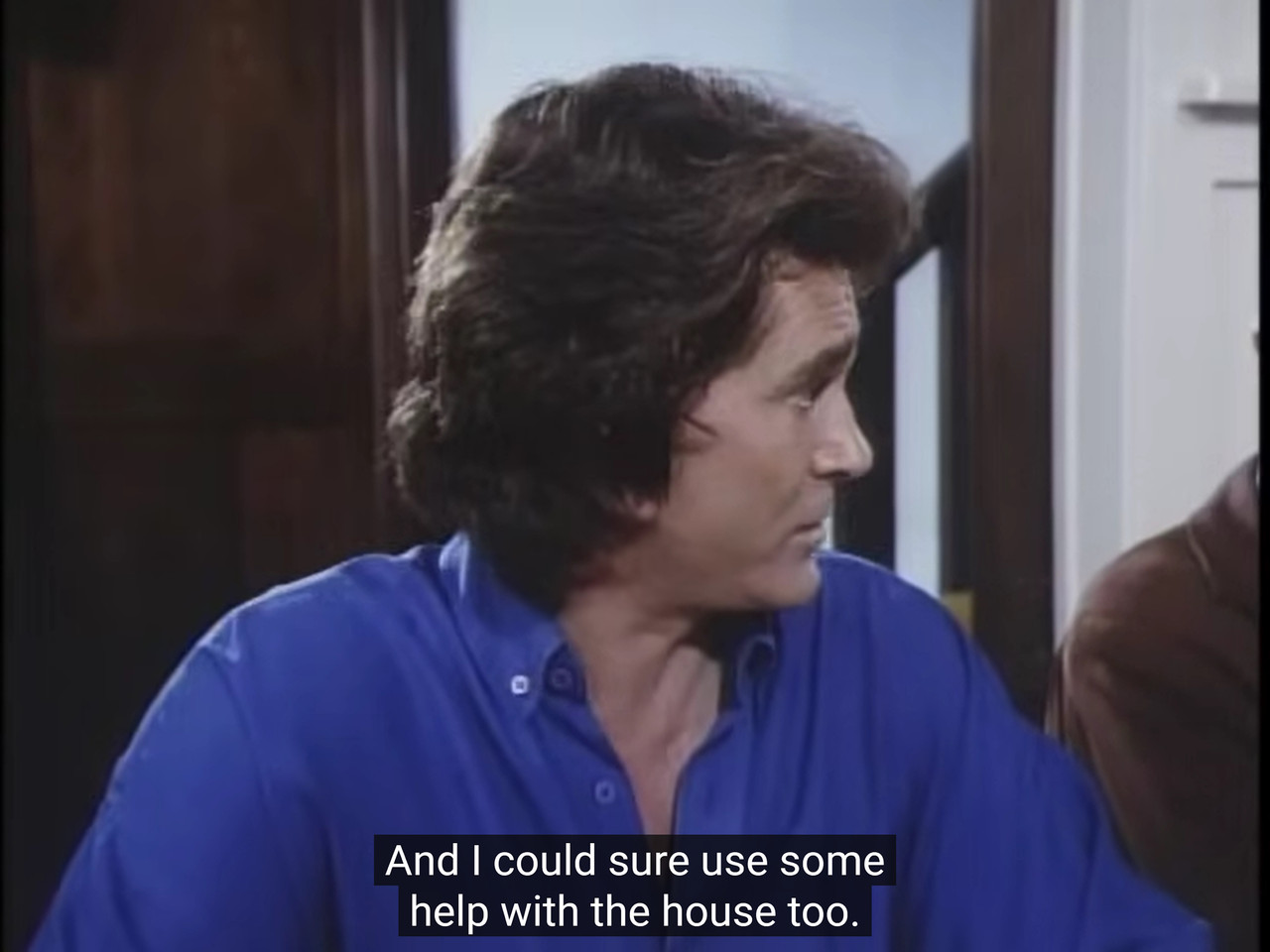
Although he doesn’t, really.
Of course, he could use the Stuff to get it all done or ease the burden from them, but he’d rather enslave those people to do that.
And there would be little reason for him to use the Stuff here, especially when he can simply compel others to handle the work around the house.
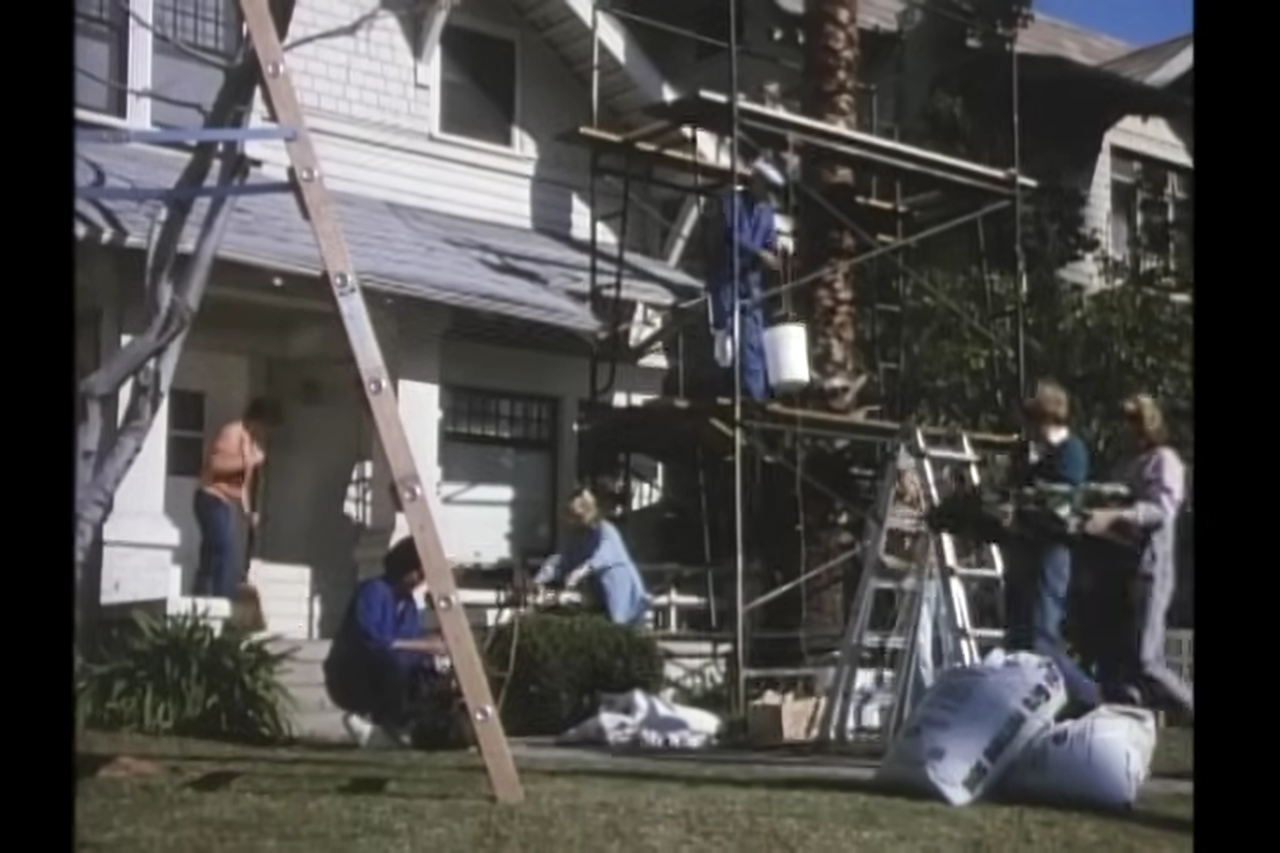
But at least it shows that he stands for equality, and doesn’t treat Mark bad just because.
There’s something to point out about Mark too: when one of the residents informs them he’d like to go jogging a while, Mark volunteers as his guard.
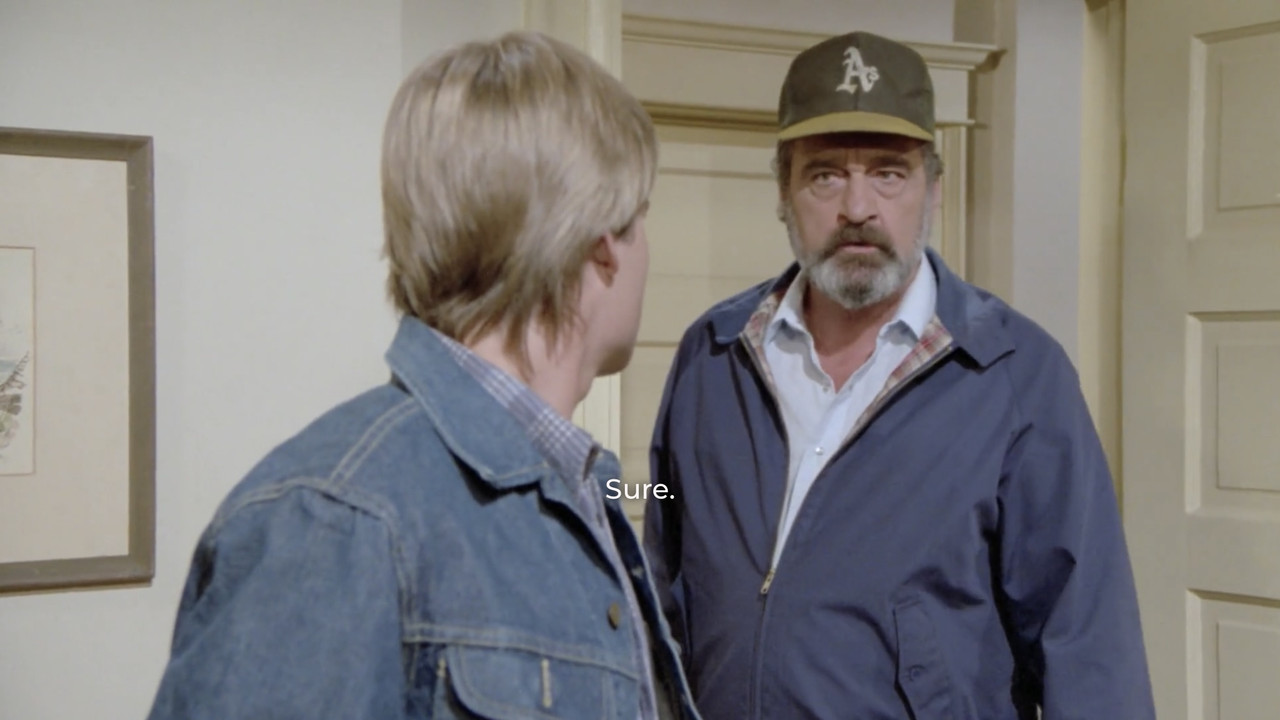
But he should know better.
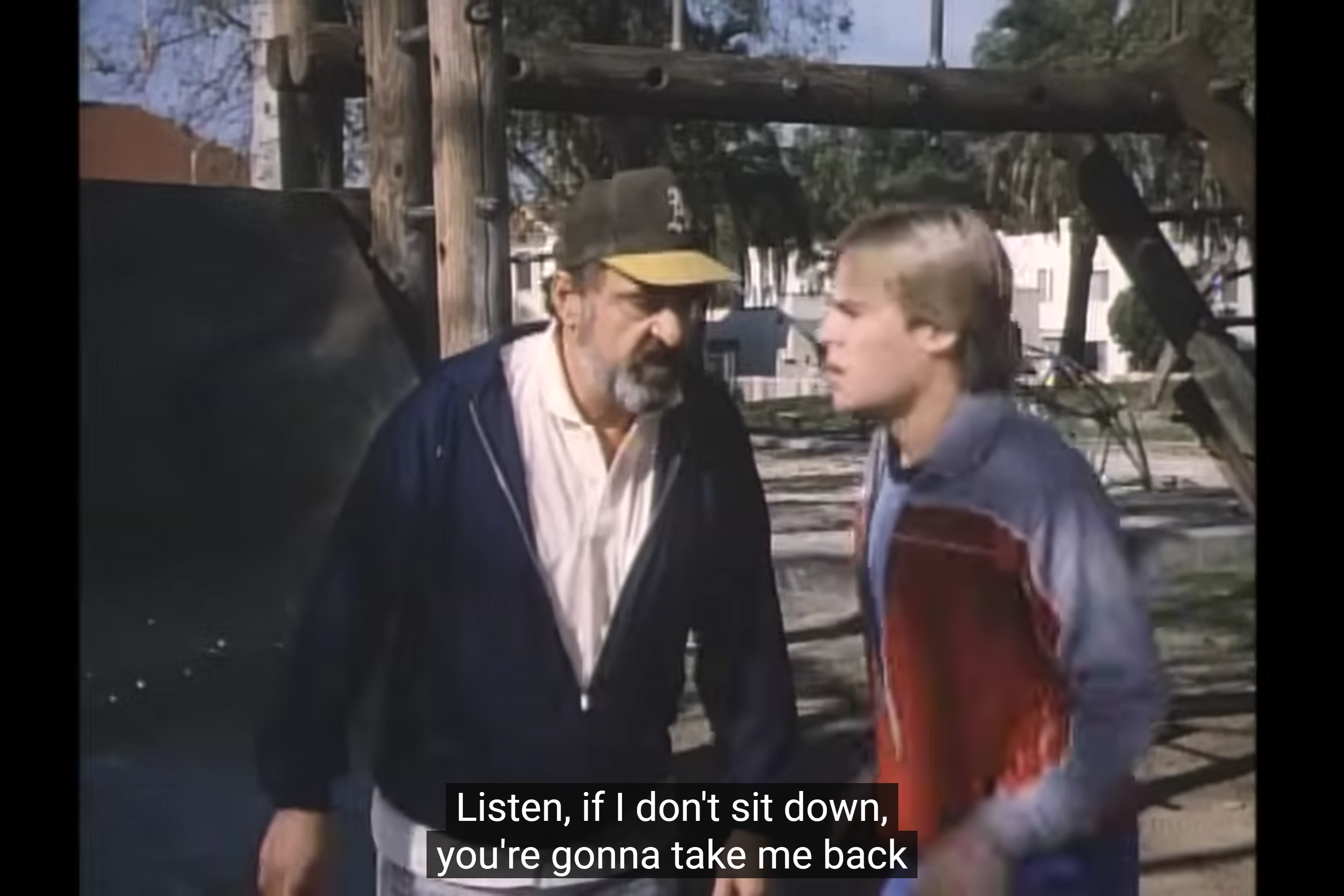
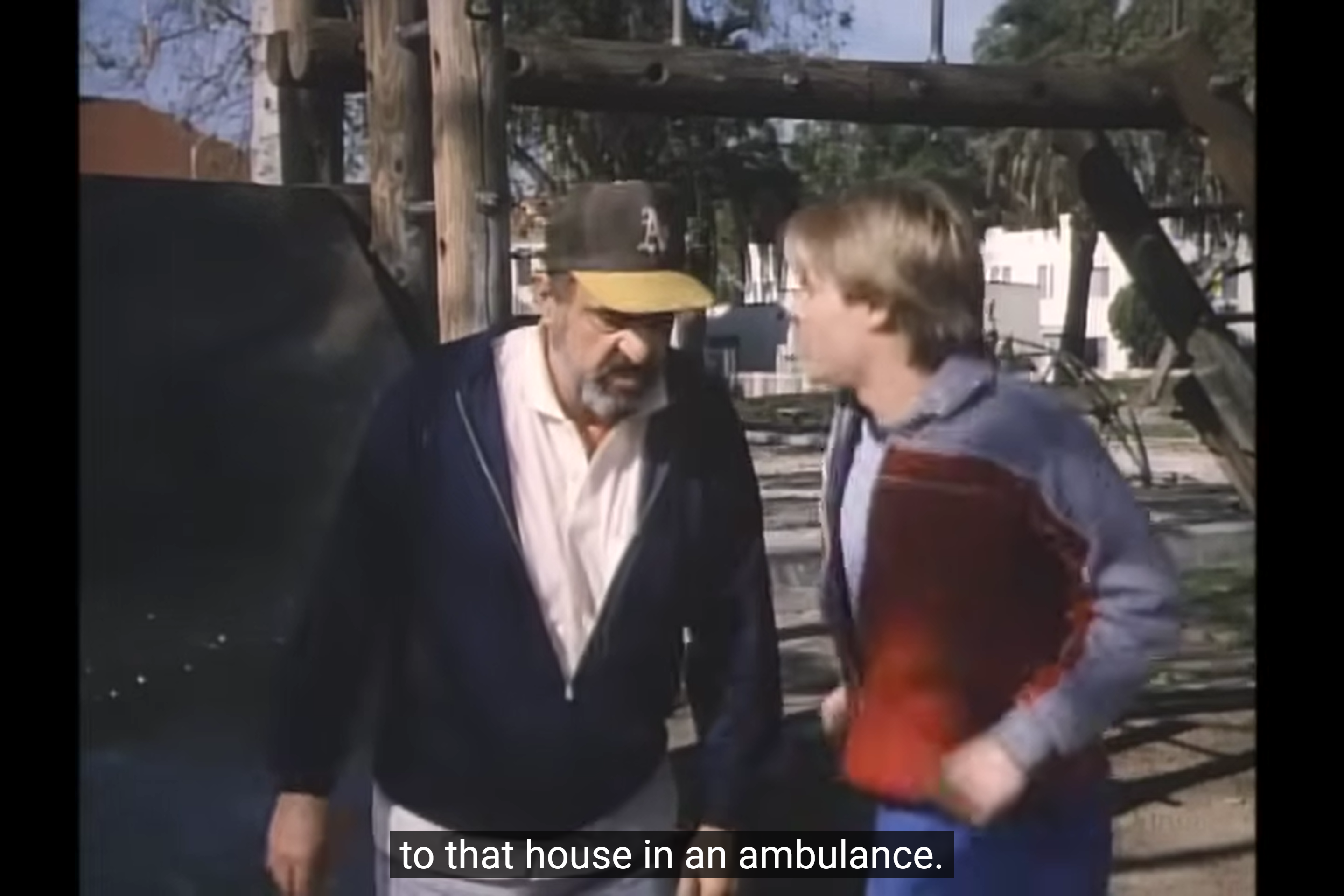
He learns little from his experience.
That’s not the first time it happens: in the season one episode The Right Thing, he refused to go running with Jonathan, because he disliked doing that.
Even before that, in One Fresh Batch Of Lemonade, he went to the gym. That was not a pleasant experience, though.
And now he forgets all about it and goes running again.
- Production and Setting
The setting is California, as usual. In particular, the residential neighborhood is at 2249 West Los Angeles, and the first scene—when they are eating and Mark makes a comment about a homeless man with mental health problems—also takes place in Los Angeles; so, no new place.
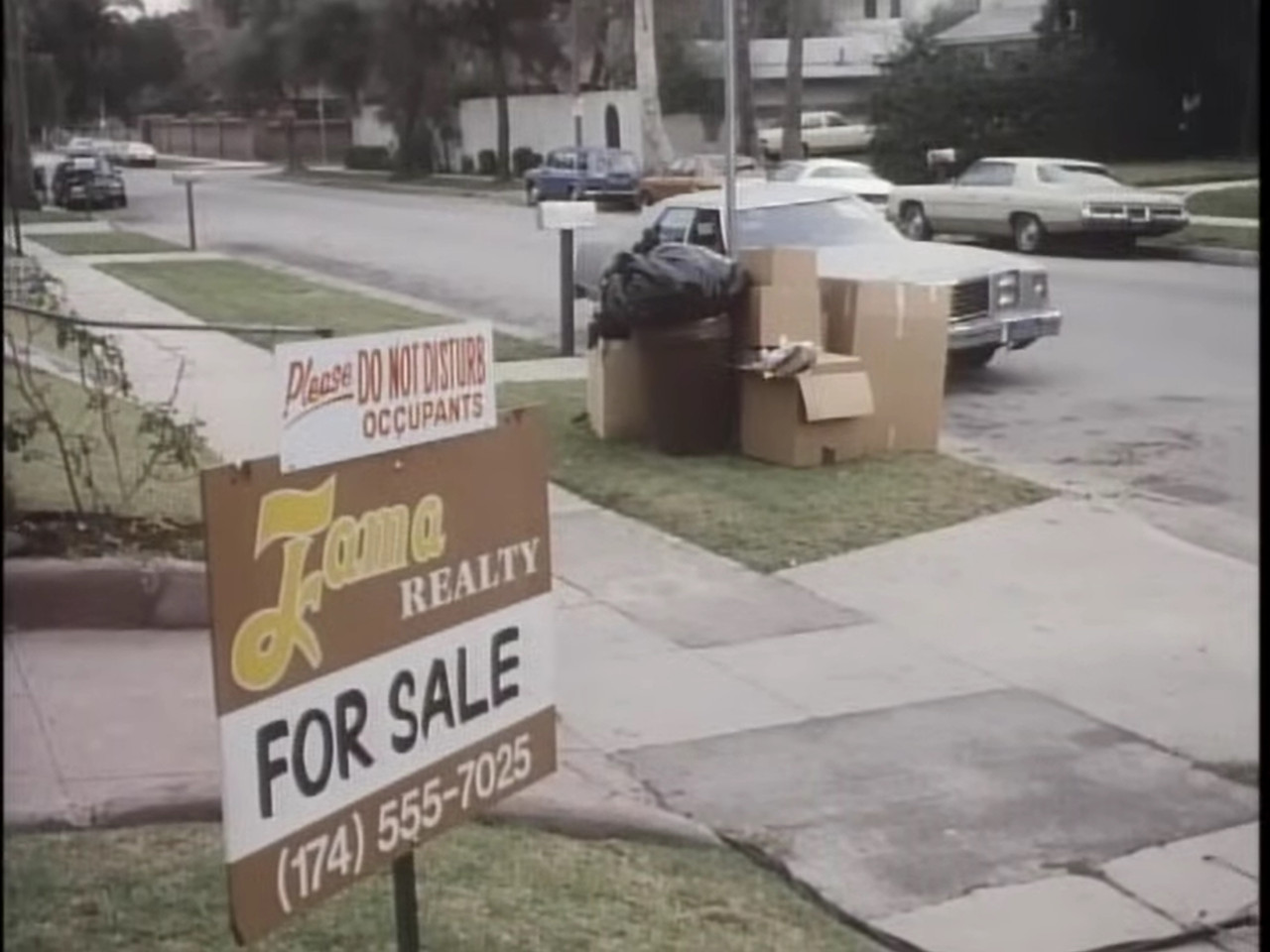
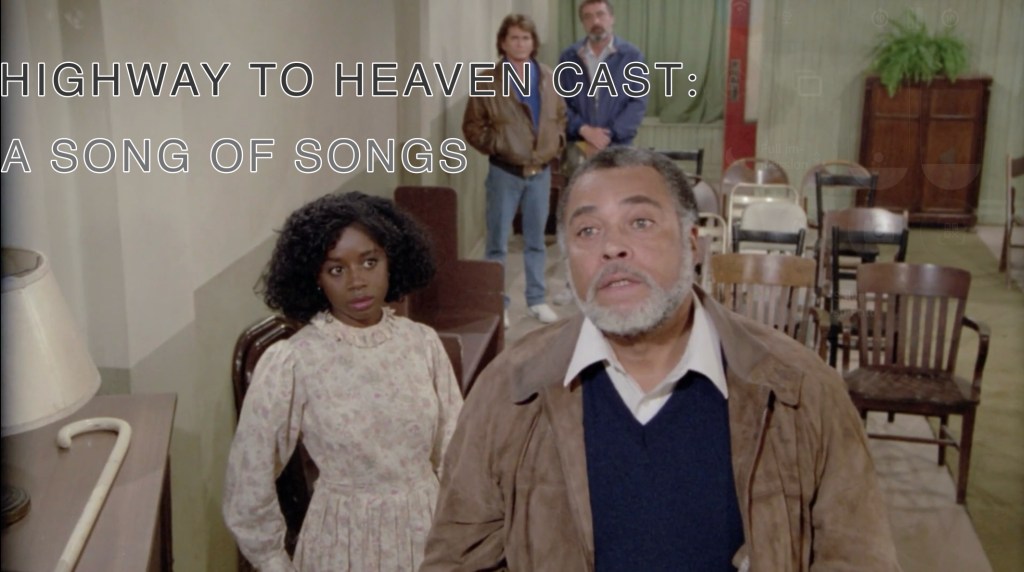
As for the production, the episode was written by Paul W. Cooper (the only writer shared by this series with Little House, alongside Vince Gutierrez), but the schedule is unknown: apparently, it was produced at some point after A Song Of Songs, which was made after both A Night To Remember and A Mother And A Daughter, despite airing before them. Now, that episode was done by December 12, which would be quite early for the production to have Christmas Holiday—considered that The Last Assignment, the last episode of season two made before Christmas, finished the main shooting on December 17, and that was the last episode of season two made before Christmas. It is thus plausible they did this show before the holidays off. At the same time, and that’s the problem, the earliest known episode they made in the new year began production on January 14, which would be one week later than the episodes starting their production after the Christmas Holidays in the first and second season (they were As Difficult As ABC on January 2 and To Bind The Wounds on January 6 respectively). Then, it’s equally plausible this episode was made on early January for one week and concluded its production by January 13, for the next episode.
So, this was either the last show they made in 1986 before the Christmas Holidays, or the first one they made in January 1987 in the new year. And in both cases, it means they took almost four weeks off as Christmas Holidays, not two weeks or ten days as they had done in the 1984 and 1985 seasons. They were pretty much ahead of the schedule. That’s largely because they had begun production earlier: season one started on August (excluding the Pilot), season two started one week earlier (in late July) and this season one week earlier than that. Also, in season one, most episodes took between one week to ten days to be produced; starting from the second season, almost every show took one week or even shorter than that, and only a few episodes (like A Night to Remember) took longer. Lastly, in season one they took one day off between the end of an episode and the beginning of the next, while starting from season two, they decided to make all the episodes without any break (or taking one just very rarely) until the holidays. This, combined with the shorter schedule and an additional week (and Landon’s practicality in the direction) allowed them to finish early—and enjoy longer holidays. Of course, at the expense of starting one week earlier in the summer, but that’s the way it is.
Also, this episode was shot around the same time (December 1986) as the official announcement that French had decided to step out as director from this series—despite remaining involved as actor—and that Landon was about to become the only director for the rest of season (more about it at the “Production and Setting” entry here). Maybe the announcement was publicized now because French was originally meant to direct this, before admitting he couldn’t keep up with this pace required for a director any more. Or maybe it was just a coincidence.
Glossary:
Bins: there’s one mention to bins at the beginning (actually, it’s to the more general pollution issue), when Jonathan and Mark arrive to the neighborhood and Mark notices it feels like an abandoned place.
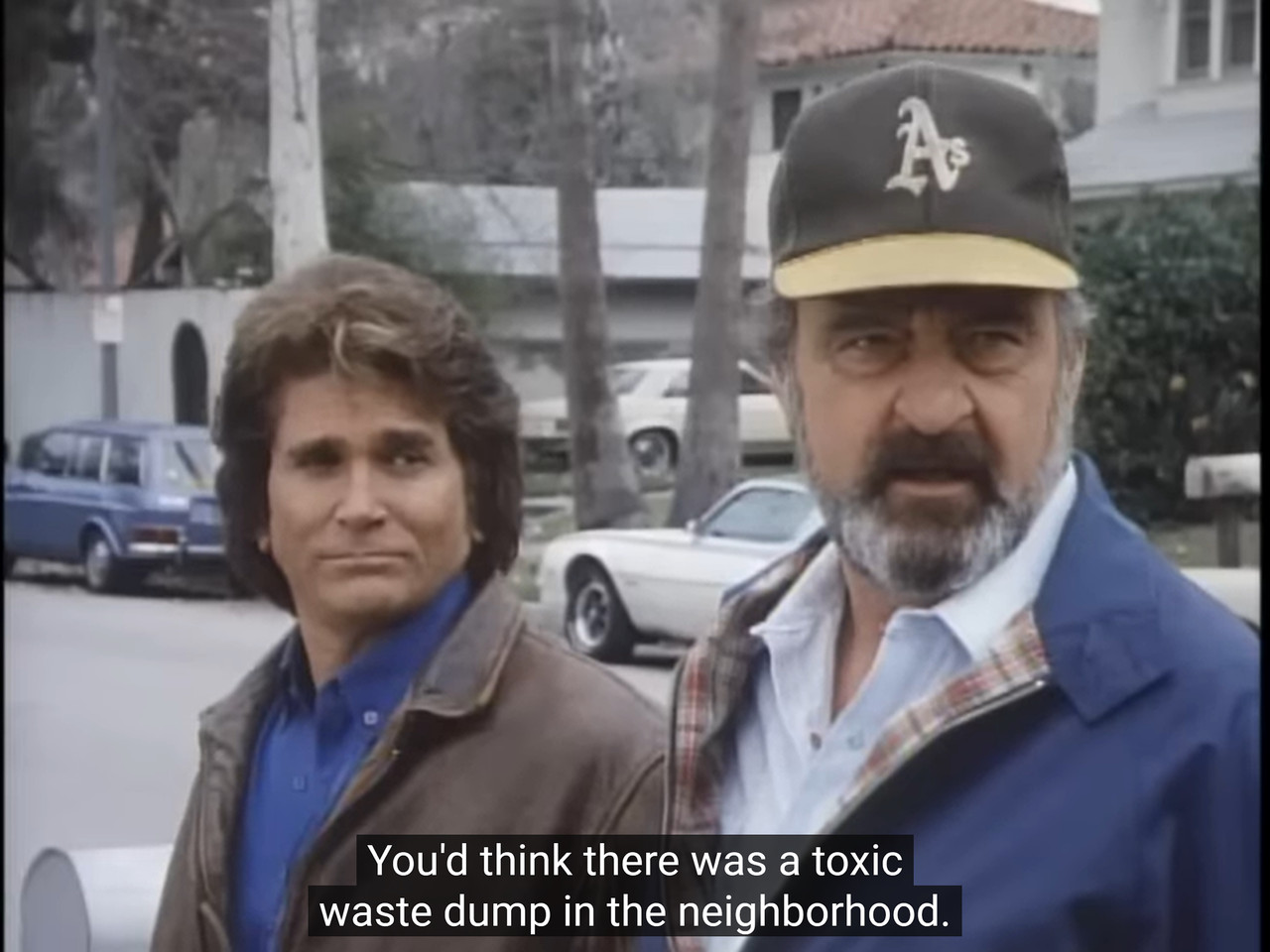
Not again.
They addressed that exact problem here.
But Jonathan saves Mark from another peculiar “assignment” like that.
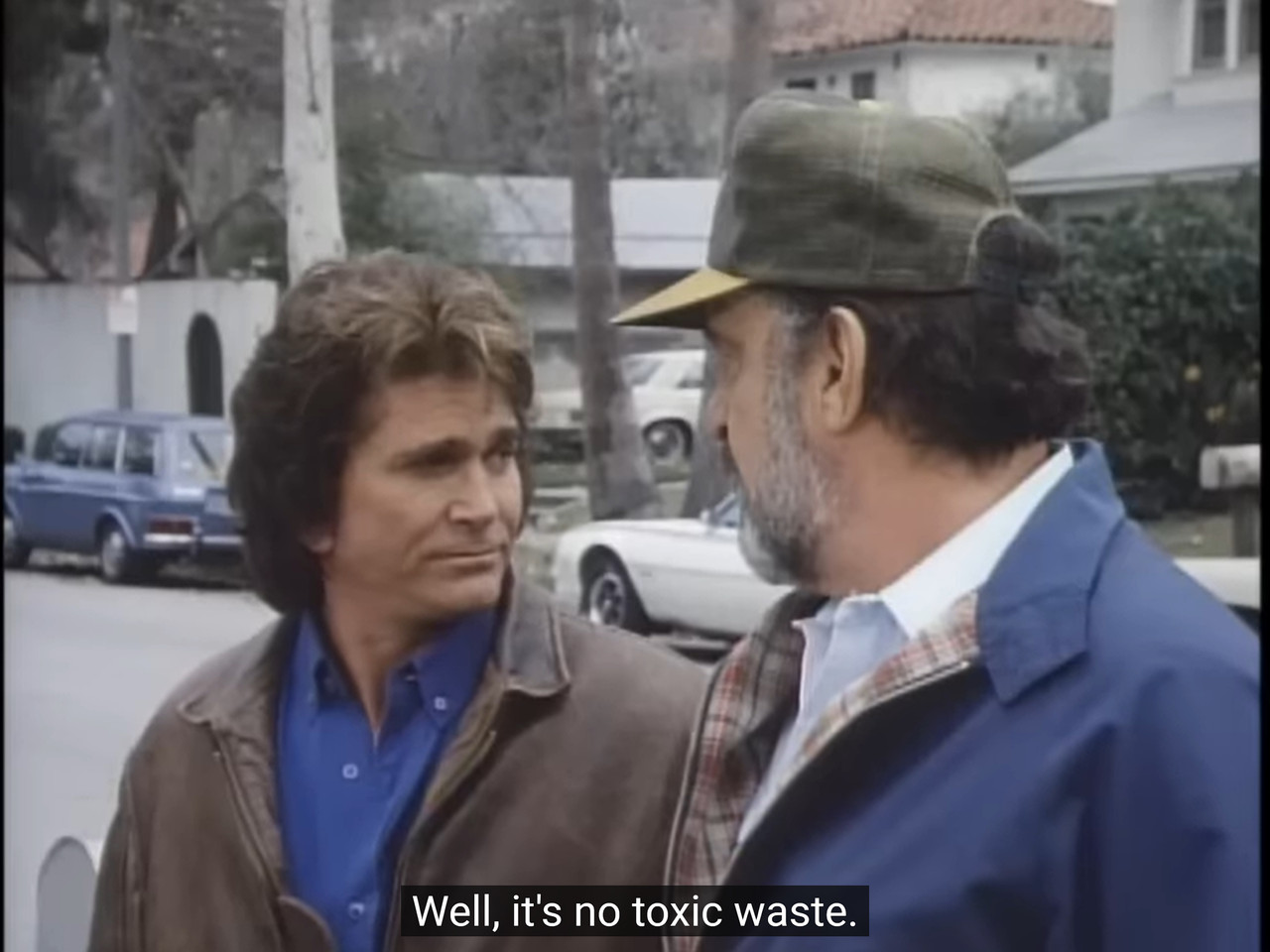
And then adds something.
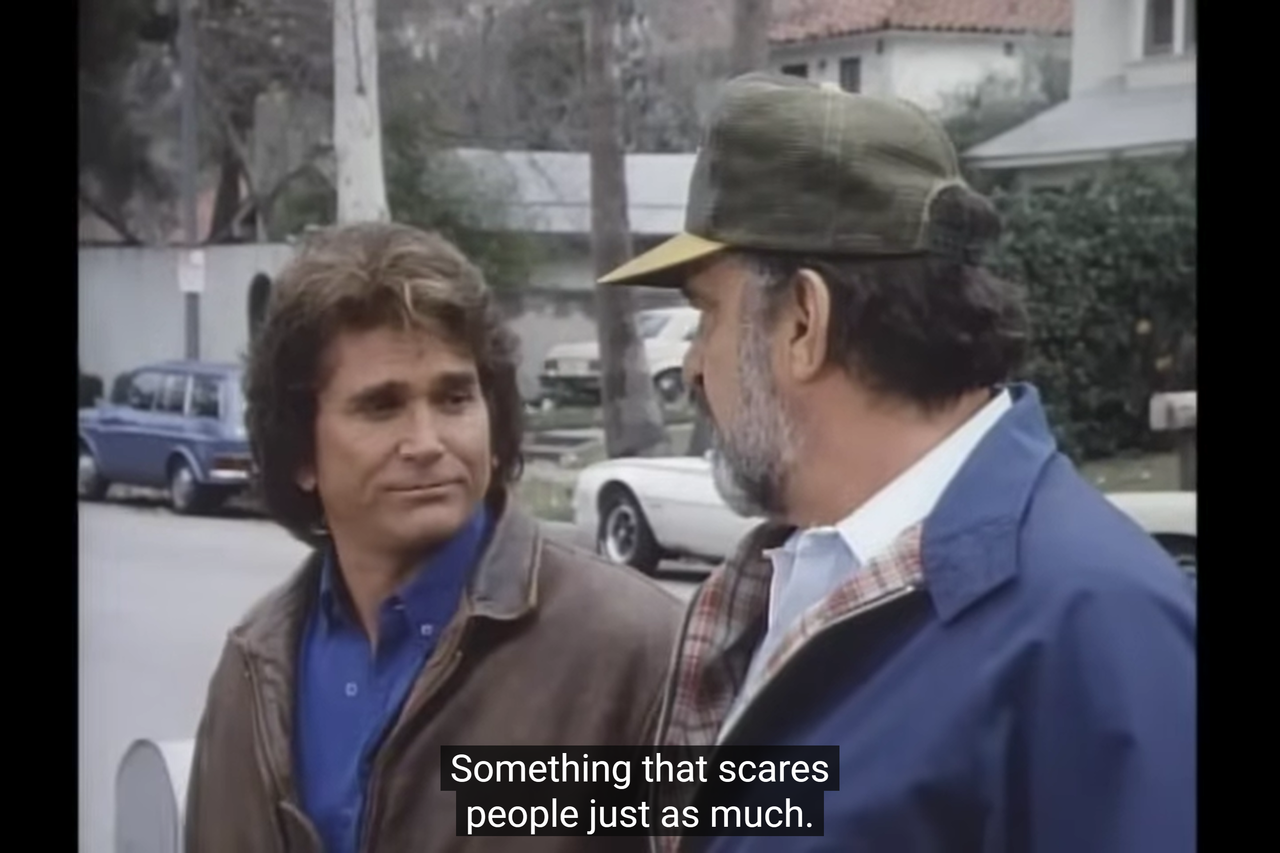
You mean, like bums?
There’s actually one at the beginning, that Jonathan and Mark observe interrupting people’s break.
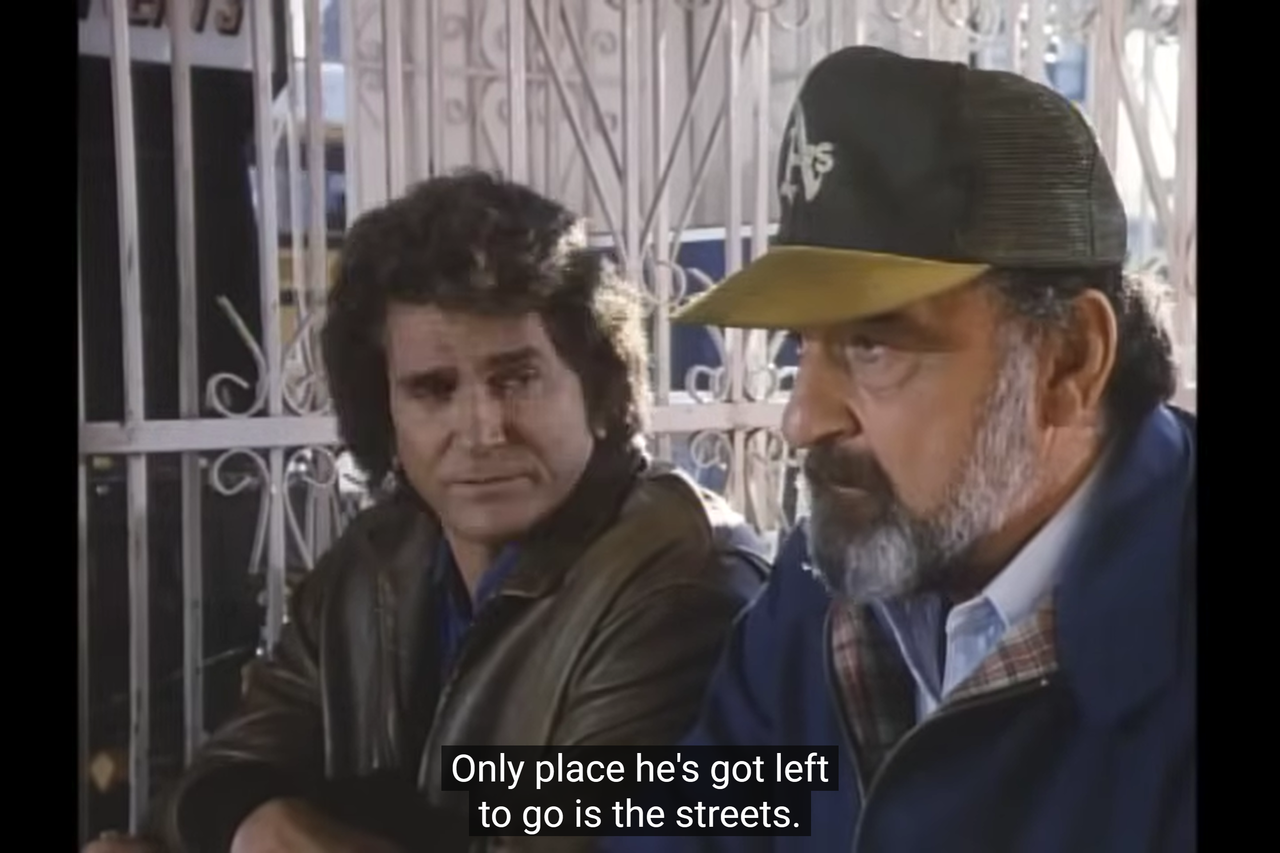
He really can’t help talking about his obsessions. No matter what.
Cute: there’s one instance of Mark’s catchphrase, although not in the usual way. Basically, it’s the moment in which he’s trying one resident’s dress on, and is equivocally startled by a neighbor in the process.
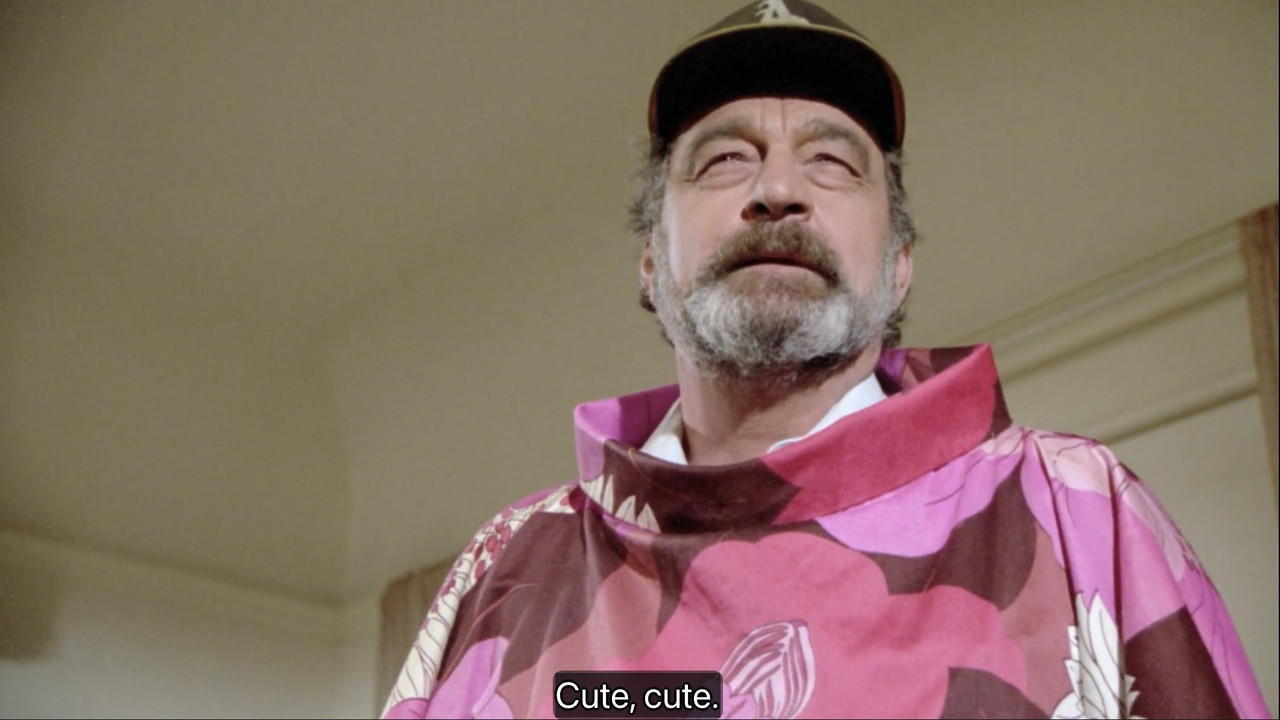
That’s only the second time in the series in which he drops that catchphrase to someone else, not Jonathan (the first time was in All That Glitters earlier on this season). Really unusual.
Doozy: the kids in the neighborhood that spends their time burning stuff are definitely some of the dooziest in the series.
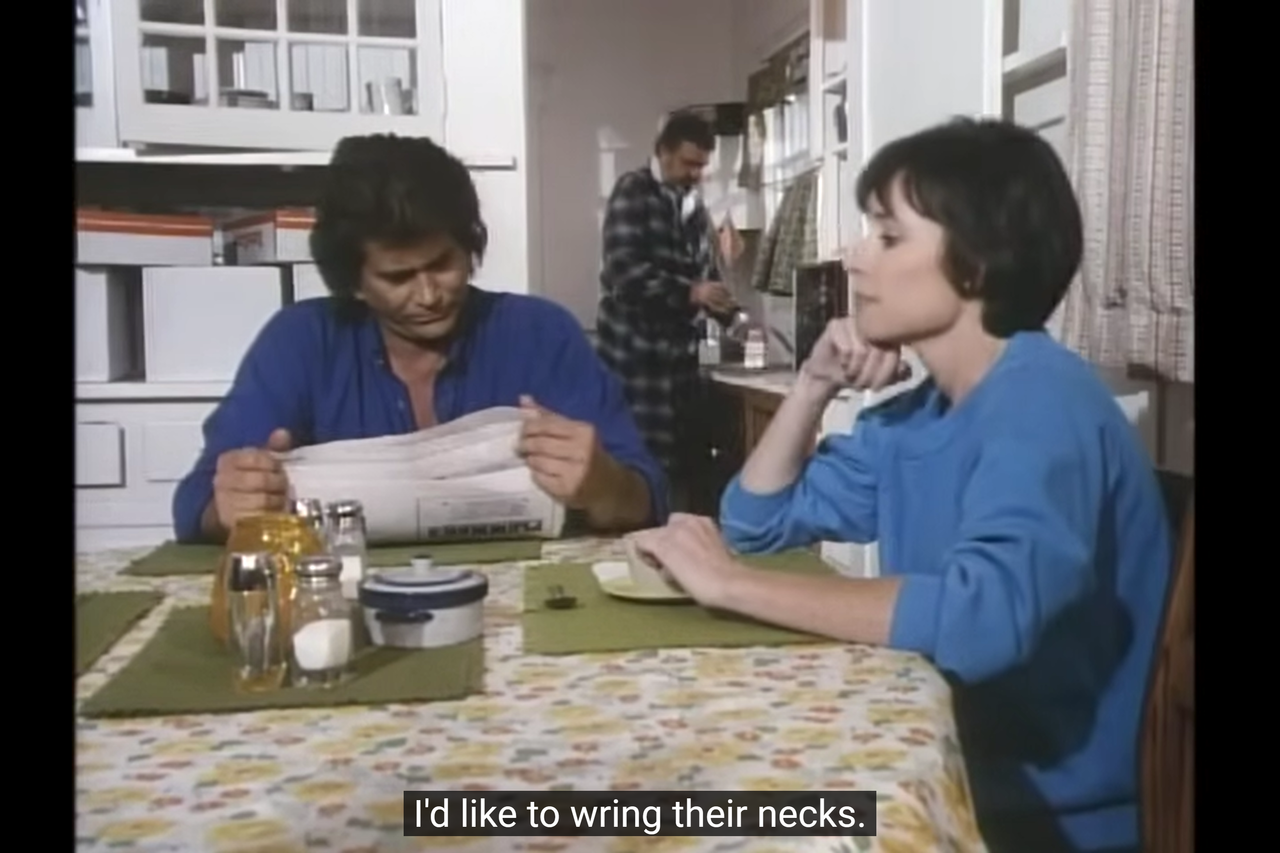
You really should, Mark.
Friendly Jonathan: for some reason, Landon or the writer thought it was going to be a nice idea to use Mark to make a point on what exactly normal is. But, in order to do that, they decided to get him in some awkward situation with the neighborhood, making him look like psychotic or something. For the entire show, there’s a recurring joke where Mark is doing something that might be easily misunderstood, and someone watches him and believes he’s with the residents, or that he has some problems (one example is the moment he drops the cute).
Basically, it’s very similar to what they did to his character in The Banker And The Bum in season one, when he dismissed Willy the bum as crazy because he talked to himself at the bench—and then Jonathan quietly walks away, unnoticed, while he’s still talking, leaving Mark to talk to himself and someone else watching him behind him and believing he’s crazy.
The difference, though, is that it is not just in a couple of scenes like in that episode, but it becomes like a recurring joke in this episode, making it look more as though they weren’t try to make a point, but they were actually just making fun of him. As though Landon or Cooper thought that getting Mark in some oddly awkward situations could serve as comic relief for the show. And the problem is that Mark doesn’t act like he always does in the series: it’s as though they wanted to make him look like a fool, and in this episode he does things he had never done before, or makes a fool of himself as though he has some problem.
Anyway, as part of these recurring jokes, Mark gets himself alone in those awkward situation. But there’s one exception, a friendly Jonathan moment at the beginning, that further exacerbates this feeling other people have of him. It’s when Jonathan is talking to a neighbor and is interrupted by Mark, who tells him what he’s been up to with other residents.
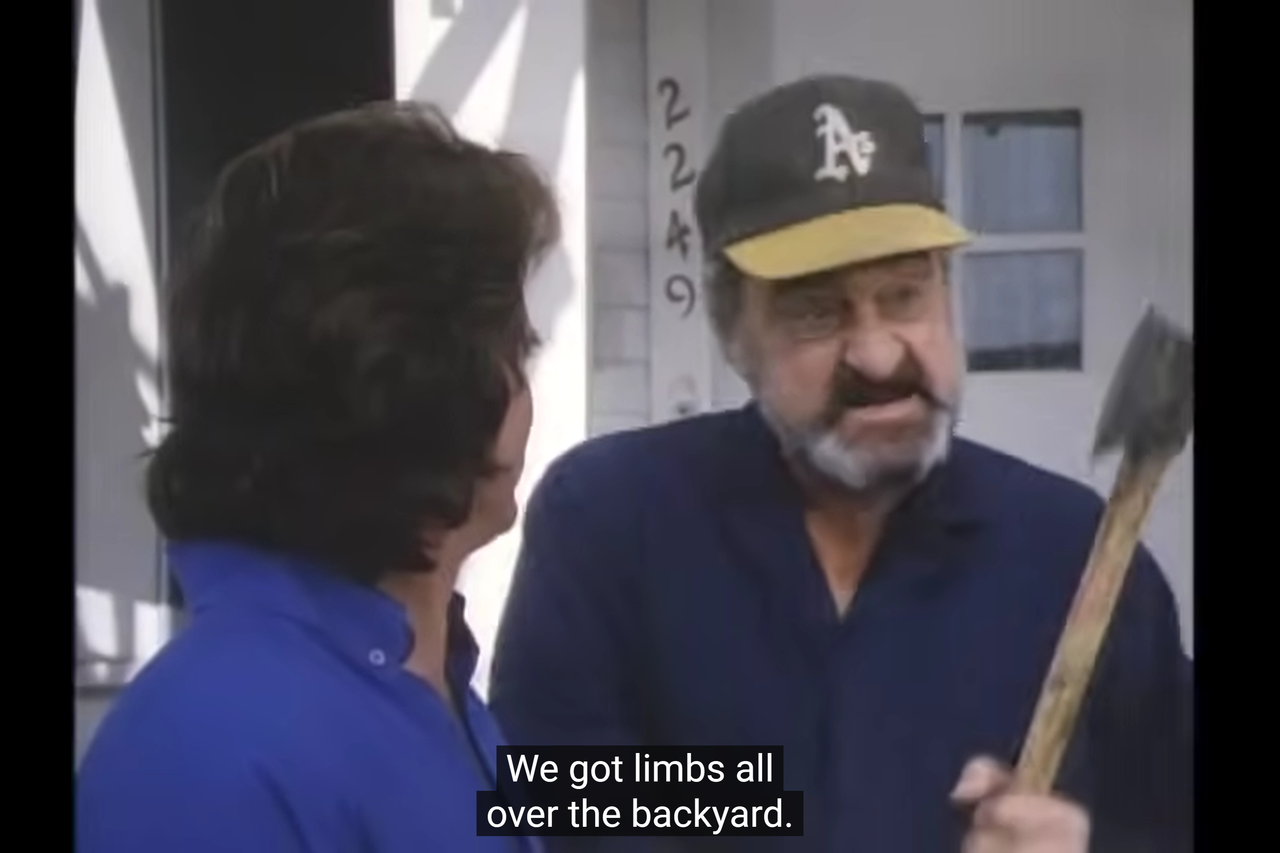
And grinning too.
If that weren’t odd enough of him, Jonathan makes it even worse: a neighbor asks Jonathan if he fears hanging around with mental problems, and Jonathan replies as a very dear angelic friend.
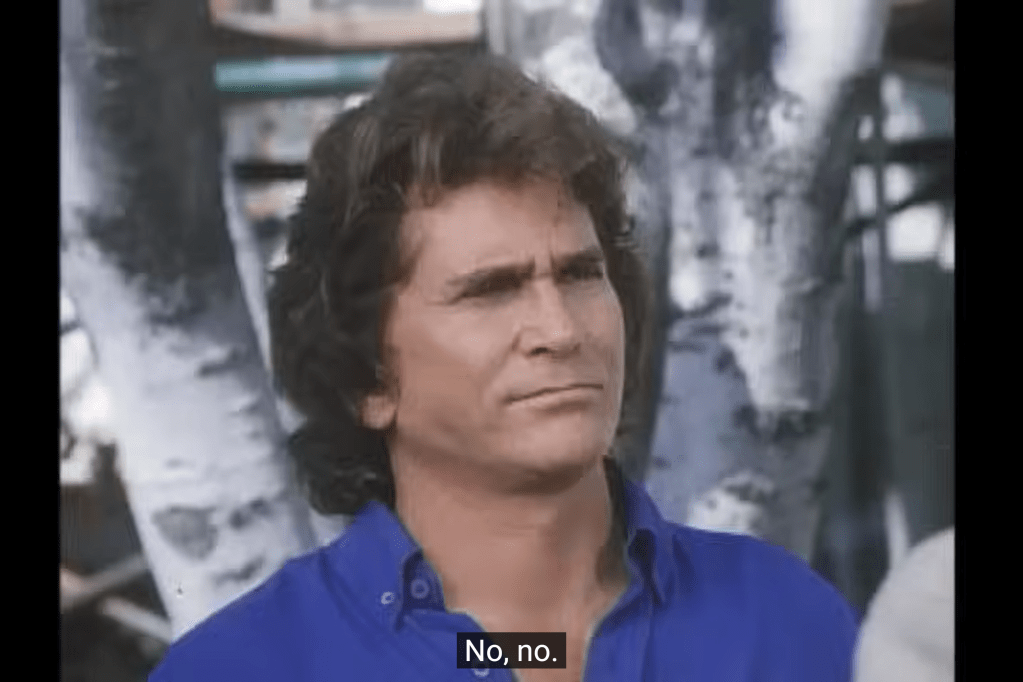
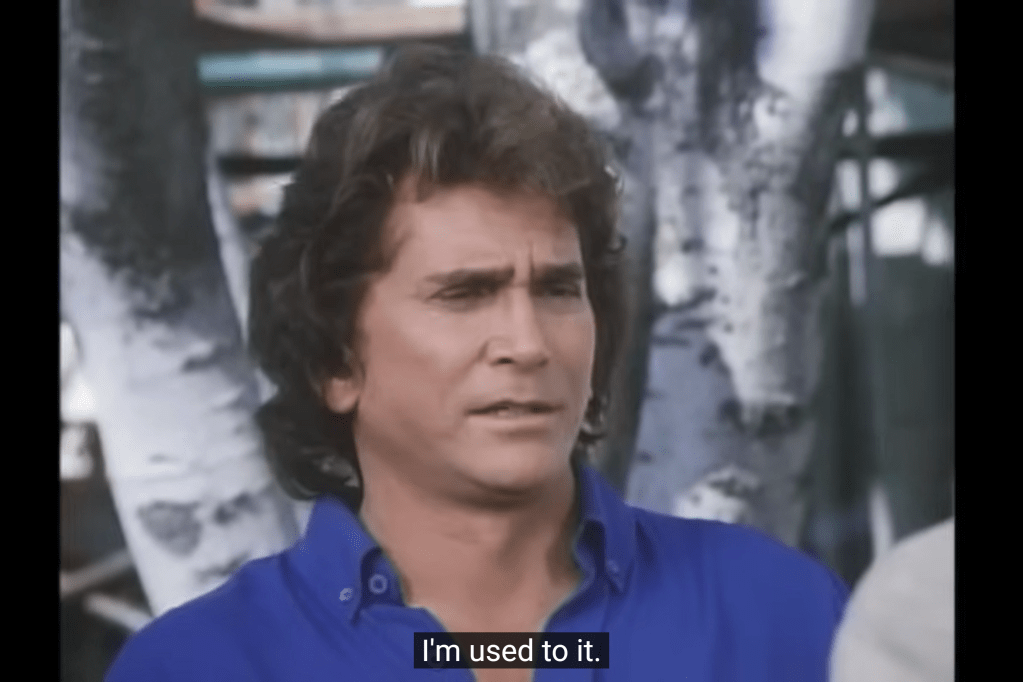
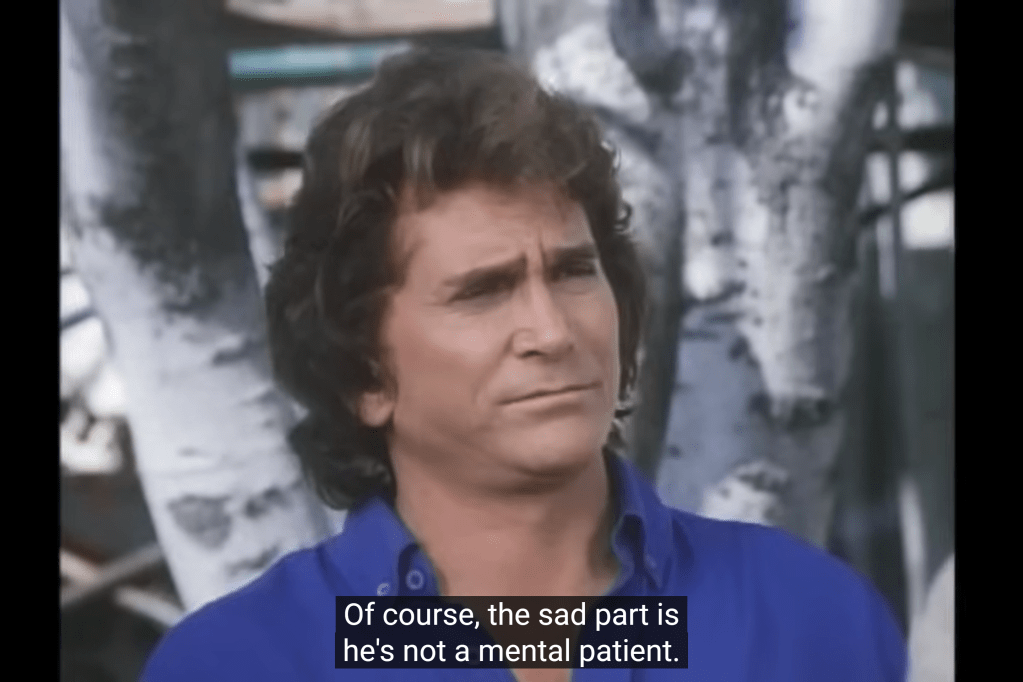
You don’t mean that.
Again, maybe it was just meant to be a lesson about people who don’t have diagnosed mental disorders can still behave irrationally at times, and you shouldn’t judge them for that.
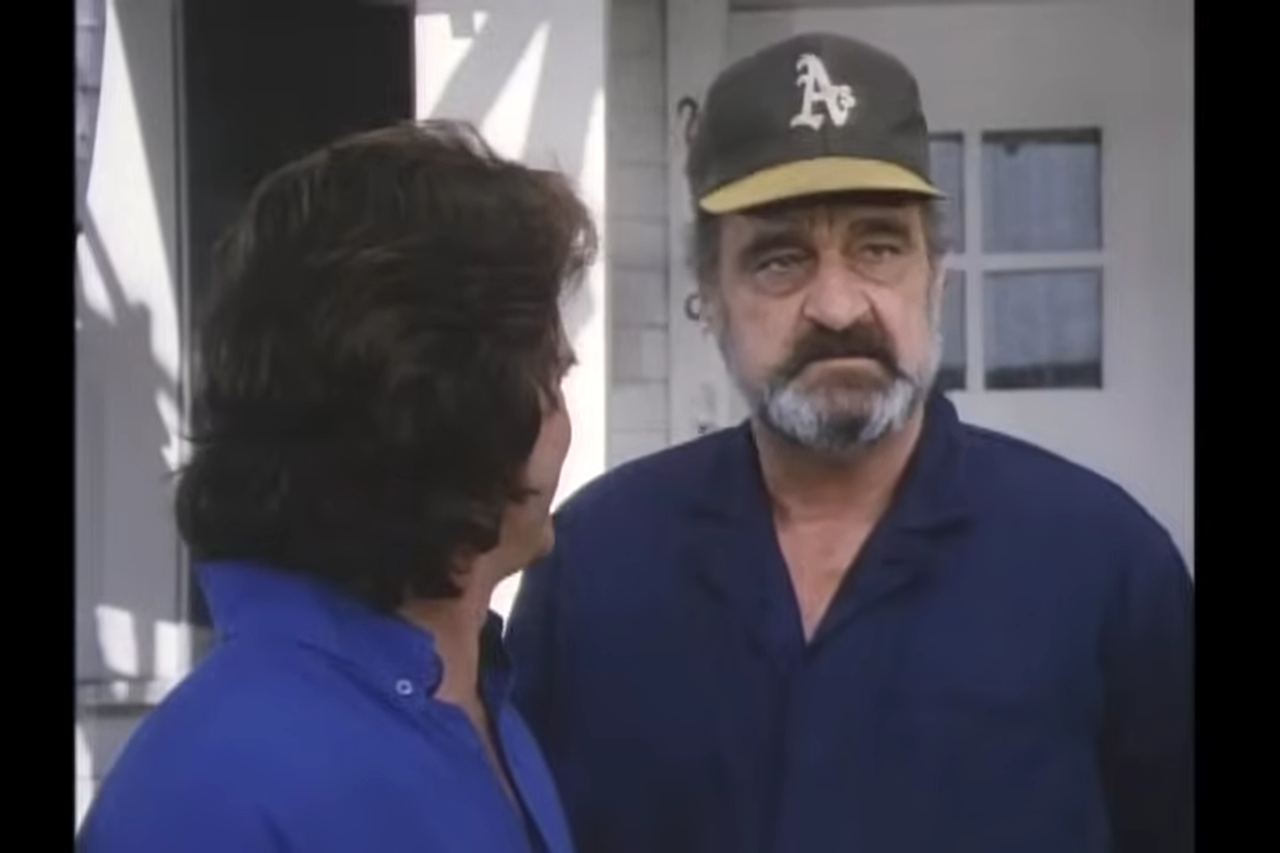
Or maybe Jonathan was implying his friend has some problems too.

However, despite being an odd friendly Jonathan moment in an already odd episode for Mark’s character, Jonathan might not be entirely wrong this time: maybe he’s thinking of Mark’s inconsistencies throughout the series. For example, in the season one episode A Child of God, he said he dislikes roller coasters.
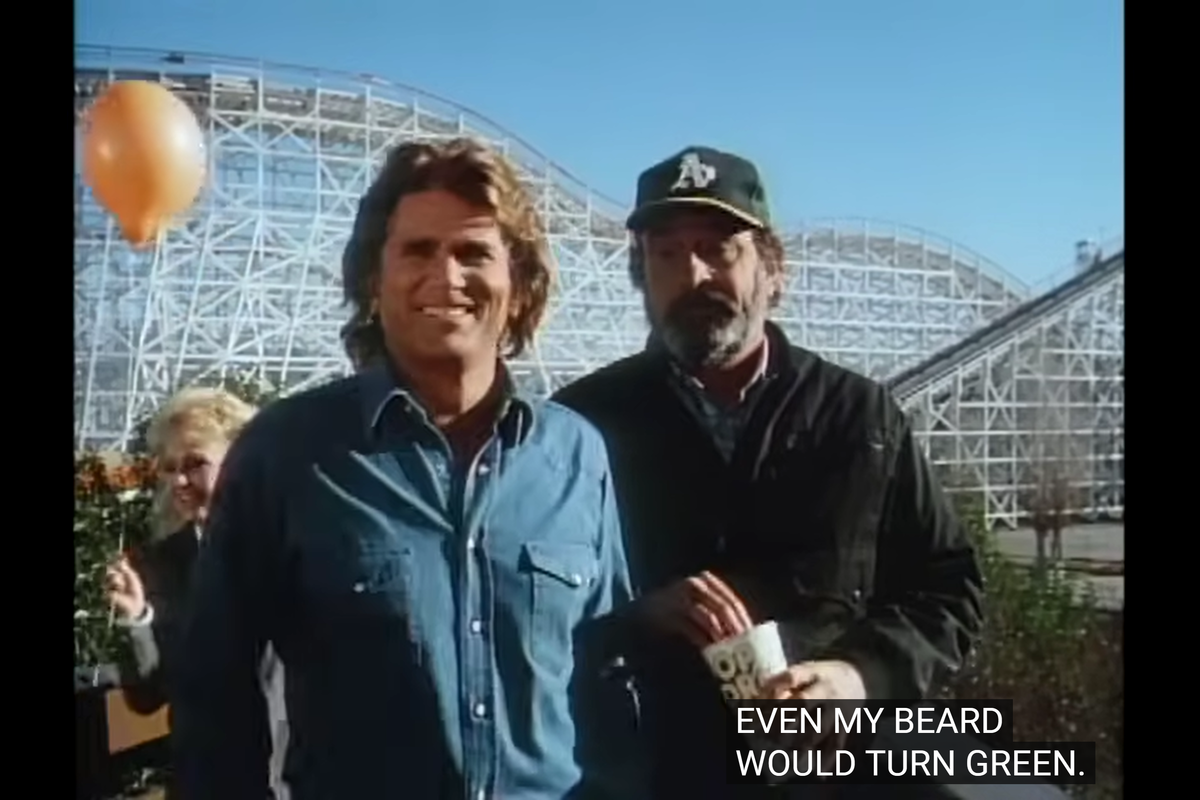
Yet in Heaven on Earth (season two) he willingly goes to one—an outing that leads to tragic consequences.
Then, in Heaven on Earth, he is taught that it takes people to make a difference— yet in the following episode, he questions why their superior does not interfere in human affairs.
And in Oh Lucky Man (season three) he falls in love with a woman and claims he has never met anyone like her in his life—undermining his earlier, more meaningful relationship with Stella in season one.
Even in this very show, he jogs with a resident despite his statement in season one that he’d never go running in his life.
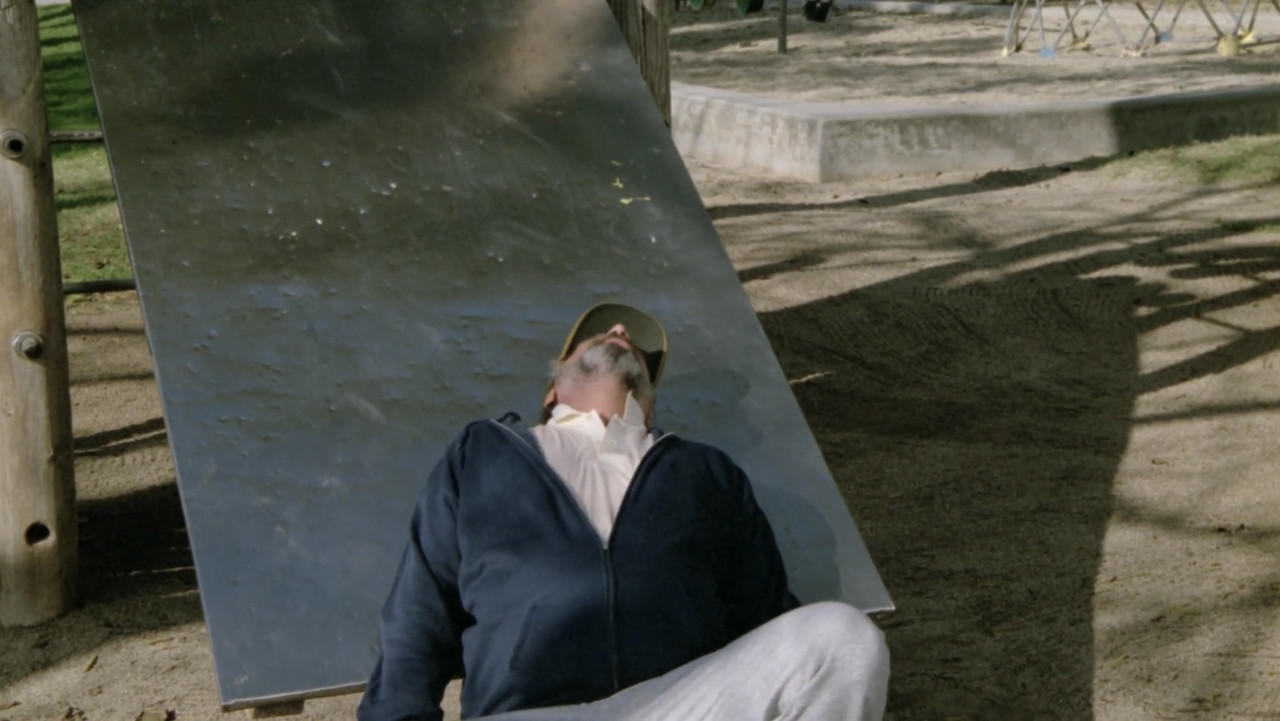
Maybe he does have a problem.
Recycle: this episode has a recycle from season two. It’s the scene at the beginning, when Jonathan and Mark are driving toward the halfway house, crossing a familiar desert landscape.
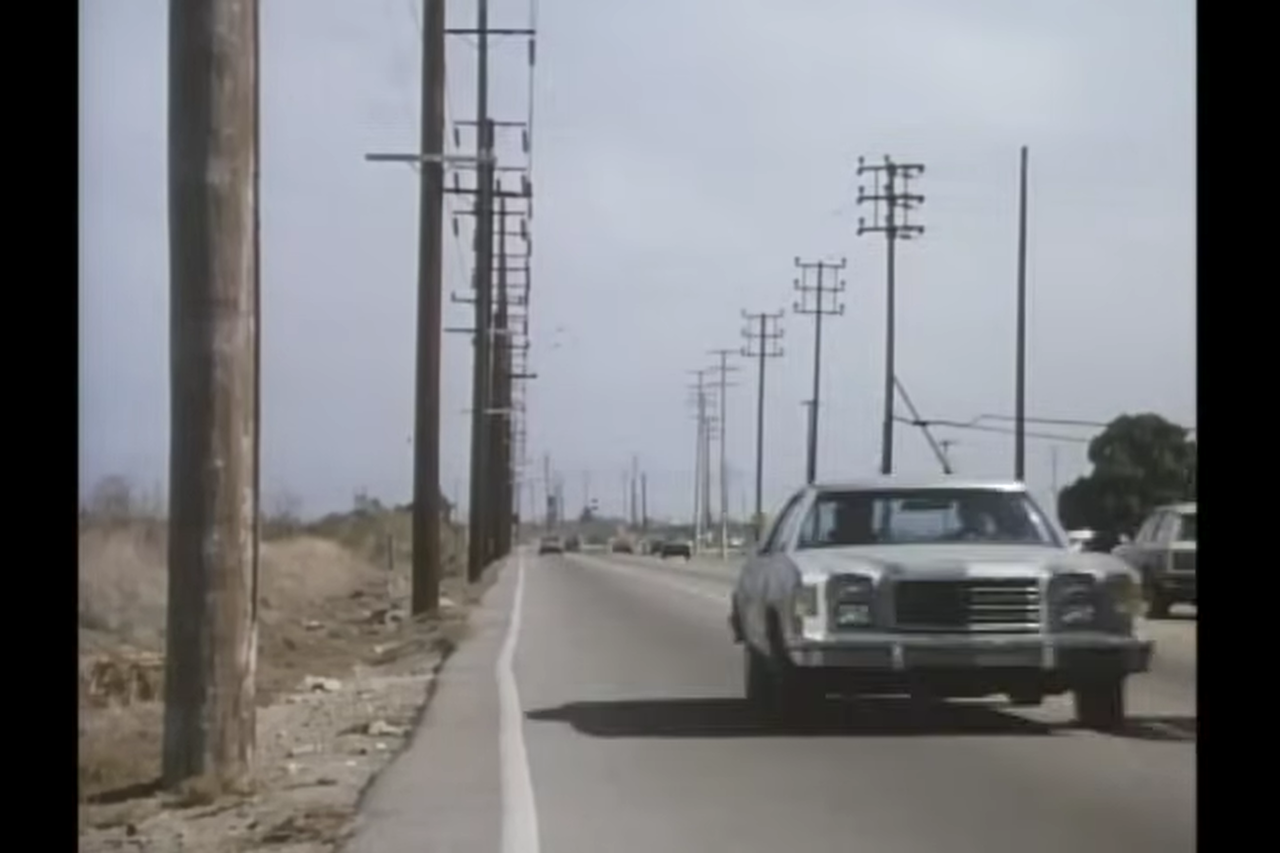
That is the same driving scene already used twice in season two (one in the pollution assignment and then in Mark’s journey without Jonathan).
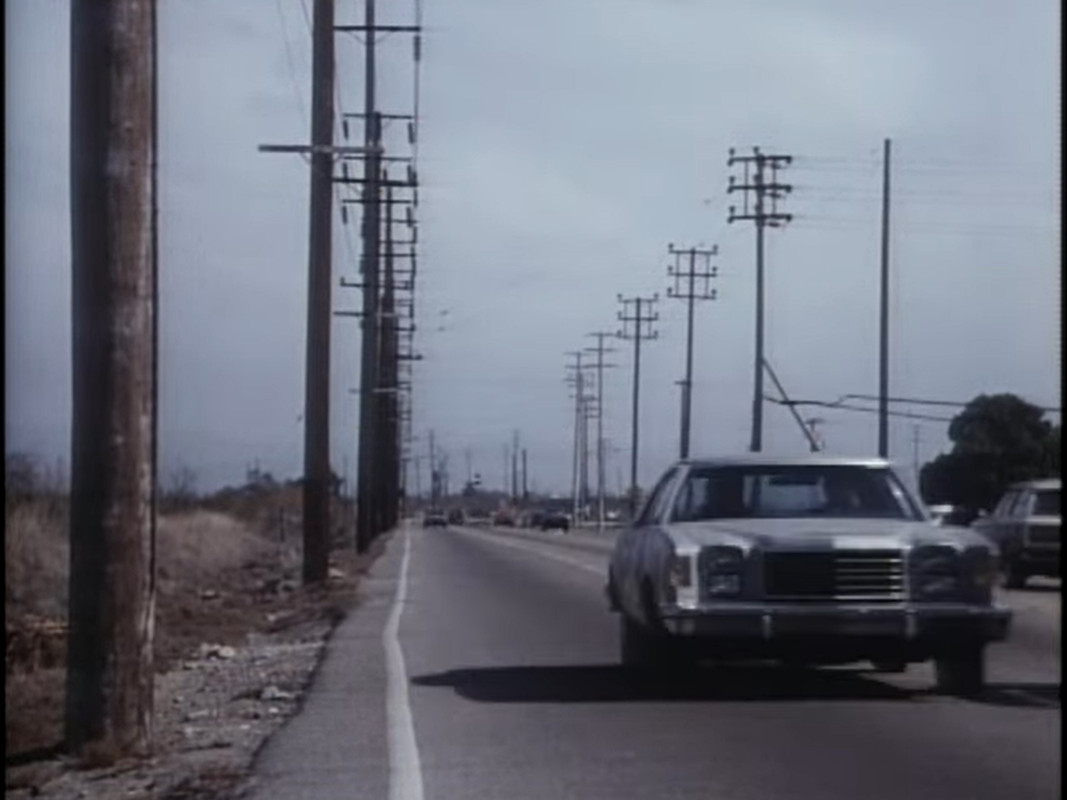
But there’s a problem here: in both earlier instances, the desert-driving sequence suggested they were traveling far from Los Angeles, or at least out of town. The first episode using it took place in the fictional Rose Beach (the exact place was unclear, though); in Heaven on Earth, they were supposedly heading to an amusement park, even though which one is unknown (more details about it at the “Background” entry of that episode). Of course, both episodes were largely filmed in Los Angeles (with some production in Arizona), like this one is too.
However, that Highway in the desert implied a distant location Jonathan and Mark are traveling to. Now, instead, this assignment appears to take place locally— so, there’s no point in this recycle. Unless this fictional Clover City were the assignment is set was actually in Oregon, and that would make this episode the only assignment set there. But it can’t be, if the letter was still addressed to California. Or maybe the series is set in a fictional country where California has become the Capital and only existing State in the mainland. That would explain so many things.
The Job: in the episode, Jonathan and Mark are assigned to work as handymen for the house.
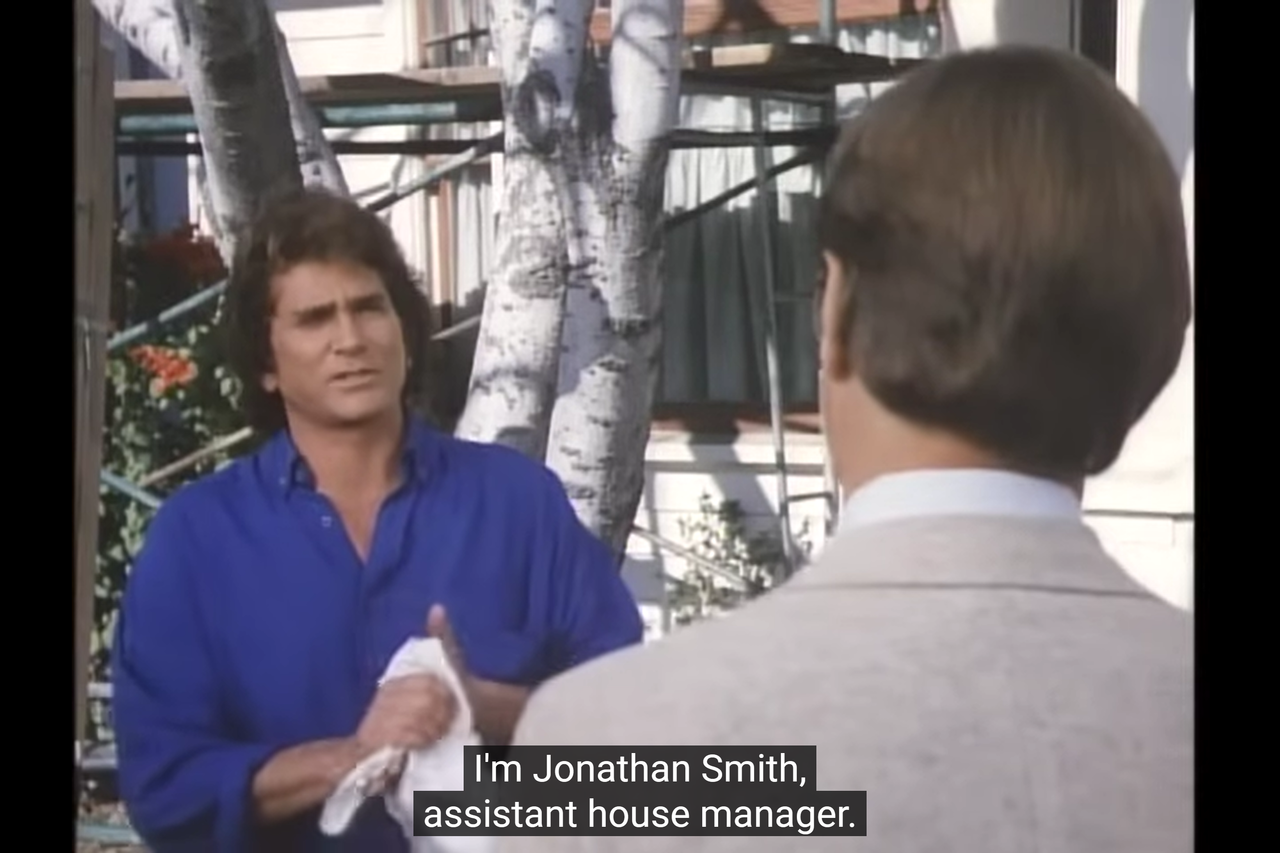
It’s possible that their stay lasts more than a week, although the likely purpose of the assignment was to help reintegrate those residents. By the end, the neighborhood has accepted them, so there appears to be no reason for Jonathan and Mark to remain any longer.
Ratings: 29 million audience. 26th Weekly TV programs, 6th TV genre show.
In terms of ratings, it lost more than one rating point compared to its predecessor one week ago, making it the least-watched episode in the second half of the season (at least up to that point), effectively concluding the streak of successes the series usually enjoys in the new year.
It’s evident that the series experiences great popularity in ratings from January to late February or early March, and then one show abruptly drops ratings and the remainder of the season tread on the same result. (The same thing occurred for A Match Made In Heaven in season one and Heaven On Earth in season two). But this year, the popularity stopped earlier than those. And in the weekly ratings, this episode didn’t rank as high as most other shows, although it’s mostly because that week there were many programs scoring higher than usual.
Even so, it was still successful in many respects, performing at a level quite similar to the first season. And despite the loss, it wasn’t as harsh as for both seasons one and two. Adding the discouraging ratings of some episode in the first half of the season from Love And Marriage to the Christmas special, it seems that the season at least recovered very well. But Highway has learned anything can change each week, and there’s plenty of time ’till the end of the season to do worse, or better.
 Highway To Heaven Cast
Leave a comment