

Highway to Heaven: Pilot
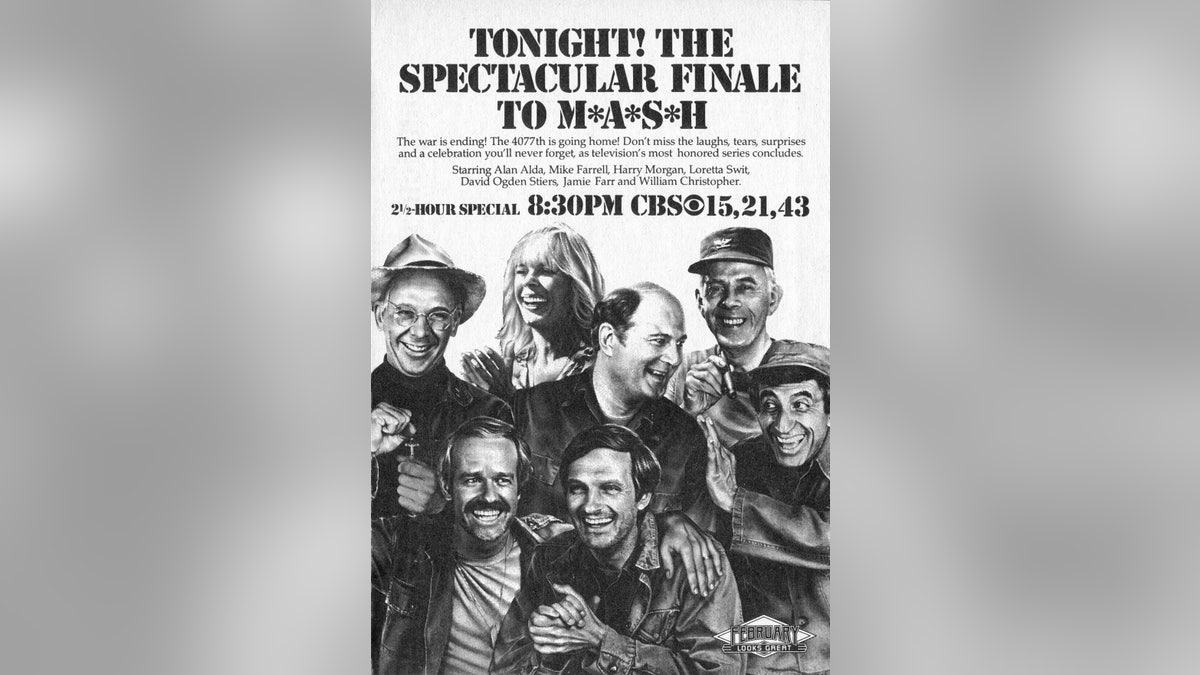
It’s September 1984. A new TV season is about to begin – this time without many of the most beloved, long-standing shows from previous years. The series finale of MASH aired that March with unprecedented success in ratings, marking a record in TV history with over 100 million viewers—still unmatched by any non-sports TV program. Little House on the Prairie concluded with Season 9 in 1983 and returned only for its series finale in February 1984 (alright, there was still that one episode left out for unexplained reasons that would air in December, but that was just a Christmas special).
Many long-running series were nostalgically wrapping up. Sitcoms were losing ratings for the first time in a decade, making room for variety shows. In a few words: TV was entering a new era—and so was Michael Landon.
In the meantime, the beloved creator, writer, director, and star of Little House had to start over. He had created a short-lived TV show alongside Little House, titled Father Murphy (if you don’t remember it, don’t panic: the second season was burned off in the summer of 1983 and even aired one episode in September; weird, right?). When both his series ended, the TV star didn’t even take a holiday. He was already preparing his comeback.
This time, it would be a different kind of show: a modern-setting drama, based on an “original” idea. It was about the story of an angel and a human embarking on a cross-country trip across the U.S. with the purpose of helping people along the way. The title says it all: Highway to Heaven.
If it sounds like It’s a Wonderful Life, you’re not far off. If it reminds you of Touched by an Angel, well, Highway came first. If the premise sounds puzzling, producers probably felt the same: Michael Landon often discussed how hard it was to convince NBC to give it a chance—even going so far as to offer to fund a second pilot with his own money in case the first one wouldn’t impress them. That man was really obstinate.
Also, another factor might have put off the executives: there were no Christian-themed dramas at the time—it was considered too risky. But the TV landscape was shifting, audiences’ tastes were changing, and, who knows: maybe the times are mature enough to have one.
Eventually, NBC agreed to a pilot. And now, the story begins right here.

The Pilot
As it’s common with shows like this, the pilot tricks you into thinking you’re seeing the official intro, but it’s actually different from the final version. Here, the first still frame is the same (maybe a bit brighter), with more triumphant music. Then, the clouds slowly fade and the distinguished silhouette of Michael Landon—instantly recognizable to the audience—slowly approaches the camera.
We’re in the desert, and he looks more like a recently bailed-out convicted felon rather than an angel. Definitely not your typical heavenly figure—but maybe it is pointing audience not to judge a book from the cover. Or maybe it is a throwback to famous highway outlaws.
Anyway, we get a closer look at the man: Mr. Landon, who very dramatically turns around when he sees a truck passing by.
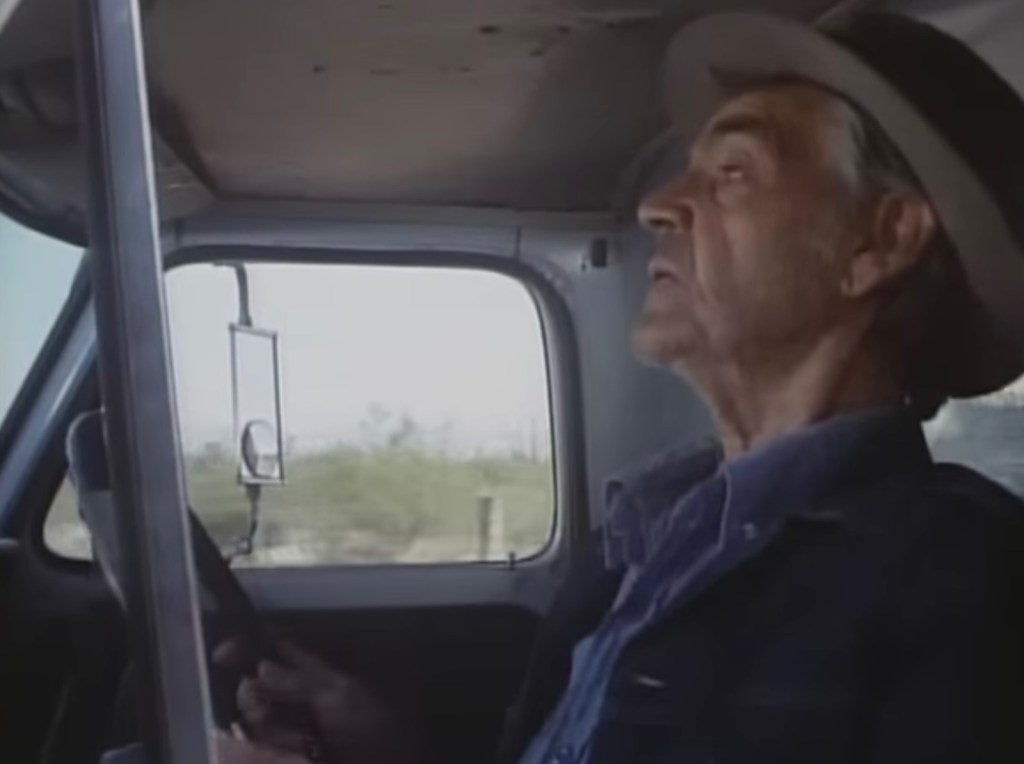
That’s him, that’s Eddie Quillan.

Some viewers might recognize his ragged hat and surly face from his multiple appearances on Little House, where he played various minor characters—his last role being in the ninth season.

That’s him in the ninth season, the father of an orangutan.
As will become apparent, that fate isn’t unique to him; other actors from Little House also reappear at some point in Highway to Heaven. And Quillan himself will appear in another episode of this series, in a couple of years. In a different role, though.
Back to the scene: Michael Landon’s character—still unnamed—hitchhikes. And of course, Quillan (credited here as “Clyde”) pulls over, but not out of kindness. He charges Landon some cash if he wants a ride, saying, “Nothing in this world is free.”
It’s actually pretty strange that someone would actually stop at the request of a random man who looks like a desert-drifting psycho. Then again, Clyde himself looks equally deranged, so maybe it makes sense.
However, what’s remarkable about this moment is Landon delivering the first witty punchline of the series.
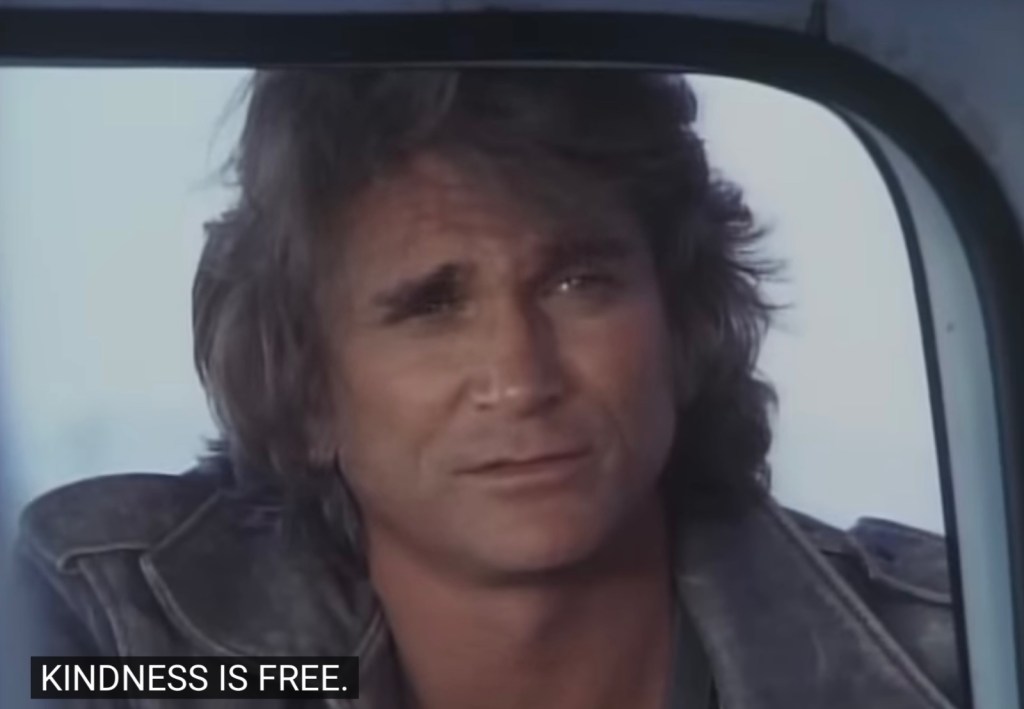
It sure is, and everybody knows that, right.
It’s better you get used to his remarks soon, because there’s plenty of them to come.
As Clyde drives off, Jonathan gives the truck a threatening look—and the vehicle suddenly breaks down.

With a smug expression, he approaches the car in a way that would make even the most composed man lock the doors and pray.

But here we learn the first lesson: never judge a book by its cover. He simply checks under the hood—and like magic, the truck is fixed. Clyde’s attitude changes instantly, and he invites him in.
We finally learn the man’s name: Jonathan. He’s headed to a retirement home.
Now, the exact location of the place is unclear: in the original script, Jonathan was supposed to say “Arivaca”, which is a real town in Arizona, where this episode was produced (from March 12, 1984 to early April). However, in the final episode he says “Oroville”, which is a real town in San Francisco, not where this episode is set. It’s unclear why Landon originally meant to set the story in a real town, and then changed it to a another one while making the actual episode. Either way, given that it was produced in Arizona, this “Oroville” is more likely to be a fictional town there. And this will be one of the few episodes in the series to be set out of California and in Arizona instead.
Anyway, once there (wherever “there” is), he gets hired as a handyman for the struggling facility—which, of course, lacks funding and is falling apart. Mr. Haskins, the owner, is naturally skeptical of him. Jonathan more or less appears out of nowhere and even makes odd comments during the interview, such as:
“My name’s Jonathan Smith“
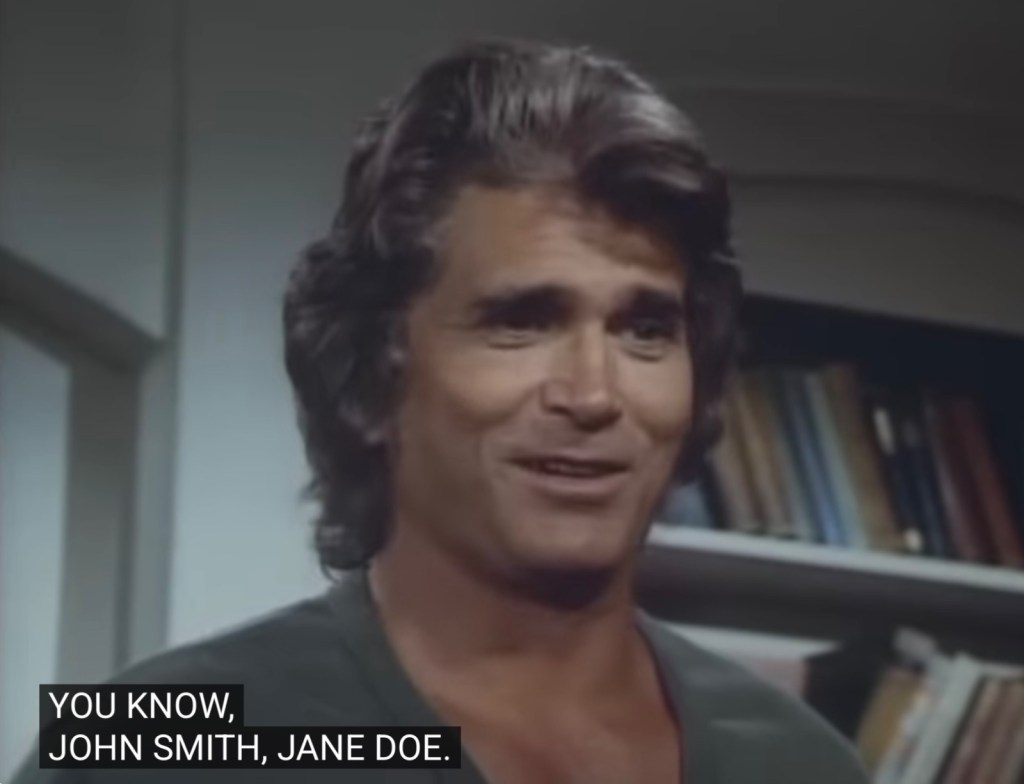
I mean, not exactly the kind of joke to do to your potential employer. But Mr. Haskins wants references first, so Jonathan begins his moral lesson.
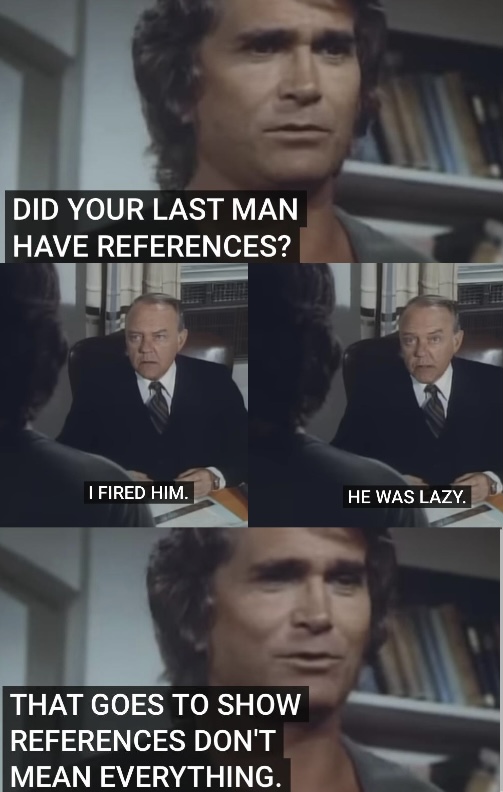
Impressive, Jonathan.
But pretty surely what makes him lock the job is his final offer.

That’s basically modern slavery—but let’s not ruin Jonathan’s idealism just yet.
After this very 80s job interview, Mr. Haskins orders the only social worker there, Leslie, to show Jonathan around. When Jonathan inquires about the condition of the place, Leslie replies that they’re about to be evicted. As they’re chatting amicably, Leslie struggles to find the key to the supply room where the tools are kept. Jonathan offers to give it a try, and—magically—it opens. He then leaves her with a casual punchline.

Okay, I guess Jonathan has lived long enough to say that with such confidence. I mean, he must be remembering some previous life as a Minnesota farmer, else it is impossible to explain how he came up with such a comment. But what’s even more absurd is Leslie’s response: “Times change.” And there he goes with another lesson.

Right, Jonathan´s idealism strikes back.
It’s worth noting that in this episode, more than in others, he frequently drops punchlines to show off his heavenly worldview – and shut people up.

That’s basically the audience’s reaction too.
Anyway, he begins his job—or rather, his “assignment” (more on this later). And he befriends some of the residents, including guest star Helen Hayes.
Here, she plays Mrs. Estelle Wicks, an elderly guest at the home who refuses to accept her condition, as she sees facility as nothing else than a prison and keeps insisting that her daughter is away on business and will pick her up as soon as she comes back.
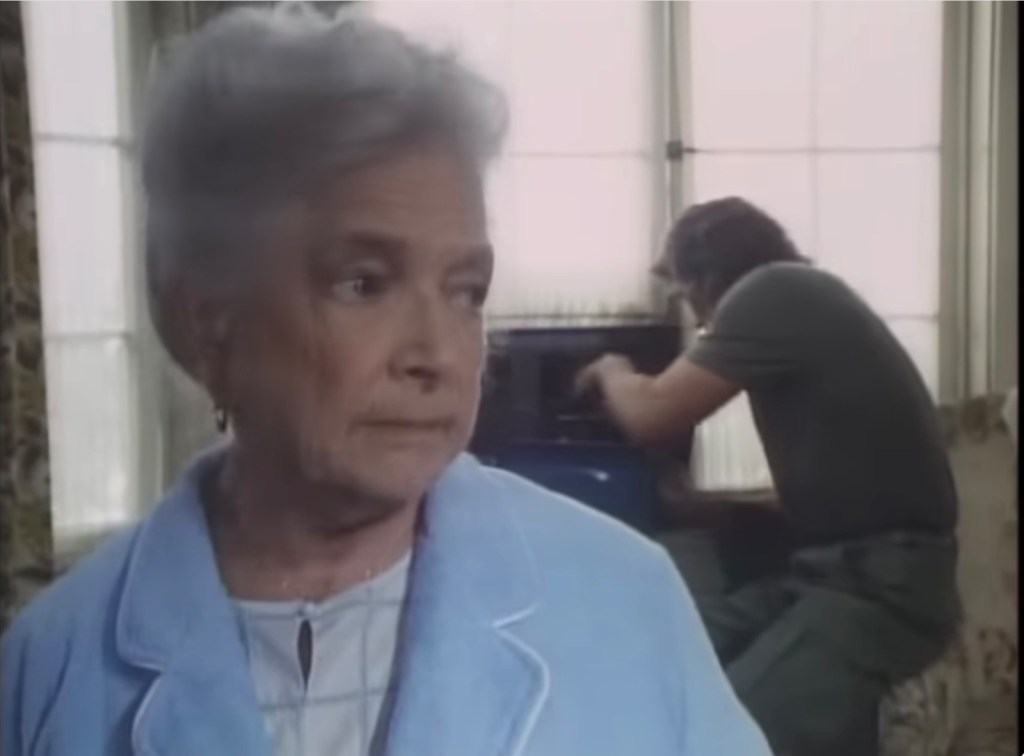
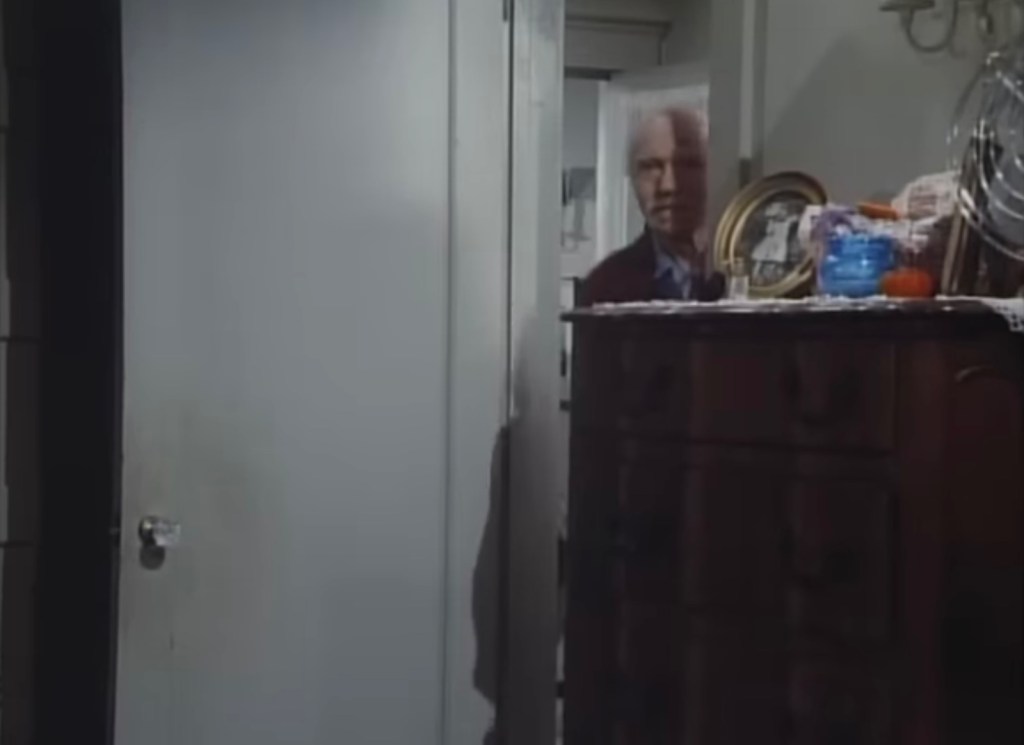
Now, that’s a big name. She’s an experienced actress with a career spanning more than 60 years and a recipient of multiple accolades, including two Academy awards plus a Tony, just to mention some. She must have been very admired by the fellow actors there, as there’s someone sneakily peeking into her room.
Now, back to the main story: Jonathan, without asking permission, plants some flowers in front of the building and reassures Mr. Haskins he doesn’t have to pay for the materials as a “Friend” provided it.
As Jonathan walks away, Haskins mutters that the place is going to be sold and destroyed all the same, so the flowers are pointless. He’s overheard by one of the elderly residents, who is, for some reason, spying on him from the window. In a the most cartoonish way imaginable.
Why is he doing that. H’s the same guy spying on Estelle; I mean, you’ve got to stop doing that, really.
Anyway, his name’s Syd and he’s played by John Bleifer — who already guest-appeared on Little House during one episode in the fifth season. So, two Little House guest stars on the same episode here.
Also, just to give some context: production of the Pilot took place in Tucson from March 12, 1984 and lasted almost a month. It was mostly shot on location, rather than a studio set.
This elderly house in particular is the “Casa Elizabeth Seton“, a parish in Tucson opened in 1953 and still there now.
Next, Leslie informs Jonathan that her neighbor is renting out her house, in case he needed a place to stay, and offers to walk home with him. Jonathan accepts, but they discover the owner isn’t back yet. When Leslie and Jonathan enter Leslie’s apartment to call her neighbor, Jonathan is introduced to Leslie’s brother: Victor French playing Mark Gordon, who will be instantly recognized from his baseball cap he’s going to be wearing in most episodes of the series.
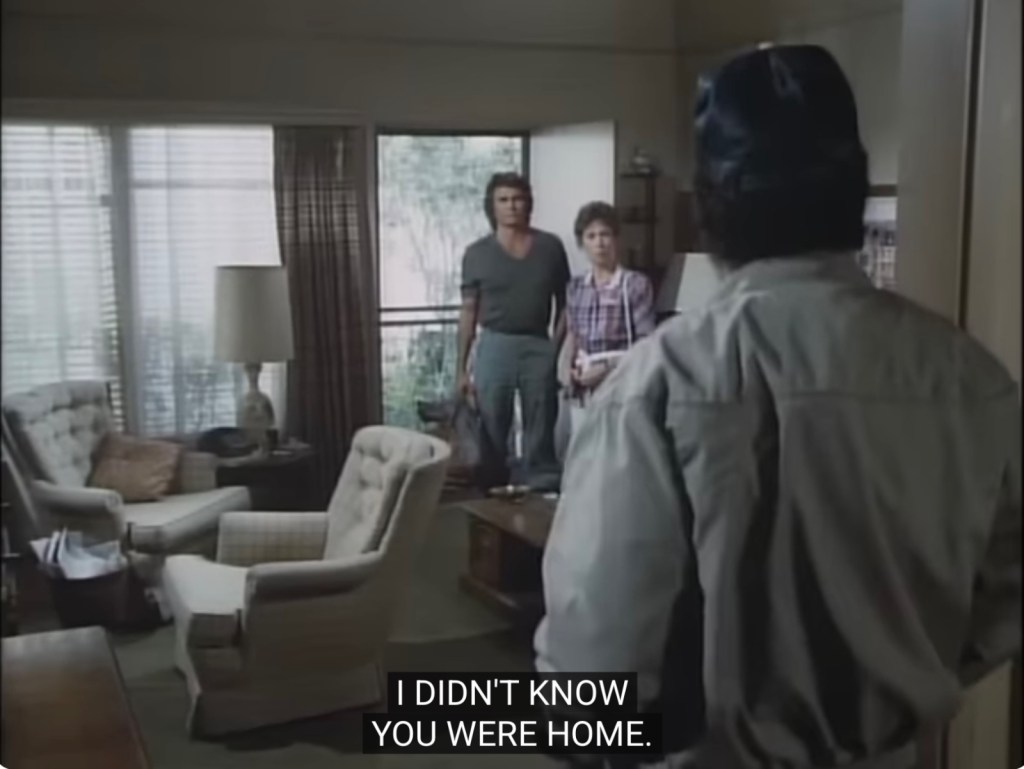
And there it is, all the main characters are in: Charles and Mr. Edwards finally back again.
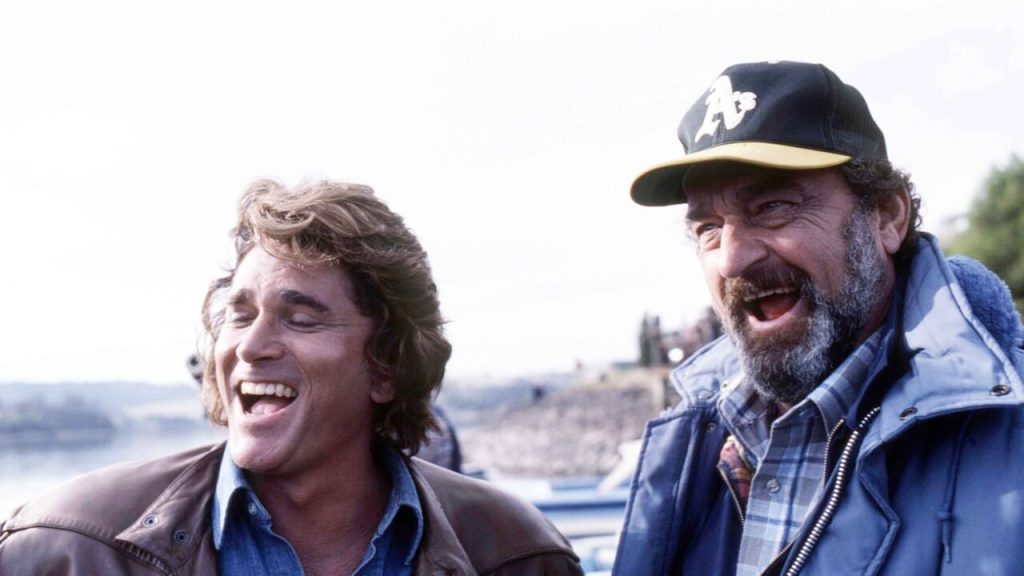
Anyway, Mark tells Leslie he got fired and came home early, then he brushes Jonathan off.
Leslie apologizes for her brother’s erratic behavior and reveals part of his background: he used to be a cop in Oakland, where he worked for 15 years, roughly from 1964 through 1979 (keep in mind, it’s now 1984). Over time, he grew disillusioned and cynical, eventually losing hope in humankind — so he started drinking, which led to his suspension from the police. Then, he moved in with her and worked on and off at various jobs, usually getting fired due to his drinking and unreliable behavior.
So, just one backstory like another.
That night, Leslie knocks on Jonathan’s door, asking him to help her look for her brother, who hasn’t come back yet, and Jonathan immediately head to a seedy bar. I mean, it was pretty obvious Mark was there, a drunken man like he is; it’s astonishing Leslie couldn’t figure that out by herself. Or maybe, she desperately asked Jonathan because she just wanted to hear one of his punchline again.
But he doesn’t drop any, and simply gets there, where — of course — he finds Mark, getting drunk alone.
There, Mark delivers a monologue that essentially recaps what Leslie had previously told Jonathan and the audience about him — but in a more drunken state.
Just one thing: people might like him or not, but French is undeniably effective and exceptionally good at playing a drunk character. Also, for the first time in the episode, Jonathan finally quiets down—a further proof that he’s astonished too, by Mark’s committed acting.

This moment is as good as any to talk a little about his acting skills: French is a Los Angeles native, but his character in Little House spoke with a strong Southern accent; in his main role on the sitcom Carter Country —which was set in South as well — he had a similar accent (and a convincing one, too). Now, in one of his very rare TV interviews from 1978 (while promoting Carter Country), he boasts that very same accent, which was so convincing that it even fooled some internet user into believing it was his real accent (read the comment to that video).
However, here Mark uses a Californian accent, likely his real-life one. One plausible explanation is that he was using a “method” approach to acting, which consists of retaining certain features of a characters an actor is playing for a show even off-screen.
For comparison, look at Michael Landon’s characters: whether he was playing a cowboy over some fictional Ponderosa ranch, a Wisconsin then Minnesota farmer, or now an angel, he always speaks the same New Yorkish way. On the other hand, French actually fitted into each role more thoroughly, arguably played more varied types of characters throughout his career and had a more extensive range.
Nothing against Landon here, just something to recognize French’s overlooked talent and magnitude.
Anyway, once he’s done, Mark approaches a girl and a pair of thugs berate him, so they lead him to the back of the bar.

Apparently, people use the back door to when going out of a place and getting into a drunk fights—but maybe that’s just the American way. Also, the alley is completely permeated with litter and bins, which will be a recurring theme in the series.
Back to the story: the men beat Mark up.
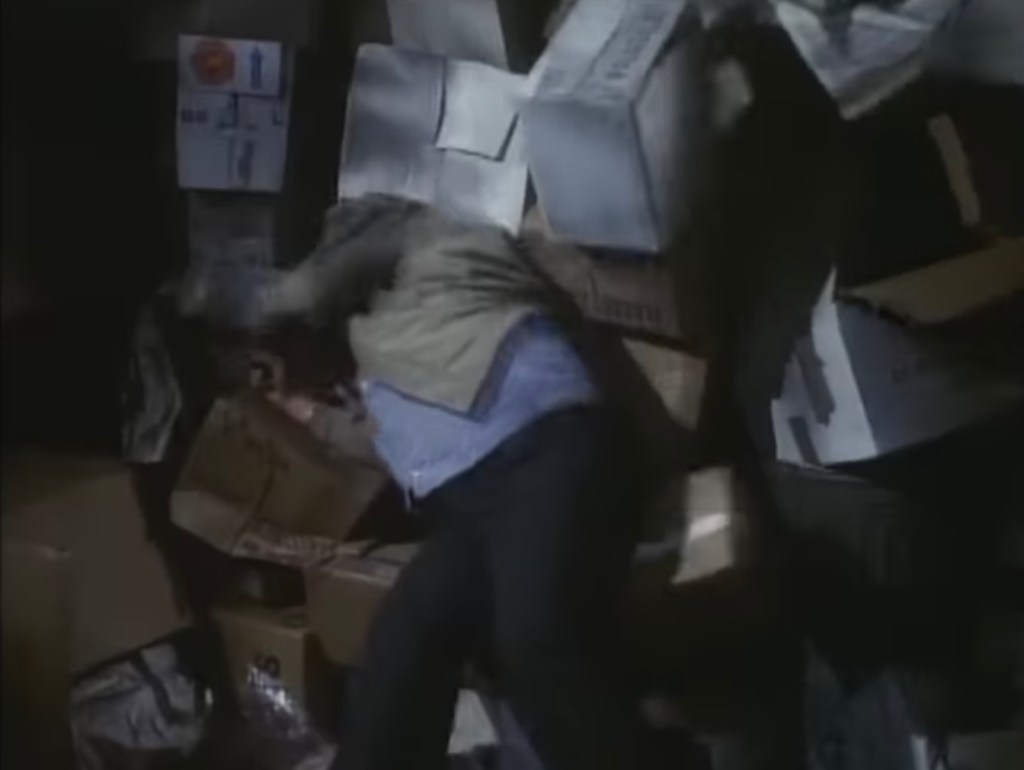
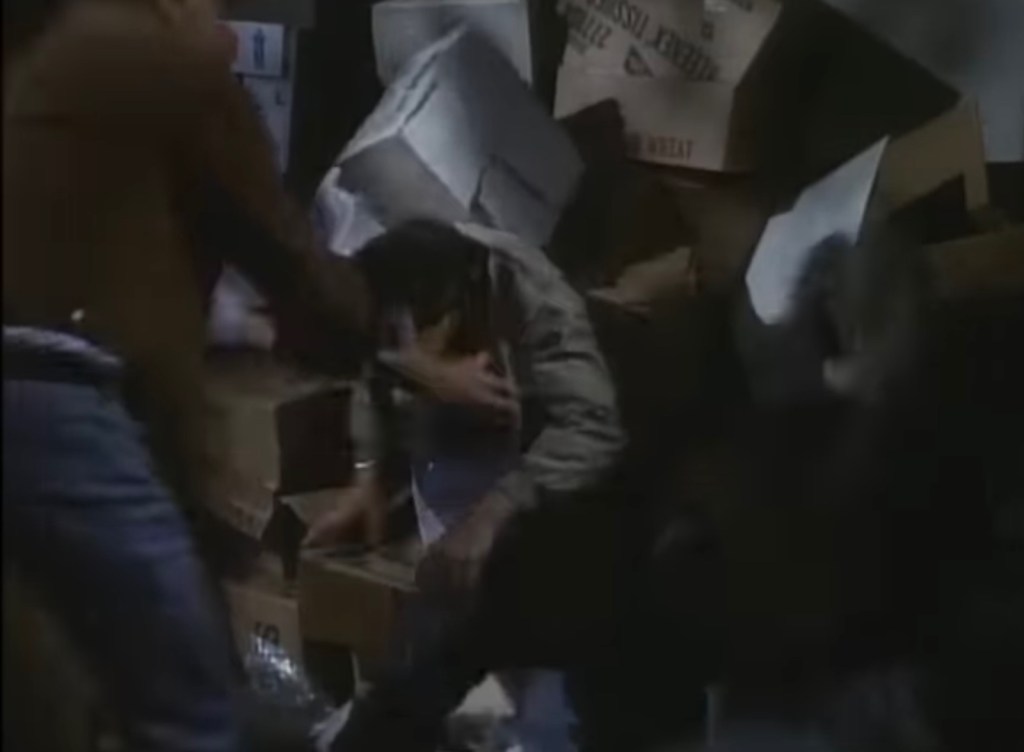
As he’s knocked unconscious, Jonathan follows them and politely asks them to stop—as if he really expected them to listen. Unsurprisingly, they don’t, but they attack him too. And what follows is this.
Although Jonathan probably used the help of a hidden platform or chair placed beneath the the actor from which he steps on, but whatever. He lifts him up in the air and even mocks him saying:
“I turned the other cheek”

So, just because you did that and he kept punching you, now you can punch him back too.
He literally throws the thug over some conveniently placed boxes behind him, and so does with the second one. Then, Jonathan carries Mark home. In some way or another.
Curiously, the scene was originally supposed to be longer: in the original script of the episode there was an additional scene where Jonathan would drive Mark home, and Mark would compliment Jonathan for the fight. So Jonathan would drop yet another punchline by telling Mark that hurting people isn’t something to brag about, and Mark would reply that it was legitimate because they attacked him and outnumbered him. Then, he adds that he didn’t ask for Jonathan’s help, so he could have left him there. And Jonathan tells him that helping Mark was, hopefully, “the lesser between two evils“, while mysteriously glancing up at the sky.
However, this entire scene was removed from the actual episode. Perhaps Landon realized this episode had too many punchlines as it is. Without it, though, how Mark safely comes back home remains a mystery.
The next day, Jonathan waits for Leslie at her door with a bicycle and invites her to go to work with him. If that weren’t random enough, when she inquires about the bike’s origin, he simply tells her they were provided by a “Friend” — just like the flowers earlier on.
Also, he must have known she was able to ride one—I mean, we can’t assume everyone knows how to do that.
Anyway, they gleefully ride together in a scene that borders on awkwardness conventionality and experimental, modern flair.
For some reason, the score is more adventurous than dramatic. I mean, how many times has a movie or TV show featured a scene where the main characters silently travel from one place to another with a romantic, feel-good score? Here, it feels dreamy, quite surreal and out of place — and it exudes pure ’80s TV vibes.
Then we get to work, and Leslie is scolded by Mr. Haskins for being five minutes late.
Honestly, these workers seriously look more and more enslaved. Definitely not a good environment.
That afternoon, Leslie stays in the kitchen, and Mr. Haskins informs her that all the guests have gone missing and orders her to find them. Finally, we have a mystery to solve.


But, it is a short one: Jonathan has invited them all to a barbecue in the garden.


The real mystery though is how neither Leslie nor Mr. Haskins couldn’t notice that. Weren’t they making any noise at all, even as they left the building? Still, everyone seems happy with Jonathan around, and no one minds at all.
Leslie seems actually to feel something for that mysterious man.
Just a reminder of those very awkward zoom on some random silent faces, very 80s.
That night, Mark eventually confronts his sister about Jonathan, reasonably questioning where he got the money to pay for the flowers, the bicycles, and the food for the barbecue.
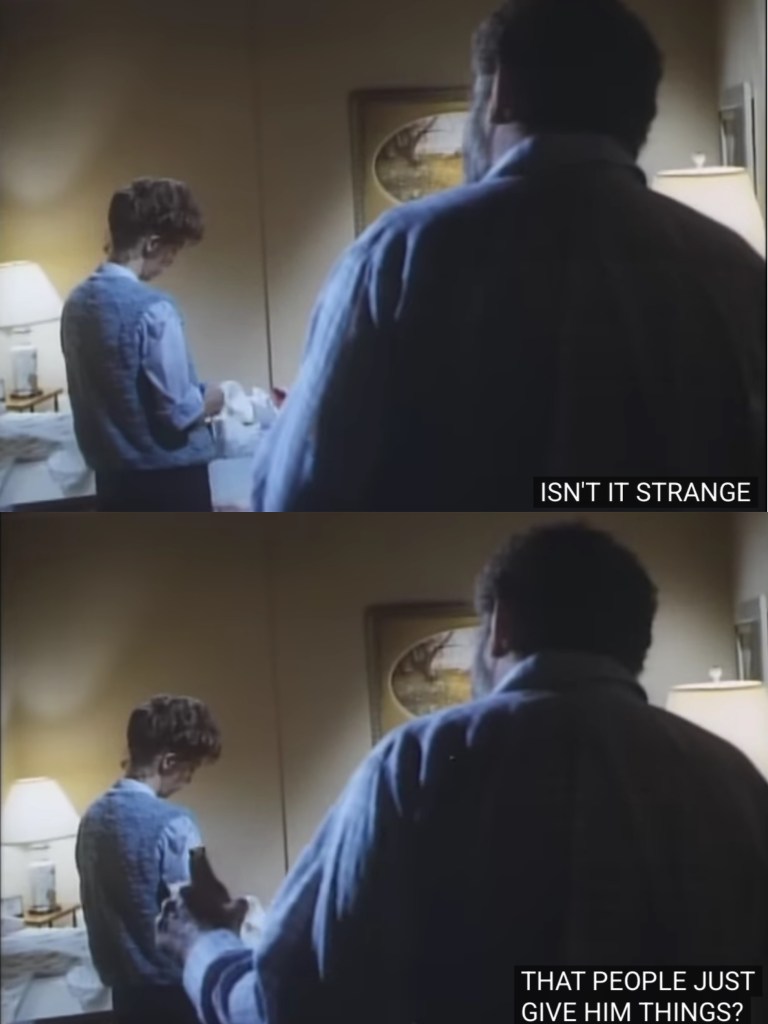
And, remember, he isn’t paid at all during the first month of work.

But she cuts it short.

I mean, it’s kind of ironic to notice that Mark — supposedly a drunk unserious character — is actually the only one that seems reasonably wary of Jonathan, as everybody else either ignores him (like Mr. Haskins) or goes along far too easily (Leslie and the old folks). It’s almost as if they have all just been waiting for an angel to get into their lives and help them.
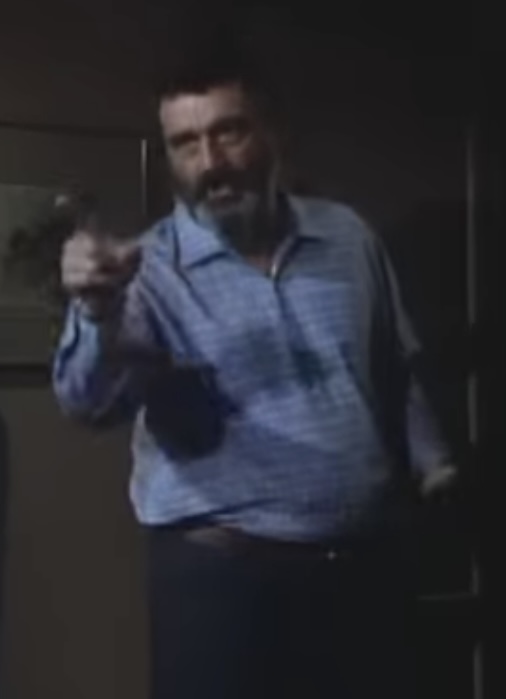
Give him a break.
The next day, the elderly man obnoxiously tries to impress Helen Hayes, who keeps her distance. As anyone would, she finds him way too pushy and insistent.

But she must be suffering from some memory disorder as she continues with:

Which feels exaggerated even for a 90 something.
Here, one curious thing: as revealed in an article from a local Arizona newspaper dated March 17, 1984, the making of this scene turned out to be harder than anticipated by the crew. Apparently, they realized too late that the railway where they placed the camera following the character was too short, so they had to pause for half-an-hour to add new pieces. Then, it seems that Syd (or rather, John Bleifer) had a hard time keeping up with Estelle’s pace, and fell behind her three times instead of siding her as Landon wanted; so, they had to encourage him to move faster, despite his age. Finally, when Bleifer successfully found the right pace, some planes by the Navy flew overhead and jammed the audio, leading to yet another pause for another ten minutes waiting for them to go away. Keep in mind: all this work for a two-minute scene in a ninety-minute show.
That’s notable: I mean, it shows people the impressive commitment, imposing effort and tremendous amount of work behind each scene of this episode. But more generally, of this series. Or of all series.
Anyway, Leslie invites Jonathan to have dinner at her place and politely asks Mark to leave. Basically, she wants her drunk older brother to go out and get drunk even when he doesn’t feel like it.
But he mysteriously accepts — not because he’s that hankering for drinking or something — but because he has a plan: he goes to town and asks every bike store if a guy named Jonathan Smith is related to any of the owners (or something along those lines), to check on who this mysterious “Friend” of Jonathan is. However, nobody knows him, and Mark detects with his cop’s sense that something’s off.
Since he finds no clue, Marks devises a masterful plan: that night, he pretends to drive off in his car.
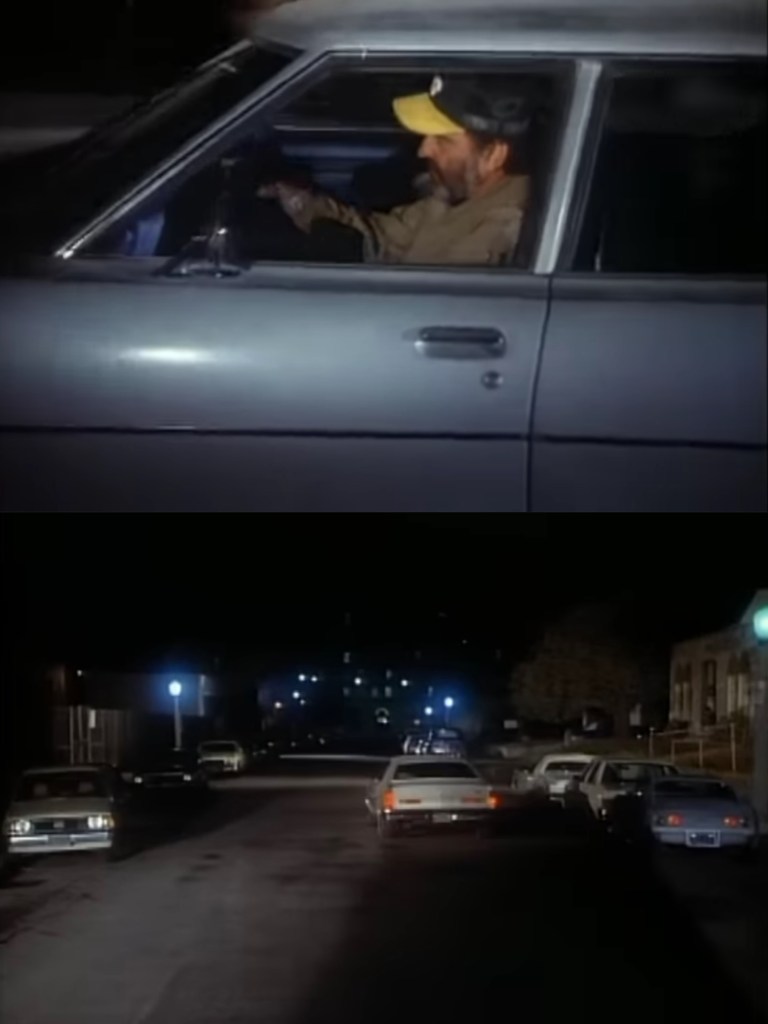
But then makes the most unnoticeable. quiet U-turn of them all.
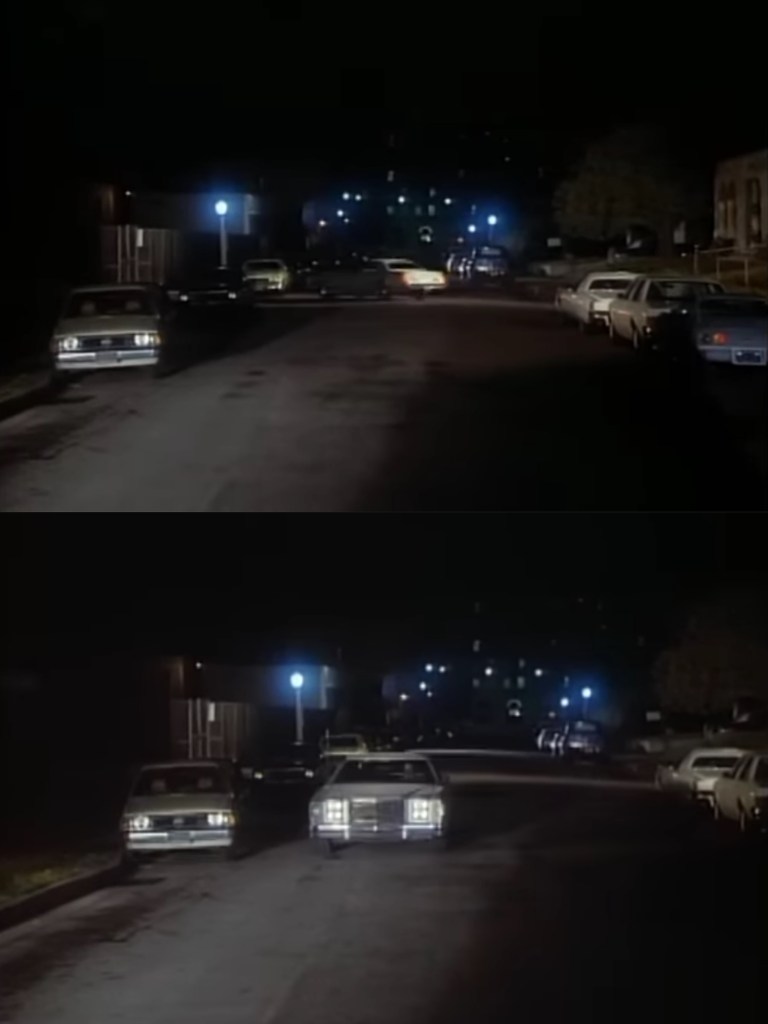
So, he waits for Jonathan to go have dinner and, equipped with a flashlight, walks right in his apartment. just like that. Was the door unlocked? Left open, maybe? Either way, Jonathan is at least consistent with his preaching: no need to use a lock, just like a hundred years ago. You know, when “We used to trust each other“.
Anyway, the house is strangely empty, with no chairs, no TV — most importantly, no food in the fridge.
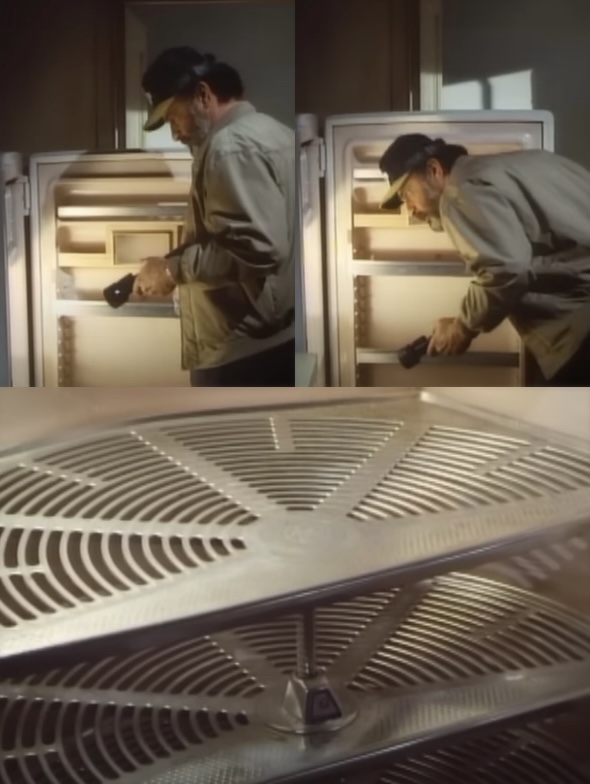
That’s curious.
But Mark isn’t alone for long, as Jonathan returns to grab some cheese that Leslie supposedly forgot to buy (or maybe it was mysteriously made to disappear so Jonathan would have a reason to come back).
Anyway, here he is. Mark quickly hides behind a door in the back, and Jonathan, after taking some cheese from the previously empty fridge, calls him out.


What kind of door is that anyway?
Mark steps forward and confronts Jonathan, tells him everything he’s discovered so far on him (which, basically, is nothing) and mentions he most suspicious thing of all.

I mean, how could he keep his face perfectly shaved without having a razor — that’s a trick Mark might want to learn as well.
Jonathan has no way to evade from this now, and for the first time, the truth is revealed: Jonathan confesses that he’s a “probationary” angel sent on Earth to help people going through difficult times — a mission he refers to as an “assignment”. He moves from town to town, receiving just enough information on each assignment, and leaves once he completes it.
Currently, his assignment is to help Mark’s sister deal with both Mark’s alcoholism and the foreclosure of the retirement home she’s been working in.
So, it’s all clear now, isn’t it.
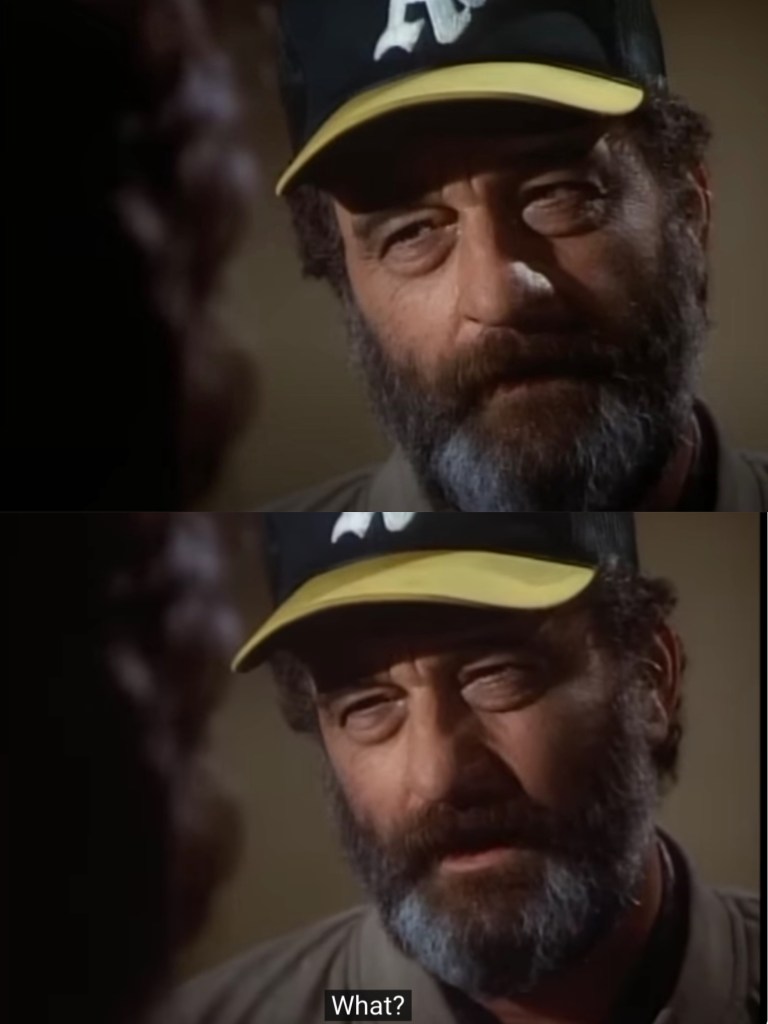
Apparently, Mark is confused and threatens to call the police all the same, but Jonathan warns him that it would be pointless: by the time they arrive, he’d be gone, and the assignment would remain unfinished; most importantly, he drops another of his punchline.
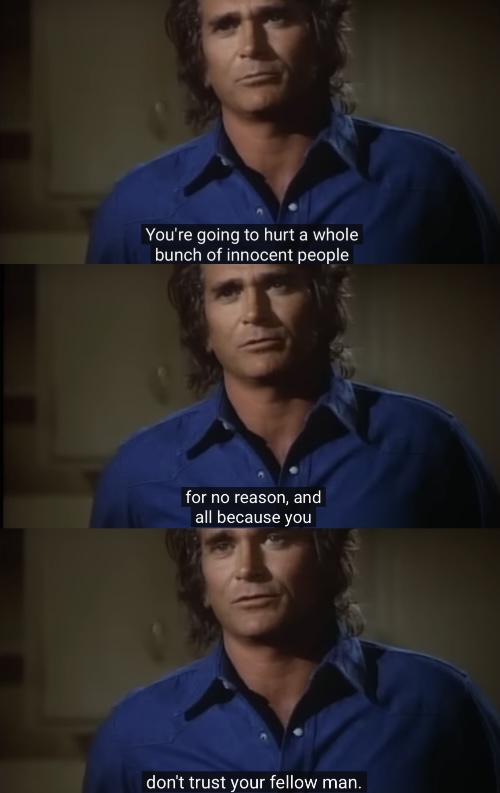
Except that you’re no ordinary man, but an angel — actually a probationary one.
Now, hold on just a minute—the audience must be pretty shocked by this revelation. But there’s a problem with such explanation: if Jonathan has some kind of divine backing—like when he received the flower and the bikes— why isn’t he provided with a fake identity (as he actually is in later episodes) to defend himself from Mark’s allegations to the police, instead of having to abandon everything so abruptly? Maybe he could, but he still didn’t want to get Mark embarrassed in front of the police—after all, who would ever believe a story like that.
Or maybe this was just the pilot, and the writers hadn’t yet fully outlined how they are going to deal with the problem of Jonathan’s identity in later episode.
Also, going back to the beginning: if Jonathan is an angel with no need for food or sleep (hence the empty house), what exactly was he carrying in that convicted-felony bag at the start of the episode?
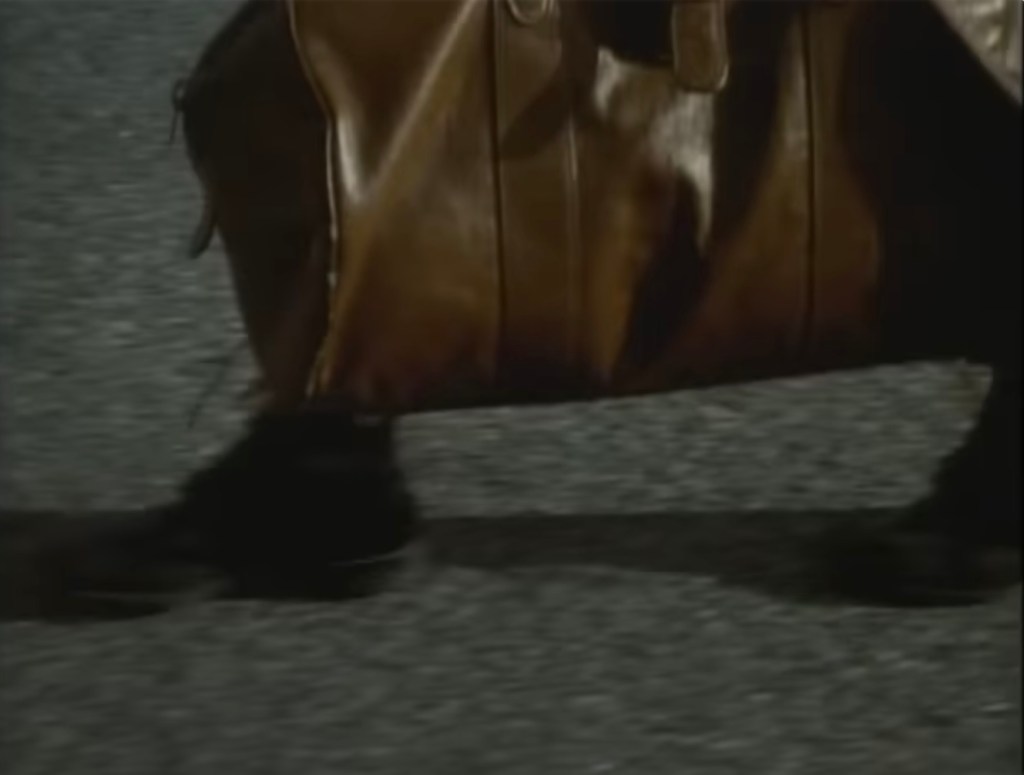
Now, what’s in there.
Anyway, one thing to notice: in this initial revelation, Jonathan doesn’t actually make references to any specific religion. While he clearly aligns with the Christian concept of angels (or else he might have called himself a ghost or something), his explanation doesn’t entail any particular faith whatsoever, which makes it globally relatable. Good job, really.
Back to the story, when Jonathan leaves, Mark quietly walks over to the fridge and finds it stacked with steaks, which puzzles him.

I mean, you didn’t actually buy that… did you?
Back at Leslie’s place, dinner is interrupted by a phone call from work: the elderly residents discovered they will be evicted the next day. Jonathan and Leslie prepare to head out, and Mark, lurking behind the bushes, spies on them.
When they move in his direction, he suddenly stands up—much like his character in Little House during Alden’s Dilemma (remember that?)—and orders his sister to stay away from Jonathan. Who knows, maybe he was afraid Jonathan was taking her wherever he came from.

Mark, what are you doing in the bushes?

Okay, relax. Never mind.
But she quickly clarifies that they’re just going to the retirement home, and Mark offers to drive them—though not before warning Jonathan that he hasn’t called the police… yet (emphatically stressing the word).

Jonathan replies with a soon-to-become a classic catchphrase for the rest of the series: “I know.”
Apparently, he’ll “know” a lot of things before they happen.
At the home, the elderly residents complain that they’re being treated worse than animals (which may be a bit of an exaggeration) and feel abandoned by the system.

I mean, don’t exaggerate now
It seems like the perfect moment for Estelle to reveal she lied about her daughter: she didn’t go on a business trip—she just sent her in that retirement home and would never go there for her. It’s a touching scene. So, let’s move on.
The next day, Jonathan sneakily enters the office of the wealthy property owner, Sinclair—and pause right there: he’s played by actor Joe Dorsey!

He would return later on in the series as a similar yet different character.
Sinclair is a little annoyed by Jonathan’s entrance, which exposes an evident flaw in his supposedly high-tech security system.

Sorry, but you should have that system checked sometimes
Jonathan calms him by calling him by the nickname his childhood sweetheart used to.


“Cubby“. It sounds more like a childish insult, but as long as you like it, fine with me.
Still, he’s unable to persuade Sinclair to change his mind—the property is being sold. The only way to save it for Jonathan is to present him with a better offer. Because, you know, people just think in terms of money.
Of course, the conversation can’t end without Jonathan getting the last word: he tells Sinclair that his childhood sweetheart died waiting for him, while he chose wealth over her love.
Back at the apartment, Jonathan and Mark discuss what to do (apparently, Mark did accept the dinner invite), and Mark challenges Jonathan: if he’s really an angel, why not just materialize the money, like he did with the flowers, bikes, and food? But Jonathan, as the great poker player he is, refuses to show all the cards up his sleeve and simply says, “That’s not how it works”.
Without explaining how it does work either.
So Mark comes up with an idea: gambling. That sounds like a crazy resolution for the episode’s payoff, but Mark actually provides a convincing argument: even though gambling is religiously deplorable, it’s for a good cause. And if they win, they’ll know it was meant to be. If not, then they’ll know Jonathan’s superior didn’t allow it. Jonathan seems to agree and tells the residents, who all decide to follow their best angel on his crazy plan. Or maybe they were just hoping to go have some fun at the rodeo.
Mark collects their money, and they all pile into Clyde’s car (the guy from the beginning who initially refused to pick Jonathan up) and head to the Arizona horse race.

Such a fine, American family.
But, as someone remarked somewhere else, it’s not very safe. And that’s probably not legal either.
So, they somehow get to the rodeo without injuries, fortunately. Jonathan carefully inspects every horse, waiting for a “sign” (he literally says that), and is drawn to horse number 5, who stops in front of him, unlike the others. Again, this is just the pilot, and it’s likely the writers hadn’t fully developed the extent of Jonathan’s powers yet.
They ask one of the elderly residents to place the bet—all on number 5, “on the nose” (getting technical now), which confuses a bit everyone. Finally, the bets are placed, “the hat’s in the fire,” and the race is on.

I’m not sure about that neither
Eventually, number 5 finishes second, and everyone loses hope. But as they’re leaving, there’s a final surprise for them: somehow, the elderly man placed the bet on the winning horse and they won it all. It’s left unclear whether it was a mistake, divine intervention, or just dumb luck. Either way, they celebrate their win and buy back the retirement home.

And they won $116,000.
Ironically, when they get back to the house, the first thing they do is asking Mr.Haskins to remain as the house’s guardian. I mean, the same guy who enslaved everybody, forbade them to have barbecues and scolded Leslie for being 5 minutes late. Some sort of of Stockholm syndrome, I suppose. Or maybe just a nod to modern-day servitude we still haven’t fully moved on.
I guess it’s true what they say. “Old habits die hard”—did you see that, Jonathan, that’s my punchline.
Back to the story: they throw a party and start dancing some lento in the hallway.

So, Estelle really fell for that harassing, obnoxious, grumpy man.
Outside, Mark finds Jonathan.

Mark, if that’s your idea of party, that explains a lot. As it will become apparent later in the series, Mark really likes to hang around old folks.
Anyway, Mark and Jonathan finally chats like the nice pals Landon and French supposedly were for each other. Mark first does the talking: he admits that helping others made him feel a better person and thanks Jonathan for helping him find hope in humanity again—and for helping him stop drinking for good.
Then, it is Jonathan’s turn, and he confesses that the worst part of his job is when an assignment is successfully completed, and he has to leave everyone behind to move on to the next, without having the chance to enjoy the success with the people he has befriended and trusted along the way.
He tells Mark he has to leave that night and won’t be able to say anything to Leslie about it. Mark tries to convince him to stay, but Jonathan is resistant. However, he couldn’t possibly leave without delivering one last of his unwanted advises: he tells his now friend Mark to get off his sister for a while and let her live her own life, since she has spent 5 years worrying about her alcoholic brother. Mark answers that it’s normal for her to look after him.
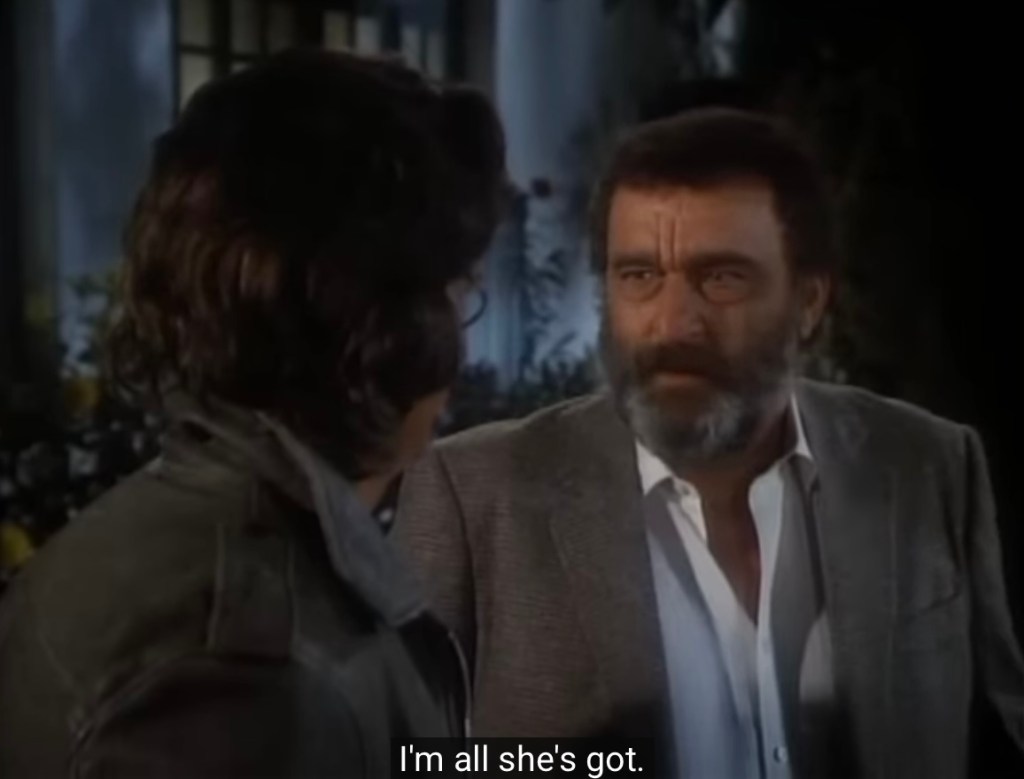
Jonathan finally convinces his friend with another punchline. And, from Mark’s reaction, it’s effective.
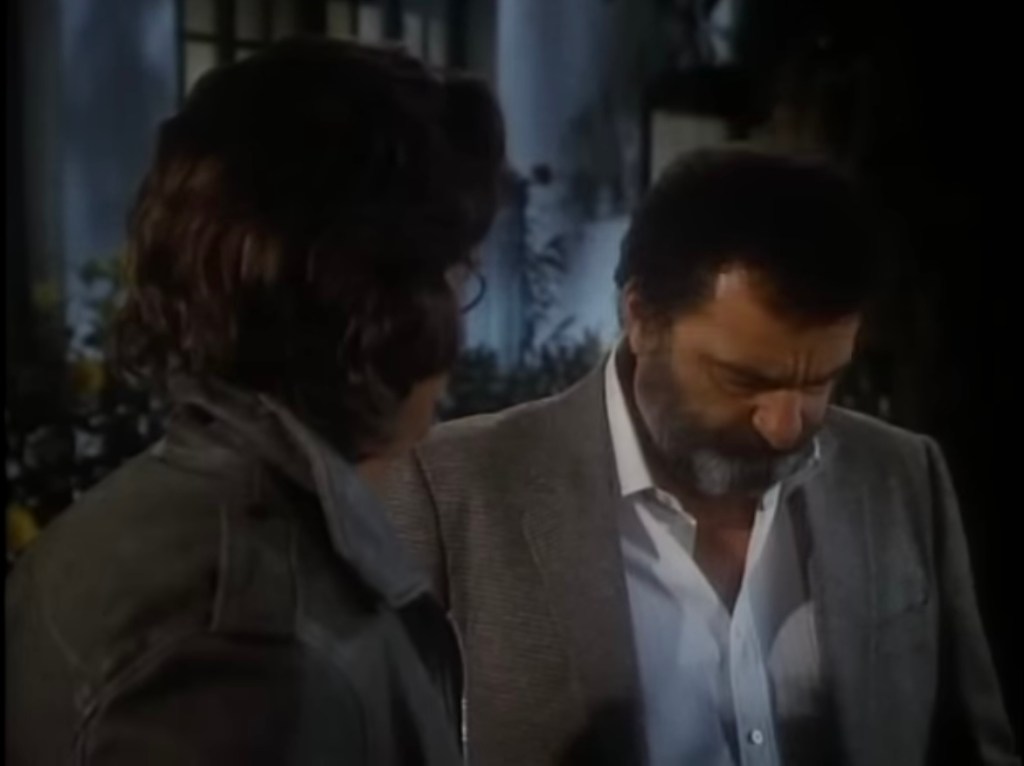
“No, she’s all you’ve got“.
Then Jonathan hugs his friend and somberly leaves him.
When Mark tells Leslie that Jonathan has left, she immediately rushes back home.

Apparently, a new tenant literally said he’s just moved in; like a couple of second ago. Let’s not comment on that.
Either way, from their acting it is implied that Leslie and the new tenant will have a relationship.

Fast forward a few seasons later, we know this isn’t the case, but we’ll leave it there for now.
In the epilogue, Jonathan is again on the road, alone. But in Tucson, apparently. How he got there, it’s a mystery they’ll never solve in the show. Suddenly, a car approaches and he pulls his thumb up.

So, who may that be? Some runaway criminal of the highway who just held up a bank? Another probationary angel who randomly passed from there as well? Or maybe a drunken ex-cop from Oakland who’s now a better person and wants to follow the angel along the Highway To Heaven?

Yep, that’s Mark, who wants to join him on his future assignments helping other people across the States.
Jonathan is quite bewildered, so Mark tries to persuade him by saying:

Which is kind of disputable, since he didn’t believe Jonathan was an angel up until yesterday.
Still, Mark insists on going with Jonathan and reassures him that he can send him back home if he won’t be good at it. However, Jonathan firmly refuses, believing his “superior” wouldn’t approve of a (probationary) angel having a human assistant on his assignments.
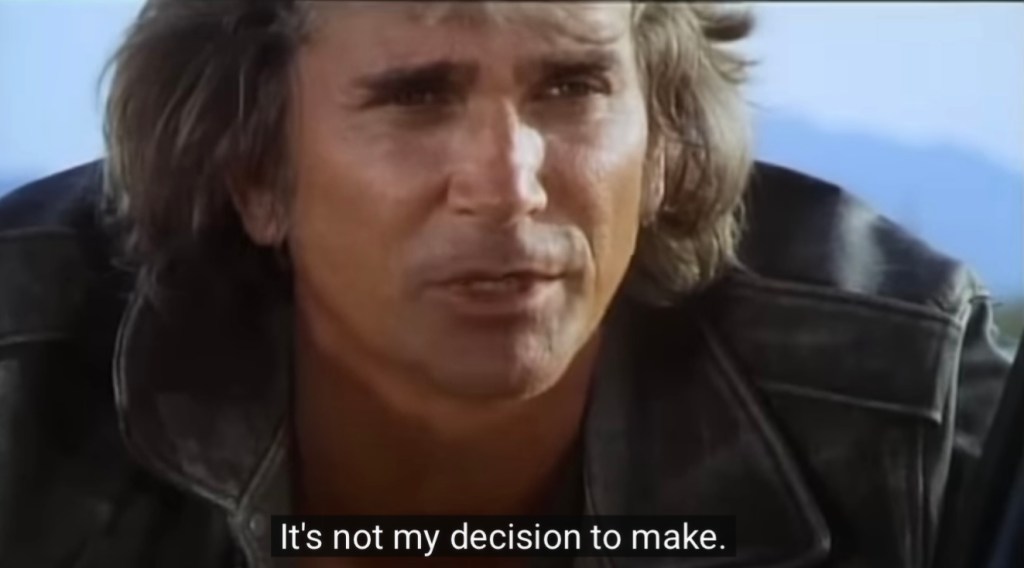
Which is quite disputable, as well: I mean, just Mark finding Jonathan (who had left the day before) in the middle of a faraway desert road (consider that Jonathan could have taken any direction and Mark had no clue about it) is already a pretty strong indicator they were supposed to be reunited and eventually work together.
Yet, Jonathan doesn’t seem bothered by such thought.
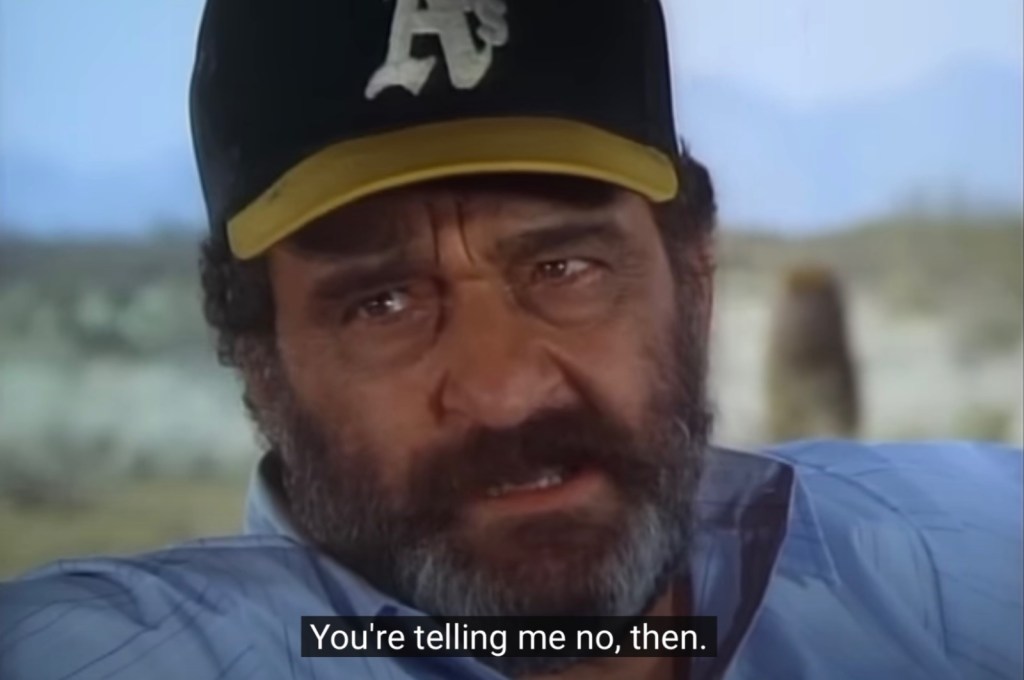
Rather, he has a heartfelt confrontation with Mark, telling him it doesn’t take an angel to make things right or help other human beings. Then, they hold hands together, and Jonathan tells him to leave.

This moment is admittedly touching, not just for their poignant acting but also as a symbolic ending. It’s almost as if this were the actual series finale, with Mark driving away and never seeing Jonathan (the angel, or whoever that man was) again. The rest of the series feels almost like a dream of what could have happened if they had actually become friends and gone on to save others. But it didn’t happen. Sometimes, people have a chance they don’t seize when they should have; some other times, they don’t recognize it, and in some cases, they just unsuccessfully try so hard until they realize that it wasn’t in their “fate,” or they were forcing themselves to be something they were not. And their confrontation embodies all those missed chances.


Also, the whole scene could serve as a round closure for the series in case it hadn’t been picked up by the producers: the assignment is concluded, it’s not like the pilot of Little House, which demanded a follow-up. I mean, Mark tried, he couldn’t stop him, so he turns around and leaves it be, just like that.
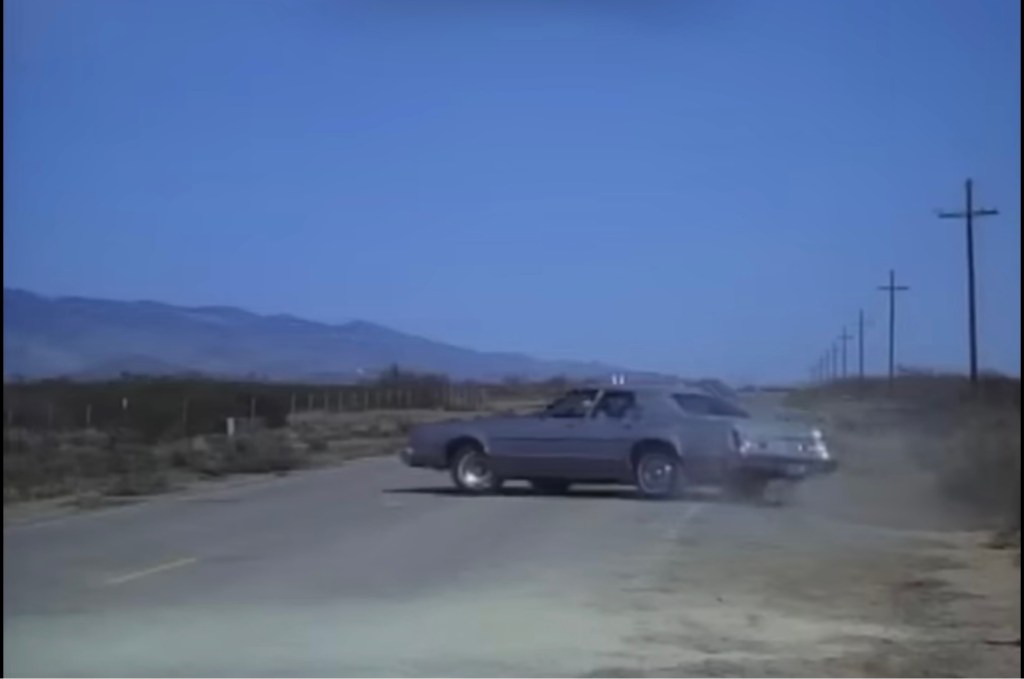
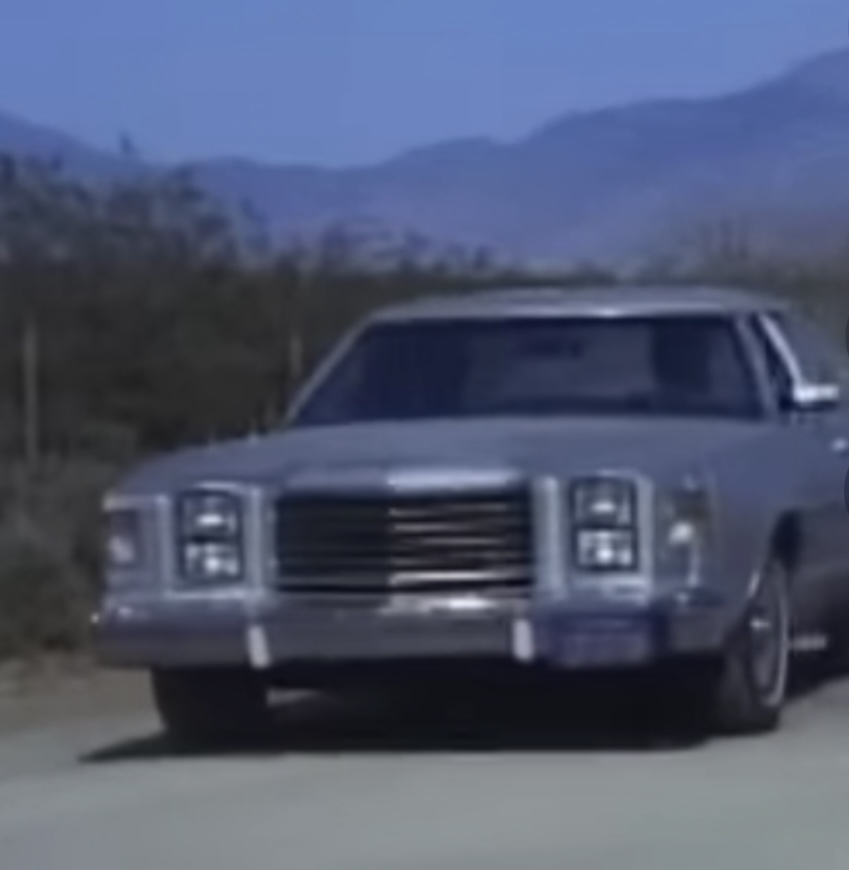
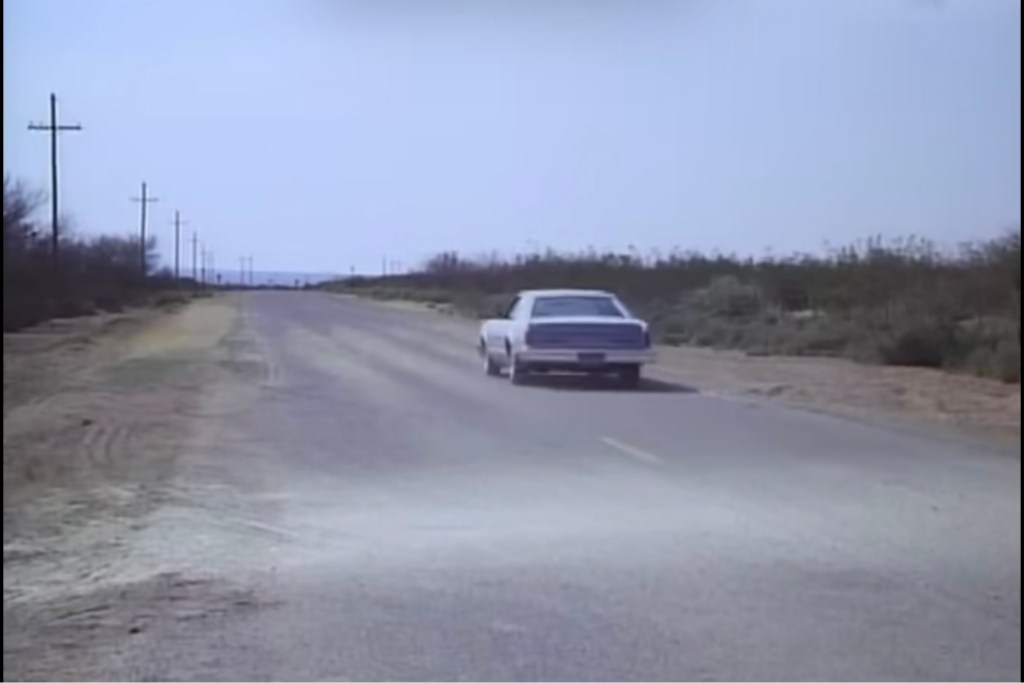
However, this entire thing is just a flight of fancy: shortly after this very reckless U-turn, the car explodes in a similar fashion to Clyde’s truck at the beginning of the episode.

At this point, it’s unclear whether Jonathan has actually ever used his powers at all in the episode, or not.
Two features of this moments: first, when Mark drives away, for a moment something cast a shadow to his car. It seems like he drove too close to somebody.



Second, the moment Mark drives away, Jonathan is standing next to where the car left, but when Mark drives back, he has moved from there.
Not a mistake, but it feels that there’s something wrong here.
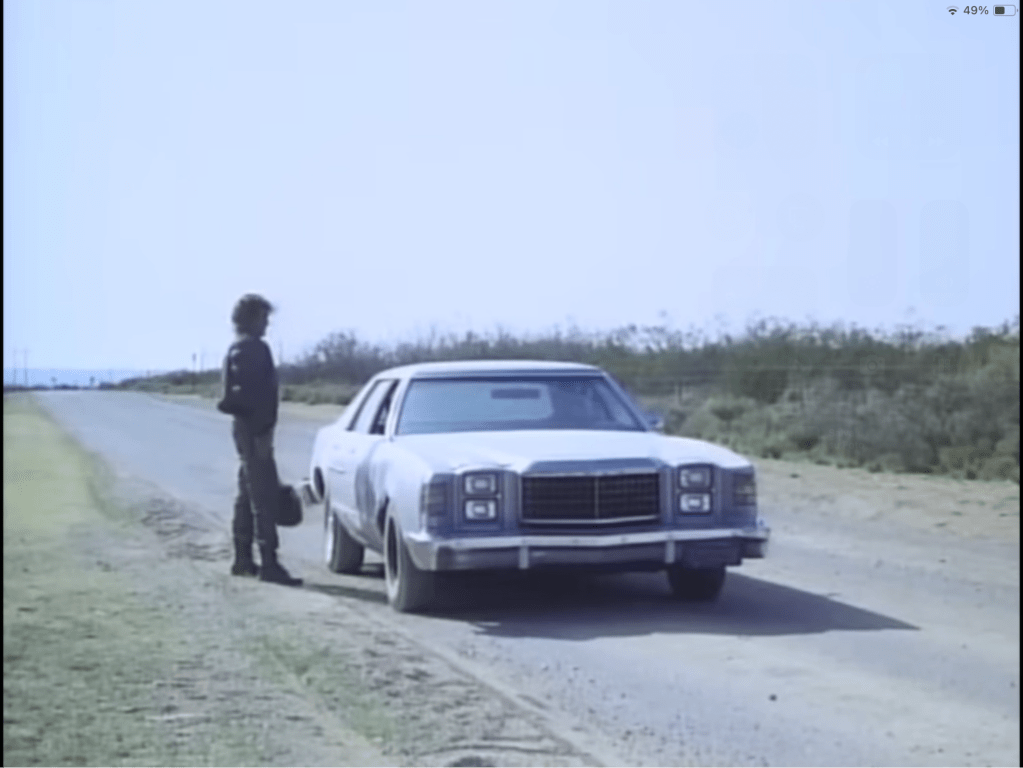
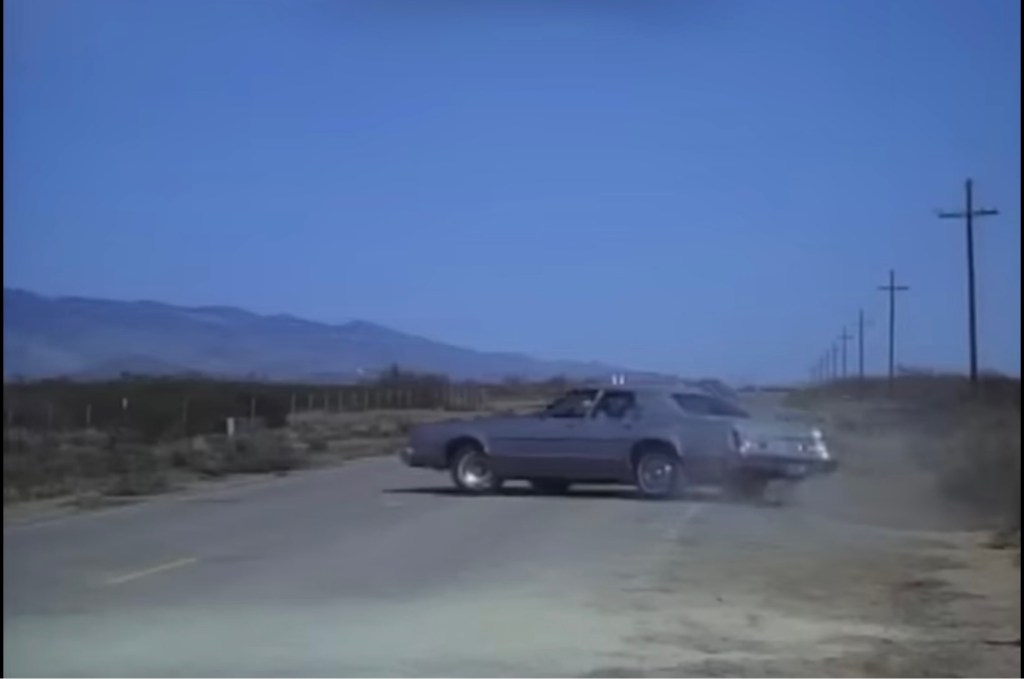
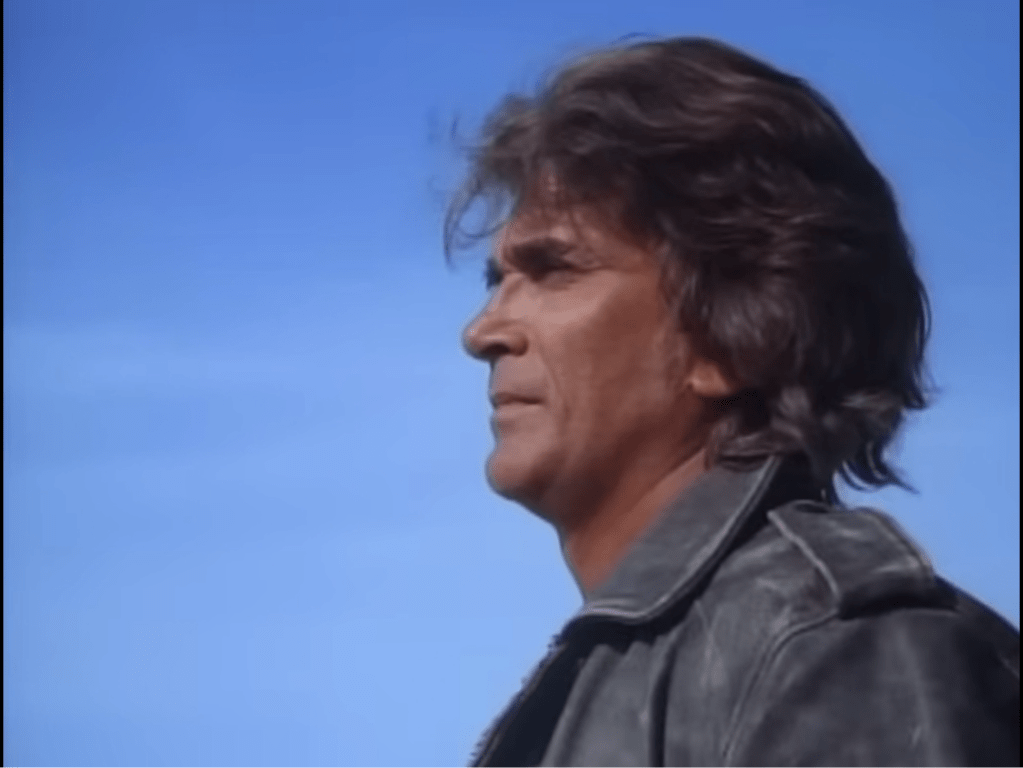
You see: first, he remains still right there next to the car; the car turns around, and now he’s moved forward near the point where the car makes the U-turn.
Anyway, what matters is that he smiles up at the sky with the actor’s trademark sneer and slowly walks toward Mark, realizing he’s been allowed to join him on his work.

That mischievous grin, again.
And they leave together. What he carries in the bag will remain a mystery, though.
One final thing: they show the moment when Jonathan enters the car, even though it’s broken. He should have gone toward the engine to fix it and then returned inside before leaving together. But let’s not ruin the impact of the scene: Jonathan turning back and marching with Mark towards their future.
Just to wrap up: If this whole thing sounds doomed to be a catastrophe, that’s likely what the executives felt too. I mean, there are many unconventional elements in the direction, a puzzling lack of score for most of the episode (I suspect composer David Rose didn’t have enough time to complete it), an unclear target audience for the series (remember, there were no Christian TV shows at the time) and a stripped-down production. No action scenes, no mysteries to solve (procedural dramas were the most popular TV shows at the time), and not even a single young character or actor to appeal to a broader demographic. Instead, it’s just Landon delivering punchlines and teaching elderly people moral lessons, with some notable acting along the way.
Yet somehow—maybe that’s part of the miracle—a producer stepped forward and convinced the network to order a first, probationary season (no pun intended). And he won the bet (or the gamble, like the characters): this episode aired in September 1984, in a crowded TV landscape where many new series were debuting, and it earned more than 20 points in ratings. Apparently, it ranked not only as the most watched TV program that day, but also third among the most watched TV programs that week and first among TV shows.
The rest of the story was to follow soon.



Leave a comment