
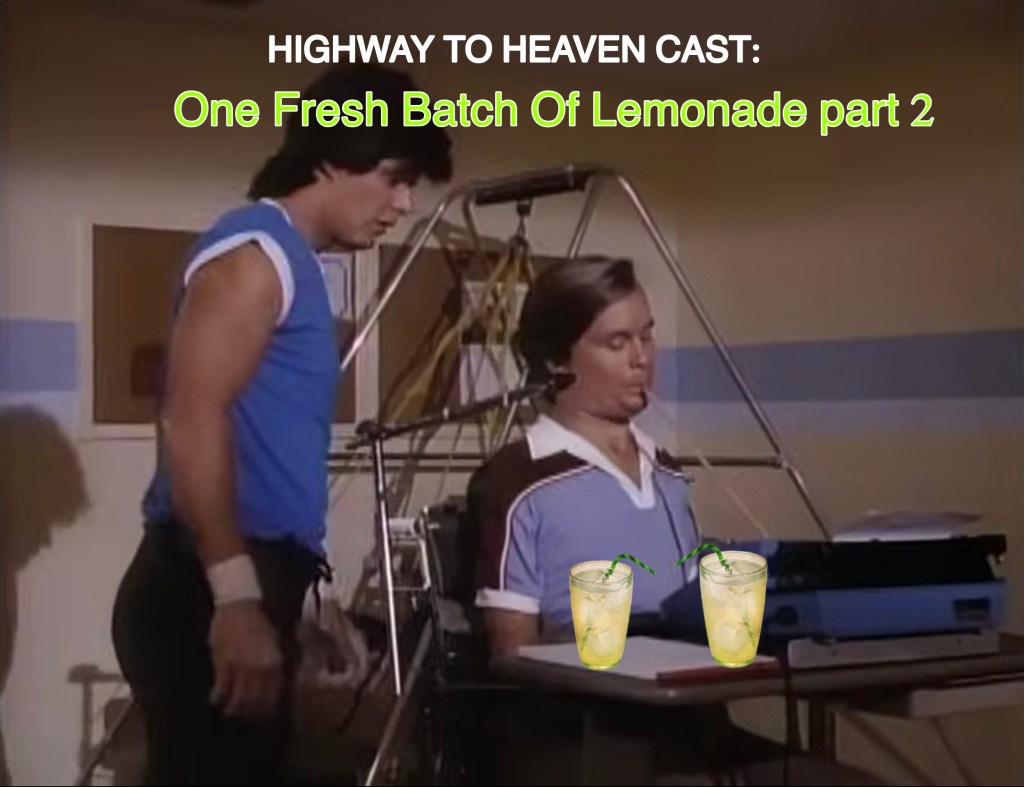
And back again. Here’s the second part of the episode. Actually, it could fit as a single part, but it aired on two different weeks, and that’s the way it will be reported as well.
Make sure to check out part one here and the glossary here. Now, to part two of the episode that was supposed to be a one part but for some reason they added more characters during productions and realized it was too long for a single episode. So, they made it like this.
Assignment: Jonathan and Mark are assigned to help a promising athlete bound to a wheelchair after suffering a severe accident come to terms with his new condition
Here a quick summary of the previous episode’s events: the athlete Deke Jr. is recovering after an accident (or whatever happened to him) and Jonathan has eventually convinced him to learn pommel horse gymnastics.
That was all of it, really.
And now, there’s a classic training montage of intense workouts, comic falls, drastic improvements over ten seconds, and people laughing —really exuding 80s vibe.
That’s a comical timing.
However, the sequence is interrupted when Deke discovers his parents are getting divorced, and he considers himself to be the cause of that.
So, he pushes Eleanor away, breaking up with her.
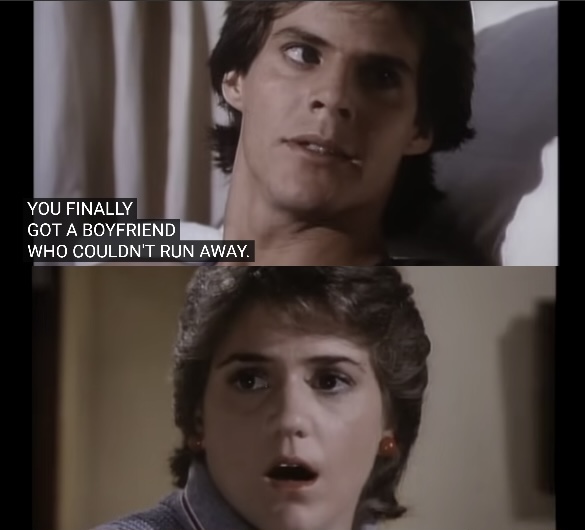
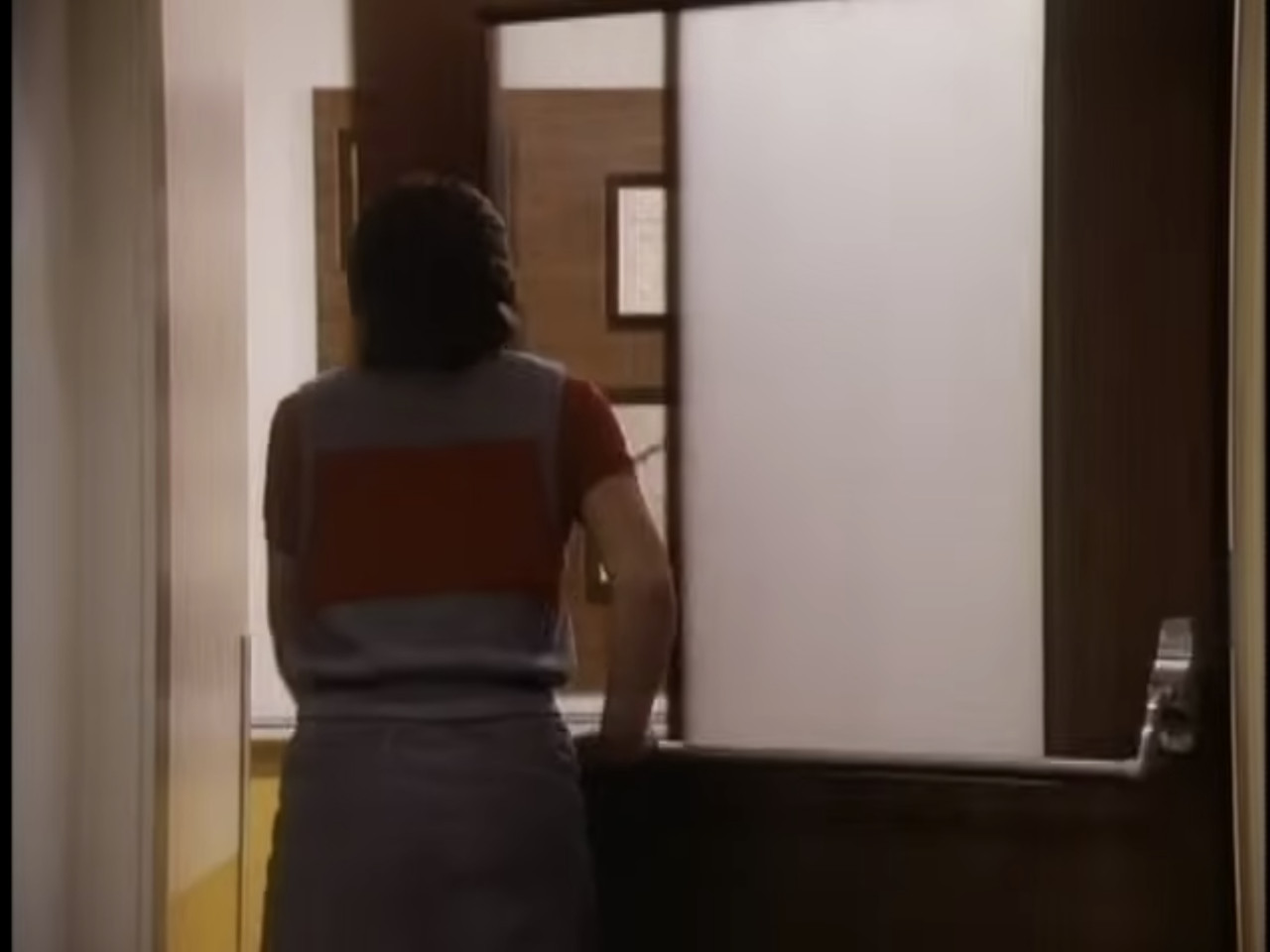
And she’s the one to run away.
But he’s not done yet: Deke also informs his trainer and Jonathan he intends to quit gymnastics, and they believe the timing is perfect to inform Deke of something he was unaware of.
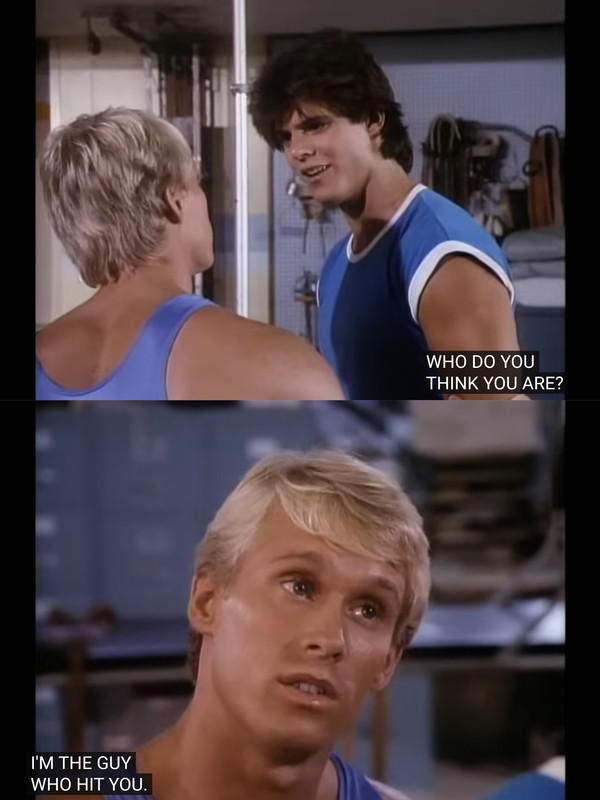
That’s right: Richie—the pommel horse trainer—is actually the guy who ran him over. Or whatever happened in that accident to Deke.
Now, a couple of things worth pointing out about this: one, it feels random. It seems that Richie feels responsible for the accident (even though it was not his fault); but then, how come he never met Deke before this. I mean, the moment you ran over him, if you really felt guilty, you would have probably tried to rescue him.
It’s hard to believe that Deke had no idea of the face the driver has. Unless Richie didn’t stop and feels sorry about that, or Deke was knocked out and didn’t remember anything. Or maybe Deke just forgets things fast, like the elderly woman Estelle in the Pilot.
Second, the actor playing the pommel horse trainer is not a regular actor: gymnastics enthusiasts may already know him. That’s Bart Conner, a former professional gymnast.
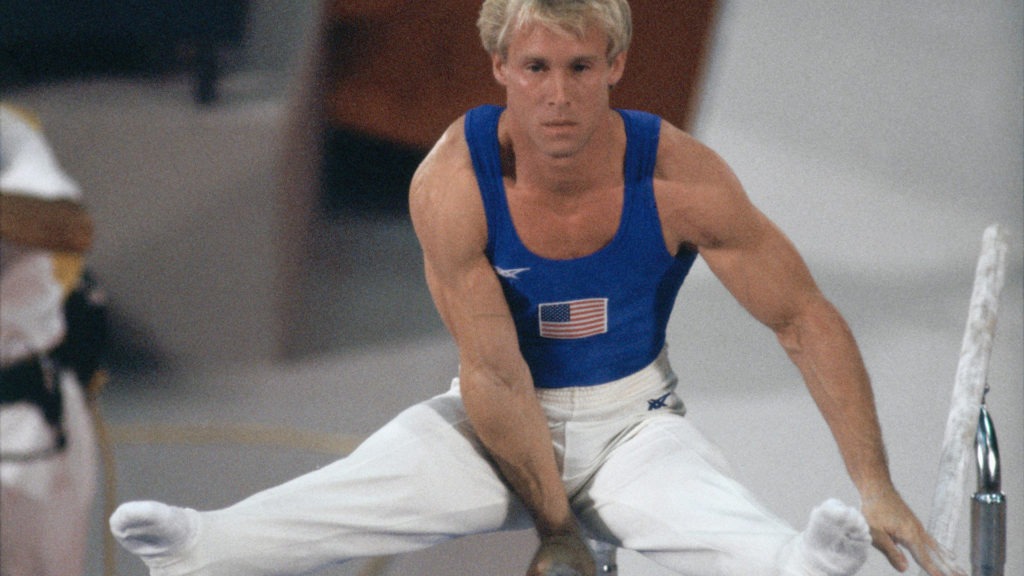
One curious thing: he won two gold medals at the 1984 L.A. Olympic games, and this episode was produced in late August of the same year.
I mean, Jonathan went all the way to a real Olympic champion as Deke’s coach.
Anyway, coach or actor, Bart Conner’s revelation doesn’t help Deke, who actually storms out.
So, what could happen now that the main character of this great sport story is actually going through a difficult moment: there must be somebody to step in and make that encouragement speech of believing in yourselves and it takes sacrifice to be a champion and stop acting like a girl. Because, you know, sports programming usually targets boys. And you’d anticipate that somebody to be Jonathan, you know, he’s the angel.
Actually, it is Scotty. That’s right, the quadriplegic aspiring lawyer played by James Troesh (check the previous episode).
I mean, in this episode, Scotty gets most of the punchlines, not Jonathan or Mark. Also, the show really seems intent on highlighting Scotty’s wheelchair—so many extended scenes of him just crossing hallways.
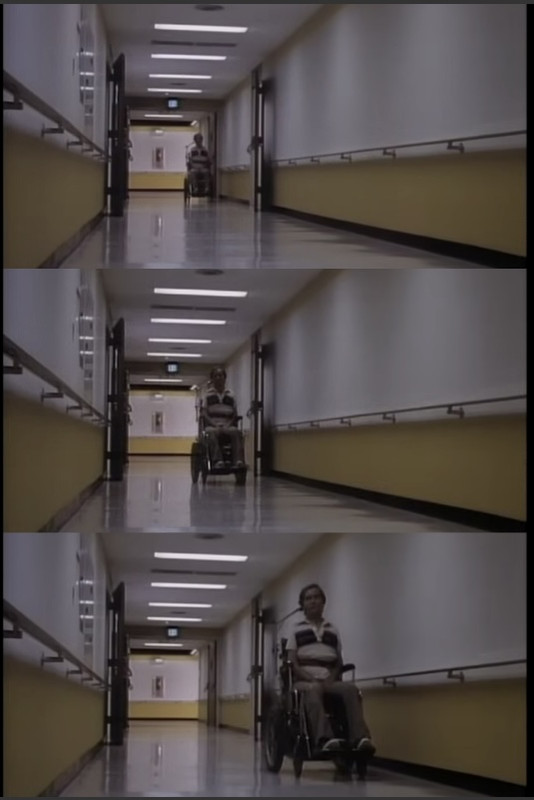
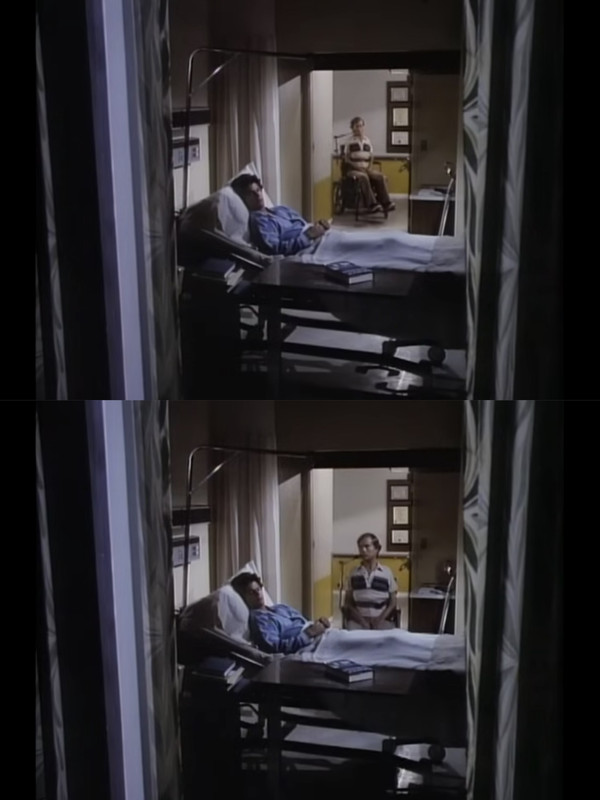
Eventually, Scotty gets to Deke’s room.
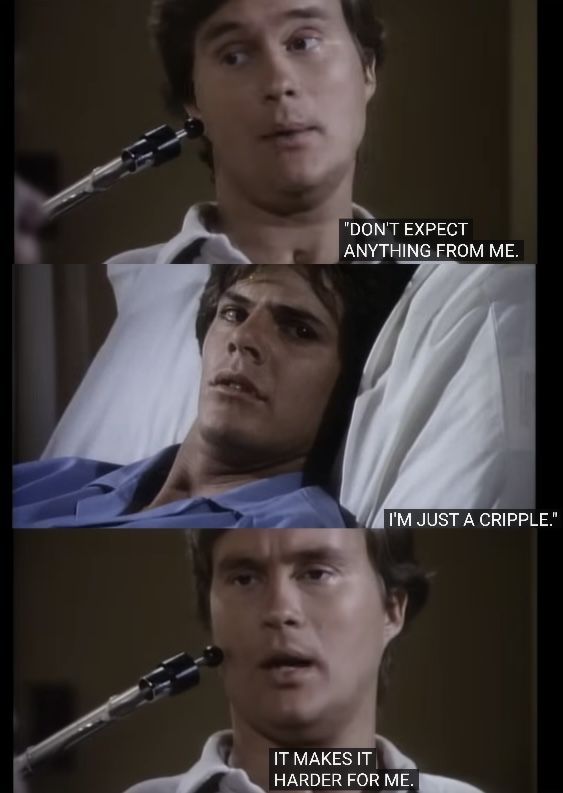
Now, he basically explains how hard it is for him as a disabled person. Using his words here.
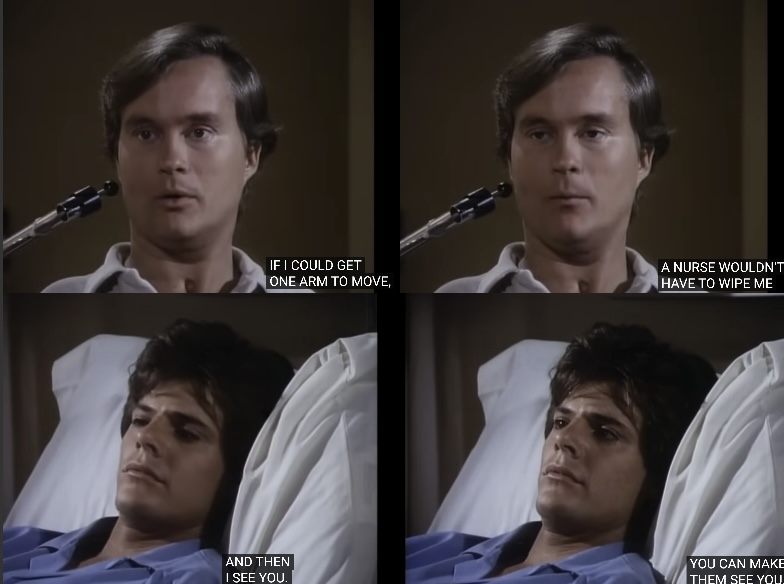
And scolds Deke for his attitude.
Then he thinks it’s enough and leaves, very slowly.
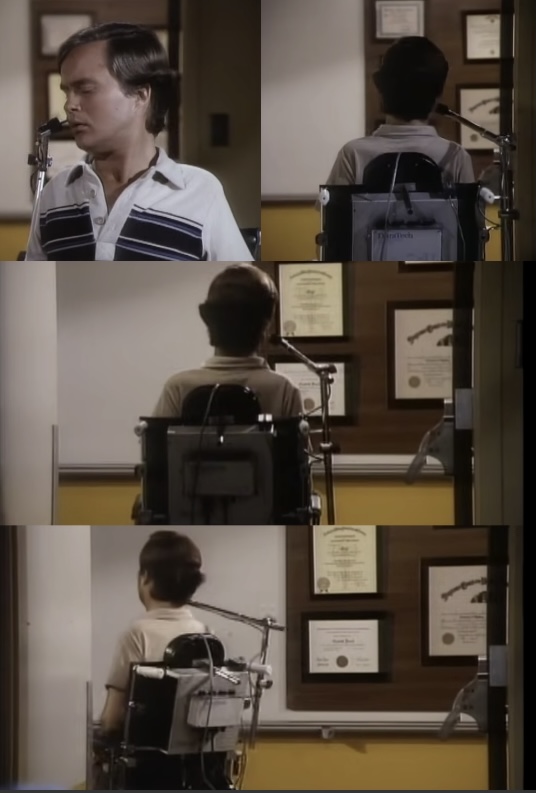
He was pretty hard on him. And it’s important to notice that Ken Olandt is not impaired in his life, while James Troesh actually is. I mean, in the context of TV representation and impaired actors never getting the recognition they deserve because they are underrepresented and impaired characters are usually played by not impaired actors — that assumes a whole new meaning now.
Anyway, Deke reconciles with Richie, and comes back training for an upcoming pommel horse competition. And there’s another upbeat training montage with background music that feels like copyright-free YouTube music.
So, there are two of these time compressing sequences in one episode—just ten minutes apart. They could’ve likely condensed this into a single episode by trimming out these fillers.
That night, Scotty can’t sleep as he’s too nervous to pass the exam to become a lawyer. So, Jonathan just tells him to do his best.
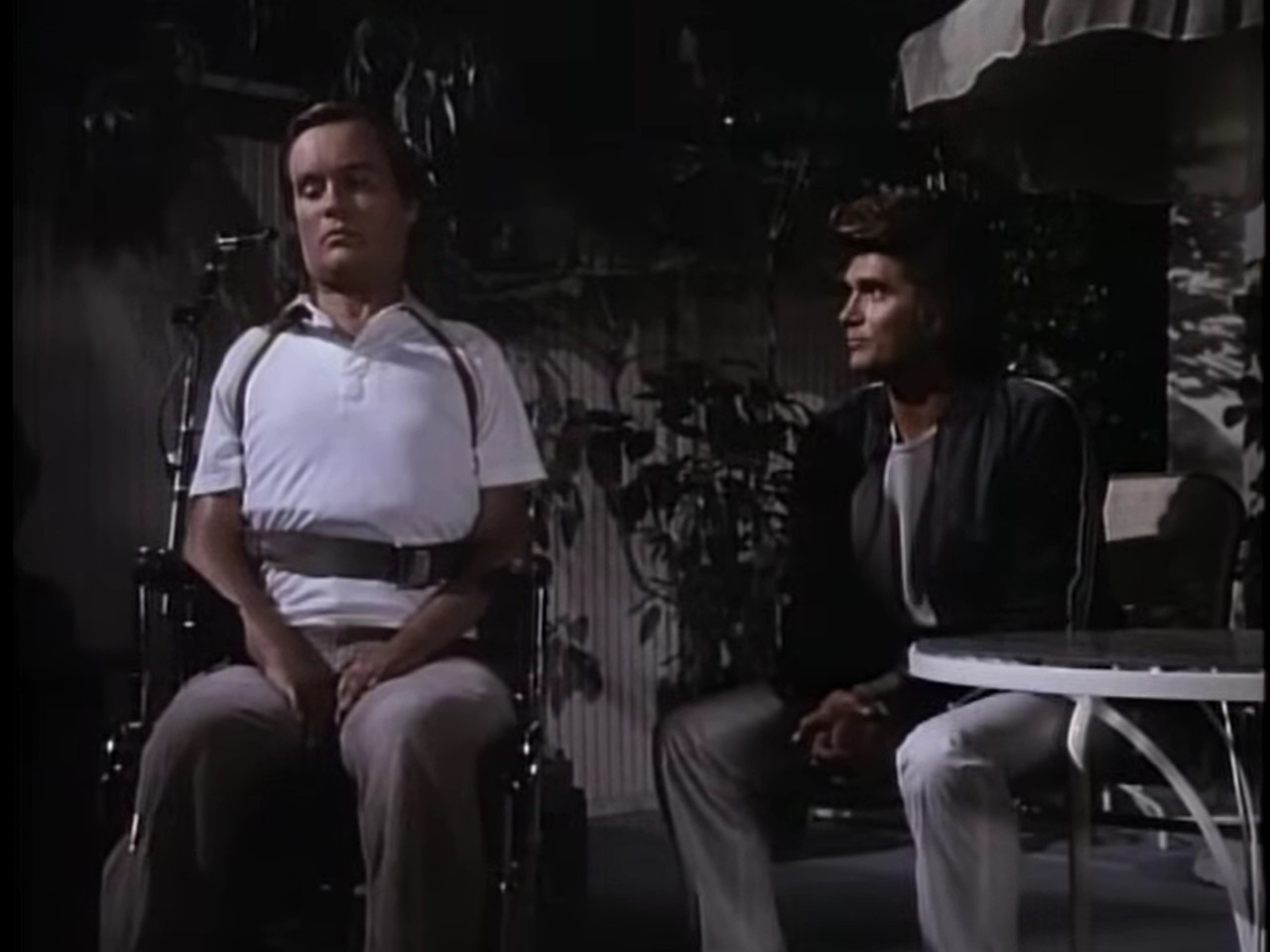
Sounds like Little House Charles, doesn’t it.
The next day, Scotty passes his exam and officially becomes a lawyer.
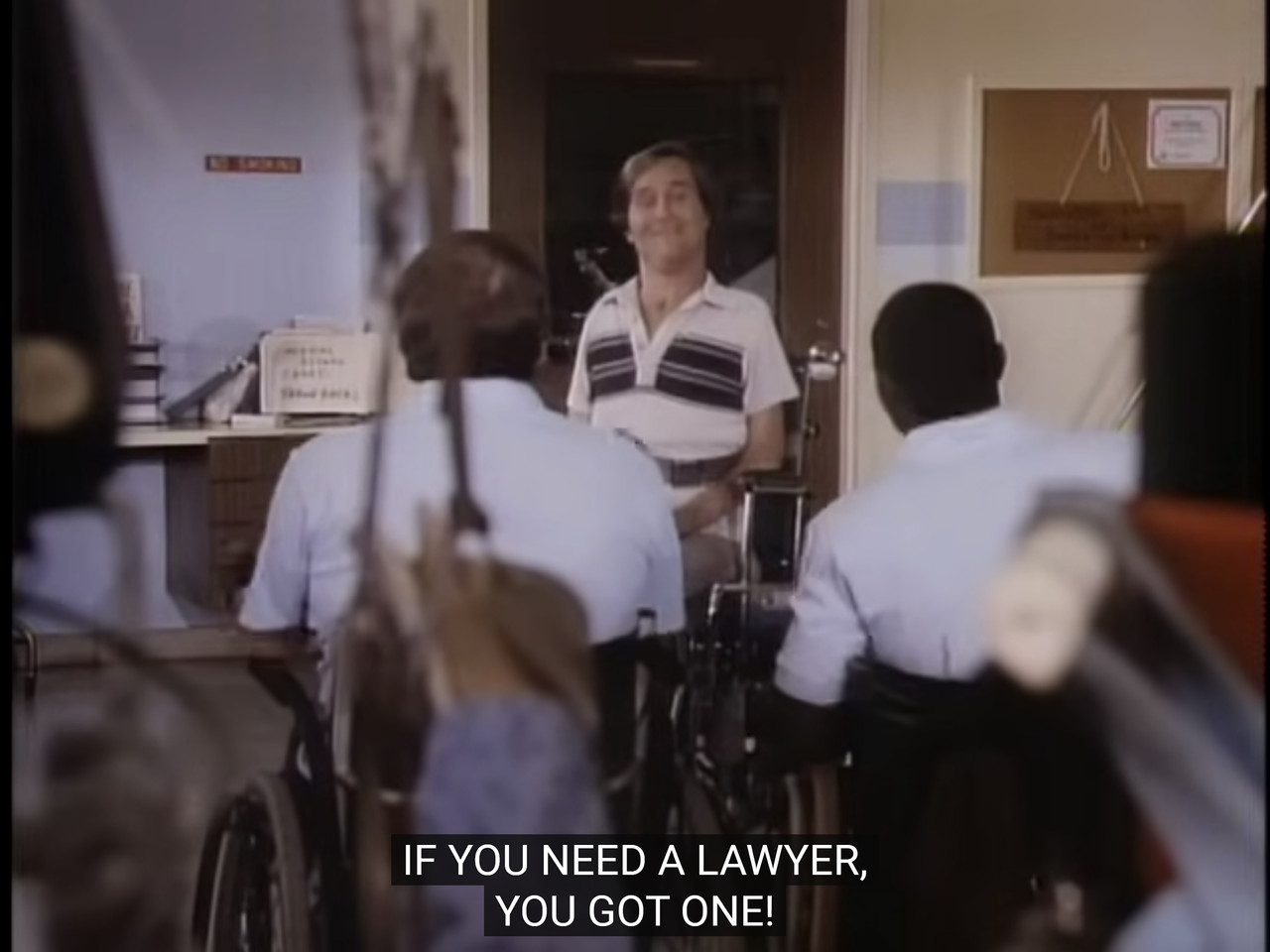
Just, remember this: he will return in the future, and his profession will play an important part by then.
So, people gather around to make a party. Everyone is happy for him.
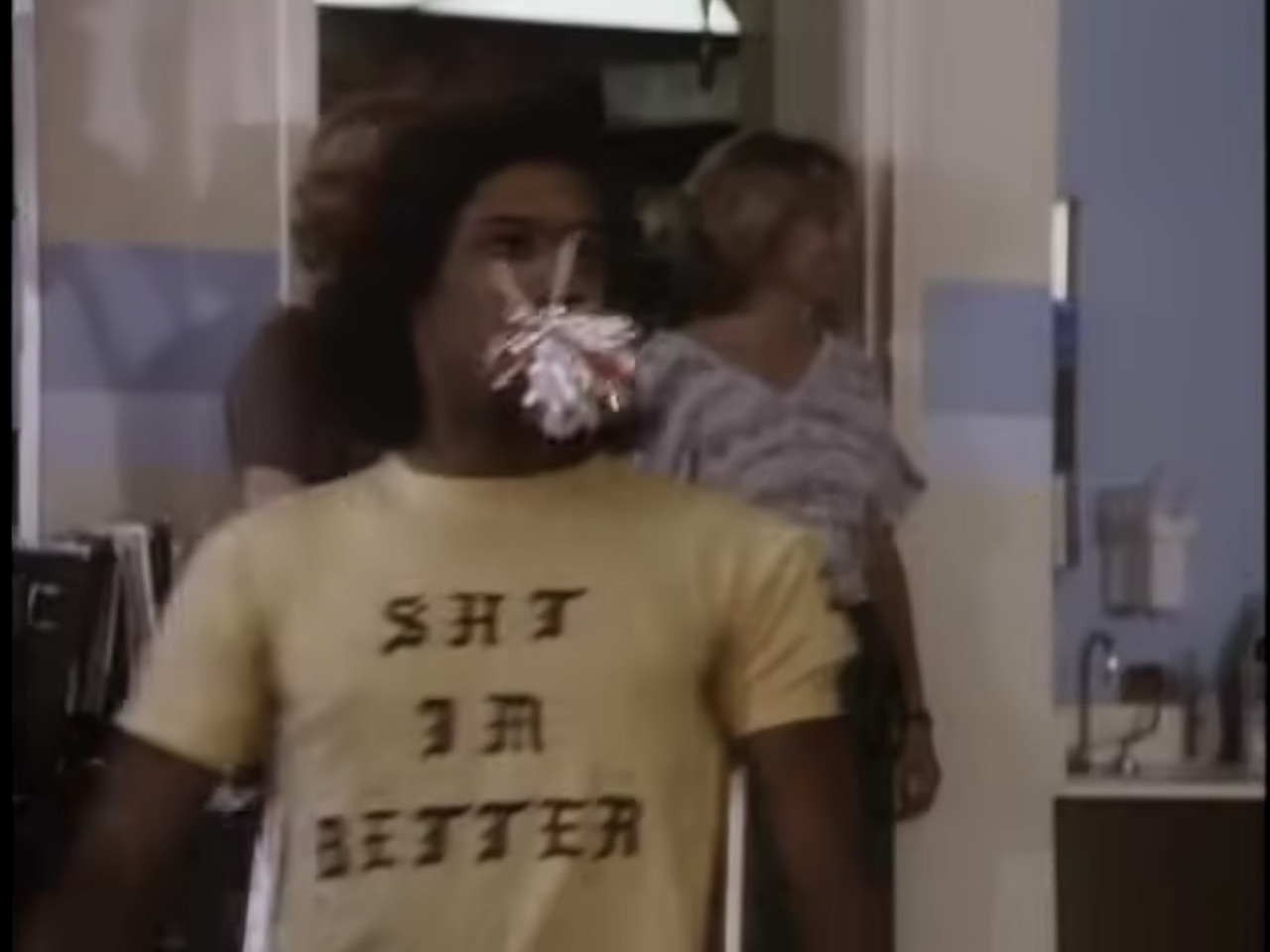
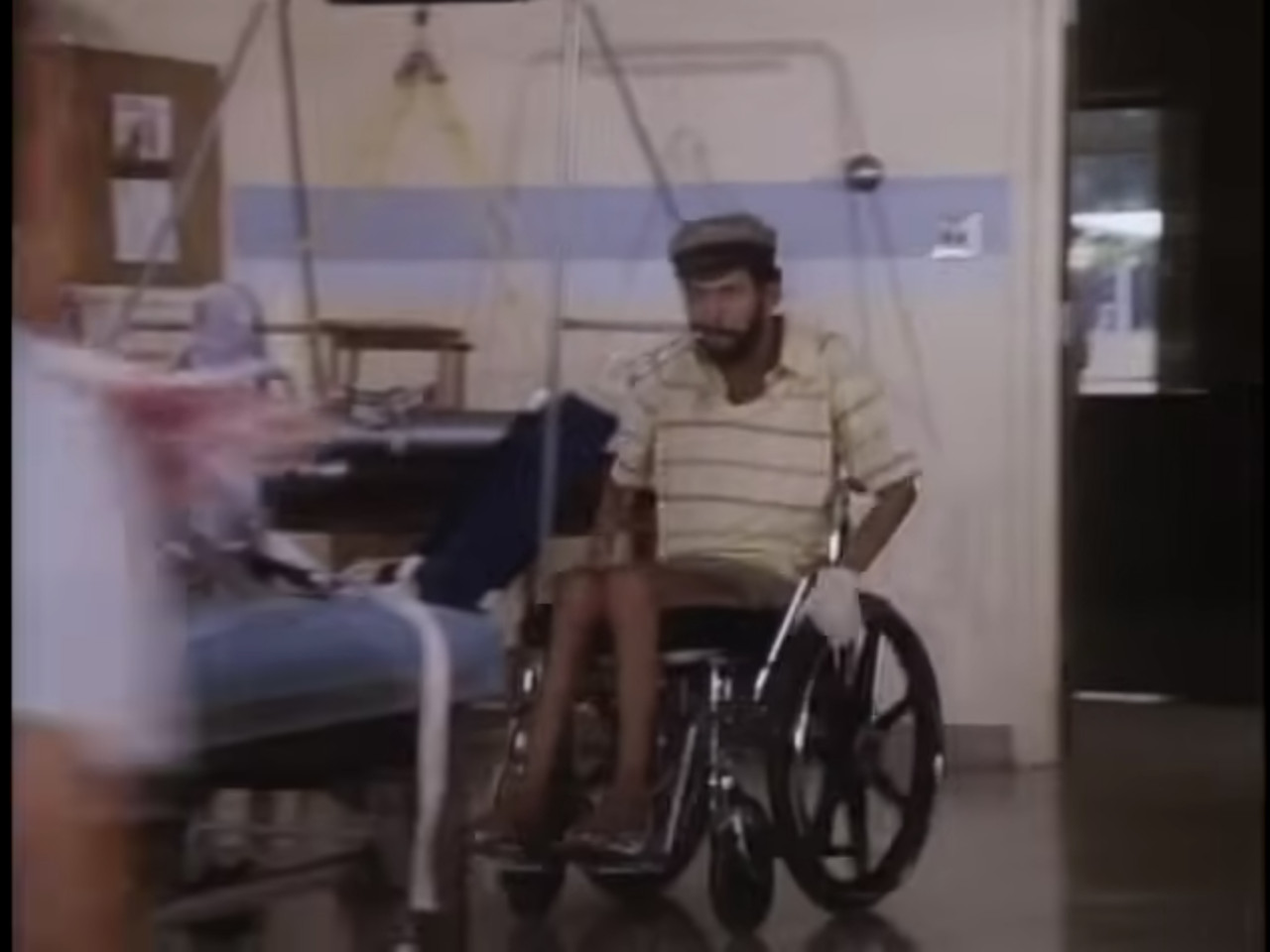
Is that “Sh*t” there?
Again, the casting in this episode was ahead of its time.
But there’s one solitary man who lingers in the background in sorrow. He hasn’t appeared in the episode before. At least, in part two.
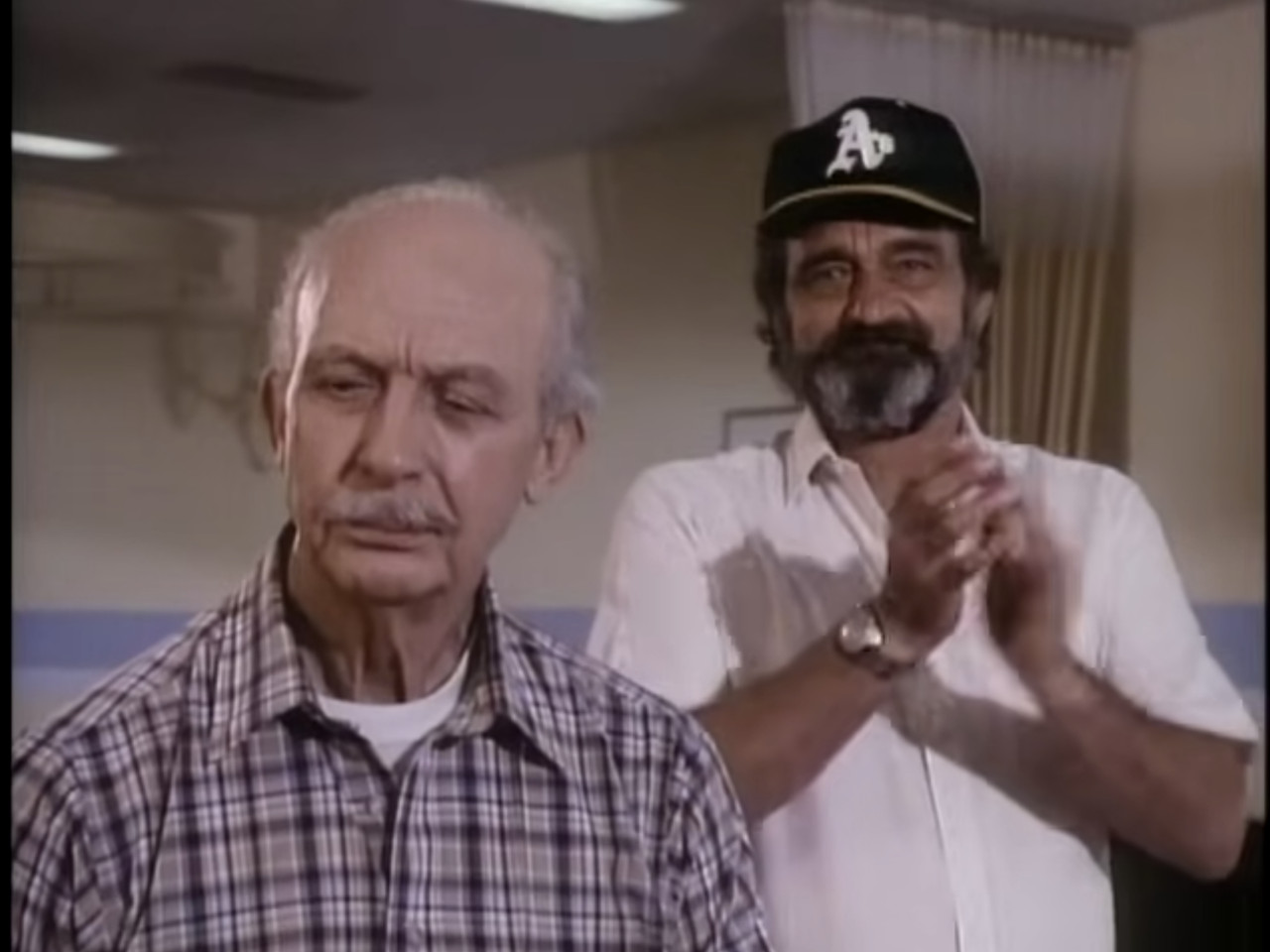
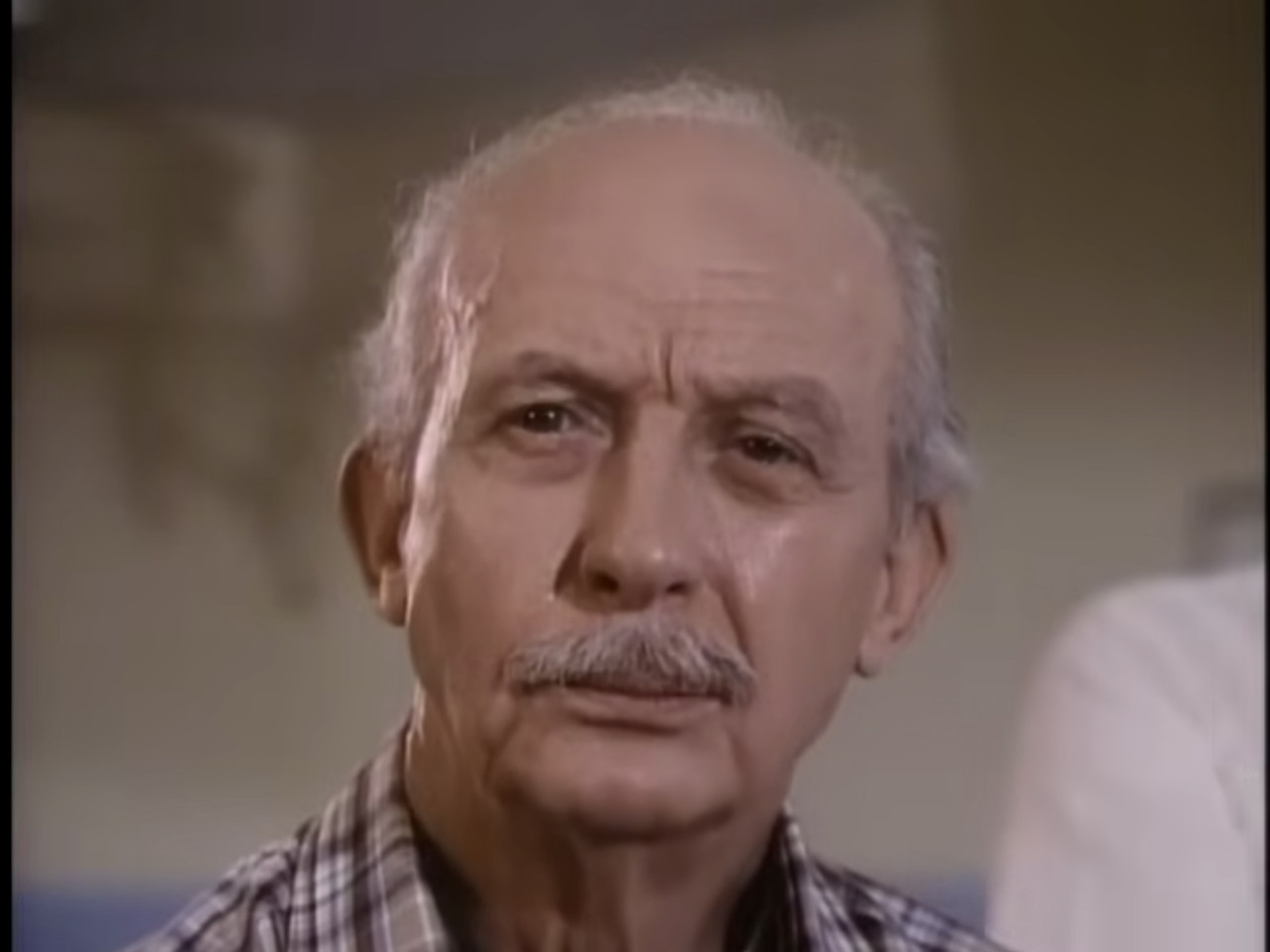
What’s going on here, who are you.
Actually, he was shown for like three seconds earlier: he was the guy Mark was helping doing workout during the therapy room panoramic in part one.
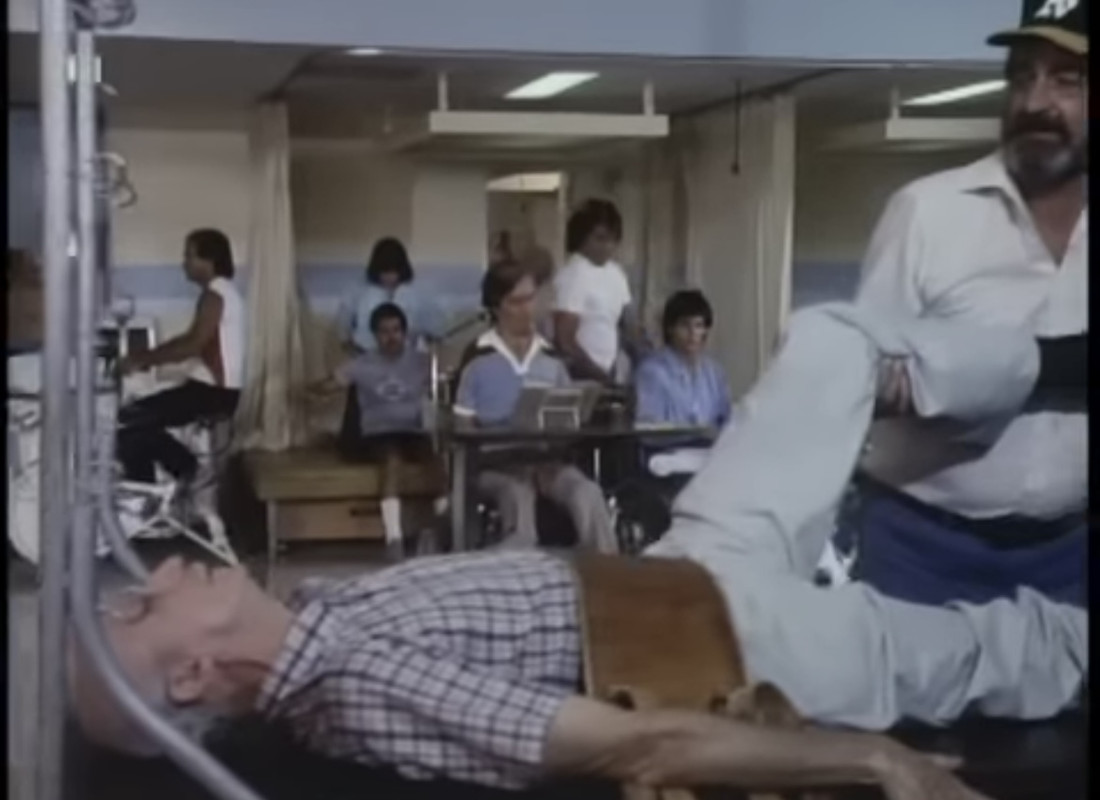
Don’t remember it? Well, he didn’t speak at all, and this pan scene lasted seconds, literally.
Anyway, Mark does his job as therapist and approaches the man.
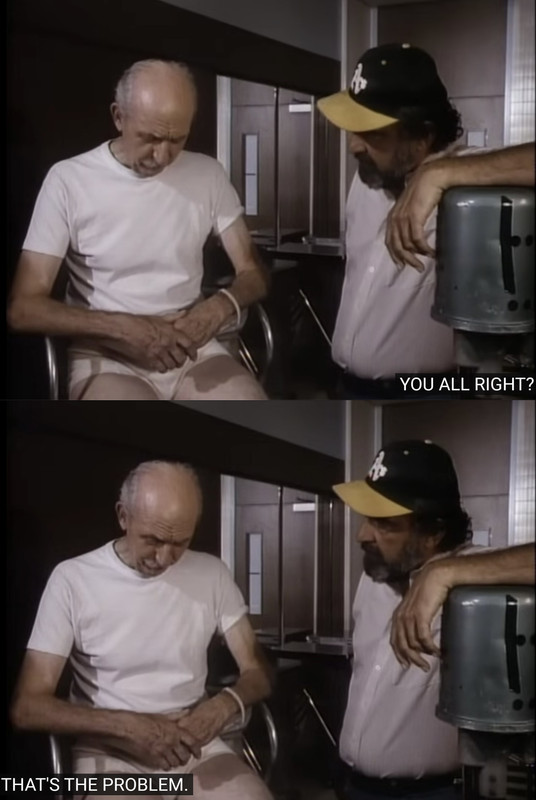
Basically, he’s sad because his son wants him to come live with him, but he’s afraid he might embarrass him. That’s because he’s old and, you know, he basically needs someone to wipe his pants when he goes to the bathroom and do all the things people do when caring for an elderly.
Mark reassures him, telling him there’s no shame in being his age—and that he’s being unfair to his son by denying him the chance to be with his father. The old man is eventually convinced to make a phone call to his son.
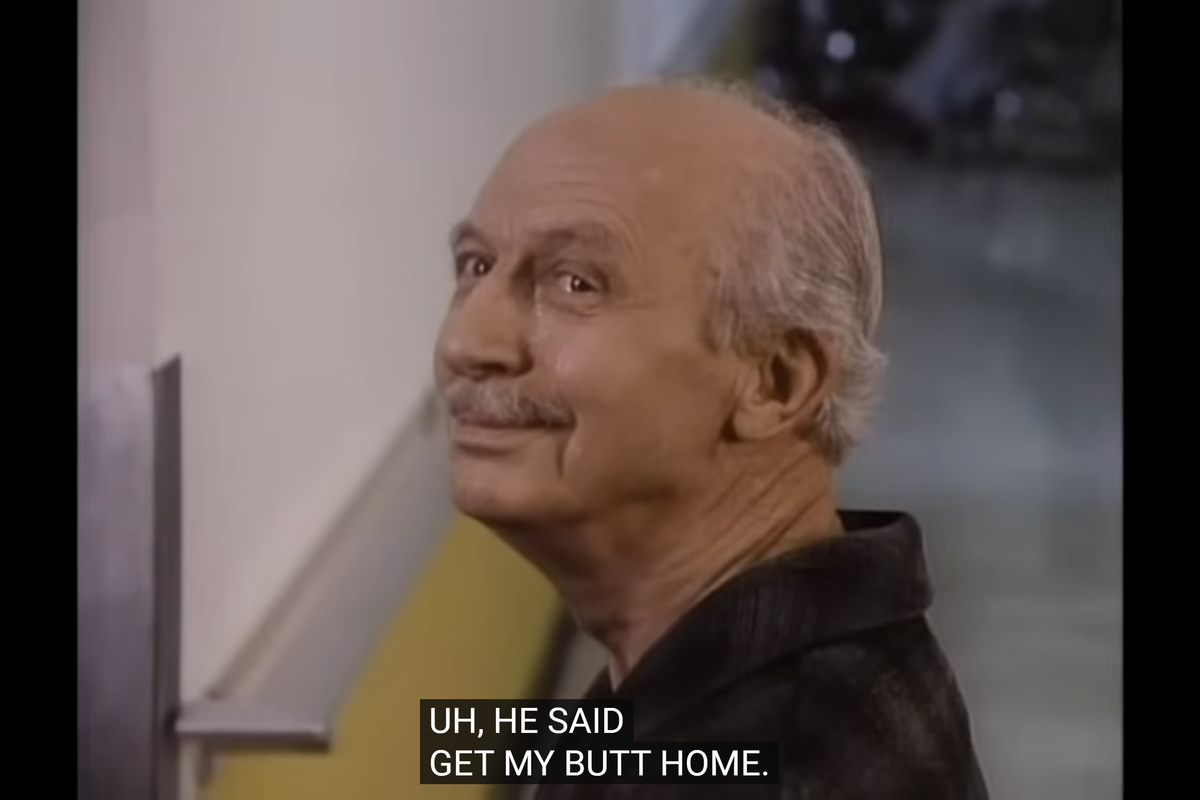
And Mark is pleased by his work with the man.
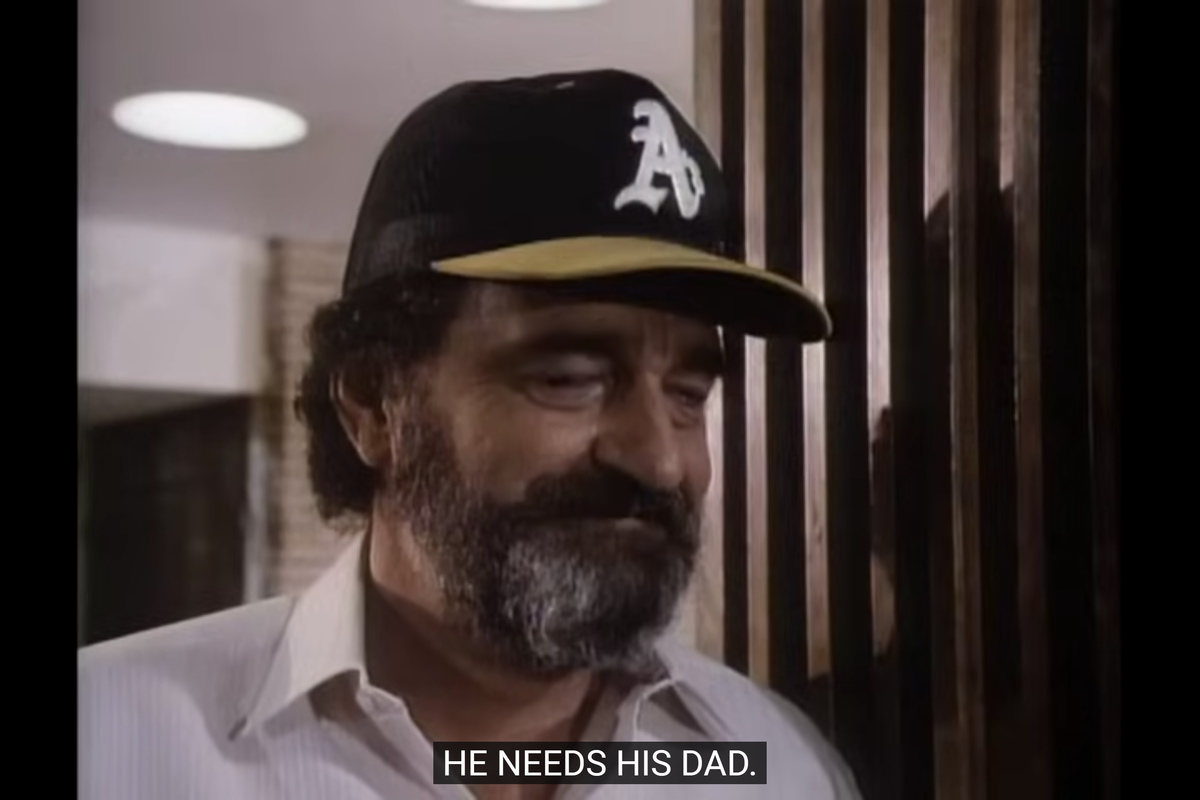
Good job, Mark.
But, what was the point of this: this whole scene takes about eight minutes, and it feels completely out of place. I mean, the only reasonable explanation is that the writers felt they were underusing Mark’s character in this episode, which is true—Mark only has one interaction with Deke throughout the entire episode, in part one.
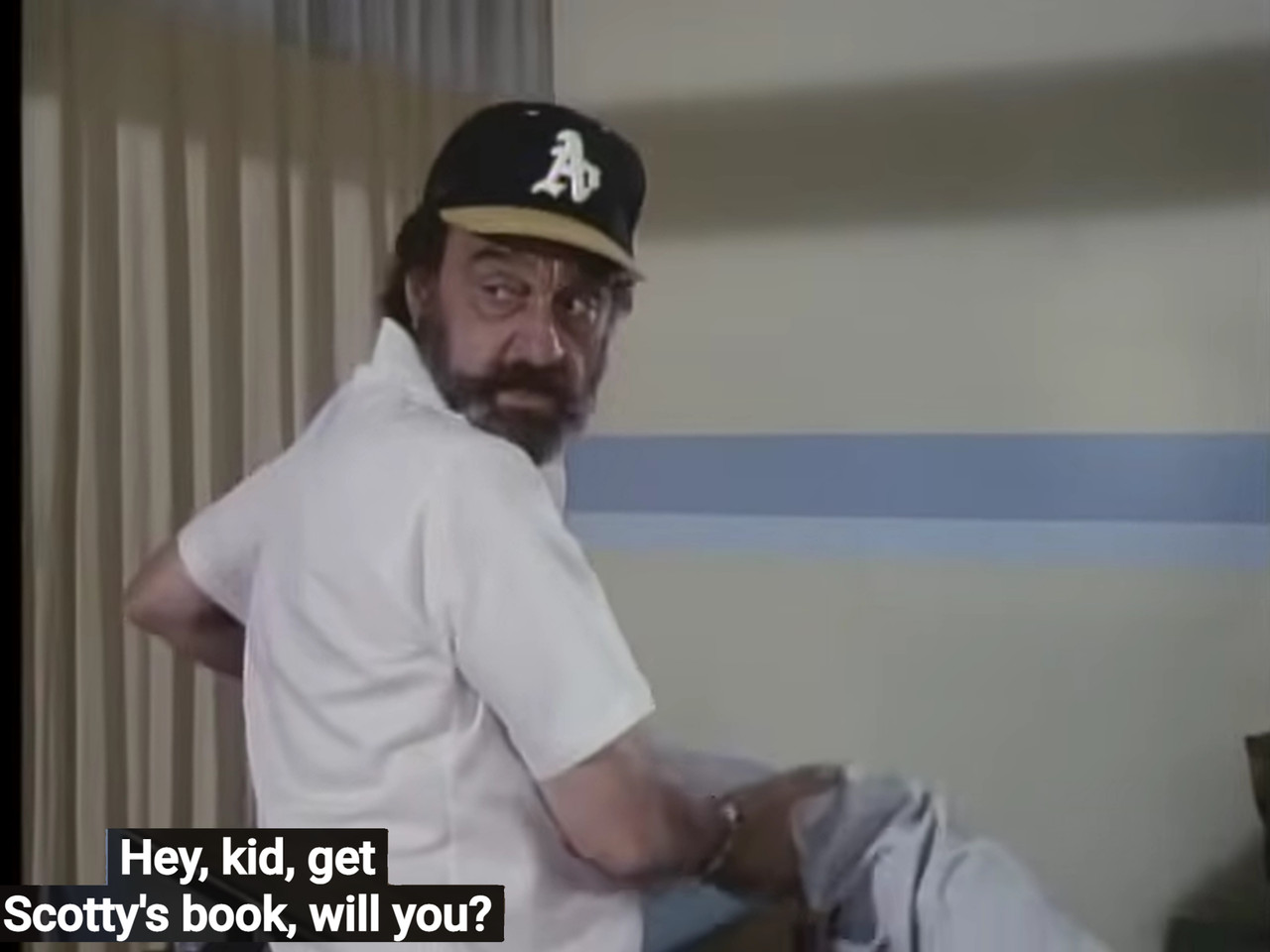
That was literally their only interaction.
Also, they needed to stretch the runtime by about ten minutes. And that’s what the old man’s side assignment is for.
So, just forget about this part.
To the main assignment, Deke calls back Eleanor and makes up with her, who accepts his apologies.
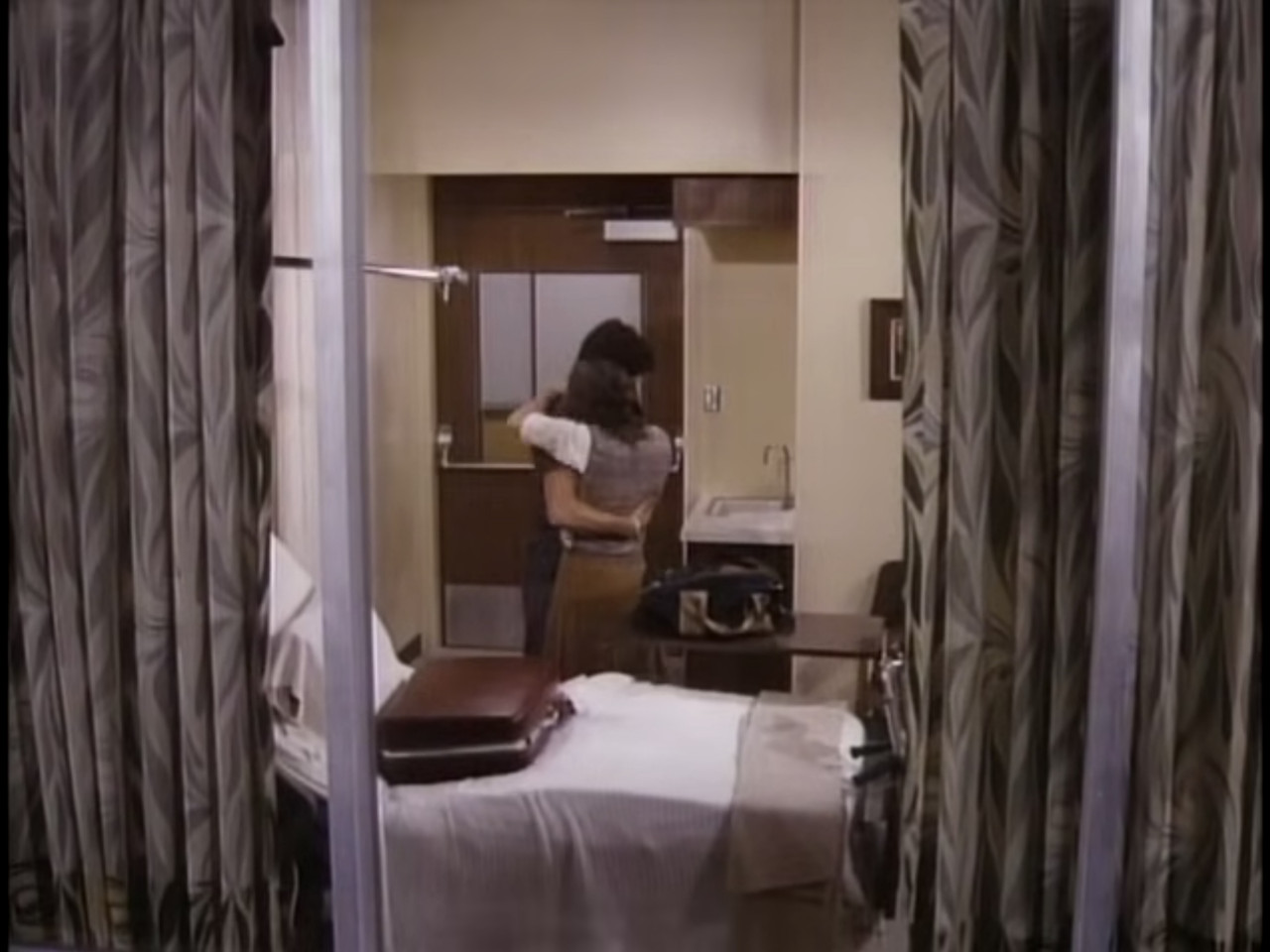
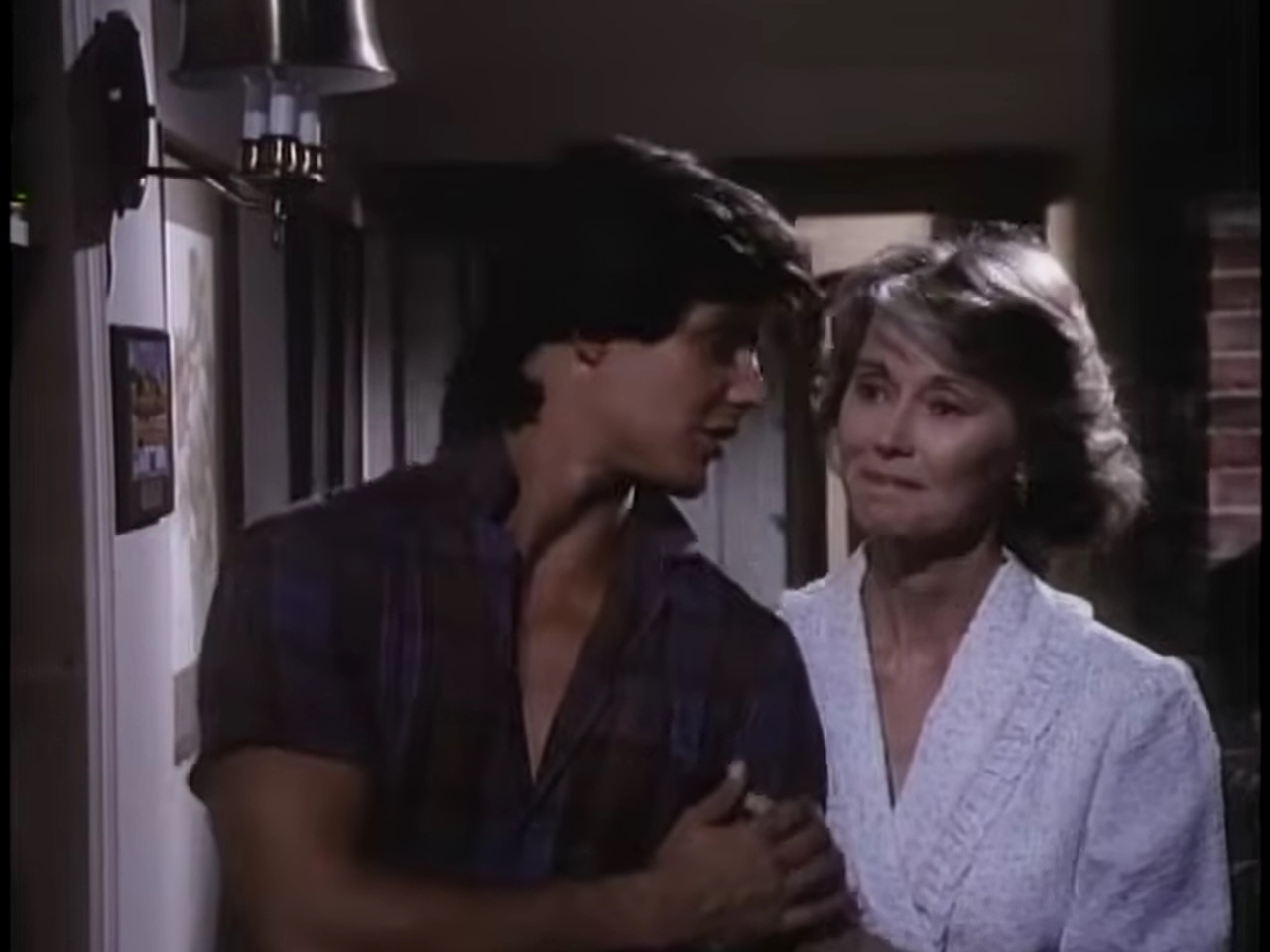
Then, he comes back home and accepts his parents’ divorce.
In the meantime, Mark visits Deke Sr. who is packing out to leave the next day.
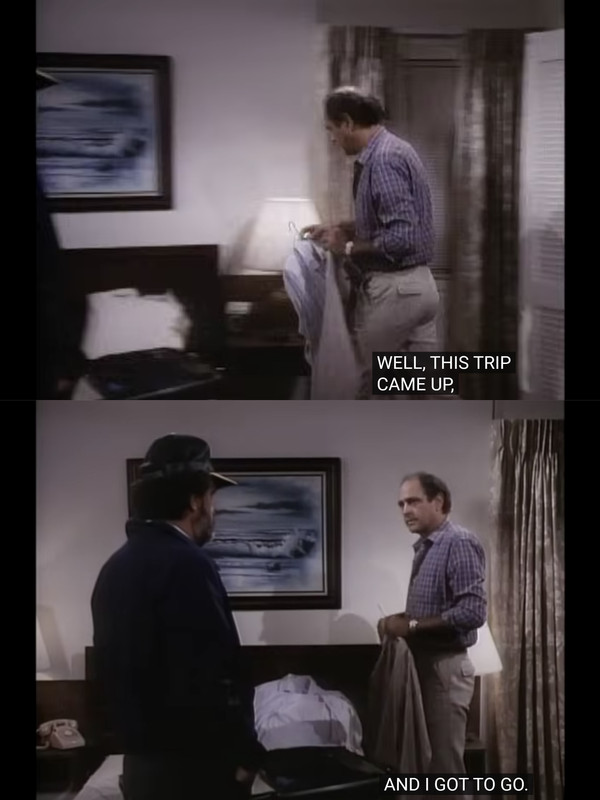
Anyway, Deke Sr. tells Mark he doesn’t want to go visit his son as he wouldn’t even know what to say. Then, Mark interrupts him and tries to convince him anyway, and begins a punchline showdown.
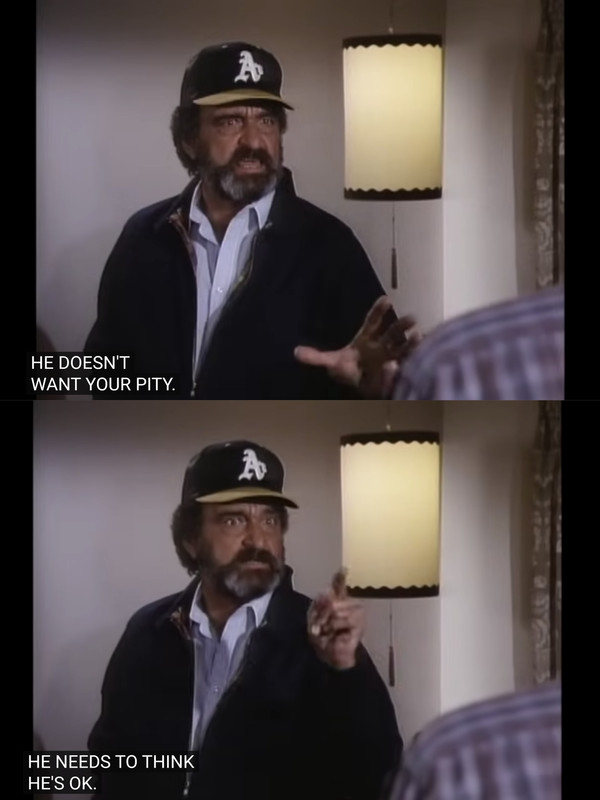
The man replies he still hasn’t accepted Deke Jr.’s fate and insists that his son will never become a winner if he’s impaired.
Mark tries to change his mind with some punchlines like “It doesn’t take a trophy to be a winner in life, but the love of the people around us” — very ineffectively.
He further adds that children look up to their parents no matter what, and tries to use his own personal background as an example.
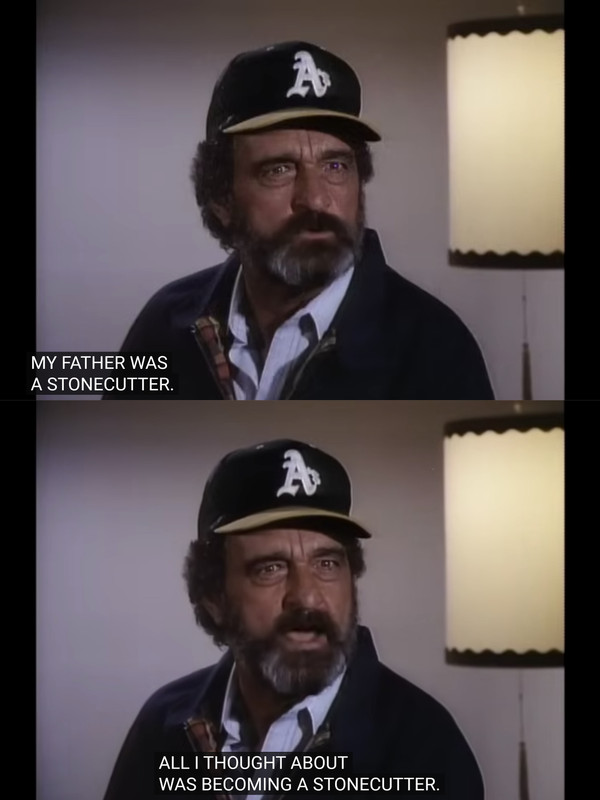
But despite his best efforts, it’s all useless. Eventually, Mark gives up, but not without one final punchline.
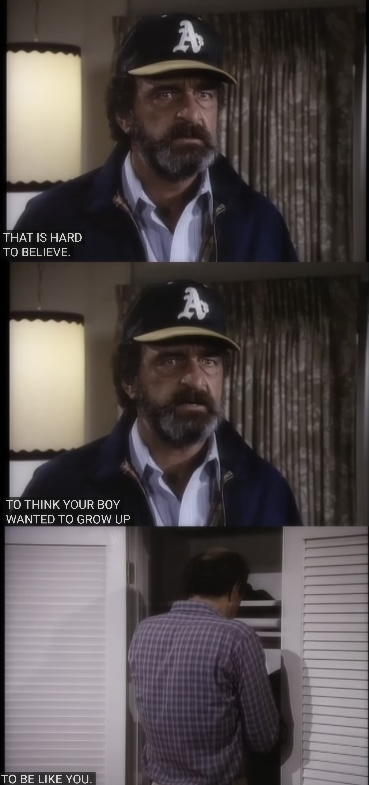
The only notable moment in their argument is when Mark reveals that his own father was a stonecutter—a small detail to add to his biography.
Anyway, the next day Deke Sr. is taking a taxi to the airport when the car breaks down. Suddenly, another car pulls over and Deke accepts a lift to the airport.
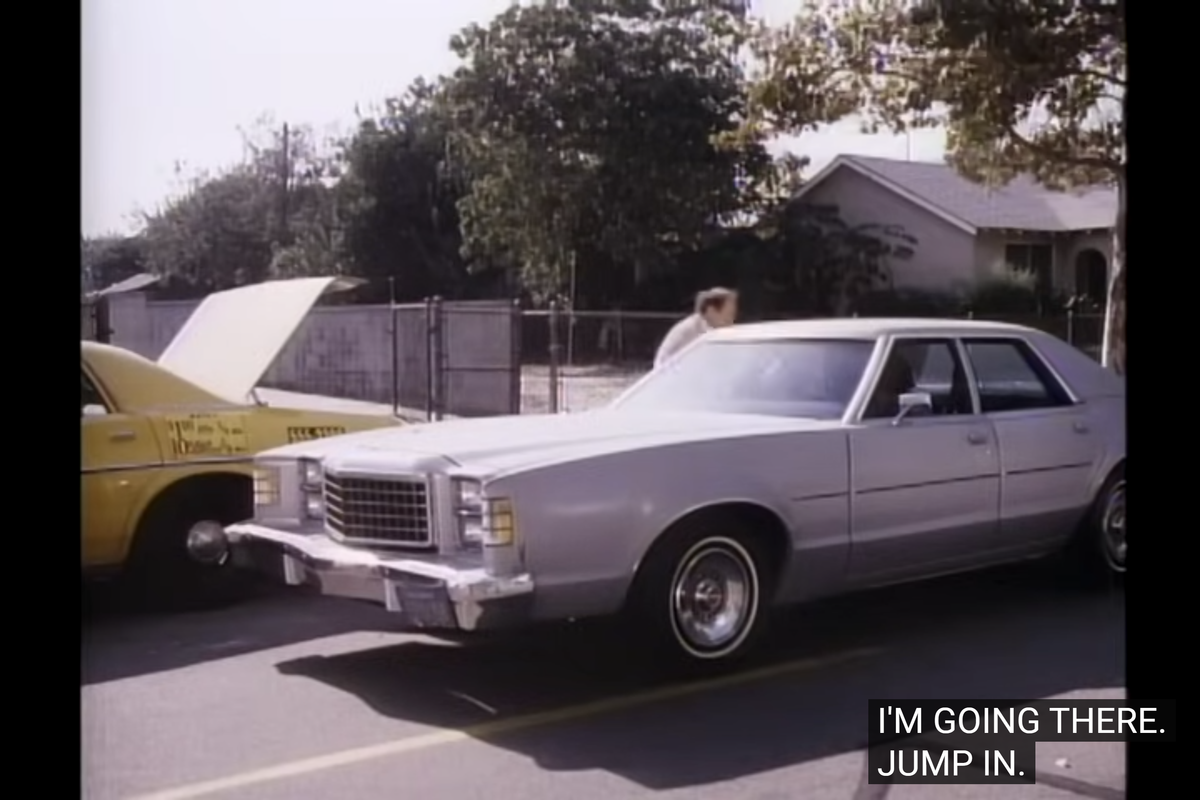
But, he doesn’t know who’s in the car yet.
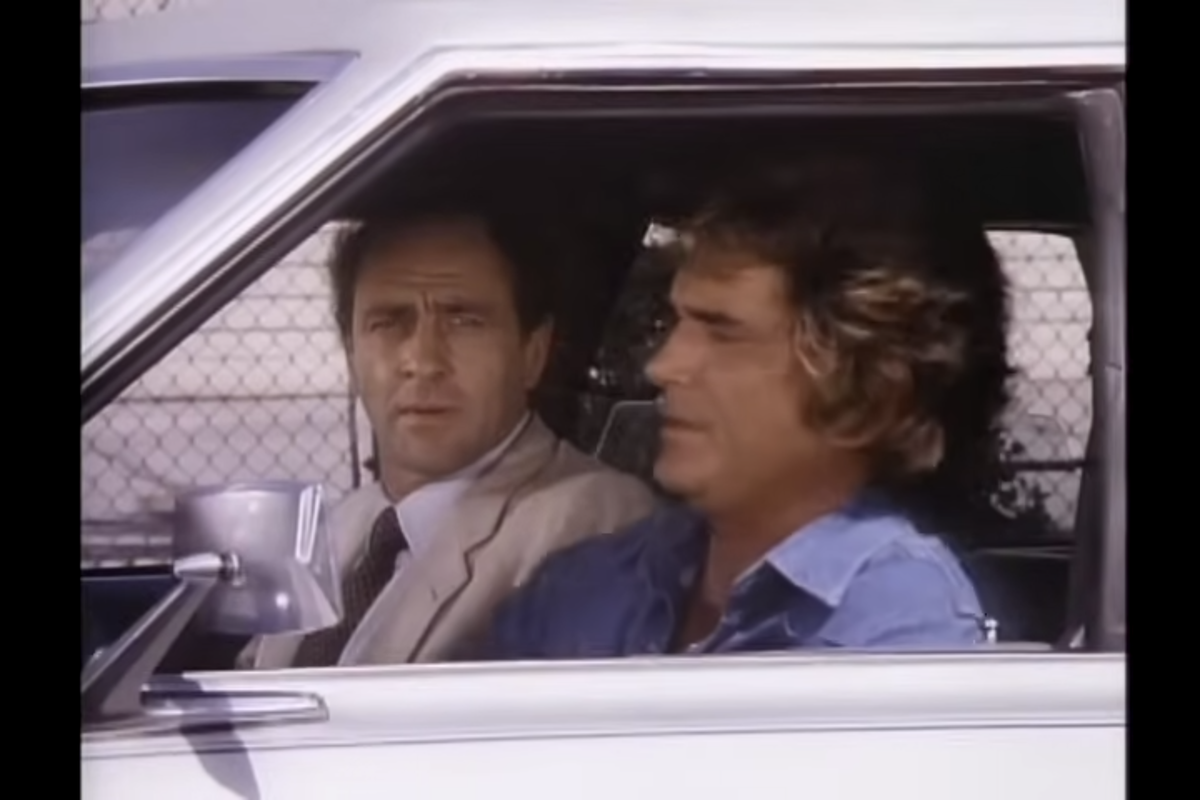
Of course, it’s Jonathan, who doesn’t intend to go to the airport. Instead, he drives him to the school where Deke is supposed to compete in the pommel horse game.
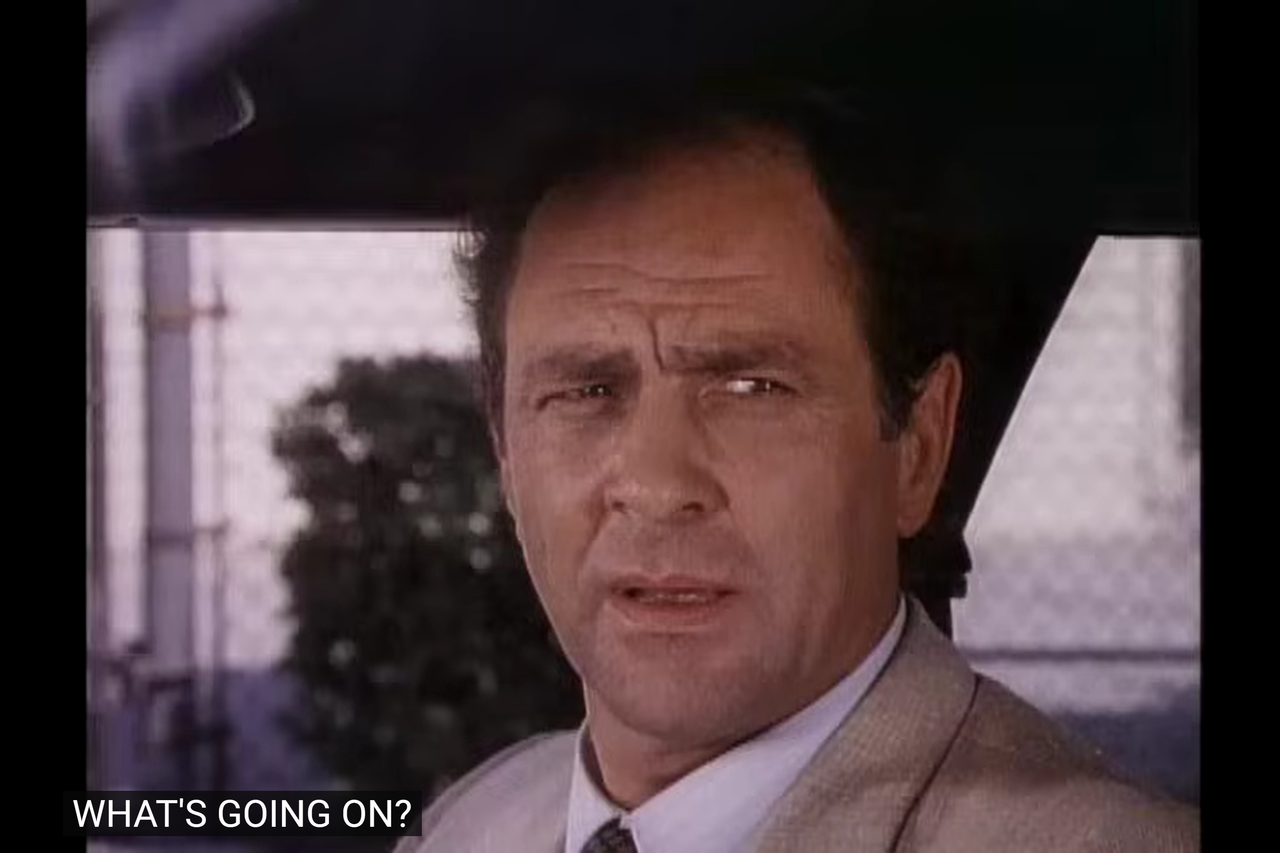
And you’re telling me?
This whole thing is wrong for many reasons: one, Jonathan approached Deke Sr. just as a stranger who kindly offered to take him to the airport, not as Deke Jr.’s therapist. So, how could he possibly know where to find him. Of course he’s an angel and he used his powers, but Deke doesn’t know that. He must be thinking that Jonathan has been after him.
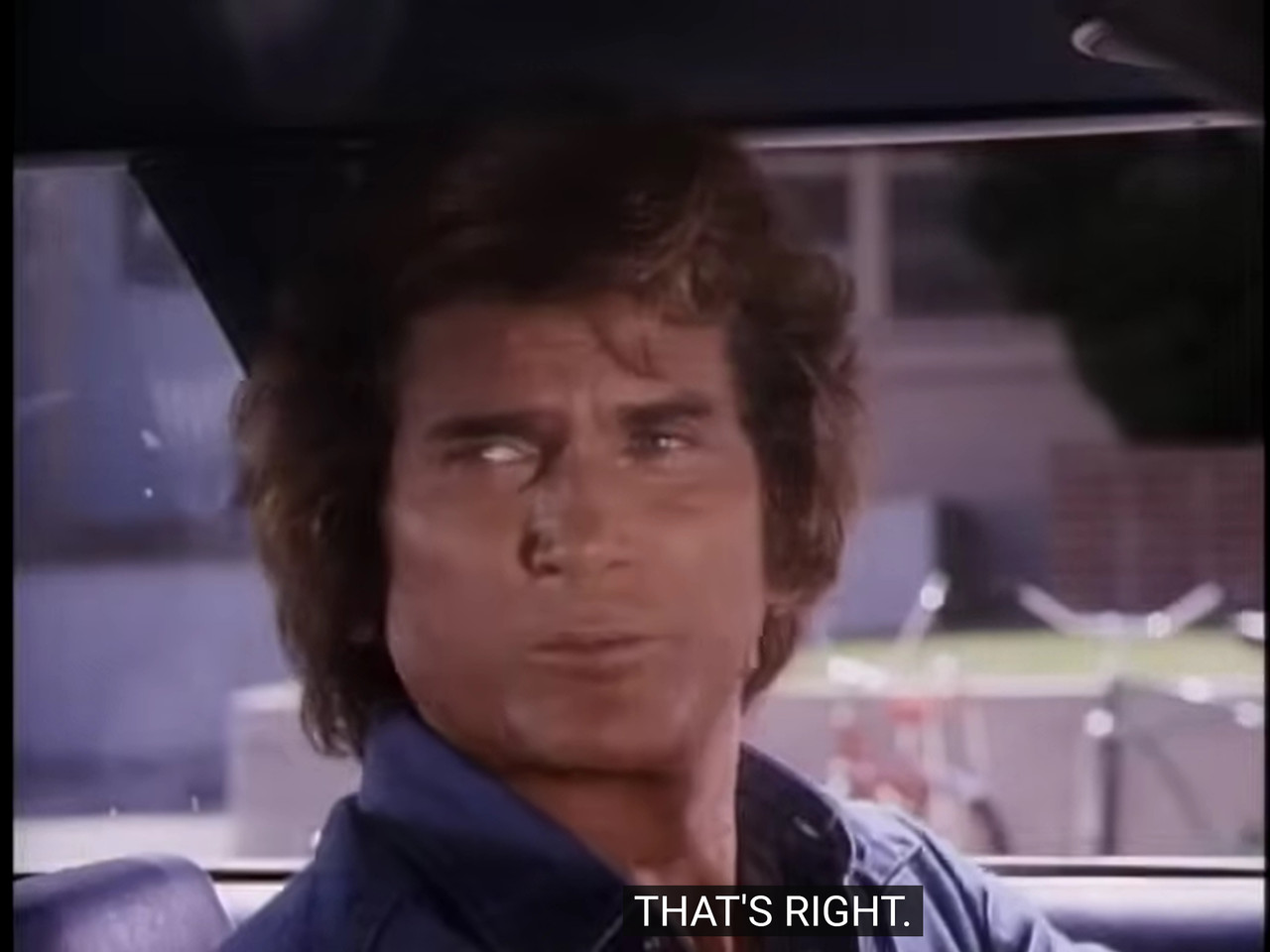
That’s like what he did when he approached Richie’s father at the superheroes’ gym in part one.
Also, no idea where Jonathan got the car anyway. It can’t be Mark’s, because he’s using it himself to take Scotty to the school by now. So, must be a gift from his “Friend“, surely.
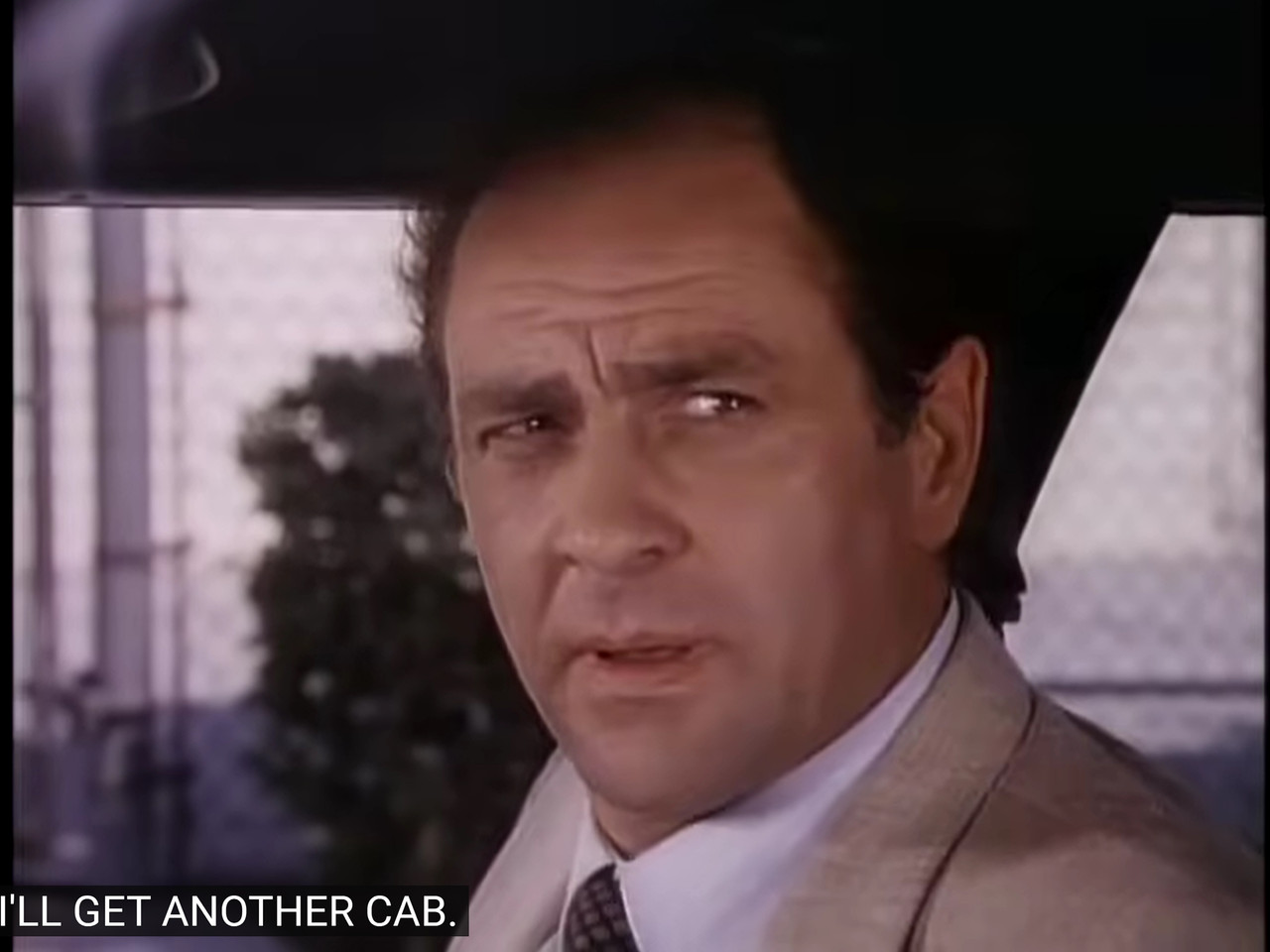
You still think it’s a cab?
Anyway, Jonathan tells him that his son is waiting for him inside, and Deke Sr. finally agrees to go in.
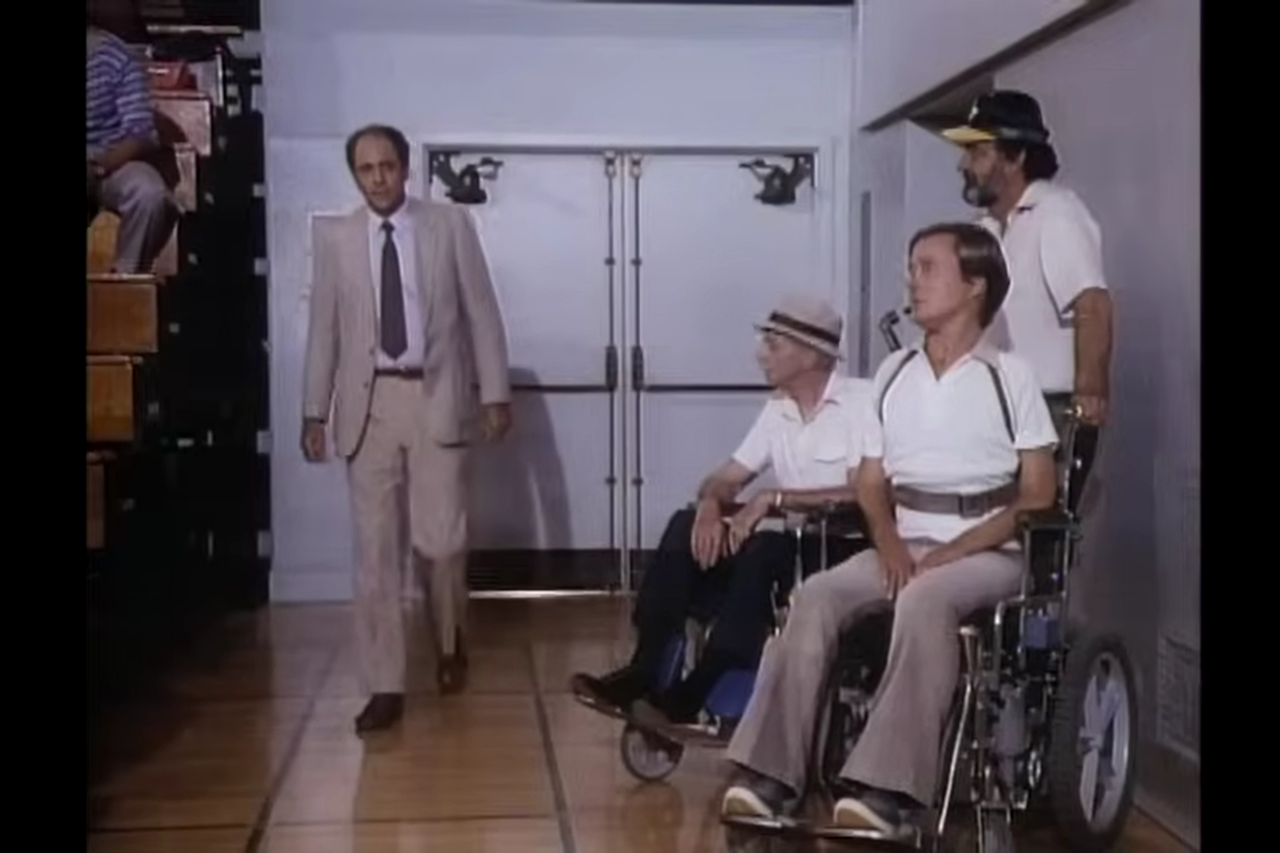
During the competition, it’s Deke’s turn. And the growing tension is immediately offset by the abrupt music shift from ominously tense to a breezy, copyright-free merry tune.
And Deke seems to be doing pretty well. At least whoever is playing him. I mean, they only show either his leg or his face, so that’s got to be a stuntman.
Maybe the stuntman was Bart Connor himself, just with dyed black hair.
Still, everybody is mesmerized by that mysterious gymnast, including Deke’s father.
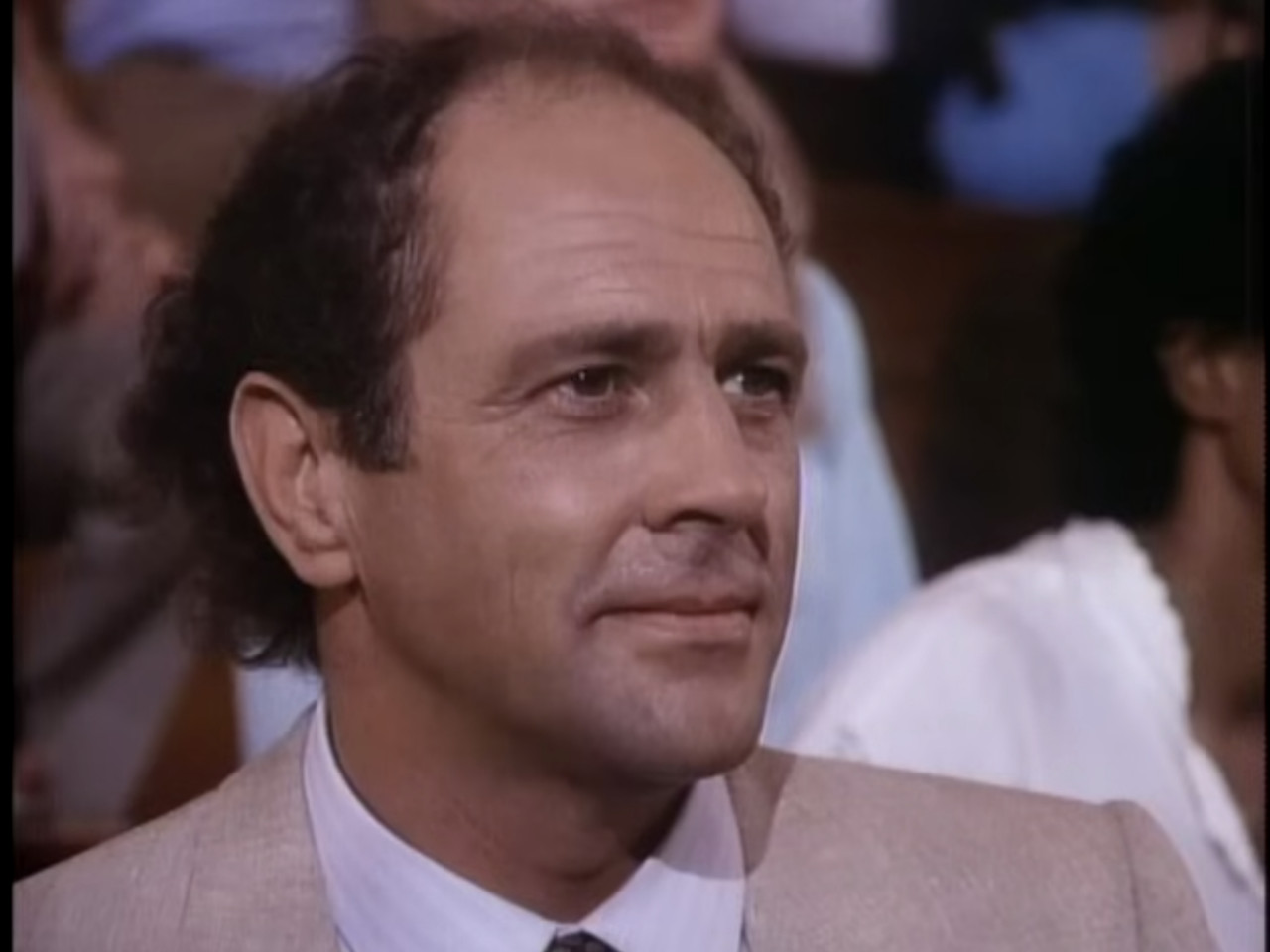
It’s all playing out as predicted: it seems to be the usual sport redemption story of triumph over hardship. Everybody’s cheering. Everybody’s ready for Deke’s winning the tournament as the perfect conclusion of a totally unexpected episode now heading to the very uplifting happy-ending of the assignment.
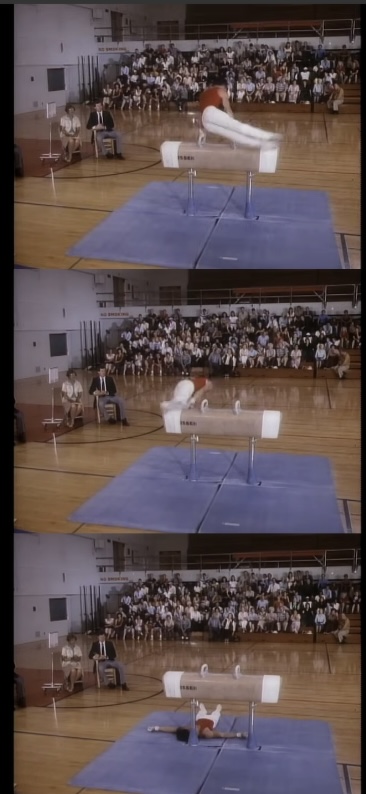
And this happens — all of a sudden.
The cheerful music abruptly stops, and Deke is on the ground.
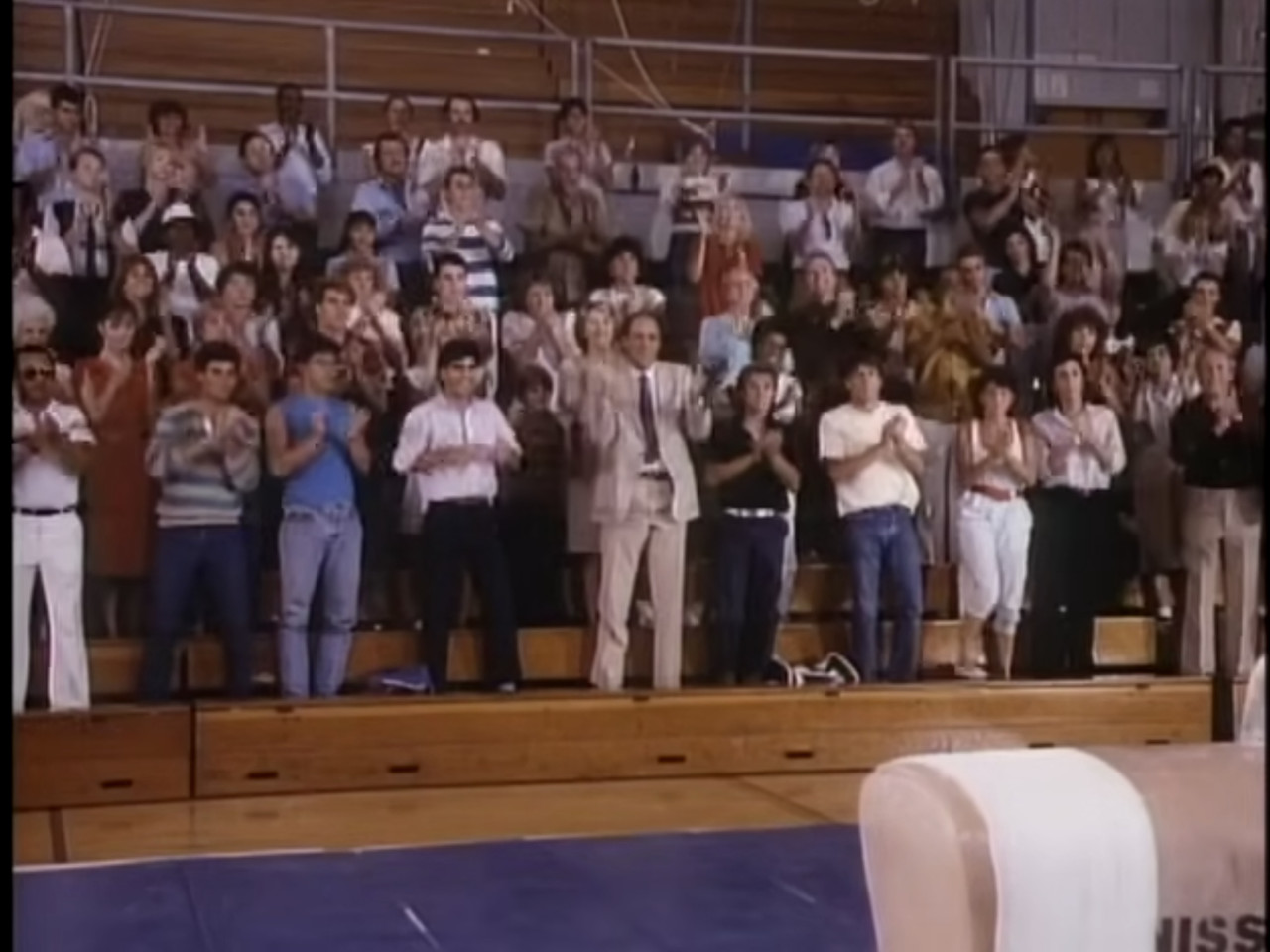
I definitely didn’t see that coming. Maybe it was all planned, carefully mapped out from the start. Maybe they intentionally made the episode follow every predictable sports drama trope just to unexpectedly drop this at the last second. The audience must not have seen it coming either, as they all stand up and give a round of applause—which was likely addressed to the episode’s writer.
And everybody cries glue.
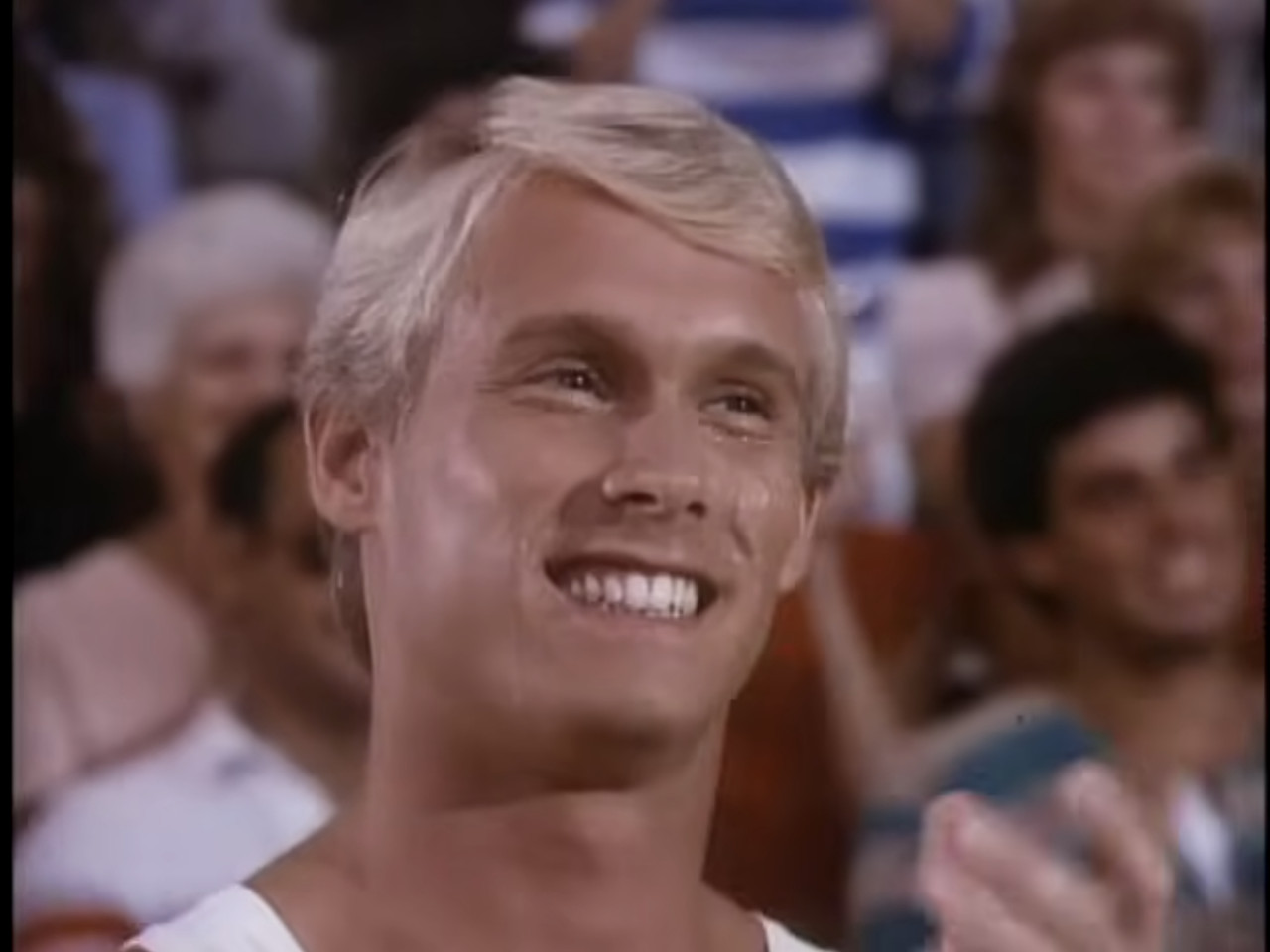
Then, Deke Sr. approaches his son, and tells him to “walk like a champion”, the same line used at the beginning of part one before the accident.
And they reconcile, tearfully.
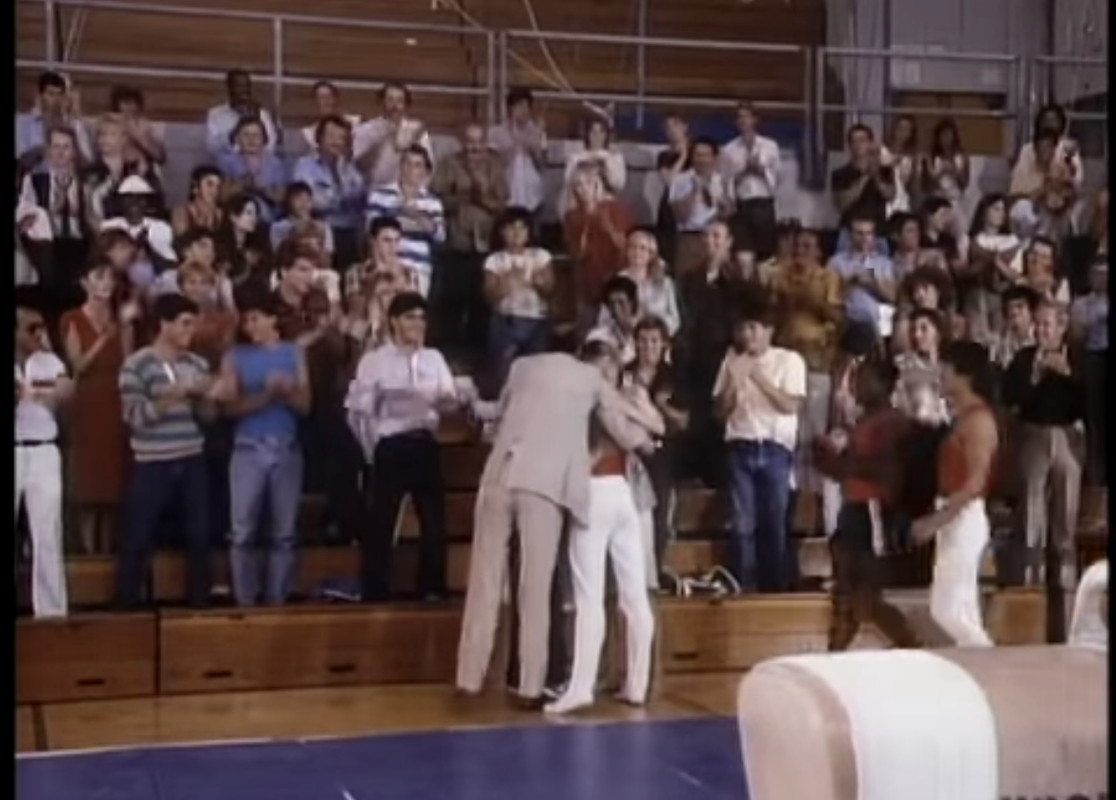
But there’s something odd in this touching moment: something out of place. I mean, notice the people in the background: they’re not clapping, just pretending — and it’s obvious too. Just, look at that woman behind Deke’s Sr. with a red dress. Really, she looks like those kids at the end-of-the-year school play that are too ashamed to sing and just move their mouth leaving the others doing the rest. So awkward, but everybody’s been through that.
Not sure why they did that here though. Probably, it had something to do with the audio: you know, they’re in a gym, and if everybody actually clapped there would have been too much echo to hear Deke Sr. telling how sorry he is to his son — so they thought they could as well add the sound in post-production. But it’s still very odd. I mean, they could have also just told them to stop clapping for a moment, or they could have looped their dialogue later. It looks like a blooper here.
Anyway, Deke and his dad “walk like a champion” toward their family and everybody’s happy again.
So, assignment complete.
But no quiet quitting for Jonathan and Mark this time.
As everybody cheers Deke up, the camera approaches, very slowly, the face of Scotty—perhaps implying that he was the most important character of the episode.
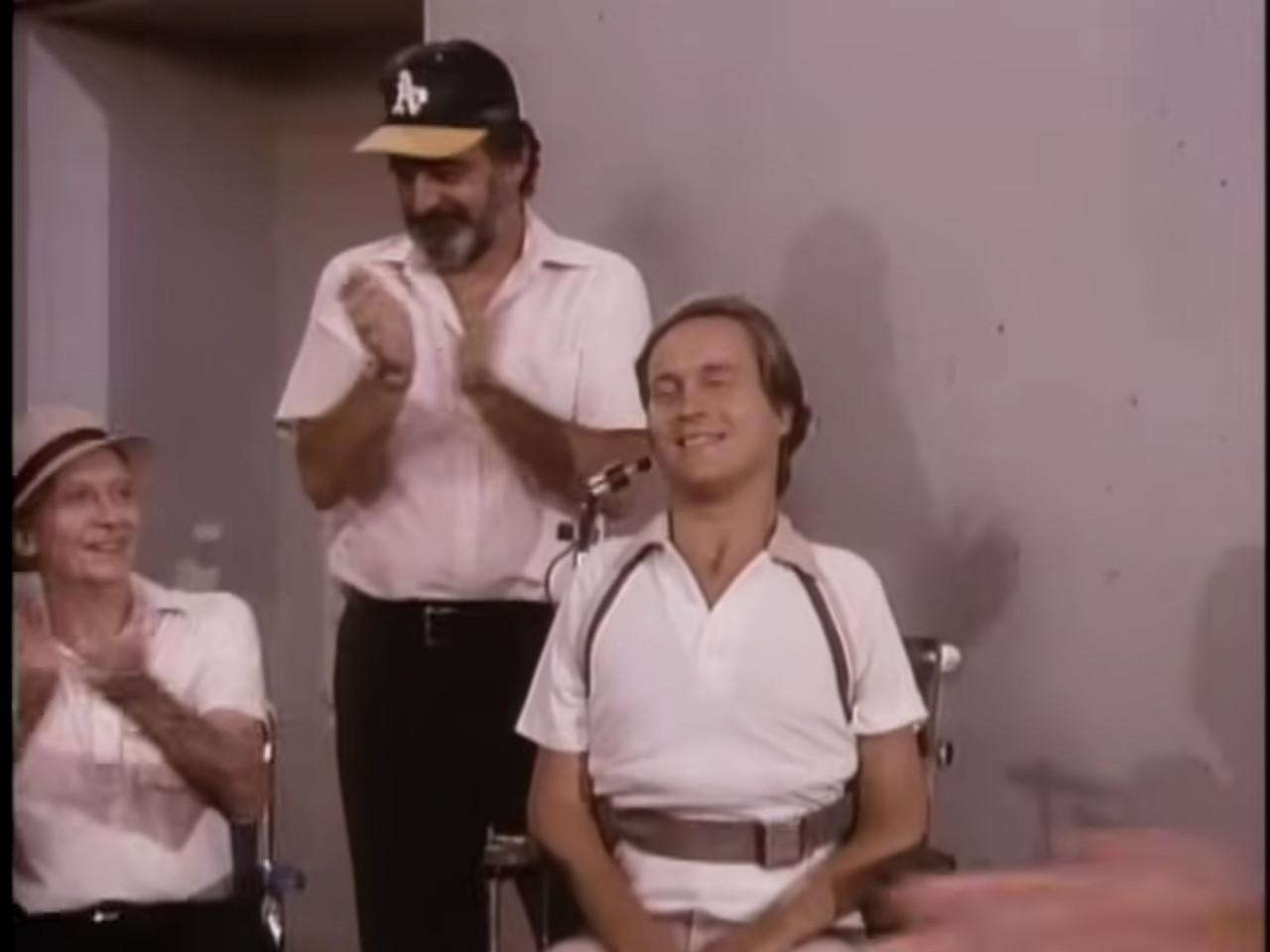
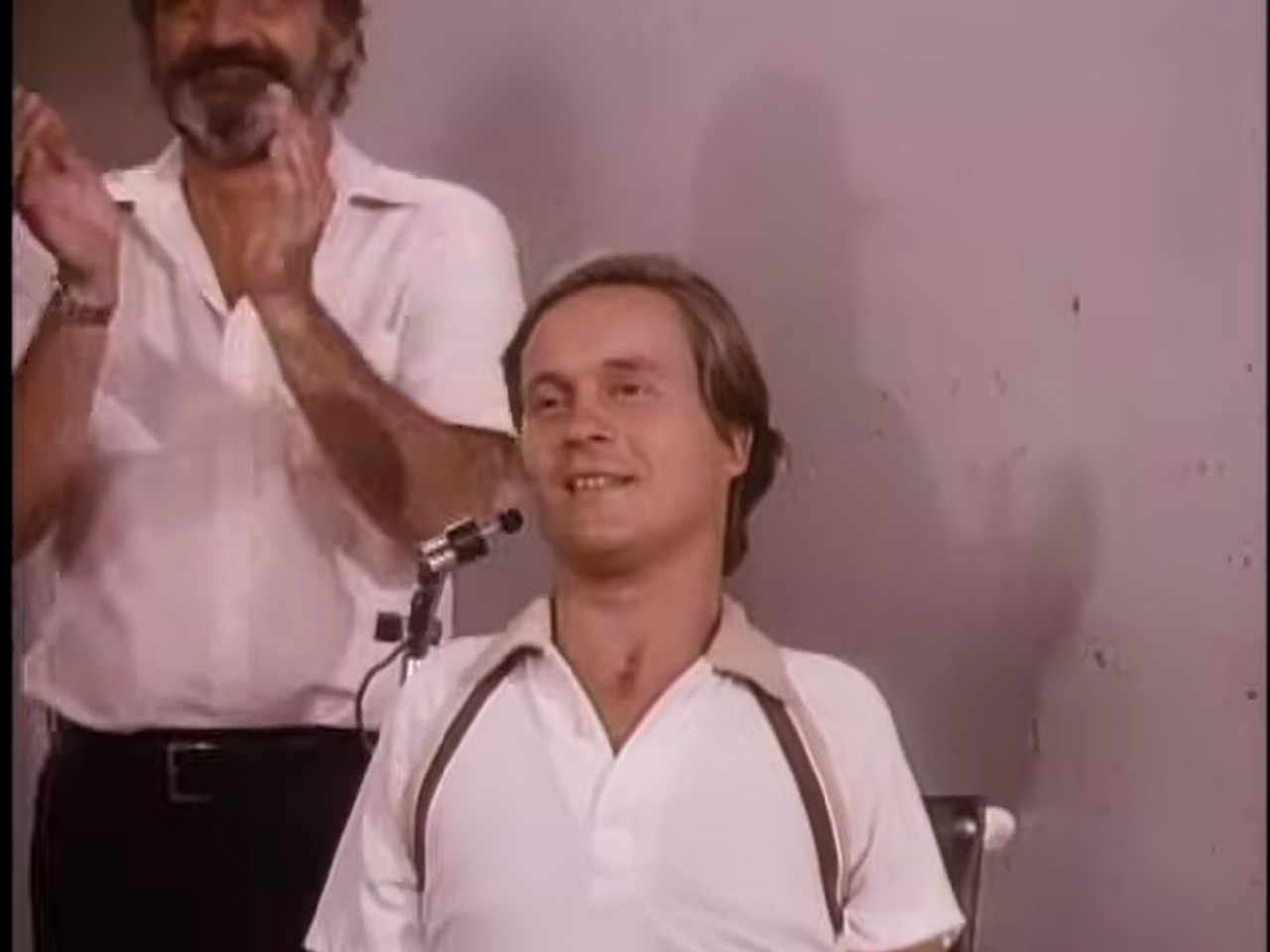
Think about it: he’s a quadriplegic character played by a quadriplegic actor. Earlier, he told Deke that people like him—who hide behind a disability and avoid societal pressure—would harm those with real, life-altering disabilities. It’s a kind of representation TV has often leaned on, partly because of the lack of disabled actors on screen.
So now Scotty—played by James Troesh—gets a moment of presence, but he’s still behind Deke, who’s played by an “able-bodied” actor. Maybe it’s a subtle nod to the real-world issues of how disability is represented on TV. Or maybe it’s just a way to guide the audience’s attention to the real-life disabled actor, always in the background, knowing he may never get the same spotlight as the others.
In this light, it is possible to see many apparently useless moments of the episode — like a guy parking in a reserved place, Scotty who is offered a drink at a restaurant because he’s quadriplegic — and see that, in a way, James Troesh was actually the main character in here.
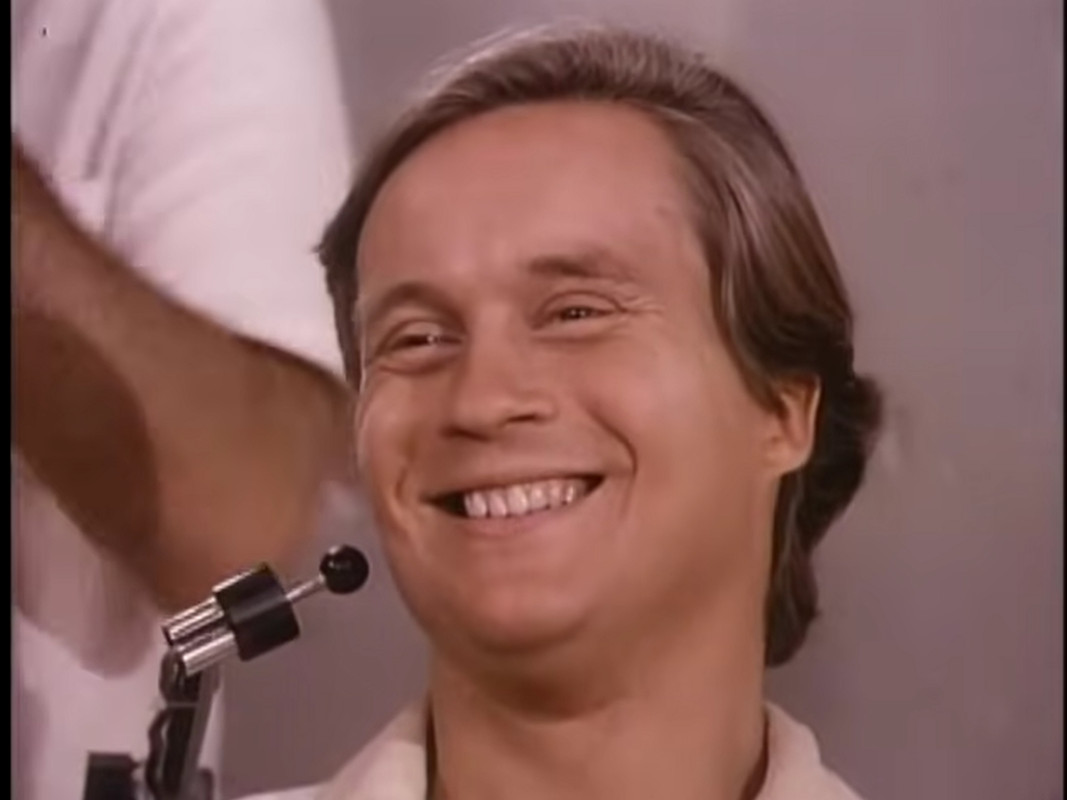
So, was this really an old-hearted, sports-related story— or maybe, it was all about invalidity representation in the TV modern landscape. Anyone can see it differently.
Eventually, this was the first episode divided in two parts of the series, and the ratings are what matters to producers: this episode didn’t rank as highly as its predecessor, with just 16 points of ratings and roughly 27 millions viewers, less than part one. That’s partly because it aired on Halloween night, and it doesn’t look like a spooky Halloween-themed episode. They probably learned the lesson: the second season will actually feature an Halloween special episode airing for that date.
However, for now, they offered this: not that those ratings are thoroughly bad, the problem is that it kept losing positions in the rankings after just five episodes — and given that the season started less than a month ago — it’s not a positive sign for the producers. Luckily, this was just an exception. Actually, the entire first half of the season didn’t rank very high — and it was just after the Christmas special it all worked better.
But now, before wrapping up the episode — there’s one final thing to point out. Even though the ratings may have seemed harsh, that doesn’t mean the series wasn’t already leaving a mark on the audience. So, here’s one final, encouraging story: apparently, one of the production member’s son was bound to a wheelchair after suffering an accident — just like Deke in the show — and dropped out of college shortly after that.
Well, upon seeing this episode, he reportedly asked his father to open a bank account to come back to college, inspired by Deke’s own redemption story.
So, maybe this episode wasn’t useless after all. These are the kinds of values and stories Highway promotes and this was just one example of the positive effect it had and possibly still can to some.

Leave a comment