
The Highway To Heaven Season 3 Overview.
The third season of Highway To Heaven aired from September 1986 until May 1987 for a total of twenty four weeks, like the other seasons.
Overview
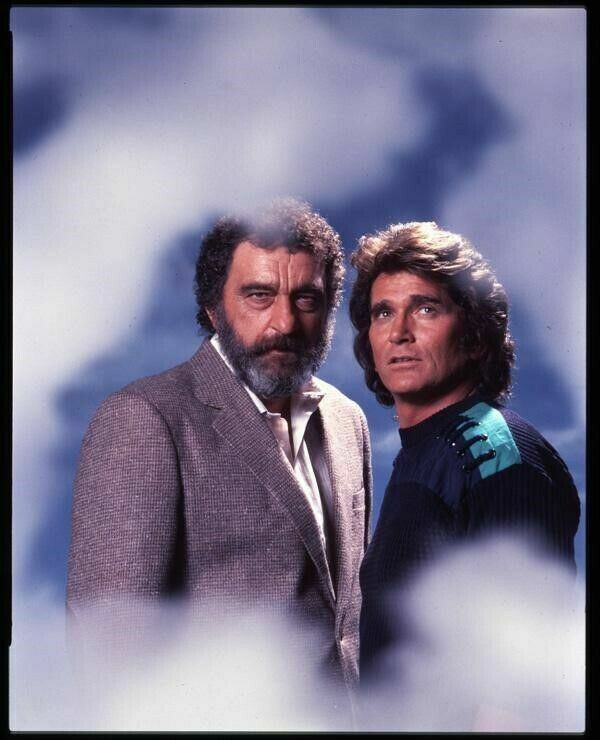
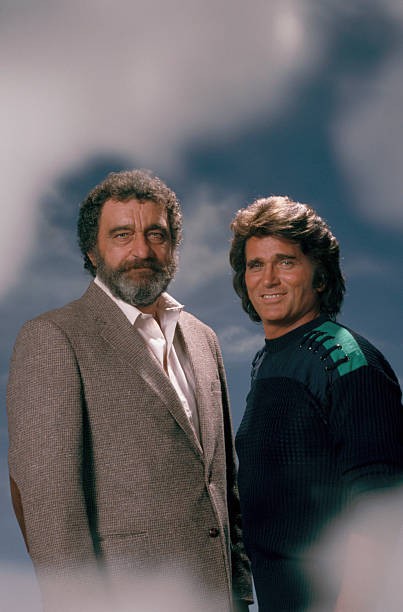
The TV series Highway To Heaven is about a probationary angel, Jonathan Smith (played by Michael Landon), and his human friend Mark Gordon (played by Victor French), as they travel around helping people at crossroads in their life.
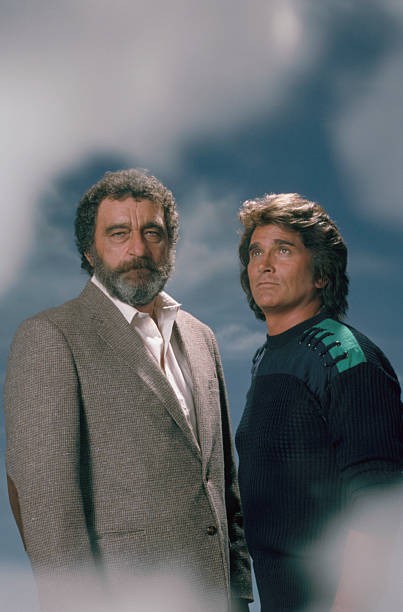
This marks their third year together, playing angels around the country.
- Opening
The opening of each episode is the same as in seasons one and two: a cloudy sky, then Jonathan is shown trudging the Highway on a convicted felony coat and a mysterious bag. Suddenly, he turns around and the landscape is different, while Mark approaches him in his car. He pulls over, they smile, Jonathan gets on the passenger’s seat and they drive off with an engrossing, triumphant score.
And that score is a recycle from a season nine episode of Little House, composed by David Rose, the same person as the Highway series.
He also recycles scores from other Highway episodes.
Anyway, don’t get used to this too long: from next season, he will change it. But only for another recycle.
Episode list:
*indicates any stand-out episode of the season
**indicates any stand-out episode of the series
| Episodes | Assignments |
| A Special Love (Part One and Part Two) | Jonathan and Mark are assigned to work as coaches at the Special Olympics. |
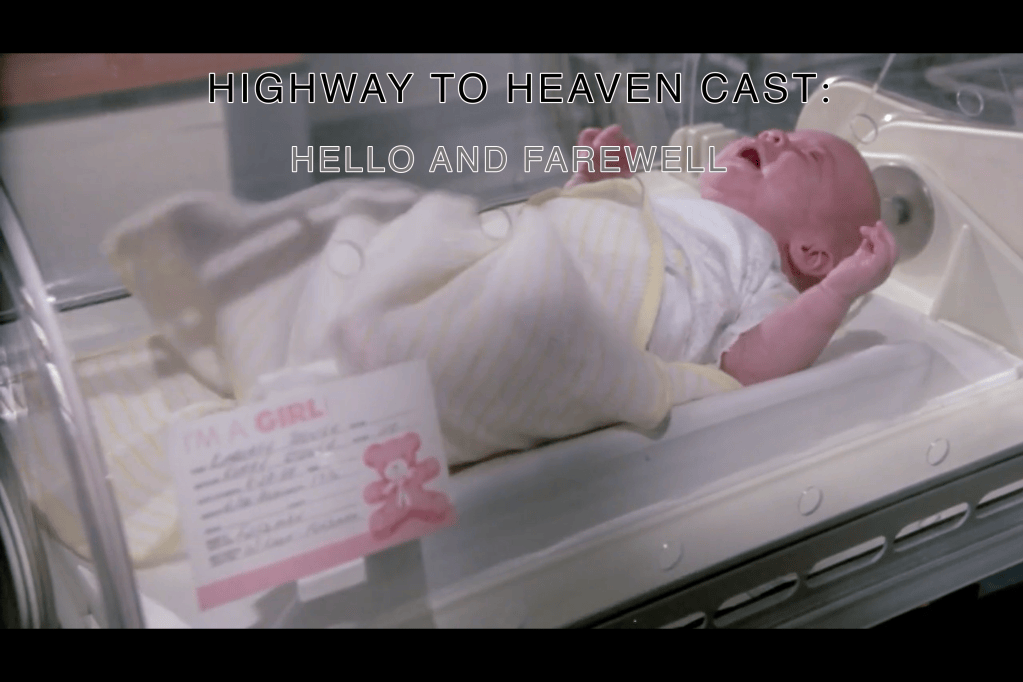
| For The Love Of Larry (Cold Open and Titular Show) | Jonathan and Mark are “assigned” to find the family of a lost dog. |
| Another Kind Of War, Another Kind Of Peace | Jonathan and Mark are assigned to help a Vietnamese woman and her son reconcile with the boy’s American grandfather. |
| That’s Our Dad | Jonathan and Mark are assigned to help a selfish actor recognize his mistakes toward the people around him. |
| Love At Second Sight | Jonathan and Mark are assigned to help an elderly couple fall in love despite the interference of a fellow angel. |
| Love And Marriage (Cold Open and Titular Show) | Jonathan and Mark are assigned to both help a woman who feels insecure about her impending marriage and offer support to some unhappy married couples. |
| Code Name: “Freak” | Jonathan and Mark are assigned to help a young kid get settled in college. |
| **Man To Man | Jonathan and Mark are assigned to help a man reconnect with his son. |
| Jonathan Smith Goes To Washington | Jonathan and Mark are assigned to help a senator prevent a budget approval at the Senate. |
| Oh Lucky Man | Jonathan is “assigned” to prevent Mark from being swindled by a woman. |
| Basinger’s New York | Jonathan and Mark are assigned to help a pessimistic journalist never lose faith in people. |
| All That Glitters | Jonathan and Mark are assigned to help the members of a neighborhood devastated by a fire. |
| *Wally | Jonathan and Mark are assigned to assist a bum in his daily errands. |
| A Song Of Songs | Jonathan and Mark are assigned to help a blind musician reconcile with his bigoted lost wife. |
| A Night To Remember | Jonathan and Mark are assigned to help a disparate group of students prepare for the upcoming ball. |
| A Mother And A Daughter | Jonathan and Mark are assigned to reconcile a writer with her estranged mother. |
| Normal People | Jonathan and Mark are assigned to help a group of citizens with mental disorders reintegrate into the community and get their old life back. |
| The Hero | Jonathan and Mark are assigned to support a Vietnam War veteran who is being denied aid for his health problems. |
| Parents’ Day | Jonathan and Mark are assigned to investigate into a TV anchorman’s family allegedly hooked on drugs. |
| A Father’s Faith | Jonathan and Mark are assigned to help a family drifting apart after an accident involving one of their children. |
| Heavy Date | Jonathan and Mark are assigned to get a man to fall in love with his tenant. |
| Ghost Rider | Jonathan and Mark are assigned to help a lonely writer confront her obsession over a deceased spy. |
| Gift Of Life | Jonathan and Mark are assigned to help a corrupt businessman learn how to make up for his misconduct in one week. |
Disclaimer: the “*” and “**” episodes are the only personal opinion in the Highway To Heaven Cast, which is meant to be informational (hopefully) and, in that light, those episodes only serve as “guide” to the most outstanding episodes for someone who has never heard of the series. The choice of “*” shows (the best of the season) is made by considering the quality level of most episodes in the season, and singling out those episodes that stand out the most above that quality. Same procedure with the “**” episodes, chosen by picking out the episodes that stand out the most compared to the rest of the episodes in the series; any ** episode is thus not only one of the best of the season, but also one of the very best of the series.
Distinction: the number of “*” episodes is not arbitrary; rather, it is determined by the quantity of episodes that are much better compared to the rest of the season’s. For this reason, they do not indicate nor signify in any way the quality of a season as a whole: for instance, in a season with many good episodes and plenty of very good episodes, all those very good episodes will be * ones, while another season with mostly very good episodes and a single great episode, only that episode will be a * one; yet that doesn’t indicate the first season of the example is better just because it has more * episodes.
Instead, a season with many ** episodes is likely to be a great season as well.
- Season details
The third season of Highway to Heaven appears to span one year, from late spring 1986 to early summer 1987, though it’s more difficult to determine it precisely than for the earlier seasons. There are two prior assumptions to consider: first, that season one seems to have covered about a year and a half (from early 1984 to early summer 1985), while the second season lasted approximately one year (from summer 1985 to late spring 1986). Second, while episodes within each season may not air in strict chronological order, they are not intermingled across seasons: all season one episodes occur before season two begins, and all season two episodes precede those of season three. Holiday specials are the only exception, as they may air outside their respective seasonal timelines (more about it here).
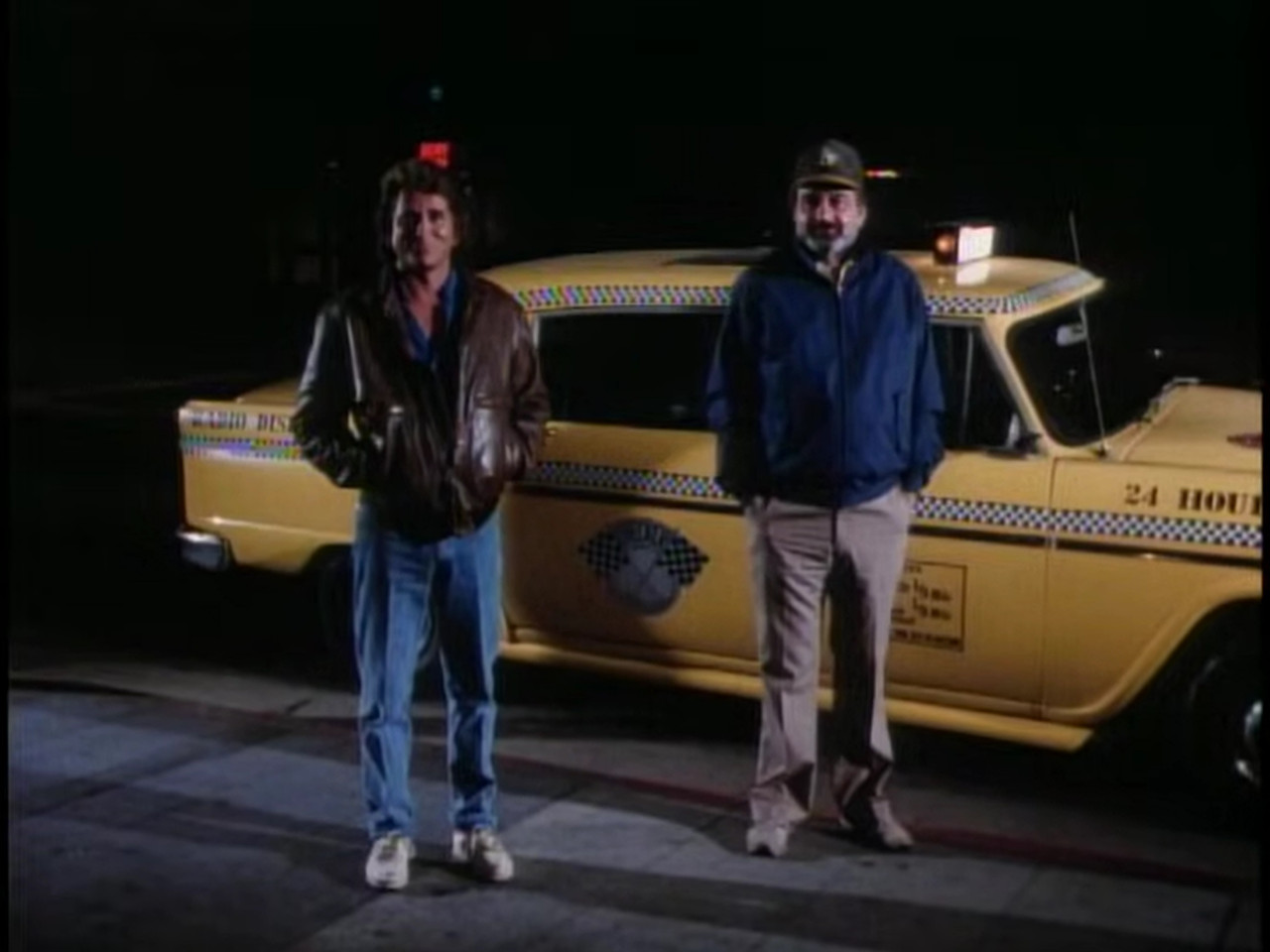
If the season two finale aligns with the chronological end of that season, then season three would begin sometime in late spring 1986. However, it is unclear which episode marks its true starting point: A Special Love spans the entire summer, but some episodes—possibly even ones that were not included in the series—could take place earlier. In any case, the season appears to conclude in summer 1987, about a year later, with and Man to Man serving as the chronological finale.
However, unlike the first two seasons, in which all the episodes actually belonged to those seasons, now there are two notable exceptions: one is Another Kind Of War, Another Kind Of Peace taking place at some point in 1988 (effectively, during the fourth season or early fifth season), while the second is the Love And Marriage Cold Open, which takes place during season four. That was added later, though, when the episode went to syndication, and it’s not considered as an “official” show in the series.
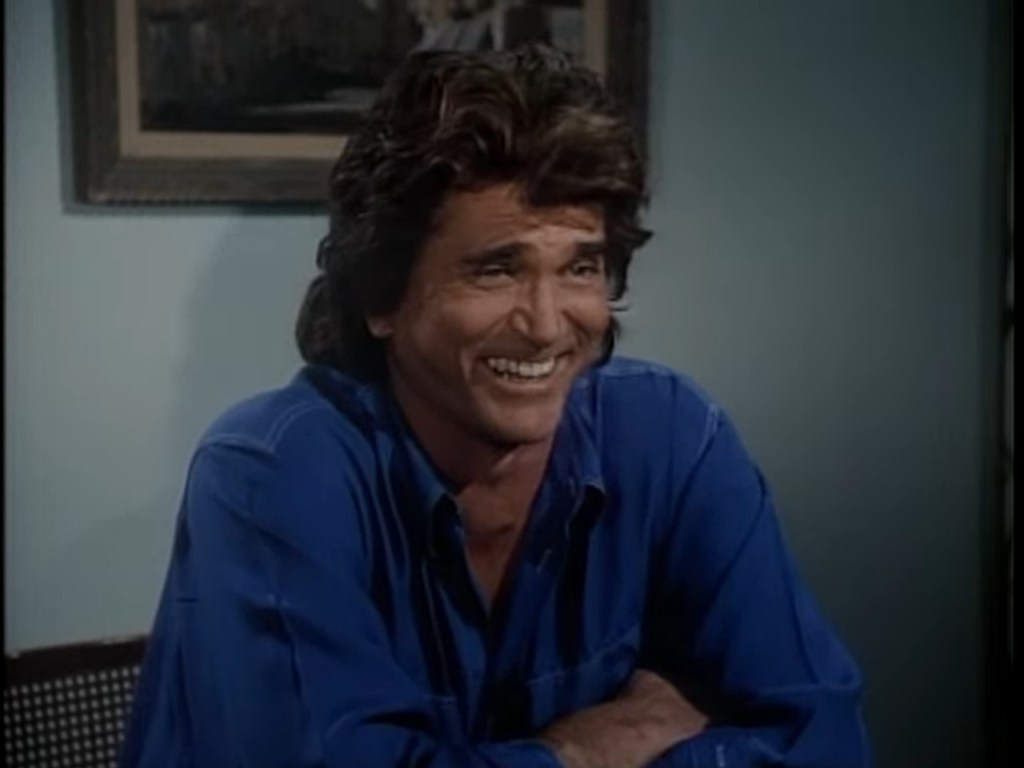
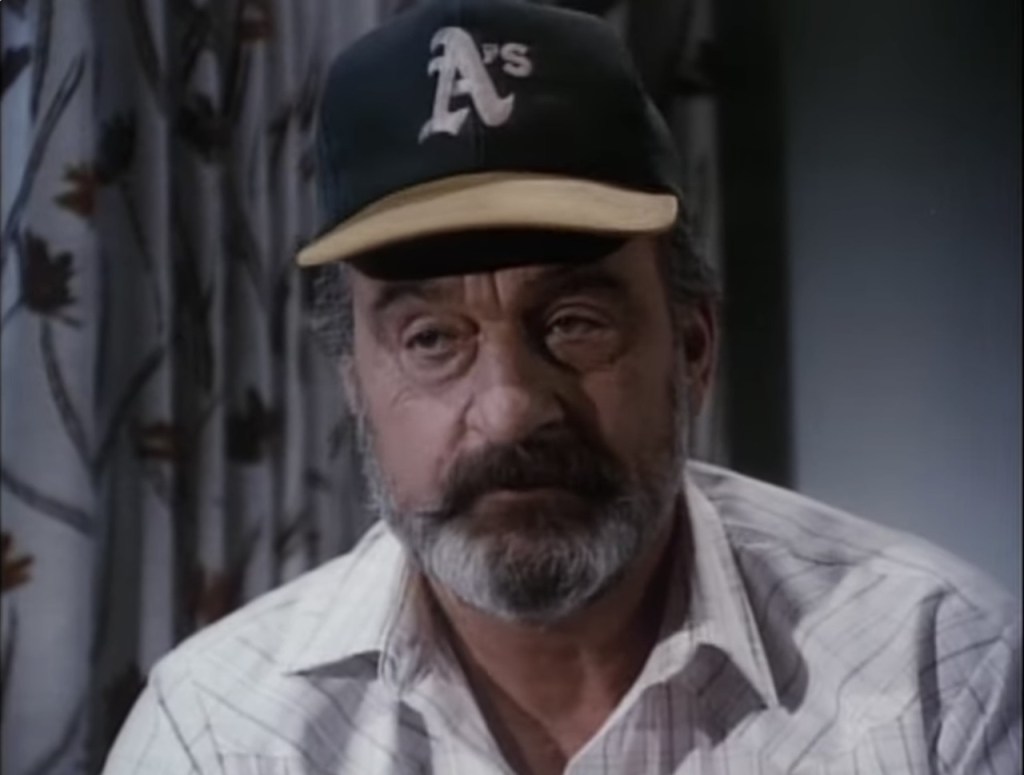
That explains why they look older, especially Mark (or French, more accurately).
Instead, Another Kind Of War, Another Kind Of Peace is really just an unusual exception.
During this season, Jonathan and Mark traveled various cities (hardly ever leaving California), including New York, for the second time in the series.
The episodes mostly play out like the other seasons: they begin with Jonathan and Mark driving to an assignment while discussing something which may or may not be remotely related to the assignment; so, they get to wherever they have to, take the job they need or meet the person to help; they help them, and they drive away. As part of their jobs, they take some old ones: sport coaching (A Special Love) teaching (A Night To Remember) and in a couple of episodes, they even become narcs (For The Love Of Larry Cold Open, Parents’ Day) and bums (Wally).
There are some notable exceptions to this: one is Basniger’s New York, the Christmas Special, which is told exclusively through the perspective of the assignment (the second episode of the series to be like this), another is For The Love Of Larry and Wally, they no apparent assignment nor a job. Except playing bums, and dress up like them.
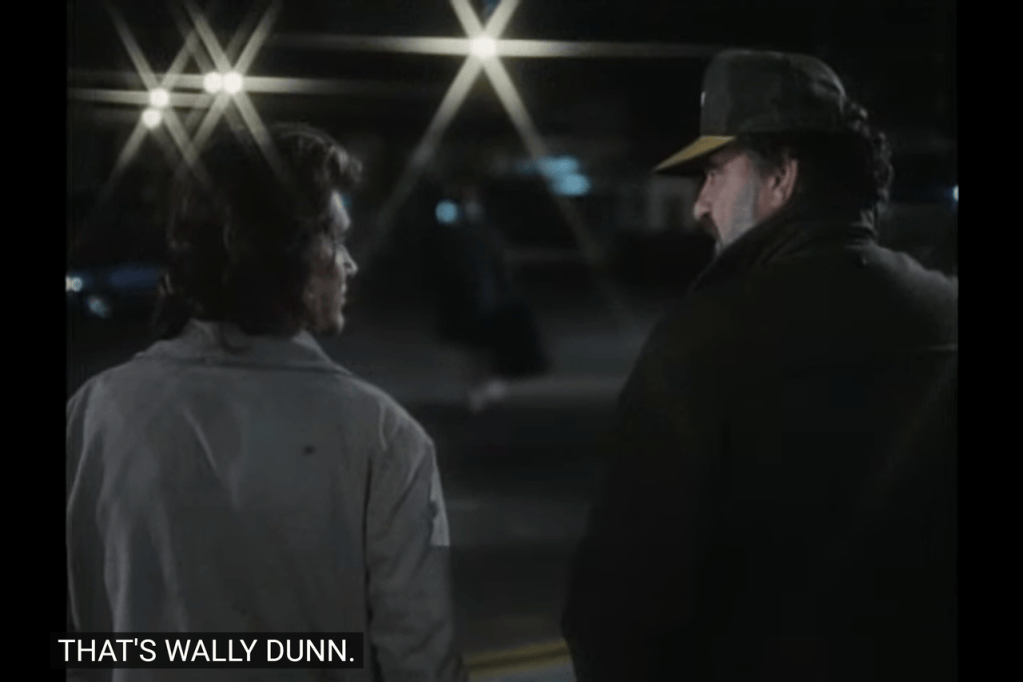
The other assignments can vary. Here is some of the most common ones:
- Bins or Pollution, one of the three Landon’s obsession (Gift Of Life);
- Bums, episode about the “bum” problem, another Landon’s obsession (Basinger’s New York, Wally);
- Love assignments, about getting two characters to fall in love (A Song Of Songs, Heavy Date);
- Illness, episodes about an ill character coming to terms with this condition (Man To Man);
- Drugs, the last of the three Landon’s obsession, episodes about what Jonathan considered a problem that could lead the country to its extinction (the For The Love Of Larry Cold Open, Parents’ Day).
- Family issues, episodes about a character with a stormy relationship with the family (A Mother And A Daughter).
This season has one Holiday Special episode (Basinger’s New York, for Christmas) and two Vietnam War episodes (Another Kind Of War, Another Kind Of Peace and The Hero).
Most episodes in the season are fictional or loosely based on existing stories (for example, the season finale is yet another rendition of A Christmas Carol, not the first one in the series either). However, there are two exceptions partially inspired by true stories. When an episode of the series is based on a true story, it may follow two different directions: it’s either directly based on a specific person or experience, or it is partly inspired by a real event around which a fictional assignment is created specifically for the episode (more on this distinction at the “True Story” entry here).
In this season, there are two episodes belonging to the second category—using real news or events as the backdrop for a fictional assignment. One is A Special Love, set during the real 1986 Special Olympics at UCLA, but centered on a fictional adoption case involving Scotty and Diane and a fictional kid.

The second is Jonathan Smith Goes to Washington, which draws inspiration from the mishandling of the real Orphan Drug Act and constructs a fictional show about invading a senator’s dream and manipulating him into passing a new bill in Congress to save Mark’s niece.
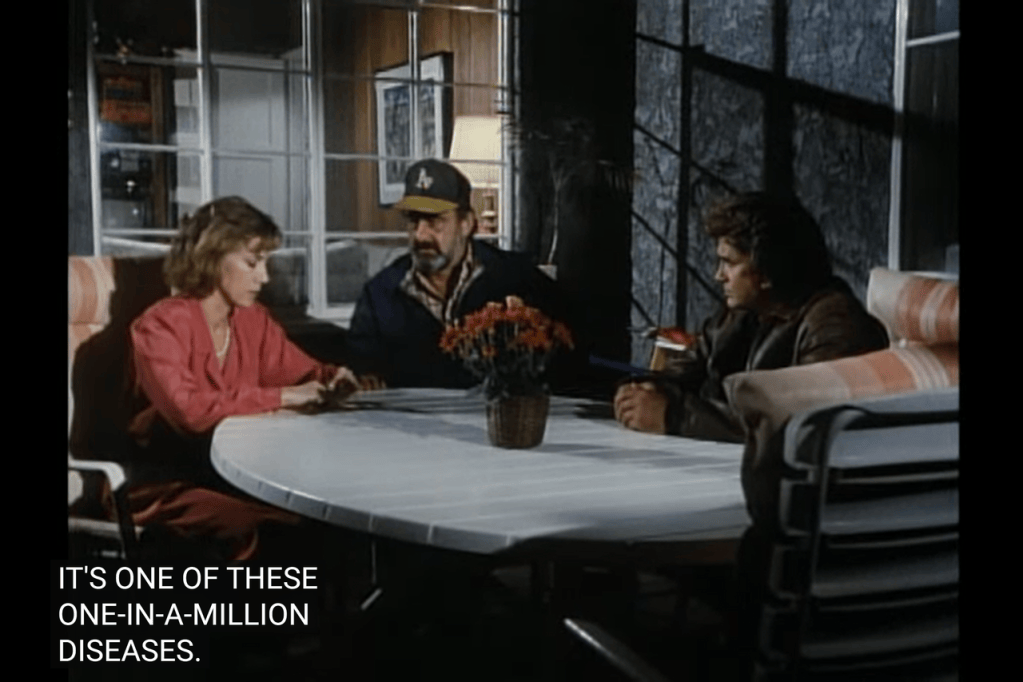
Characters: this season reveals new details related to Jonathan’s probation (all episodes adding new details are here) and the way Heaven works in the series (the Heaven Hierarchy). Actually, after three years with Mark, he almost got a chance to get a promotion and ascend to Heaven.

But he didn’t—and according to the angel in that episode, he probably never will.
The way they handle the assignments remains largely the same: they can equally contribute to solving the assignment (Love And Marriage) or Jonathan would take the larger part, while Mark addresses the secondary actions. No assignments was entirely resolved by either one of them alone. But there’s one episode where the assignment was about Mark (Oh Lucky Man), in which he falls in love and almost gets married (again).
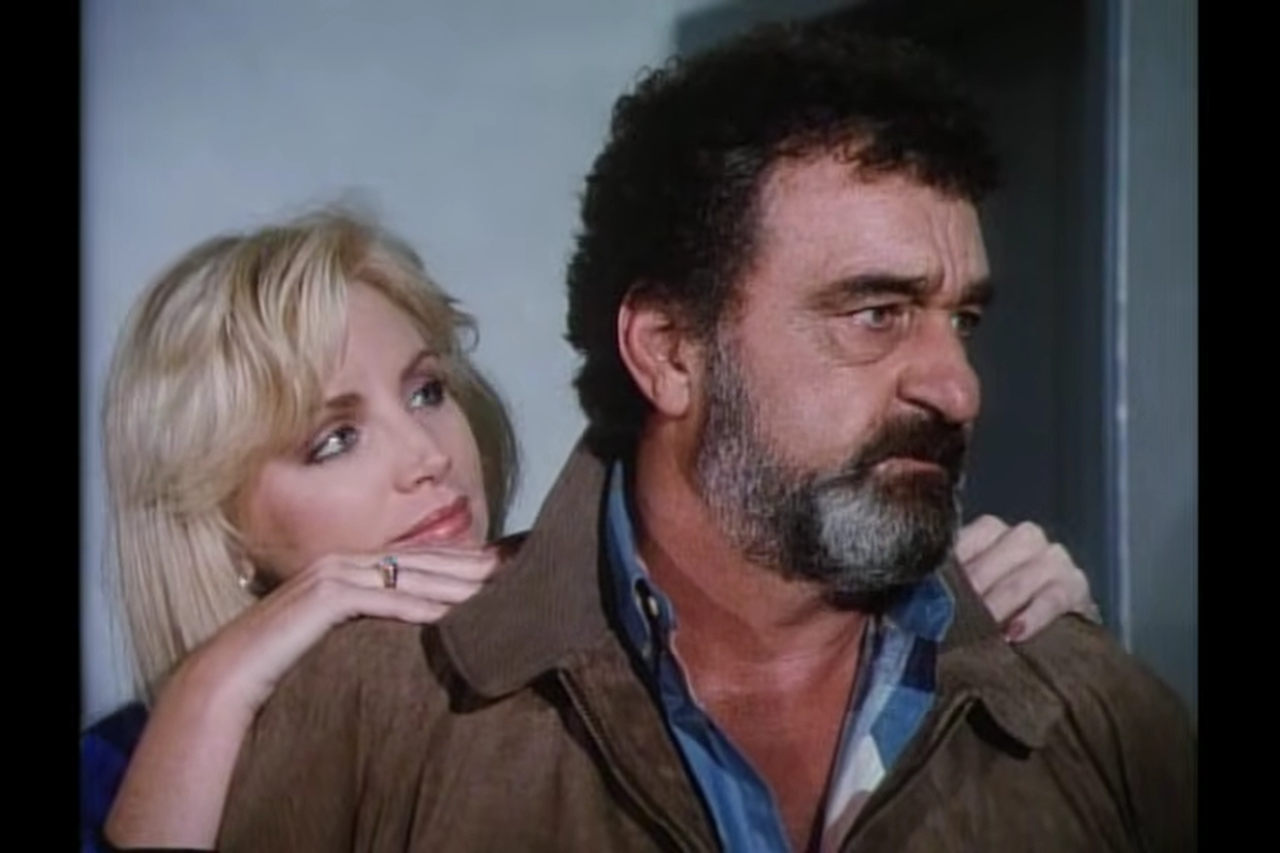
And he completely forgets about his deceased wife from season one.
As part of their assignments, Jonathan and Mark helped multiple characters, including some known ones to them—mostly secret friends. In particular, Jonathan met a fellow probationary angel (Ted in Love At Second Sight) and a “superior” angel making area supervision (Clifford in A Mother And A Daughter), while Mark helped many secret Oakland Friends he had lost touch with for years. They include: a retired cop and colleague (Love And Marriage), a childhood friend (Man To Man), a convicted felony he had arrested in his cop years (Oh Lucky Man), a friend from his cop years, though not a colleague (A Song Of Songs), an old friend who thought him some fishing moves (A Father’s Faith).
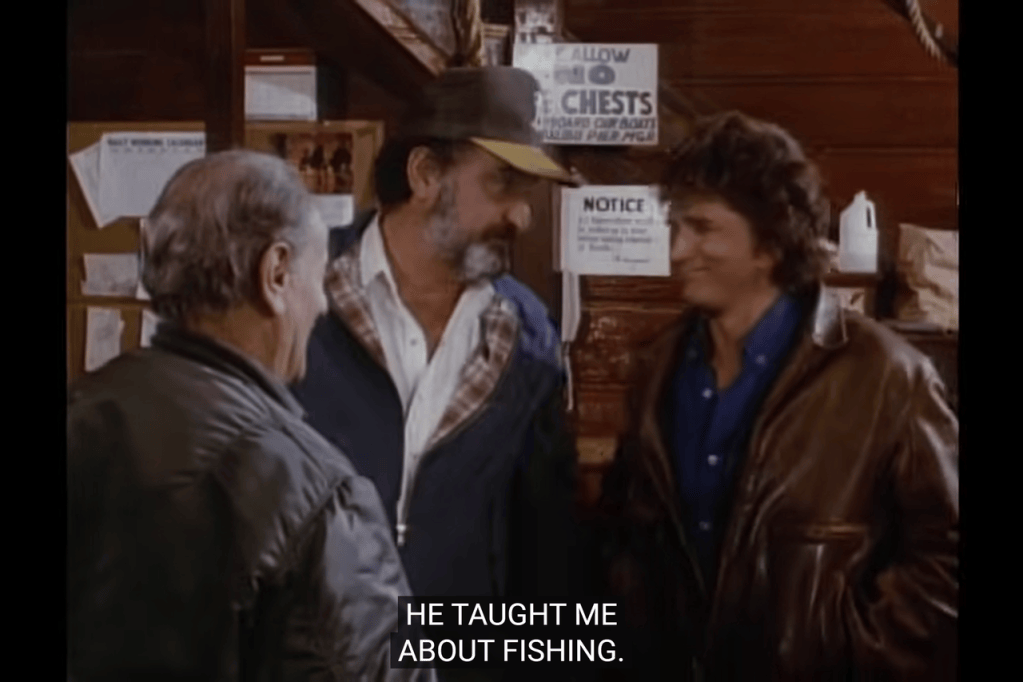
None of them was there for him when he was an alcoholic cop in the Pilot, though.
In the third season, Jonathan and Mark also met some familiar characters to the audience, from Mark’s family. More in details, there were three recurring characters from the old seasons concluding their journey on the Highway To Heaven this season:
–Scotty Wilson (played by James Troesh), he was introduced in the first season episode One Fresh Batch Of Lemonade, where he was a quadriplegic aspiring attorney, and came back in A Match Made In Heaven (season one) and The Monster (season two); in this season, he appears in A Special Love, his last of the series, which marked his eight appearance, fifth when counting the two part episodes as single ones (including one flashback in the Love And Marriage Cold Open, though using old materials from season one).
–Diane Gordon (played by Margie Impert), she was introduced in the first season episode A Match Made In Heaven as Mark’s cousin, who fell in love with Scotty thanks to Jonathan and Mark’s interventions, and they got married soon afterwards; she came back in the same episodes as Scotty did, and makes a total of six appearances, or four when counting the two part episodes as single ones (including one flashback in the Love And Marriage Cold Open, though using old materials from season one.)
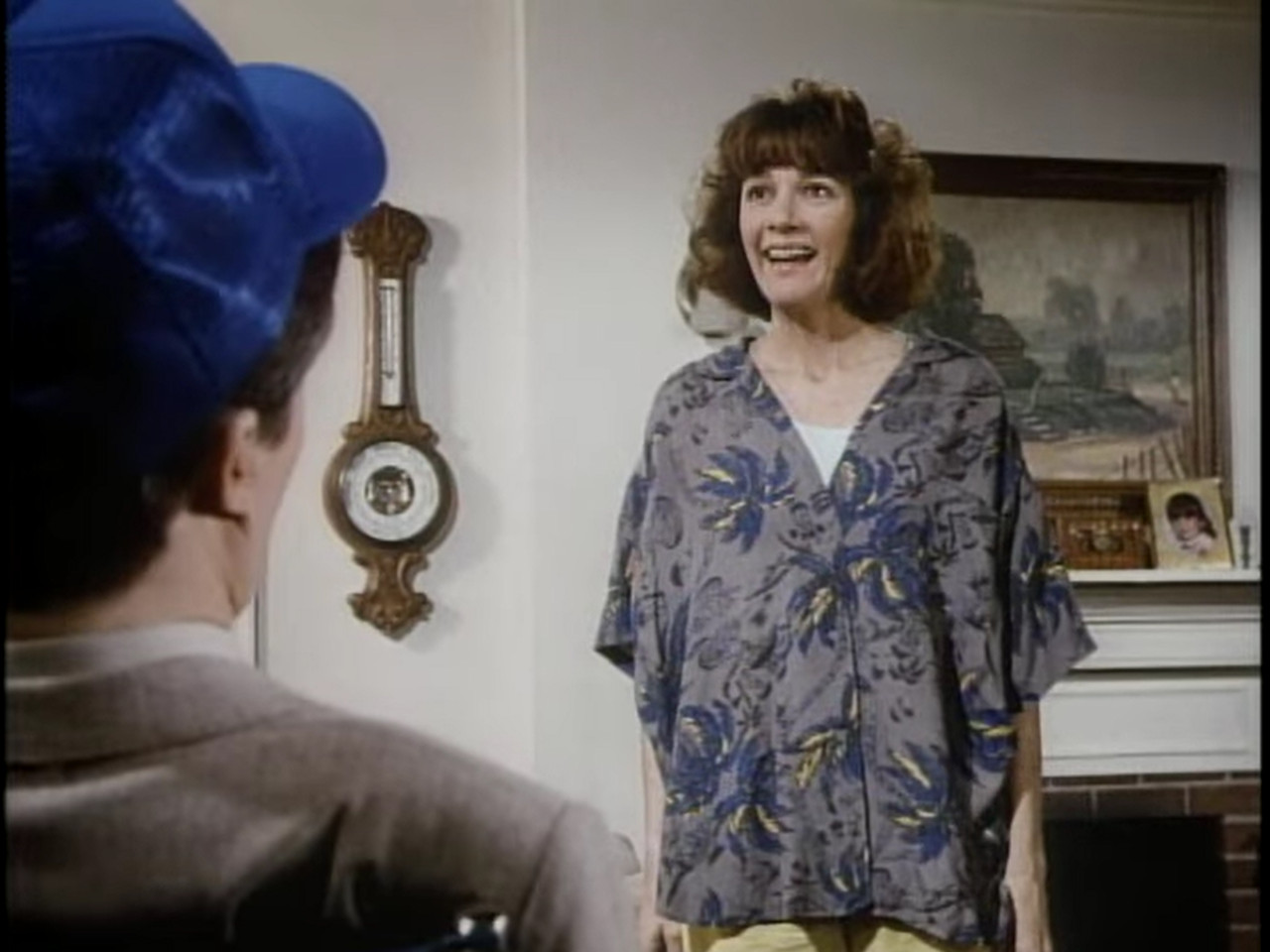
–Leslie Gordon (played by Mary McCusker), she was introduced in the Pilot as Mark’s younger sister, working as nurse at a retirement center (and an alleged enemy of Diane). In this season, she was in the episode Jonathan Smith Goes To Washington, her last. She appeared twice in the series, although her character was frequently mentioned in many episodes she was not in.
No new recurring character was introduced in the season. In the next, these three old characters will be replaced by three new recurring ones.
- Season Features
–Highway Actors: the actors who appeared in multiple episodes of the series, often playing different characters; in this season, some old returning actors were John McLiam (Love At Second Sight), Paul Walker (A Special Love), Ned Beatty (That’s Our Dad), Eddie Quillan (Basinger’s New York) and Joe Dorsey (Man to Man), while the actors introduced in this season and coming back in the next ones include Bill Erwin and John Pleshette; there’s one actress, Didi Conn, who appears twice this season (All That Glitters and Ghost Rider), and three actors reprising their roles from the preceding seasons, Margie Impert as Diane (A Special Love), James Troesh as Scotty (A Special Love) and Mary McCusker as Leslie (Jonathan Smith Goes To Washington).
–Highway Lifetime: actors who concluded their career on a Highway episode; in this season, they are Margie Impert (who retired after A Special Love and her recurring role as Diane) and Ed Bakey (Wally).
–Highway Family: a family of related actors appearing in the series; in this season, there’s the entire Wallach Family (A Father’s Faith), and one of them, Eli Wallach, is also a Highway Actor (from season two).
This season has a peculiar feature: the cold open. Some episodes of the season turned out to be shorter than originally anticipated; to make up for that, Landon decided to write a new cold open to add at the beginning of the episode, in order stretch it as much as he could. (Something similar occurred in a season one show, but not in cold opens). In this season, it occurred twice: the first time in the episode For The Love Of Larry (about 36-minute long otherwise), and the second in Love And Marriage (a one hour and ten minute episode). In particular, the For The Love Of Larry Cold Open was shot to be added before the episode’s premiere in October 1986, while the Love And Marriage Cold Open was written almost two years later, and added only when this season was sold to syndication (therefore, it wasn’t part of the episode when it aired in November 1986 the first time). That cold open in particular is an exception to the series: it wasn’t included in the latest DVDs release, and it’s not considered “official”.
There’s just one episode divided into two parts airing in two separate weeks (A Special Love), and a peculiar one hour and ten minutes episode, the only one of the series like that. By contrast, seasons 1 and 2 both contained two episodes divided into two parts and airing on two weeks (actually, season one had three, but one of them aired the same night).
Glossary:
Some features from the glossary of Highway To Heaven. Some useful guidelines and details on the assignments of the series.
- Angel revelation, episodes in which Jonathan reveals his identity as angel; unlike season one and like season two, there’s plenty of them.
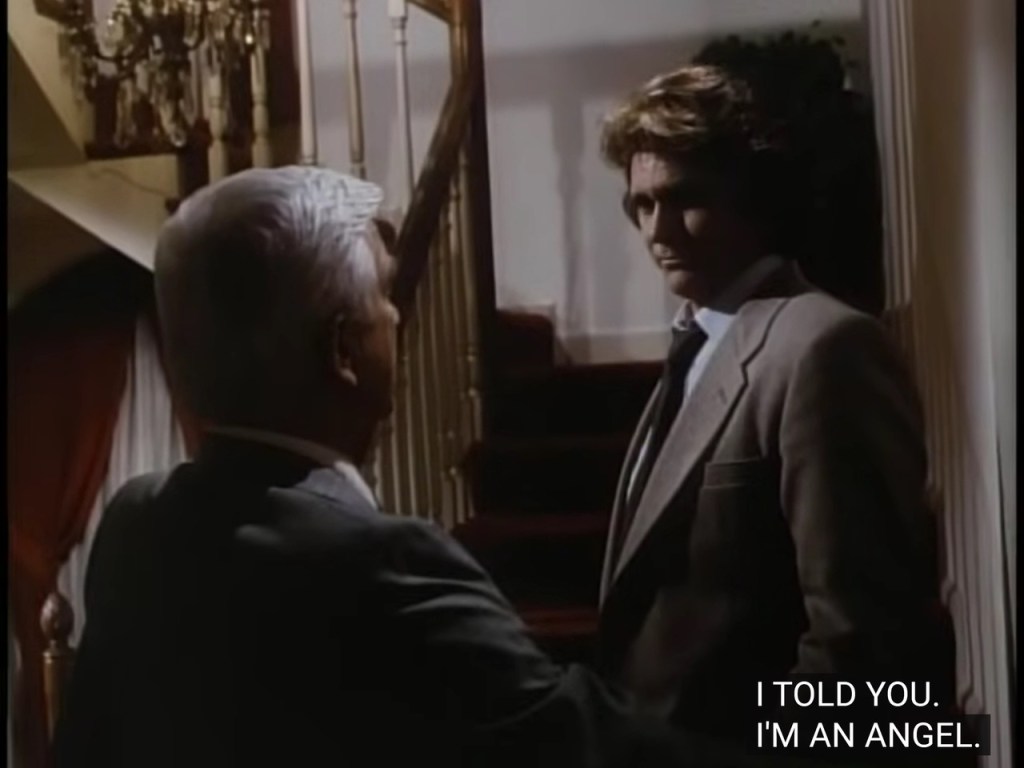
- Cute, episodes with Mark’s catchphrase (sometimes dropped by Jonathan too)
- Recycles, episodes recycling a feature (whether an entire scene or a piece of the score) from another episode of the series, or a different series; the opening of each episode is an example, recycling from a season nine episode of Little House. In this season, the episode that was recycled the most is A Special Love, from which a piece of its score was later used in Man To Man and Heavy Date. Instead, the episode that featured the most recycles is Oh Lucky Man, recycling a scene from Help Wanted: Angel and combining it with another from Catch A Falling Star (both from season one).
- References, episodes referencing anything else, whether another episode of the series, a different series (mostly Little House) or the actors’ life (mostly by jokingly taking distance from it, or by just admiring each other); one example is That’s Our Dad, including a reference to French and his opinions on Landon’s TV shows.
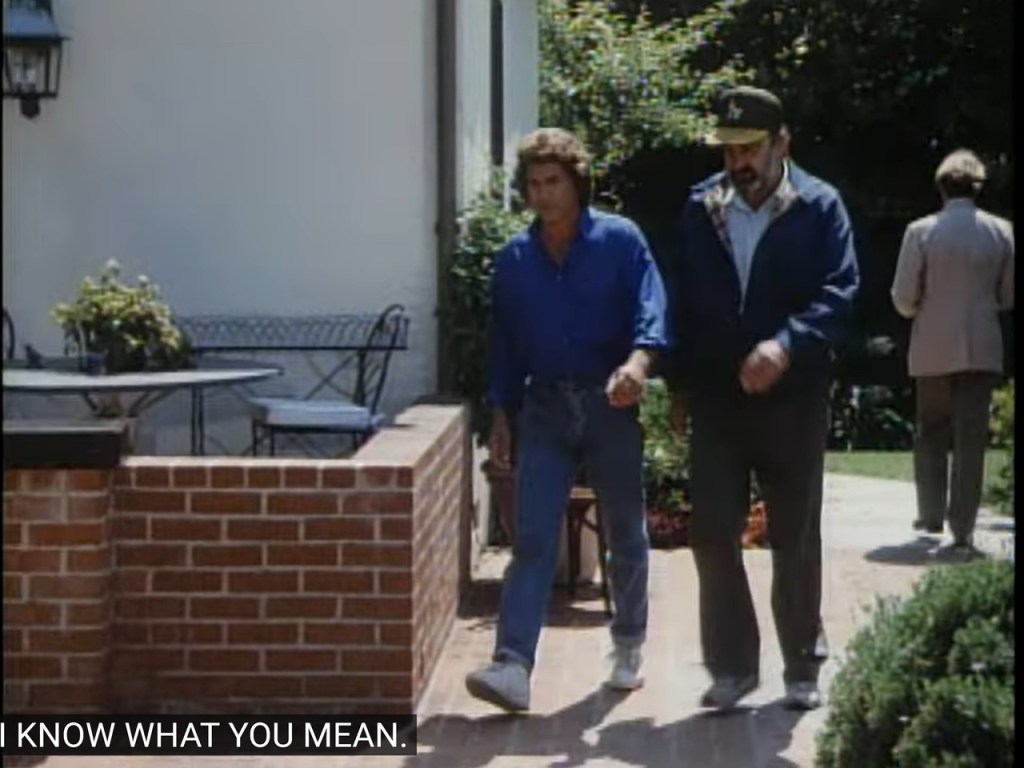
Highway Of Mysteries, a guide to some of unanswered questions in the episodes of this season; for example, in For The Love Of Larry, whether the dog is a real angel or not, in A Mother And A Daughter, whether Jonathan will eve be able to go to Heaven, in Gift Of Life, whether it was just a dream.
Instead, here is a list of blooper.
Production
- Background
At the end of the first season of Highway, producers renewed it for three additional seasons. But in terms of production, this season mostly follows the direction established in the second season: more angel revelations, more sprawling assignments beginning in a way and then shifting into completely different directions, and more stuff.

Even though not always the angelic one.

More about the premise and the evolution of the series here.
This is especially evident in episodes that foreground the angelic elements of the story. For example, A Special Love is set to be a sport episode about the Special Olympics in part one, and then abruptly becomes about Scotty and Diane adopting a child in part two. Or Love Ar Second Sight, which begins as a simple love assignment between two old folks—and then a new angel is introduced, and things escalate and complicate even further. Another example is All that Glitters, starting as a story about helping people in a struggling neighborhood, but soon evolving into a plot involving a thief on the run falling in love and a bunch of other criminals hunting him down.
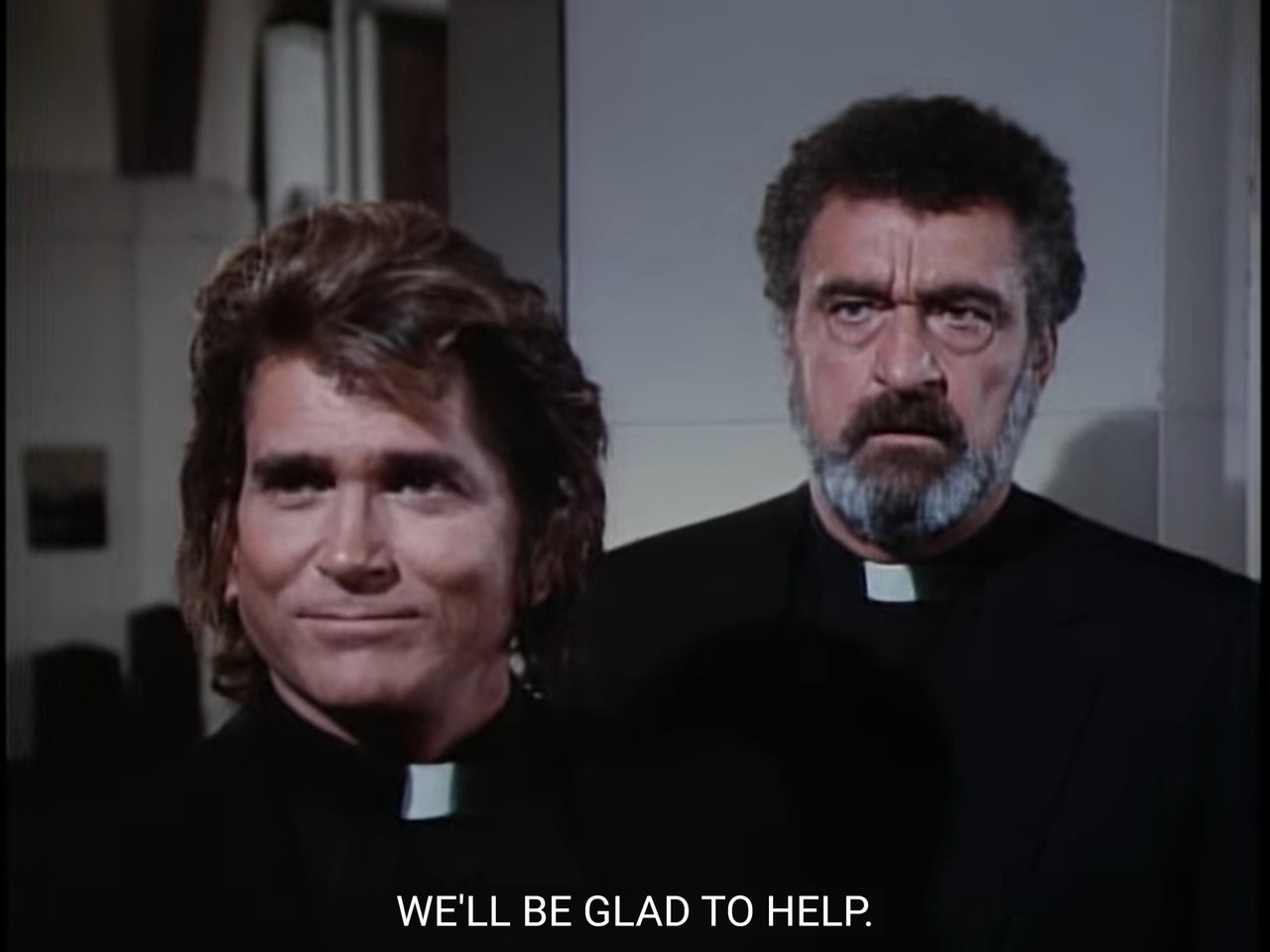
This kind of sprawling narrative was something largely avoided by the season one, when the assignments were simple and laid out at the beginning: showing people how to help themselves out, something they can do even without an angel. In a 1984 interview describing the series, Landon remarked that Jonathan’s character is just the “catalyst that brings people together“, and being angels would not play central part in the story, nor it was meant to distract the audience from its messages (about it, here).
In general, this marks a departure from the guiding principle of the first season, which was conceived as a show about people helping one another, with Jonathan’s angelic nature remaining largely in the background. By contrast, season three uses the same approach as season two. As a result of this shift, Jonathan is no longer merely a “catalyst”; instead, he is more overtly an angel whose powers directly influence—and often resolve—the assignment (Jonathan Smith Goes To Washington is an example of that).
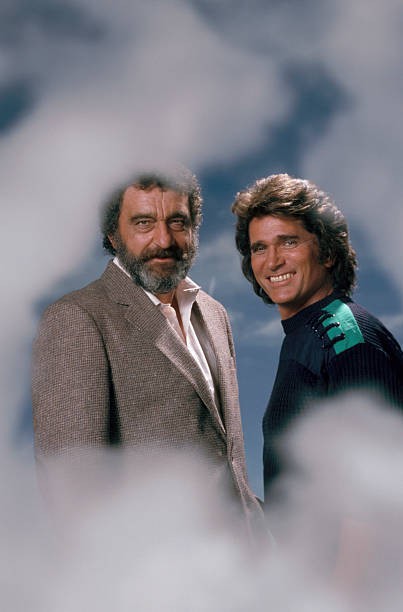
They probably enjoyed playing with the powers.
However, after pursuing this approach in the second and third seasons, things will change: in the next, Landon will decide to restore the original principles of the series, coming back to a similar approach as in the first season—single, clear assignments, no more extensive use of the Stuff, no more angel revelations in each episode (or almost). More in general, episodes where depicting realistic settings is of greater importance than this season; where Jonathan and Mark play an important part but only as the vehicle that get people together—not because the series is about them in particular.
- Schedule
Like the other seasons, 24 episodes were ordered, including one Holiday Special episode (a Christmas one).
Then, in syndication it got one more because a new prologue was added to Love And Marriage. But that occurred two years later, when the series was sold to syndication. And that cold open is not officially part of the series.
The production deal was the same as in the first and second seasons: basically, the network just gave Landon the entire budget of the season beforehand, and he had to use it as he saw fit; if the season had concluded underbudget, he could have kept the saved money, otherwise he’d have to pay for any exceeding cost with his own money. Eventually, like season two, this season went underbudget and on schedule; and just like he did then, instead of keeping the saved money from the budget, he decided to distribute it as a pay rise to the production crew at the end of the year.
As for the production, it appears to have begun in early July 1986, with the first episode being A Special Love, the first to air in the season. The Special Olympics at UCLA took place on June 30 of that year, and portions of that episode were filmed during the actual games, so it is reasonable to conclude that production must have been underway around that time.
Most of the episodes was completed within one week to ten days, any two-part episode filmed concurrently, as usual. The production schedule was probably divided into three distinct phases: the first six episodes were filmed consecutively from late June or early July (earlier than seasons one and two) until August, when there was a break of about ten days, possibly just before Love and Marriage or around that episode. (That was what occurred in season two after making four episodes, so they probably did the same here.) Production then resumed in September, continuing at a steady pace through episodes ranging from either Love and Marriage or Love at Second Sight (depending on when they took the break) to A Song Of Songs, with only occasional short breaks of no more than three days after the conclusion of an episode an before starting the new one.
Then, production paused for nearly four weeks over the Christmas holidays—a longer hiatus than the typical two-week break in previous seasons— and filming resumed in early January, the remaining episodes being completed at a pace similar to that of the first half of the season.
The setting of the season is also different: unlike other seasons of the series, in which production could go to as far as Tucson or other cities in Arizona, this season was exclusively confined to California instead (even though two episodes take place someplace else.) In general, many episodes were shot around the Los Angeles County, but production did move around the State: in Man To Man, they visited the Donnell Forest, which had been already used in Little House as well.
Here’s a full breakdown of the chronological production of each episode in the third season.
Important: if the exact date is reported, then it uses as reference the production schedule of each episode; those with “between” or “early” are approximation considering the production order of the other episodes (not the airing one).
| Episode: | By: | Production Schedule: |
| A Special Love | Landon | 1986, early July |
| For The Love Of Larry | Landon | 1986, in July |
| Another Kind Of War, Another Kind Of Peace | Gordon | 1986, between late July and early August |
| That’s Our Dad | French | 1986, in August |
| Code Name: “Freak” | Landon | 1986, late August |
| Love And Marriage | Landon | 1986, between late August and September 14 |
| Love At Second Sight | Landon | 1986, after September 15 and within the month |
| Jonathan Smith Goes To Washington | Landon | 1986, between late September and early October |
| Man To Man | Landon | 1986, early October until October 10 |
| All That Glitters | Landon | 1986, October 13 to 17 |
| Oh Lucky Man | Gordon | 1986, October 20 to 27 |
| Basinger’s New York | Landon | 1986, between October 28 and November 5 |
| Wally | Landon | 1986, November 6 to 13 |
| A Mother And A Daughter | Landon | 1986, November 14 to 21 |
| A Night To Remember | Landon | 1986, November 24 to December 3 |
| A Song Of Songs | Landon | 1986, December 4 to 11 |
| Normal People | Landon | 1987, early January to January 13 |
| The Hero | Landon | 1987, January 14 to 21 |
| Parents’ Day | Landon | 1987, between January 22 and late January |
| A Father’s Faith | Landon | 1987, between late January and February 8 |
| Heavy Date | Landon | 1987, February 9 to 17 |
| Ghost Rider | Landon | 1987, February 18 to 25 |
| Gift Of Life | Landon | 1987, February 26 to March 5 |
In terms of schedule, there was a new arrangement: in the first two seasons, Landon and French would split duties about one third of the episodes (Landon directing three episodes and French making one). Occasionally, someone else would take directorial duties too (like William Claxton from Little House or Dan Gordon, the series’s headrwriter). In this season, there are just three directors, and two of them (Gordon and French) retired at some point in this year.
In details: there’s just one episode directed by French (That’s Our Dad), and it was made extremely early in the season (August 1986, roughly); afterwards, in December of that same year, he announced he’d be stepping down as director for the rest of the series, although he’d still remain involved as actor. That episode in particular is an important one in his career too: it was the last work as director in his life (he died before he could make anything else; more about his career as TV director in Highway and his retirement at the “Production and Setting” entry here). Then, Gordon directed two episodes in the season, in August and October, and then quit directing too; he never made any formal announcement, unlike French in 1986, and remained on board as headwriter for the next season at least. (He quit writing for the series after season four, and was not there in the final one). So, after Oh Lucky Man in October 1986, Landon became the sole director for the rest of the series. Quite an undertaking, which he probably didn’t mind either (more about it at the “Production and Setting” entry here).
The episodes aired in a scrambled order, both in the first and second half of the season. In particular, in the first half, all the episodes from late August until Oh Lucky Man aired in a different order, with one episode (All That Glitters) which was made in the first half of the season but aired in the second half (from January 1987 to May). Instead, in the second half of the season, the three episodes A Mother And A Daughter, A Night To Remember and A Song Of Songs had a reverse airing. The remaining episodes of the season were unaltered. The longest span between the production of an episode and its airing was probably All That Glitters, which was made two months and a half before its scheduled airing (on early January), the shortest is A Song Of Songs, which was made one month and ten days before the airing. The schedule is drastically different compared to the other seasons (in season one, there were a couple of episodes airing in less than two weeks from their completion), and the season concluded its production two days in advance compared to season two just one year earlier, and some three weeks to season one before that. They were definitely ahead of the schedule this time.
Despite being so early on the schedule, they couldn’t take much time off: unlike the other seasons, in which the production took almost four months off (usually March to July) before starting the next one, this time they were forced to go back to work early because of an impending strike that was being organized by the directors’ guild for the Summer 1987 and threatened to delay production of anything, including new TV series. In order to avoid that and ensure that the fourth season would air on schedule by Fall, it was decided to begin filming of the next season in May rather than July or June as usual. Actually, production of season four began even before the airing of the season three finale. (Usually, the writing of the new season begins towards the conclusion of its preceding one, but the production of the actual episodes occurs months later).
Eventually, a strike did occur, but it lasted just a single day. So, it was all for nothing. But they didn’t want to take any chances all the same.
Here is the date of the completion of the script’s drafts, only when available.
In 1986:
- For The Love Of Larry, May 20;
- All That Glitters, May 27;
- That’s Our Dad, June 6;
- A Song Of Songs, June 13;
- Man To Man, August 5;
- Love At Second Sight, August 12;
- A Mother And A Daughter, September 10;
- Oh Lucky Man, September 12;
- Wally, October 27;
- A Night To Remember, November 17.
In 1987:
- The Hero, January 5;
- Parents’ Day, January 15;
- Heavy Date, February 2;
- Ghost Rider, February 9;
- Gift Of Life, February 17.
In many scripts, new revisions were added over time (for example, Love At Second Sight has another draft on August 15 and yet another dated September 10). The script for All That Glitters was one of the first to be submitted to the season, although the episode was actually made almost five months later.
The first page of each script reports a “Story No.”, indicating the order in which the scripts began production. The last “Story No.” in season two was Friends, the season finale (marked as “Story No. 64”), and the last in this season is the “Story No. 93” for Gift Of Life, this season finale. Assuming that the script for the two-part episode A Special Love is a single one—and assuming that Gift Of Life was actually written as the last episode of the season—it means that they wrote at least 29 scripts for this season, and 6 of them remained unproduced this year.
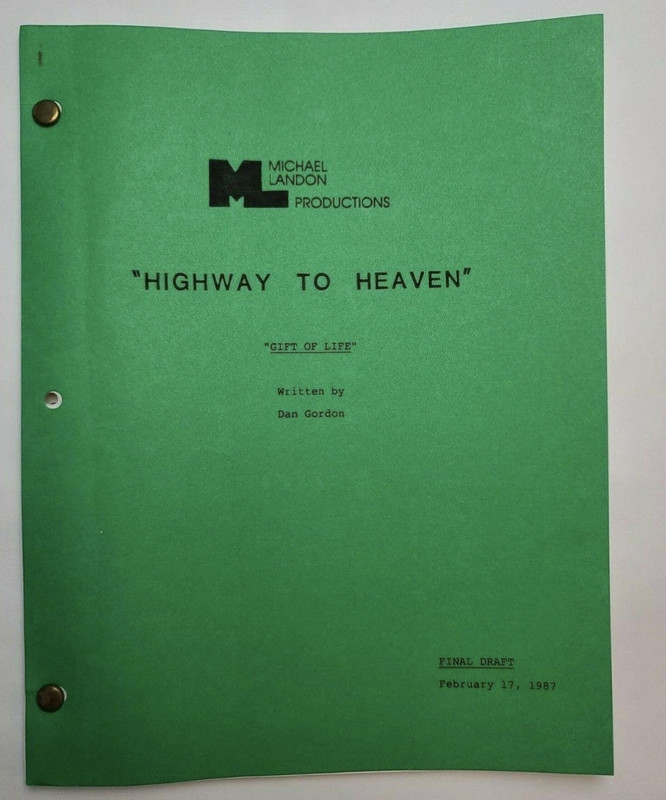
It could be less than that, if A Special Love had two separate scripts, being a two part episode; however, that is hardly the case: except for the season one finale, all the other two-part episodes of the series had the same “No.” and the same script for both.
At the same time, it could be more, if Gift Of Life wasn’t intended to be the season finale, and some of the scripts written after that one were originally meant to be part of this season (those episodes which eventually wound up in the fourth season).
Either way, adding this to the unproduced scripts of the other seasons (there were 20 by the second season) it means that there are 25 or 26 episodes written but gone unproduced in the first three seasons of Highway To Heaven (again, depending on whether A Special Love were one script or not). Basically, an entire season of leftovers.
That was common: in every season they wrote more scripts than what they actually used, and some of these unproduced episodes may as well be recycled in the upcoming season. Which is exactly what happened, for that matter.
Airings and Ratings
Complete show available here. Important: that available season is the syndicated version, which was edited down to 45 minutes from the original, 1986 – 1987 one. So, each episode is incomplete and there’s at least one scene that has been deleted from the original broadcast, which is available on the newest DVD in its unedited version.

–The old version
The only exception is the Love And Marriage Cold Open (in “Love And Marriage Part 1”) which is exclusively available in that format, the syndicated one. It wasn’t part of the original broadcast of that episode in 1986, and it was omitted from the new DVD release of the series restoring the original episodes.
The third season of Highway To Heaven aired on Wednesday from September 25, 1986 until May 7, 1987 for the NBC network.

The official promotional image comes from Parent’s Day, a season three episode.
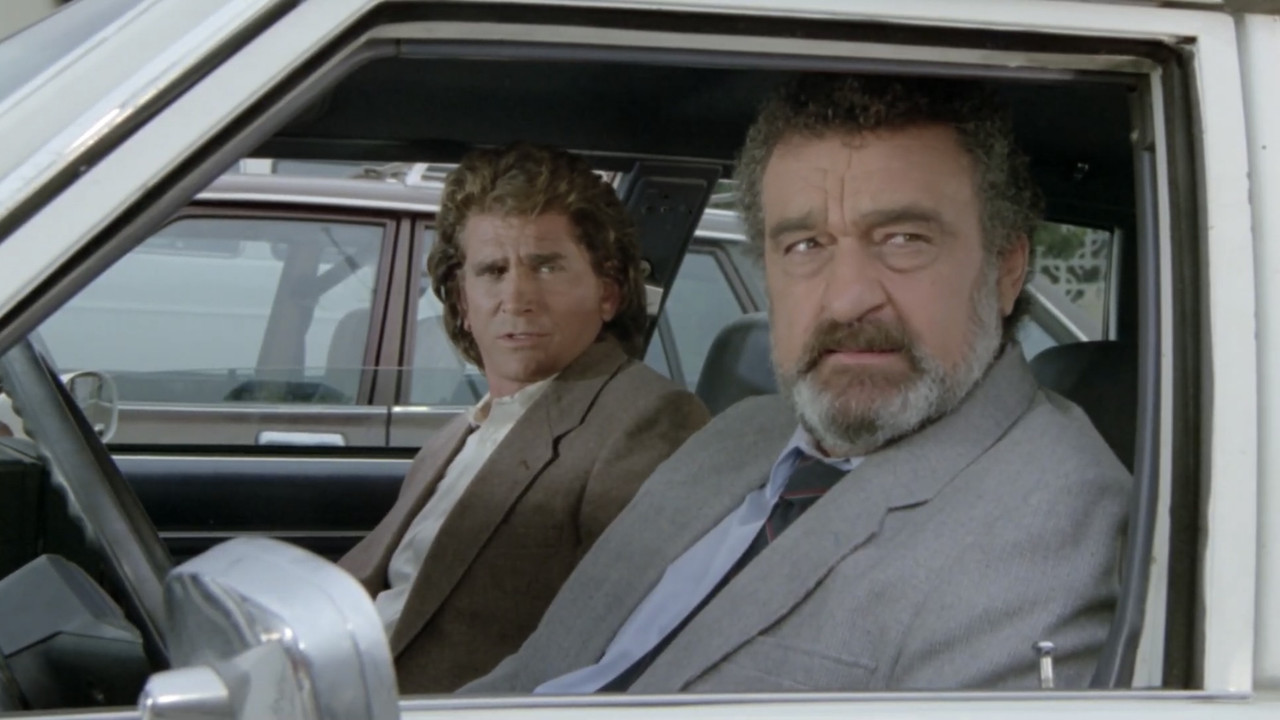
That’s the only season of the series to be officially promoted with an image from an episode that actually belongs to that season. In season four, the image was taken from The Monster Part 1 (a season two episode), while in seasons two and five they used two different scenes from Wally, a season three episode. And despite being used twice in other seasons, the episode Wally was not used to promote its own season (more about it at the “Production and Setting” entry here).

Highway To Heaven Season 3 aired from September 1986 to May 1987 on Wednesday 8:00 pm (like the other seasons).
As for the airings, the season began one week later than usual (both seasons 1 and 2 took off on the third Wednesday of September, this season was delayed by one week). The airing followed the regular schedule of the other seasons: in the first half, from September until December (the Christmas Special), they aired all the episodes consecutively, skipping just two weeks in October between Another Kind Of War, Another Kind Of Peace (October 15) and That’s Our Dad (October 29), as NBC aired the Baseball World series that week. But again, skipping one week in October because of baseball had already happened in season one and two, it was nothing unusual.
Then, after airing Basinger’s New York on December, they interrupted airing for two weeks for the Christmas Holidays (like they are used to), and resumed in early January 1987, for the second half of the season. So, they aired all the episodes from All That Glitters in January until A Father’s Faith in early March 1987 without skipping a single week. Then, they aired a rerun of A Special Love in early March, followed by the new episode Heavy Date on March 18, an “animated special movie” on Match 25 and then Ghost Rider on April 1 (and it was no coincidence). After that, for the rest of April they aired four weeks of old reruns from the season, leading all the way to the season finale. Unlike all the other seasons of the series, in which they kept two episodes to air months after the temporary conclusion of the season in late March or early April, it was decided to air Gift Of Life alone this time.
This is a list of rerun from the season:
In 1986 December (for the Christmas Holidays break):
- December 24, Another Song For Christmas (season one Christmas Special which already had a rerun in season two).
In 1987 Spring (before the season finale):
- March 11, A Special Love (both Part One and Part Two back-to-back);
- April 8, For The Love Of Larry;
- April 15, Code Name: “Freak”;
- April 29, That’s Our Dad.
In 1987 Summer, after the season finale.
- May: Love And Marriage; Man To Man; one week skip (animated special).
- June: Oh Lucky Man; Love At Second Sight; Jonathan Smith Goes To Washington; All That Glitters.
- July: A Song Of Songs; The Torch (season two episode); Another Kind Of War, Another Kind Of Peace; A Night To Remember.
- August: The Hero; A Mother And A Daughter; A Father’s Faith; Gift Of Life.
- September: Parents’ Day; Wally.
In 1987 December (during season four):
- December 30, Ghost Rider
In 1988 January (during season four):
- January 27, Heavy Date
By the schedule, it’s apparent that each episode of the third season aired twice (original airing plus rerun) with the only exceptions of Basinger’s New York, Heavy Date and Ghost Rider, which aired on December 1986 and March and April 1987 respectively. Odd enough, Ghost Rider would eventually had its rerun on December 1987, in the two weeks Christmas Break in season four; that’s very peculiar, as the network had always aired Christmas reruns in the Christmas break (in December 1985 and 1986 they aired Another Song For Christmas for a second and third time). Instead, Heavy Date would eventually air in January 1988, during a one week skip on season four; that’s even more strange, as the series has never aired rerun on January. And the most peculiar thing of them all, Basinger’s New York remained unaired for the rest of the series: after its premiere on December 1986, it never had its official rerun on the network.
There’s no explanation as to why they held these three episodes back: perhaps they thought they had already aired quite late in the season (late March and early April respectively) and they’d rather air something older (even though they did air the season finale twice). But that would not explain why Basinger’s New York didn’t air in December 1987, during the two-week Holiday Break in season four. Maybe they feared that two Christmas Specials would have been too much (season four already had one). At least they didn’t broadcast Another Song For Christmas for the fourth time.
Either way, Basinger’s New York and The Monster Part Two (from season two) are the only episodes of the first three seasons of Highway that never received a rerun in the official network. There was another missing rerun from the second season, The Torch, but that eventually aired in July of the third season’s rerun.
The ratings of the reruns were not particularly high, and actually fell lower than season two. As a reference, the first Spring rerun in 1985 (for season one) was To Touch The Moon with 30 million people watching it (even more than the original airing); the spring rerun in 1986 (in Season two) was A Song For Jason with 27 million, and in season three, A Special Love scored 24 million, even lower than that. Moreover, the most watched rerun in this season was For The Love Of Larry, which drew 25 million people; in season one the most successful rerun drew 32 million viewers instead. Even though the ratings of the reruns are always lower for a number of reasons (they air in summer, a time in which people don’t watch TV and ratings are low in every show; reruns already score less than their original episodes because they are rerun), the third season reruns were not successful. That is especially apparent by comparing them to the ratings of the other summer reruns for other series: they are all low in ratings, but Highway was the least watched show of the Wednesday for many weeks in summer.
However, the reruns are just reruns, and the most important slots of the series is the actual TV year, from September to April, which is where popularity is measured. And this season was definitely popular.
Most of the episodes fell between 27 to 33 million each time. They can get as low as 24 million (the season finale) or as high as almost 36 million (For The Love Of Larry, the season’s most popular episode in ratings).
| Episode | Audience | Weekly TV Program | Weekly TV Show |
| 1986 | 1986 | 1986 | 1986 |
| A Special Love Part One | 28 million | 26th | 5th |
| A Special Love Part Two | 29 million | 25th | 4th |
| For The Love Of Larry | 35 – 36 million | 7th | 2nd |
| Another Kind Of War, Another Kind Of Peace | 32 million | 16th | 2nd |
| That’s Our Dad | 28 million | 22nd | 3rd |
| Love At Second Sight | 32 million | 13th | 2nd |
| Love And Marriage | 31 – 32 million | 16th | 3rd |
| Code Name: “Freak” | 24 – 25 million | 41st | 13th |
| Man To Man | 26 million | 30th | 5th |
| Jonathan Smith Goes To Washington | 26 million | 35th | 9th |
| Oh Lucky Man | 28 million | 29th | 6th |
| Basinger’s New York | 32 million | 18th tie | 4th |
| 1987 | 1987 | 1987 | 1987 |
| All That Glitters | 32 million | 25th | 5th |
| Wally | 33 – 34 million | 17th | 5th |
| A Song Of Songs | 33 million | 21st | 4th |
| A Nights To Remember | 33 million | 13th tie | 2nd |
| A Mother And A Daughter | 31 million | 20th | 5th |
| Normal People | 29 million | 19th | 5th |
| The Hero | 31 – 32 million | 19th | 4th |
| Parents’ Day | 30 – 31 million | 32nd | 9th |
| A Father’s Faith | 30 million | 23rd | 3rd |
| Heavy Date | 32 million | 13th | 3rd |
| Ghost Rider | 31 million | 16th | 3rd |
| Gift Of Life | 24 million | 30th tie | 6th tie |
Figures according to the reports of both the Tampa Tribune as well as here, the same used at the “ratings” entry in each episode.
Disclaimer: the “TV show” category only considers shows classified as Highway (so, “drama” show). That’s because, during those years, the most successful programs were sitcoms, followed by soaps and talk shows, and then by drama. As such, it would be unfair to evaluate the ratings of Highway taken out of context, without realizing how successful it was being that kind of show released during that specific moment. For this reason, the category of Weekly TV genre show (or “drama”) excludes programs like The Cosby Show, Falcon Crest and Knots Landing (they are still counted as TV programs); instead, it will include popular drama such as Miami Vice and Riptide. Also, consider that the TV genre show category encompasses procedural, crime and investigative series, which were the most popular genre of Drama back then.
Generally, Highway To Heaven season three scored high ratings, though not as high as season two. In the ratings tracked from September until December (until Basinger’s New York), the first half of the season scored around 17.5 or 29 to 30 million people, and ranked as the 25th most-watched TV program airing in those some months, and 6th most watched TV genre show. The second half of the season from January to April 1987 improved to 18.2 or 30 to 31 million people, and placed as the 19th most watched TV program airing from January to April, and 4th most watched TV show. Eventually, by the end of the 1986-1987 TV year the season was watched by some 30 million people each episode, becoming the 4th most watched TV genre show and the 21st most watched TV program of the year. (Actually, many charts report that it ranked 24th or 25th at the end of the year, but the ratings of each episode would lead to a higher year-end ratings than those reported; at the same time, the ratings of three of the four series which allegedly placed above Highway were greatly inflated compared to those achieved by each of their installment taken separately, so it’s probably a mistake.)
Eventually, ratings are very similar to those in season one, which raked 30 million people each episode as well, and placed as the 19th most watched TV program of the 1984-1985 year and 6th most watched TV show. At the same time, ratings were more irregular and uneven than those. For example, season one slugged in its first half from September to December, suddenly experienced great popularity and soared from the third week of January until the season finale and the reruns following it. Instead, season three began stronger than season one until Love And Marriage in November, and suddenly suffered an abrupt drop from late November until December, with three consecutive episodes scoring the lowest ever for the series up to that point. But just as unexpectedly as it suffered the massive loss those two months, it successfully came around by Christmas and enjoyed greater popularity from January until March, each week swinging more than season one did though. And then, when it aired the season finale, it became the least-watched episode of the series.
These alterations are further exemplified by the comparison of consecutive episodes: no show in season one lost more than 2.9 rating points from the episode airing the preceding week, and the largest improvement between two consecutive episodes was 3.1 rating points (some 5 million viewers). This season three experienced two consecutive episodes losing more than 4 ratings points — and those are the largest drops between two consecutive episodes in the entire series (even larger than any episode of the upcoming season). At the same time, its largest ratings sweep was 3.8 rating points (more than 6 million in audience), and that’s the second largest improvement between two weekly consecutive episodes in the entire series. And its most watched episode is For The Love Of Larry, which enjoyed higher ratings than the most watched episode in season one (the Pilot). So, compared to season one, ratings this season were definitely uneven, each week was a bet and there was no assurance of popularity for the next week’s episode— but they eventually wound up the same place as season one did.
Even though it was not as popular as the second season, it held on strongly.
Moreover, just like the 1985 – 1986 TV year, the network NBC consolidated its title as the most-watched network of the year. When it comes to sitcoms, that’s largely thanks to The Cosby Show, but when it comes to TV genre show, Highway To Heaven played a relevant role.
Now, the fourth season is underway, and it will be an important one: unlike the second and third season, which had already been confirmed after season one, the fourth season was the last of the agreement. So, its popularity will determine whether the network will ask for a fifth a season or not. Were the ratings to hold on like this season’s, it probably will; but the popularity of the series might have also reached its conclusion, if people didn’t like this season or grew tired of it. So, it’s all open. Now, Jonathan and Mark can move on to new assignments, and Landon and the people behind the series probably treasured the experience from the last two seasons to revert the series back to its original premise, but without much of the awkward humorous choices of that one.

Leave a Reply