
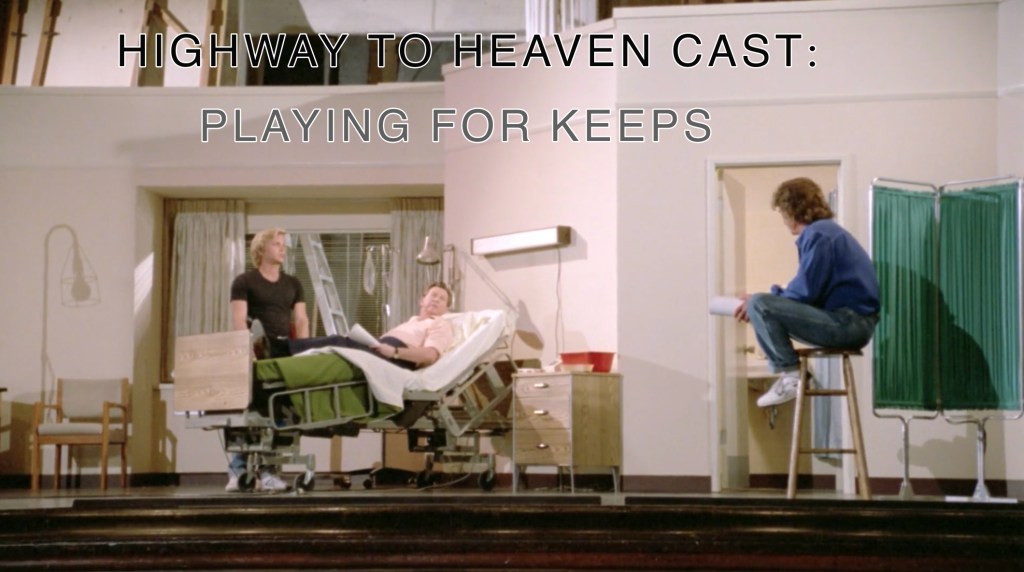
Airdate: 11/04/1987
Directed By: Michael Landon
It has probably become pointless to keep pointing out that Landon directed shows: in case it wasn’t clear, he single-handedly directed all the episodes of the series from the season three Christmas Special until the fifth season. But it was a remarkable effort, so here it goes.
The Halloween special marked an important turning point in the series—mostly due to its unprecedented bad ratings—and now the series had to work harder than ever if they wanted to stay on the air. That’s certainly what the title of this episode is alluding to.
Complete show available here.
Assignment: Jonathan and Mark are assigned to help an actor reconcile with his father through a play.
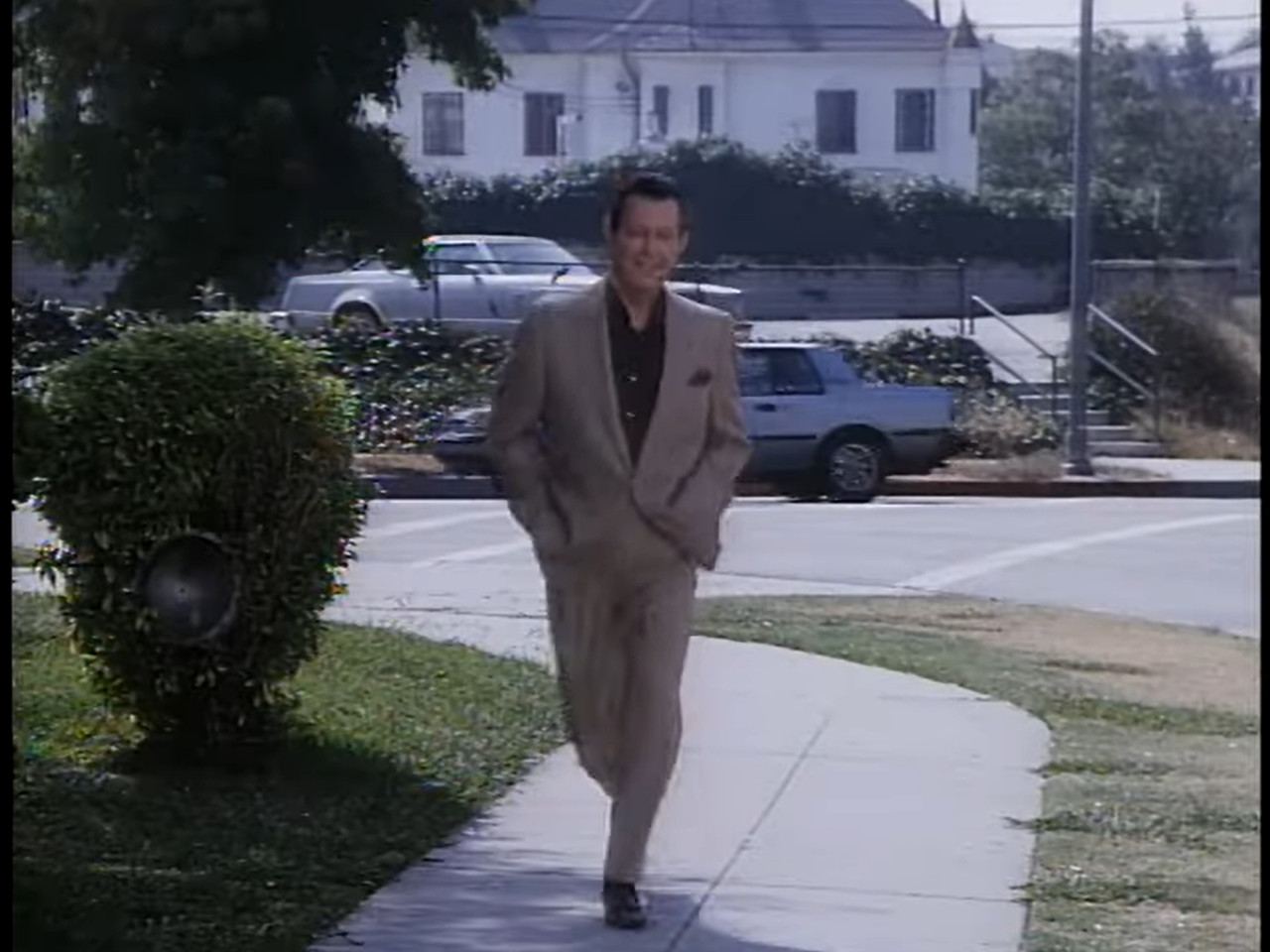
It’s a family-issue assignment—nothing they can’t handle. The father is Jackie, a washed-up comedian who casually walks down the sidewalk dancing like crazy.
And his son is Rhett, a movie actor who randomly gazes up at the sky in a tense and threatening air like a deranged maniac.
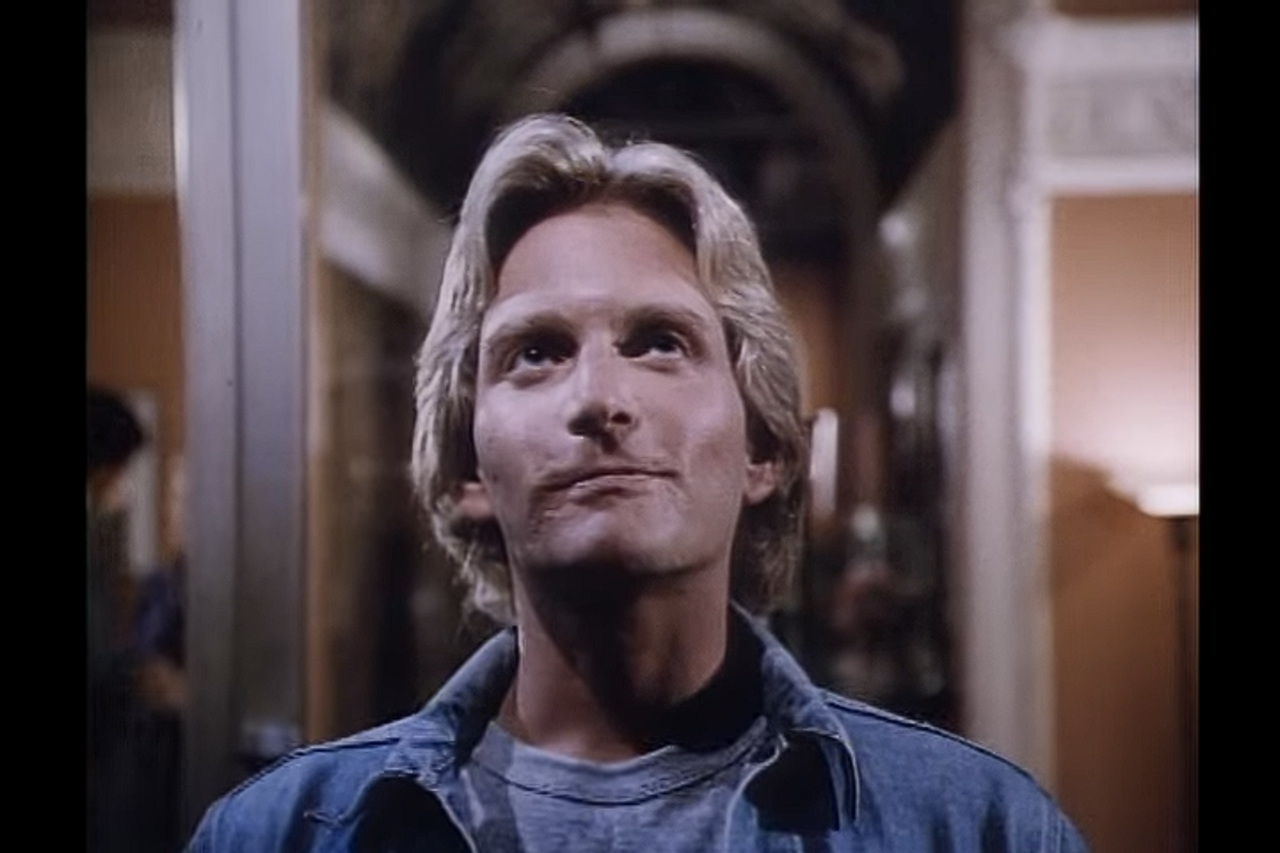
He took from his father. Or Jonathan when receiving assignment.
They have lost contact, so Jonathan and Mark will try to bring them together by recruiting them both for a stage play which Jonathan will direct—while Mark, as usual, takes a more passive role.
Specifically, the fictional play is not Playing For Keeps but “Final Passage”, about a dying man reconciling with his son.
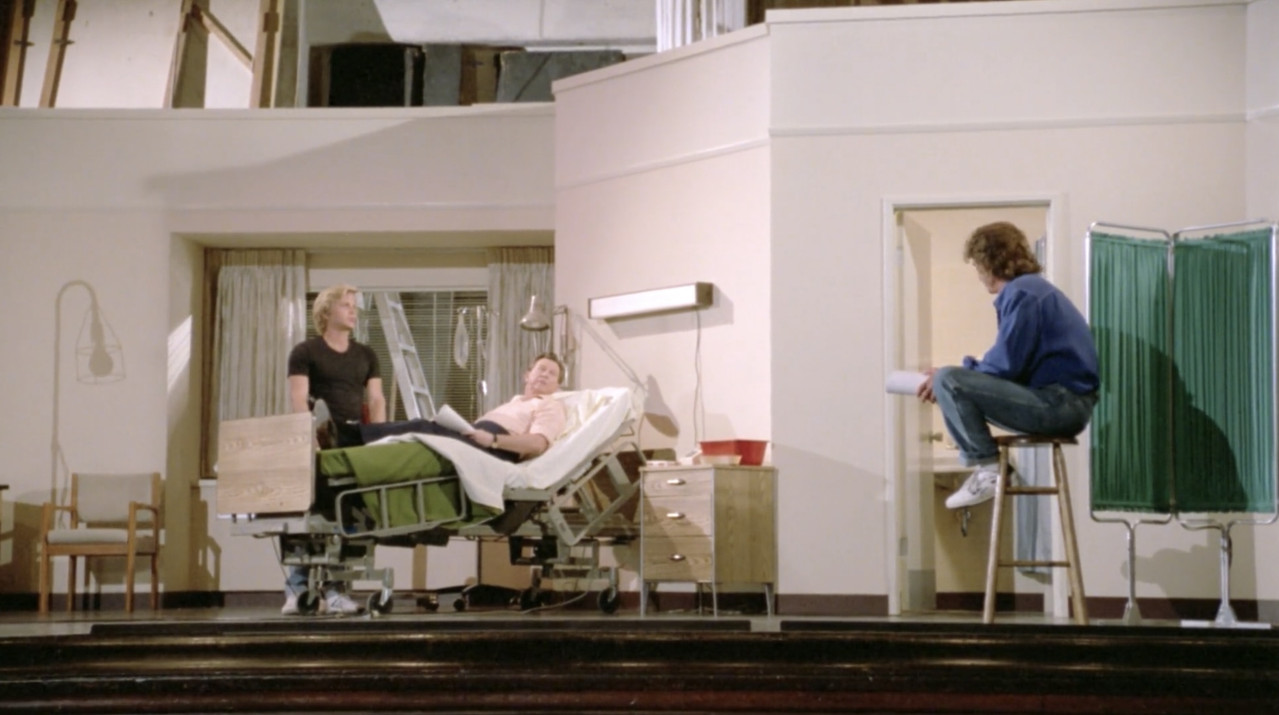
The kind of play where the lines of the characters are essentially reenactment of how the actors feel, and they blend reality and fiction.
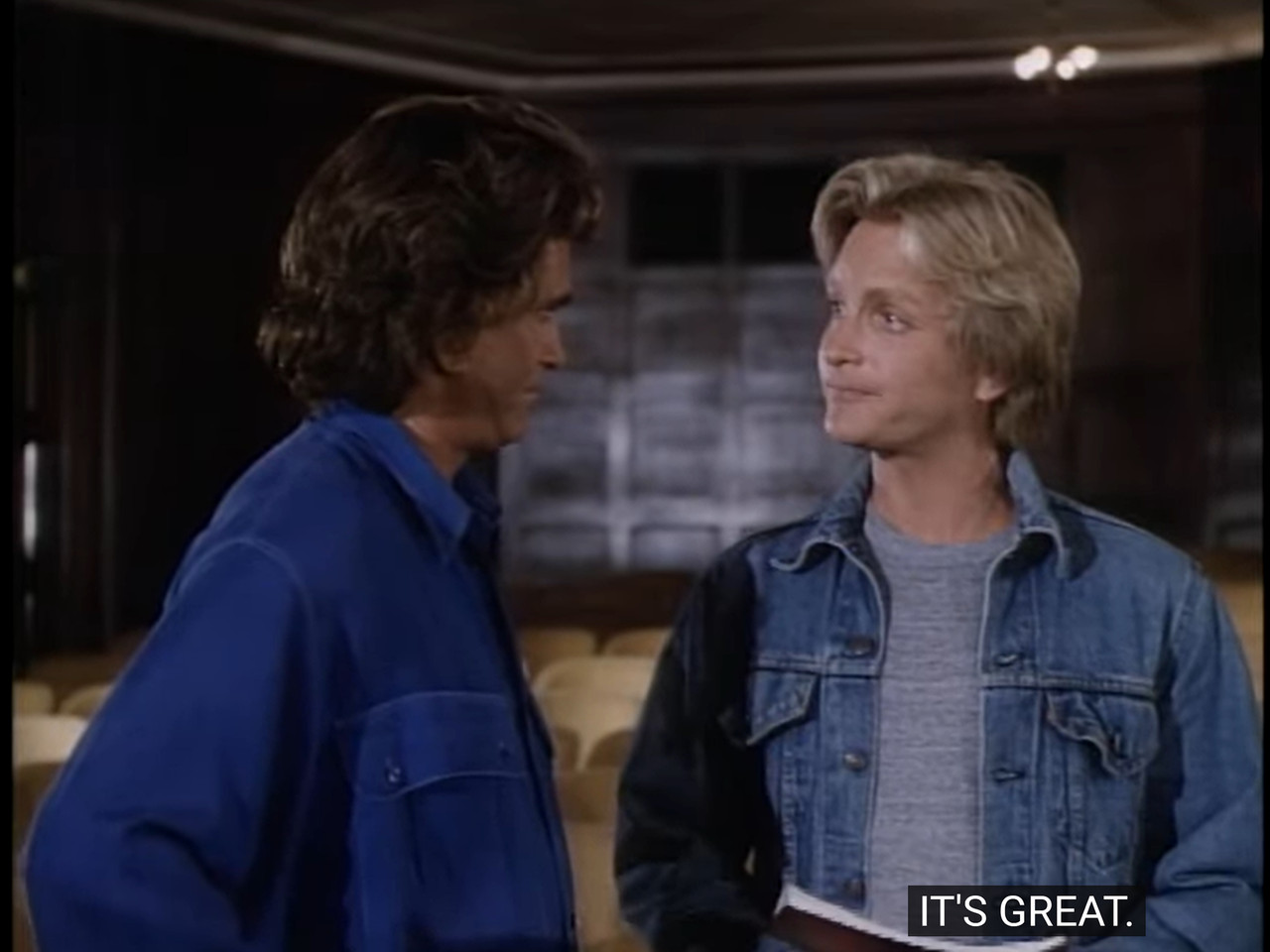
It’s an old trope: in season one, Catch A Falling Star and Help Wanted: Angel both had scenes in which the characters played fictional characters in a movie about their actual life and it was unclear when they were acting and when it was real.
Anyway, this episode is the second of the series to involve stages and plays: there was The Smile In The Third Row in season two, although that one moved the play to New York (in a Los Angeles Studio set).
Also, this episode is the last Tinseltown assignment of the series. It may be useful to go through this category: it’s basically a set of episodes dealing with Hollywood and actors and the perception of the actor’s image by the public; more broadly, what it’s like being in this industry.
Other episodes about it are Catch A Falling Star (the one with an actor who neglected his children over his career) and Cindy (the one where a man couldn’t accept his daughter’s aspiration of being an actress; all the Tinseltown episodes are here).
As for the “Actors” category, episodes involving what it’s like being an actor (without necessarily making points on the industry in general) most notably include The Smile In The Third Row, which was about a stage actor experiencing mysterious heaven-related hallucinations. Actually, that episode was even about stage plays, just like this.
Anyway, it’s over: there’s no other episode in the series revolving around actors, or where the subject of the assignment is an actor, or the assignment is partially related to the industry in general. So, this job is done. Hollywood is a better place thanks to them, and now they can move on.
Or maybe they just ran out of punchlines for it.
- Background
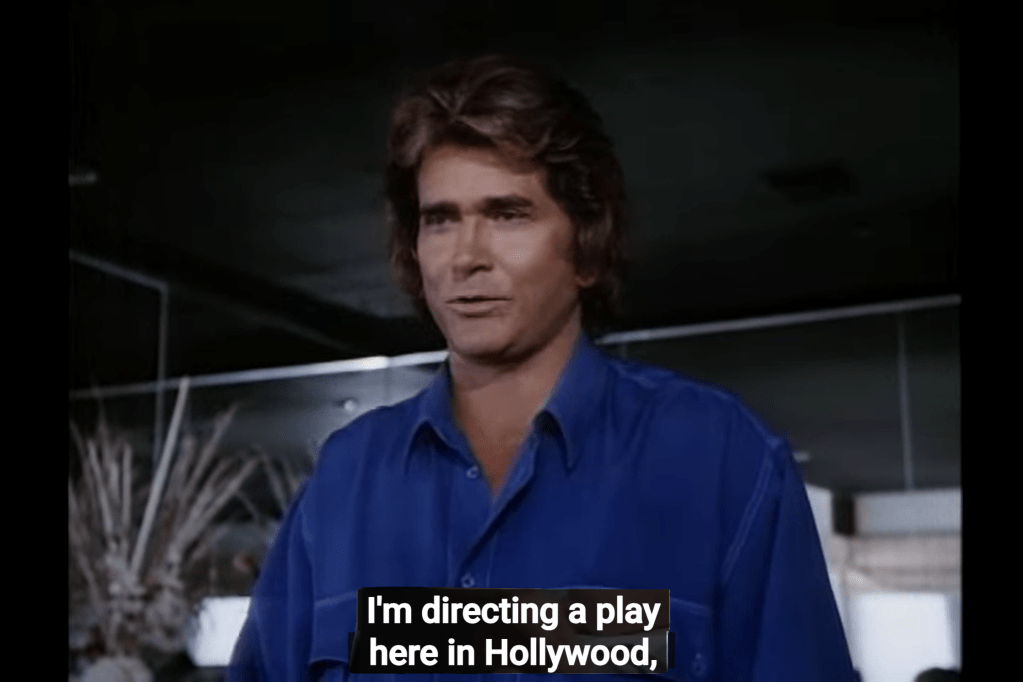
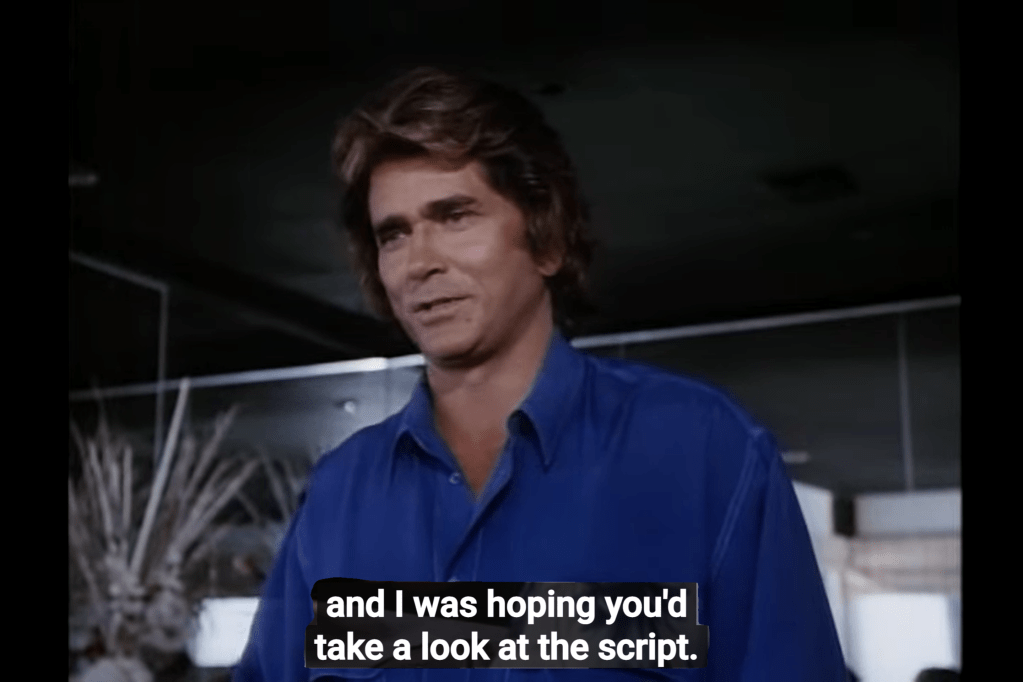
The episode takes place in Hollywood, as Jonathan mentions while introducing the play.
The assignment appears to span a significant amount of time, covering rehearsals through to the final performance. So, it’s definitely more than the usual 10 days (as by the guidelines and map).
Also, at the conclusion of the episode, the play is a success and Rhett and Jackie announce plans to stage it multiple times. If Jonathan is the director, that would logically require him to stay for weeks, if not months—unless, of course, he simply walks away.
After all, who needs a director once curtain rises and the play is on.
- Characters
In this episode, Jonathan is a play director. And Mark is puzzled.
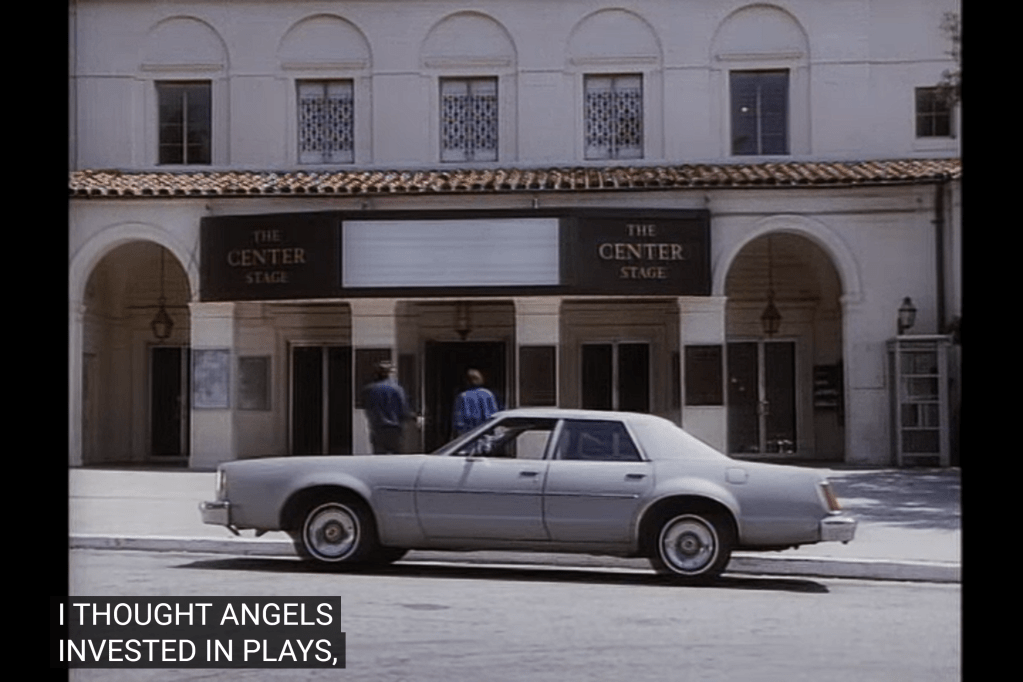
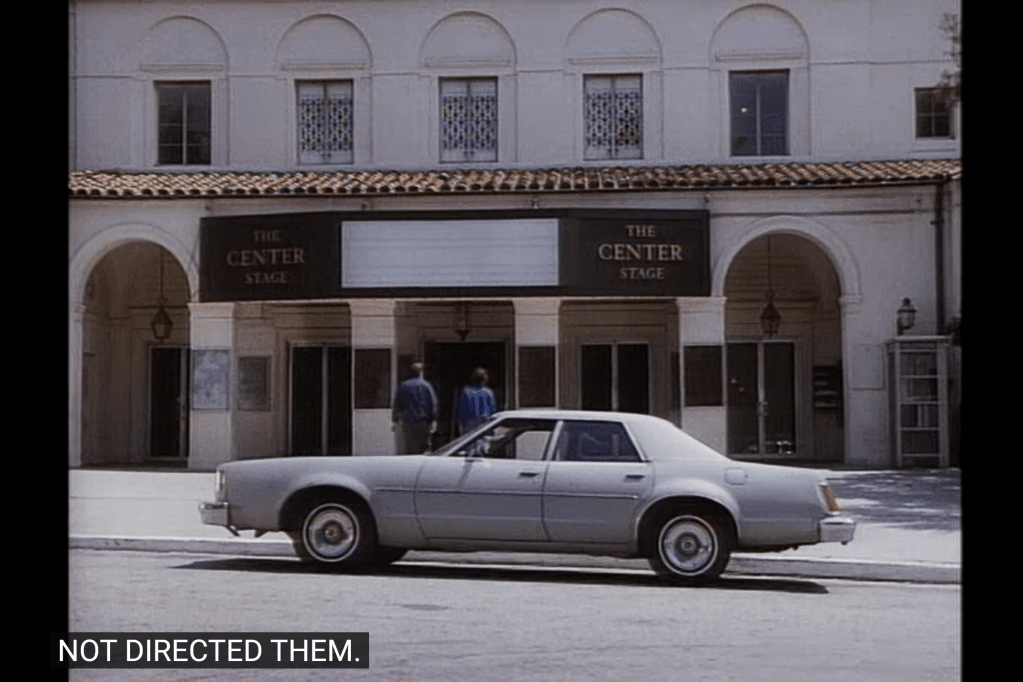
And how come you know so much about plays?
Two things are worth noting here. One, this isn’t the first time this idea has been mentioned; it was already explained in the first-season episode Help Wanted: Angel that “Angels” are a nickname for theater producers. (Although they were looking for a movie producer on that episode).
Now Jonathan probably knows his share of directing, after working on a movie on that episode. (One whose production is still a mystery).
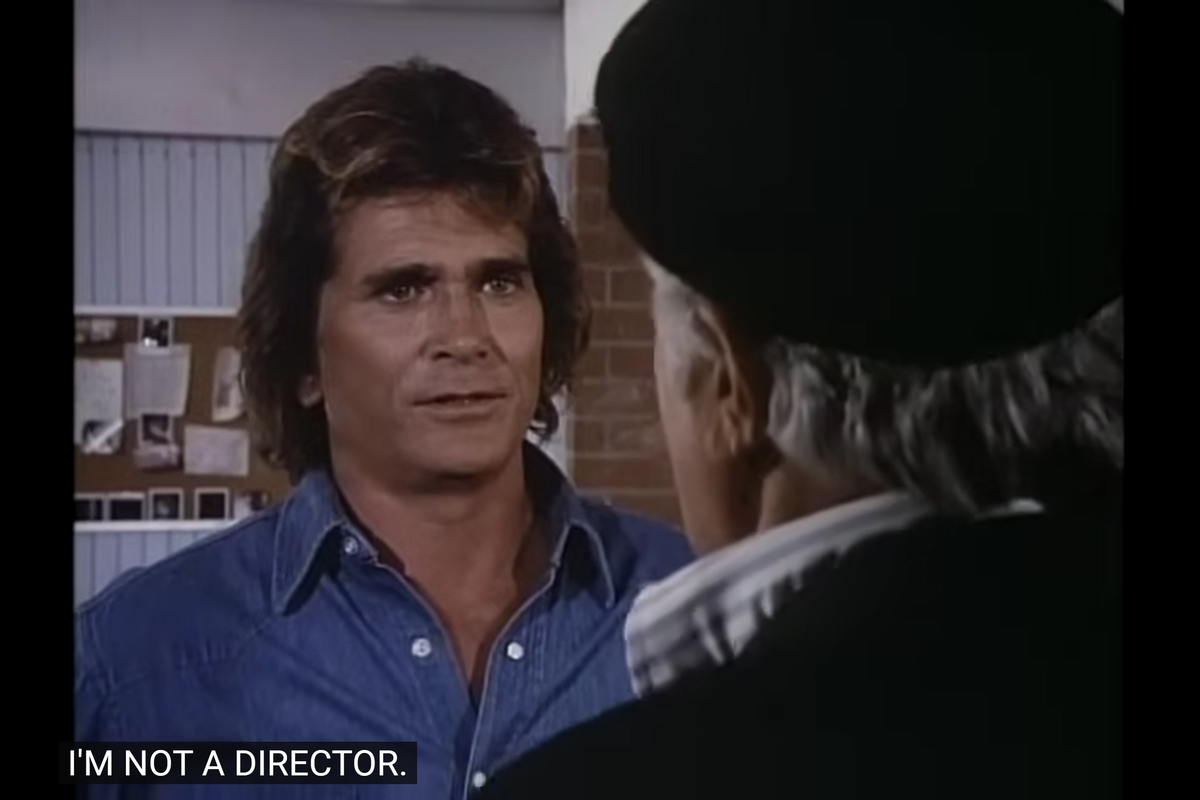
Second, Mark’s bewilderment sounds like skepticism about Jonathan’s ability to direct the play. And that’s probably a reference: Landon had no real experience directing or acting in stage plays, while French began his career as director in theater and even received accolades for his work, including one as best director for 12 Angry Americans by the Company of Angels, the oldest theater company on the Pacific Coast. Maybe he wanted to direct this play too.
But he has to watch.
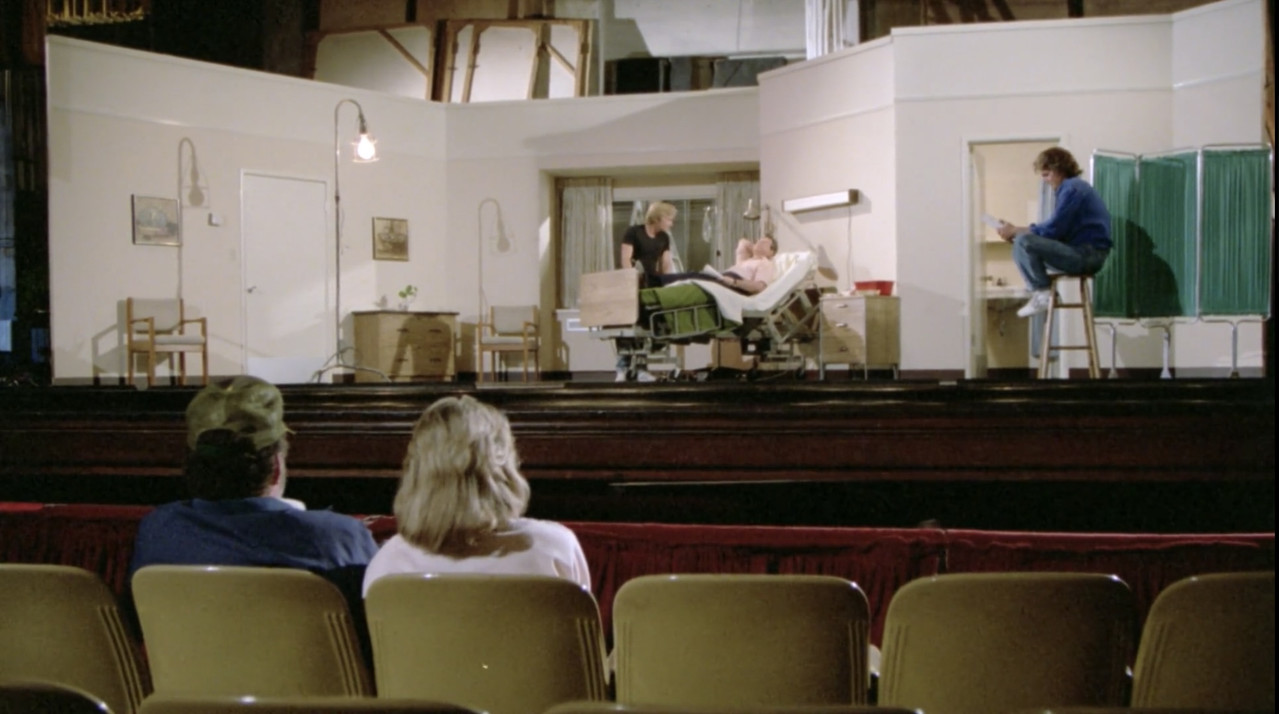
Although he doesn’t have to act, unlike what he did in Jonathan’s movie in season one when he fell in love for the first time.
Anyway, it seems that Jonathan is left alone handling the production, although he probably needed some help from an experienced playwright: when the play is staged the first time, Jonathan appears worried and Mark tries to comfort him.
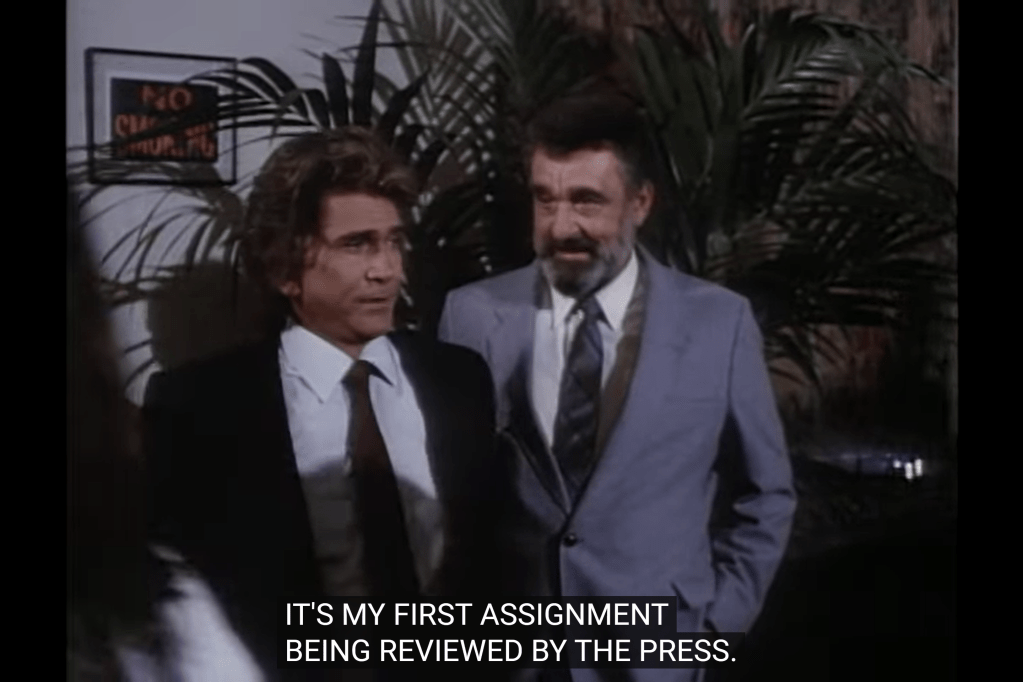
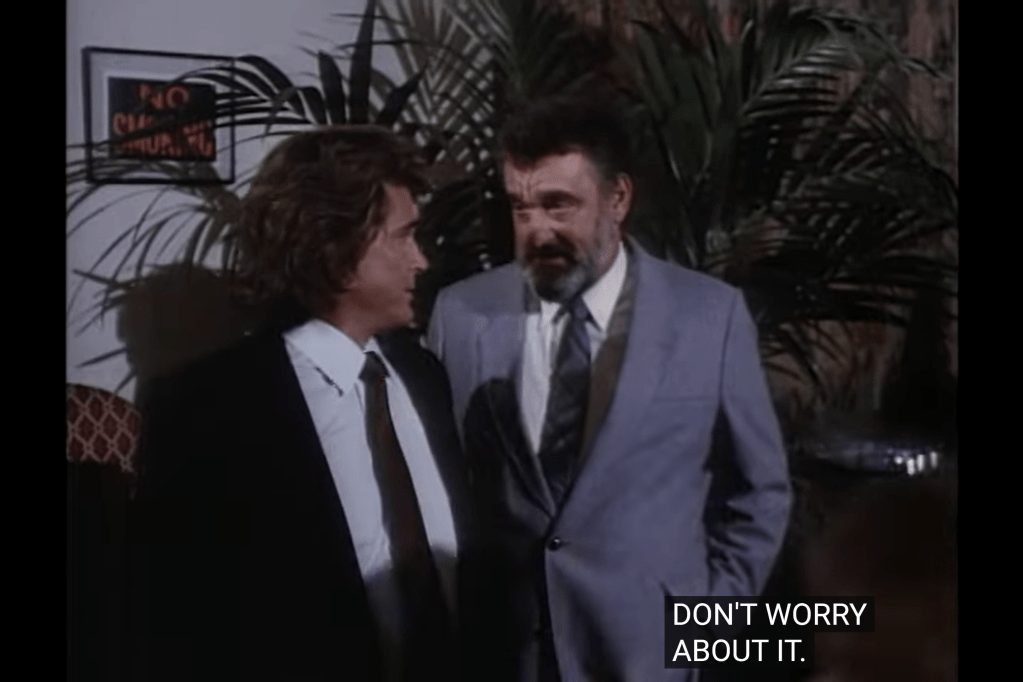
So what.
That’s a weird attitude: Jonathan is there to help a man reconcile with his son; he should be worried about that—not what the press may think of his heavy dull play.
However, Jonathan was right: the play is sinking in the first act, and it’s only saved in the second when Jackie goes off-script and adds comedy.
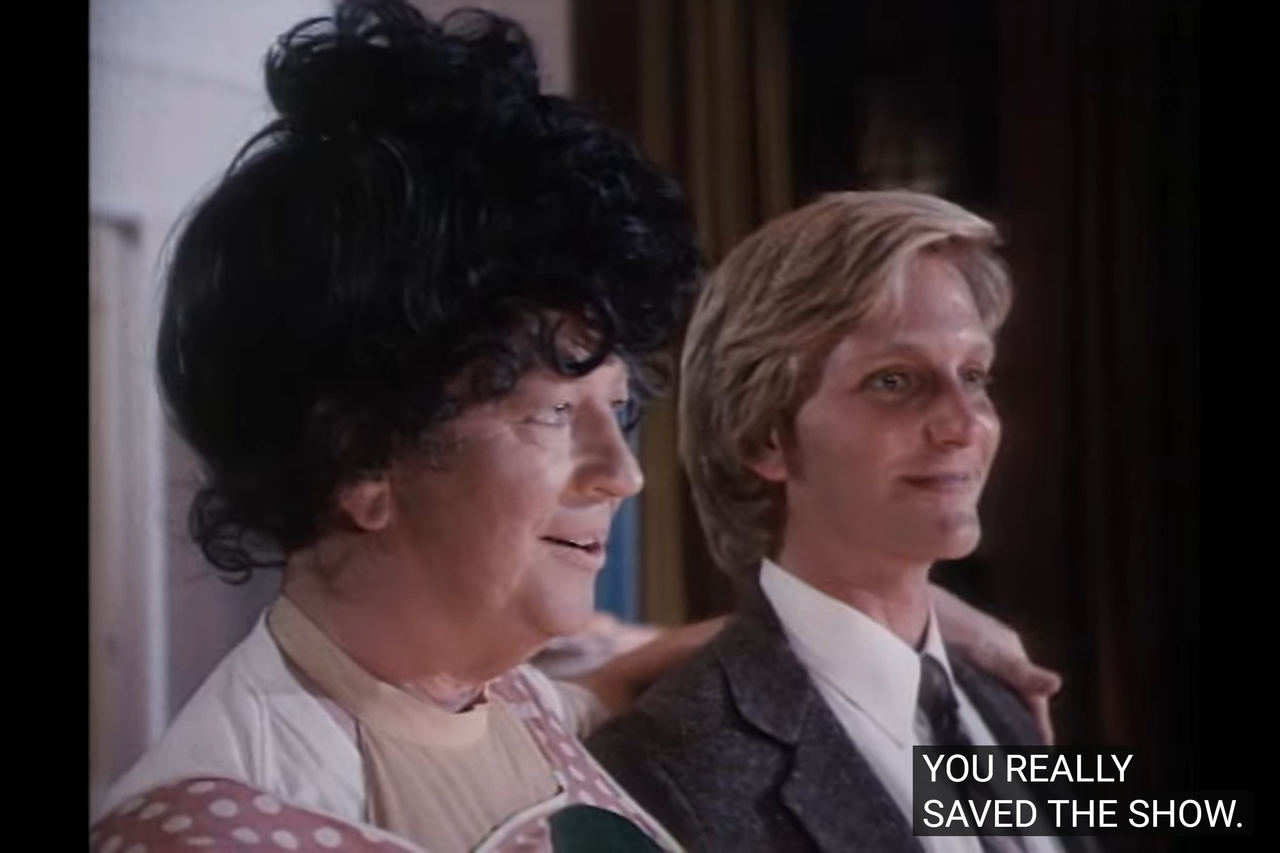
Which basically means that Jonathan’s script was so bad the play was saved when the actors quit saying the lines and went their own way.
Maybe Jonathan didn’t really know how to do his job, and his script wasn’t that polished in the first place—if the play was saved only when the actors made their lines up. Or maybe Jonathan deliberately wrote a bad script knowing it was the only way to get something out of the actors. In that case, it means he probably received some help by his superior. Or by someone more experienced.
- Production And Setting
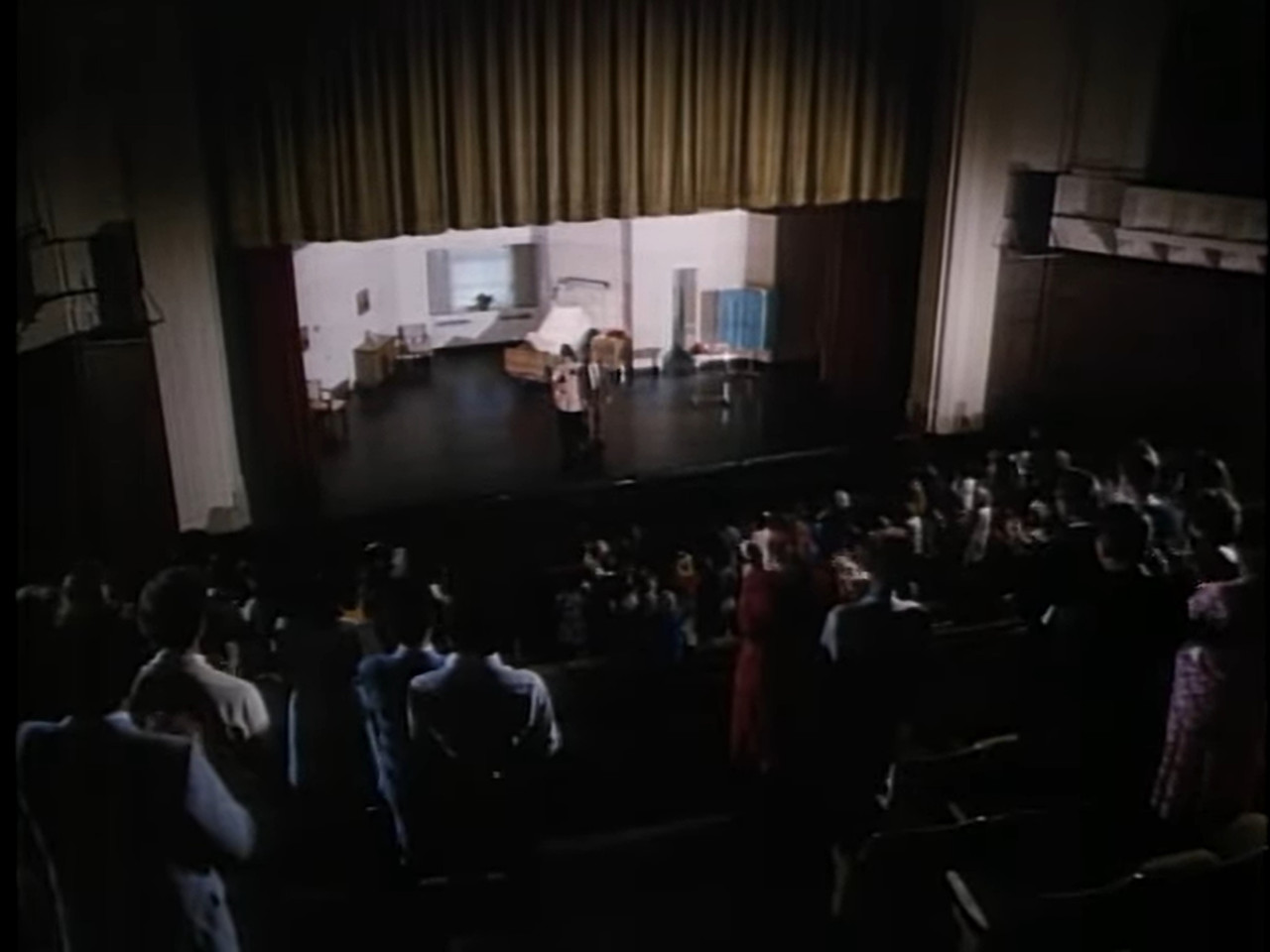
The setting is an old, recycled one. Given this episode deals with plays like The Smile In The Third Row, and both episodes were filmed at the same studio in Los Angeles (even though the earlier episode was meant to be set in New York), they decided to use the same setting.
The fictional “Community Center” where the play is staged in the episode is the Wiltern Theater in Wilshire, exactly the same theater of The Smile In The Third Row in season two.
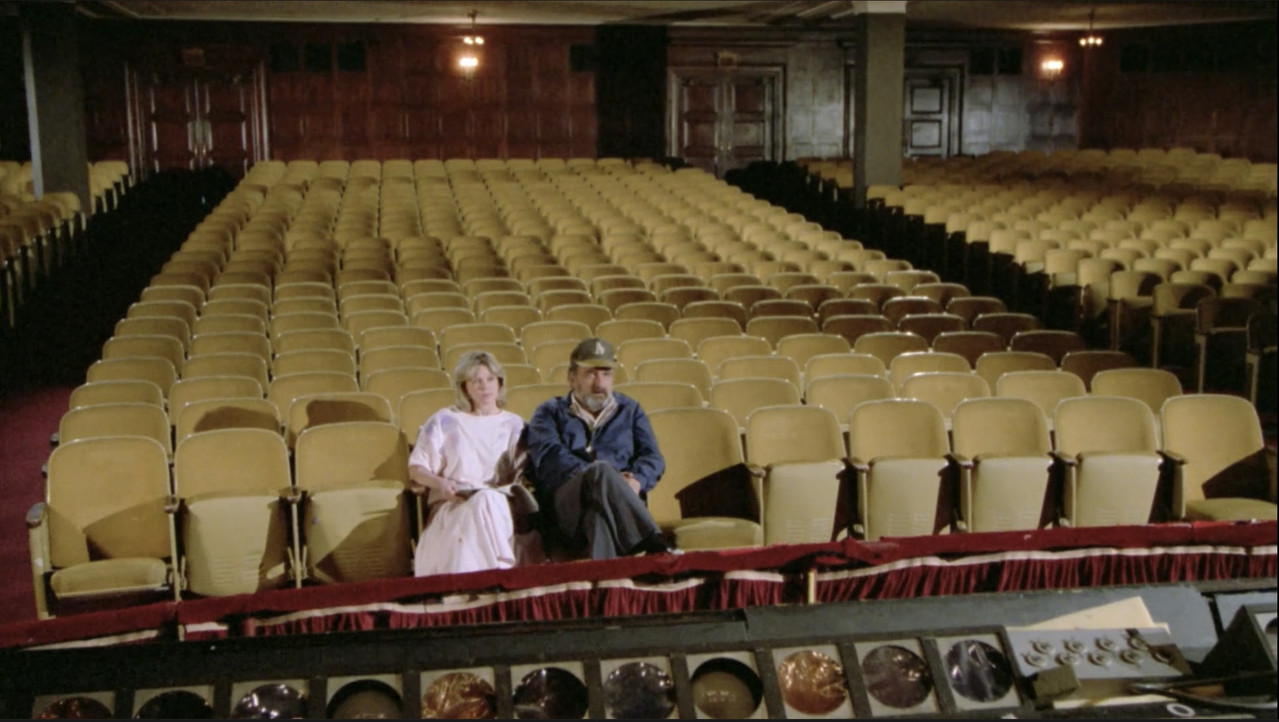
The theater of hallucinations.
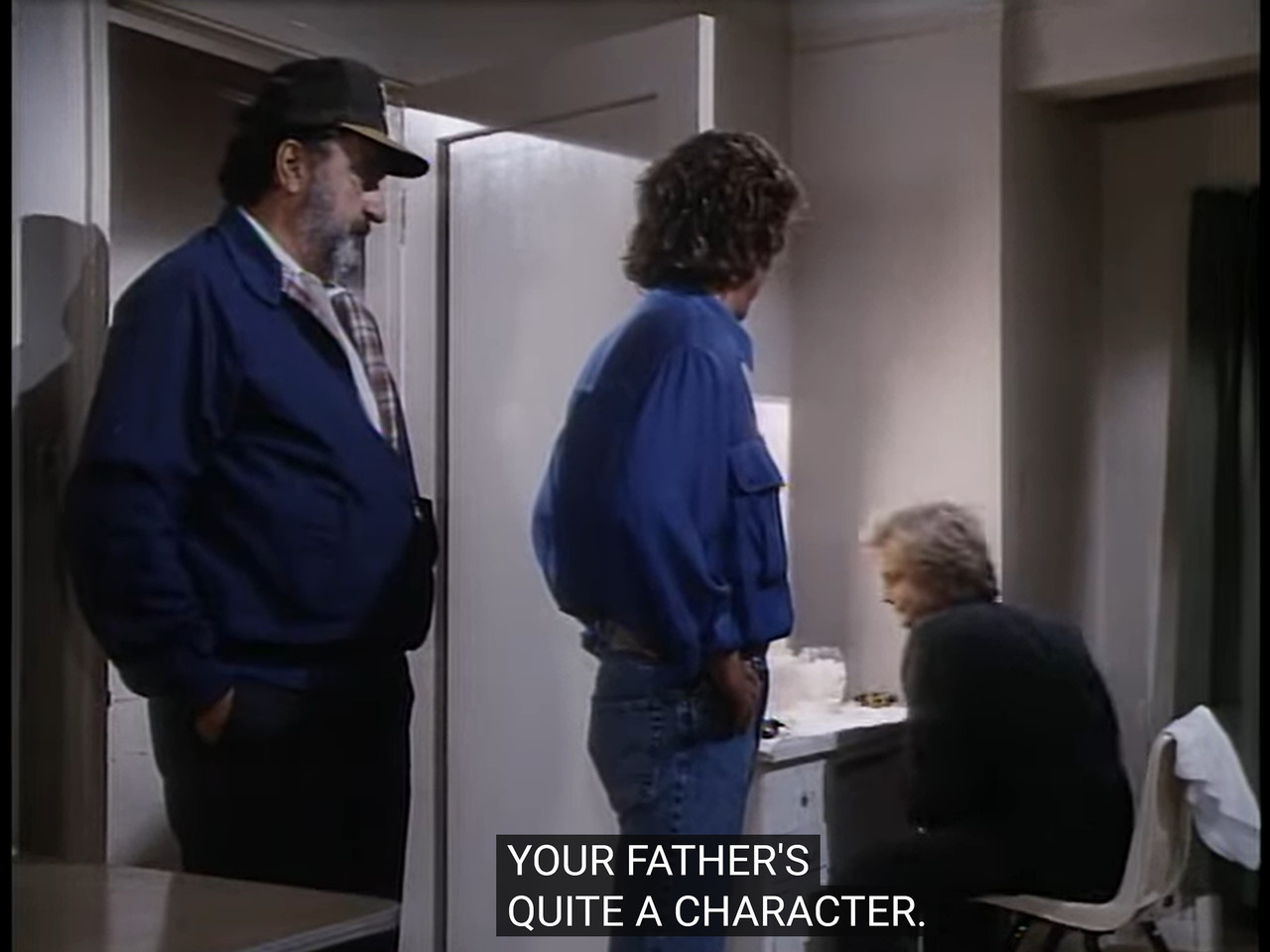
That is quite apparent by the actors’ dressing room.
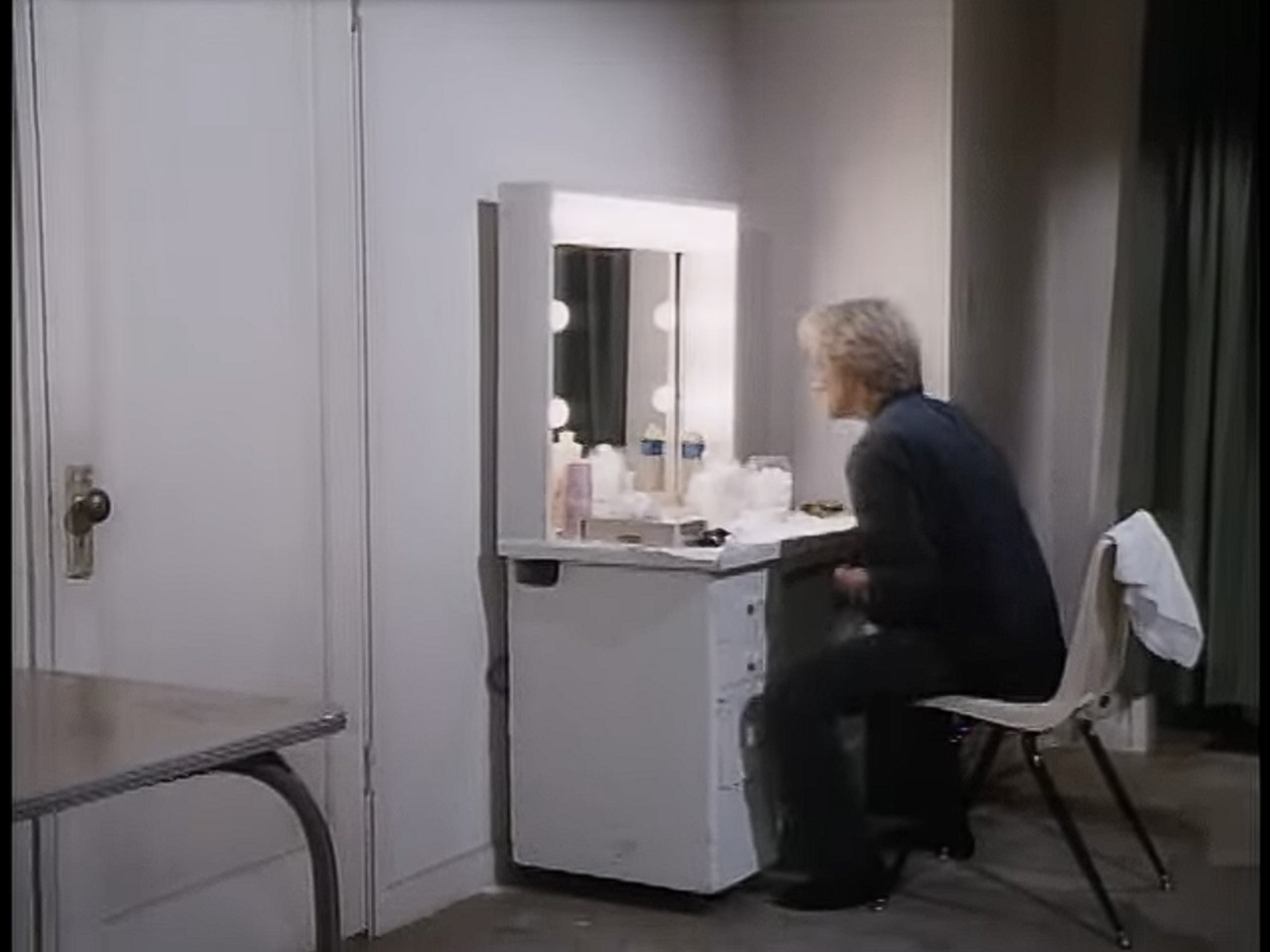
Looks familiar.
The dressing room in this episode looks exactly like Fred’s one in The Smile In The Third Row, just redressed (on that episode, the mirror was on the right wall and the couch was pushed on the left).
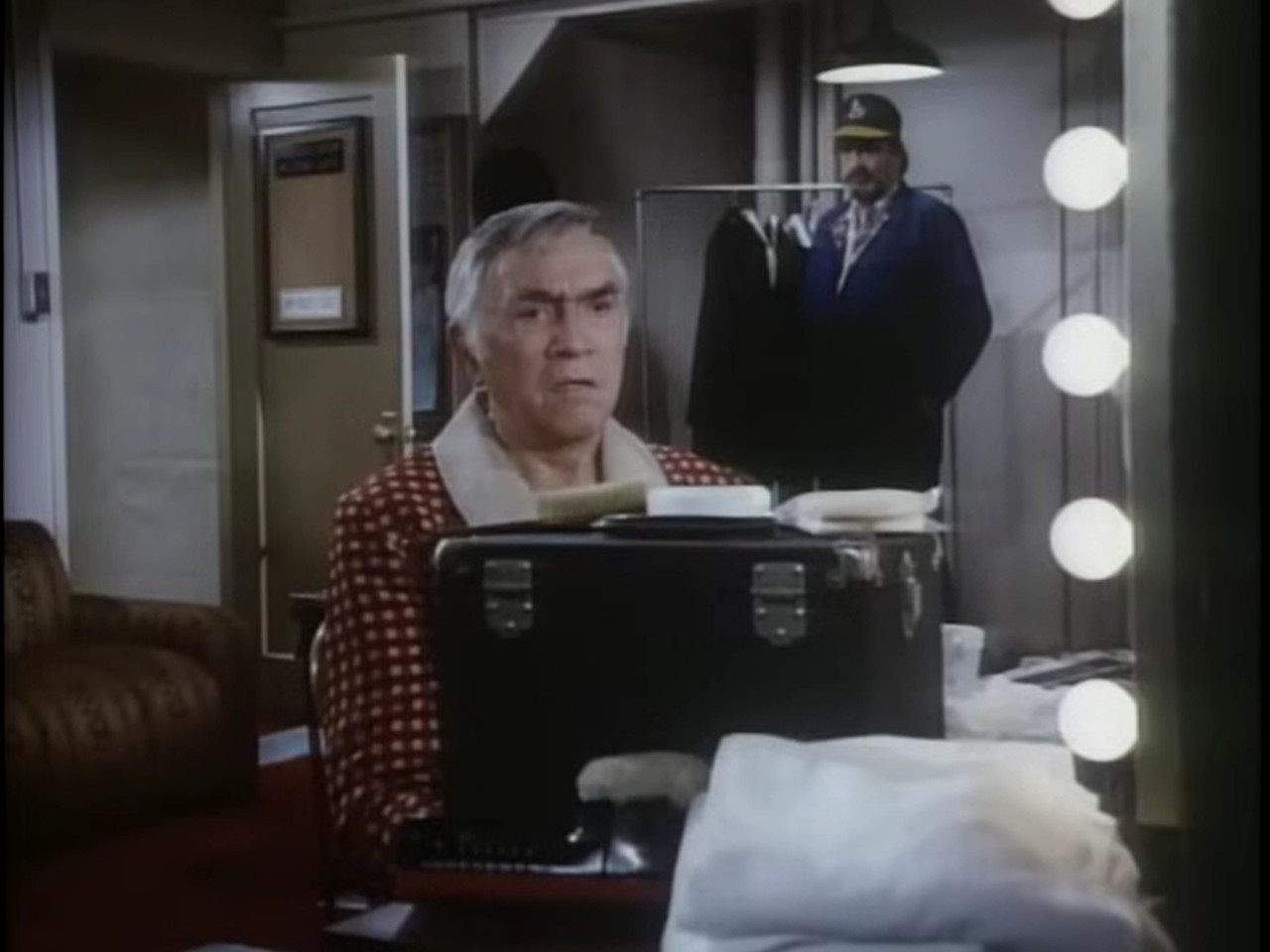
Actually, from the wall outside the door, it seems like these two are adjacent rooms.
Of course, of all the theaters in L.A. they had no reason to go somewhere else. Although it shouldn’t come a as a surprise by now that Landon only shot in the same places, even across different series: the Stanislaus Forest was used in both Little House and Highway (in Man To Man) as well as the Calaveras museum rearranged as a Court (The Monster). And sometimes, he used the same places within Highway: the Encino houses in Children’s Children and Summit, the Six Flags Magic Mountain in A Child Of God and Man To Man, the Ambassador hotel (too many times). He had connections in the same places.
Anyway, this could be even considered as recycle (Jonathan and Mark do not mention being the second time they go that specific theater). However, this time they are not trying to pass it as New York, so it was that other episode to have a problem. Also, Jonathan and Mark do not mention it’s the second time they’ve gone in there either. So, it could be assumed there are just two existing theaters looking similar.

As for production, the episode was filmed between late May and early June 1987 in the season’s first block (the one before the director’s strike which lasted just a day). Just to refresh some memories: in Spring 1987 the directors’ guild was planning to strike at some point in the Summer, which essentially means that no program could enter production until the strike would be over. In order to prevent delays in the Fall schedule, Landon organized an early start: instead of taking four month off upon concluding season three (as they did after season 1 and season 2), he resumed production in May, after only two months from that season. They shot six episodes in this early Spring block until early July, and then they had the remaining two month break until September, when the production resumed as usual.
So, in case the actors look younger now than they were one episode ago in the Halloween Special, the reason is that this episode was made in this early production section over three months before that one, though it aired one week later.
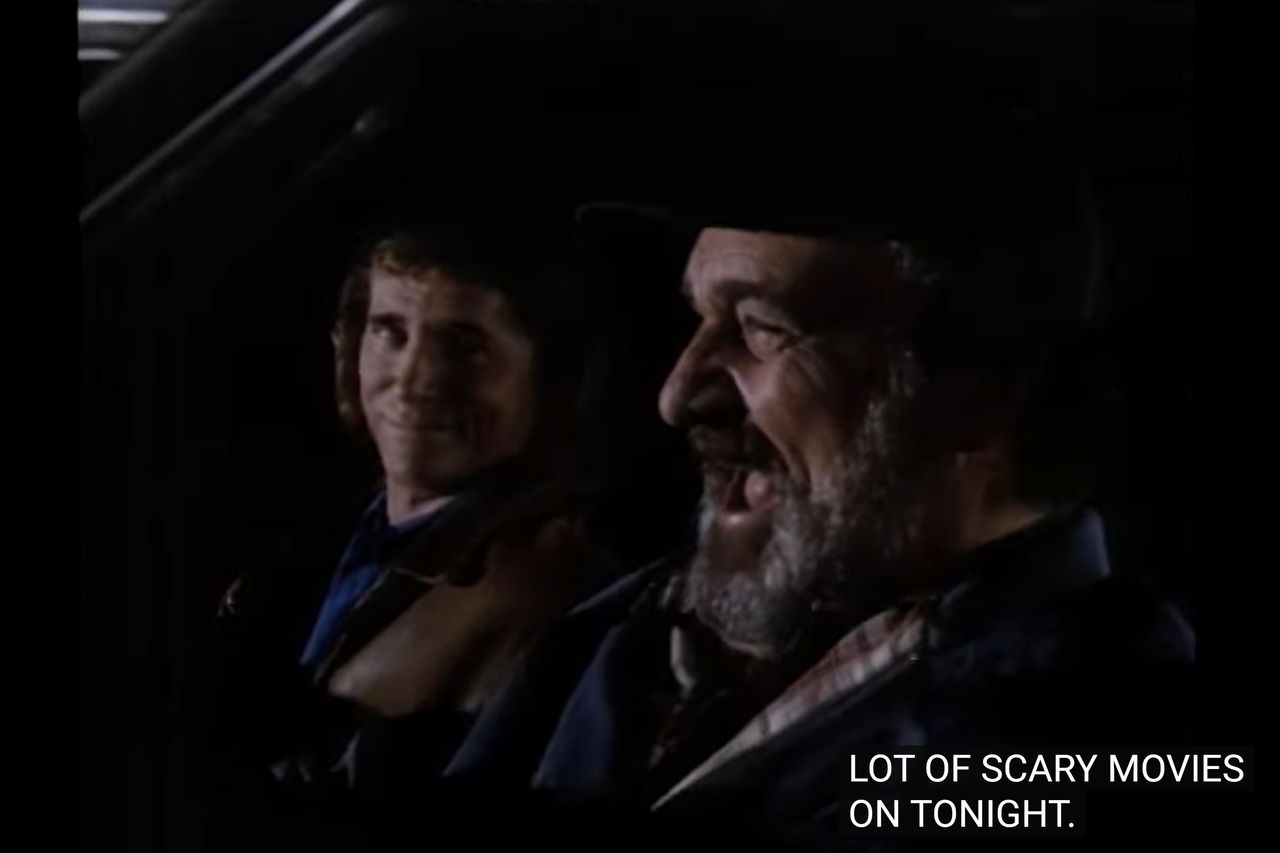
Of course, if the episodes had aired in the chronological order of production, the Werewolf episode would have been scheduled in December.
Anyway, it was the third episode they made for this new season (fourth if counting Man’s Best Friend as a two-part show), and it was shot immediately after Country Doctor (which had yet to air) and before Fight For Your Life and The People Next Door (which both aired earlier).
It was written by James Kearns, who previously wrote Love At Second Sight in season three—the episode in which a probationary angel interferes with Jonathan’s assignment. This would be his final contribution to the series: with only two credits, he can effectively be considered another highwayman who then took off. At least this episode wasn’t that weird.
Anyway, one curious thing about the cast: neither Rhett the son nor Jackie the father are actually related. It wouldn’t have been unprecedented if they had been: there was an episode in season three in which the Wallach Family (Anne, Eli and their daughter Katherine) played a fictional family.
But it wasn’t the case here: Jackie is played by Donald O’Connor (a real comedian) while Rhett is played by Eric Douglas, the youngest son of Kirk Douglas; maybe the producers deliberately cast a real actor’s son to mirror the character’s background.
Which means that nobody remembers Kirk Douglas anymore.
But most importantly, this episode has a rival former probationary angel: at one point, Jonathan and Mark watch a TV interview with Rhett conducted by a theater critic on a fictional channel.
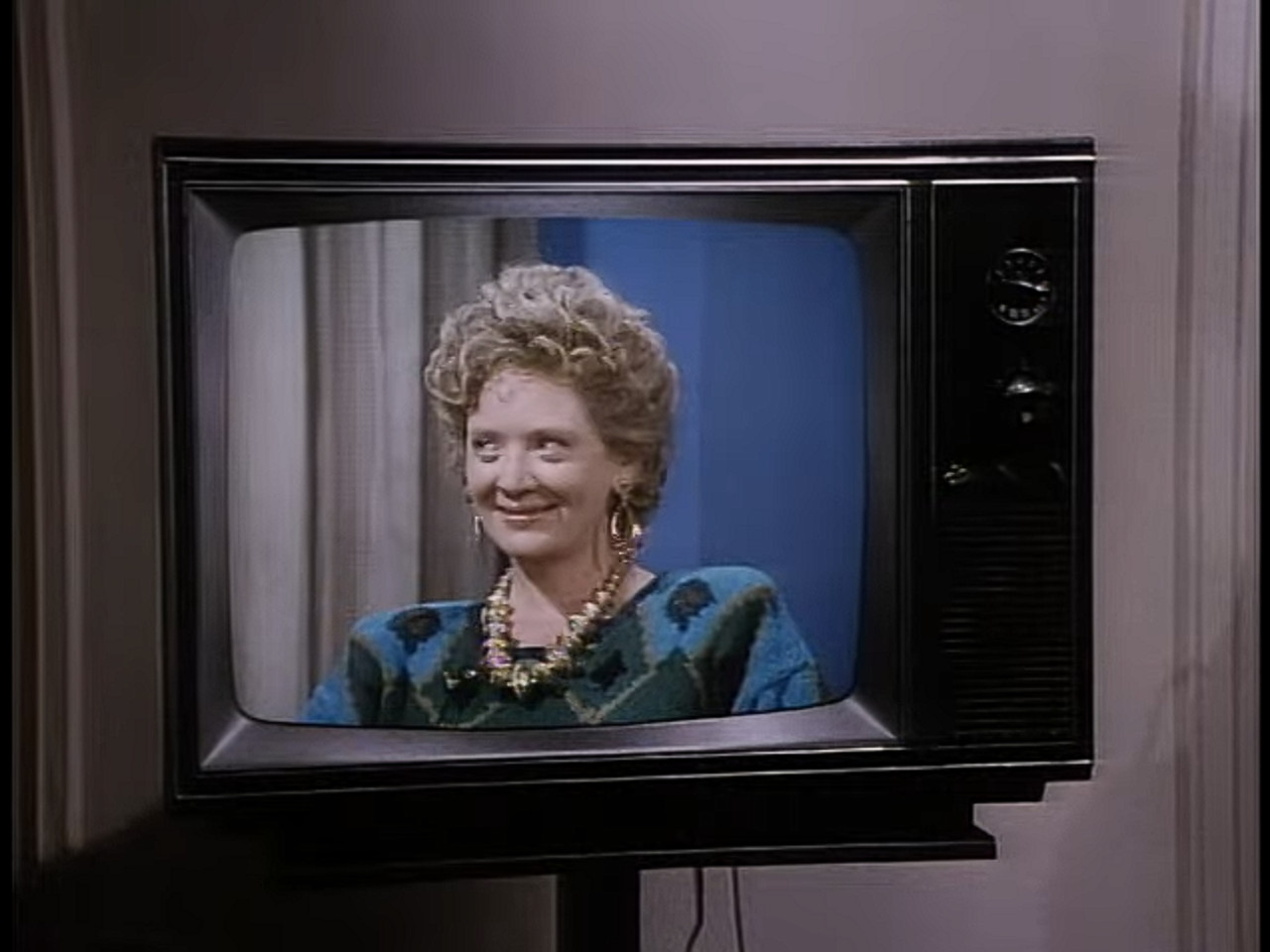
She is played by Carol Mansell, who was in Down to Earth from 1984 until 1987, a sitcom about a probationary angel sent to help people.
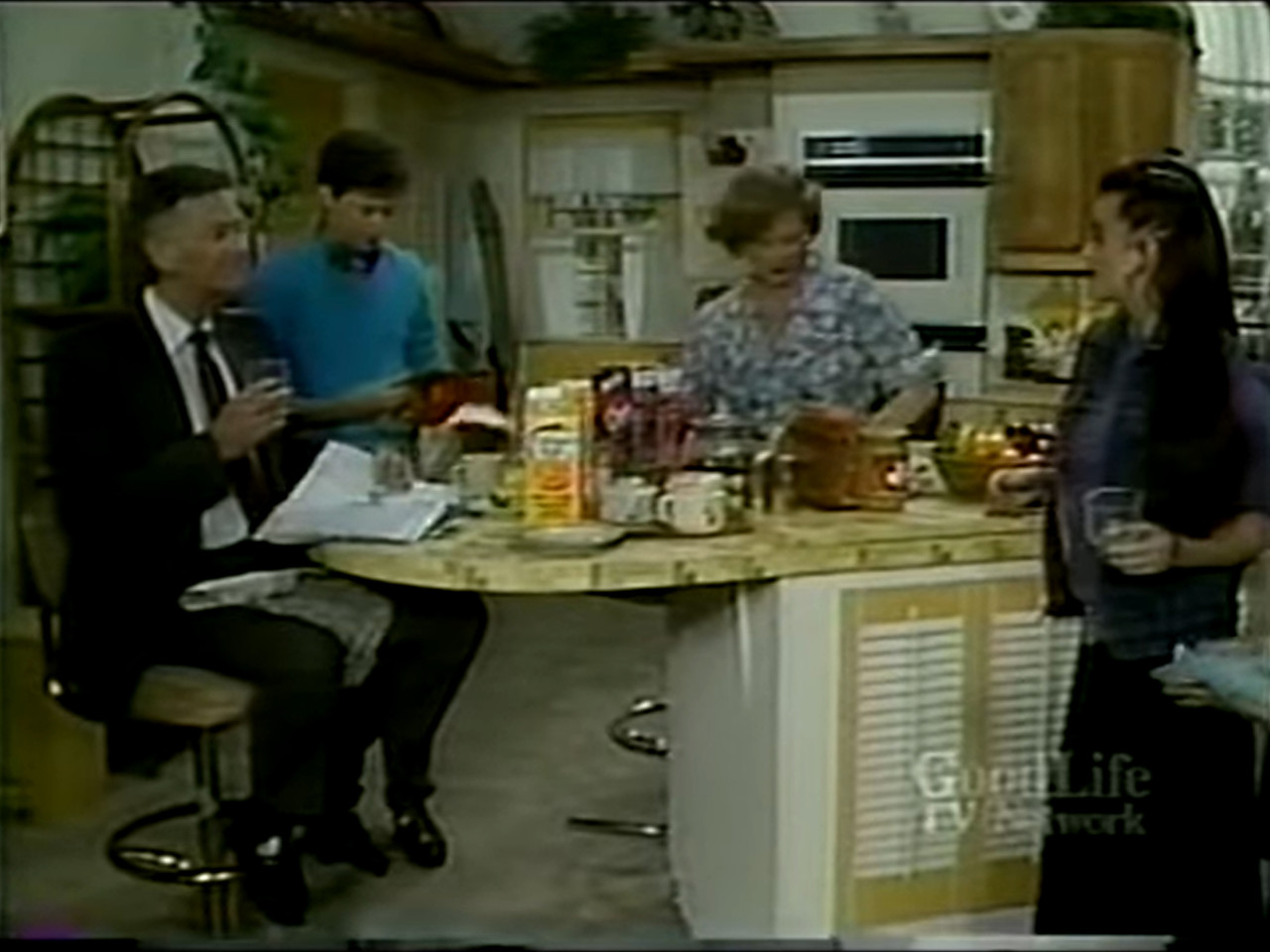
And she played the probationary angel (more about it here).
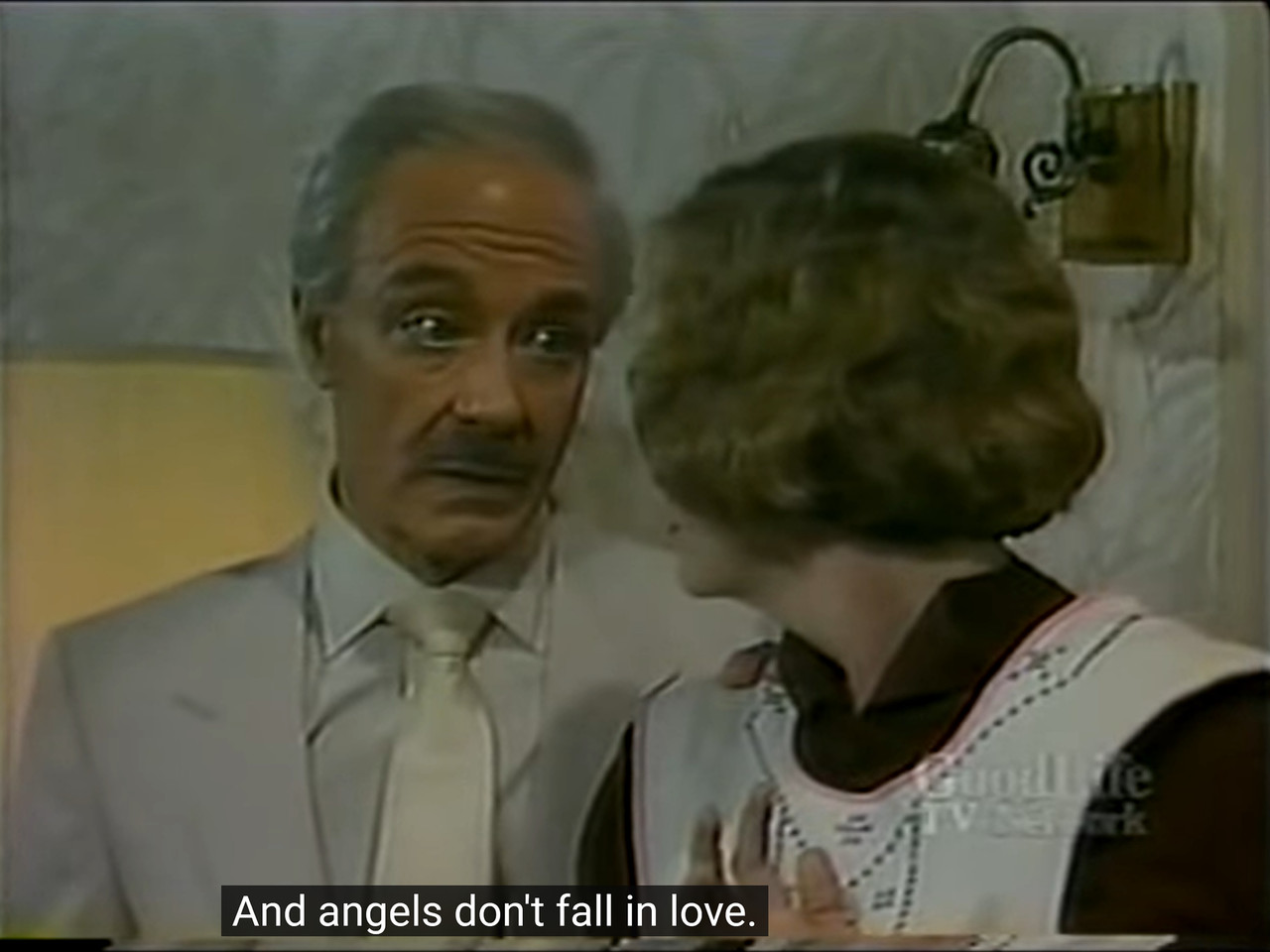
And that series aired concurrently with Highway to Heaven (albeit during daytime) and was cancelled in Spring 1987, shortly before this episode was produced.
Her casting was certainly intentional.
Actually, there’s one curious thing about it: she never interacts with Jonathan in the episode, and she appears just in a single scene alongside Mark—the moment she bumps into him at the theater. (Which feels like it was improvised, for that matter). The odd part is how French acts: he casually smiles to excuse himself (nothing wrong). But as soon as she walks away, he frowns at her in disdain and abruptly shrugs, and almost seems disgusted for a moment.
Just look at his face.
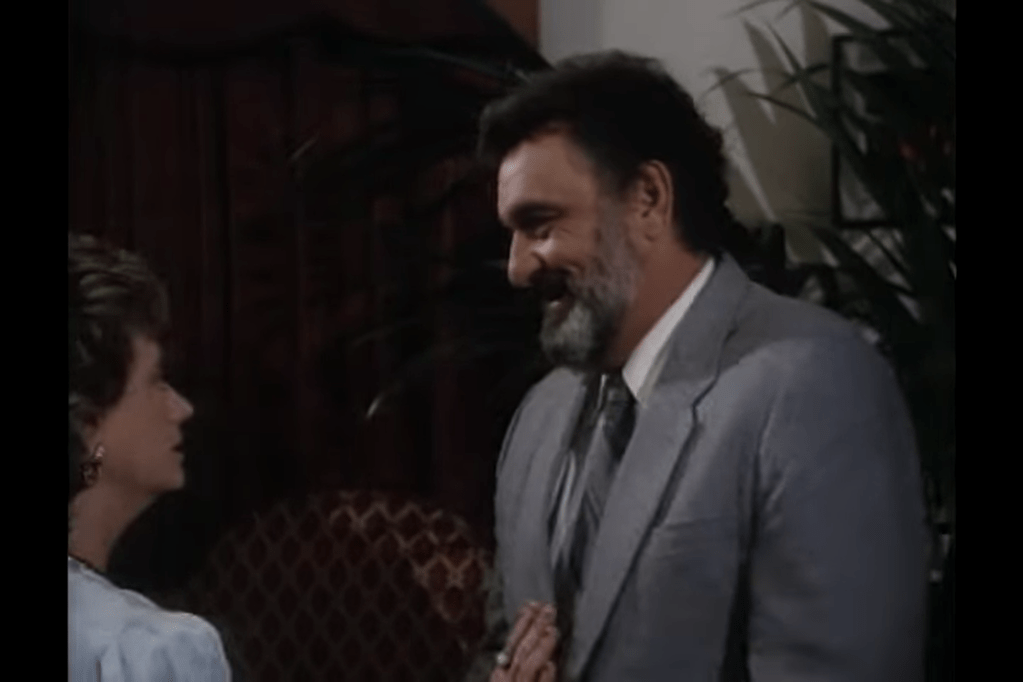
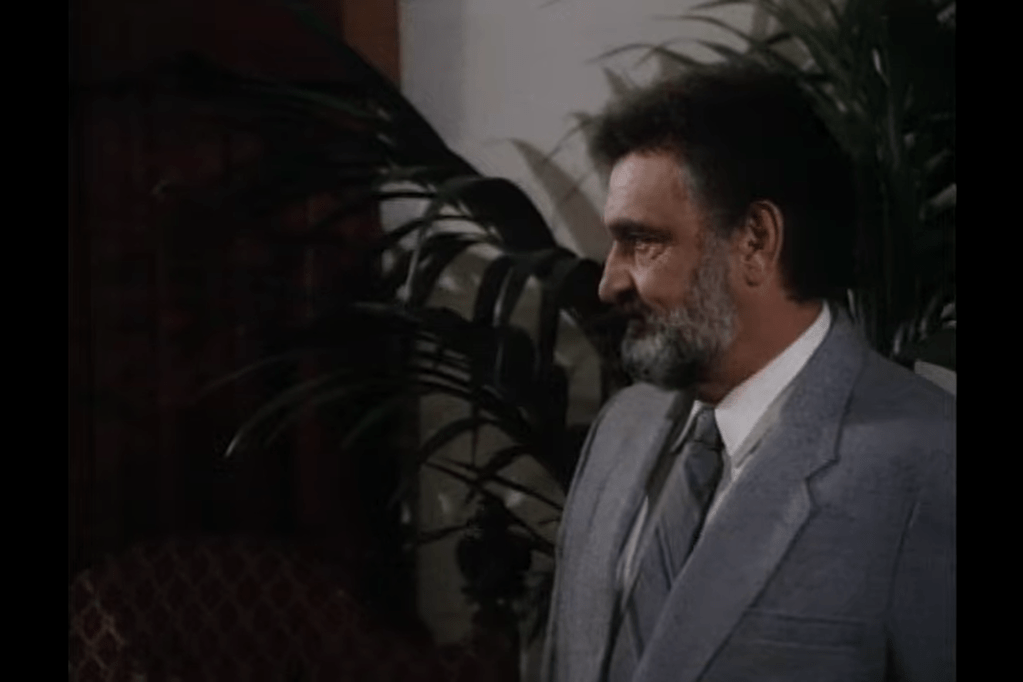
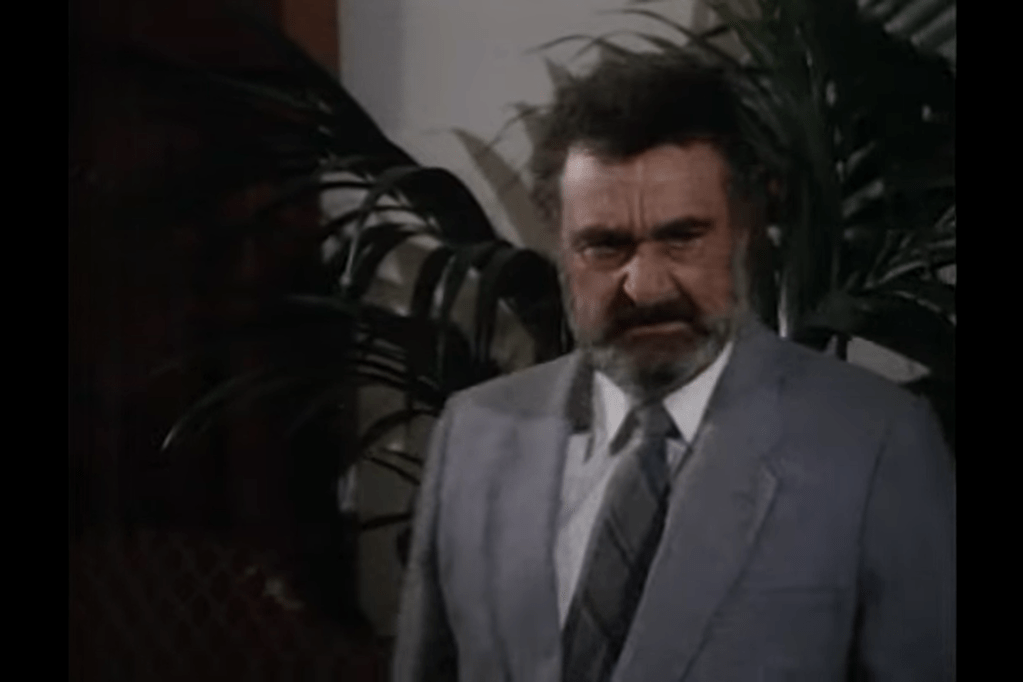
He’s like: “You’re with the rival network. Scoot”.
Or maybe French just doesn’t like the critics’ category.
Glossary:
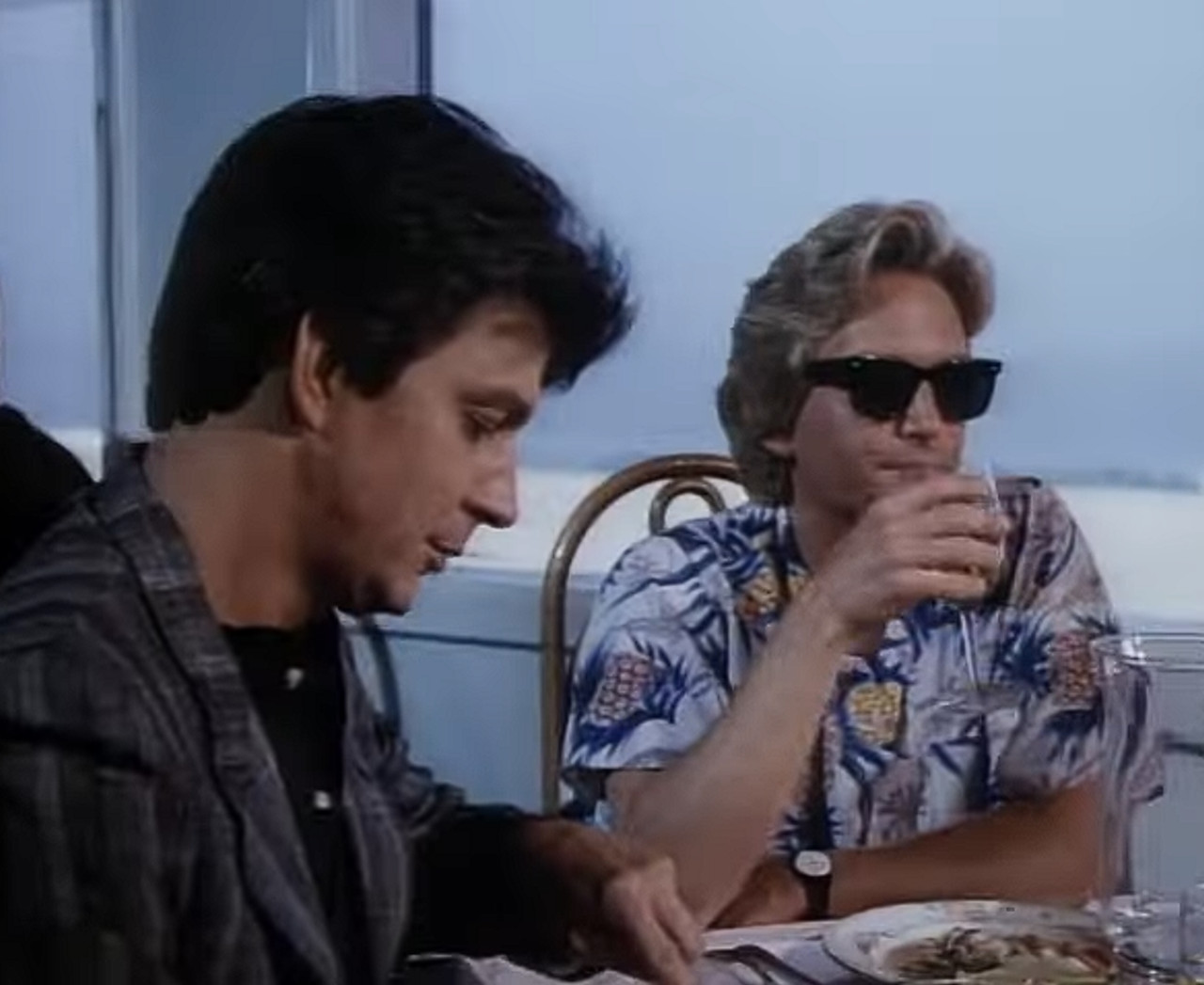
Blooper: there’s one at the beginning, when Rhett is having lunch with his agent and lays a glass on the table.
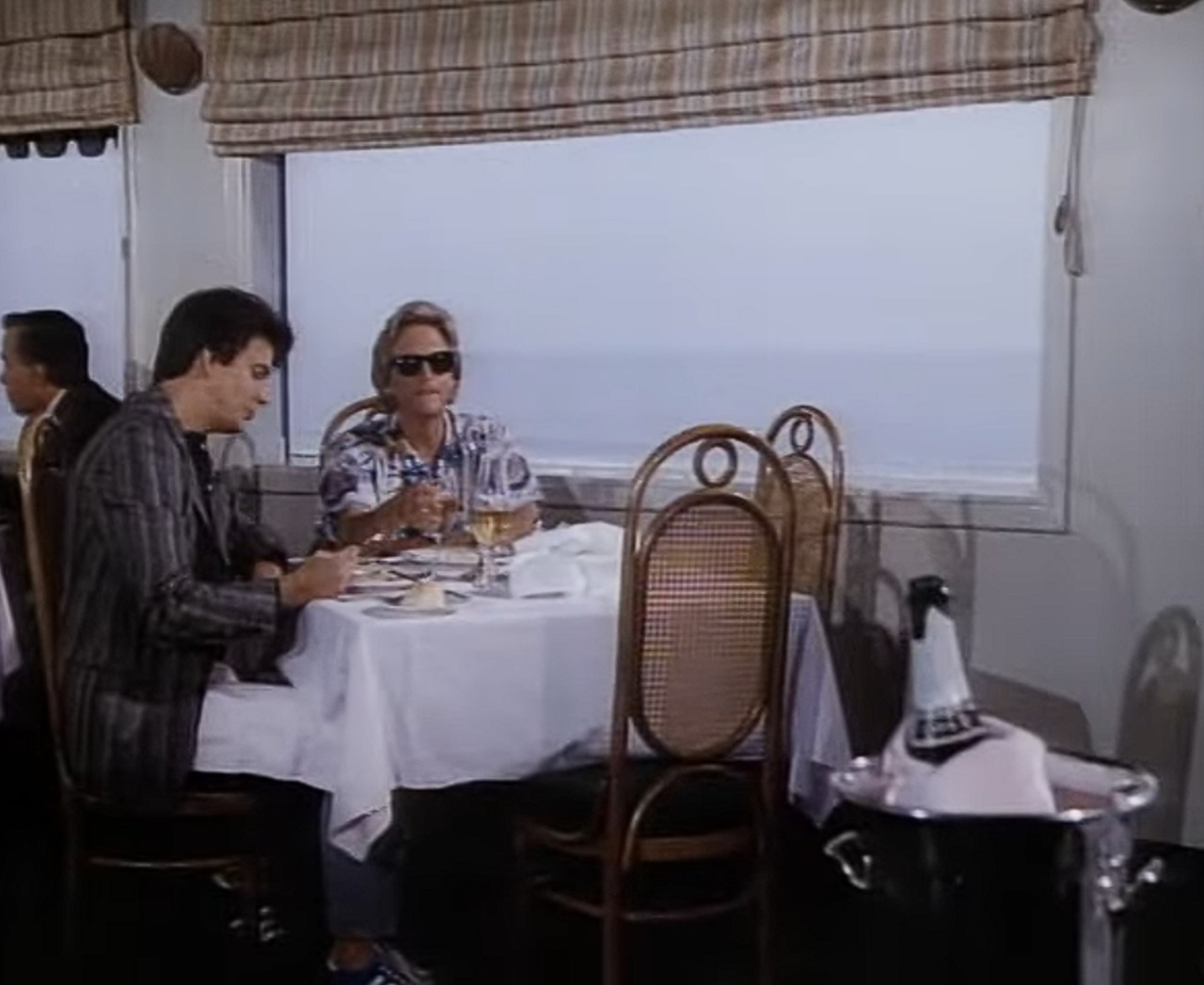
To then appears in his hand.
Also, it’s not a blooper, but something worth pointing out: when Jonathan hands Rhett the script, it’s not clearly shown what that is, but it’s reasonable that Jonathan is giving him the actual script of the episode. I mean, there’s no reason to print something fake pretending to be a script if they could use the actual script of the episode.
Car: Mark parks his car almost right into the theater.
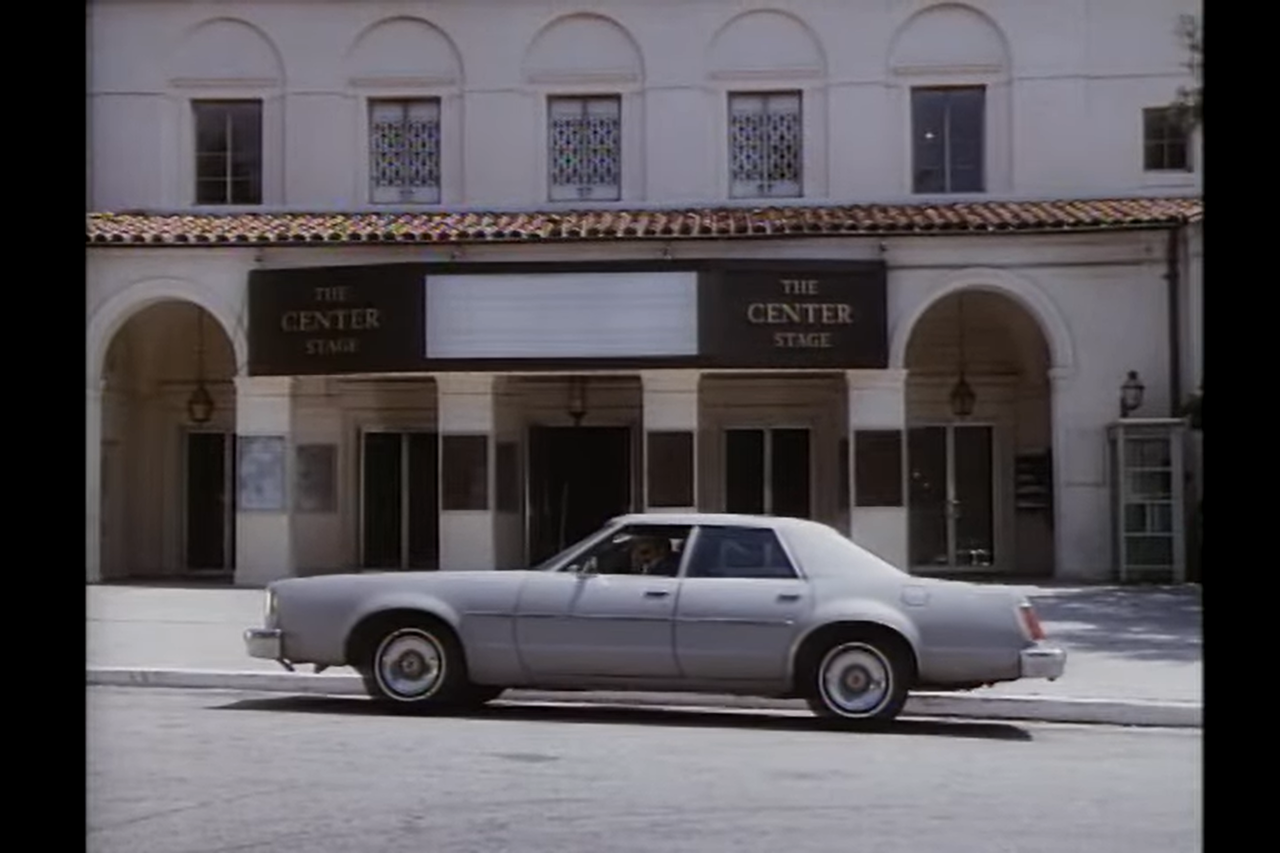
That’s almost certainly no parking spot.
It’s unclear how come Mark began parking his car like that: up until A Night To Remember in season three, Mark used to park in real spots. Then, he just started parking it as though nobody else were in the road.
Cute: when Mark jokes about the title of the play, Jonathan responds with a rare cute.
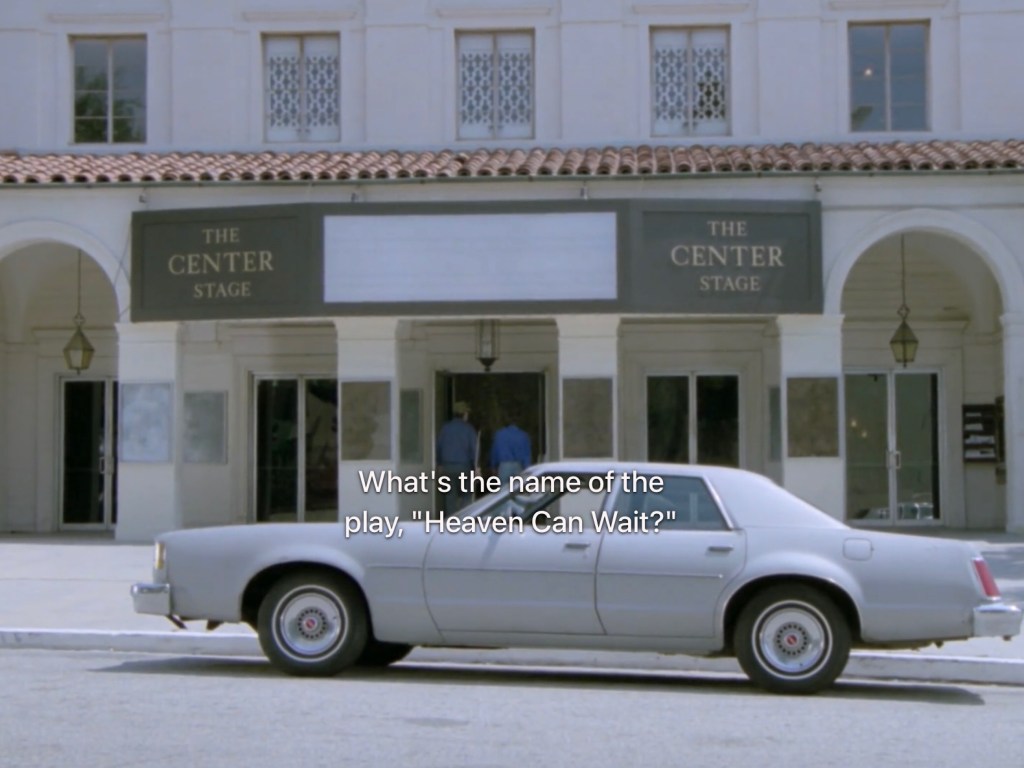
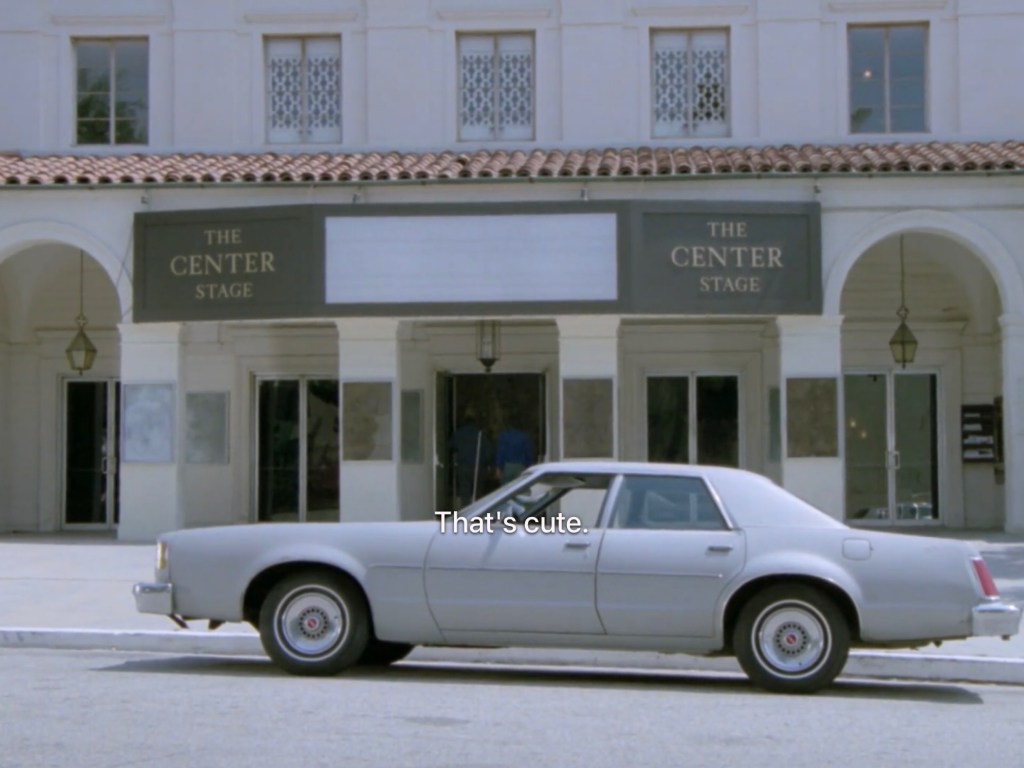
A couple of things stand out: this was the sixth instance of a reverse cute, where Jonathan uses Mark’s usual catchphrase. Previous examples appear in One Winged Angels and The Right Thing (season one) Friends (season two), and Another Kind of War, Another Kind of Peace, and the Christmas special (season three). There will be just a couple more of this rare instance later in the season, and then Jonathan quits using his friend’s catchphrase.
Second, this won’t be the last time that title is mentioned; it will return in a later, highly emotional episode—just wait and see.
Sunday Suits: the first time in the season.
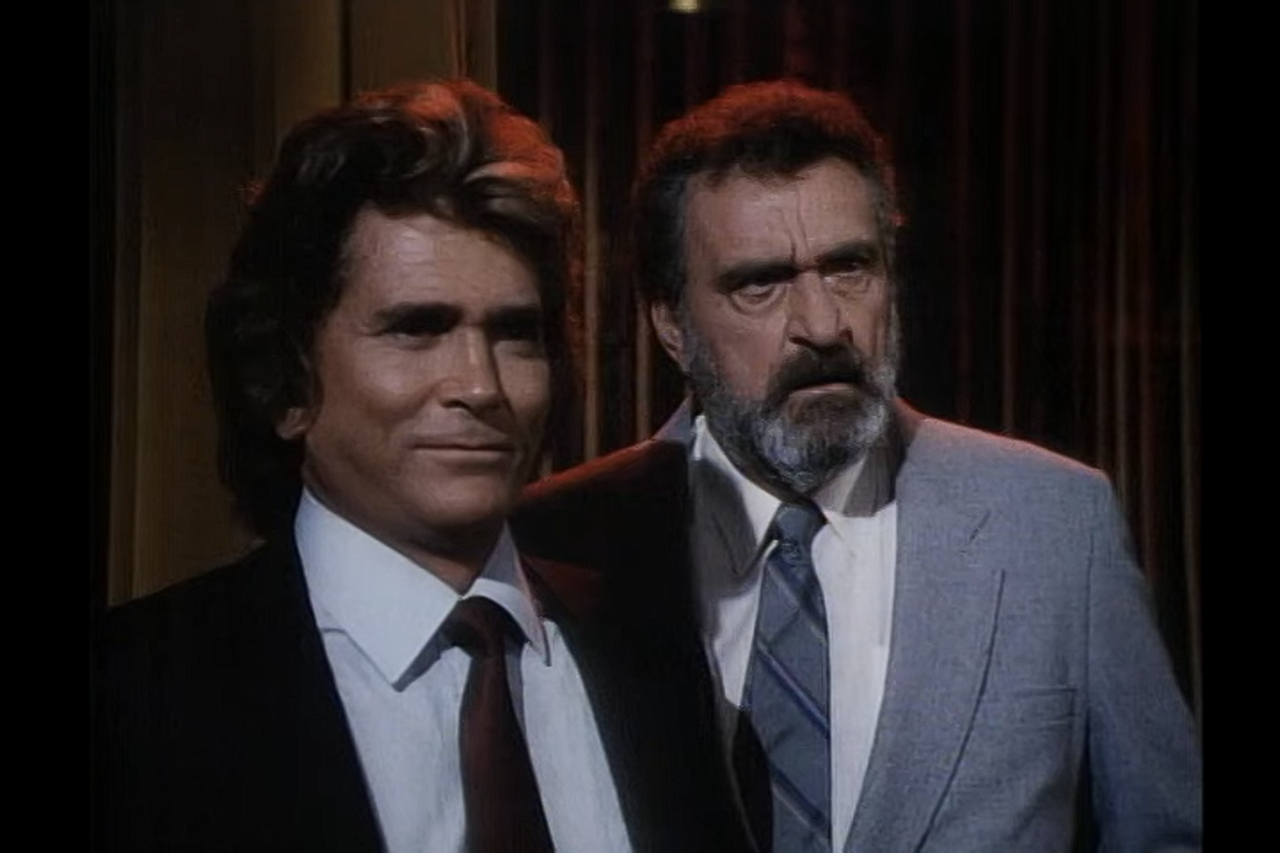
Jonathan and Mark have their Grey Suits on, and Jonathan uses the black one too. That’s the first time in the season Mark has his grey suit, and the first time in a long time Jonathan has the black one (he had it in the season three finale).
The Job: while Jonathan focuses on directing, Mark works backstage as dresser. That’s the second time Mark takes on this kind of role—just like The Smile In The Third Row, as Fusco’s dresser.
Though this time Jonathan is directing the play. And Mark is incredulous.
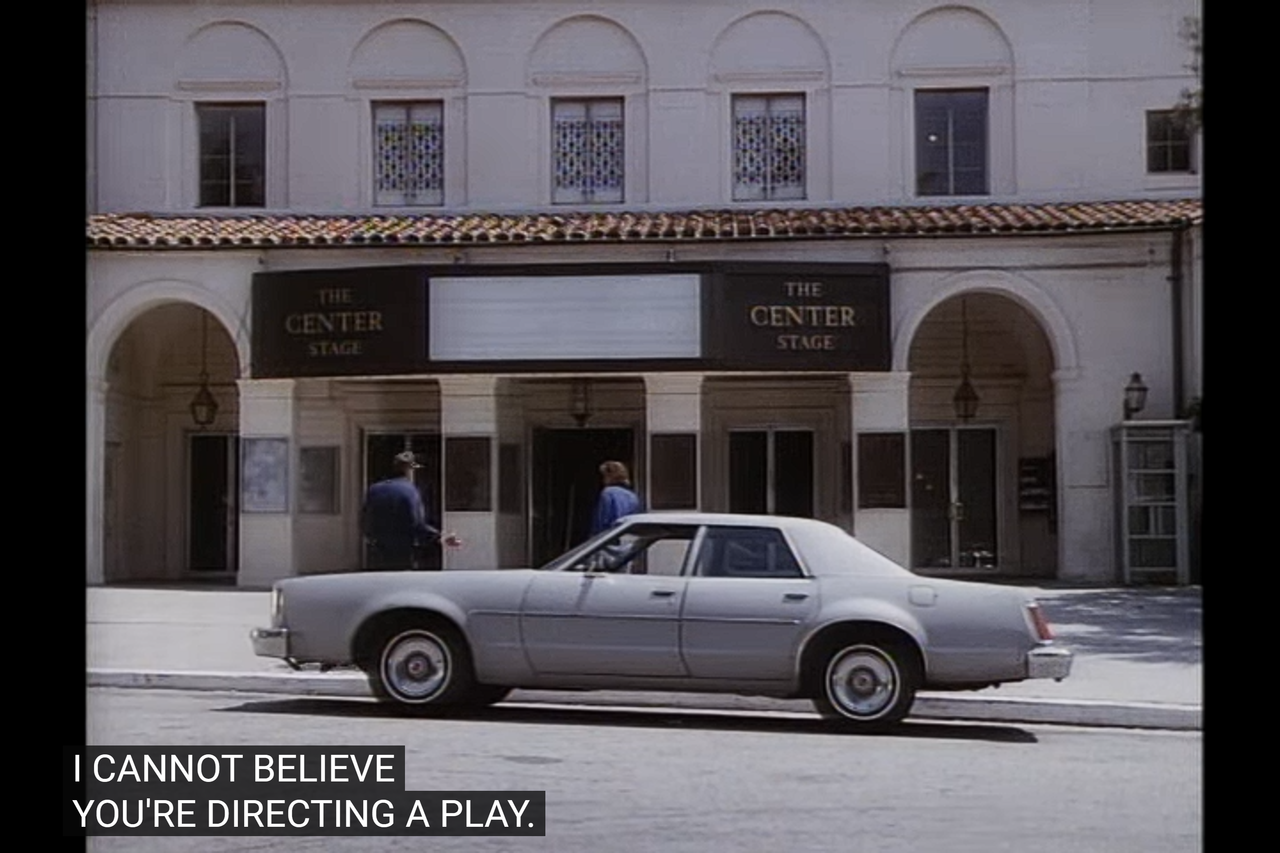
He clearly wanted to be the one directing this.
Also, it’s apparent that Jonathan writing the play “Last Passage” as well, though it’s unclear whether he wrote it alone or with some help: maybe the Stuff or perhaps his superior’s—or even Mark’s. (He probably wanted to direct it in the first place.)
However, Jonathan is worried of “the press” (as he confided Mark the night the play is staged the first time), so it’s likely that he wrote the play. Otherwise, if it had been written by his superior, he’d have no reason to fear anything—unless he didn’t trust in his superior’s capabilities. Nor he should mistrust Mark’s experience in theater (through French, of course), if Mark contributed to the play to some extent.
In the meantime, he handles the rest.
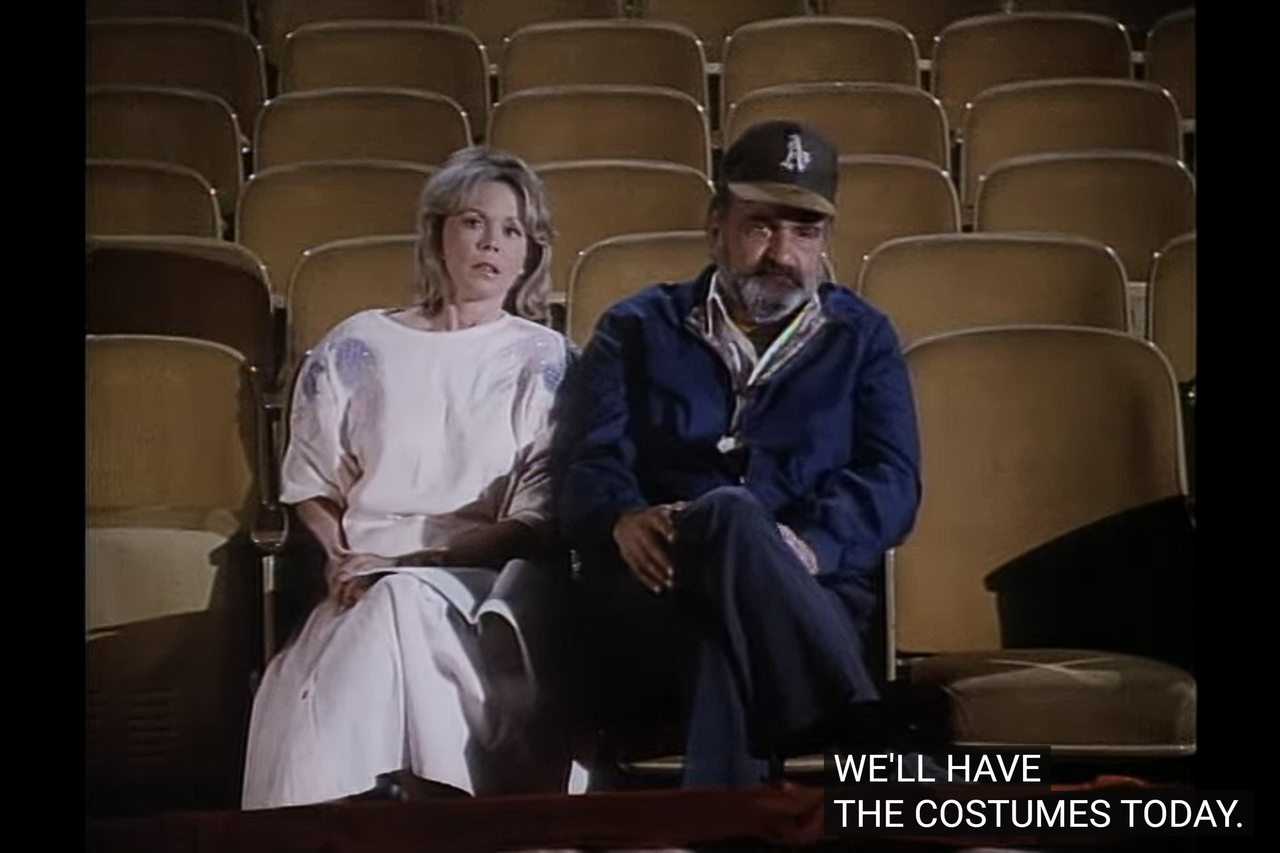
Are you enjoying yourself?
Ratings: 22 million audience. 33rd tie Weekly TV programs, 7th tie TV genre show.
The episode aired in early November 1987 and wasn’t particularly popular in ratings: actually, it dipped to become the second least-watched episode of the series so far. Though it did perform better than the Halloween special last week, which remains the least-watched episode of the series.
However, many contributing factors to explain the Halloween ratings were still unclear, so it was difficult to predict whether the season’s ratings would recover. And even excluding the Halloween Special for a moment, this episode wasn’t successful—either on its own or compared to previous seasons—despite offering at least a slight improvement.
Still, even The People Next Door offered an improvement over Fight For Your Life two weeks before it, and then Halloween hit and the series badly collapsed. At this point, there was no way of knowing whether subsequent episodes would fare any better. Perhaps more importantly, the third season suffered a great loss two weeks into November one year earlier. And the least watched episode of season one aired in late November three years before this one. So, if this season dropped a great deal in early October, in a period when the other seasons enjoyed their greater popularity, now that late November is approaching things are not looking good.

Leave a comment