
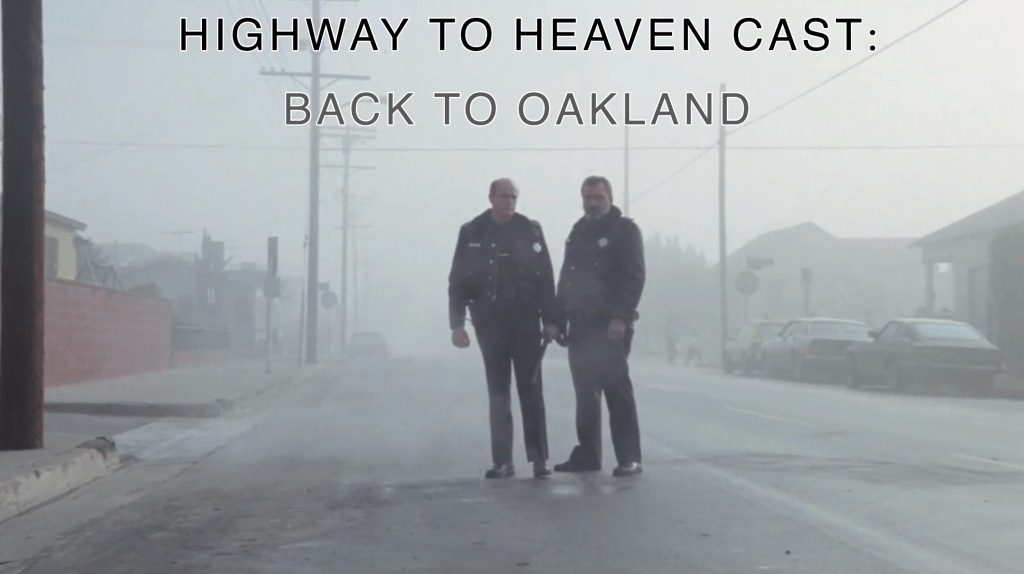
Highway To Heaven Cast: Back To Oakland
Airdate: 02/03/1988
Directed By: Michael Landon
When the going gets tougher, Highway gets even more.
This season features some very powerful, difficult episodes: this is one of them. It’s a warning.
Guide:
- Assignment
- Background
- Characters
- Production and Setting
Glossary:
- Fishing
- Friendly Jonathan
- Real Score
- The Job
- Ratings
Complete show available here.
Assignment: Jonathan and Mark are assigned to work as police officers at Mark’s old station.
This assignment sounds familiar, and in part it is. Basically, Jonathan and Mark’s rounds randomly take them to Oakland; or a Los Angeles version of it. That city strikes as familiar: it’s Mark’s birthplace, where he grew up and worked as a police officer. Later, he was suspended because of his alcoholism, but that’s another story.
While in Oakland for the first time in the series, Mark decides to stop by the police station where he meets Frank—one of his many former colleagues.
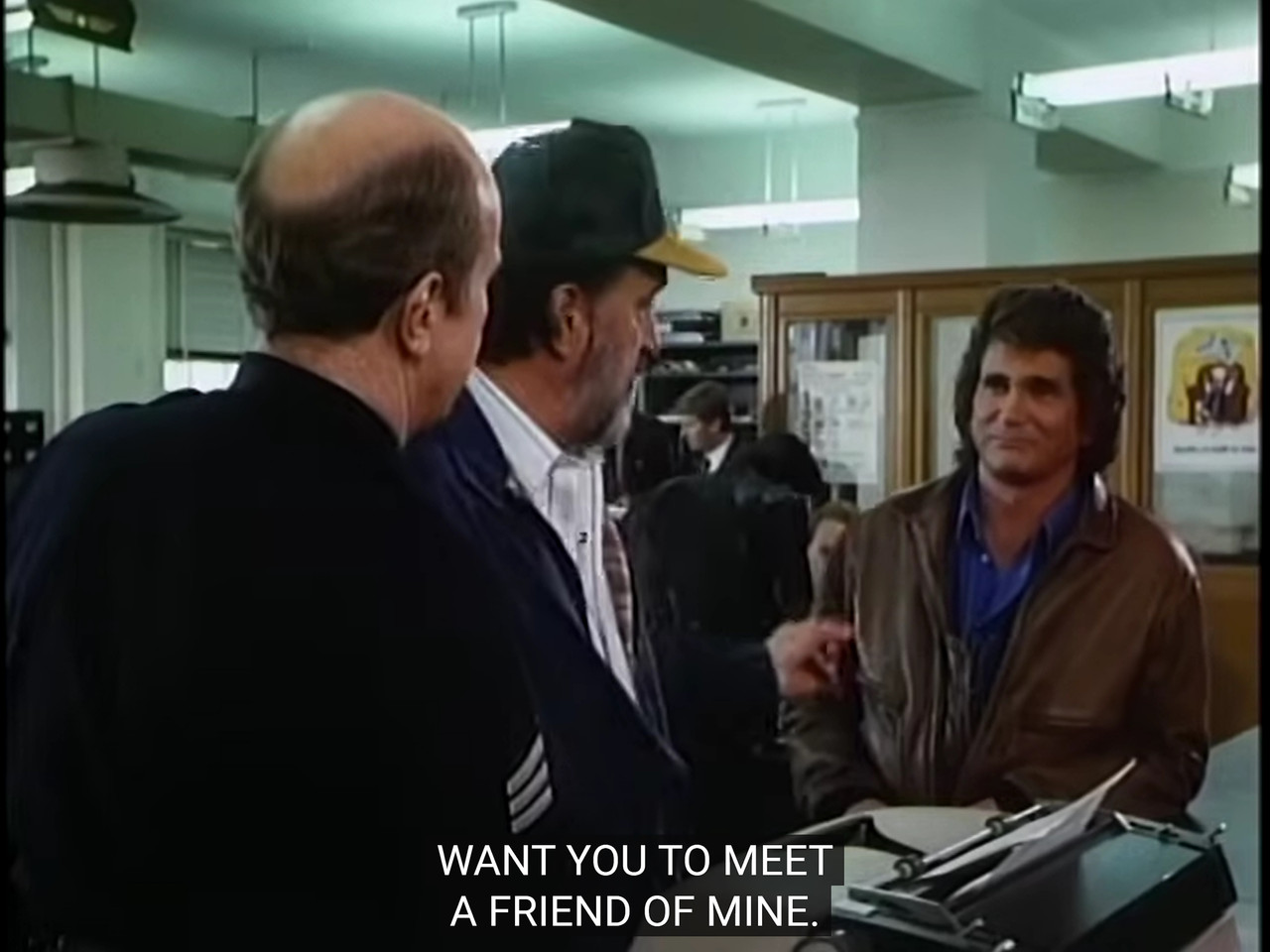
And Jonathan is there too. At least now he doesn’t do the introduction for both.
As Mark and Frank catch up, Mark learns that there is a shortage of officers and that they need someone from the reserve force to patrol the streets. And he’s back on the job.
So the assignment is simple: Mark is sent back to do his old job alongside his old partner.
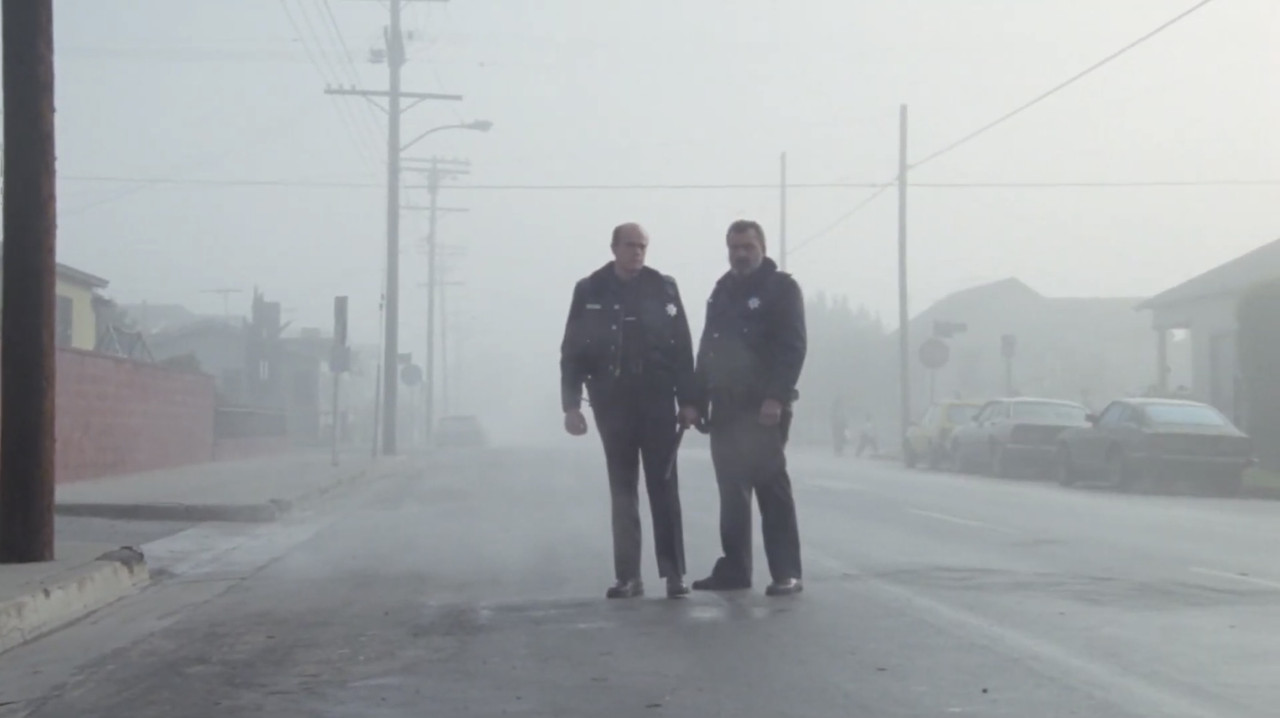
In Oakland, the L.A. way.
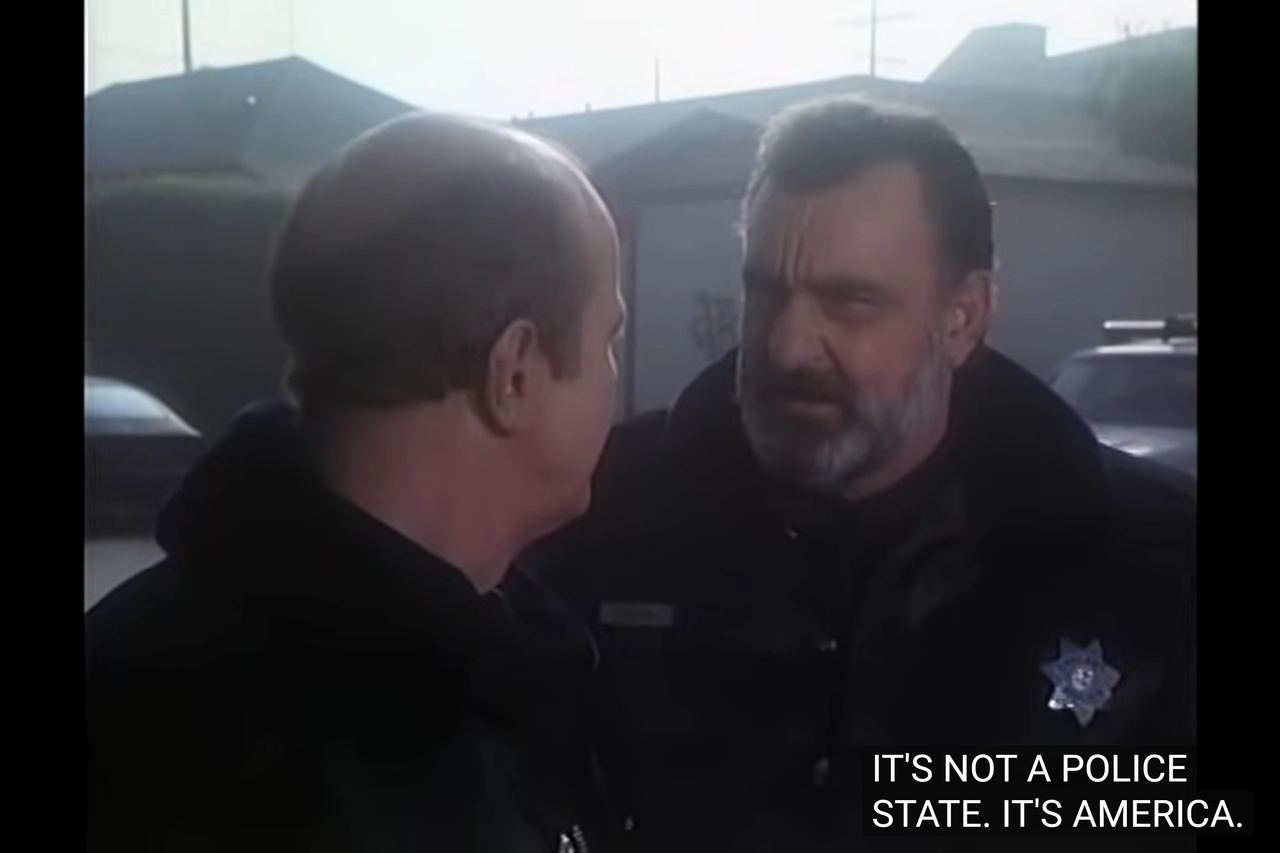
The problem is that Frank has turned out to be a racist and brutal cop.
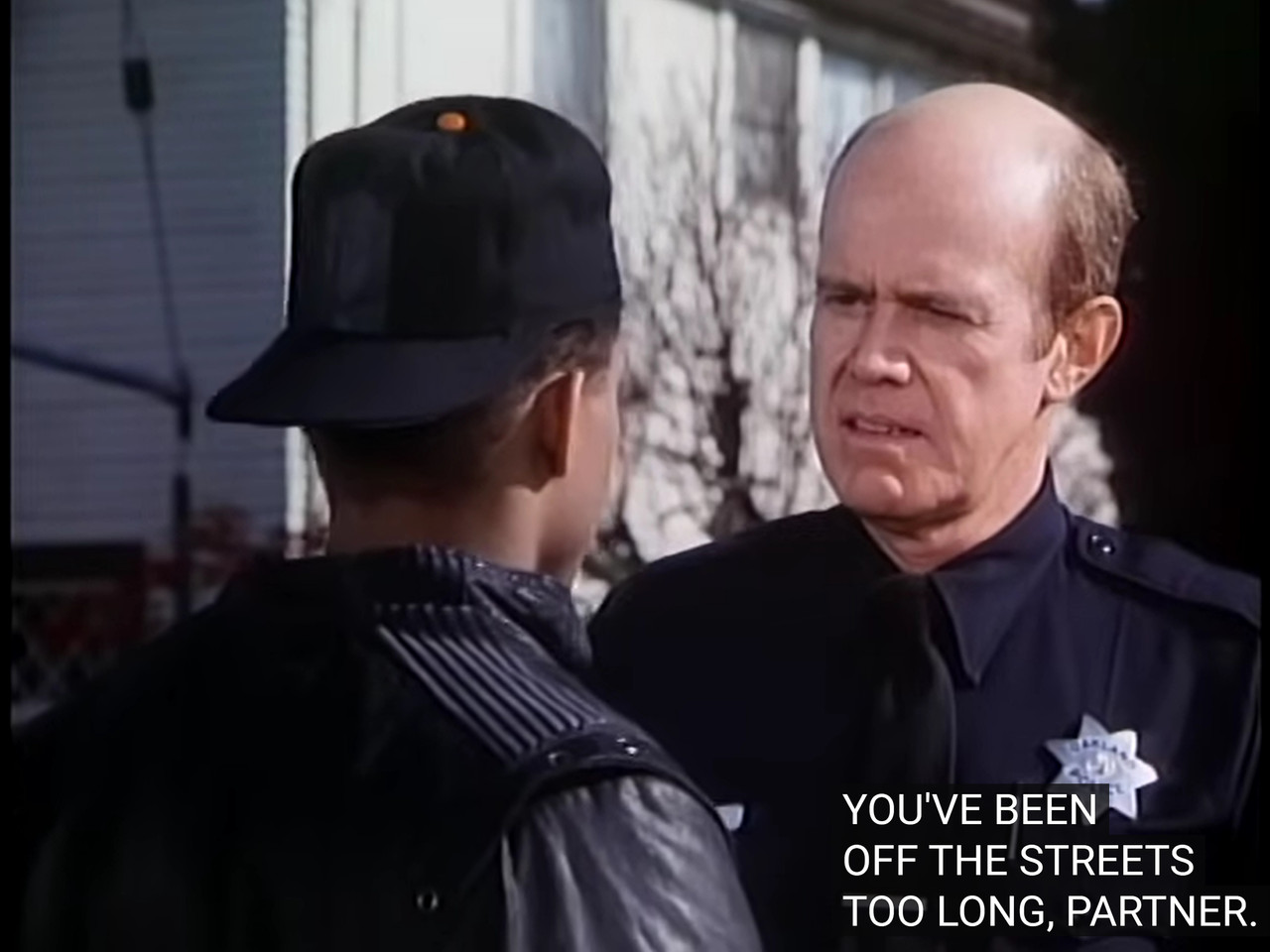
And that does not lead anywhere good.
At the same time, Jonathan gets a job as a security guard in a rundown neighborhood.
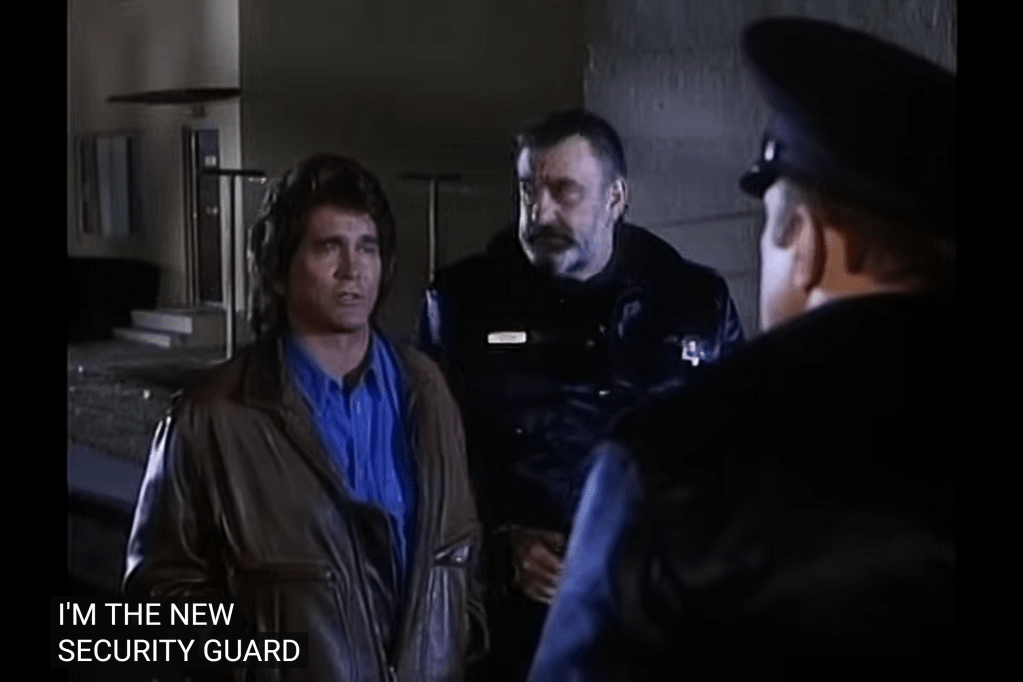
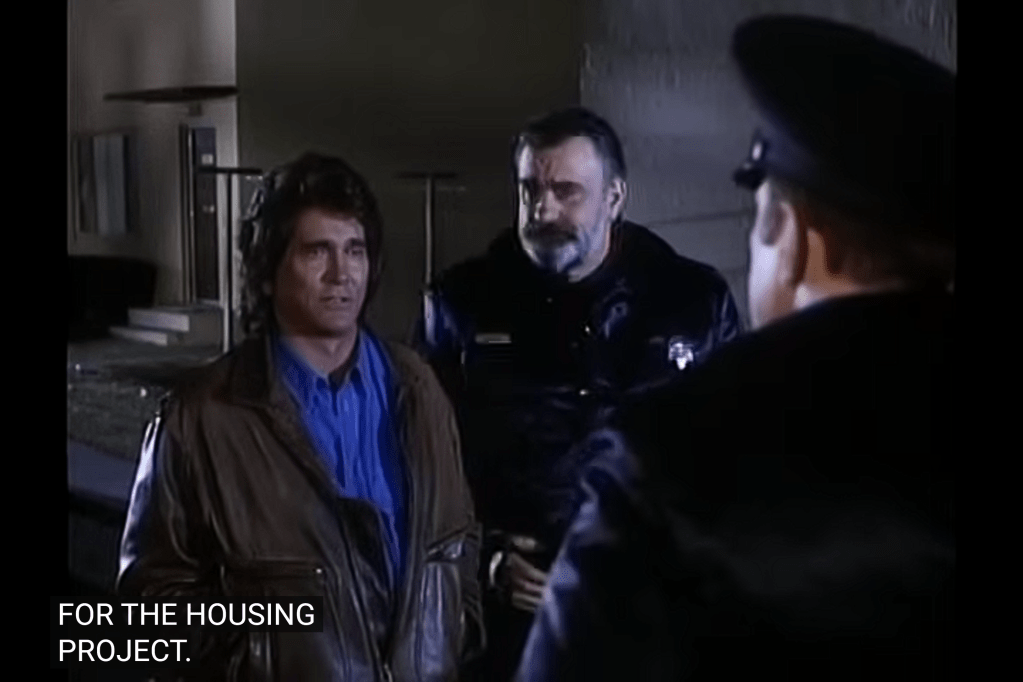
There he befriends several local residents, including a woman living with her two sons—one of whom is racist.
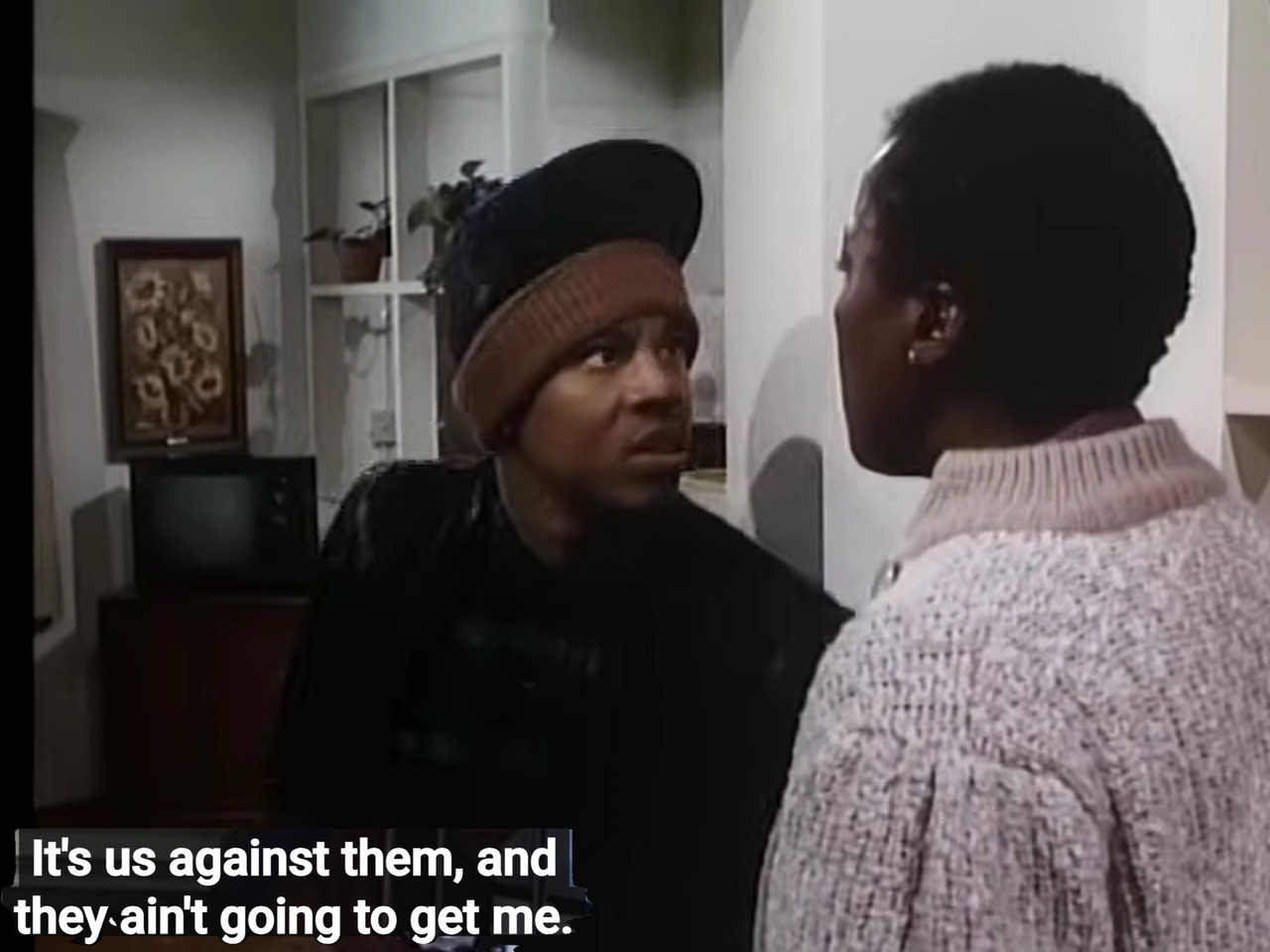
And warning: this episode is going all the way.
Like the earlier cop episode in season two, it partly deals with racism and police brutality, and it does not soften or downplay the issue in any way. It’s striking that a supposedly Christian television series addressed police brutality that openly.
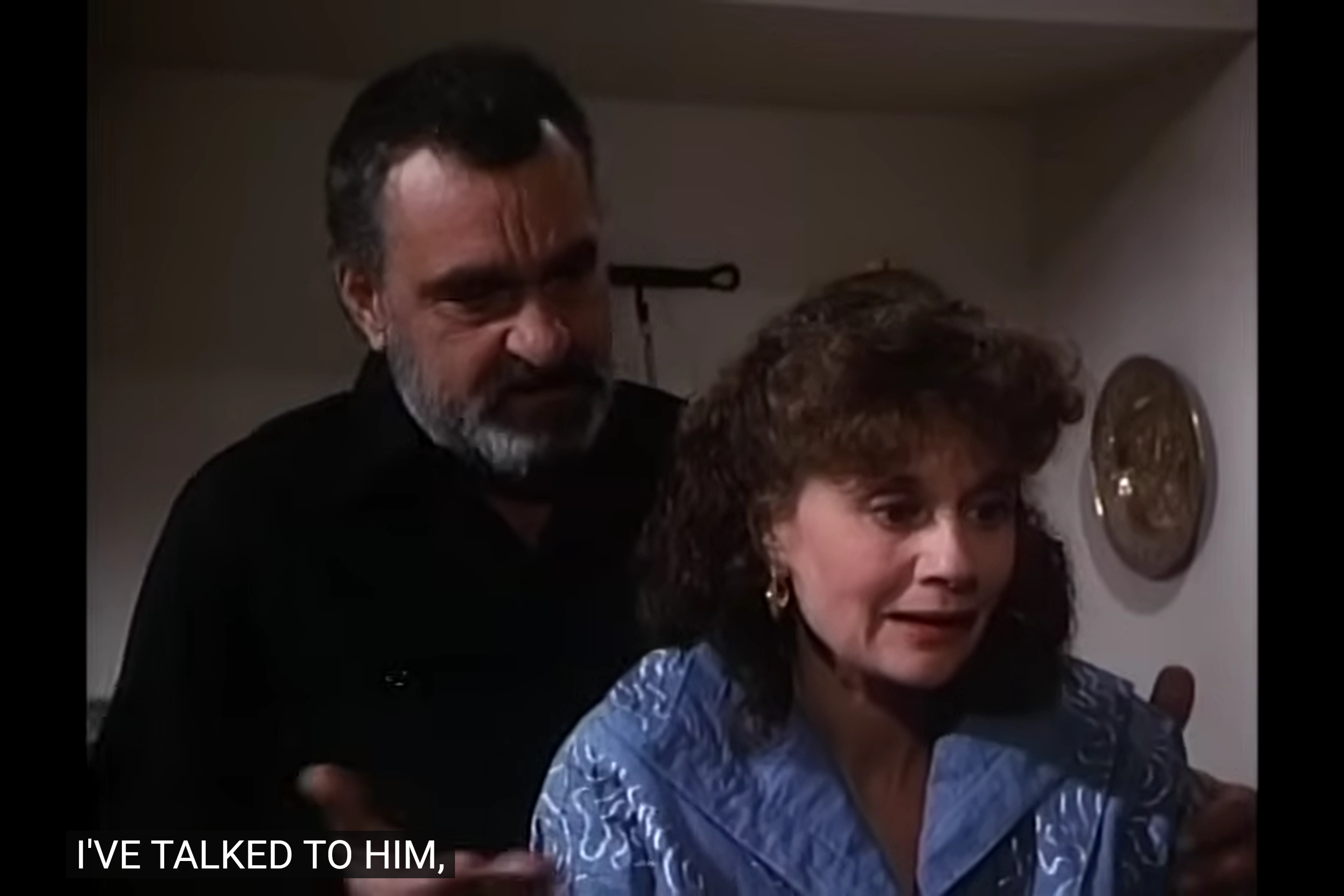
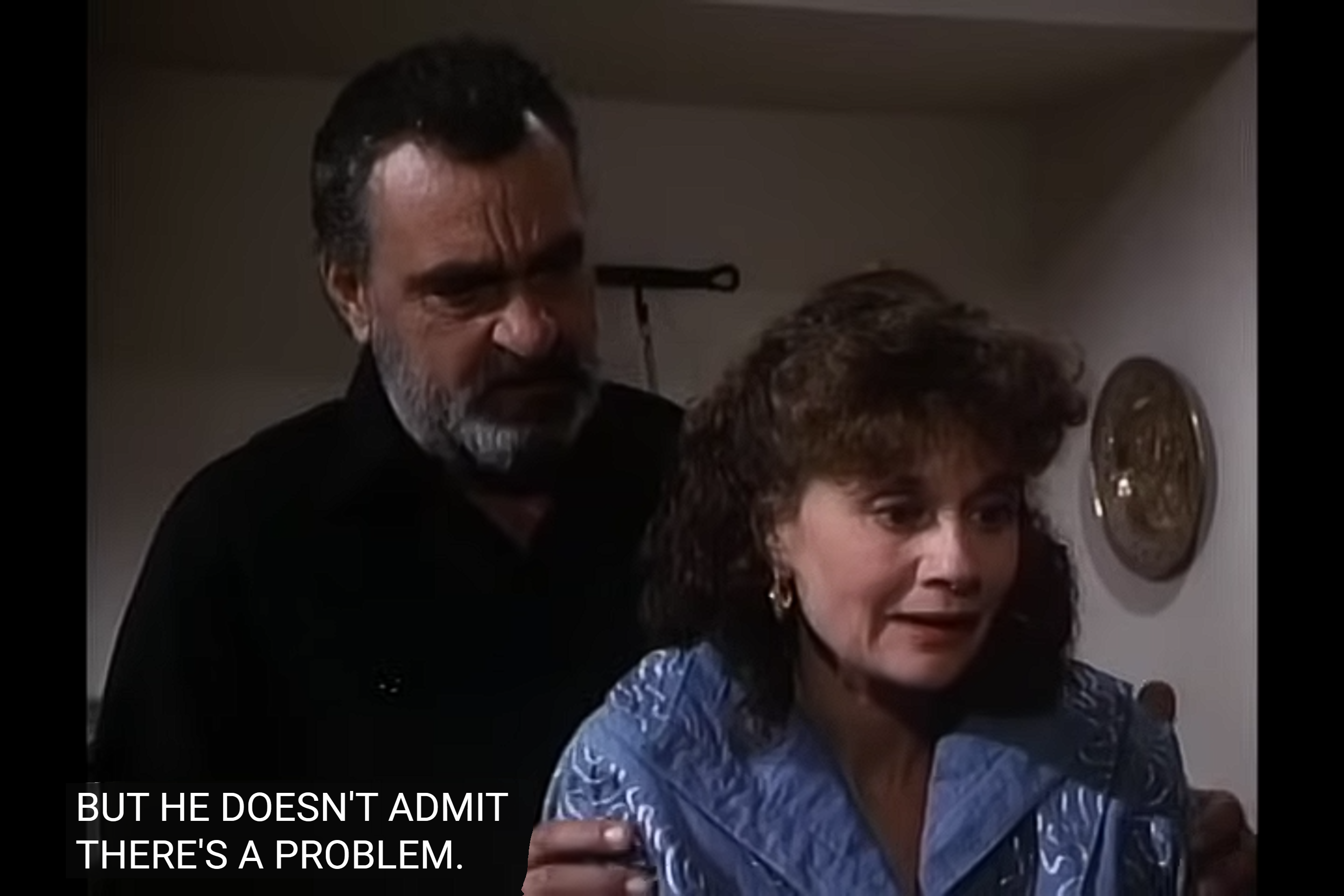
The odd part is that neither Jonathan nor Mark could prevent the epilogue of this episode, when Mark’s colleague meets the girl’s son.
So, if the assignment was preventing a tragedy, it didn’t work out. And that’s what the epilogue is for: Jonathan bringing the kid to meet Frank’s son.

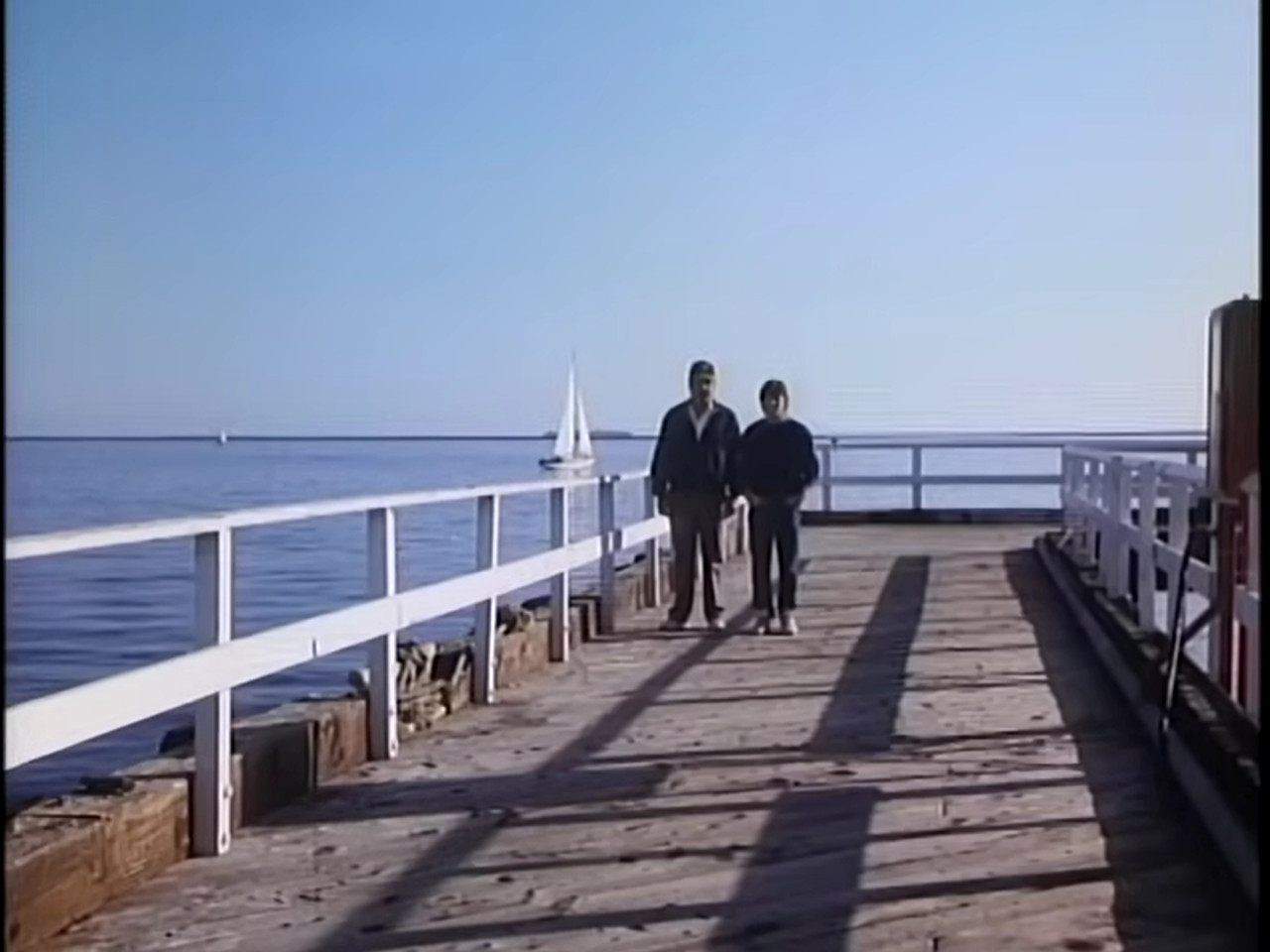
It somehow challenges Jonathan’s idealism that everyone can be saved: the real assignment is actually about preventing a similar tragedy again.
This was a very complicated assignment.
Anyway, the premise may sound familiar: it’s not the first time in the series Mark has returned to police work. One of the earliest episodes of season two revolved around Mark and Jonathan working as cops for a day to give Jonathan an idea of what police work was like. They worked as officers again in season three, although they were assigned to narcotics, and then again earlier in season four. This time, however, they are back to regular patrol duty.
Even the season two episode in which Jonathan and Mark worked as cops for a day addressed similar themes and featured racial undertones, but that time it was more impartial in its depiction of both police life and the everyday problems of ordinary people. This time, the episode is far more overt in the way it discusses those issues, and it’s quite gut-wrenching as well.
- Background
The episode is set in Oakland, the only one in the series; it’s also one of the few set in California but out of Los Angeles, and the second this season (after Country Doctor). Nice place.
As for the timeline, it is unclear exactly when this episode takes place, but it was likely set around late 1987 or early 1988, the same period in which it was produced. The story seemingly spans three weeks, as Mark reveals near the conclusion when he mentions that he has been patrolling the streets with Frank for that long.
Most episodes typically cover about a week or ten days, with roughly three days passing between episodes. Two-part stories may span a longer period. However, for a single 45-minute episode to cover almost a full month is remarkable. And the odd part is that much of that time is skipped: the episode only shows one day of Mark patrolling with Frank at the beginning, and then it jumps straight to Mark saying it’s been a couple of weeks; without any time-compressing scene. If it weren’t for this line, it could have been two days.
The way time passes is unclear, though: on the first day, Frank and Mark arrest the woman’s son on suspicion of attempted car theft; the next day, the boy goes out with his brother to swipe music, and Jonathan offers him the job as mechanic. In the meantime, Frank stops another man on suspicion of car theft but it turns out he was wrong and was just being racist. And immediately after that, Mark is at Frank’s home and says it’s been two weeks. However, they also talk about Frank’s racist attitude toward the man he wrongly stopped, and imply that it occurred that same afternoon. The problem is that the scene is shown before the one of the boy swiping music at the store—which occurs the second day of Mark’s patrolling.
So, there are two ways to fit these lines: the episode was deceiving (the scene in which Frank wrongly stops the suspect actually takes place after the boy attempted to steal a disco, even though it’s shown before it); in that case, it means there’s a lapse after Jonathan prevents the theft at the music shop until the day Mark and Frank stops the suspect and the night Mark says that line. (Besides, it wouldn’t be the first time the editor Jerry Taylor messes up scenes: a blooper occurred in Catch A Falling Star in season one, with the night-day part). Otherwise, the second way to see it would be to assume that the boy attempted to steal music on two separate occasions, but the episode skips one and shows the second: the first time it’s the day after he’s arrested on suspicion of car theft, and the second day is two weeks later when Jonathan finds him at the store and tells him about the job; and the episode skips the first time. So, the two-week jump occurs after the boy tells his brother to go to the music store with him; and when Jonathan finds them there, it’s actually been two weeks.
Of course, there’s always a third, simpler way: the line is wrong, and it’s only been two days. That would correct everything.
- Characters
This was a very important assignment for Mark; as revealed in the Pilot and confirmed multiple times throughout the series, Mark was a police officer in Oakland for fifteen years, from 1964 to 1979 (not consecutively, he also served in Vietnam during that period). However, toward the end of his career there, he became increasingly hopeless and pessimistic and plunged into drinking, which eventually led to his suspension from the police force. He later moved in with his sister Leslie, and the two lived together for five years until the Pilot, when he met Jonathan, recovered from his alcoholism, and joined him in his traveling around.
This episode is the first taking place back in Mark’s hometown, with Mark’s former job.
And Mark is meeting another former police officer from his past.
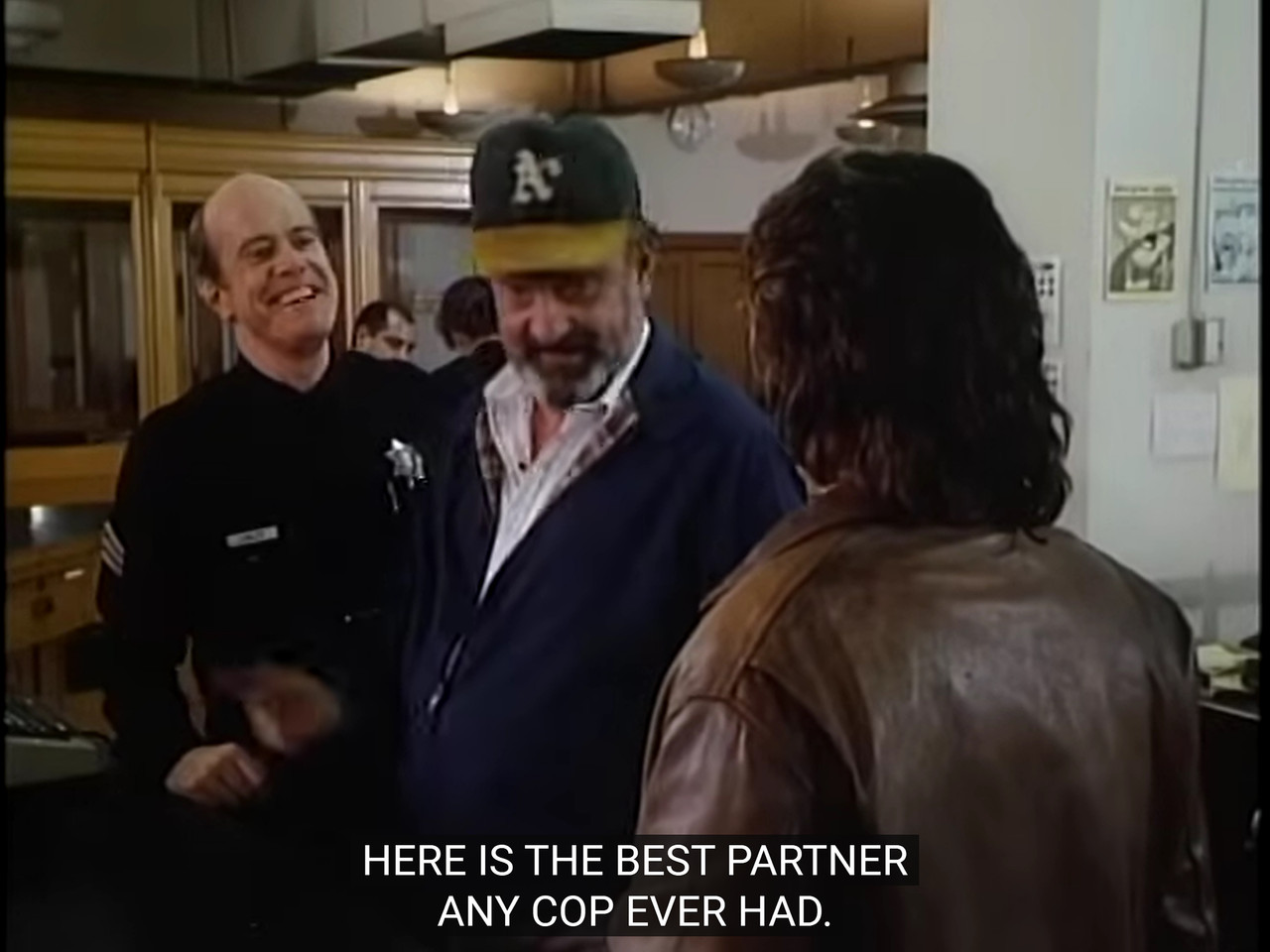
How many “best partner” can a cop have?
Yet again, a new one.
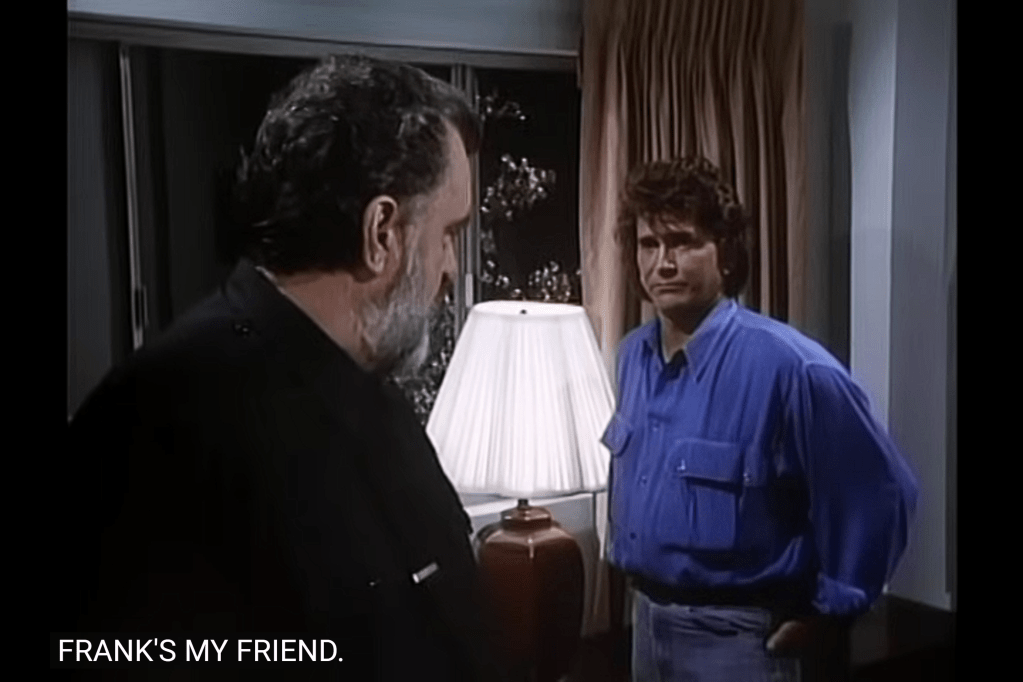
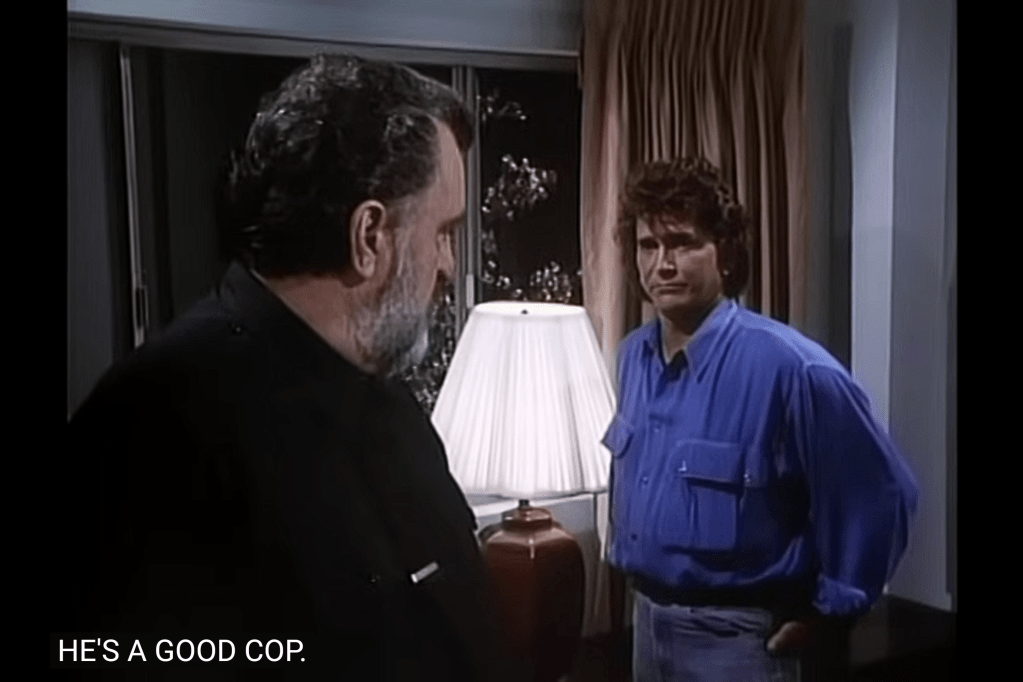
The man with all the friends.
That’s a rather peculiar detail. It’s far from being the first time in the series that Mark has met an old police colleague, each time a different person. However, this is the first time he actually returns to his hometown, so it would be plausible for some previously established friends to still be around. Instead, the only colleague still working there is someone who has never been mentioned nor seen before.
Maybe Mark simply ran out of old friends, and this colleague is effectively the last one left.
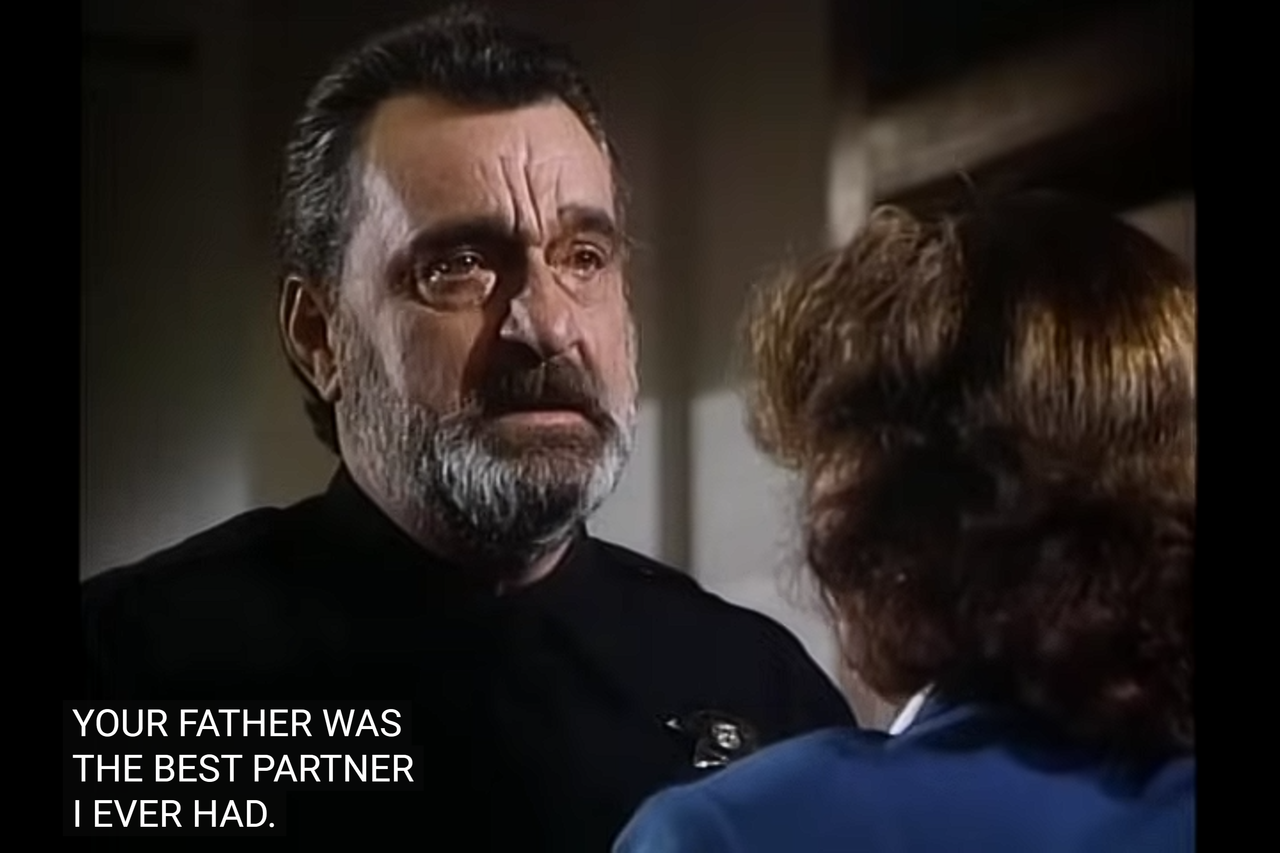
He has said that too many times to be convincing now.
This marks the sixth time in the series that Mark encounters an old colleague. The first was Charlie in Plane Death (season one), followed by Wes in The Secret and Sam in Change of Life (season two), Frank in Love And Marriage in season three, and then Caz and Gary in season four. Now, Frank No. 2 is added.
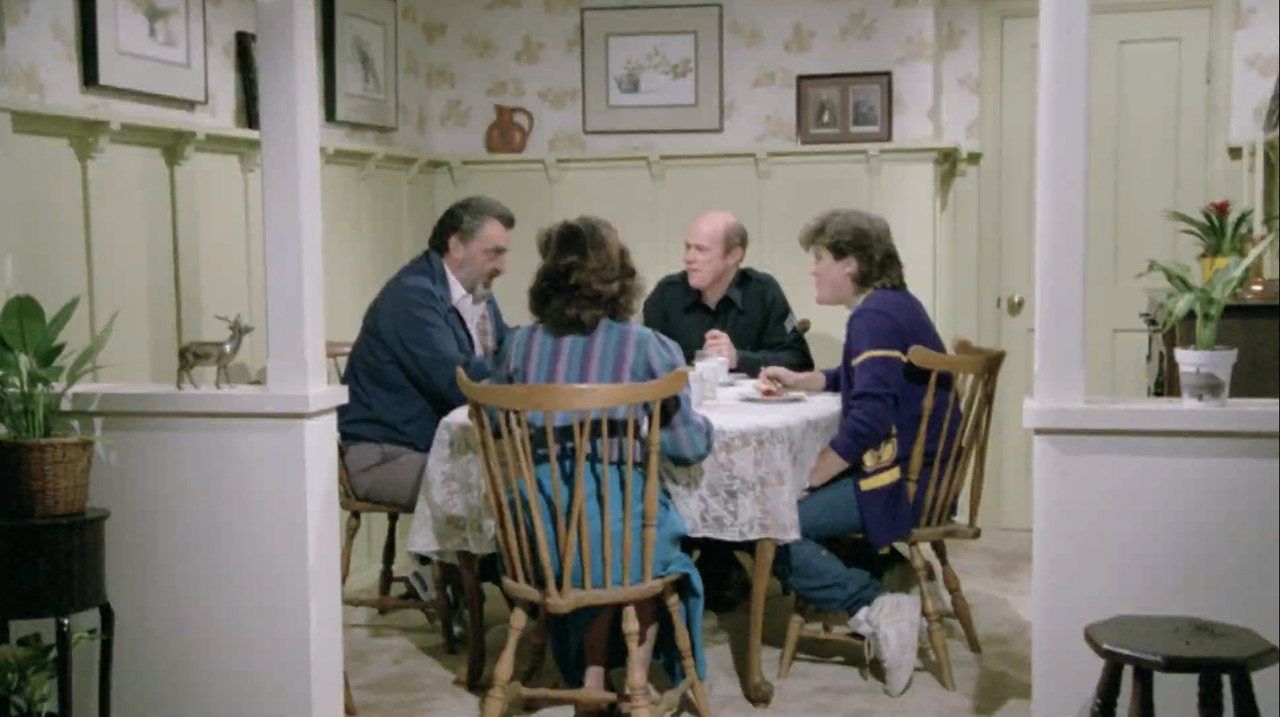
This new colleague is named Frank, just like the season three former colleague whom Mark helped—the one who invited Mark to his daughter’s wedding and Mark had to save the day when she called it off and Frank filed divorce too. However, it is difficult to believe they are supposed to be the same character. For one thing, they are played by different actors, although it is possible the role was simply recast.
Furthermore, season three’s Frank was no longer a police officer, though it is plausible that he had decided to return to the force at some point during the past year.
Most importantly, however, his wife had a different name and was played by a different actress, and he had a a daughter rather than a son.
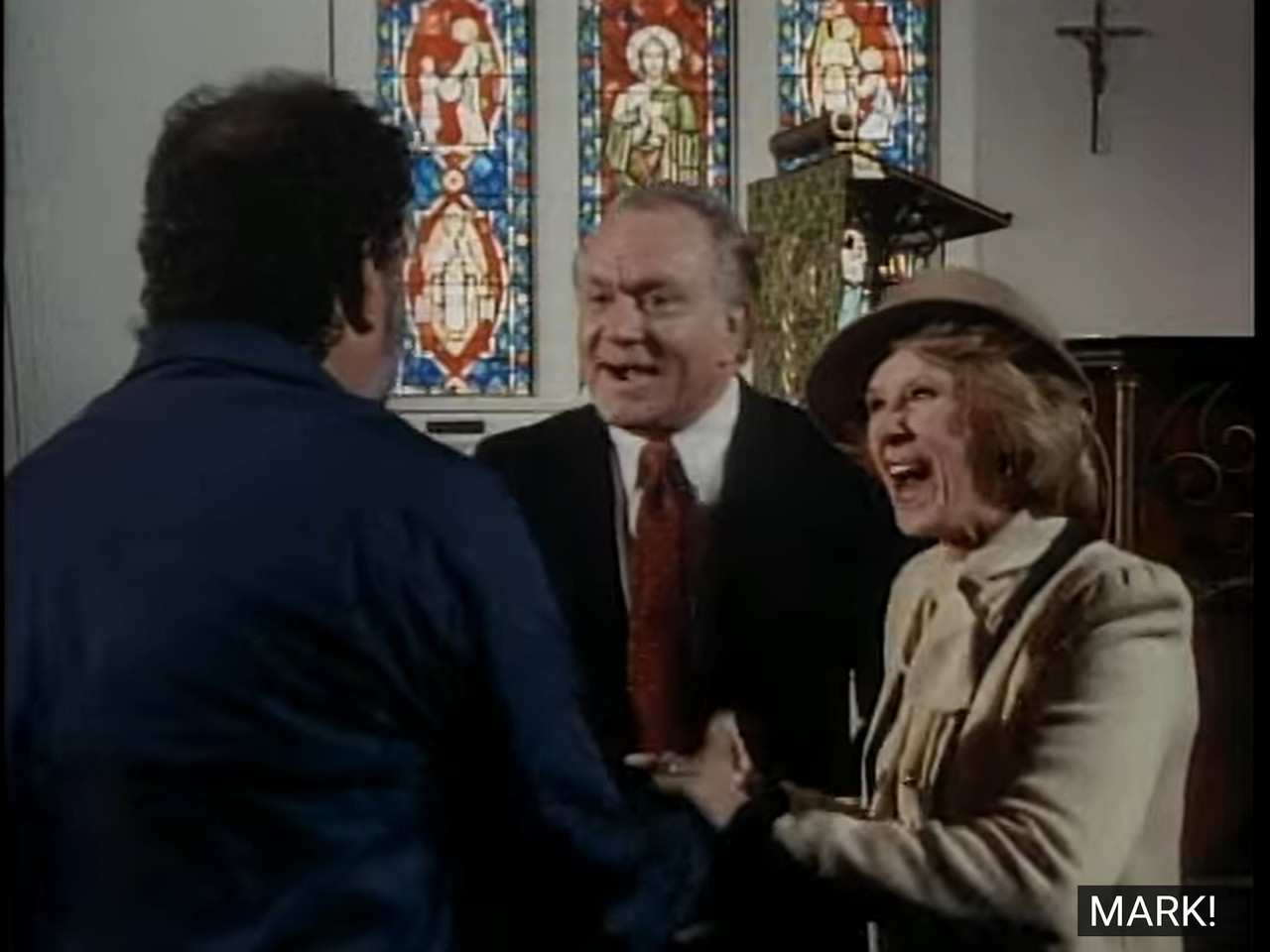
Unless he also changed his wife and family during the last year—and never told Mark about it
The same way he’s now turned into a racist cop.
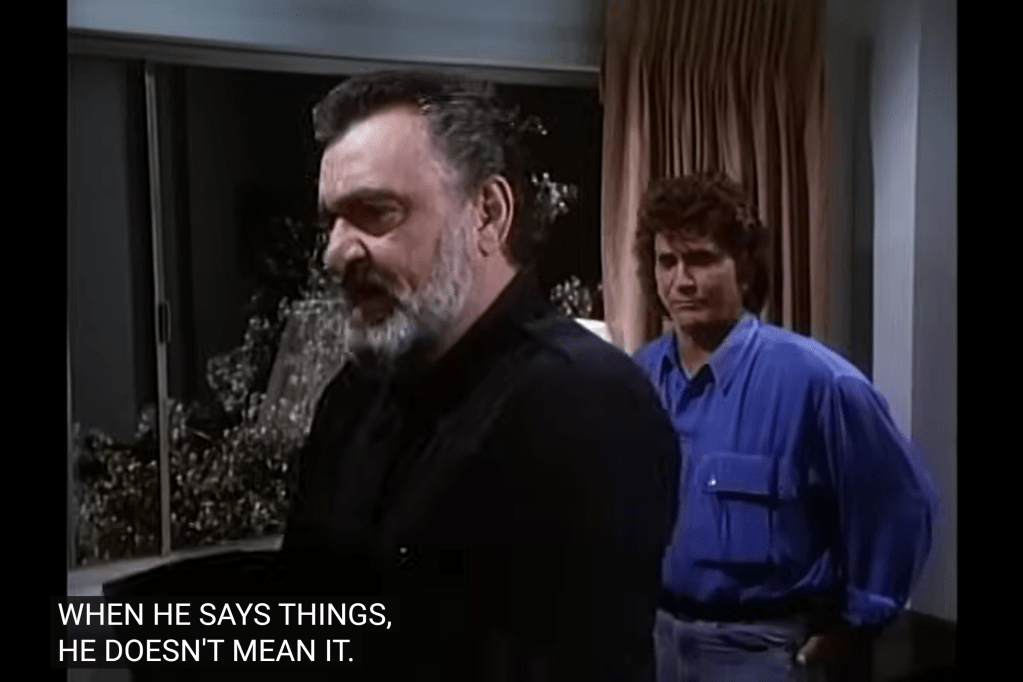
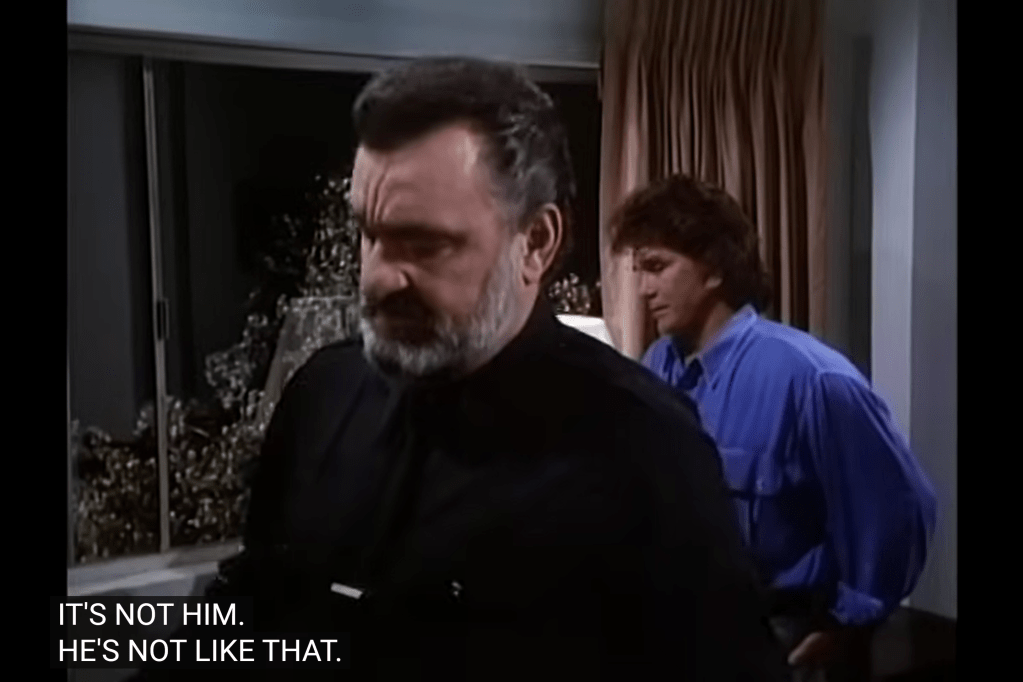
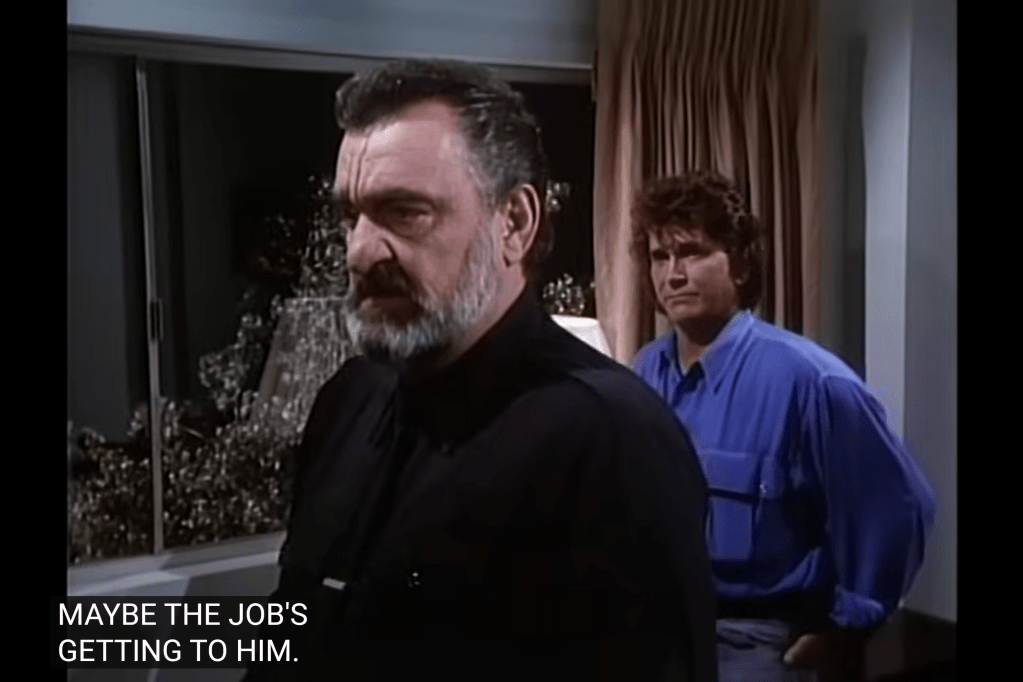
The way it did to you?
Anyway, it seems like this new Frank saved Mark’s life once.
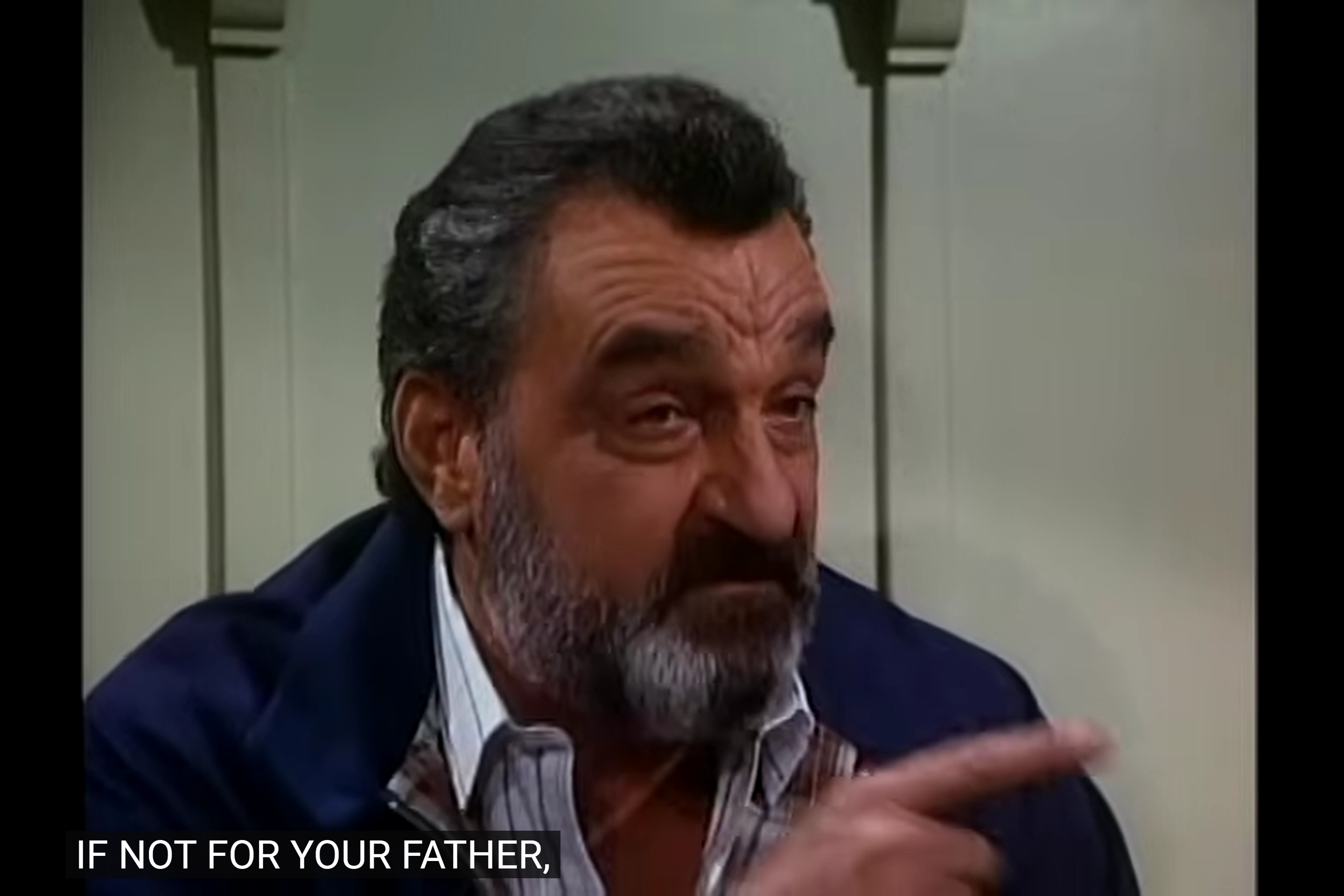
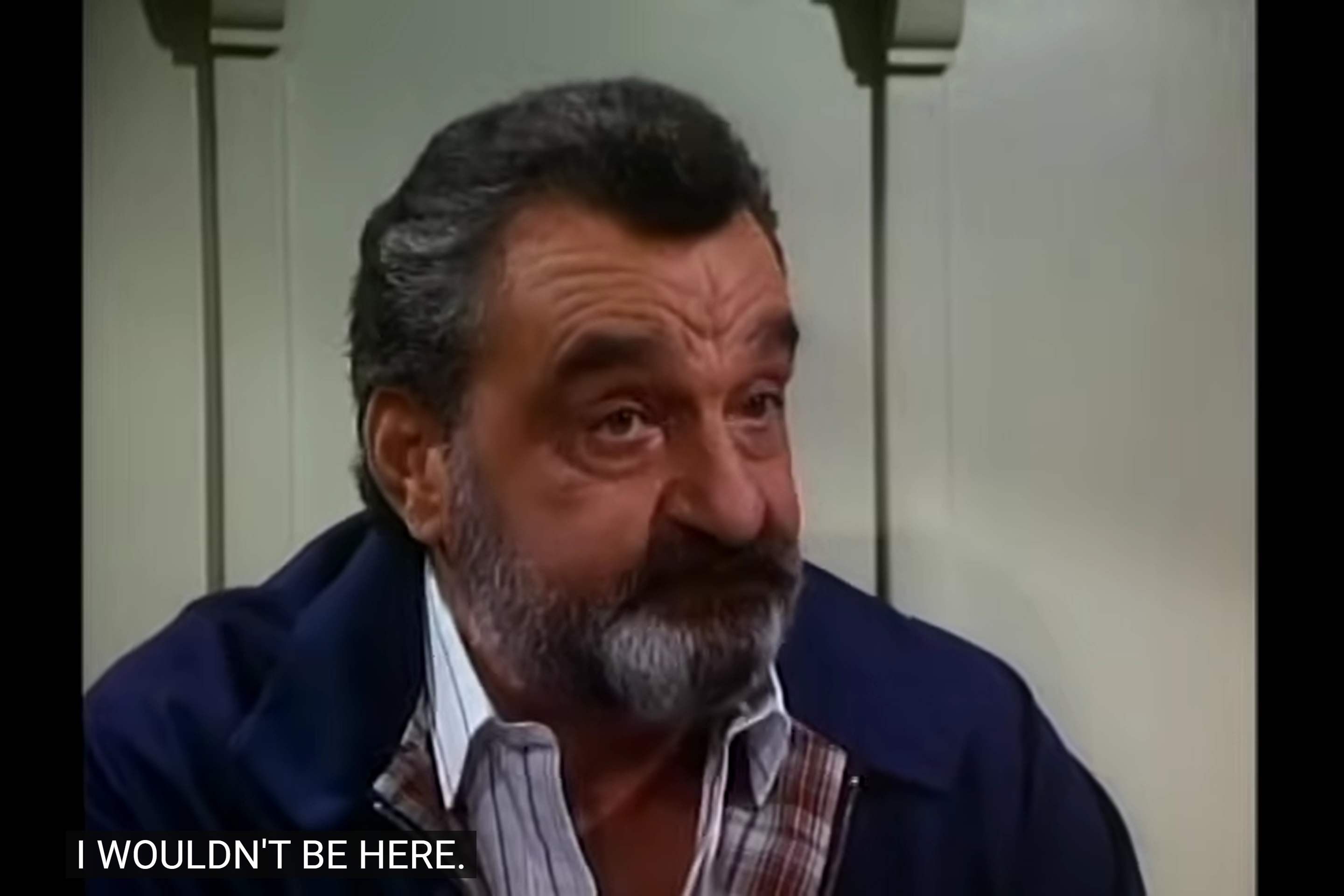
How many times can one person wind up in mortal situations in the same job?
Two things to point out about this; one, Mark was definitely a very reckless cop if he got himself in so many life-threatening situations. He had already mentioned that Wes from The Secret had saved his life too.
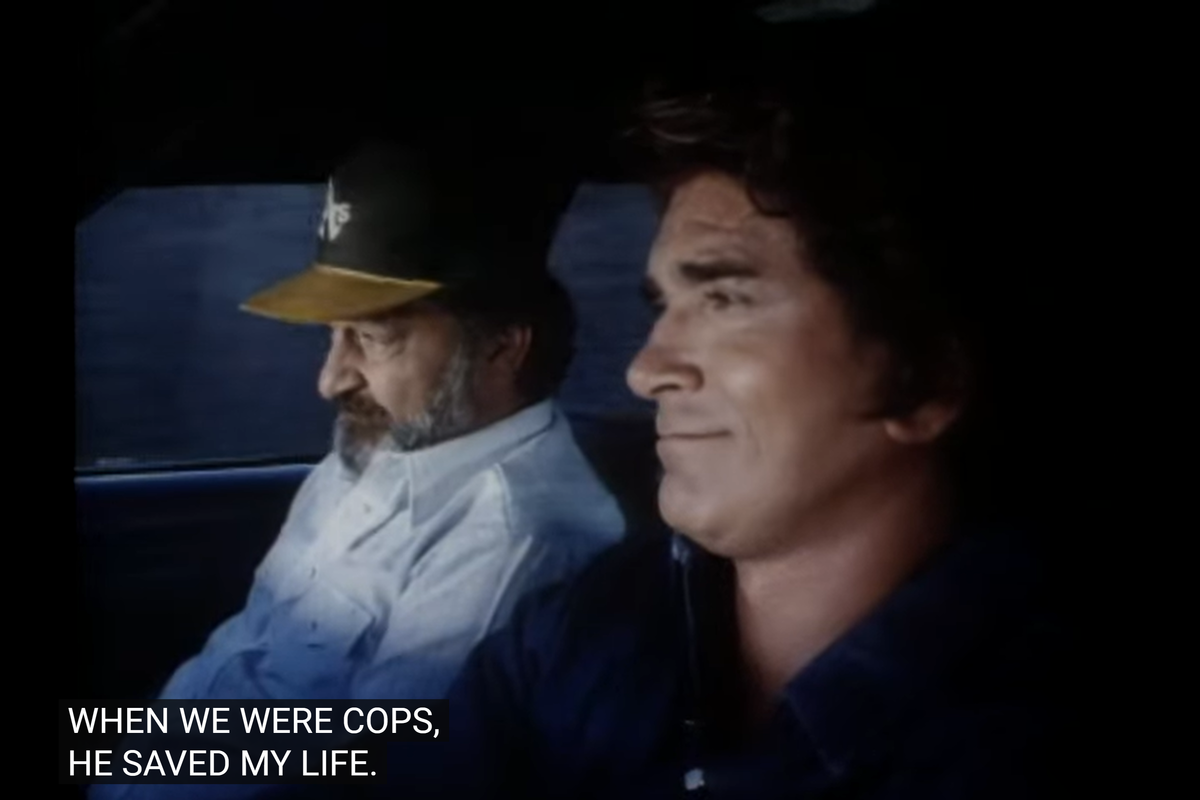
Unless these Frank and Wes are meant to be the same person. And he has changed wife and child and name in the last two years.
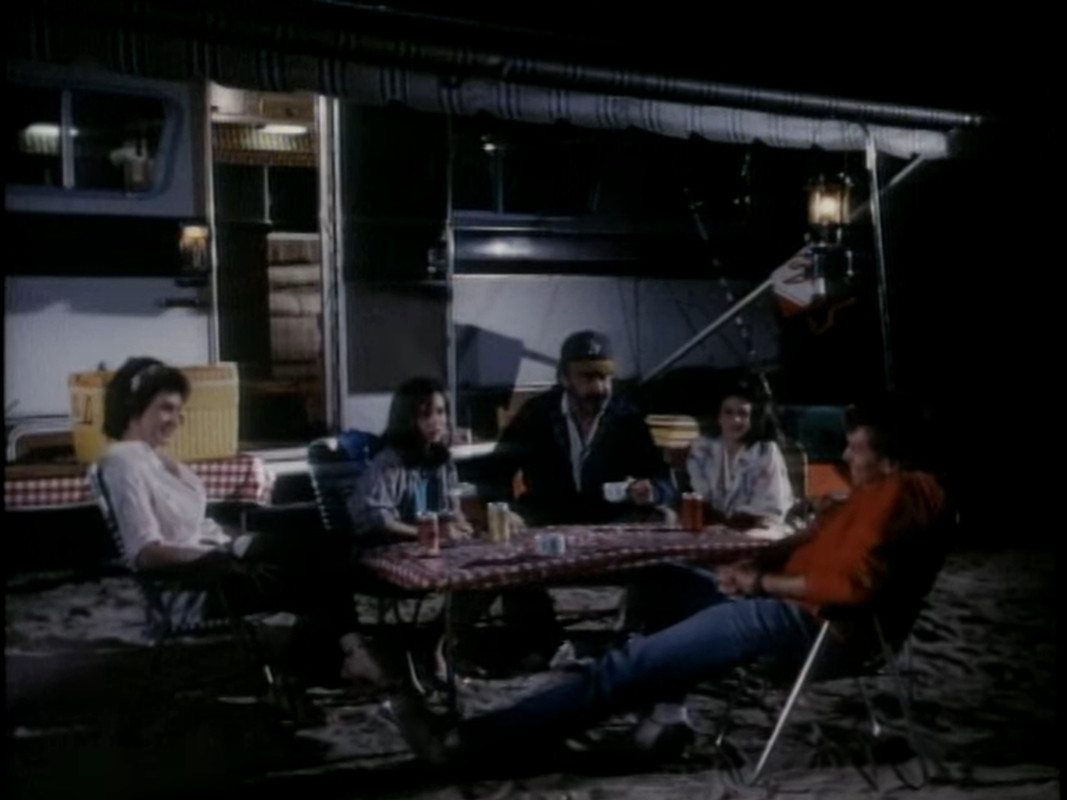
More importantly, nobody ever mentions whether the reverse happened—whether Mark ever saved any of his colleagues. Actually, the only time something similar happened was Bless The Boys In Blue, when he saved Jonathan from a burglar.
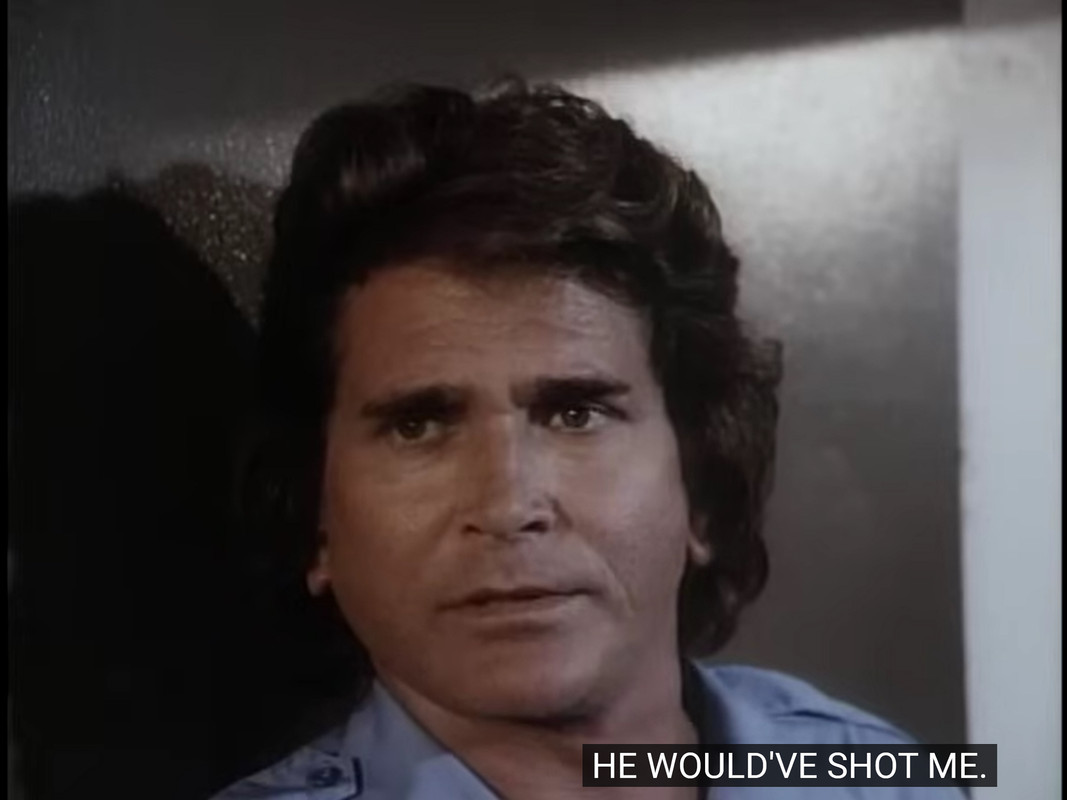
That makes Mark a lousy cop to have as colleague.
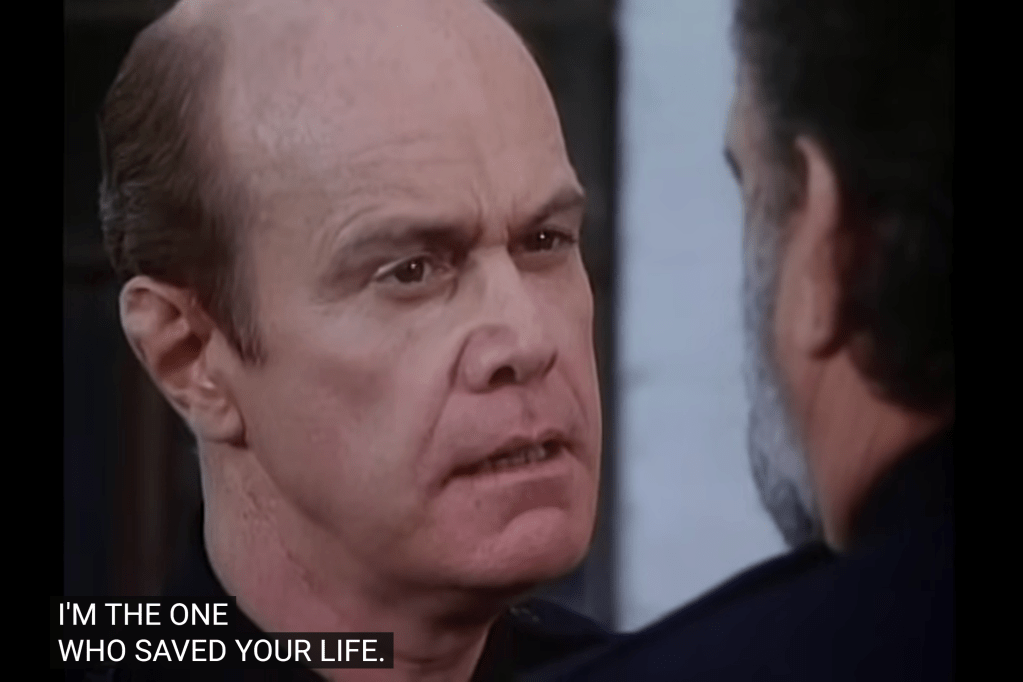
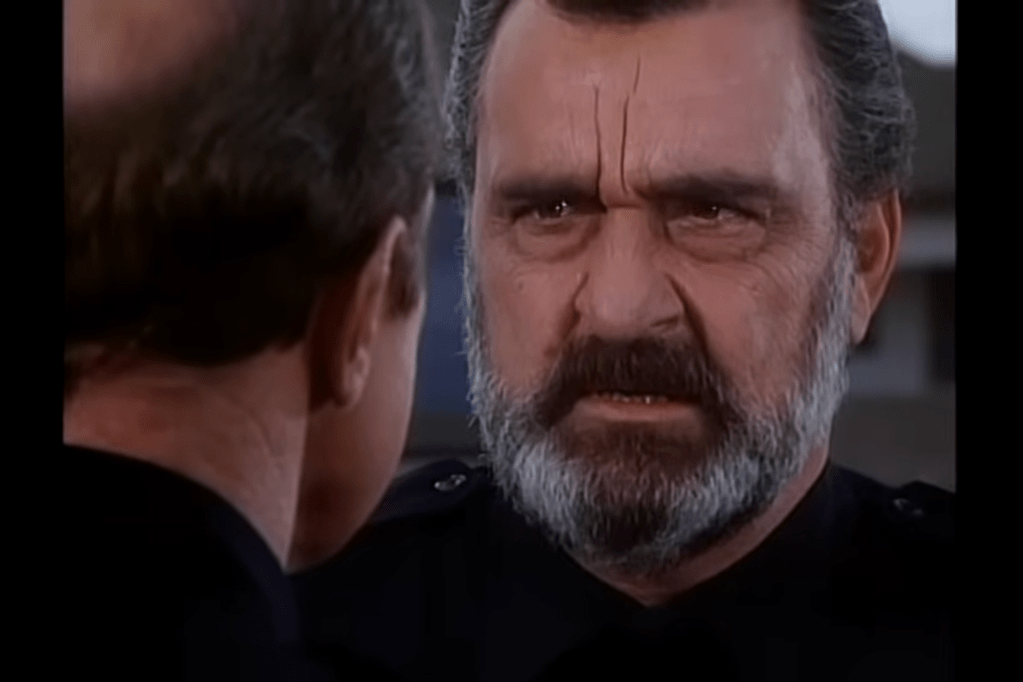
And Mark is like: “And you were not the first one, pal, so that doesn’t make you any special”.
Although his friends have all abandoned him when he needed them the most in his drunken years, so they are not better.
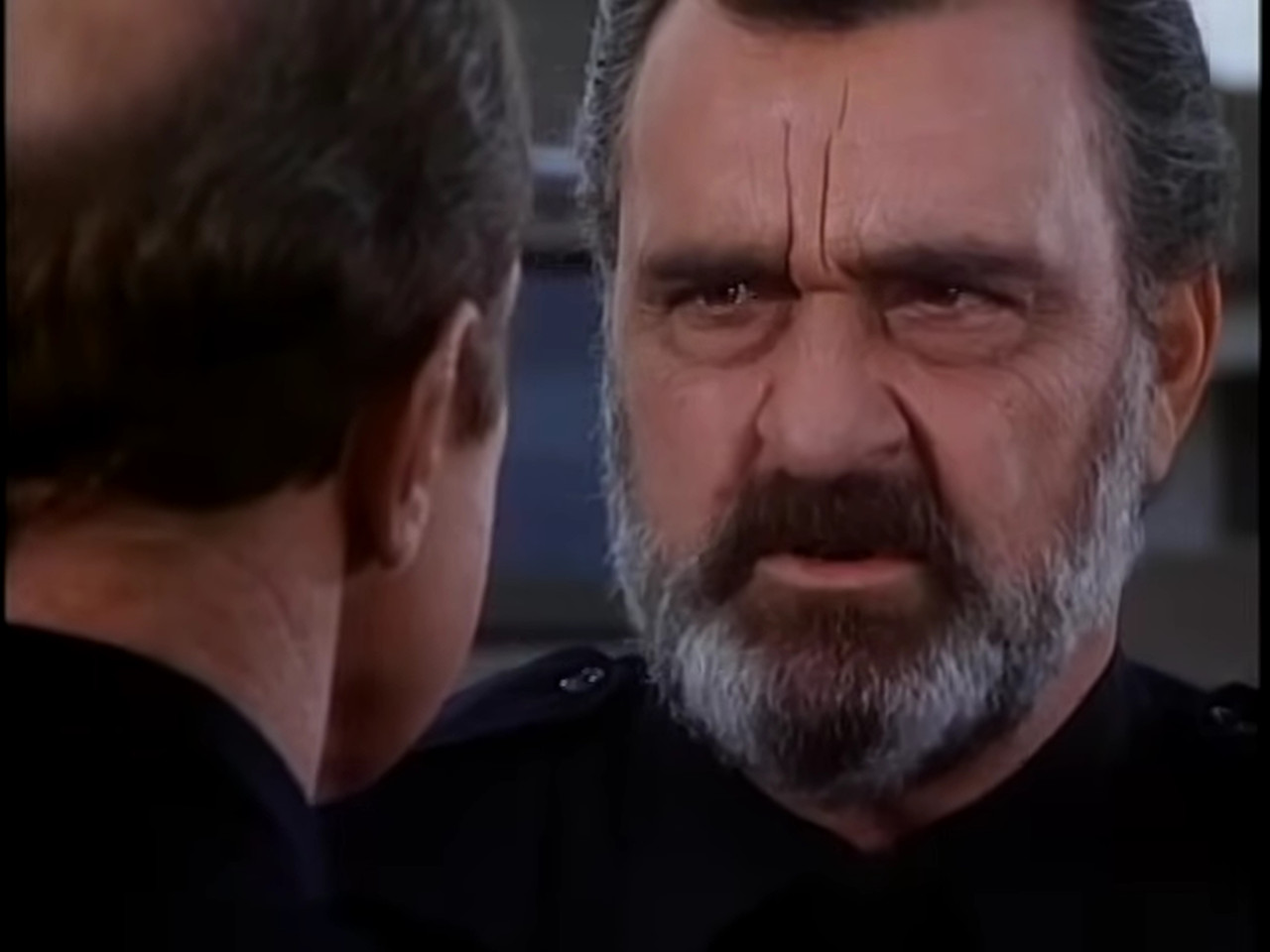
He’s like: “And you walked away in the alcohol years like the rest of ’em. Some friend”.
Besides Frank the racist cop, there are even more acquaintances added to Mark’s past. At the beginning, while patrolling the streets, he stops at a barber shop and discovers that the barber is an old friend.
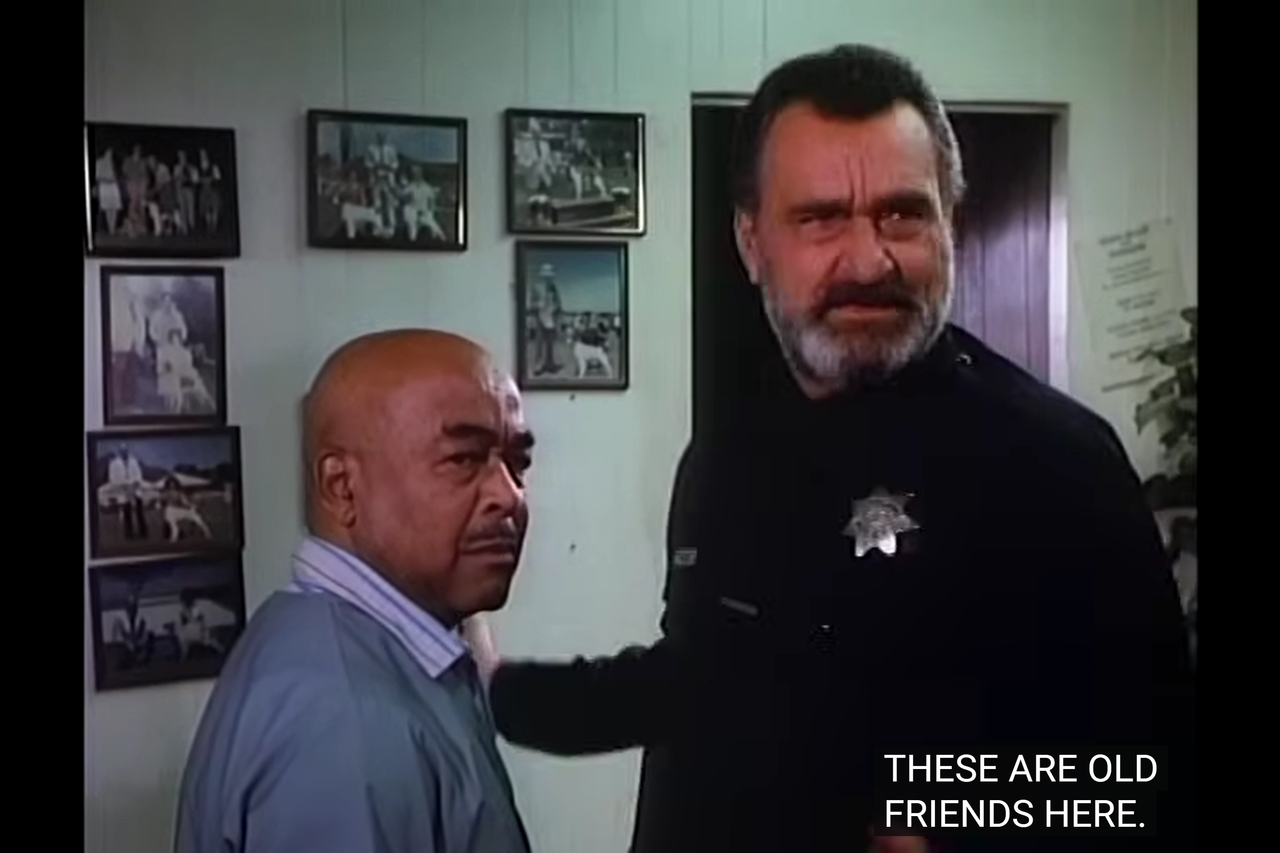
This is getting ridiculous.
Alright, it’s the ’80s and people could only communicate through letters and had no way to see each other. But with the growing number of people from Mark’s past appearing throughout the series, it becomes increasingly difficult to believe that nobody tried to help him and that he had to wait for an angel to save him.
Besides, nobody mentions Mark’s problems with alcohol, ever. They are not the first Oakland colleagues they have met, but all those other times were not in Oakland, so they may have not remembered it or something. Now it’s just hard to believe that nobody brings that up when they see him: if they haven’t seen Mark for all this time, and nobody contacted him to help him with his alcohol. As far as they know, he may have some problems.
Anyway, this episode has a problem with dates: if Mark saying the assignment spanned two weeks wasn’t enough, there’s something odd about Mark’s cop years. At the beginning of the episode, when he arrives in Oakland, he tells Jonathan that he has not been there for fifteen years. However, if the assignment takes place in 1987 or 1988, the correct figure would be eight or nine years. This may suggest that Mark was not stationed in Oakland throughout his entire police career and that he spent some time working elsewhere.
That would be plausible, considering his military service in Vietnam and the possibility that he was reassigned after returning from the war.
The problem is that everybody in the episode mentions that Mark quit the force 15 years ago: so, it’s not just a single mistake in just one scene—they give it for a fact. It’s reinforced later when the barber tells Mark that he thought he had left Oakland fifteen years earlier.
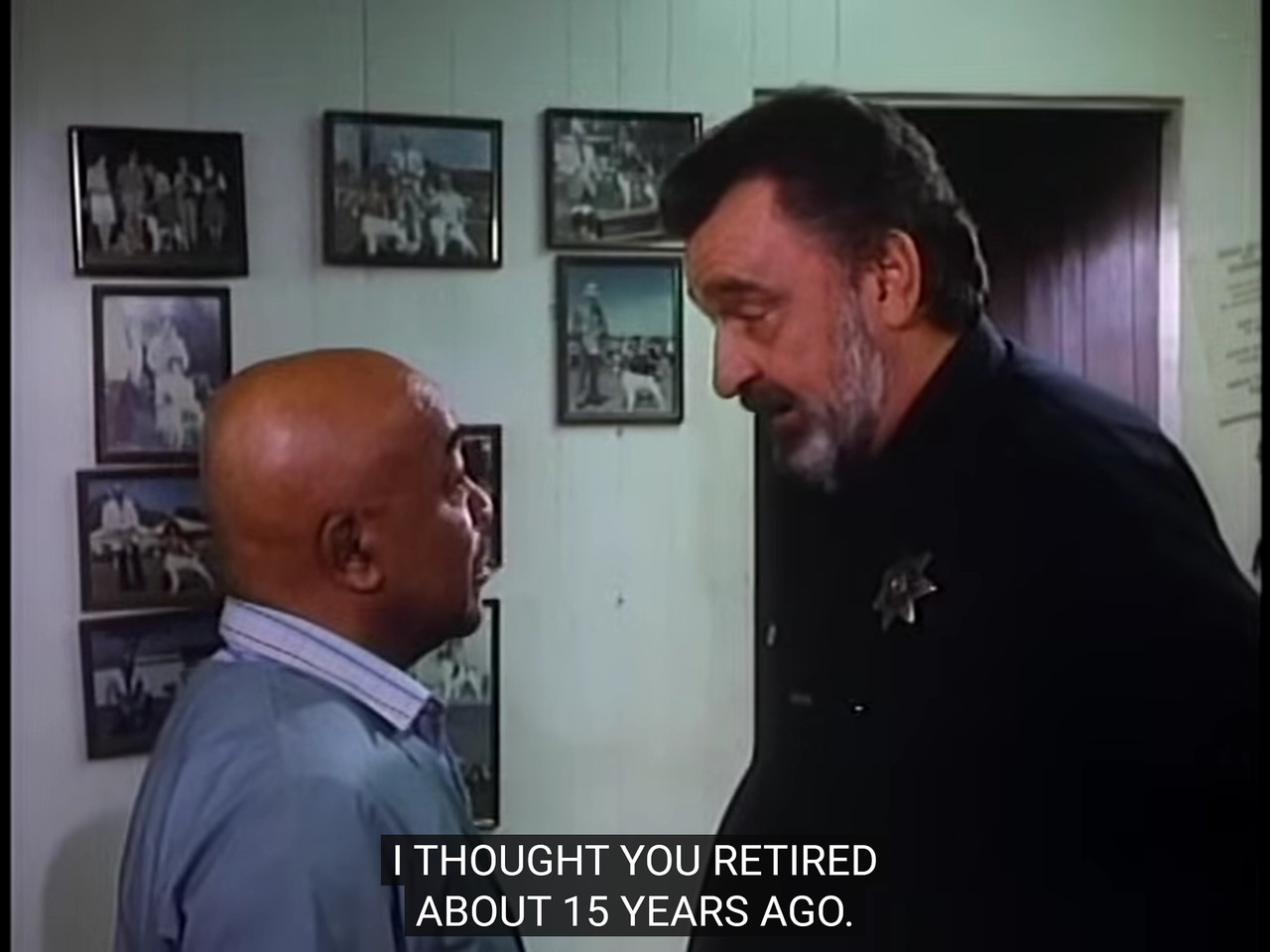
And you’d be wrong.
It is possible that the barber simply means Mark was transferred somewhere else. However, it could also imply that Mark actually left the police force fifteen years ago and then spent roughly ten years living with Leslie before meeting Jonathan.
This would be very unlikely, though, and it would contradict everything that has been established so far: in the Pilot episode, Leslie and Mark both said that they had been living together for five years (and that Mark had moved in with her immediately after his suspension). Moreover, the fact that Mark served as a police officer for fifteen years had already been established and referenced multiple times before (the Pilot and Bless The Boys In Blue, to name two).
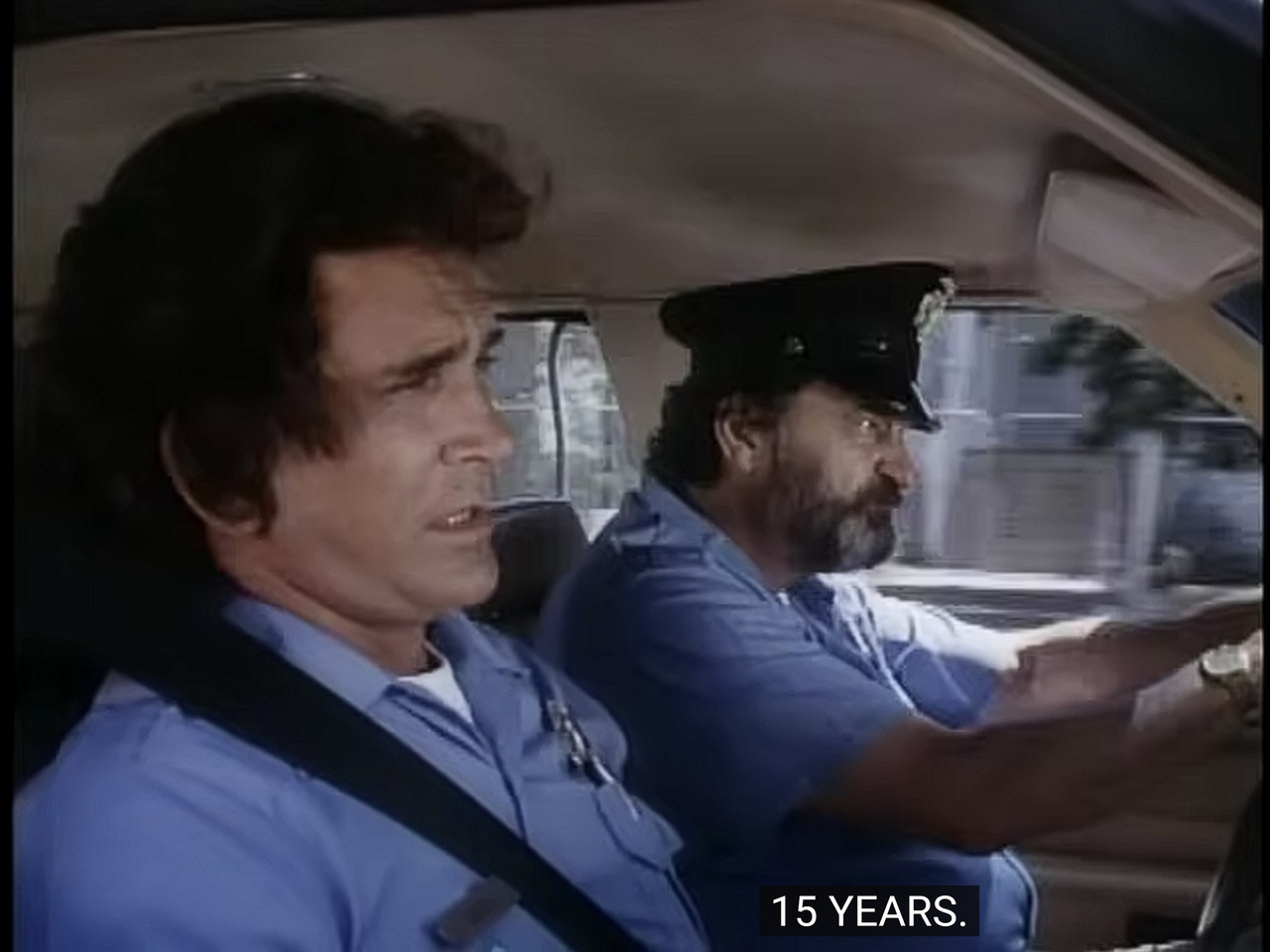
So, it’s just impossible that Mark quit the force 15 years ago.
More likely, the writer remembered something related to Mark as cop and something else about fifteen years, and mistakenly thought that figure described the length of time since he left Oakland instead.
In any case, it is not a major problem: it can easily be explained by assuming that Mark worked as a police officer elsewhere in California and spent only part of his career in Oakland (and the barber’s line is just the barber’s mistake). If that were the case, it means that Mark worked in Oakland from 1964 to 1972 or 1973, and then spent the remaining six years somewhere else.
Lastly, despite being in Oakland again, Mark doesn’t get the chance to wear his cap, being so busy as a cop.
Besides the questions surrounding Mark’s service, one thing about Jonathan: at some point, he scolds some kids for shooting hoops instead of doing their schoolwork, and then just shows off.
He probably used the Stuff for that. Unlike Tom Sullivan eight episodes ago.
- Production and Setting
As for the production, this episode was written by an old Highway writer, David Thoreau (and it was obvious.) This marks the sixth contribution he made to the series, and for the third time, it’s a cop story: he had already written both Parents’ Day (the season three episode in which Jonathan and Mark worked undercover at a school) and The “In” Crowd, the season four episode where Jonathan and Mark worked in a school and blew up anther cop’s cover. It seems he liked giving them police assignments.
It wouldn’t even be the last time, either: after this episode, he also wrote one last episode in season five, and Mark will be an investigator. He certainly liked cop stories, just as much as Thoreau liked nature.
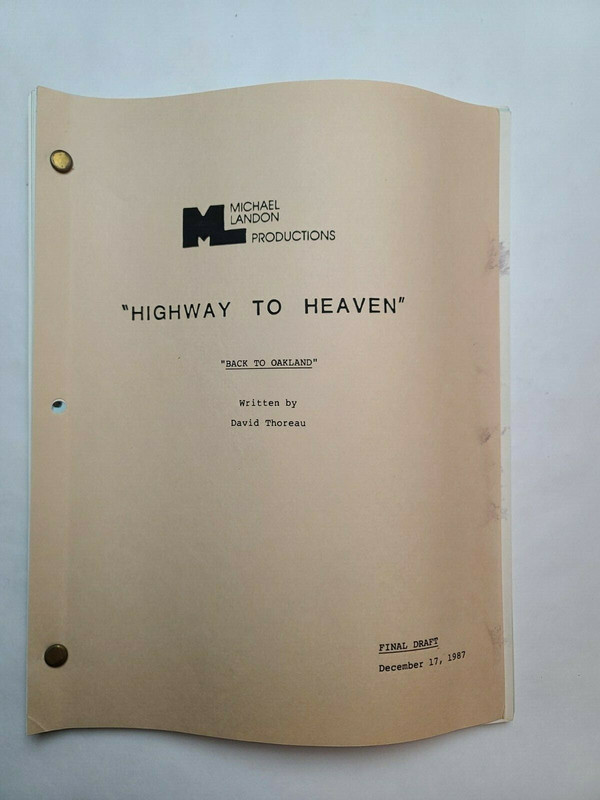
Before beginning with the cop stories, he wrote Oh Lucky Man (about Mark falling in love, the second time). So, he’s the same guy who copied an old love story and messed up with Mark’s emotional integrity. That explains the oversight about Mark leaving Oakland 15 years ago, when that was actually the length of Mark’s service as a cop.
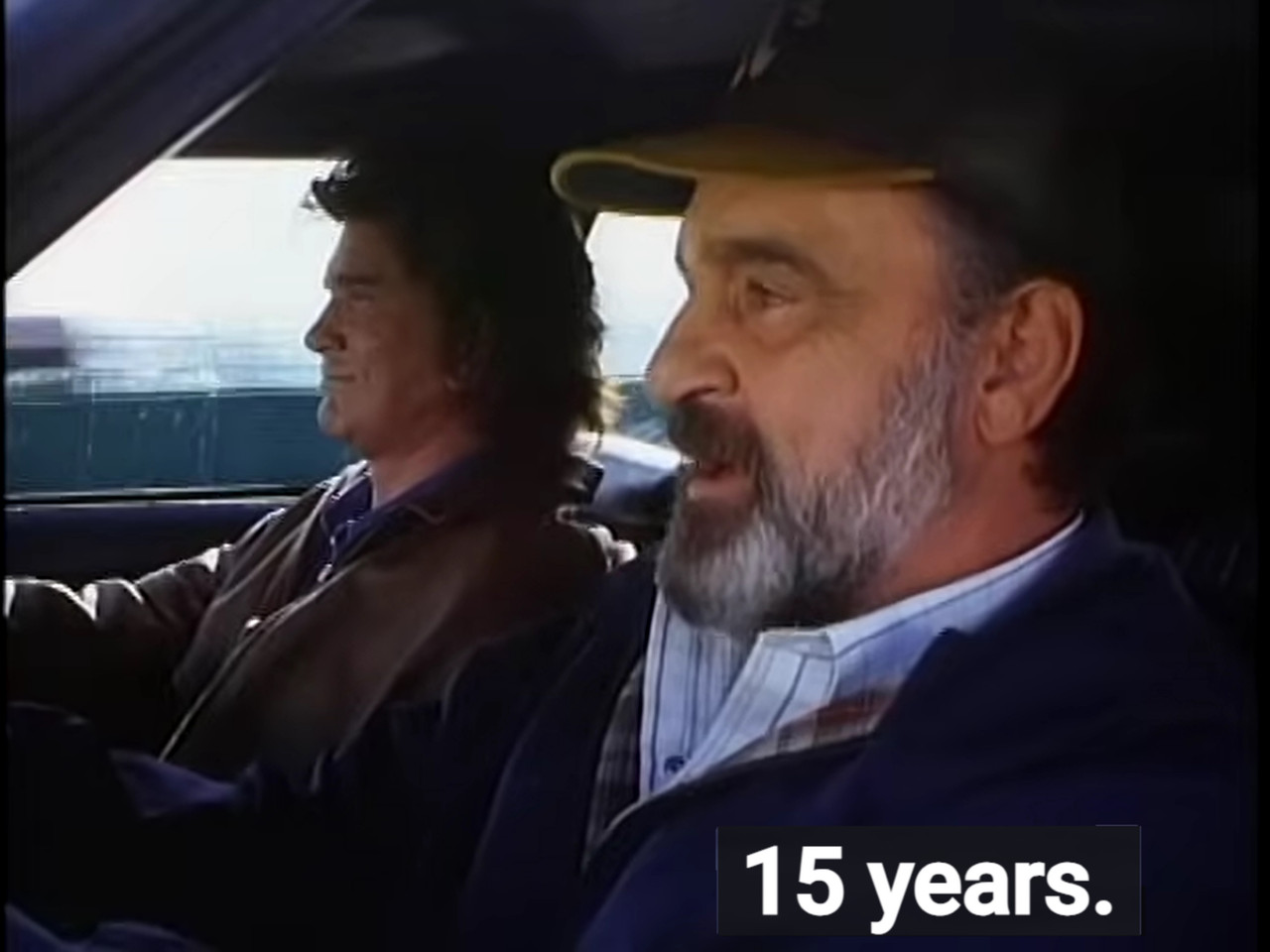
That figures.
Anyway, this episode was produced in early January 1988, and it was the first one filmed in the new year, after the usual three-week Christmas break. (During season three, they had taken an almost four-week holiday.) For some reason, this episode was filmed after the following one. After its part one at least.
Perhaps they had originally intended to shoot this one in late December before the holidays, but later changed the schedule when the next episode—originally planned as a single part—wound up taking longer. Or maybe it was already planned as it is.
Although this episode aired just three weeks after its completion. That’s an unusually short time—the shortest of the entire season and perhaps the third shortest in the history of the series. In season one, similarly short turnaround times were the result of a hectic production schedule (they had completed fifteen episodes by Christmas, while in season two and three they were two episodes ahead of that); so, maybe the same happened here.
The story takes place in Oakland, but of course it wasn’t actually filmed there. Why make a three-hour drive from Los Angeles to Oakland when you can simply pretend to be in Oakland. So, just as the season one episode Going Home, Going Home was filmed in California even though it was set in Oklahoma, this episode is set in Oakland while still being unmistakably Los Angeles.
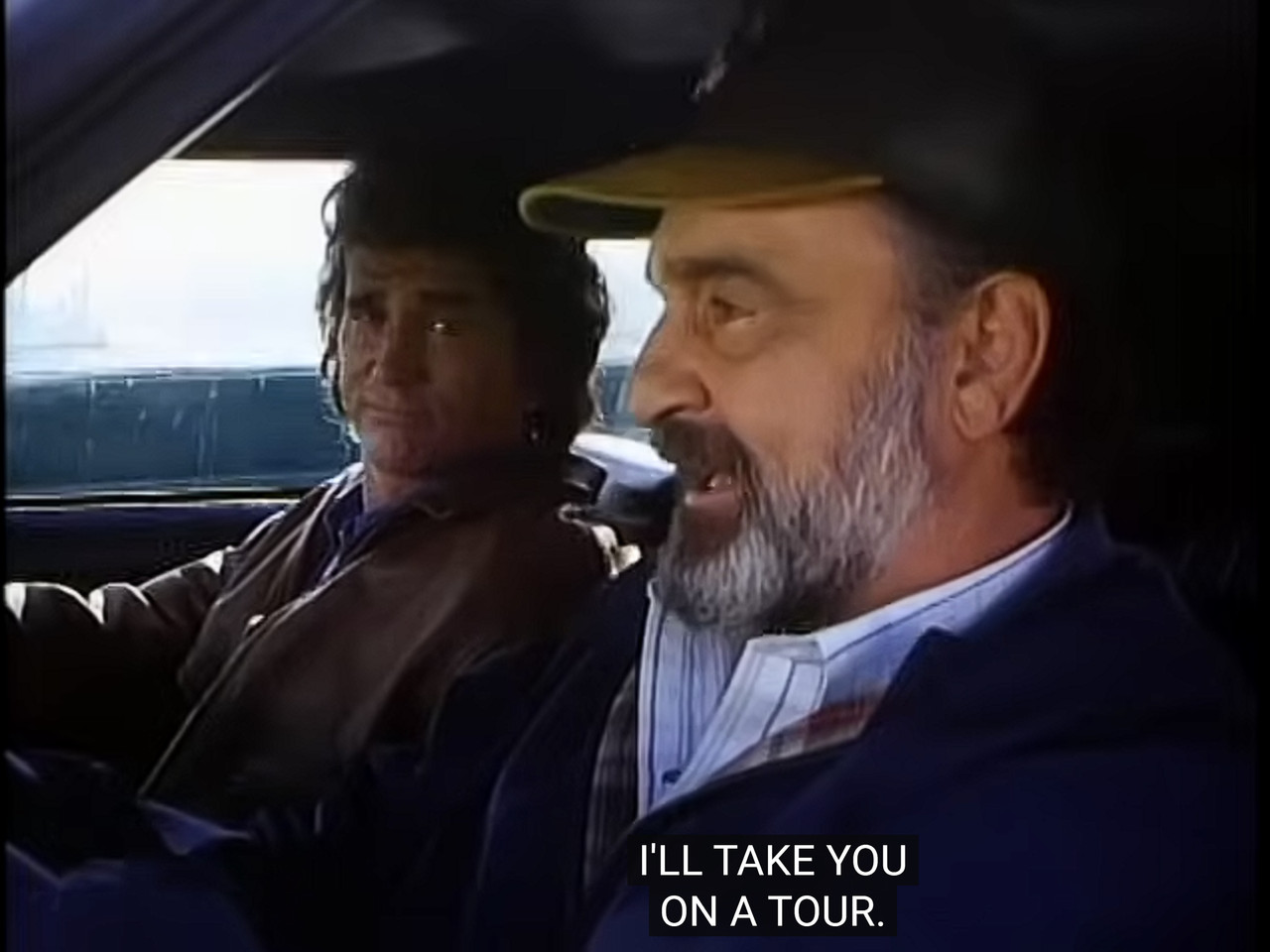
No need: you both know this town pretty well by now.
More specifically, much of the story was filmed around San Pedro, while the location where Jonathan and the boy go fishing is in the Long Beach area.
Perhaps that’s why this version of Oakland doesn’t really look like Oakland, in much the same way that Oklahoma looked suspiciously like Los Angeles.
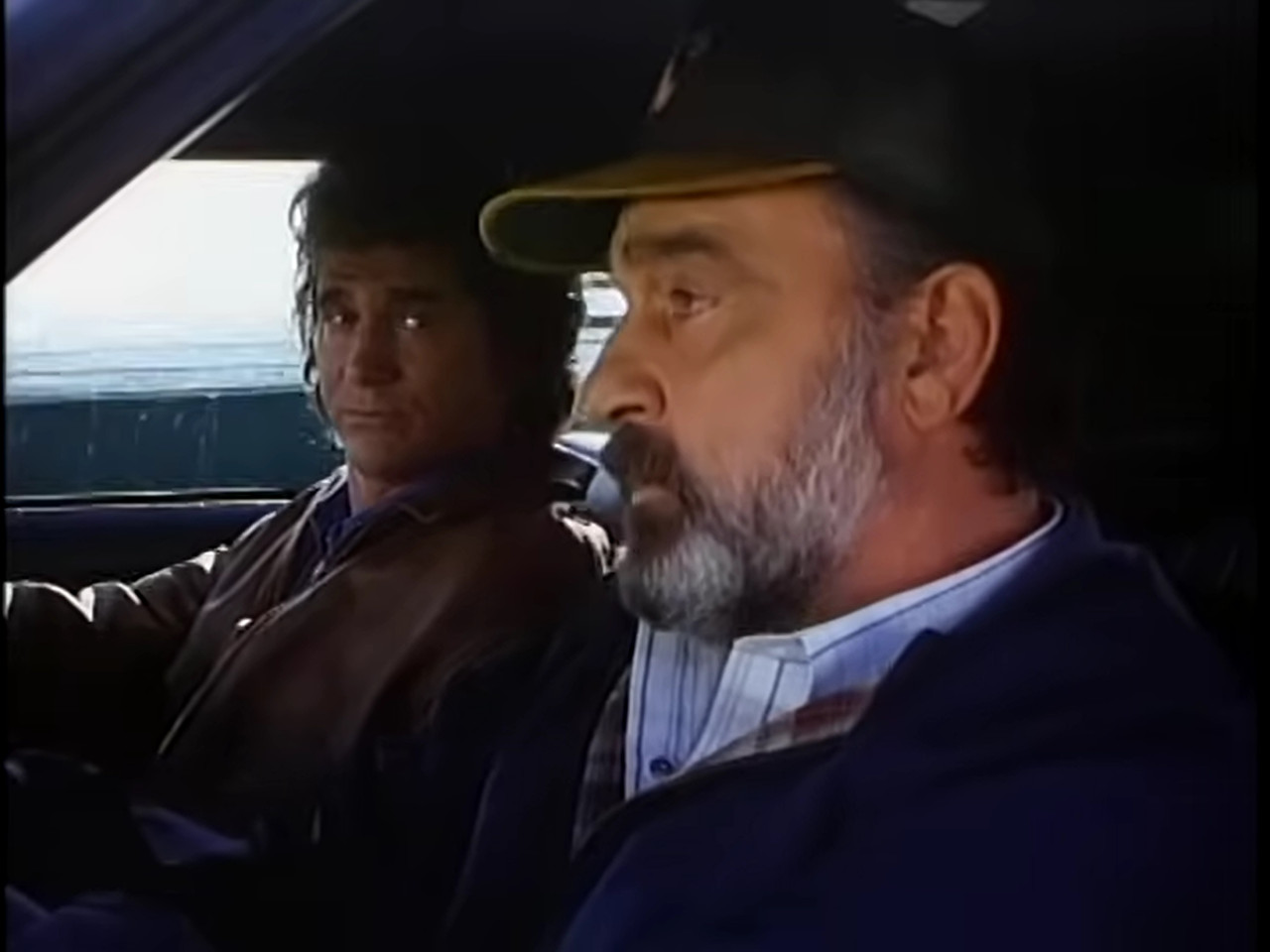
But Mark doesn’t seem to mind.
Glossary:
Fishing: it’s what Mark usually enjoys, but this time Jonathan does it.
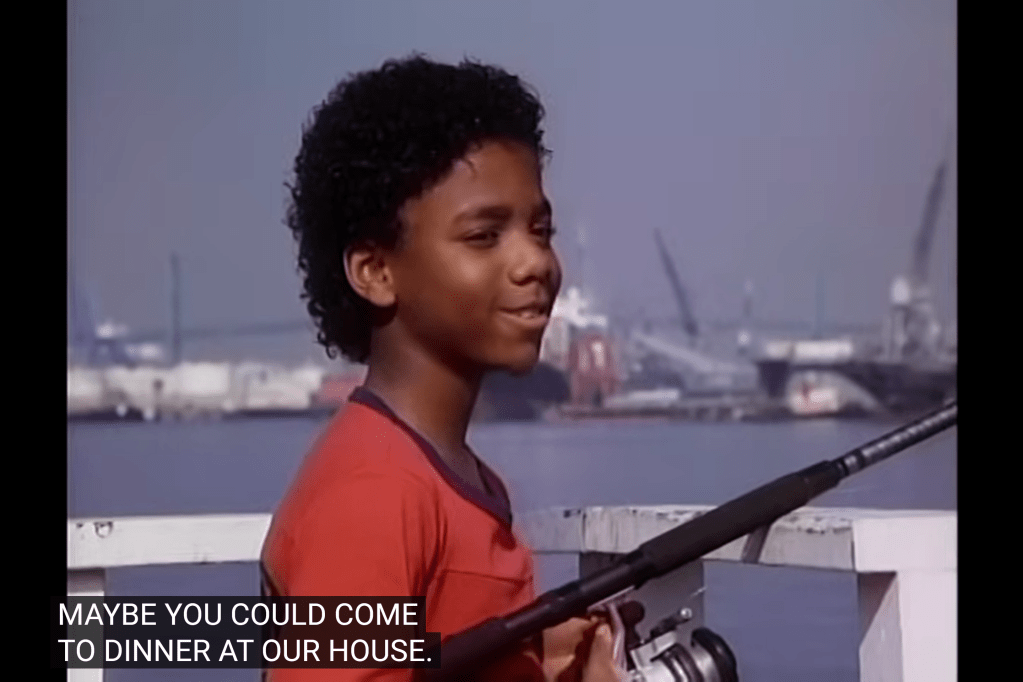
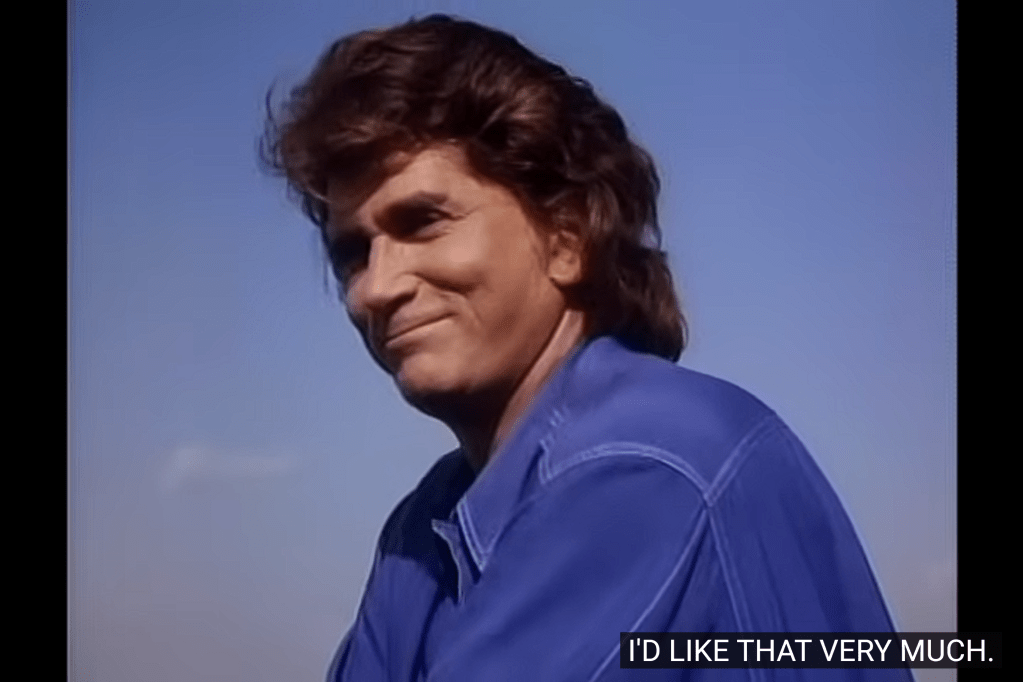

Jonathan even thinks about it.
This part is a problem for many reasons: one, he’s fishing.
Back in season one, Jonathan stated that he did not fish because he did not want to kill living creatures.


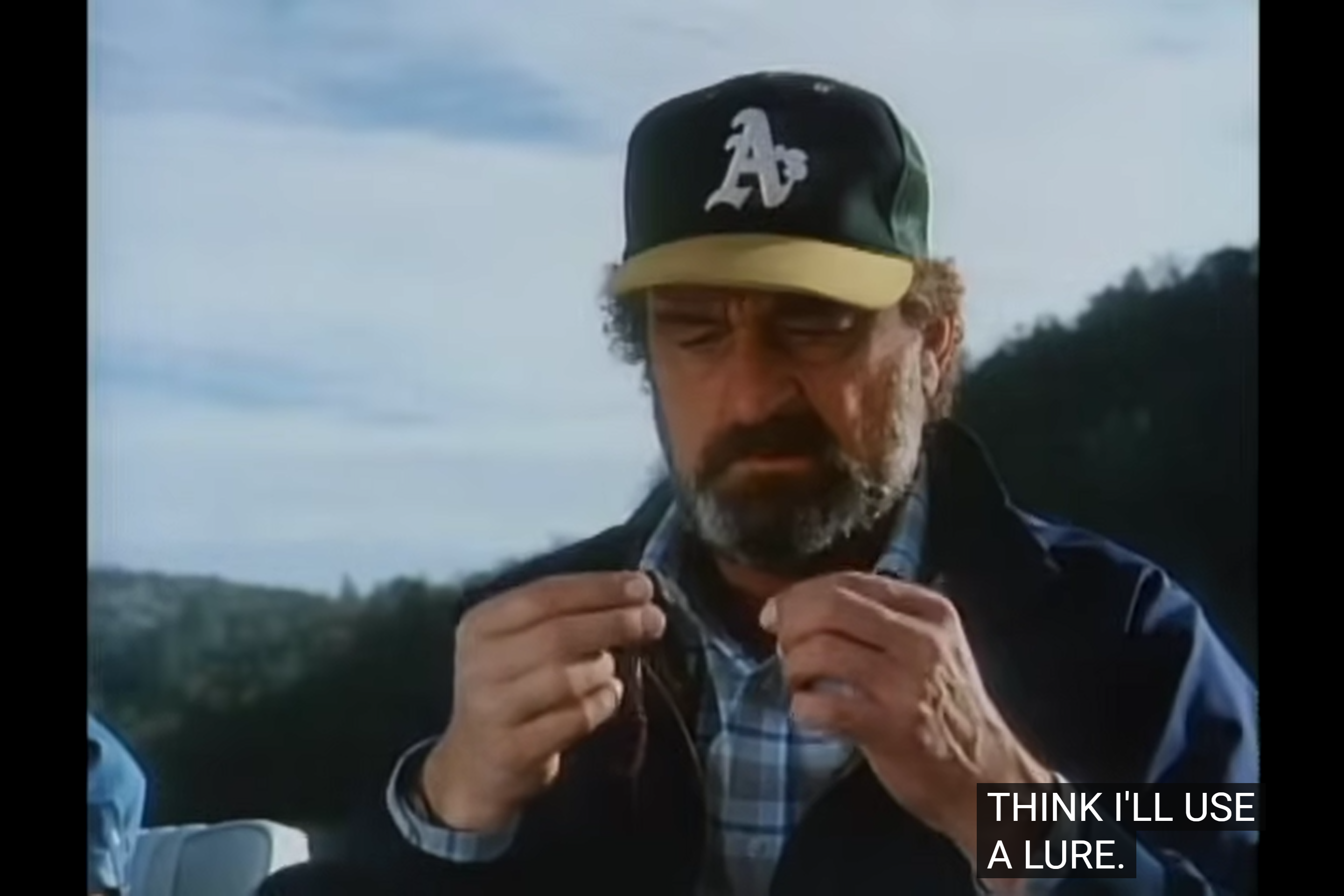
And now, he does.
Then, he actually decides to have dinner with that fish. Even though angels don’t eat in the first place
Even Mark is confused.
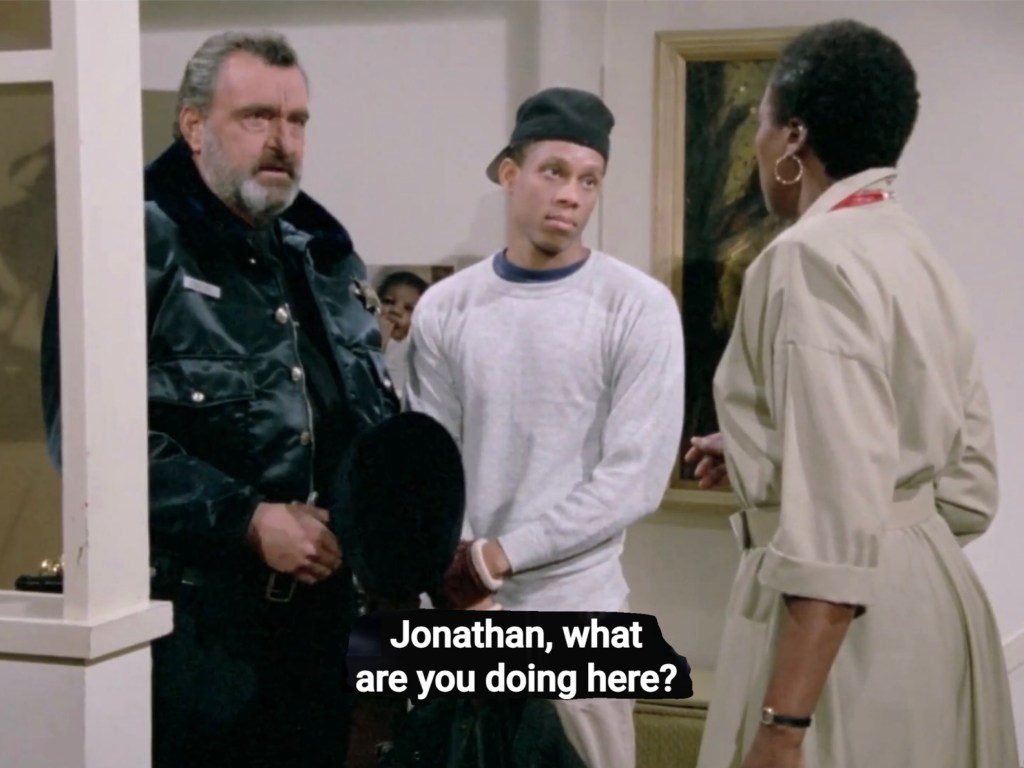
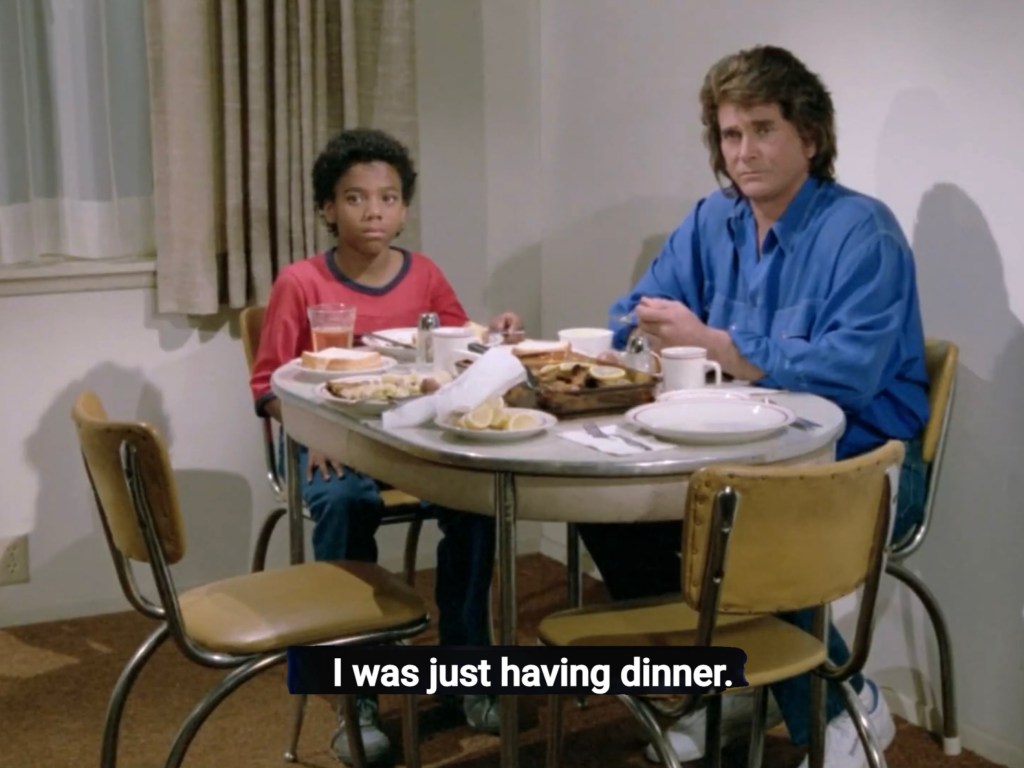
He meant: you eating fish?
He’s probably thinking that their superior stripped Jonathan of the Stuff in this assignment. The same way it happened when Jonathan was a cop in Bless The Boys In Blue; maybe it goes with the job.
Anyway, Jonathan had already broken his vow by eating snails and shrimps and ordering a fish soup; but those times he just ate the animals. Now, he’s actually fishing, which means he’s directly being a part of the fish’s death.
That goes to show that the first time he refused to help Mark in One Winged Angels, he was just being a friendly doozy.
Curiously, most times he ate animals, it was almost every time a sea ones. It seems to confirm that Jonathan doesn’t consider sea animals to be equal to land animals, even though he cares about water contamination and pollution.
Friendly Jonathan: when Jonathan tells Mark a woman believes there’s a snake in her apartment.
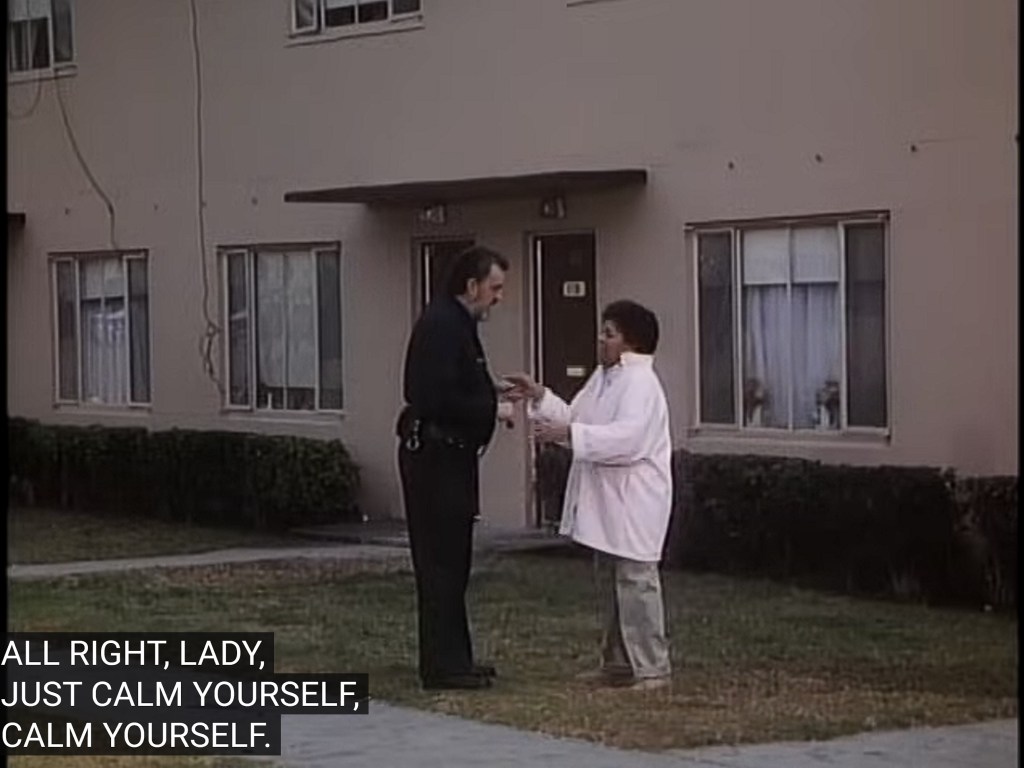
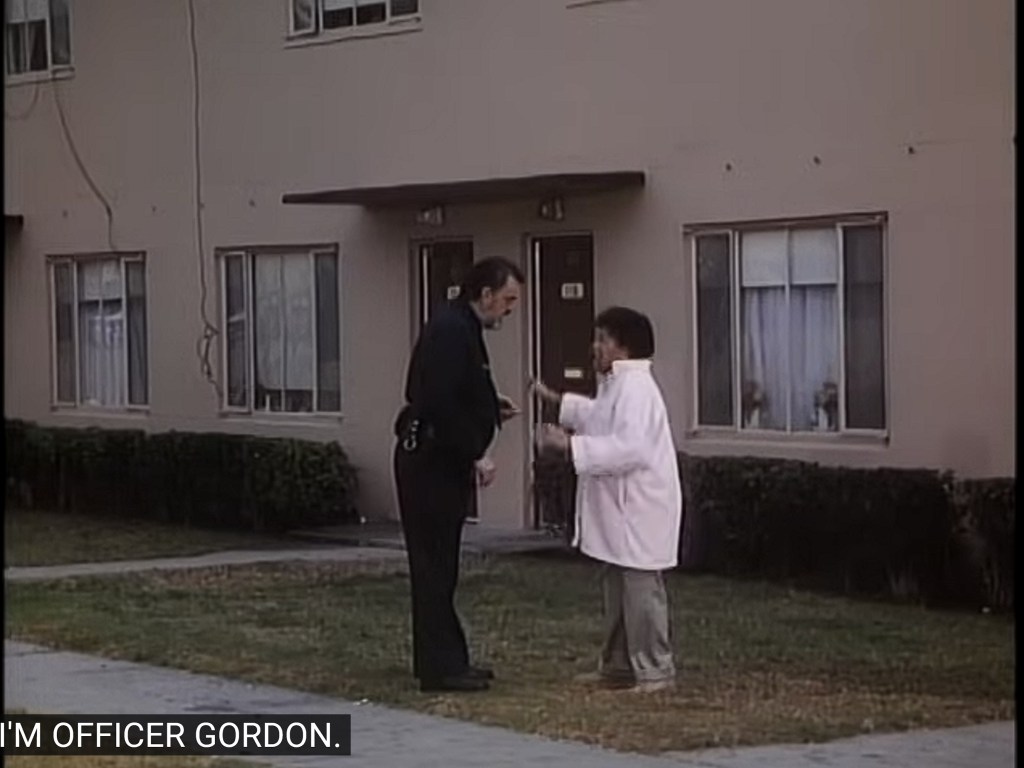
And lets Mark venture there, probably knowing the snake is actually there.
This part was probably added when someone realized the episode would otherwise be either too short or too serious. Actually, it was in the script, so it’s probably the second.
Real Score: when they go to one of Mark’s Oakland Friends, the barber, and he’s ludicrously waving his hand.
And Mark’s laughing probably at this whole thing.
Just imagine how they shot this: two men singing with one pretending to play, but there’s no music.
It could count as a blooper (akin to Landon’s fiddle in Little House), but maybe that man was willingly pretending and they didn’t try to hide it. Anyway, that’s an original by Doris Day; not as old as the Gene Autry’s ones.
Also, this episode also marks the tenth time in the series that Mark reunites with a friend from his Oakland years. Besides the fellow officers, he had previously met Luke in Man to Man, a man he had once arrested in Oh Lucky Man, Gabe the pianist in A Song of Songs, and the friend who taught him fishing tricks in A Father’s Faith. This count excludes episodes involving relatives or close family friends, such as his sister Leslie or his cousin. There will be one more friend in season five, and then he probably ran out of them.
The Job: cops. Not the first time: previous examples include one episode in season two, the undercover narcs and the school-narcs in season three, another narcs episode in season four, and the season four Christmas Special, although in that case Mark worked as an investigator rather than a police officer. Nor will this be the last time: they will work as cops again in a season five episode.
In fact, jobs related to law enforcement—whether as cops, narcs, investigators, or similar roles—are the most recurring occupations Jonathan and Mark take on throughout the series. And teaching too, of course (more about it here).
Also, this episode mentions that Mark is still in the police reserve, not suspended and retired as he said in the series. This may be an oversight, like the 15 years of service, but it’s not one: it’s not the first time Mark is a cop again. It is plausible that when he came back to work the first time in Bless The Boys In Blue, he got his job back; or Jonathan faked his references.
And cops are hired without references.
Ratings: 26 million audience. 28th weekly TV program, 6th TV genre show.
This episode aired in early February 1988, about one month after its production and two weeks after the preceding episode. During the intervening week, the network aired a rerun of Heavy Date, one of the few season three episodes that had not received a rerun during the summer of 1987 alongside the rest of that season. (At this point, the only remaining season three episode without a rerun was Basinger’s New York, which, for some reason, was not aired in December.)
A possible explanation is that the producers noticed that the series’ ratings traditionally increased in early January, when the show typically enjoyed its greatest popularity. That was occurring during this season as well, despite the significant ratings decline that had affected the first half of the year. Therefore, in an effort to win back viewers, they may have chosen to air this episode as quickly as possible in order to maintain the momentum generated by the recent run of successful episodes. This theory would be plausible in light of previous police-themed episodes that had performed exceptionally well: the season two cops episode, for instance, was the most-watched episode of the series up to that point, and remains the fifth most-watched episode of the entire series.
If that were the case, though, it is difficult to understand the reason for postponing this episode for a week instead of airing it immediately after its predecessor, without a rerun in between. It has now been established that whenever a weekly series skips a week for any reason—whether due to major competition such as sporting events or the Olympics, production delays, or other scheduling issues—the immediate next episode resuming the airing almost always suffers a decline in ratings compared with the preceding installment. (Planned breaks, such as those during the Christmas holidays, are the main exception to this rule.) Of course, there have been notable exceptions—especially in January during season two—but in nearly every other instance, a one-week interruption resulted in a ratings drop. In fact, aside from two cases in season two and one in season four (in October), every episode that followed any one-week break lost more than a full ratings point compared with its immediate predecessor two weeks earlier.
So, it was clear that a similar ratings decline was a real possibility here. And that is exactly what happened: this episode earned a lower rating than the one that preceded it, effectively ending the show’s January winning streak. Although that streak was already weaker than what the series typically achieved at this point in the season, it still outperformed most of the episodes that had aired earlier in the year. But this episode actually interrupted the short-lived resurgence in popularity that had occurred during this month in earlier seasons.
Again, part of the blame maybe lies with the scheduling: it aired just two weeks after its predecessor, a strategy that has often led to negative consequences. If the network had held it back for two weeks hoping to build up some audience leading into the next episode, which is a very important one and has to potential to boost the season’s ratings, this plan didn’t work. Otherwise, if they did it due to schedule delays (they were running late and had no episode ready), then there was nothing to be done. Now, all they can do is hope that the next episode shows at least some improvement. Otherwise, this season may be beyond saving, especially if it cannot achieve strong ratings during the part of the year that has traditionally worked best for the show.




Leave a Reply