
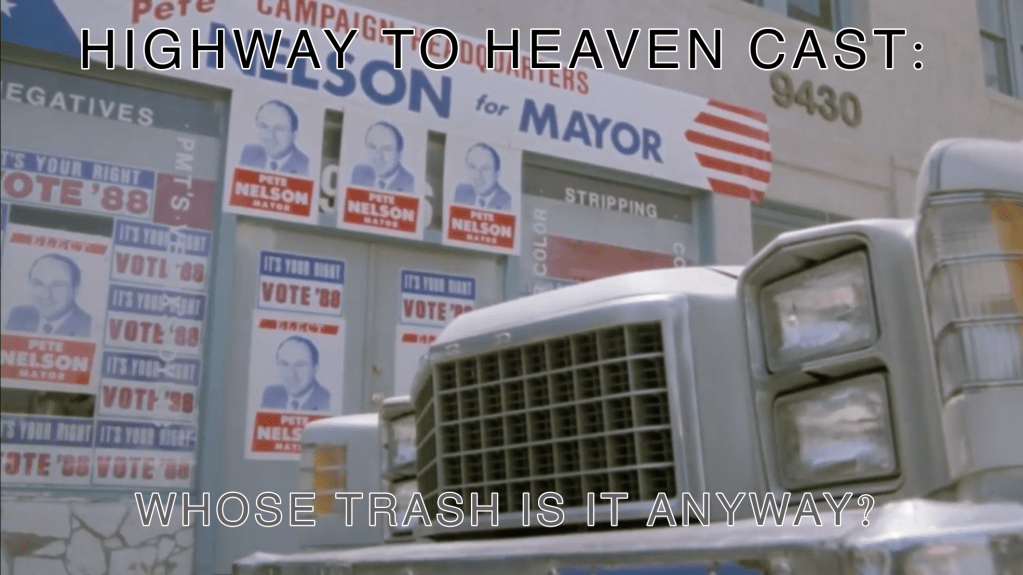
Airdate: 10/12/1988
Directed By: Michael Landon
It’s 1988, and a new TV year is about to begin—and this time, with some noticeable differences. The summer programs had scored an all-time low in ratings, with uncompromising airings that led people to believe television was doomed. The networks were changing, too: Fox had launched to shake the longstanding dominance of the “Big Three” networks—CBS, ABC, and NBC—as cable channels were slowly establishing themselves to give audiences a wider range of programs to choose from and seemingly easing the old conflict between shows “skewing young” and those aimed at older viewers, a debate that had persisted for decades after the 1950s essentially. If that wasn’t enough, the summer also marked a negative milestone for the industry: in March, the Writers Guilds called a strike that lasted more than five months, making it the longest strike in the industry thus far, and completely altering the schedules of many television programs at the time. (It’s impossible to shoot during a strike). People were not the same, the television landscape was not the same, and Highway to Heaven was about to reach the end of its journey.
The ratings for Season Four had steeply declined compared with the preceding seasons, and that proved decisive for the show’s future. In May 1988, the network announced that Highway to Heaven would no longer be part of its weekly schedule. However, given the show’s enduring popularity—Season Four’s ratings were hardly disastrous, but way behind those of the previous seasons—the network didn’t cancel it outright. It renewed the series for a shorter season while making it clear that this would be the final one.
For this season, they completely moved on from the characters’ established background—no Jane, no more fellow probationary angels—and returned to what the series used to be: each assignment would center on people, showing them how to help themselves without relying on angelic powers or the revelations that had become increasingly prominent in previous seasons. And Jonathan and Mark are no longer necessarily the protagonists of every episode; instead, they serve as vehicles through which the stories of other people and their problems are told.
But Jonathan will never reach the conclusion of his probation either. In a way, it’s as though each episode were a fitting conclusion to the series. And that makes the final season all the more powerful.
One last thing: by the end of this season, the actor French who plays Mark Gordon had passed away. He was diagnosed with a lung disease three months after completing the series finale, and he died in 1989 while this shortened season was still airing its few episodes. It’s likely that he was already ill by the time they made these shows, even though he was unaware of it. Watching this episode and the rest of the season with that knowledge is definitely weird—and this season chronicles a part of the last year of a person’s life.
This is the beginning of the conclusion of Highway to Heaven. Last season, new introduction.
And old recycle.
The opening sequence is almost exactly the same as in Season Four, which itself had a different opening from the first three seasons (compare them at each season’s overview). The music is probably just as ethereal and engrossing, but the instrumentation feels more imposing; it seems as though the earlier version had one or two fewer strings. And the last part is different.
But just like those cases, it was all recycled material. In particular, the music in the first part is a recycle from Marvin’s Garden, a Little House season nine episode, just slightly faster these last two seasons than the one up until season three (when the opening was different).
And the music in the last part of the introduction, when Jonathan and Mark drive away, originates from the episode The Return of Mr. Edwards in season six of Little House on the Prairie from 1979, almost exactly nine years before this.
It feels such a long time ago, especially knowing that Little House had concluded five years before this episode aired.
But there is no time to look back to yesterday. It is time for Highway Season Five.
Guide:
- Assignment
- Background
- Characters
- Highway Actors
- Production and Setting
Glossary:
- Blooper
- Bums, bins and Dope
- Punchlines
- Sunday Suits
- Friendly Jonathan
- Horselaugh
- References
- The “Stuff” Powers
- The Job
- Ratings
Complete show available here.
Assignment: Jonathan and Mark are assigned to help a former cop running for mayor.
This season is the only one in the entire series to begin with a single episode rather than longer installment—whether divided into two parts and aired separately, as with A Song for Jason (season two), Man’s Best Friend (Season four) and A Special Love (Season three) or being a single longer episode the same night, as the pilot in Season One.
Instead, it’s one assignment. That does not make it any less worthwhile just because it is not as sprawling as some of the other season opening shows. Just different. After five years into the series, they felt confident enough to experiment with something new.
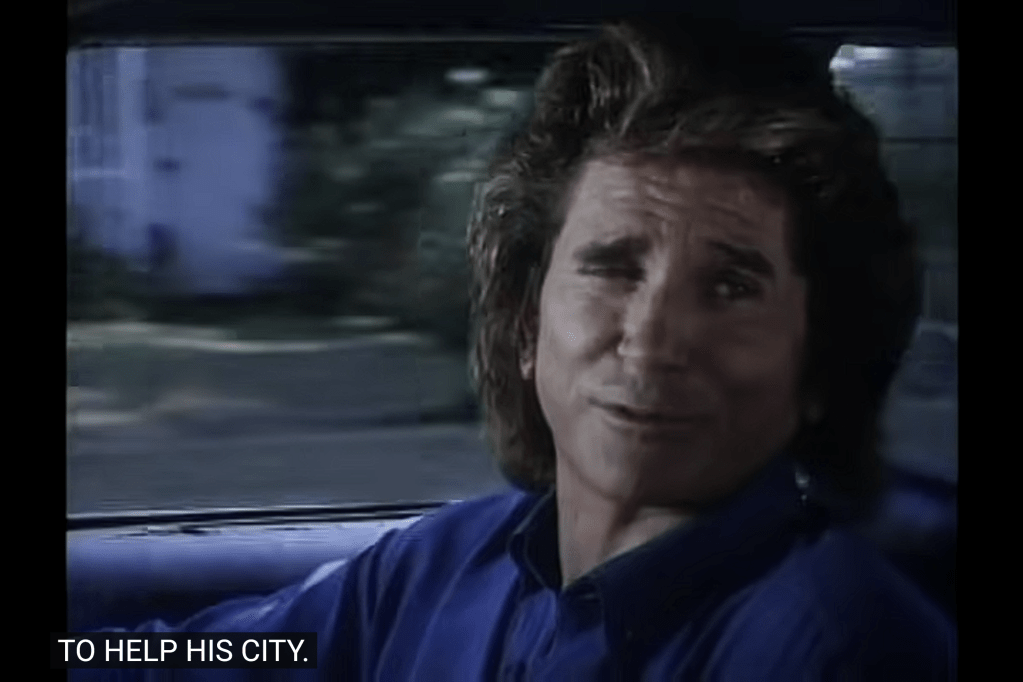
But the rest of the prologue plays out as usual—and Jonathan and Mark are driving to the city. By now, everybody should be accustomed to this: whenever the episode starts like that, it means they are usually discussing something that will turn out to be connected to their assignment. This time, the subject is politics.
And Jonathan already displays some contradictions in his attitude: he tells Mark that politicians are honest, and Mark doesn’t believe it.
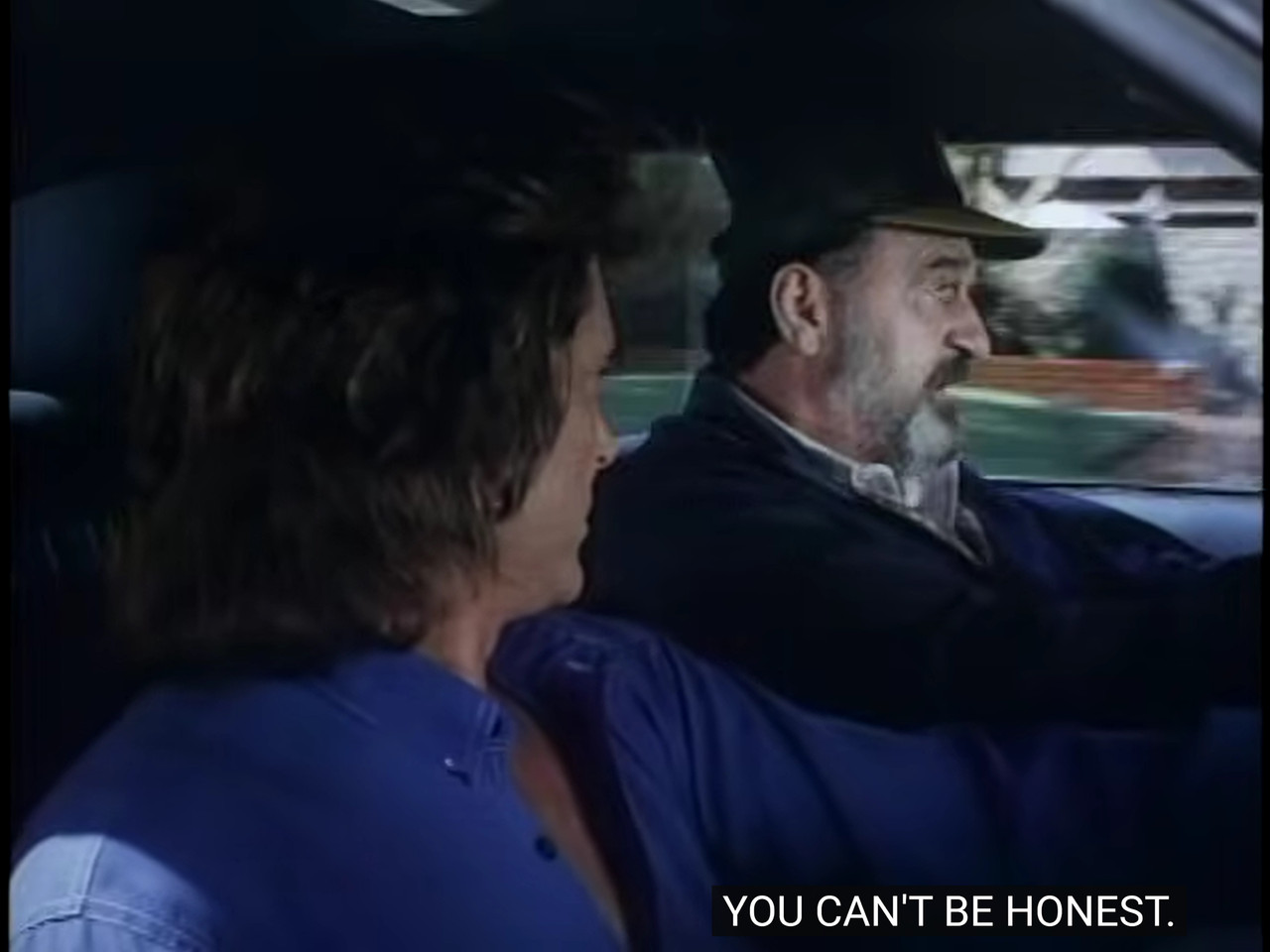
And Jonathan realizes it’s the truth.
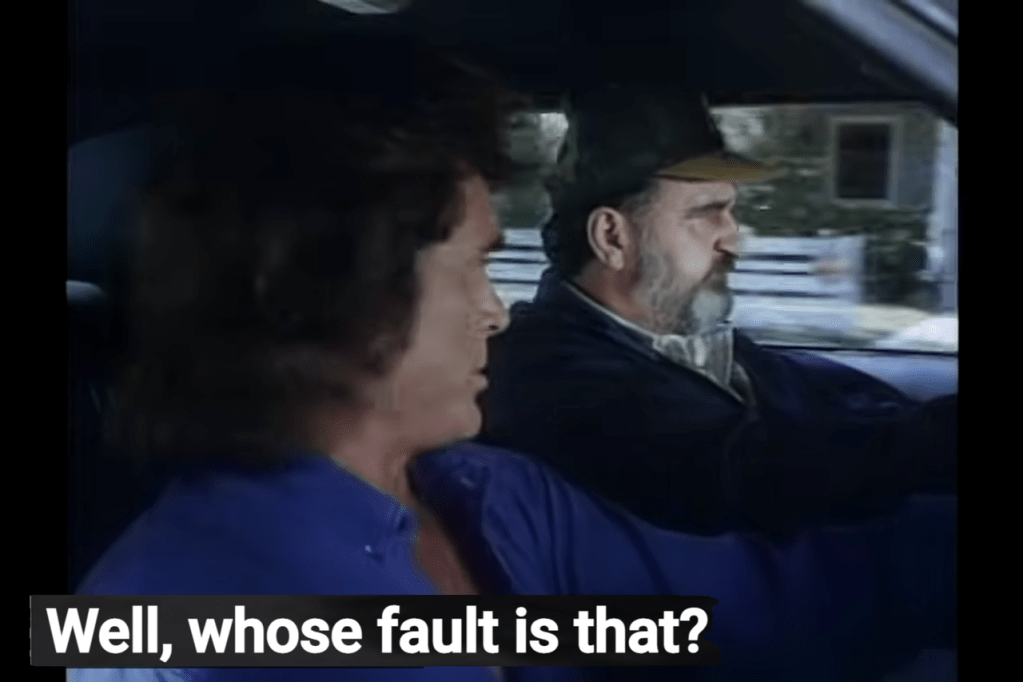
So, are there good politicians or not?
New seasons, same old stuff.
Anyway, they have been assigned to help an old friend of Mark’s named Pete, a former police officer who is now up to something different. Which is not traveling around the country helping an angel—while recovering from alcoholism in the process.
He was probably wiser than that.
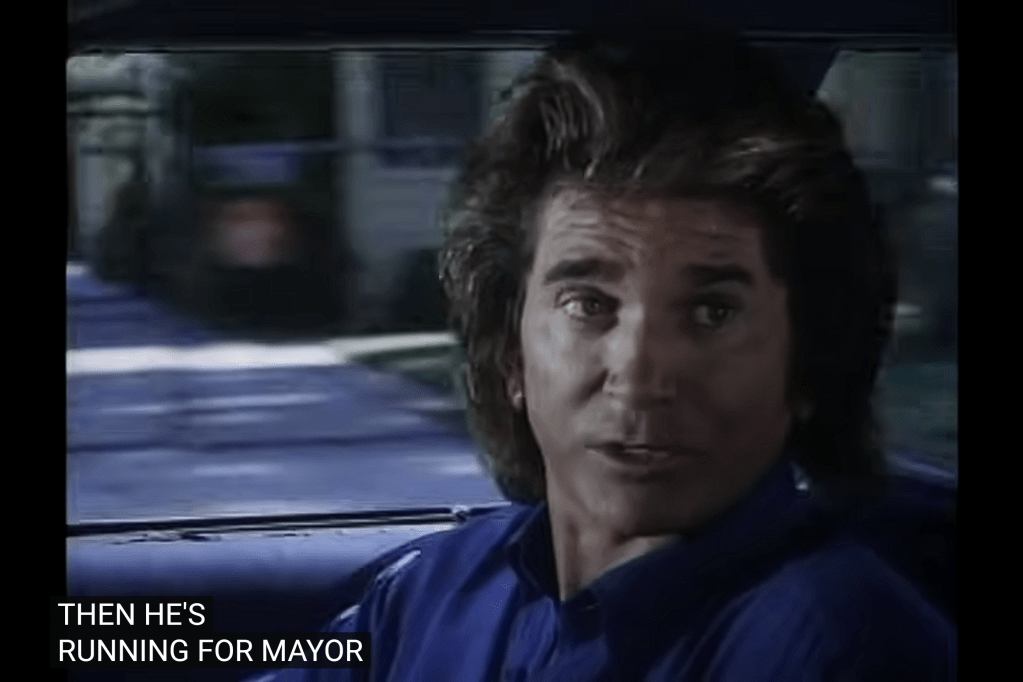
Maybe not that wise.
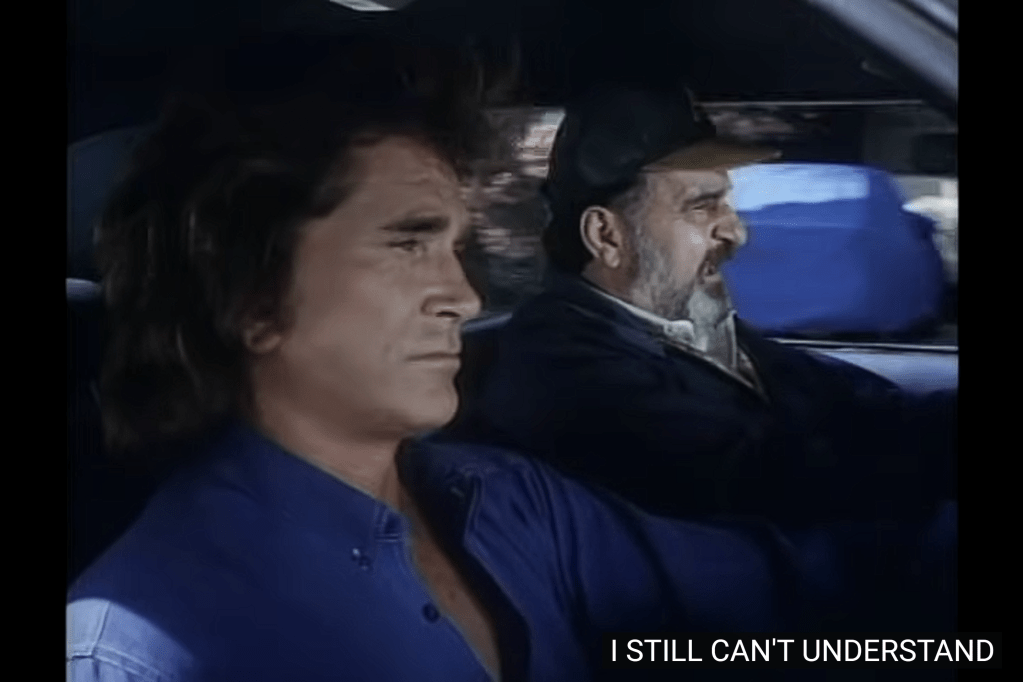
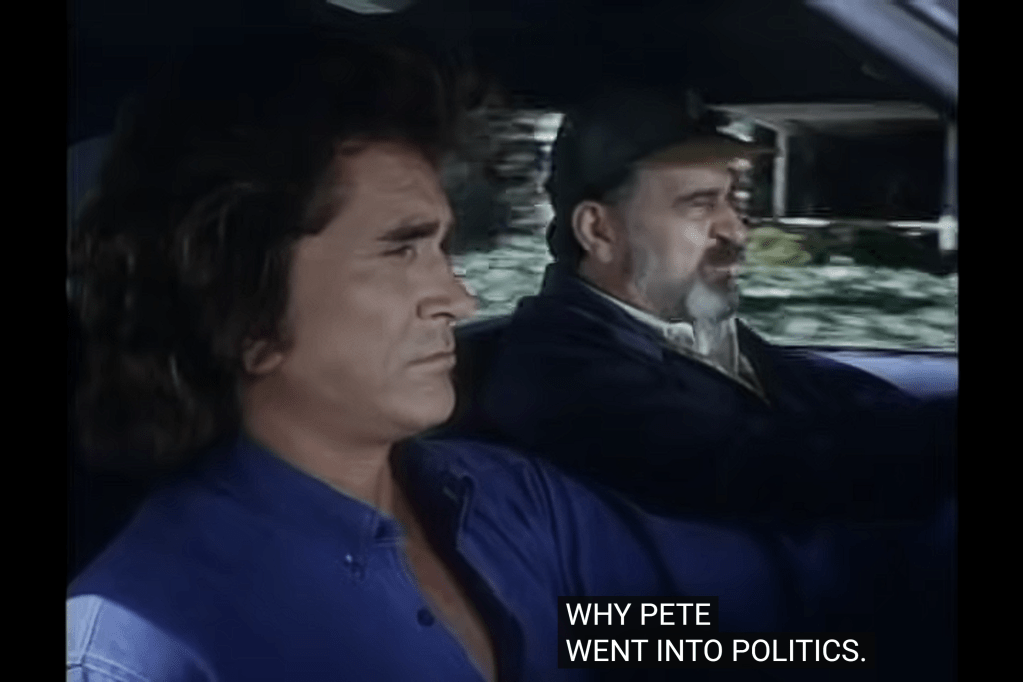
Becoming an angel’s slave wasn’t an option.
This Pete’s running for mayor in what’s presumably Los Angeles or a nearby county.
Now, Pete is way ahead of the other runner, Osbourne, but things take an unexpected turn when someone finds stuff among the belongings of Pete’s son at school.
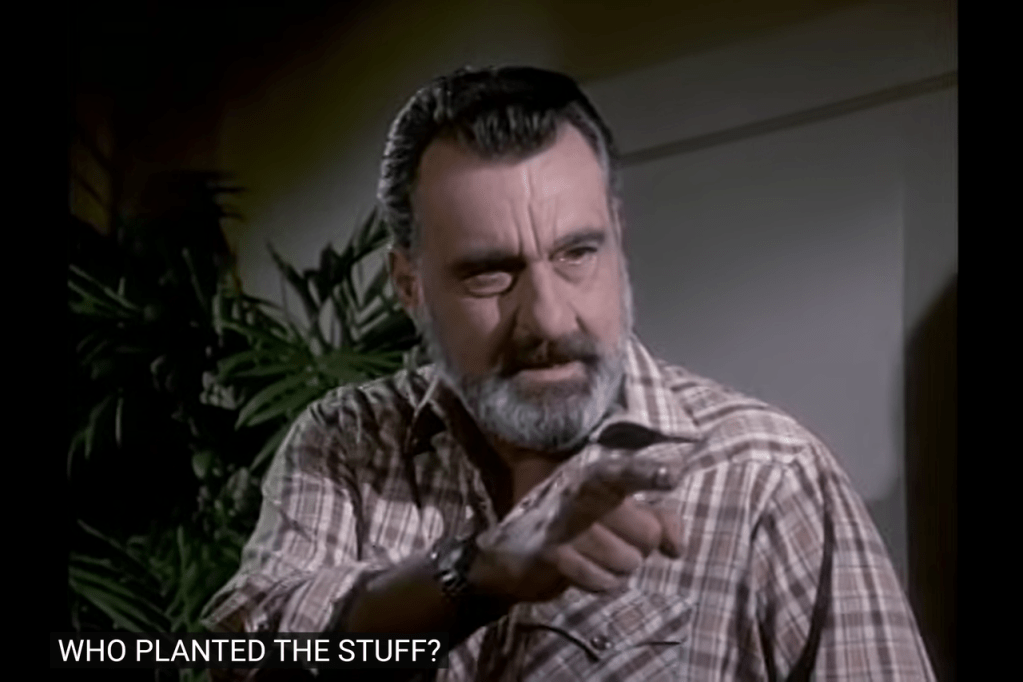
And it’s not the angelic one.
So, Jonathan and Mark will help Pete investigate and clear his son’s name.
One important thing is that the episode never explicitly reveals which party is that Pete is running as a member of. He appears to hold more liberal views compared to Osbourne, but the show deliberately avoids turning that into a political fight taking sides.
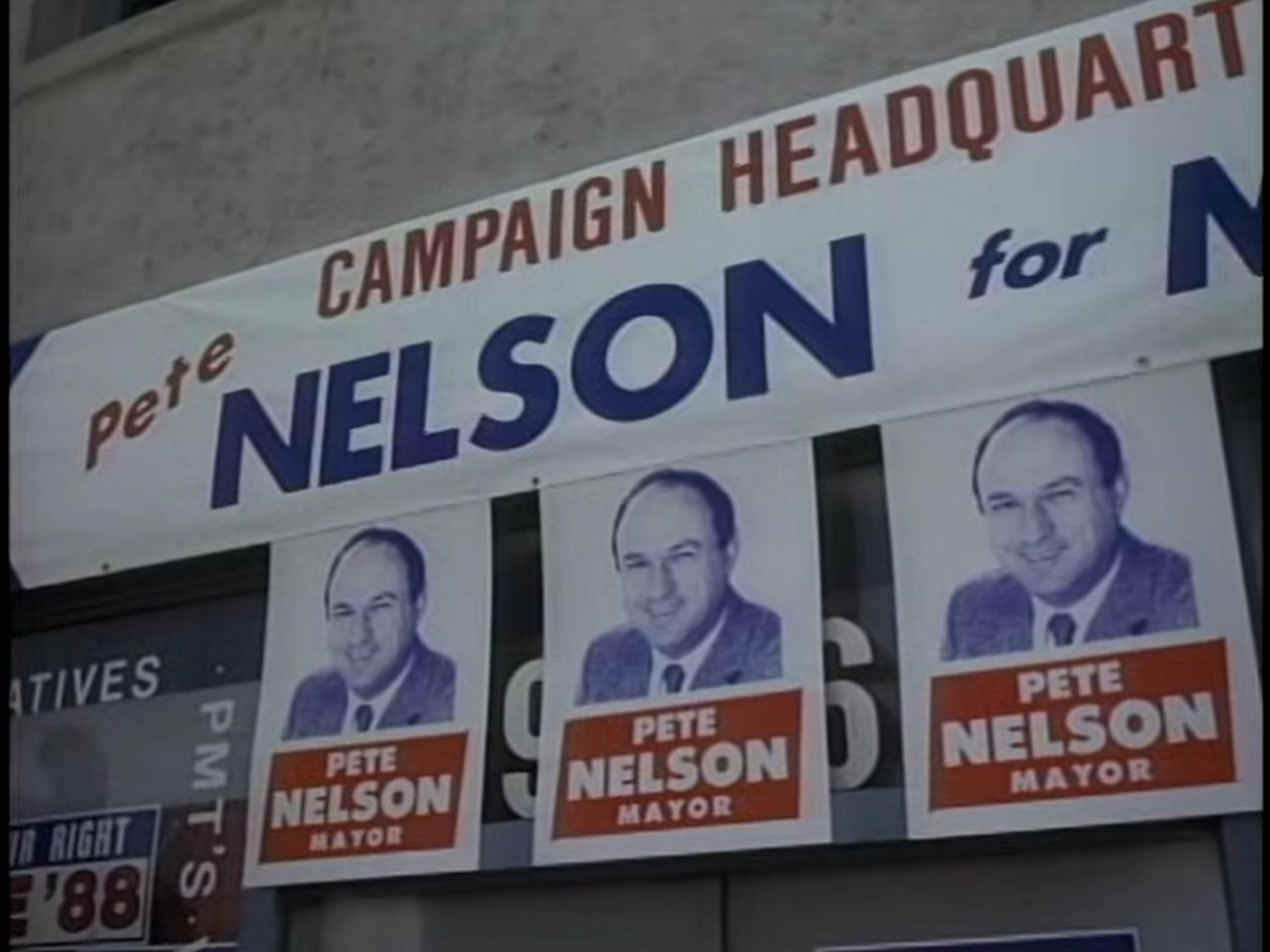
That makes the character considerably more relatable. Rather than letting people use his being left-wing or right wing as a way to categorize him as the good guy or not, the episode leaves the audience to form their own mind about Pete and decide for themselves whether his beliefs and actions correspond with what they consider right.
It is a subtle but important choice, especially for a series that has always been more about people than political categories.
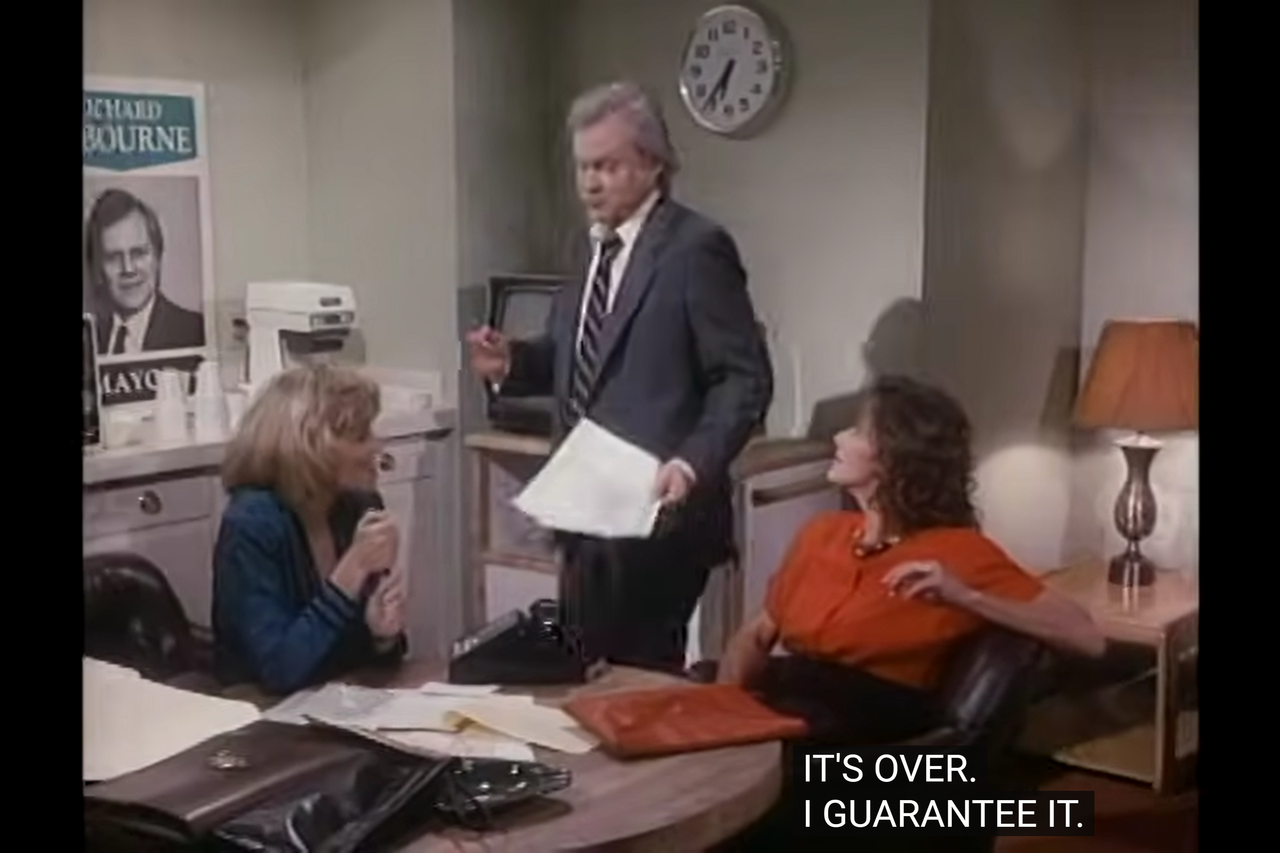
It’s not that simple.
It doesn’t fall into an easy categorization, and that’s part of what more than four seasons of the series have been trying to promote all these years: people shouldn’t approach fellow men with a judgmental attitude, nor should they judge other people based on preconceived ideas and extend that judgment to every aspect of who they are.
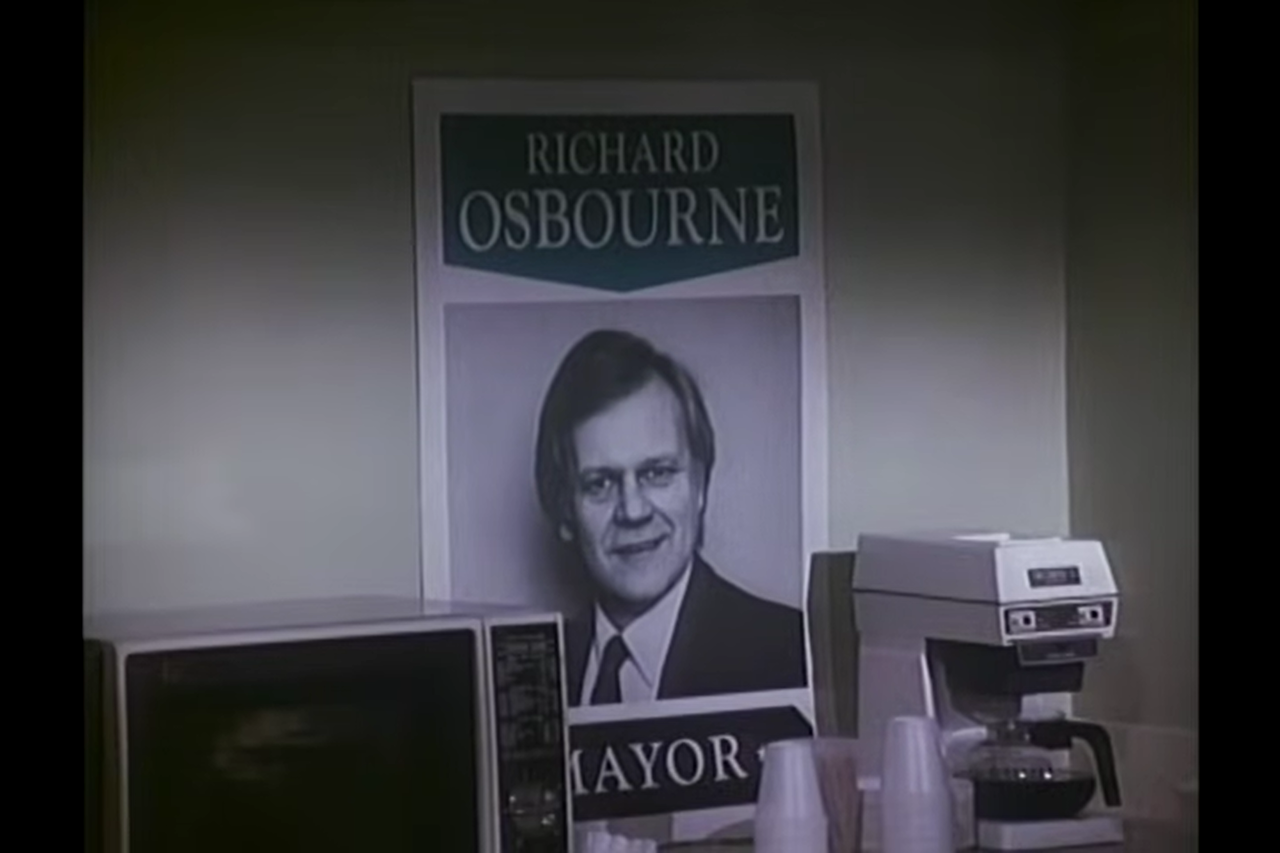
Besides, it’s important to consider that Landon never considered Highway a political series, and this episode is not intended as a political statement. The important aspect is creating a series in which politics are not exhausting or judgmental. The point is not that Highway remains thoroughly neutral and never takes side, nor that it’s “skewed” to the right or left, but that it’s a place where there is no judgment based on any of this, no contempt even when being lecturing and no pretense to hold the truth every time.
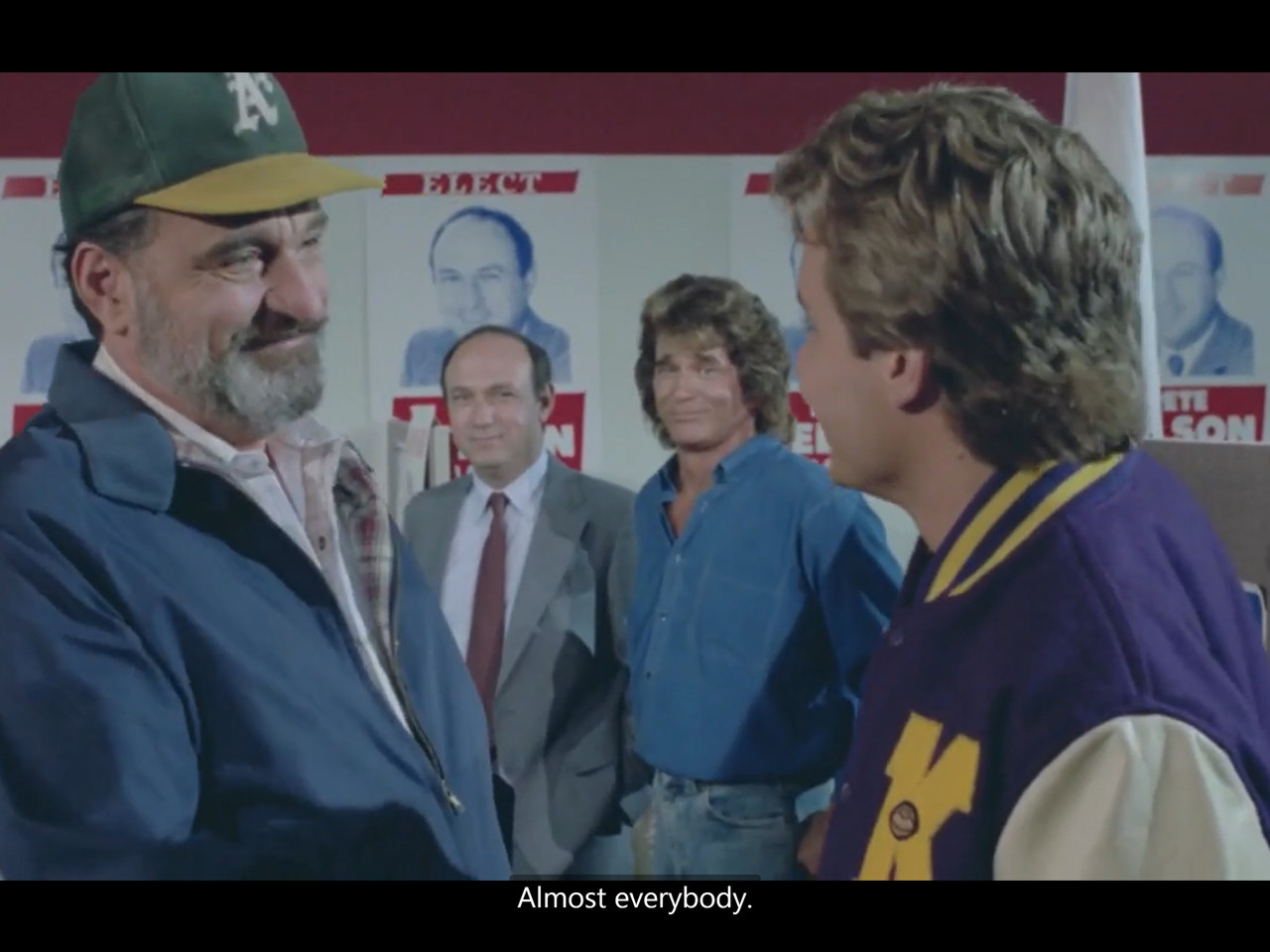
It was already present in Little House, but it is even more prominent in Highway.
- Background
As for the background, there’s no use in trying to determine it: given that this is only half a season airing discontinuously, there’s no way to know exactly how long it spans. It could be assumed that it begins at some point in the summer of 1988, especially if that’s when season four concluded, but it could be any point after that. It’s reasonable that seasons four and five take place concurrently, at least for some episodes, which makes it even harder to determine when this season begins. It’s even unclear whether this episode is chronologically the actual season opening shot or, more likely, if some of the episodes airing later precedes it.
Either way, it probably spans one week, as usual.
It’s unclear how it relates to the season four finale (which probably wasn’t even a season four episode), or when it takes place except it’s 1988, as reported in Pete’s campaign, everywhere
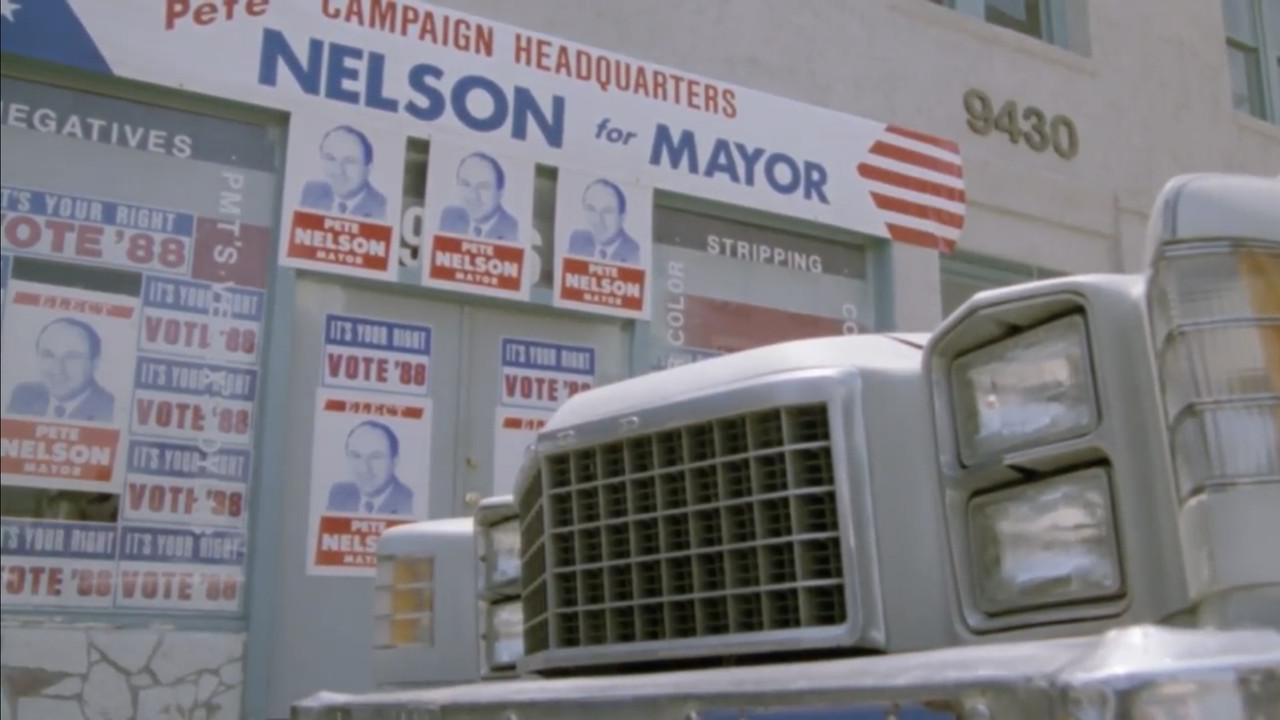
It could be Oakland, if that’s where Pete worked as a cop. But it seems that every Oakland Cop has moved to Los Angeles following Mark’s retirement.
Also, why moving the series out there.
- Characters
An important aspect of the episode is that the subject is Pete, another friend. He is the eighth colleague of Mark’s from the Oakland police introduced in the series so far: Charlie, who was shot dead in season one (Plane Death); Wes from The Secret and Sam from Change of Life in season two; Frank No. 1 (the former cop in Love and Marriage) in season three; another cop who was shot dead (Amazing Man), Caz the summer camp counselor (All the Colors of the Heart) and Frank No. 2 (the racist one in Back to Oakland) in season four; and now Pete is the last one.
It’s the whole Oakland department, basically.
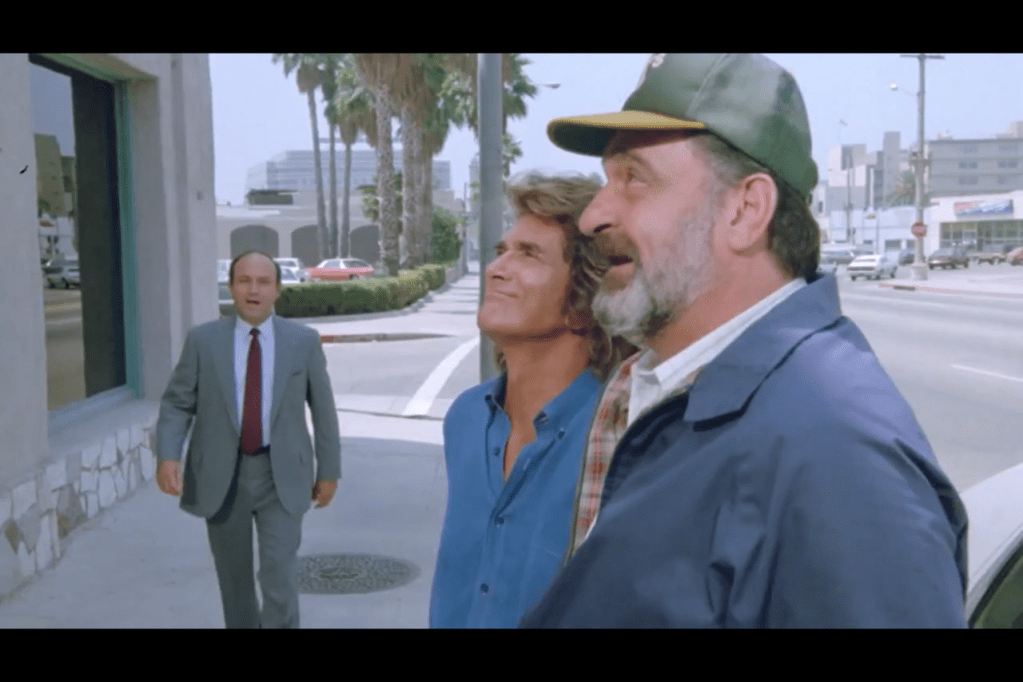
With all these friends, nobody helped Mark through his years of alcoholism before he met Jonathan in the pilot. Maybe not all colleagues are necessarily your friends.
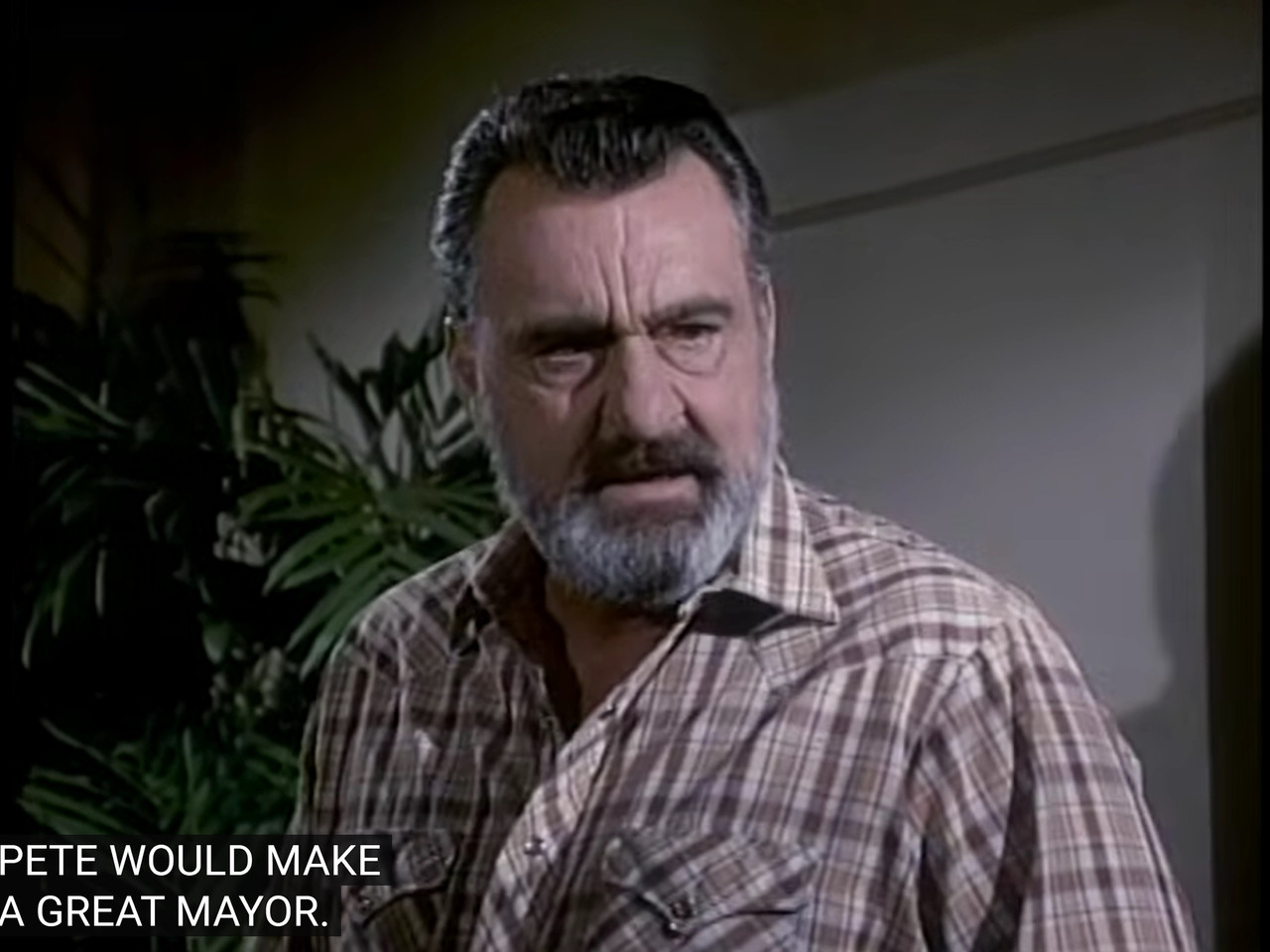
As long as he doesn’t become an alcoholic.
One weird feature: the episode never explains what Jonathan and Mark’s roles were supposed to be there in the first place. Unlike other episodes in which the reason for visiting Mark’s colleague is explained—for example, he received a phone call or a letter (by Caz in All The Colors Of The Heart and Charlie in Plane Death), or helping the friend was Jonathan’s assignment in the first place (when he had to work as a bodyguard in Change Of Life or as a cop in his same division in Back To Oakland) or something along those lines — in this episode they never specify why Jonathan and Mark are going to help this old friend whom Mark hasn’t heard from in years.
It simply begins with Jonathan saying (probably to the audience) that they are going there.
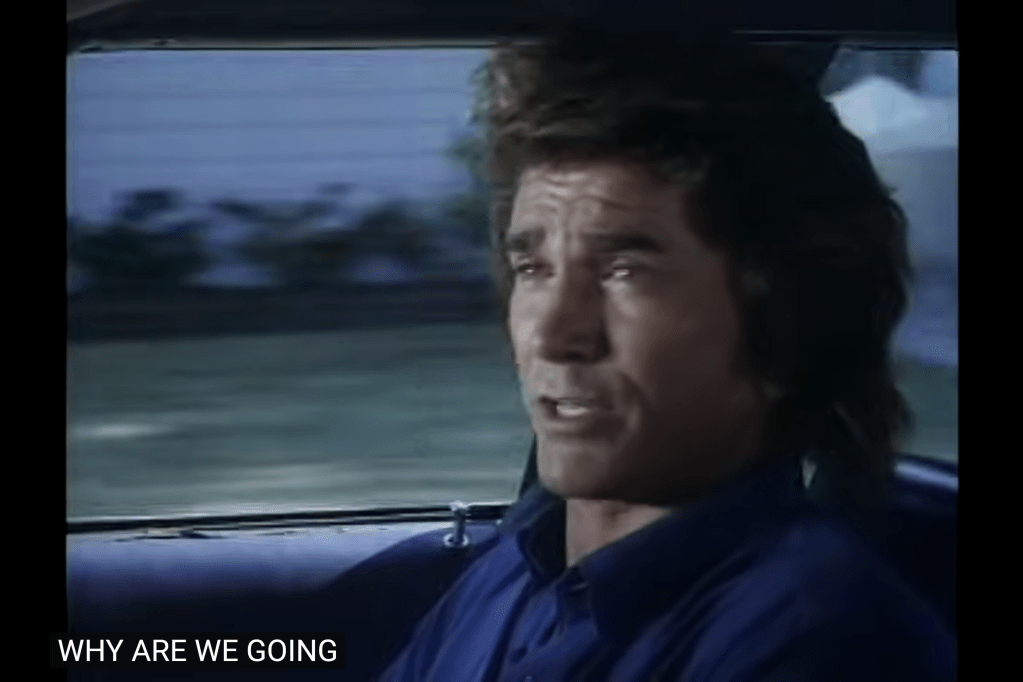
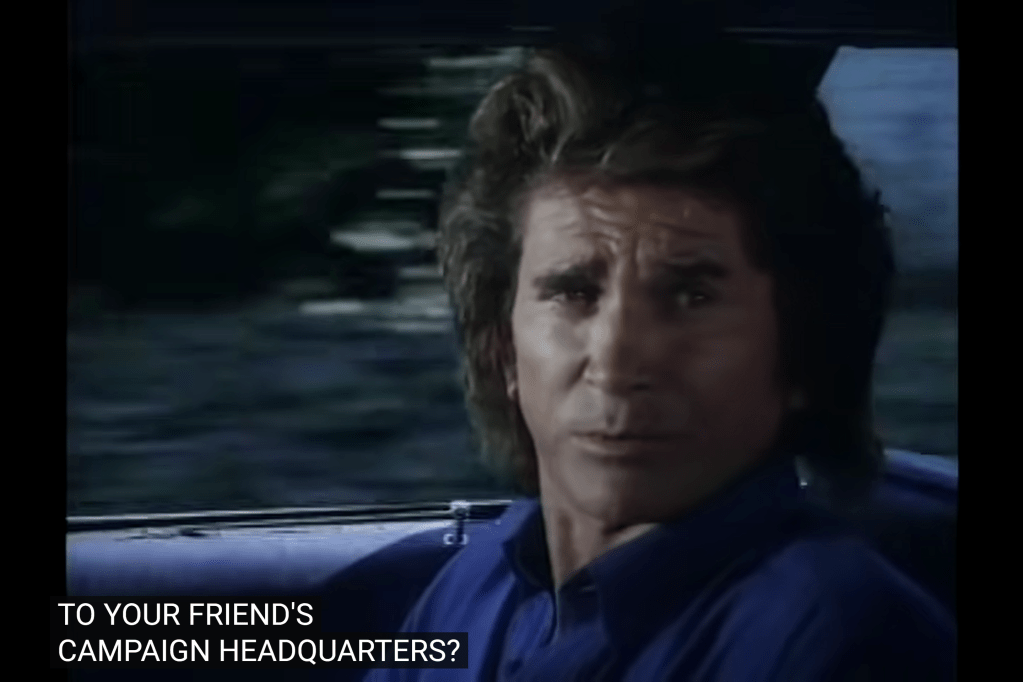
Not even Jonathan knows how come they wound up here.
The series is about to conclude, and they probably thought not everything needs to be tied up anymore.
So it happens like The Secret and Oh Lucky Man, and Jonathan and Mark go to see this friend for no apparent reason.
It’s possible that Pete had asked for Mark’s help for his campaign. However, it’s unclear how a former cop whom he hadn’t seen in years could be of any help. As far as he knows, he might still be a pain with drinking problems.
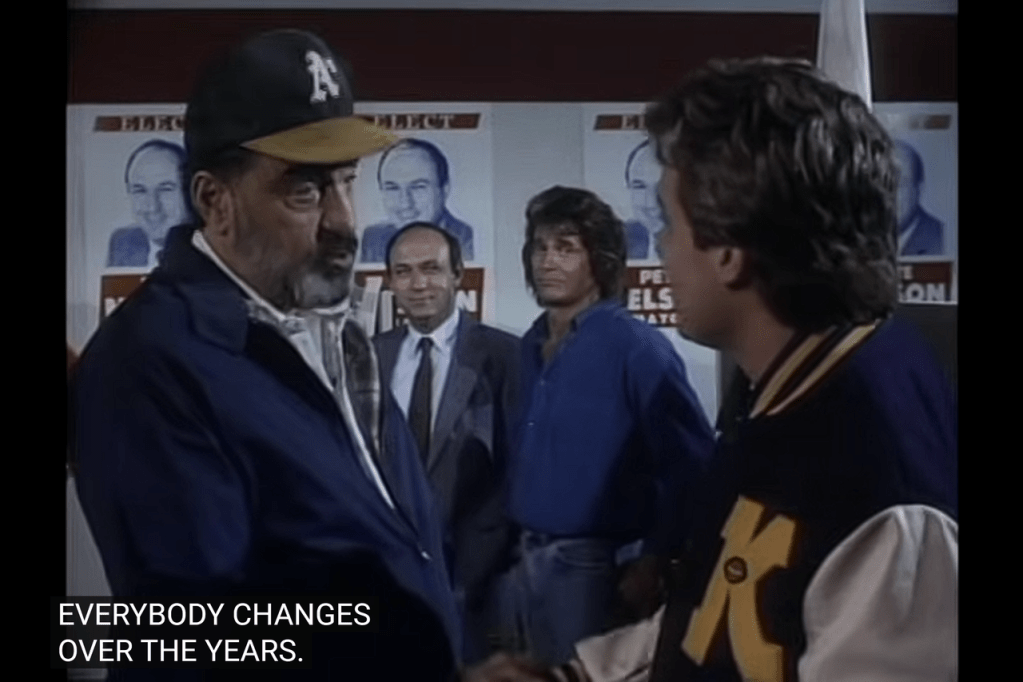
With the right friends.
Besides, this friend Pete wasn’t that nice, if he didn’t help Mark in his alcoholic years.
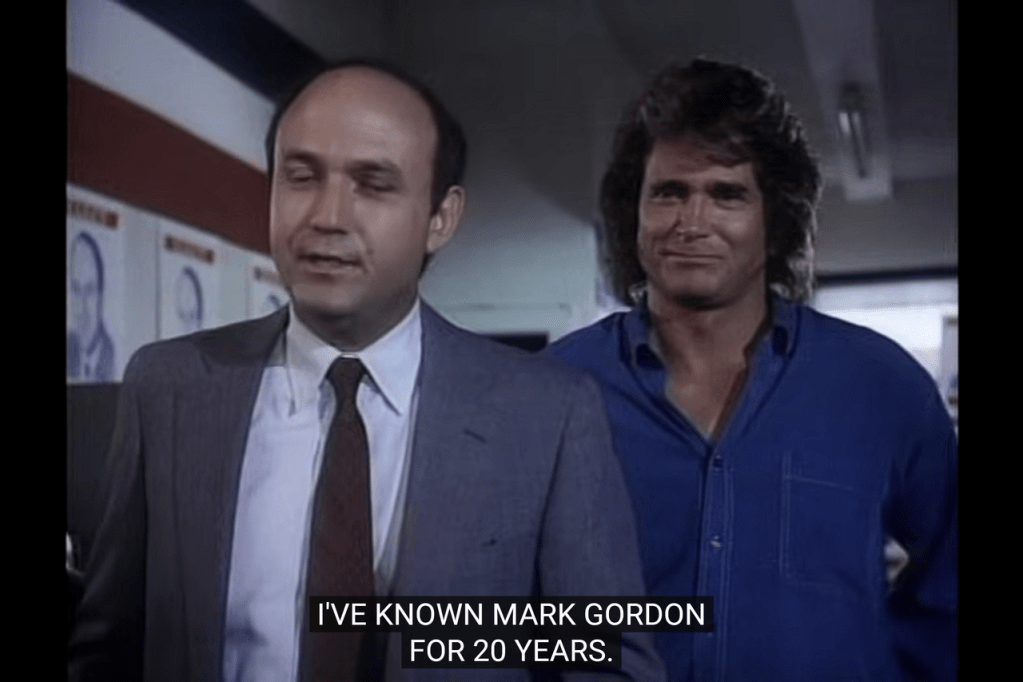
Although you either walked out on him or he did it on you during that time.
And Mark had to take Jonathan there too.
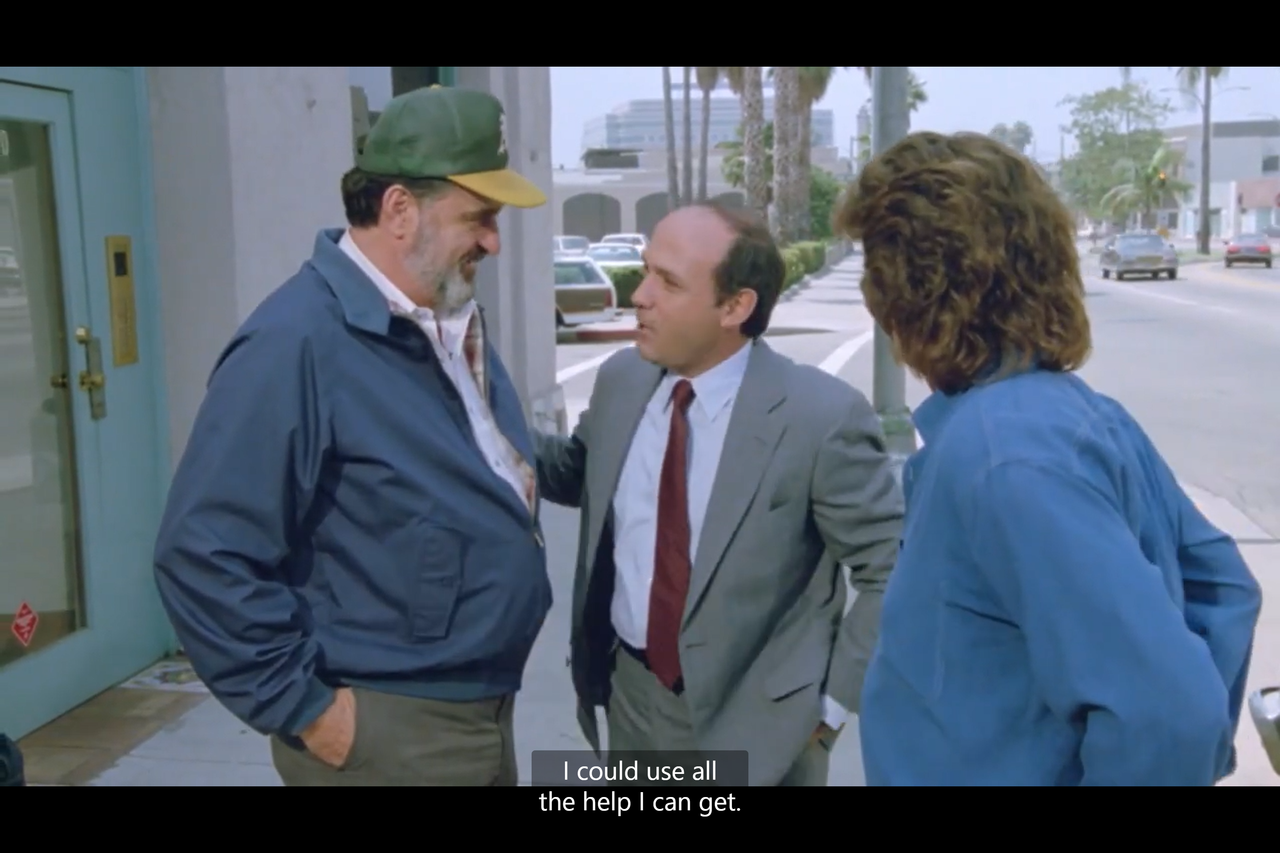
By anybody he doesn’t even know.
Anyway, he’s the last one: no more secret Oakland colleague will ever be introduced in the series (although some old ones will be a part of it). Actually, this episode is the last one to introduce a lost friend too, whether Jonathan’s or Mark’s friend. In the rest of the season they are going to help only people they don’t personally know, or someone who had already been introduced in the series before (like Frank and Jerry, in particular).
There’s a curious thing about Mark the smoker: in case anybody forgot it, Mark used to smoke before this series, as was abruptly revealed the prologue of Hotel of Dreams in season one.
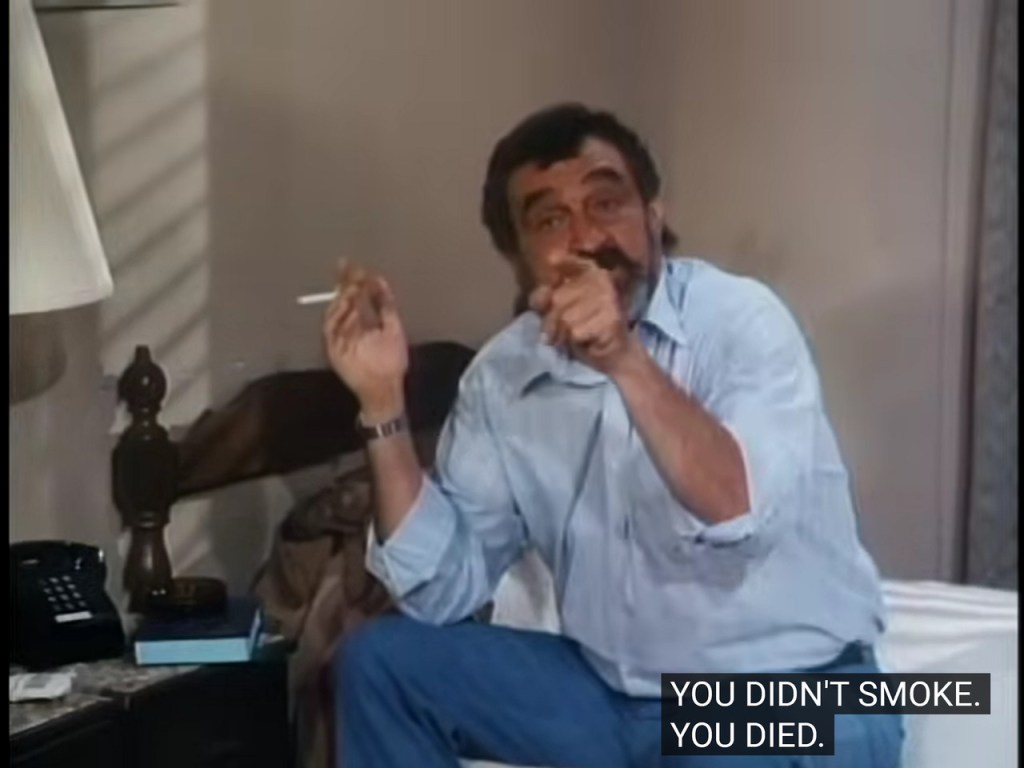
He said he’d quit after being told that Jonathan used to smoke too (as Arthur), but died of it.
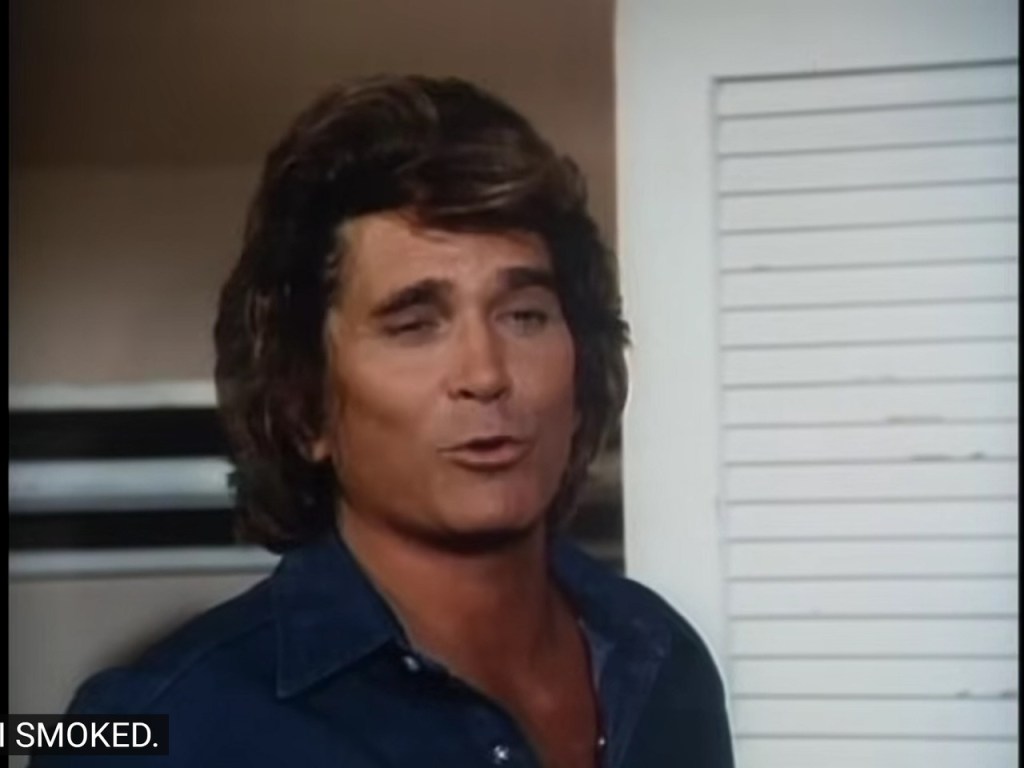
But he didn’t, and he was shown smoking again in One Winged Angels. That time, though, he promised he’d quit after concluding the assignment. And his smoking was never mentioned afterward.
Now it seems he has kept his promise: while on a lead to figure who framed Pete’s son, he is about to buy a pack of cigarettes but then walks away.
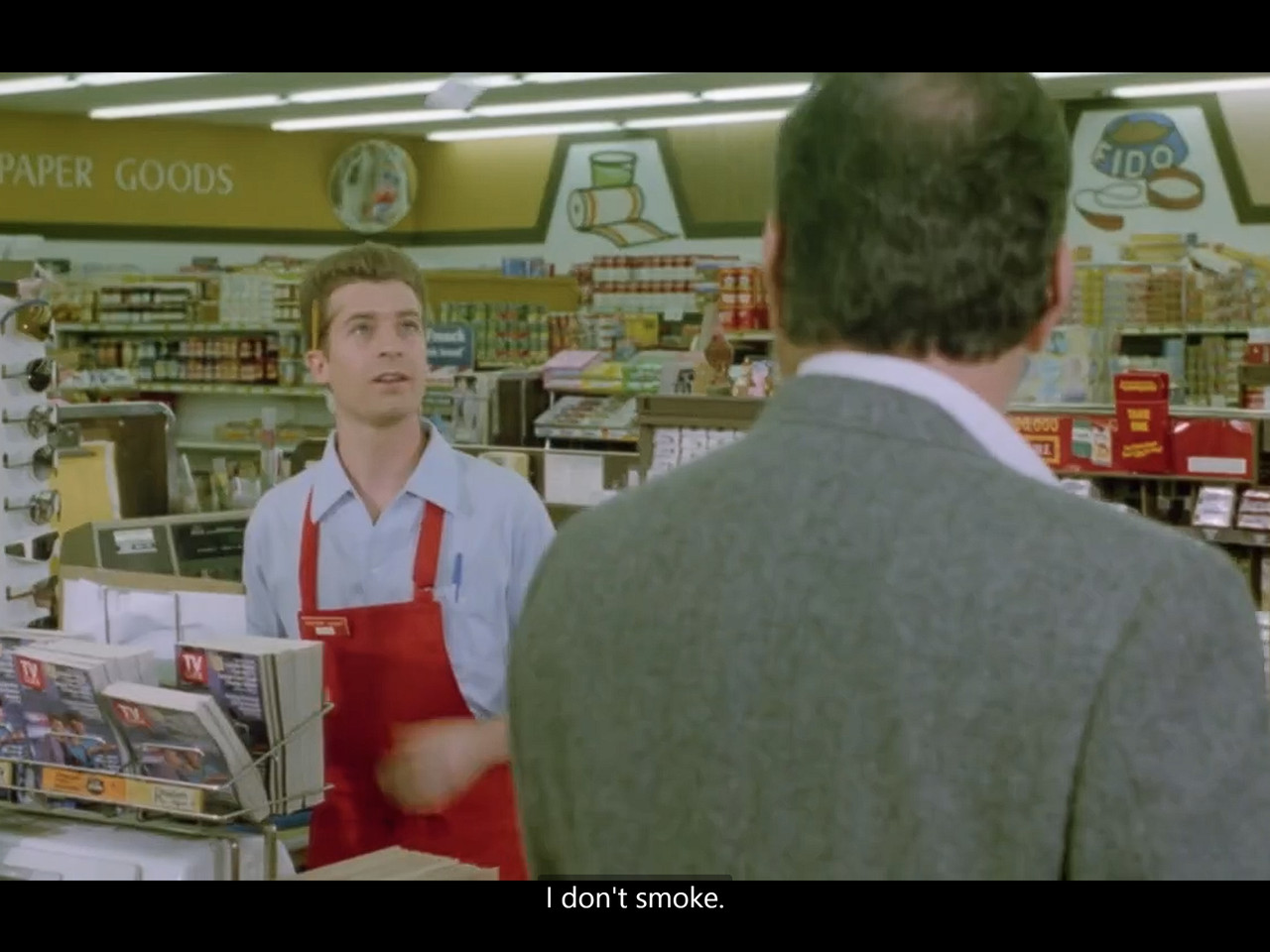
So Mark has quit for good.
Apparently, people can change their habits.
Another curious thing: to help Pete’s son out, Mark decides to rummage through Osbourne’s bins. And a kid finds it weird.
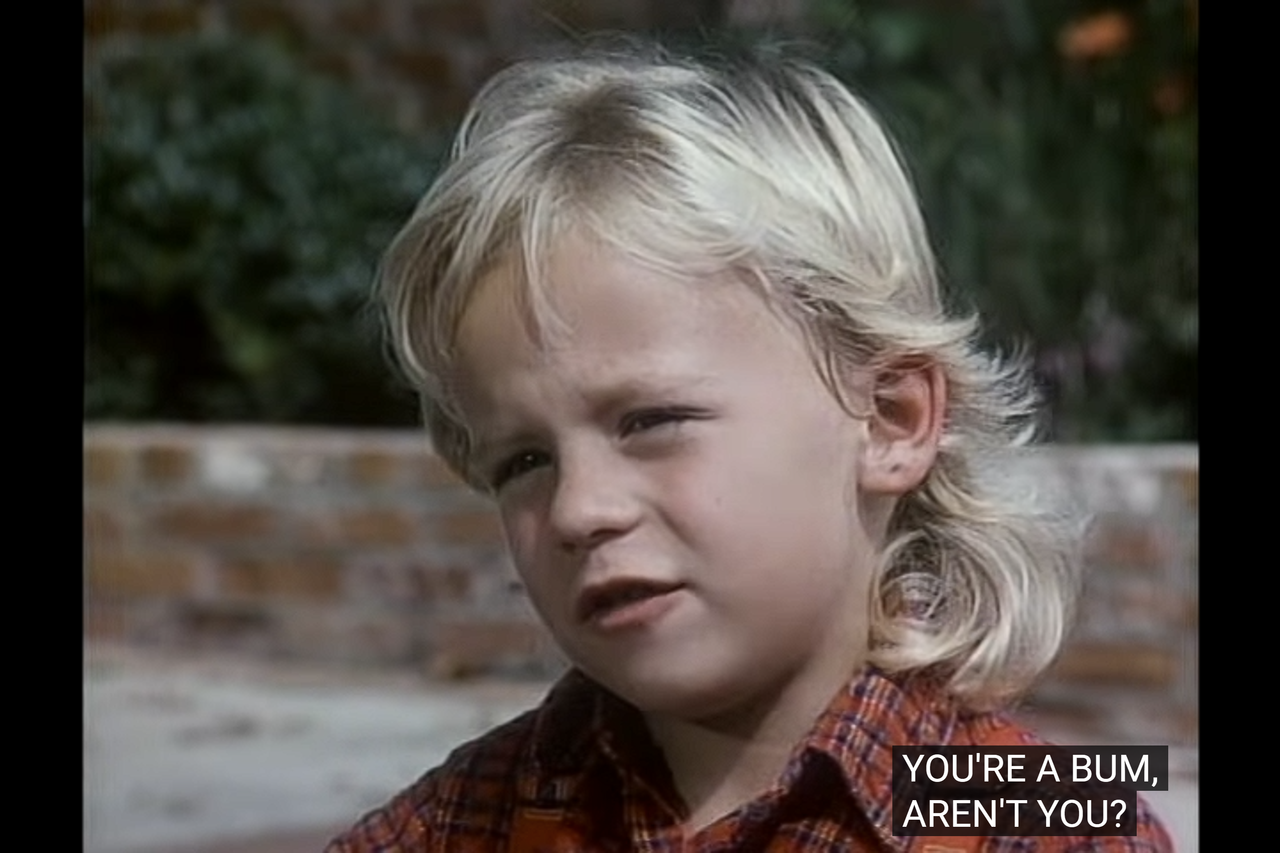
That strikes home.
That’s not the first time someone says that Mark looks like one: a woman told him the same thing in A Mother And A Daughter in season three as well.

So, he’s already been through all that.
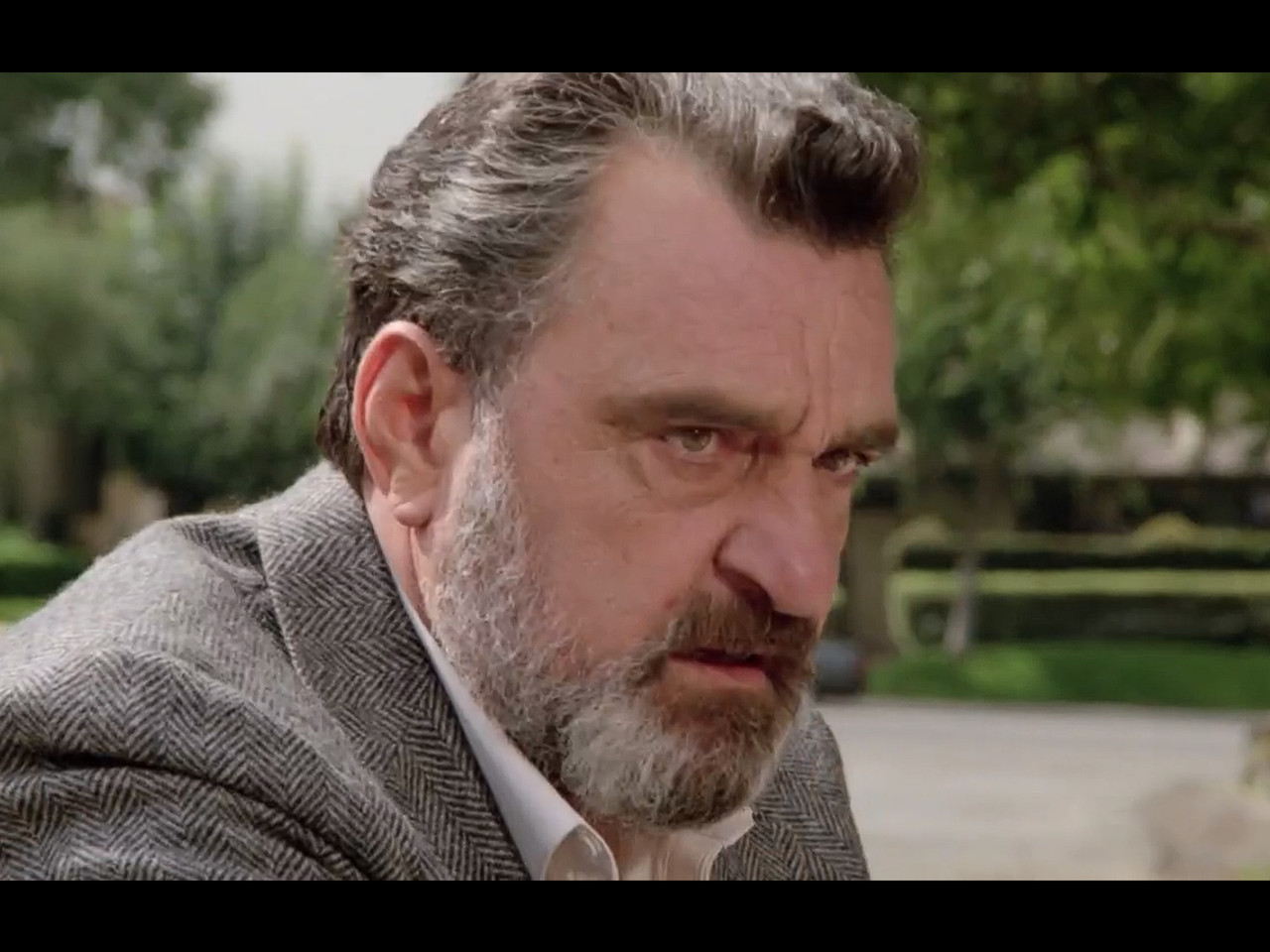
He’s like: “Not again”.
In season three, there was even an episode in which he actually had to be a bum.
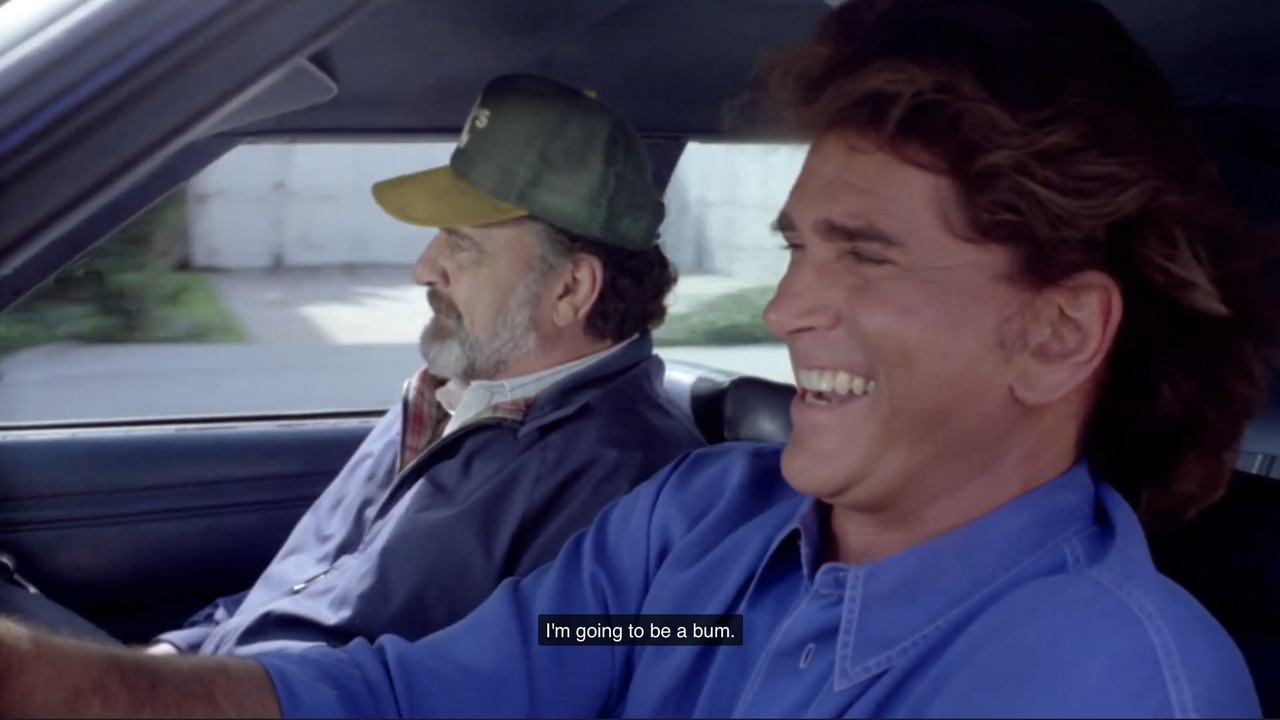
And he didn’t enjoy it.
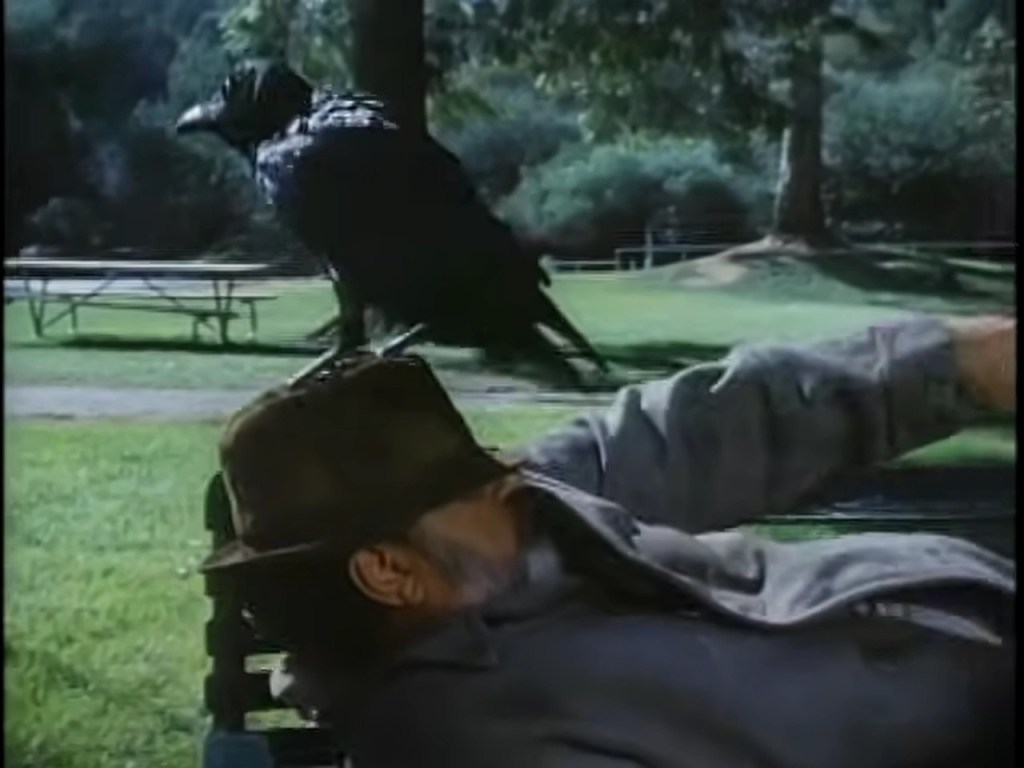
So, he already was one.
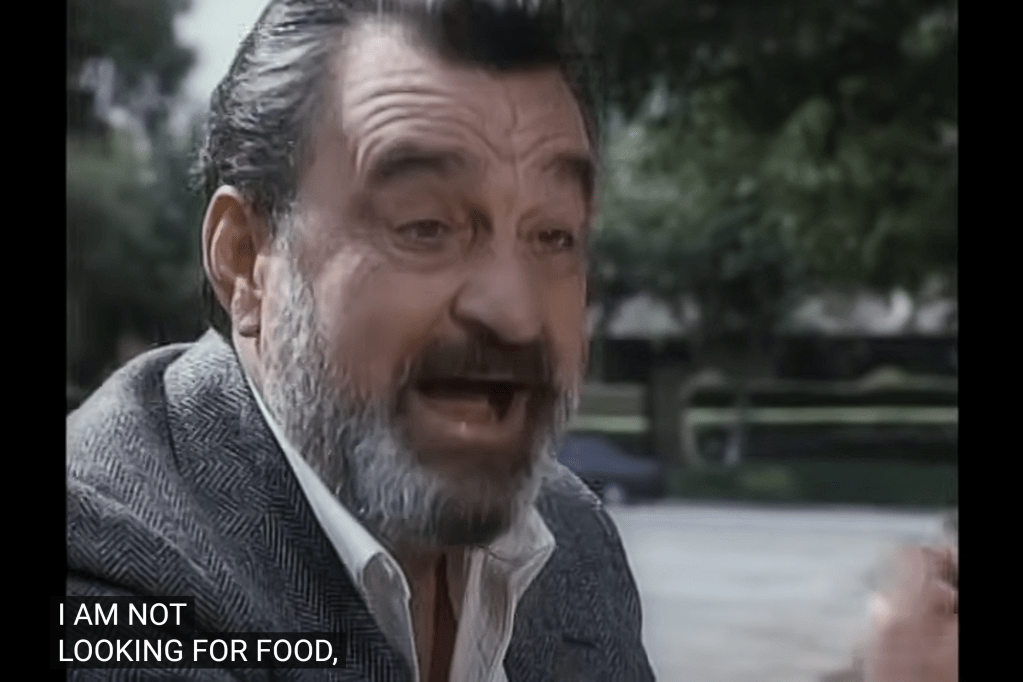
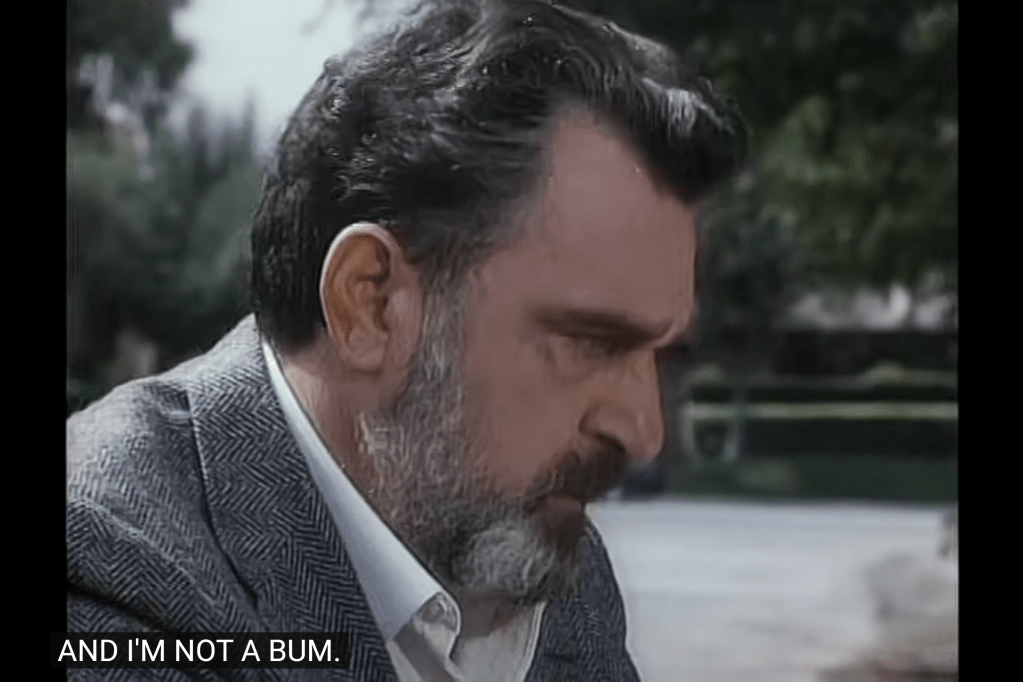
Not this time, at least.
Maybe he does look like a one
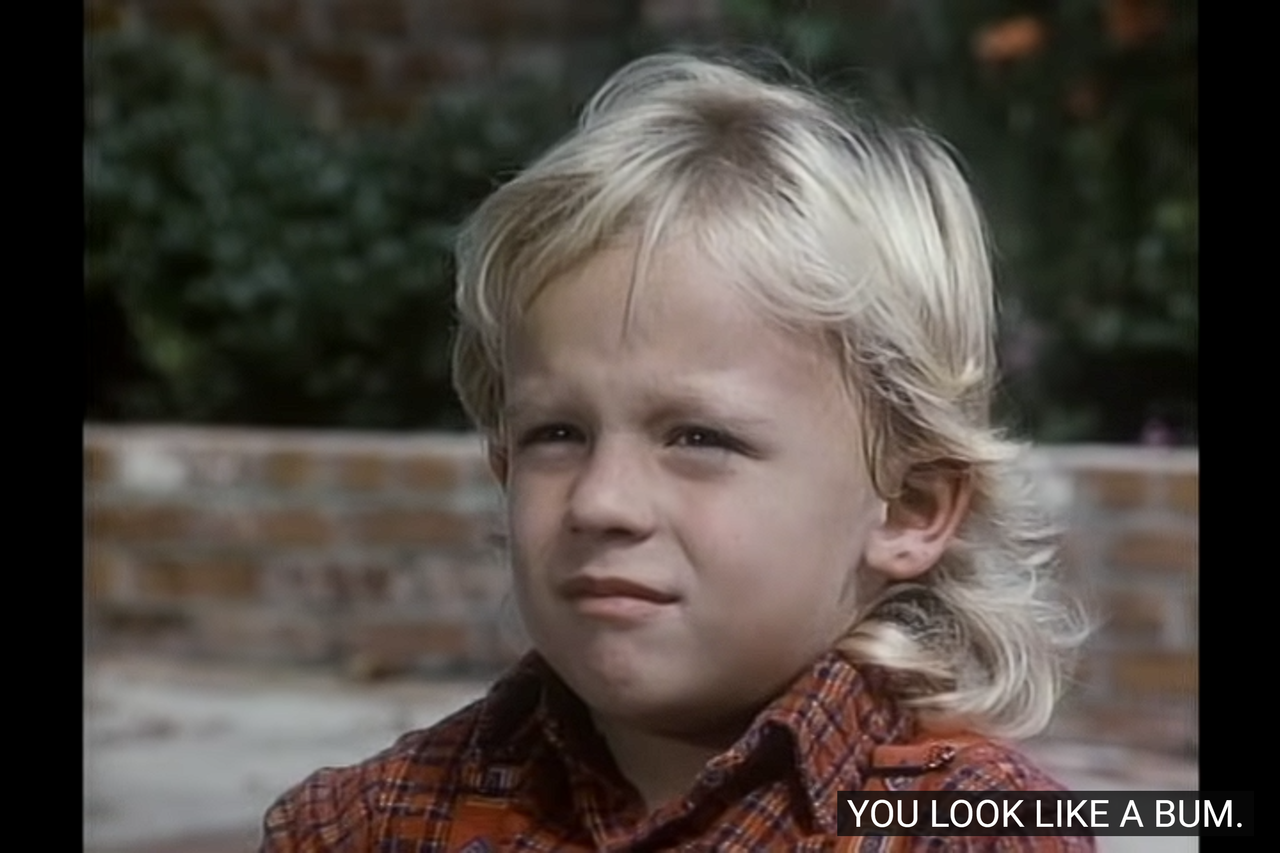
Or maybe French was called a bum in his life, and this was a self-referential joke.
- Highway Actors
This episode has a couple of old, recurring Highway actors: one is Pete is played by David Spielberg, in his third appearance on this Highway.
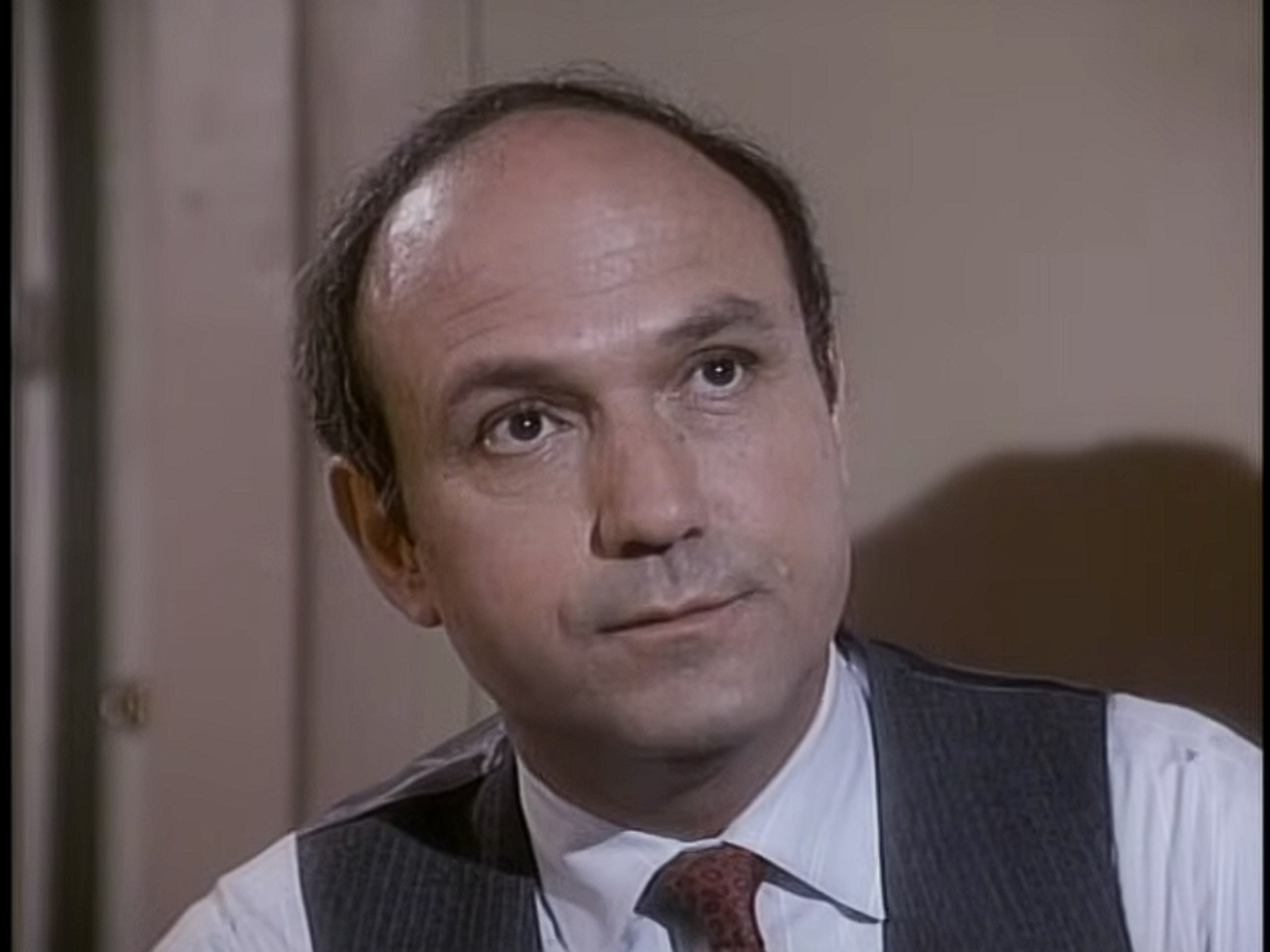
Apparently, he began his career in New York on stage, then moved to Los Angeles in the late 1960s to kick off his TV acting too. He first stopped on this Highway in The Smile In The Third Row, the season two episode about lunatic actors and heavy plays, and he was the playwright.
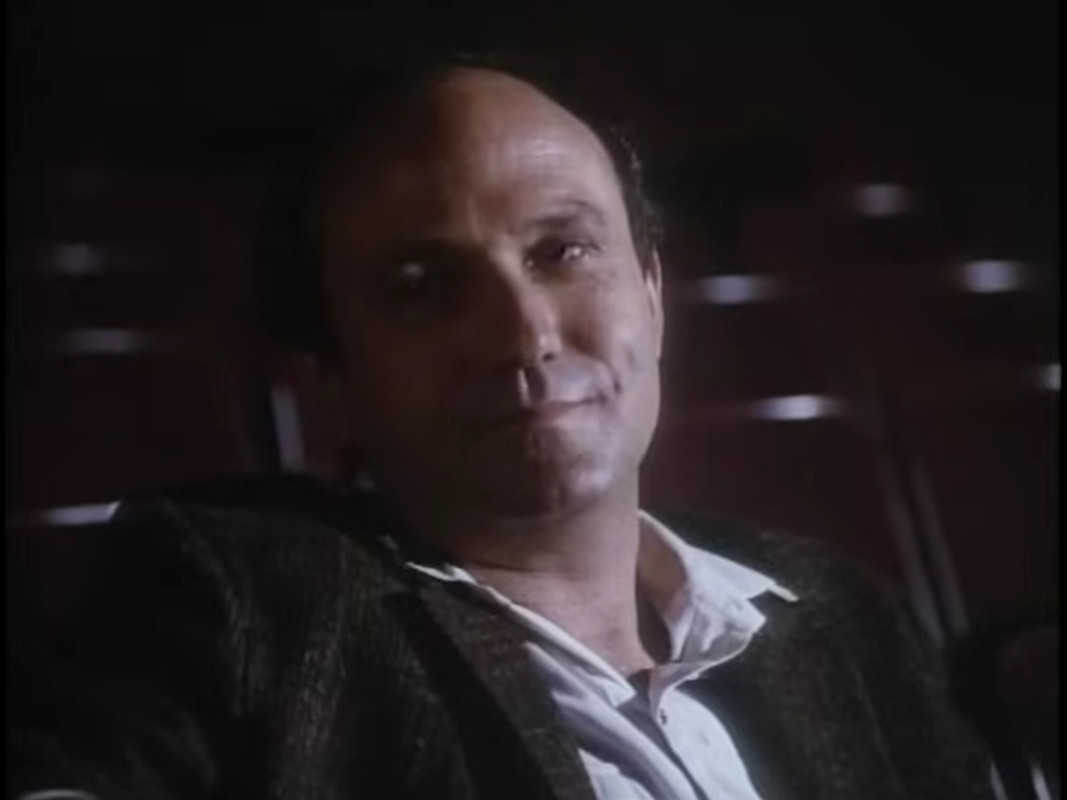
He came back a second time in season four as the white-passing doctor in the racist neighborhood episode.
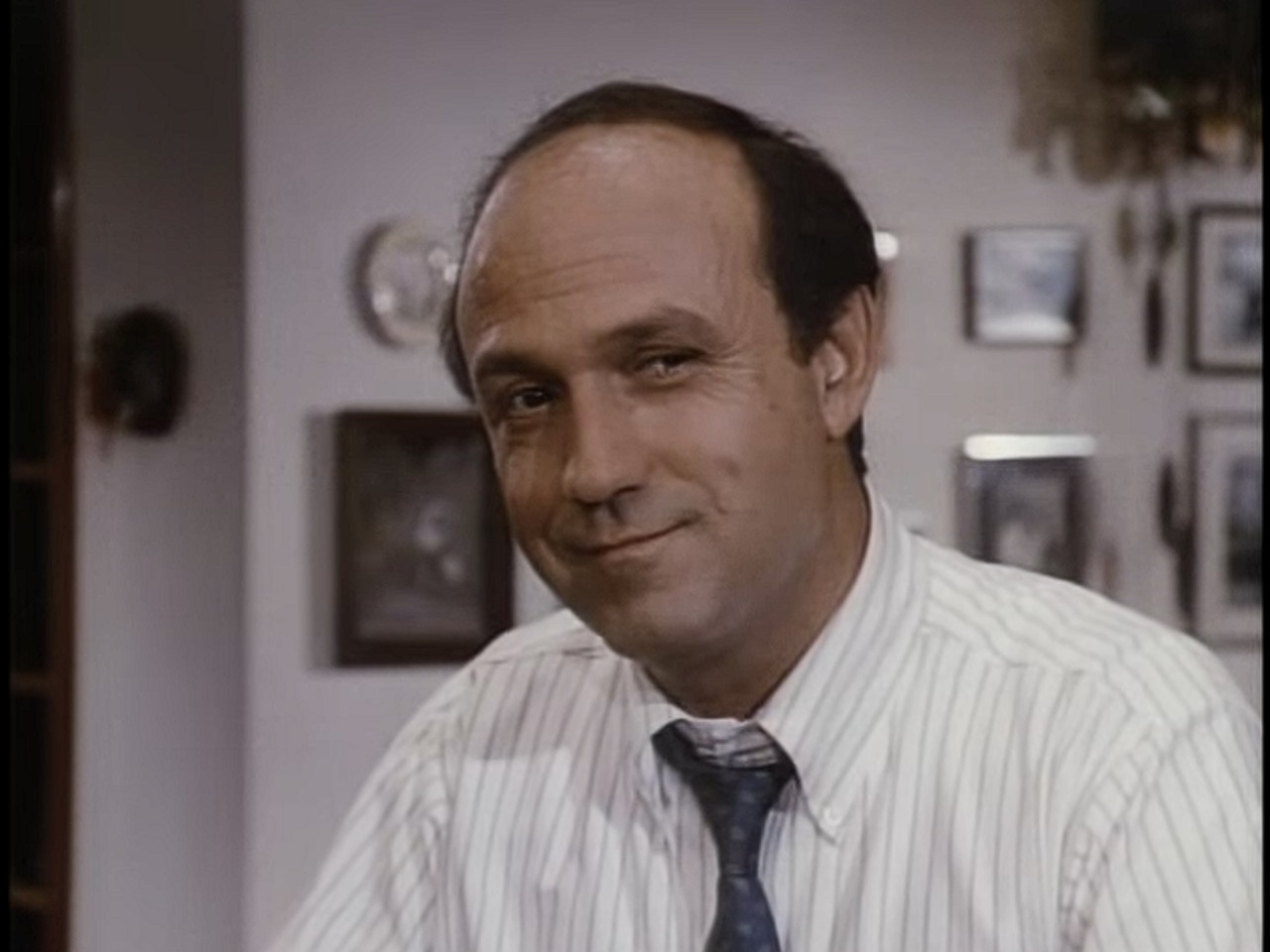
With three total appearances in three episodes, he’s one of the most recurring Highway actors the series. Alongside Lew Ayres, who is coming back at the end of this season, he’s the most recurring Highway actor playing different characters (thus, excluding James Troesh as Scotty or Margie Impert as Diane and those who play recurring characters, and the odd cases like Ivor Barry who may or may not play the same character).
And Landon probably enjoyed working with him: this was not their last collaboration, either. They were together some three years after this episode on US, the new series Landon and his collaborators planned to make after Highway (it was a sort of new Highway without angels). But then Landon was diagnosed with a serious disease after making the pilot of that tentative new series and died a couple of months later, and US never became a thing. Perhaps Spielberg was going to become another of Landon’s recurring friends and collaborators. (Like Richard Bull or Kent McCRay the producer).
Anyway, after that, he kept acting for some years, then he gradually stepped down in the late 1990s until retiring definitely in 2006, and passed away ten years later.
He’s not the only old actor, though: Pete’s father-in-law is played by Bill Quinn, another old friend.
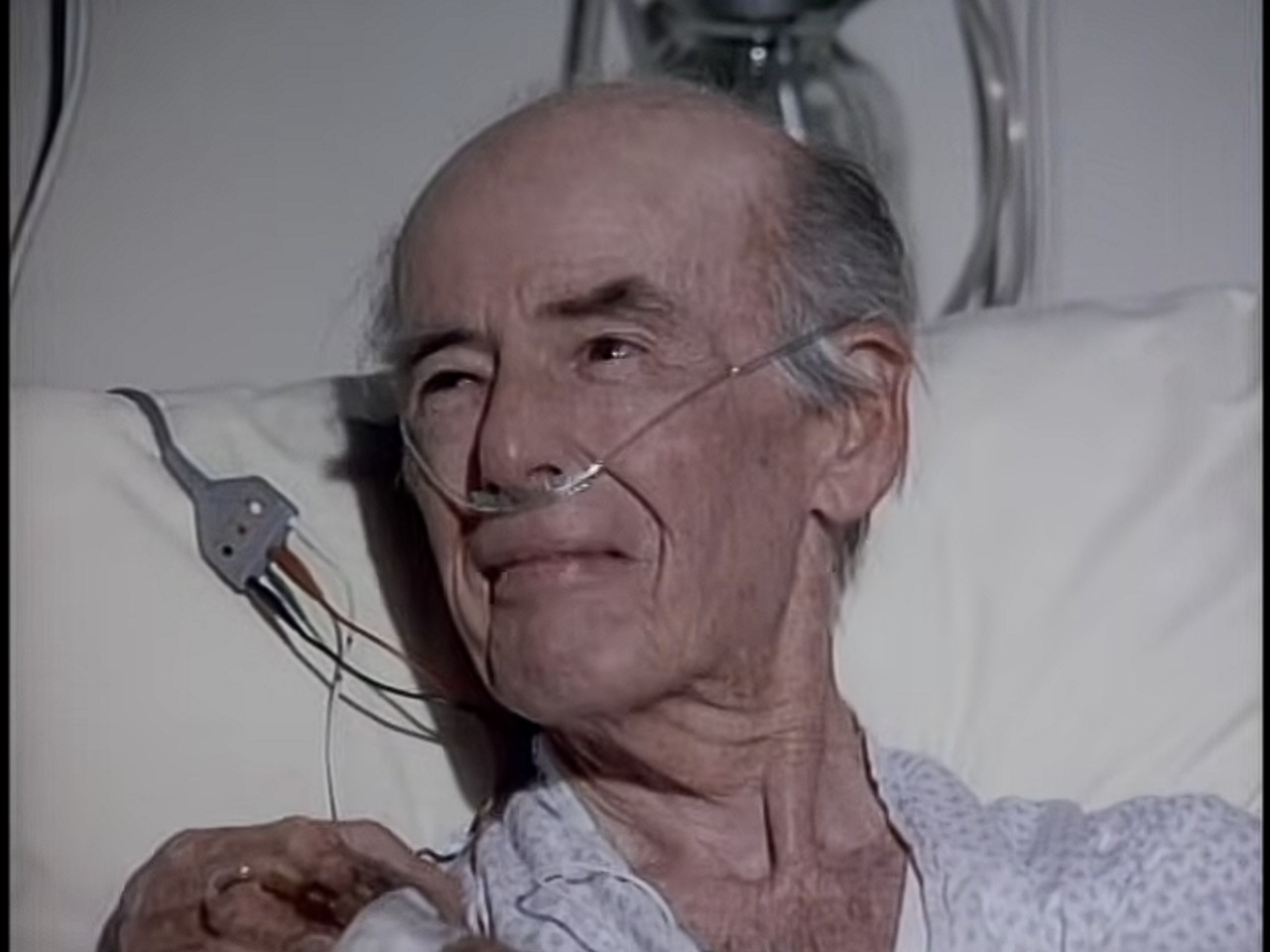
It was a long time ago: he used to play the head of the orphanage board in the season one Christmas Special, the episode about Christmas Carol, the first episode in the series in which Jonathan became sandman and invaded someone’s dream (the precursor of them all).
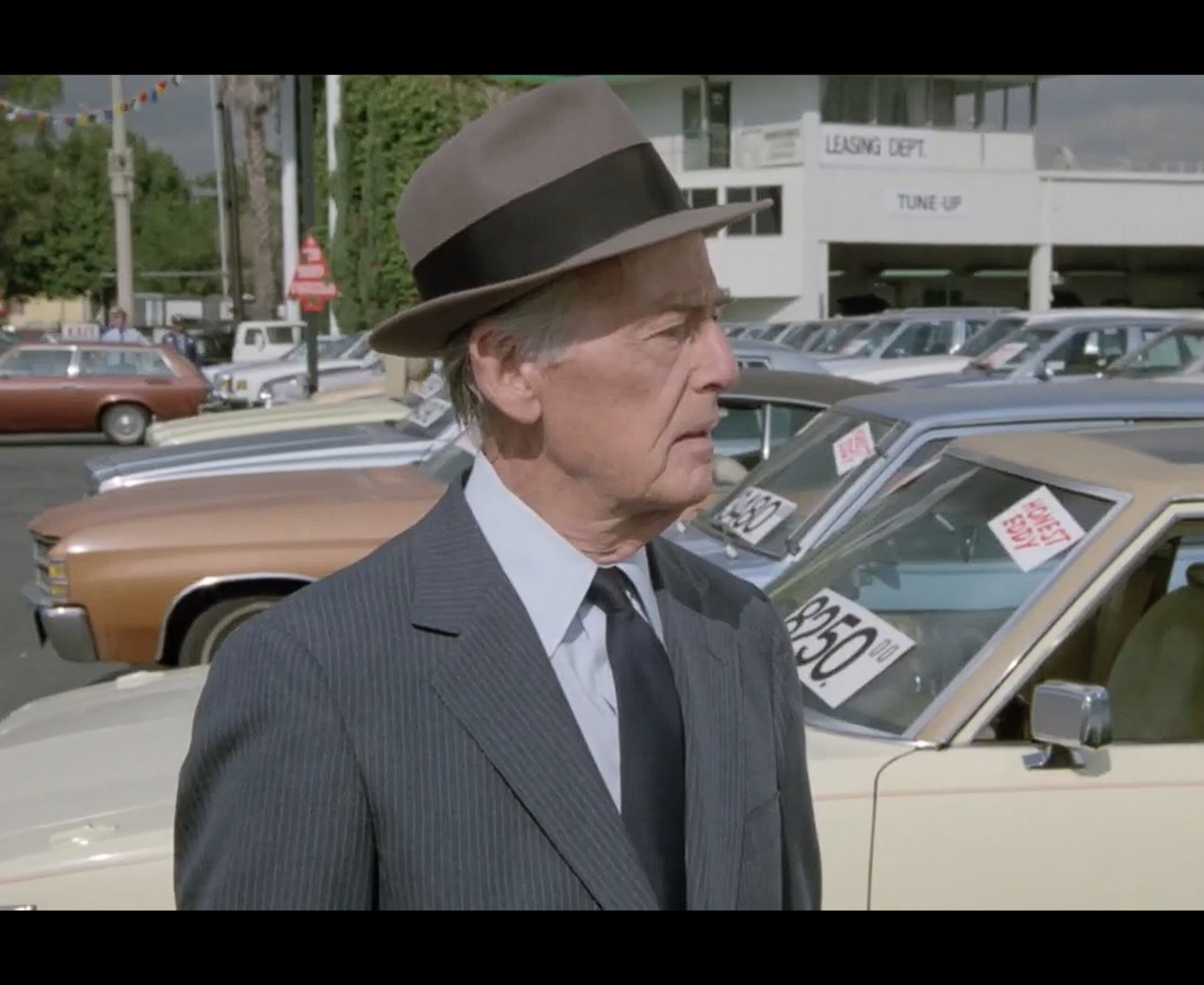
By the time they shot this episode, it had been almost four years. He’s probably the oldest Highway actor to ever come back.
- Production and Setting
As for the production, this episode was shot in late August 1988 as the first episode of the season. That is extremely late for a season premiere: in season one, production began in early August; in seasons two and three, it began in July; and season four was moved up to May due to an impending directors’ strike, which eventually lasted only one day that summer.
This time, there was another strike, although it was much longer. In early March 1988, it was announced that the writers guild had decided to strike, and that eventually lasted all the way into the summer. Nobody had much opportunity to prepare beforehand, as it began shortly after completion of the season-four finale. Besides, unlike the previous seasons, there was no certainty about moving forward with a fifth season, and a decision hadn’t been made by the time the strike began. So even if the strike had not been so early, it’s unlikely they would have had enough time to prepare for a fifth season in early summer as they had done for season four a year earlier.
The strike eventually lasted until early August, the longest in the industry, and the new TV season which usually starts on September was postponed to early November instead. But again, Highway To Heaven season five is just a replacement season which wasn’t scheduled to air in early fall as usual, so there was no need to rush production and get this episode finished quickly.
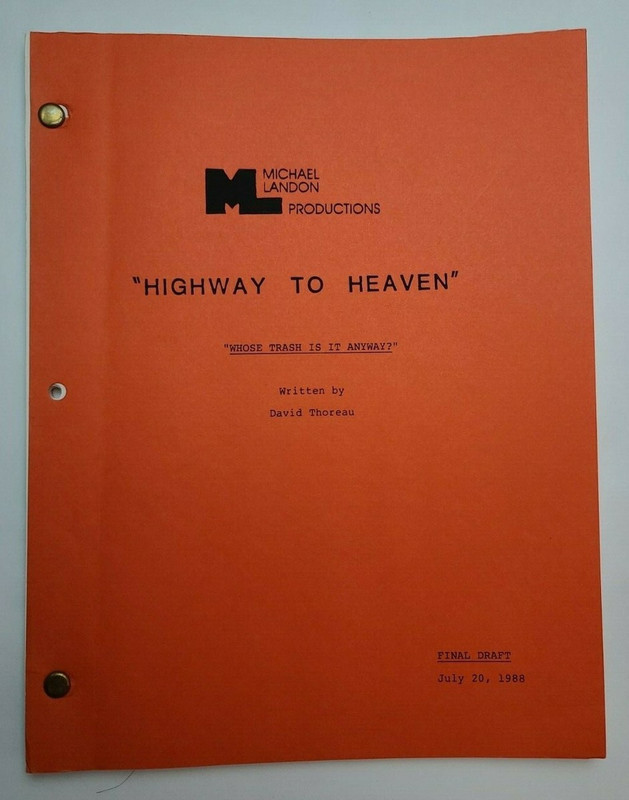
Even though they could have done that: in a 1988 article on the Los Angeles Herald Examiner it’s reported that Highway was one of the few series (alongside The Cosby Show, ALF and a few other shows) to receive permission to begin filming despite the ongoing strike, while other shows were shut down. So this episode finished writing during the strike (as confirmed by the draft date) and was ready to enter production as soon as enough episodes in the season were ready to begin filming too. Actually, the article concluded by stating that the series could have benefited from the strike, as it already had completed enough episodes by late September to keep a weekly broadcast going for a couple of months.
Importantly, the network seriously considered something like this: on a promo picture dated August 1988 (during production of this episode) it’s reported that Highway was going to come back on October 5 for its fifth season. Perhaps there were some discussions going to schedule season five on a weekly airing as the rest of the series. However, it’s not what happened: the series did have five episodes completed by late September, but the network still decided to hold everything back as a replacement and go for Unsolved Mysteries on the weekly lineup instead. And this episode aired on October 12, one week later.
That series is a documentary which needed no permission for shooting during the strike, for that matter. It was rather unusual for a documentary to air in the primetime slot back in those days, but the 1980s are almost over, a revolution is underway on TV (the strike being a leading drive of it), so nothing will be as it used to.
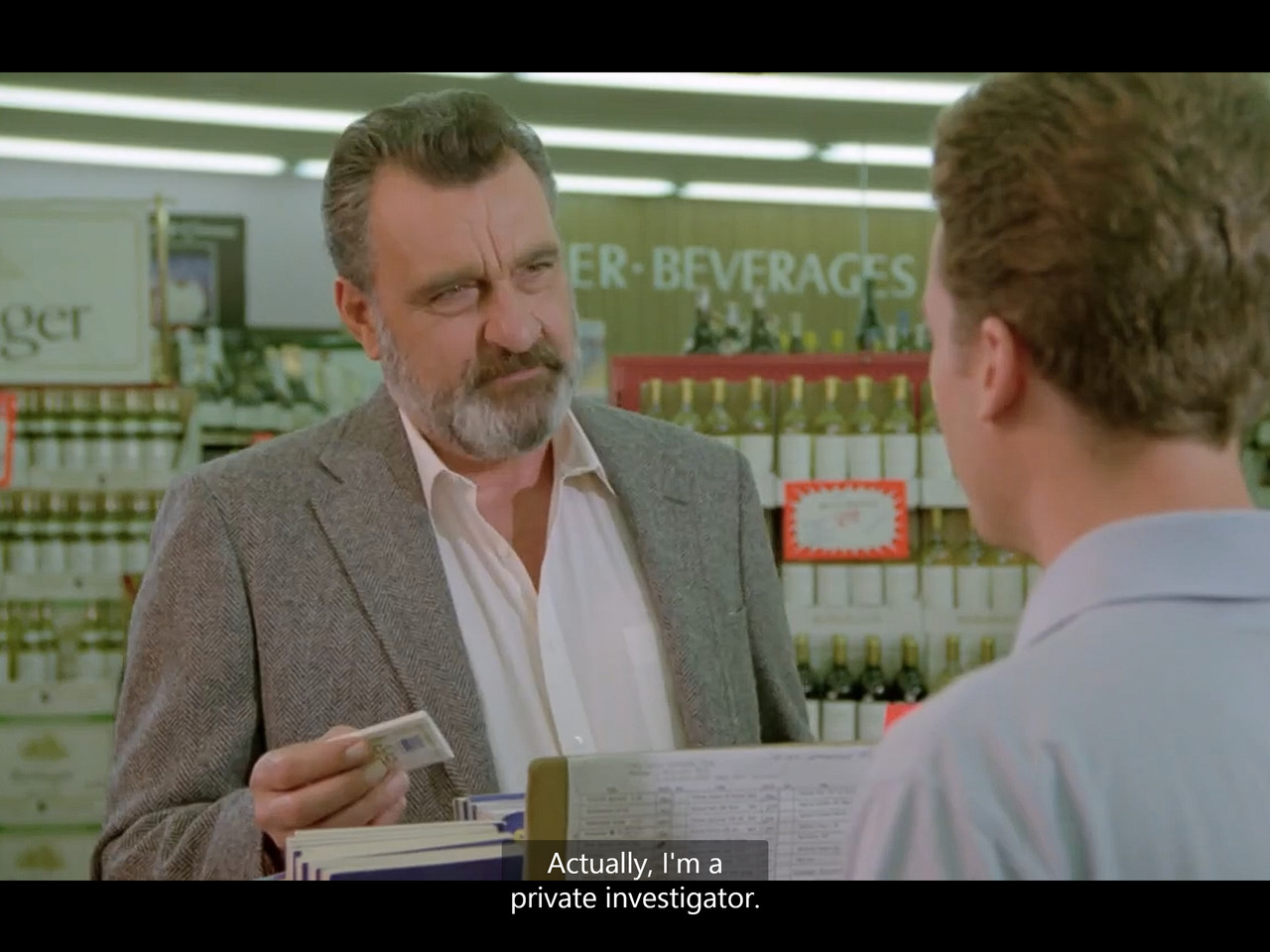
The episode was written by the young Thoreau on July, during the strike, and it’s his last contribution to the series. It is time to salute an old friend: he began his Highway career with Children’s Children in season two (which was also his first credit ever), and subsequently wrote only episodes dealing either with young people and their emotional life (A Night To Remember season three) or with investigations and police assignments (In With The “In” Crowd and Back To Oakland in season four). This episode partly falls into the second category.
He certainly can’t help it.
After the conclusion of the series, he continued writing for a few more years and retired in 1990, wrote some mystery books and probably retreated to a little house in the big family woods, or something like that.
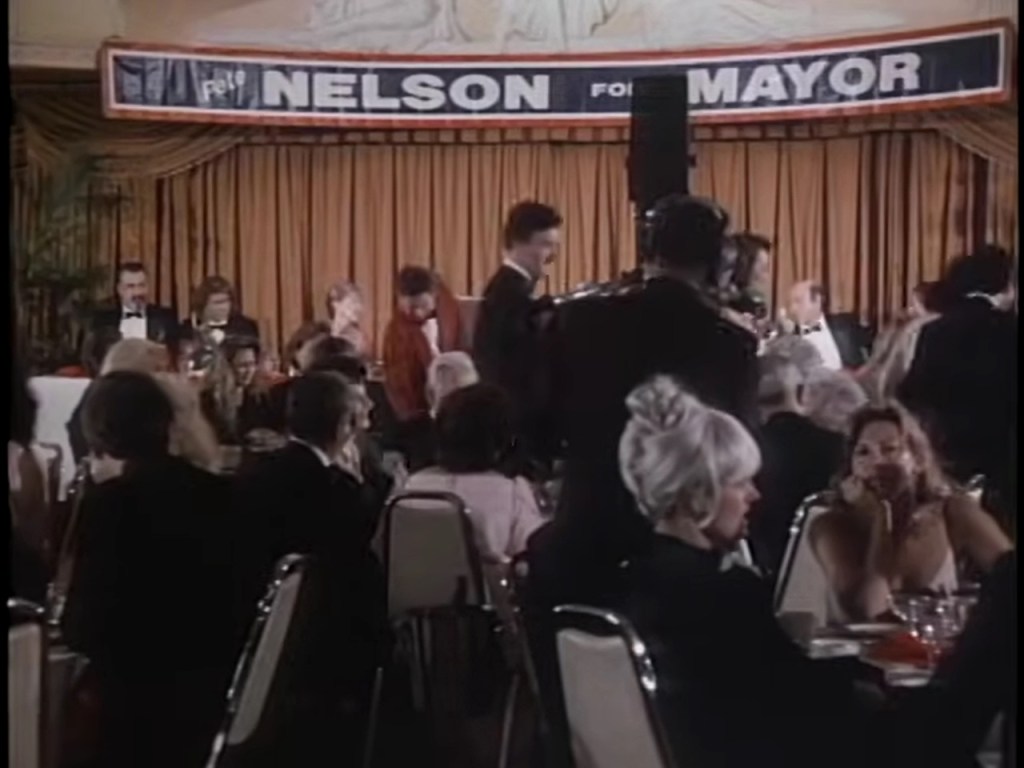
As for the locations, the episode was filmed around Los Angeles in many old places.
Looks familiar.
The hall where Pete’s son praises his father in a public speech is the hall of the Ambassador Hotel, which was used for Cindy’s ball in Cindy season two.
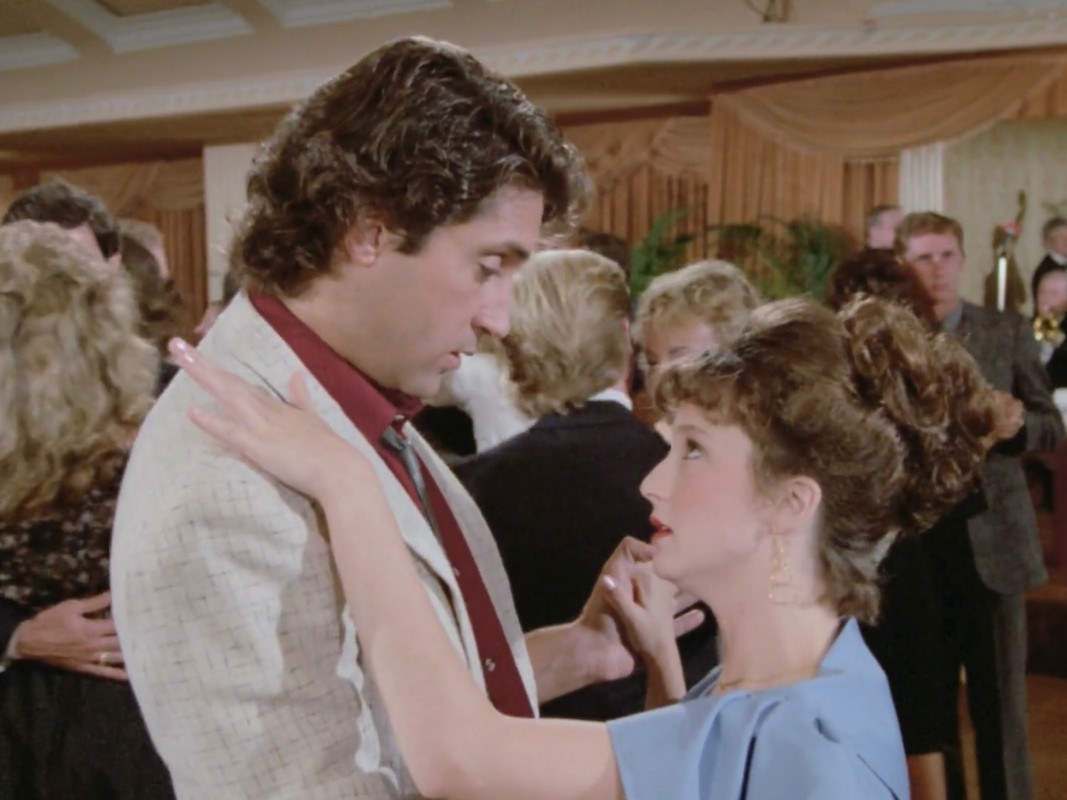
The hotel closed down one year after this episode was filmed. But keep it in mind: they’ll be coming back to this place many times this season.
It’s season five, time to recycle old sets.
Glossary:
Blooper: the moment Pete wakes up and his wife prepares breakfast, there’s a blooper in the background.
There!
While Pete is taking a seat, a mysterious girl holding something appears in the mirror on the left.
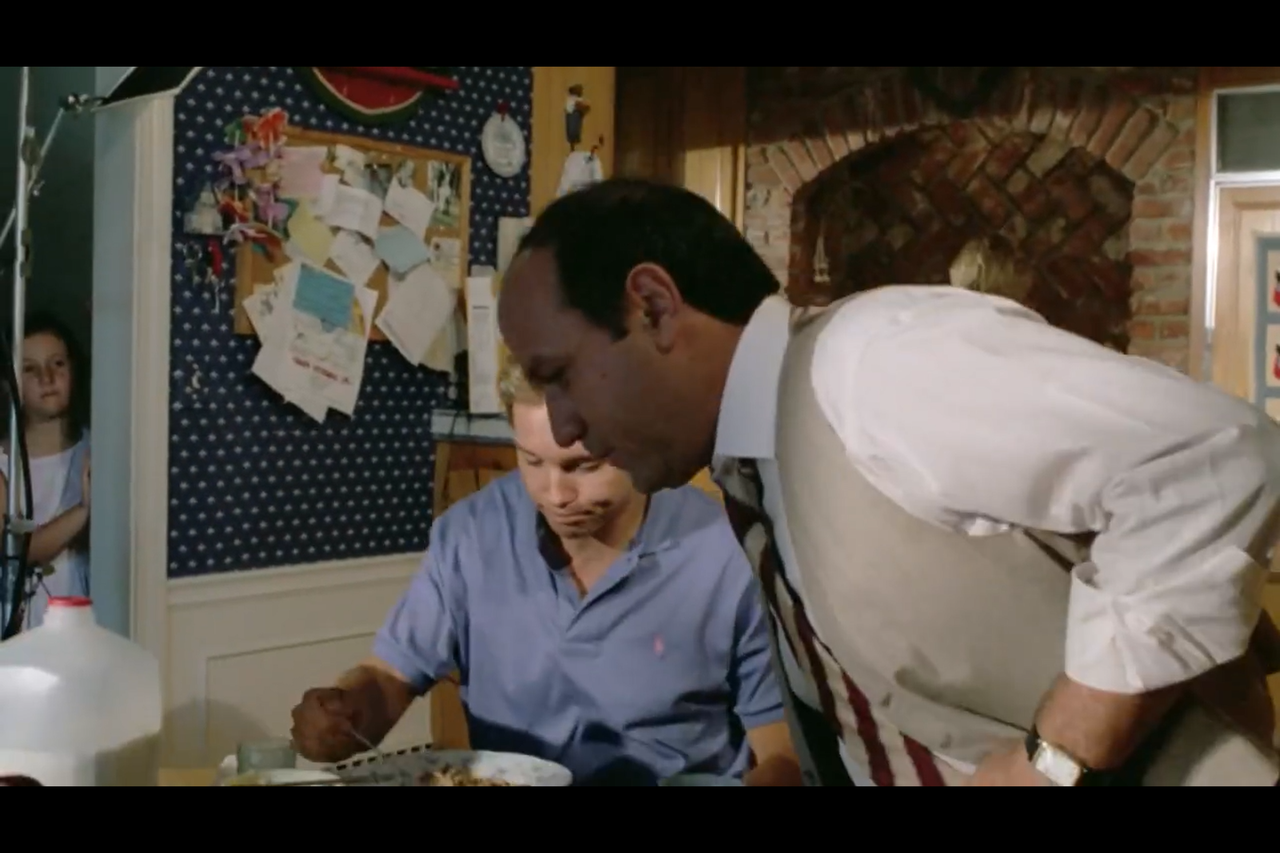
Maybe that’s the family’s daughter nobody knew they have, like Mark is supposed to have a lost, runaway brother too.
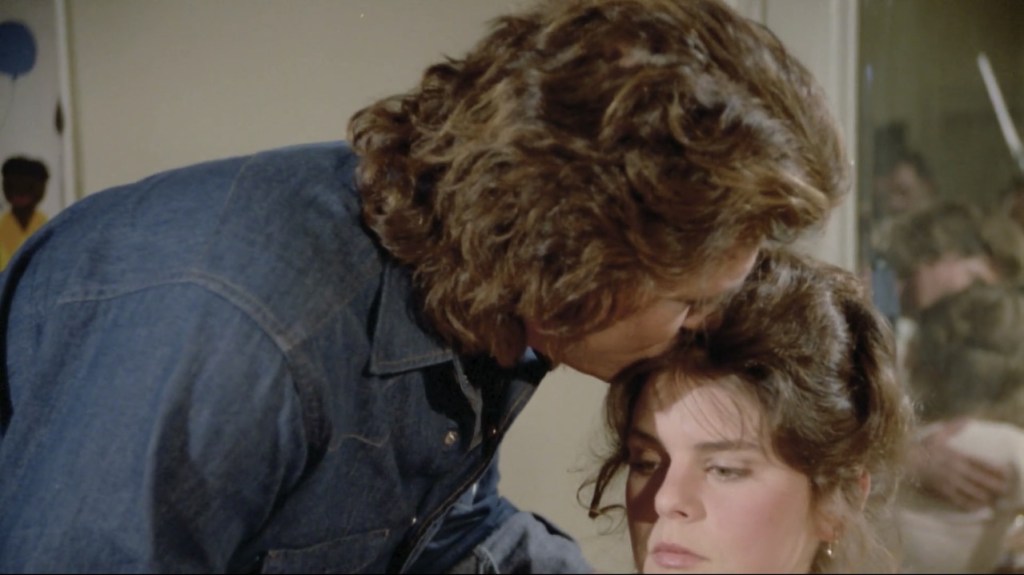
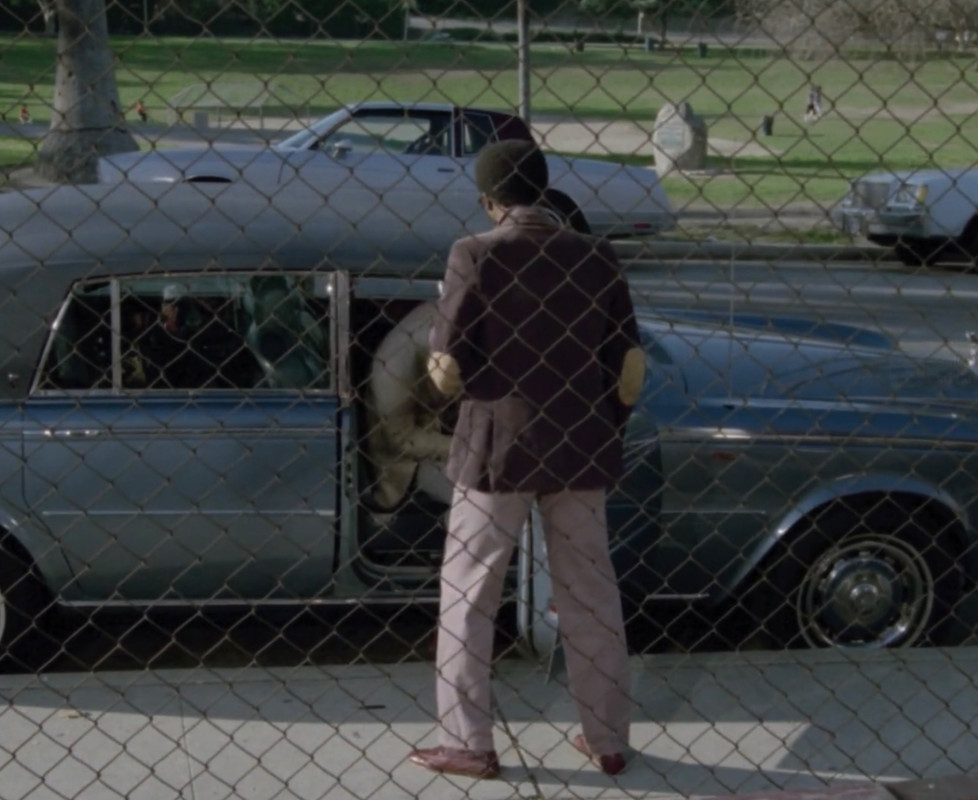
Anyway, that’s the third time in the series that a blooper has involved mirrors and someone appearing in them. The same thing occurred in Children’s Children two years ago.
And even As Difficult As ABC in season one before that.
This time the episode was directed by Landon, at least.
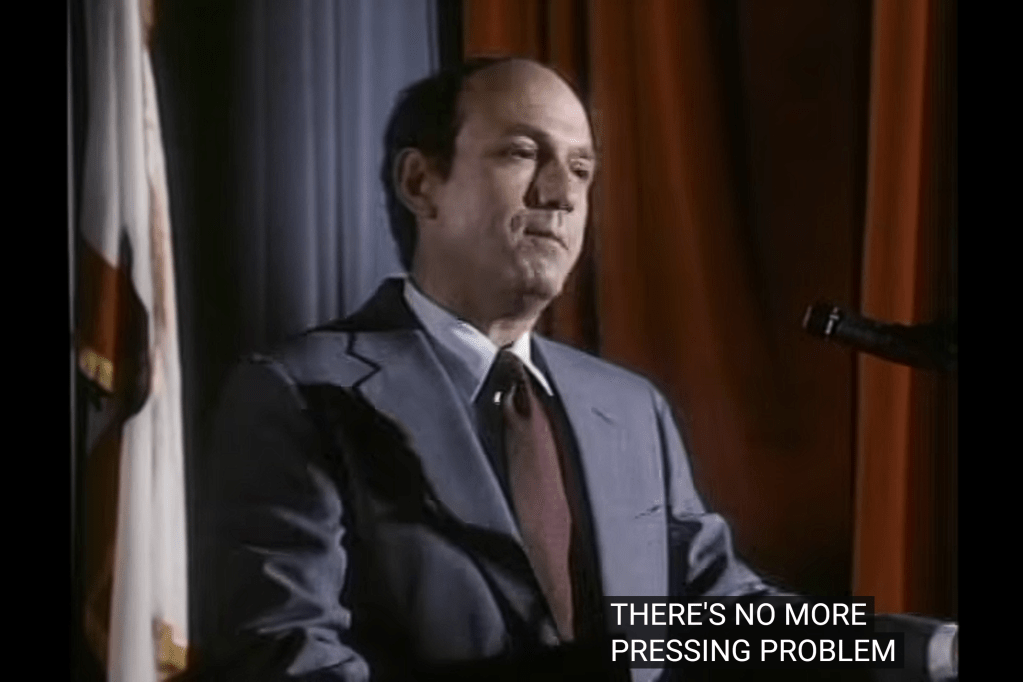
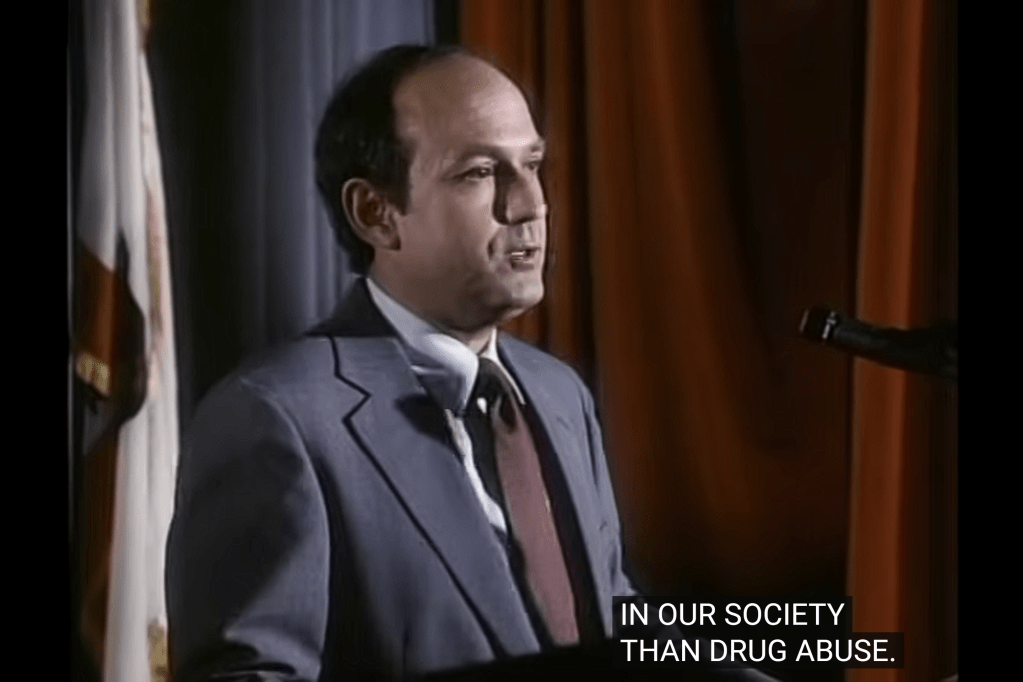
BBD: this episode has it all. Maybe that’s why they started the season here. As the title makes clear, this is an episode about drugs, one of Landon’s three recurring obsessions.
And they talk about it many times.
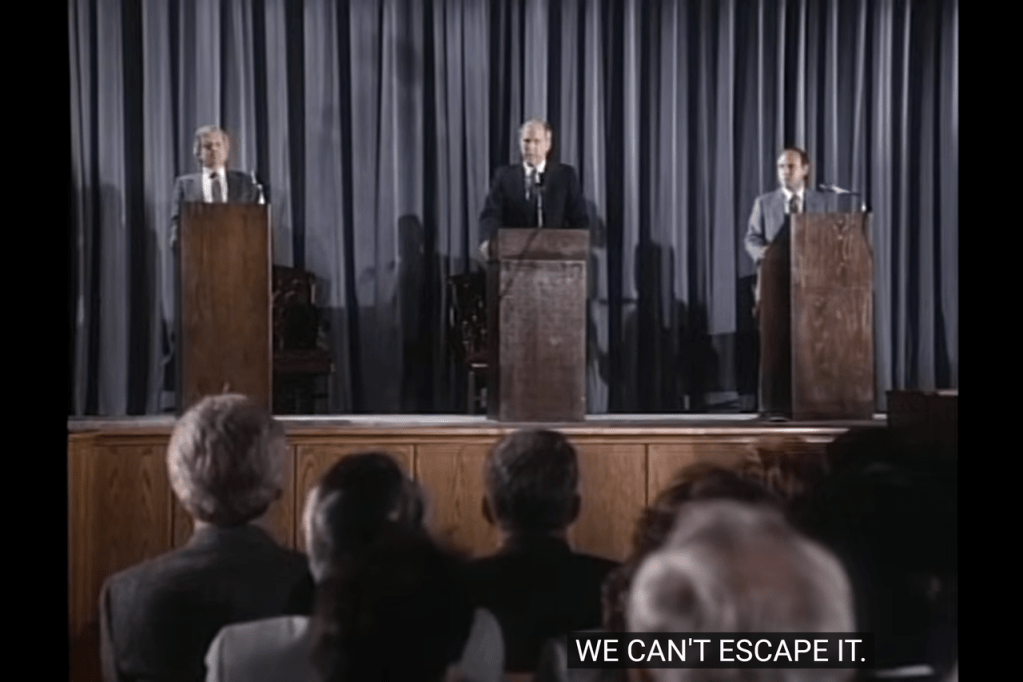
A Landon’s TV series on the danger of drugs? You’re right: nobody can’t.
Besides drugs, there are also references to bums and bins, just to throw all of Landon’s obsessions into one episode.
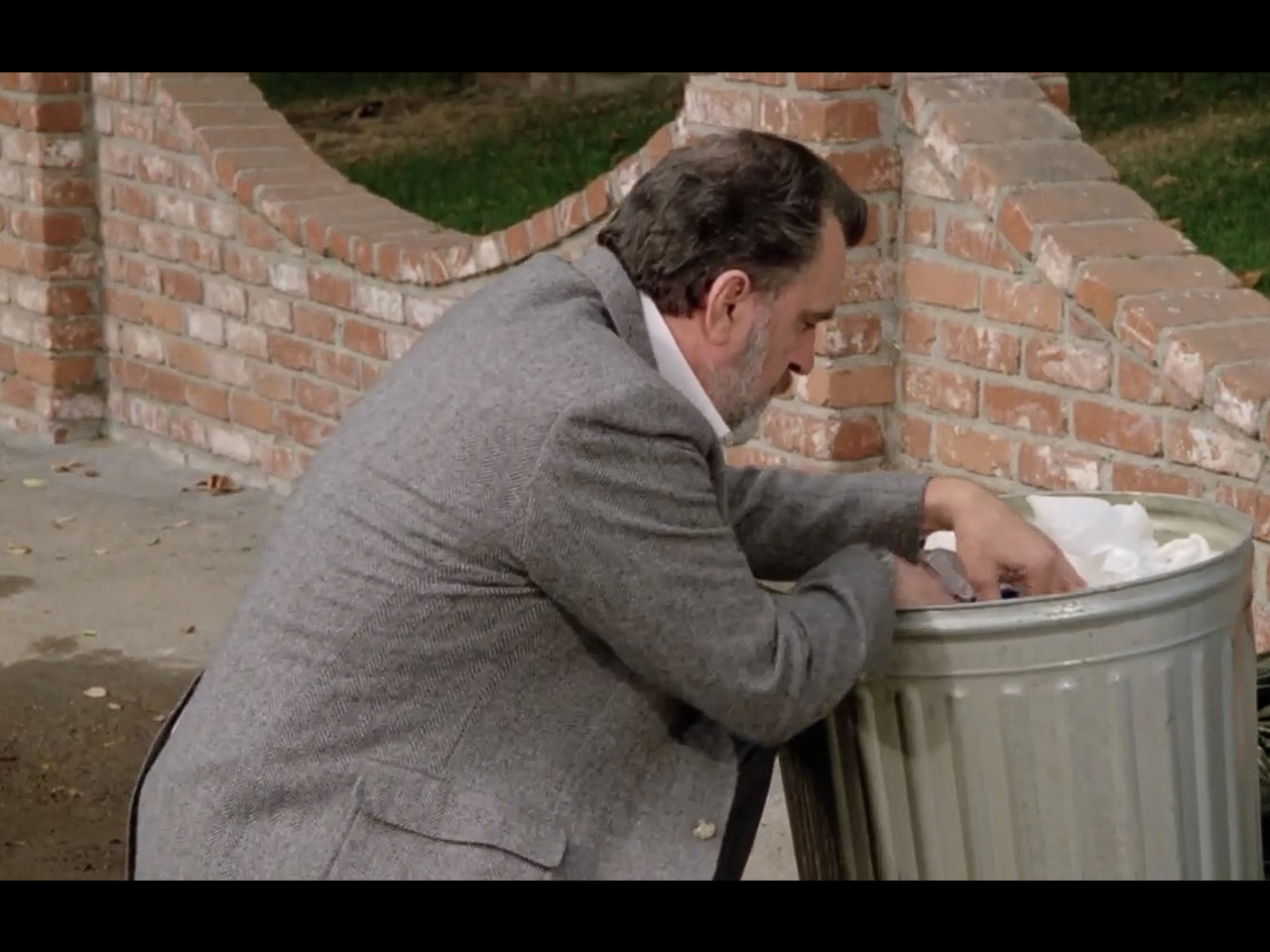
A nice kicker for this.
Punchlines: many punchlines at the end of the episode, when Pete instructs people to be come together.
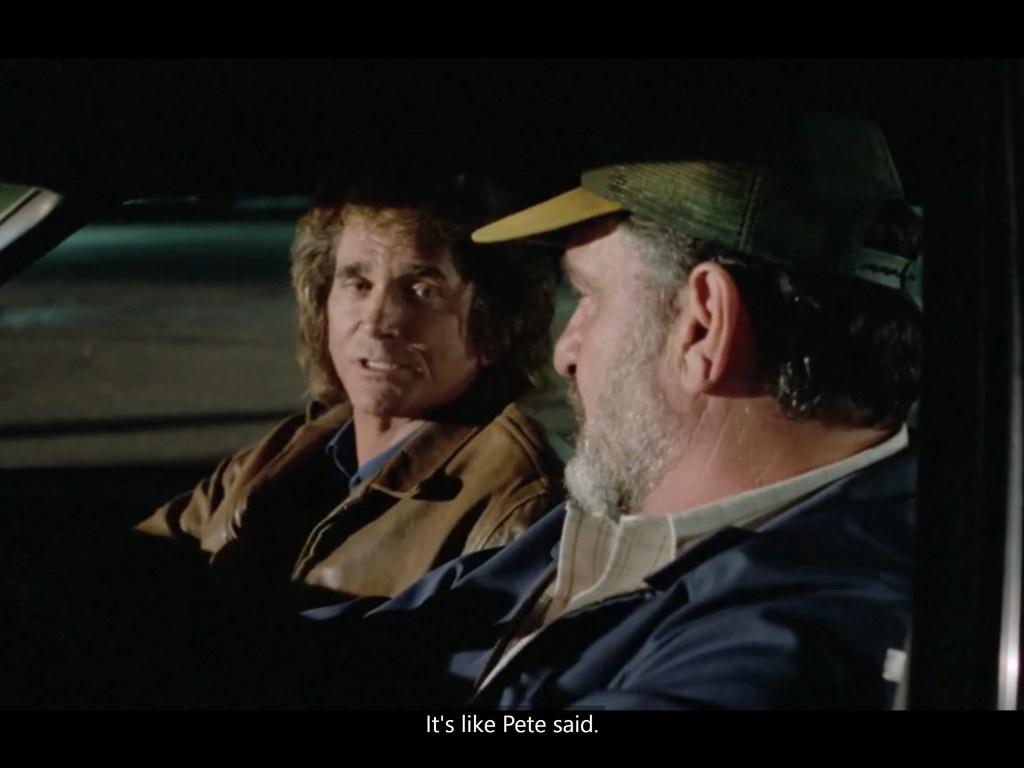
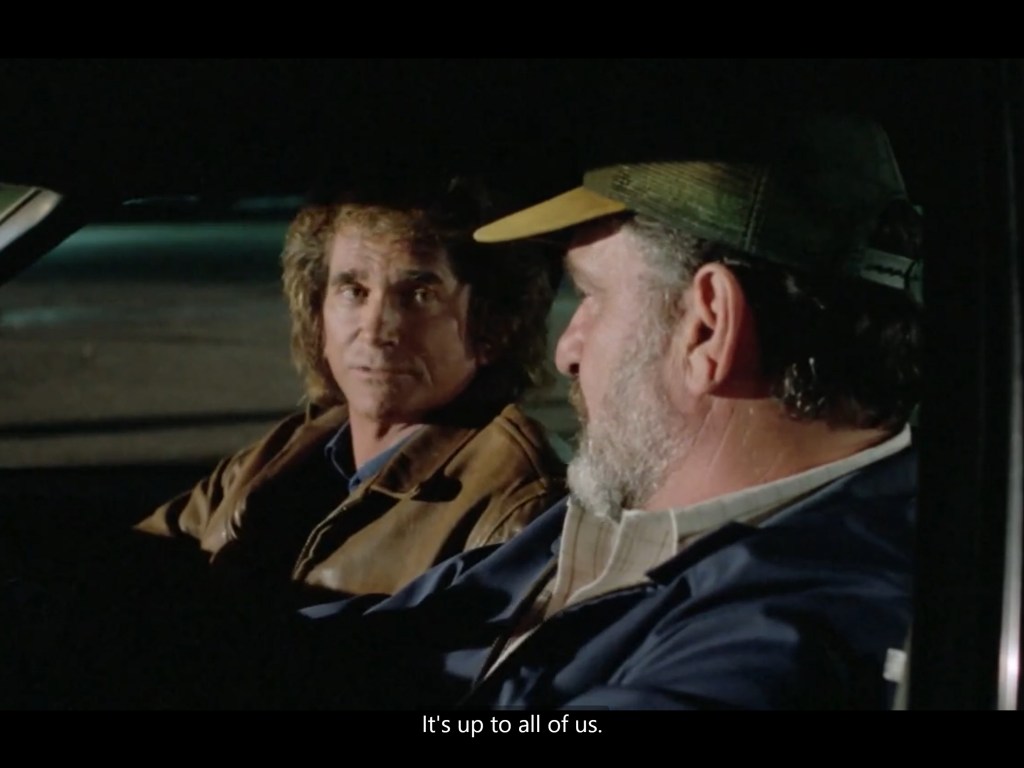
That’s pretty much what the series is about.
Sunday Suits: in this episode Jonathan and Mark wear their Sunday suits, the first of admittedly many times during this short season.
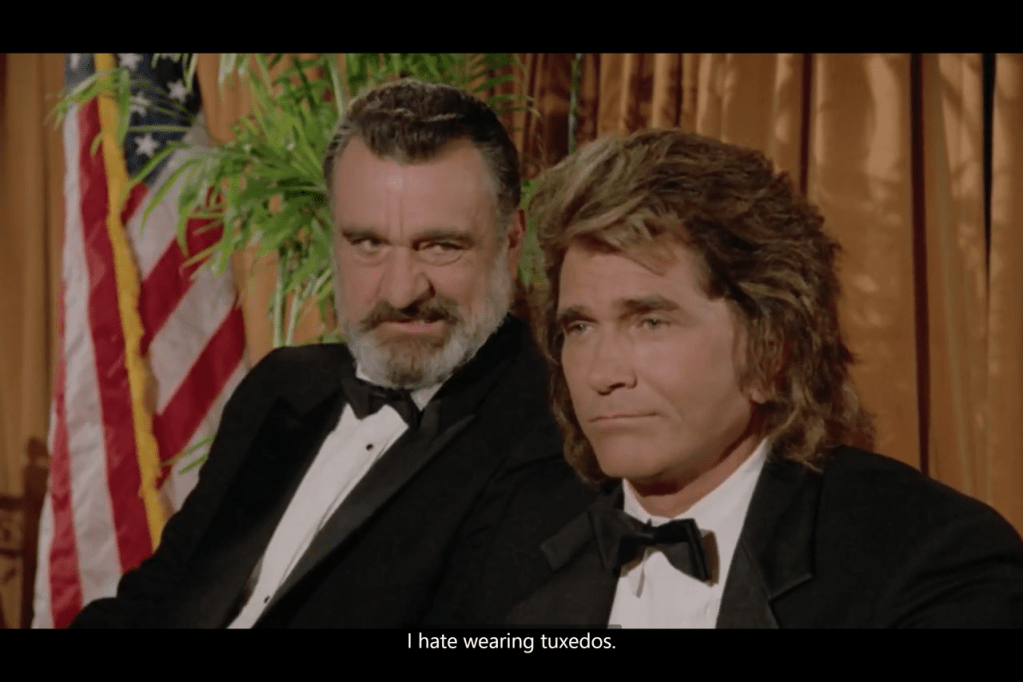
There is actually a curious detail: they are both wearing the black suit when Pete’s son celebrates his father, but then they wear the gray suits when Mark rummages through Richard’s bins and when he confronts him.
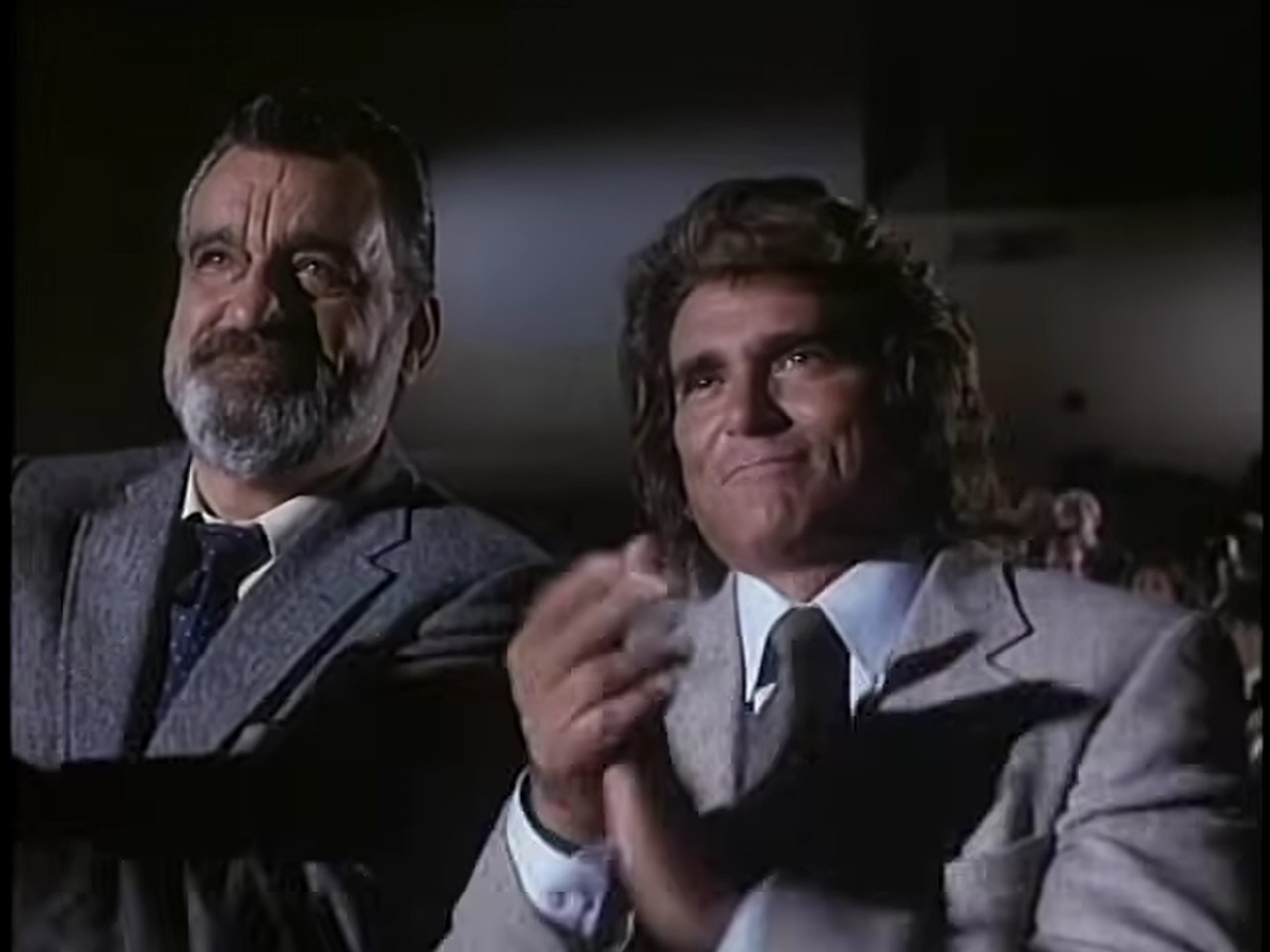
Then Pete has its night, and the episode concludes with Jonathan and Mark driving away. Although neither of them is wearing the suit anymore.
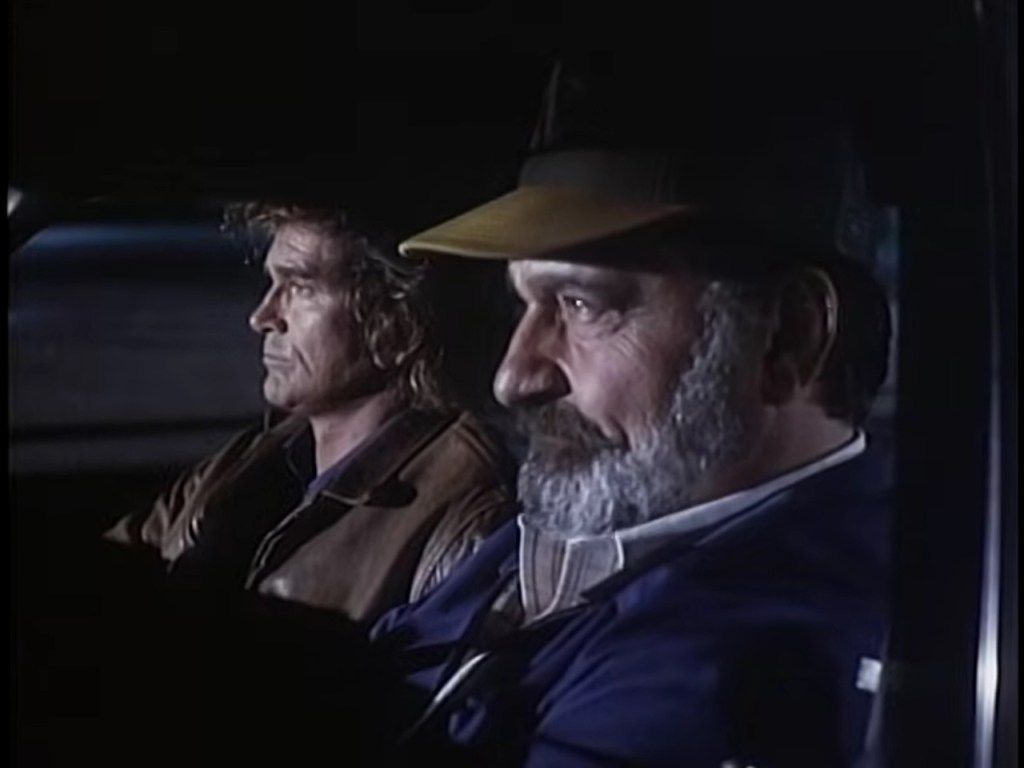
It seems as though the scene takes place immediately after the speech, but perhaps it doesn’t, and some time has passed. If that is the case, the episode’s chronology becomes even more unclear.
But it’s hardly the case. Just imagine: you’ve been at your former friend’s party where he dropped some punchlines while running for mayor, and you bring it up on some random night some time later. It’s more likely a blooper, and the actors forgot to wear their suits again.
Friendly Jonathan: no better way to kick off the season than Jonathan being friendly; Mark asks him to turn off the television. And Jonathan does nothing.
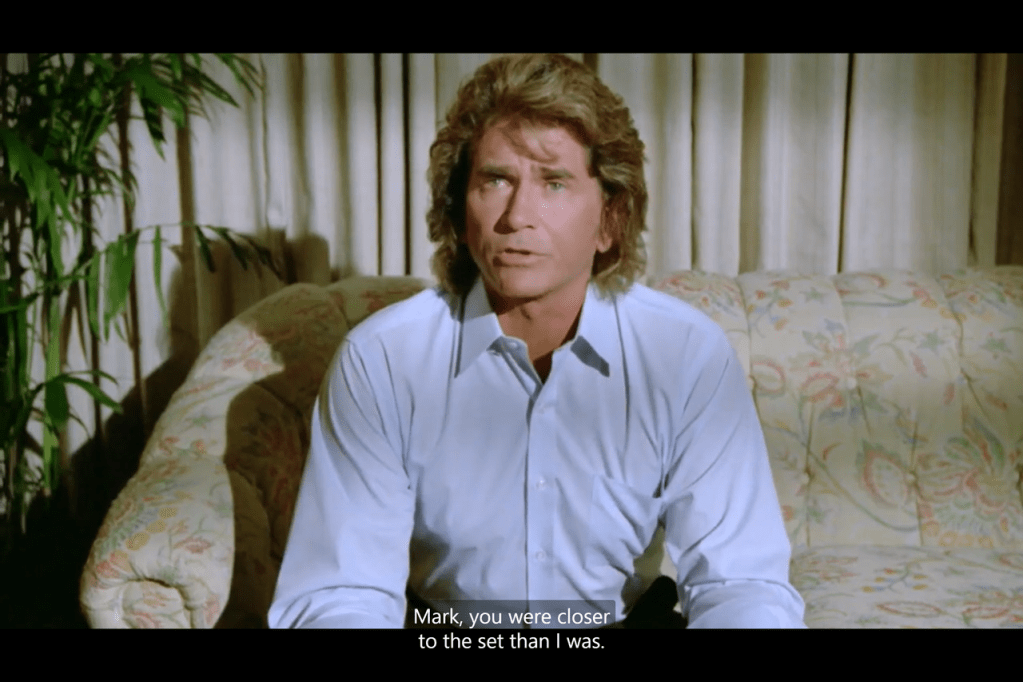
He could have said that, instead of sitting there doing nothing.
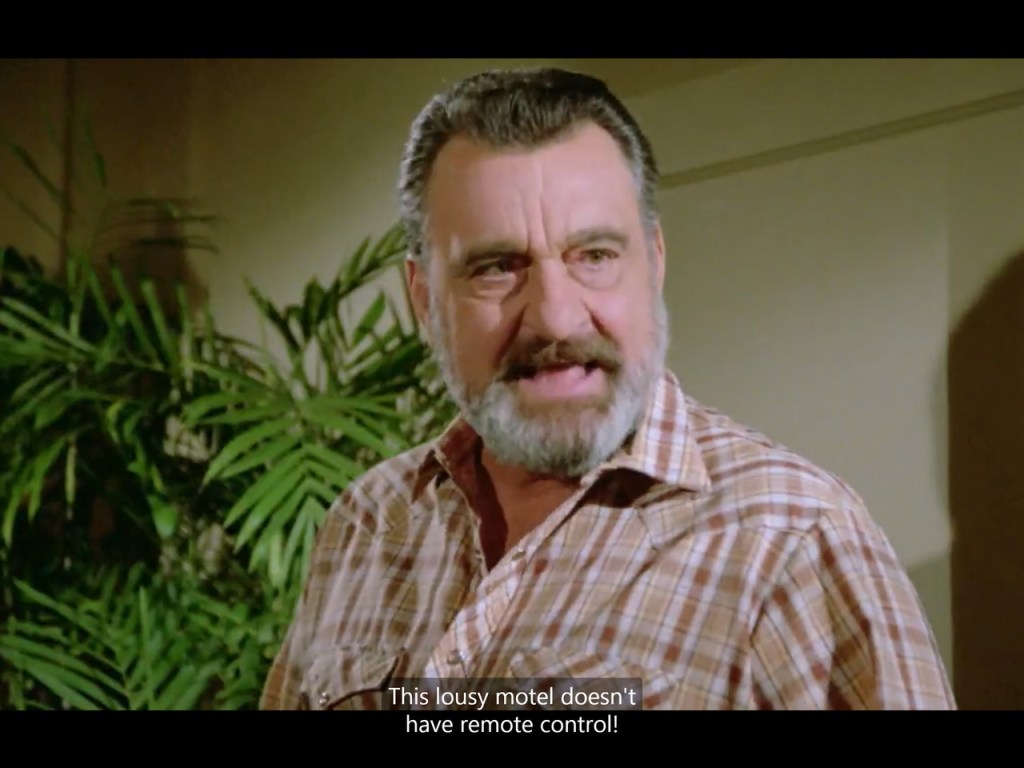
Did motel without a remote control ever exist?
The second moment occurs as Mark tells him that he feels awkward, and Jonathan replies with a joke on Mark being a penguin.
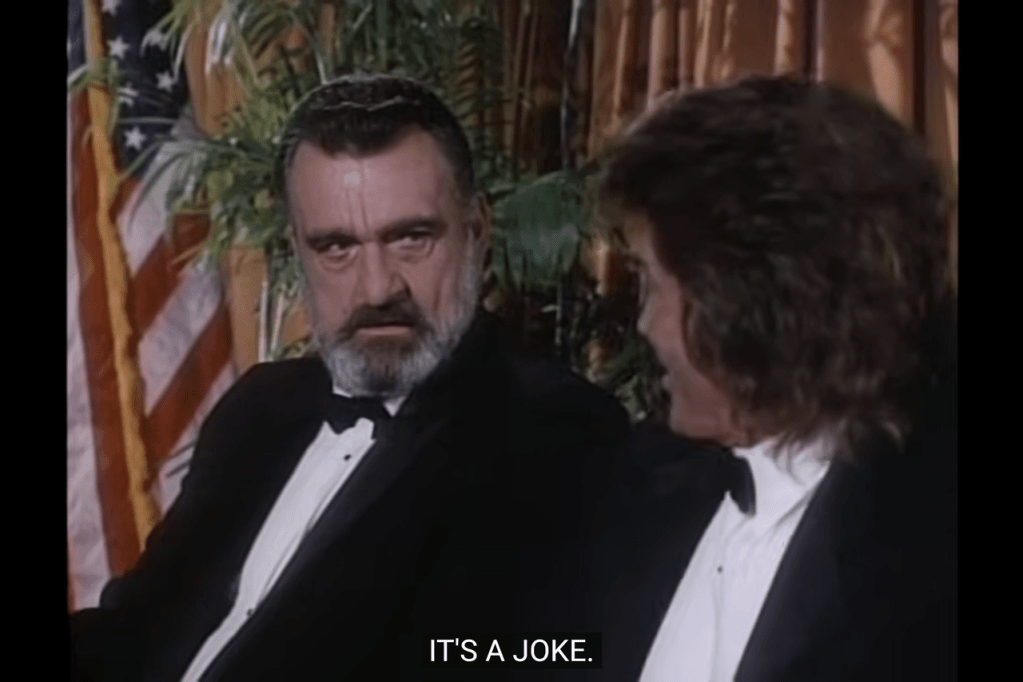
Cute.
Horselaugh: there’s a couple. One is a quiet horselaugh in the scene when Jonathan and Mark argue over politics. And that was unscripted, like many other horselaughs in the series: in the original script of the episode, it’s reported that the scene had to be cut immediately after Jonathan’s line about being right. But then French improvised his line back.
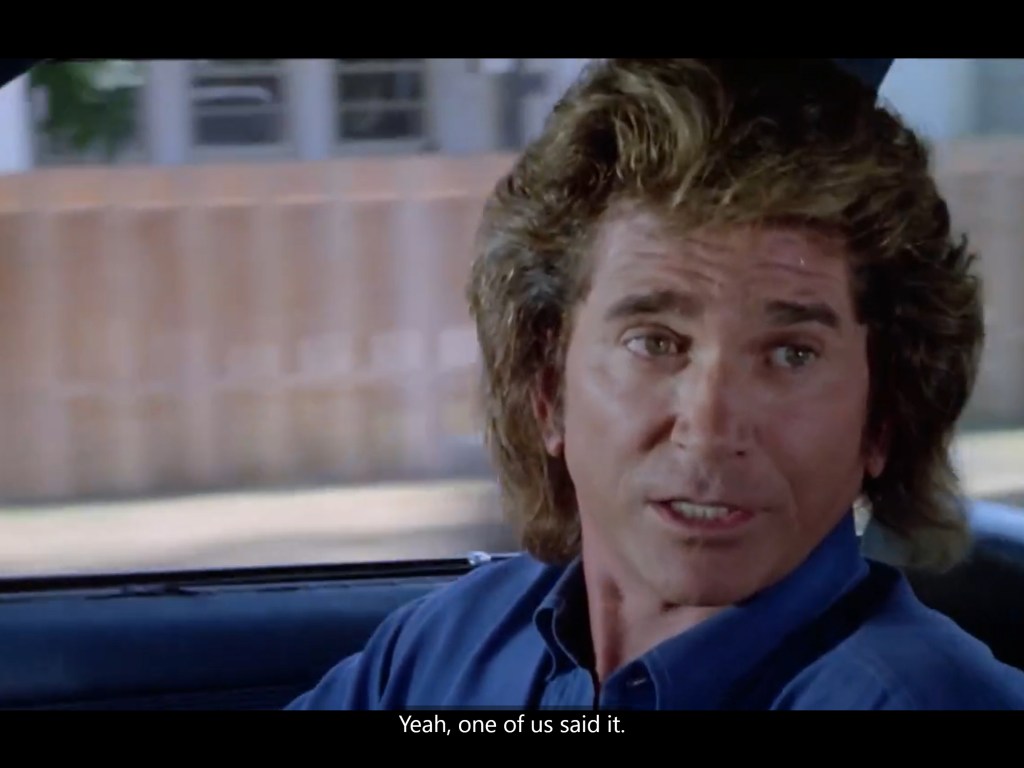
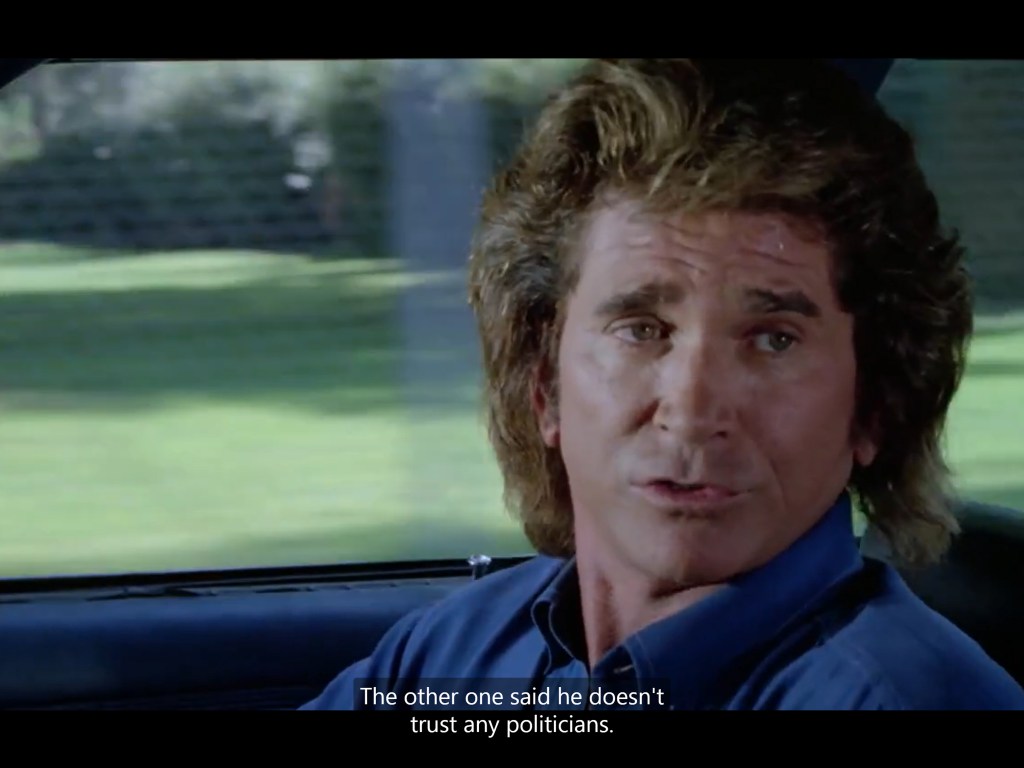
And they both liked it.
It’s clear they were definitely enjoying this.
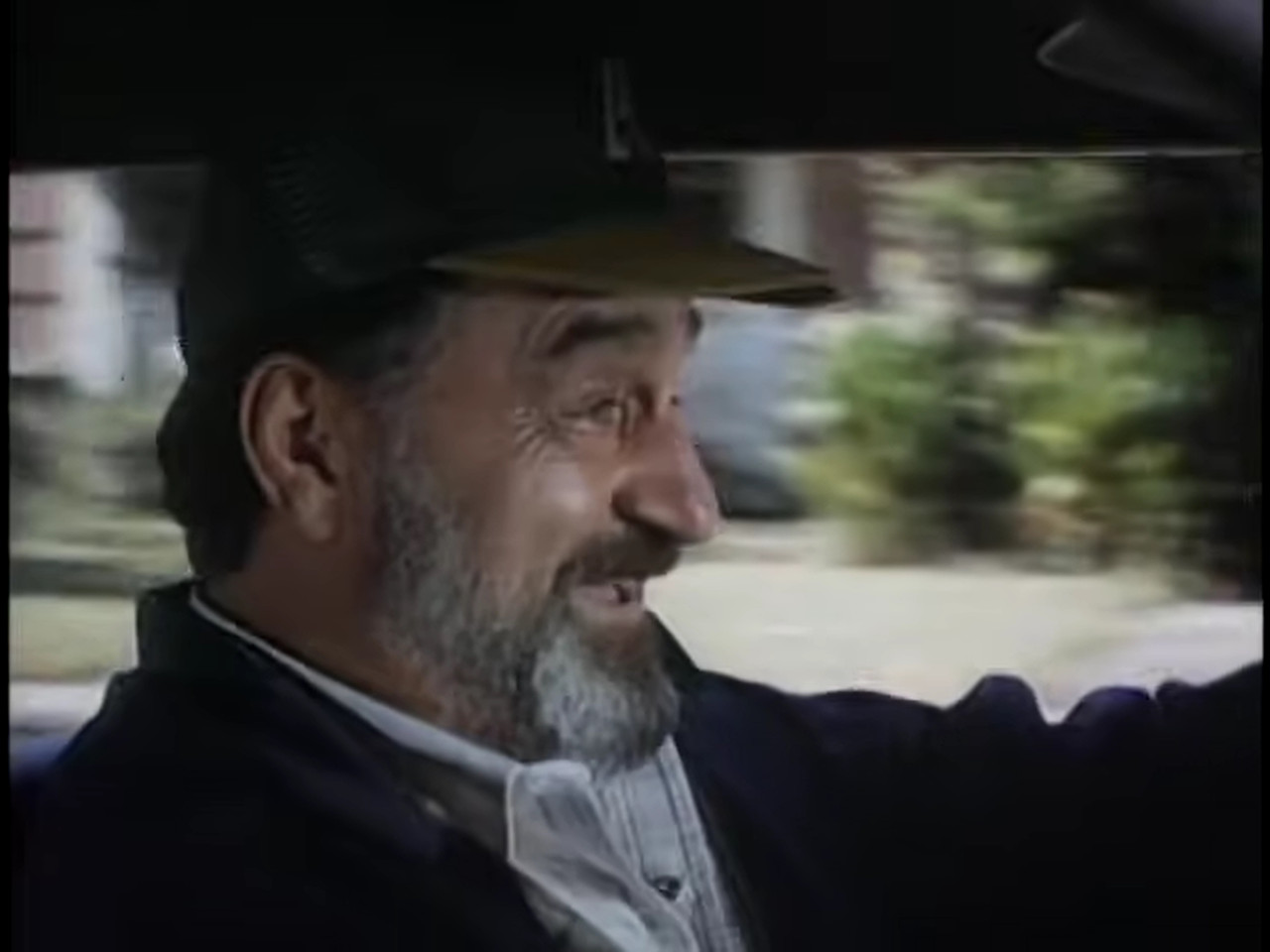
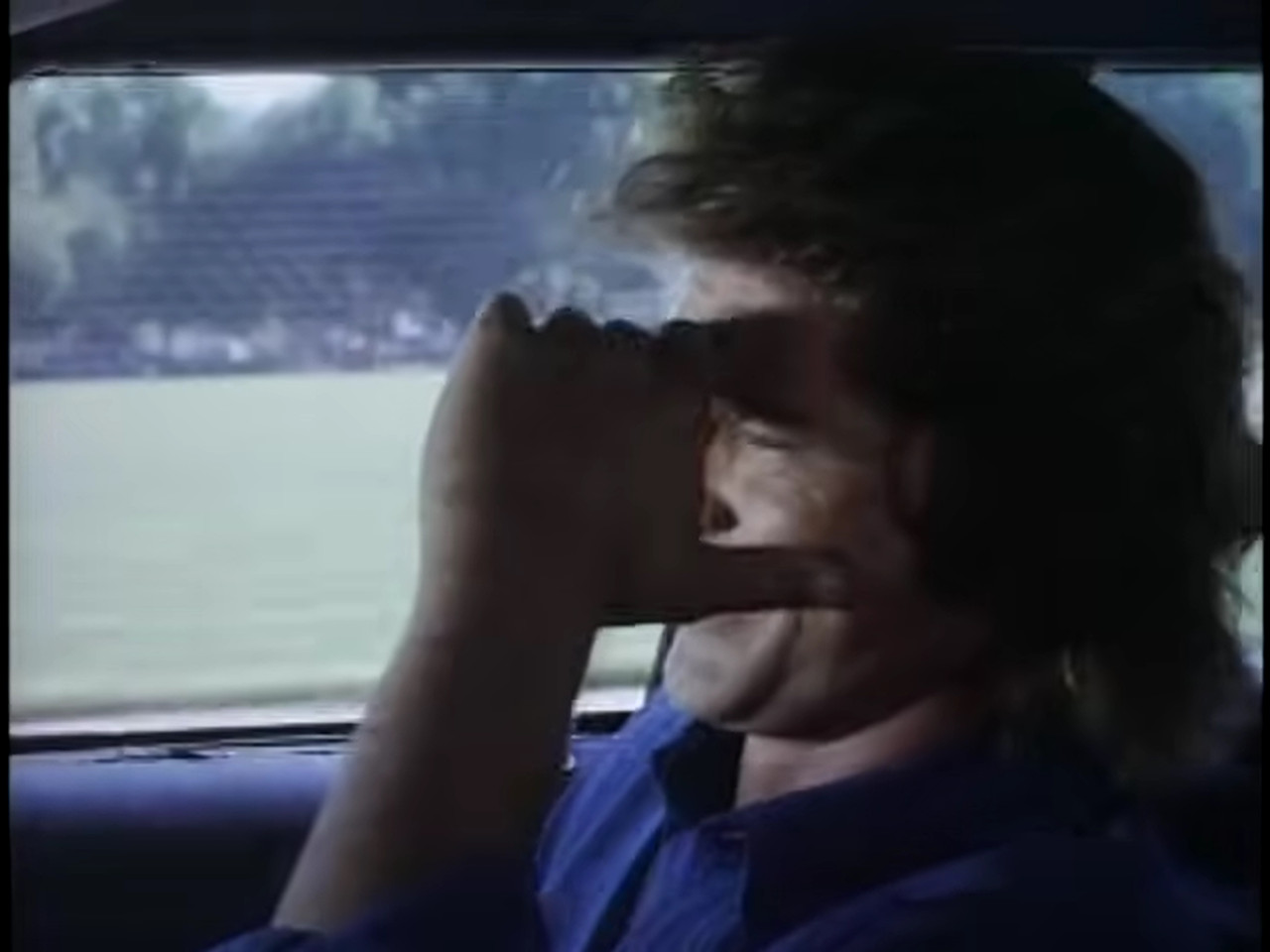
And they knew it would end soon (the fifth season was ordered to be the last one, so all those who were involved with the series were aware that their time was up in a few months).
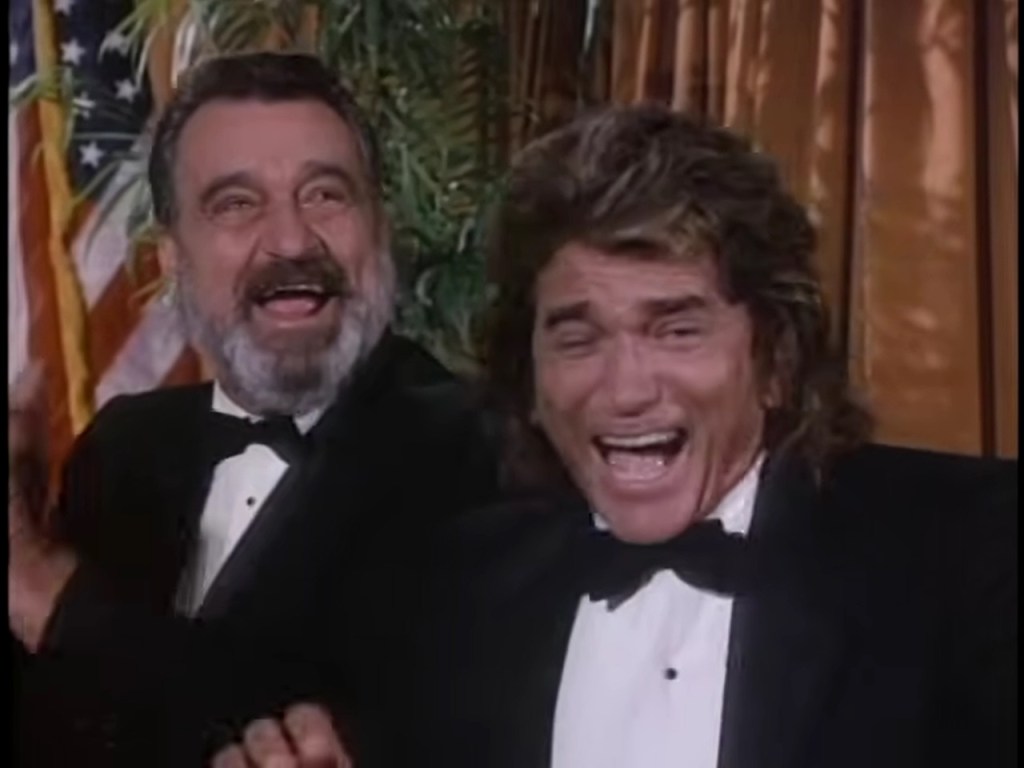
The second instance occurs when Jonathan jokes on Mark and his attire at the hotel.
References: it’s a peculiar, old reference. During the campaign, Pete’s son has a speech in which he congratulates his father and talks a little about his life. And then he admits that his father can’t stand lies.
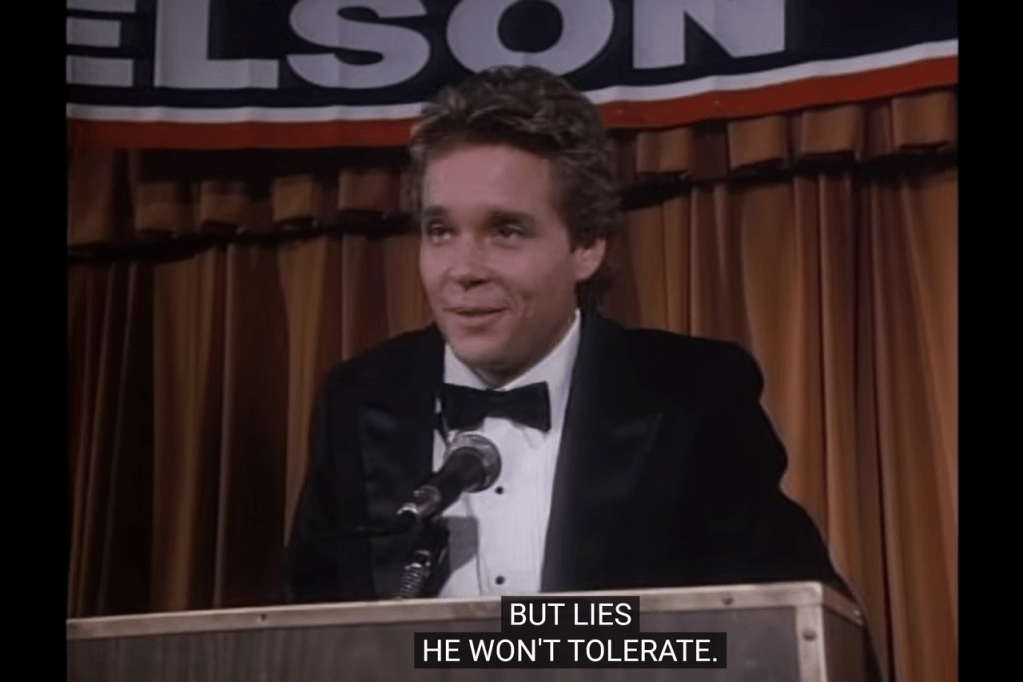
It’s certainly something many parents might relate to. Even fictional ones: that’s the same way Bill Cassidy’s character feels in That’s Our Dad in season three.

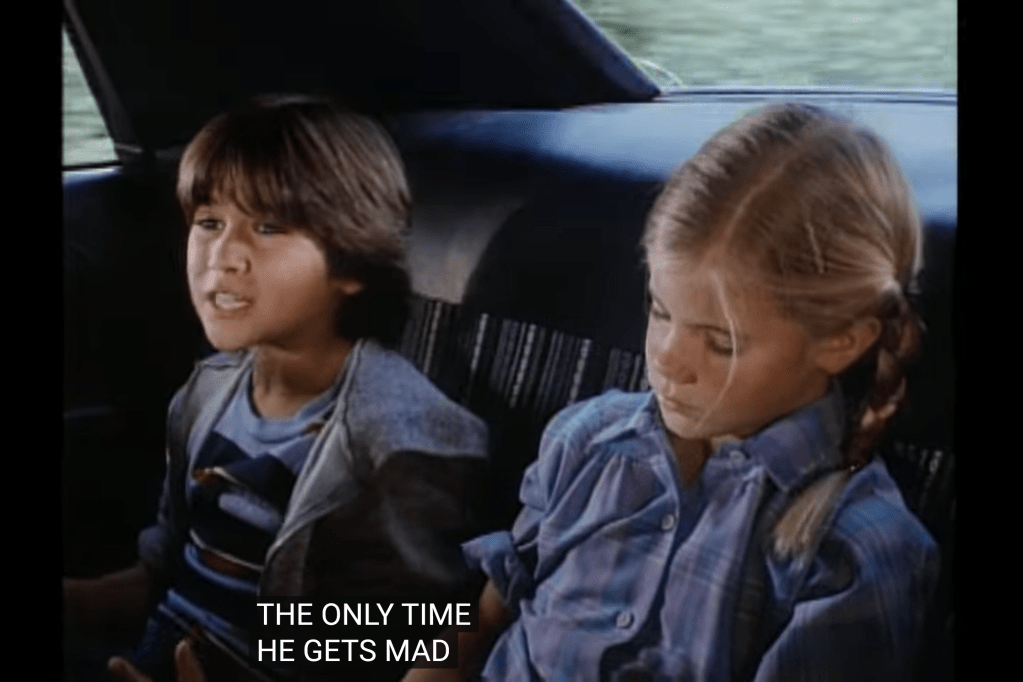
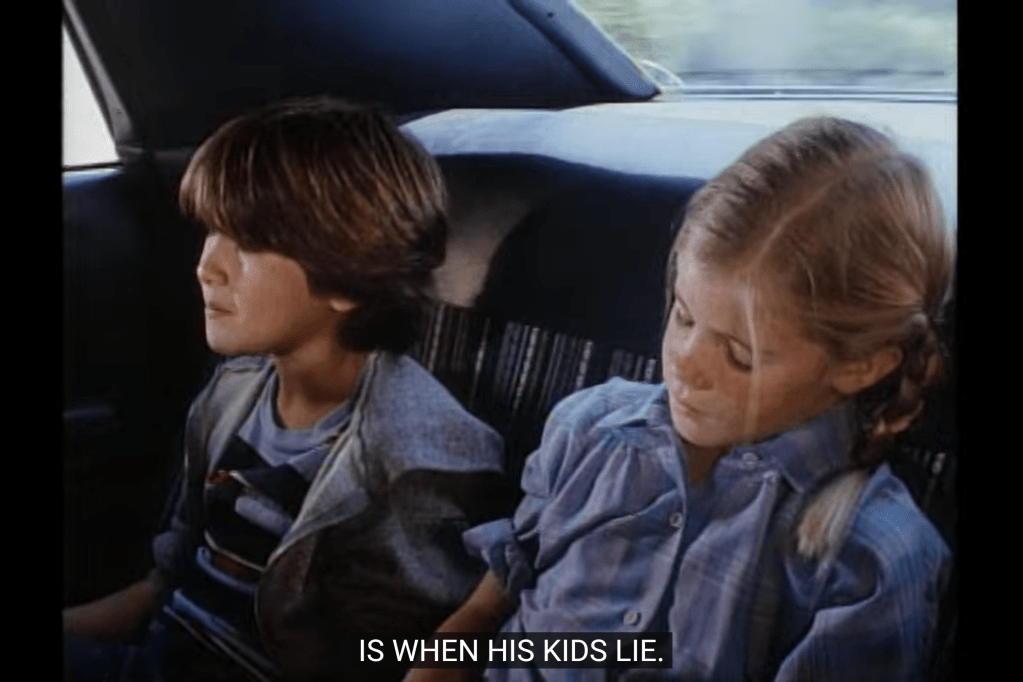
And that’s very familiar to Landon too: in a 1978 TV interview, he revealed that the only times he ever beats or lays hands on his children is when they lie, and that lies are the worst thing to him. So it’s very relatable.
There’s another reference, this time in the score: the episode concludes with an existing melody. Never used before in this series.
It’s that hymn, it’s America The Beautiful, already used in Little House during the Centennial special episode.
And Landon probably liked it just as much as that Christmas book.
Though it’s fitting here: no other episode in the series has ever concluded with a hymn playing that way (A Song For Jason concluded with the characters singing a song, not a song edited into the episode). So, in a way, it’s as if the series could conclude right here—the sanctimonious music, Jonathan and Mark driving away on the highway, and bins all over the place. Because Landon wanted them.
That would certainly make for a baffling finale, but knowing this series doesn’t really have a real series finale at the end, this scene would do fine.
The “Stuff” Powers: as for the Stuff, specifically the angelic one, things get complicated. At the beginning of the episode, Jonathan reveals that he knows Jeff is innocent, but warns Mark that he can’t be any more specific than that.
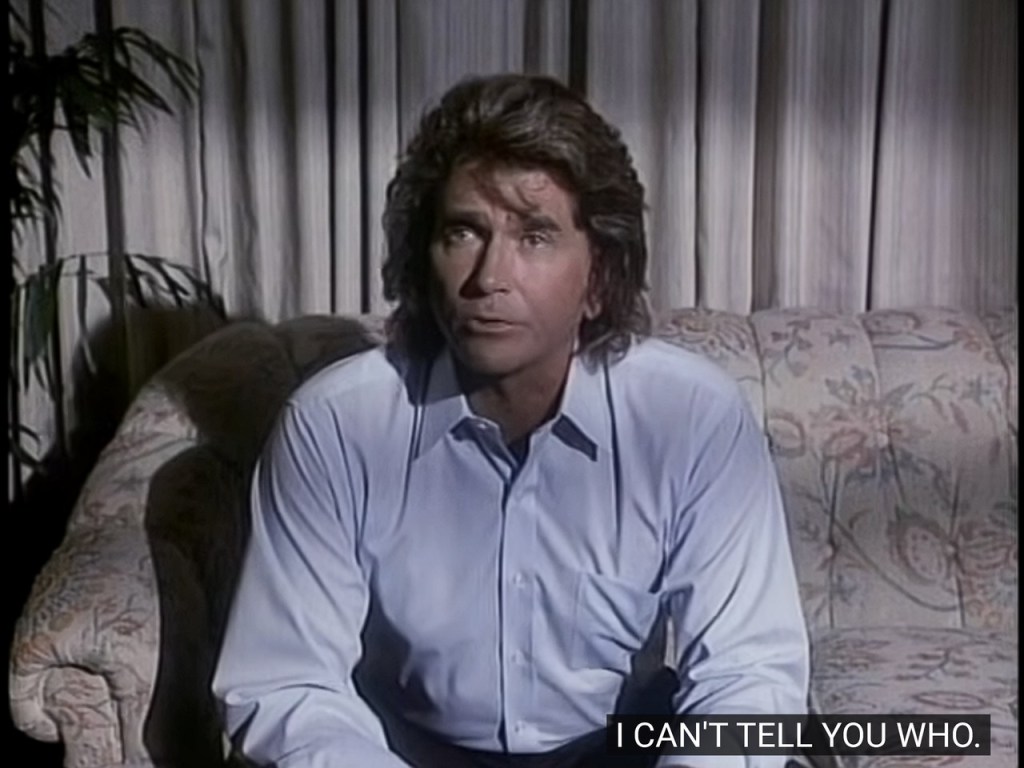
Then you’re a bad friend.
He tries to justify this by telling him that he doesn’t know it.
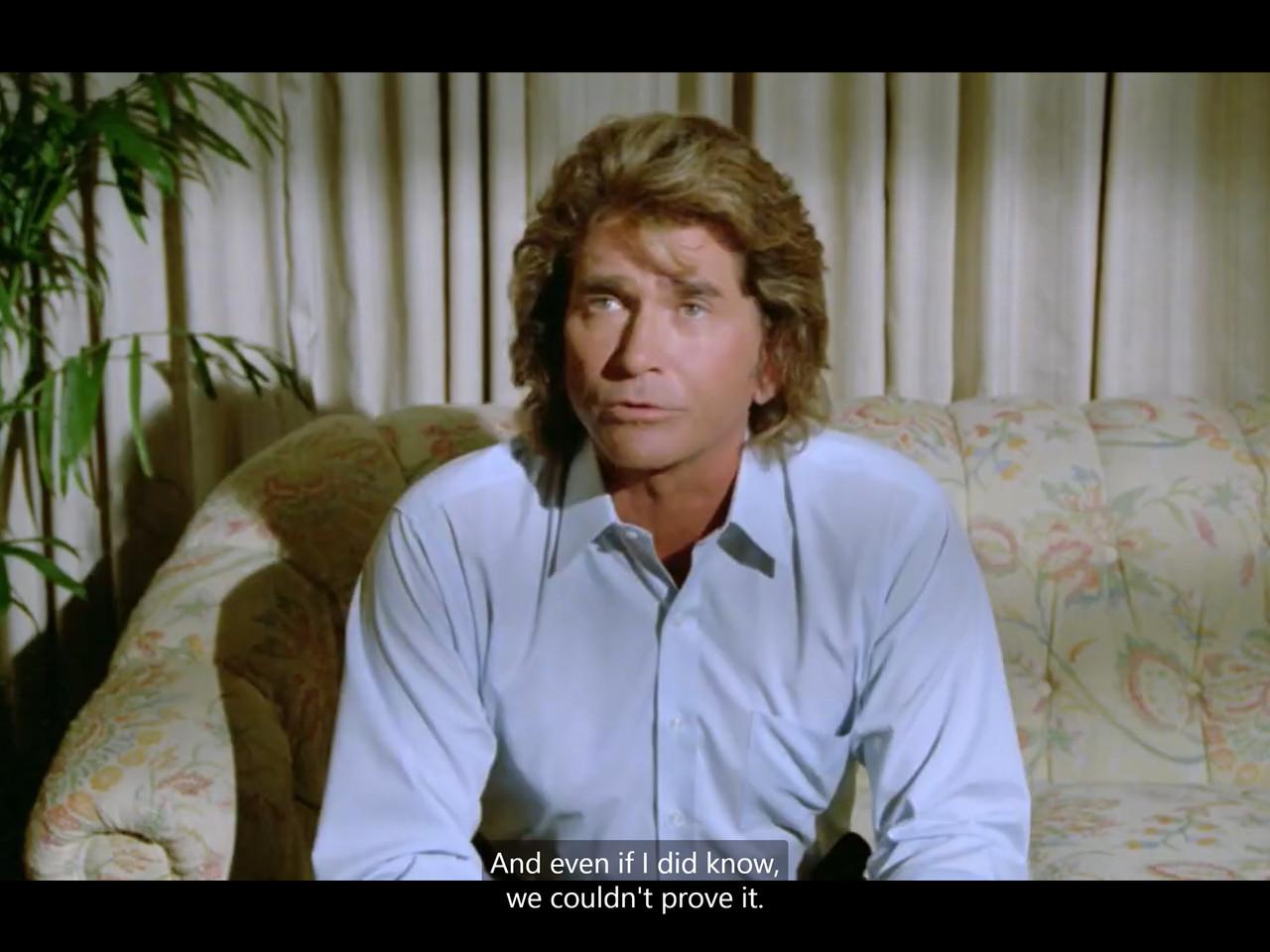
That’s not a valid excuse to keep this information from his friend: he could tell him, and then together they could find a way to prove it. More likely, he’s simply being friendly.
Besides, he knows that Pete’s son is innocent.
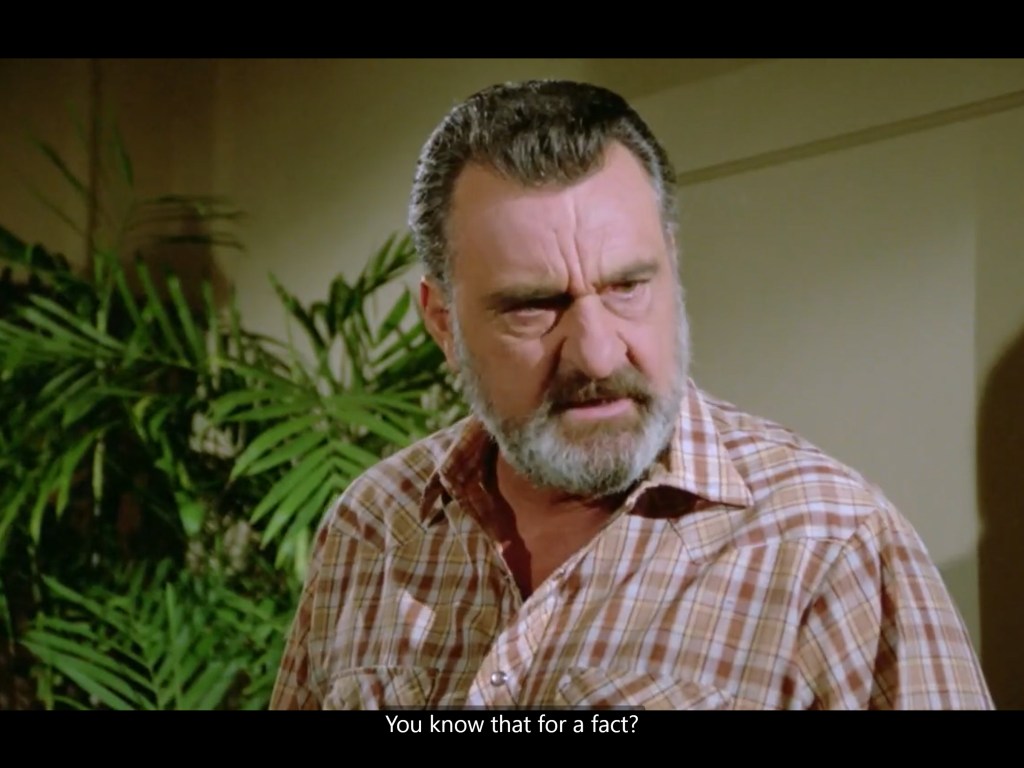
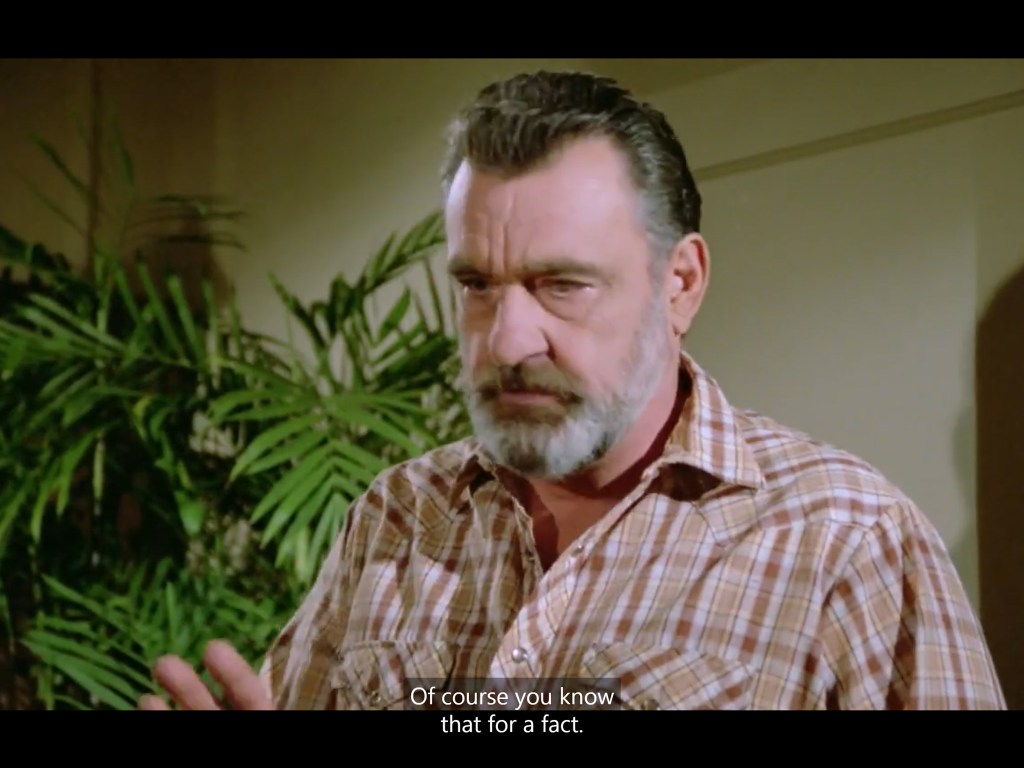
He doesn’t.
It’s unclear how Jonathan knows that Jeff is innocent—whether his superior told him, he used the Stuff, or even got inside Jeff’s mind and read his thoughts and realized he was innocent. But it’s hard to believe: if he really did that, then he should also be able to read Richie’s mind and realize that he’s the criminal.
Still, he should have unlocked the mind-reading power by now (it seems that he did in Country Doctor), so he could use it again and discover Osbourne is the bum.
Anyway, he doesn’t, and Mark has to go solve this alone.
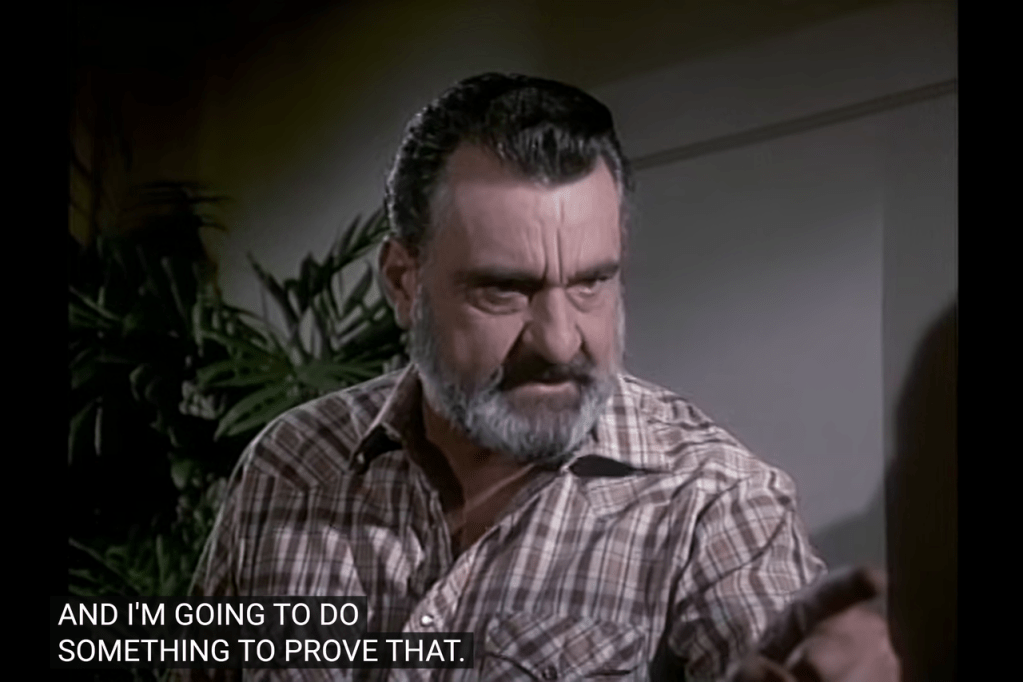
Mark, don’t.
Even though last time he did something without telling Jonathan was in season four to bust drug dealers, and it didn’t end well.
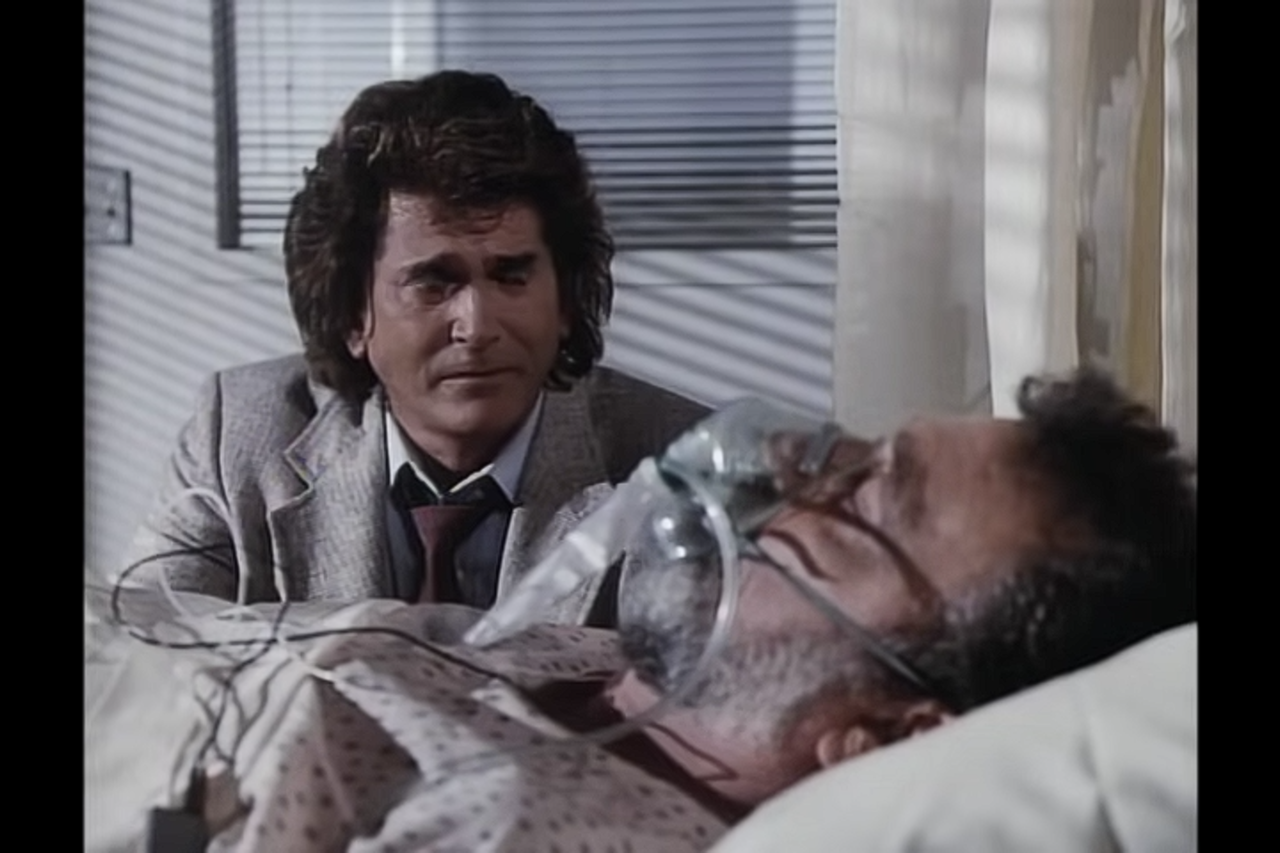
But Jonathan is too friendly to do something, and just leaves it up to Mark again.
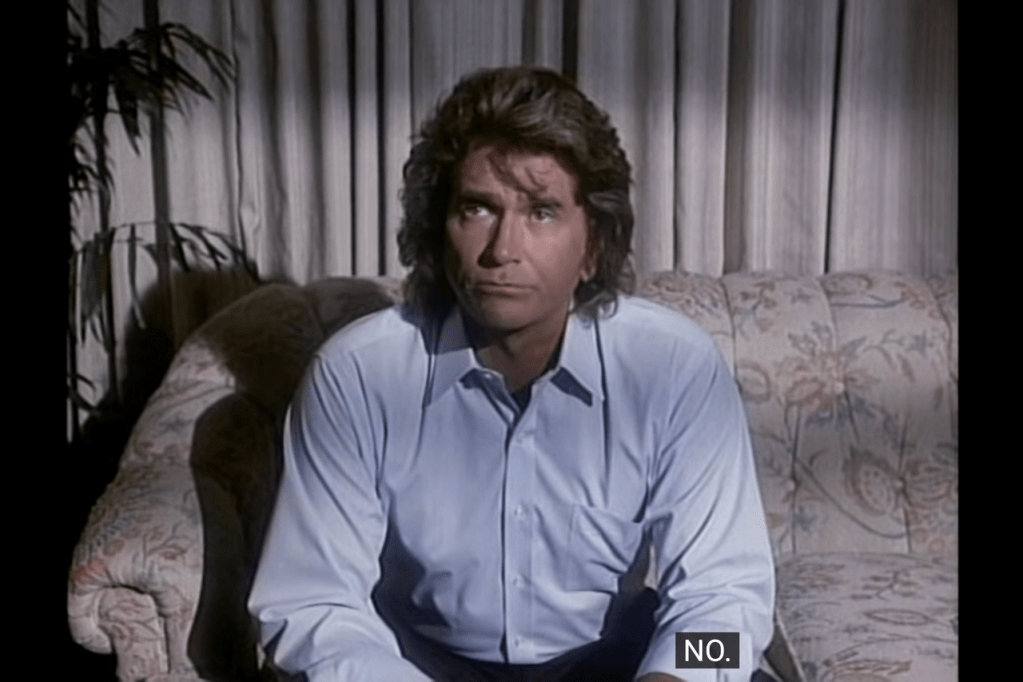
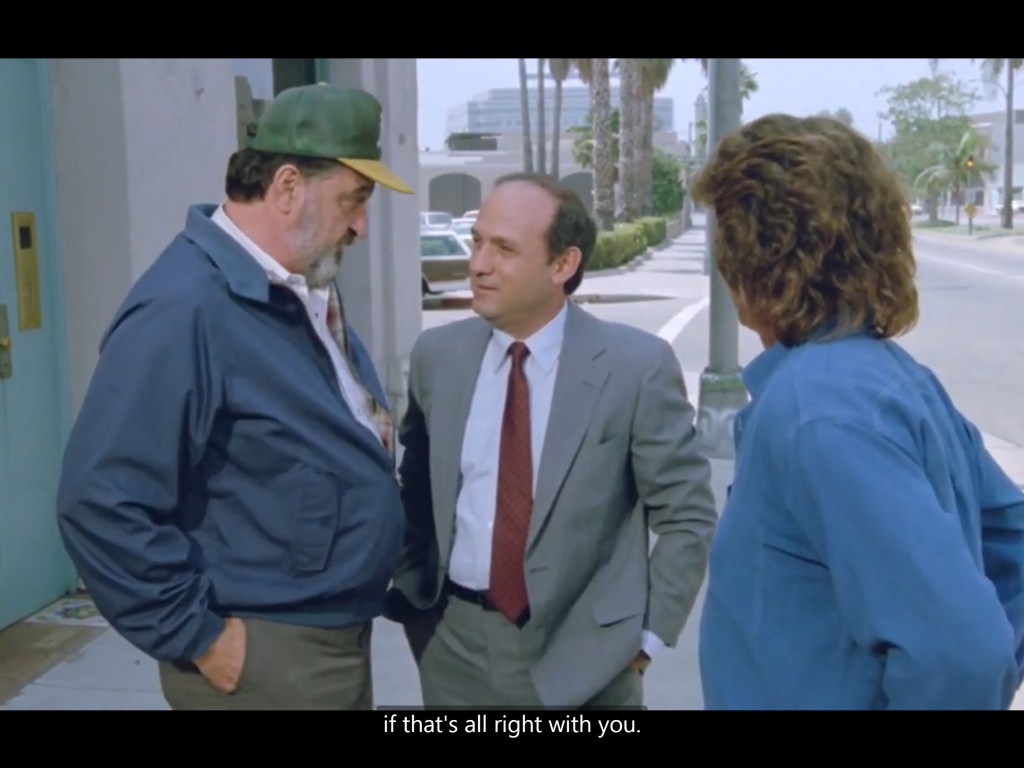
The job: they have to work as advisor for Pete’s campaign. And this job enables them to peek on the stage from the behind the scene during his speech.
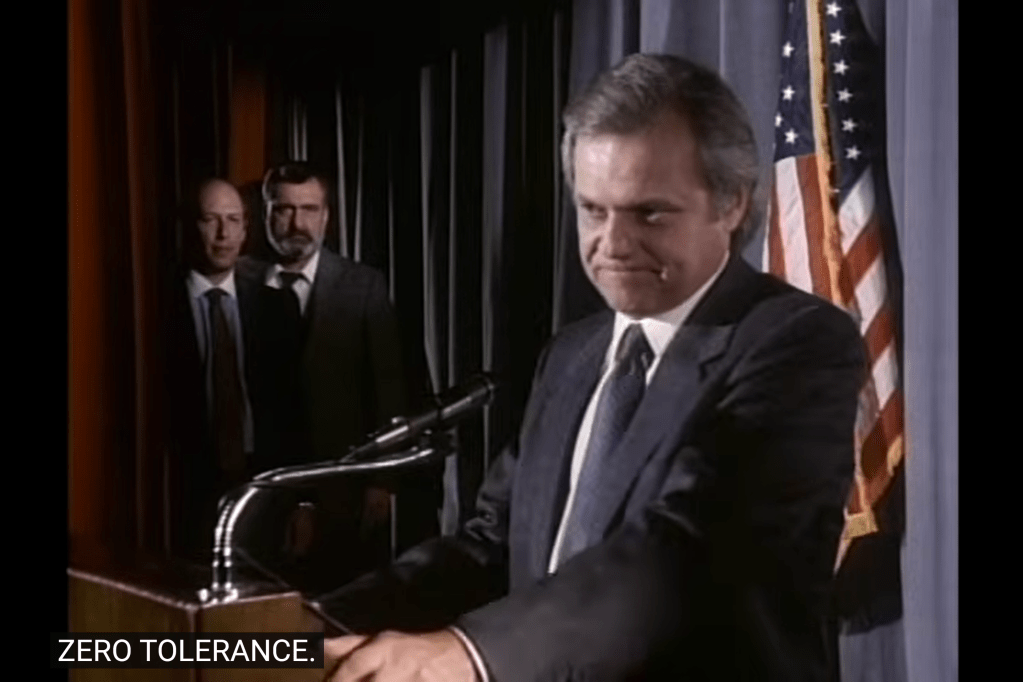
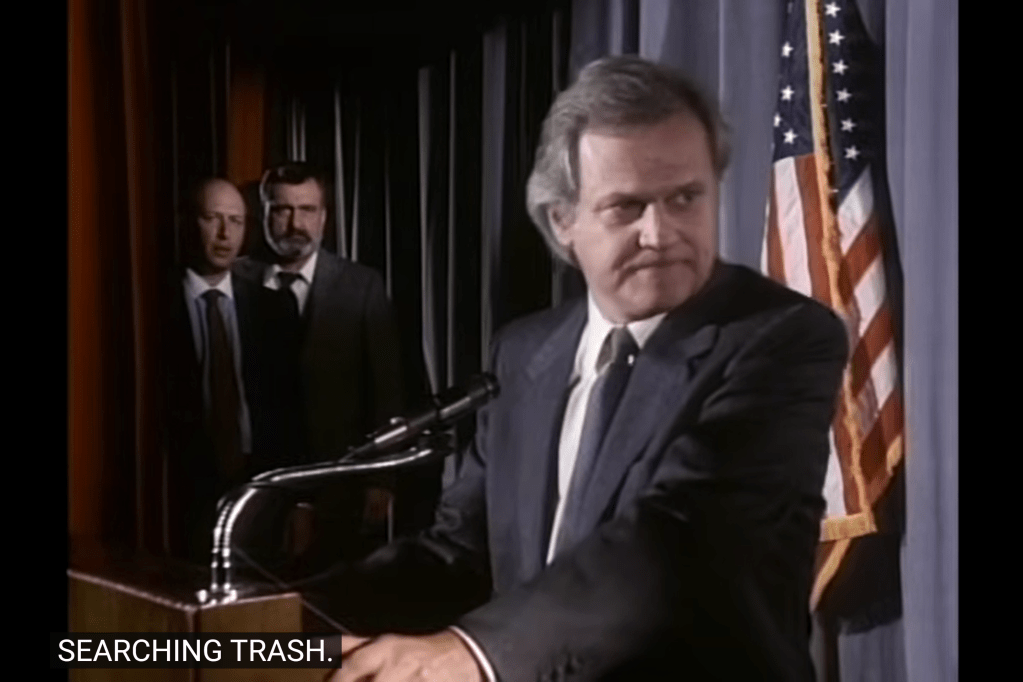
What are you doing there?
Really, Osbourne’s advisor is in the audience like the rest of them, but Pete’s advisor and Mark have a spot there.
Anyway, one odd thing about the job: the episode doesn’t explain how Jonathan and Mark found themselves helping Pete, so there’s no way to know whether he contacted them or what.
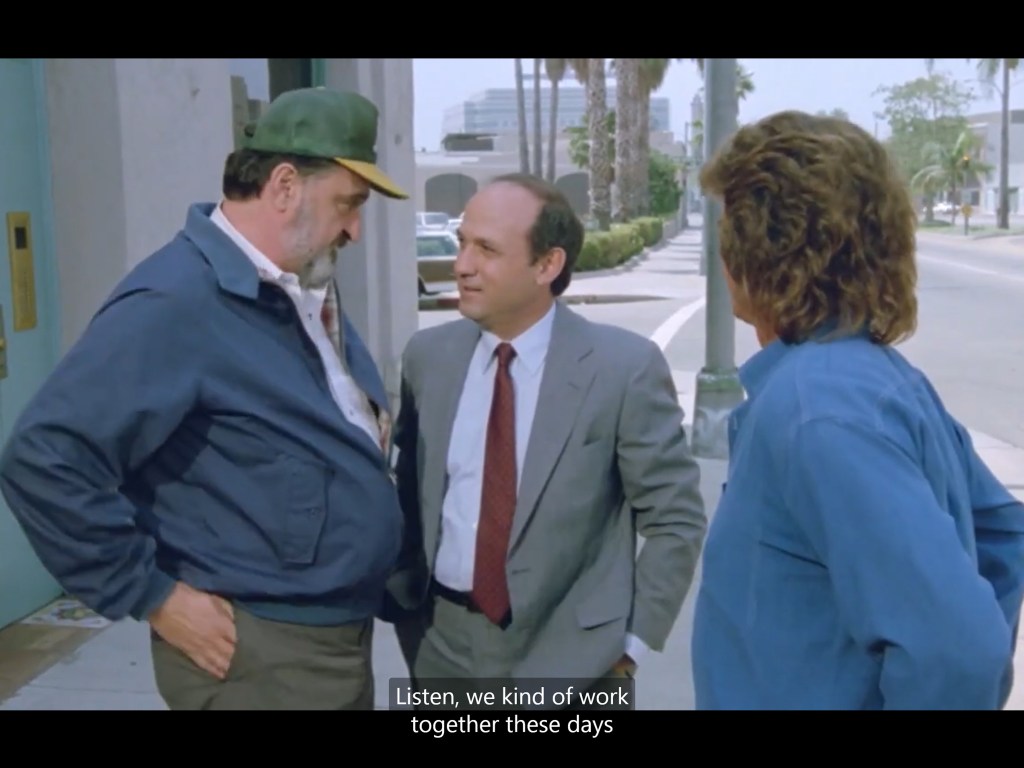
They can’t separate for a minute.
And they’re hired without references. His friend is really desperate.
Ratings: 21 million audience. 25th weekly TV program, 7th TV show, 5th TV special.
Anyway, this episode aired in early October 1988 during the World Series, at 9:00 o’clock. Basically, it aired in the slot of another series that was taking a one-week break. In other years, Highway aired regularly until the World Series, then skipped one week. Rather than receiving the usual 24-episode order airing from September through March with the finale typically arriving in May, season five is a “replacement” series, which means it would no longer have a fixed time slot like the previous seasons airing regularly on Wednesdays at either 8:00 or 9:00 p.m. Instead, it would air discontinuously, whenever another weekly program had to skip a week for some reason. Essentially, it had become the backup reserve for a bigger regular series.
It sounds like the show was falling down the pecking order: from its regular spot to being used as a replacement for something else. At least it aired in the 9:00 slot, which is what Landon had demanded for the series even in Season One, but the network had decided to schedule it at 8:00 instead. Anyway, it was delayed of a week from its scheduled airdate reported in August in the promo for the season.
Also, being off the weekly scheduled, the series is not counted as a “series” anymore by the newspapers; rather, it has become a “special”, and that’s how it’s reported here.
In terms of ratings, this episode couldn’t do much. The fourth season wasn’t particularly strong in those, and knowing that the series would air irregularly didn’t help, especially with no episode scheduled after this one. (Eventually, the follow-up would air in early December.) All things considered, though, it wasn’t even that bad: it scored even higher than some episodes in season four, including the Halloween special, which aired in the usual 8:00 time slot and had no week-long skip or anything else working against it. So, if this episode really performed in line with the rest of Season Four, it could have done much worse than it did.
There were 15 specials that week (including the Presidential debates), and it ranked pretty high. Even by counting it as a one-hour show (the way it was until last season) which faced actual weekly shows, it still ranked higher than most of them.
In a way, the ratings aren’t bad, just not what the series used to get. But now it’s not really a matter of ratings anymore. As Landon even admitted in a TV interview aired on October 1988 the week this episode was scheduled to air, he knew that when a long-running series loses ratings and isn’t given much of a chance, with an irregular schedule and no promotion, it’s hard to stand out in the ratings. However, he also confessed he couldn’t care less about ratings anymore, that he just hoped that the few people who still watched it actually enjoyed it, and felt no pressure from anyone.
That’s the way to go, and that’s what will happen for the rest of the season.

Leave a Reply