
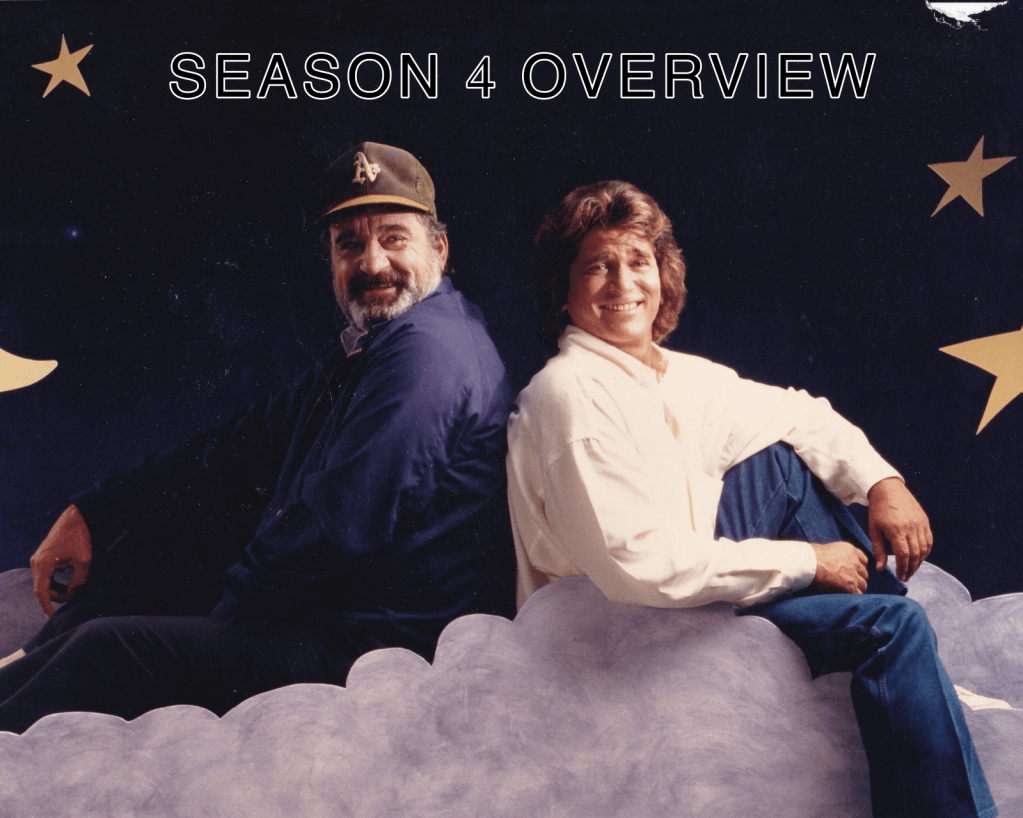
Highway To Heaven Season 4 ran from September 16, 1987 to April 27, 1988 and has total of 24 episodes.
Overview
The series is about a probationary angel, Jonathan Smith, who is sent to Earth to help people at crossroads in their life. For his job, he’s helped by Mark Gordon, a former police officer whom Jonathan helped recover from alcoholism in season one.
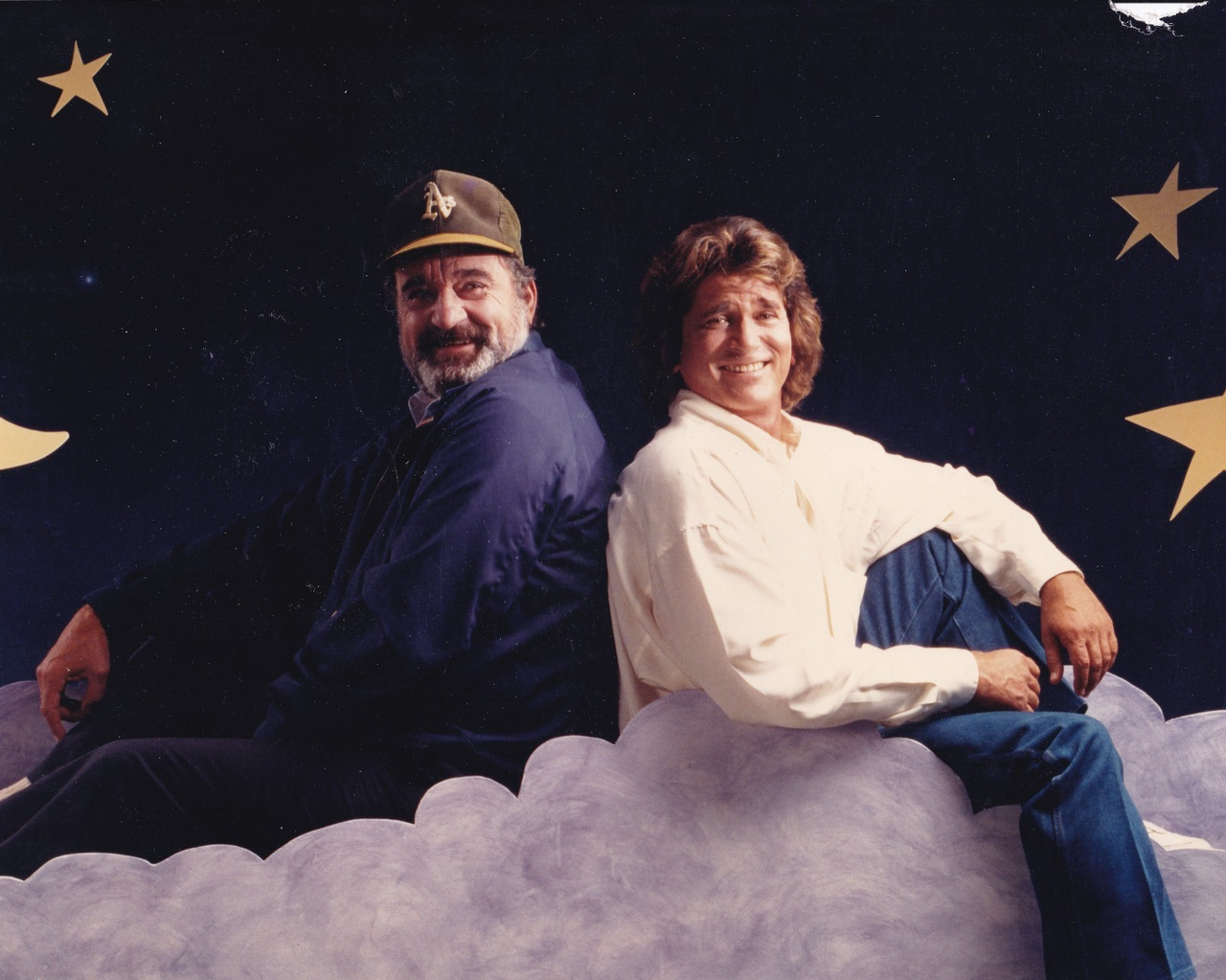
This was their fourth year traveling all around the country (mostly California, though), helping other people (sometimes getting helped too) and becoming better friends to each other. Sort of.
The Opening Shot
The opening intro for Highway To Heaven season four was slightly changed compared to the other seasons, which was always the same: this time, the scenes are identical (a sky panoramic followed by Jonathan trudging a Highway alone with a convicted felony coat and carrying mysterious bag, he turns around, the landscape is different as Mark drives toward him with his blue Ford LTD II, pulls over, they smile at each other and drive away).
The difference is in the composition: the score in the first part is the same as in the other seasons but slightly faster, until an additional triumphant swell plays as Jonathan and Mark are driving off. The music in that part is new.
But it’s not entirely new either: it’s a recycle from the episode The Return Of Mr. Edwards of Little House season six, which aired in 1979, and played at the end of that episode.
The opening in the first three seasons was already a recycle from Little House On The Prairie, but from the episode Marvin’s Garden in the ninth season. And now there’s a new one.
So they changed the score for yet another recycle.
The Episodes
Assignments: the fourth season of Highway To Heaven includes 24 episodes.
Complete episode list:
*indicates any stand-out episode in the season
**indicates any stand-out episode in the series
| Episode | Assignments |
| Man’s Best Friend (Part One and Part Two) | Jonathan and Mark are assigned to run a dog shelter. |
| Fight For Your Life | Jonathan and Mark are assigned to help a struggling fighter stop his brother’s match-fixing. |
| The People Next Door | Jonathan and Mark are assigned to help a doctor’s family living in a racist neighborhood. |
| I Was A Middle Aged Werewolf | Jonathan is “assigned” to help a child confront his fears on Halloween Night. |
| Playing For Keeps | Jonathan and Mark are assigned to reconcile an actor and his father through a play. |
| Amazing Man | Jonathan and Mark are assigned to help a family cope with a recent tragedy. |
| All The Colors Of The Heart | Jonathan and Mark are assigned to work as counselors at a summer camp for blind children. |
| Why Punish The Children? | Jonathan and Mark are assigned to work as teachers in a women prison. |
| **A Dream Of Wild Horses | Jonathan and Mark are assigned to help a ranching family struggling to confront wild horses invading the land. |
| In With The “In” Crowd | Jonathan and Mark are assigned to work as narcs in a school to stop drug dealers. |
| With Love, The Claus | Jonathan and Mark are assigned to help a jailed man claiming to be Santa Claus prove his identity and be acquitted before the Christmas holidays. |
| A Mother’s Love | Jonathan and Mark are assigned to help a group of runaway orphans find a new family. |
| Country Doctor | Jonathan and Mark are assigned to help a country doctor accept his imminent retirement and find a new replacement. |
| *Time In A Bottle | Jonathan and Mark are assigned to help both a bum and a counselor with drinking problems. |
| **Back To Oakland | Jonathan and Mark are assigned to work as police officers at Mark’s old station. |
| **We Have Forever (Part One and Part Two) | Mark is “assigned” to restore Jonathan’s faith. |
| The Correspondent | Jonathan is assigned to help an imprisoned war correspondent reconcile with his wife in a dream. |
| Aloha | Jonathan and Mark are assigned to help a retired singer confined to a wheelchair accept her condition and move on with her life. |
| **A Dolphin Song For Lee (Part One and Part Two) | Jonathan and Mark are assigned to help the family of an ill girl. |
| Heaven Nose, Mr. Smith | Jonathan and Mark are assigned to help a man rekindle with his wife, despite the intrusion of a fellow angel. |
| The Whole Nine Yards | Jonathan and Mark are assigned to help both a football player improve his relationship with his parents and an aspiring one find a friend. |
Disclaimer: the “*” and “**” episodes are the only personal opinion here on Highway To Heaven Cast, which is meant to be informational (hopefully) and, in that light, they are to be intended as a “guide” to the most outstanding episodes for someone who has never heard of the series. The “*” shows (the best of the season) are selected by considering the quality level of the episodes in the season, and singling out those that stand out the most above that quality. The procedure applies to the “**” episodes, which are picked out from the shows that stand out the most compared to other episodes in the series. The “**” episodes are thus not just among the best of the season, but also among the very best of the series.
Further Distinction: the number of “*” and “**” episodes is not arbitrary. Rather, it’s determined by the number of episodes that stand out the most compared to the rest of the season. For this reason, they do not indicate nor signify in any way the quality of a season as a whole: for instance, in a season with many good episodes and plenty of very good episodes, all those very good episodes will be * ones, while another season with mostly very good episodes and a single great episode, only that episode will be a * one, yet that doesn’t indicate the first season of the example is better just because it has more * episodes.
Instead, a season with many “**” episodes is likely to be a great season too.
Season Details
Unlike the three other seasons, all spanning a year, this season’s indications are less precise: it probably begins in Summer 1987 with the episode Man’s Best Friend (the season opening episode), but there’s no way to know when it concludes. In particular, the episode We Have Forever lasts 2 months at least, and A Dolphin Song For Lee five months instead. At the same time, some other episodes like Fight For Your Life do not have a certain timespan, but they are probably very long (according to the guidelines, most episodes span ten days with a three day downtime between assignments, but those episodes are clearly longer).
To complicate matters further, the season finale doesn’t offer any date, but it’s probably a season three episode, while the season three episode Another Kind Of War, Another Kind Of Peace is certainly set in 1988, during this season. If that weren’t enough, it’s possible that some episodes in season four and five are concurrent, which makes it impossible to determine when exactly this season ends, eventually. It’s very likely that it lasts until summer 1988 at least, if not Fall, but that’s as precise as it can ever be. The last episode chronologically is probably A Dolphin Song For Lee or We Have Forever, or something else entirely.
This season included three holiday Specials: one for Halloween (the last time in the series), one for Christmas (the third) and one for Thanksgiving (the only special of its kind).
Characters: this season added many more details to Jonathan and Mark’s background, and presented some unusual features. In particular, Jonathan was the subject of We Have Forever (the only episode of the series entirely about him).

He also carried out the entire assignment in The Correspondent without Mark’s help, who was left asleep in his car. That’s the only episode of the series almost entirely without Mark, he only appears for a minute in the epilogue.
Then, he worked on the assignment in the Halloween special without him, who had been left asleep in a motel room. Although on that occasion Mark became part of a weird assignment dreaming about Jonathan the werewolf.
The reverse also happened: in the episode A Dolphin Song For Lee, the Stuff was given to Mark, and he had to carry out most of the assignment while Jonathan stepped back to work on secondary parts.
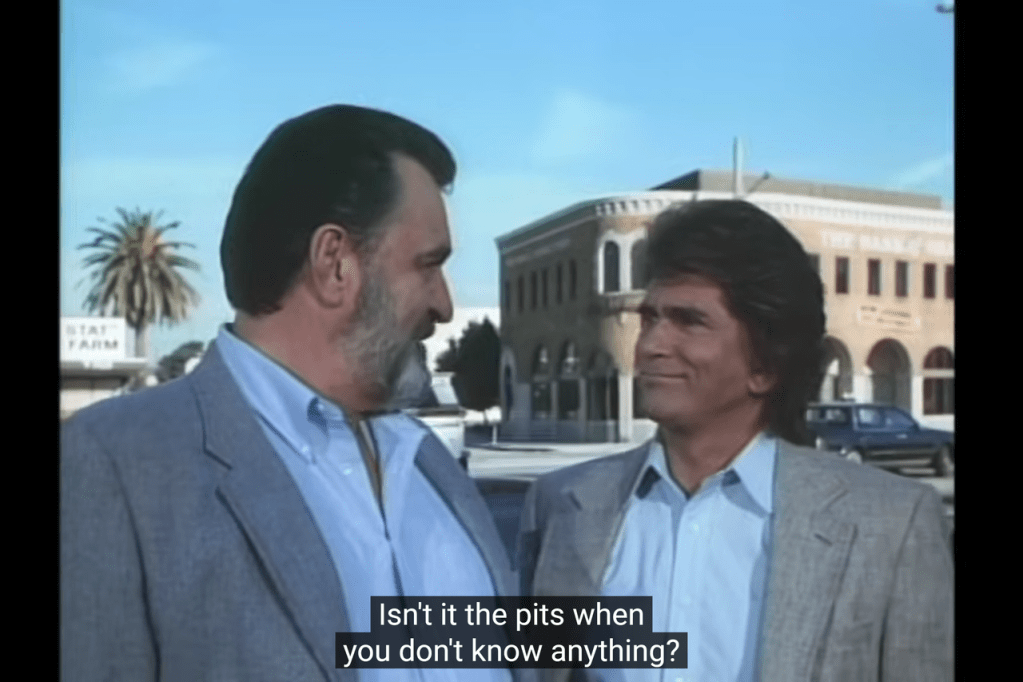
Most assignments are fictional: the only partial exception is All The Colors Of The Heart, which is set at the real Camp Bloomfield for blind children. Moreover, the character of Frank is partly modeled after Tom Sullivan, the actor playing him.
Other assignments are just a tribute to something else: in particular, the Halloween Special pays homage to the 1957 movie I Was A Teenage Werewolf, with Landon as the titular character; the Christmas Special instead is an updated version of a classic 1930s movie, not the same source as the other Christmas Specials, though.
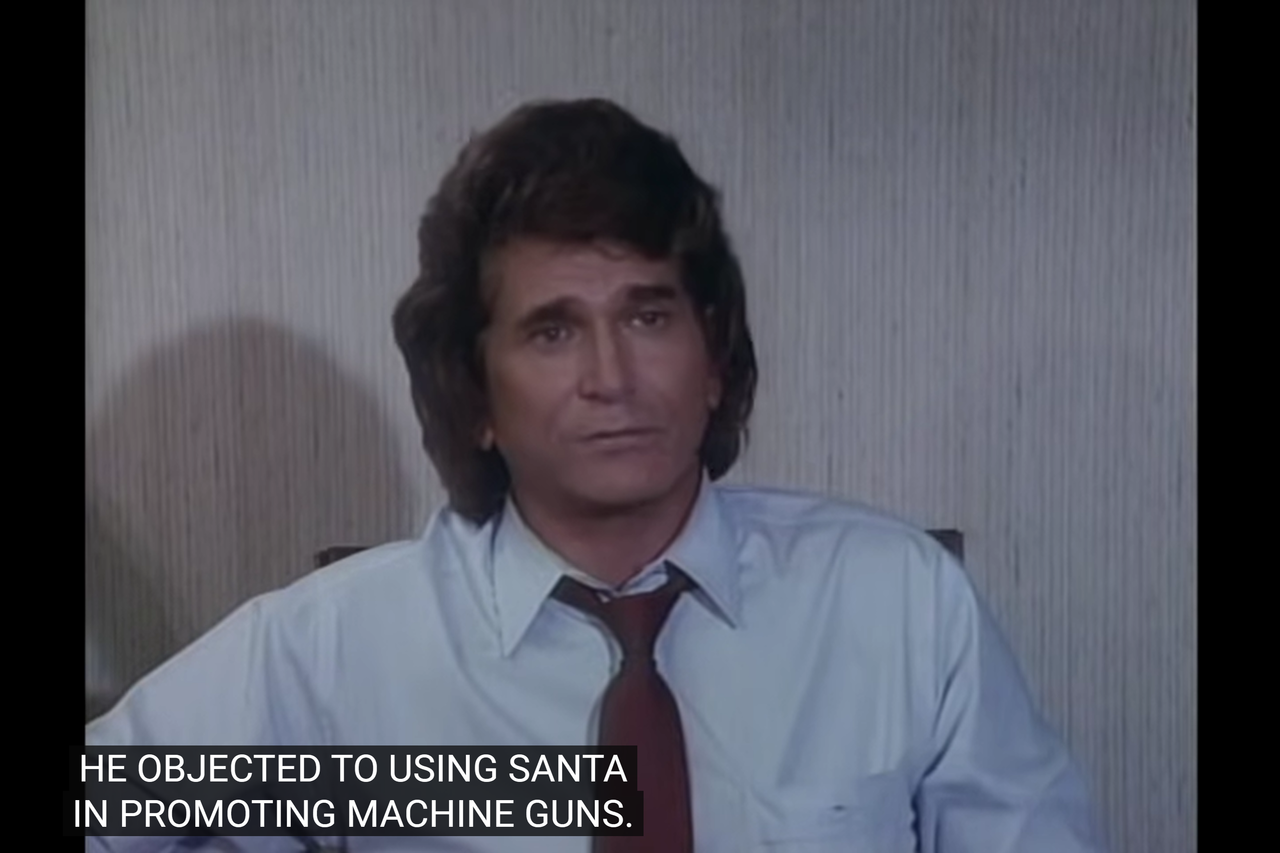
But the series also added new details to their background: the episode We Have Forever revealed that Jonathan is longing for being with his wife Jane, and he separates from Mark upon realizing that he can’t.
That same episode also suggested that Mark will set on being a summer camp counselor when his journey with Jonathan will eventually be concluded (although that will never happen during the series).

As for the rest of the characters: without Scotty, Diane and Leslie from season three, a new bunch of recurring characters are introduced this season. Starting with Caz, a colleague of Mark’s from the police station: he’s featured twice this season.

He appears twice this season (All The Colors Of The Heart, We Have Forever) and he will come back in season five.
Then Frank, a blind summer camp counselor who makes friend with Jonathan and Mark (he’s essentially a new Scotty).
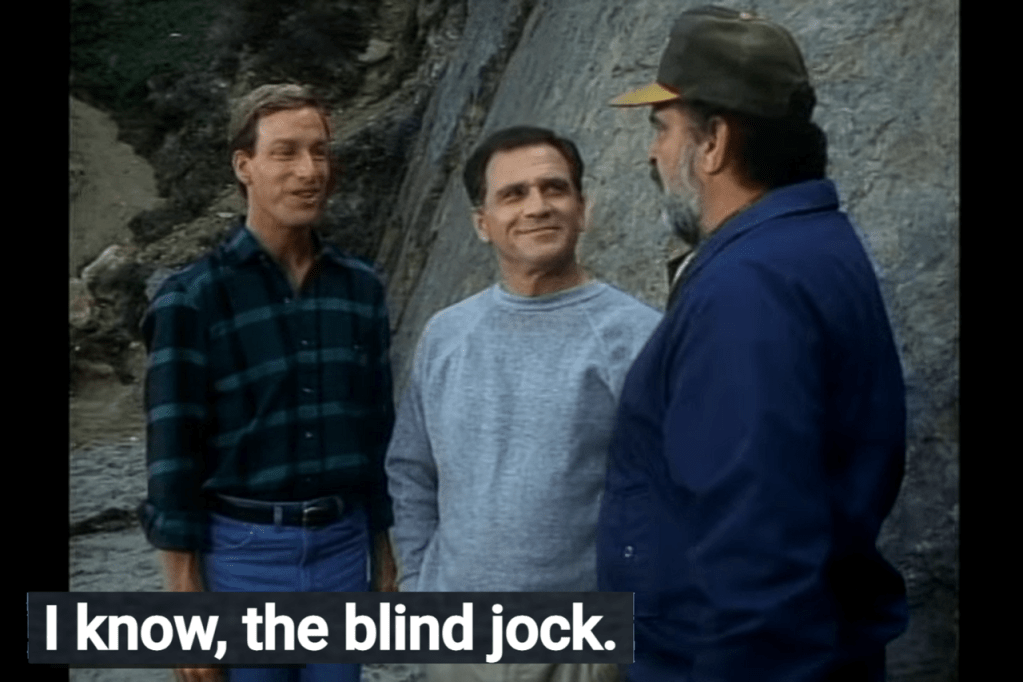
And Jerry, a blind child who takes on Mark and nicknames him “Bear“, the way he’s going to be from now on.
They will all come back in season five. Even though Caz won’t be played by the same actor anymore.
This season also brought back Jane (episode We Have Forever), who was Arthur’s wife introduced in season two.
And there’s a guest appearance of Jonathan’s enemy from season two. But that’s just in a cold open that was shot to pad the episode out.
They also introduced a bunch of new angels: one is Jennifer (We Have Forever), who turned out to be Jane’s angel form. Then Sycopomp and a few other angels (Heaven Nose, Mr. Smith), and they are the last of their kinds in the series. Lastly, the series introduced three new friends of Mark: one is Caz (in All The Colors Of the Heart), then Frank No. 2 (in Back To Oakland), the racist one.
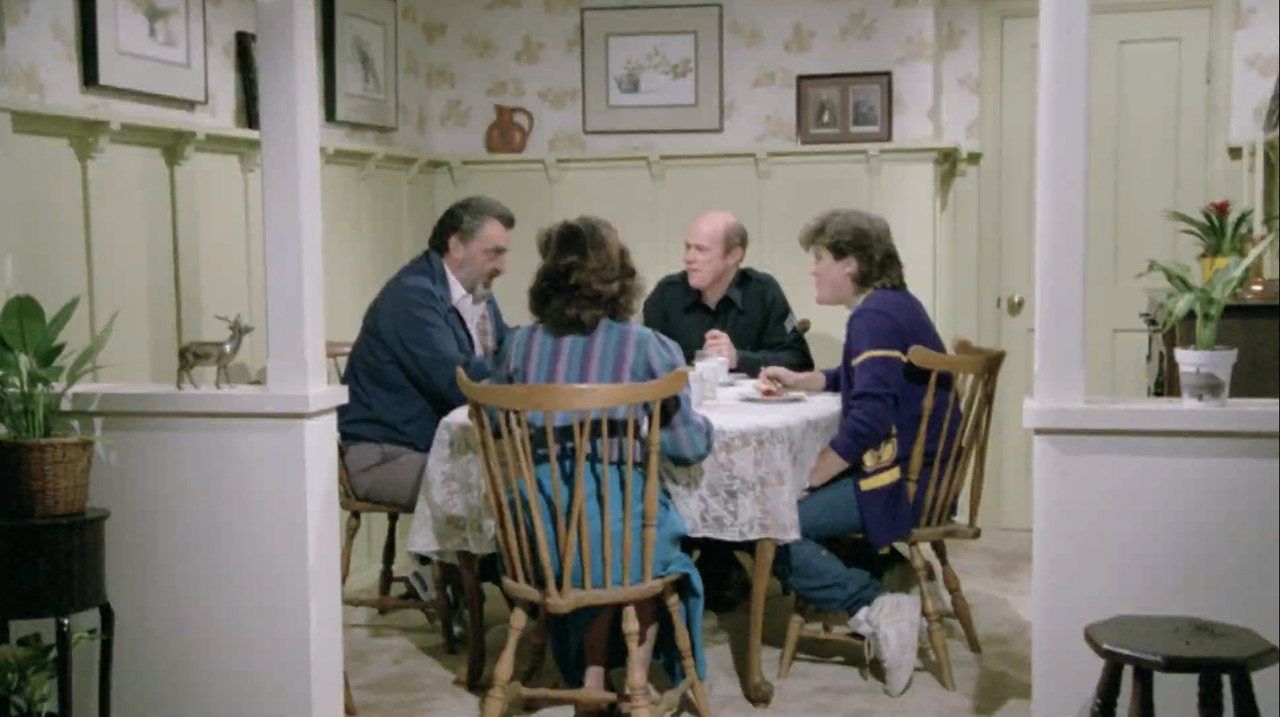
And lastly Gary (Amazing Man), although he dies before Mark gets the chance to see him for the last time.
Just like another cop in season one.
Season Features
Here are some tropes and features from the glossary.
–On Angels And Probation: episodes expanding on the terms of Jonathan’s probation or adding details about the way his job works.

–Highway Actors, episode with an actor who had already appeared in the series before; this season, the returning actors included David Spielberg (The People Next Door), Bill Erwin (With Love, The Claus), Mary Pat Gleason (Why Punish The Children?), John Pleschette and Bill Macy (Heaven Nose, Mr. Smith) and more; the new actors who will come back next season are Brandon Bluhm (Man’s Best Friend and All The Colors Of The Heart), Tom Sullivan (All The Colors Of The Heart), Garret Ratcliff (Amazing Man) and Murphy Cross (Heaven Nose, Mr. Smith). In particular, David Spielberg makes three appearances, the most than any Highway actor tied with Lew Ayres; even Mary Pat Gleason has three appearances, but two of them are just in a single scene.
–Highway Lifetime: actors who concluded their career on Highway, then retired or passed away; this season, the only Highway Lifetime actress was Merllyn Mokihana (Aloha), who quit acting after that episode and passed away six years later. There’s also Bob Hope, whose role in Heaven Nose, Mr. Smith was the last fictional character in his career, but he didn’t actually retire after that.
–Beach: episodes supporting the “beach curse” of the series (every time a character goes to a beach for any reason, a tragedy is about to strike hard real bad).
–Cute: the series’ catchphrase, mostly used by Mark but occasionally by Jonathan tool; actually, the last “reverse cute” instances (the moment in which Jonathan uses it) occur this season.
–Friendly Jonathan: every time Jonathan patronizes Mark in a way; although this season also had a couple of reverse instances as well.
–Highway Of Mysteries: a guide to the most mysterious aspects of the season; for example, was Jennifer a liar in We Have Forever, or whether The Correspondent is just a dream (and whose one) or it really happened in a way, or what Jonathan has in its bag.
–Recycles: episodes with a recycled feature from an older episode of the season or from a different series (the episode openings are an example, recycling from Little House); this season, the episode with the most recycled features was Man’s Best Friend Part Two, which included a Rose piece from Another Kind Of War, Another Kind Of Peace season three, a scene from Popcorn, Peanuts And Cracker Jacks in season two, plus the same setting as For The Love Of Larry season three.
–References: episodes with a connection or a reference to another episode in the series, or a different series (mostly Little House), or to the actors or a tribute to something else. For example, The People Next Door has a reference to a Special Little House episode, while All The Colors Of The Heart and Heaven Nose, Mr. Smith both feature a possible reference to Little House as well, and the Christmas Special and the Halloween Special are both a tribute to older features.
–The Job: the list of jobs they take as a cover this season. In this season, they work twice as cops (In With The “In” Crowd and Back To Oakland) and once as investigators (With Love, The Claus), becoming their most frequent job in the series. And they work at a summer camp, for the second time in the series.
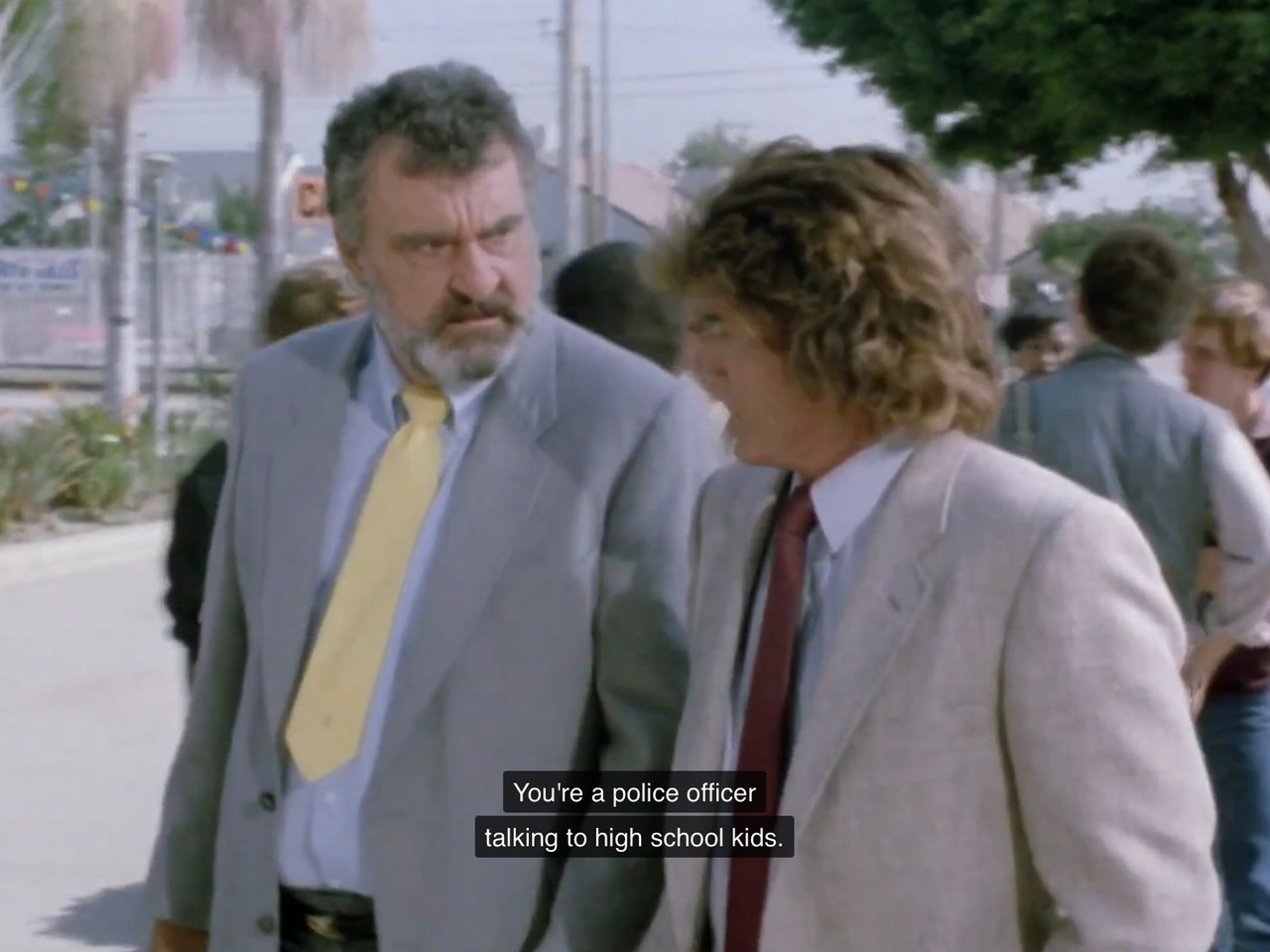
And here’s the list of bloopers from the season and the rest of the series.
Production
After the conclusion of season one, the network decided to renew Highway for three additional seasons, until this fourth, with plans to continue the series being subjects to this season’s ratings. The series had been going well for the last three years.
Background
This season four presented some changes: unlike seasons two and three, in which Jonathan displayed his powers (The “Stuff”) more frequently to solve the assignments and the episodes had a whimsical approach, the fourth season restored the premise of season one. The subjects of the assignments are the people involved, Jonathan rarely reveals his identity as angel (it occurs three times and once by Jennifer, against the six times of season three and eight in season two), and the assignment doesn’t necessarily involve Jonathan and Mark (they personally know the person they have to help only five times, against ten times in season three).
Then, most assignments are very straightforward and outlined at the beginning of each episode, showing the person they have to help right way and spending the assignment trying to help that person. By contrast, in season two and three it wasn’t rare that an assignment would grow increasingly complicated by adding new characters or difficulties along the way.
In a way, this season goes back to the way the series used to be three years ago, just with the addition of the new recurring characters in the process (Jane from season two). And the beach curse.
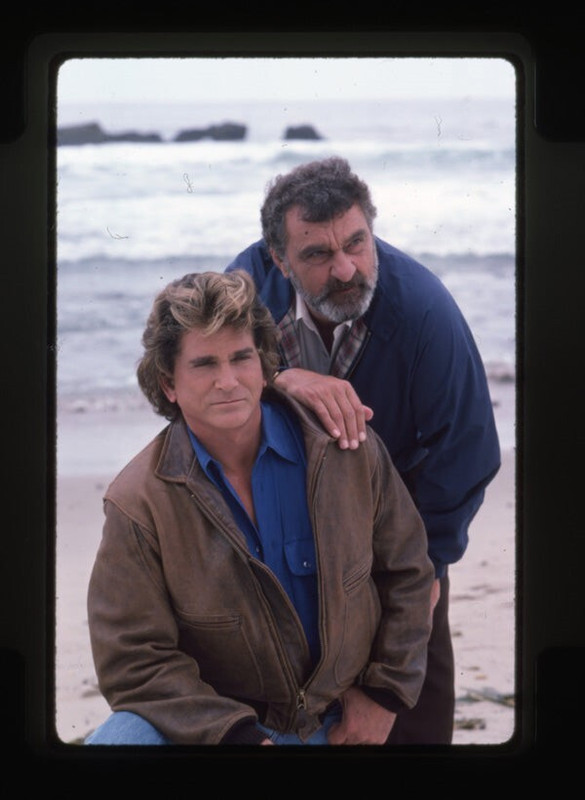
That’s always there.
Schedule
The fourth season was ordered for a total of 24 episodes, including three Holiday Specials and three longer installments divided into two parts.
The arrangement was the same as in the other three seasons: the network gave Landon all the budget beforehand, and he could use it as he saw fit in each episode. Were the season concluded underbudget by the end of the year, he was entitled to keep it, otherwise he had to cover through his company any exceeding costs. As reported in an interview by producer Kent McCray, the season wrapped underbudget and on schedule, and Landon decided to give the saved budget to his crew members as an extra at the end of the year. That’s basically the same thing in seasons two and three.
Each episode was produced in approximately eight to ten days, although the actual filming generally lasted five to eight days. The remaining days were usually Saturdays, Sundays, or other holidays when no filming took place. Although some episodes this season were actually shot on a Saturday, under exceptional circumstances. Production spanned from May 1987 until March 1988, making it the longest production period of the series. It wasn’t shot consecutively, though.
In the past two years, Highway took a four-month break after completing a season before starting the next one, with production for the following season beginning in late summer, in July at the earliest. However, in the spring of 1987, the directors were planning to strike in the coming months. If something like that had happened, it would have led to an indefinite postponement for every TV series until the strike ended, with a chance that some shows would not be able to air by their scheduled fall dates.
To avoid any potential delay, Highway was rushed into production in the spring, less than two months after completing Season Three: the first episodes were written in April, and filming for this new season began in early May, before the Season Three finale had even aired, in order to have at least six episodes in the can for the fall in case the strike occurred. Eventually, the strike did happen, but it lasted only one day. So it was all for nothing.
Never read the papers.
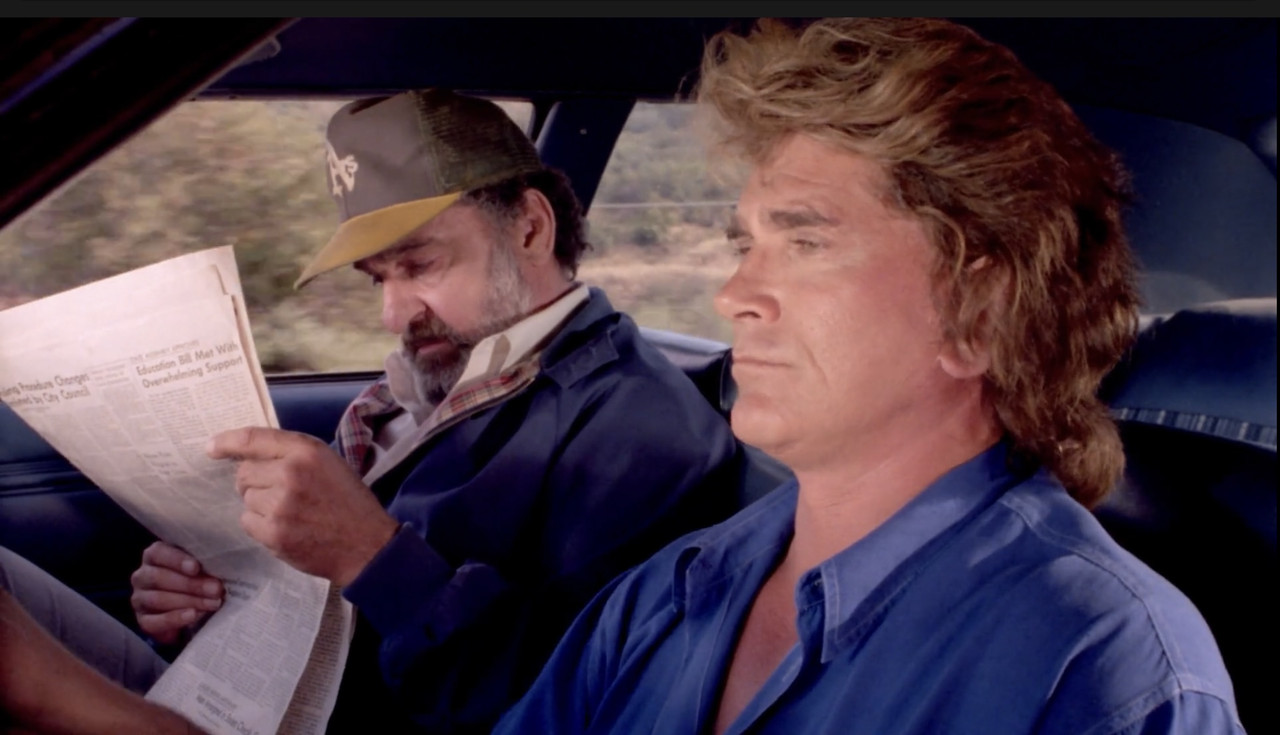
Anyway, instead of taking the usual four-month break after Season Three, production paused for only two months before beginning an early production block. From May through early July, six episodes were filmed, including a two-part episode, the season opening show. The production then took its remaining two-month summer break before resuming in late September and continuing through November at the same pace as previous seasons.
It then took three weeks off in early November following A Mother’s Love, and resumed in late November with Time in a Bottle and We Have Forever—but just its part one—until taking a three-week break for the Christmas holidays. Filming resumed in January 1988 for the remaining episodes. The season finale was completed in early March 1988, just days before the writers’ strike. That strike, however, was going to have a far greater impact than the directors’ strike the previous year.
Most episodes were produced in Los Angeles or around those places, even when it’s supposed to be elsewhere (Back To Oakland wasn’t shot in Oakland, but in a Los Angeles neighborhood).
For a couple of occasions the production did move out of Los Angeles (the episode Country Doctor was shot in Piru), or even out of California entirely. There are only two exceptions, and they are both in Arizona: one is for A Dream Of Wild Horses in Sells and the second is Pima County.
The series will never move out of Los Angeles again.
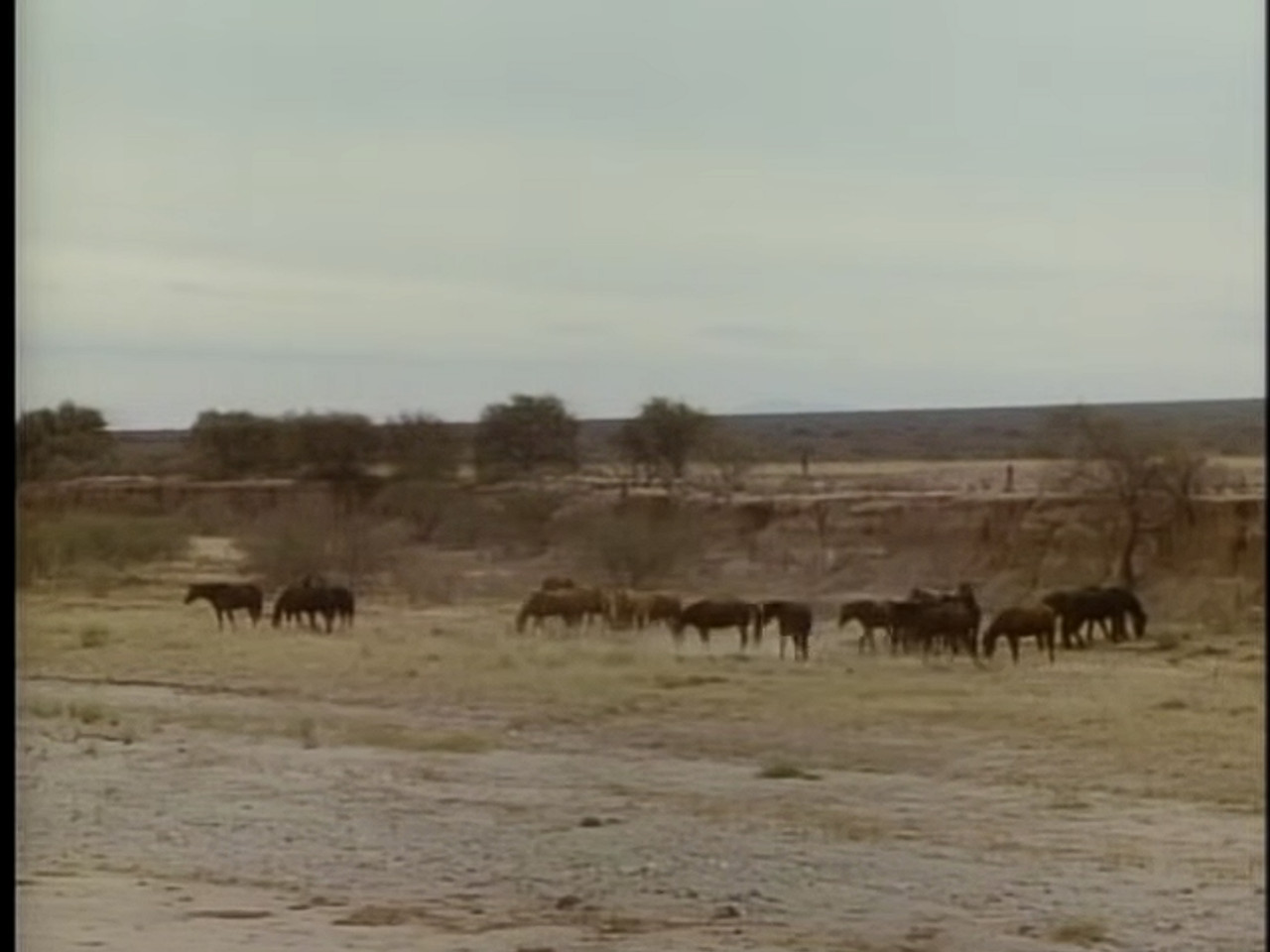
The season also used a real setting: the summer camp “Laurewood” in All The Colors Of The Heart was the existing Camp Bloomfield for the Junior Blind (although it’s been destroyed by a fire over the years), and the fight cards in Fight For Your Life took place at Reseda Country Club (although it has a different name in the episode), and it was the same location used in season one.
Similarly, portions of Time In A Bottle and A Dolphin Song For Lee both took place at the Los Angeles City Hall, which had been used in season three and two. But they are presented as the State Senate (in season three it was said to be the U.S. Capitol instead).
Unlike prior years, this entire season was directed by Landon without any external directors (French stepped down in 1986 after That’s Our Dad, while Gordon never directed anything else from Oh Lucky Man from season three either).
Here’s a full breakdown of the chronological production.
Important: if the exact date is reported, then it uses as reference the shooting schedule of each episode; those with “between” or “early” are approximation based on the production order of the other episodes (not the airing one).
| Episode: | Production Schedule: |
| Man’s Best Friend | 1987, between May 1 and late May (Parts One and Two at the same time) |
| Country Doctor | 1987, late May by May 27 |
| Playing For Keeps | 1987, May 28 to June 4 |
| Fight For Your Life | 1987, June 5 to 12 |
| The People Next Door | 1987, June 15 to 22 |
| Amazing Man | 1987, June 23 to July 1 |
| I Was A Middle Aged Werewolf | 1987, September 15 to 23 (Cold Open early October) |
| With Love, The Claus | 1987, between September 24 and October 1 |
| All The Colors Of The Heart | 1987, October 3 to 10 |
| Why Punish The Children? | 1987, October 12 to 17 |
| A Dream Of Wild Horses | 1987, October 19 to 24 |
| In With The “In” Crowd | 1987, between October 26 and November 2 |
| A Mother’s Love | 1987, November 3 to 10 |
| Time In A Bottle | 1987, November 30 to December 7 |
| We Have Forever | 1987, December 8 to 15 (additional part between December 19 and January next year) |
| Back To Oakland | 1988, January 4 to 11 |
| The Correspondent | 1988, between January 12 and 20 |
| Aloha | 1988, January 21 to 28 |
| A Dolphin Song For Lee | 1988, January 29 to February 16 (Parts One and Two at the same time) |
| Heaven Nose, Mr. Smith | 1988, February 16 to 24 |
| The Whole Nine Yards | 1988, February 26 to March 3 |
As it’s apparent by the schedule, the episodes aired in a different order, especially those in the Spring block (the ones made to avoid the impending strike). The longest span between production and scheduled airdate was eight moths for Country Doctor, airing in January one year later. However, it wasn’t supposed to be like this: the episode was originally scheduled to air in the second week of October, but it was postponed to make room for the World Series and wound up delayed three months later.
This season had three longer episodes divided into two-part: one is the season opening episode Man’s Best Friend was already written on April 1987 as a two-part installment, with both parts shot concurrently. The second is We Have Forever: the episode was written on November 1987 as a single forty-five minute show, and it began production as a single episode (more details about it at the Production and Setting entry of that episode). After its completion in early December, however, they realized it was too long; so they arranged for a new production block in early January to shoot additional material in order to pad the episode out and divide it into two parts. Something similar had already occurred for the episode One Fresh Batch Of Lemonade in early season one.
Instead, the third longer episode is A Dolphin Song For Lee, originally written in July 1987 as a single episode as well. However, new revisions were made over the months until it eventually became a two part episode before shooting began; and by the time it went into production, its schedule was already for a longer installment.
The writers are more varied this time: the series headwriter Dan Gordon only submitted four scripts (including A Dolphin Song For Lee, a two part episode) and then stepped down from his role and didn’t come back for season five. The only highwayman was David Chomsky for the season finale.
Instead, here’s the scripts’ order by first draft (only when available).
In 1987:
- Man’s Best Friend, April 7 (Part 1) and April 15 (Part 2);
- The People Next Door, April 20;
- Why Punish The Children? April 23;
- Amazing Man, April 28;
- Fight for Your Life, May 19;
- A Dolphin Song For Lee, July 8 (as a single installment);
- A Mother’s Love, July 10;
- All The Colors Of The Heart, July 16;
- “With Love, The Claus”, July 17;
- In With The “In” Crowd, August 14;
- A Dream Of Wild Horses, August 20;
- I Was A Middle Aged Werewolf, August 28;
- Time In A Bottle, November 13;
- We Have Forever, November 20;
- Back To Oakland, December 17;
- The Correspondent, December 22.
In 1988:
- Aloha, January 14;
- “Heaven Nose, Mr. Smith”, February 8;
- The Whole Nine Yards, February 17.
Special episode: Outward Bound, July 6, 1987.
Each script has a “Production No.” reported in its first page to indicate when it was ordered, and season three concluded with a “No. 93” for its the season finale.
This season begins with “No. 94” (Fight For Your Life) and the last script was “No. 122” for Heaven Nose, Mr. Smith, making for 28 scripts written for the season (assuming that Heaven Nose, Mr. Smith was the last script they wrote for this TV year).
In each season of Highway the writers submitted more scripts that those that production intended to produce, and some of them were discarded or left out. An example is Outward Bound, written by Lan O’Kun on July 1987 and originally selected but eventually left unaired.
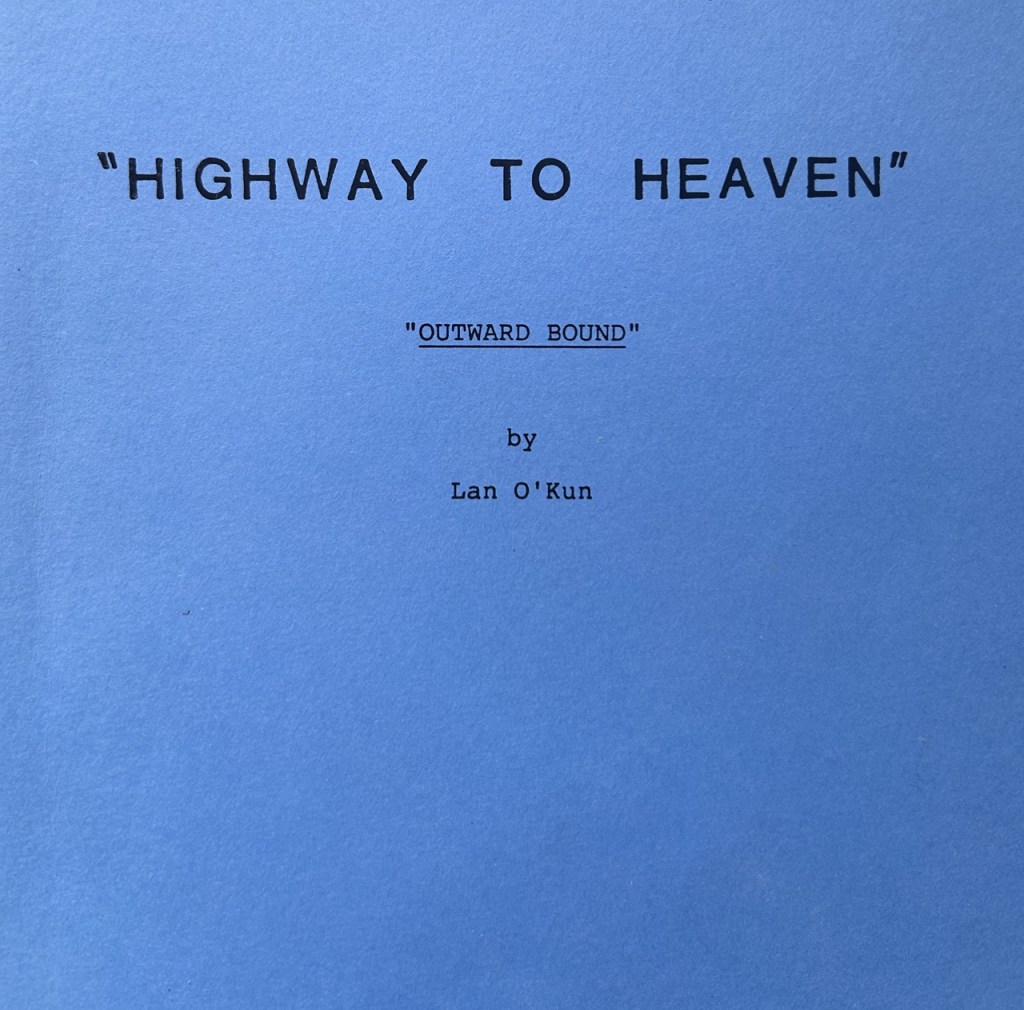
But some of these unproduced scripts might be selected later, eventually.
That’s what happened this season, for which they didn’t use them all: the script for the season finale bears “No. 85”, and belonged to season three as one of its six leftover scripts that year.
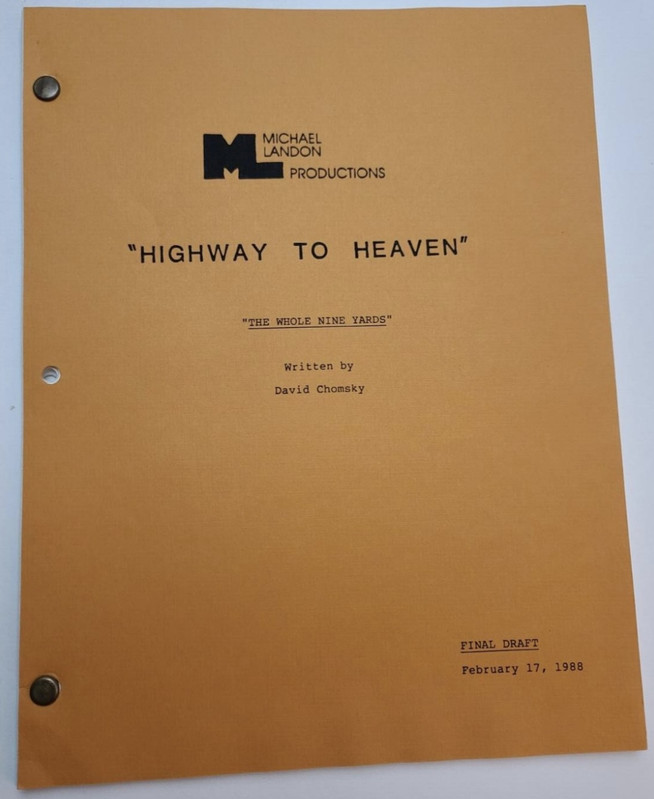
Anyway, by excluding the season finale (which comes from season three) and considering that the scripts for the two-part episodes Man’s Best Friend and A Dolphin Song For Lee only bear the same number on both Part One and Part Two, it means that there are eight unproduced scripts this season. One of them being Outward Bound, again. Eventually, one of these leftover scripts would be selected in the fifth season.
Adding that to the unused scripts from the previous years and removing The Whole Nine Yards which was eventually produced this year, it means that they wrote 122 episodes in four seasons, and 33 have gone unproduced so far. Most of them remained unused for the rest of the series.
Airings and Ratings
Complete season available here. Important: the available season is presented in its old syndicated version, which is incomplete for syndicated purposes. So there are at least a few minutes missing or a scene deleted from each episode. The latest DVD version restored the original series.

This may strike as familiar: it comes from The Monster Part One, a season two episode.
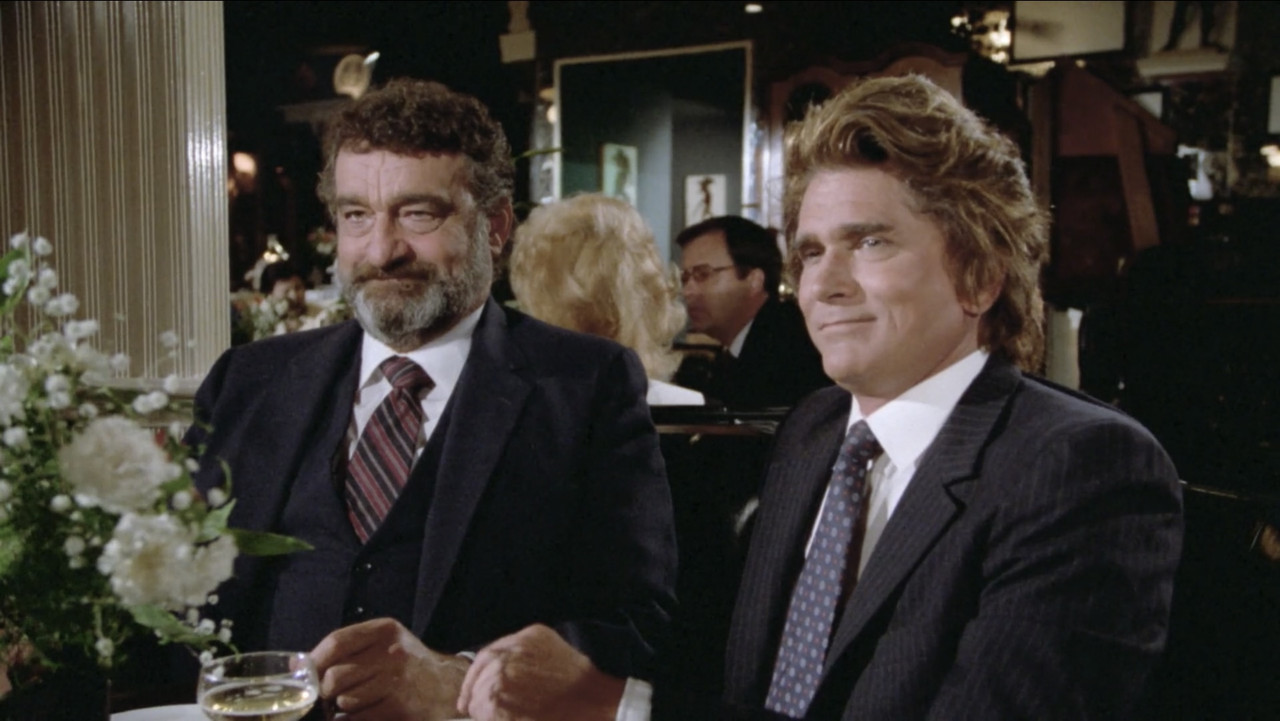
But it’s not the first time they do it wrong: season two used Wally, a season three episode which would also be used next season.
Highway To Heaven season four aired from September 15, 1987 to March 2, 1988 on Wednesdays 8:00 PM, and from March 16 to April 27 on Wednesdays 9:00 PM, for a total of 24 shows. All episodes aired on NBC as in their preceding seasons.
Airings
The season had a weekly airing beginning on September 15 (Man’s Best Friend) until April 27, 1988 for the season finale. There were a couple of adjustments, though: in the first half of the season, the series had a two-week skip between Fight For Your Life and The People Next Door, which aired three weeks apart due to the baseball World Series. According to the lineup on the newspaper, they were originally meant to air two weeks apart, with Country Doctor on October 14, but the network later changed its mind and delayed that episode until the new year.
The remaining episodes from October 21 (The People Next Door) to In With The “In” Crowd (December 9) aired consecutively. There was a week break on December 16 to air the sitcoms Family Ties and Hogan’s Family, and then the season resumed with the Christmas Special. It took a week break for the Christmas Holiday, and then began its second half on the new year. That was unusual: in the prior seasons, the first half of the season ended the third week of December, then the season had two weeks off for the Christmas Holidays and started in January again. This year, however, they skipped the third week and aired the Christmas Special on the fourth, and then paused again for just a week and resumed in January. So they the break wasn’t consecutive anymore.
Either way, the second half of the season began on January 6 with A Mother’s Love and ran for three consecutive weeks. They had a one week break between Time In A Bottle on January 20 and Back To Oakland on February 2, choosing to rerun a season three episode on January 27 taken from those that hadn’t rerun in Spring 1987 alongside the rest of the third season (very weird). Then, it resumed airing until Aloha on March 2, which was the last episode of the season on the usual timeslot.
After that, the season skipped yet another week and was then moved to the 9:00 PM slot to preempt the new series Aaron’s Way until its conclusion. So, beginning with A Dolphin Song For Lee on March 16, the rest of the episodes aired one hour later than usual. Three weekly episodes aired and then the season was interrupted once more before the finale. Lastly, on April 27, they broadcast the season four finale without any lead-in nor prior rerun.
Here’s the official rerun schedule.
In 1987 December (during the Christmas Break):
- December 30, Ghost Rider (season three episode).
In 1988 January (during a week break):
- January 27, Heavy Date (season three episode)
In Spring 1988 after the season Finale:
- May, Amazing Man, I Was A Middle Aged Werewolf, two weeks skipped.
- June, Fight For Your Life, The People Next Door, All The Colors Of The Heart, We Have Forever (both parts the same day), A Dream Of Wild Horses.
In the past seasons, the series began rerunning its old episodes (usually those from the first half of the season and some unaired rerun left from the older seasons) in Spring until April or early May, for the finale, and then kept rerunning the season through the summer until fall, and the new season begins. And they usually aired the whole season again (keeping just a couple of episodes to rerun one year later), starting from the opening episode (To Touch The Moon in season one, A Song For Jason in season two and A Special Love in season three, airing both parts the same night). This time, however, they decided to skip the Spring reruns: the season four finale aired four weeks after its predecessor without any rerun, which only began in early May after the season’s last episode. They even skipped Man’s Best Friend and started with Amazing Man instead.
And it was a short run: instead of showing the whole season four until the new season in September, only eight episodes aired this time of the year. Then, the broadcast was permanently interrupted in early July and no further rerun ever aired. That was probably due to the season’s future: on late May 1988, the series was in negotiations with cable channels to be sold to syndication, and effectively began the syndicated run in late Summer that same year. So that means all the old episodes of the series from these four seasons wouldn’t air exclusively on NBC as they did in up until then; rather, they could have aired anytime on any cable channel that bought them.
Besides, by that point, the network was also considering dropping the series, so they probably thought it was no use rerunning season four to gradually increase the audience for the new season, if it was likely there wasn’t going to be any new season. And the reruns ratings were not doing well: those few episodes that actually had their official rerun scored similarly to the reruns in the third season, which were not particularly successful.
Actually, in a 1988 interview on the Chicago Tribune at the same time as the season was drawing to a conclusion, an attempt was made to explain the ratings of the season three rerun by pointing out that families were Highway‘s audience, and they spent the summer out playing or doing “family things” (as Landon put it). But that’s hardly a convincing explanation: the reruns in season one were enormously successful, and some episodes even surpassed their original broadcasts in the ratings, which is very uncommon. So there must have been more to it. Unless it was just season one being unpopular during its original run, which is partly the case (the first half of the season had uneven ratings) and people just found out about the existence of the series when it entered rerun instead.
Ratings
The least watched episode of the season (and the series) is the Halloween Special on October, while the most successful was A Mother’s Love in early January 1988, although it still remained far behind the other seasons.
The weekly TV program include every TV series, the “weekly TV show” entry features the one-hour shows like Highway was in its run. Just to give some context: that TV year there were about 85 to 90 TV programs airing each week, of which some 25 or 30 were one-hour TV shows like Highway. It’s way more than the prior years due to Fox and its new series.
| Episode | Audience | Weekly TV Program | Weekly TV Show |
| 1987 | 1987 | 1987 | 1987 |
| Man’s Best Friend Part One | 28 million | 18th | 5th |
| Man’s Best Friend Part Two | 26 – 27 million | 32nd | 8th |
| Fight For Your Life | 22 million | 45th | 12th |
| The People Next Door | 24 – 25 million | 31st tie | 5th |
| I Was A Middle Aged Werewolf | 20 million | 49th tie | 11th tie |
| Playing For Keeps | 22 million | 33rd tie | 7th tie |
| Amazing Man | 27 million | 29th | 5th |
| All The Colors Of the Heart | 22 – 23 million | 36th tie | 7th tie |
| Why Punish The Children? | 22 – 23 million | 35th tie | 4th |
| A Dream Of Wild Horses | 22 million | 41st | 9th |
| In With The “In” Crowd | 24 million | 35th tie | 4th tie |
| With Love, The Claus | 24 million | 23rd | 4th |
| 1988 | 1988 | 1988 | 1988 |
| A Mother’s Love | 29 – 30 million | 21st | 3rd |
| Country Doctor | 28 – 29 million | 29th | 4th |
| Time In A Bottle | 29 million | 23rd | 5th |
| Back To Oakland | 26 million | 28th | 6th |
| We Have Forever Part One | 26 million | 25th | 6th |
| We Have Forever Part Two | 28 – 29 million | 22nd | 4th |
| The Correspondent | 23 – 24 million | 33rd | 4th |
| Aloha | 21 million | 42nd | 9th |
| A Dolphin Song For Lee Part One | 24 million | 30th | 9th |
| A Dolphin Song For Lee Part Two | 23 – 24 million | 32nd | 8th |
| Heaven Nose, Mr. Smith | 23 million | 32nd | 11th |
| The Whole Nine Yards | 23 million | 22nd | 5th |
Figures according to the reports here, the same used at the “ratings” entry in each episode.
Disclaimer: the “TV show” category only considers one-hour shows classified as Highway. So, it excludes any sitcom or sports programming but includes police procedural and other similar one-hour shows to Highway To Heaven.
Despite the quality of its episodes, this season performed the worst in terms of ratings. Had its most watched episode aired during season two, it would have been the second-least-watched show of that year, and had it aired during either season one or three, it would have ranked below half of their episodes.
The most problematic results occurred in late September and October, a period when the series had always enjoyed its greatest popularity—or, at least, that had been true in previous seasons. The Fight For Your Life aired in late September and broke the record for the least-watched episode of the series, only to be surpassed by the Halloween Special four weeks later. Eventually, the rest of the season somehow managed to recover and improve its ratings, particularly by January, but the result was still below the rest of the series.
From September to December 1987, first half of the season scored 14.2 ratings points and was the 39th most watched TV program of the year and 8th most watched TV show, while the second half of the season improved to 15 ratings points, and sat 30th as the most watched TV program from January 1988 to April, and 7th most watched show.
By the end of the year, Highway To Heaven season four scored 14.6 ratings point and ranked as the 32nd most-watched TV program (tied with The Fact Of Life season nine) and the 8th most-watched TV show. It’s reported by some that the series placed 38th in TV programs; however, those ratings combine weekly series with midseason replacements like Aaron’s Way, which only aired six episodes between March and April, and the whole season’s ratings are based solely on those episode (the period covers from September to early April only). So, by removing the replacement series with less than ten episodes and comprising exclusively complete seasons or weekly specials that ran for the entire year like Highway, the actual result is effectively higher. Actually, it’s reported by some other news that, by listing any TV series that aired from September 13, 1987 to April 17, 1988 instead of June (thus removing all the spring shows), the series is actually 30th tied with The Fact Of Life, but there are less reports about this.
It’s behind the rest of the series: season one was 19th by the end of the year, season 2 was 12th and season three was 21st in TV program. It wasn’t a complete disaster, as at least some episodes in the first half of the season seemed to suggest (like the Halloween Special), but it wasn’t particularly successful either.
The 1987-88 year was probably a sort of revolution in TV: earlier that season, the network Fox had just launched, and even though its programs lacked the right footing, it added a new selection against the three old networks. Besides, cable TV had become more popular, and ratings were declining for every show (the 1987 summer had the least watched programming ever, and the 1988 summer would do even worse). It seems that the ratings in reruns were a sign of a broader decline for one hour show in general on television, while sitcoms kept going stronger. (Not all of them, though).
The time’s up for a renewal.
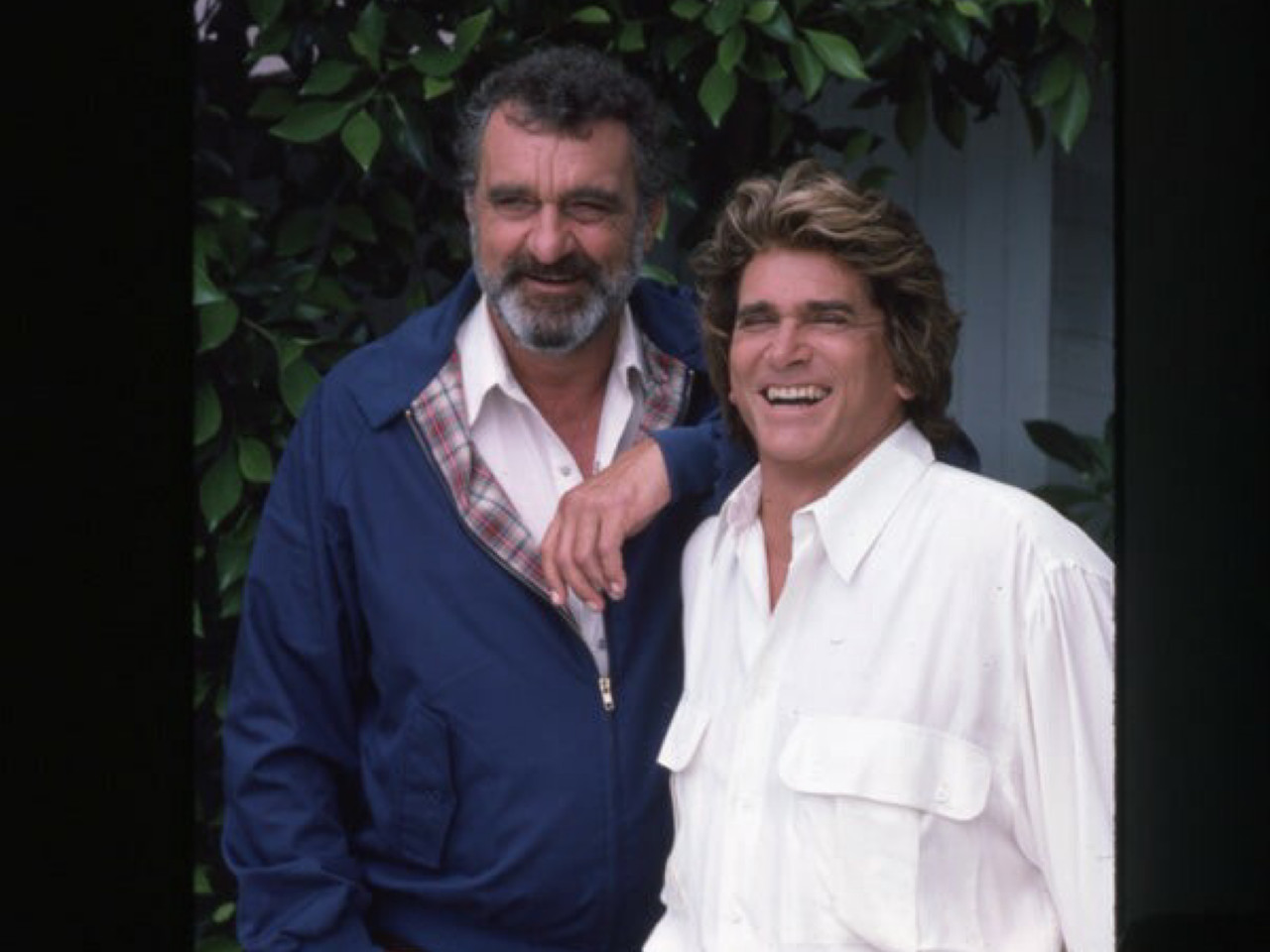
They are not laughing anymore.
Once season one was concluded, the network decided to renew Highway for three additional season, until this year, with plans to further renewal left pending after seeing how this would turn out. It doesn’t mean that Highway was meant to continue indefinitely: it was revealed by Landon in an interview on October 1987 with the Tampa Tribune that he was considering to do six seasons for Highway and then move on to the next project, specifying that “If we get lucky, we’ll stay on for six seasons…I wouldn’t go longer than that“, even if the show turned out to still be popular by then. That interview was conducted when season four had just started its run, and by that time—by judging from the ratings of season three—it wasn’t impossible to imagine that the series would perform well for another two years.
This same idea was further confirmed in another interview on the Chicago Tribune in March 1988, after concluding the production of the season finale. There, he stated that he intended to continue Highway for a couple of years more, which would have brought it to a total of six seasons (until 1990) and then move on. So he didn’t want it to be like Little House and keep going as long as it’s popular in ratings, but he still intended to work a couple more years. But now it’s up to the network to decide whether to continue the series as Landon intended or drop it on account of many factors, ratings included.
The network effectively went a different way: they canceled the series, though not entirely. Instead of laying off everybody and moving on to the next project, they decided to renew it for a shorter final season which was cut to 12 episodes instead of the usual 24 and would air discontinuously over the year. It effectively served as a “replacement series” — it lost its weekly 8:00 slot on Wednesdays and only aired when one of the network’s weekly program skipped broadcast for a reason. (The Wednesday slot went to the documentary Unsolved Mysteries, indefinitely). It just became like the series that used to air on Highway’s place when there was a week skip (during the World Series, for example). And most of all, it was going to be the last season—that was the whole game.
There may have been several factors behind that decision. One was the writers’ strike, which threatened to alter the fall schedule, and the network may have decided that renewing the series indefinitely for another four years or even for a longer fifth season just wasn’t worth the risk. At the same time, the network knew that the series was no longer as popular as it had once been, although its ratings were still respectable, and that when a series gets this far and scores these ratings, it’s hard to be back to its former glory (as Landon even admitted in a TV interview dated October 1988 while working on season five). Moreover, the network may have wanted to sell the older episodes to syndication when they could still get something off them; and waiting another year might have reduced their price, as one-hour dramas were gradually declining in popularity across television, not just this particular series (testified by the ratings at the end of the 1987 – 1988 year; there’s an article on the L.A. Herald Examiner about the struggle of one-hour TV program to go to syndication). So, renewing the series for a fifth season and delaying syndication could have been too risky as well. And that’s even more apparent given that there seemed to be little chance of the series regaining its former popularity in a fifth season.
It is also possible that some of the actors were ready to move on. Even though Landon explained in the interview dated October 1987 (when season four had just started its run) that he didn’t care how popular the series would turn out to be in its fourth season or how hard the network would have tried to persuade him— the plan was to make six seasons for Highway and then quit—the series wasn’t done by a single person. It’s not impossible that other crew members or even French may have been growing tired of the show and felt that it was time to move on, or didn’t want to be a part of it anymore. There may have been many explanations; in any case, the result at the end of this season was that the network decided to cancel the series—at least in its usual broadcast—then sell it to syndication and order for one last shorter replacement season.
Now the series is finally about to conclude: the TV landscape is not the same as it used to be when Highway first aired four years ago, every one-hour program except procedural ones is not as popular as it used to be, and the journey on the Highway To Heaven is almost over on TV. Now they are going to have to wait for the strike to be over, and it might be a long time before that happens: that was the longest strike in the industry, which paused every production until August, and then they had to actually go making the episode. It will be a long time and a five months vacation. And then everybody will drive down the Highway road, one last time.

Leave a comment