
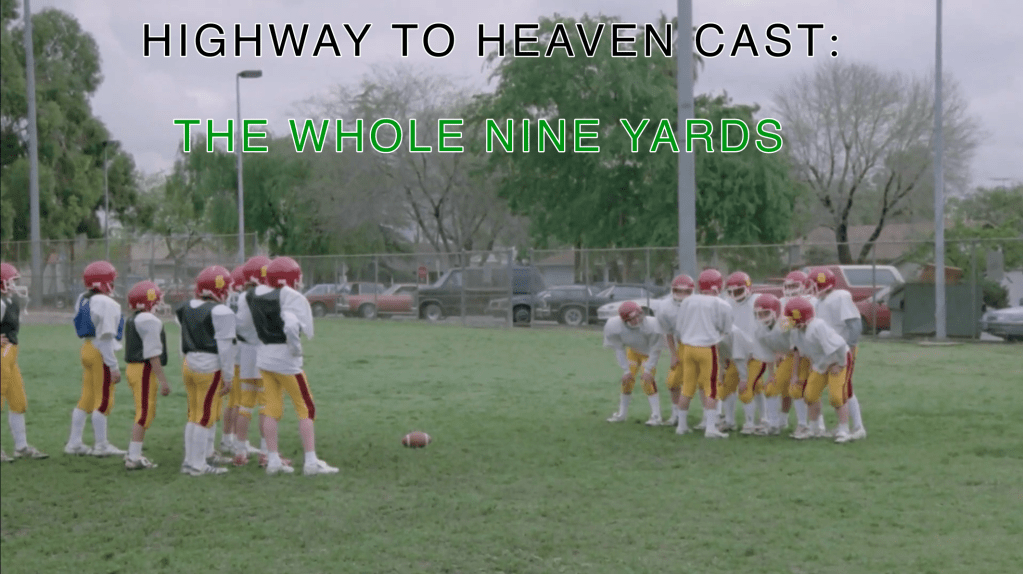
Highway To Heaven Cast: The Whole Nine Yards
Airdate: 04/27/1988
Directed By: Michael Landon
The fourth season concludes here. One month after the preceding episode, the season finale aired, and it follows the same pattern established by the previous two seasons—which means it won’t feel like a season finale at all. The reason is simple: just as in the second and third seasons, they chose to conclude the season with a single standalone assignment that neither wraps up the season’s ongoing adventure nor provides any conclusion to the characters’ journeys. But that’s not negative: it’s just a different way to handle it.
Unfortunately, this season’s ratings were supposed to determine the network’s final decision: after the conclusion of season one, given its popularity, the network had renewed the series for three additional seasons, bringing it to this point. So the ratings for this season were meant to give the network an idea of whether to renew the series again (and, if so, for how long) or cancel it had it no longer seemed popular enough. By this point, the season’s ratings had already shown that the series had declined steeply, and no single episode could realistically change that.
But it needed some kind of conclusion, and this is what they settled on.
Guide:
- Assignment
- Background
- Characters
- Production And Setting
Glossary:
- Friendly Jonathan
- Hanging On
- The “Stuff” Power
- The Job
- Epilogue
- Ratings
Complete show available here.
Assignment: Jonathan and Mark are assigned to help both a football player improve his relationship with his parents and an aspiring player find a friend.
That hardly sounds like a season finale. It feels more like a combination of a sports assignment and a family issue.
It’s twofold: part of the assignment follows a boy who plays for the league’s best football team, coached by his strict father.

And they are at strained off the field, as the father believes coaching consists of constant criticism and relentless pressure.
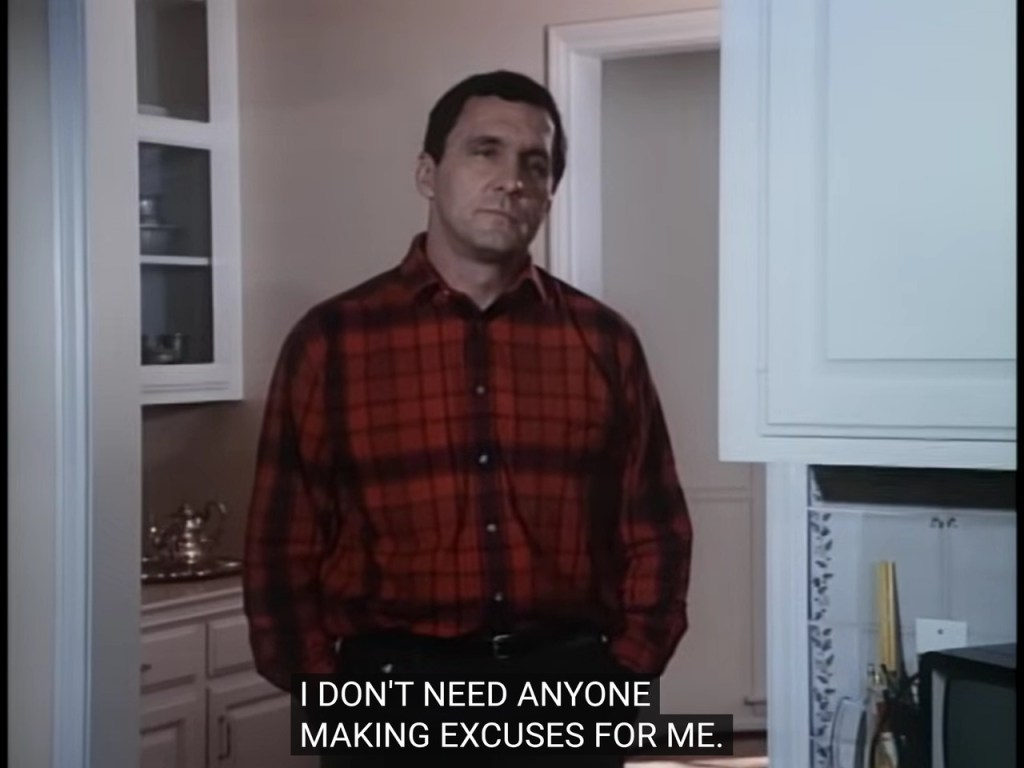
Yet another his father’s son problem.
The other part centers on a girl who dreams of joining the same team, but the coach refuses to let her play because he believes football is a man’s game and that girls have no place on the field.
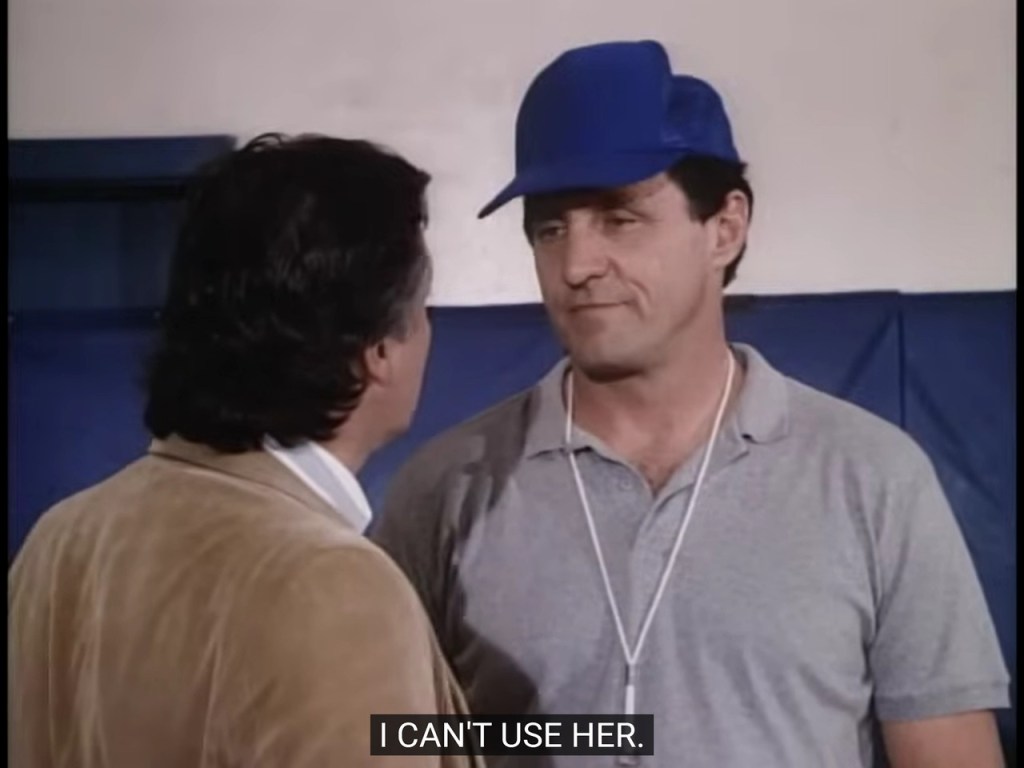
As a result, the girl has to play for a worse team instead.
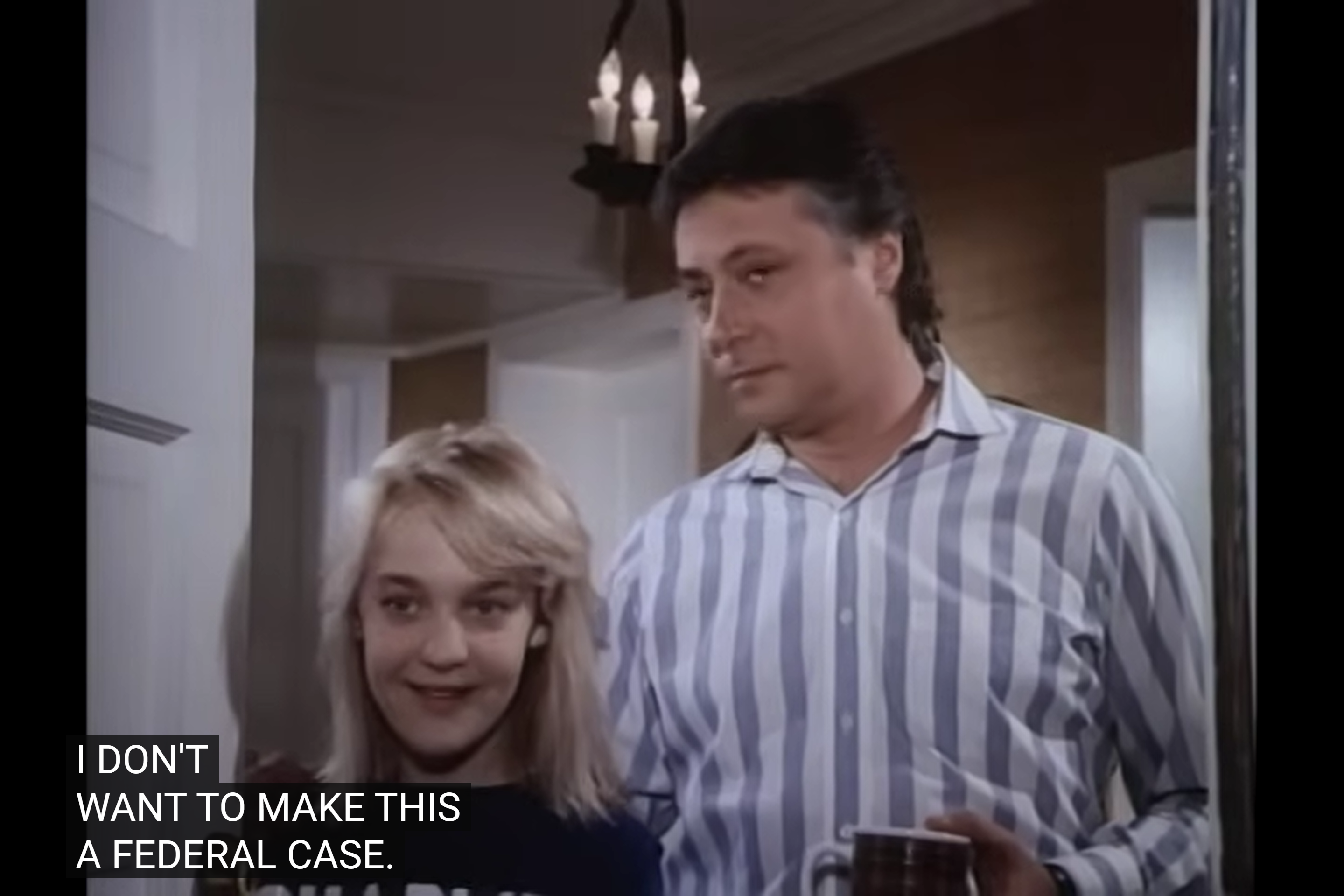
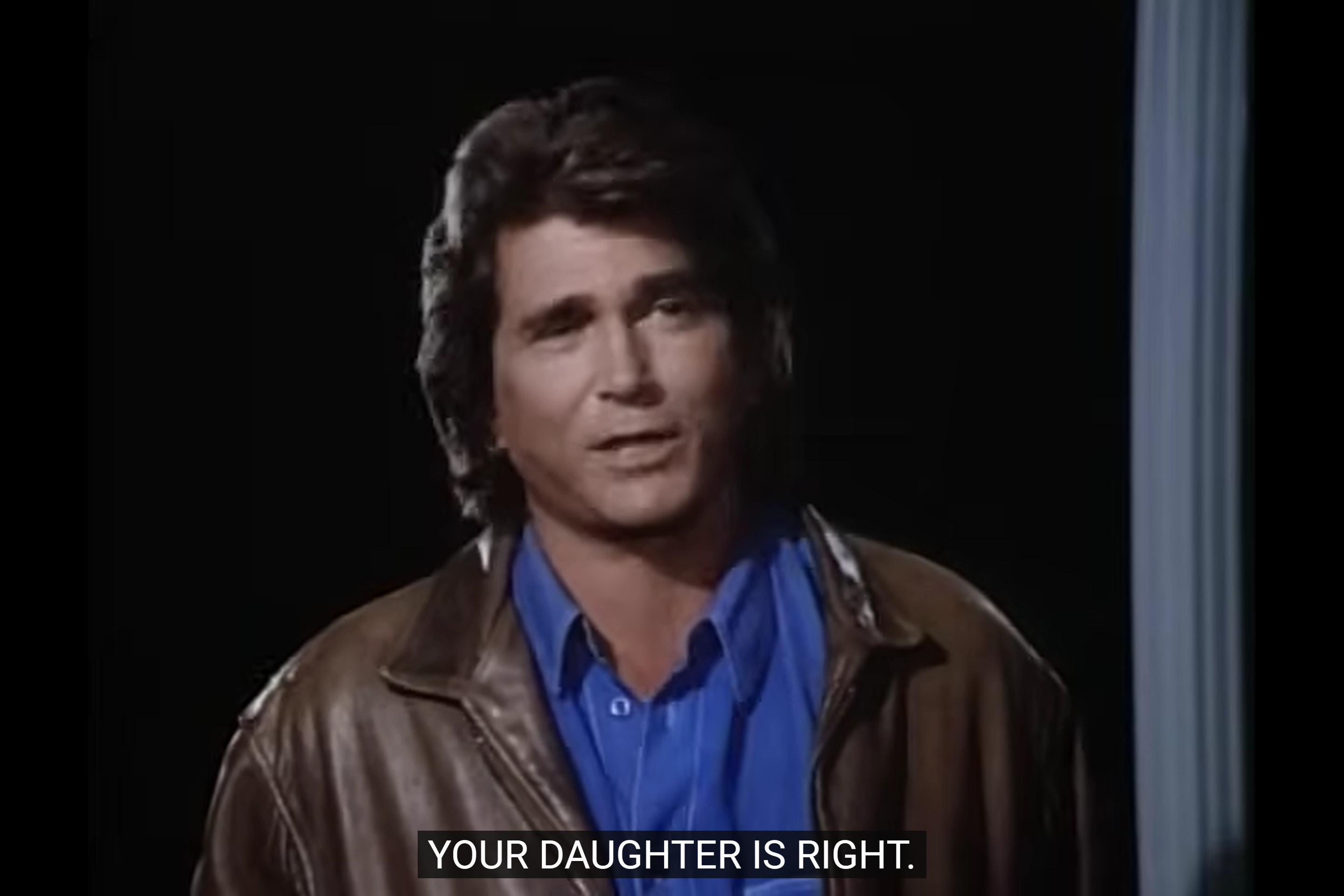
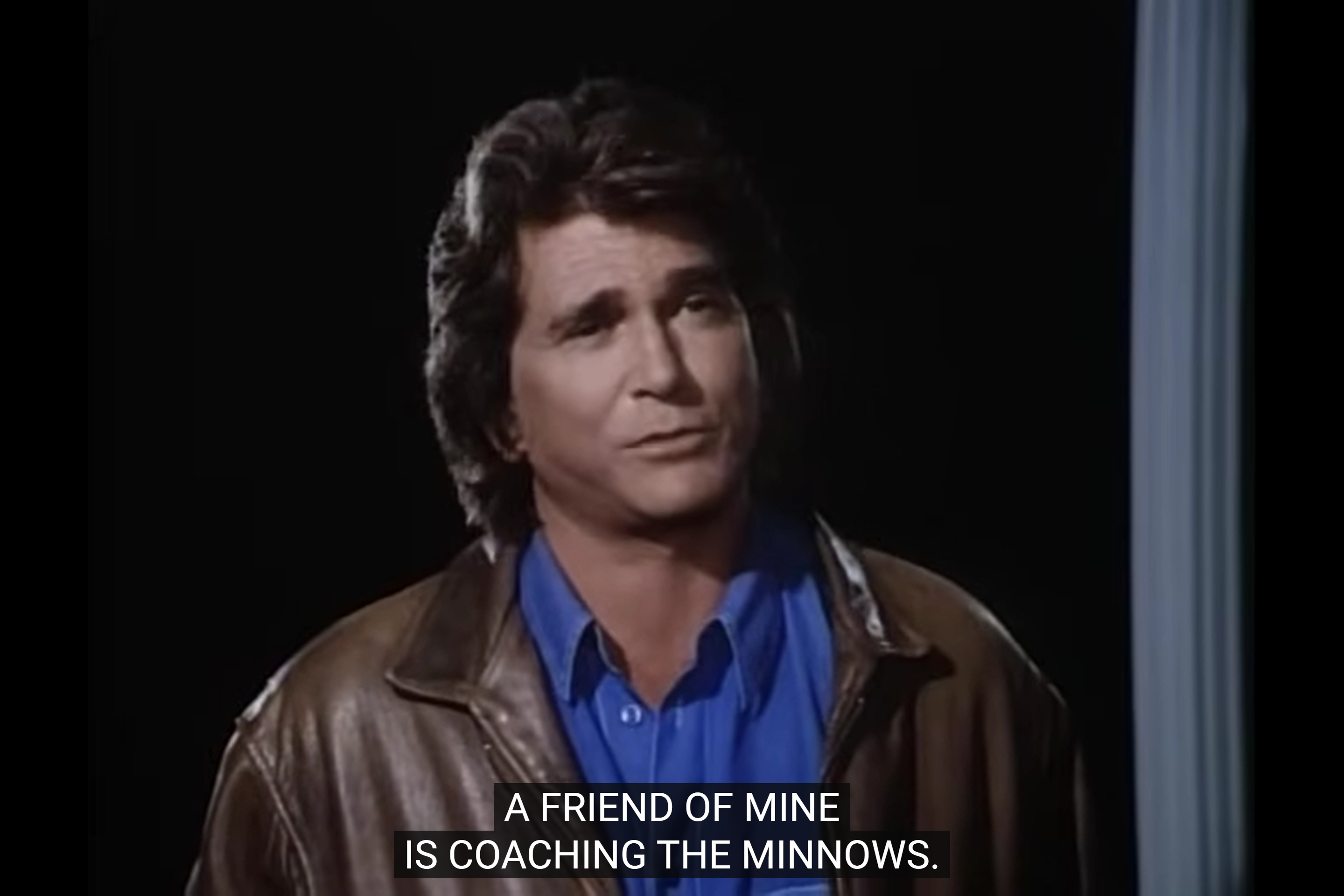
So Jonathan and Mark divide the assignment into two parts: Jonathan tries to help the boy’s father stop placing so much pressure on him, while Mark becomes the coach of the team the girl eventually joins, and they are scheduled to play the boy’s team in a week.

In a way, this resembles the season two finale — a girl makes friend with a peer and they teach other lessons —with some more sports in it.
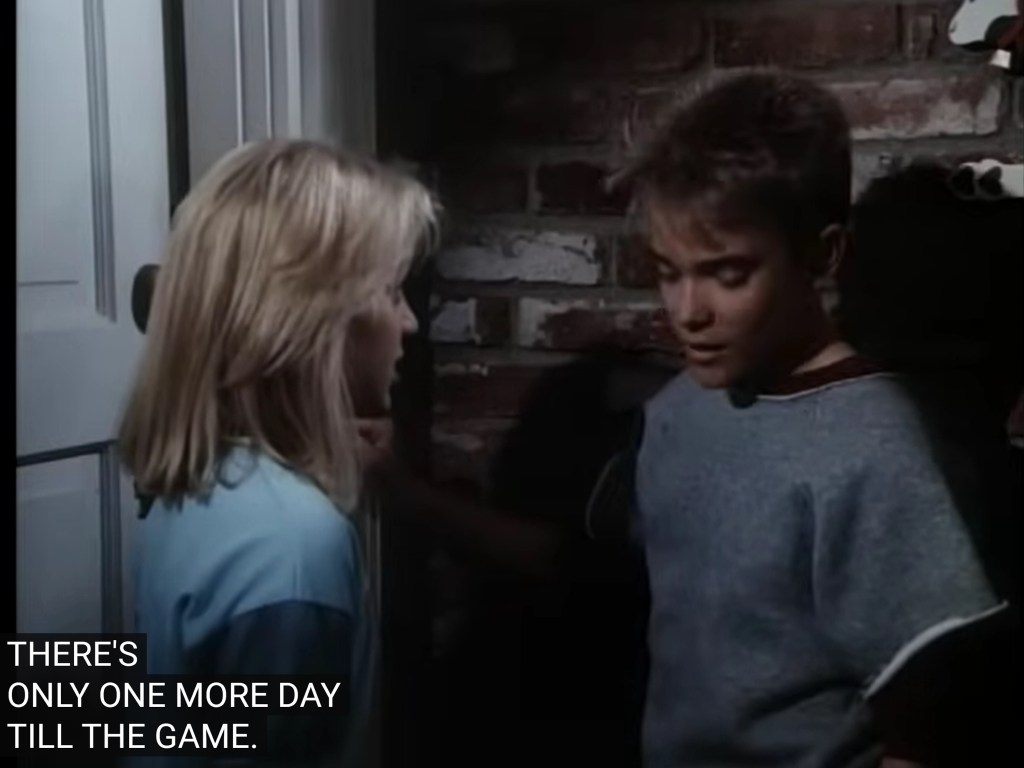
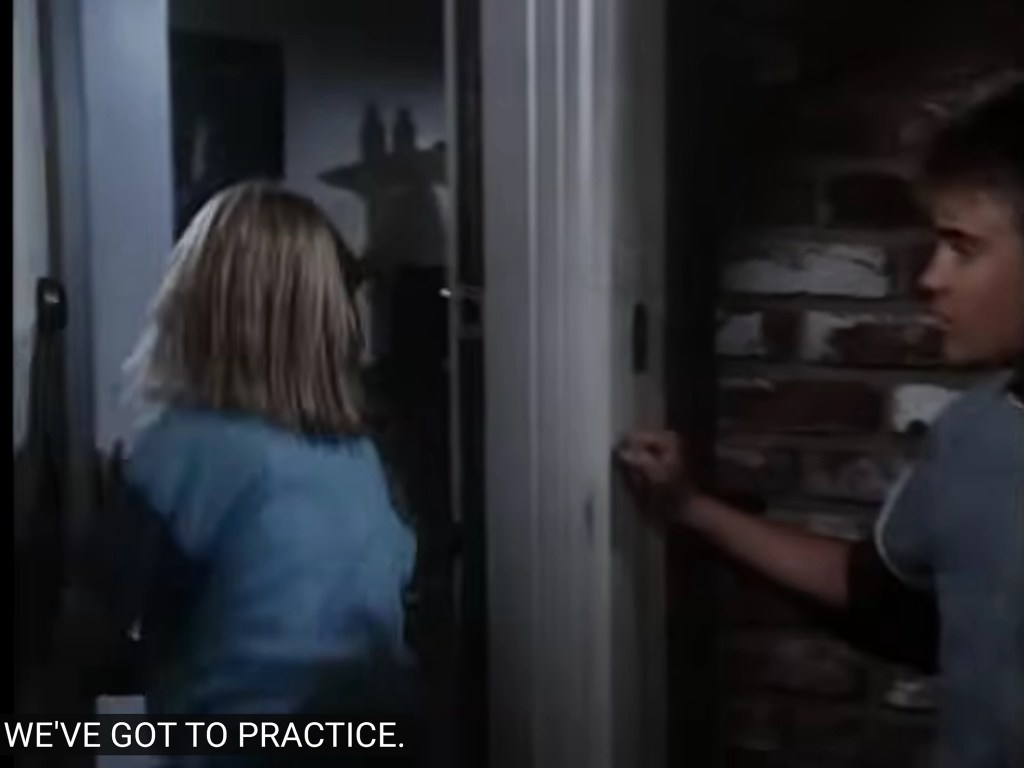
And this whole assignment sounds similar to premise of the whole Buxley Hall special (a boys’ academy invaded by girls). That place clearly originated many episodes of this series.
There are also echoes of the season one finale: a boy struggling to live up to his father’s expectations, an independent and capable girl yearning for proving something to the world, the two initially hating each other.
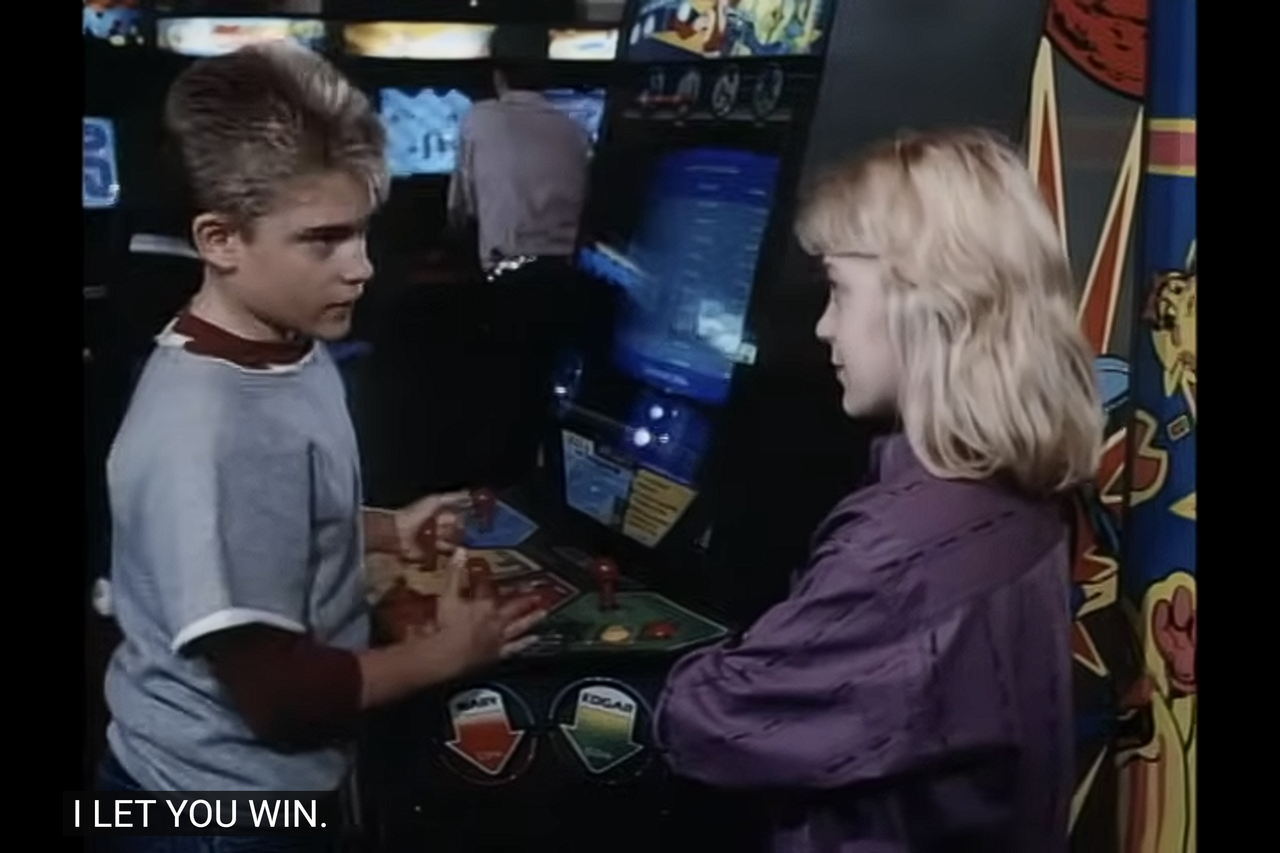
And Jonathan recognizing almost immediately that they’re perfectly matched.
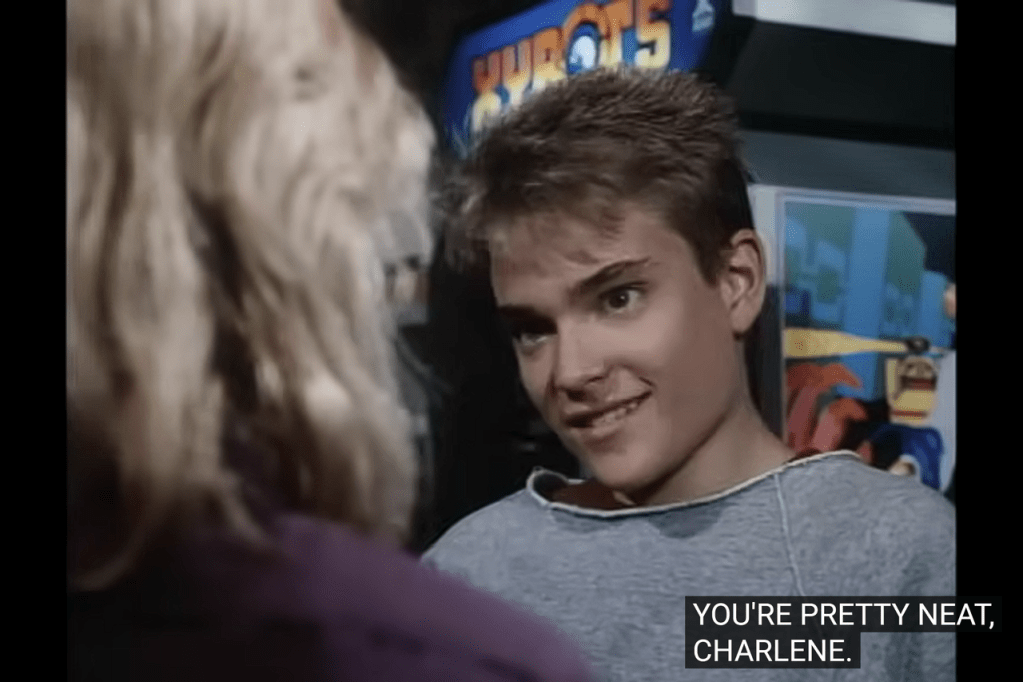
Ready for an engagement, straight to marriage.
But not before the girl’s 13, of course, or Jonathan won’t give his permission.
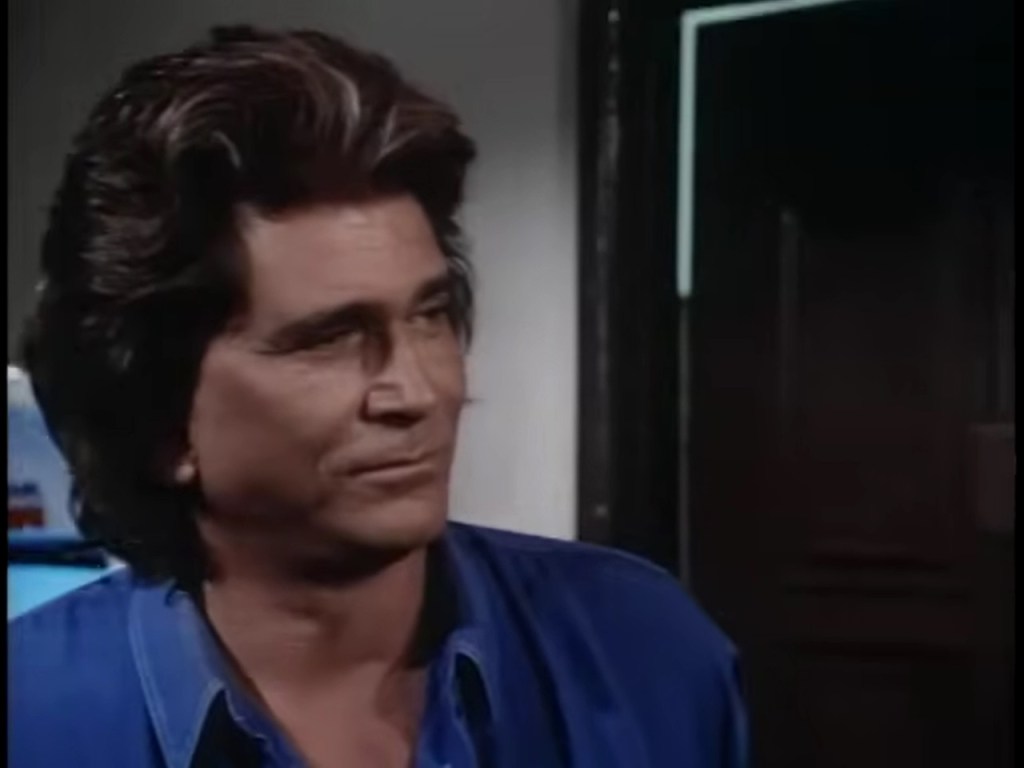
Only Chad Allen was barely 13 by the time they made this episode.
- Background
The assignment spans about one week to ten days, as most episodes do. This timeframe is established at the beginning, when Jonathan and Mark are told that the Bandits and Minnows game will be played the following Saturday, and the episode concludes on that day. So, in that respect, there’s nothing unusual.
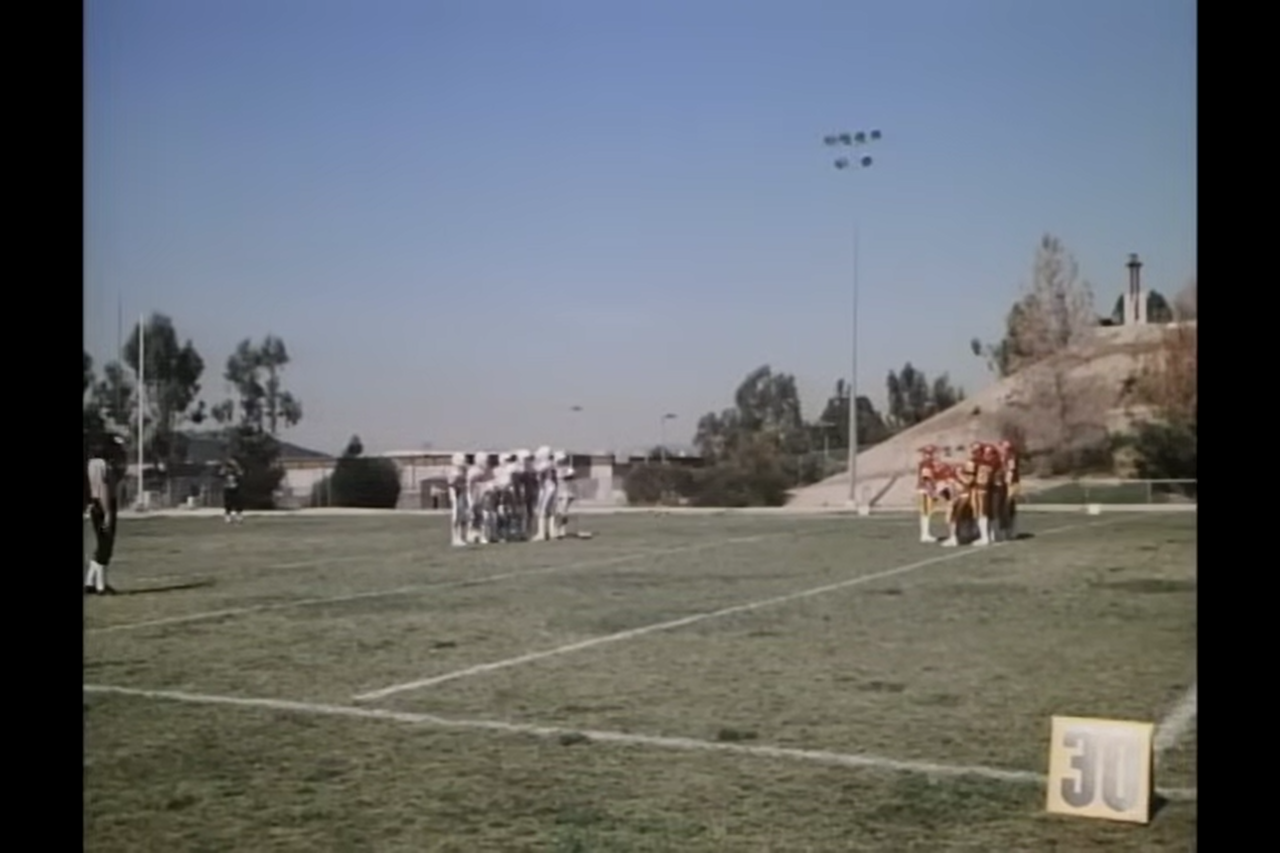
At this point, though, it’s unclear when it does take place: up until season three, it was implied that each season stretched for about a year, beginning in the summer and concluding in late spring one year later. But this season four had just too many long episodes (We Have Forever is over two months, and Lee’s episode is at least five months), and episodes whose span was probably as long but unclear, like Fight For Your Life (a character has twelve bouts). That makes it impossible to believe it was all compressed in a single year.

To complicate matters further, season five almost never specifies dates as to the moment it starts, and there’s no clear-cut end to the series (most episodes aired without following a chronological order). So it really can be any time.
At this point, considering that there’s a season three episode taking place in 1988 during season four, it’s not that implausible that these two episodes just swapped places. Even though the actors looked slightly different.
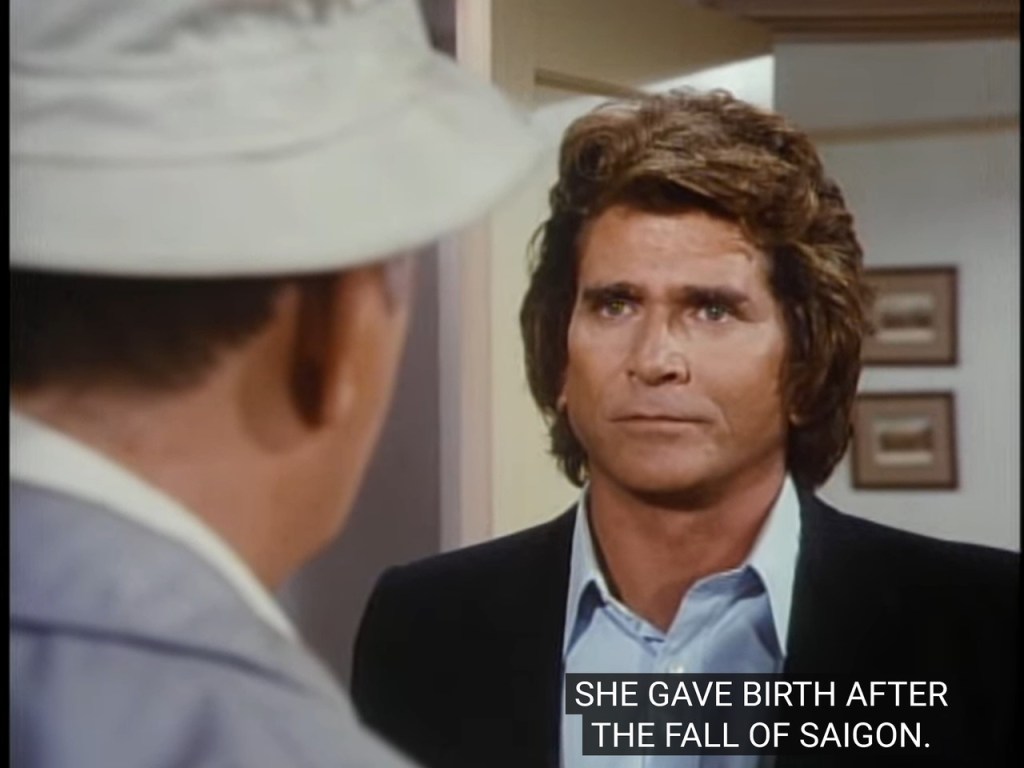
If that were the case, then it’s now 1986 or more likely 1987, by season three. This would solve many issues.
As for the setting, it takes place in Los Angeles, just like virtually every other assignment this season (with only sparse exceptions, like Country Doctor in Piru and A Dream Of Wild Horses in Arizona).
- Characters
As for the characters, there are a couple of things to point out. Particularly about Mark: this assignment revolves around coaching, something he has previously said he enjoys.
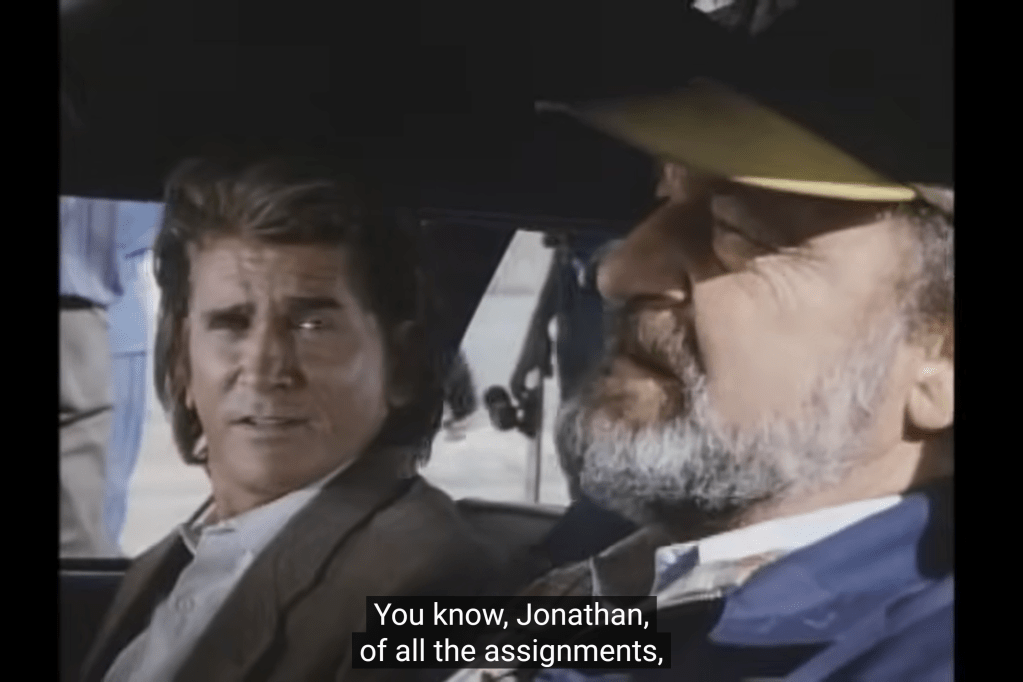
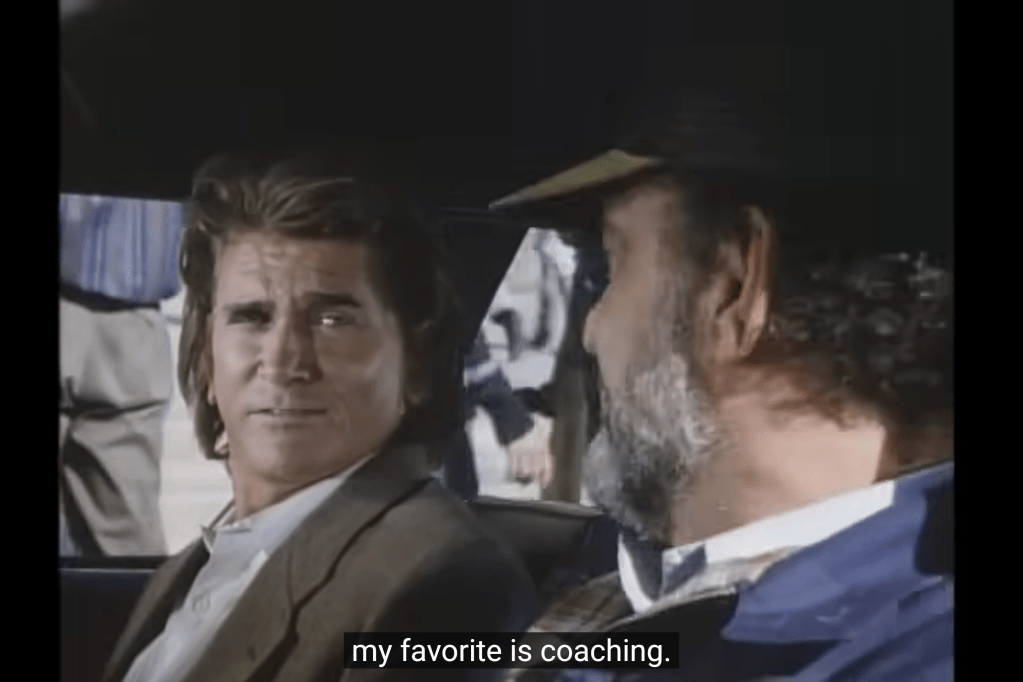
Even though by that point they had almost never been assigned to coach anyone before, and if coaching did play a role—as in A Special Love or The Good Doctor—it was only incidental to the assignment.
Here, at last, Mark gets an assignment in which he can actually coach. And it’s the only episode in the entire series in which he does, and it arrives at the very end of the fourth season.
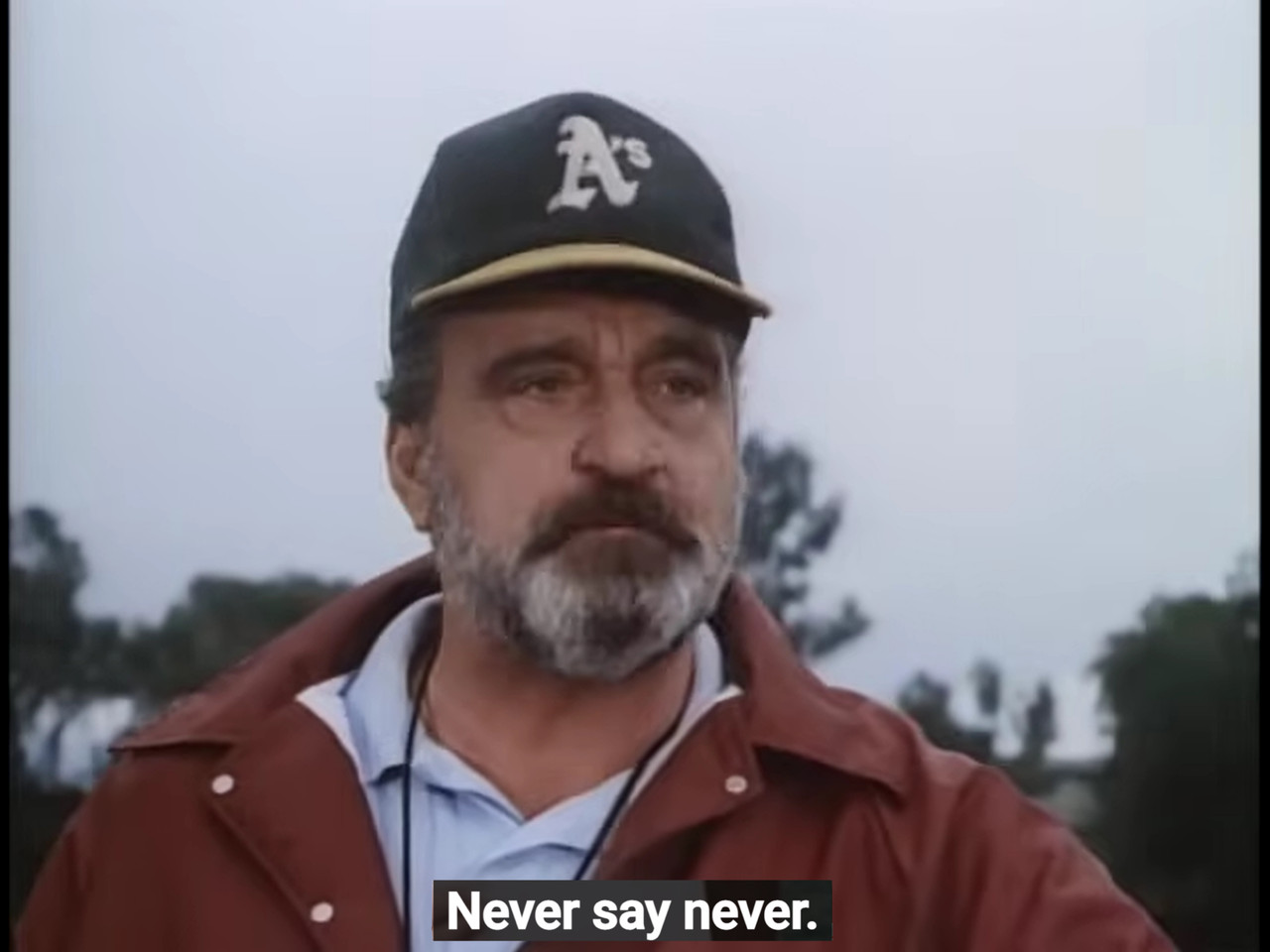
Some Yogi Berra.
The episode also includes another reference to Mark’s past: when Jonathan introduces him to the man hiring them, the man explains that the team’s previous coach has recently quit and that they urgently need a replacement. And Mark immediately volunteers, explaining that he knows football well.
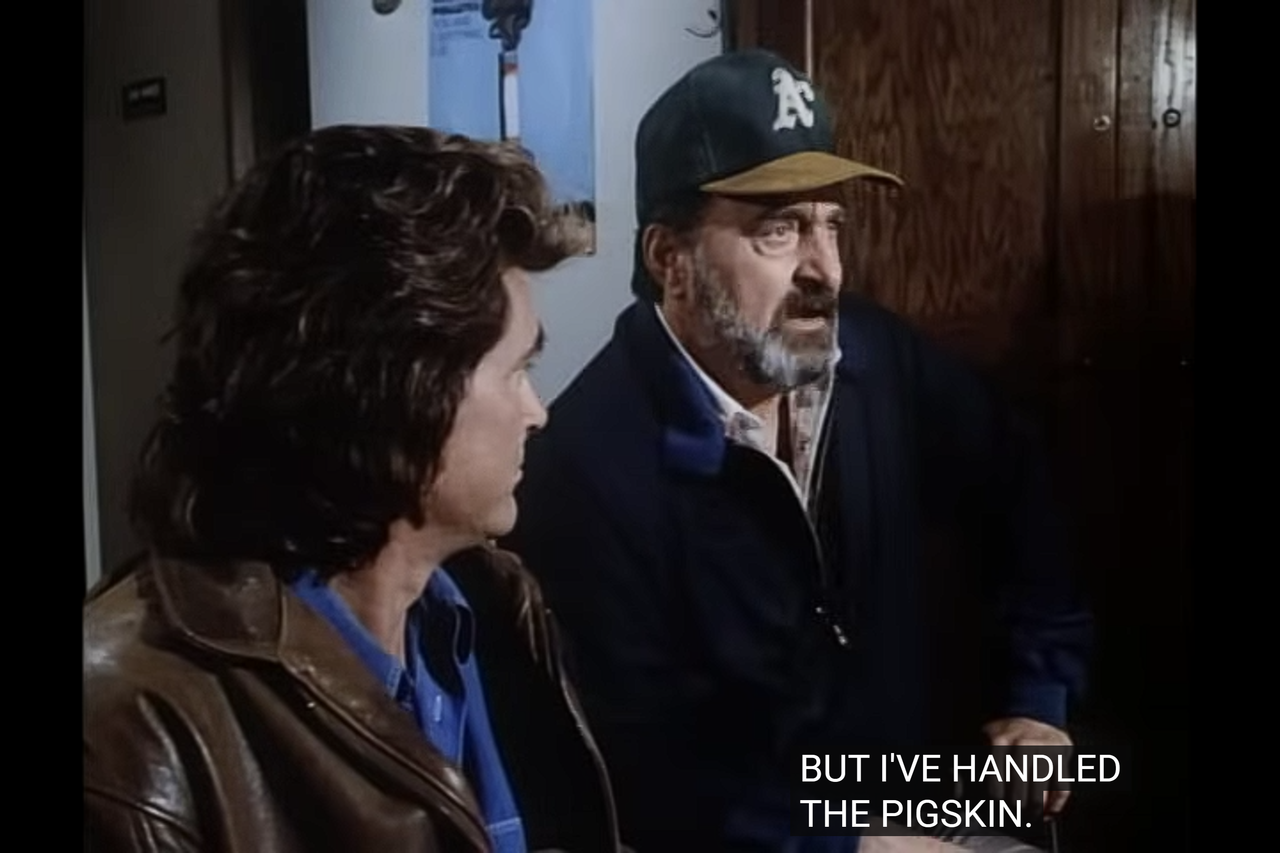
This isn’t new information, at least partially: his football background was first revealed in The Good Doctor during season two, when he said that he used to play some.
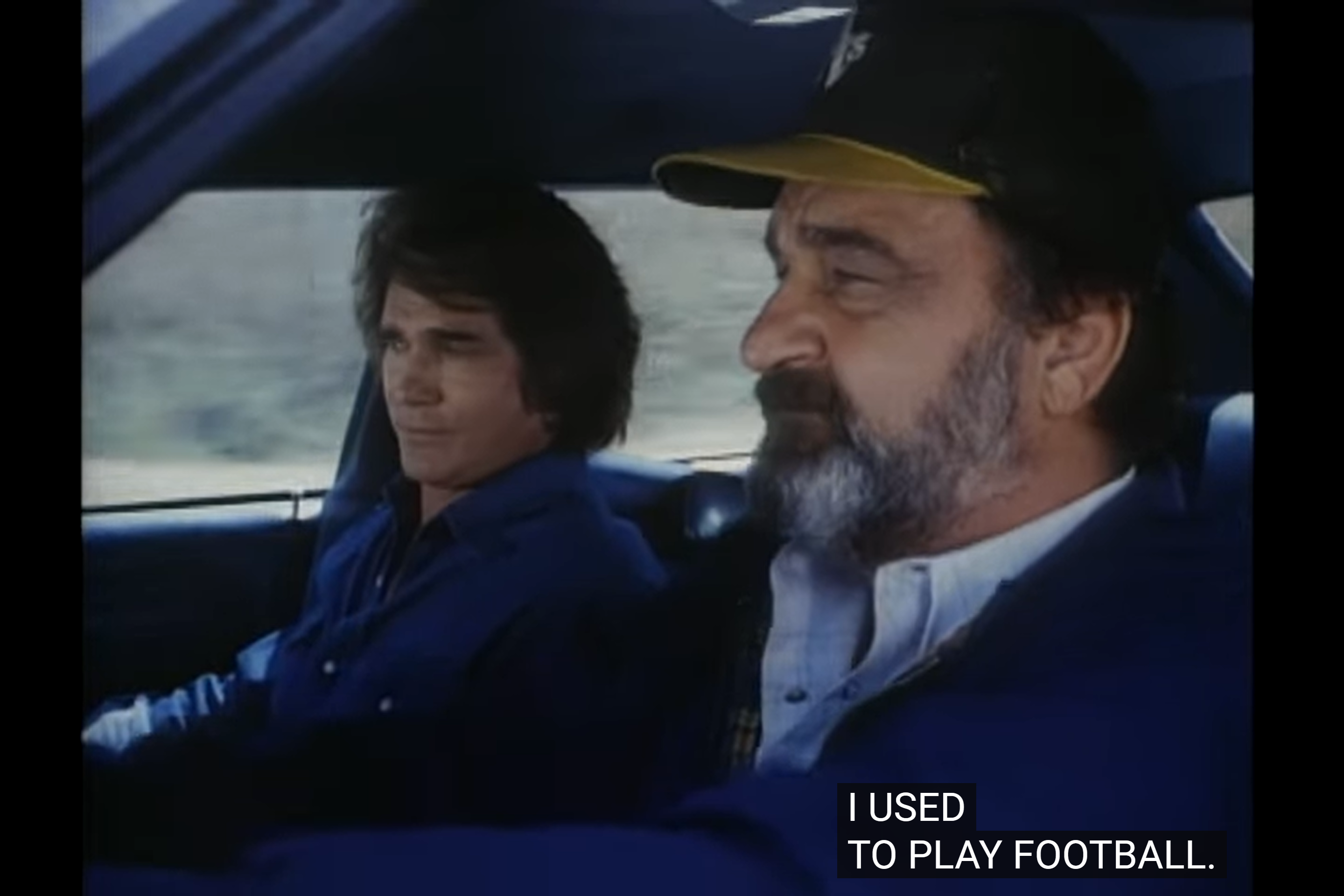
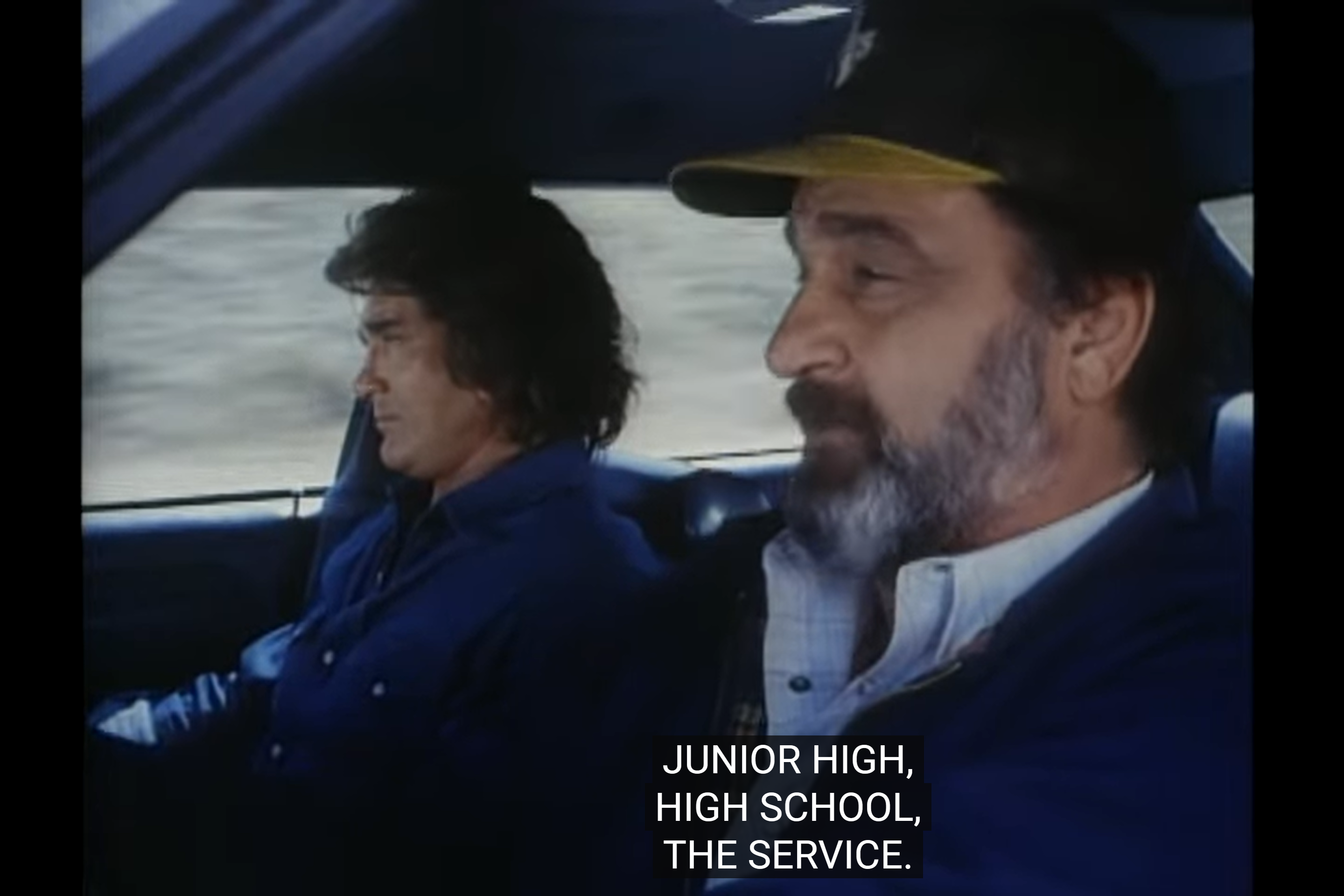

Then it was expanded upon in A Special Love during season three, and referenced many other times in the series.
The problem is what he adds later: he reveals that he used to play in college too, and went by a different name those years.
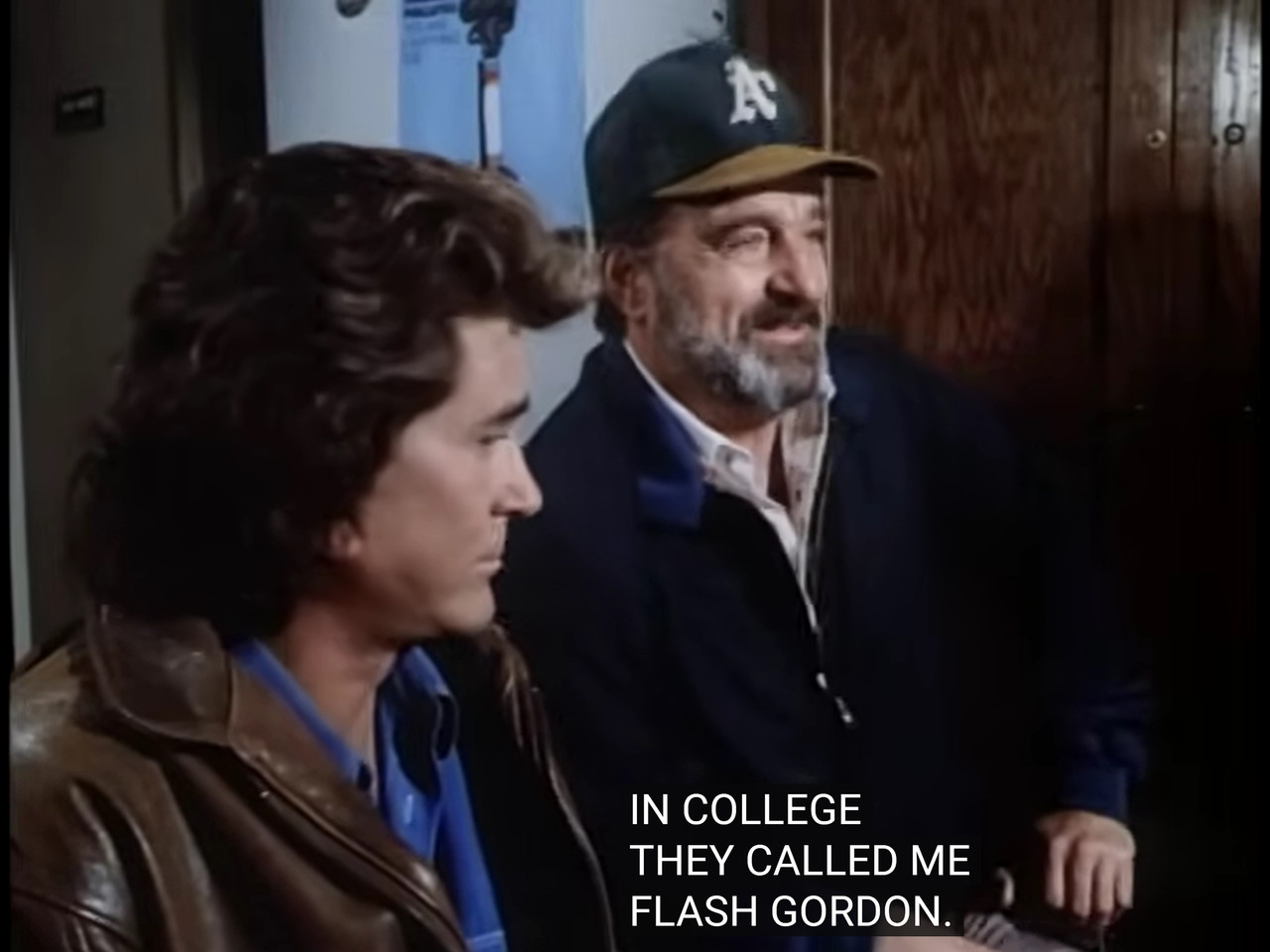
However, there are a couple of problems to raise here: one, in The Good Doctor and A Special Love both it was said that they called him another way.

But maybe he just had many names.
Secondly, another season three episode revealed that Mark had never been to college in the first place.
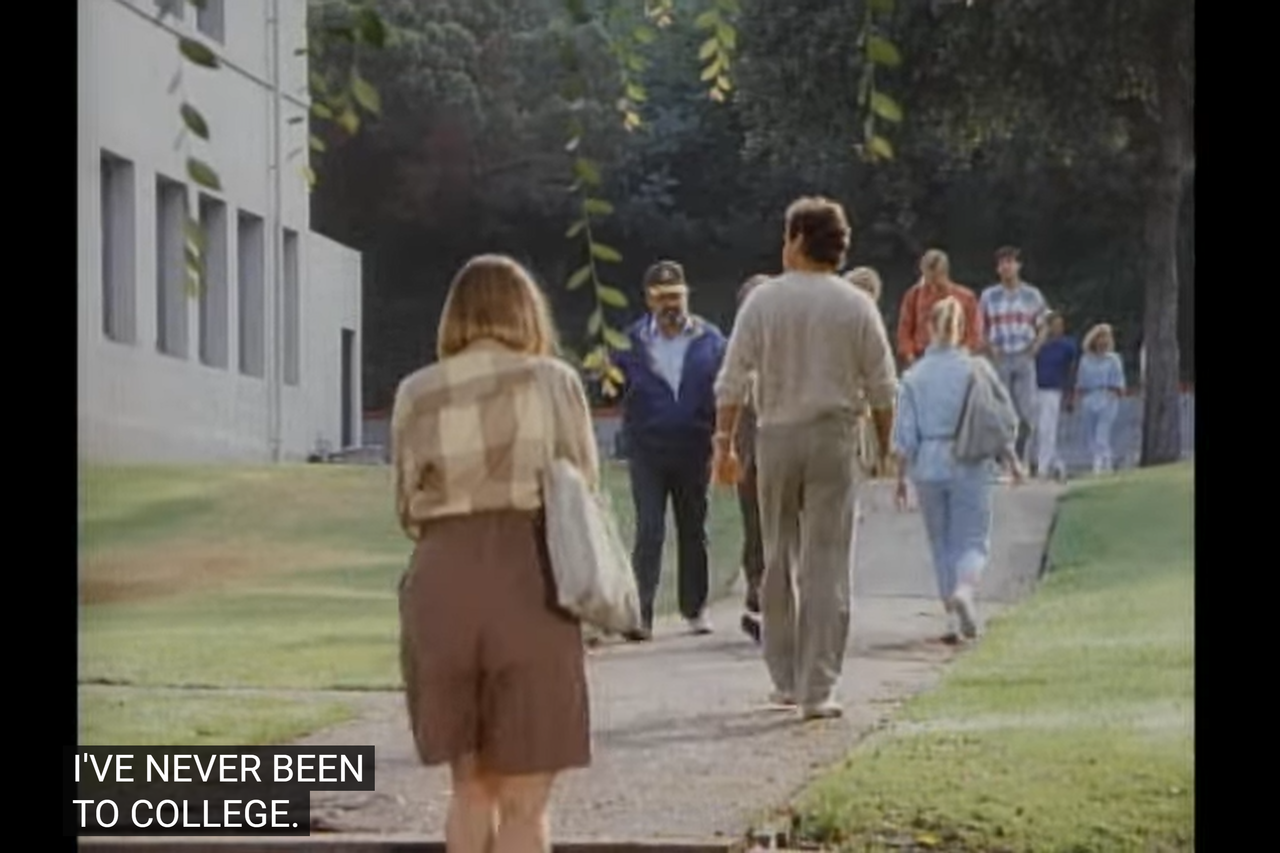
But maybe he just meant that he had been to college, just not long enough to finish it. Even though in The Good Doctor he didn’t mention playing college football either.
So it’s more likely to be an oversight.
Either way, the audience should already know that Mark loved football and played it extensively before becoming Jonathan’s partner. So he’s going to like this assignment.

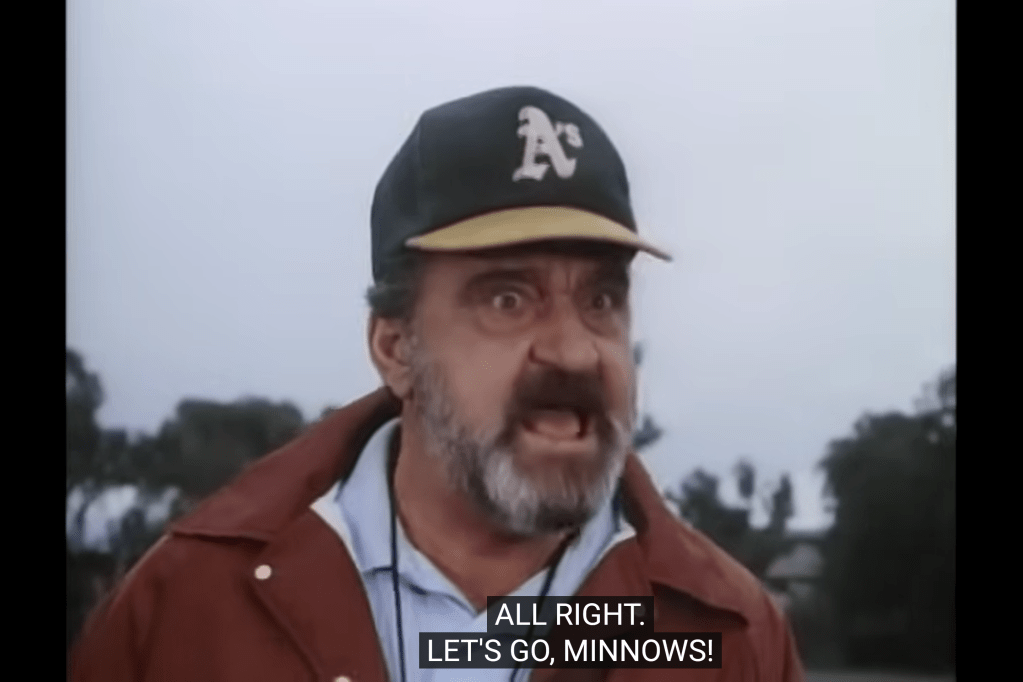
Now he’s more like Ted L.
One curious detail: while applying for the coaching position, Mark says that he loves working with children.

This is actually the first time in the series that he openly expresses he likes children. But it’s weird: in the third season, he initially seemed far less enthusiastic about coaching girls.
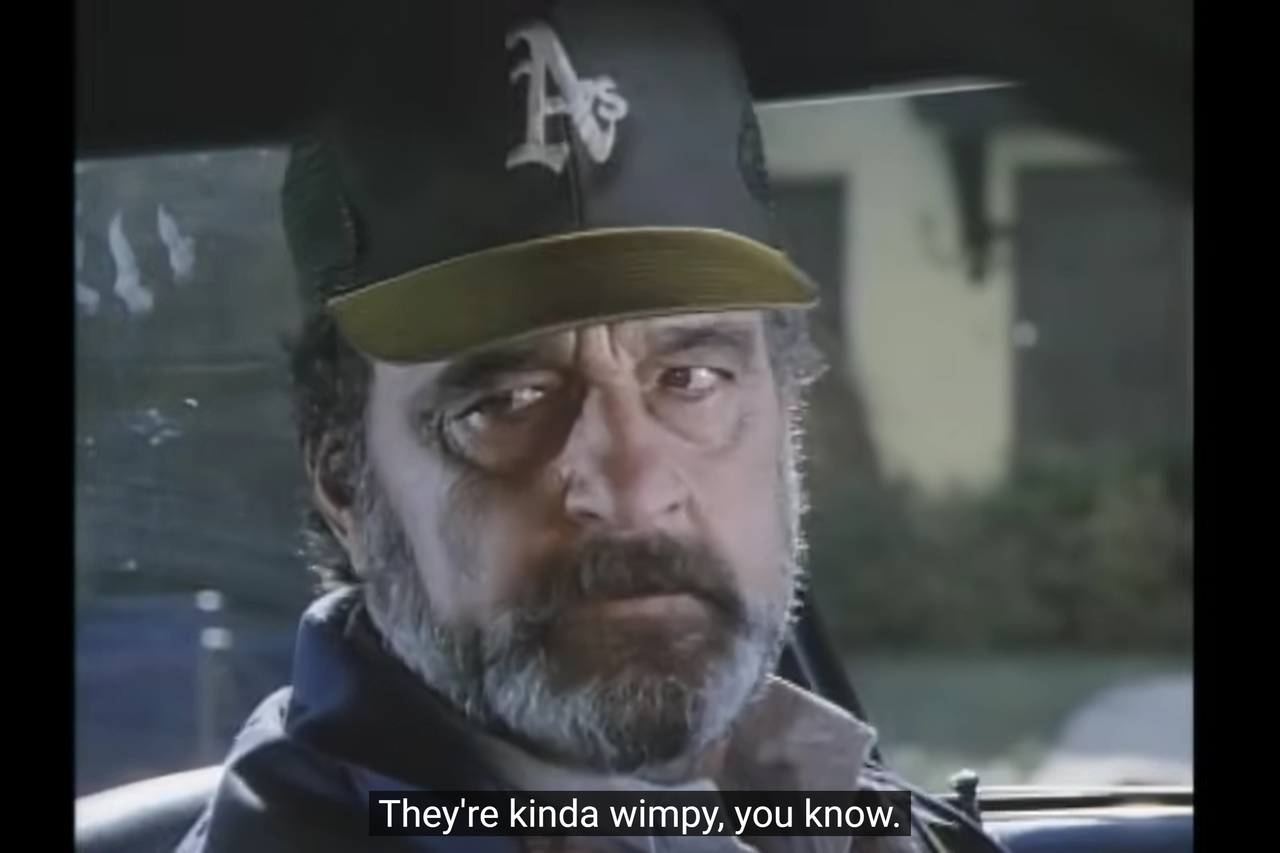
And now he gets one of the team.
Maybe this assignment is really about Mark confronting his discriminatory attitude toward women in sports. Which was the commander’s views in the Buxley special too.
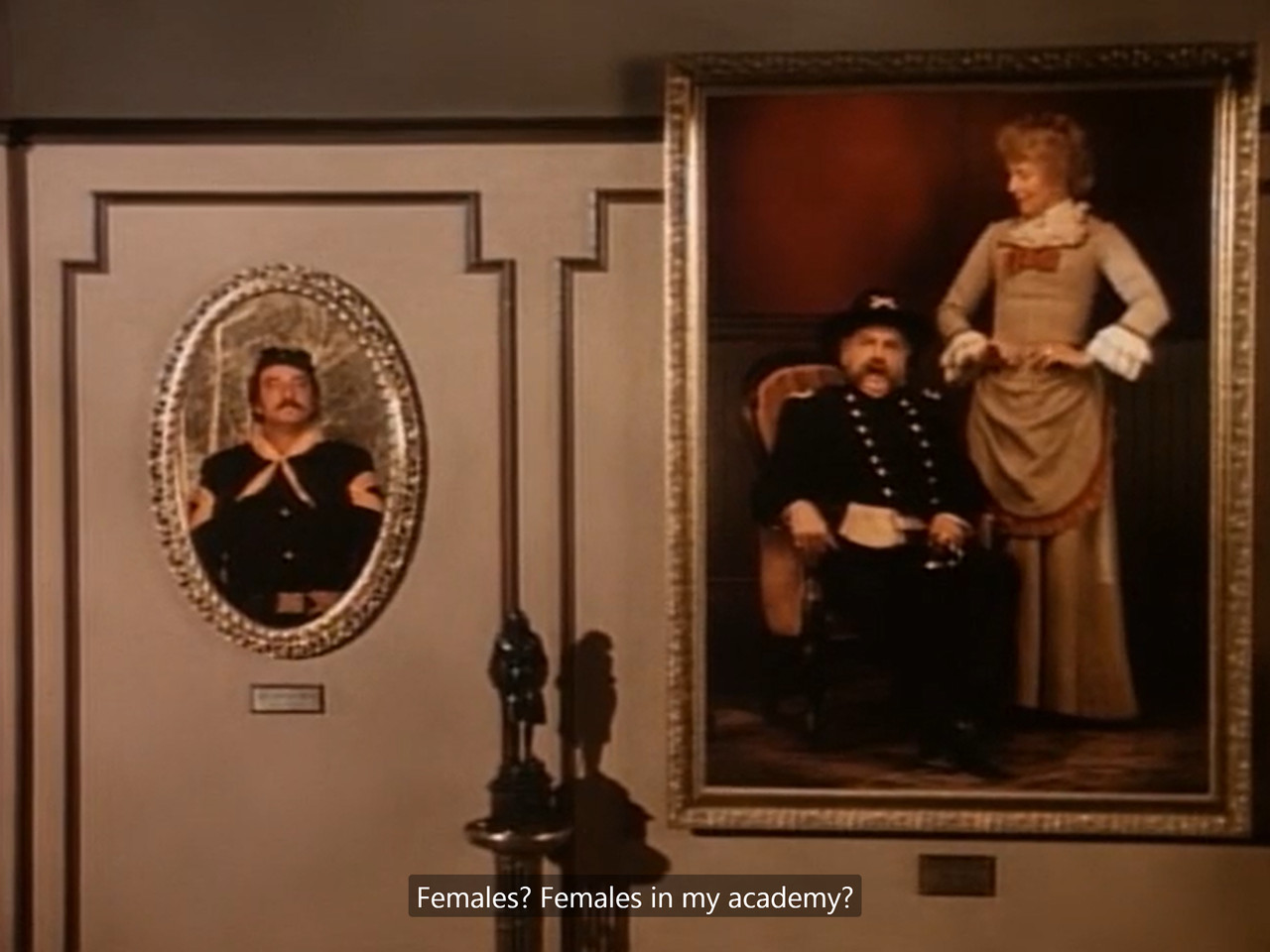
That special is really the granddaddy of all assignments.


Anyway, one curious thing about Mark and football: when the Minnows are practicing, somebody mistakenly throws the ball at him and hits him on the nose.
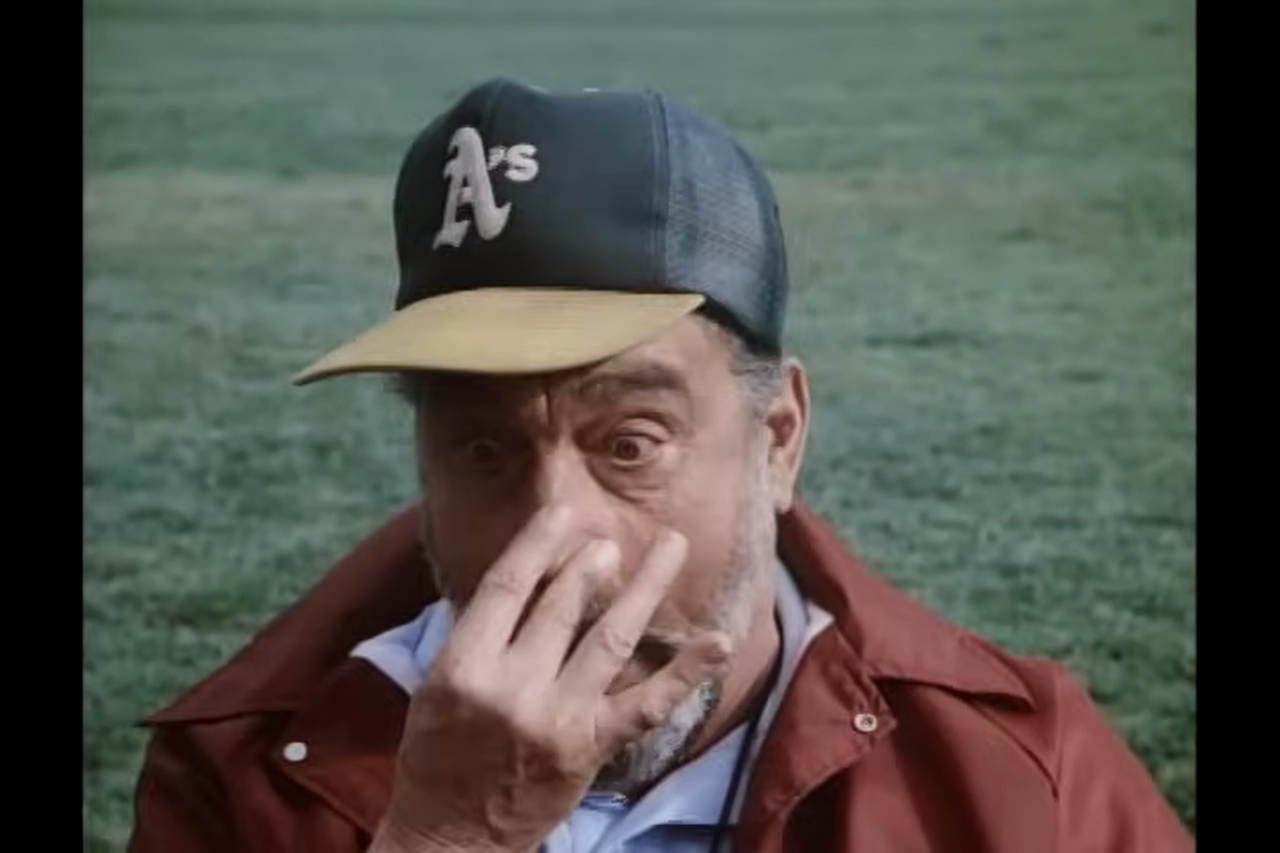
That’s not new: the exact same thing occurred when he was coaching girls in A Night To Remember in season three.
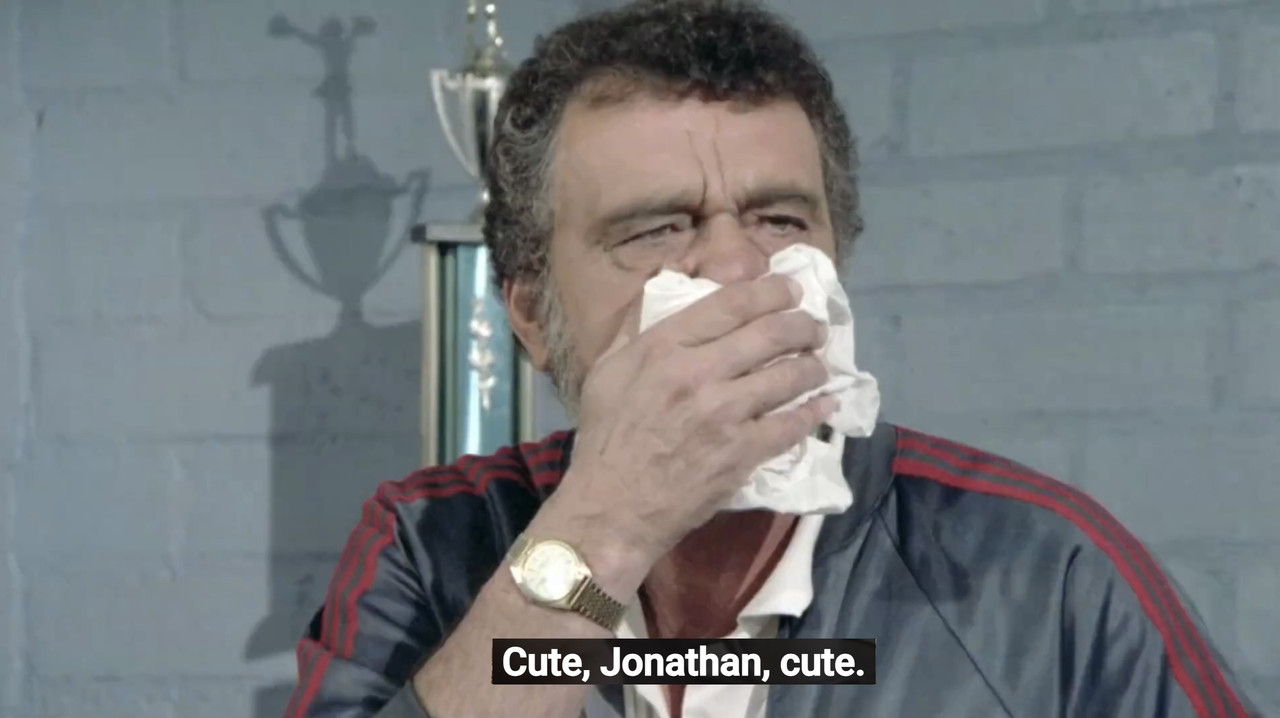
Someone has something against Mark’s nose.
- Production and Setting
As usual, the episode was filmed in Los Angeles, with production wrapping up in early March 1988, almost exactly one year after production concluded on the the season three finale. The timing proved fortunate: only a few days after filming was completed, the 1988 strike began, which stopped every movie and TV productions. And it went on all the way until August, the longest strike in the industry.
So, had this season’s production stretched as long as the first season did (it was completed well into March already), they would never have been able to finish the episode by its scheduled airdate just a month later. And the humorous episode about Jonathan going to Heaven like Carrie in another series would have been the season four finale.
Anyway, the script was written by highwayman David Chomsky, in what turned out to be the final work of his career. Like many other Highwaymen, he remains something of a mystery: he began working as a television writer sometime in the 1970s and wrote only a handful of episodes for a few different series. This episode of Highway marked the end of his career. Then, at the age of thirty-four, he either retired, changed his name, or left the industry for reasons unknown, as he received no further credits after this episode. Anyway, his status as Highwayman explains some of the weird stuff of the episode, as Mark saying he played college football. (It’s very common for highwaymen to mess up with the characters’ established background).
Anyway, it’s the only season finale by a highwayman in the entire series.
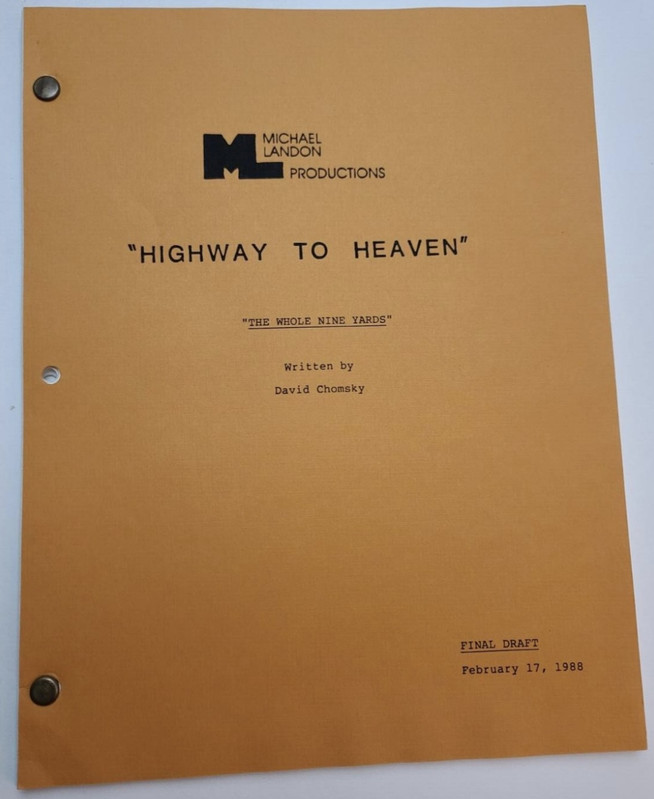
But there’s one strange aspect about it: the first page of every script includes a “Production No.,” which supposedly indicates the order in which the scripts were written for the series. The fourth season began with scripts numbered 94 and onward (the first one was Fight For Your Life), yet this script bears “Production No. 85” instead. That suggests it was originally written for season three but, for some reason, was not selected for production that year. It remained unused until this season, when the producers decided to recycle it in this last slot. Remarkably, they chose it as the season finale.
This was not unprecedented for the series. In every season of Highway the writers submitted more episodes than those the series needed, and some of them weren’t selected and left out; in most cases, they remained unproduced (one example is the lost Outward Bound, this same season), but in some rare cases, they were eventually used for another season. That’s what occurred in the second-season episode Heaven on Earth, originally submitted for the first season but finally being produced a year later.
In many ways, that explains why, of all the other episodes (the season one finale, and those in season two and three) in the series, this one feels the least like a finale than them all. And being a season three episode, the whole idea that it takes place in 1987 instead of Another Kind Of War, Another Kind Of Peace (which is certainly set in 1988) is not that far-fetched anymore.
Glossary:
Friendly Jonathan: there’s one peculiar instance. When Mark asks him if he intends to use the Stuff to help his team win the upcoming game, Jonathan takes it personally.
What’s unfair is Jonathan’s attitude: in an early season two episode about baseball, Jonathan used the Stuff to help the Toros win their last game.

But a few episodes later, Mark asked him to help him for a football game, and Jonathan refused.
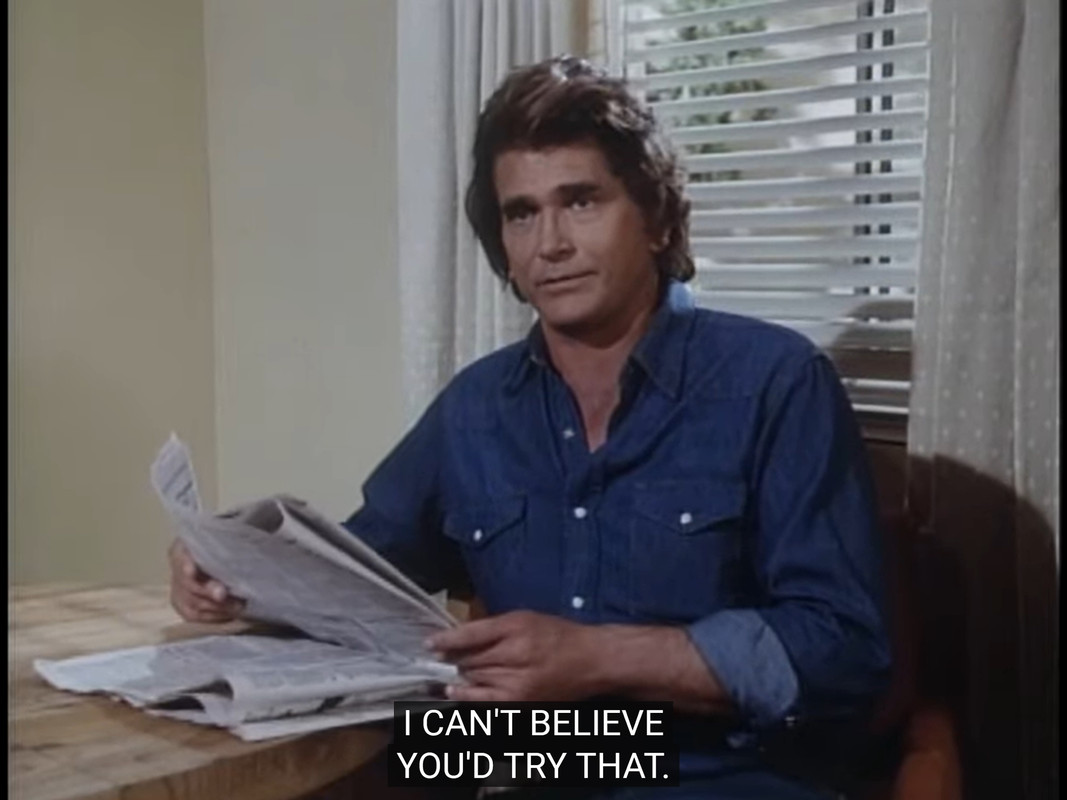
And now, he’s refusing again.
Maybe that implies that baseball is a good sport, but football isn’t worth it—the same way eating animals is alright as long as they are fish.
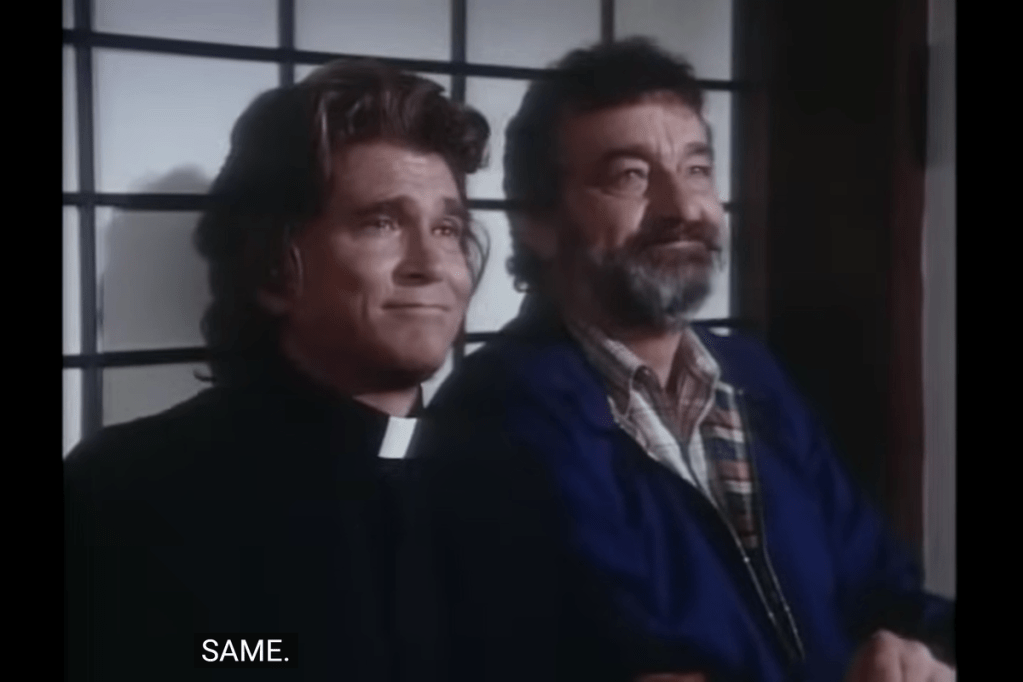
Hanging on: toward the end of the episode, hanging on the wall in the girl’s bedroom, there’s something.
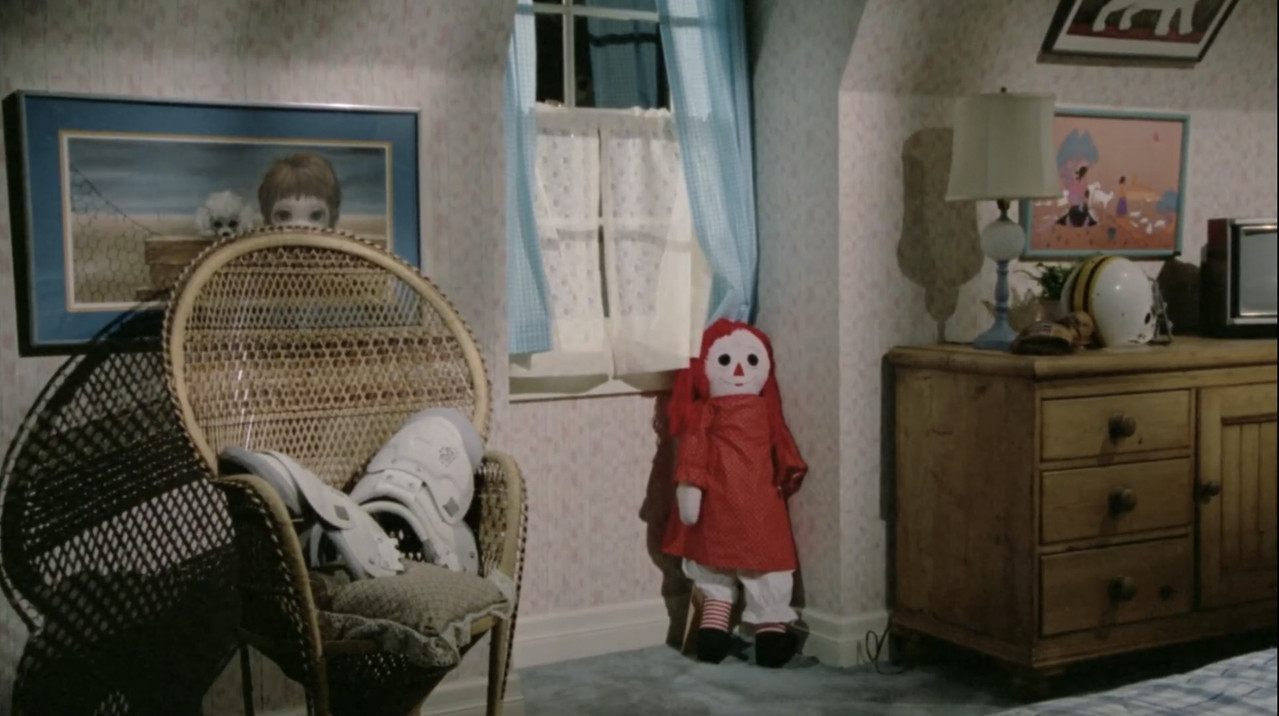
That’s a painting by Margaret Keane like a season one episode.
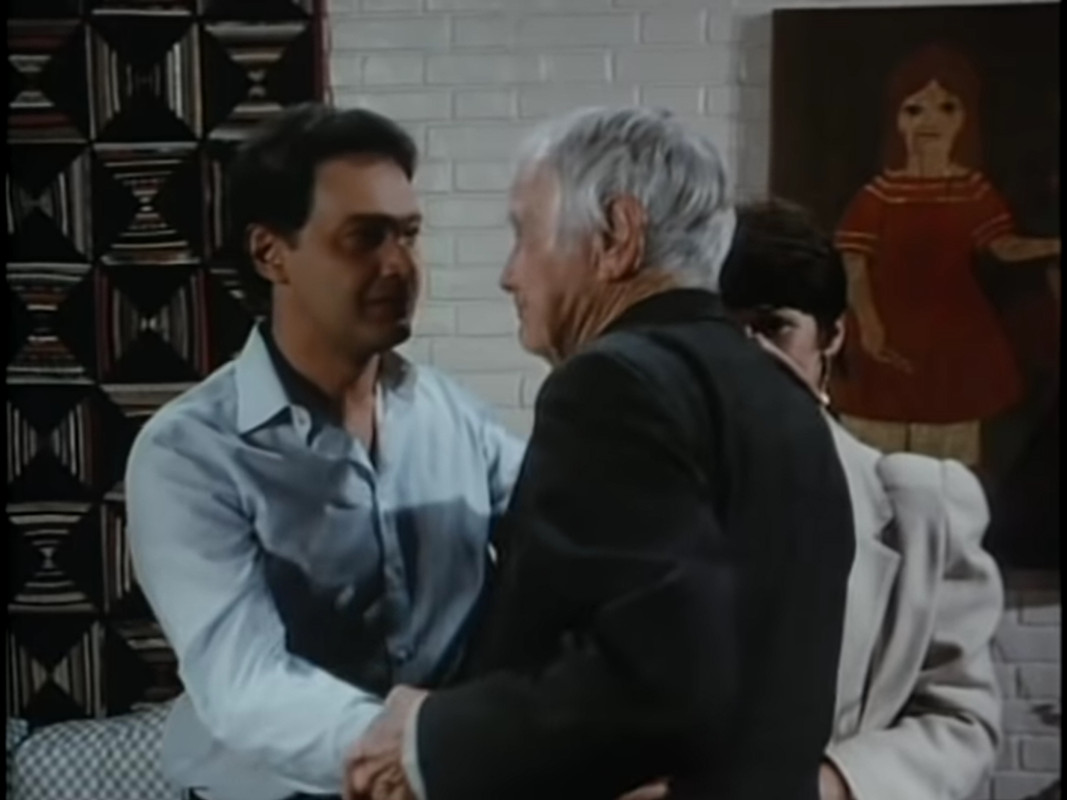
Perhaps the production simply kept these paintings in storage, right next to all those familiar Little House farmhouse paintings, and alternated between them whenever they needed wall decorations.
Even so, it is rather unsettling that a young girl would have that particular woman’s portrait hanging in her bedroom.
The “Stuff” powers: in this episode Jonathan seemingly does not use the stuff, except when he somehow remains dry after a rainfall. And Mark points out that it is not fair.
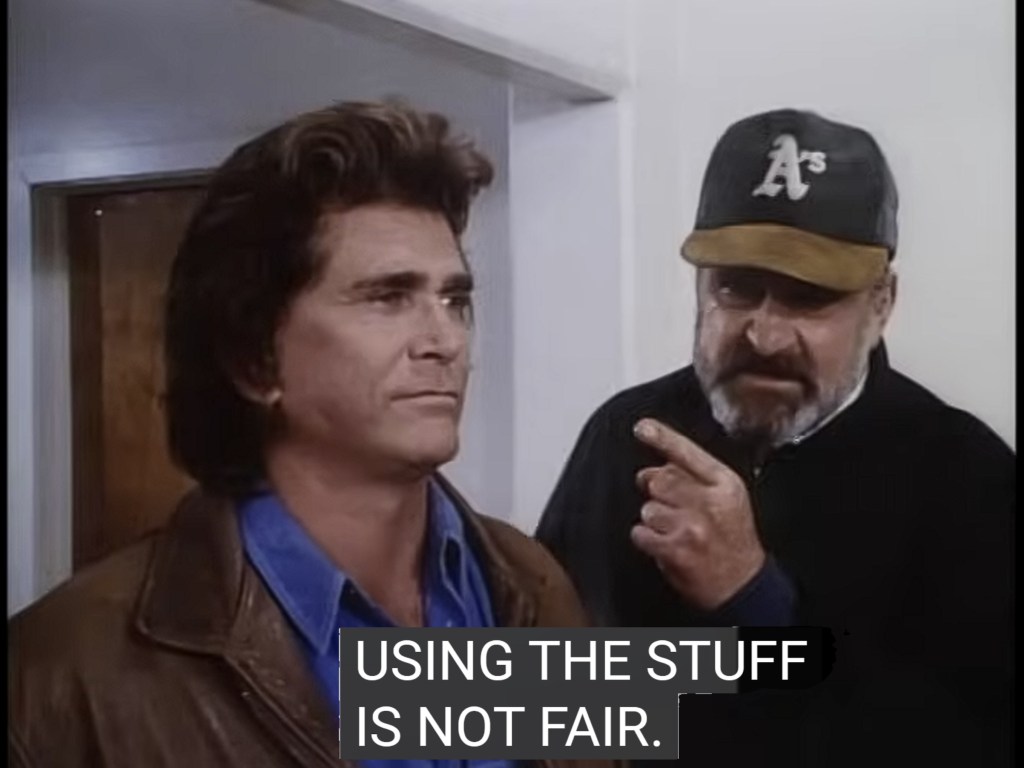
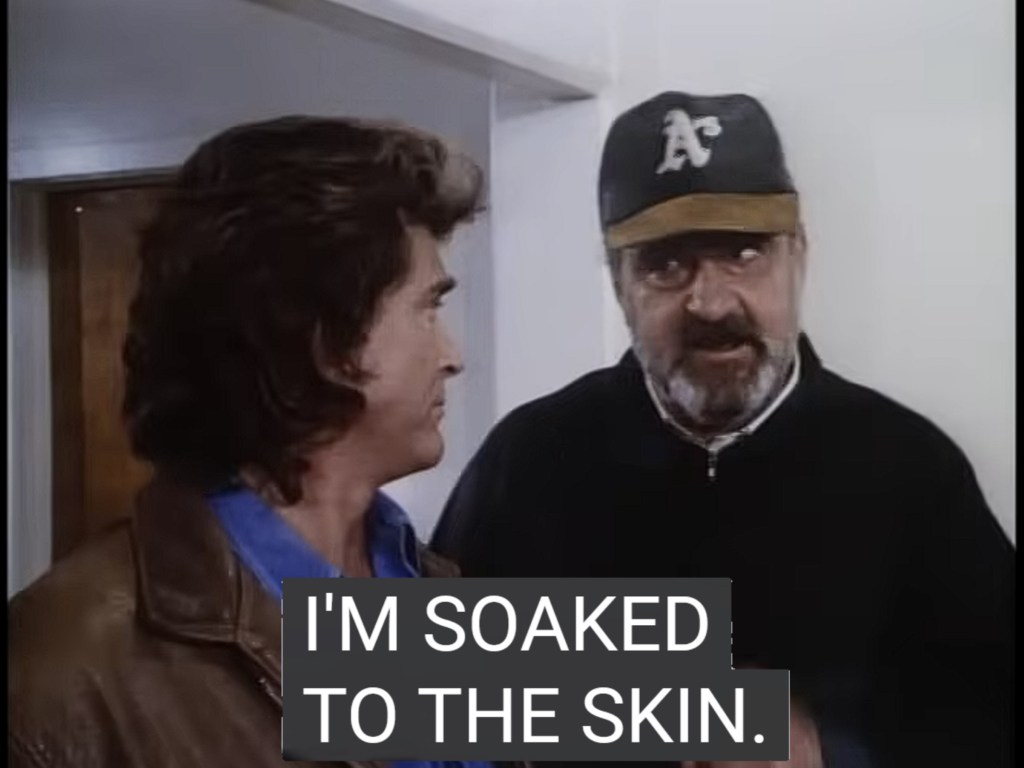
Do you really want the Stuff, again?
He should have learned his lesson: the last time he asked for the Stuff, he got it.

And it was Lee’s assignment.
Later, Jonathan apparently uses the stuff to deflate a football that Mark is using while coaching the kids. That is an old trick: he did exactly the same thing in One Winged Angels, back in season one, when a doozy kid tried to slash Mark’s tyre, and Jonathan redirected the damage to the kid’s football instead.
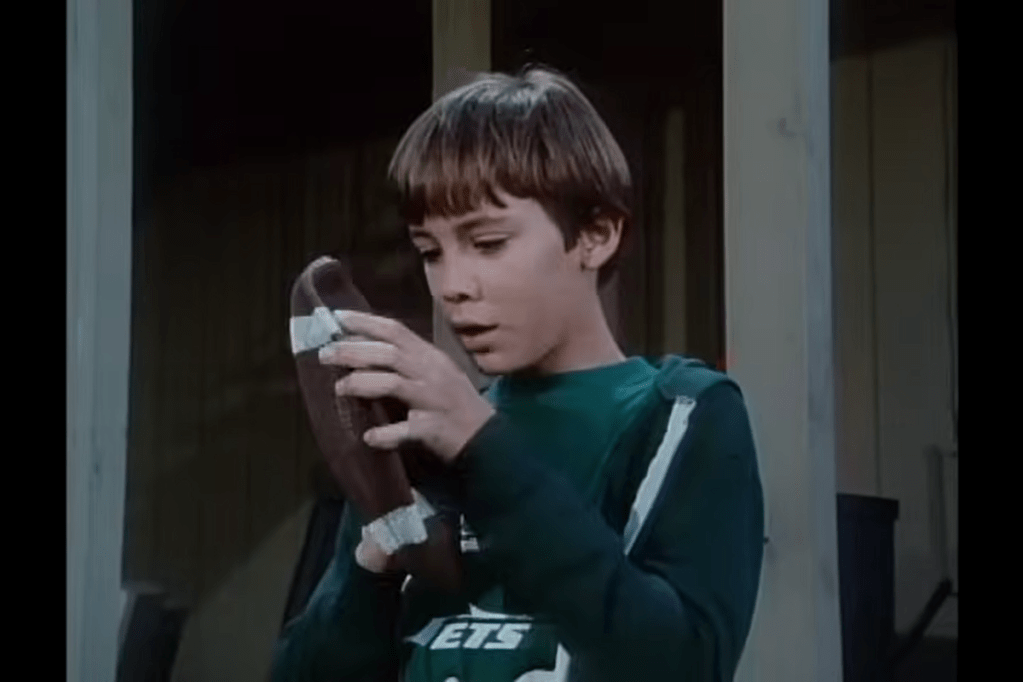
That was a long time ago—it’s been four seasons.
The Job: It’s one of the few episodes of the series in which Jonathan and Mark need to take separate jobs for the assignment. In this case, Jonathan is a referee and Mark a coach. But there’s something unusual in the way they got it: when Jonathan introduce Mark to the man hiring them, they are told that the Minnows need a coach soon.
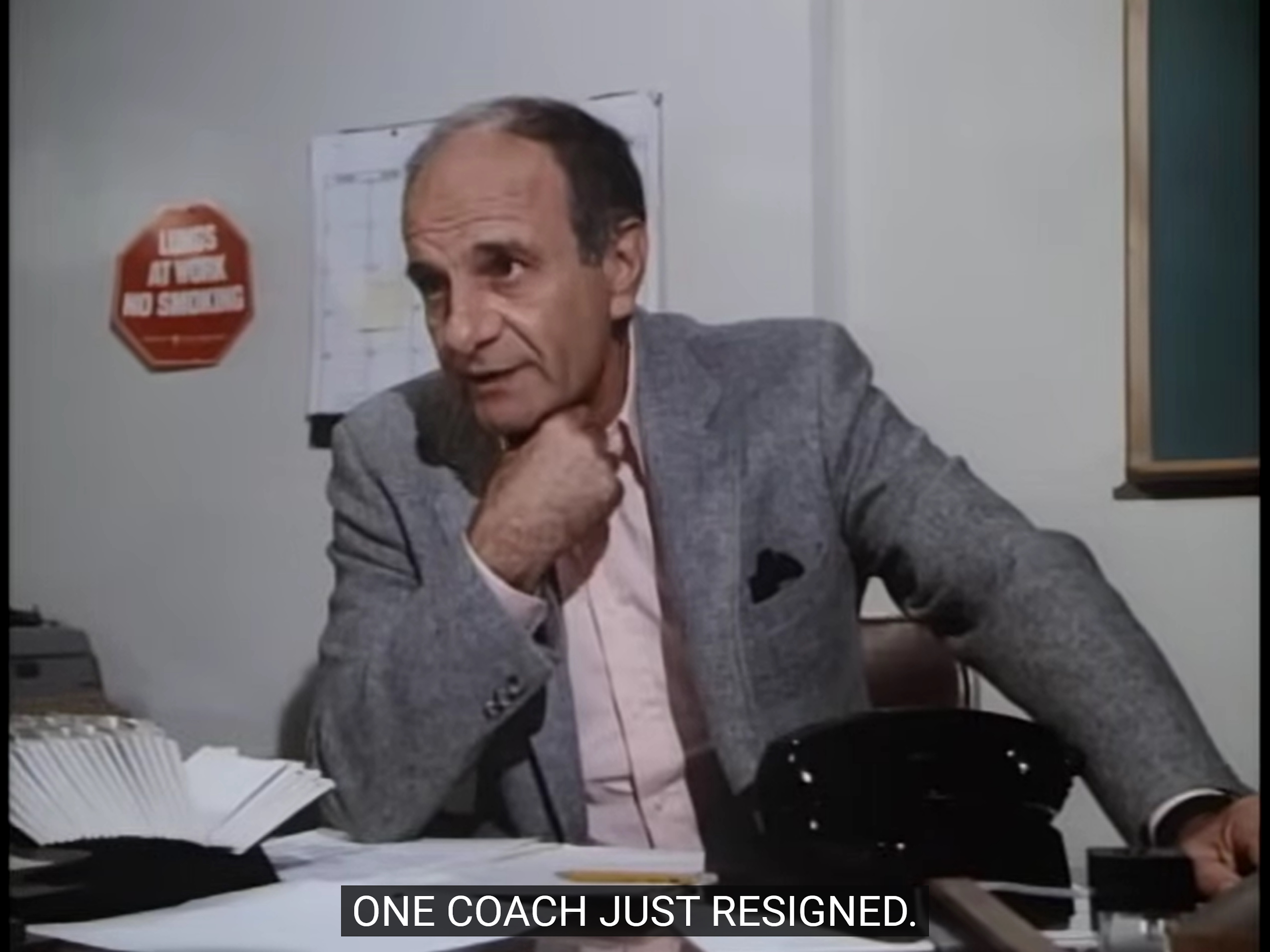
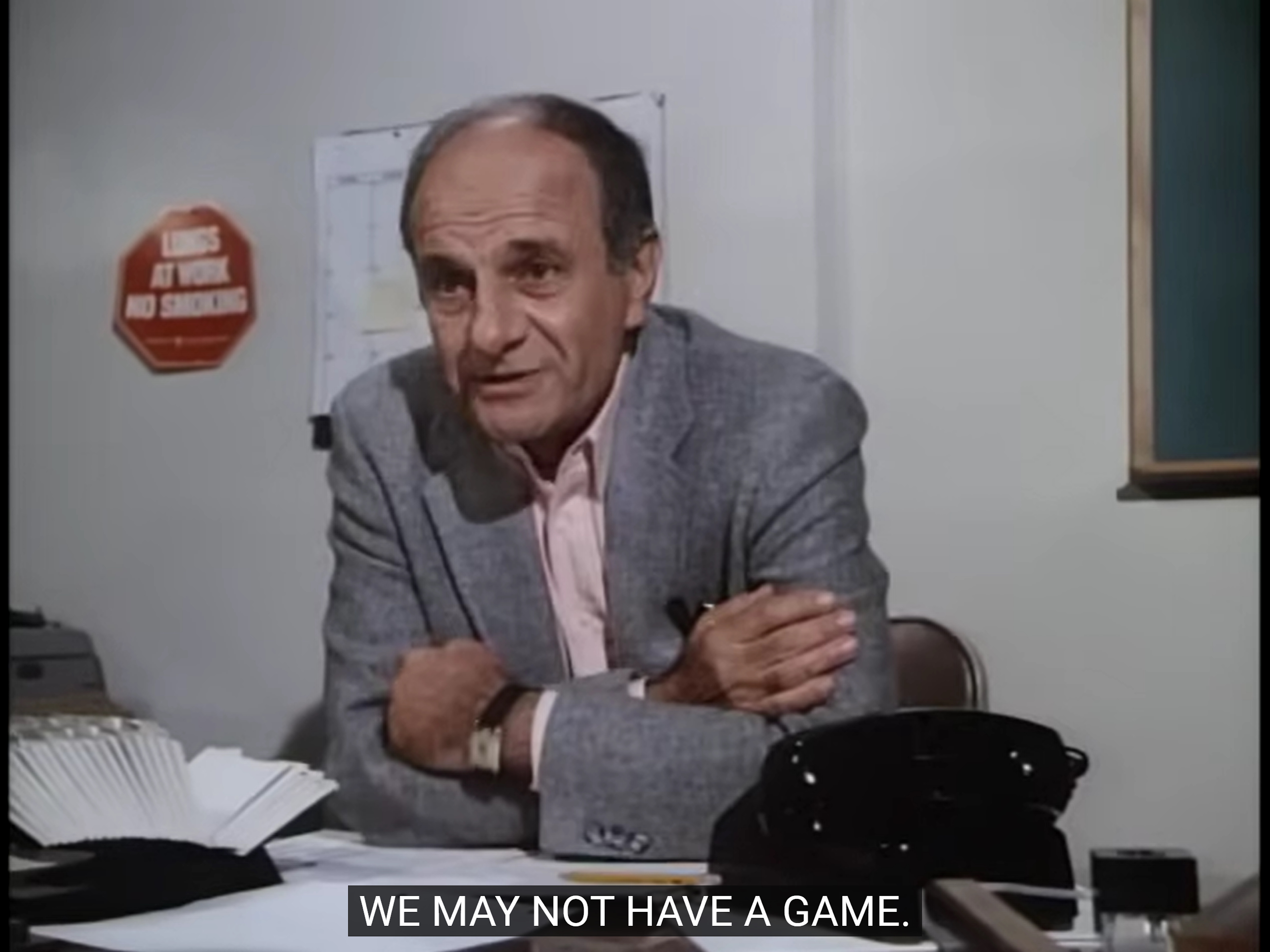
And Mark takes the initiative by offering to be it, and presenting his passion for football as a qualification.
Three random odd features: one, notice that, hanging on the wall behind the man there’s a “no smoking” sign. And behind Mark, there’s a picture of a man putting out a cigarette which looks like a stickman.
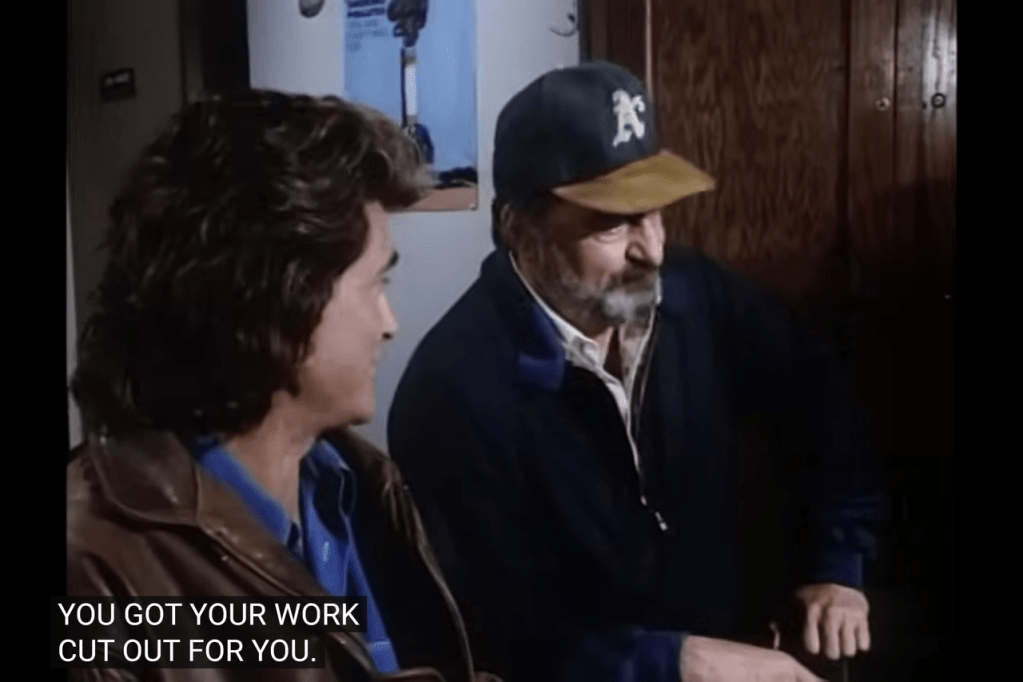
Cute.
The amusing part is that Mark used to smoke in season one.
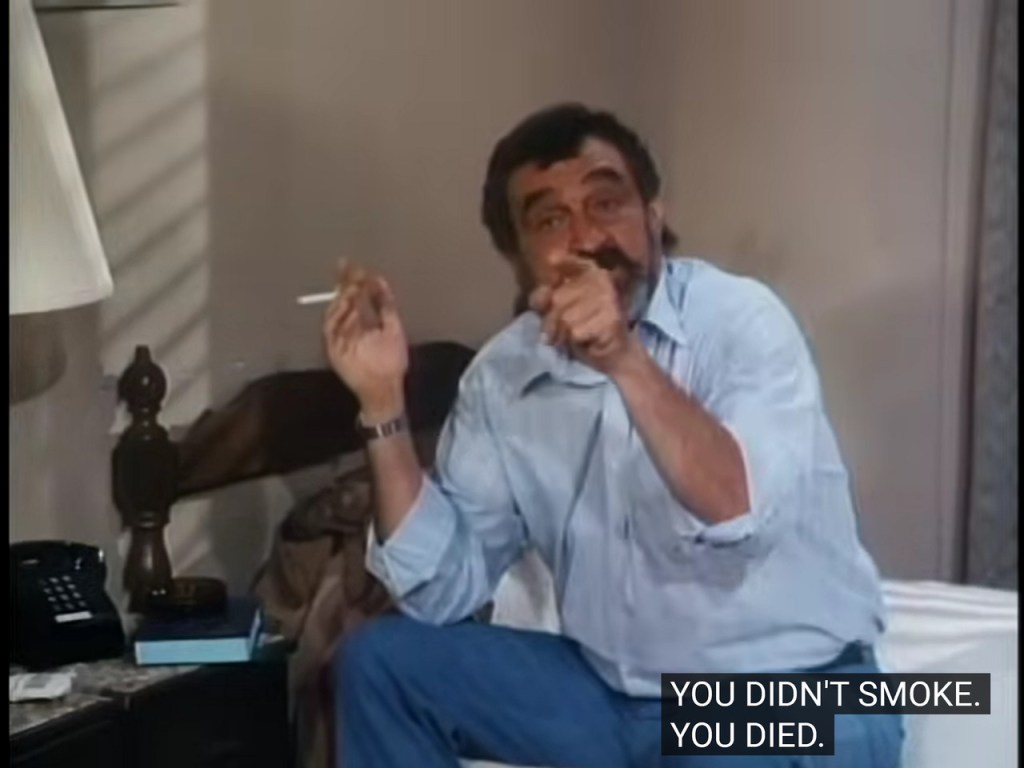
Until Jonathan told him that he smoked too and died of that.
And Landon and French were both smokers, but that’s off point.
Second weird feature, about this entire thing: you can’t just being passionate about something to become a coach—it takes a little more qualifications and references than that, perhaps even a card or something. And so far, Mark has never been a football coach before. So hiring him on the spot is quite far-fetched, unless Jonathan gave him some fictional credits or Mark had coached back in college without ever telling anybody.
But the most important part is that Mark’s offering to be a coach without being told to do so. That makes it seem as though coaching is entirely Mark’s own initiative rather than something Jonathan instructed him to do beforehand.
It remains unclear whether Jonathan had previously told Mark that he would need to fill the vacant coaching position. If he had not, there is no obvious reason why Mark would know that coaching—rather than any other job, such as teaching—was the role he was supposed to take in order to complete the assignment. That problem is exacerbated by keeping in mind that Jonathan almost never tells Mark the details of an assignment when they are driving there (or he deceives him, the way he did a few episodes ago talking about Hawaii). As far as Mark knows, his role could have been anything.

If Jonathan had suggested that Mark apply for the job, then it could have been argued that working as a coach was part of the assignment. However, Mark takes the initiative here. And the assignment stems from that—if he hadn’t coached the Minnows, things would unfold differently. Maybe after four years he has grown confident enough to take some initiative, or he has become quicker on the uptake and instinctively knows what has to be done and which job the assignment requires, even before knowing what the assignment actually is. Or maybe he was meant to be presented by Jonathan as a coach all the same—which is plausible, otherwise Mark’s presence there for his friend’s job was pointless, as though Jonathan needed some help—but he preceded him.
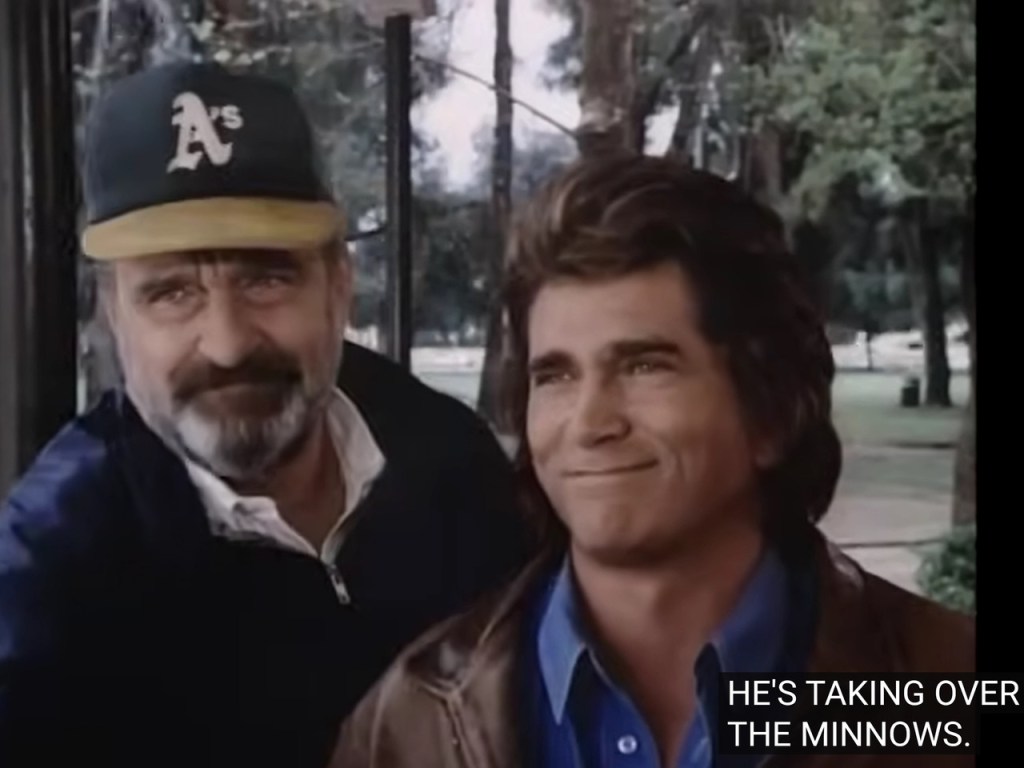
Or perhaps this episode was written by someone who did not really understand how the series works or how the job aspect is supposed to be handled. That usually happens when an episode is written by highwaymen, so that figures.
Epilogue: this episode has none. Apparently, after the first season—whose finale was an expansive assignment featuring multiple characters and complications at every turn—the producers decided that such a driven show didn’t work within the series. Or they just wanted something different. From that point onward, they opted for shows that were not intended to conclude the season in any triumphant, important way. Instead, they felt like standalone episodes that could have aired at any point during the season. That approach is evident in both the second season finale and third season one.
Even so, those episodes still contained at least one element that suggested it was a finale: for instance, Friends included a scene in which Jonathan seemingly considers giving up on the assignment, as though that was the hardest episode of the season (being the season finale).
That episode also concludes with a rather random exchange in which Jonathan and Mark both admit that they love their work as angels. After two years of doing exactly that, the line feels somewhat arbitrary, but it was probably intended to indicate the season was over and they were thanking the audience for the memories (sort of).
And Gift Of Life goes even further by dispensing with a proper closing scene altogether. Nevertheless, the assignment was about life, which is overbearing enough to give it a certain weight. Besides, the entire episode turned out to be a dream, and that made for a peculiar assignment—not thoroughly unprecedented (Going Home, Going Home and Heaven On Earth are two examples), but not the same stuff either.
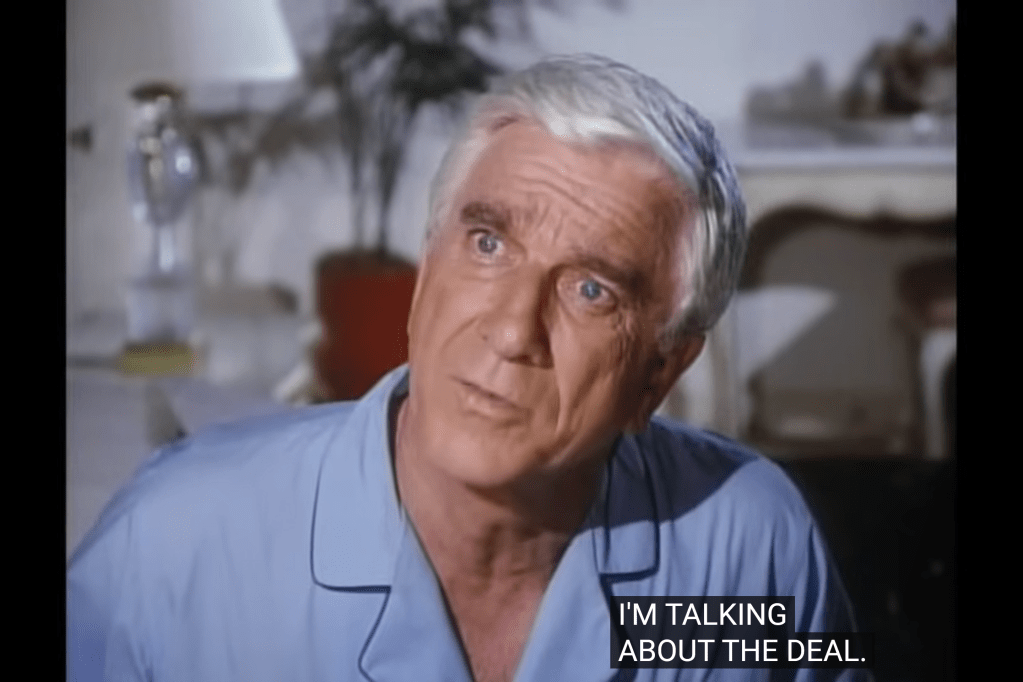
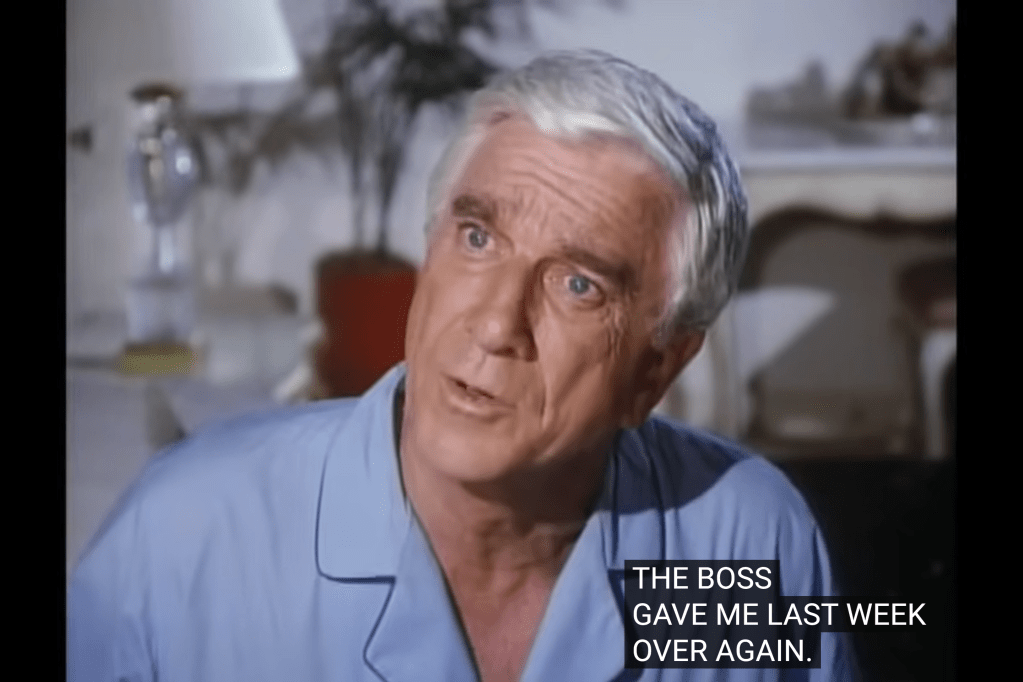
This season four finale contains nothing that makes it resemble one: the assignment is straightforward, there is no exchange on Jonathan’s or Mark’s journey, no sentimental remarks about their work, nothing. It’s just a job, and that’s it. The reason is likely that, unlike the previous episodes—which were at least meant to be the finale of their seasons, even if they deliberately avoided traditional finale tropes—this episode was originally written as a season-three installment probably intended to air at any point during the season.
So, it just ends on a long football game.
And on to the next season. If there will be one.
Ratings: 23 million audience. 22nd weekly TV program, 5th TV genre show.
Anyway, the fourth season concluded in late April, which was considerably earlier than usual. In the past years, the final episodes aired during the first week of May at least after a month from the bulk of the season. In the second season, the finale was preceded by an unrelated episode that aired a week earlier in late April, while the third season finale aired without any lead-in from the immediate previous week. By contrast, this fourth season finale aired in late April, almost two weeks earlier than the finale of the preceding seasons. And it was sent as a standalone episode, like season three. In terms of ratings, this scheduling change did not help much, but it was not particularly damaging either: this episode aired at 9:00 p.m., as the series had been moved one hour later to preempt a new series, Aaron’s Way, with little success.
The ratings themselves were not especially dramatic, all things considered: it aired outside its usual timeslot (which may be harmful, for a series that has aired in the same slot for four years and people may have grown accustomed to watching weekly shows at the same time), television ratings generally decline toward the end of the season and into the summer rerun period, this episode didn’t have any lead-in and aired a month after its predecessor (like the season three finale, and that episode was the least watched of the series by then), this season had already struggled in the ratings—particularly after suffering a major drop in October from which it partially recovered in January despite still falling behind other years—and there was uncertainty surrounding the show’s future. (If people read the papers, they probably knew that Highway didn’t have much of a chance due to this season’s ratings). This finale could easily have performed much worse. Actually, after the sharp decline suffered by the third season finale compared to its immediate predecessor, this episode held up remarkably well. So, while the ratings were not particularly high, the trajectory of the season suggested far worse, particularly in the episodes from Halloween until Christmas. It weathered these circumstances real well.
But again, that was only under these circumstances. Otherwise, this episode’s ratings were not high, and just being much better than they could have been won’t mean they’re any good either: if this episode had aired in any other season, it would have been its least popular one. And the network has made its mind up: they chose to continue with a shorter fifth season, and it will be its last. So Highway will come back next year, but in a season with only 12 episodes and without a weekly slot; rather, it will serve as replacement for whatever series they’ll decide to give the Wednesday 8:00 slot to. (It won’t be Aaron’s Way, the series preempted in the last few weeks). And the older episodes from these four seasons will be sold to syndication in the summer, while they can still make a profit off them.
So the production can start laying out drive down, one last time. When the strike will allow them, of course. And that won’t happen for the next five months. They can finally get a vacation. Not positively, though.


Leave a comment