
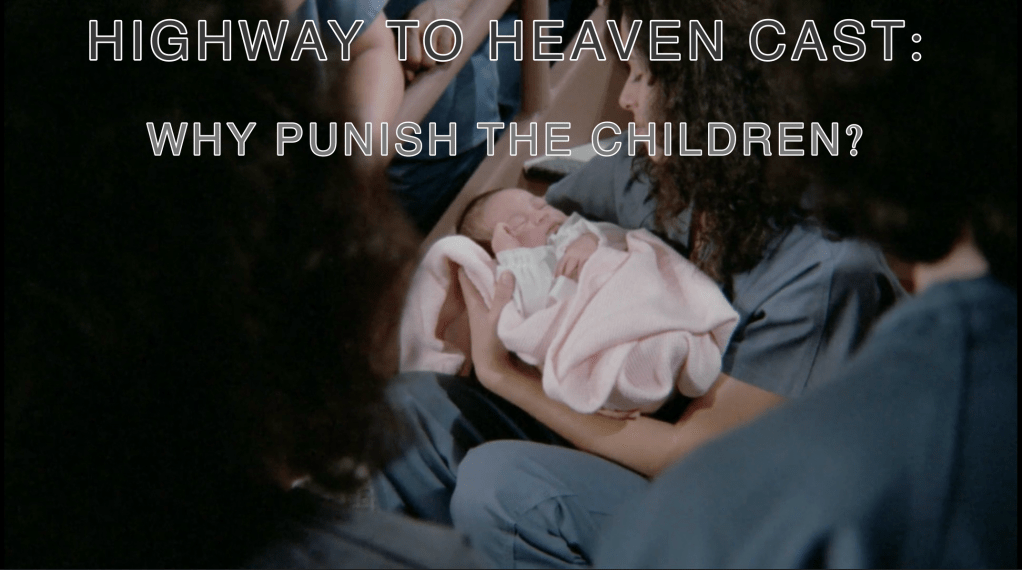
Highway To Heaven Cast: Why Punish The Children?
Airdate: 11/25/1987
Directed By: Michael Landon
The holidays are drawing closer, and for this season of Highway, the producers planned something unusual: a Thanksgiving special episode—the first time in the series. Thanksgiving specials are fairly uncommon in a series like this. Of course, they were not unusual in the television landscape of the 1970s and 1980s, but they were mostly associated with sitcoms. Even Little House never really had an official Thanksgiving special—it had one in 1979, but it rarely airs in syndication and is not even included in the DVD release.
Even so, it is not really a true Thanksgiving special: it’s set during the holiday and is partially connected to it, but the assignment is not exclusively about it.
Complete show available here.
Assignment: Jonathan and Mark are assigned to work as teachers in a women prison.
It’s one of those episodes where the assignment is tied to the job rather than a person.
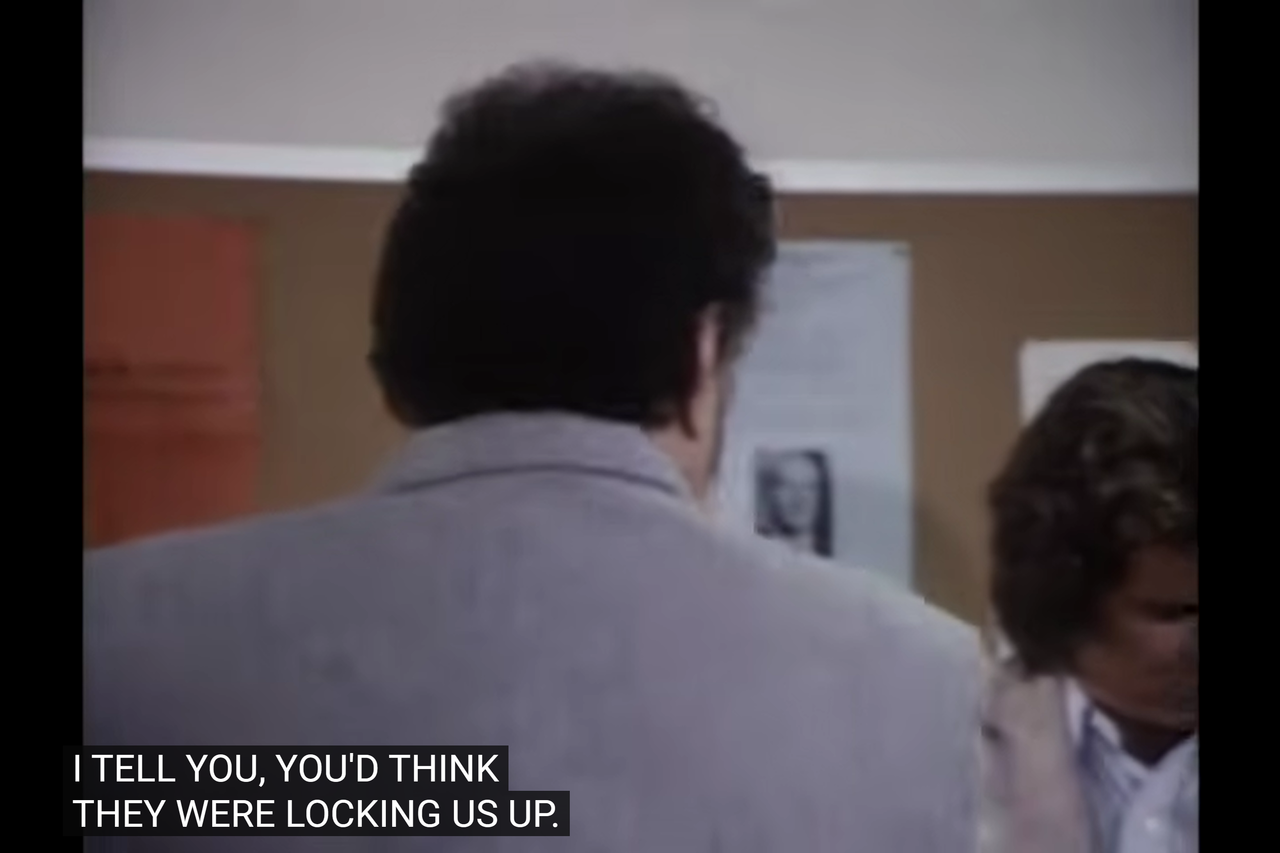
Basically, Jonathan and Mark are hired in a women prison for a new program intended to help inmates graduate and reintegrate into society once they are released.
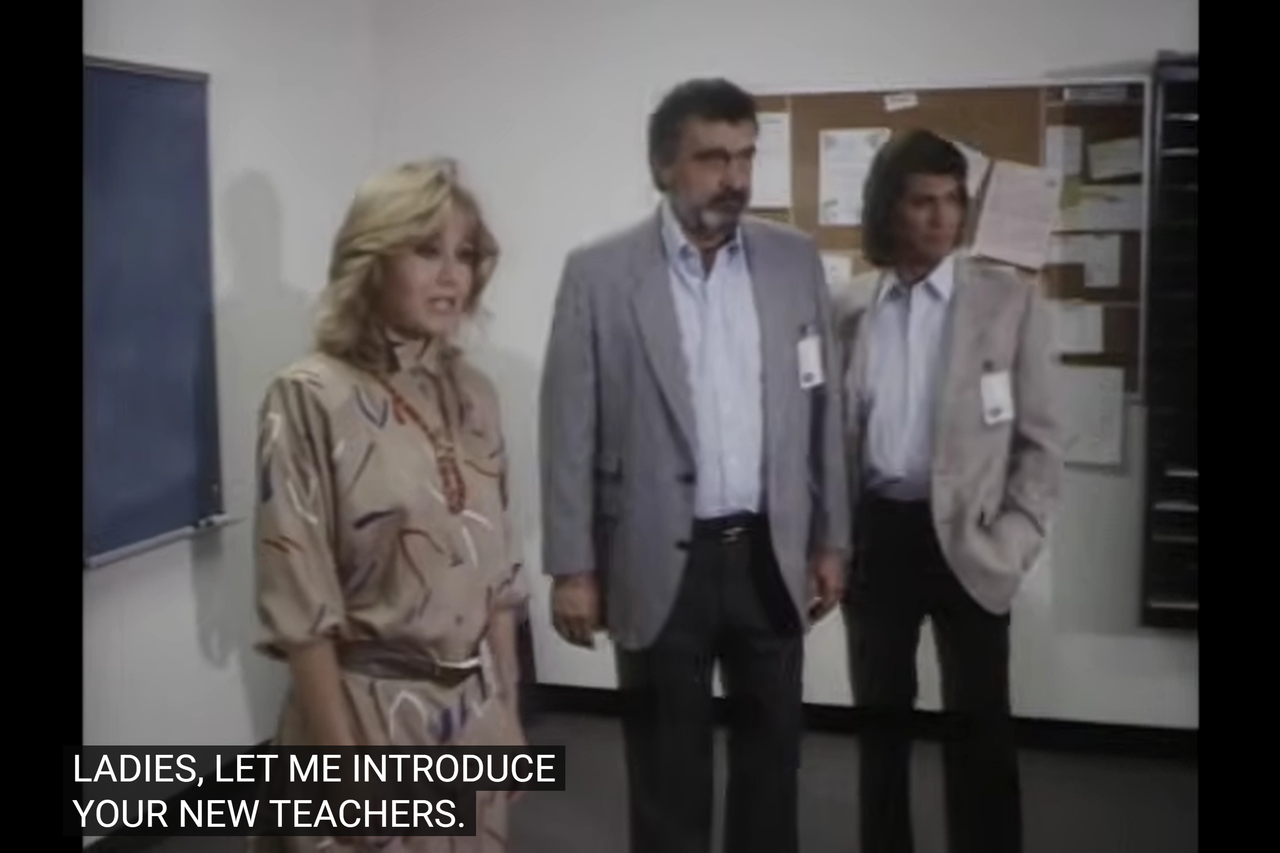
It is never really explained why they are assigned to a women prison rather than a men one, but that is the way it goes.
Like any other job in which they work as teachers, it’s not just about teaching: they also get into the inmates’ life to solve their family and relationship problems.
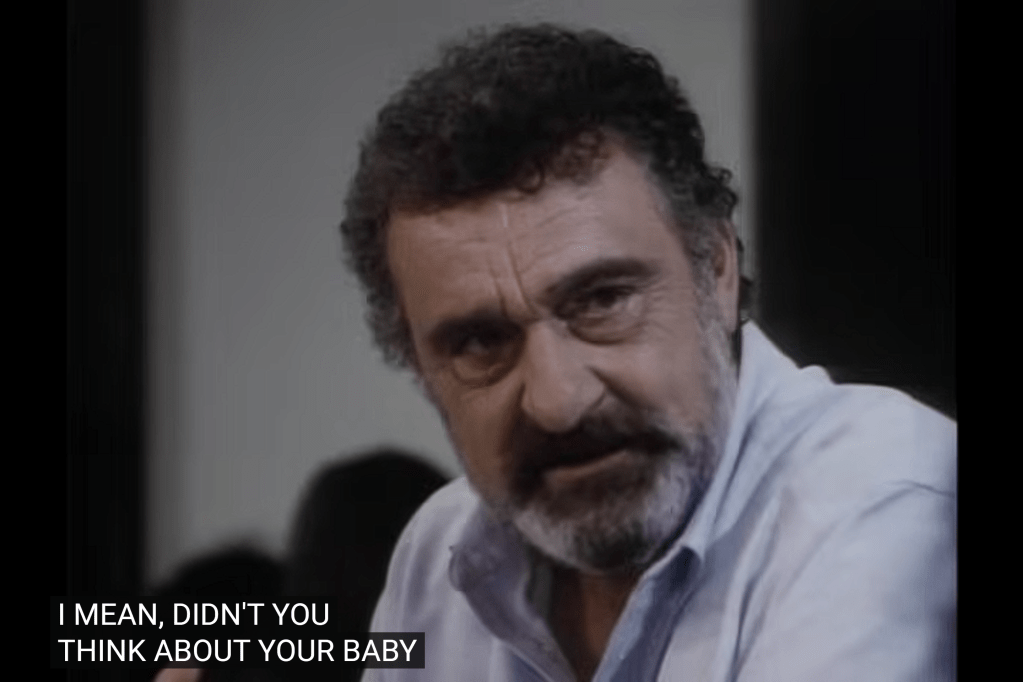
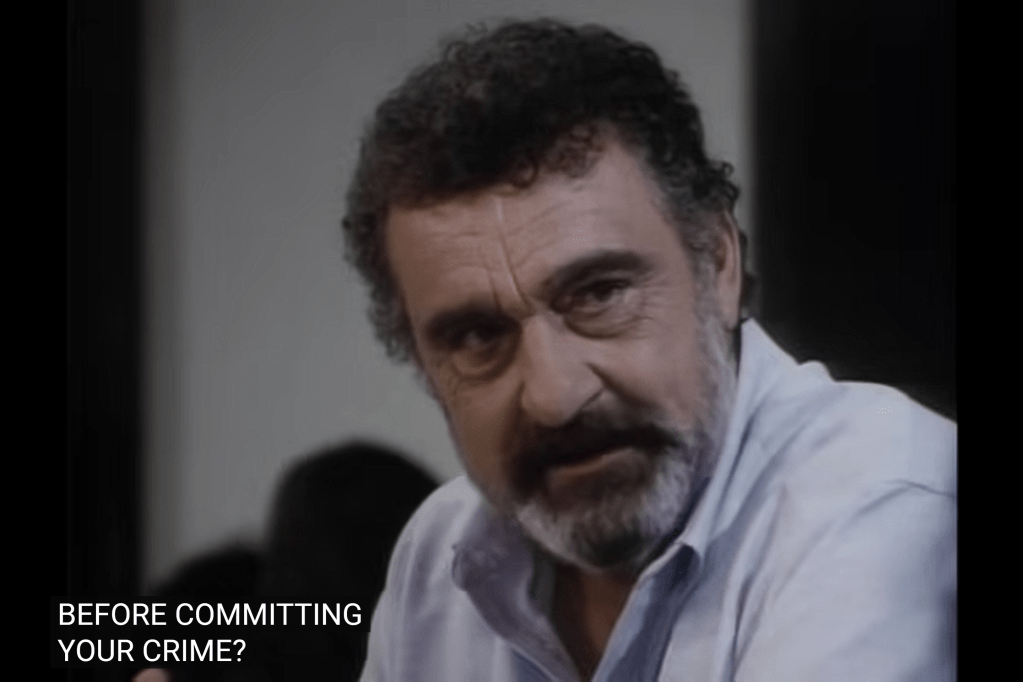
Busybody.
Most importantly, they witness firsthand the harshness of the American prison system: they discover that mothers can only see their relatives through a glass wall during visiting days.
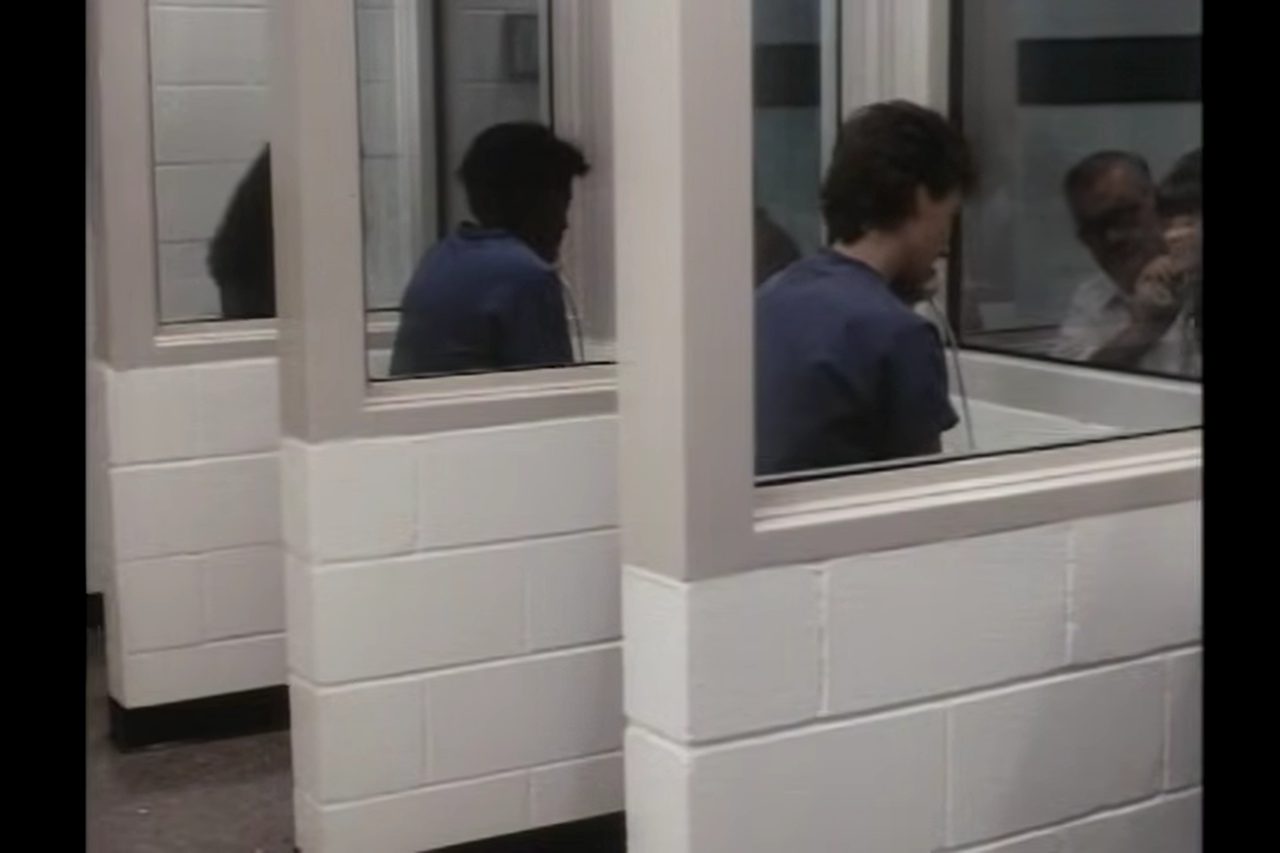
So they eventually decide to shift the focus of their assignment to fighting to change the system.
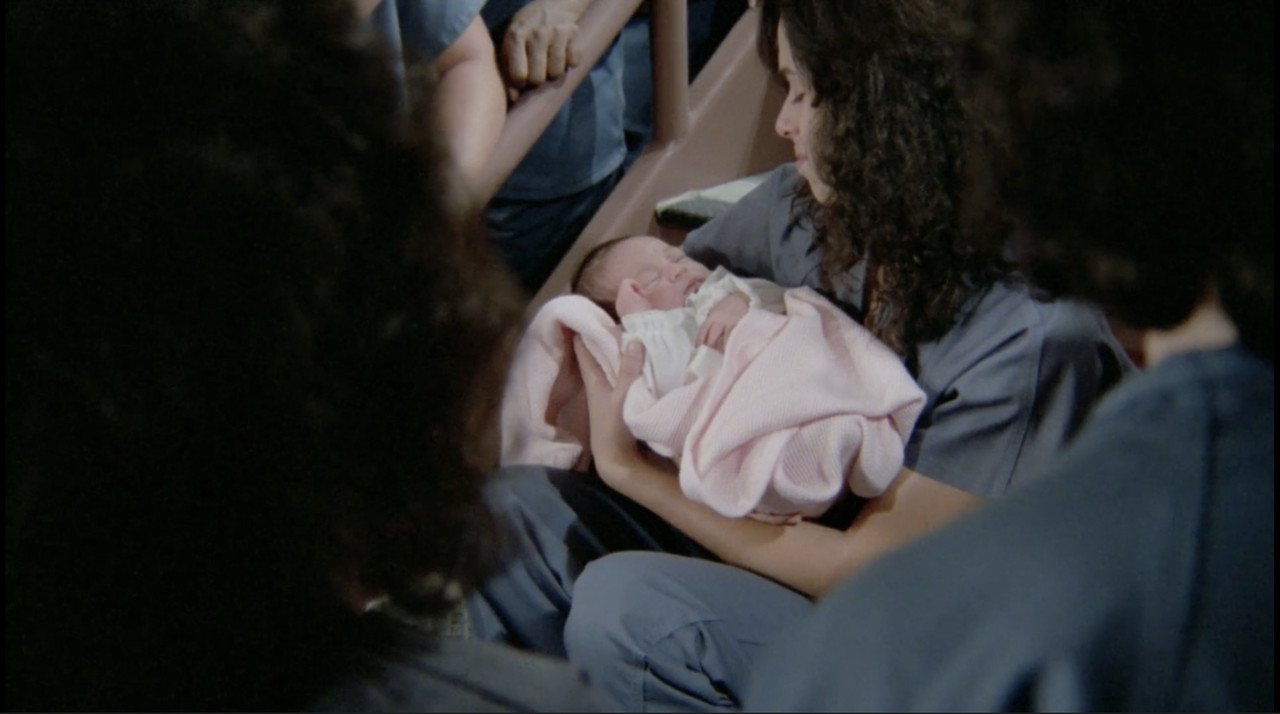
And confronting the prison warden who is fiercely against them.
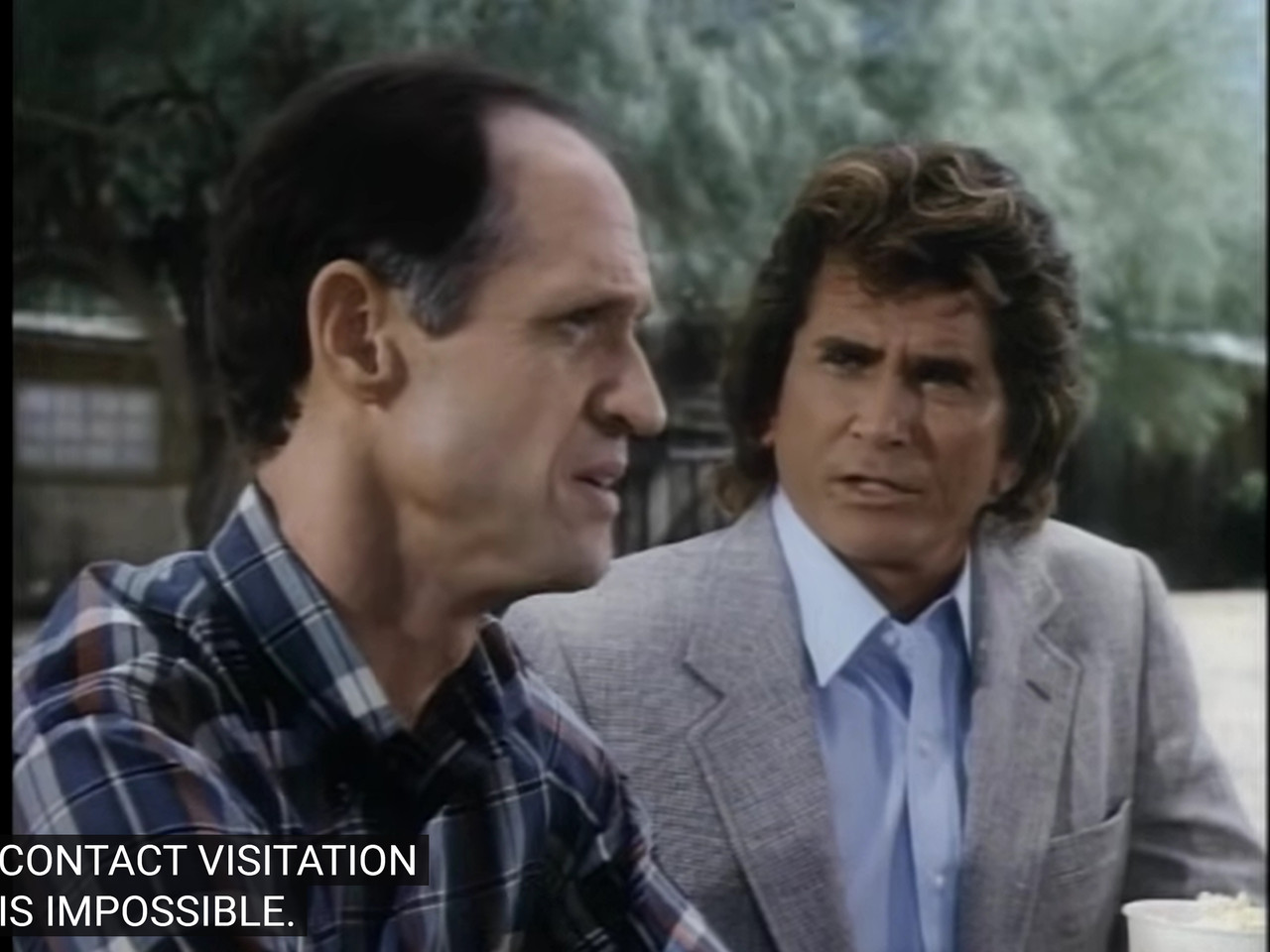
If that weren’t enough, they have to convince him before Thanksgiving, so the mothers can spend it with their children.
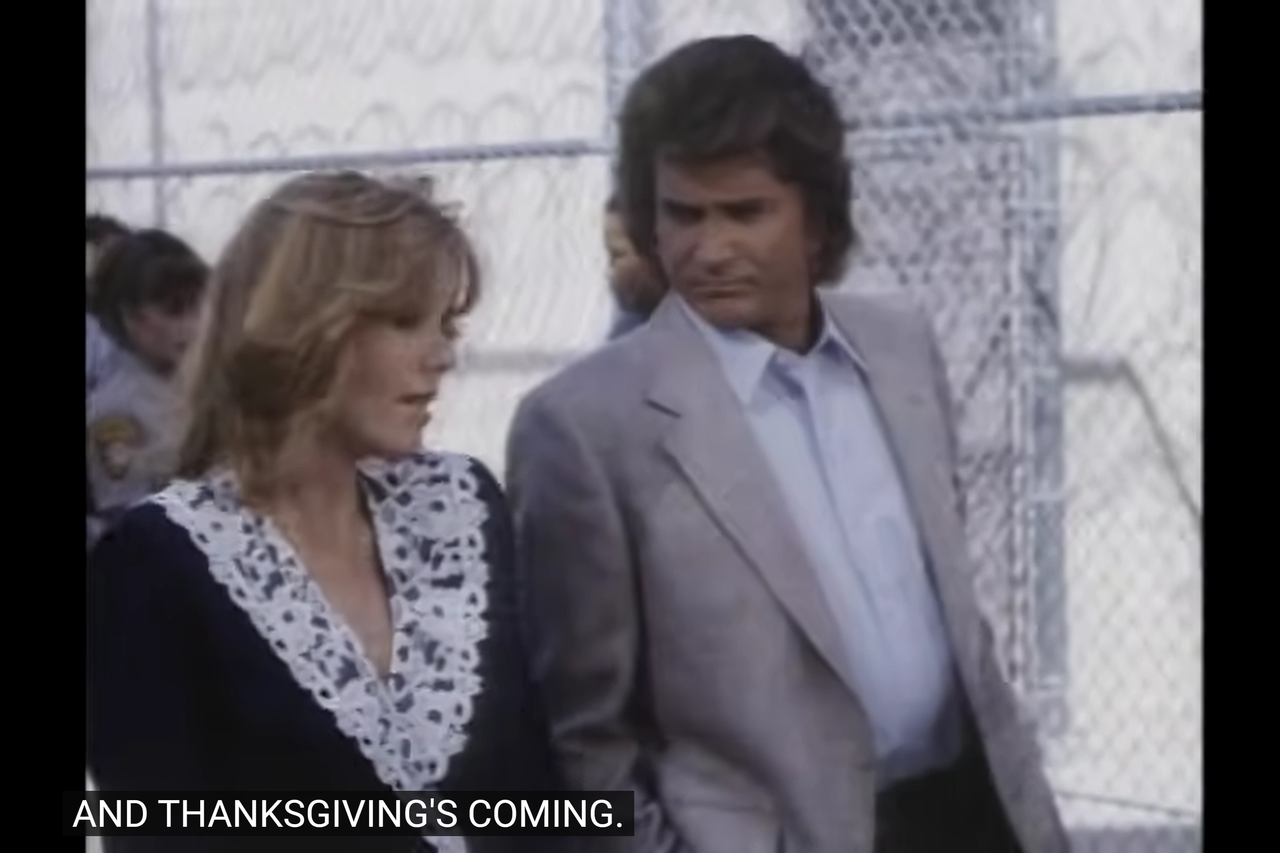
Because, you know, Thanksgiving is the traditionally American holiday when families gather and spend time together, and they can’t in jail.
- Background
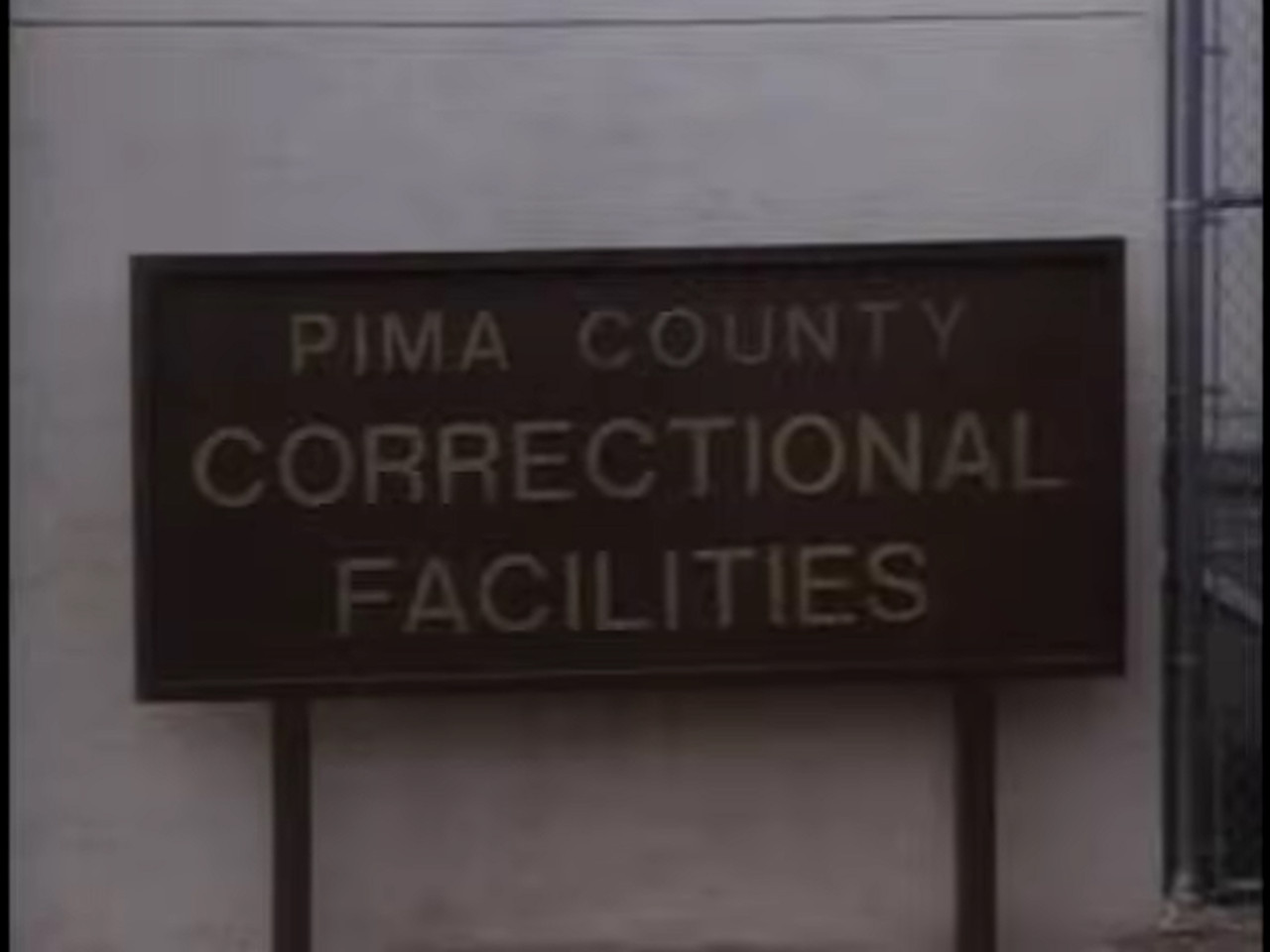
The setting is precise on this: production took place in Tucson Pima County at a real jail, so it is safe to conclude it’s there.
As for the timeline, the episode is rather unclear for several reasons. It is stated to take place around Thanksgiving—which is Thanksgiving 1987, presumably—but it is difficult to determine how much time actually passes during the story. It seems to span at least a few weeks, possibly even a month: visiting day occurs once a week, and the episode shows two visiting days before the prison policy changes, which already suggests a passage of at least a couple of weeks.

But Jonathan and Mark are supposedly working as teachers helping the inmates graduate, and it is difficult to believe that they could complete an entire educational program in only two weeks, especially if some of the inmates previously lacked any prior education.
Of course, within the context of the series, it would also feel strange if they remained on the same assignment for an entire year.
That’s how long they are going to stay on this.
Still, season one establishes that multiple assignments can occur simultaneously, so it is entirely possible that other episodes overlap with this one chronologically. For example, if the assignment really lasted more than a month, then it must have begun in September or October, which means Jonathan and Mark spent Halloween 1987 working in the prison rather than playing werewolves. (Although it was already plausible that the season four Halloween Special took place in season three; more about it at the “Background” entry of that episode).
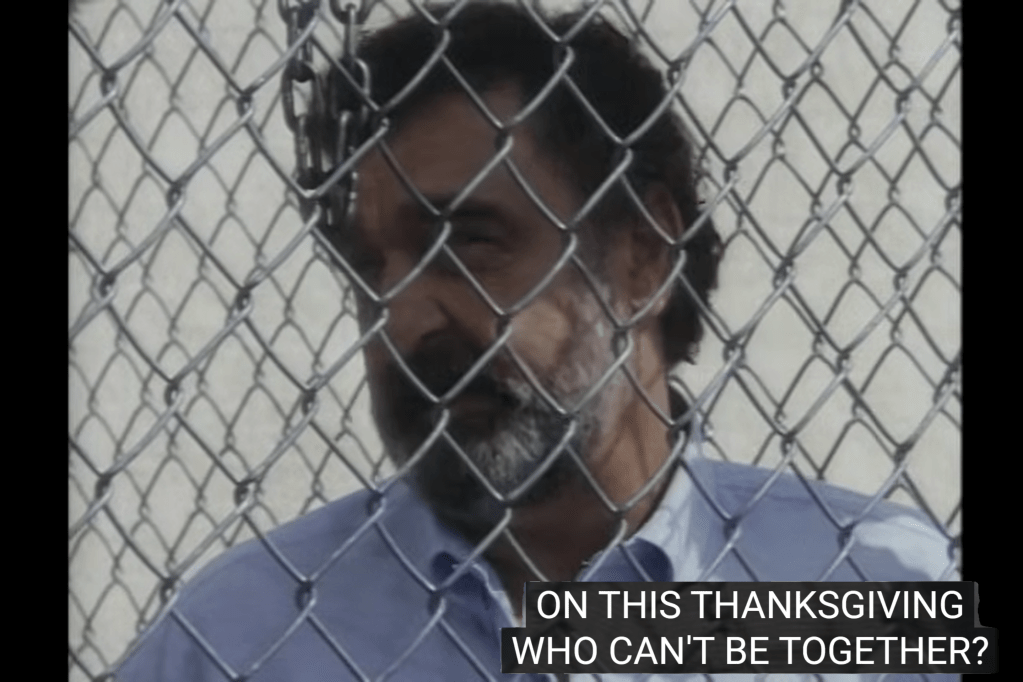
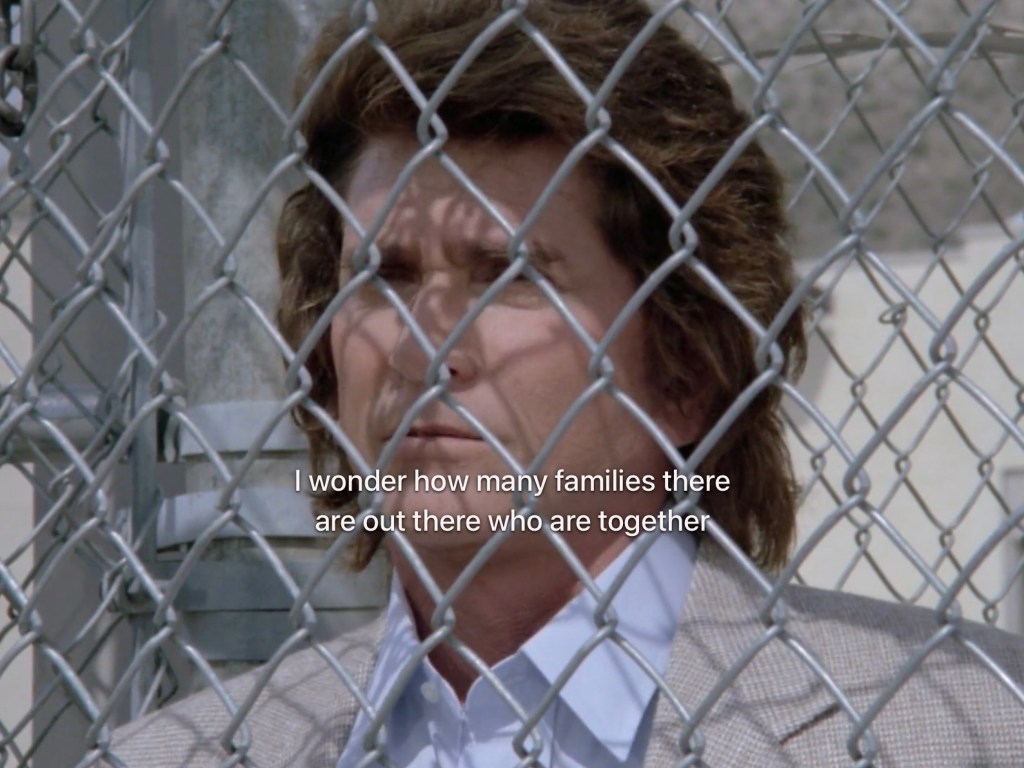
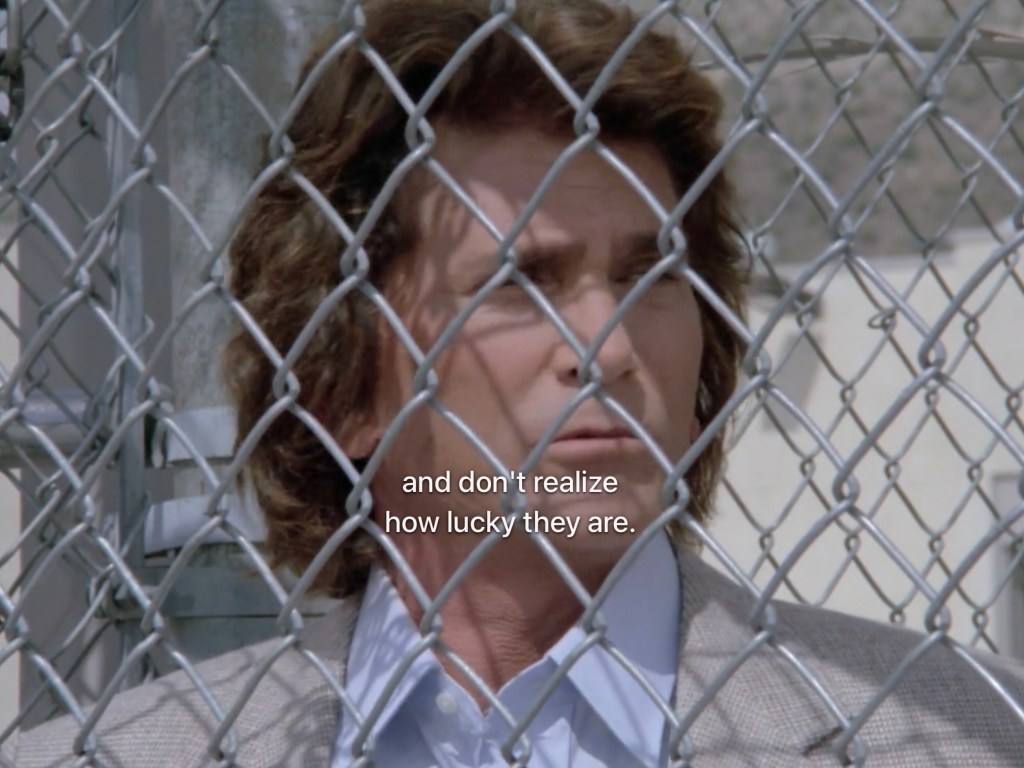
However, it is even harder to determine exactly when the assignment ends: the episode concludes on Thanksgiving Day, showing Jonathan and Mark walking out of the prison.
Yours, for example.
It seems that Mark was too busy solving this assignment that he forgot about his sister and his cousin, assuming either one of them invited him to spend Thanksgiving with their families. (Of course, it can’t be both, as they hate each other). But he was forced to spend it working in a jail.
Unless that’s precisely where Mark is going now: over to Leslie or Diane’s place.
And Jonathan is following him too. He’s part of the family.
You mean yours.
He’s probably thinking about his daughter’s family who neglected his wife to go spend the Holidays someplace else before he intervened to make things right.
Anyway, this does not necessarily imply that they are leaving for a new assignment. After all, they were hired to help the inmates graduate, and the episode never shows them being replaced. Perhaps they were only contracted for a few weeks, which would still make this one of their longest assignments.
- Characters
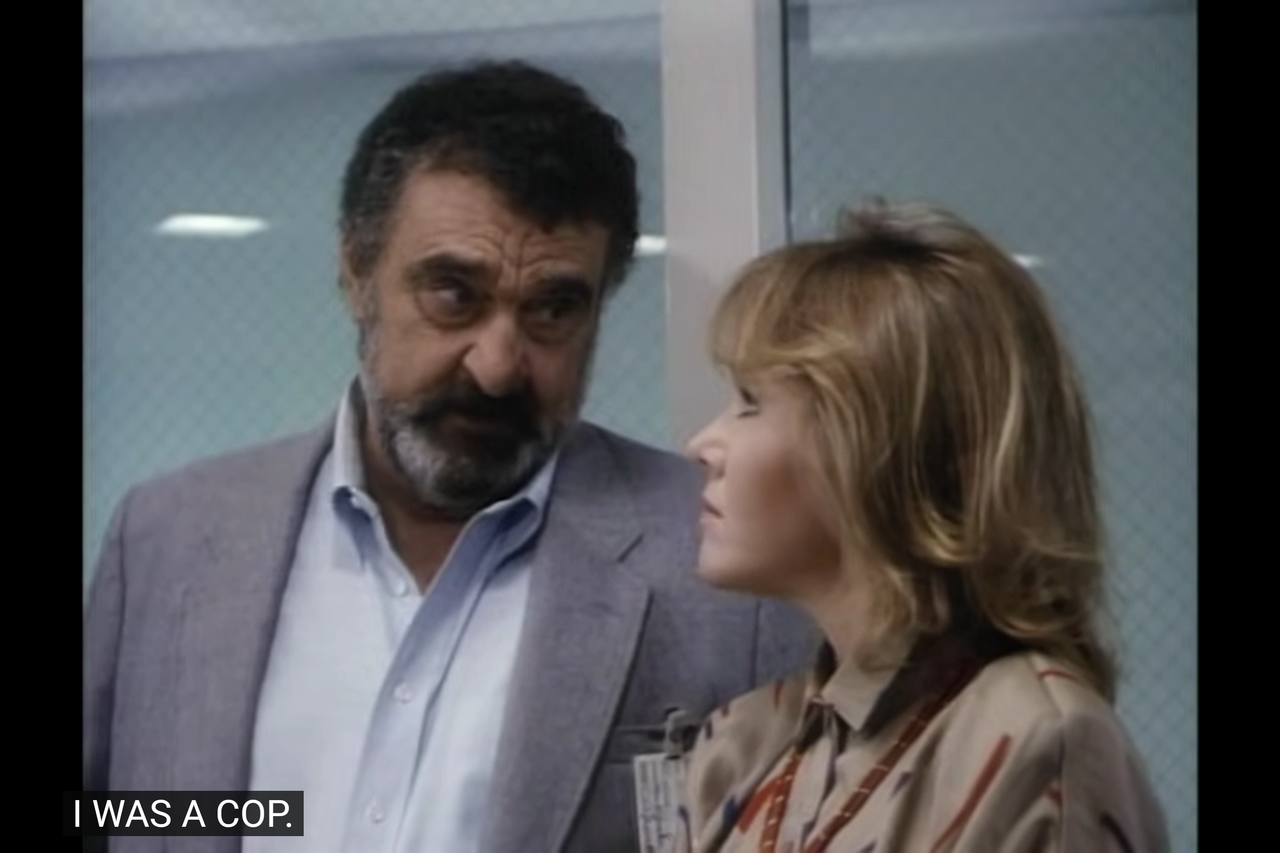
As for the characters, the episode seems particularly meaningful for Mark: there are frequent mentions to his past as a police officer.
Many times.
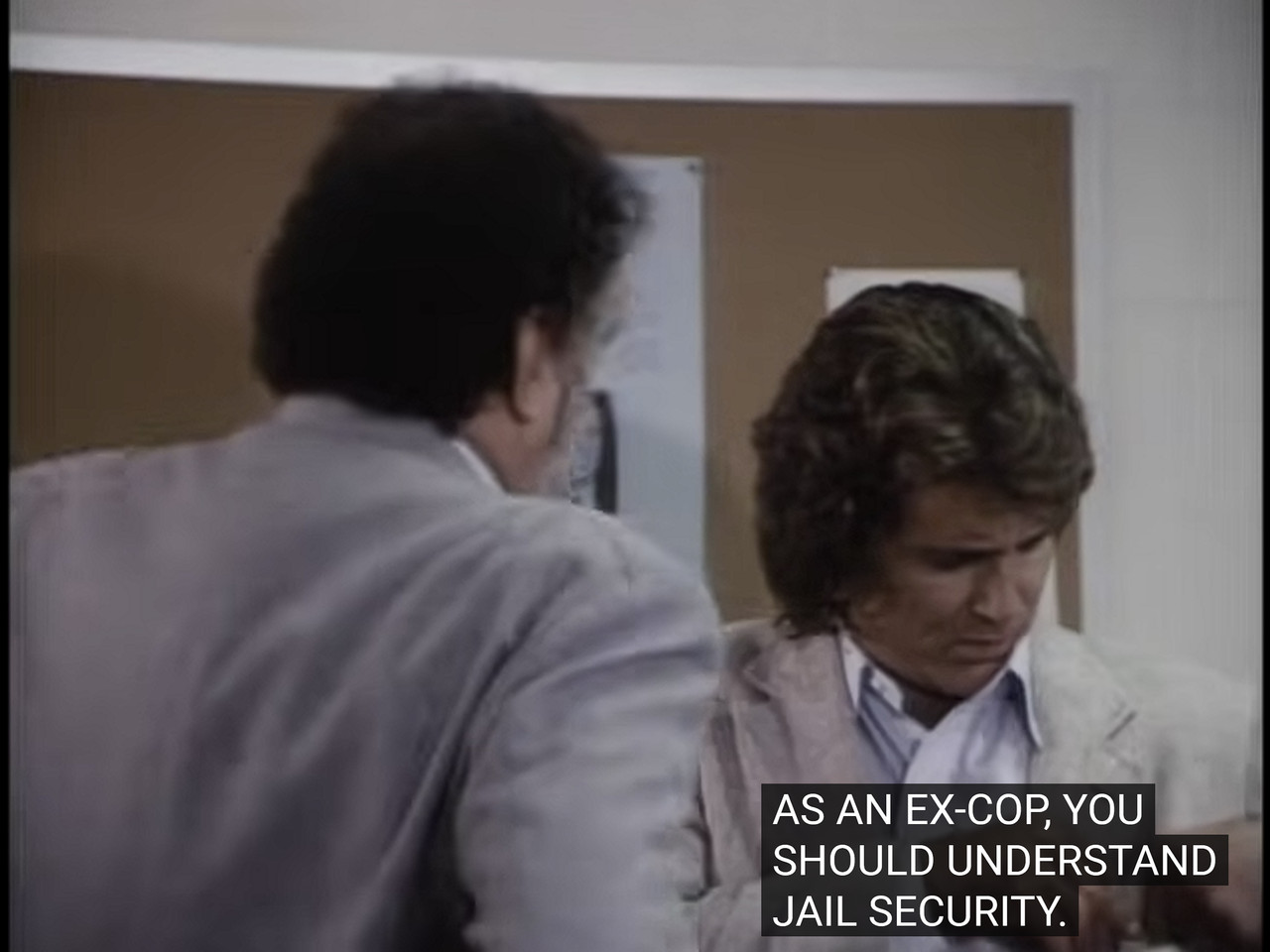
But he also admits that he never truly understood what life was like on the other side of the prison system. What feels somewhat rushed is how his attitude changes.
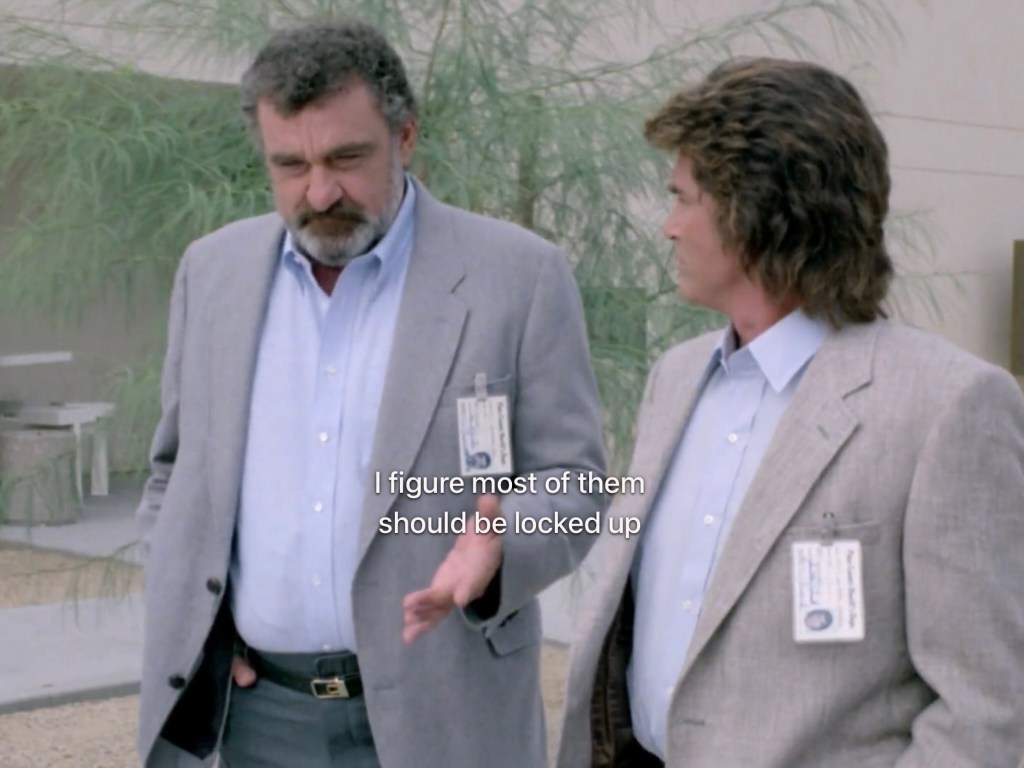
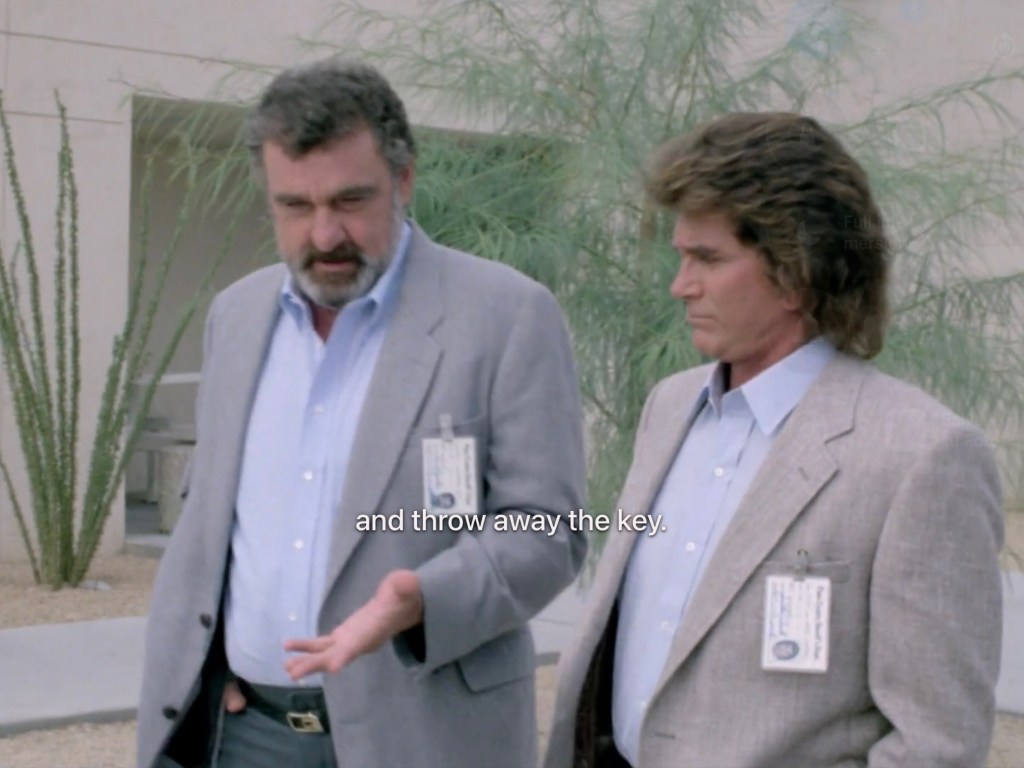
In the Pilot, Jonathan helped him become more compassionate and less cynical, yet at the beginning of this episode Mark initially argues that there are valid reasons why the women should not be allowed to spend time with their children during visiting days.
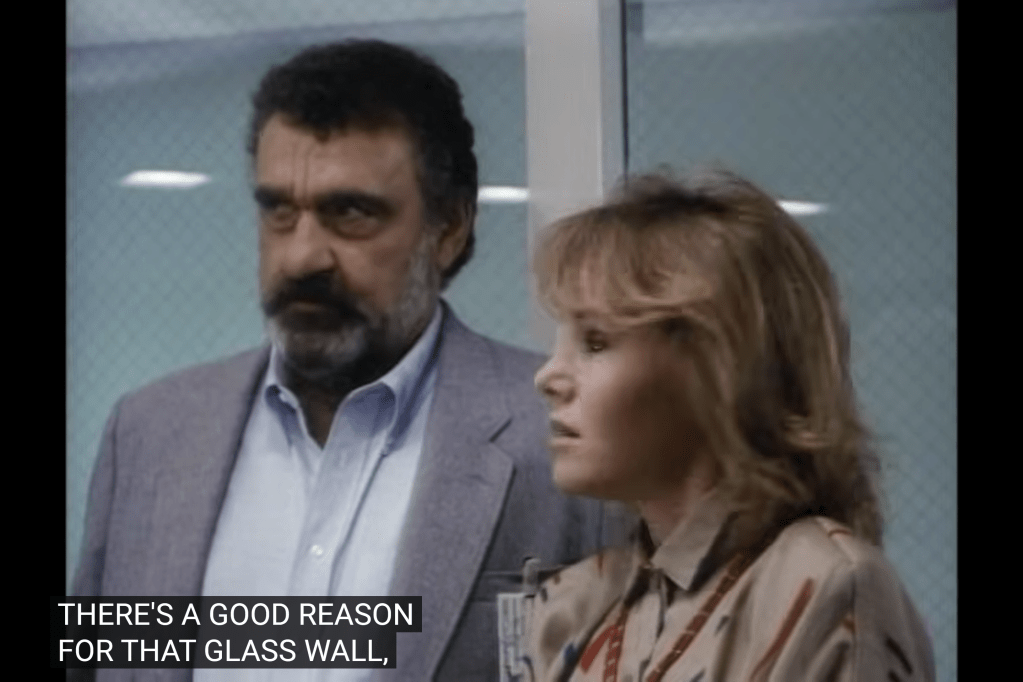
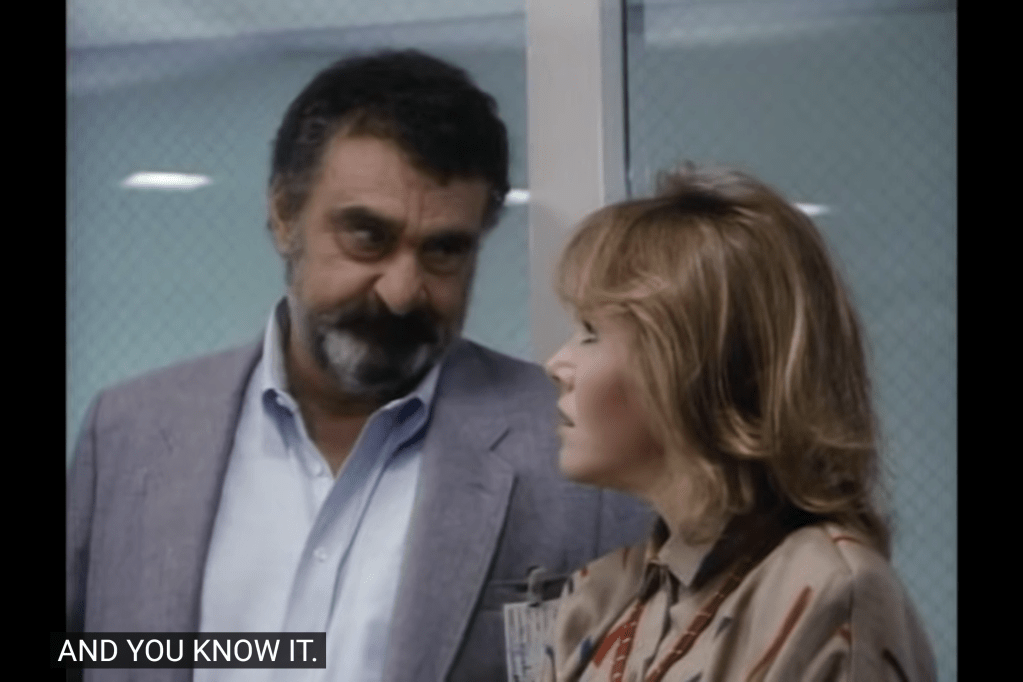
And then, that random social worker tells him there are measures to address these concerns, and suddenly Mark is completely on the inmates’ side.
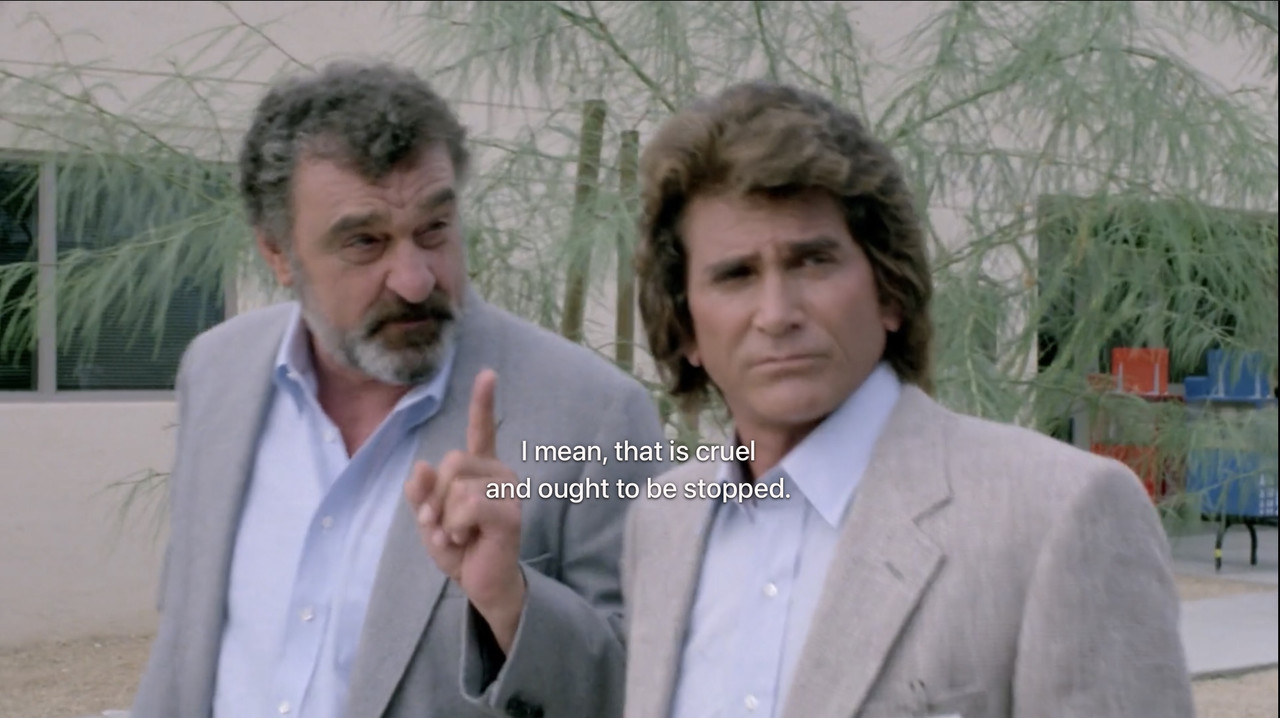
It took a single day to change him.
Anyway, there’s a detail about him that can’t quite figure: when he confronts the warden, Mark says he’s been a cop for 20 years.
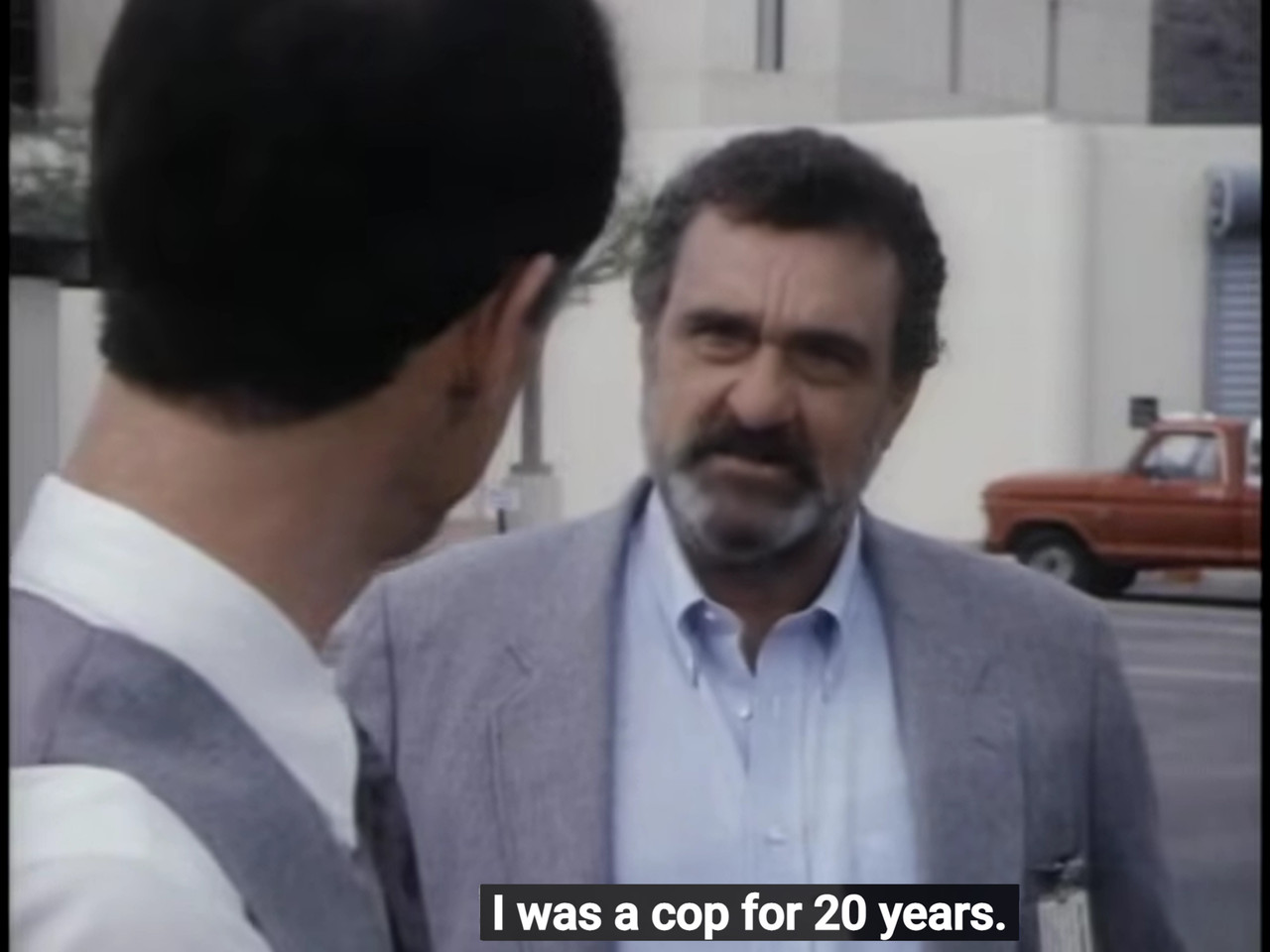
But that contradicts the Pilot, when his sister revealed that it had actually been 15 years before Mark got suspended and moved in with her—and he confirmed it in Bless The Boys In Blue in season two.
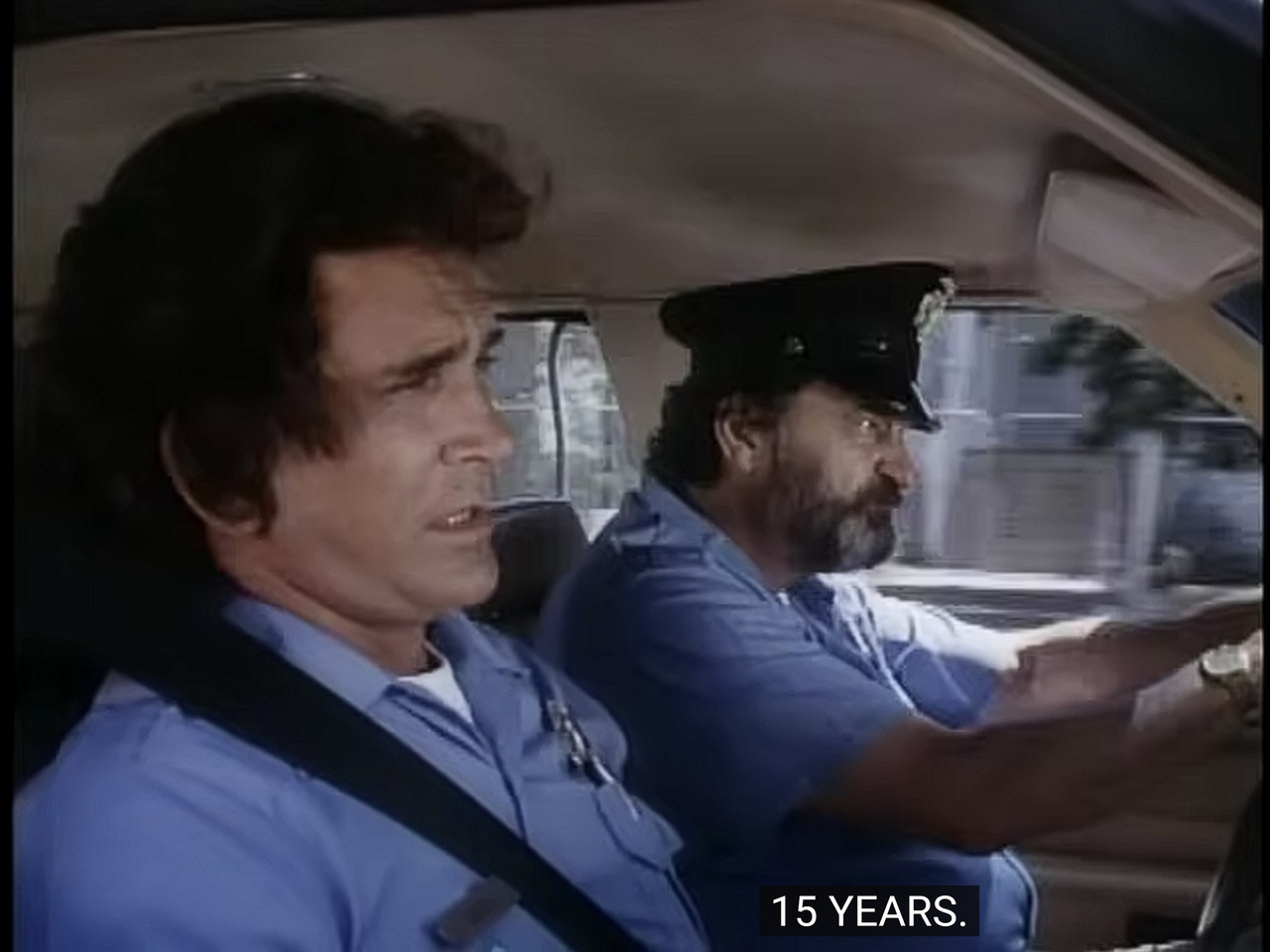
Maybe it was just a general statement, or maybe he secretly worked as a cop longer than his family knew.
Or maybe he just forgot how long he has worked as a cop—like he did with his fear for horses one episode ago.
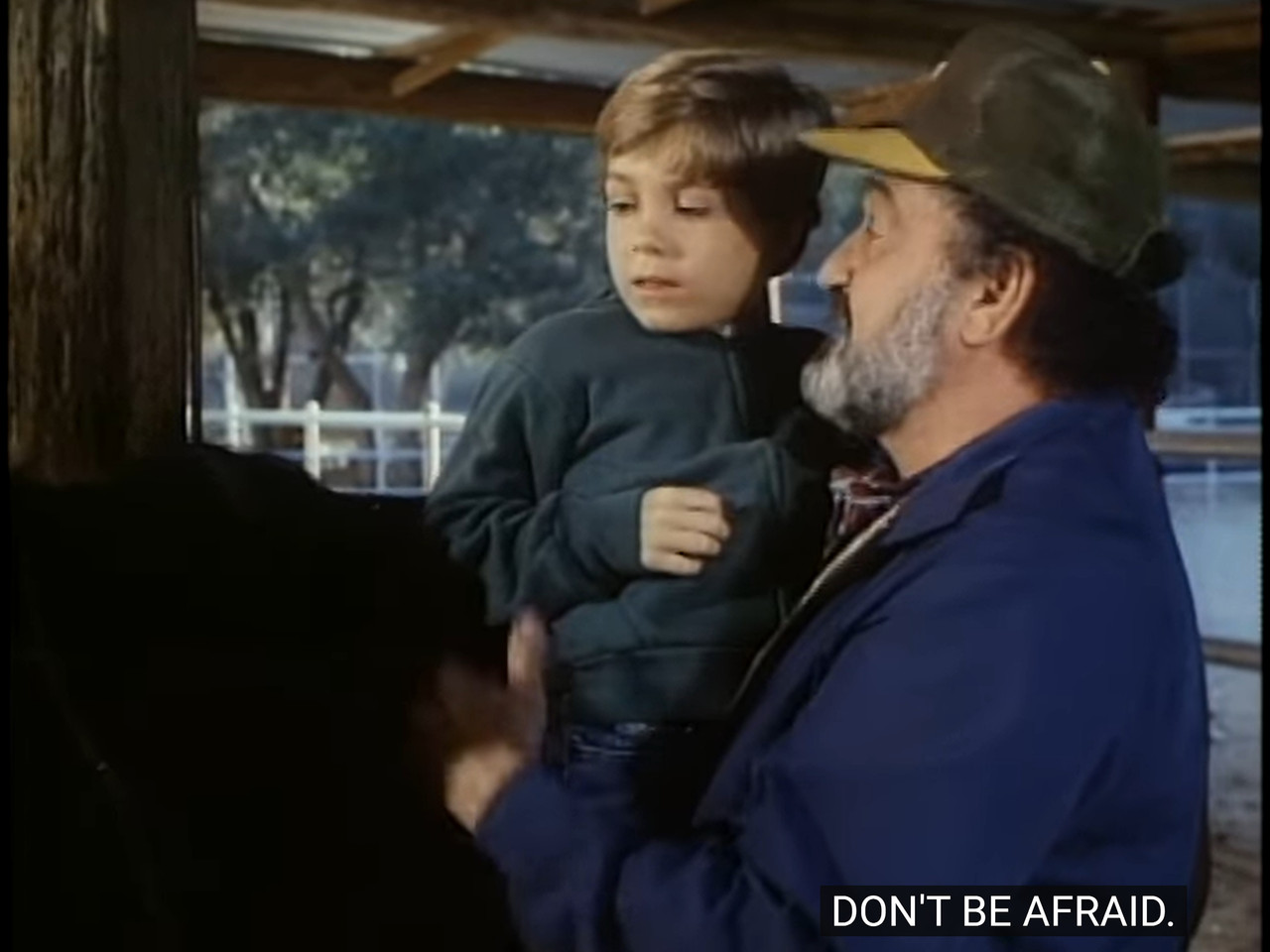
But there’s another detail, a more awkward one for him: at some point he asks a pregnant inmate something.
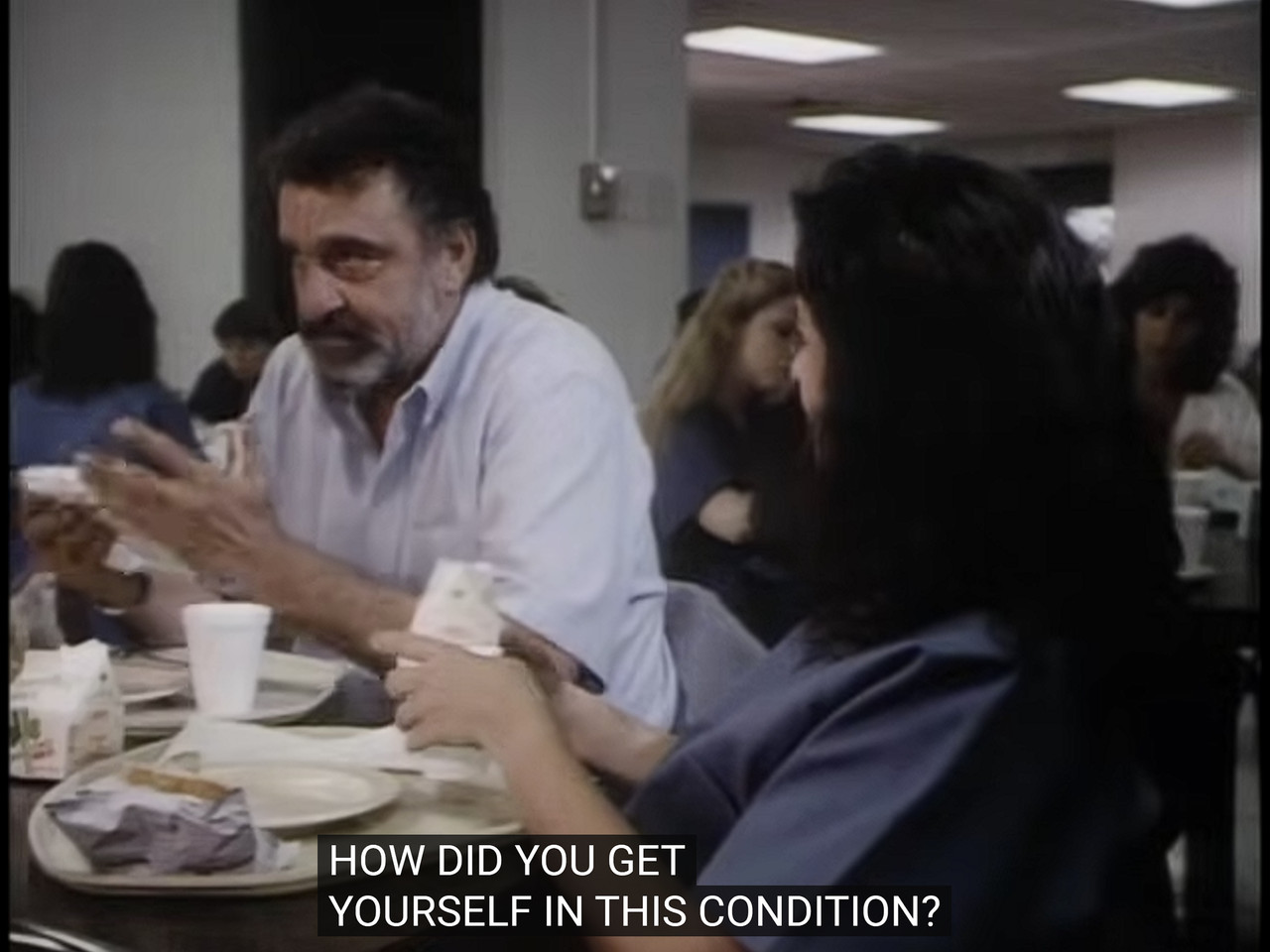
By committing a crime, of course.
But there’s a misunderstanding that Mark has to clear out.
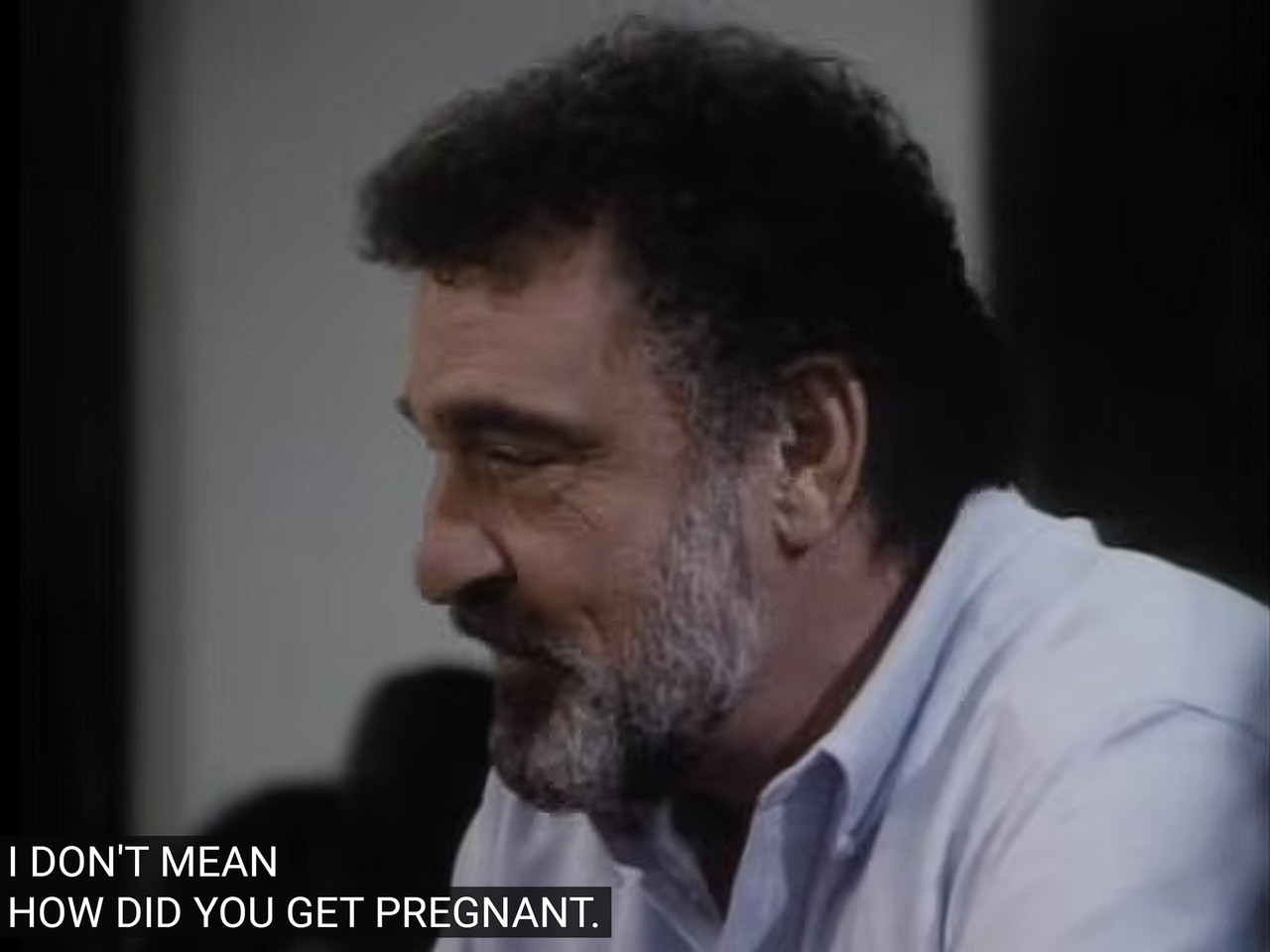
That figures.
Of course, he already knows that: he taught that precise class his first time as a teacher back in Season Two.
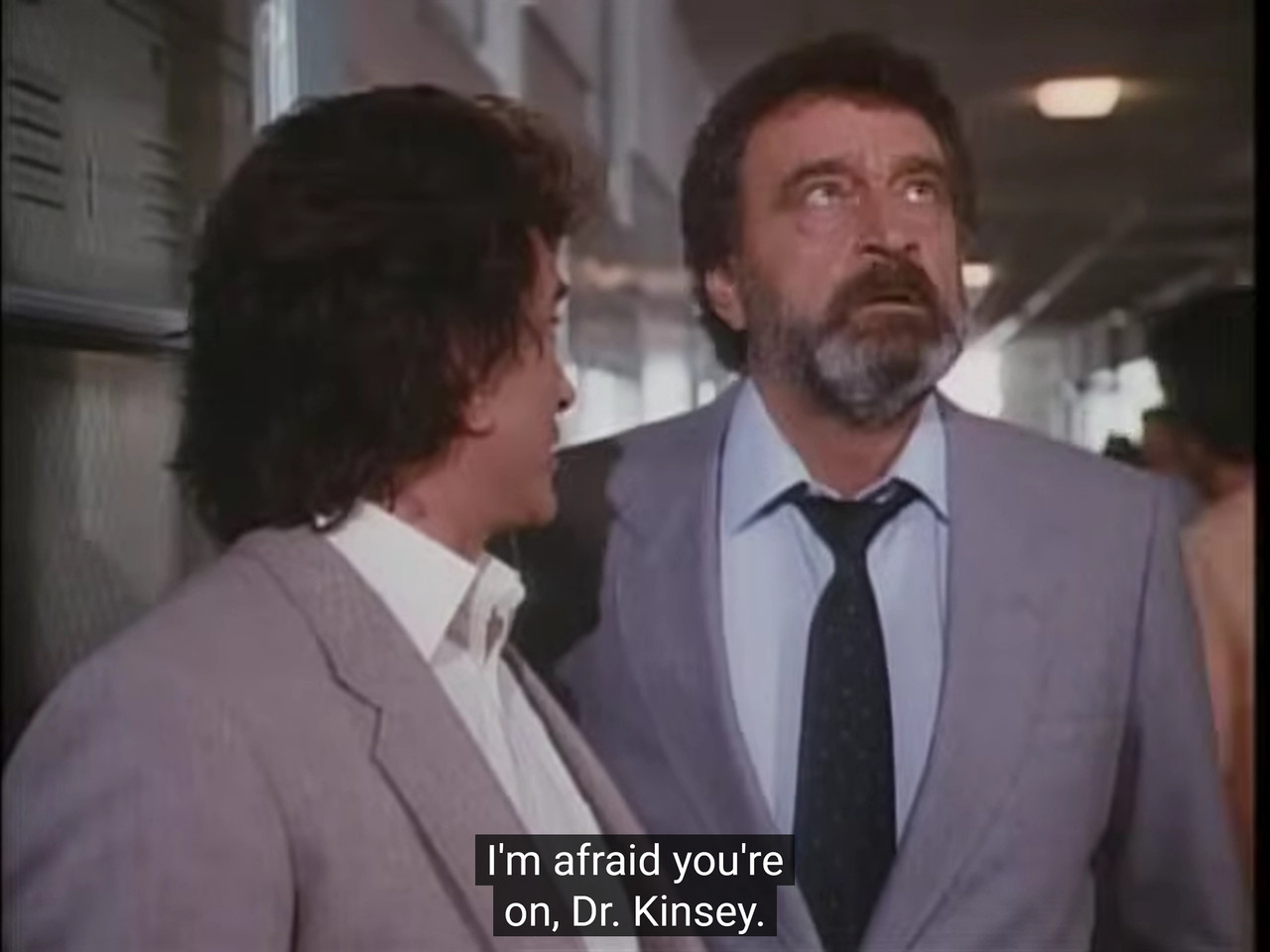
And attended one in The Ghosts Of Buxley Hall too.
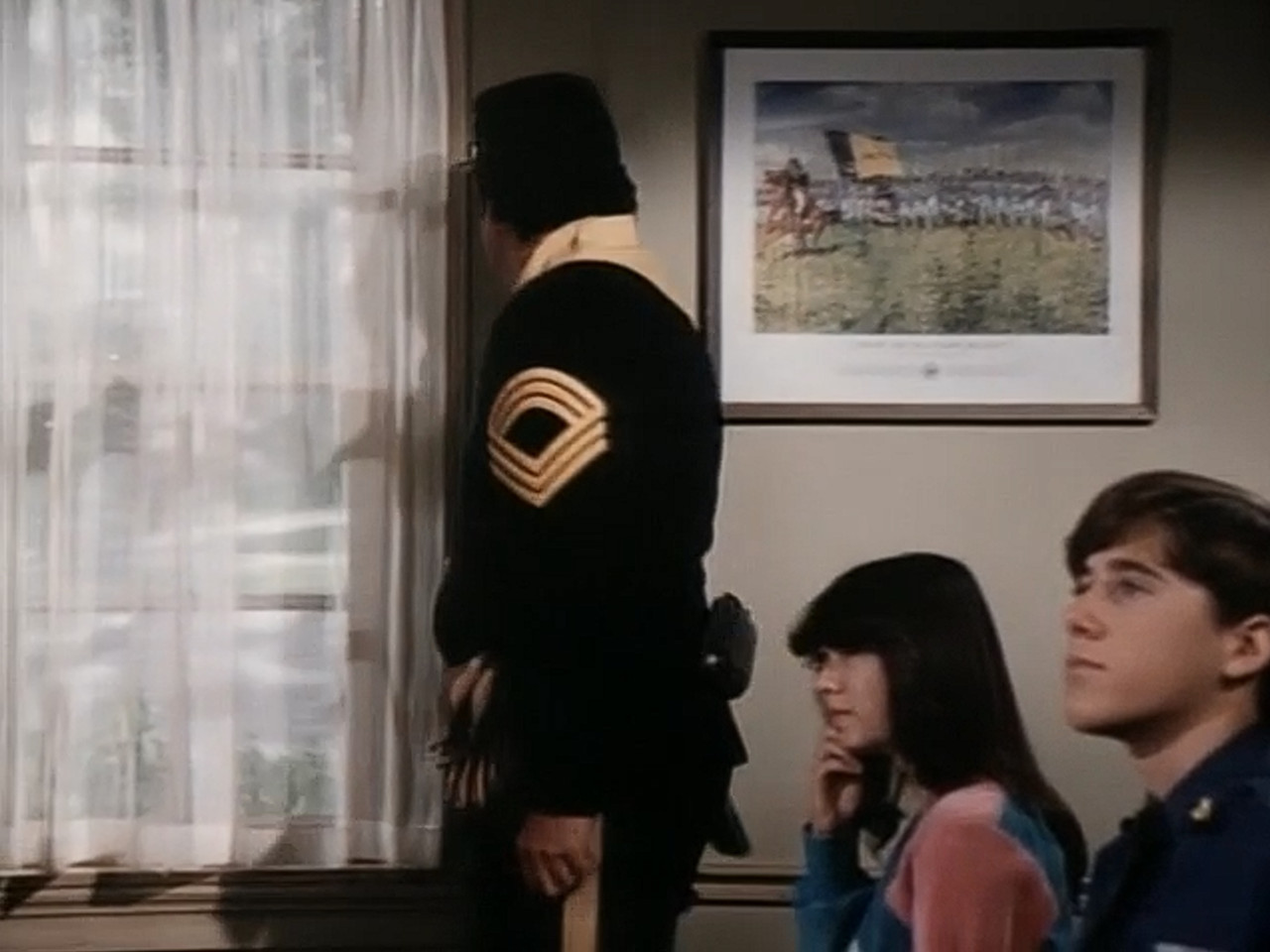
And he didn’t like it.
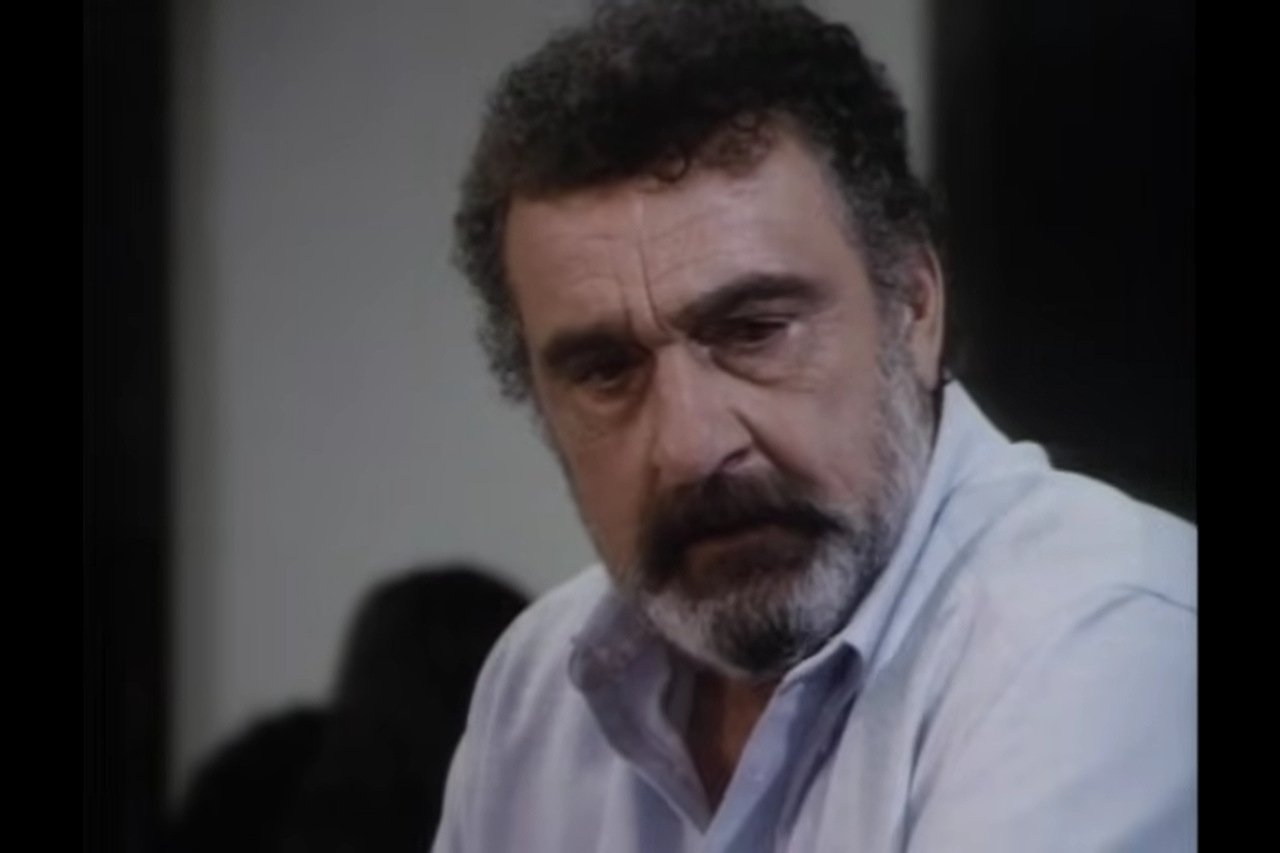
That’s what happens every time he thinks back at his teaching experience.
As for Jonathan, he’s a liar: when he happens to see the warden at a fair, he tells him that he was just taking a walk as he lives nearby.
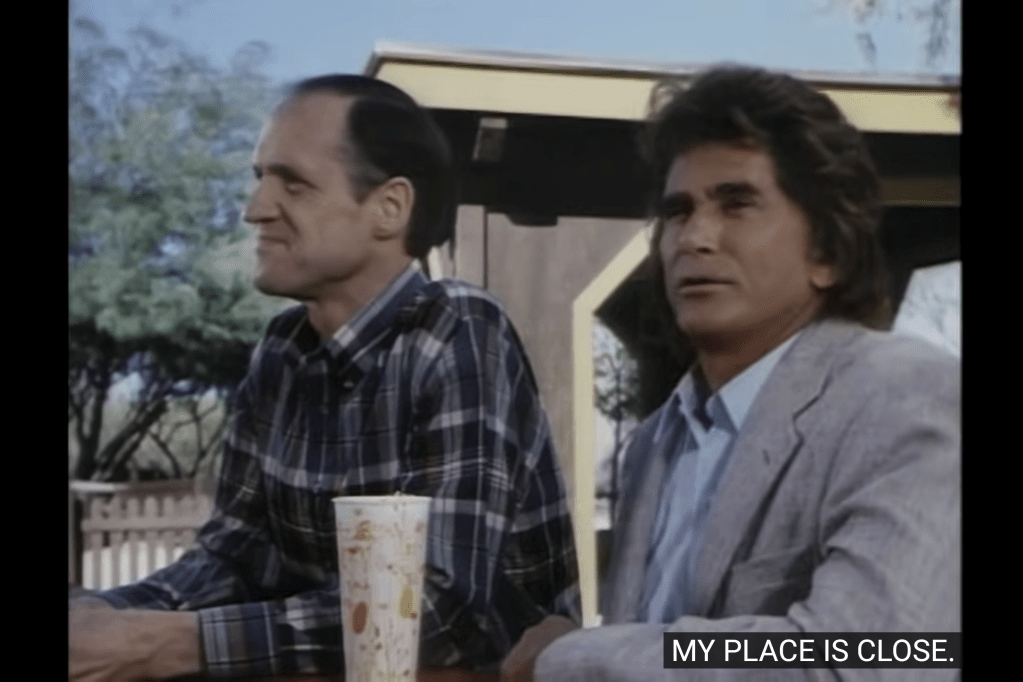
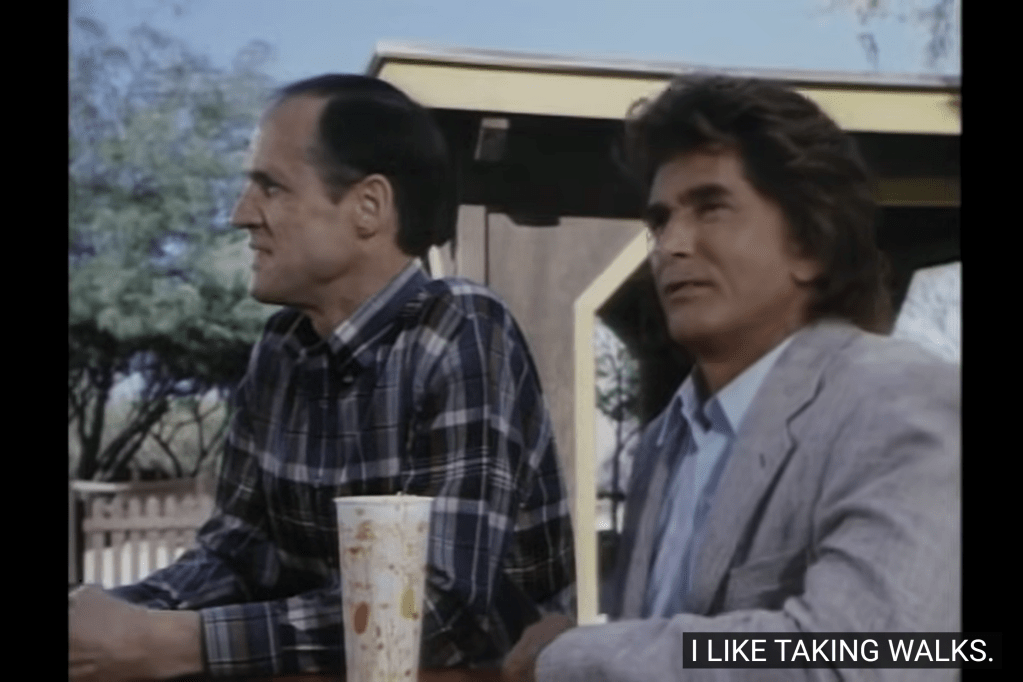
But they never show where they live. Maybe he lives in the park like bums.
More likely, he’s just lying. Yet another instance of Jonathan the liar.
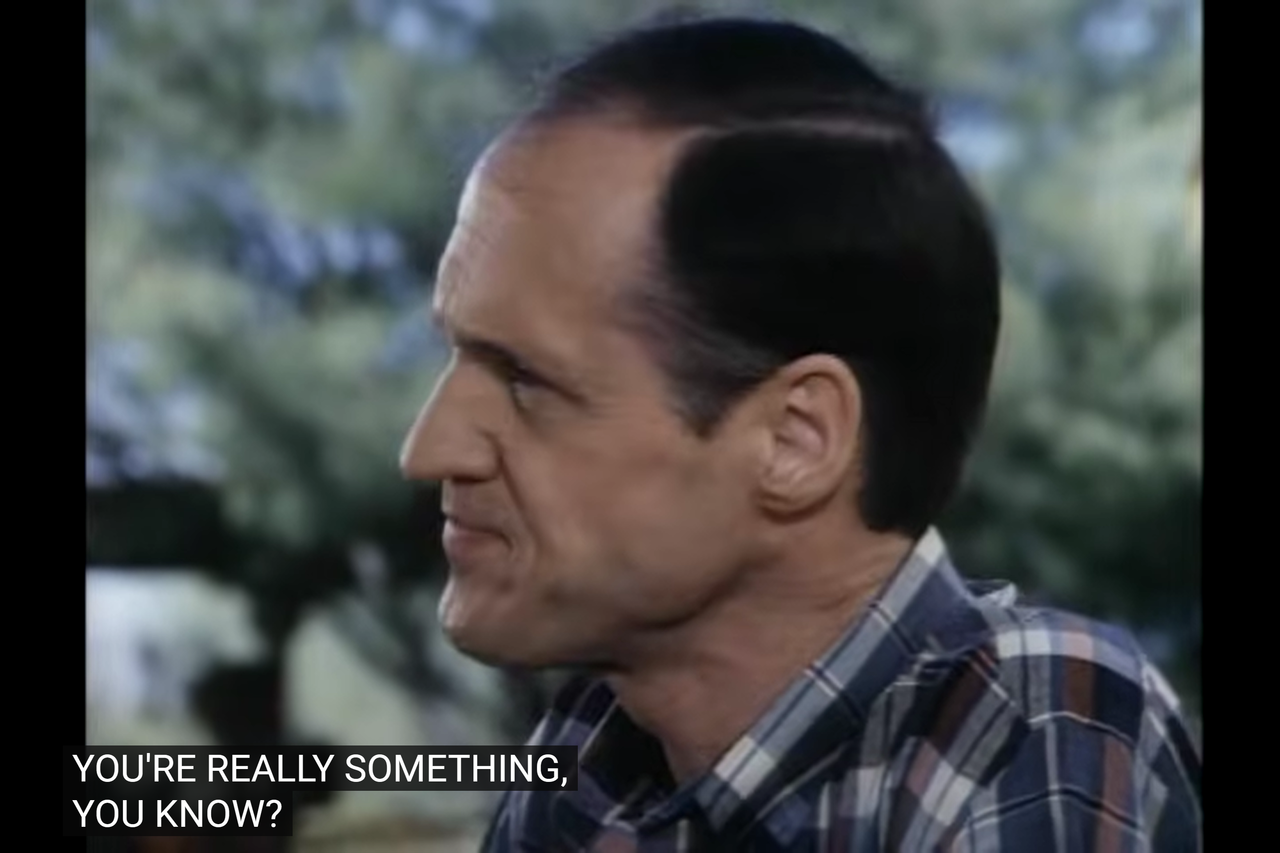
Some liar angel.
- Production and Setting
The episode was written by Paul W. Cooper from Little House, in his sixth contribution in the series, and the only episode of the season by him. He’ll be involved in a season-five episode and then he’s out of the series. The script was written in April, making it one of the earliest episodes prepared for the season.
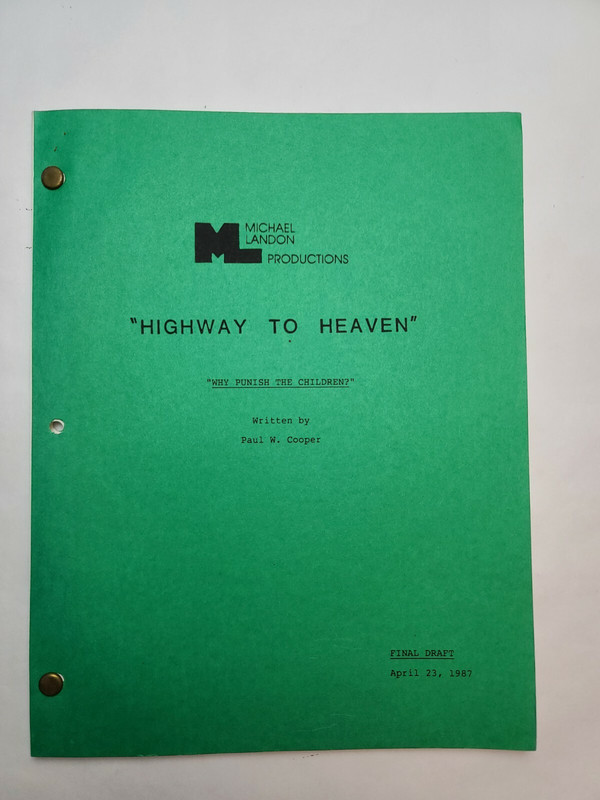
It was produced over the course of one week in October 1987, two weeks after the preceding Summer Camp episode. Curiously, the last day of production was October 17, which fell on a Saturday; that’s unusual: it’s known that Landon always gave Saturdays and Sundays off. (According to the production schedule of the rest of the episodes in the series).
As for the setting, the episode was filmed in a Tucson real jail.
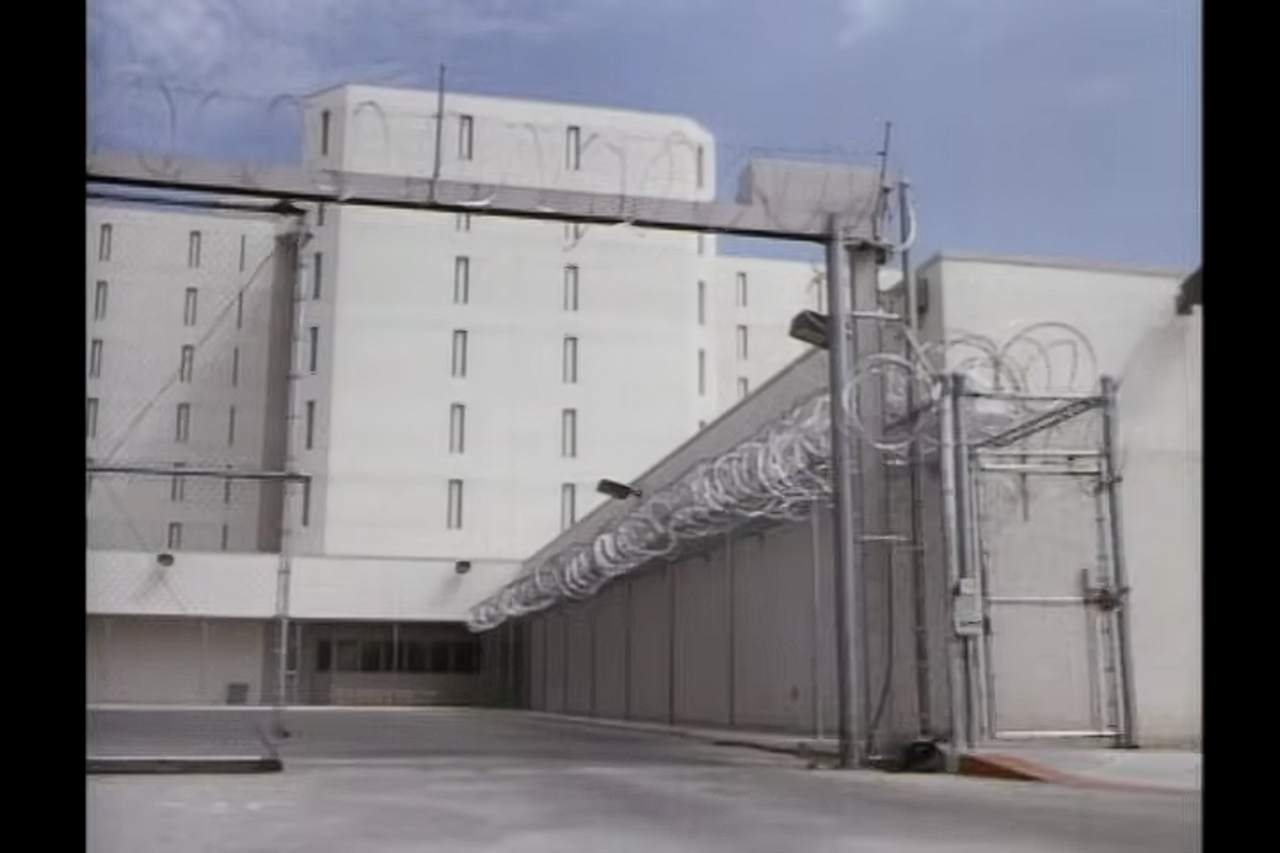
In particular, that’s the Pima County Adult Detention Complex in Silverlake Rd, as it looked in the 1980s at least.

And it doesn’t allow contact visitations, but video and screen ones. Actually, most jails in the States only allow those.
They probably need to watch this Highway episode to change the system.
Glossary:
Holiday Special: it’s the Thanksgiving episode. It’s the only Thanksgiving Special episode of the series.
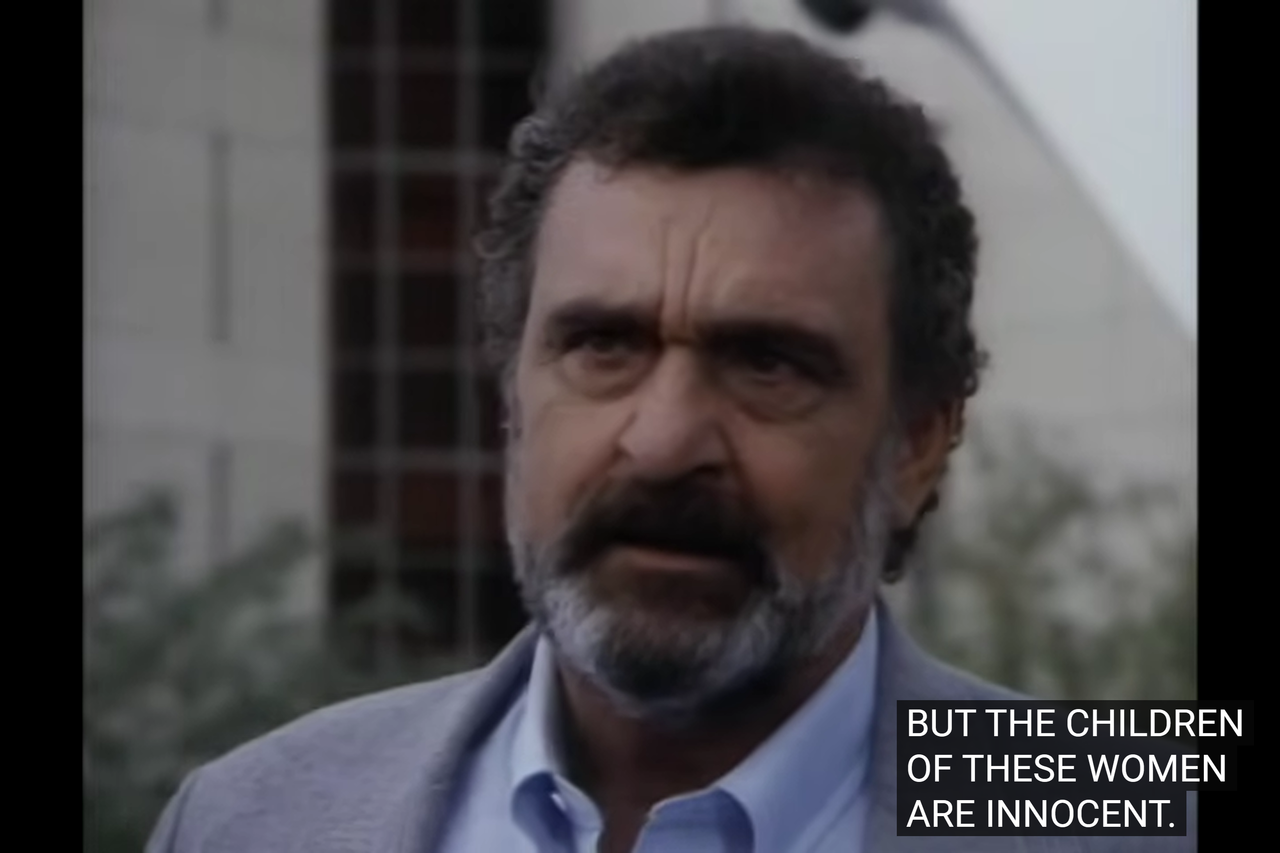
Friendly Jonathan: one at the beginning, when they introduce themselves to the inmates and Mark feels nervous. But he pushes him and makes him talk first all alone.
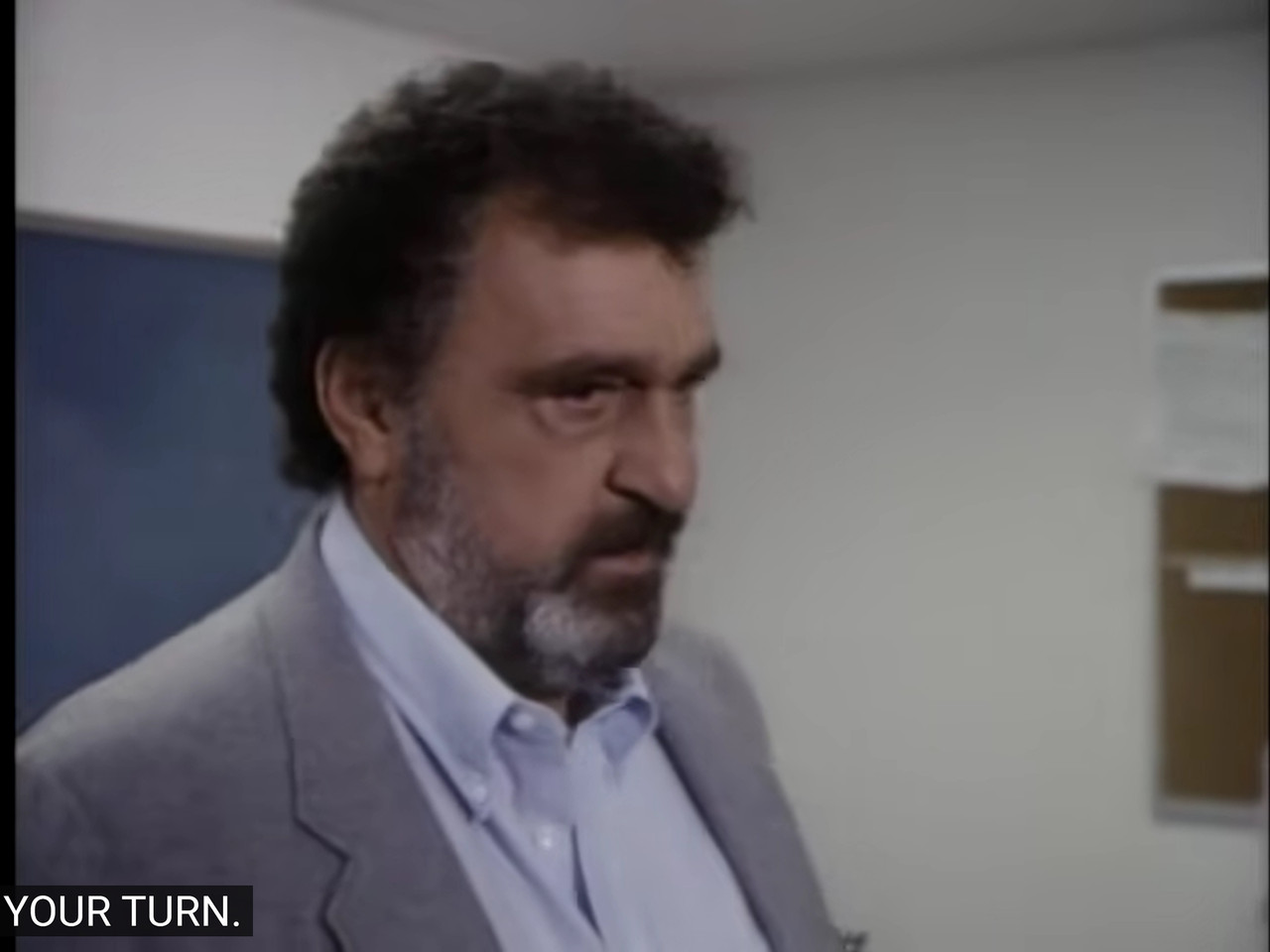
Highway Actors: there’s a familiar Highway actress in the background. One of the many inmates is Mary Pat Gleason, in her second appearance in the series.
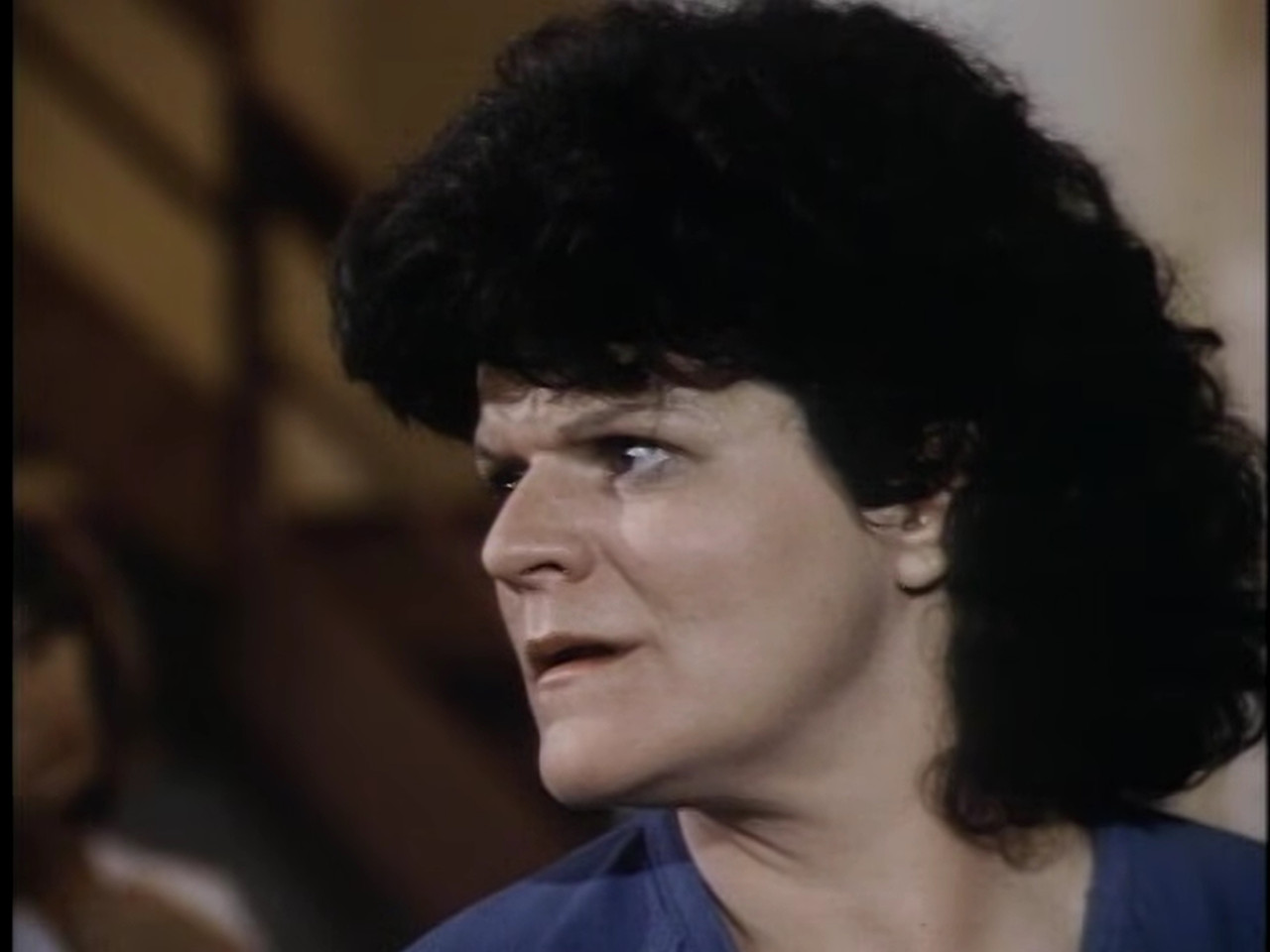
She’s the same actress who portrayed that random mother who suddenly punched a drunken boy at a party in the Halloween special a few episodes ago.
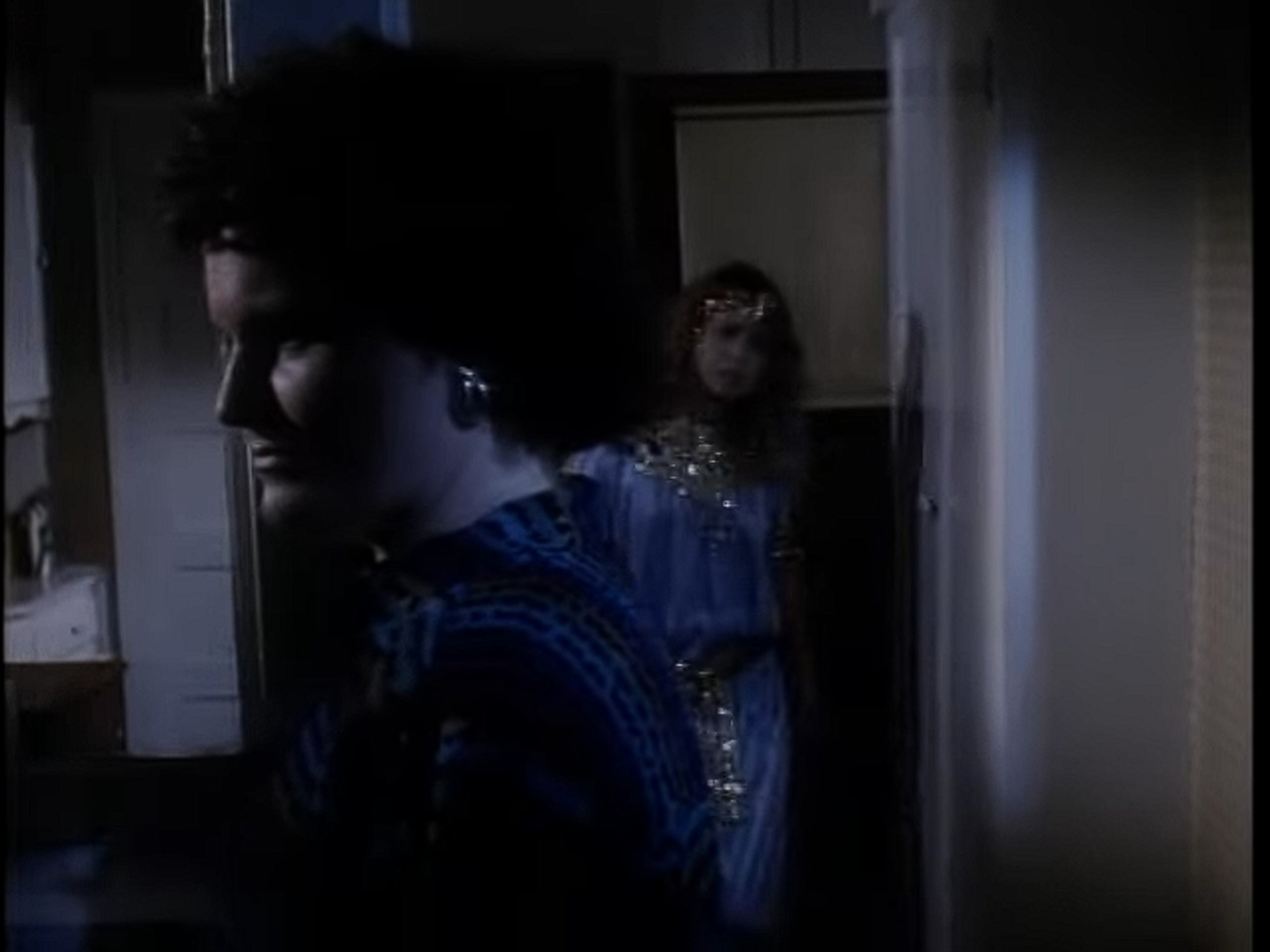
She only appeared in that single scene there, and she doesn’t have much to do here either, although it’s still more than before. She would return once more in the fifth season, again only for a single scene as a background character with a few lines.
Recycles: there are a couple of recycled sections. At the conclusion, during the Thanksgiving party, there’s the goofy sequence where all the characters smile happily, awkwardly laugh by simply looking at each other in silence, and David Rose’s music plays all over.
What the heck is that kid doing? There was no need to dive into the cream like that.
Nothing any less ’80s than other similar music scenes of the series.
But the score is not new either: it’s the same track used at the beginning of A Special Love during the training scenes in preparation for the Olympics.
And it had already been recycled twice before as well — in Man to Man at the amusement park, and in Heavy Date when Gary and the woman have a date at the park. All of these episodes were from season three.
Actually, the Man to Man version of the track was slightly altered to sound more upbeat, while this episode and Heavy Date restore the original A Special Love score directly.
There’s also a second recycled musical cue, although not in the same way. When Jonathan confronts the warden at a fair, they are standing near a merry-go-round, and naturally its tune is the exact same one heard basically every time someone goes to a merry-go-round (starting from Help Wanted: Angel in season one). Either the entire country bought that exact same merry-go-round with that same tune, or the production simply kept reusing the same stock recording every time.
Sunday Suit: for the assignment, Jonathan and Mark wear their gray Sunday suits, which by now clearly seem to function as the Teacher assignments attire.
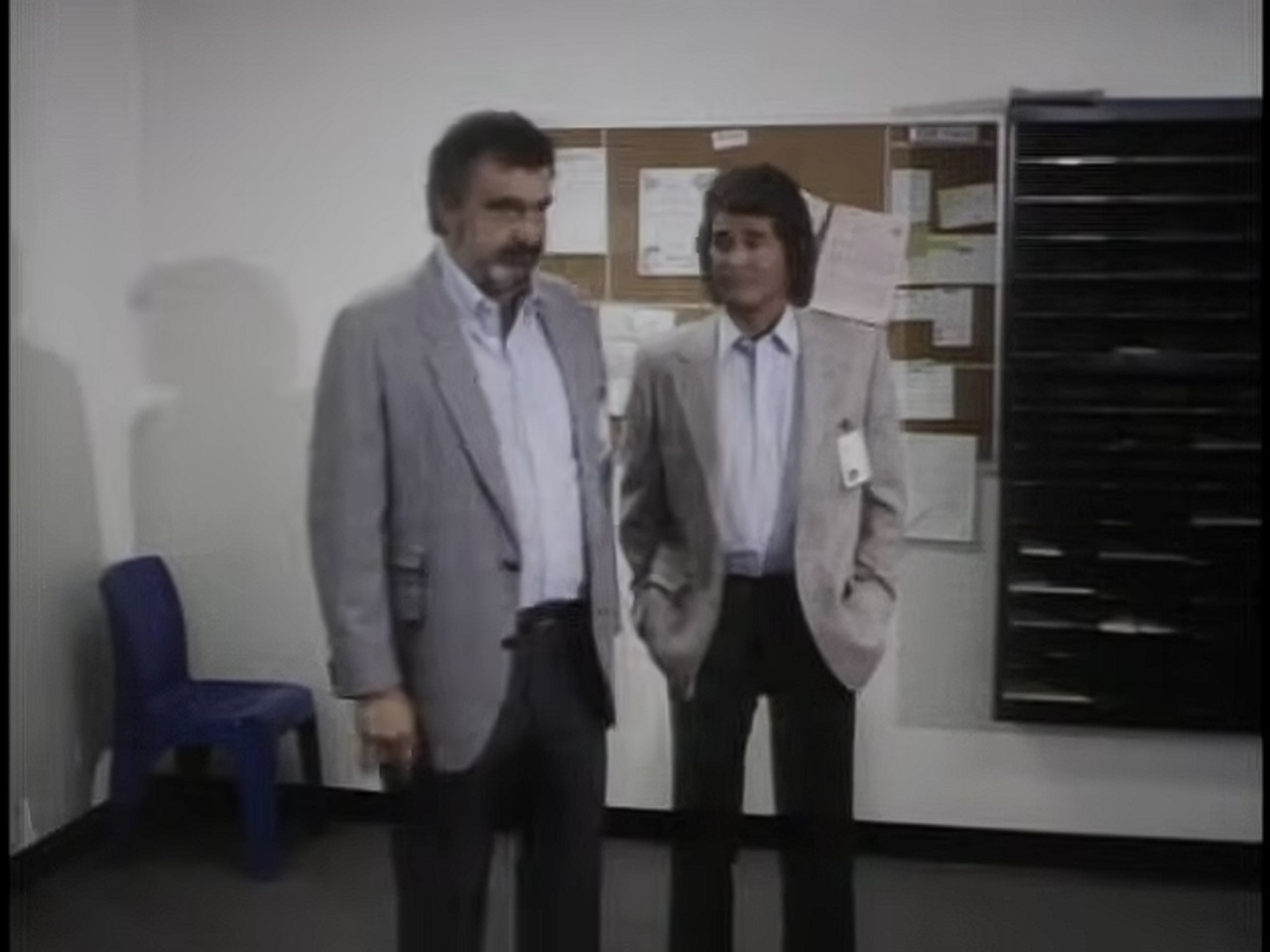
While the black suits are reserved for more specific occasions, like going out to dinner or attending parties.
The “Stuff” Power: one important feature of the episode is Jonathan’s powers. He uses the Stuff to invade the warden’s dream and make him experience a nightmare in order to convince him inmates should be granted improved visiting-day conditions.
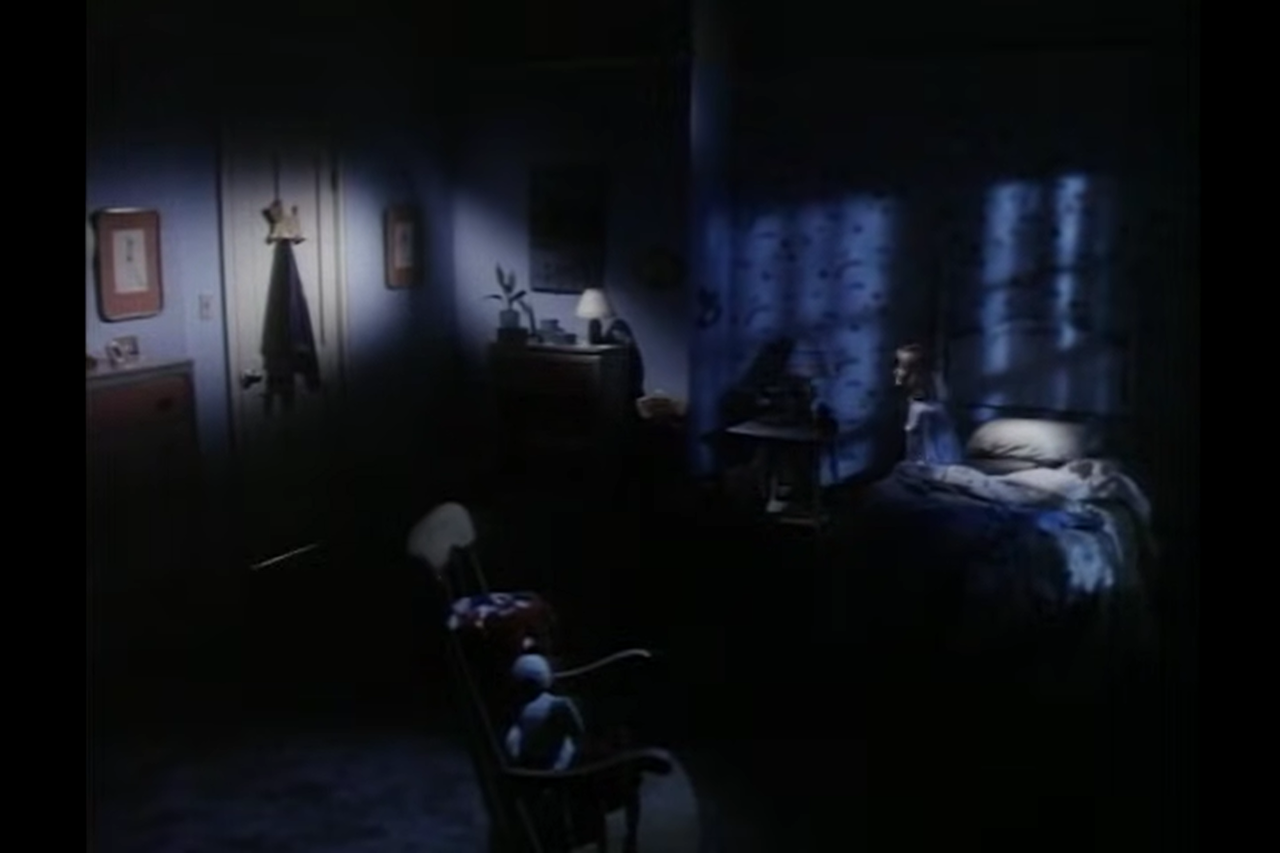
In the nightmare, the warden is called by his crying daughter — but stumbles onto a shard of glass that keeps him separated from her.
And he walks toward it with the same casual confidence French displayed in The Ghosts of Buxley Hall pretending to be a ghost and crashing onto the door.
Actually, the actor playing the warden is named Bruce French, though he’s unrelated to Mark Gordon’s.
This scene also feels very similar to the one with a glass wall placed before Landon as a protection from a swinging chair.
Anyway, back to this episode: it’s just Jonathan’s nightmare.
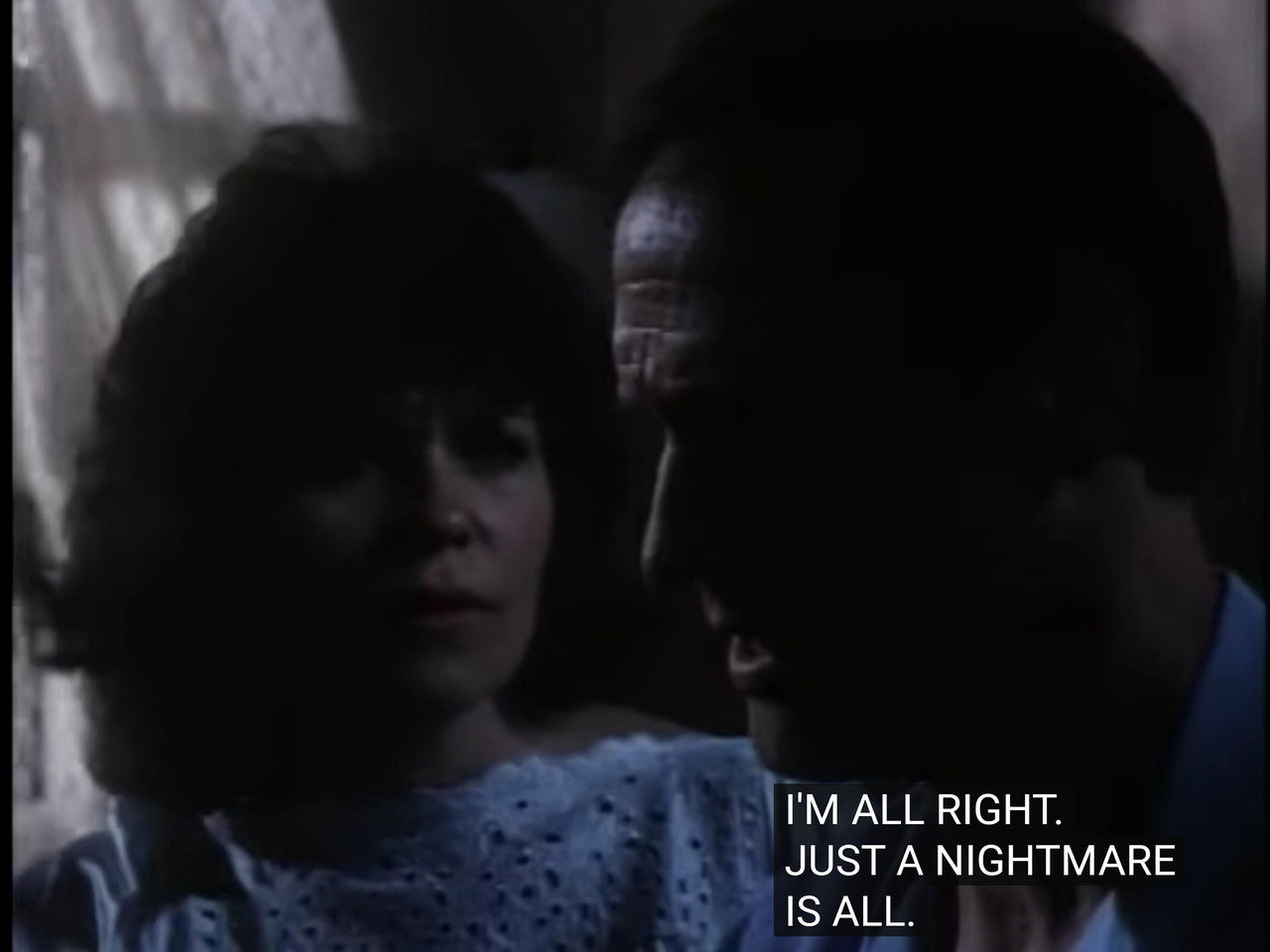
This marks the eight official time in the series Jonathan plays Sandman manipulating a dream: the previous instances were the season-one Christmas special (in Eddy’s dream) and Going Home, Going Home (Mark’s), then in season two for Heaven On Earth (Mark’s, again) and To Bind The Wounds (many people’s) and in season three for Love and Marriage (Mark’s friend), then Jonathan Smith Goes to Washington (a Senator’s), A Mother And A Daughter (although that time he just elicited memory).
There are also two additional dream episodes, though they were more peculiar: the third-season finale (in R.R. Benson’s), which could also be a parallel reality or something else entirely, and Jonathan seemed oblivious of being inside a dream; this fourth season’s Halloween Special (in Mark’s, yet again), though it is plausible that it was just Mark’s dream—and Jonathan had nothing to do with it. (More about it at the “Highway Of Mysteries” entries of those episodes).
He really likes this power.
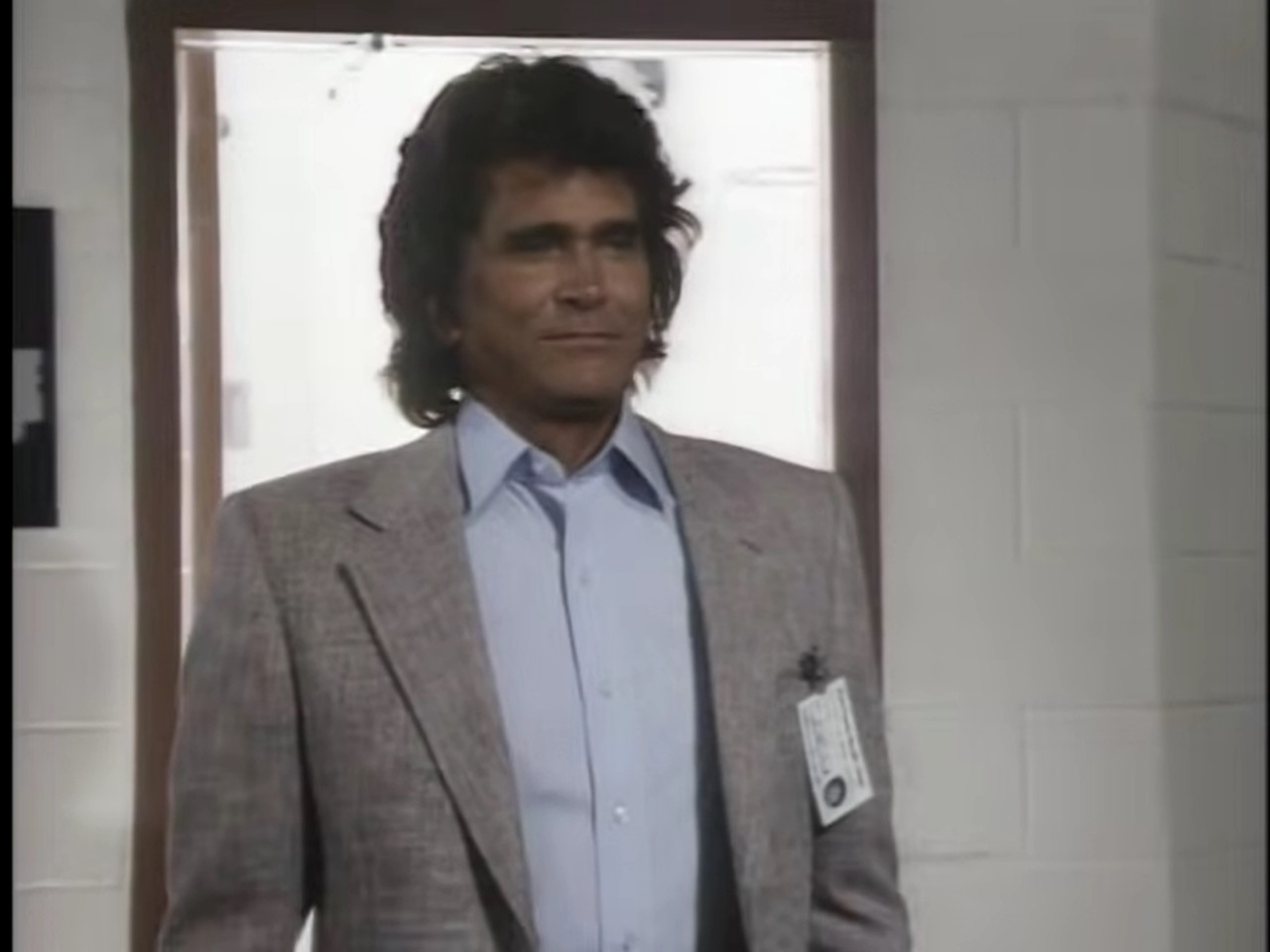
Of course he does.
Anyway, the Sandman he plays here is closer to the one from To Bind The Wounds and Jonathan Smith Goes To Washington, as he doesn’t appear inside the dream but only manipulates it. However, there’s one major difference this time: he apparently does not reveal himself as an angel. The warden realizes that something strange is happening because Jonathan somehow knows about the dream, but Jonathan never openly confirms anything and instead leaves the whole matter mysterious.


“I’m sandman”, that’s what he wanted to hear.
That’s especially remarkable when compared to the number of angel revelations throughout the series. In the first season, Jonathan only explicitly revealed his identity twice — in the Pilot and The Banker and the Bum — and kept it a secret for all the other episodes, as the series was about showing that it doesn’t take an angel to act like one. (More details on how the production of the series here).
Then, in season two, the show seemed to undergo a partial overhaul, making Jonathan’s angelic identity a much more central feature, and that continued in season three as well, when he revealed his identity in nearly every episode.
Now it appears they realized that approach didn’t feel right on this — or perhaps wasn’t the direction they wanted for the series anymore — and by season four they had returned to the original season one’s construction. So, this season doesn’t have many angel revelations.
And, oddly enough, there’s no actual angel revelation in this episode—unlike most of the episodes where Jonathan invades someone’s dreams and makes it apparent he was responsible for it, as he does here.
Actually, in this episode Jonathan doesn’t tell about playing Sandman to Mark either. So, Mark knows that Jonathan had something to do with getting contact visitation, but he doesn’t know to what extent.

No, it was a nightmare.
And his role was useless.
The Job: teachers. It’s the fourth time in the series they work as teachers, after the season two finale, the College episode and the Prom one in season three. And, like any time, it remains unclear how they got the job in the first place: if Jonathan died forty years ago, it’s hard to believe he knows anything about whatever he has to teach. But at least he can get it the stuff, while Mark just has to make up.
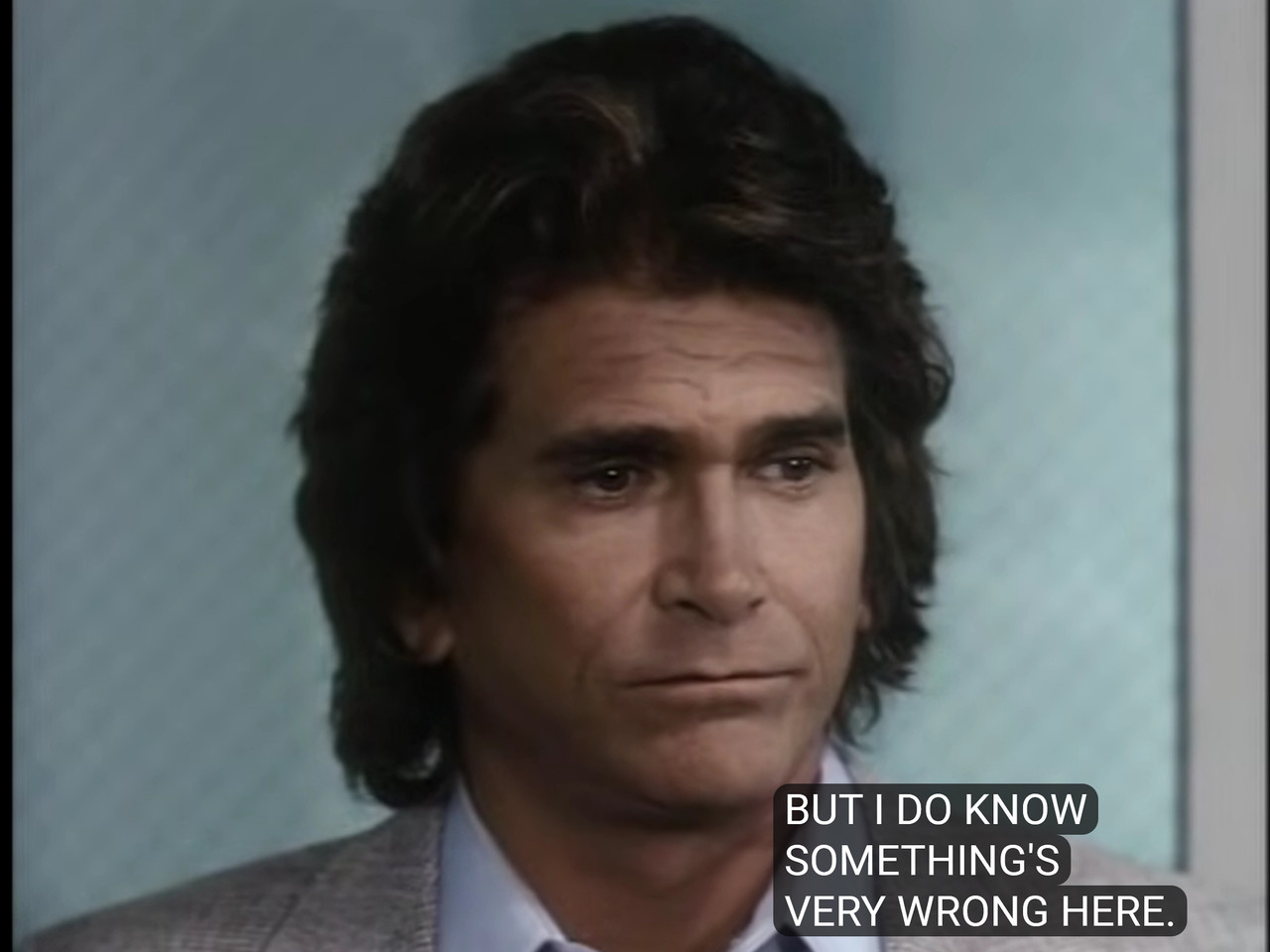
Anyway, it may be useful to get used to it: cops and teachers are the two jobs they get the most in the series.
Ratings: 22 – 23 million audience. 35th Weekly TV program, 4th TV genre show.
The episode aired one week after the Thanksgiving holiday and received ratings roughly comparable to the surrounding episodes, which is at least reassuring after the disastrous performance of the Halloween special less than a month ago. At the same time, though, it makes it even harder for the series to climb back to the higher ratings it once had. Of course, it’s possible the show could partially recover just as abruptly as it declined — the ratings collapse seemed to begin around the third episode of the season and became even worse a few episodes later — but that would still be difficult, especially if there was never a clear reason for the drop in the first place.
Perhaps the issue was not unique to this series, but part of a broader television trend, with audiences slowly changing their viewing habits and no longer watching TV in the same way they once did (keep in mind that 1987 marked a watershed in TV with the launch of the Fox network). It’s difficult to ignore how fragile television seemed during that period in general. Even by 1986, many series — especially newer ones — already gave the impression of struggling to hold onto audiences (the three months from May to August 1987 were tracked as scoring the lowest ever by then, and some people already forecast that it was bound to repeat the next year). So, it’s reasonable that many TV series, starting from September 1987, abruptly suffered a huge loss in ratings, and that loss was growing larger by 1987 and more.
However, that explanation only goes so far, because Highway had remained stable through season three, and many competing programs were still popular—actually, some were experiencing decline even worse than Highway, especially the programs on Fridays, but that doesn’t mean that every program was doing bad.
So while Highway to Heaven was still surviving reasonably well and its ratings loss in season four are partially attributable to a general mutation of TV habits that year, it’s hard to imagine the show ever fully returning to the level of popularity it once enjoyed in its earlier years.


Leave a comment